
HVAC components
HVAC Evaporator Coils Guides
Evaporator-coil guidance for icing, airflow, drainage, and cooling symptoms.
Published evaporator coils guides
Use the equipment name and symptom in each title to choose the most relevant guide.
-
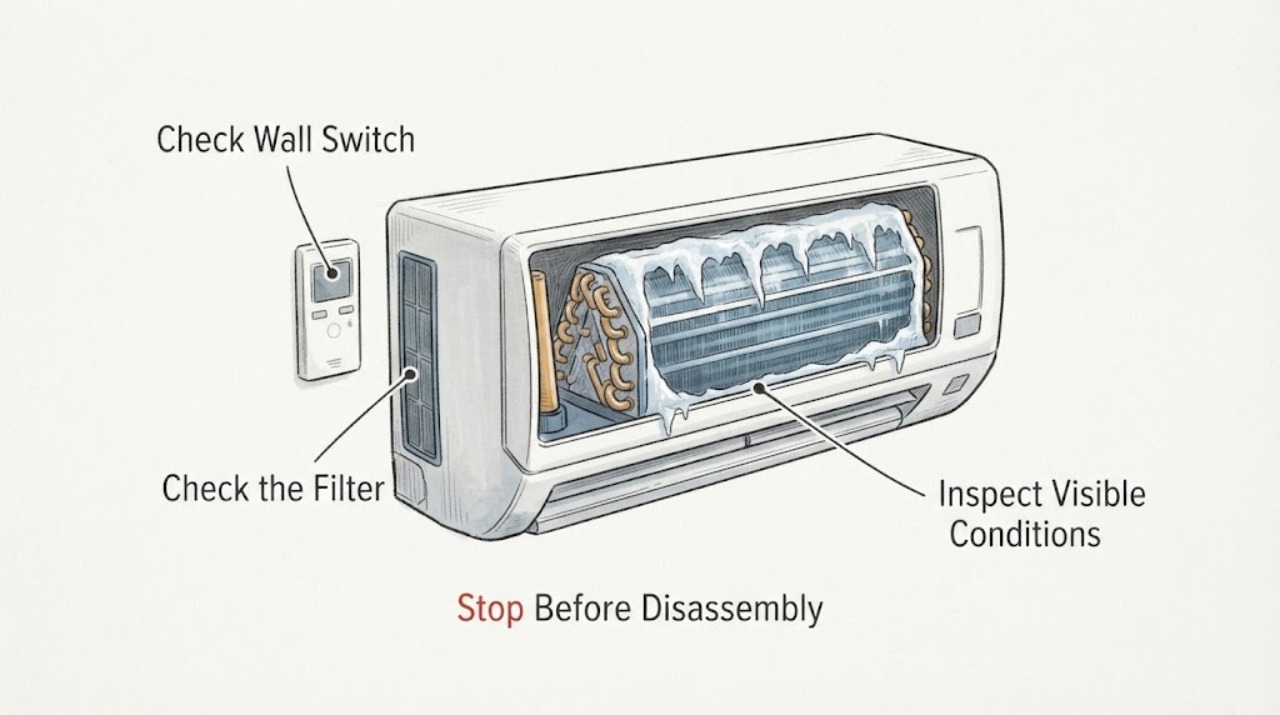
Air Conditioner Frozen Coil: Safely Defrost the Evaporator Coil and Find the Cause
If ice is forming on an air conditioner's evaporator coil or refrigerant line, switch the thermostat from COOL to OFF and let the coil thaw naturally; do not chip at the ice or keep running the compressor against a frozen coil. Once the ice is gone and the equipment is dry, check the return-air filter, make sure supply and return grilles are open, and confirm the indoor blower is moving normal air.
-
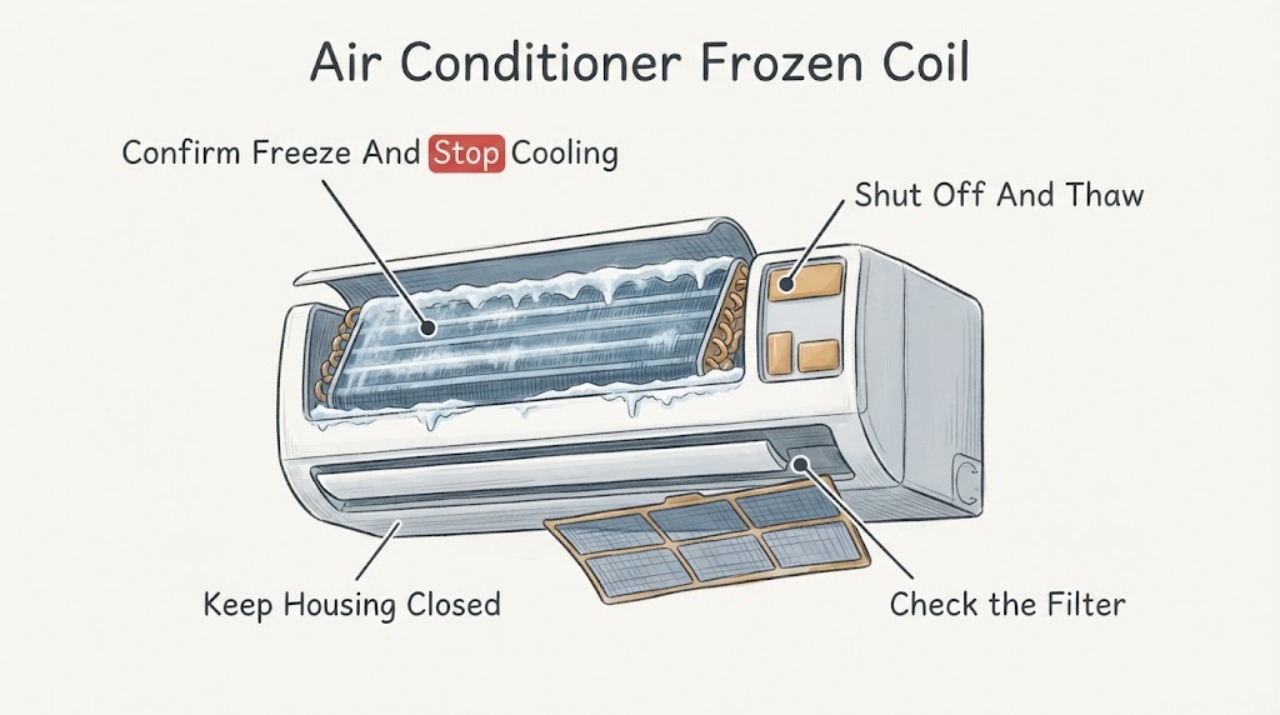
Air Conditioner Frozen Coil
Turn the cooling function off as soon as you see ice on the evaporator coil, copper lines, or indoor unit. Let the coil thaw naturally; do not use a hair dryer, space heater, hot water, or another heat source.
-
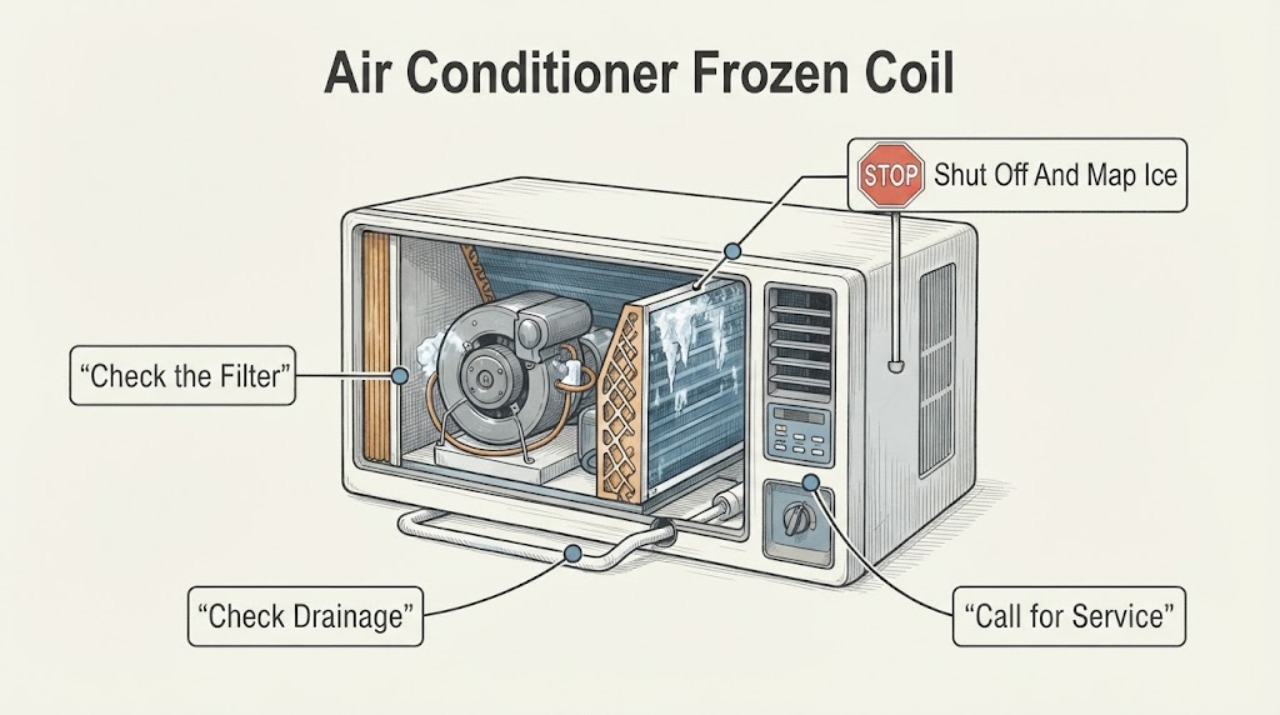
Air Conditioner Frozen Coil: Stop the Cooling Cycle, Restore Airflow, and Find the Cause
If an air conditioner has ice on the evaporator coil or refrigerant line, switch the thermostat from COOL to OFF and do not chip the ice or keep running the system. Trane identifies restricted airflow from a dirty filter, blocked return vents, or a dirty coil as common causes, while low refrigerant, a blower problem, or thermostat trouble can also freeze the coil.
-
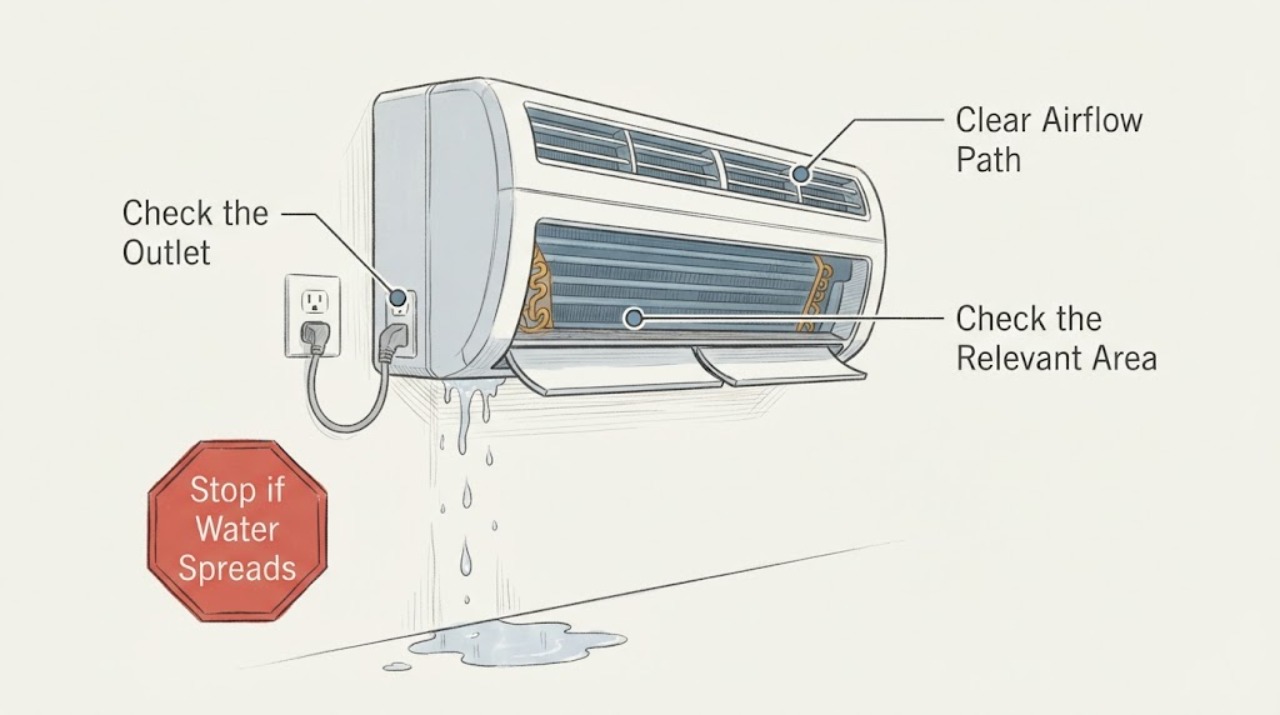
Air Conditioner Leaking Water at the Evaporator Coil: Safe Triage
Stop cooling first and keep water away from electrical equipment. Water around an evaporator coil is commonly condensation that is not draining, or ice on the coil that is melting after restricted airflow or another cooling fault.
-
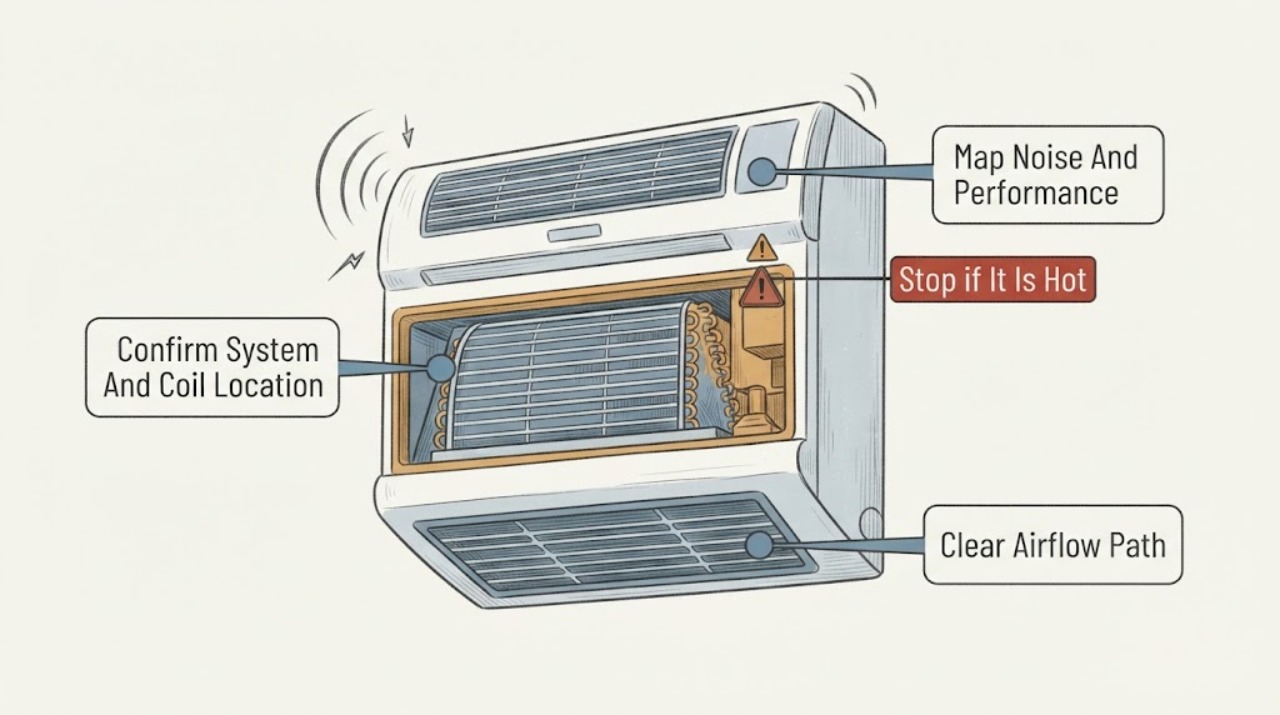
Air Conditioner Loud Noise: Check the Evaporator Coil, Airflow, and Ice Safely
A loud air-conditioner noise near the evaporator coil can be caused by restricted airflow, a frozen or dirty coil, a blower or fan problem, vibration, or a refrigerant-side fault. First note whether the sound is indoors or outdoors and whether cooling, airflow, frost, or water changed at the same time.
-
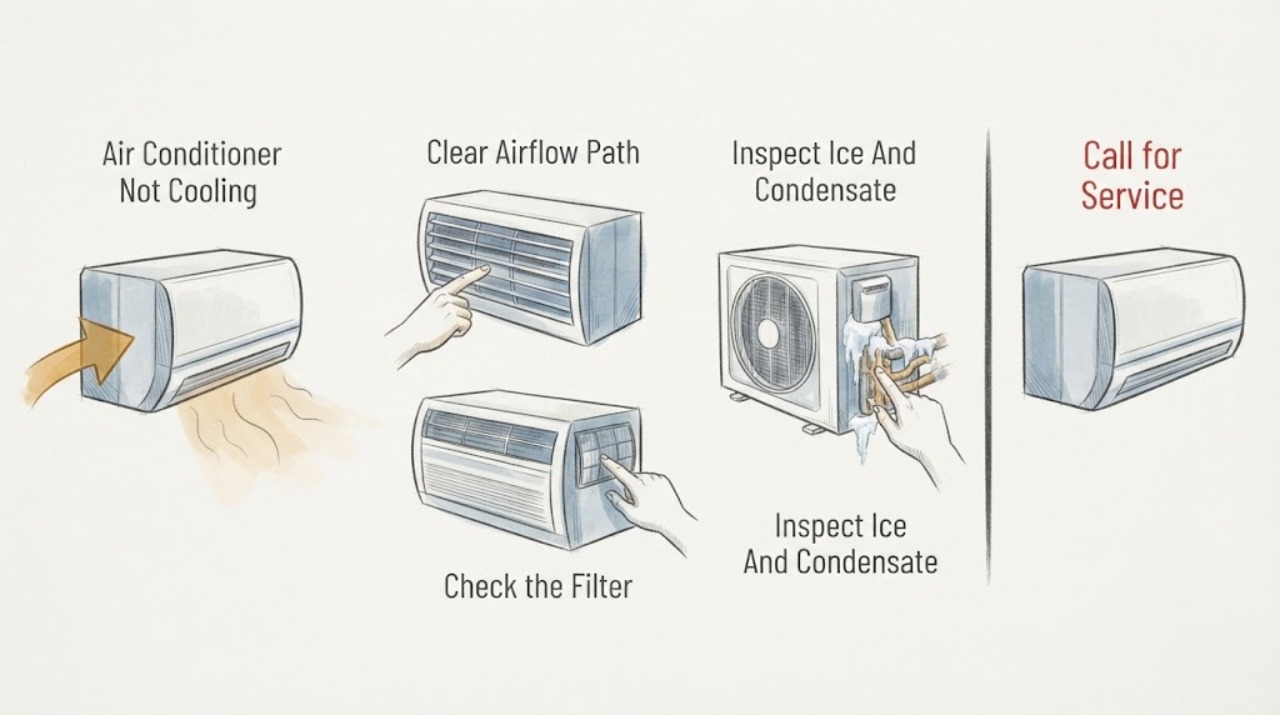
Air Conditioner Not Cooling: Check Airflow Before the Compressor or Coil
If an air conditioner is running but not cooling, first note whether the indoor airflow is absent, weak, or normal but warm. Check the thermostat's cooling call, the accessible filter and vents, and the outdoor unit from a safe distance.
-
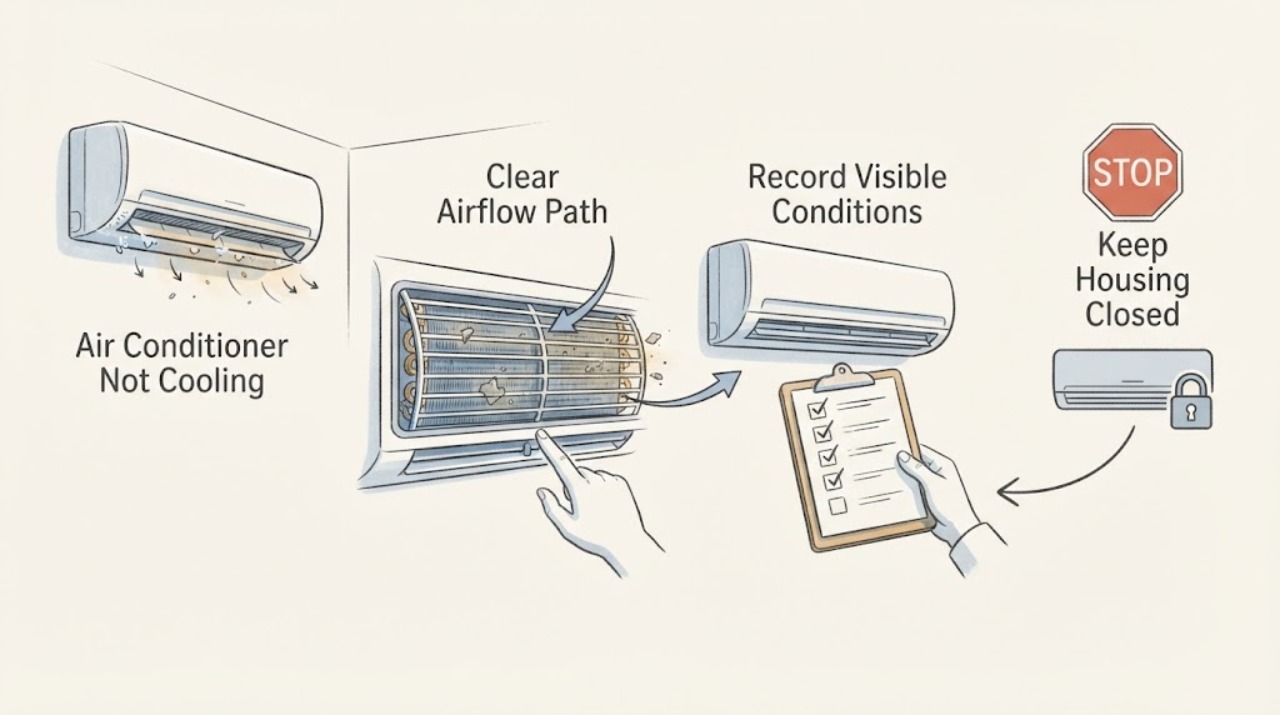
Air Conditioner Not Cooling: Check the Evaporator Coil Safely
If an air conditioner is not cooling, first confirm the thermostat's cooling mode and inspect the accessible filter and airflow. Look for frost or ice on visible tubing, the indoor coil area, or the outdoor unit, and look for condensate water near the air handler.
-
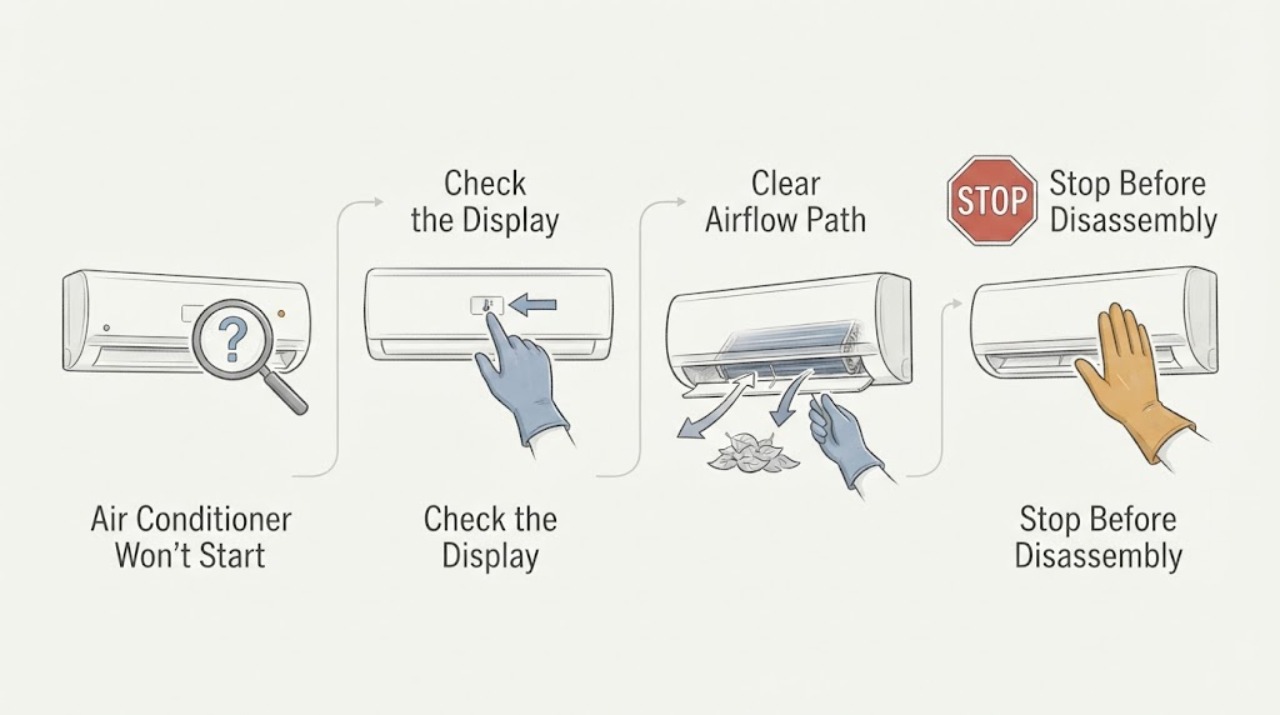
Air Conditioner Won't Start: Safe Evaporator Coil Checks
An air conditioner that will not start may have a thermostat or power problem, restricted airflow, a frozen evaporator coil, a condensate safety shutdown, or a professional-level electrical or refrigerant fault. Check the thermostat call, accessible filter, clear registers and return, visible breaker or service-switch state, and any ice or water you can see without opening the equipment.
-
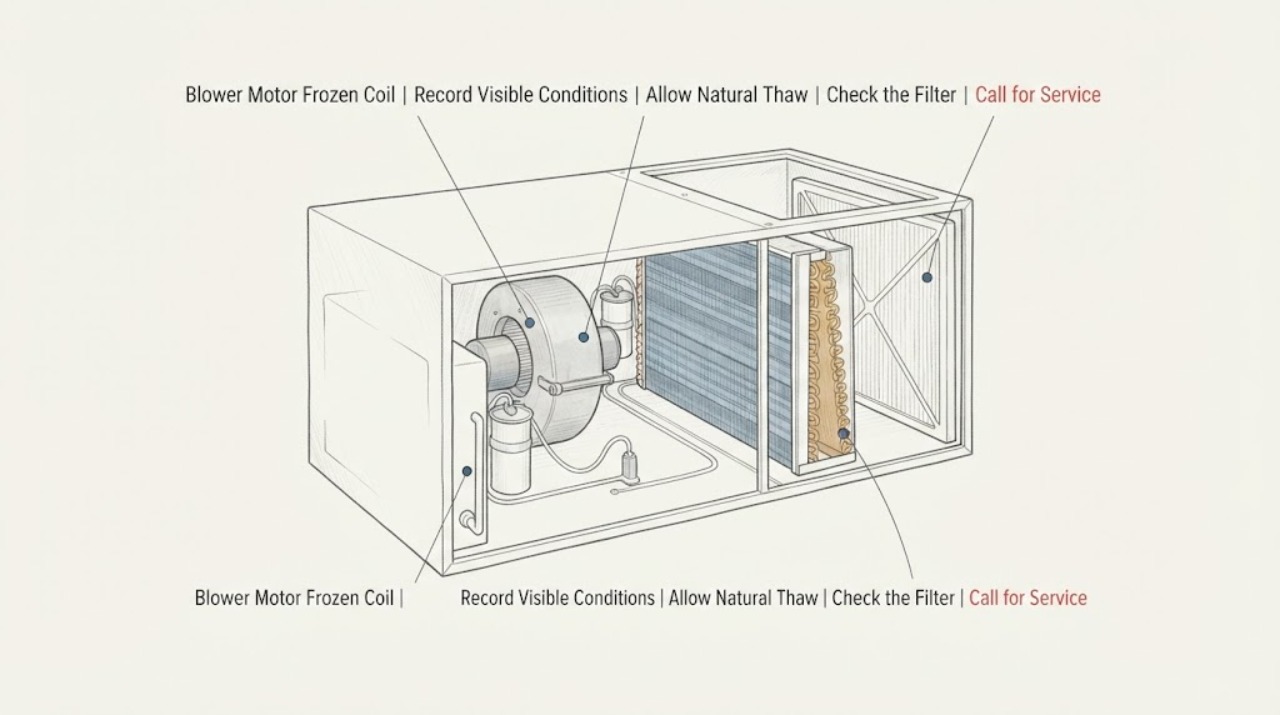
Blower Motor Frozen Coil: Let the Air Handler Thaw Before Diagnosis
A frozen evaporator coil around an air-handler blower is usually a symptom of restricted airflow, a blower or control problem, or a cooling-side condition such as low refrigerant; a dirty filter is only one possible cause. Turn the cooling call off and let the ice thaw naturally, without chipping it or pouring hot water on it.
-
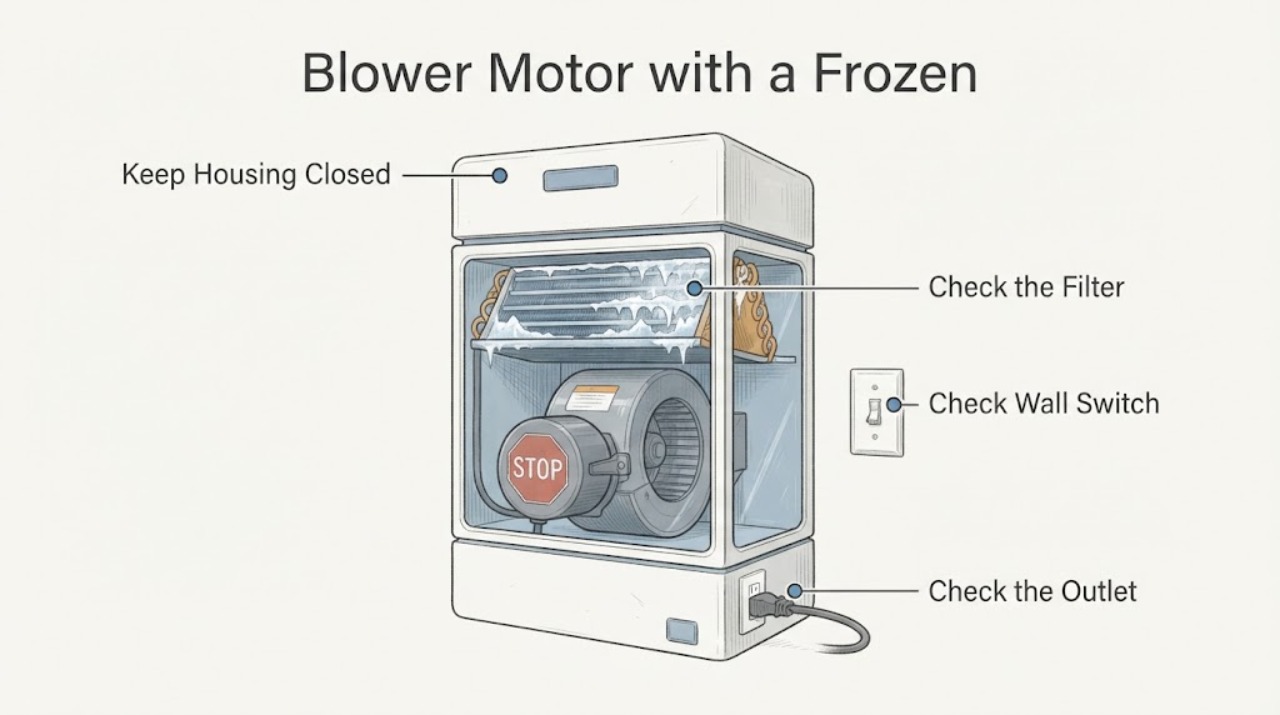
Blower Motor with a Frozen Evaporator Coil: Safe HVAC Checks
A frozen evaporator coil can restrict airflow enough to make a blower motor struggle, overheat, or stop, while a failing blower motor can also reduce airflow and allow the coil to freeze. Turn the cooling function off and let the evaporator coil thaw naturally; do not chip the ice, pour water on it, or keep running cooling through it.
-
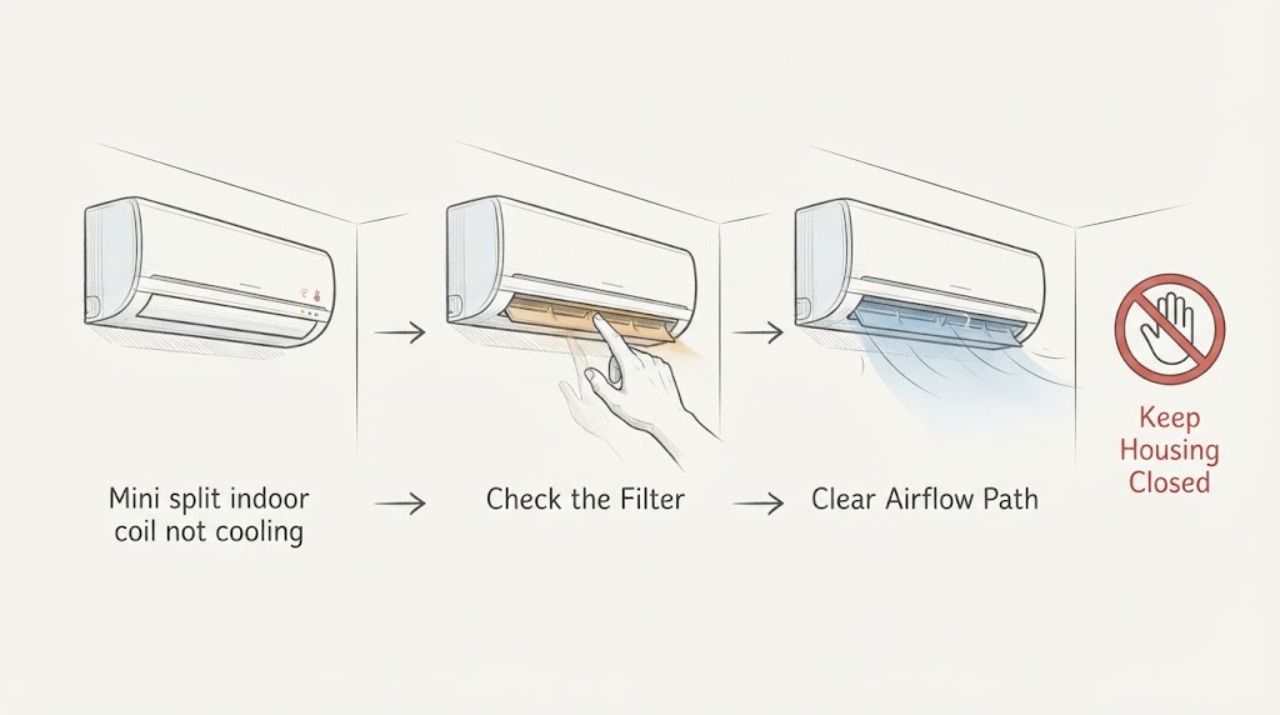
Carrier mini split indoor coil not cooling: What to Check and What to Do Next
If a Carrier mini split indoor coil is not cooling the room, first verify the remote is in Cool mode, the setpoint is appropriate, and the outdoor unit has power and is operating. Then turn the system off before opening the indoor front panel, clean the accessible air filter, and clear dust or furniture from indoor and outdoor airflow paths.
-
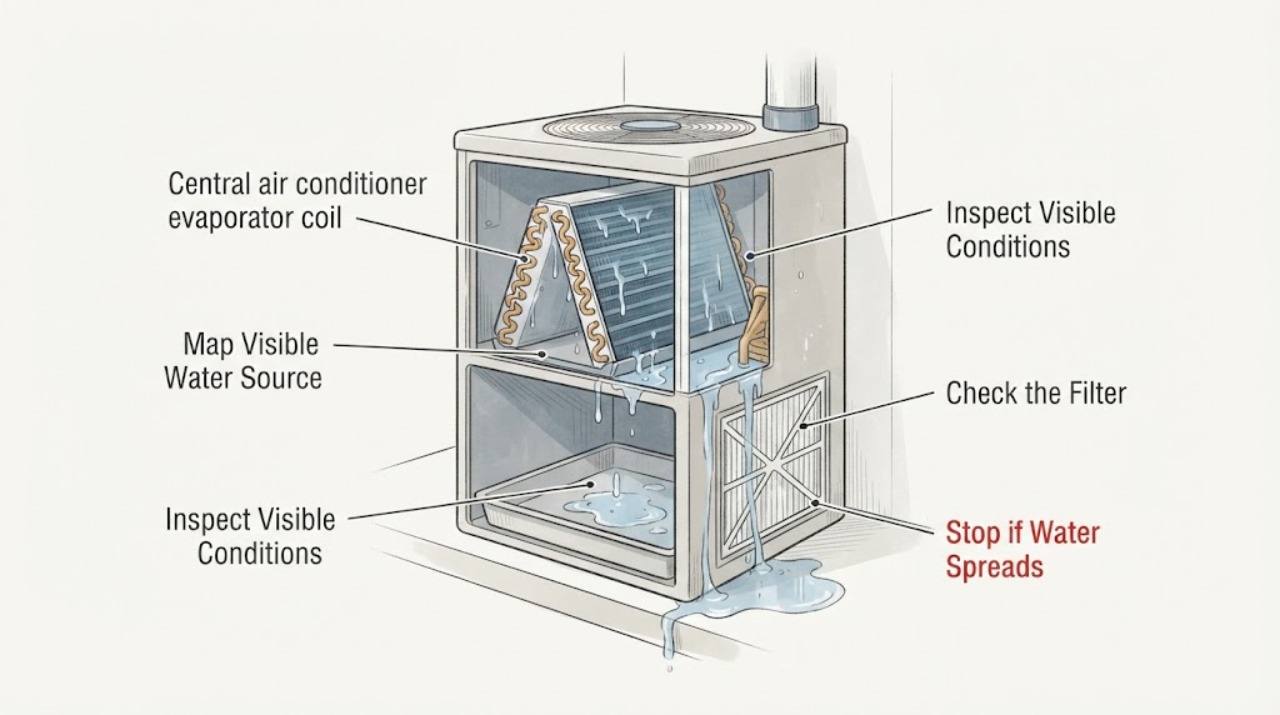
Central air conditioner evaporator coil leaking water: What to Check and What to Do Next
Water attributed to a central air conditioner's evaporator coil is usually a condensate-management or frozen-coil symptom, not a safe coil repair for a homeowner. From a dry, accessible position, note where water appears, whether ice or frost is visible without opening the cabinet, filter condition from its normal access point, drain-outlet behavior, and any water near electrical equipment.
-
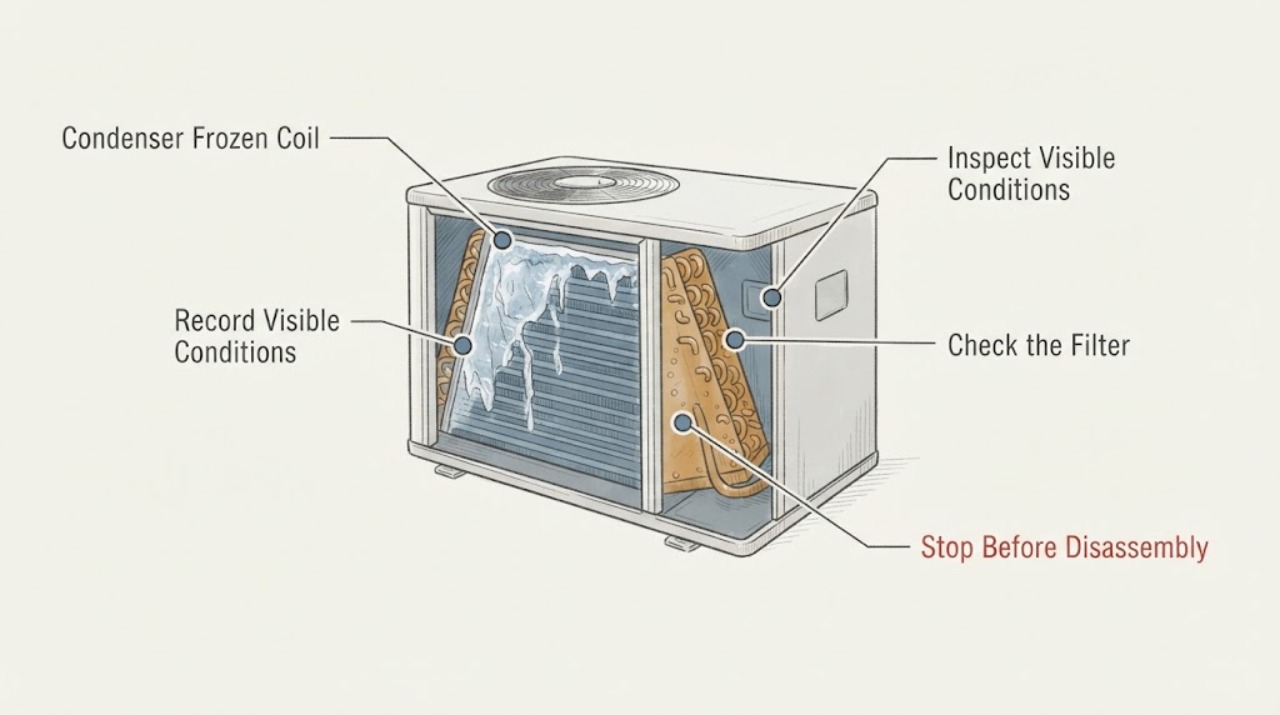
Condenser Frozen Coil: Separate Outdoor Condenser Frost from Indoor Evaporator Ice
A frozen coil is usually an indoor evaporator-coil or connected refrigerant-line problem, not proof that the outdoor condenser coil itself is frozen. From a safe position, switch cooling off, note whether ice is on the indoor cabinet or copper line and whether the outdoor condenser fan is running, and check only an accessible air filter, open registers, and visible water.
-
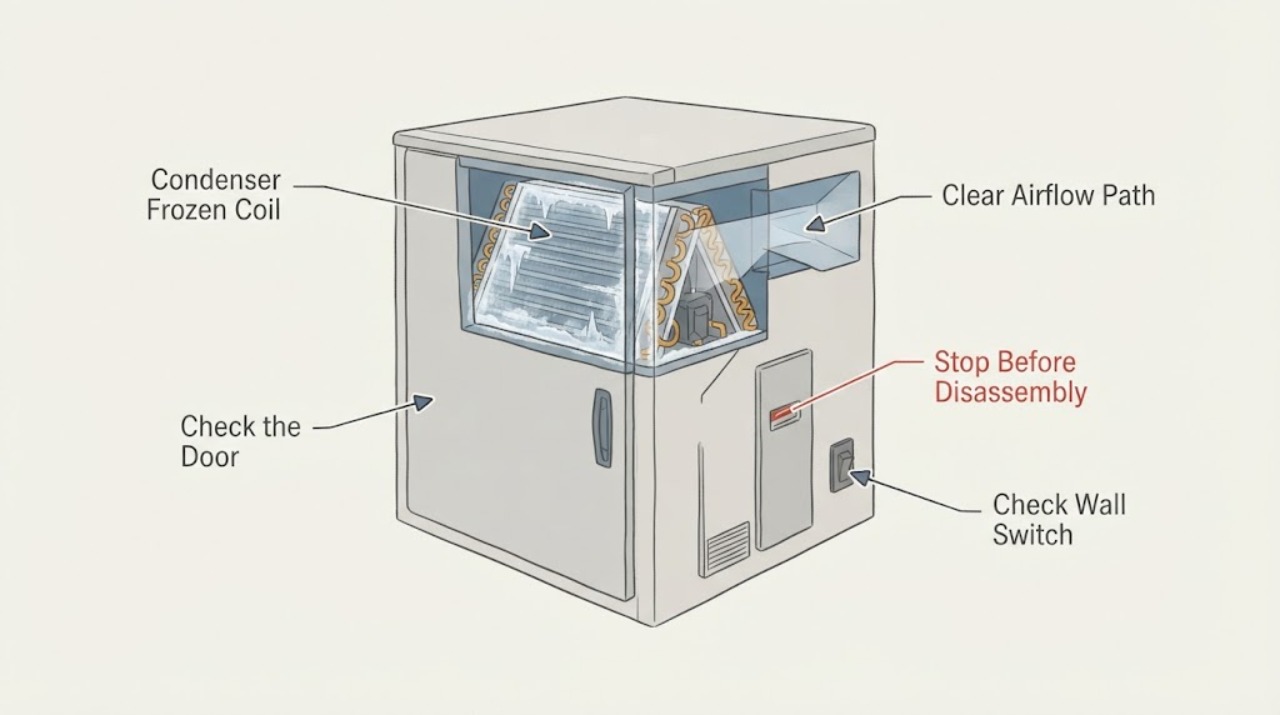
Condenser Frozen Coil: Distinguish the Outdoor Unit from the Evaporator
A coil that appears frozen near the outdoor condenser is often the indoor evaporator coil or the refrigerant line connected to it, not the outdoor condenser coil itself. Turn cooling off at the thermostat and let visible ice thaw naturally; do not chip it, pour hot water on it, or keep running the compressor against the ice.
-
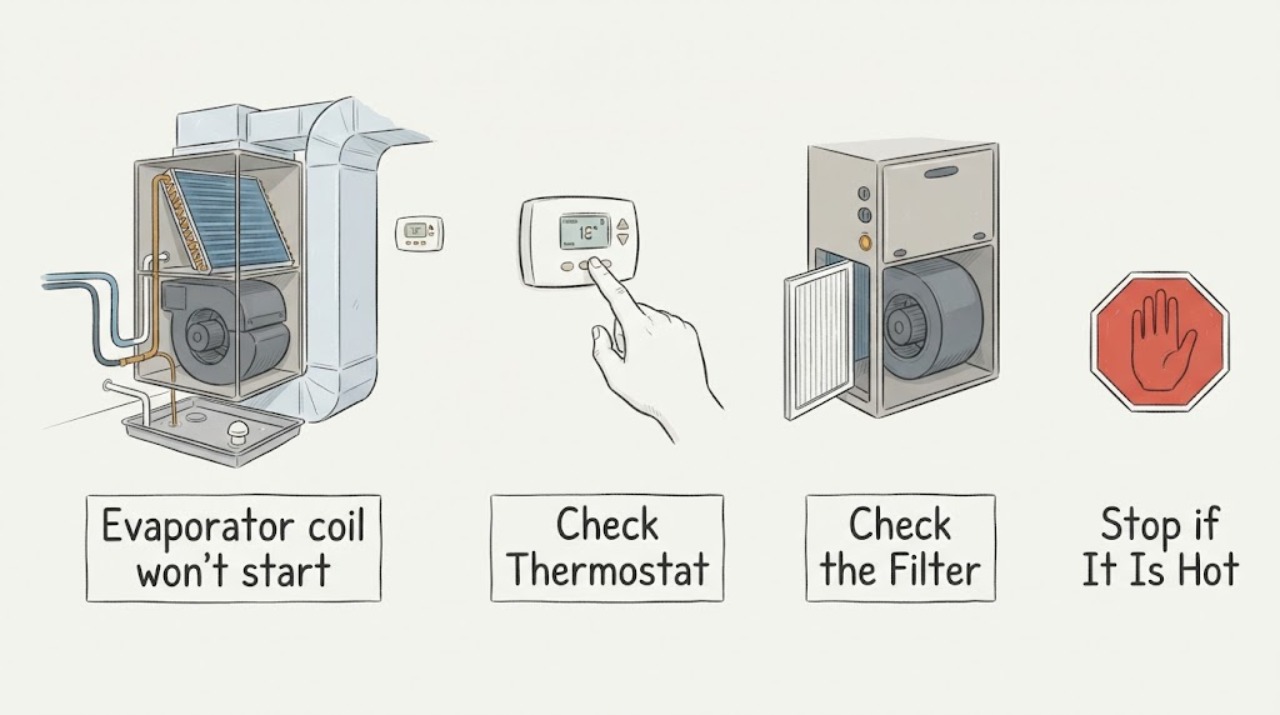
Evaporator coil won't start: Separate a coil symptom from an AC start failure
An evaporator coil itself does not start like a motor; it is the indoor heat-absorbing coil that works with the blower, condenser, controls, and refrigerant circuit. If an air conditioner seems not to start, first identify whether the thermostat calls for cooling, the indoor blower moves air, and the outdoor unit responds.
-
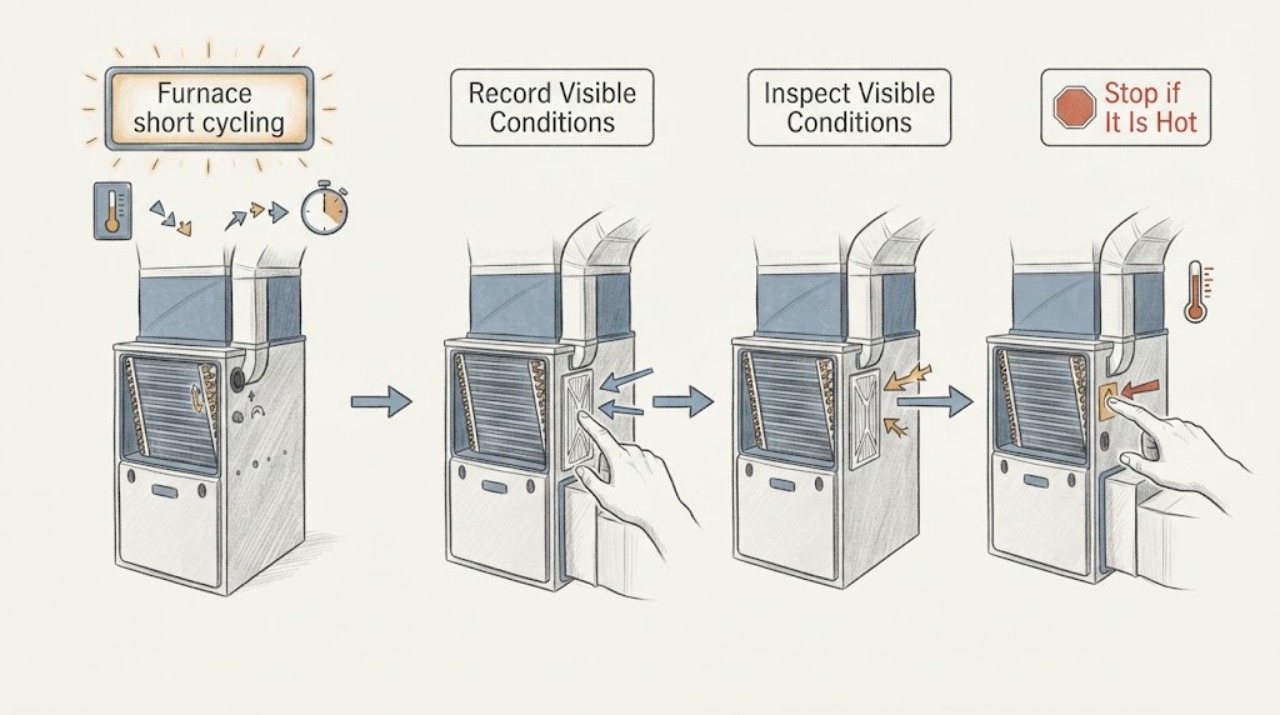
Goodman furnace short cycling: Check airflow around the evaporator coil
A Goodman furnace that starts and stops before the home is comfortable needs a pattern check, not a guessed coil replacement. The evaporator coil is normally part of the indoor air-handler or furnace-and-air-conditioner assembly, so a dirty filter, blocked return or supply path, restricted coil airflow, or a condensate problem can affect the furnace's heat cycle; a furnace that is simply oversized or a thermostat that is satisfied quickly is a different branch.
-
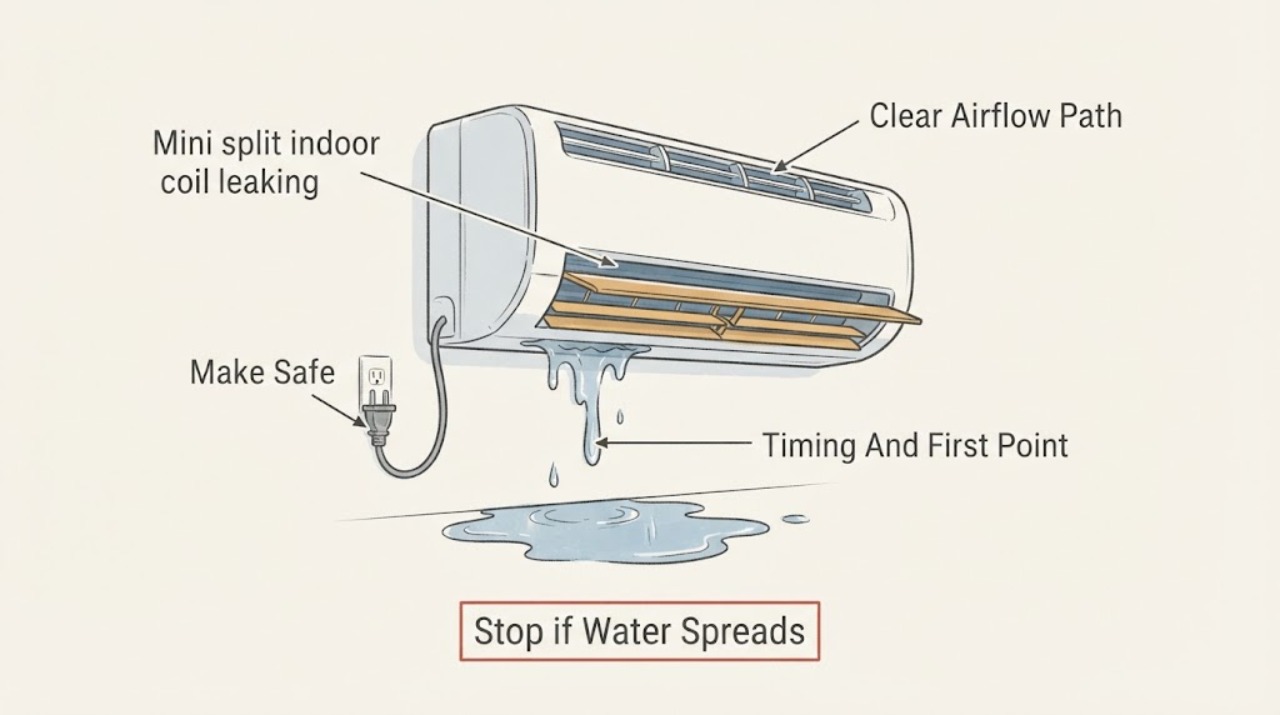
Mini split indoor coil leaking water: What to Check and What to Do Next
For a mini-split indoor coil that appears to leak water, first turn the system off and observe from the floor. Find the first wet point and record whether it appears during cooling, after shutdown as ice melts, after a long run, in humid conditions, or continuously.