
Repair service
Windows Guides – Page 3
Window repair, installation, and maintenance.
Published windows guides
Choose the guide that best matches the service and problem you are seeing.
-
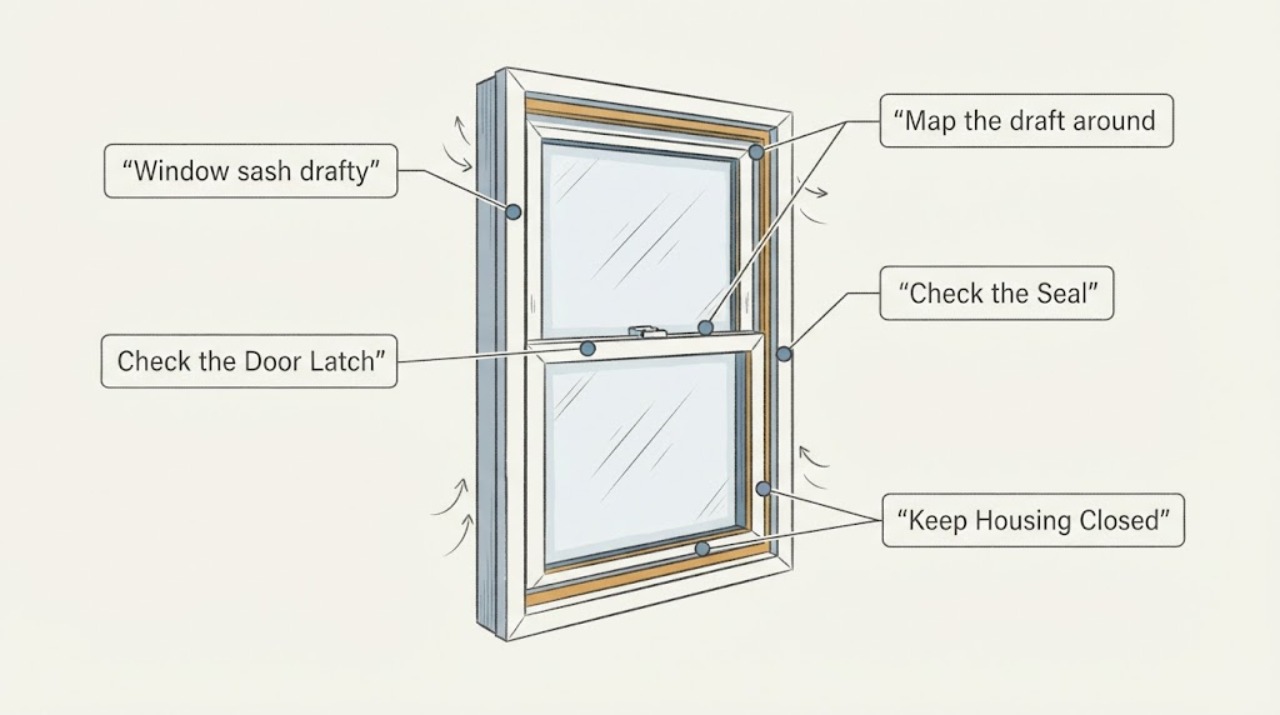
Window sash drafty: What to Check and What to Do Next
A draft at a closed window sash usually comes from an air path at the meeting rail, side stops, weatherstripping, lock-side gap, or surrounding frame—not proof that the glass itself is leaking. Close and latch the sash, use a paper or tissue check to locate movement, and inspect visible seals without removing trim or glass.
-
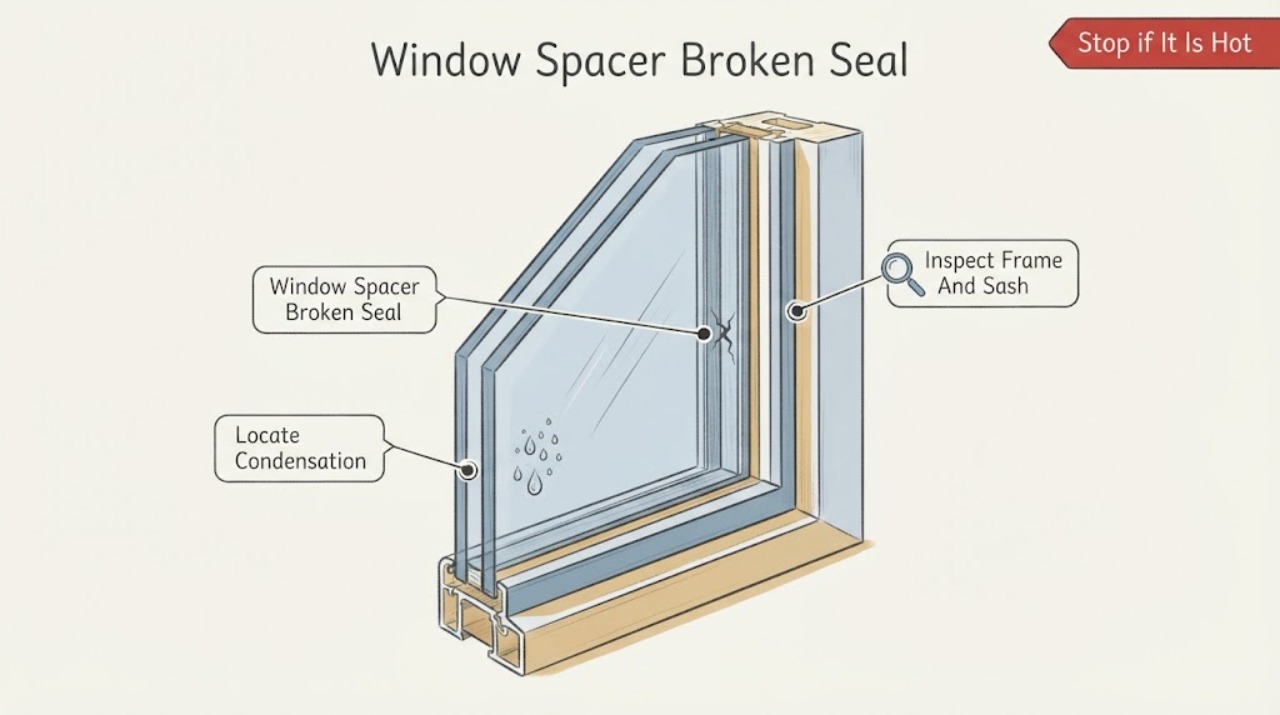
Window Spacer Broken Seal: What to Check and What to Do Next
If moisture or a fixed haze is trapped between the panes of an insulated window, the spacer and perimeter seal have likely lost the sealed cavity rather than the room-side glass simply being dirty. Confirm where the moisture is, check the frame and sash for separate water damage, and then ask the manufacturer or a qualified glazing professional whether the insulated glass unit or the entire window should be replaced.
-
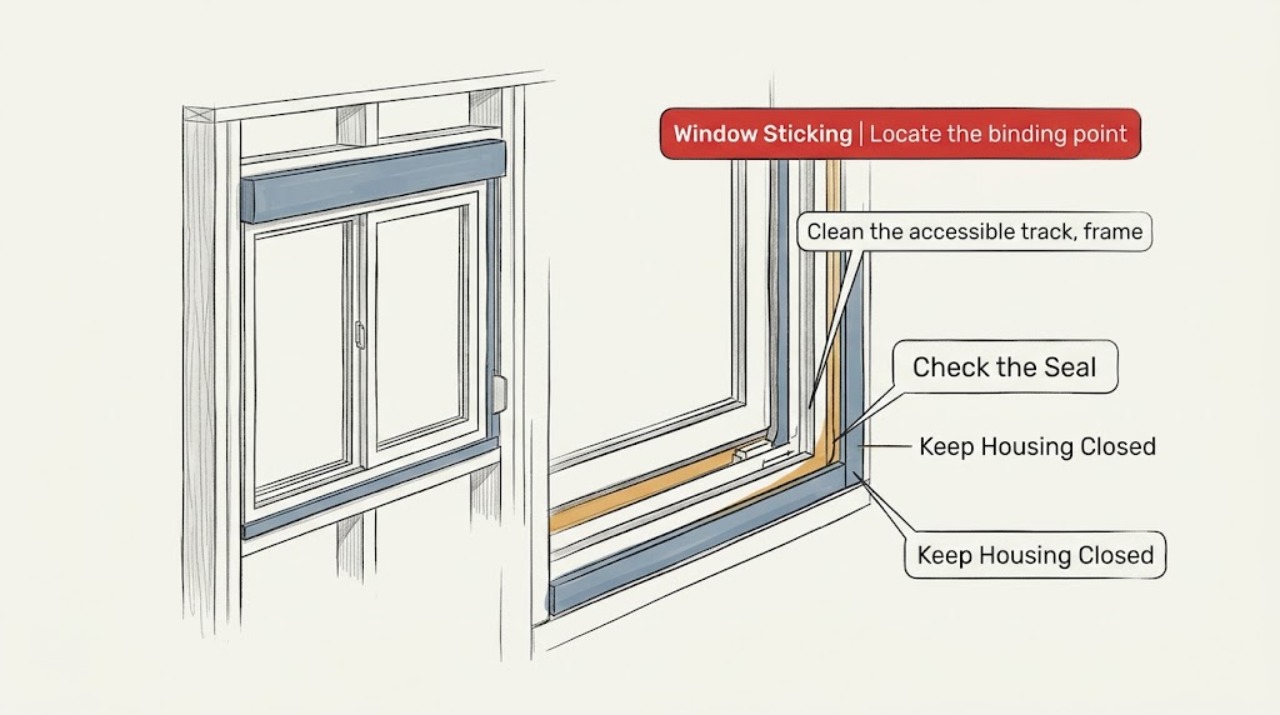
Window Sticking: Clean the Frame, Check Alignment, and Stop Before Forcing the Sash
When a window sticks, first determine whether the sash is rubbing the frame, the track is dirty, the lock or operator is misaligned, or the wood or surrounding frame has swollen, shifted, or been painted shut. Confirm that the unit is designed to open, then inspect the frame and tracks for dirt, paint, debris, moisture swelling, or a visibly uneven reveal.
-
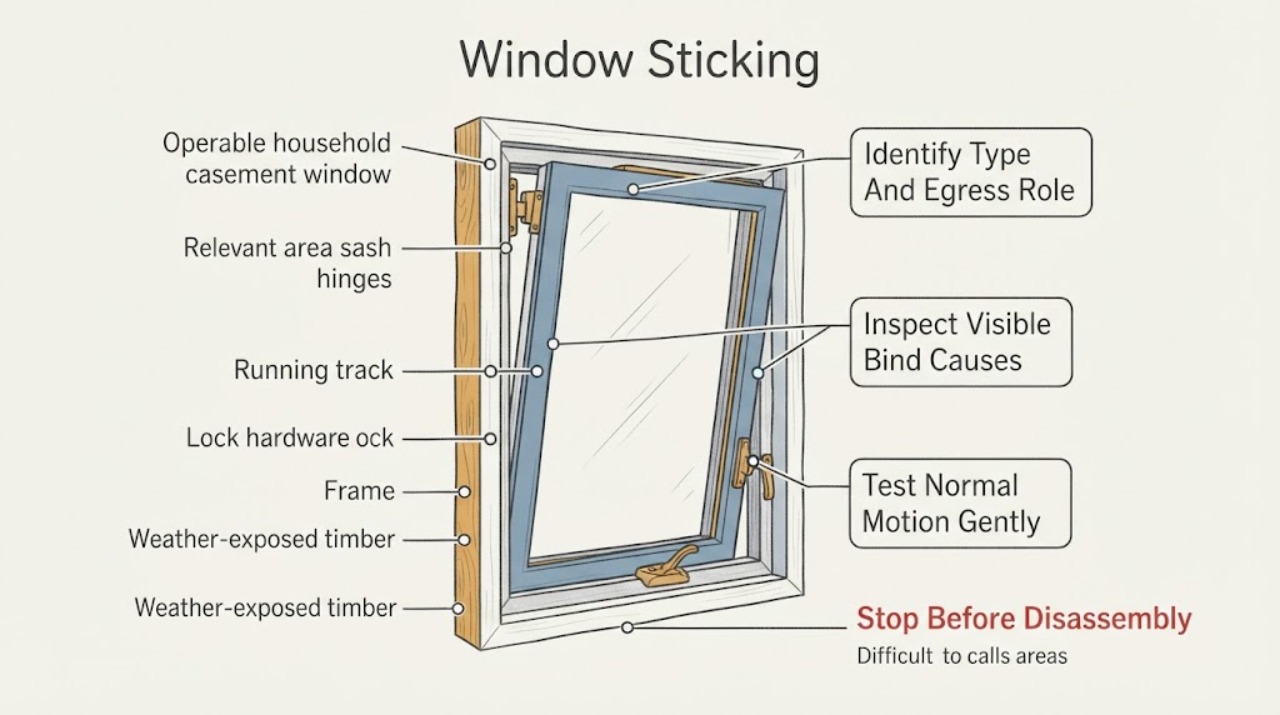
Window Sticking: Find the Bind Without Forcing It
Do not force a sticking window or pry on its glass. First identify whether it is a sliding sash, casement, or another design, and whether it is a bedroom or other emergency-escape window.
-
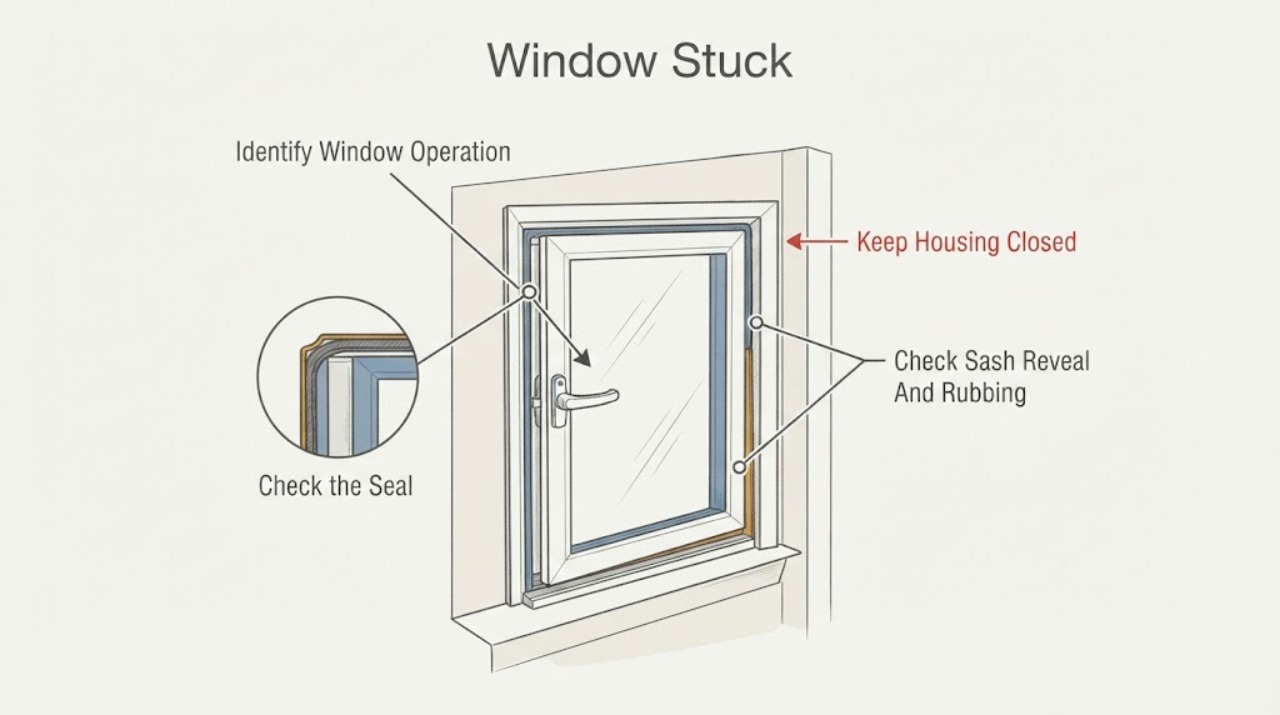
Window Stuck
Do not force a stuck window or use a tool against the glass. First identify whether it is a fixed, sliding, double-hung, or casement window and confirm that the lock or handle is fully in its open position.
-
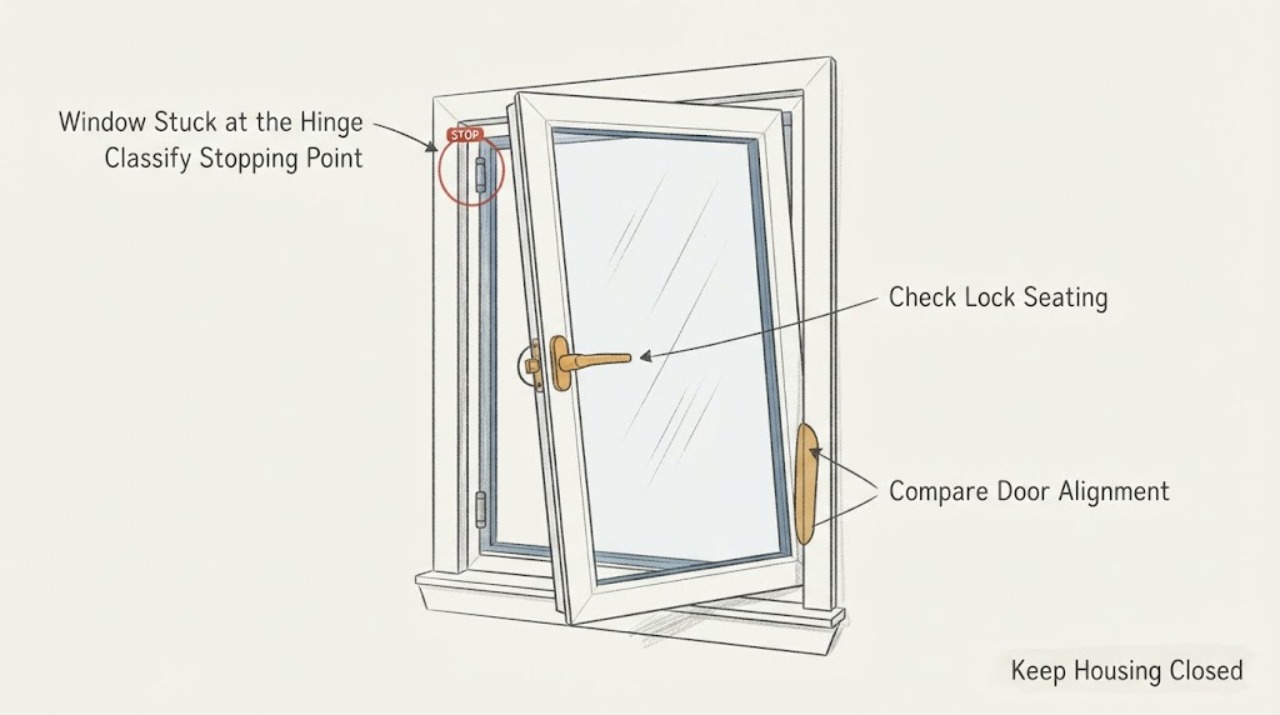
Window Stuck at the Hinge or Lock: Safe Checks for a Jammed Sash
A stuck window usually has a lock that has not fully released, an obstruction or ice bond at the sash and frame, a binding hinge or operator, or a sash that has shifted out of alignment. Keep your hands clear of the glass and hardware, identify whether the lock or hinge side is stopping movement, and inspect only the visible areas from a safe position.
-
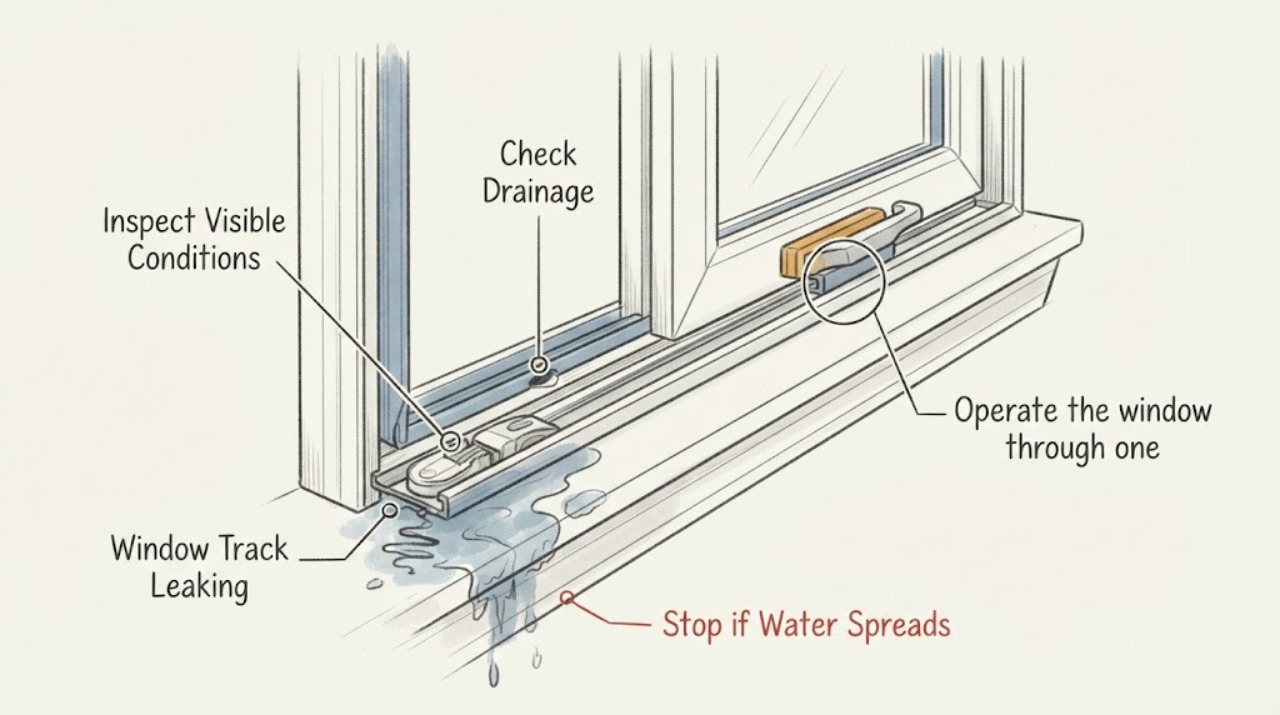
Window Track Leaking: Check Weep Holes and Drainage
If water appears in a window track, do not assume the track itself is the source. Wipe the sill and track dry, observe during ordinary rain, and determine whether water is entering through the sash seal, collecting as intended and failing to drain through the weep openings, or arriving from the frame, trim, flashing, or wall above.
-
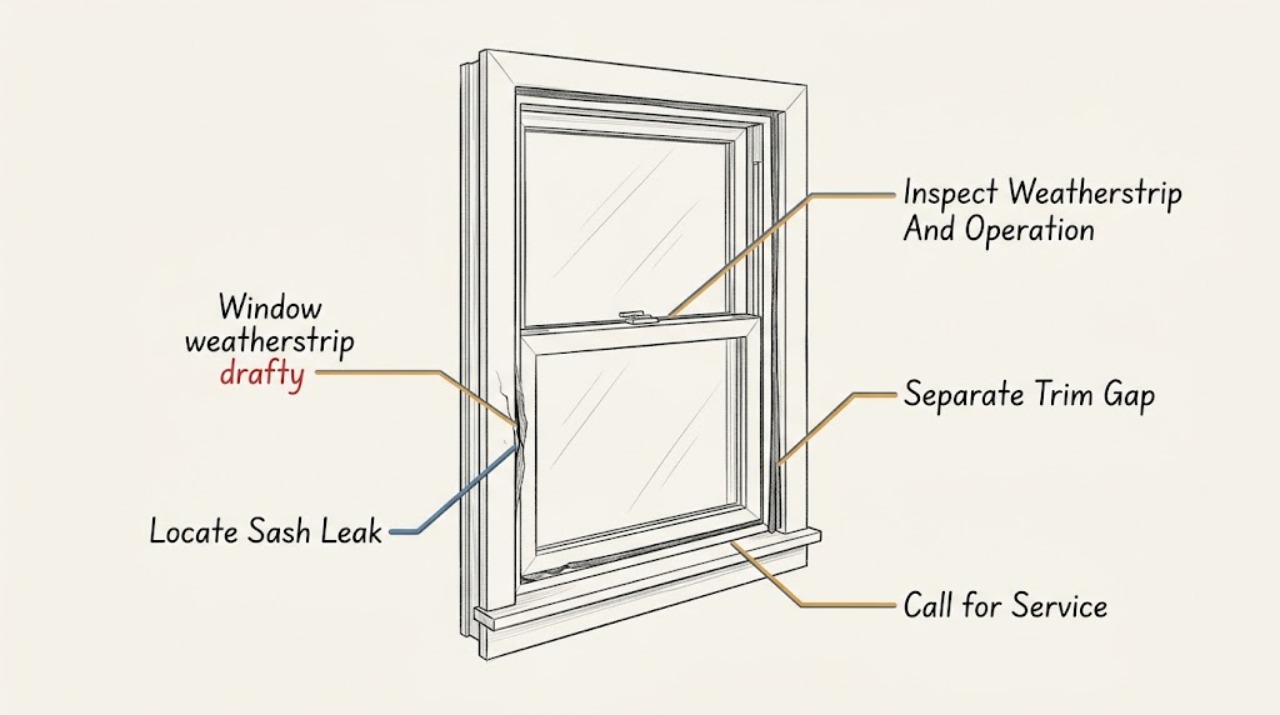
Window weatherstrip drafty: What to Check and What to Do Next
A draft around a closed window usually comes from a compressed, missing, damaged, or incorrectly fitted weatherstrip, but the air may also be entering around the fixed trim or through a larger installation gap. First locate the leak with a safe paper check and inspect the sash, meeting rail, latch side, corners, and fixed trim.
-
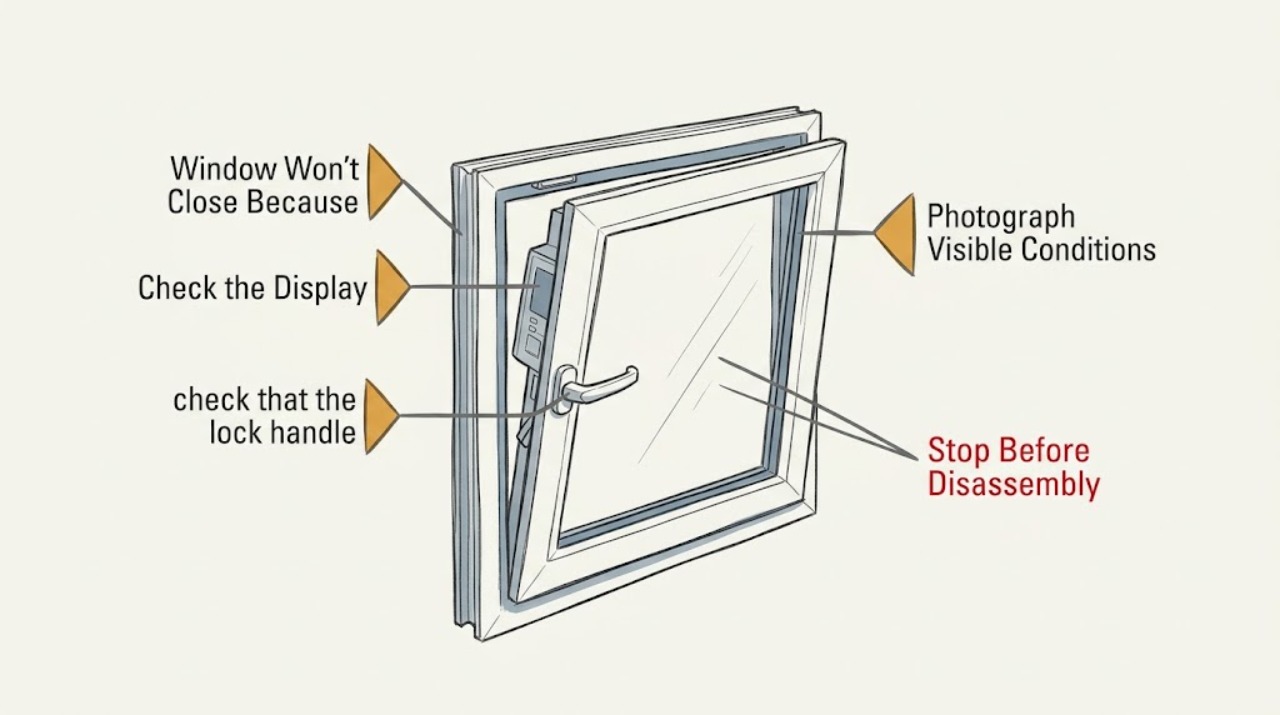
Window Won't Close Because the Lock Won't Engage: Check Alignment and the Keeper Safely
If a window will not close because the lock will not engage, stop forcing the handle and identify the window style and lock parts first. With the sash supported and the area safe, open it only as far as needed to inspect for a visible obstruction, a shifted keeper or strike, a lock cam left in the closed position, or a sash that rubs or sits unevenly in the frame.
-
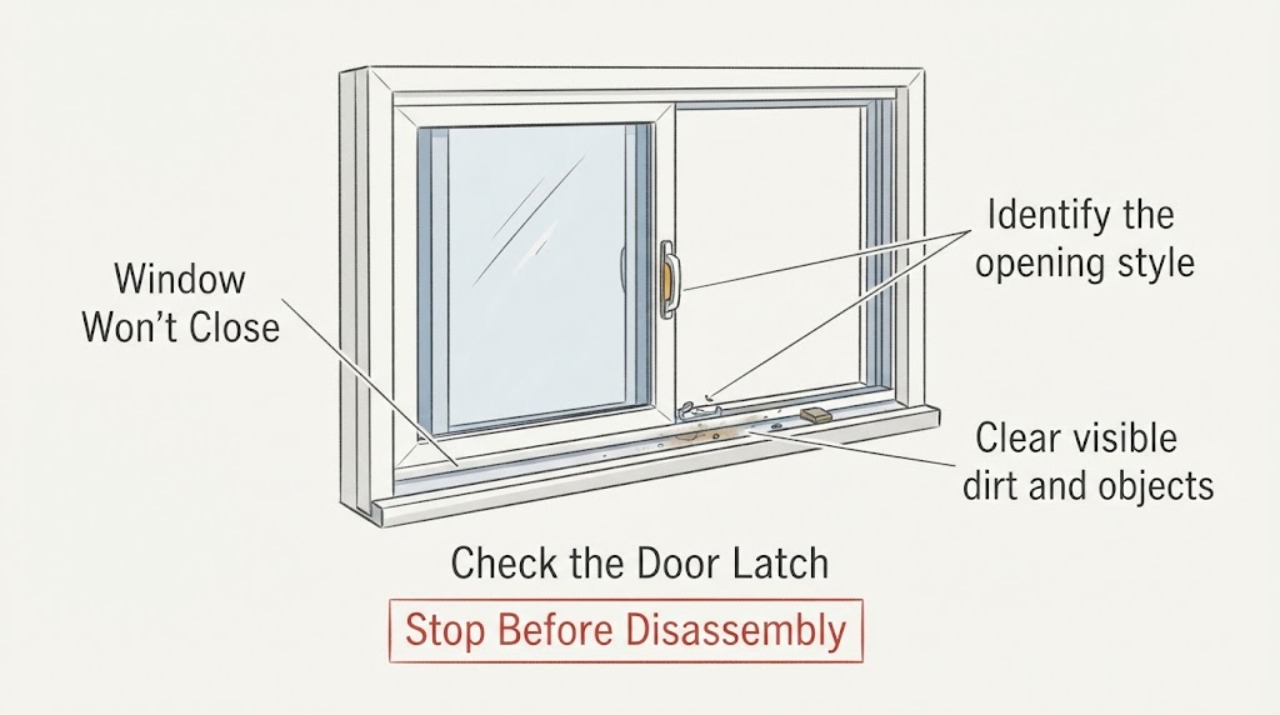
Window Won't Close: Clear the Track and Identify the Binding Point
A window that will not close usually needs the opening style and exact binding point identified before any adjustment. First determine whether it is a horizontal or vertical slider, casement, or tilt-and-turn window.
-
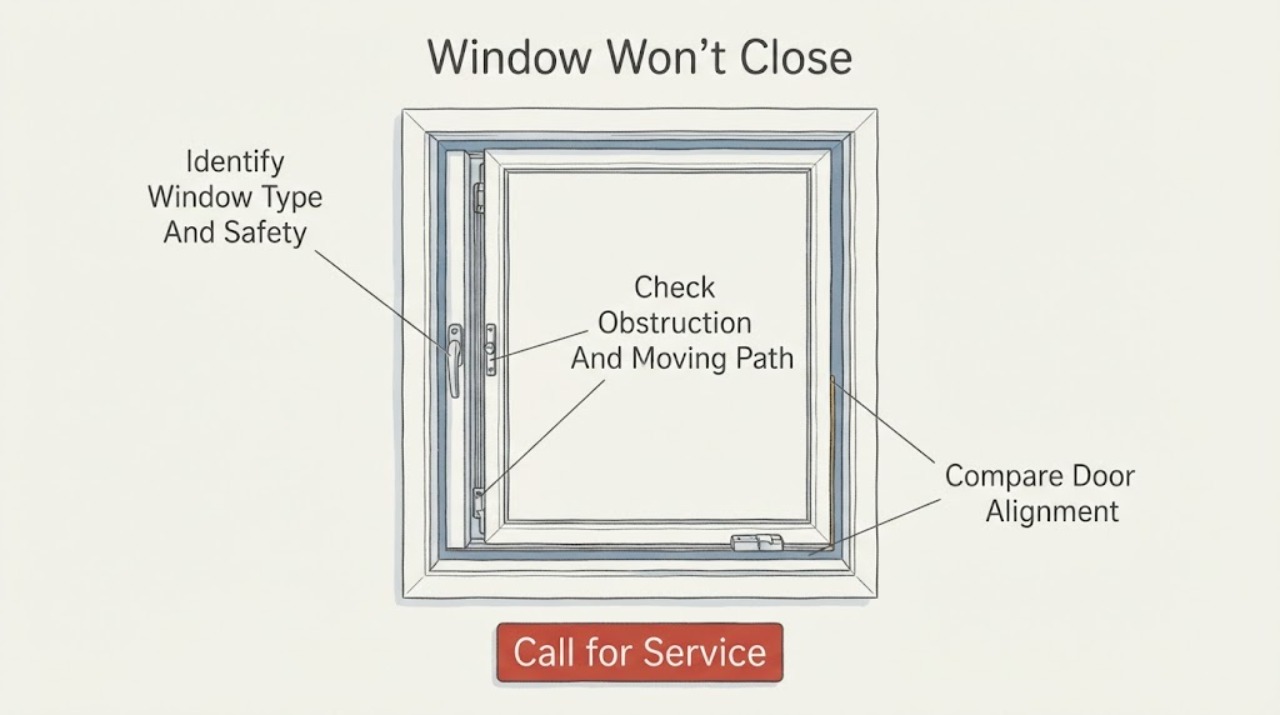
Window Won't Close: Check Obstructions, Sash Alignment, and the Lock Safely
If a window will not close, stop before forcing the sash or lock. From inside, identify whether it is a slider, double-hung, casement, awning, or another type, then look for a curtain, object, dirt, loose weatherstrip, or clothing caught in the moving path.
-
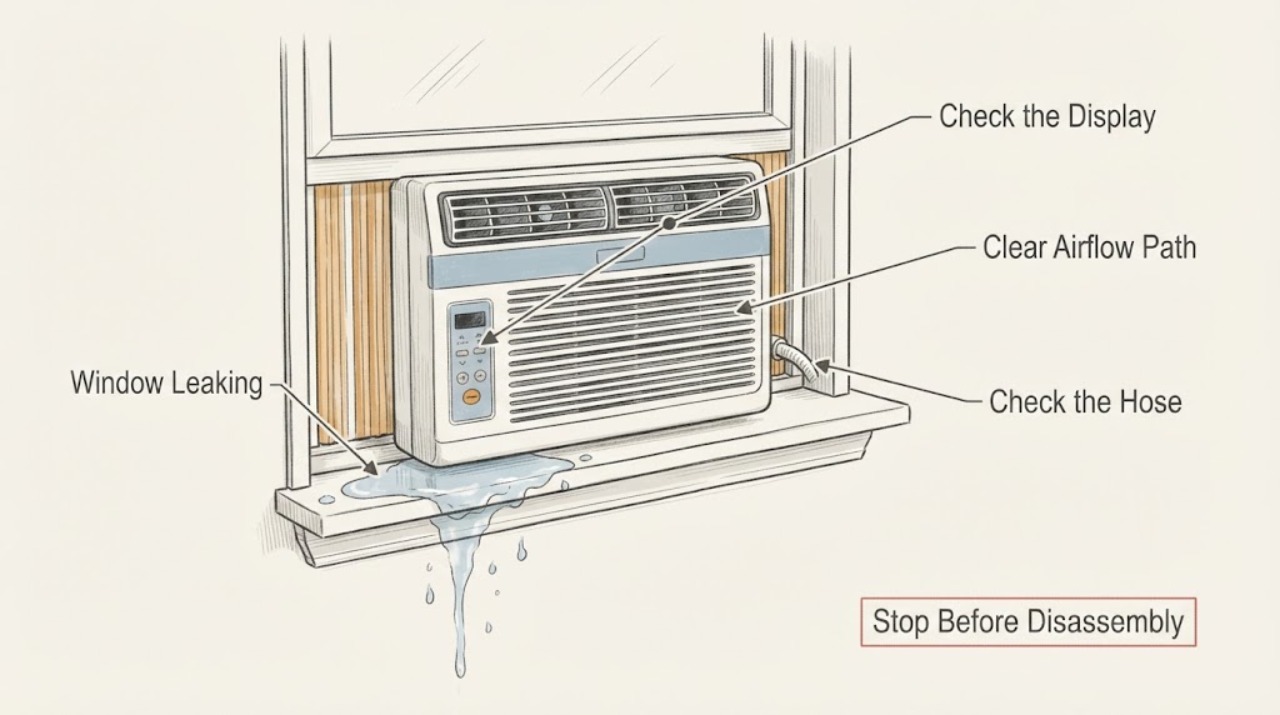
York Window Leaking: Trace the Water Before It Damages the Wall
If a YORK window-type air conditioner is leaking, first identify whether the water is condensate from the unit, rain entering around the installation, or water tracking from another part of the window or wall. Turn the unit off if water is reaching electrical parts, the wall is becoming saturated, or the unit is unstable.