
Samsung appliance guidance
Samsung Freezer Repair Guides
Troubleshooting and repair guidance for published Samsung Freezer problems, symptoms, and maintenance questions.
Published Samsung Freezer guides
Choose the guide whose symptom or condition most closely matches what you are seeing.
-
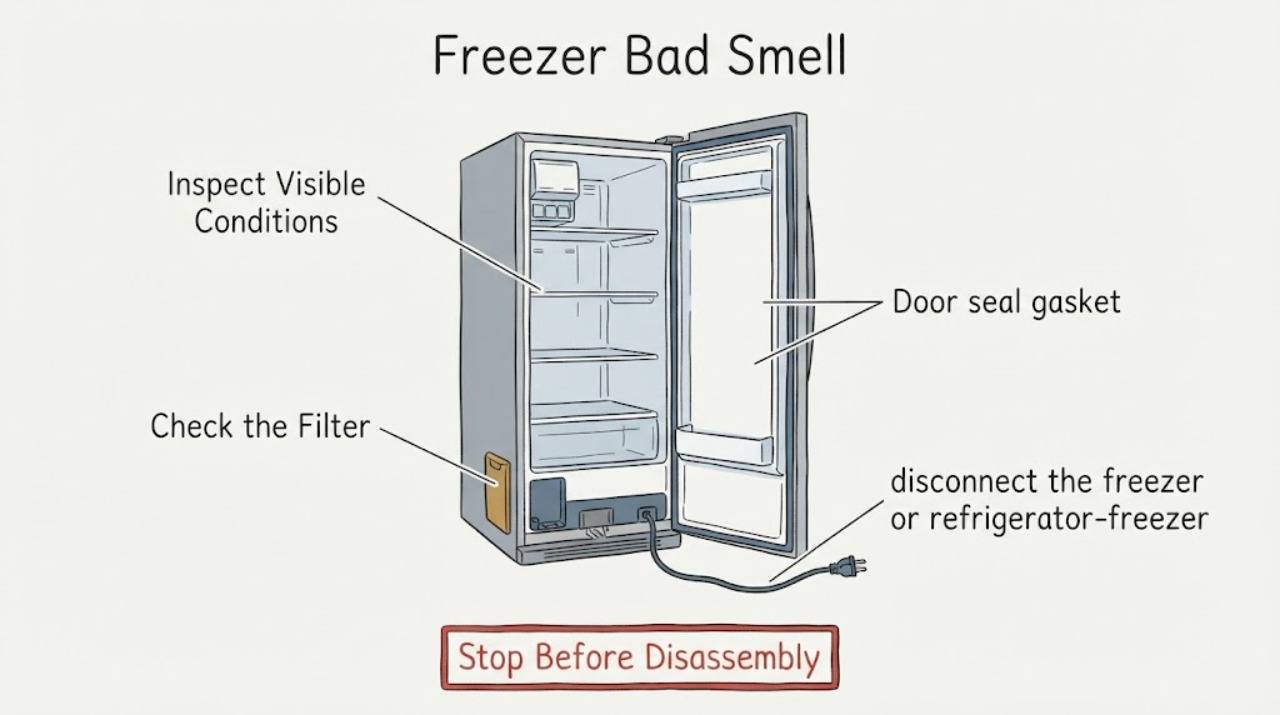
Samsung Freezer Bad Smell: Find the Source and Clean It Safely
A bad smell in a Samsung freezer usually starts with spoiled food, an uncovered strong-smelling item, a spill or residue, stale ice, or water that is not draining correctly. Empty the freezer, remove questionable food, inspect the ice and visible drain area, and wipe the interior with a soft cloth and mild refrigerator-safe detergent; dry everything before restocking.
-
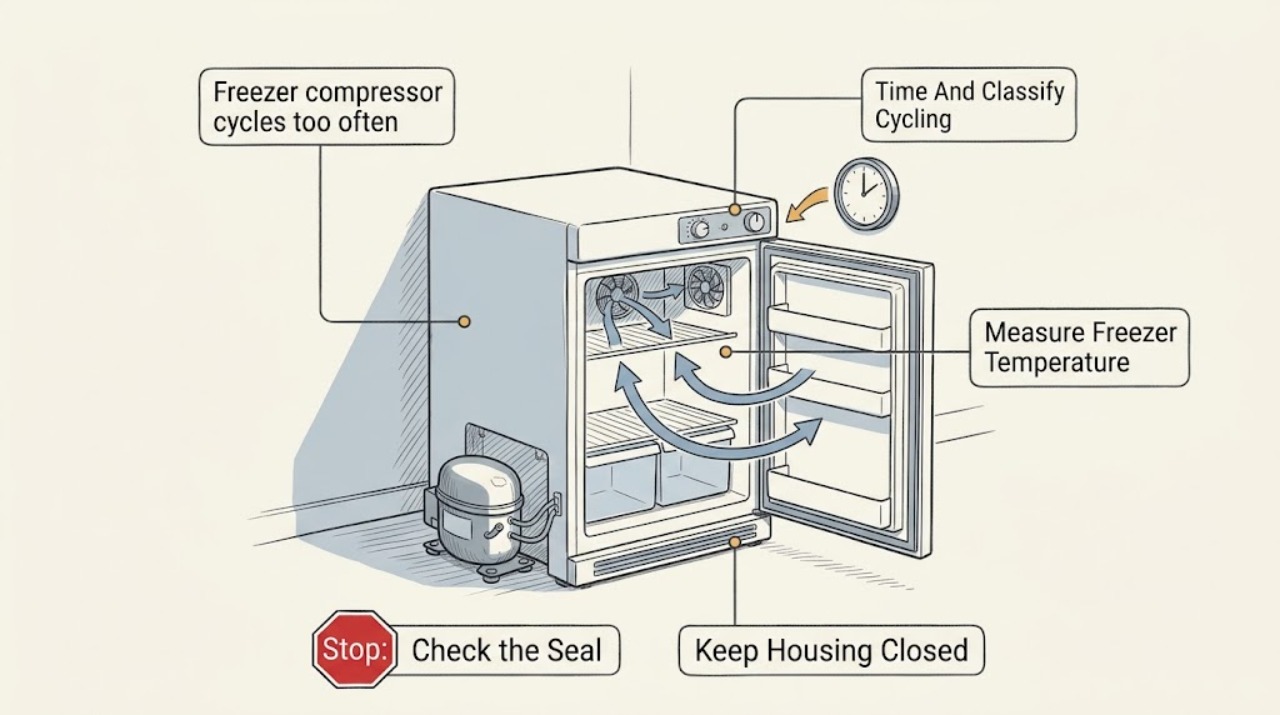
Samsung freezer compressor cycles too often: What to check next
A Samsung freezer can change compressor speed and run for long periods while it removes heat, so a long hum is not automatically a fault. First determine whether it is actually starting and stopping every few minutes, or simply running at low or high speed while the food stays cold.
-
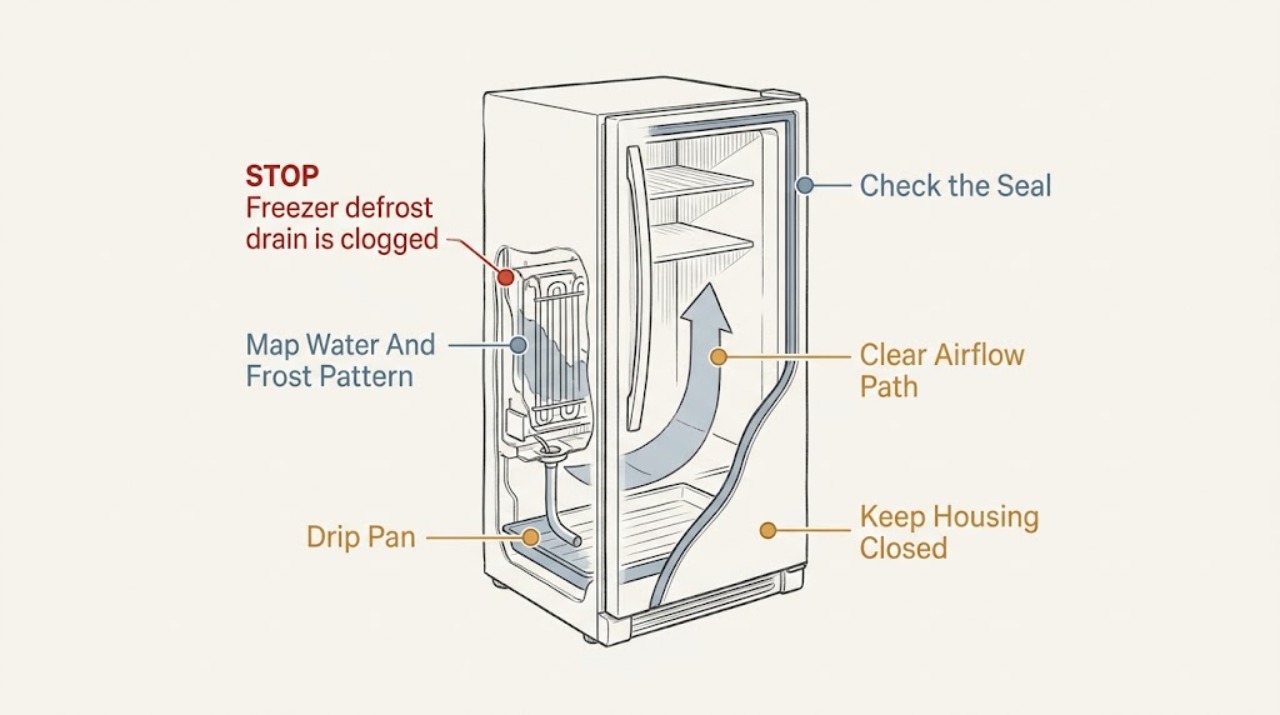
Samsung freezer defrost drain is clogged: What to Check and What to Do Next
A Samsung freezer defrost drain that is blocked by food debris or ice can leave water or a sheet of ice under the drawers, on the freezer floor, or outside the appliance during defrost. First confirm that the water is not a spill, dispenser leak, or condensation, and check that the door closes, the gasket seals, and food is not pressed against the rear wall or vents.
-
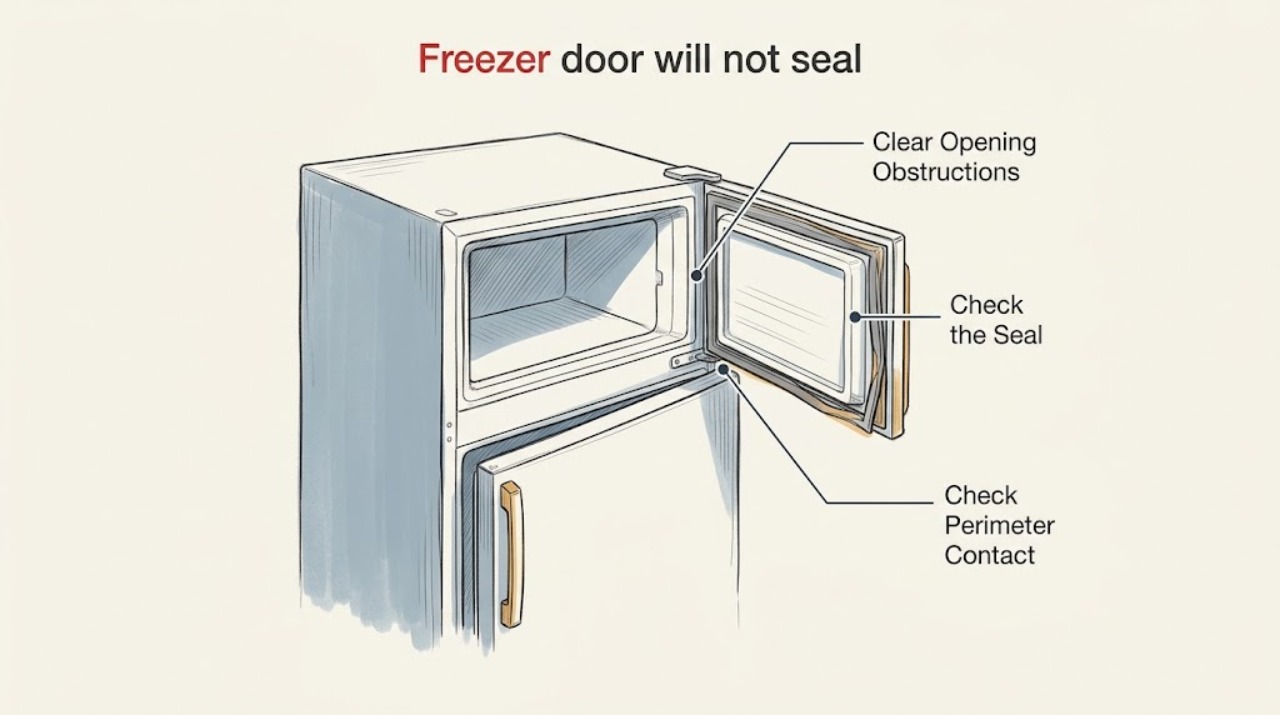
Samsung freezer door will not seal: What to Check and What to Do Next
A Samsung freezer door that will not seal is most often being held open by a package, shelf, drawer, or ice; has a dirty, displaced, or damaged gasket; or is not aligned with the cabinet. With the freezer closed, clear anything touching the door, clean and dry the gasket, and use a flashlight or paper check around the full perimeter to find a gap.
-
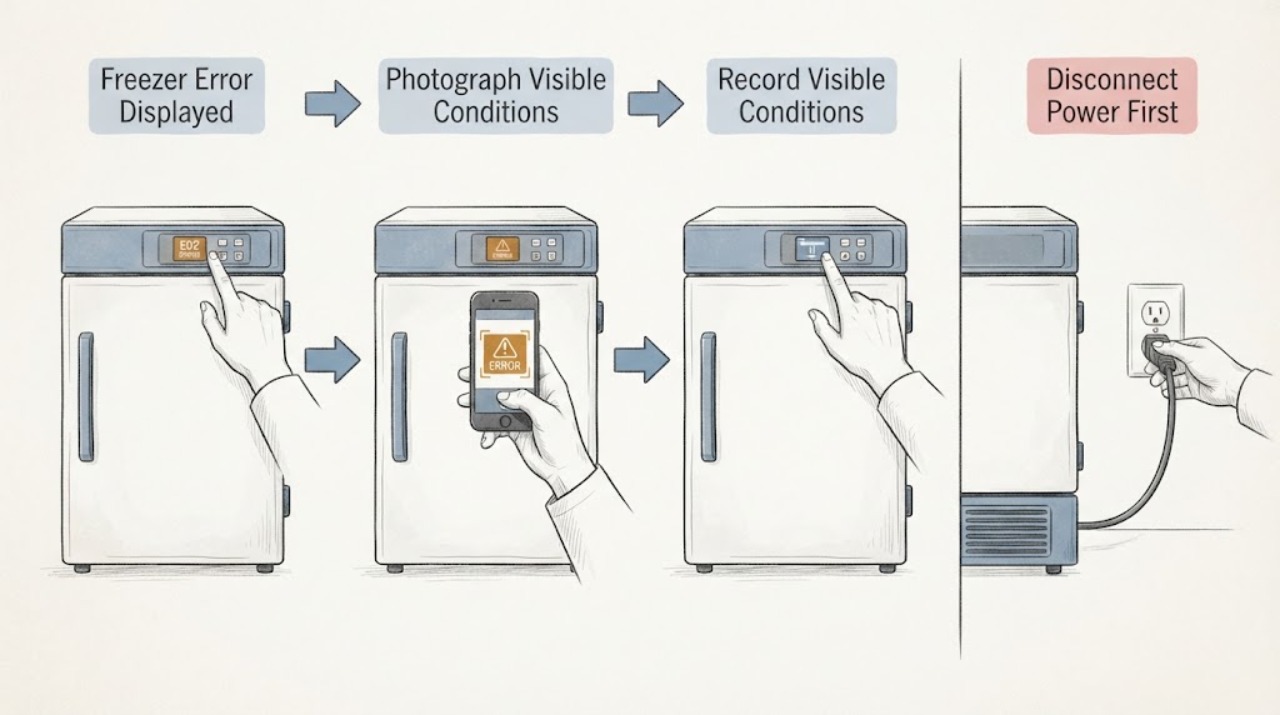
Samsung Freezer Error Displayed
When a Samsung freezer displays an error, do not erase the code before recording it. Photograph the complete display, including letters, numbers, alternating segments, and flashing icons, then identify the exact model.
-
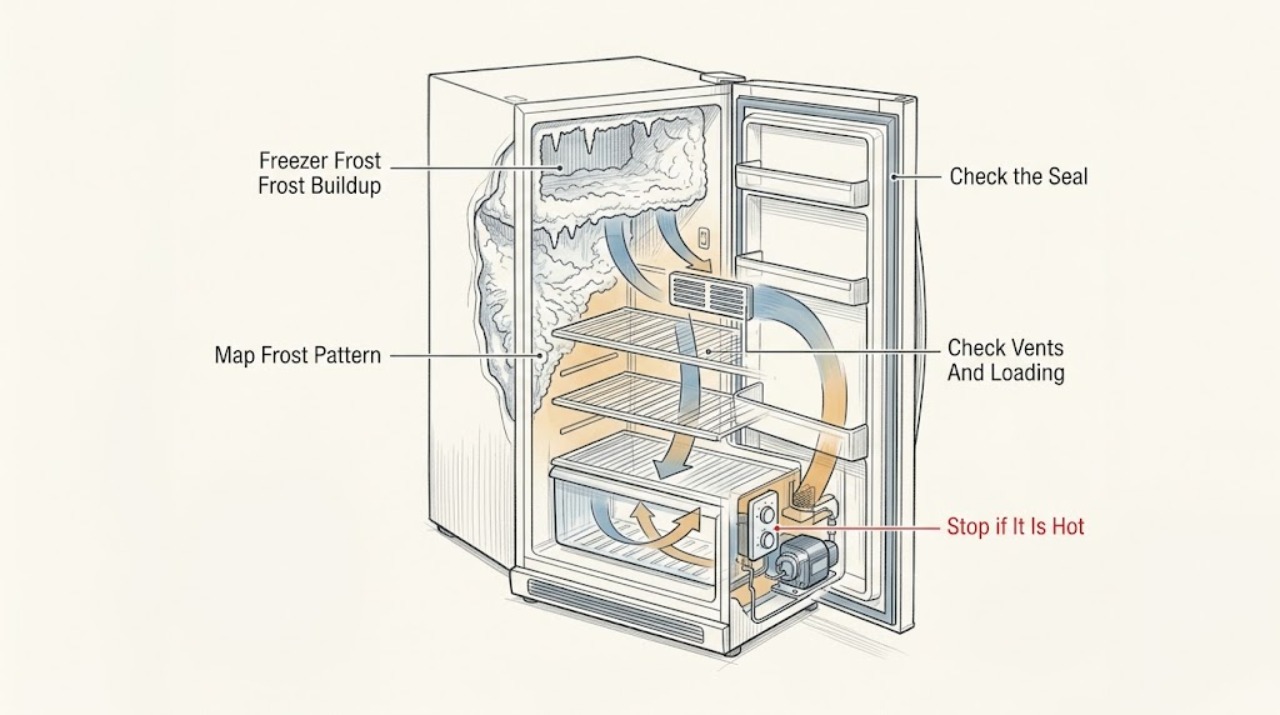
Samsung Freezer Frost Buildup: Find the Air Leak and Defrost Safely
Samsung says freezer frost forms when warm, moist air enters through a door that is left open, food or drawers that prevent sealing, a damaged gasket, or blocked vents. First identify whether the frost is a thin local film, a door-edge band, a vent blockage, or a heavy layer across the compartment.
-
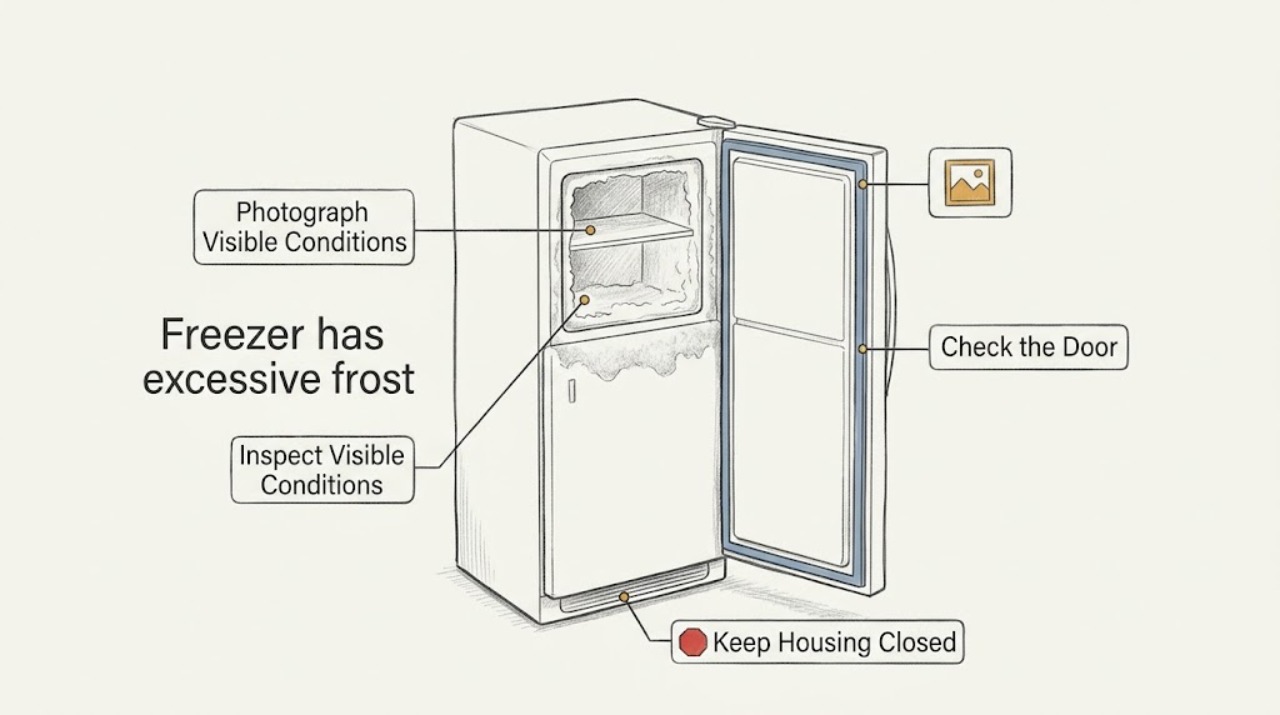
Samsung freezer has excessive frost: What to Check and What to Do Next
Excessive frost in a Samsung freezer is usually a moisture and air-seal problem: warm, humid air enters through a door left open, hot food, a blocked closure, or a damaged seal, then freezes. Start by checking that the door or freezer drawer closes fully, that food is not blocking it, that the rubber seal is clean and undamaged, and that interior vents have about the clearance Samsung specifies.
-
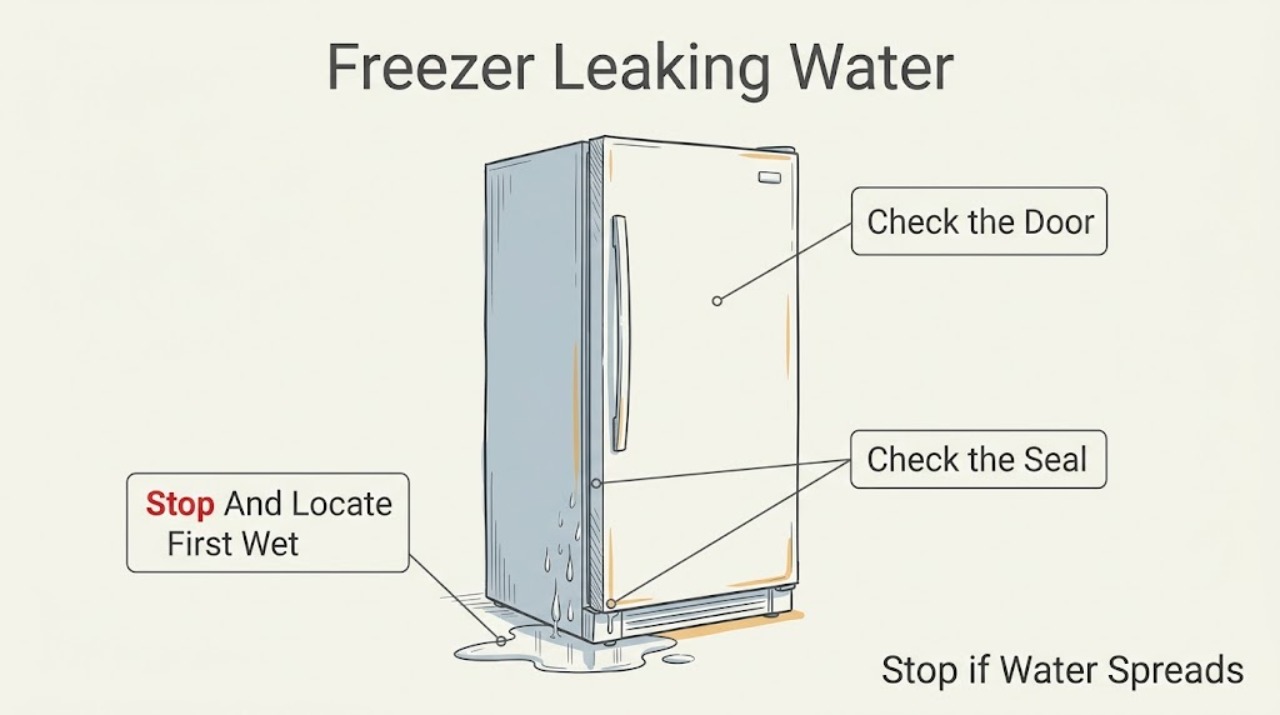
Samsung Freezer Leaking Water: What to Check and What to Do Next
Start by turning off ice making or cooling through the normal controls if water is actively leaking, and identify the first wet point before assuming the freezer itself is the source. Samsung says water under drawers or under the refrigerator can be condensation after a power interruption or a food spill, while water can also follow a blocked drain, melting frost, an ice-maker or water-line issue, or a door that is not sealing.
-
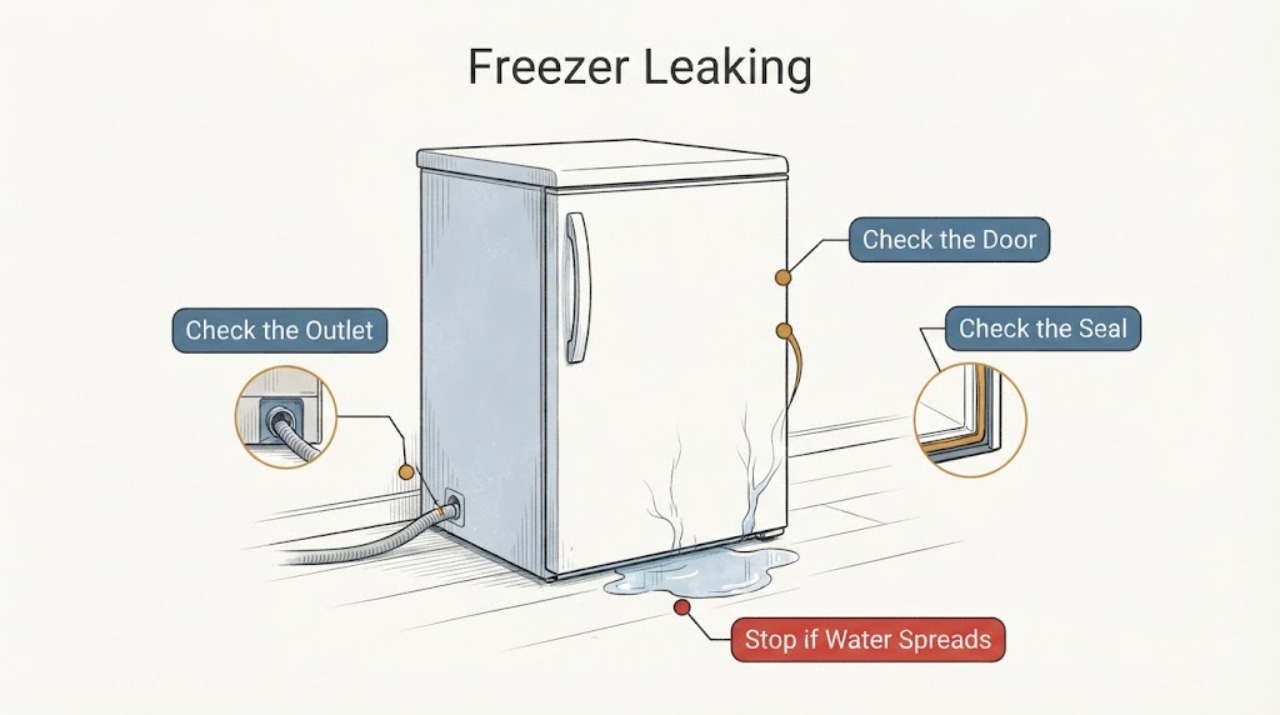
Samsung Freezer Leaking: Find the Water Source Safely
First find where the water begins instead of diagnosing from the puddle alone. Dry the floor safely, then check for a spill or condensation, a door or lid that is not sealing, frost or a blocked drain path, and an accessible ice-maker or water-line connection.
-
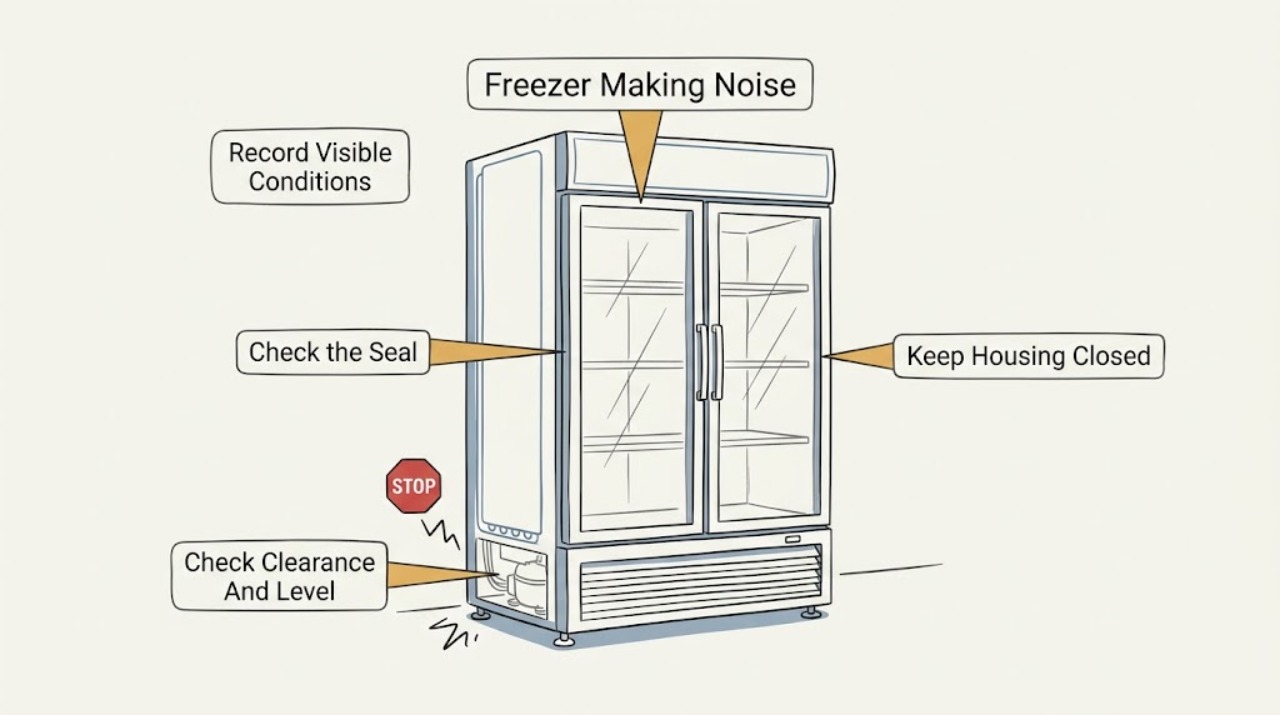
Samsung Freezer Making Noise: Tell Normal Cooling Sounds from Rattles
Some Samsung freezer sounds are normal: a compressor hum or click, air movement from a fan, bubbling or hissing from refrigerant and defrost water, and brief cracking or popping as materials change temperature. A rattle, scrape, or vibration deserves a short, safe isolation check.
-
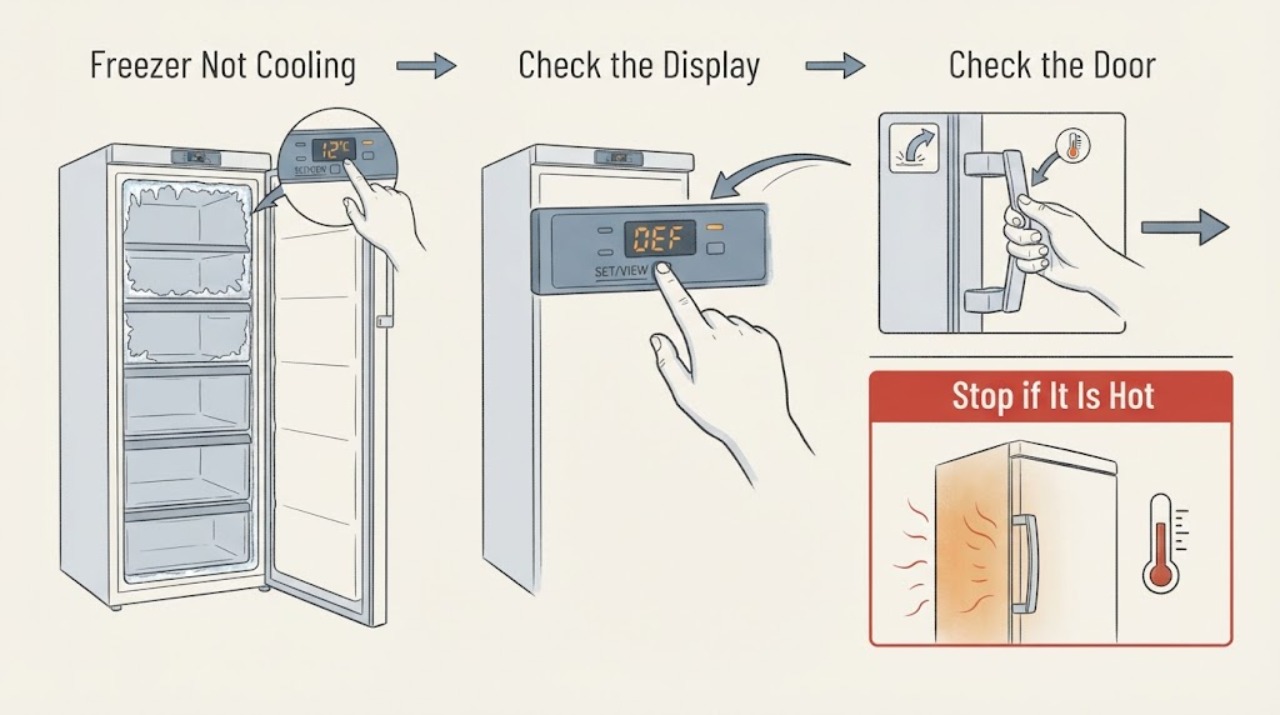
Samsung Freezer Not Cooling
First protect the food and determine whether the freezer is warm but running, or has no cooling at all. Check that the freezer is in its normal mode rather than Cooling Off, confirm the set temperature and actual temperature, make sure the door closes and its gasket seals, and clear food from the interior vents.
-
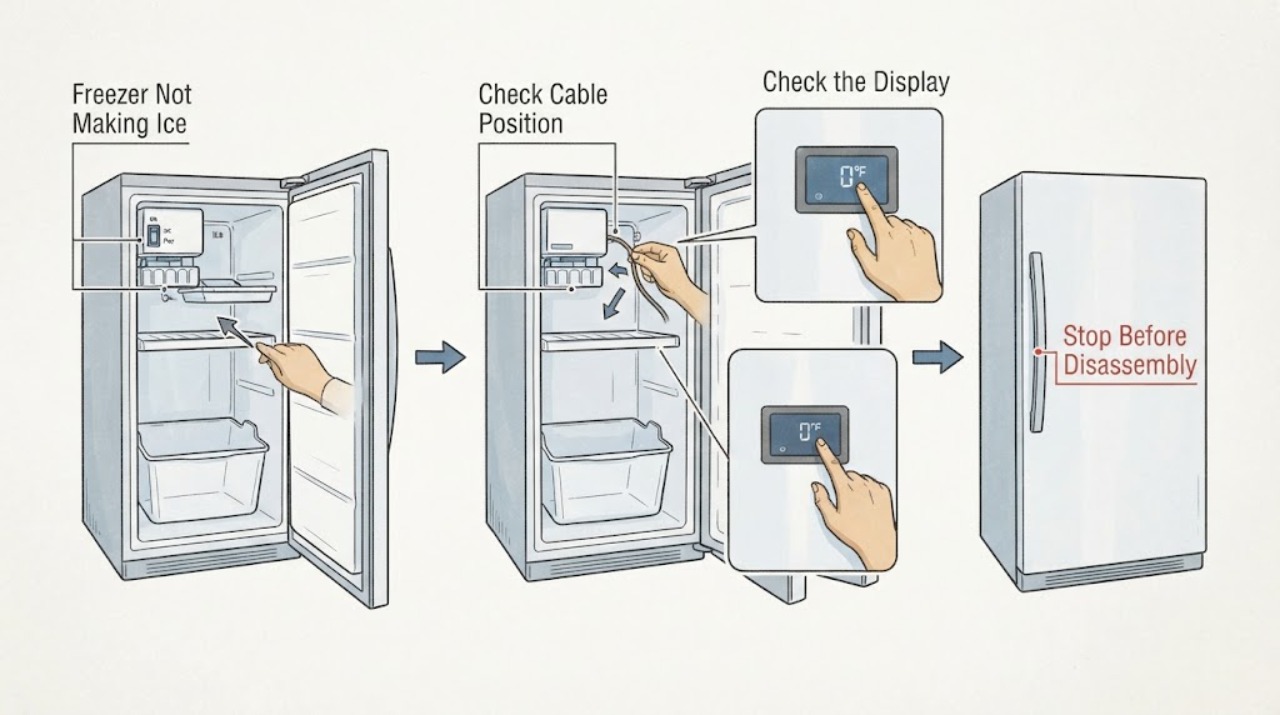
Samsung Freezer Not Making Ice: Check Temperature, Water Flow, and the Ice Maker
If a Samsung freezer is not making ice, first verify that the ice maker is turned on, the freezer is cold enough for ice production, and the freezer door or ice-bucket seal closes correctly. Then check for an empty or incorrectly seated bucket, a kinked water line, a fully open household water valve, low water flow, or a filter that needs replacement.
-
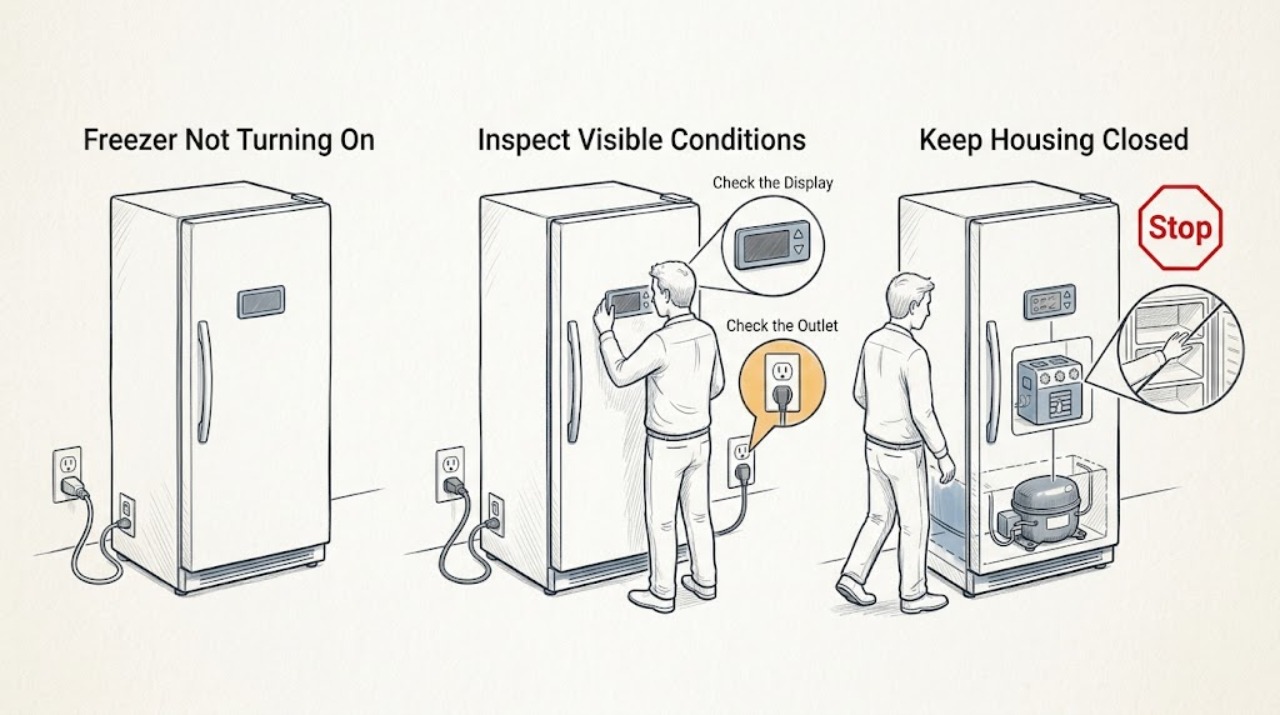
Samsung Freezer Not Turning On: Check Power, Modes, and Cooling Safely
First decide whether the Samsung freezer has no electrical power or has power but is not cooling. Open the door or tap the panel, then check the breaker, outlet, GFCI, and power cord only from a dry, safe position.
-
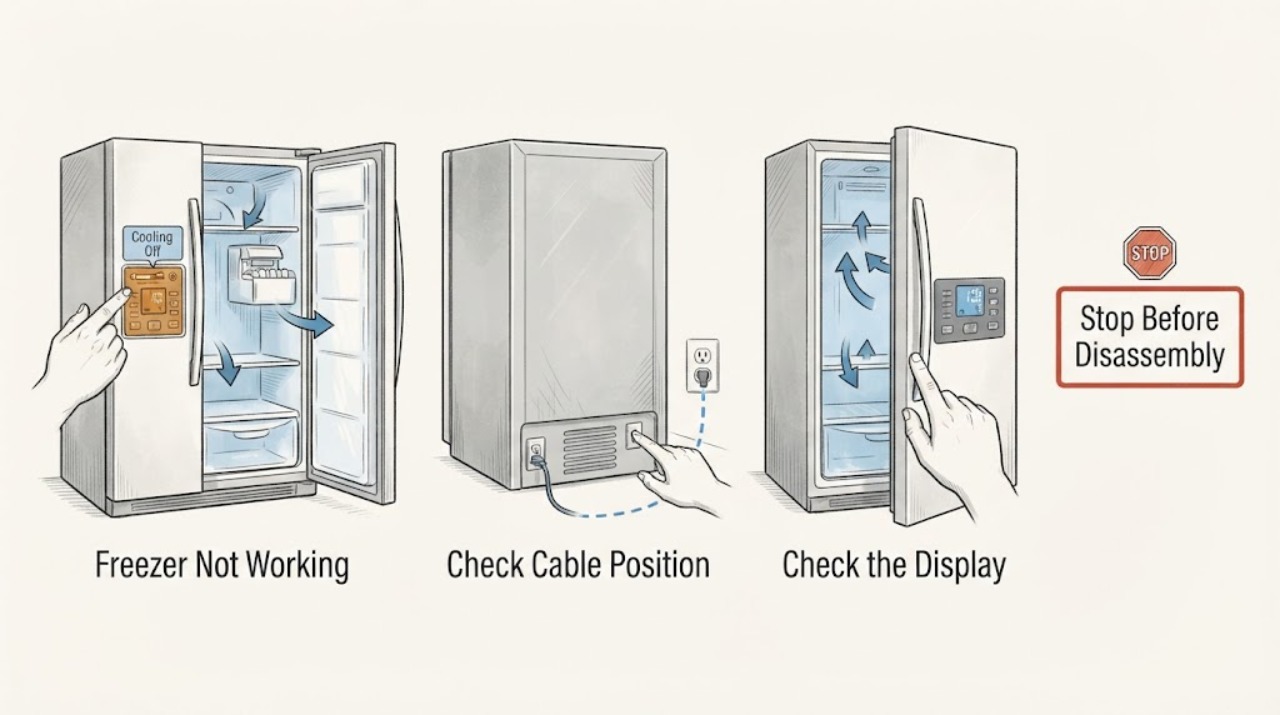
Samsung Freezer Not Working: Check Power, Cooling Mode, Frost, and Food Safety
A Samsung freezer that is not working can mean a dark display, a locked or disabled control, Cooling Off or Demo mode, weak cooling, frost blocking airflow, an ice-maker or water issue, unusual noise, or a true refrigeration fault. First protect food if it is warming, then check the accessible power, door seal, displayed temperature, error or Cooling Off indication, and the space around vents.
-
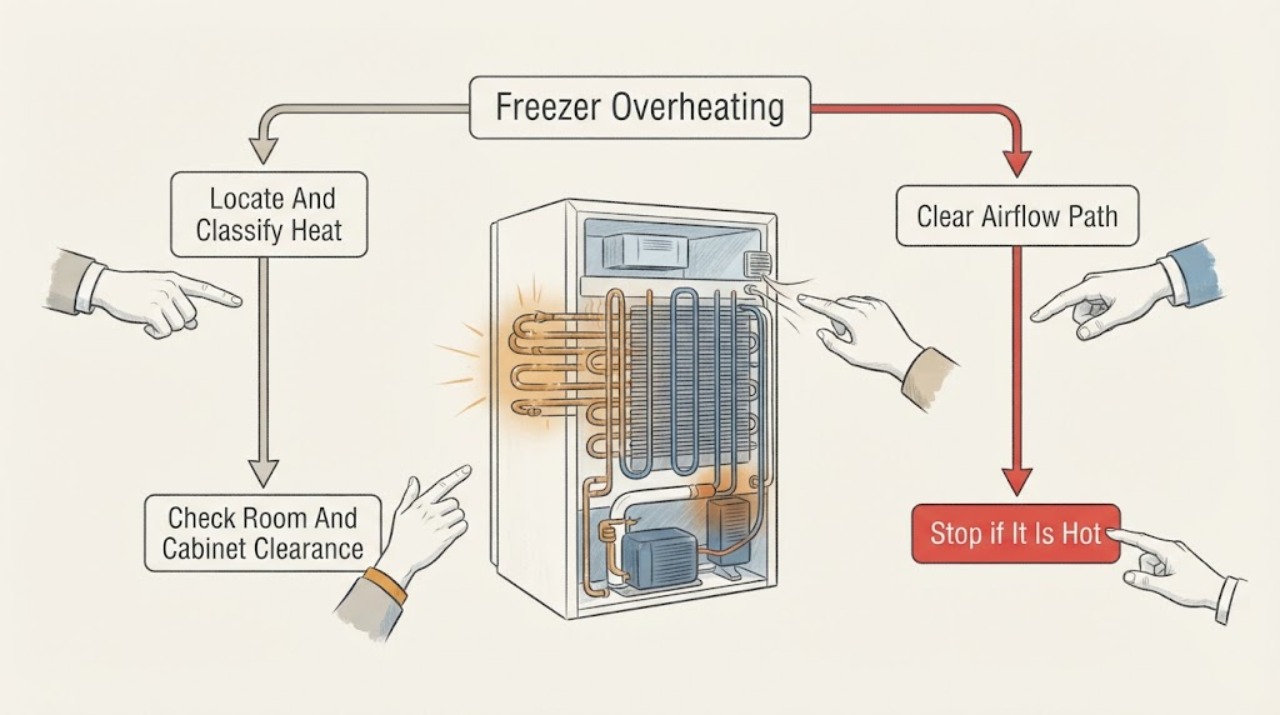
Samsung Freezer Overheating
A Samsung freezer can feel warm on its sides, front edge, or door gasket during normal compressor operation because heat-radiating pipes release refrigerant heat and help prevent condensation. That surface warmth is different from an interior freezer that is too warm, a compressor area that is abnormally hot, or food that is softening.
-
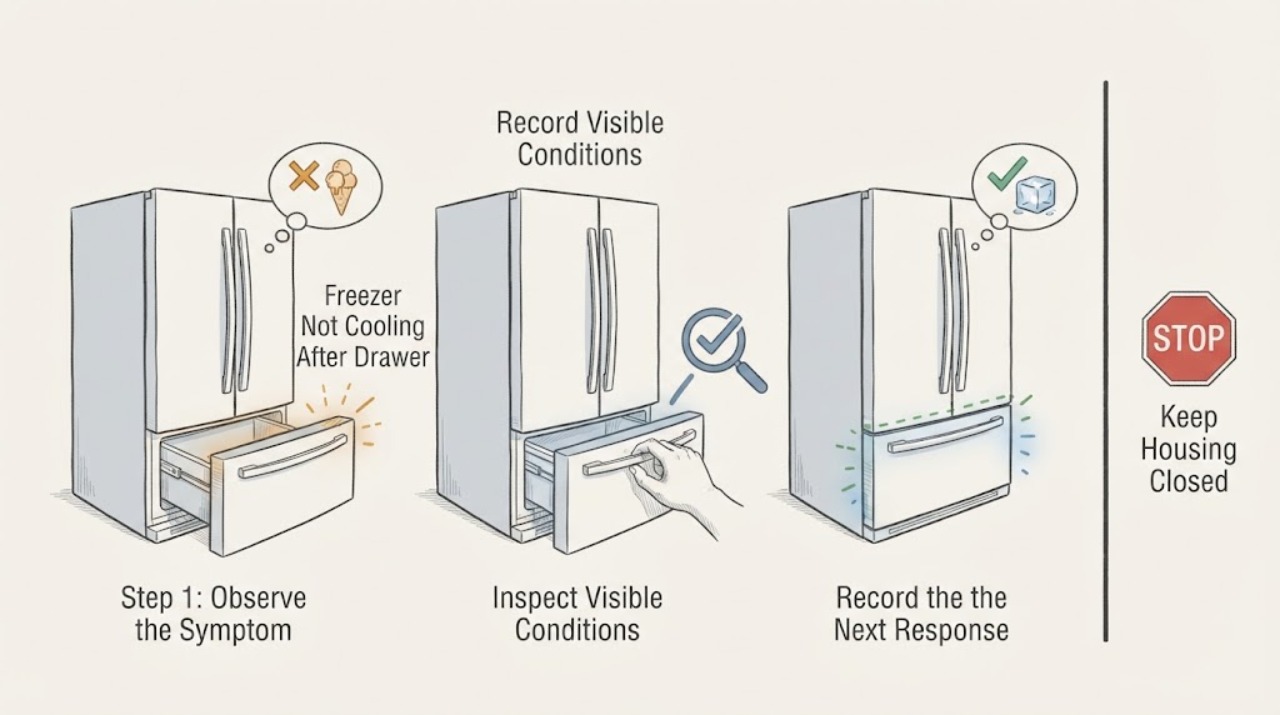
Samsung RF261BEAESR Freezer Not Cooling After Drawer Realignment: Check Closure Before Waiting
For a Samsung RF261BEAESR freezer that was recently realigned, first make sure the pull-out drawer closes flush, its seal is continuous, and no bin, package, frost, or rail/auto-close component is keeping it open. Confirm the refrigerator is in normal cooling mode and the freezer setting matches the model documentation, then place a thermometer between frozen packages and keep the drawer closed.