
GE appliance guidance
GE Washer Dryer Repair Guides
Troubleshooting and repair guidance for published GE Washer Dryer problems, symptoms, and maintenance questions.
Published GE Washer Dryer guides
Choose the guide whose symptom or condition most closely matches what you are seeing.
-
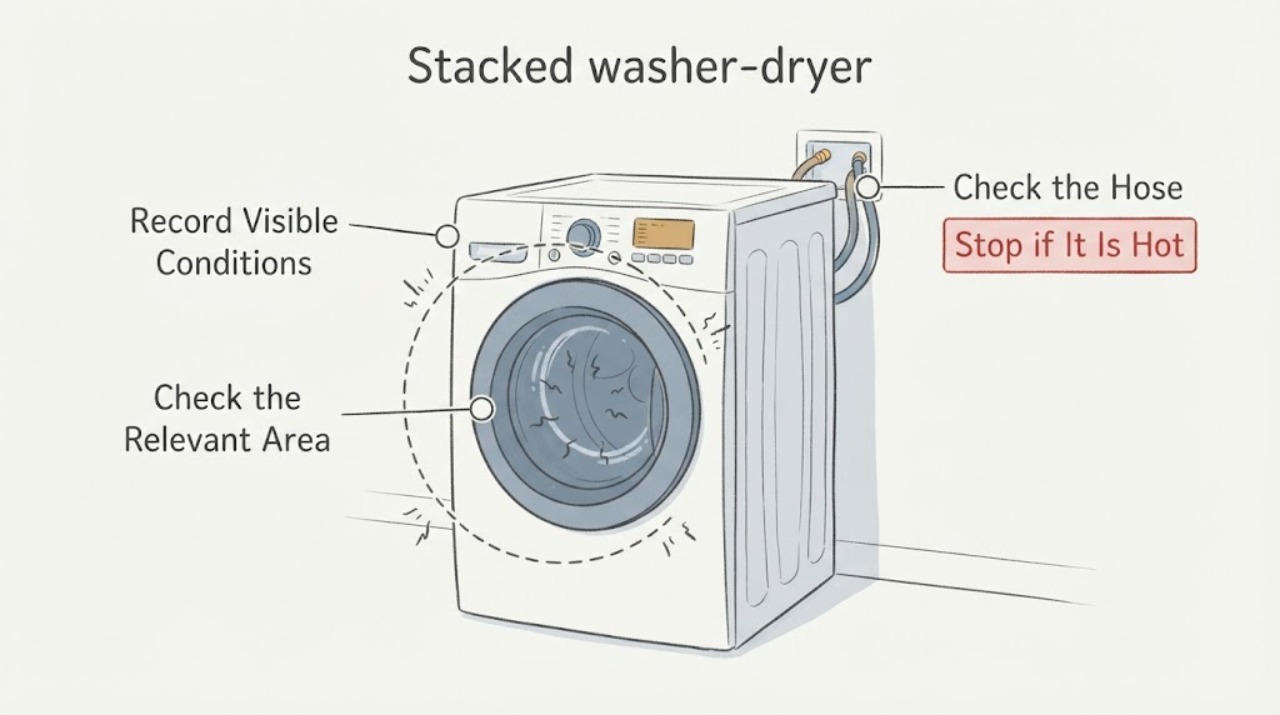
GE GUD27ESSM1WW stacked washer-dryer: loud noise during spin
First confirm whether the loud sound comes from the washer below or the dryer above, then note whether it occurs during washer spin, drain, or dryer tumble. GE's manual lists water-pump sounds, motor ramping, and some clicks as normal, but a very loud or harsh noise needs a stopped-appliance inspection.
-
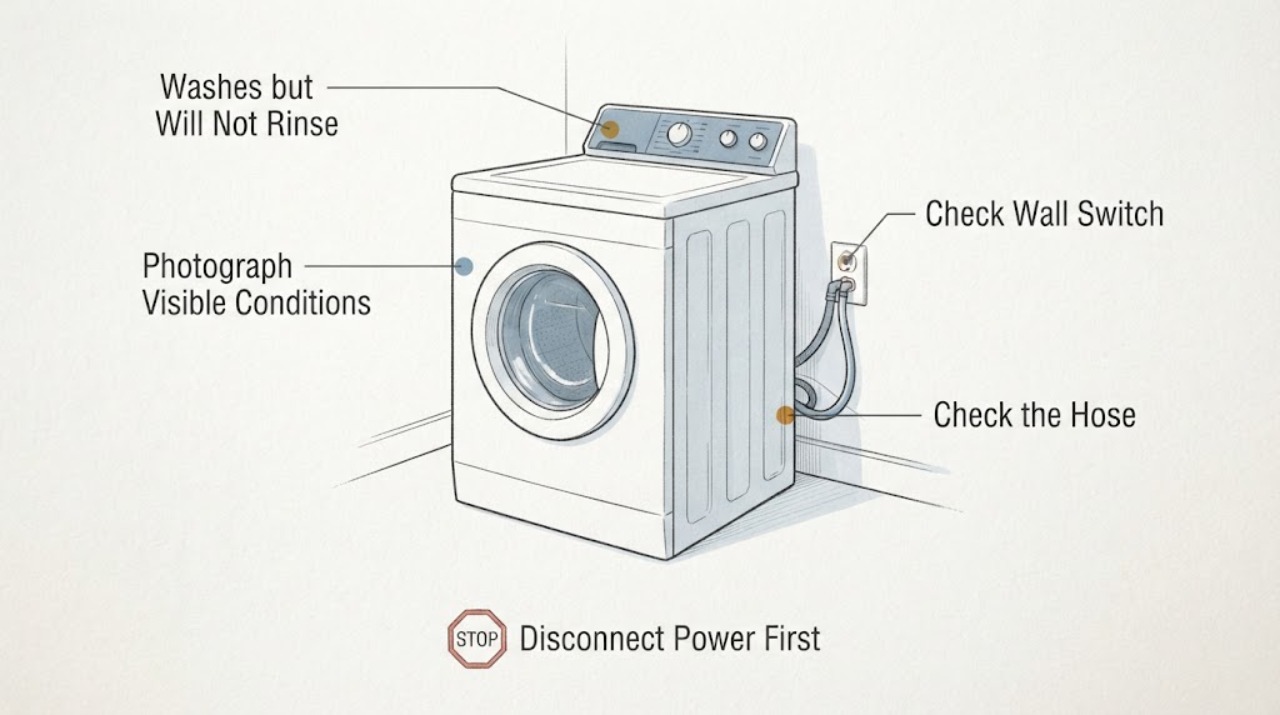
GE GUD27ESSM1WW Washes but Will Not Rinse or Spin: Clothes Stay Wet
The GE GUD27ESSM1WW is a stacked laundry-center model in the GUD27ES family, and wet clothes after washing do not by themselves identify one failed part. The owner's manual says the washer may pause during spin while removing soapy water, but it also directs you to check the visible drain hose when water will not drain, use Drain & Spin for an out-of-balance wet load, and check the lid-lock indicator.
-
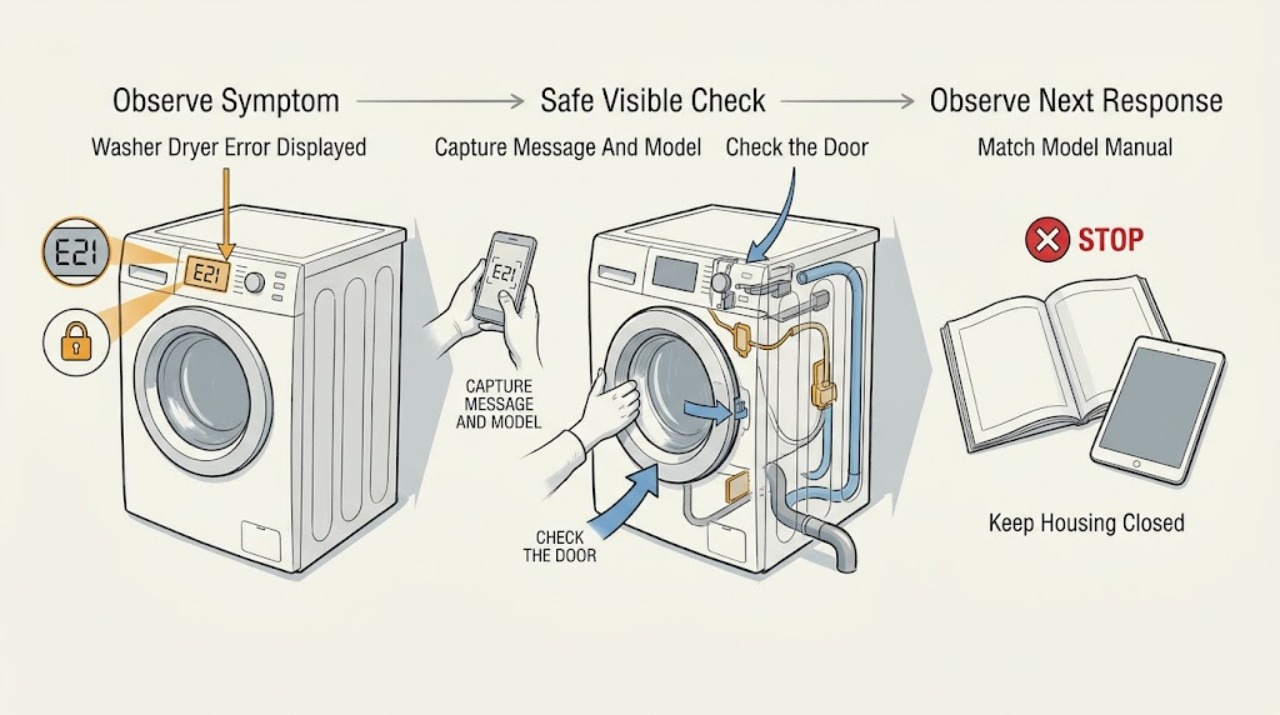
GE Washer Dryer Error Displayed: Identify the Code Safely
Do not diagnose a GE washer-dryer from the word “error” or from a code list for another model. Photograph or copy the exact display, note whether the message is on the washer or dryer side, and record the model and serial information.
-
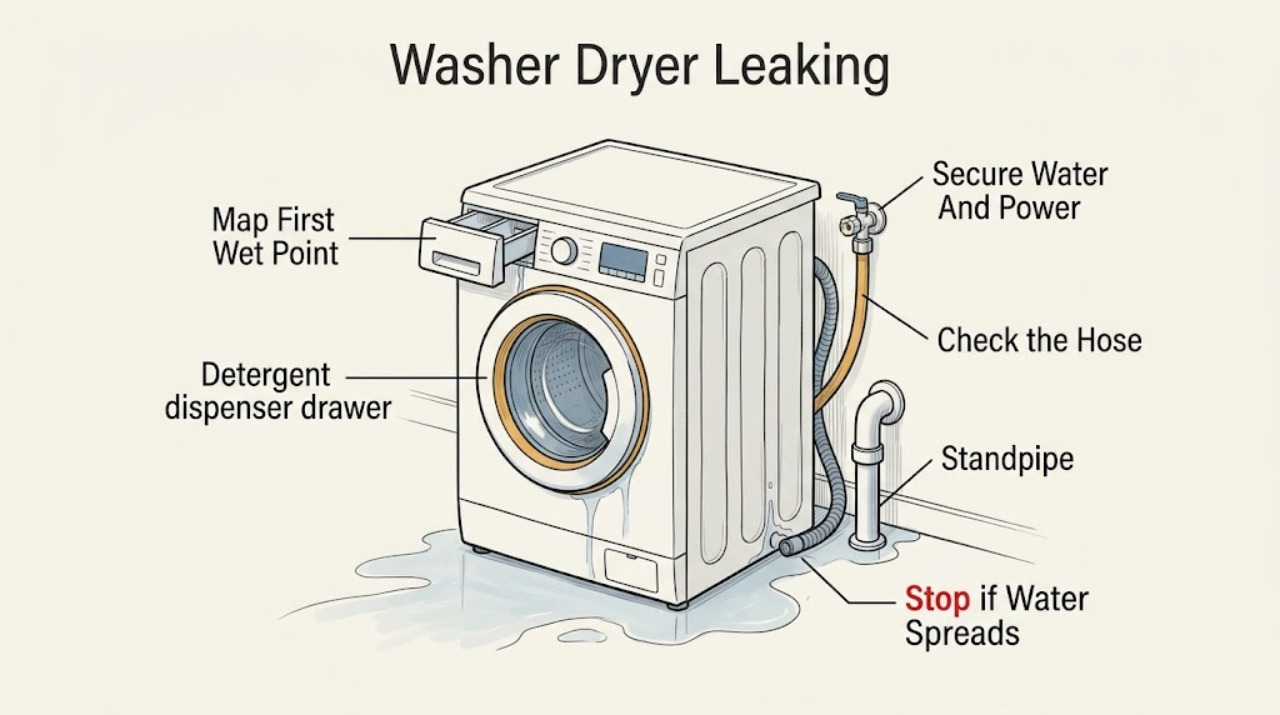
GE Washer Dryer Leaking: Locate the Water and Stop Safely
Start by locating where the water first appears: the door or gasket, dispenser, rear hose connections, drain hose or standpipe, or underneath the GE washer-dryer. GE says leak location changes the likely cause, and its guidance points to dirty or obstructed door seals, blocked dispenser ports, damaged or poorly installed hoses, household drain back-up, excess suds, or a water valve that lets water enter while the washer is off.
-
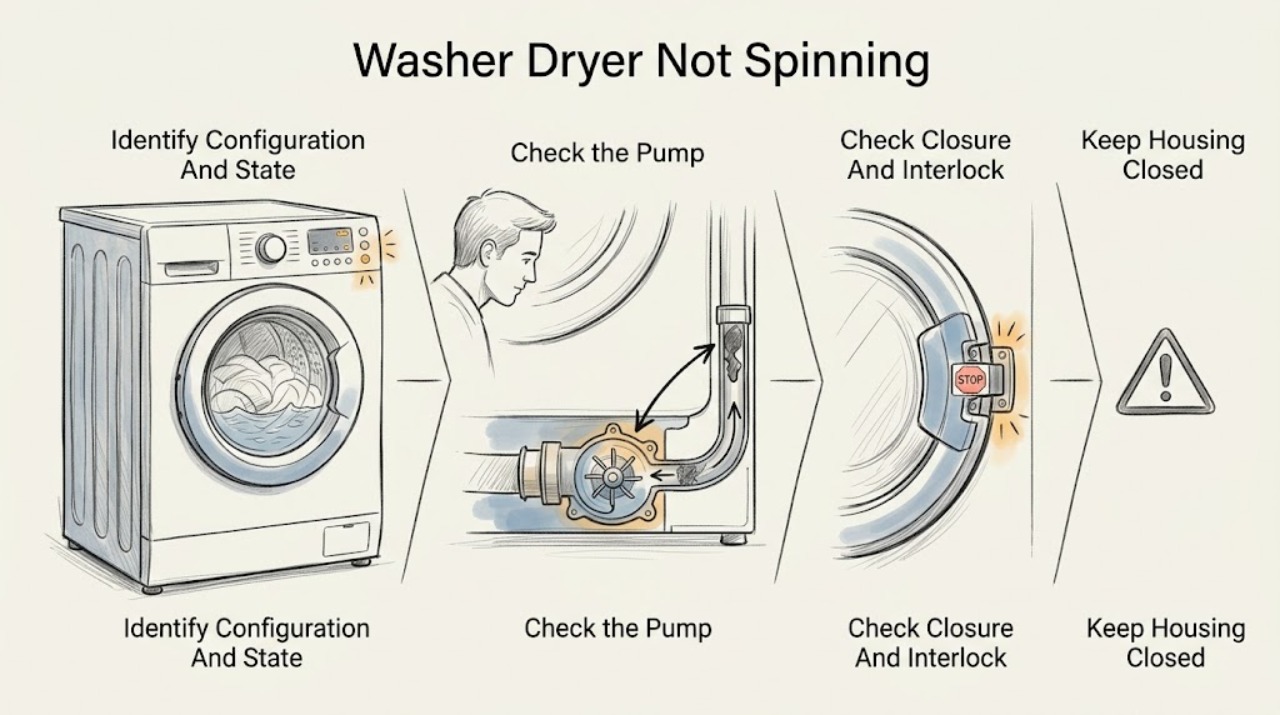
GE Washer Dryer Not Spinning: Find the Block Before Calling for Service
A GE washer-dryer that does not spin may be paused while it pumps out, unable to balance the load, prevented from spinning by an open door, lid, drawer, or lock, restricted at the drain pump filter, or experiencing a model-specific drive or control fault.
-
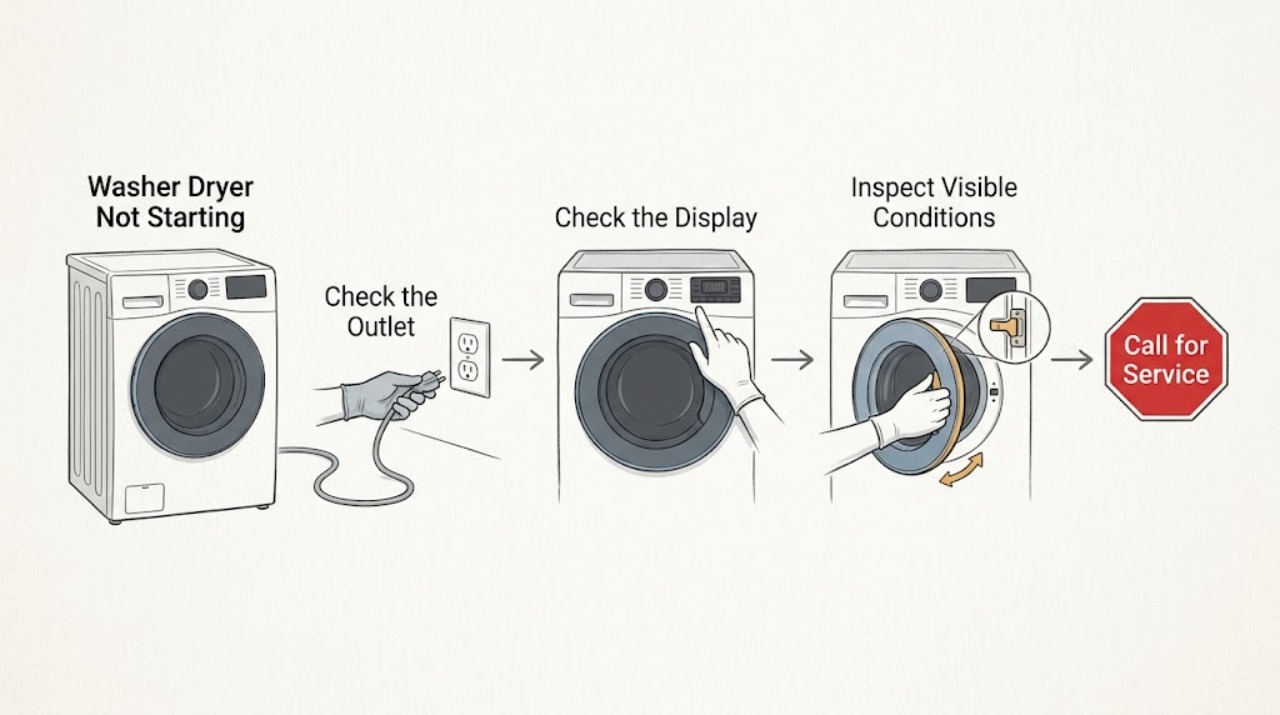
GE Washer Dryer Not Starting
When a GE washer-dryer will not start, first separate a no-power condition from a powered control that will not run. Check the wall outlet, plug, breaker, and door or lid closure, then confirm that a cycle and Start command were actually selected.
-
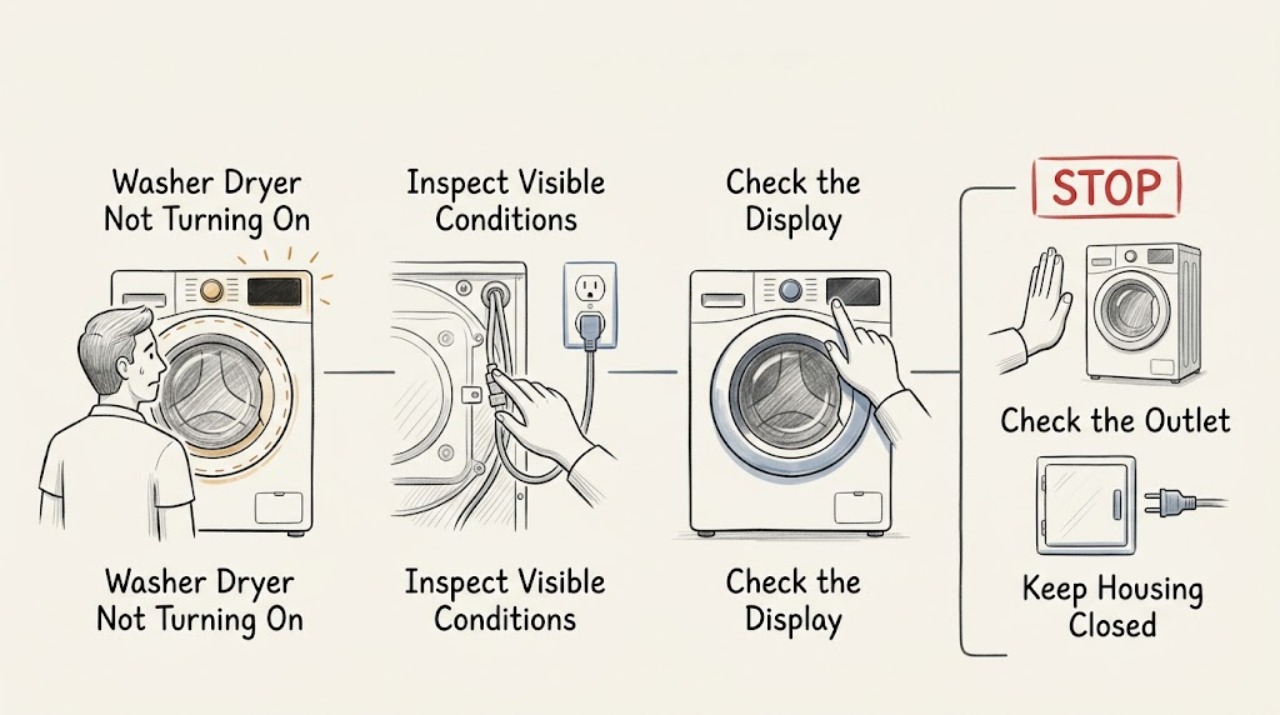
GE Washer Dryer Not Turning On
First determine whether the GE washer dryer has no power at all or has power but will not start a cycle. Check the single power cord, the dedicated grounded outlet, the household breaker, and any control or display lights.
-
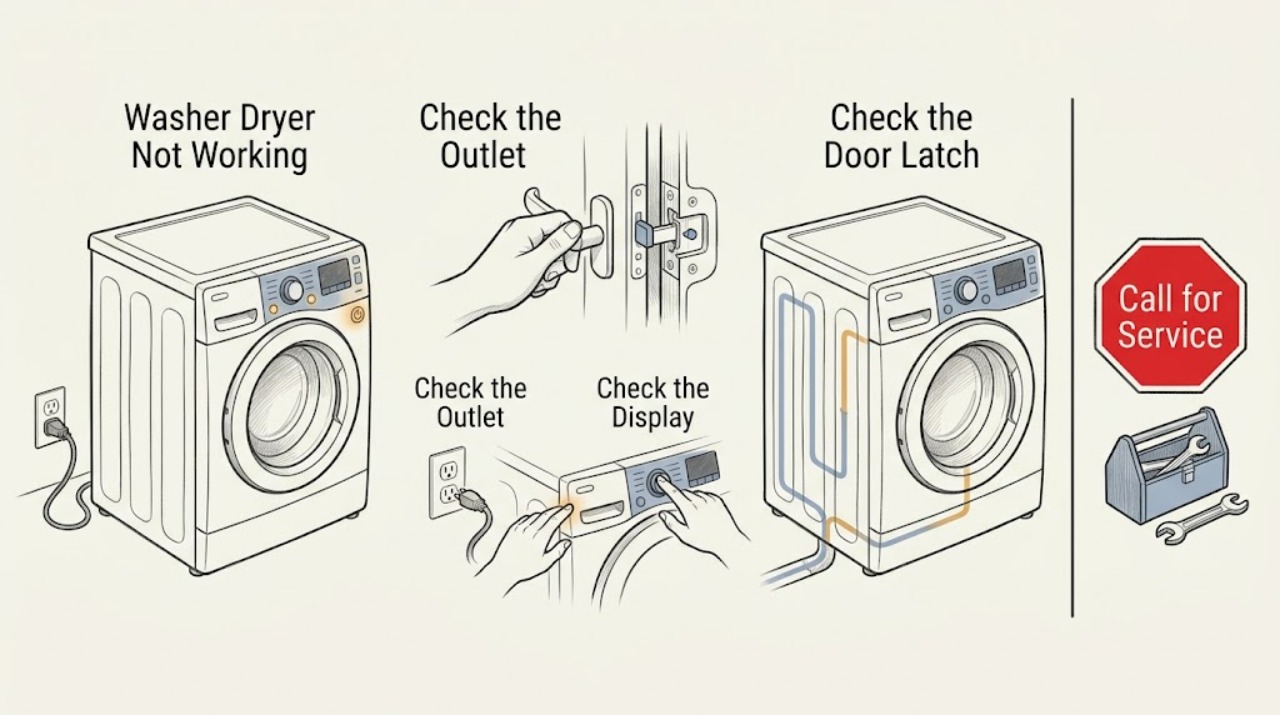
Ge Washer Dryer Not Working
Start by identifying whether the GE washer-dryer has no lights or sounds, has power but will not accept a cycle, or starts and then stops. Check the plug, outlet and breaker, then confirm the selected cycle, Control Lock, and fully closed door or lid.
-
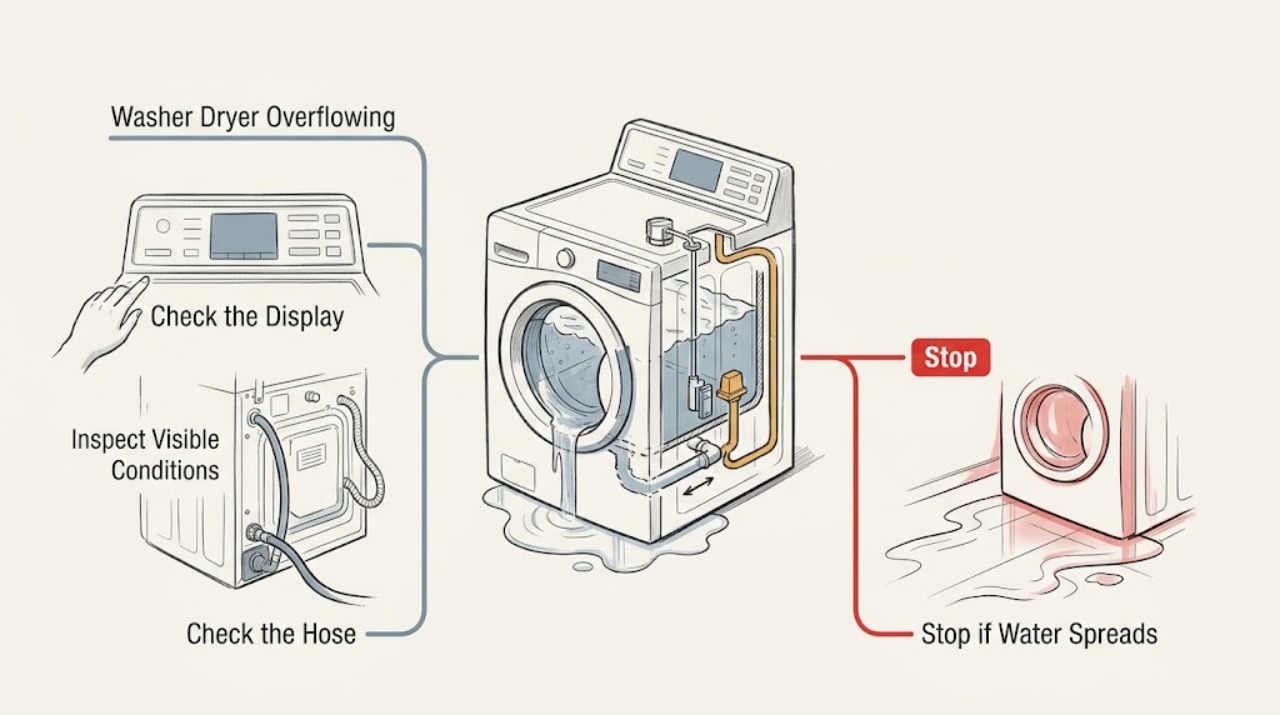
GE Washer Dryer Overflowing
If a GE washer-dryer is overflowing, stop the fill immediately: pause or turn the appliance off, and do not unplug it while standing in water. Once power is off, close the household hot and cold water valves behind the washer.
-
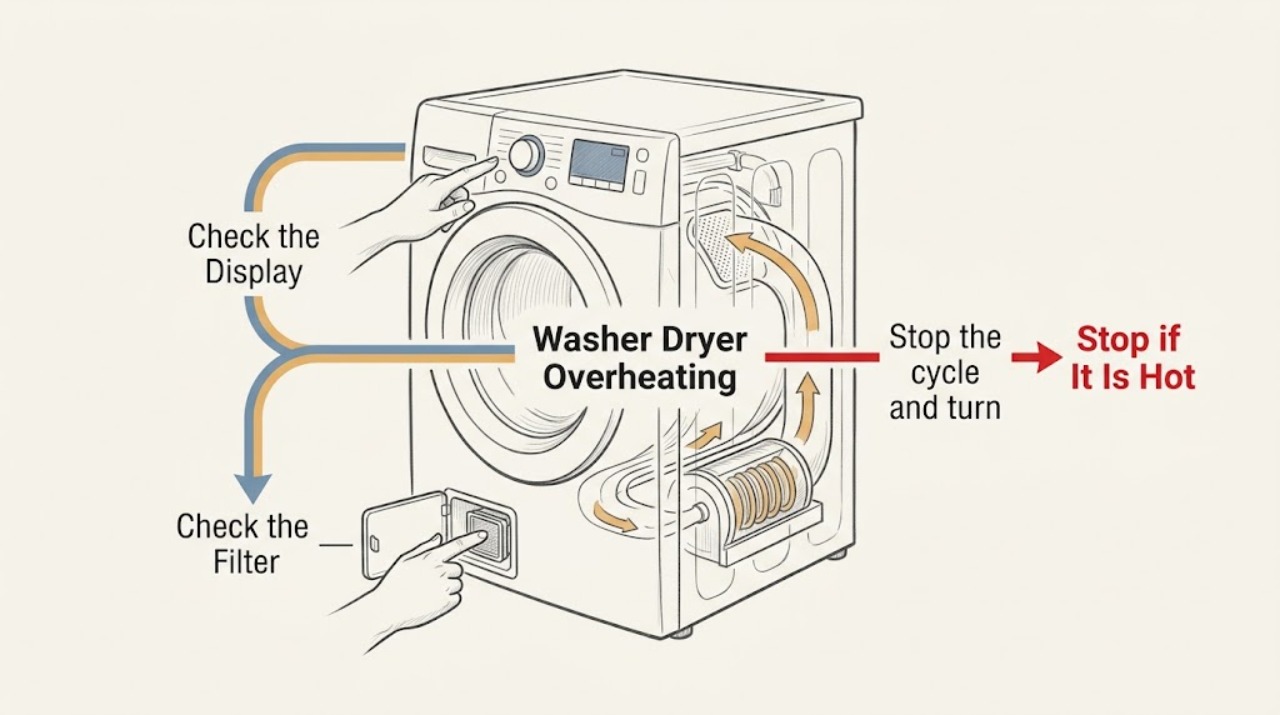
GE Washer Dryer Overheating
Stop the GE washer dryer immediately if there is smoke, a burning smell, scorching, sparking, a damaged cord, or a circuit trip. If the heat is on the dryer side, the first user-level cause to investigate is restricted airflow: clean the lint filter, inspect the metal exhaust duct for a kink or collapse, check the outside wall cap for an obstruction, and keep the dryer air intake clear.
-
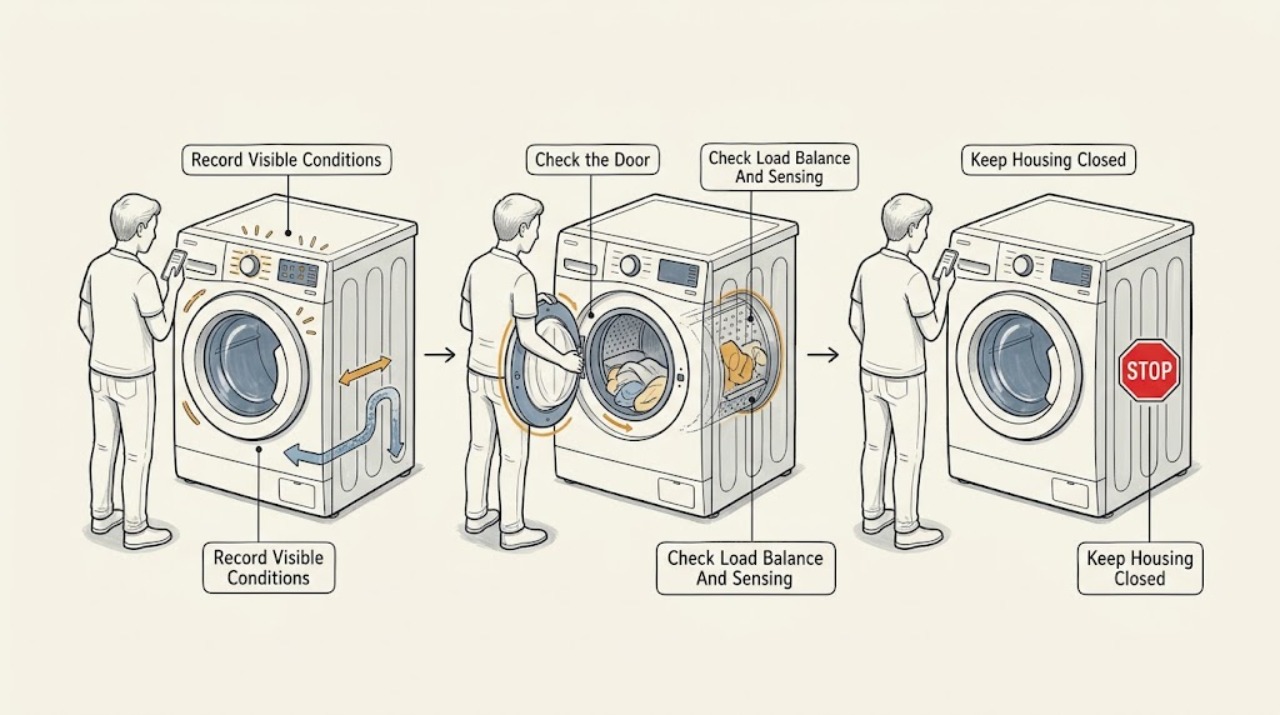
GE Washer-Dryer Cycle Not Completing: Identify the Stop Safely
Record the stage and exact display message before changing anything. A GE washer-dryer may pause while sensing or correcting an unbalanced load, and a GE Profile UltraFast Combo can intentionally pause between wash and dry when Wash Complete is selected.
-
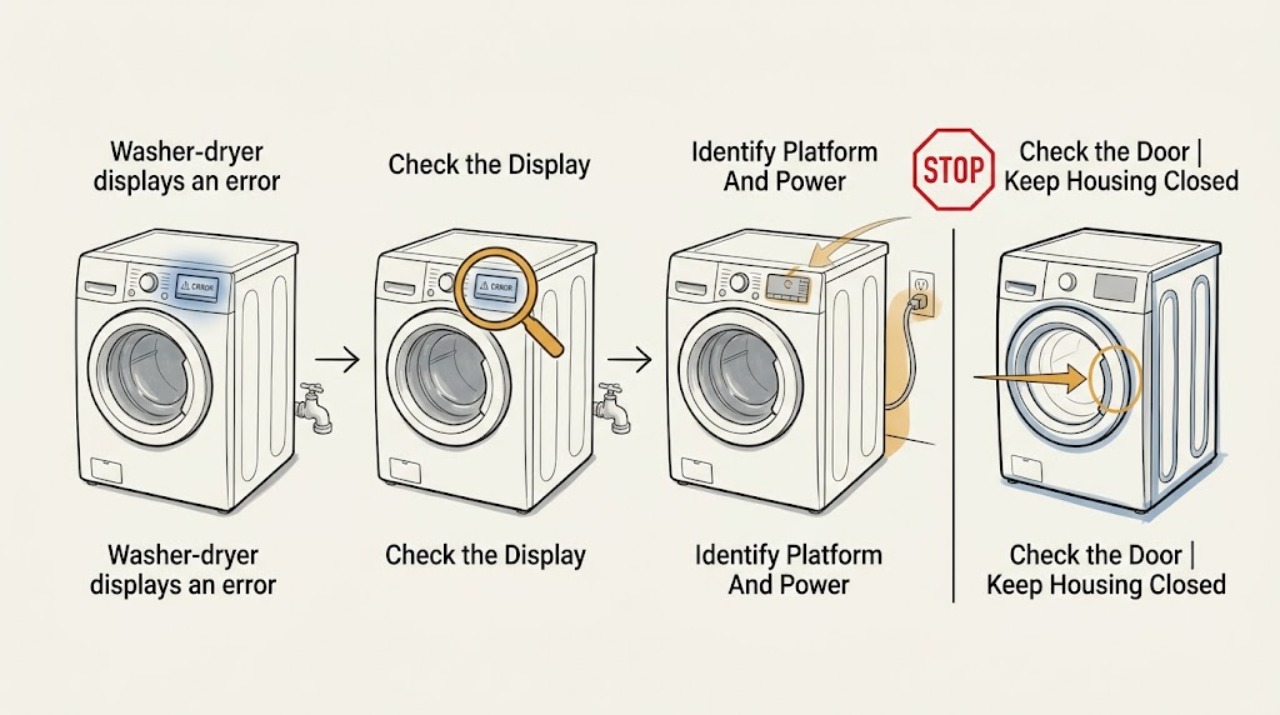
GE washer-dryer displays an error: What to Check and What to Do Next
Record the exact error text or number, the full GE model, and whether it appeared during wash, rinse, spin, or dry before clearing anything. GE washer-dryer designs and code meanings are model-specific: GE's published messages for the Profile UltraFast Combo include a four-minute lockout for a missing water supply or canceled draining, a door-open message, a drain-pump-filter message, fault 353 for a lint-filter restriction, and fault 18 for a pump-filter restriction.
-
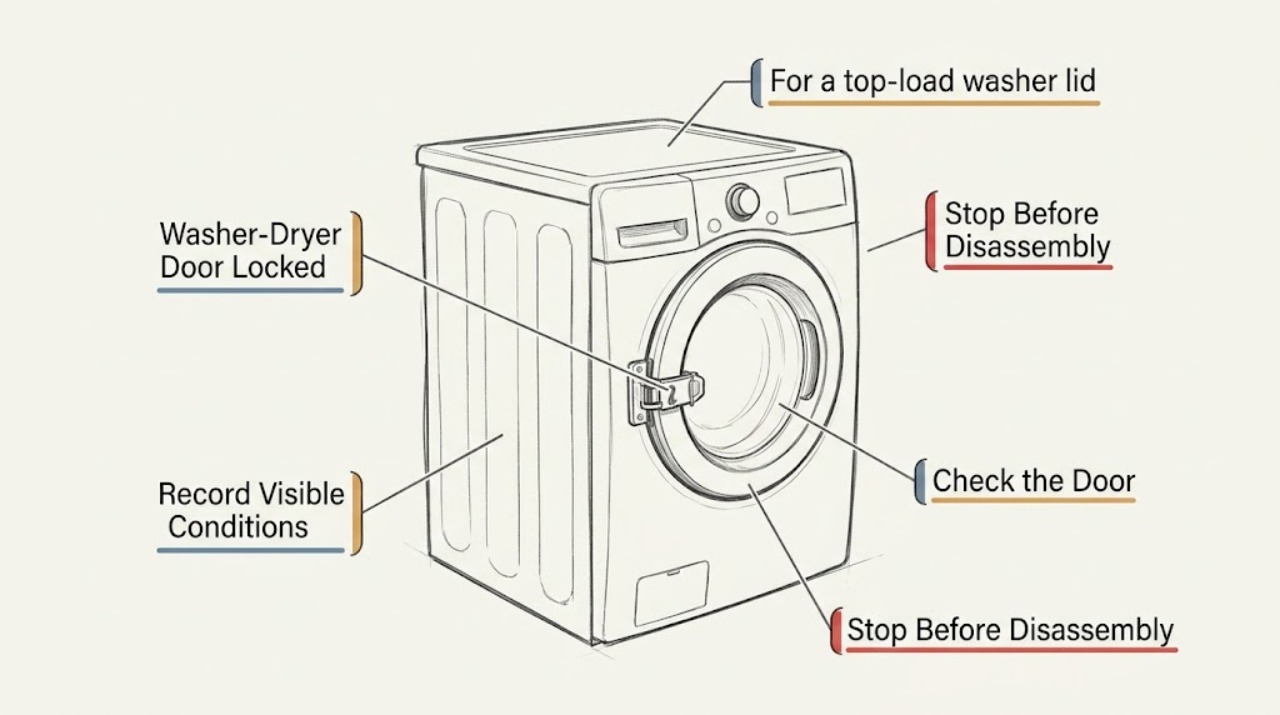
GE Washer-Dryer Door Locked: Release It Without Forcing the Safety Lock
A locked GE washer-dryer door or lid is usually holding because the washer is still running, the basket has not stopped, water must drain first, or a control lock is active; the exact behavior depends on whether the unit is front-load, top-load, or a combo. Press Start/Pause once, wait for the drum or basket to stop and for the lock to release, then check the model-specific control-lock and status message instructions.
-
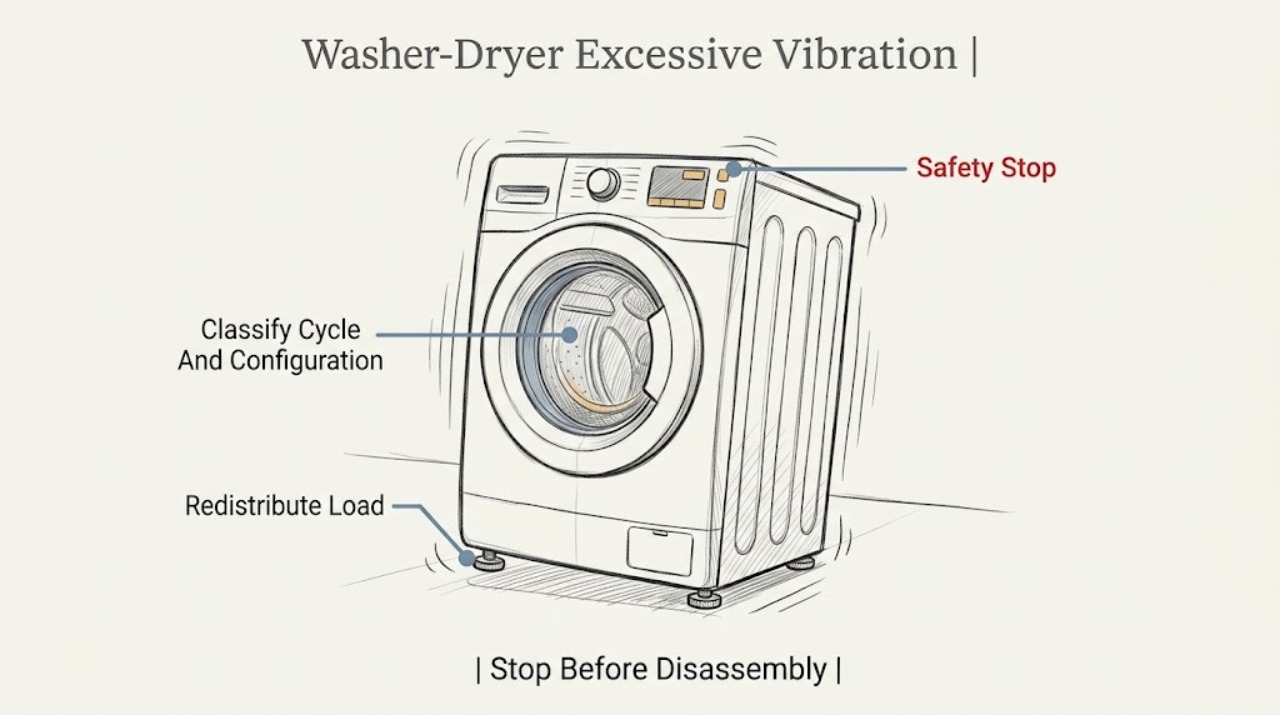
GE Washer-Dryer Excessive Vibration: Balance the Load, Level the Unit, and Check Installation
For a GE washer-dryer that vibrates excessively, first pause it and redistribute the load, then compare the behavior with an empty rinse-and-spin or other model-approved test. Check that the unit is level on a solid floor with every rubber leg firmly contacting the floor and its lock hardware secure.
-
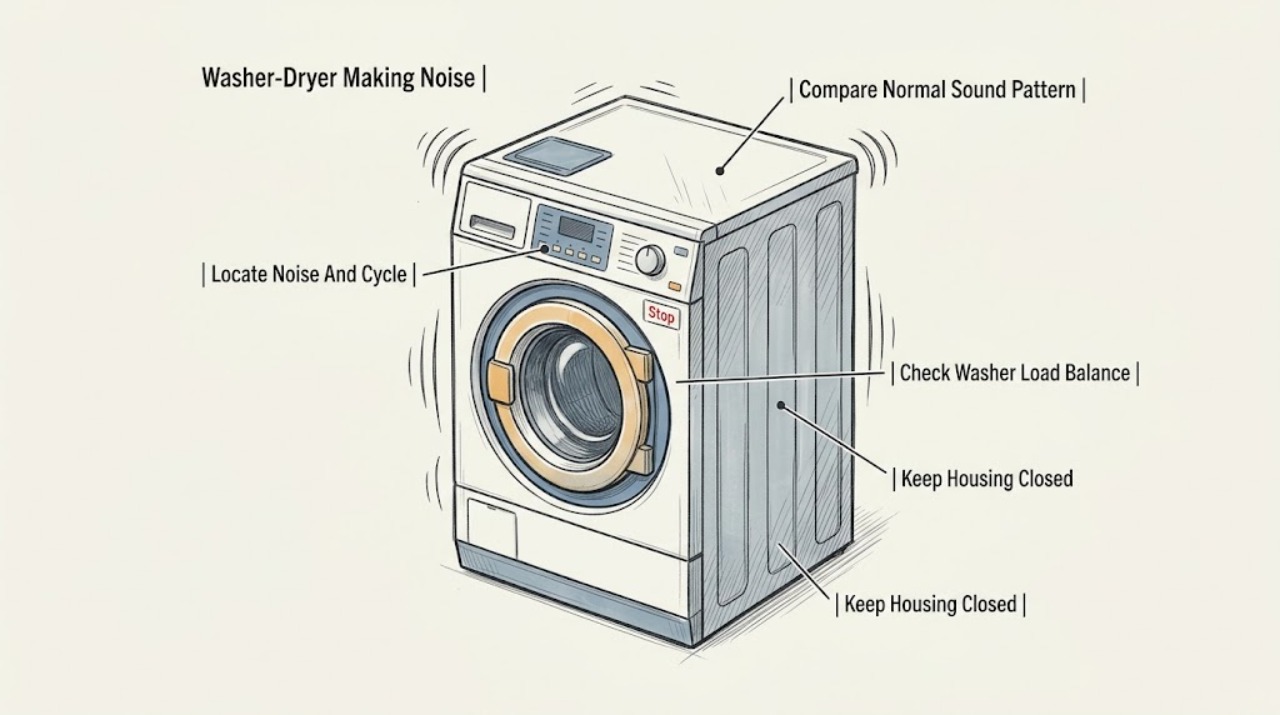
GE Washer-Dryer Making Noise: Identify the Cycle Before You Repair
First identify whether the noise comes from the washer or dryer portion and note the cycle, sound, and whether it is brief or continuous. GE documents normal sounds such as water fill, drain gurgle, agitation, spin ramping, a short dryer start squeak, and the drum turning.
-
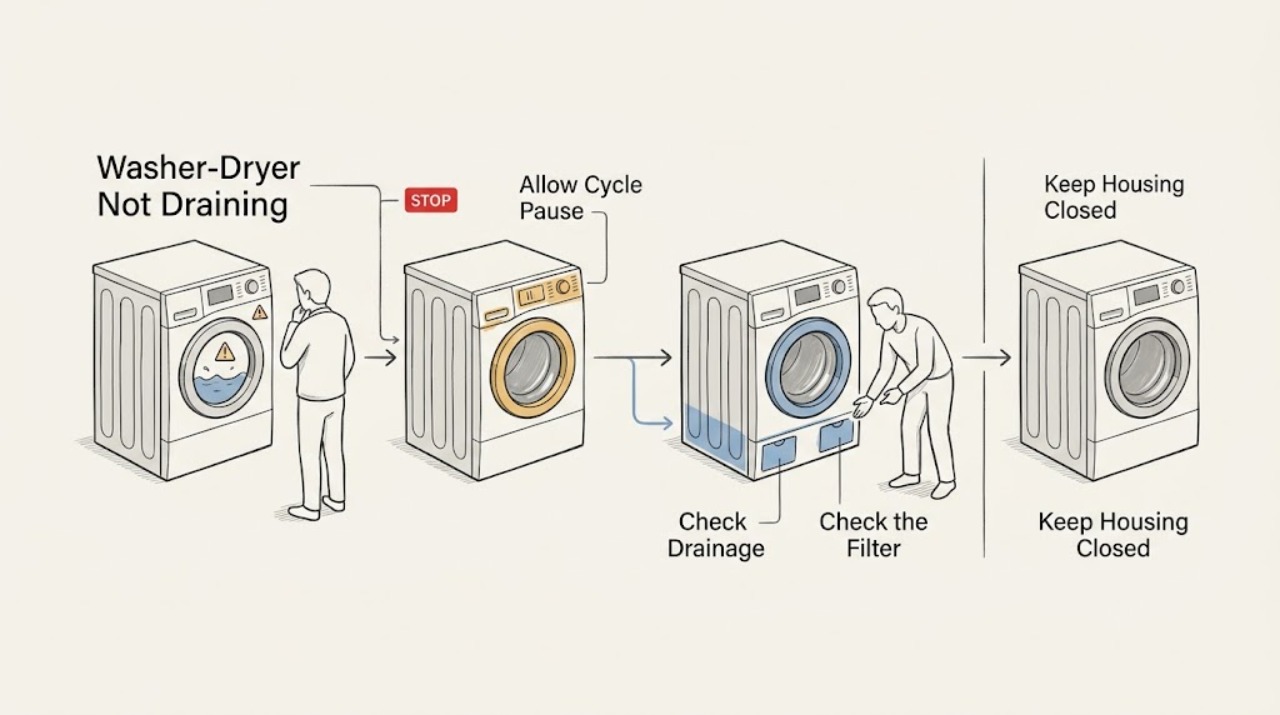
GE Washer-Dryer Not Draining: Safe Checks for a Combo Unit
If a GE washer-dryer combo is not draining, first allow a normal short pause, then check the drain hose for kinks or a blockage and confirm the household standpipe or drain can accept water. Use the owner's manual to determine whether your model has an accessible pump filter; do not assume every combo has the same access.
-
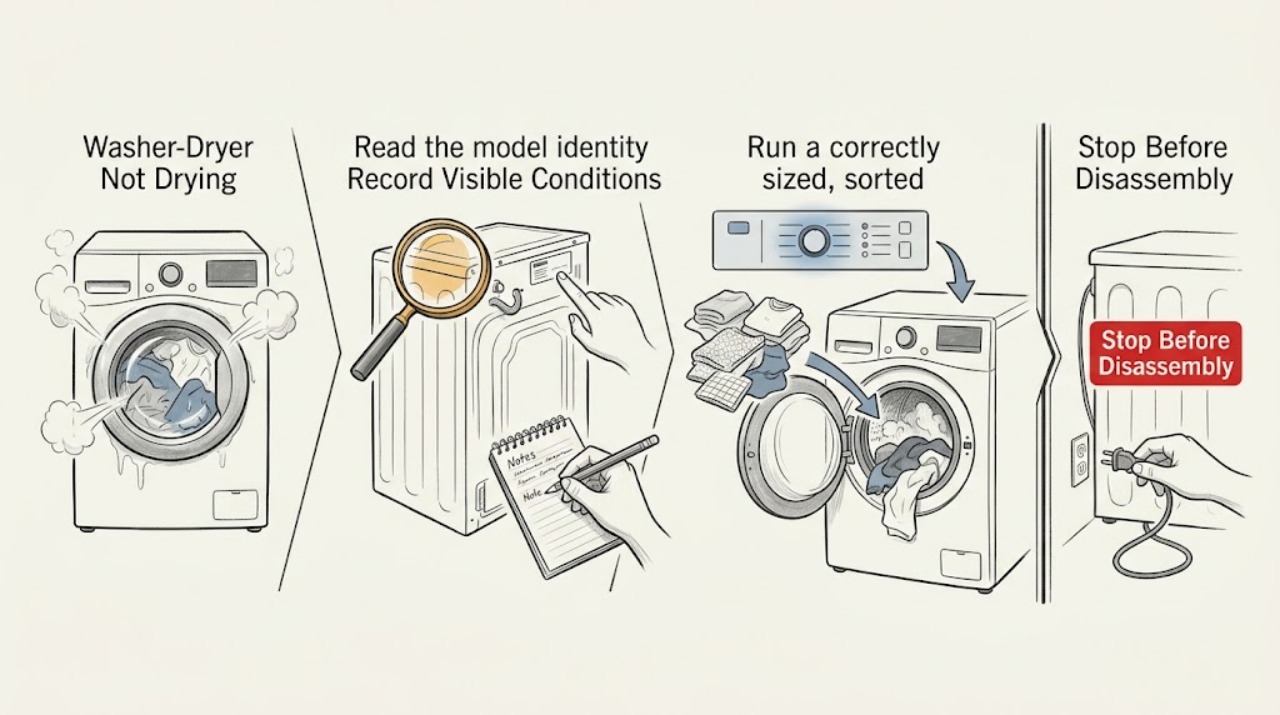
GE Washer-Dryer Not Drying: Check Moisture, Airflow, and Drainage
When a GE washer-dryer leaves clothes wet, first identify whether it is a vented dryer, a stacked washer-dryer, or a ventless combo, then check the load, selected dry setting, lint filter, airflow, and the washer's final spin.
-
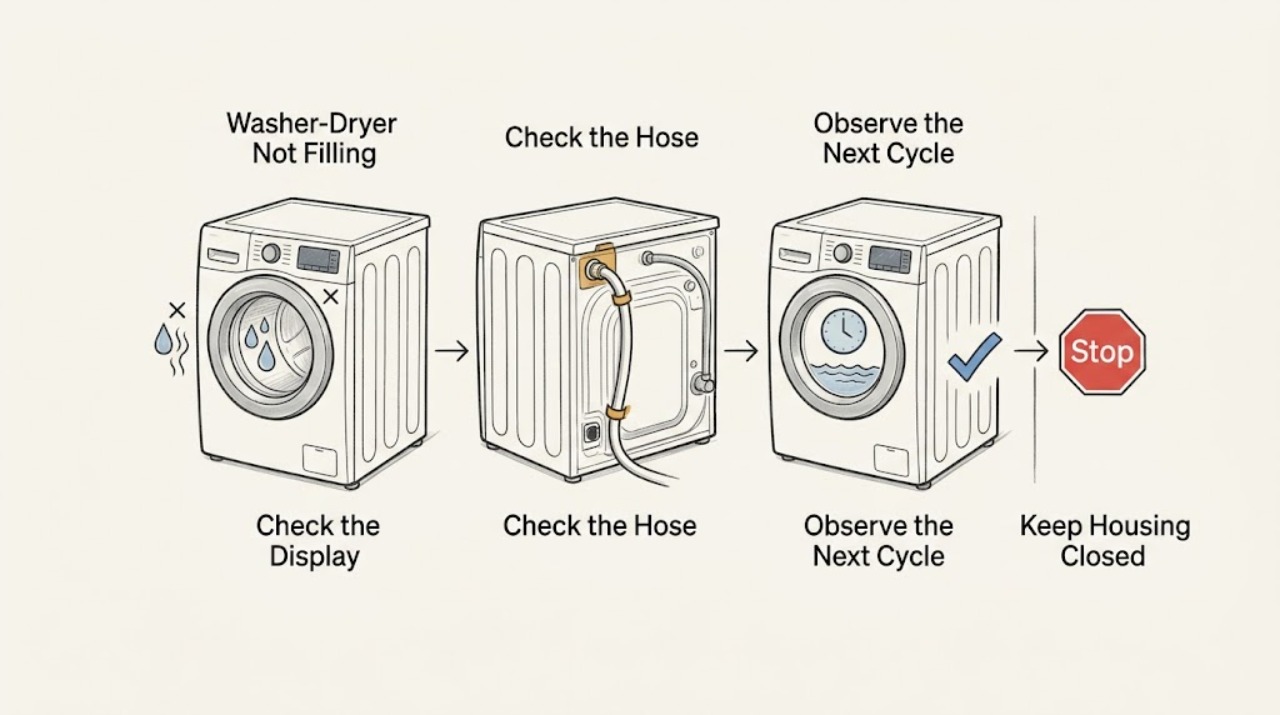
GE Washer-Dryer Not Filling
If a GE washer-dryer will not fill, first confirm that the appliance has power, the wash cycle is actually running, and both hot and cold supply valves are open. Then check for a kinked hose or blocked inlet screen with the appliance unplugged and the water turned off.
-
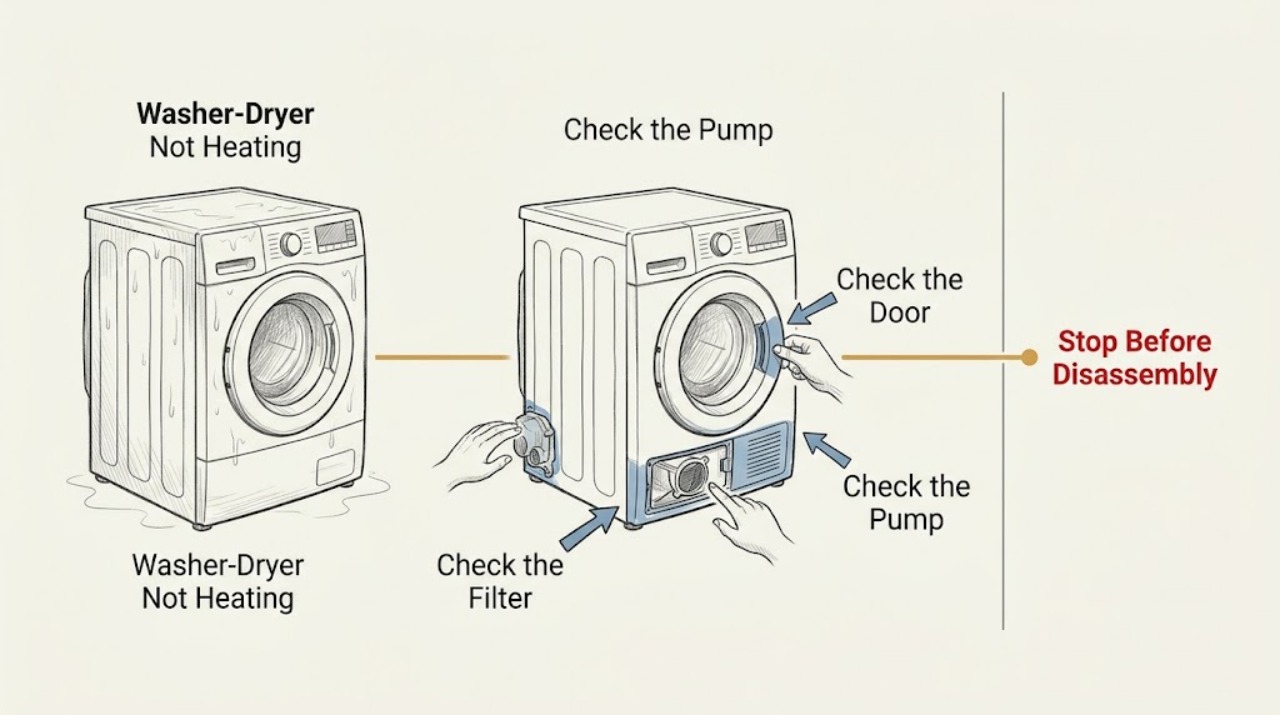
GE Washer-Dryer Not Heating: Safe Checks for Combo and Vented Units
A GE washer-dryer may seem not to heat for two different reasons: a ventless GE Profile UltraFast Combo intentionally dries at a lower, consistent temperature, while a conventional electric dryer can tumble on only partial household power and still fail to heat. First identify which design you have, then choose a true drying cycle and check the load, drainage, visible airflow, and power symptoms that apply to that design.