
GE appliance guidance
GE Freezer Repair Guides
Troubleshooting and repair guidance for published GE Freezer problems, symptoms, and maintenance questions.
Published GE Freezer guides
Choose the guide whose symptom or condition most closely matches what you are seeing.
-
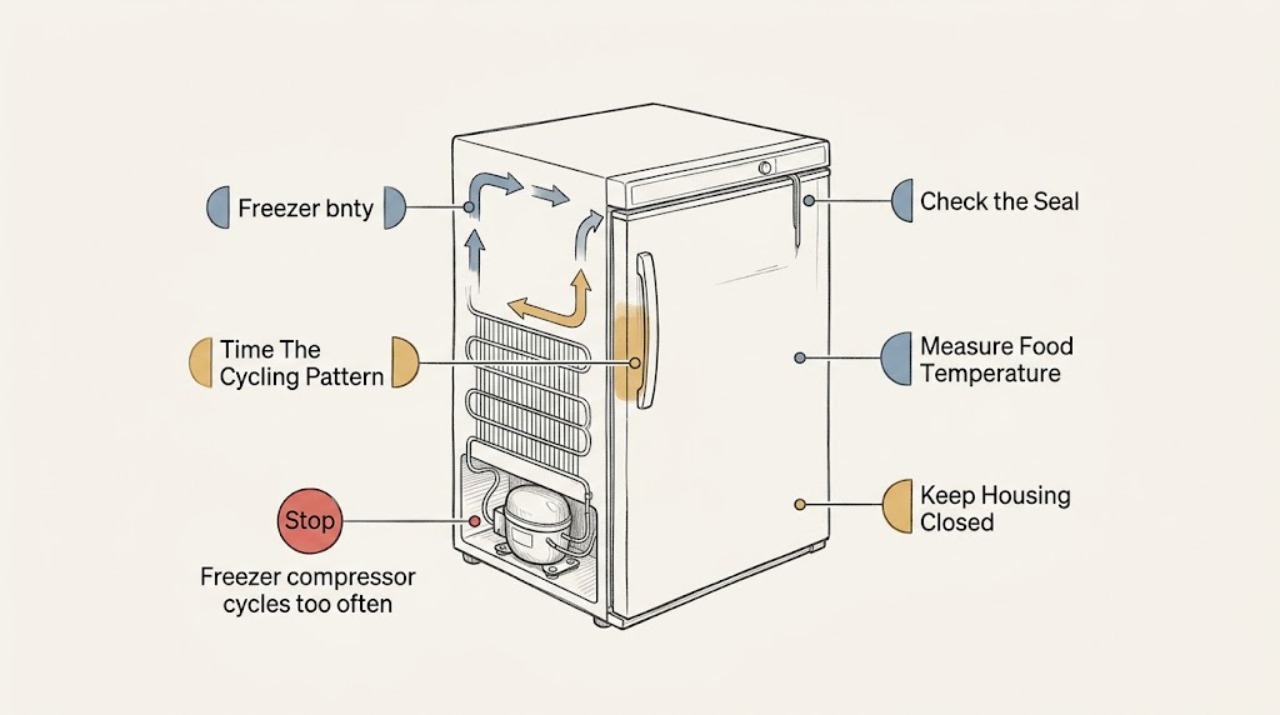
GE freezer compressor cycles too often: What to check next
A GE freezer compressor may run much of the time by design, so a long run is not the same as a short-cycle fault. First record whether the compressor starts and stops every few minutes, or runs for long periods while the food remains at the expected temperature.
-
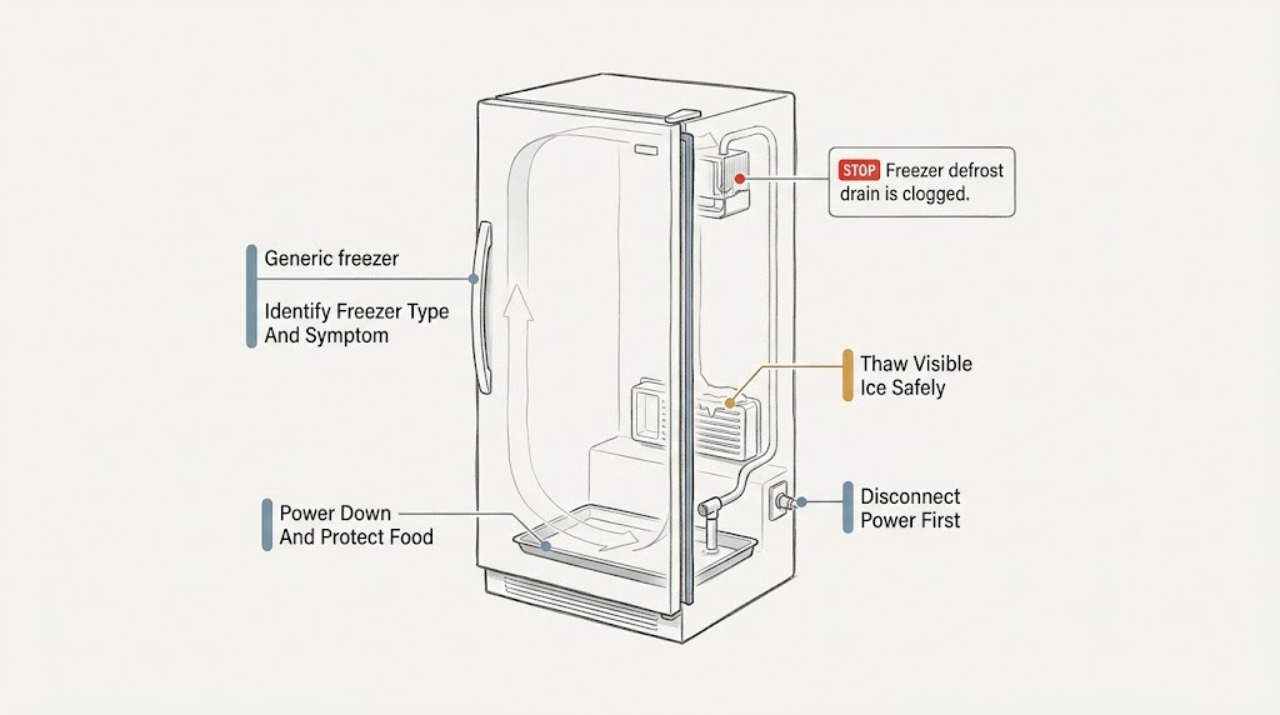
GE freezer defrost drain is clogged: What to Check and What to Do Next
A GE freezer drain problem commonly shows up as ice or water on the freezer floor, beneath a bottom basket or drawer, or water on the floor after a defrost cycle. First identify whether the freezer is a self-defrost upright or a manual-defrost chest or older unit, because GE says only self-defrost models have a defrost drain tube and the exact model determines whether the drain can be accessed.
-
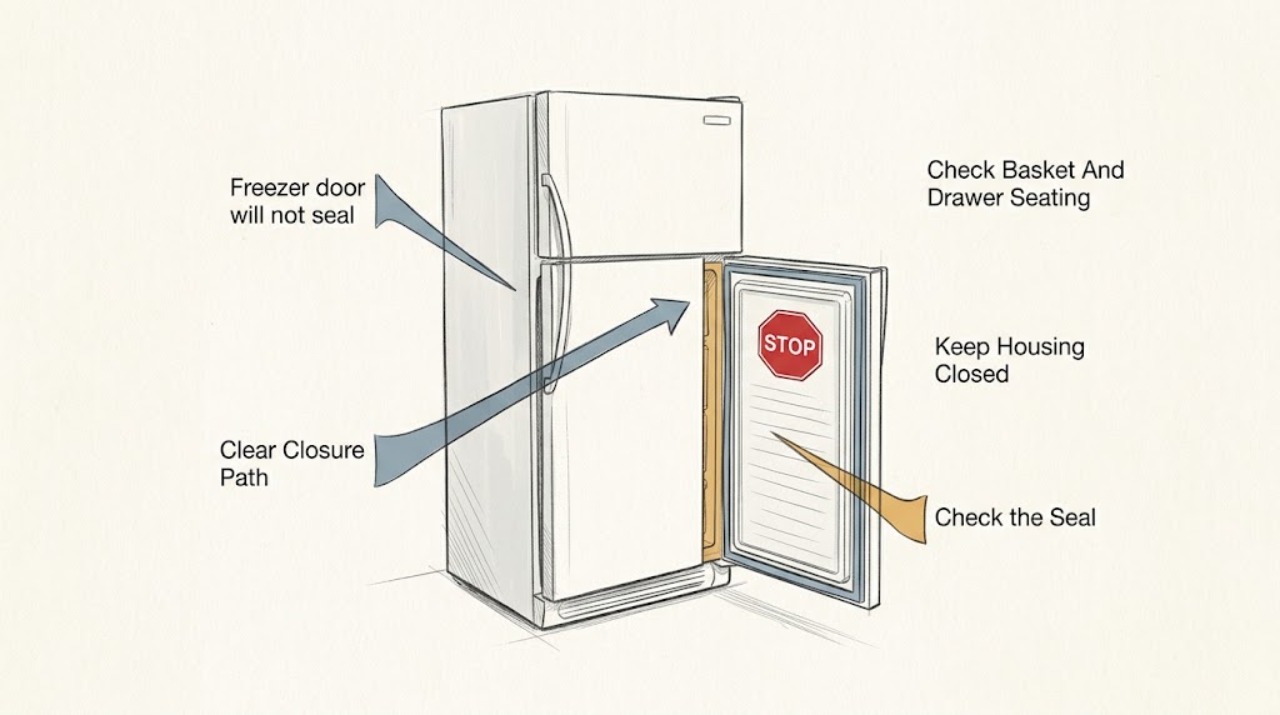
GE freezer door will not seal: What to Check and What to Do Next
A GE freezer door that will not seal is usually blocked by a package, bin, shelf, ice, shipping material, or a drawer basket that is not seated; it can also be out of level or have a gasket that is loose, wrinkled, torn, or not touching the frame evenly. Empty the closing path, reseat accessible bins or baskets, inspect the gasket and frame, and compare the gap around the door.
-
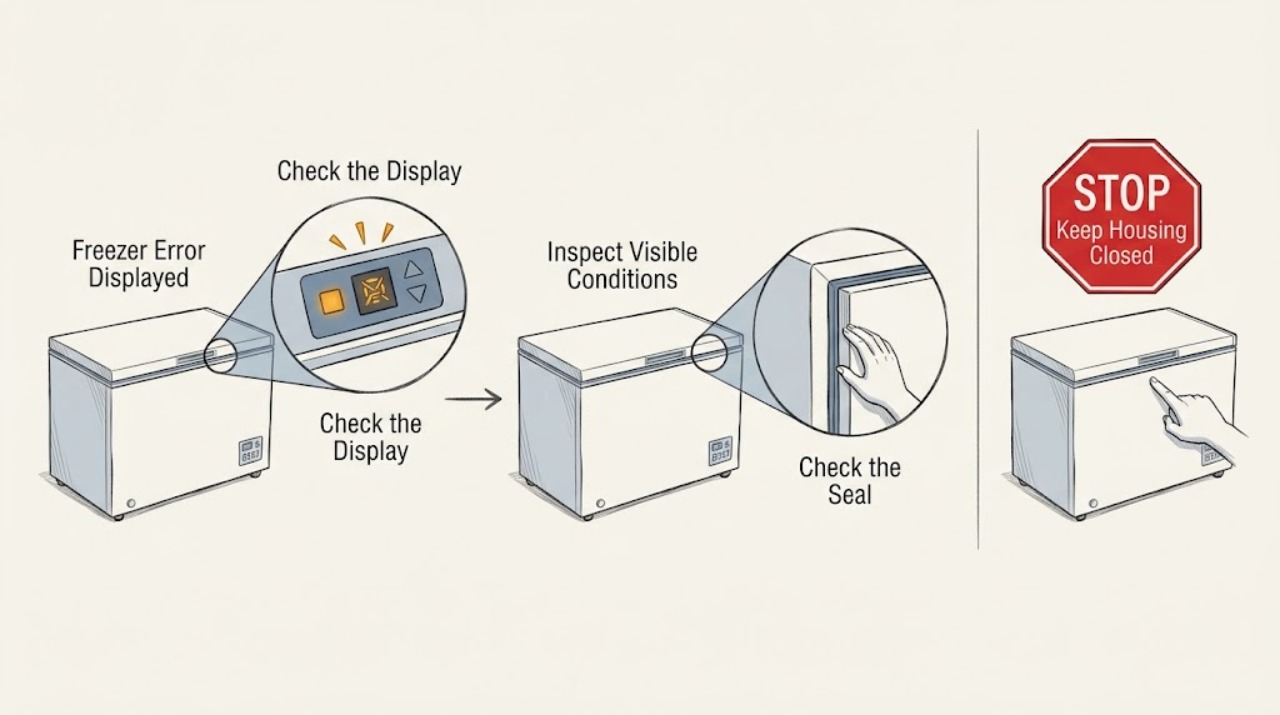
GE Freezer Error Displayed: Decode the Message and Know When to Call
A GE freezer display may be showing a high-temperature or door alarm rather than a failed part, or it may be showing a model-specific electronic fault. Record the exact message before resetting it.
-
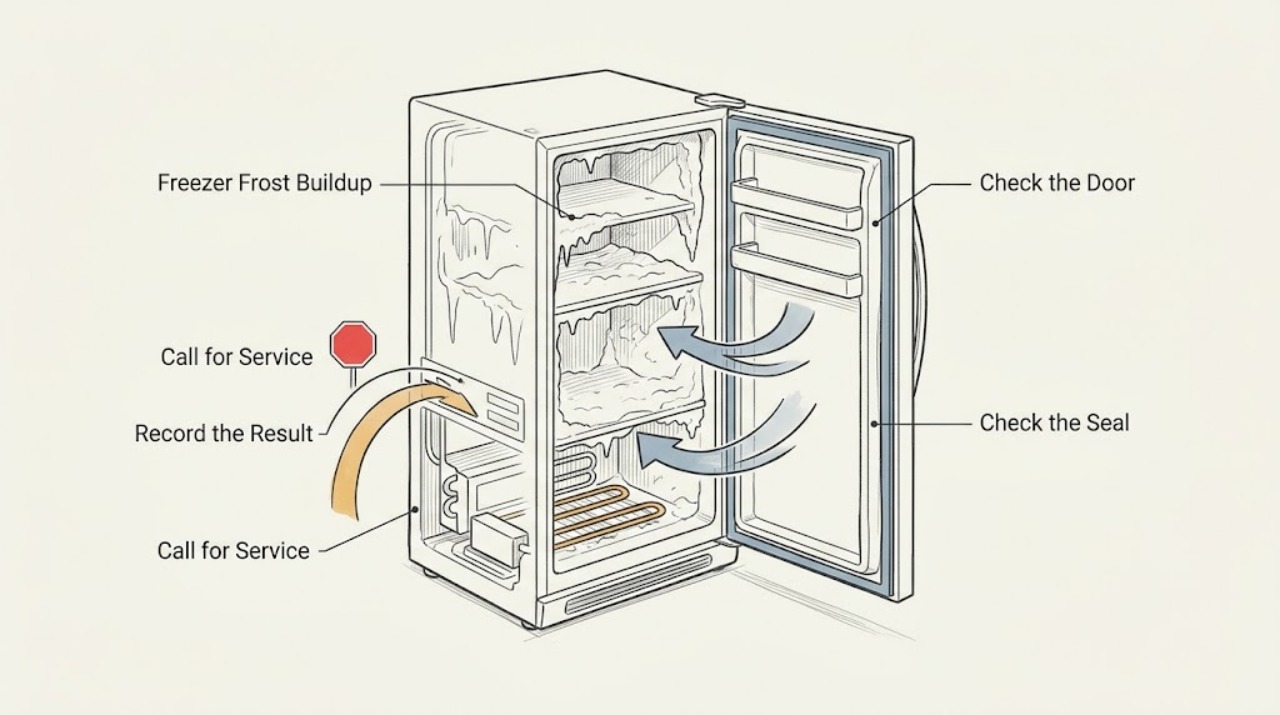
Ge Freezer Frost Buildup
A small amount of frost on a package can be normal, but heavy frost on a GE freezer wall, around the opening, or over a vent usually means humid air is getting in, storage is preventing a seal, airflow is blocked, or the defrost system needs attention.
-
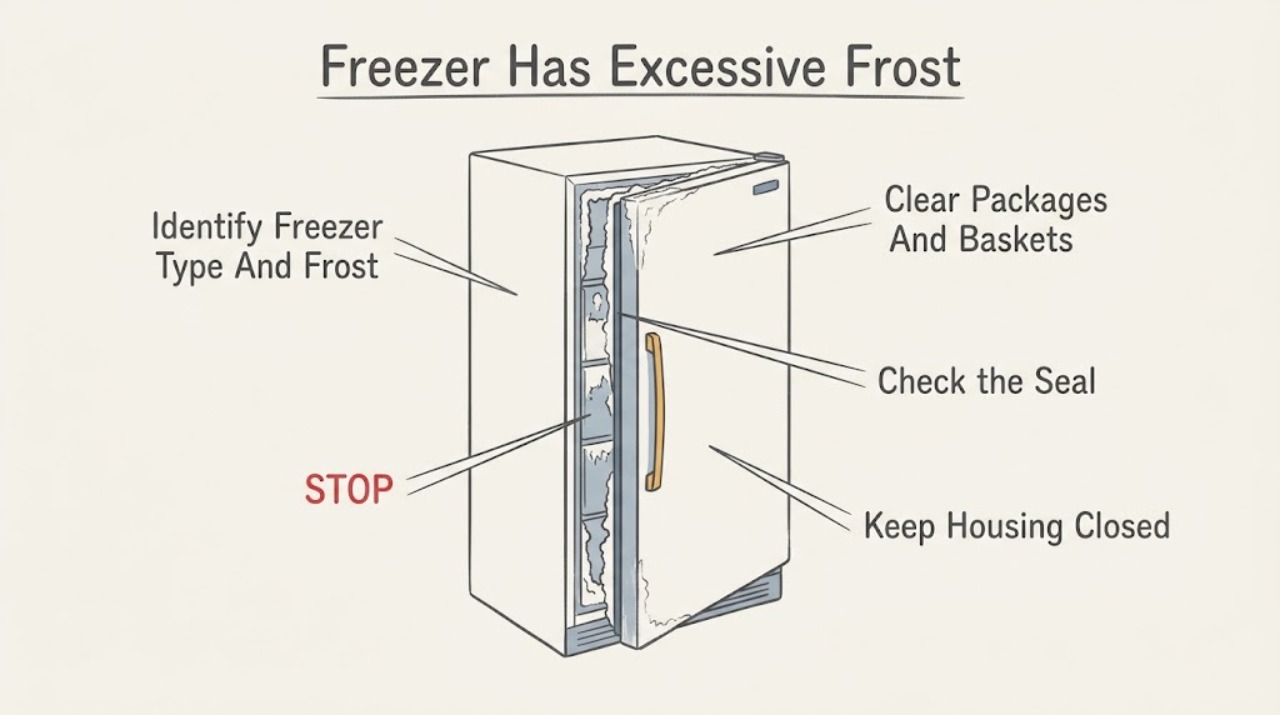
GE Freezer Has Excessive Frost: What to Check and What to Do Next
Excessive frost in a GE freezer usually means warm, moist air is entering or frost is not being removed as designed. First check for packages, shelves, baskets or bins holding the door or drawer open; then inspect the full gasket perimeter for cuts, tears, gaps or uneven contact.
-
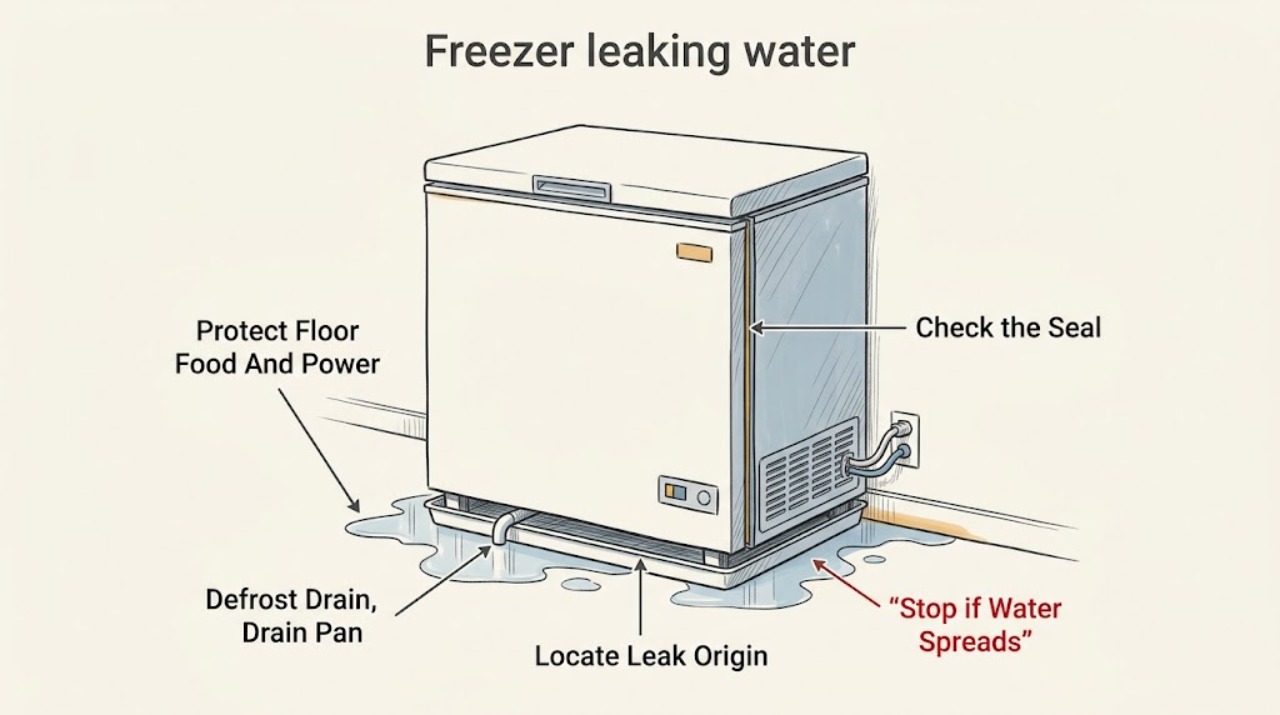
GE freezer leaking water: What to Check and What to Do Next
A GE freezer leak can come from normal defrost water, a blocked or displaced defrost drain, an overflowing drain pan, frost caused by a door or lid that is not sealing, or—on a refrigerator-freezer with an ice maker or water connection—a valve, fill tube, or supply-line leak. First identify whether the water starts inside the freezer, at the door or lid edge, under the cabinet, or at an external water connection.
-
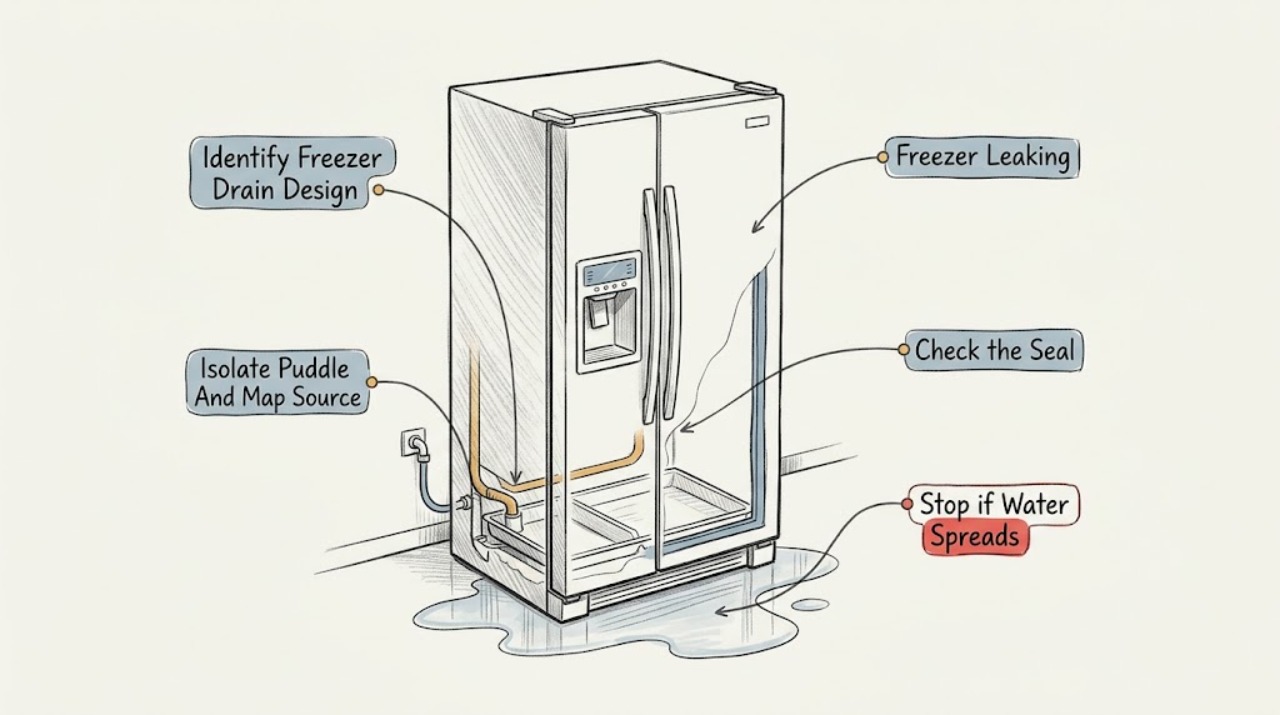
GE Freezer Leaking: Trace the Water Before It Reaches the Floor
A leaking GE freezer is usually a water-path problem, but the correct check depends on whether it is a self-defrost upright, a manual-defrost chest freezer, a bottom-freezer refrigerator, or a freezer with an ice maker. First protect people from the puddle, keep water away from outlets and wiring, and record where the water starts: inside the freezer floor, around the door, at the rear or base, or near an ice maker or supply line.
-
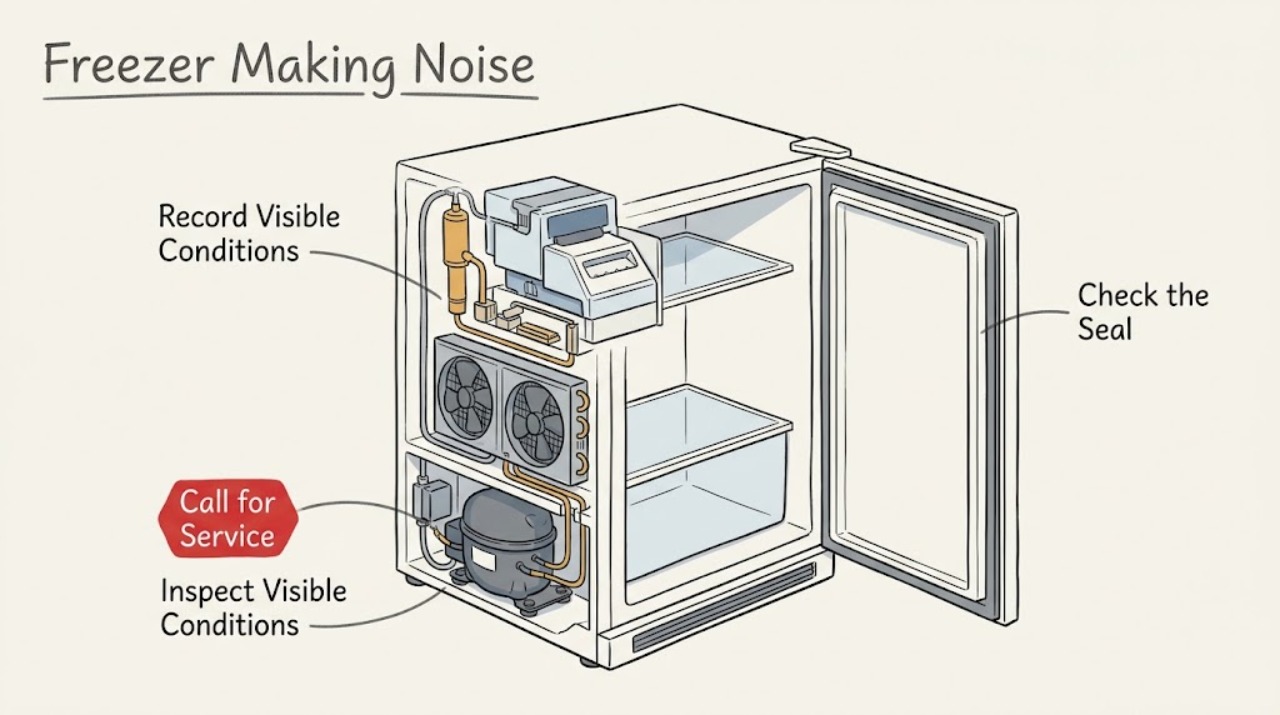
GE Freezer Making Noise
Some GE freezer noises are normal: a compressor hum or whine, refrigerant boiling or gurgling while the unit cools, brief popping or hissing during automatic defrost, and a short whoosh after opening the door or lid. First identify when and where the sound occurs, then check only accessible conditions such as a loose item, an unsecured door or lid, or an icemaker that is trying to fill without water.
-
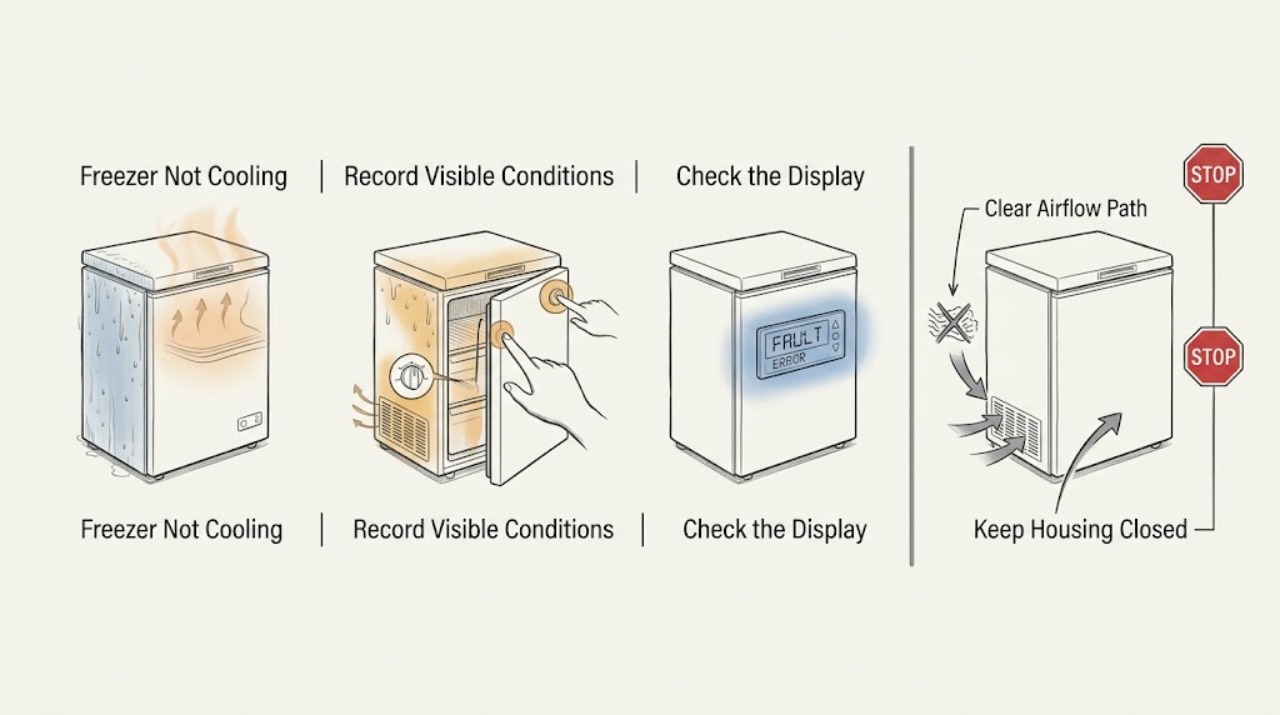
GE Freezer Not Cooling: Check Temperature, Airflow, Frost, and Safe Service Boundaries
If a GE freezer is not cooling, protect the food first and separate a power or control problem from a blocked-airflow, frost, door-seal, or mechanical fault. Keep the door closed as much as practical, record the internal temperature if an appliance thermometer is available, and identify whether the freezer is an upright, chest, or refrigerator freezer compartment.
-
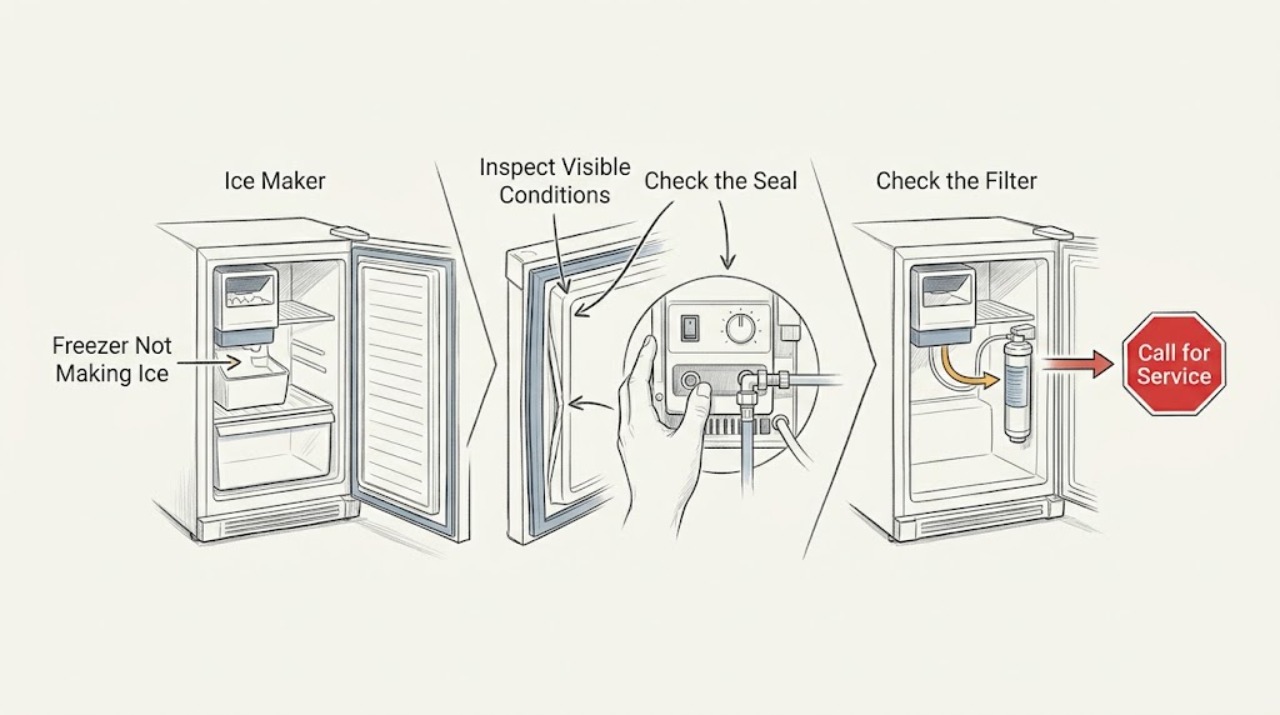
GE Freezer Not Making Ice
If a GE freezer is not making ice, first confirm that the icemaker is turned on, the freezer is cold enough, and the water supply and filter are not restricting flow. Check that the feeler arm or paddle can move and that clumped cubes are not blocking the mold or bin.
-
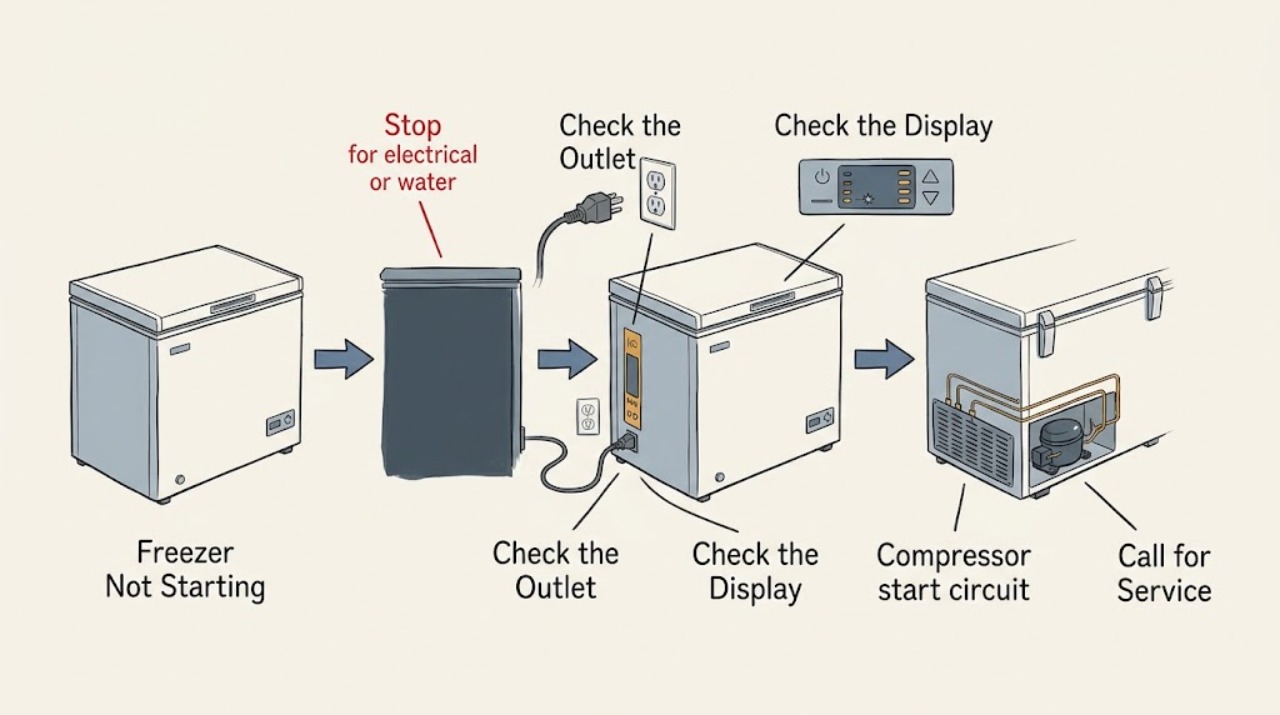
GE Freezer Not Starting: Safe Checks
If a GE freezer is not starting, first protect people and food: stop for a burning smell, damaged cord, water near electrical parts, smoke, or a breaker that trips again. Without opening the appliance, check that the plug is seated, the outlet and breaker have power, and the temperature control is not set to OFF.
-
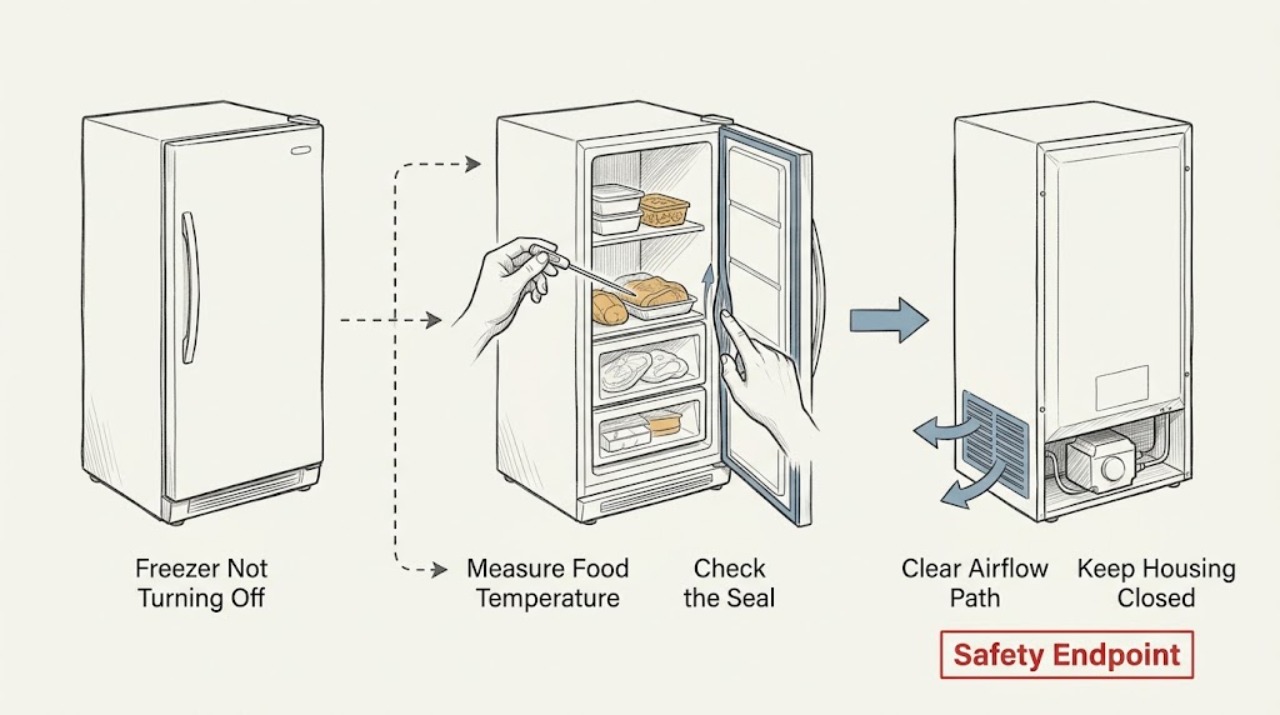
GE Freezer Not Turning Off: When Continuous Running Is Normal
A GE freezer may run for most of the day and can run continuously while it is first cooling, recovering from frequent door or lid openings, handling a large warm load, or operating in very hot room conditions. GE says freezer compressors are designed to run about 80% to 90% of the time, so sound alone does not prove a fault.
-
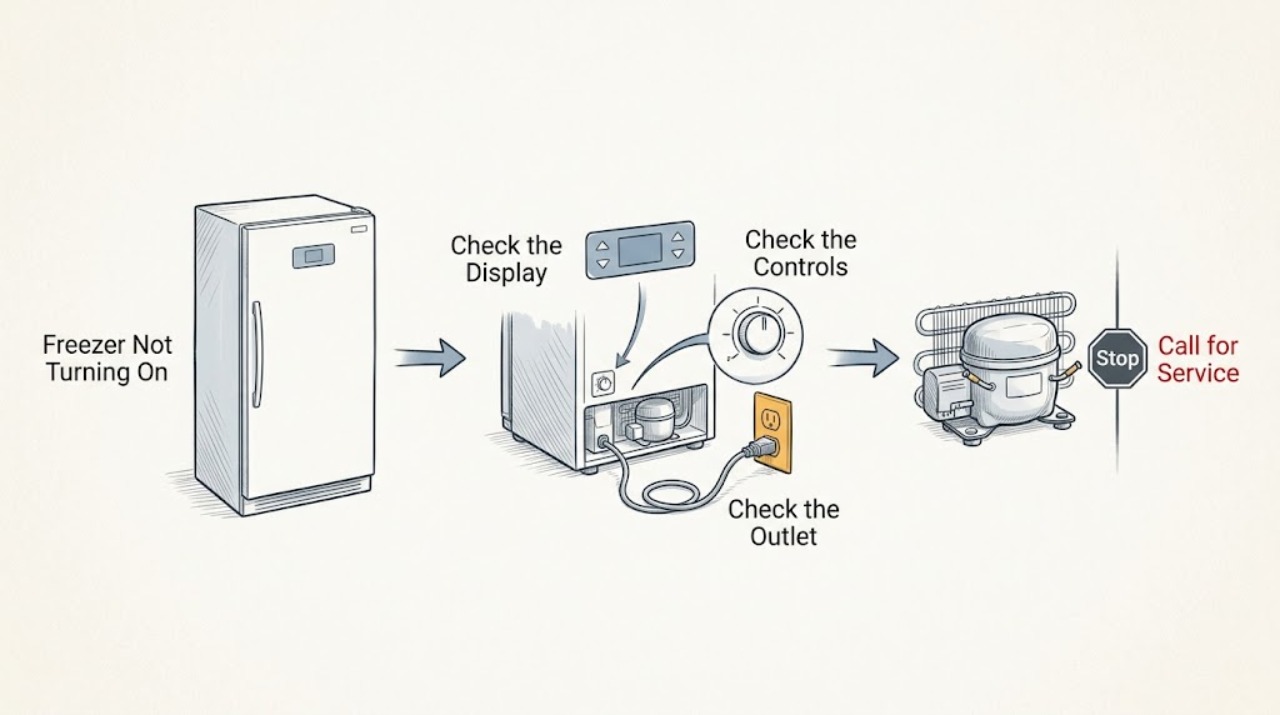
GE Freezer Not Turning On
If a GE freezer appears not to turn on, first check whether the outlet has power and whether the temperature control is set to a cooling position rather than Off. With the control set correctly, wait briefly for the compressor to start, then test the outlet with a small lamp or other low-risk appliance.
-
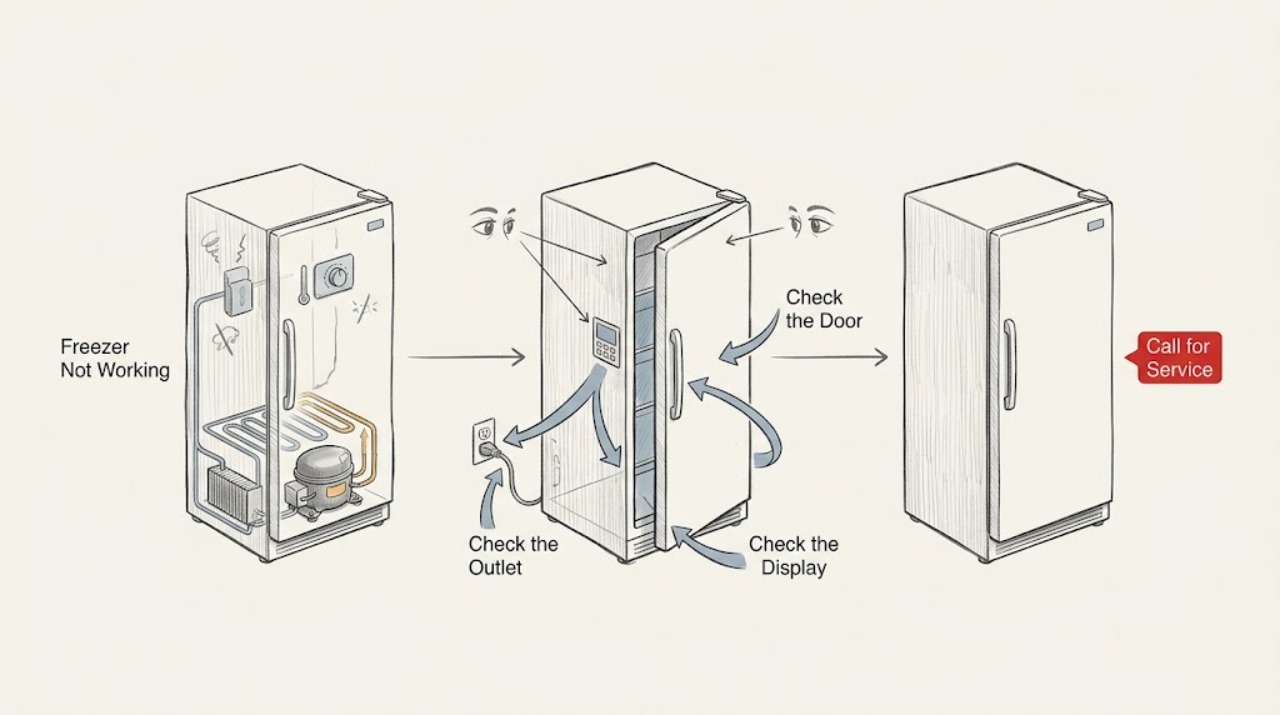
GE Freezer Not Working
If a GE freezer is not working, first determine whether it is completely dark, has lights but is not cooling, or is temporarily quiet during a defrost cycle. Confirm the plug, outlet, and temperature control, and check the display for Demo Mode or a fault code.
-
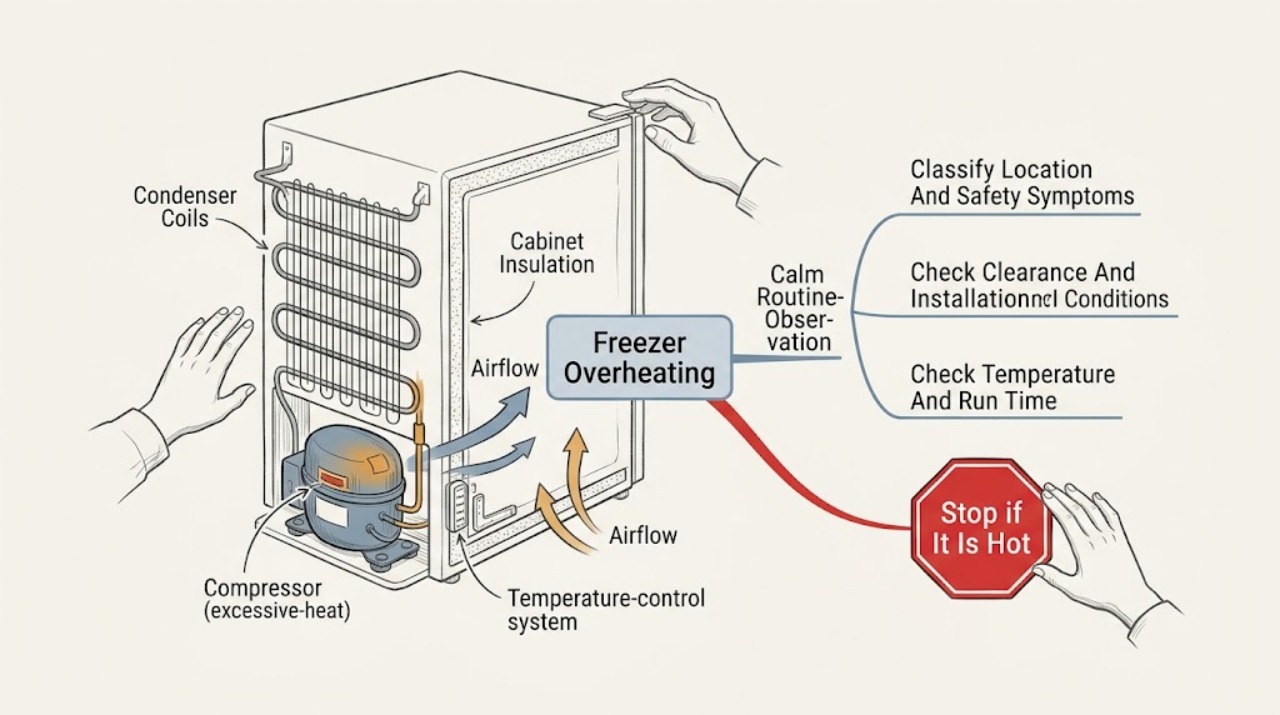
GE Freezer Overheating: Tell Normal Case Heat from a Safety Fault
A GE freezer's outside case can normally feel warm or even hot because the case or a built-in heater helps reject heat and prevent condensation. GE says upright and chest freezer walls can be up to 30°F warmer than the surrounding room, but the model still needs the clearances in its owner's manual.