
HVAC components
HVAC Capacitors Guides
Capacitor guidance focused on symptoms, safe limits, and professional testing decisions.
Published capacitors guides
Use the equipment name and symptom in each title to choose the most relevant guide.
-
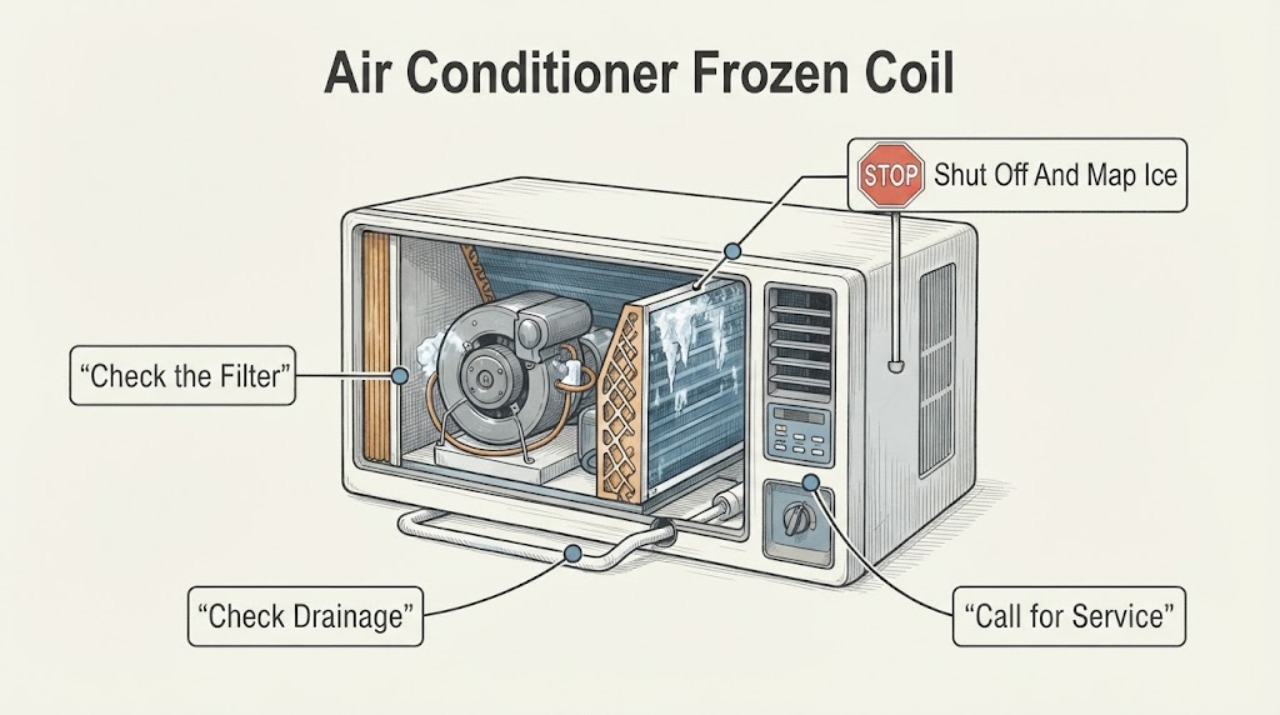
Air Conditioner Frozen Coil: Stop the Cooling Cycle, Restore Airflow, and Find the Cause
If an air conditioner has ice on the evaporator coil or refrigerant line, switch the thermostat from COOL to OFF and do not chip the ice or keep running the system. Trane identifies restricted airflow from a dirty filter, blocked return vents, or a dirty coil as common causes, while low refrigerant, a blower problem, or thermostat trouble can also freeze the coil.
-
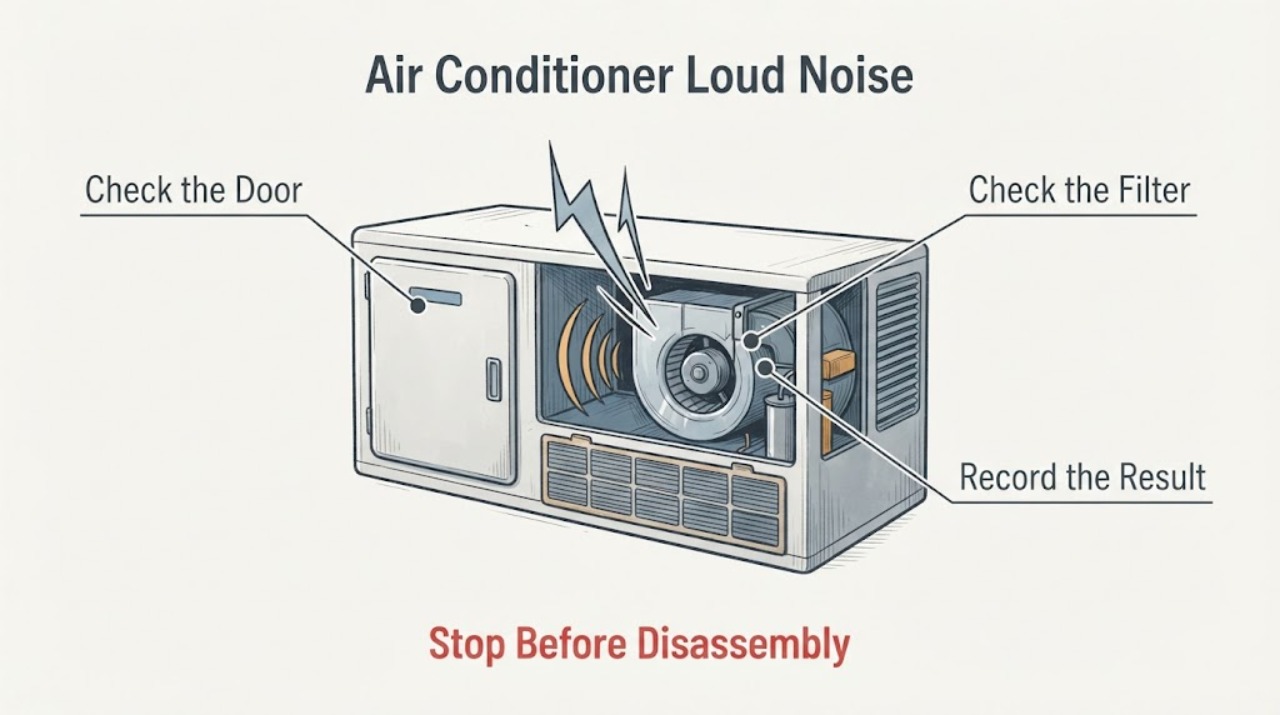
Air Conditioner Loud Noise: Blower Motor and Capacitor Checks
A new loud sound should be treated as a fault until its location and timing are clear. Turn cooling off, note whether the sound comes from the indoor blower or outdoor unit, and do only external, power-off checks.
-
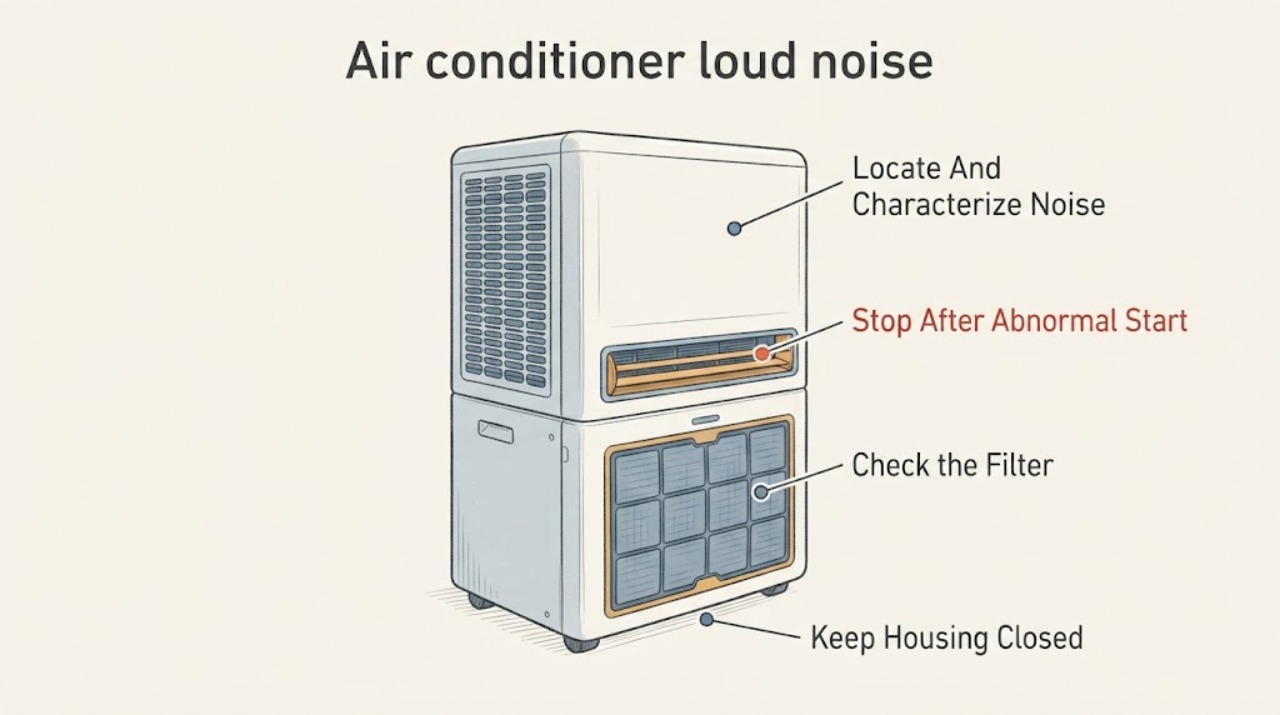
Air conditioner loud noise: how to tell whether a capacitor needs service
A loud air conditioner does not prove that the capacitor has failed. Note whether the sound comes from the indoor or outdoor unit and whether it occurs at startup, during cooling, or at shutdown, then stop the system if the sound is sudden, harsh, or accompanied by poor cooling.
-
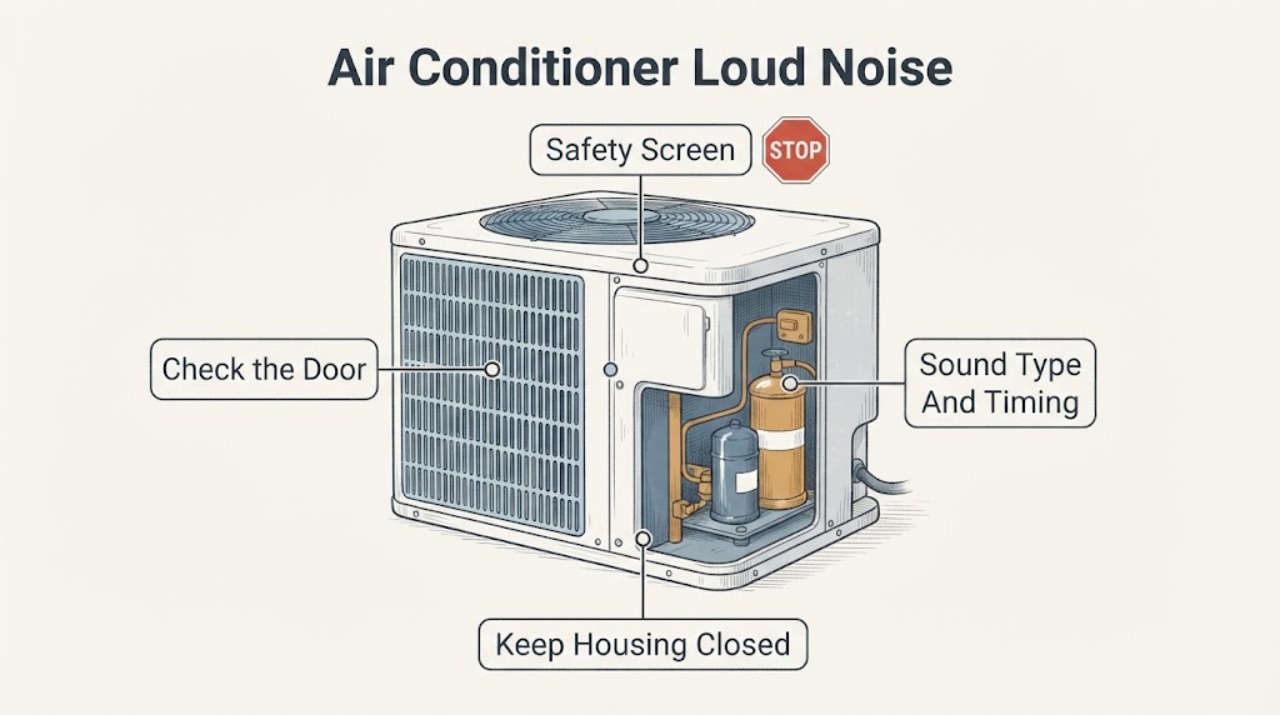
Air Conditioner Loud Noise: Capacitor and Compressor Clues
A loud air-conditioner noise should be classified by location, sound, and timing before anyone guesses a part. Turn cooling off at the thermostat and listen from a safe position: an indoor blower sound points to a different path from an outdoor hum, click, rattle, grind, bang, or squeal.
-
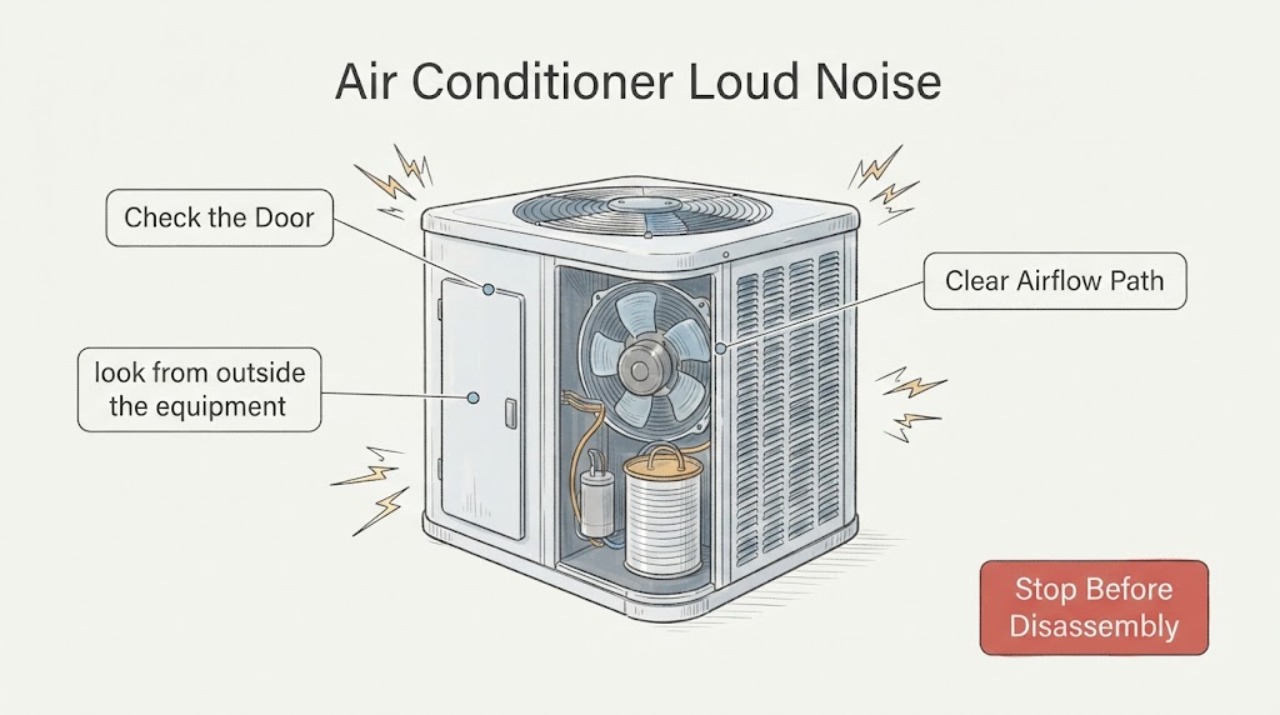
Air Conditioner Loud Noise: Check the Fan and Capacitor Safely
A suddenly loud air conditioner should be diagnosed by location, sound, and timing, not by opening the unit. From a safe position, note whether the noise is indoors or outdoors and whether it is a hum at startup, repeated clicking, rattling, scraping, grinding, or a fan that is not turning.
-
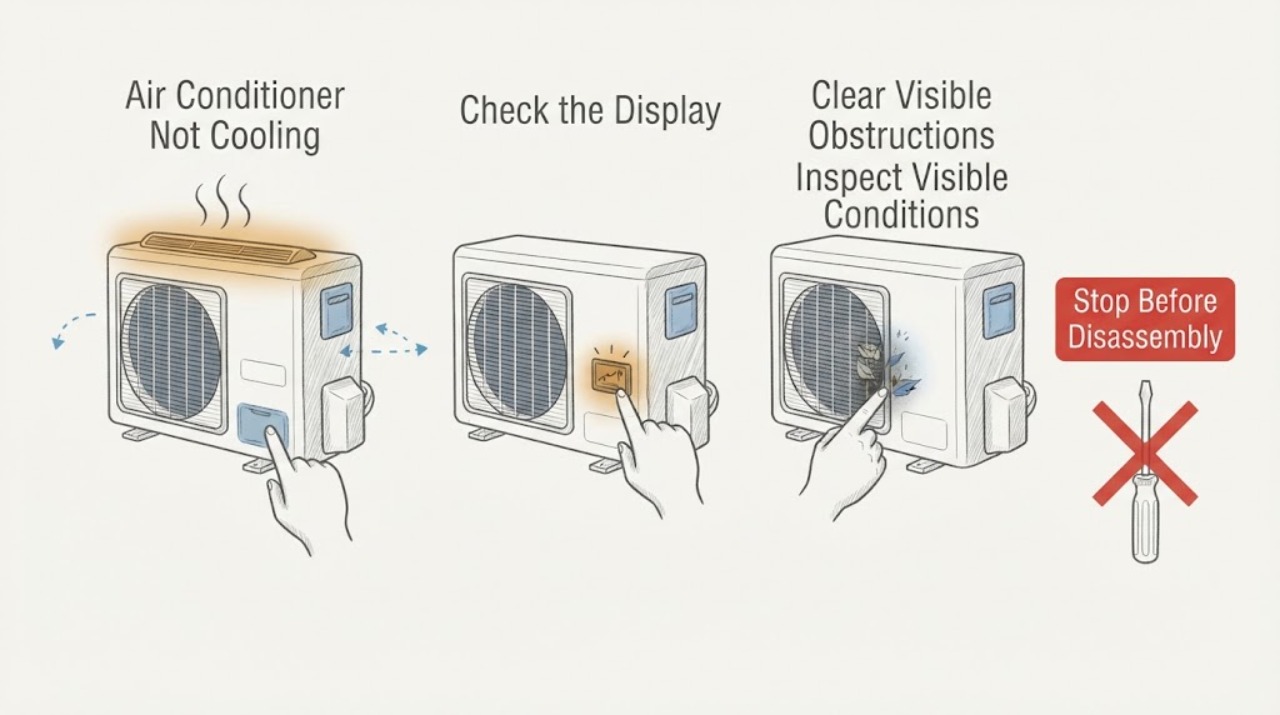
Air Conditioner Not Cooling: When a Capacitor May Be Involved
A capacitor can be one reason an air conditioner does not start, but a warm room or a humming outdoor unit does not prove that the capacitor has failed. Confirm the thermostat mode and target, inspect the accessible filter and registers, and observe whether the indoor airflow and outdoor fan start from a safe distance.
-
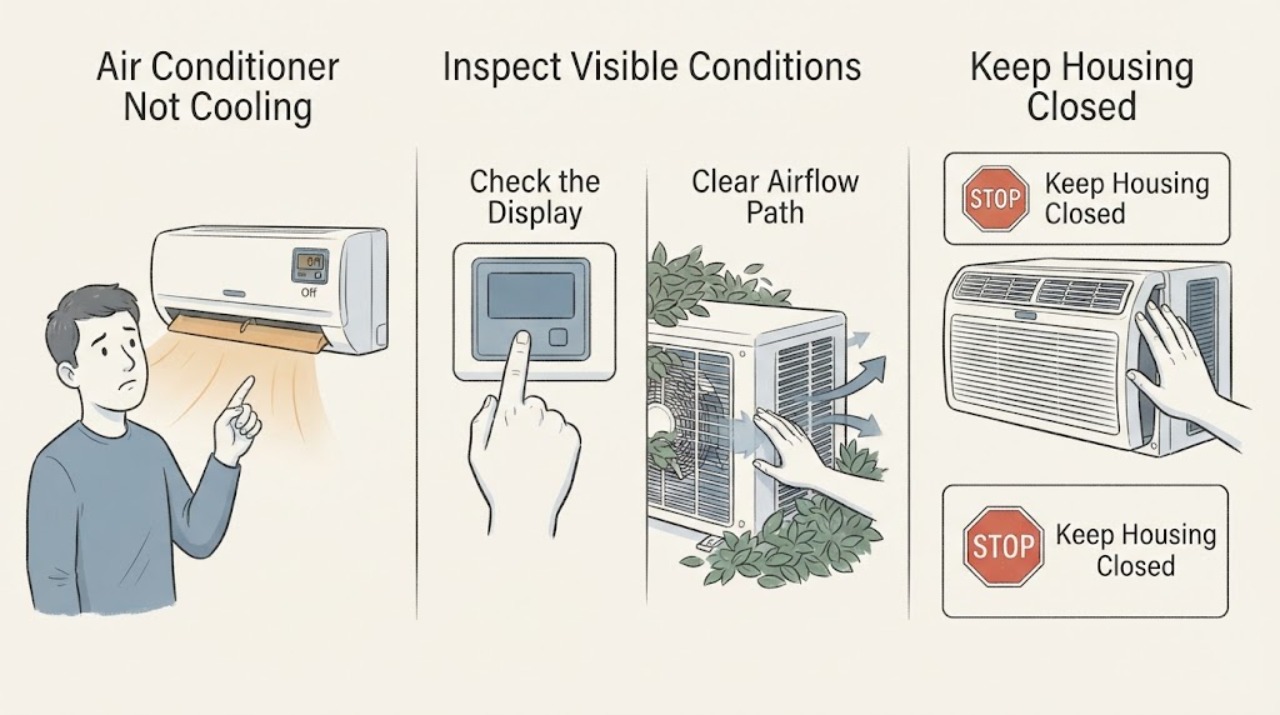
Air Conditioner Not Cooling: Check Airflow Before Capacitor or Compressor Service
Start with the thermostat, filter, airflow, and visible ice, but treat capacitor and compressor work as professional HVAC service. Set the thermostat to cooling with the fan on Auto, confirm the filter is not blocked, and make sure supply and return paths and the outdoor unit are not visibly obstructed.
-
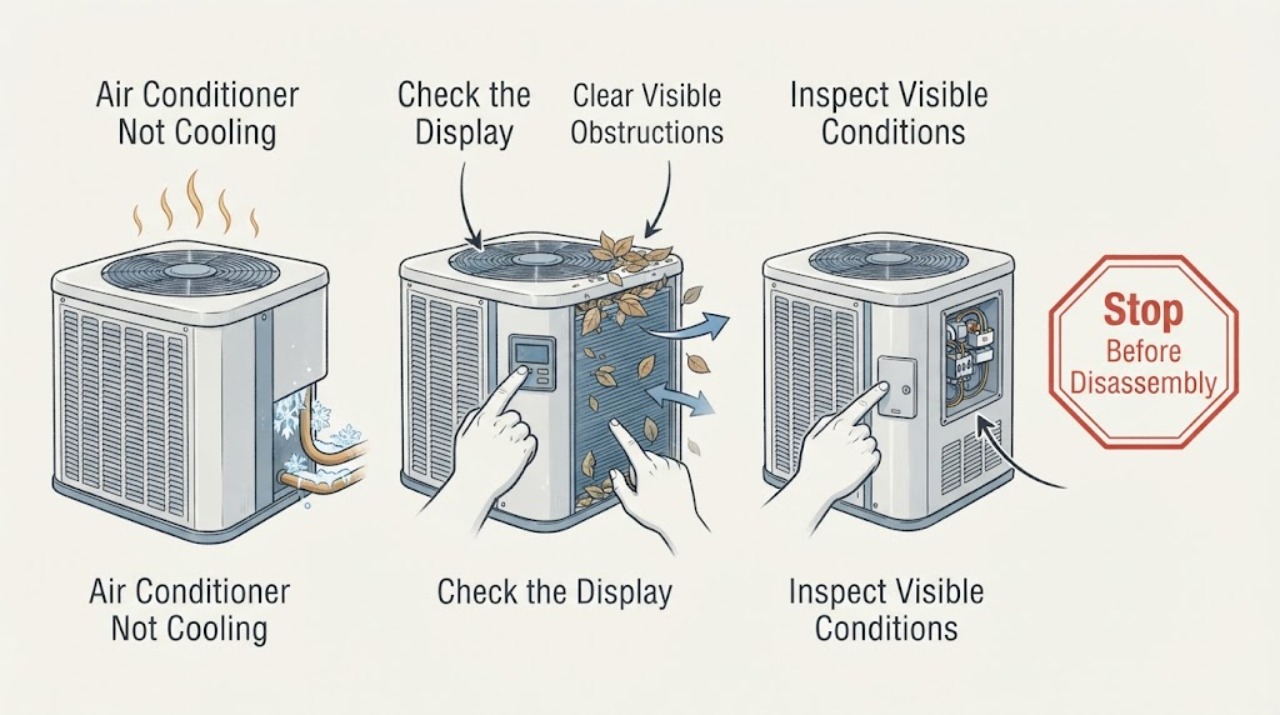
Air Conditioner Not Cooling: Safe Capacitor and Contactor Clues
If an air conditioner is not cooling, begin with the thermostat mode, target, filter, airflow, and visible outdoor clearance. A contactor or capacitor may be involved when the outdoor unit does not start, hums, or stops, but neither part can be confirmed from a sound or a warm room.
-
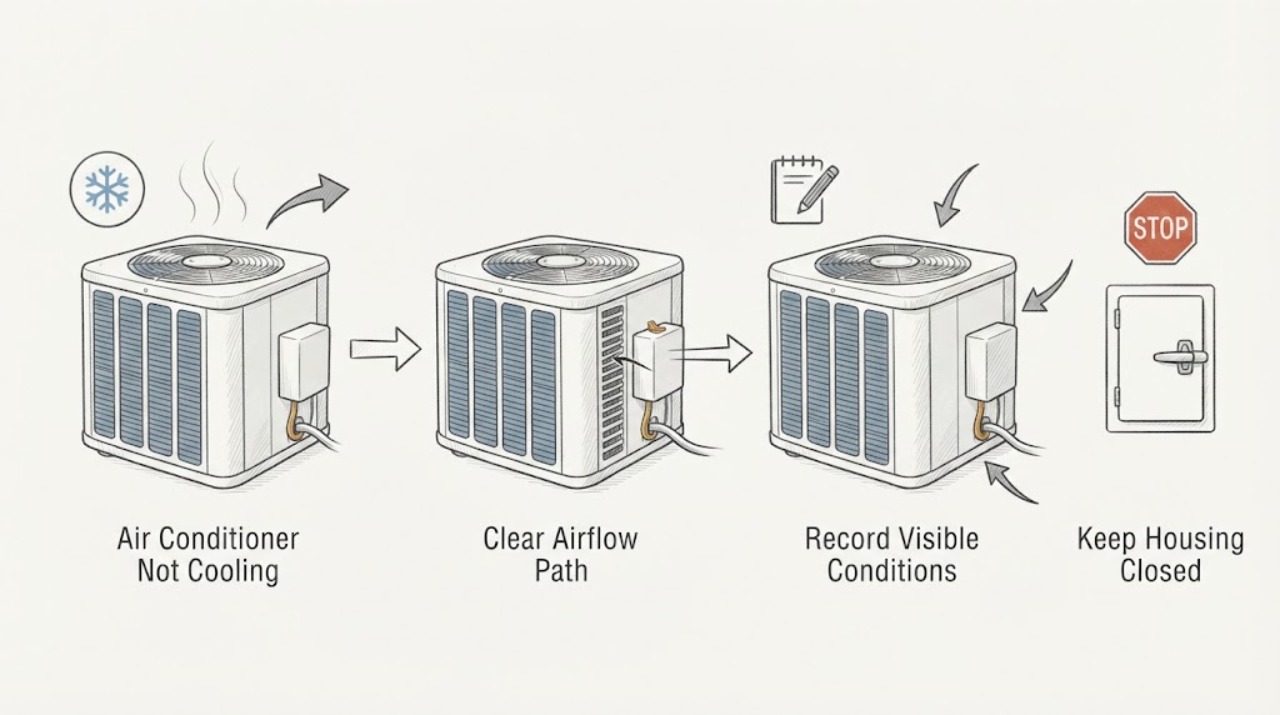
Air Conditioner Not Cooling: Check Airflow, Drainage, and Capacitor Symptoms Safely
Start with the thermostat mode and setpoint, then check the accessible air filter and whether supply air is weak. Look for ice on visible tubing or the indoor coil area and for condensate water near the indoor unit or drain outlet.
-
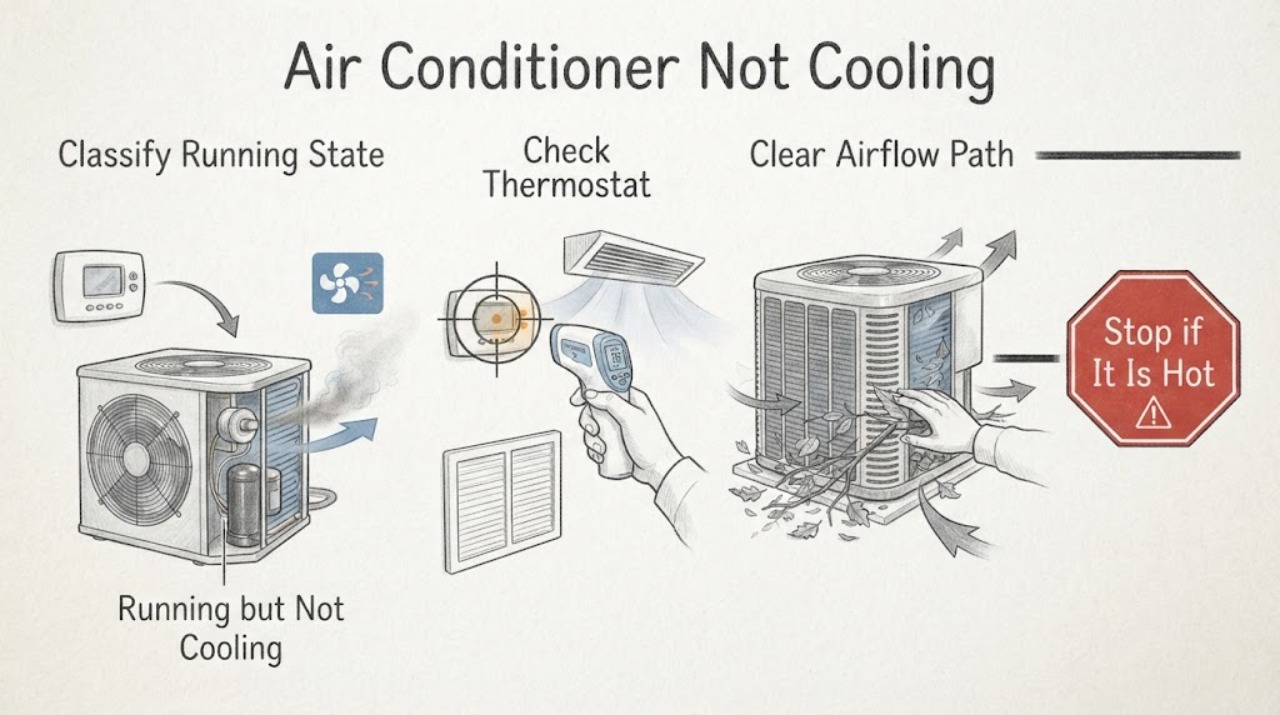
Air Conditioner Not Cooling: Check the Thermostat and Airflow Before Internal Parts
First decide whether the air conditioner is not running, is running with weak airflow, or is blowing air that is not cool. Check the thermostat mode and setpoint, compare supply vents and the return, inspect the accessible filter with the system off, and look from a safe distance for ice, water, or outdoor-unit obstruction.
-
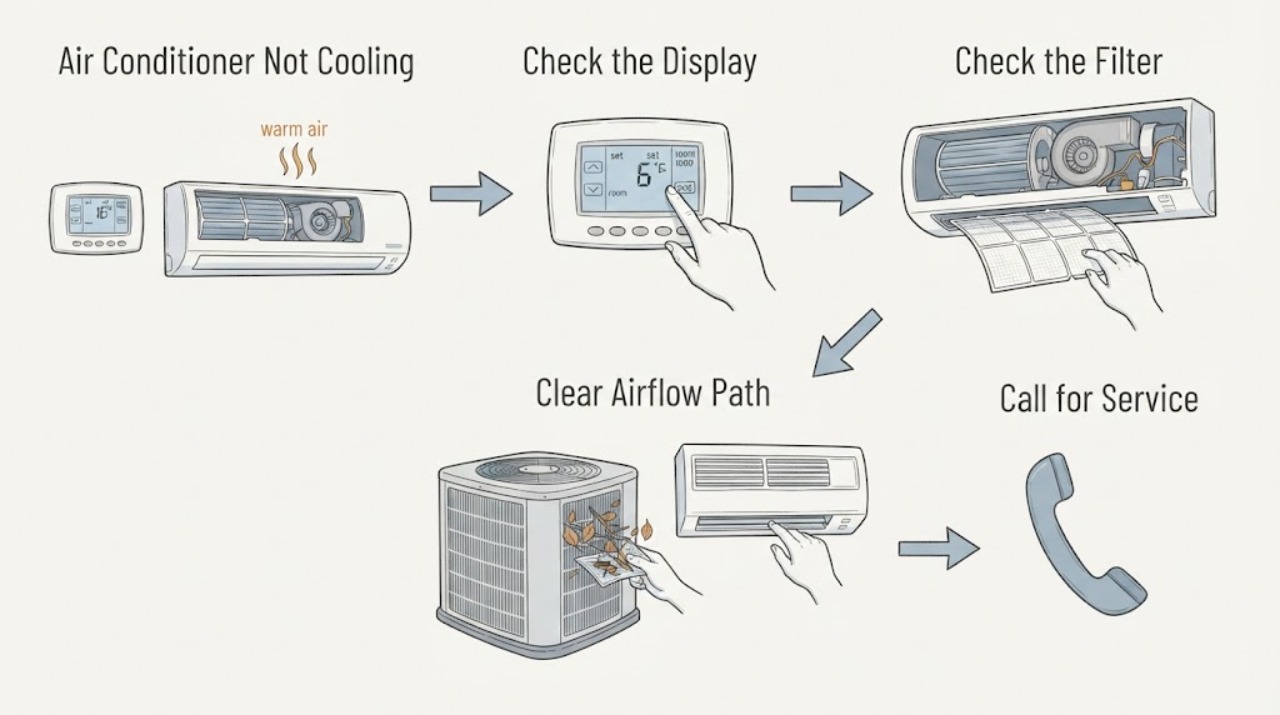
Air Conditioner Not Cooling: Thermostat, Filter, Blower, and Capacitor Checks
Start with the thermostat and the user-accessible air filter, then compare airflow with what the outdoor unit is visibly doing. A wrong mode or clogged filter can mimic a failed air conditioner, while weak or absent indoor airflow, ice, an outdoor fan that will not start, humming, or repeated electrical trips point toward a blower motor, capacitor, compressor, refrigerant, or control problem that needs HVAC service.
-
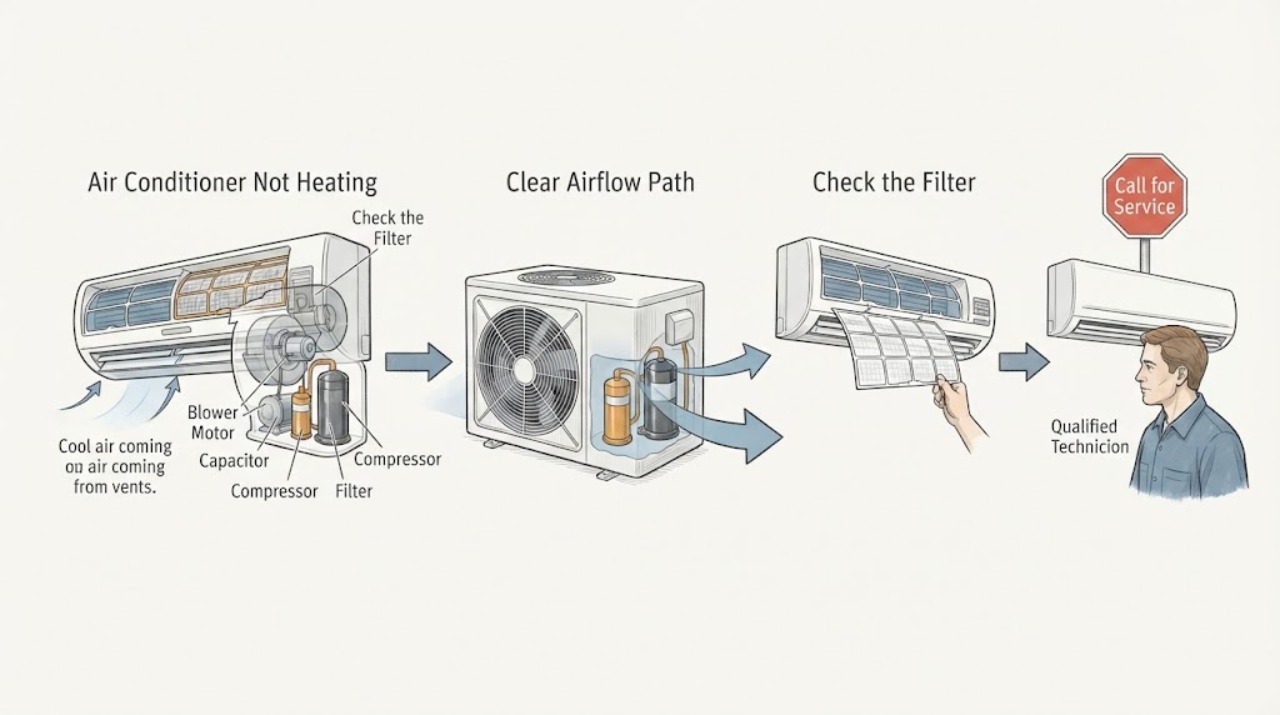
Air Conditioner Not Heating: Check the Heat Mode and Airflow
First confirm what equipment you have: a cooling-only air conditioner cannot provide heat, while a heat pump or a dual-fuel system must be in the correct heat mode. For a heat pump, check the thermostat mode and fan, compare indoor airflow, and inspect the user-accessible filter with the system off.
-
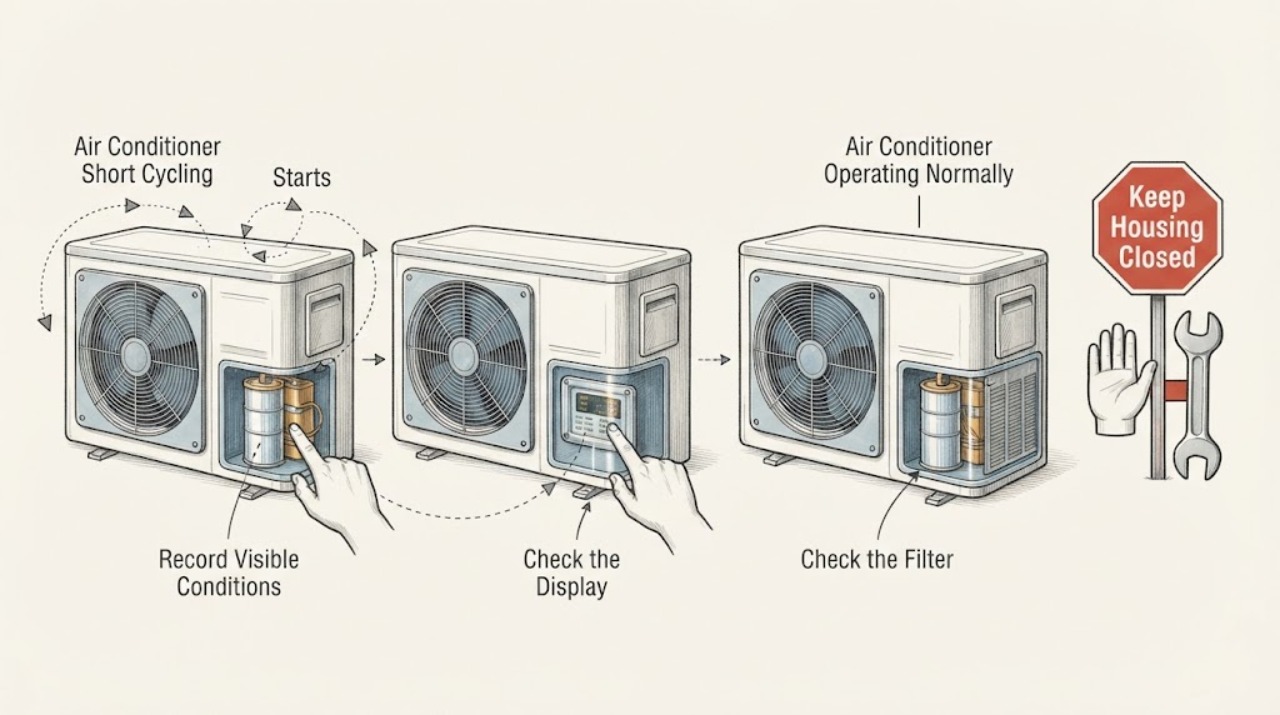
Air Conditioner Short Cycling: Check the Cause Before Blaming the Capacitor
Short cycling means the air conditioner starts and stops repeatedly without completing a normal cooling cycle. A weak capacitor can make a motor or compressor struggle to start, but short cycling can also come from a thermostat or control delay, a dirty filter, frozen coil, low refrigerant, blocked outdoor coil, fan problem, oversized equipment, or an electrical fault.
-
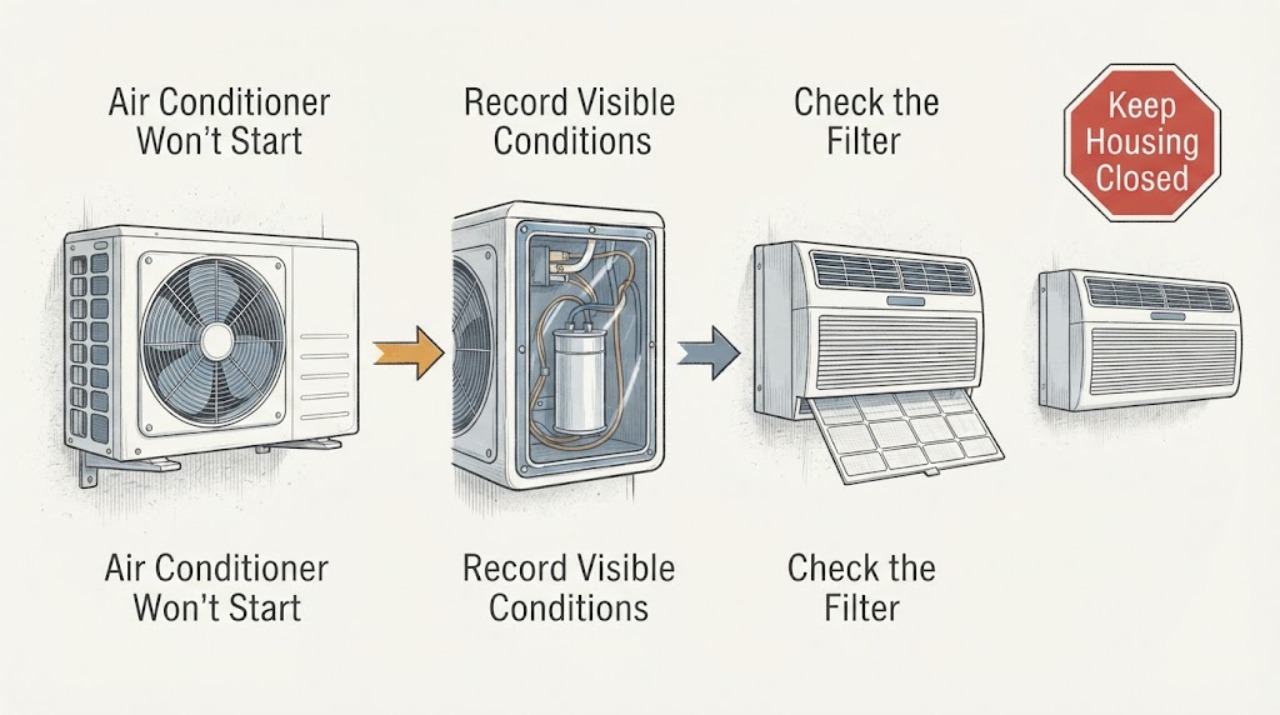
Air Conditioner Won't Start: Is the Capacitor the Cause?
A failed run or start capacitor can keep an air conditioner's outdoor fan or compressor from starting, but a no-start symptom does not prove the capacitor is bad. Check only the thermostat mode and setpoint, the accessible filter, indoor airflow, visible ice or water, and the outdoor unit's response from a safe distance.
-
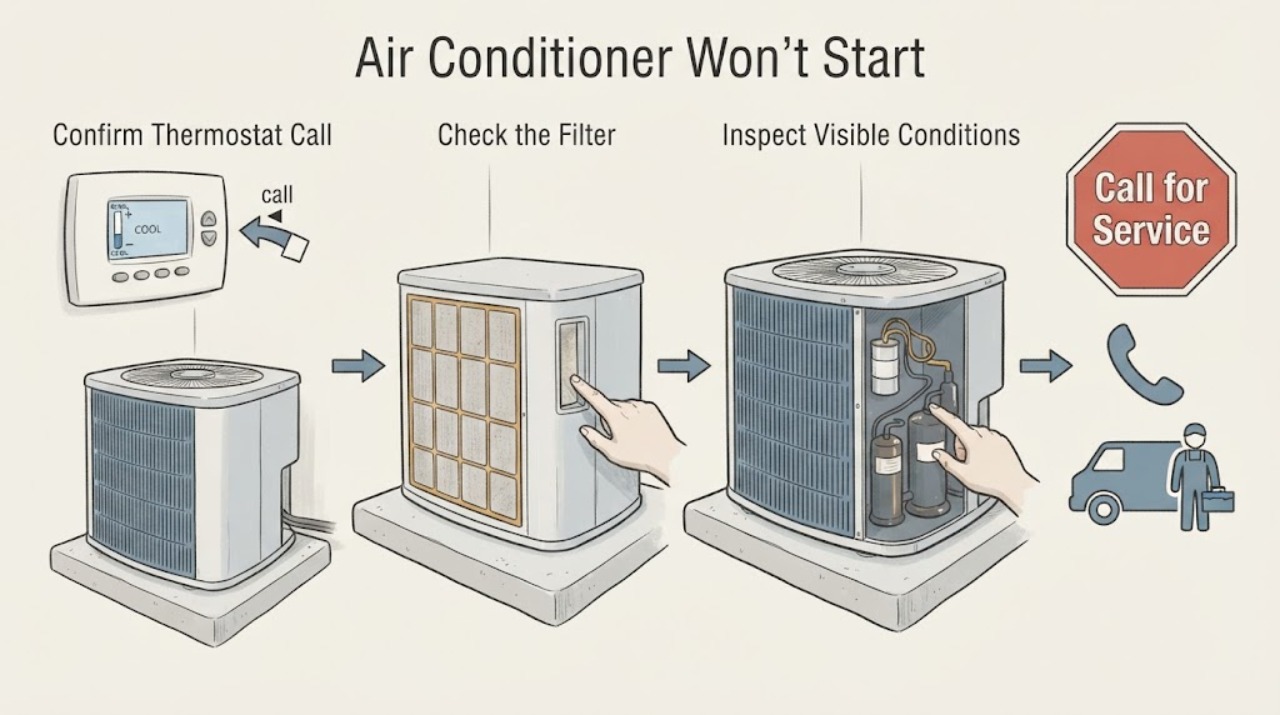
Air Conditioner Won't Start: Check the Thermostat and Filter Before Calling HVAC
Start with the user-safe checks: confirm the thermostat is calling for cooling and inspect the accessible air filter for blockage. Then note whether the indoor blower, outdoor fan, or compressor produces any response, and whether there is ice, water, burning odor, or unusual noise.
-
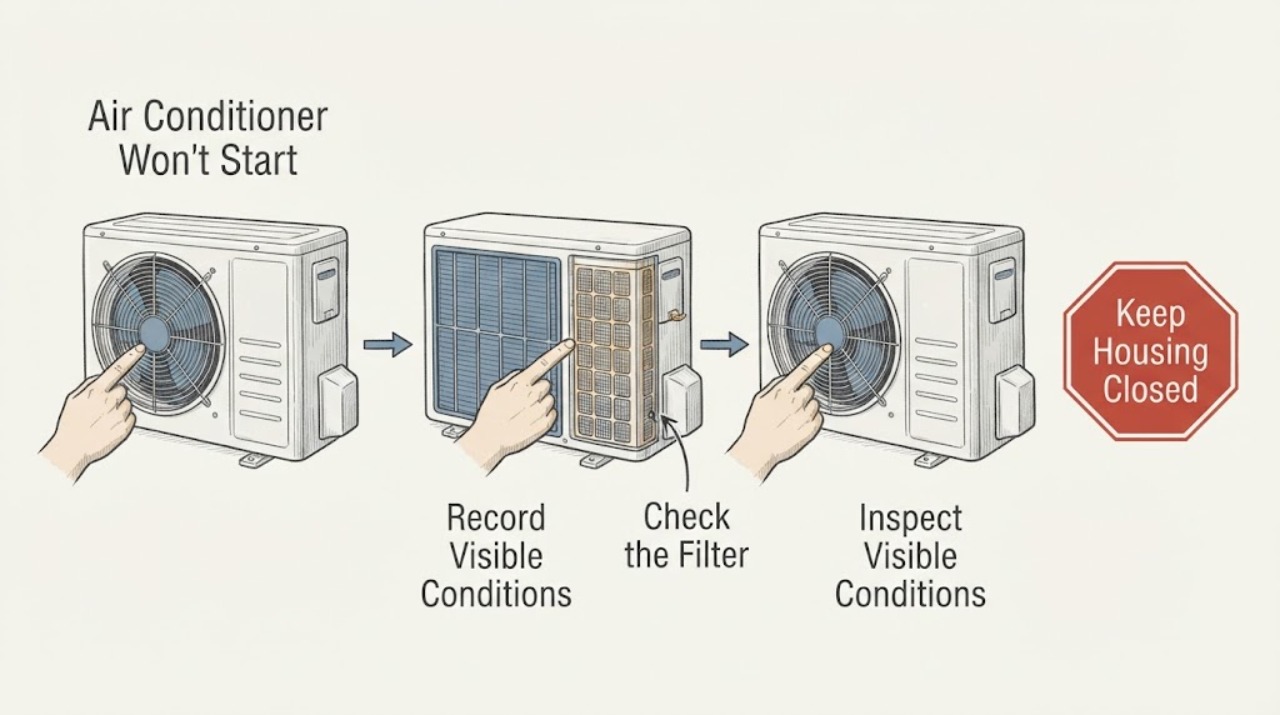
Air Conditioner Won't Start: Check the Safe Causes Before Ordering Parts
When an air conditioner will not start, first separate no thermostat call, no indoor response, and an outdoor unit that stays silent. Check the thermostat mode and setpoint, the accessible air filter, visible supply and return airflow, and whether a clearly labeled HVAC protective device is open.
-
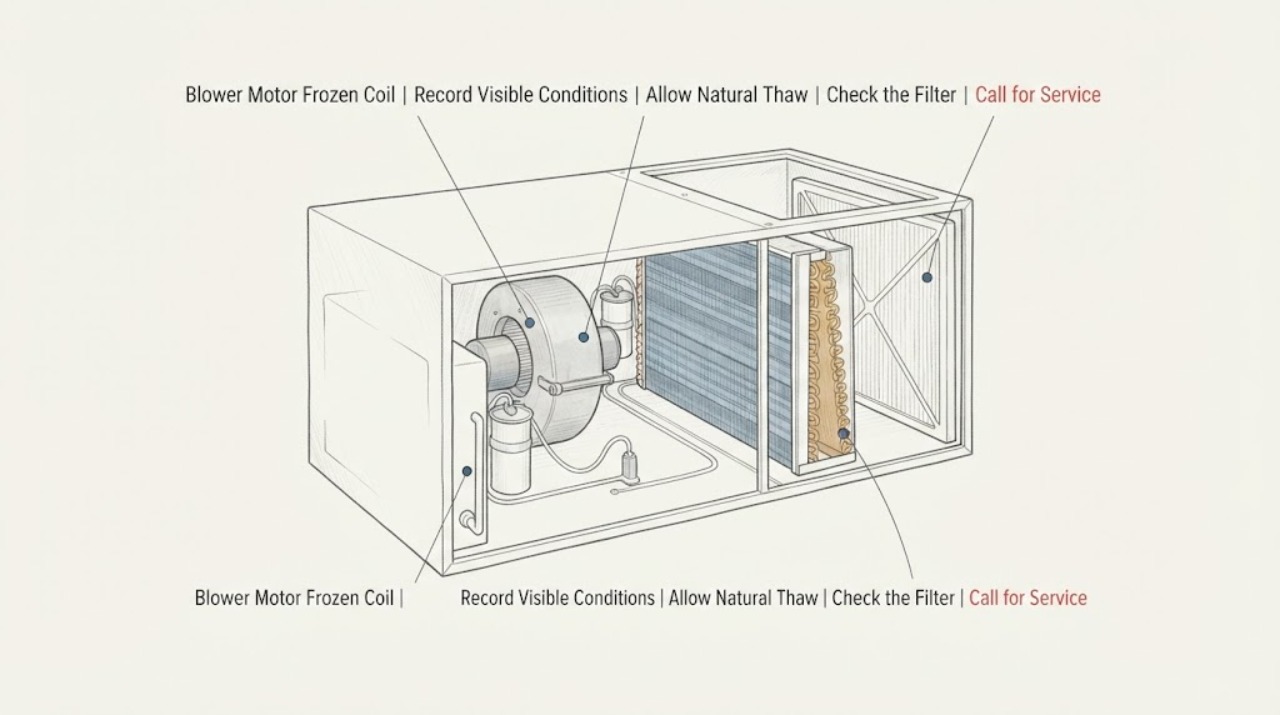
Blower Motor Frozen Coil: Let the Air Handler Thaw Before Diagnosis
A frozen evaporator coil around an air-handler blower is usually a symptom of restricted airflow, a blower or control problem, or a cooling-side condition such as low refrigerant; a dirty filter is only one possible cause. Turn the cooling call off and let the ice thaw naturally, without chipping it or pouring hot water on it.
-
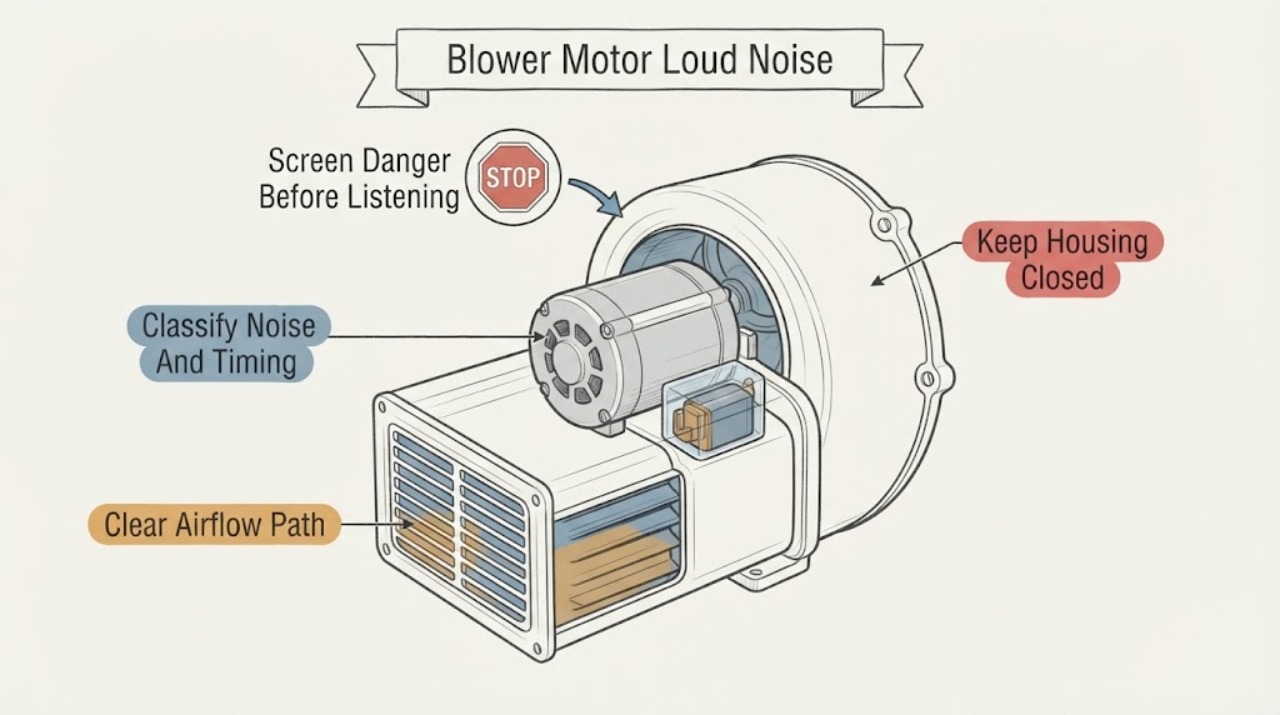
Blower Motor Loud Noise: Recognize Capacitor Clues Without Opening the HVAC Unit
A loud blower-motor noise can come from restricted airflow, a loose panel or duct, a damaged blower wheel, worn bearings, an electrical fault, or a capacitor that is struggling to start the motor. Listen from outside the equipment for the timing and character of the sound: humming with no airflow, grinding or squealing, rattling, or a sudden bang each point to different professional checks.
-
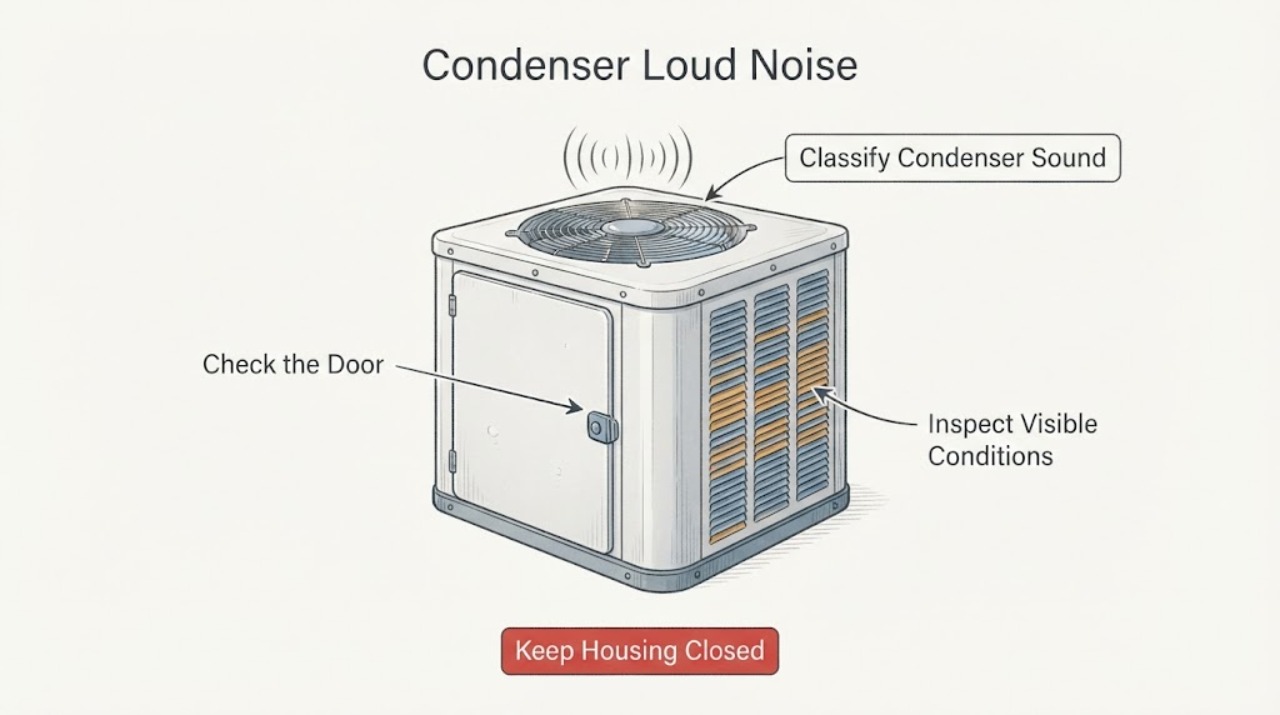
Condenser Loud Noise: Separate Fan, Compressor, and Capacitor Clues Safely
A loud outdoor condenser sound can come from the fan guard or debris, a fan motor or blade, the compressor, a loose panel, refrigerant or pressure conditions, or a capacitor that is struggling to start a motor. From a dry, safe position, note whether the sound is a hum, rattle, grind, squeal, click, or bang and whether the outdoor fan starts and airflow or cooling changes.
-
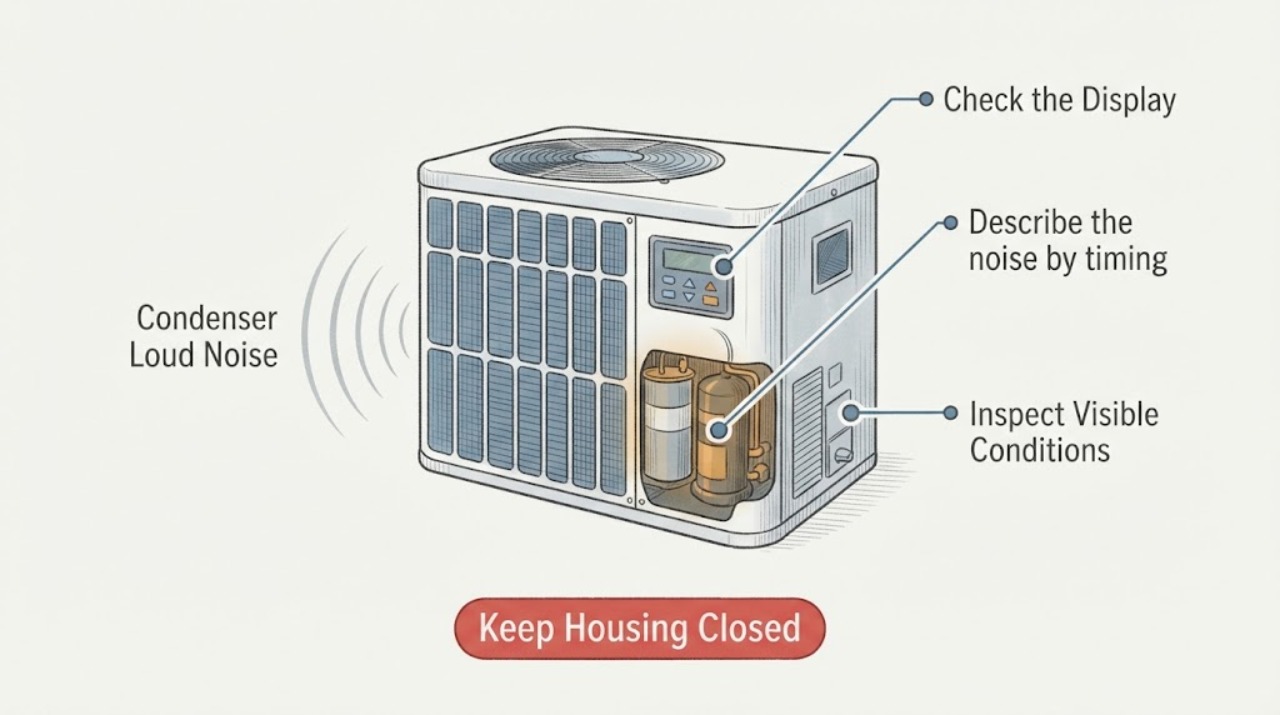
Condenser Loud Noise: Safe Checks for the Capacitor and Compressor
A loud condenser may be reacting to loose debris, a fan or cabinet vibration, or a normal startup sound, but grinding, banging, repeated clicking, or a heavy hum can indicate a fan, capacitor, or compressor problem. From a safe distance, identify the sound, when it occurs, whether the outdoor fan runs, and whether cooling changes.
-
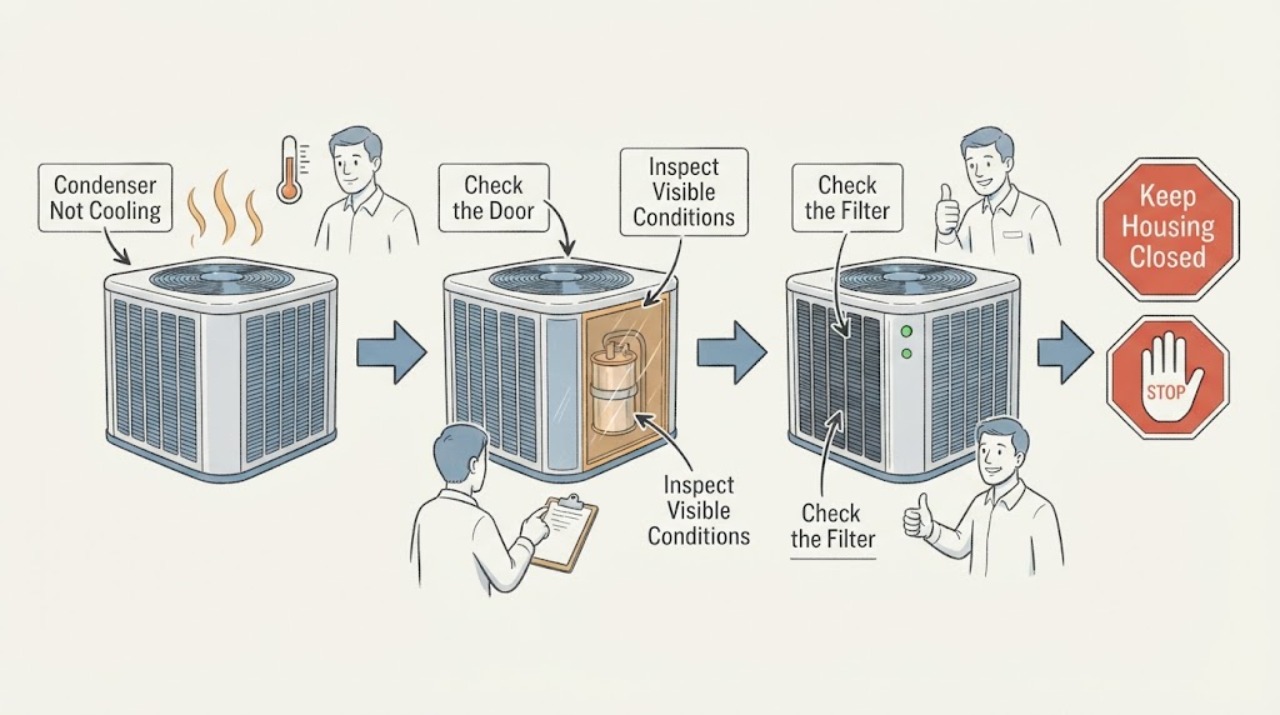
Condenser Not Cooling: Safe Checks Before a Capacitor Diagnosis
A condenser that is not cooling can have a thermostat, indoor-airflow, outdoor-airflow, fan, compressor, refrigerant, or capacitor-related problem. First compare thermostat demand, indoor airflow, outdoor fan behavior, ice, and visible obstructions from safe positions.
-
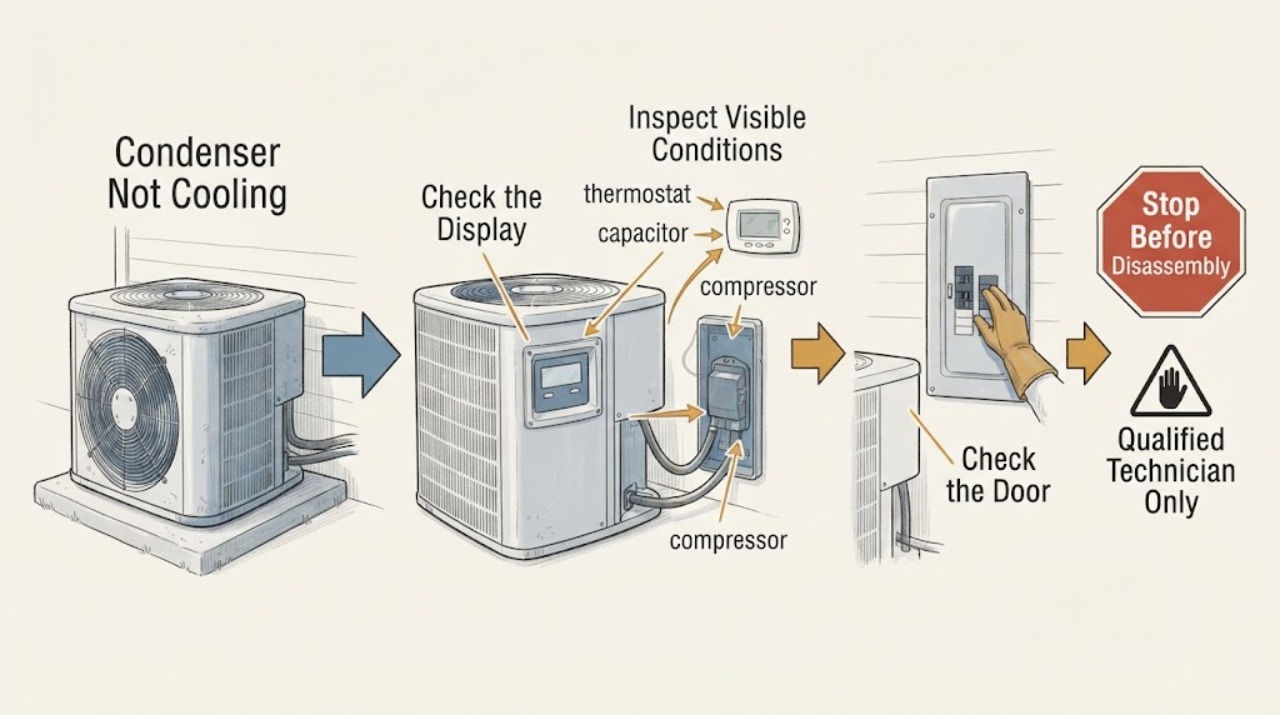
Condenser Not Cooling: Check the Thermostat and Outdoor Unit Safely
A condenser that is not cooling may have no valid thermostat demand, no power to the outdoor unit, blocked outdoor airflow, a failed capacitor or fan, a compressor fault, or low refrigerant. First confirm the thermostat is calling for cooling and observe whether the outdoor condenser starts, but do not open the cabinet.
-
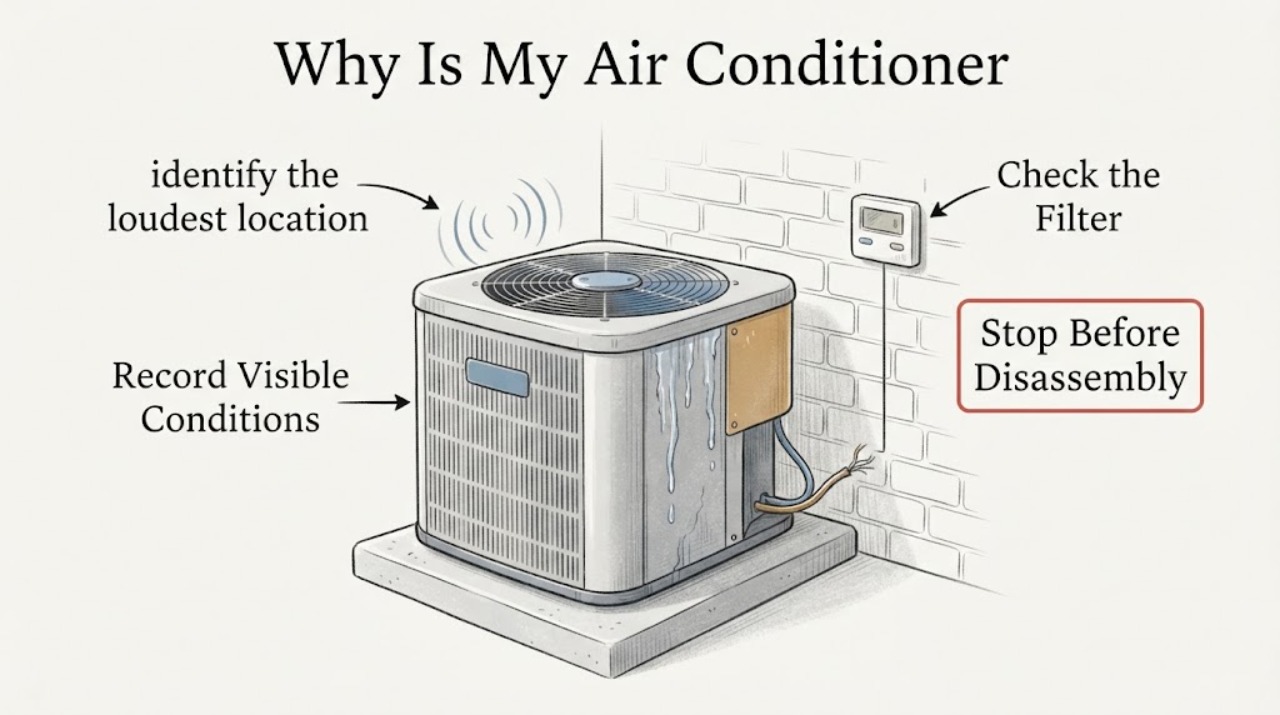
Why Is My Air Conditioner So Loud? Safe Checks for Thermostat and Capacitor Clues
A loud air conditioner is diagnosed first by where the sound occurs and whether it starts at a thermostat cooling call, during steady operation, or at shutdown. Check the thermostat settings, filter, registers, and outdoor clearance from the outside only.