
HVAC guides
Condensers Repair Guides
Outdoor condenser guidance for fan, coil, capacitor, and compressor symptoms.
Published condensers guides
Choose the guide that best matches the equipment and symptom you are seeing.
-
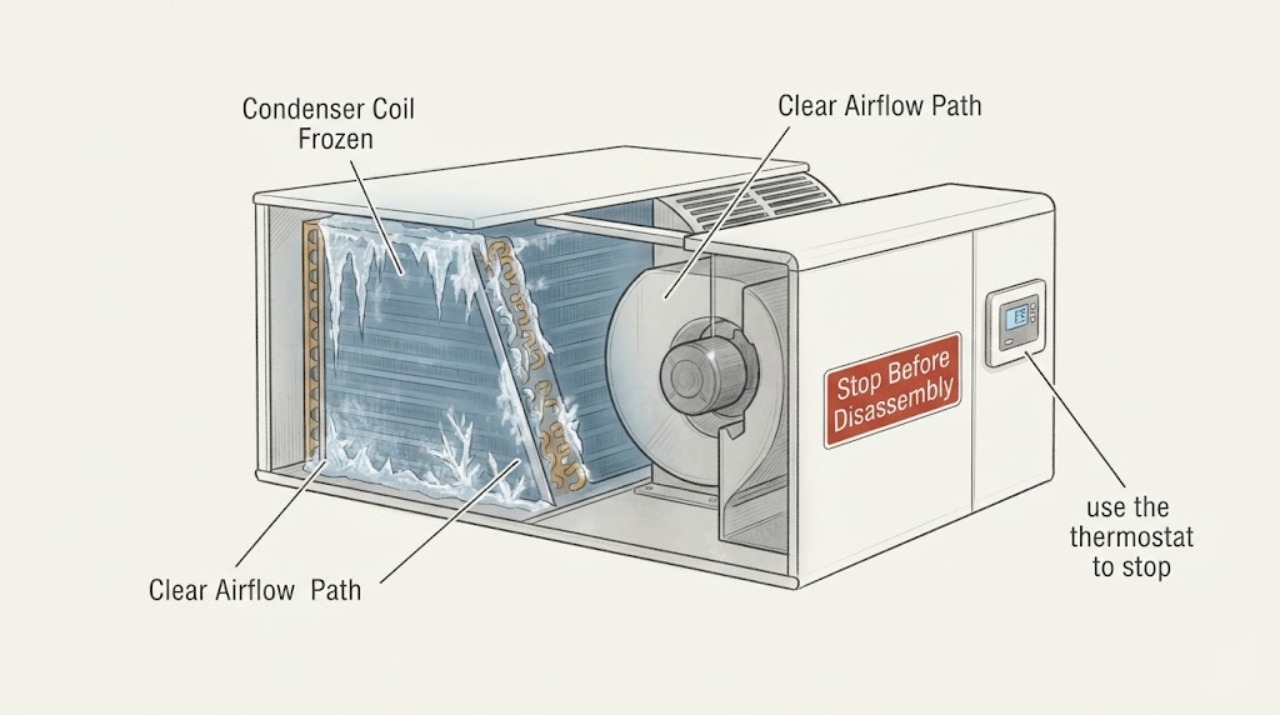
Condenser Coil Frozen: Distinguish Outdoor Ice from a Blower-Motor Airflow Fault
A frozen coil at the outdoor condenser is not automatically a blower-motor failure. In cooling mode, the coil that normally freezes is usually the indoor evaporator; an outdoor condenser coil or refrigerant line icing is more often associated with a heat-pump heating cycle, a system fault, or ice carried over from an evaporator problem.
-
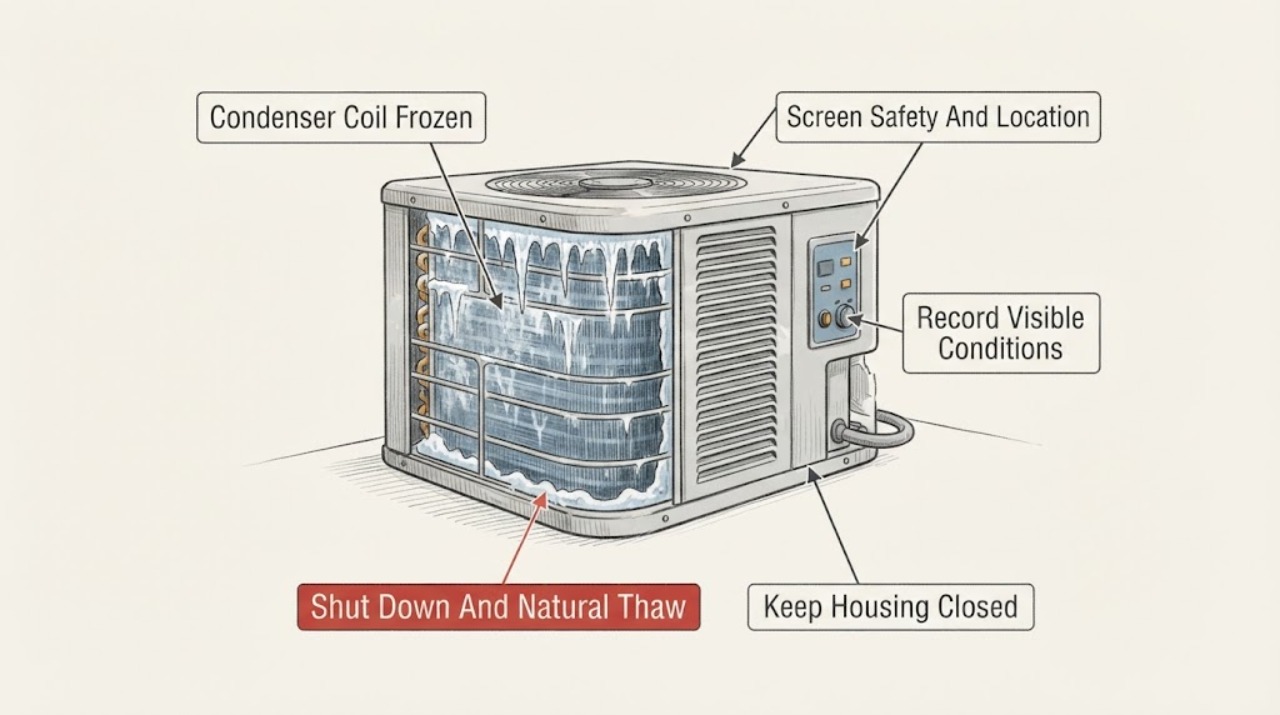
Condenser Coil Frozen: Separate Normal Heat-Pump Frost from a Coil Fault
First confirm which coil is frozen. In a heat pump, the outdoor coil can frost during heating and should periodically defrost; a light, temporary frost can be normal, but thick ice that grows, blocks airflow, or does not clear is not.
-
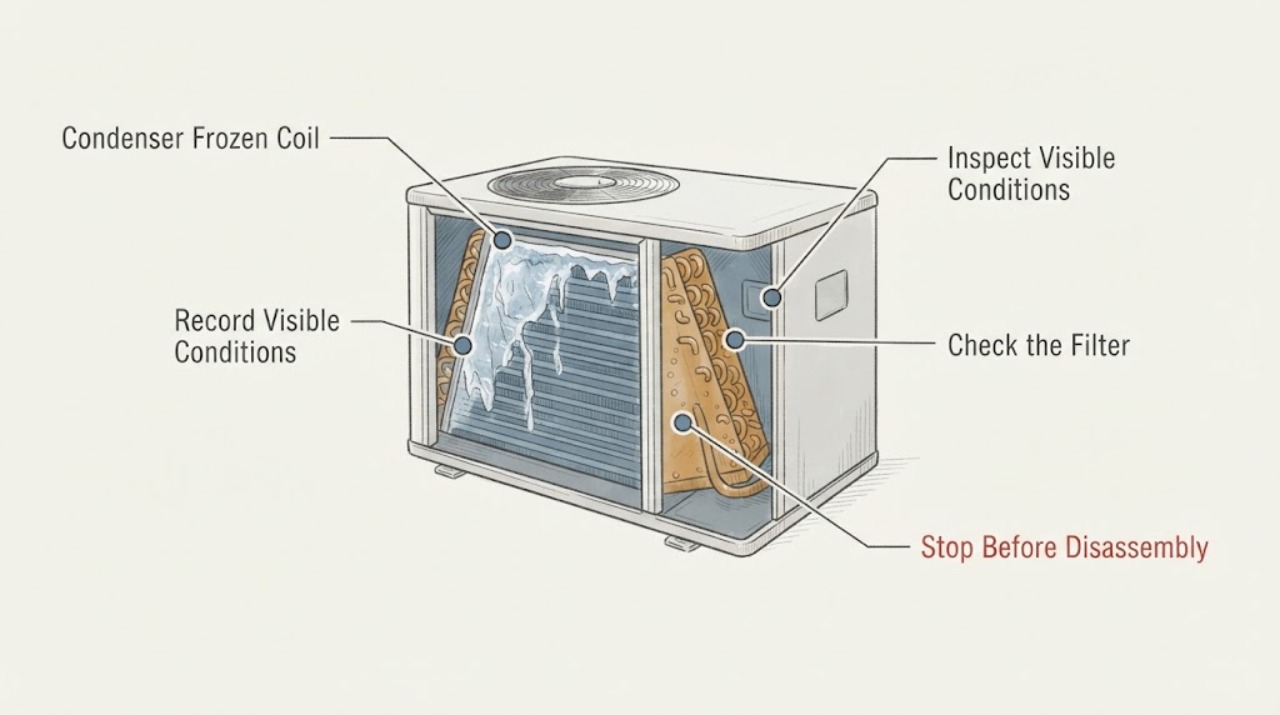
Condenser Frozen Coil: Separate Outdoor Condenser Frost from Indoor Evaporator Ice
A frozen coil is usually an indoor evaporator-coil or connected refrigerant-line problem, not proof that the outdoor condenser coil itself is frozen. From a safe position, switch cooling off, note whether ice is on the indoor cabinet or copper line and whether the outdoor condenser fan is running, and check only an accessible air filter, open registers, and visible water.
-
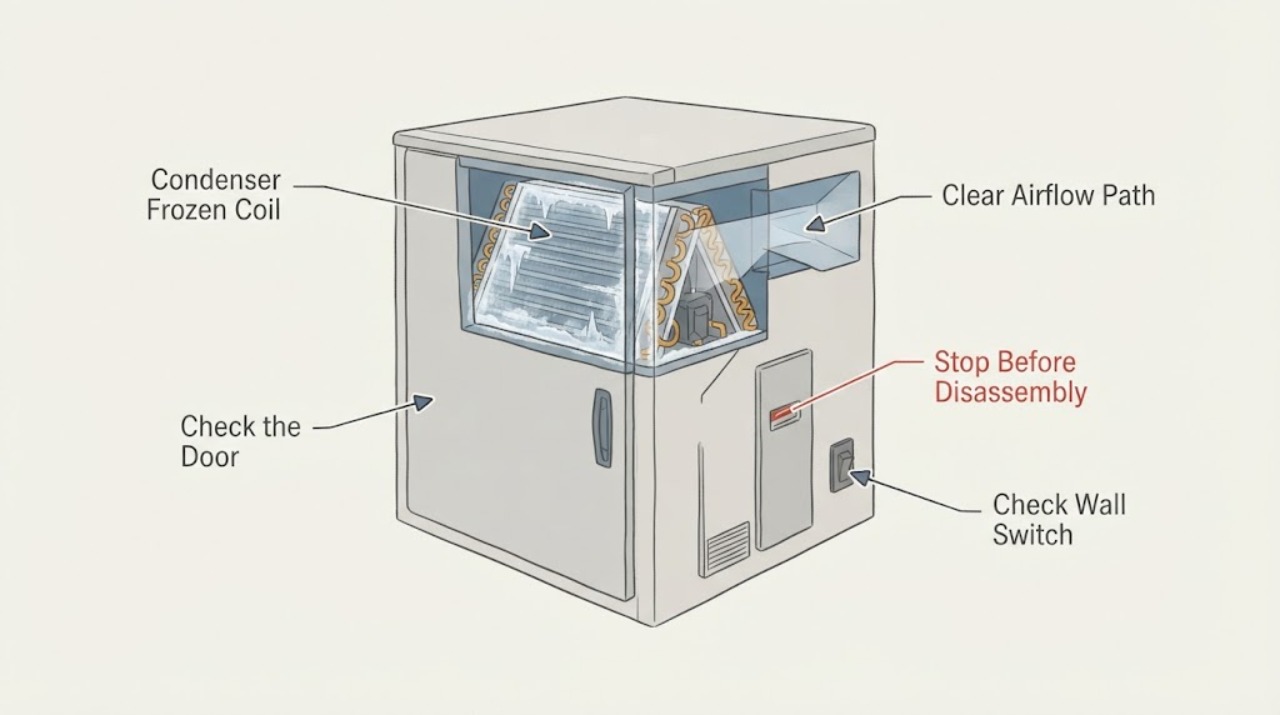
Condenser Frozen Coil: Distinguish the Outdoor Unit from the Evaporator
A coil that appears frozen near the outdoor condenser is often the indoor evaporator coil or the refrigerant line connected to it, not the outdoor condenser coil itself. Turn cooling off at the thermostat and let visible ice thaw naturally; do not chip it, pour hot water on it, or keep running the compressor against the ice.
-
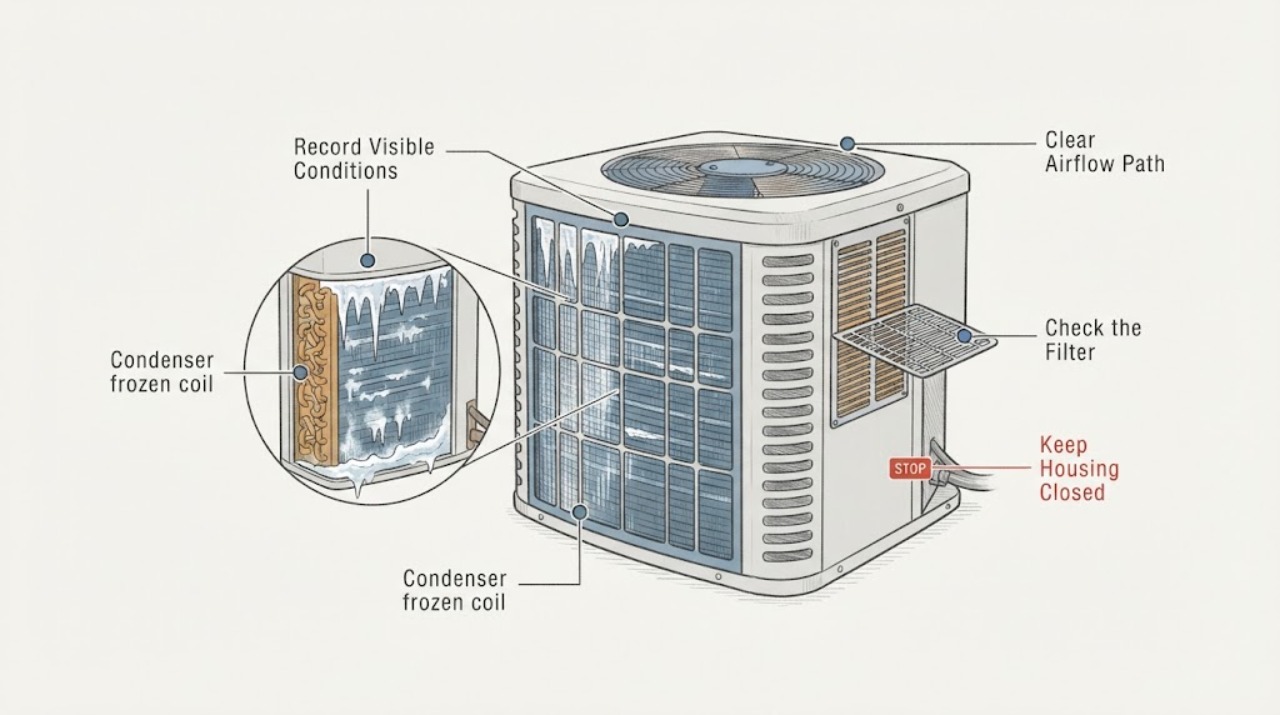
Condenser frozen coil: check the filter and identify the iced coil safely
Turn cooling off at the thermostat and let any ice melt naturally; do not chip it, pour hot water on it, or keep running the system with a frozen coil. First establish which coil is actually iced: the condenser is normally the outdoor heat-rejecting coil, while the evaporator is normally the indoor cold coil and is the one commonly associated with frost in cooling mode.
-
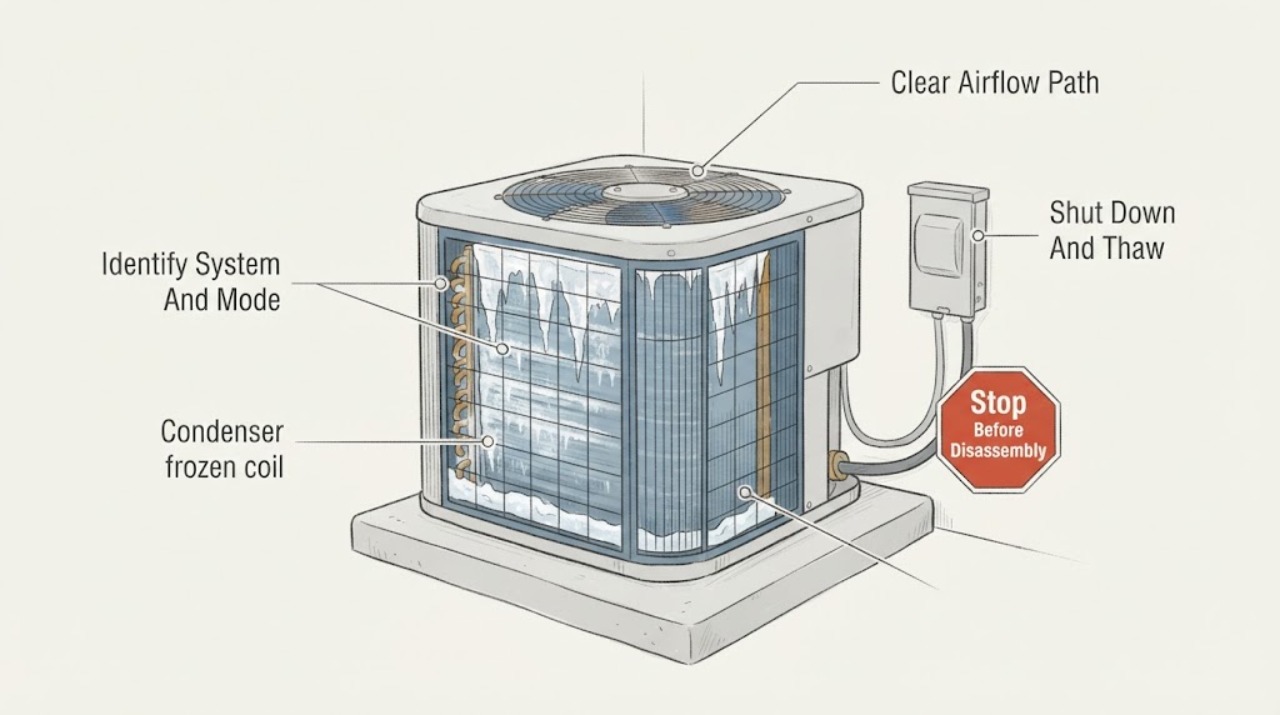
Condenser frozen coil: first confirm whether it is an outdoor heat-pump coil or an indoor evaporator
“Condenser frozen coil” can describe two different situations: in a standard split air conditioner, the frozen coil is usually the indoor evaporator, while the outdoor condenser releases heat; in a heat pump running in heating mode, light frost on the outdoor coil can be normal during an automatic defrost cycle.
-
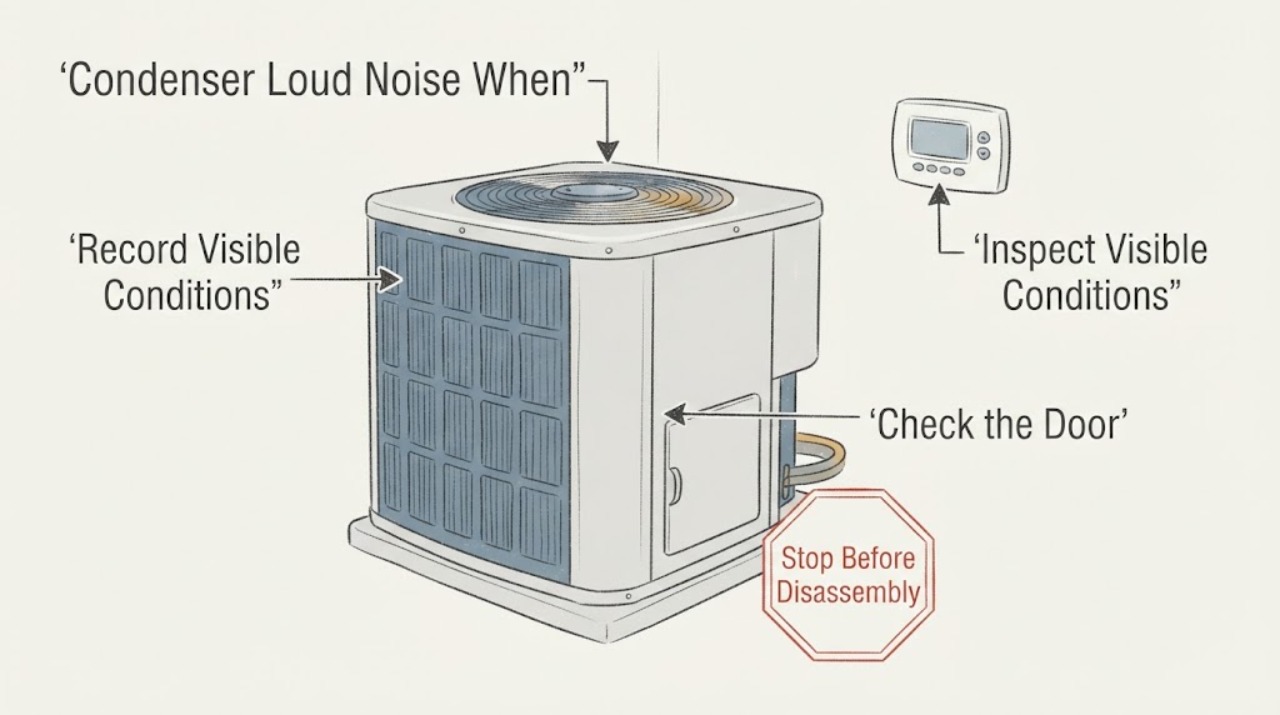
Condenser Loud Noise When the Thermostat Calls: Identify the Safe Next Step
If an outdoor condenser becomes loud when the thermostat calls for cooling, use the thermostat as the timing trigger, not as proof that the thermostat is the noisy part. From a safe position, record whether the sound starts with the cooling call, whether it comes from the outdoor cabinet or indoor air handler, and whether the outdoor fan moves normally.
-
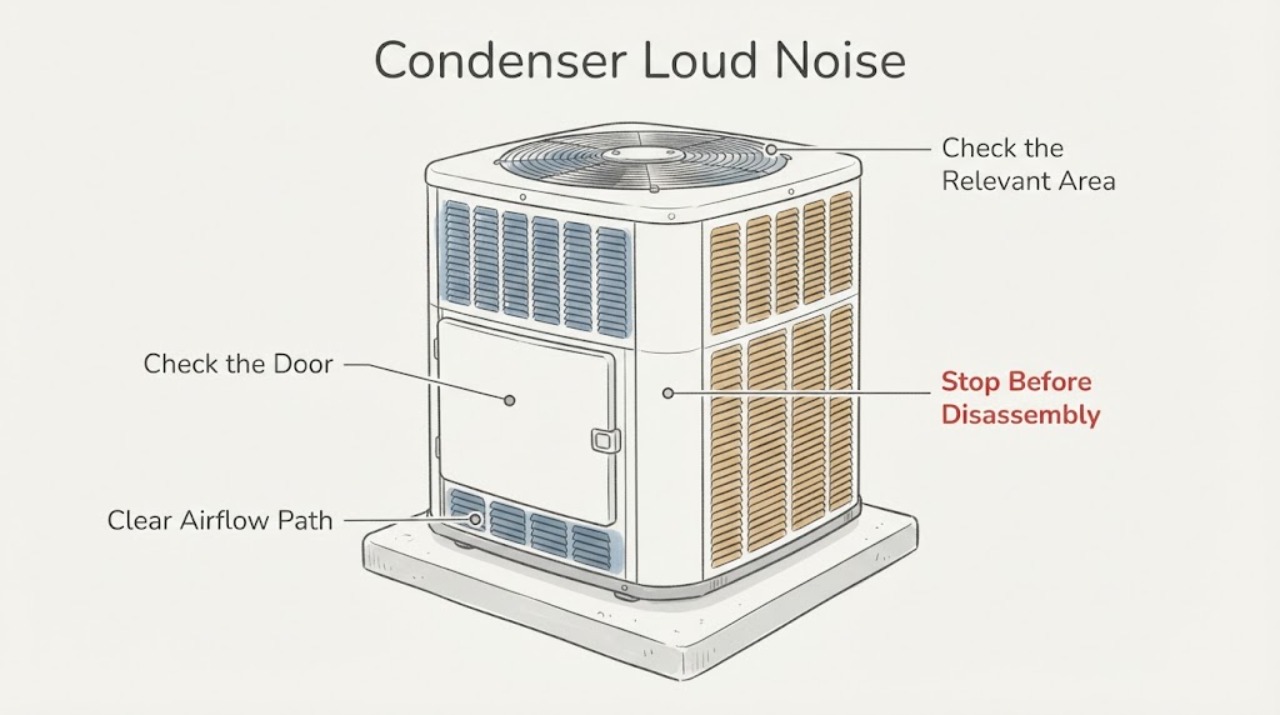
Condenser Loud Noise: Find the Source Before It Damages the System
A loud sound blamed on the condenser may be coming from the outdoor condenser fan or compressor, or from the indoor blower motor that shares the same cooling call. First identify whether the sound is indoors or outdoors and whether it starts, continues, or stops with the cooling cycle.
-
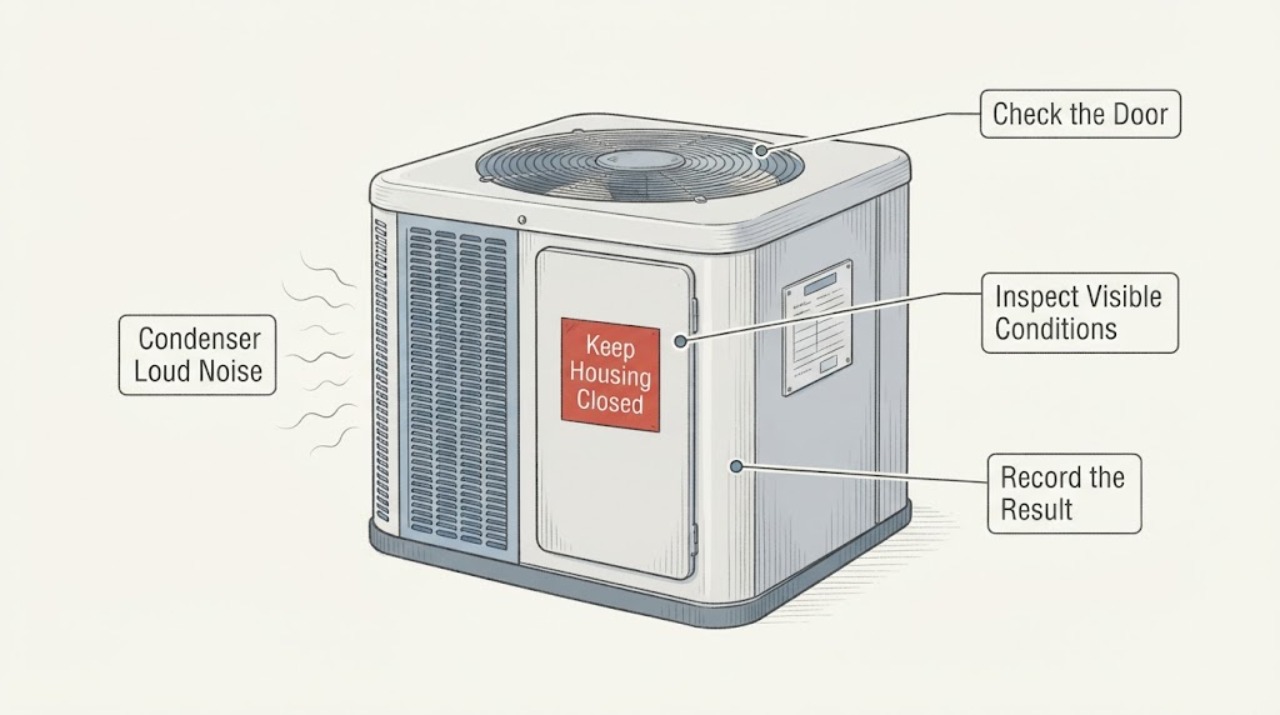
Condenser Loud Noise: Separate the Outdoor Fan, Compressor, and Indoor Blower
A loud-noise complaint needs the sound source identified before any diagnosis: the outdoor condenser cabinet contains the condenser fan and compressor, while the indoor blower is in the air handler or furnace. From a safe distance, note whether the noise is rattling or scraping at the outdoor fan grille, a deep hum or hard start from the compressor area, or a register/indoor-cabinet sound from the blower.
-
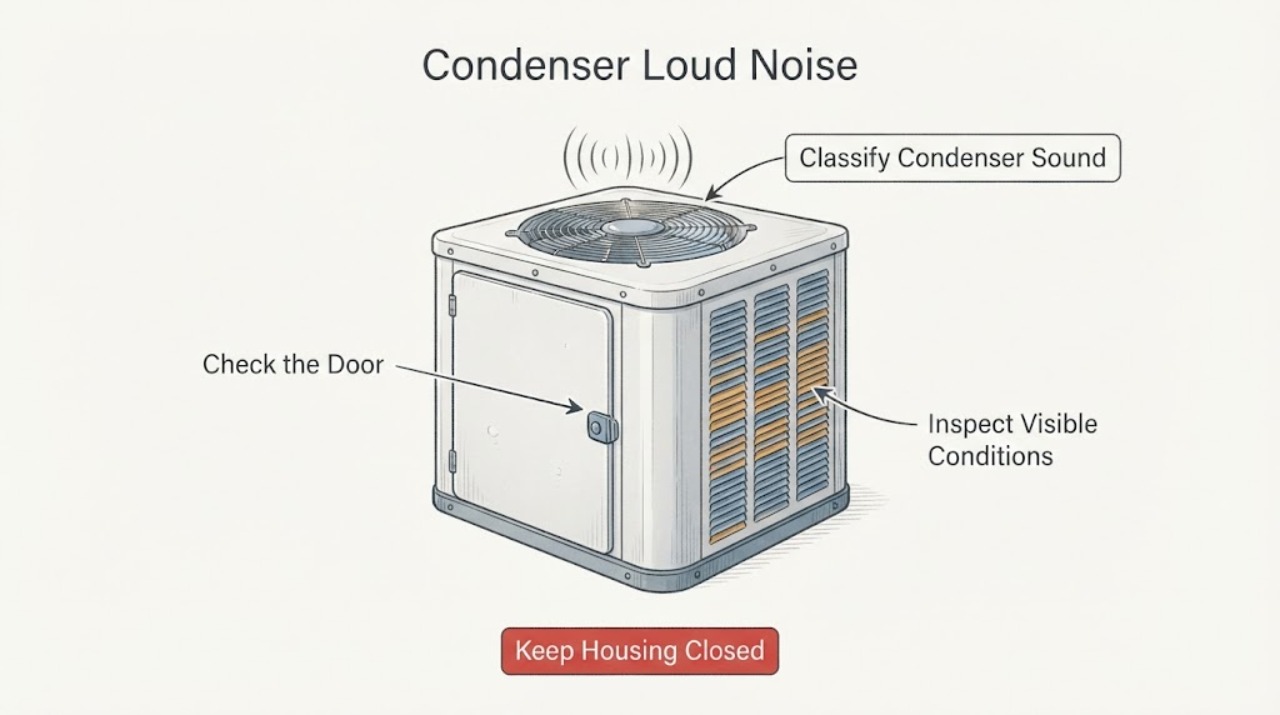
Condenser Loud Noise: Separate Fan, Compressor, and Capacitor Clues Safely
A loud outdoor condenser sound can come from the fan guard or debris, a fan motor or blade, the compressor, a loose panel, refrigerant or pressure conditions, or a capacitor that is struggling to start a motor. From a dry, safe position, note whether the sound is a hum, rattle, grind, squeal, click, or bang and whether the outdoor fan starts and airflow or cooling changes.
-
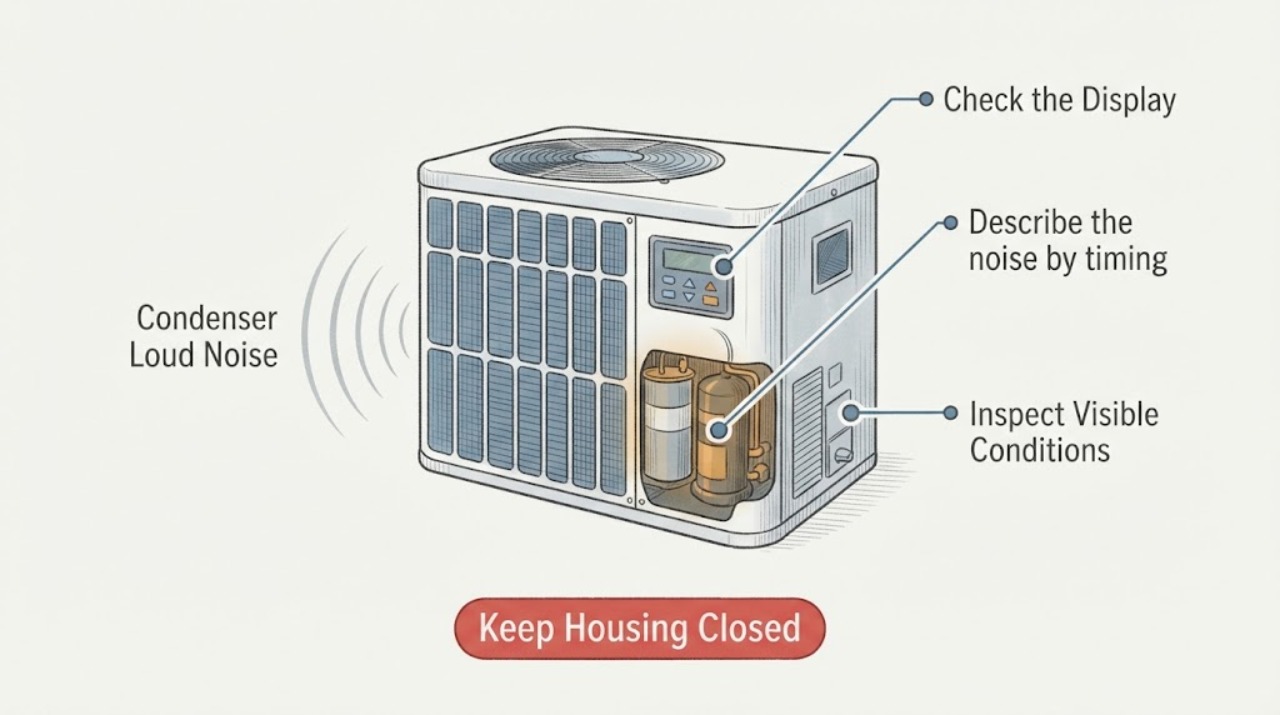
Condenser Loud Noise: Safe Checks for the Capacitor and Compressor
A loud condenser may be reacting to loose debris, a fan or cabinet vibration, or a normal startup sound, but grinding, banging, repeated clicking, or a heavy hum can indicate a fan, capacitor, or compressor problem. From a safe distance, identify the sound, when it occurs, whether the outdoor fan runs, and whether cooling changes.
-
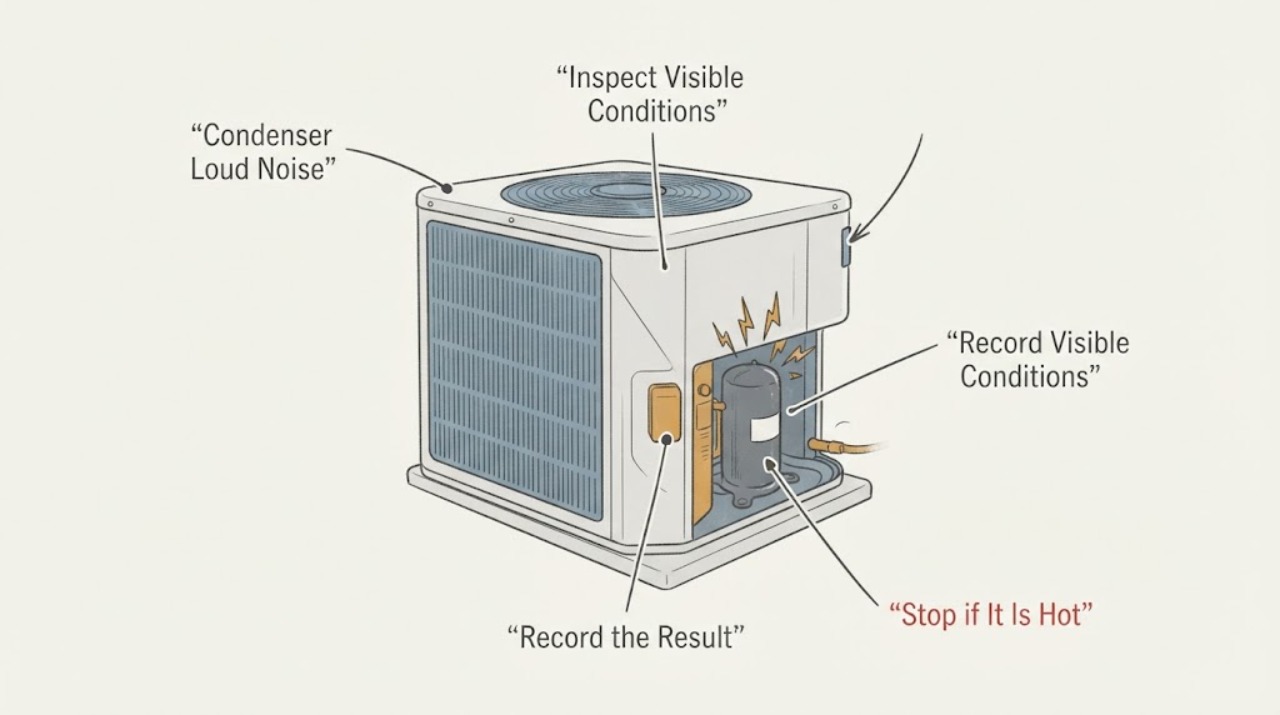
Condenser Loud Noise: Tell Compressor, Fan, and Contactor Symptoms Apart Safely
A loud outdoor condenser is not automatically a failed compressor. From a safe distance, first note whether the sound is a brief click at start or stop, a steady motor hum, fan rattle or scraping, cabinet vibration, or a harsh grinding, banging, or repeated starting sound.
-
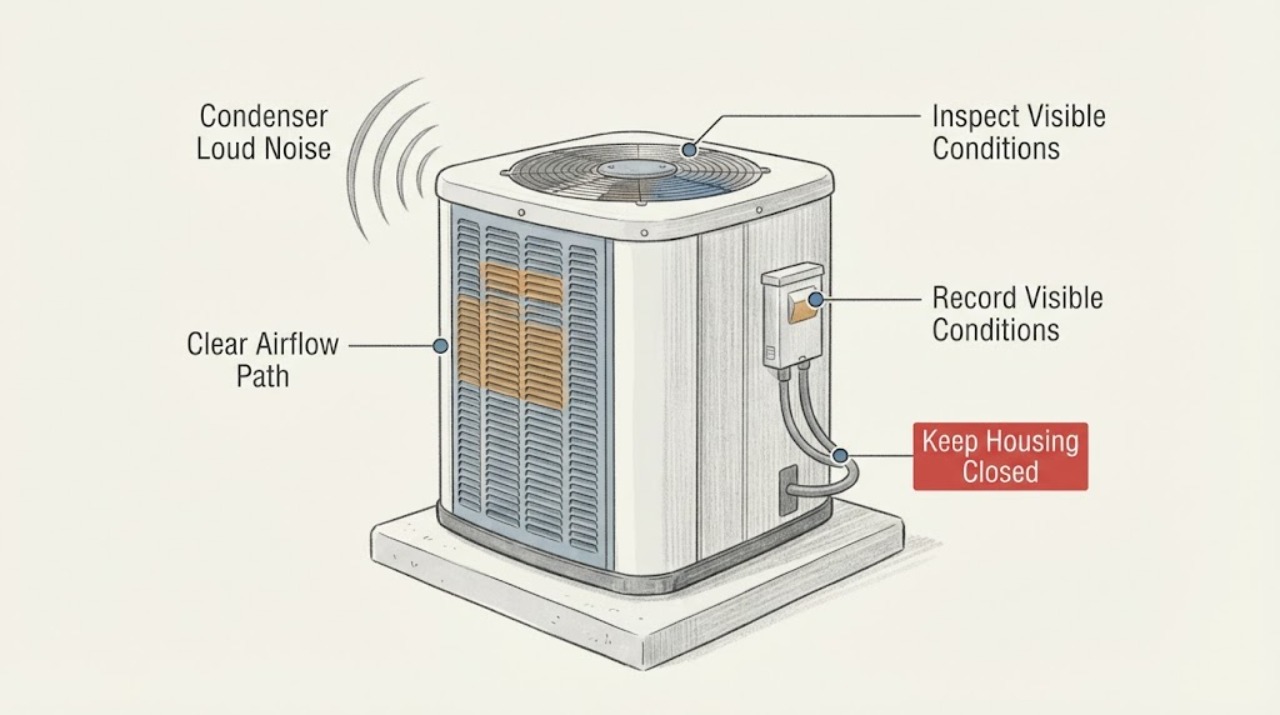
Condenser Loud Noise: How to Tell if the Contactor May Be Involved
A loud outdoor condenser can make a contactor buzz or chatter, but the same sound may come from the fan, compressor, loose cabinet parts, a capacitor, or another electrical fault. Record when the sound occurs and whether the fan starts, the system cools, or a breaker trips, using only safe observations outside the cabinet.
-
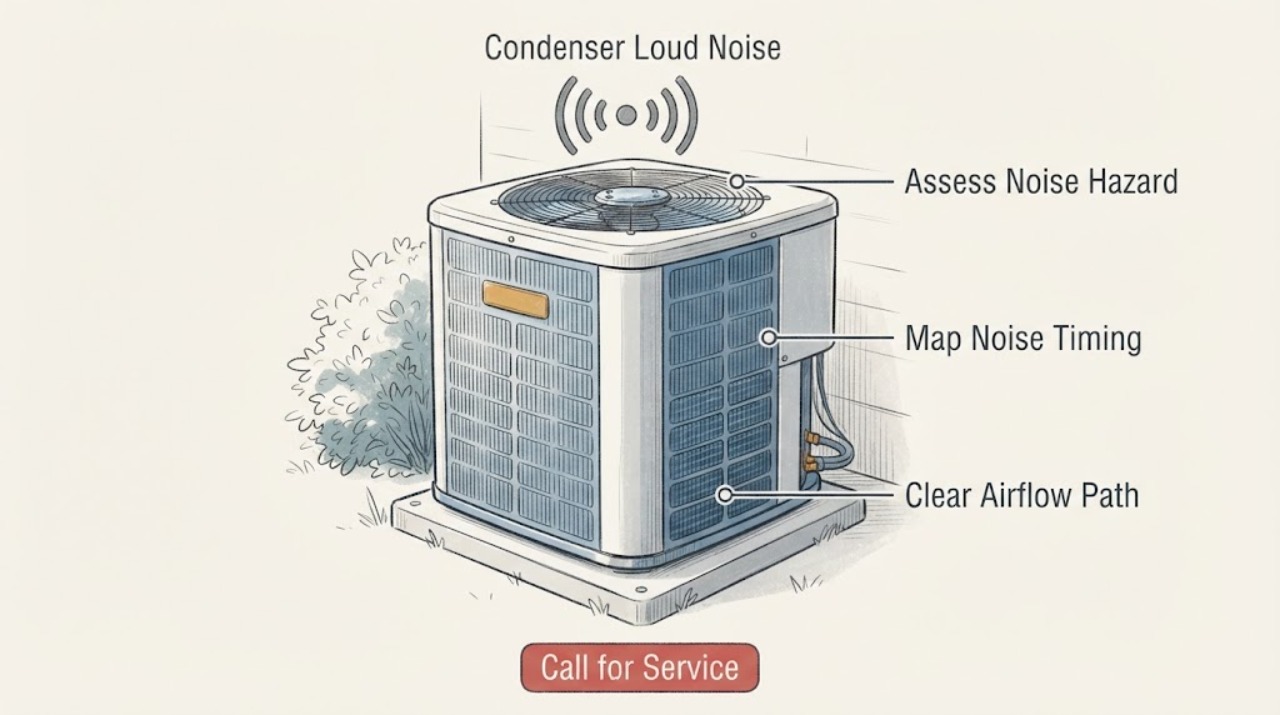
Condenser Loud Noise: Safe Checks and What to Do Next
If an HVAC condenser suddenly becomes loud, turn the system off when the sound is scraping, grinding, banging, high-pitched, or accompanied by a burning smell, smoke, ice, poor cooling, or strong vibration. From a safe position, identify whether the sound comes from the fan, cabinet, compressor area, or refrigerant lines; note whether it occurs at startup, during operation, shutdown, or defrost.
-
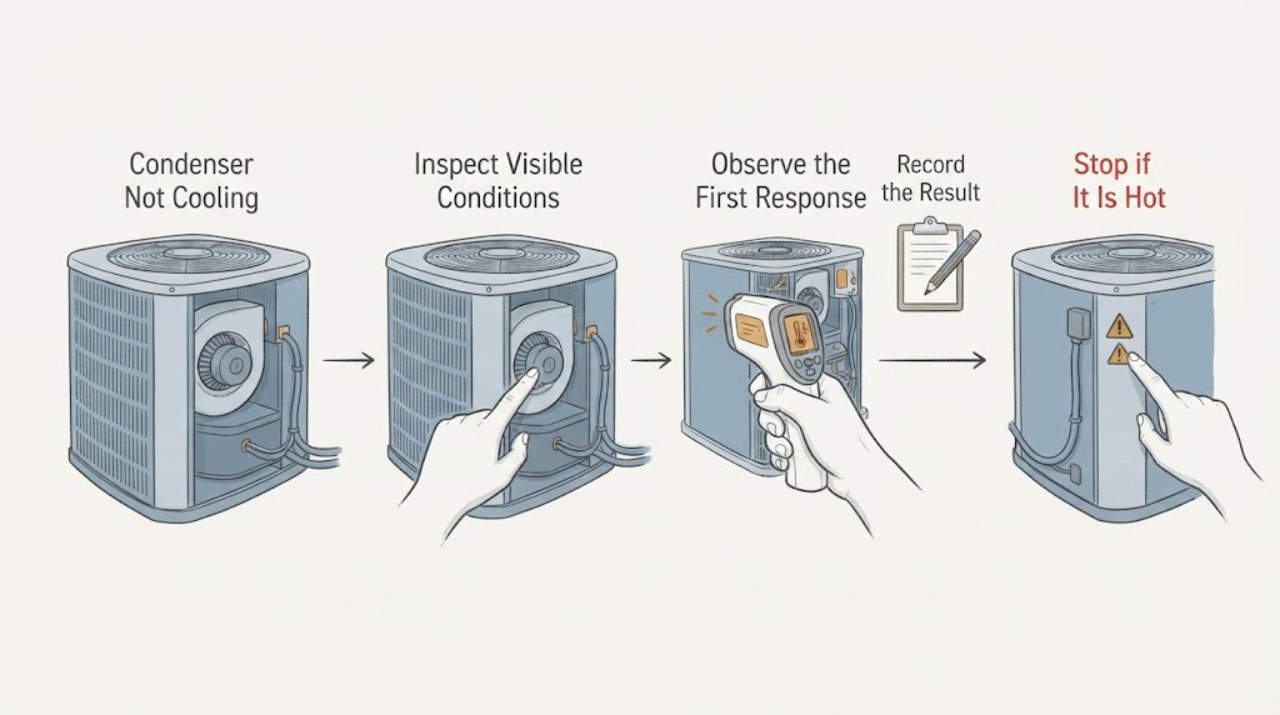
Condenser Not Cooling: Separate Blower Motor and Outdoor Unit Symptoms
When an HVAC condenser is not cooling and the assigned clue is blower motor, first separate indoor airflow from outdoor heat rejection. Check the thermostat mode and call, feel for normal airflow at a supply register, and observe the outdoor condenser from a safe distance.
-
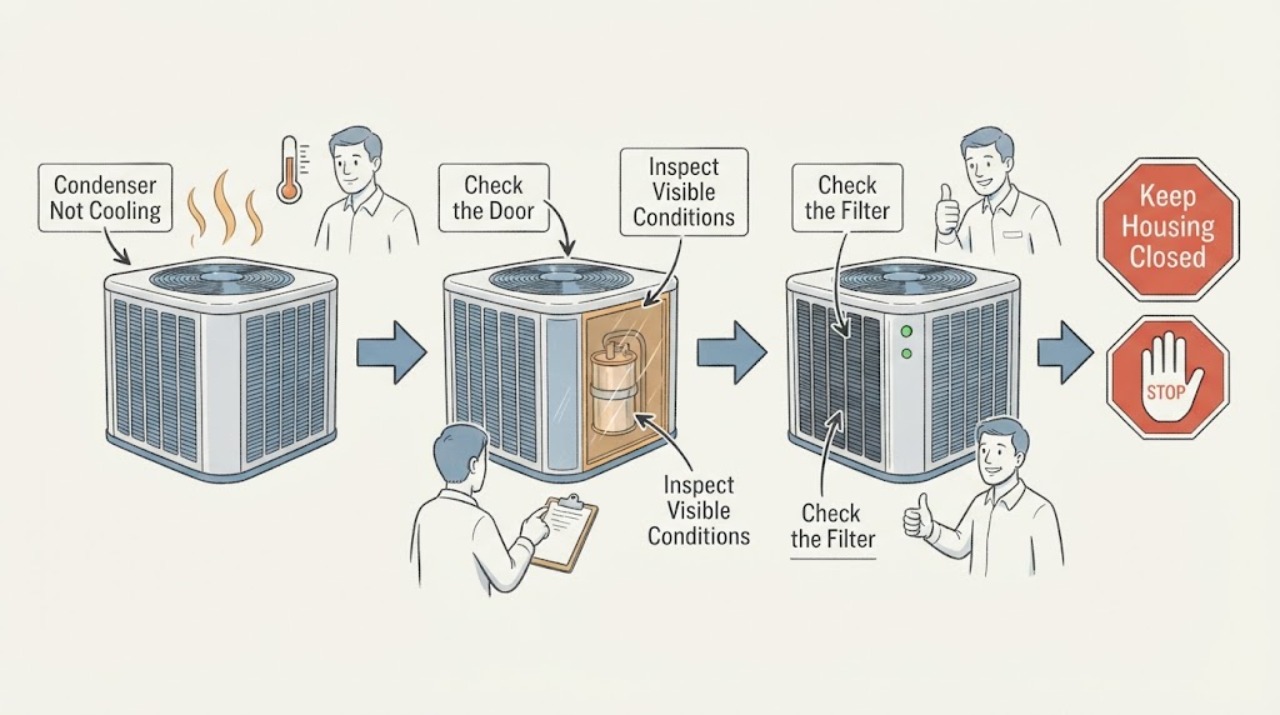
Condenser Not Cooling: Safe Checks Before a Capacitor Diagnosis
A condenser that is not cooling can have a thermostat, indoor-airflow, outdoor-airflow, fan, compressor, refrigerant, or capacitor-related problem. First compare thermostat demand, indoor airflow, outdoor fan behavior, ice, and visible obstructions from safe positions.
-
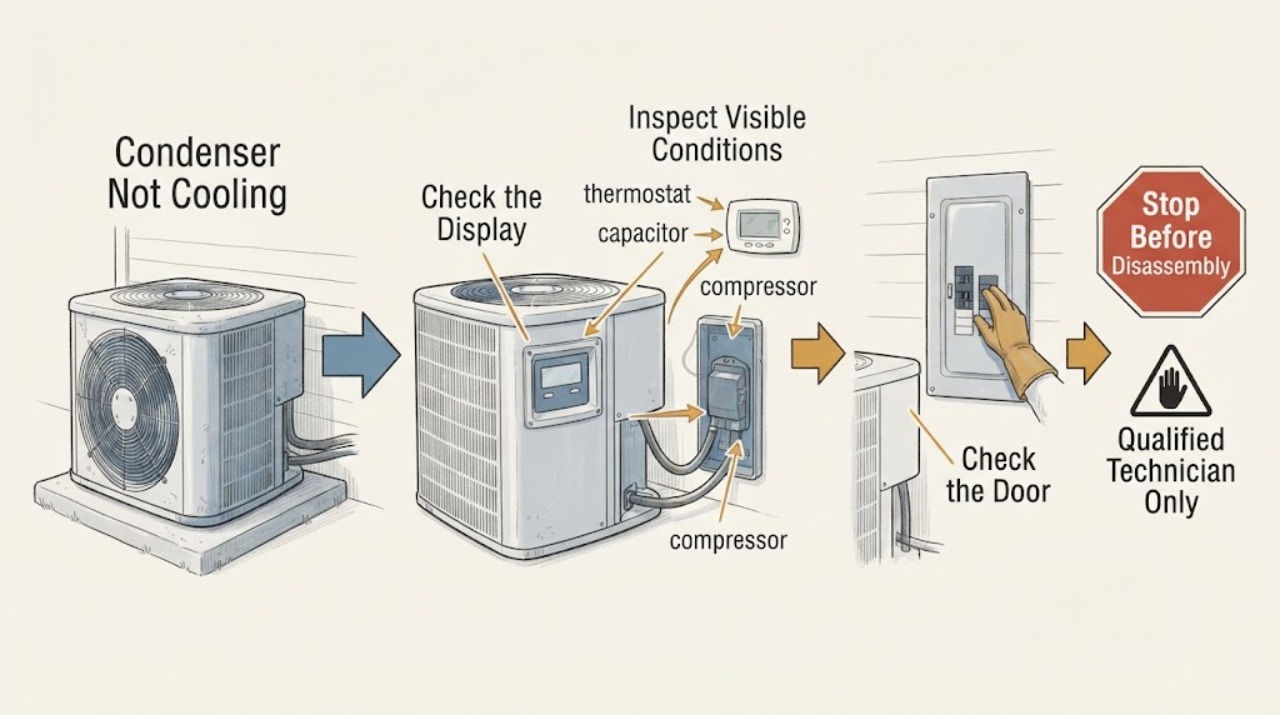
Condenser Not Cooling: Check the Thermostat and Outdoor Unit Safely
A condenser that is not cooling may have no valid thermostat demand, no power to the outdoor unit, blocked outdoor airflow, a failed capacitor or fan, a compressor fault, or low refrigerant. First confirm the thermostat is calling for cooling and observe whether the outdoor condenser starts, but do not open the cabinet.
-
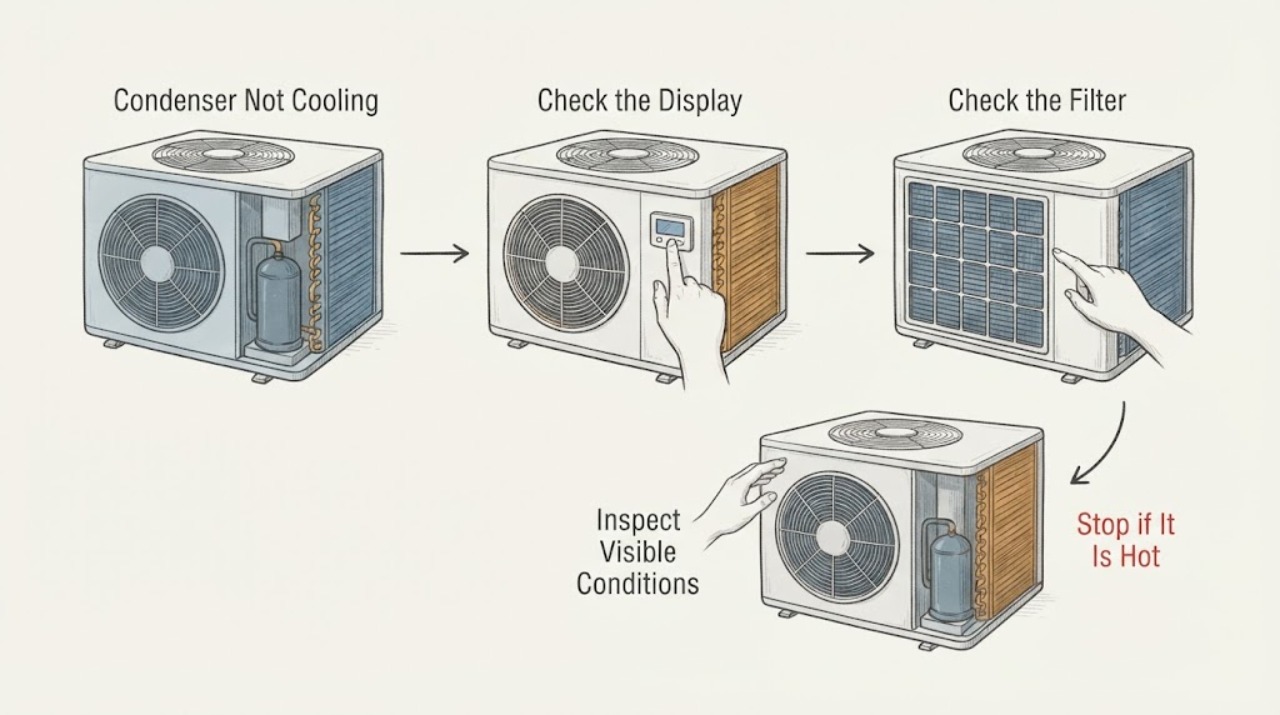
Condenser Not Cooling: Check the System Safely Before Calling HVAC
A condenser that is not cooling usually means the outdoor unit is not rejecting heat, or that an indoor airflow, thermostat, frozen-coil, electrical, refrigerant, compressor, or fan problem is preventing the split system from cooling. First confirm that the thermostat is calling for cooling and that indoor air is moving, then inspect the filter and the outdoor cabinet from a safe distance for blockage, ice, unusual noise, or no operation.
-
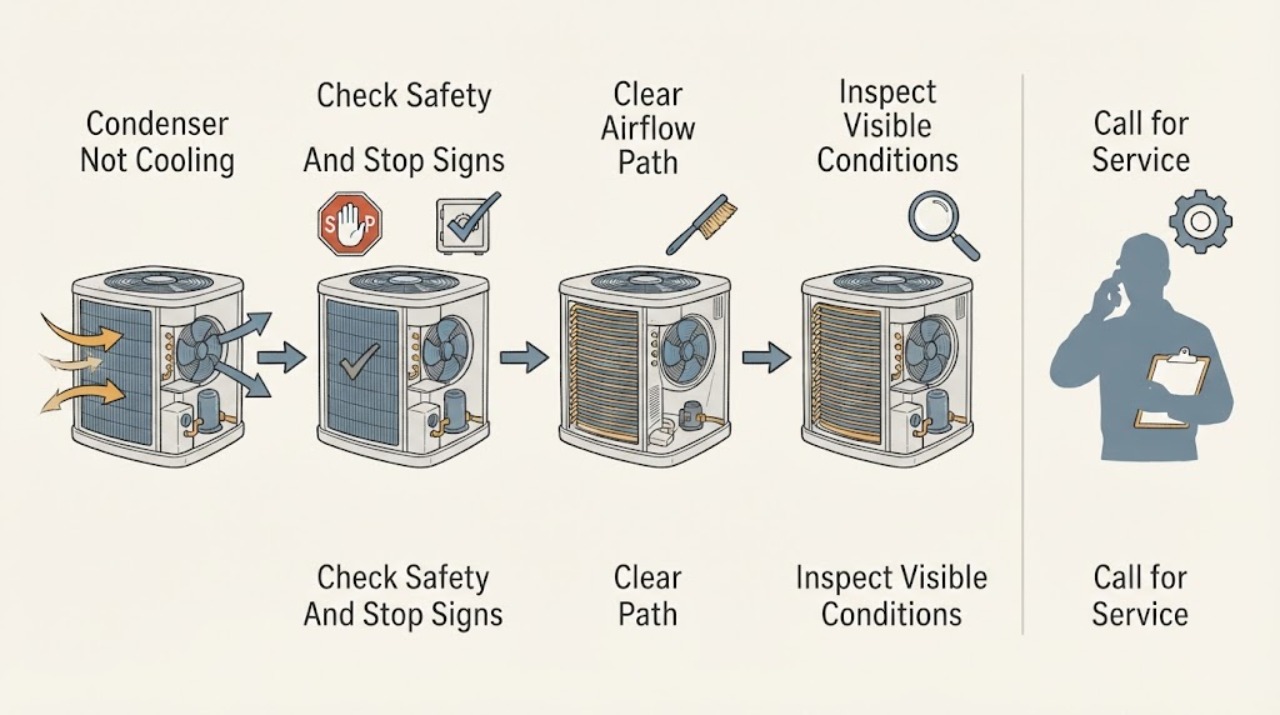
Condenser Not Cooling: Check the Call for Cooling, Outdoor Airflow, and Safe Fault Boundaries
If a condenser is not cooling, first check from a safe position that the thermostat is calling for cooling and the indoor filter and airflow are not obviously restricted. With the call for cooling still active, observe whether the outdoor condenser fan runs, whether the unit is silent, humming, short-cycling, unusually noisy, or surrounded by blocked airflow.
-
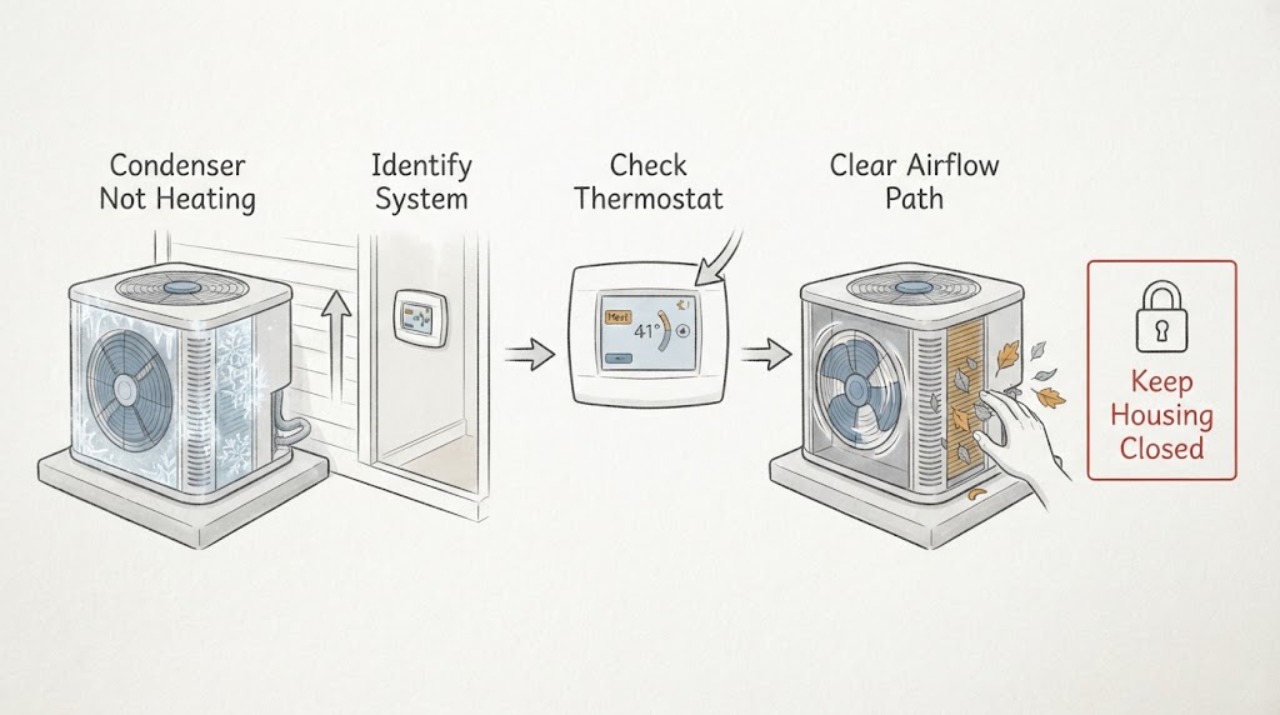
Condenser Not Heating: Identify the System and Check Safe Causes
An air-conditioner-only condenser is not a heat source, so it will not heat a home; a heat-pump outdoor condenser can heat by reversing the refrigerant flow. First confirm which system you have, then check that the thermostat is in Heat with the fan on Auto, the indoor filter and accessible airflow are not restricted, and the outdoor unit has clear air paths.
-
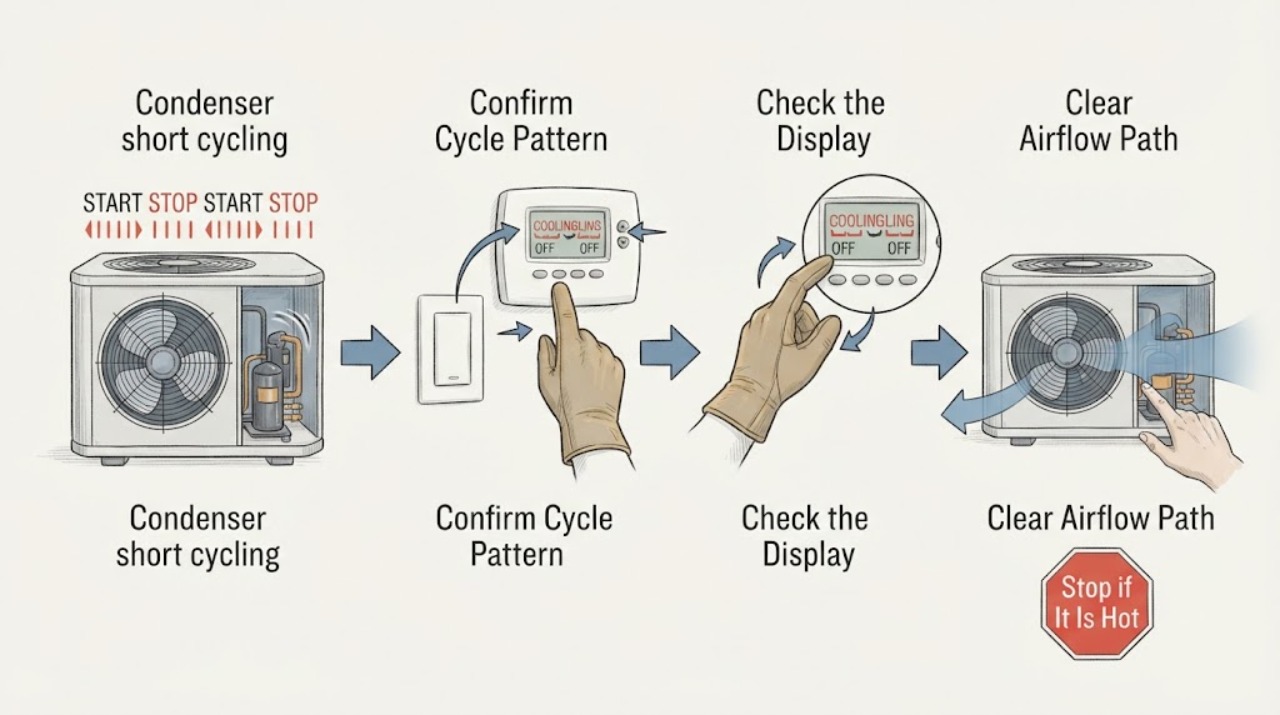
Condenser short cycling: Safe checks before calling an HVAC professional
If the outdoor condenser starts and stops repeatedly before the home reaches the thermostat setting, the air conditioner is short cycling rather than completing a normal cooling cycle. Check only the thermostat settings and placement, the accessible indoor filter and return airflow, and the outdoor unit's visible airflow path from a safe position.
-
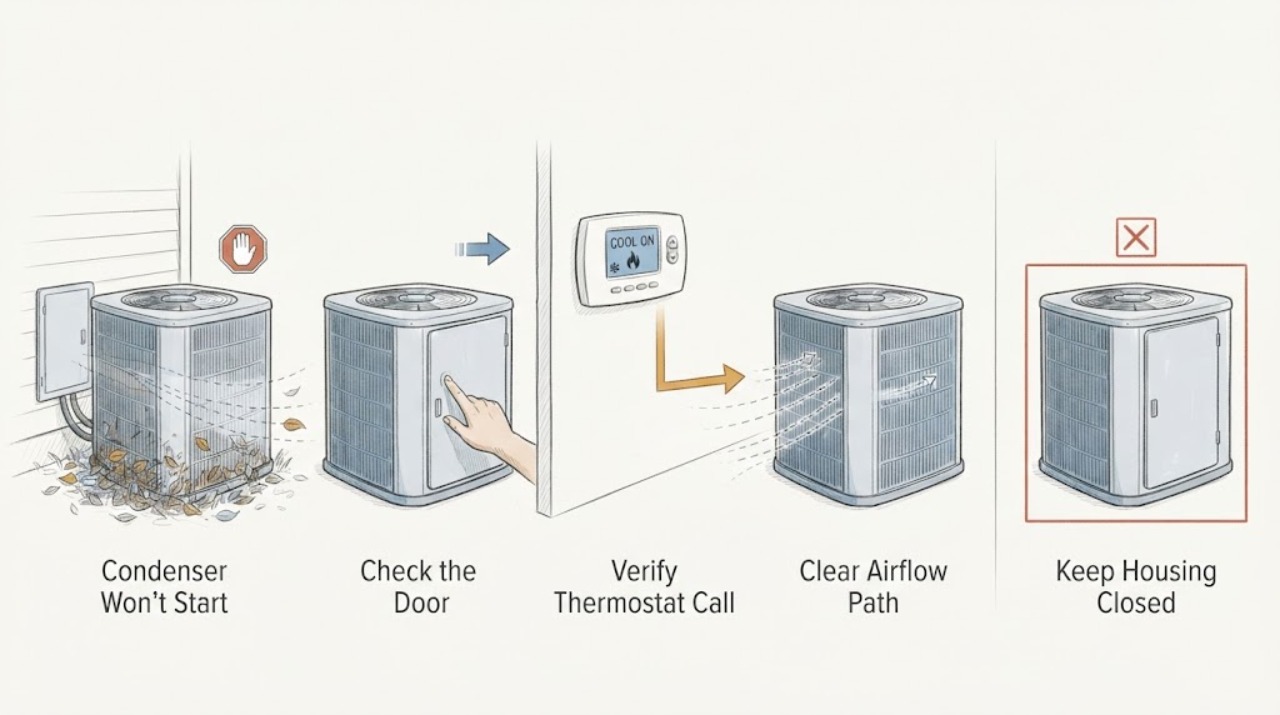
Condenser Won't Start: Safe HVAC Checks
First separate an indoor-airflow problem from an outdoor-condenser problem: set the thermostat to Cooling with a temperature below the room temperature, then listen and look from a safe distance for the outdoor unit to start. Check only user-accessible conditions such as a blank thermostat, a dirty filter, visible debris around the cabinet, and whether a breaker appears tripped.