
Kitchenaid appliance guidance
Kitchenaid Ice Maker Repair Guides
Troubleshooting and repair guidance for published Kitchenaid Ice Maker problems, symptoms, and maintenance questions.
Published Kitchenaid Ice Maker guides
Choose the guide whose symptom or condition most closely matches what you are seeing.
-
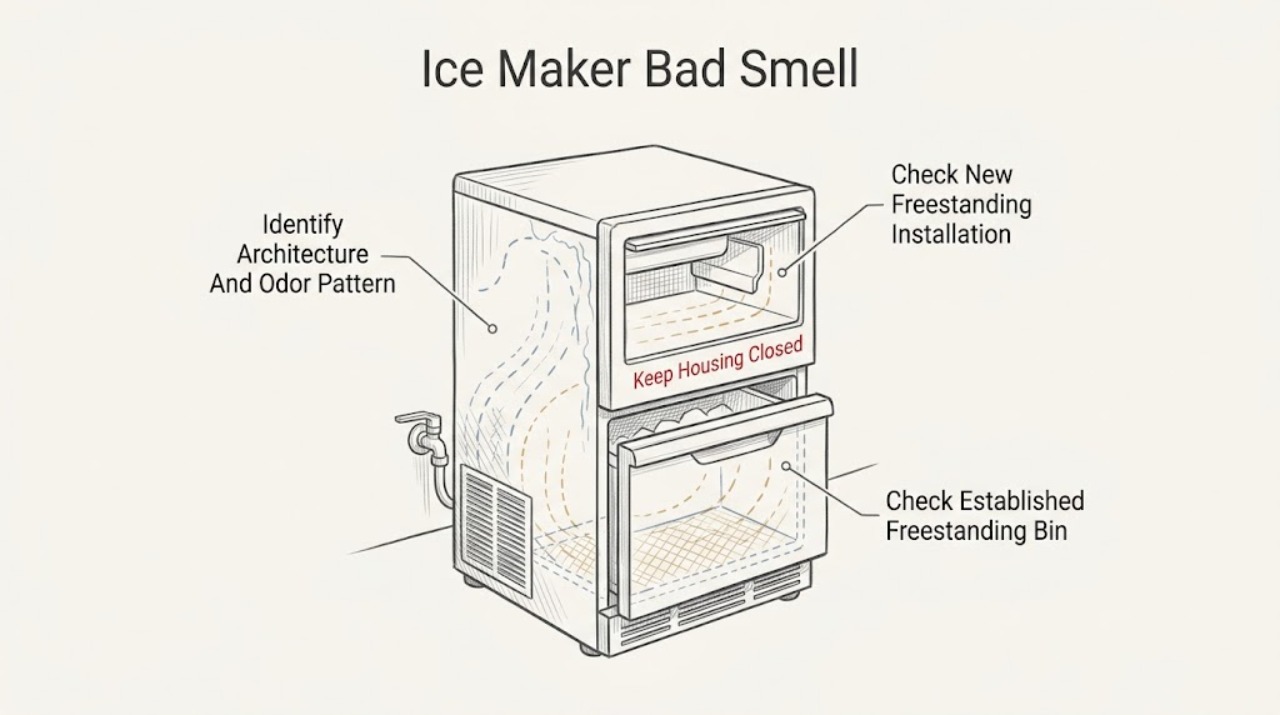
KitchenAid Ice Maker Bad Smell: Identify the Architecture Before Cleaning
First identify whether your KitchenAid unit is a freestanding ice maker or an ice maker built into a refrigerator, and record the model number. For a newly installed freestanding unit, KitchenAid points to an unwashed storage bin, remaining packaging, the water-supply line, and mineral scale as possible odor sources.
-
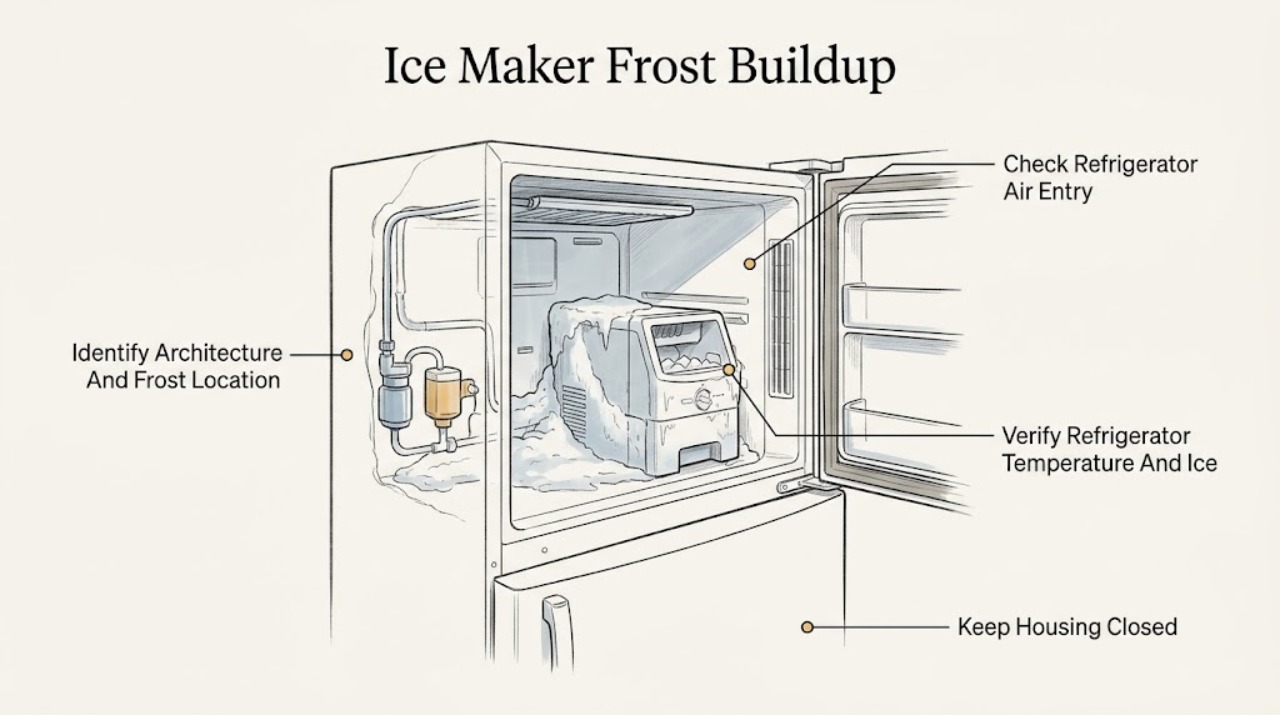
KitchenAid Ice Maker Frost Buildup: Identify the Model Before Defrosting
First identify the architecture and the exact frost location: KitchenAid documents both standalone or undercounter ice makers and ice makers built into refrigerators, and their cold surfaces and service steps are different. On a freestanding/undercounter KUIX or KUID-type machine, a hard deposit that keeps an ice block on the freezing plate can be mineral scale; keep the unit level and use only the model's approved cleaning cycle.
-
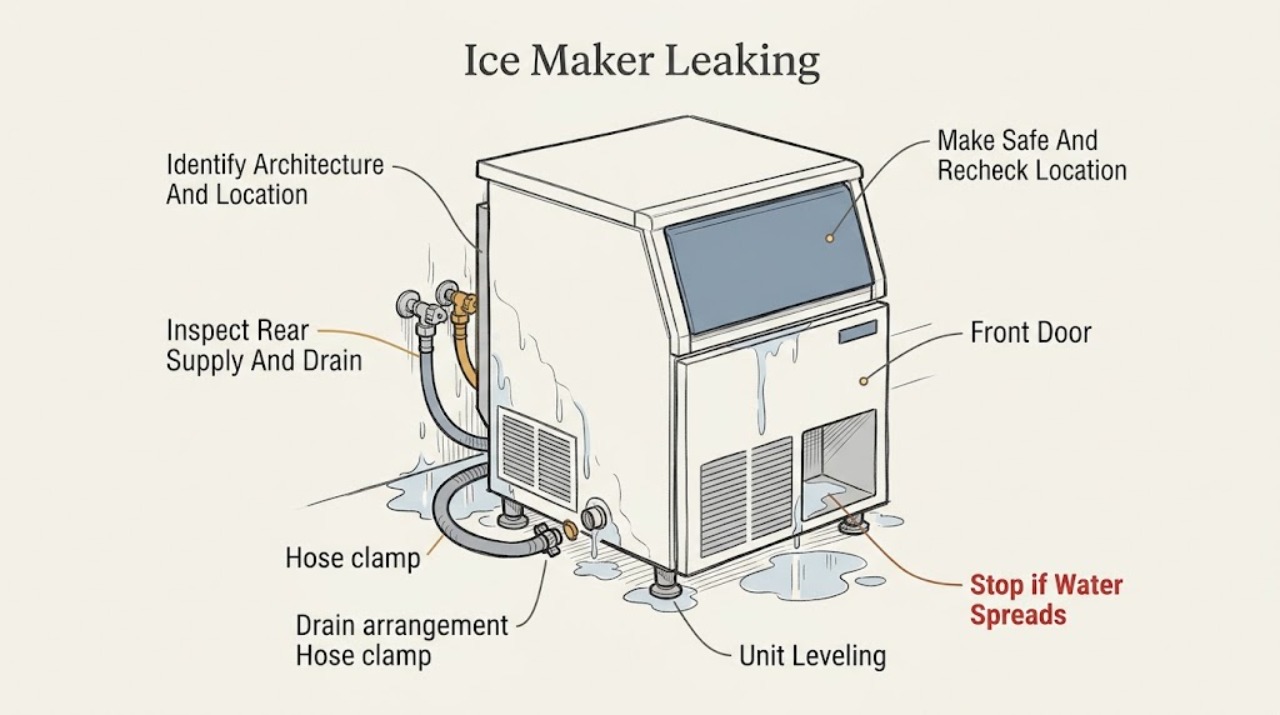
KitchenAid Ice Maker Leaking: Identify the Machine and Leak Location First
First confirm whether this is a KitchenAid freestanding or undercounter ice maker, rather than a refrigerator's built-in ice maker, and note whether water is at the rear, bottom front, inside the bin or door, or only at the drain.
-
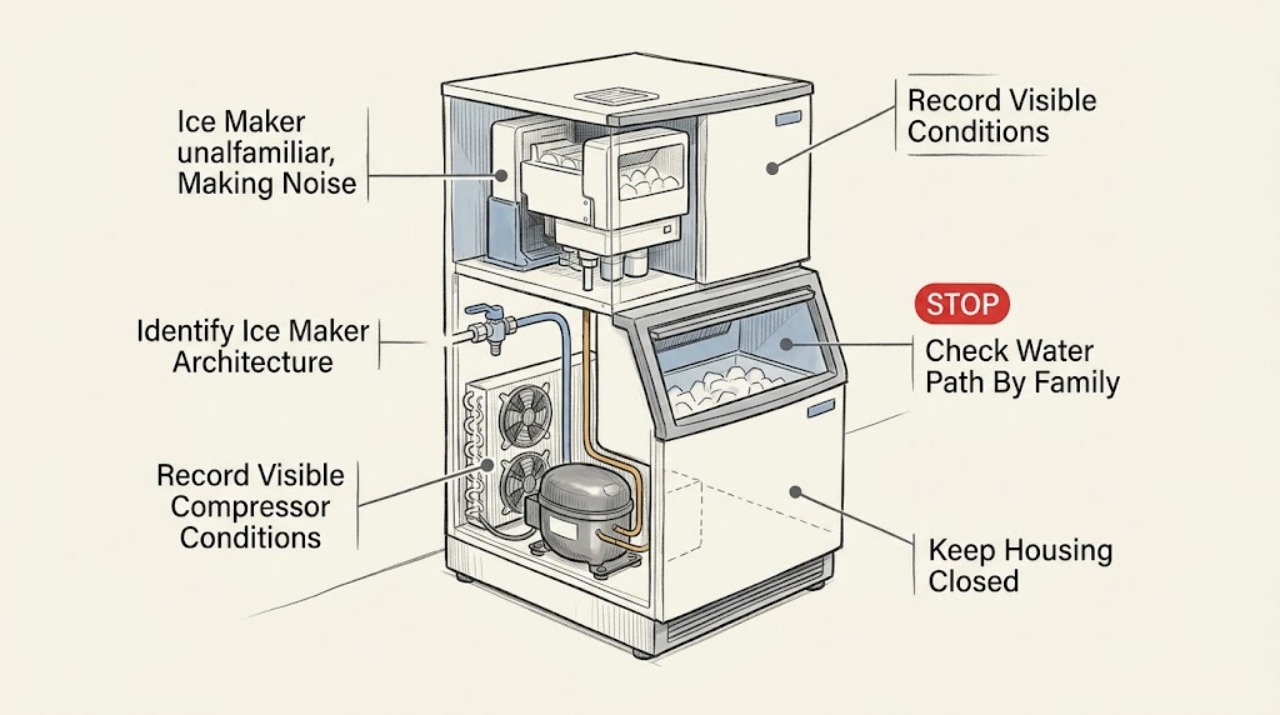
KitchenAid Ice Maker Making Noise: Identify Normal Sounds by Ice-Maker Type
First establish whether the KitchenAid ice maker is a freestanding/undercounter unit or an ice maker built into a refrigerator; the same sound has different likely sources in those two families. On a freestanding unit, splashing, water running during the initial rinse, a bang when ice drops, reservoir overflow, and a compressor hum can be normal.
-
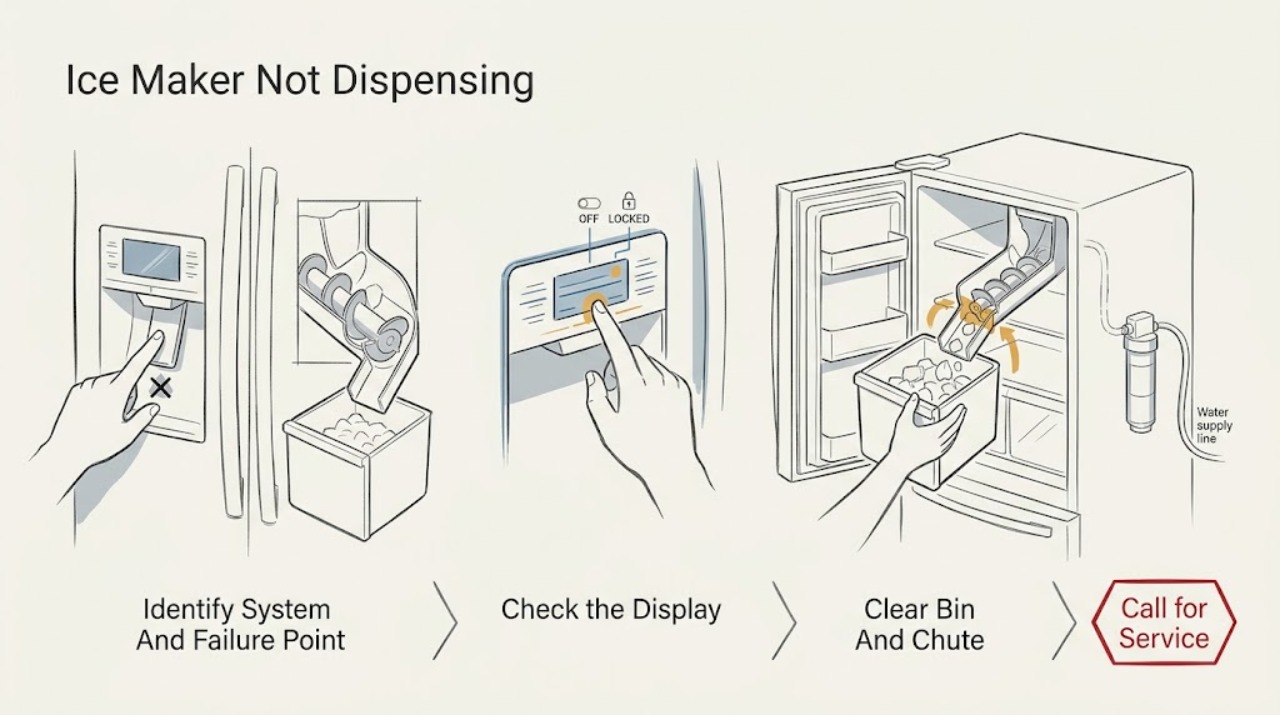
KitchenAid Ice Maker Not Dispensing: Separate Production, Jams, and Chute Checks
First identify whether this is a freestanding KitchenAid ice maker, a refrigerator ice maker, or a refrigerator door dispenser. A freestanding unit may only harvest ice into its bin; it does not use the refrigerator paddle-and-chute path.
-
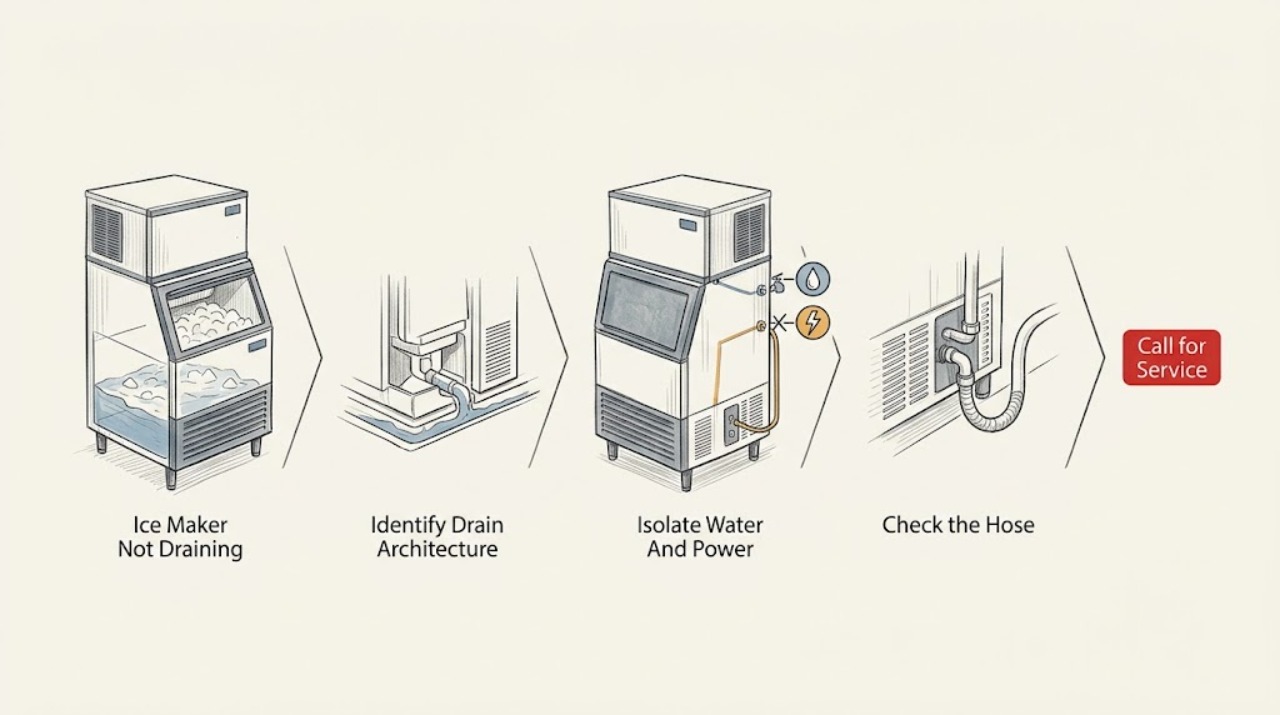
KitchenAid Ice Maker Not Draining: Check the Drain Type, Hose, and Pump Boundary
This guidance is for a KitchenAid freestanding or undercounter ice maker with a separate drain connection, not a refrigerator's internal ice-maker tray. First identify whether the unit uses a nearby floor drain by gravity or a drain pump.
-
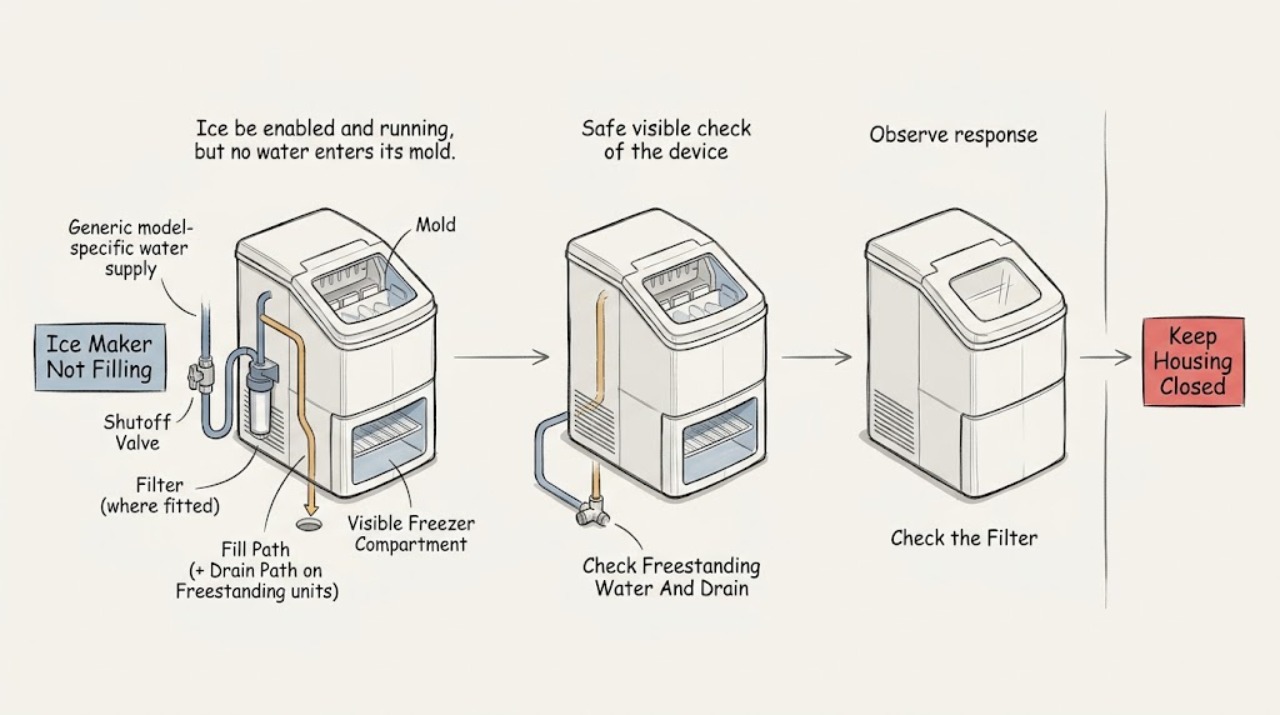
KitchenAid Ice Maker Not Filling: Check the Water Path for Your Architecture
First confirm that the symptom is truly a missing fill—no water enters the ice-maker mold or freestanding water pan—rather than ice being made but not dumped. Record the model and identify a freestanding KitchenAid ice maker versus one built into a refrigerator.
-
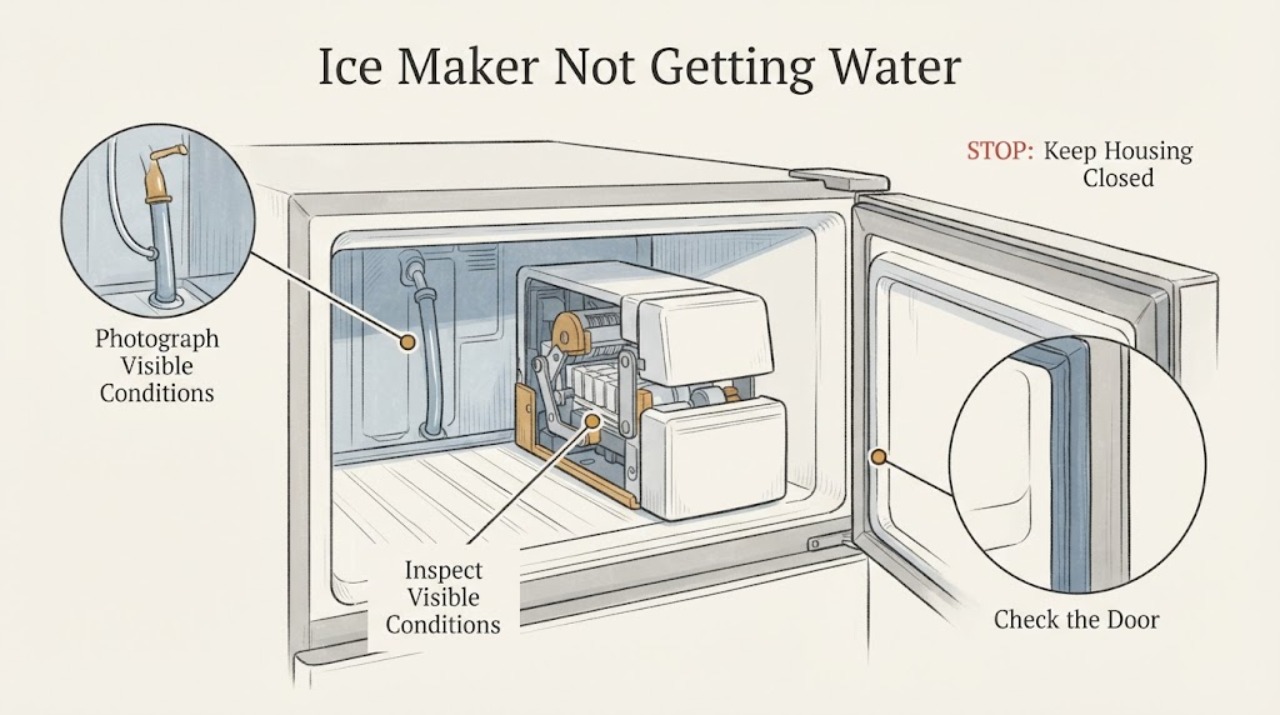
KitchenAid Ice Maker Not Getting Water with E2: Verify the Model Before Chasing the Code
Do not treat E2 as a universal KitchenAid no-water code when the model is missing. An opened KitchenAid service sheet for one refrigerator ice-maker platform defines E2 as a motor-lost-position condition during harvest, while a dry-cycle/no-water condition is listed separately as E4 on that platform.
-
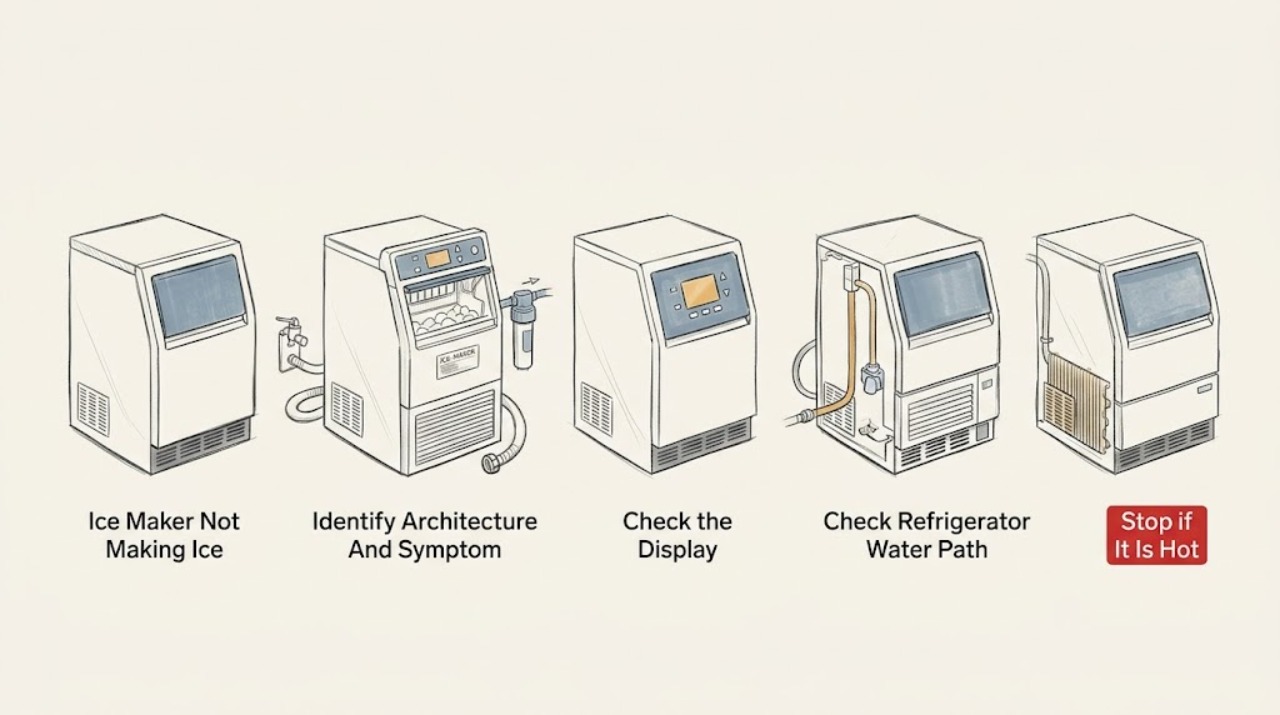
KitchenAid Ice Maker Not Making Ice: Check the Model, Water Path, and Temperature
First separate a KitchenAid refrigerator ice maker from a freestanding or undercounter ice machine, and separate no ice production from an ice dispenser that has ice but will not release it. For a refrigerator, check that the ice maker is on, the water shutoff is open, the supply line is not kinked, the filter is correctly installed, and the freezer and refrigerator settings match KitchenAid's published guidance.
-
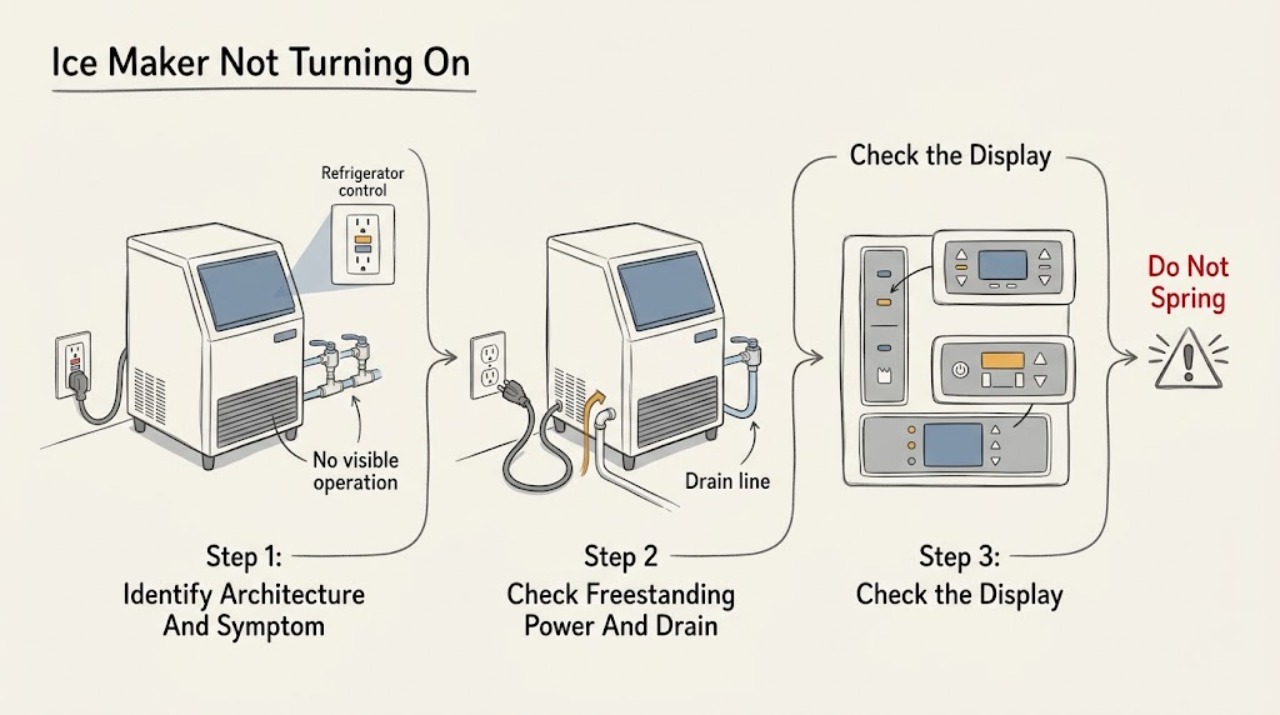
KitchenAid Ice Maker Not Turning On: Separate Freestanding and Refrigerator Models
First decide which KitchenAid architecture is affected: a standalone or undercounter ice maker such as the KUIX or KUID product families, or an ice maker built into a refrigerator. If a freestanding unit has no display or operation, check the model-approved 3-prong outlet, breaker or GFCI, plug, water supply, and visible drain hose; KitchenAid specifically warns that a kinked or incorrectly routed drain hose can cause no or intermittent power on covered freestanding models.
-
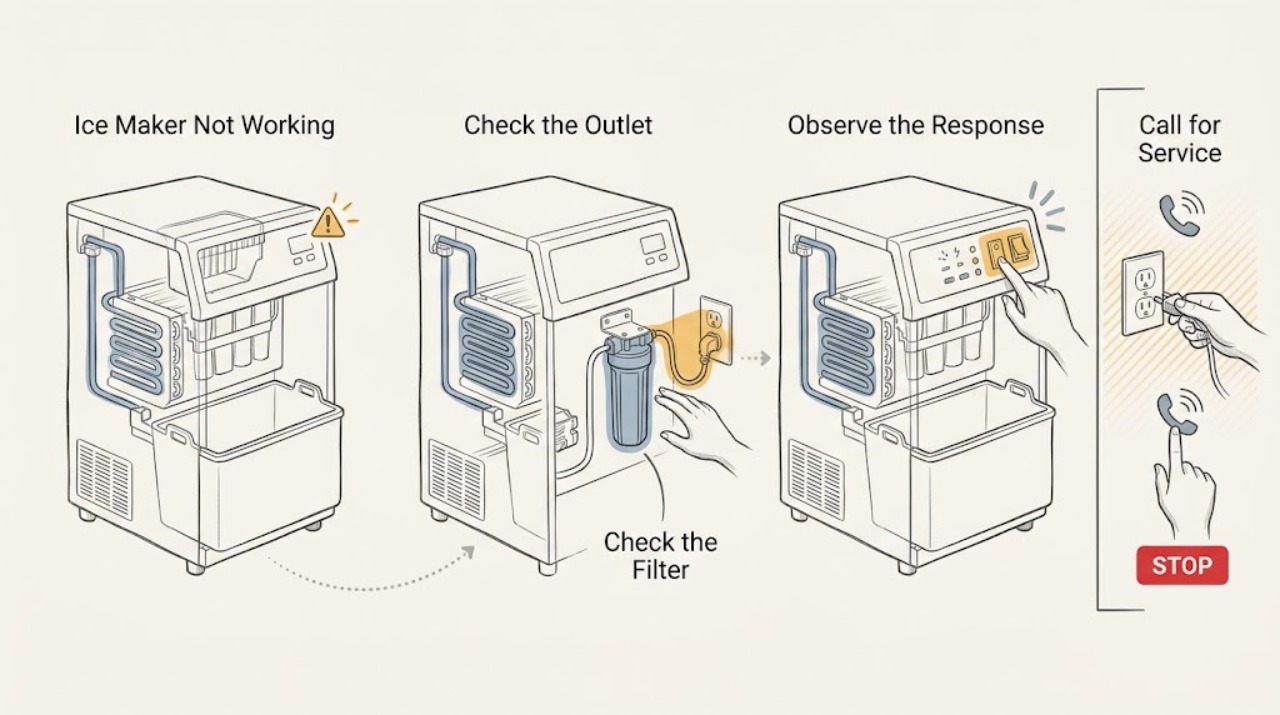
KitchenAid Ice Maker Not Working
Check that the KitchenAid ice maker is on, its shutoff arm or control is in the operating position, the water valve is open, and the freezer is near 0°F. If it still does not cycle after a model-appropriate reset and waiting period, arrange service rather than forcing the tray or replacing a part without a model match.
-
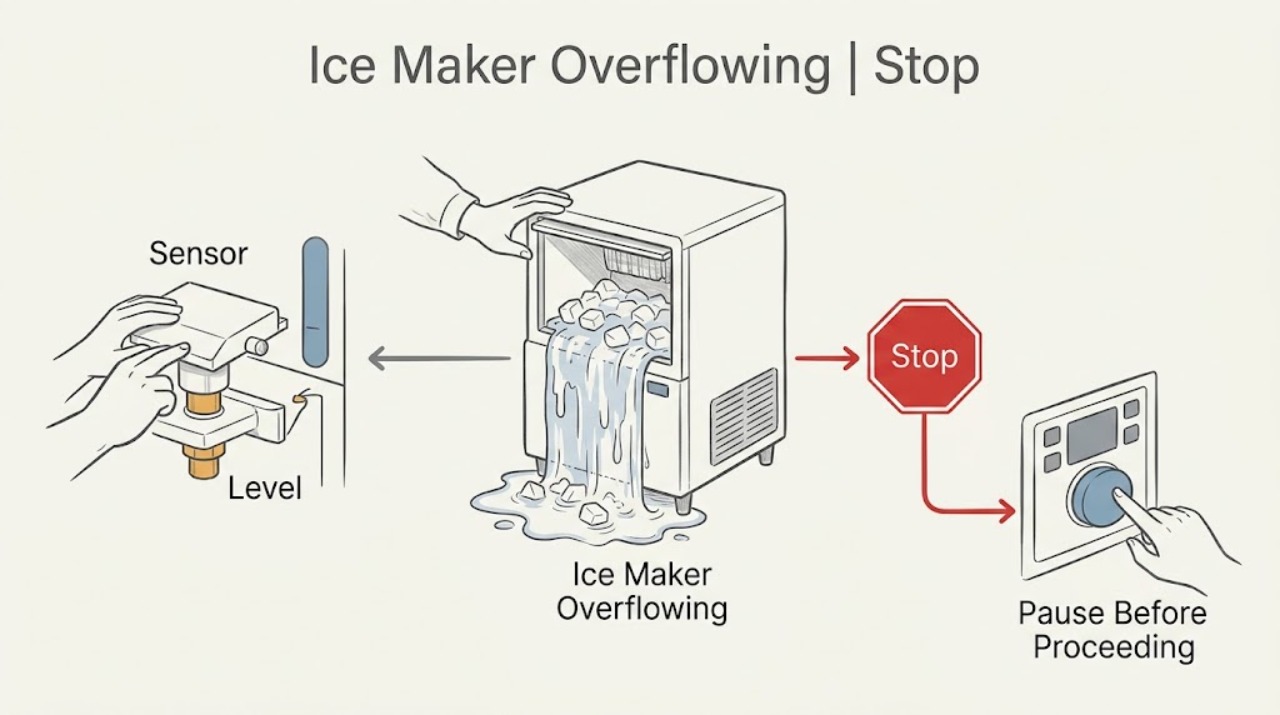
KitchenAid Ice Maker Overflowing: Check Level, Sensor, and Water Supply
Turn the ice maker off and stop the water supply if water continues entering. KitchenAid says to check level, a blocked or dirty bin sensor, and accelerated-ice settings. If water still overflows, keep it off and request service.
-
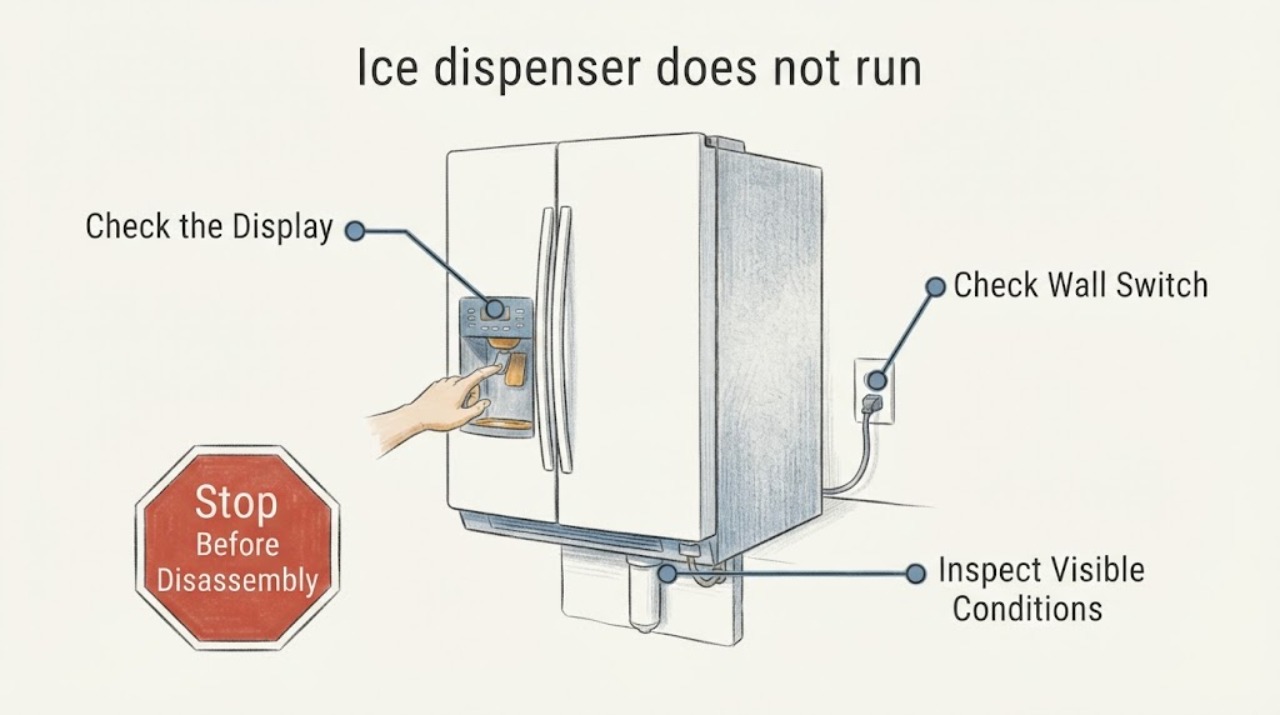
KitchenAid KRSC703HPS ice dispenser does not run when the paddle is pressed
KitchenAid identifies KRSC703HPS as a 22.6-cu-ft counter-depth side-by-side refrigerator with exterior ice and water. If pressing the paddle produces no auger action, first separate an ice-production problem from a dispenser problem: verify that ice is actually in the bin, the doors are closed, Control/Dispenser Lock is off, the selected ice mode is correct, the bin is seated, and ice has not clumped or blocked the chute.
-
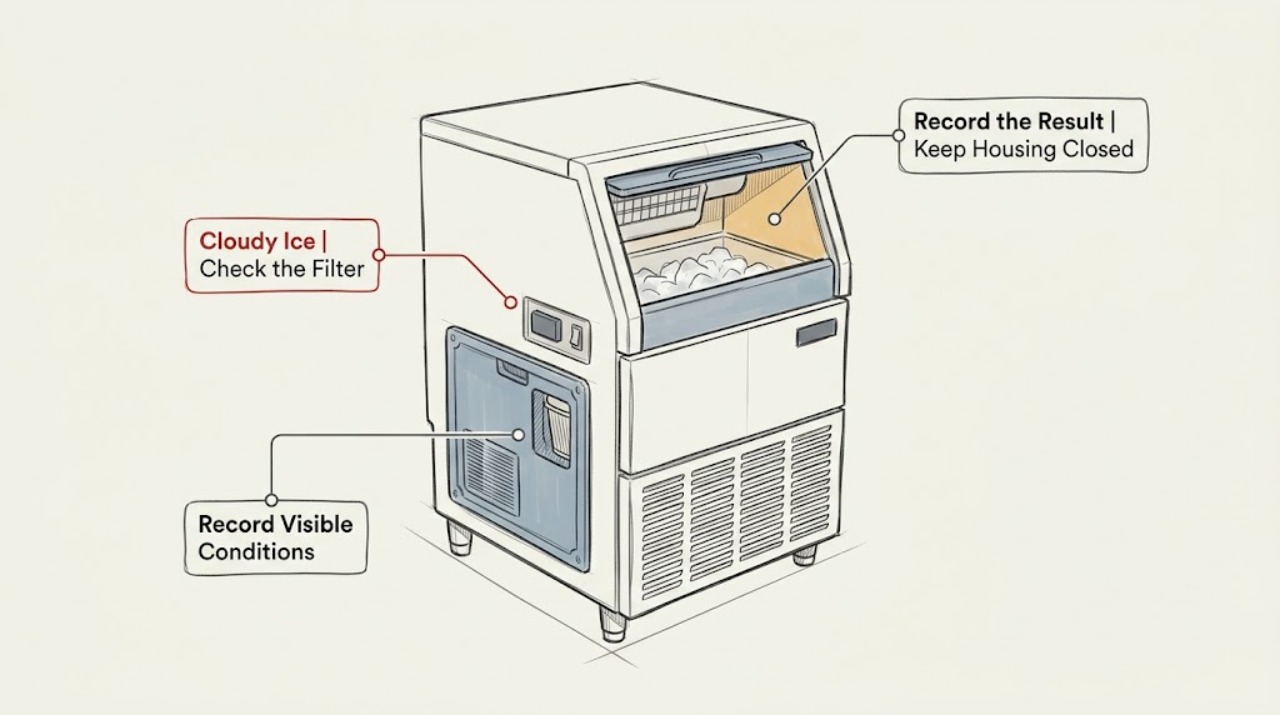
KitchenAid KUIX535HPA00 Cloudy Ice: Air, Minerals, Filter, or Cleaning?
Cloudy ice from a KitchenAid KUIX535HPA00 undercounter ice maker does not by itself prove contamination or a failed part. First record whether the ice is uniformly cloudy, has white particles, or has an odor or taste, and whether it started after filter work.