
HVAC components
HVAC Filters Guides
Filter guidance for airflow, fit, replacement intervals, and system symptoms.
Published filters guides
Use the equipment name and symptom in each title to choose the most relevant guide.
-
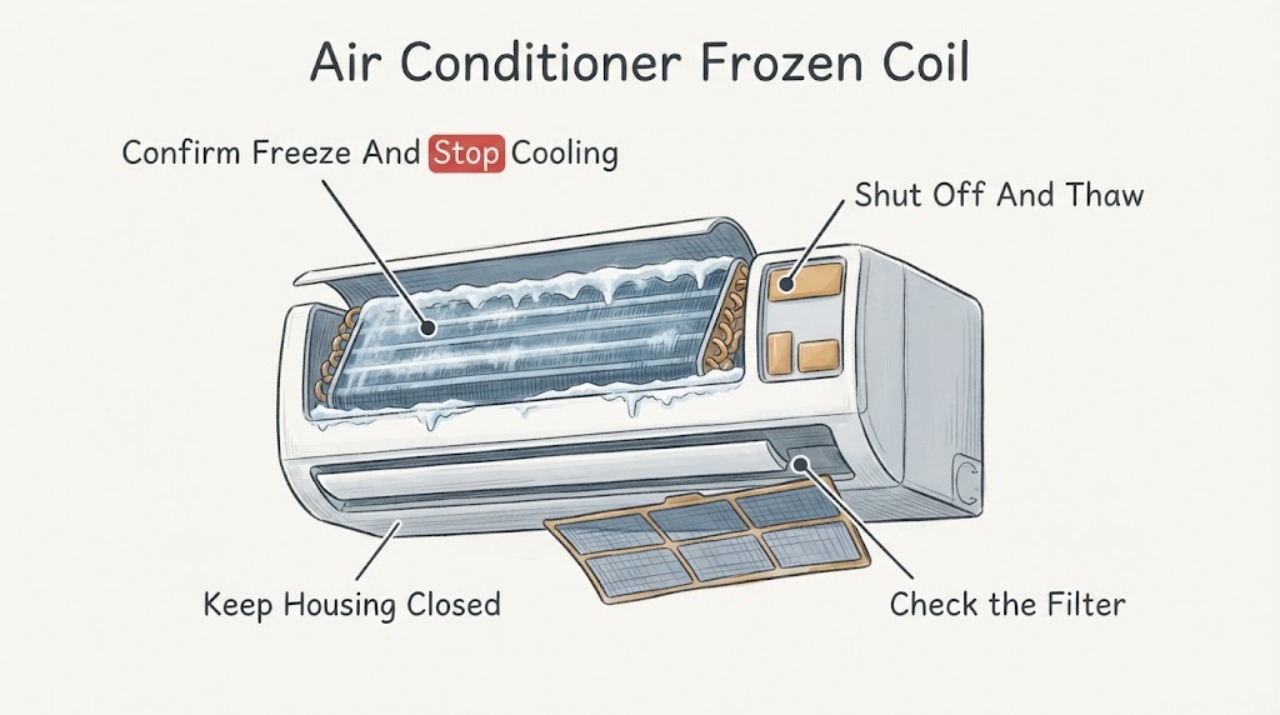
Air Conditioner Frozen Coil
Turn the cooling function off as soon as you see ice on the evaporator coil, copper lines, or indoor unit. Let the coil thaw naturally; do not use a hair dryer, space heater, hot water, or another heat source.
-
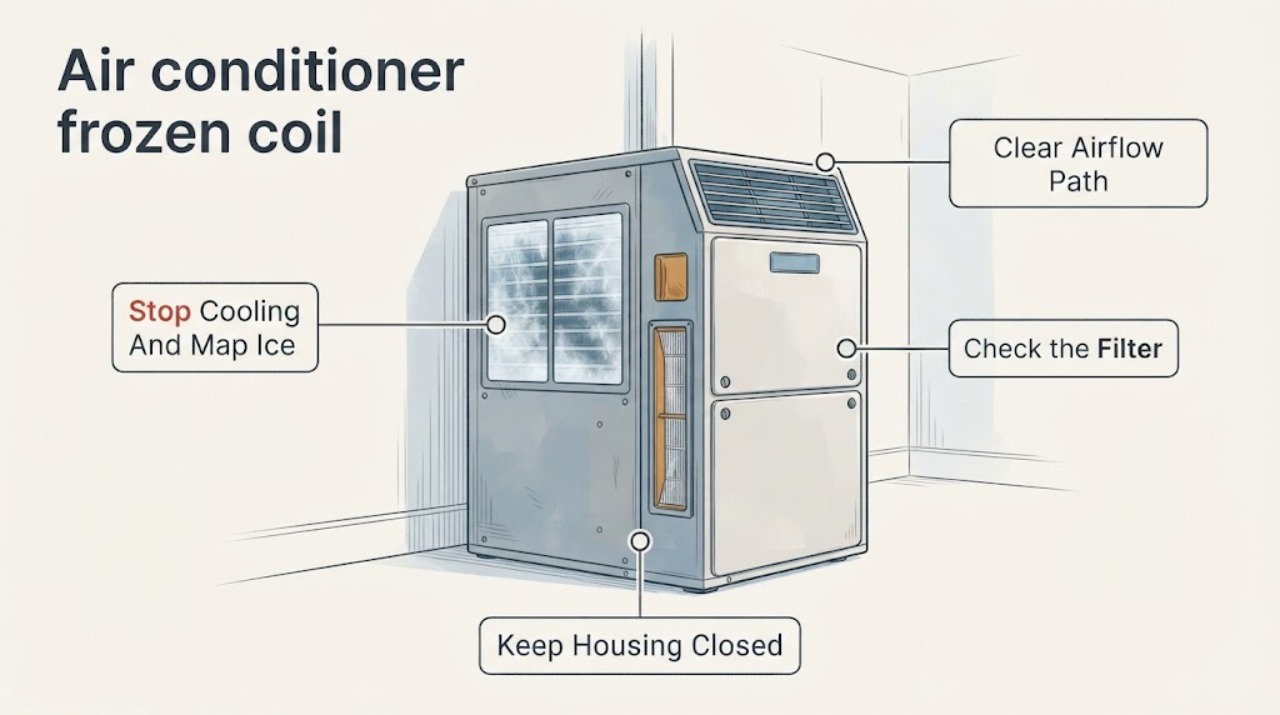
Air conditioner frozen coil: stop cooling, restore airflow, and call HVAC service safely
If an air conditioner has a frozen evaporator coil, switch the thermostat from COOL to OFF and leave cooling off while the ice melts naturally. Do not chip the ice, pour hot water on it, use a flame, open the coil cabinet, or touch electrical or refrigerant parts.
-
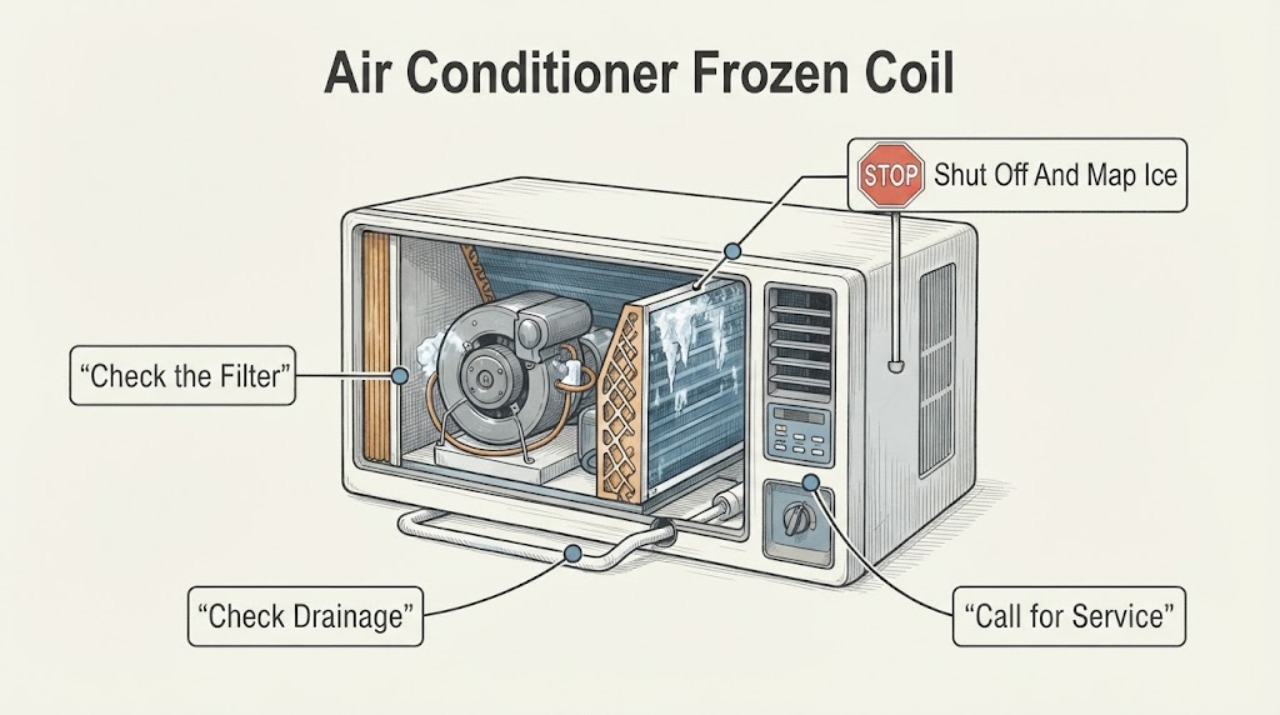
Air Conditioner Frozen Coil: Stop the Cooling Cycle, Restore Airflow, and Find the Cause
If an air conditioner has ice on the evaporator coil or refrigerant line, switch the thermostat from COOL to OFF and do not chip the ice or keep running the system. Trane identifies restricted airflow from a dirty filter, blocked return vents, or a dirty coil as common causes, while low refrigerant, a blower problem, or thermostat trouble can also freeze the coil.
-
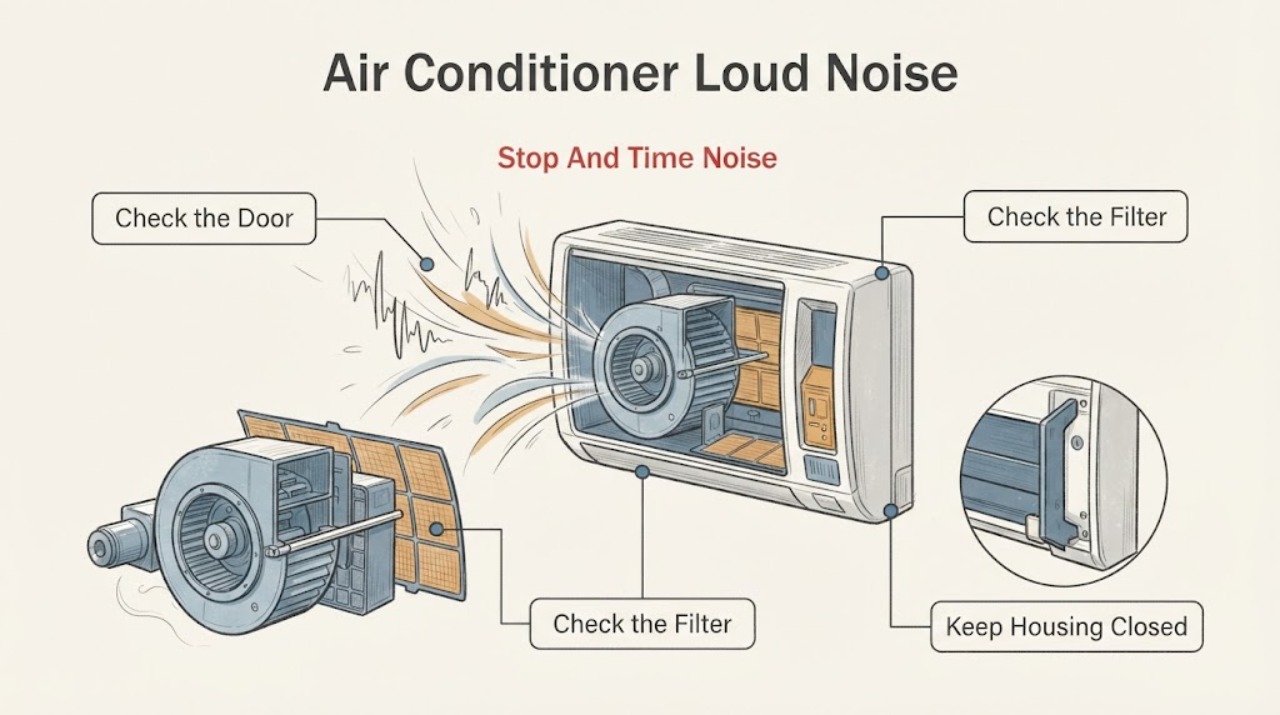
Air Conditioner Loud Noise: Check the Filter and Blower Safely
First identify where and when the loud noise occurs, then stop the air conditioner from the thermostat and inspect only the accessible filter, return grille, and supply registers. A blocked filter can restrict airflow and make the blower work harder, while a rattle, squeal, or grinding sound that starts with the indoor blower can indicate a blower wheel, motor, bearing, or electrical fault that requires HVAC service.
-
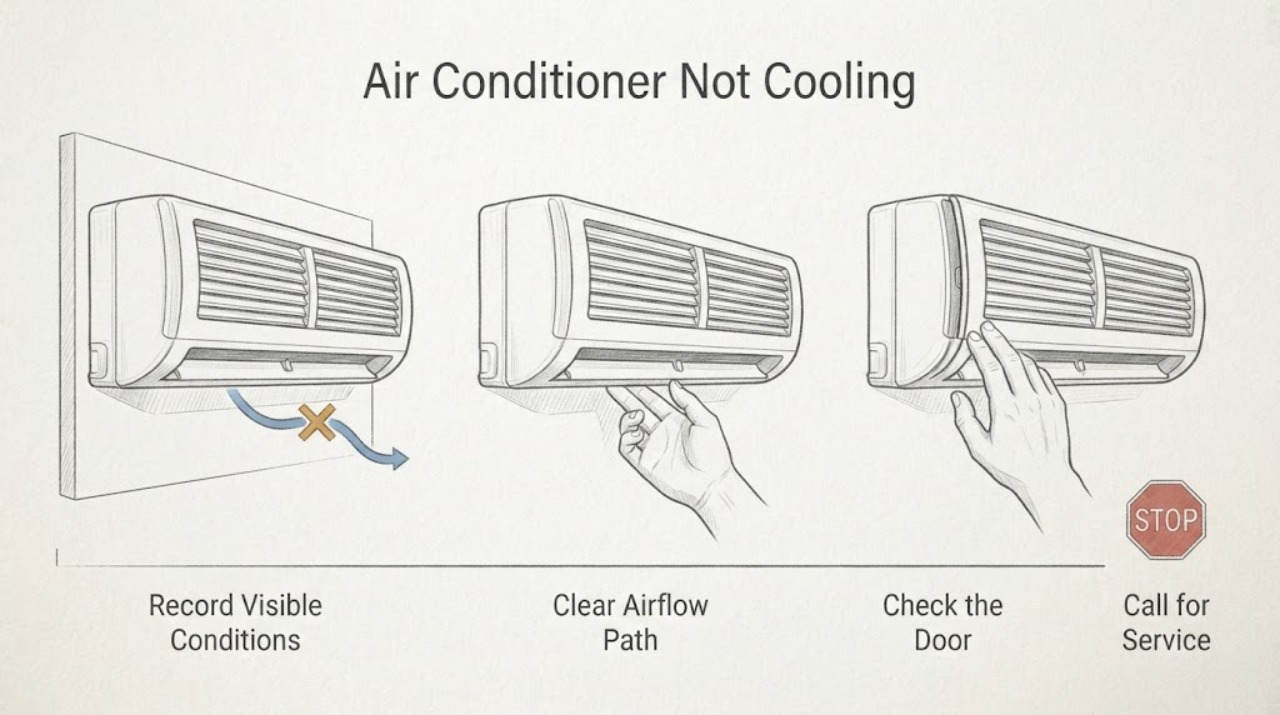
Air Conditioner Not Cooling: Check the Filter First
A dirty, wet, collapsed, incorrectly sized, or backward-installed air filter can restrict airflow enough to make an air conditioner cool poorly, run longer, or freeze the indoor coil. Check the filter only at the user-accessible location named by the equipment manual, confirm its size and airflow direction, and replace or clean it only as the filter and system instructions allow.
-
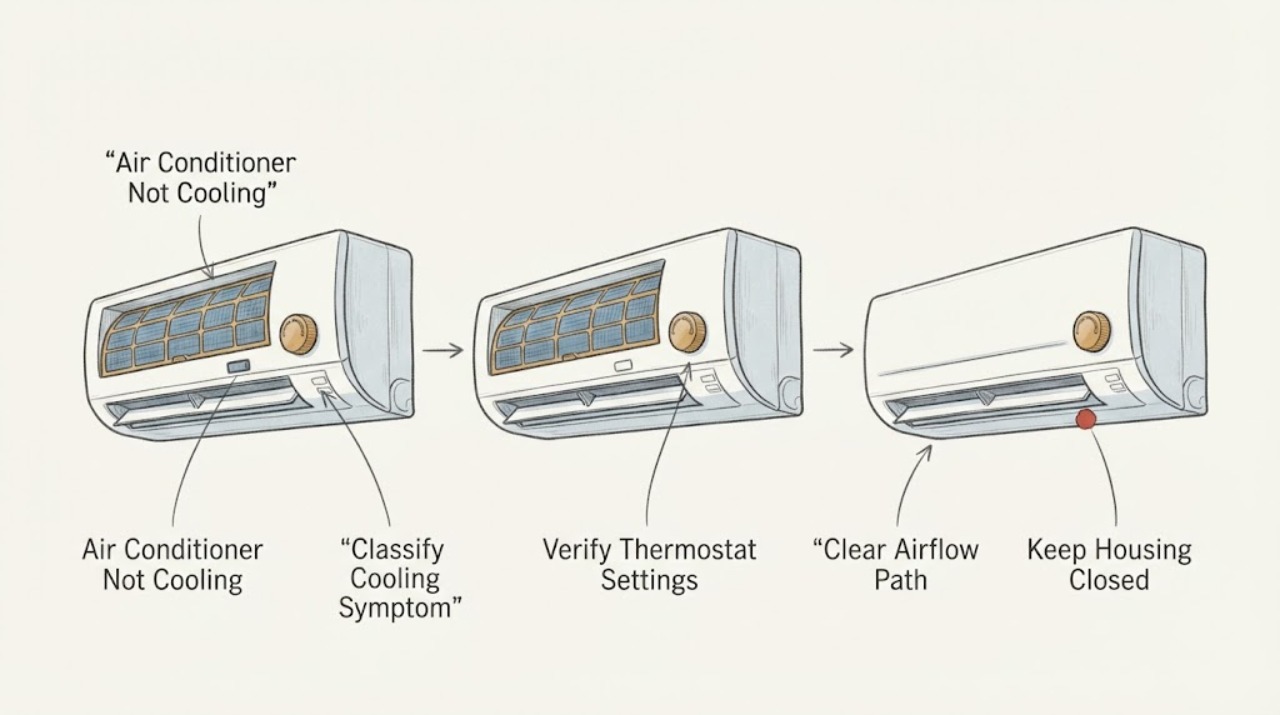
Air Conditioner Not Cooling: Check the Filter and Thermostat Before the HVAC System
When an air conditioner is not cooling, first separate a thermostat or power command problem from weak airflow caused by the filter and from a running system that is not removing heat. Confirm that the thermostat is calling for cooling, the fan is not set to run continuously, and the filter is installed in the correct direction and not heavily loaded.
-
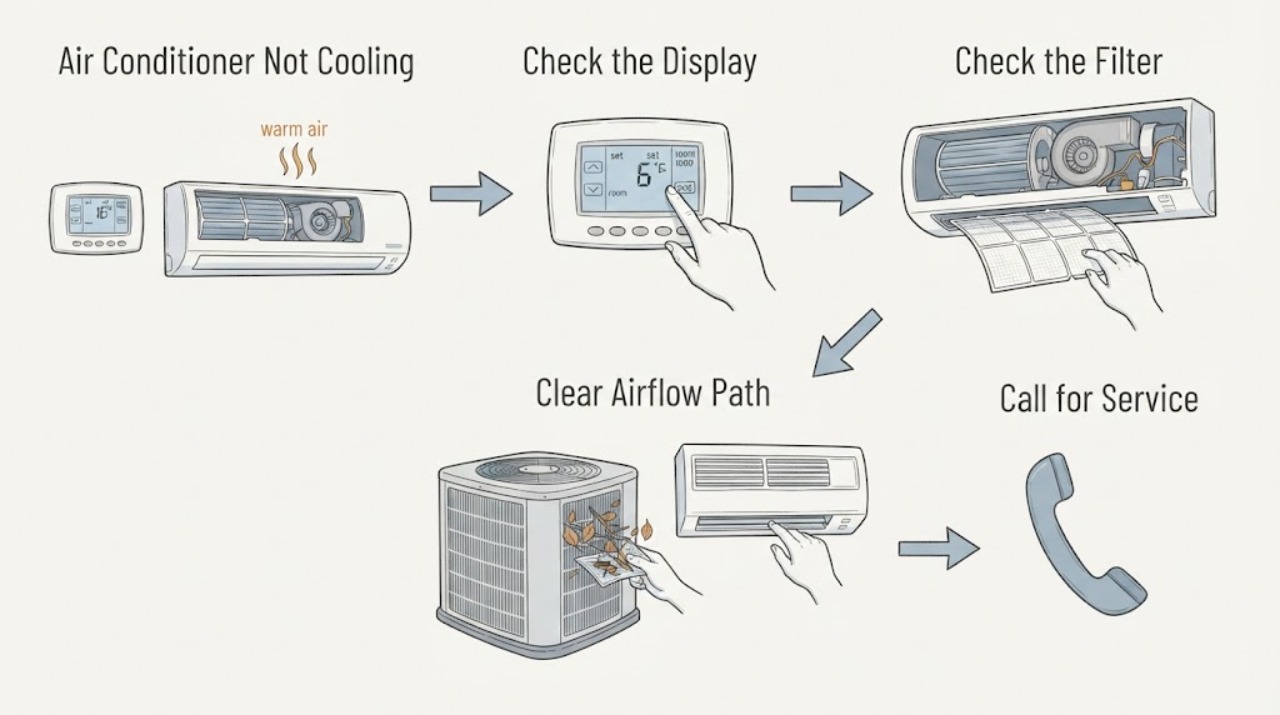
Air Conditioner Not Cooling: Thermostat, Filter, Blower, and Capacitor Checks
Start with the thermostat and the user-accessible air filter, then compare airflow with what the outdoor unit is visibly doing. A wrong mode or clogged filter can mimic a failed air conditioner, while weak or absent indoor airflow, ice, an outdoor fan that will not start, humming, or repeated electrical trips point toward a blower motor, capacitor, compressor, refrigerant, or control problem that needs HVAC service.
-
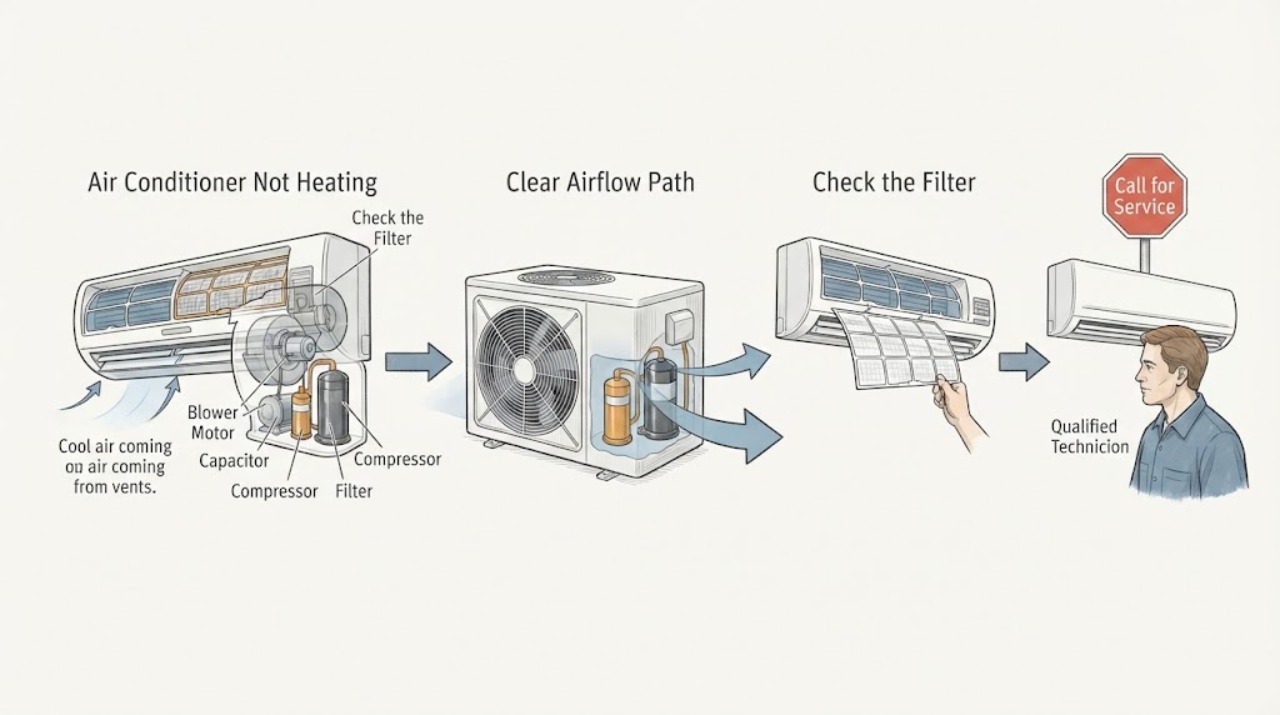
Air Conditioner Not Heating: Check the Heat Mode and Airflow
First confirm what equipment you have: a cooling-only air conditioner cannot provide heat, while a heat pump or a dual-fuel system must be in the correct heat mode. For a heat pump, check the thermostat mode and fan, compare indoor airflow, and inspect the user-accessible filter with the system off.
-
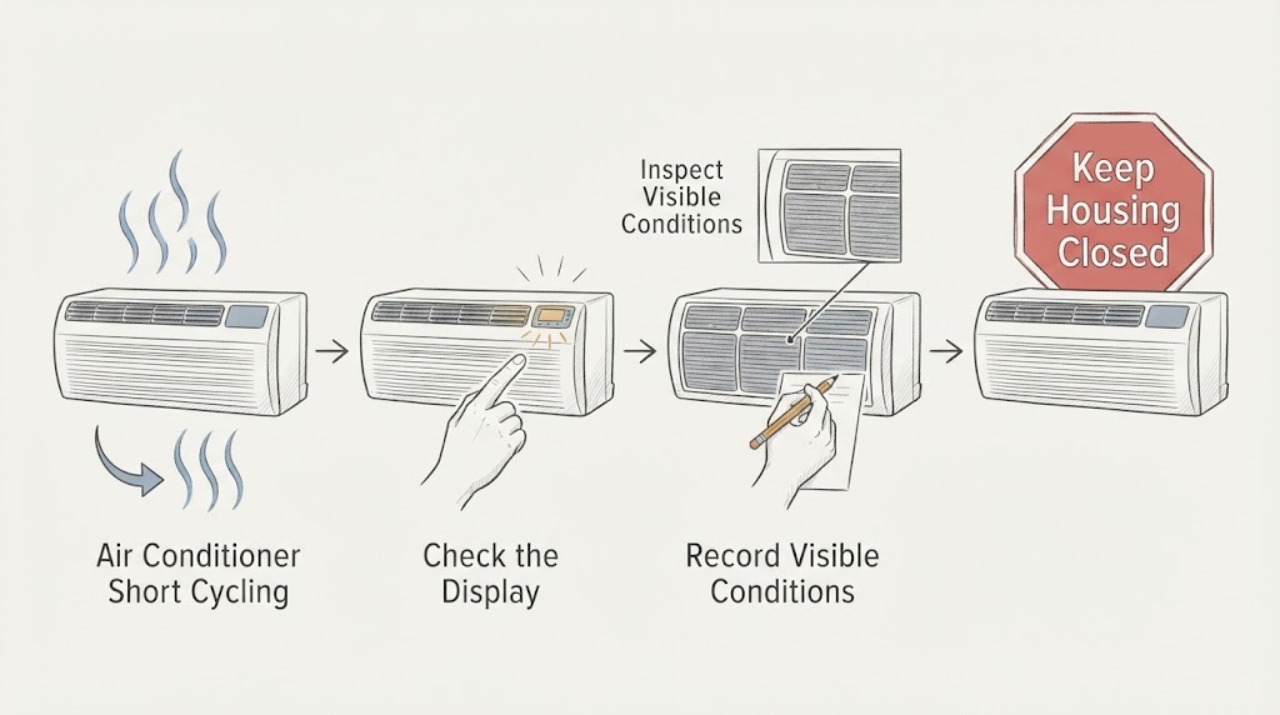
Air Conditioner Short Cycling: Check the Filter Before Bigger Repairs
Short cycling is repeated air-conditioner starts and stops before a useful cooling cycle is complete. A dirty, wet, damaged, wrong-size, reversed, or poorly seated filter can restrict airflow and contribute, but thermostat settings or placement, frozen coils, low refrigerant, electrical components, an oversized system, duct problems, and outdoor-unit faults can look similar.
-
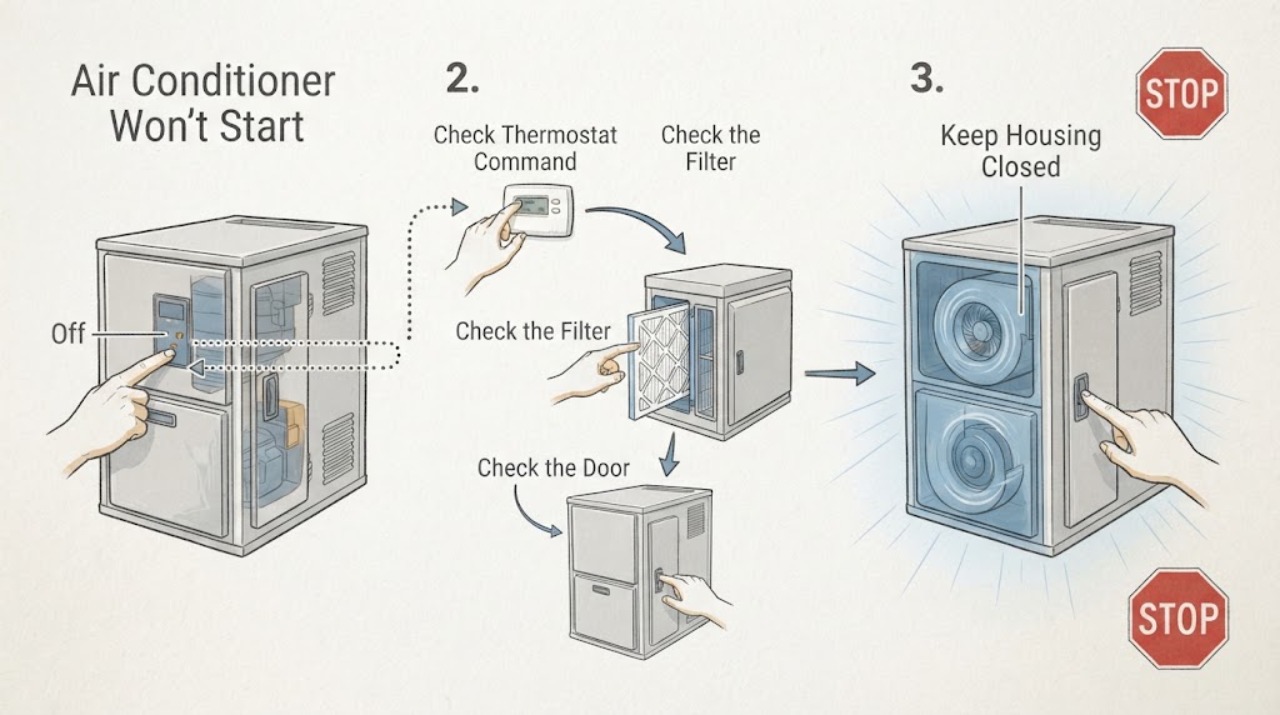
Air Conditioner Won't Start: Check the Blower Motor and Filter Safely
When an air conditioner will not start, first separate a thermostat or power command problem from an indoor airflow problem. Check the thermostat mode, setpoint, fan setting, display, and schedule; then look at the accessible filter and registers.
-
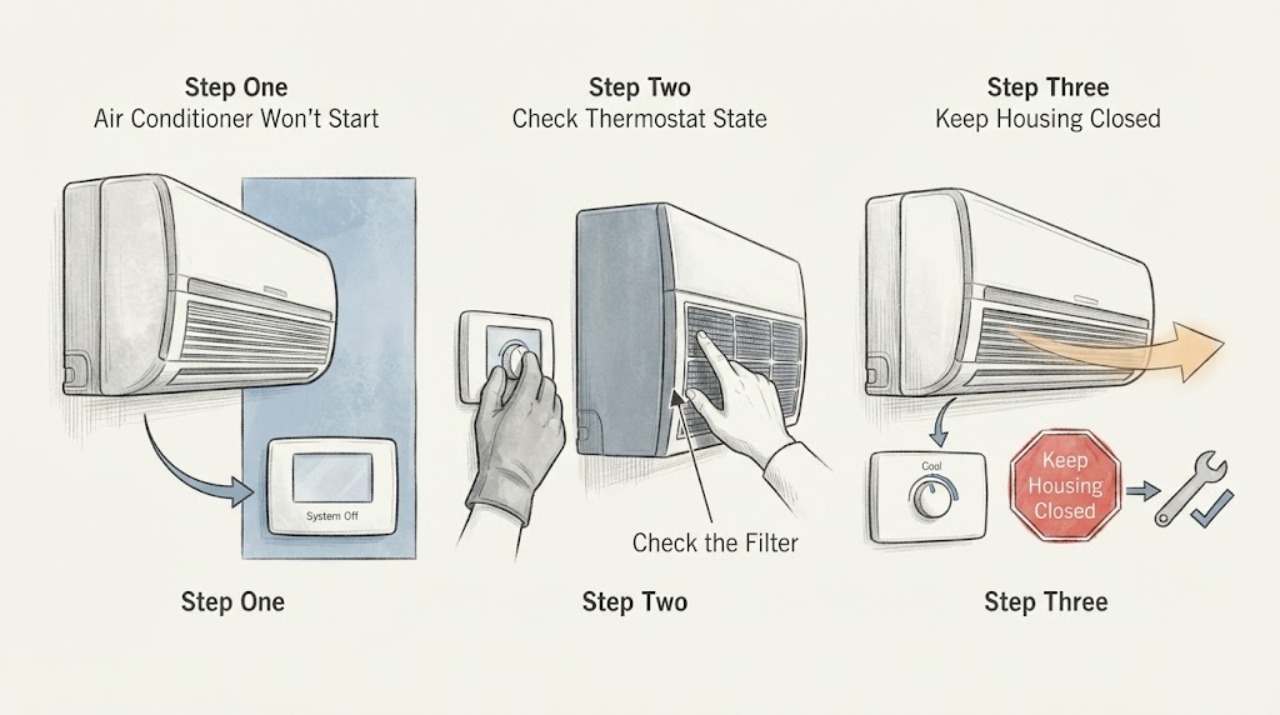
Air Conditioner Won't Start: Check the Thermostat and Filter
When an air conditioner will not start, begin at the thermostat and filter rather than opening the unit. Confirm the thermostat mode, setpoint, fan setting, schedule, display, and batteries, then inspect an accessible filter and visible registers.
-
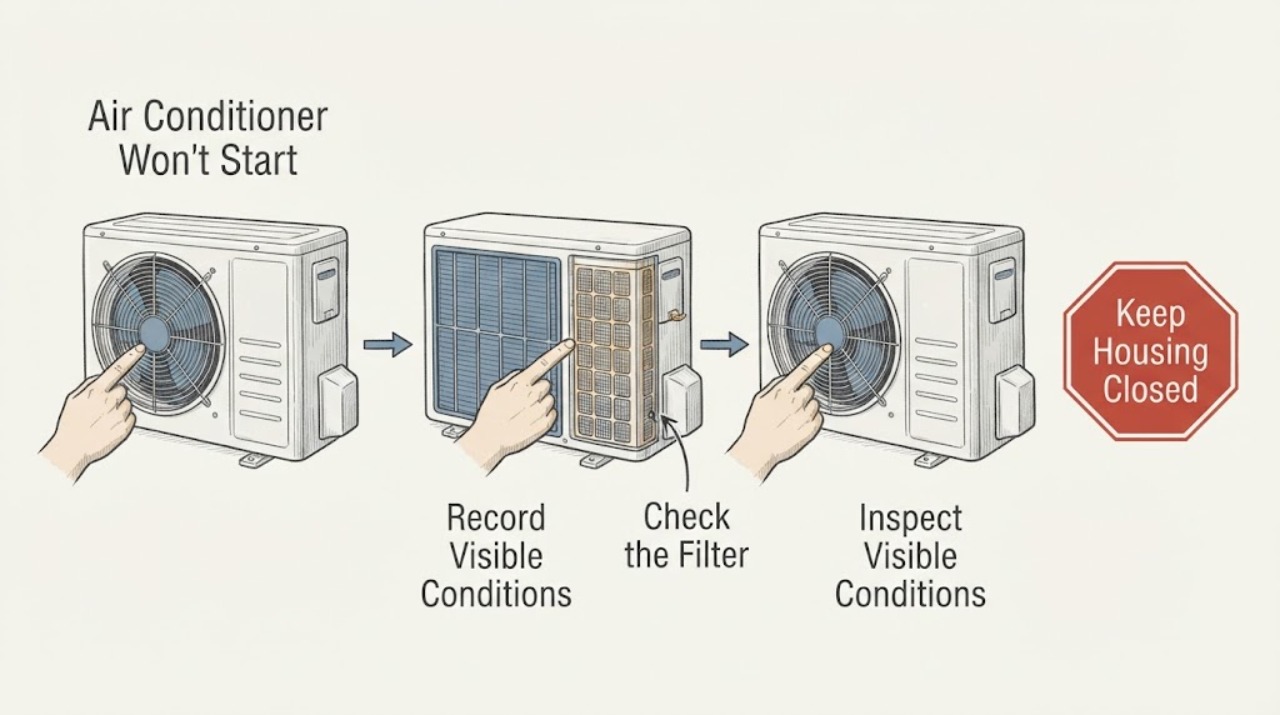
Air Conditioner Won't Start: Check the Safe Causes Before Ordering Parts
When an air conditioner will not start, first separate no thermostat call, no indoor response, and an outdoor unit that stays silent. Check the thermostat mode and setpoint, the accessible air filter, visible supply and return airflow, and whether a clearly labeled HVAC protective device is open.
-
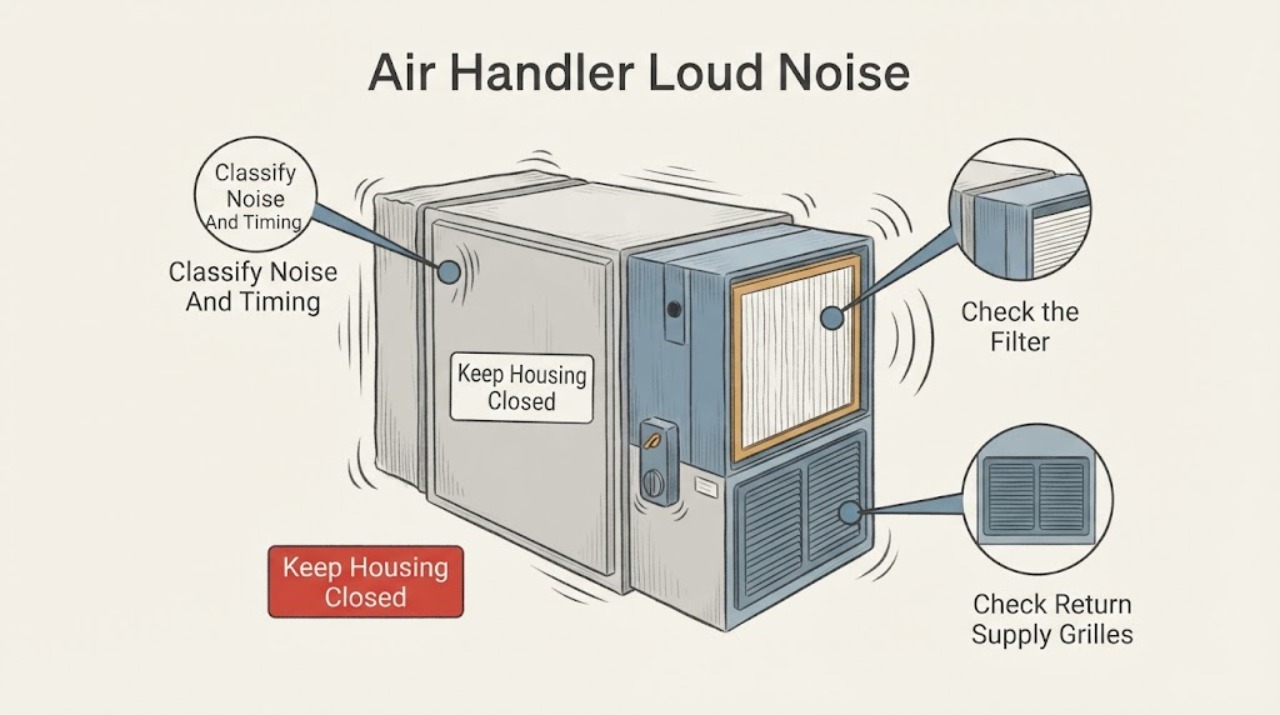
Air Handler Loud Noise: Check the Filter and Airflow Before Blaming the Blower
An air handler can sound loud because a filter is dirty, wet, damaged, missing, reversed, or the wrong size; return or supply grilles are blocked; a loose cover or duct is resonating; or an internal blower, motor, bearing, electrical, coil, or drain problem is present. First classify the sound as a whistle, rattle, buzz, hum, grinding, or bang and note whether it occurs at startup, steady airflow, or shutdown.
-
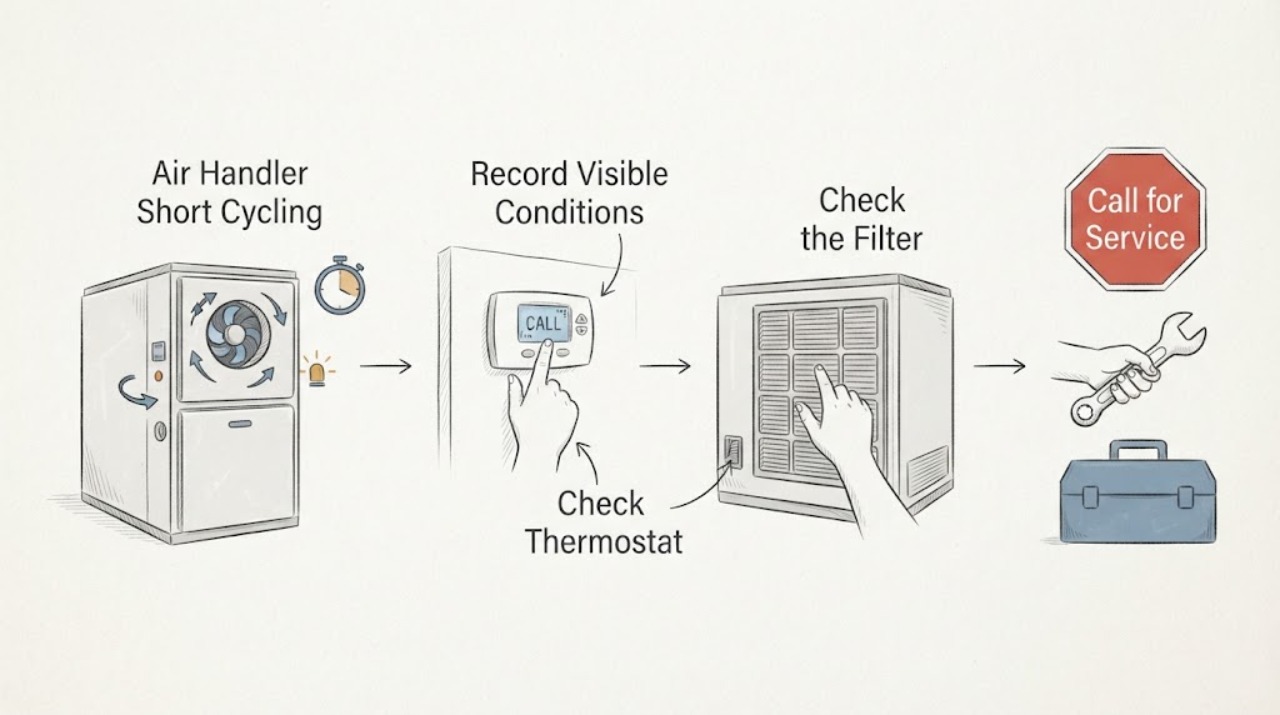
Air Handler Short Cycling: Check the Filter Before Service
Short cycling means the HVAC system starts and stops before completing a normal cooling cycle. A dirty, wet, wrong-size, collapsed, or backward filter can restrict airflow and contribute to coil freezing, motor strain, or a protective shutdown, but the filter is not the only possibility: thermostat placement or settings, condensate protection, system sizing, low refrigerant, controls, or the blower can also be involved.
-
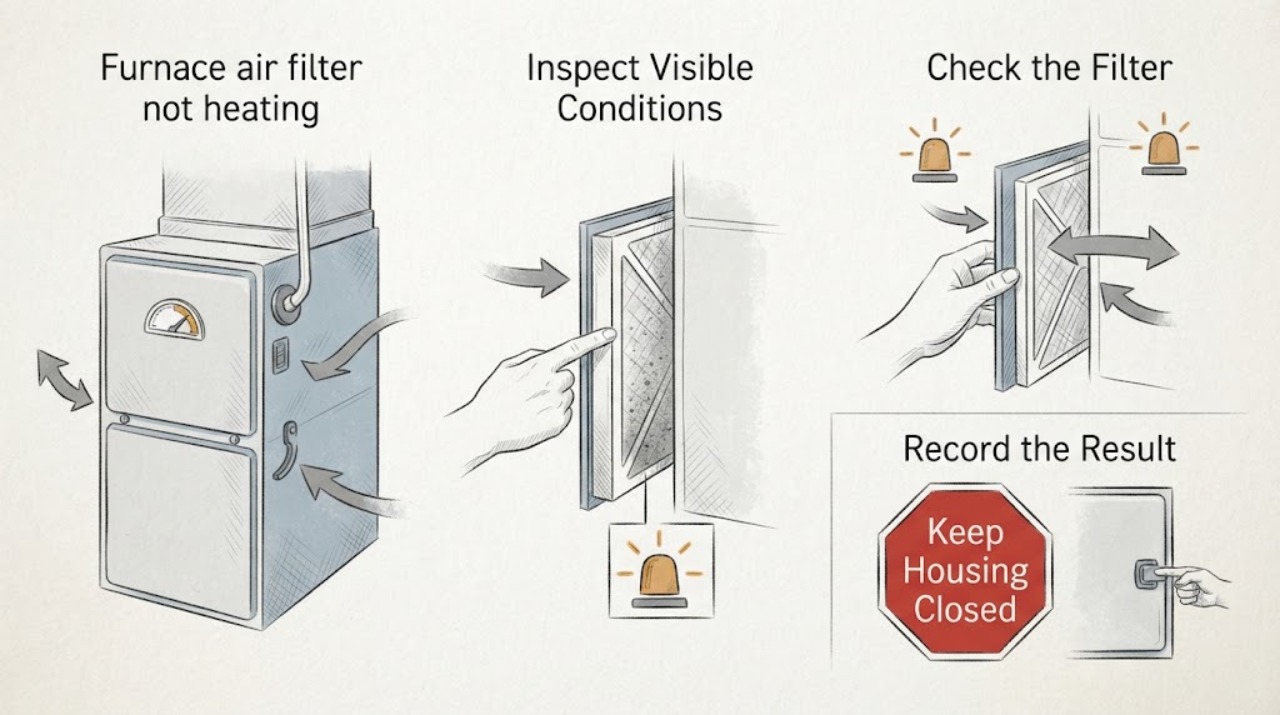
Amana furnace air filter not heating: What to Check and What to Do Next
A dirty, blocked, incorrectly installed, or overly restrictive air filter can reduce airflow and make an Amana furnace run poorly, but a clean filter does not prove the furnace's heat-producing components are working. Check the filter at the accessible return grille or filter cabinet, confirm its size and airflow orientation from the exact Amana instructions, and replace or clean it only as the manufacturer permits.
-
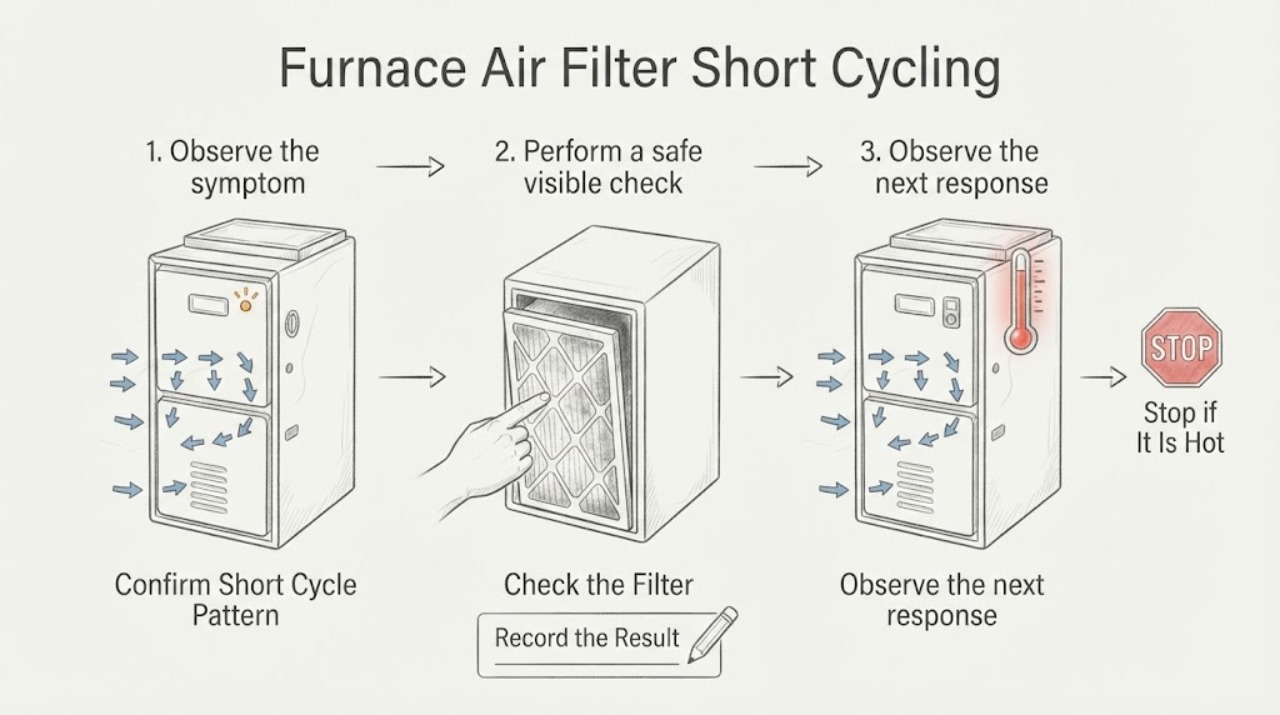
Amana Furnace Air Filter Short Cycling: What to Check and What to Do Next
A dirty, incorrectly installed or overly restrictive air filter can reduce the airflow an Amana furnace needs, but a filter is not the only reason a furnace may start and stop too soon. Turn the thermostat to a normal heat demand and observe the pattern without opening the furnace: whether the burner starts, the blower runs, warm air reaches the rooms, and a fault indication appears.
-
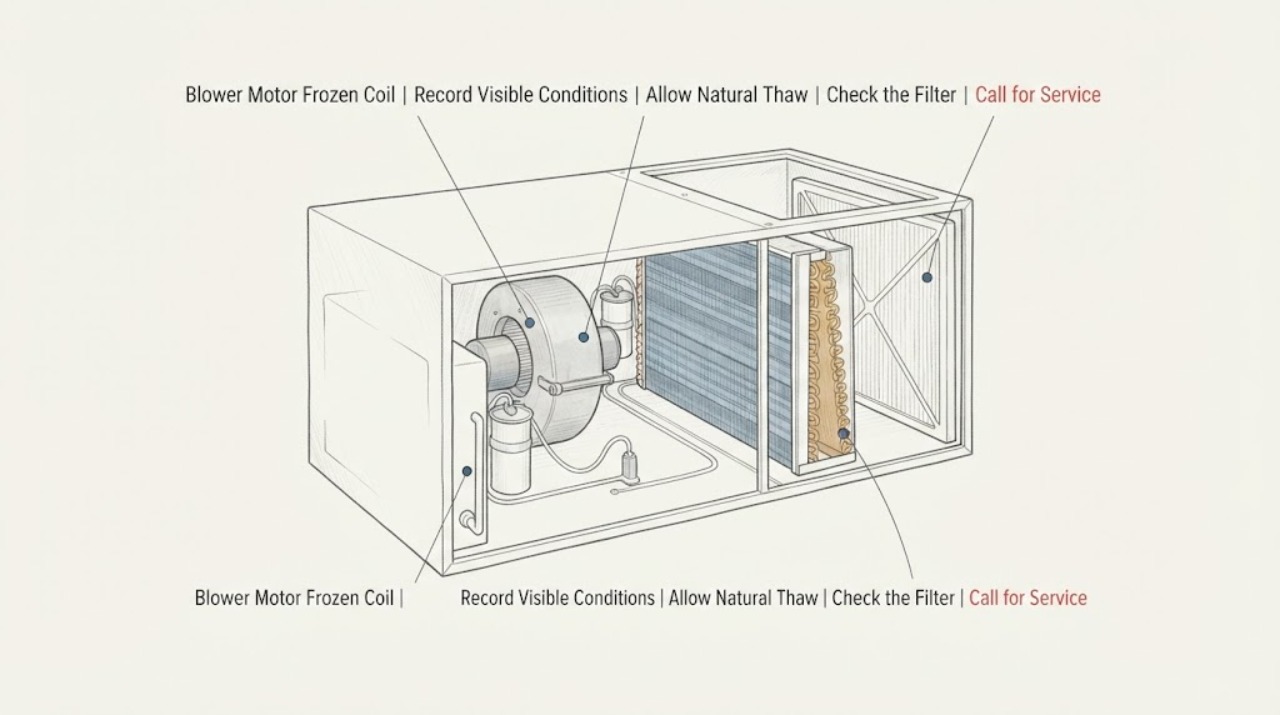
Blower Motor Frozen Coil: Let the Air Handler Thaw Before Diagnosis
A frozen evaporator coil around an air-handler blower is usually a symptom of restricted airflow, a blower or control problem, or a cooling-side condition such as low refrigerant; a dirty filter is only one possible cause. Turn the cooling call off and let the ice thaw naturally, without chipping it or pouring hot water on it.
-
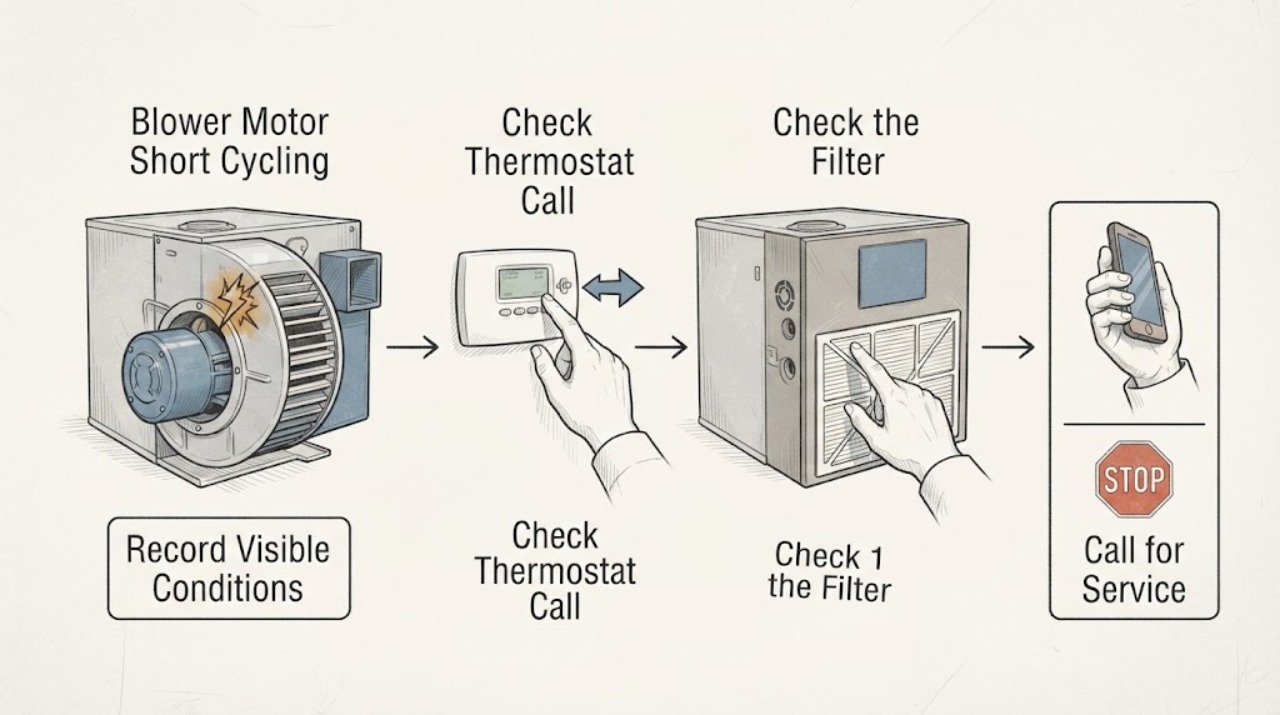
Blower Motor Short Cycling: Check Airflow and the Thermostat First
A blower motor that appears to short cycle may actually be reacting to a dirty filter, restricted return airflow, a thermostat call that starts and stops, a frozen coil, a condensate safety shutdown, or a blower, control, or cooling-side fault. Record the complete on/off pattern and first check the thermostat mode and schedule, the accessible filter, and room-side airflow.
-
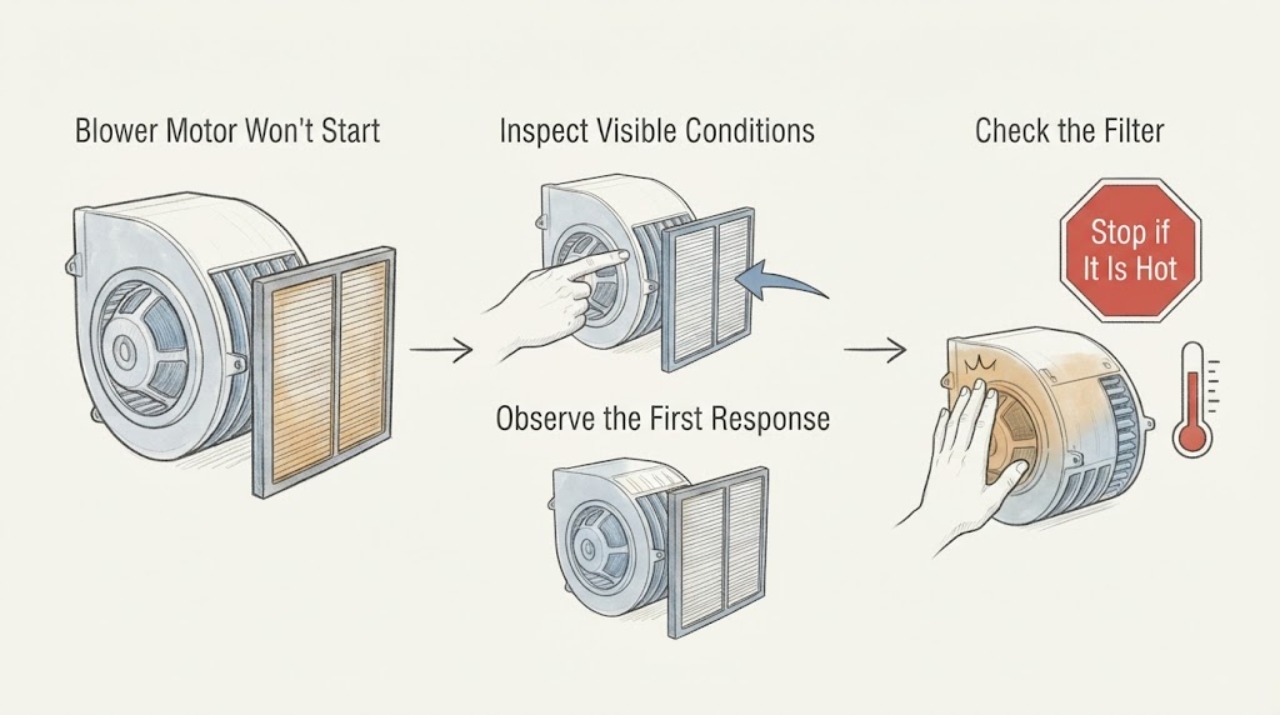
Blower Motor Won't Start: Check the Filter and Airflow Before HVAC Service
If the HVAC blower motor will not start, first separate a thermostat command problem from a loss of power, a loaded filter, blocked airflow, an open access-door safety switch, or a failed motor or starting component. Confirm the thermostat call, observe whether the indoor fan and outdoor unit respond, inspect only the accessible filter and grilles, and look for visible ice or water.
-
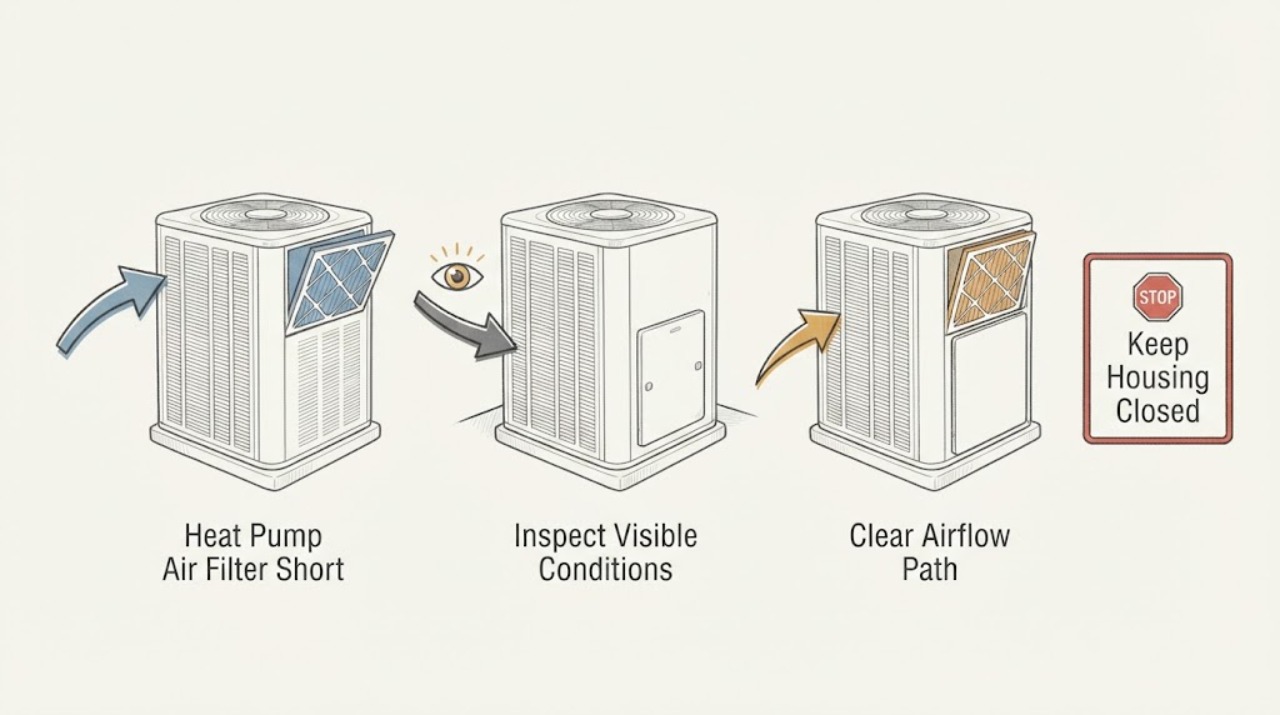
Carrier Heat Pump Air Filter Short Cycling: What to Check and What to Do Next
A Carrier heat pump that starts and stops repeatedly can be reacting to restricted airflow from a clogged air filter, but a clean filter does not rule out a thermostat, frozen coil, refrigerant, outdoor-airflow, control, or sizing problem. Confirm the pattern, replace or clean the filter with the exact model-approved type, and make sure visible registers and the outdoor unit are not blocked.
-
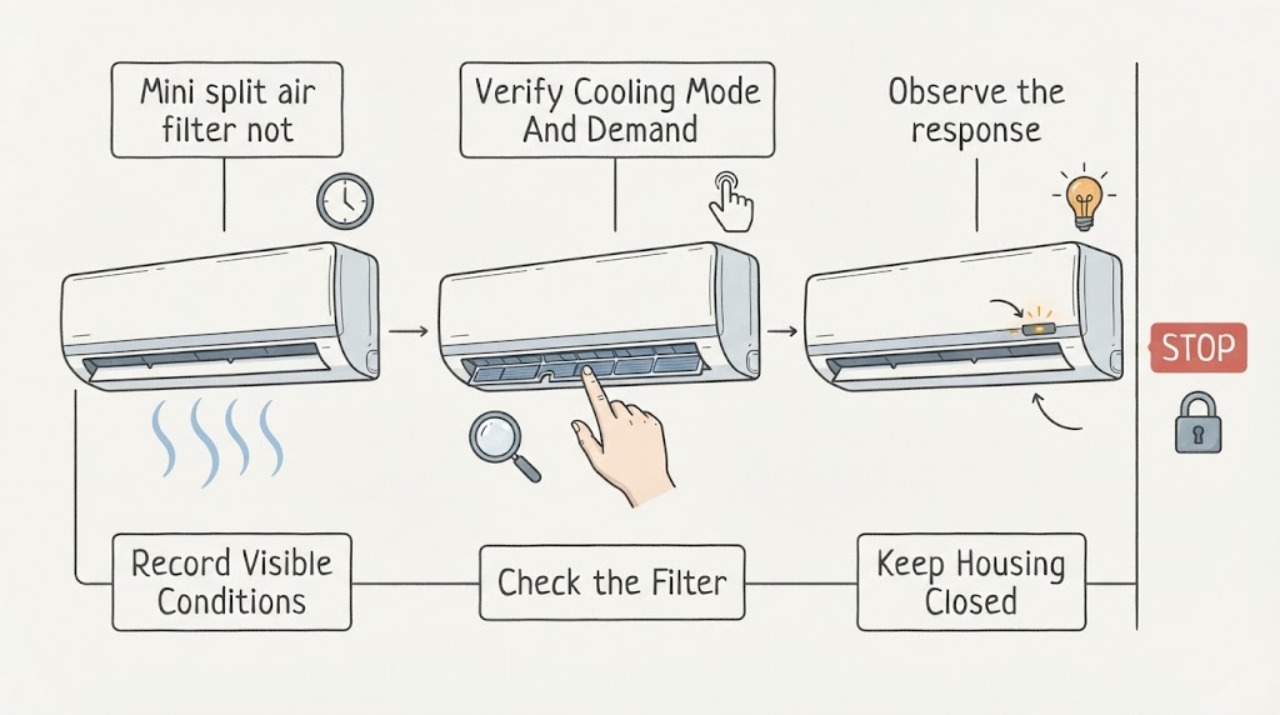
Carrier mini split air filter not cooling: What to Check and What to Do Next
A dirty or incorrectly seated Carrier mini split air filter can restrict airflow and make the system cool poorly, but the filter may not be the only cause. First confirm that the unit is actually calling for cooling rather than Fan, Dry, Heat, Quiet, or an unintended setting, then turn the system off before opening the indoor filter access.
-
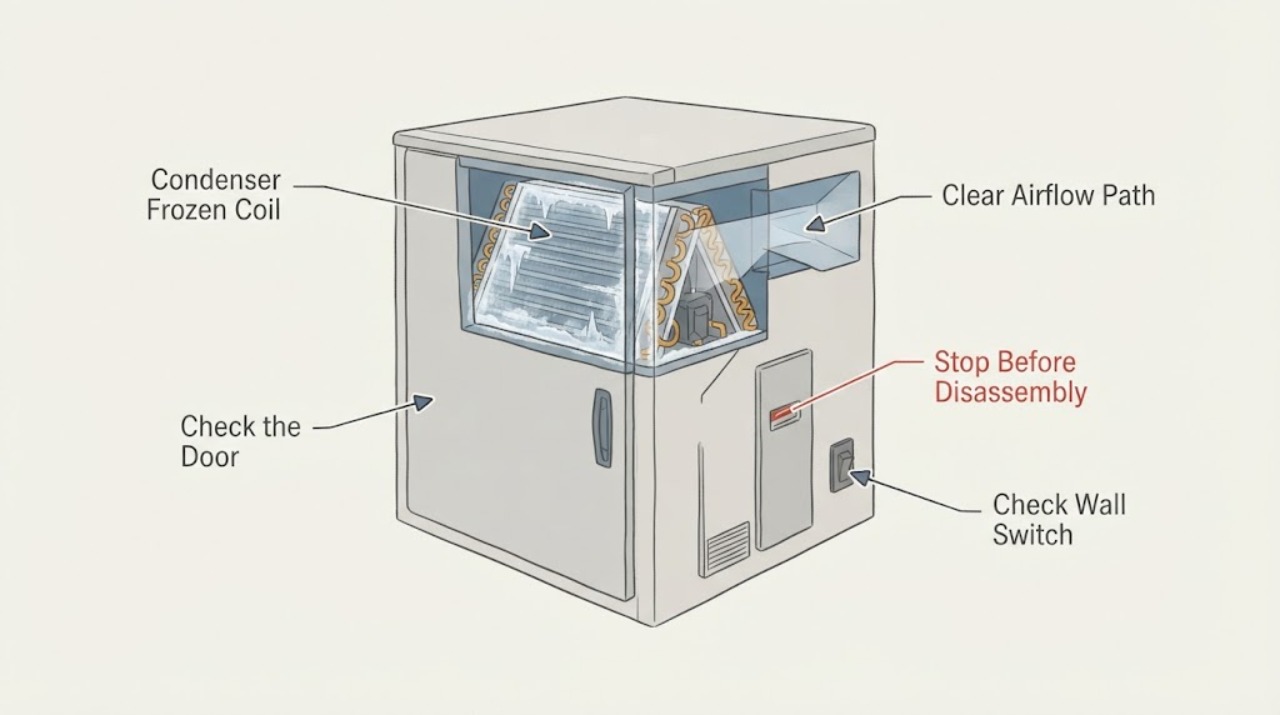
Condenser Frozen Coil: Distinguish the Outdoor Unit from the Evaporator
A coil that appears frozen near the outdoor condenser is often the indoor evaporator coil or the refrigerant line connected to it, not the outdoor condenser coil itself. Turn cooling off at the thermostat and let visible ice thaw naturally; do not chip it, pour hot water on it, or keep running the compressor against the ice.
-
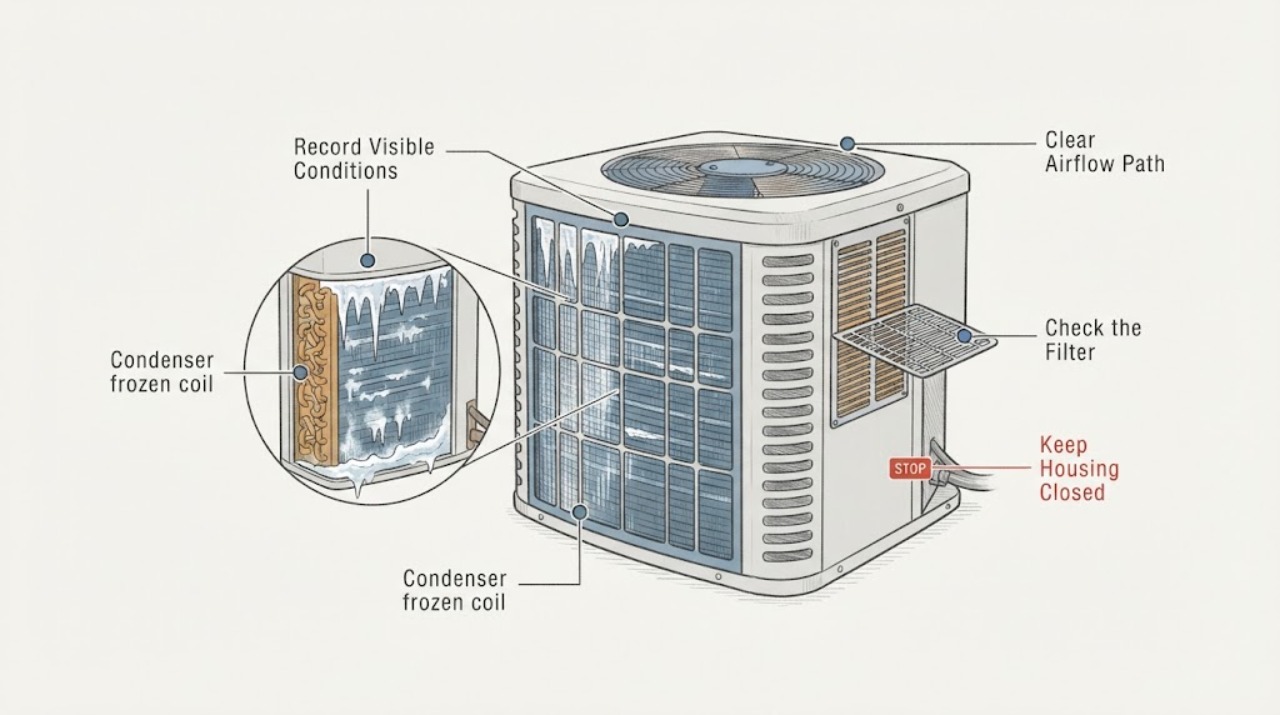
Condenser frozen coil: check the filter and identify the iced coil safely
Turn cooling off at the thermostat and let any ice melt naturally; do not chip it, pour hot water on it, or keep running the system with a frozen coil. First establish which coil is actually iced: the condenser is normally the outdoor heat-rejecting coil, while the evaporator is normally the indoor cold coil and is the one commonly associated with frost in cooling mode.
-
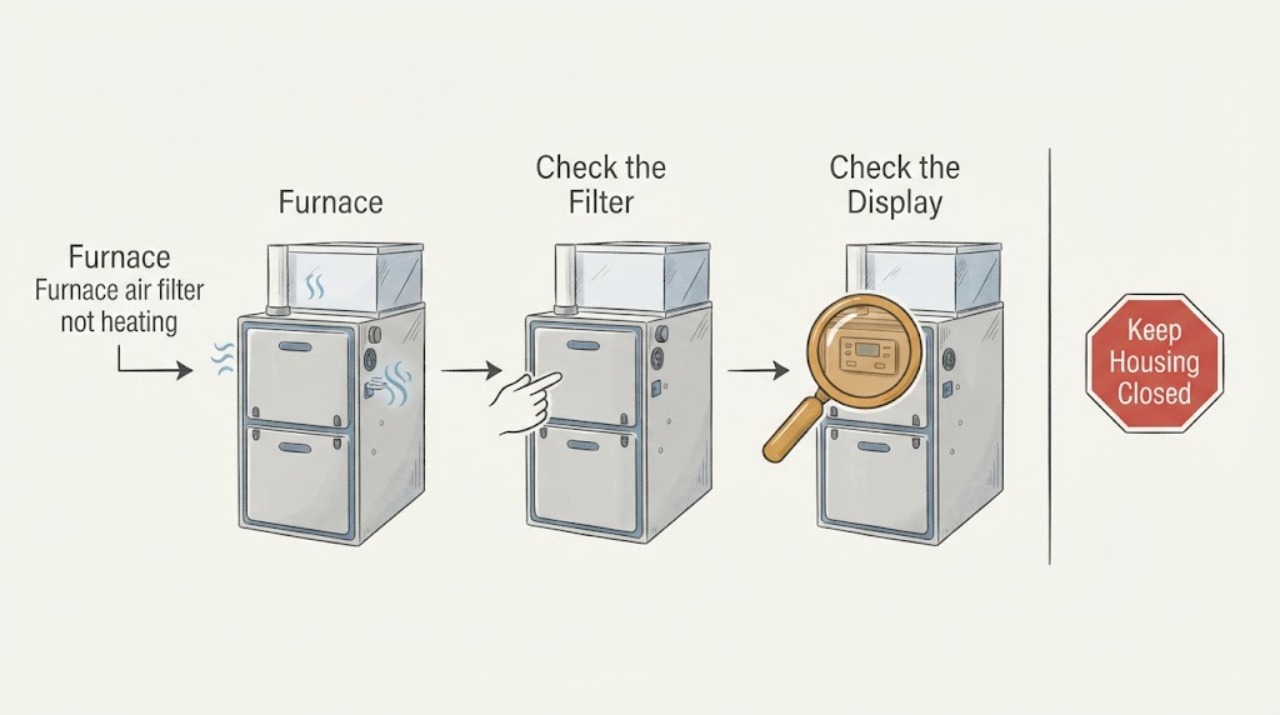
Furnace air filter not heating: What to Check and What to Do Next
A furnace filter does not create heat; a dirty, wrong-size, backward, or poorly seated filter can reduce airflow and make the system run poorly or shut down, while no heat can also come from thermostat, power, ignition, flame-sensing, fuel, or limit faults. With the furnace off and cool, check the filter's condition, airflow arrow, fit, and accessible return path, then verify the thermostat and one normal power reset if the manual allows it.
-
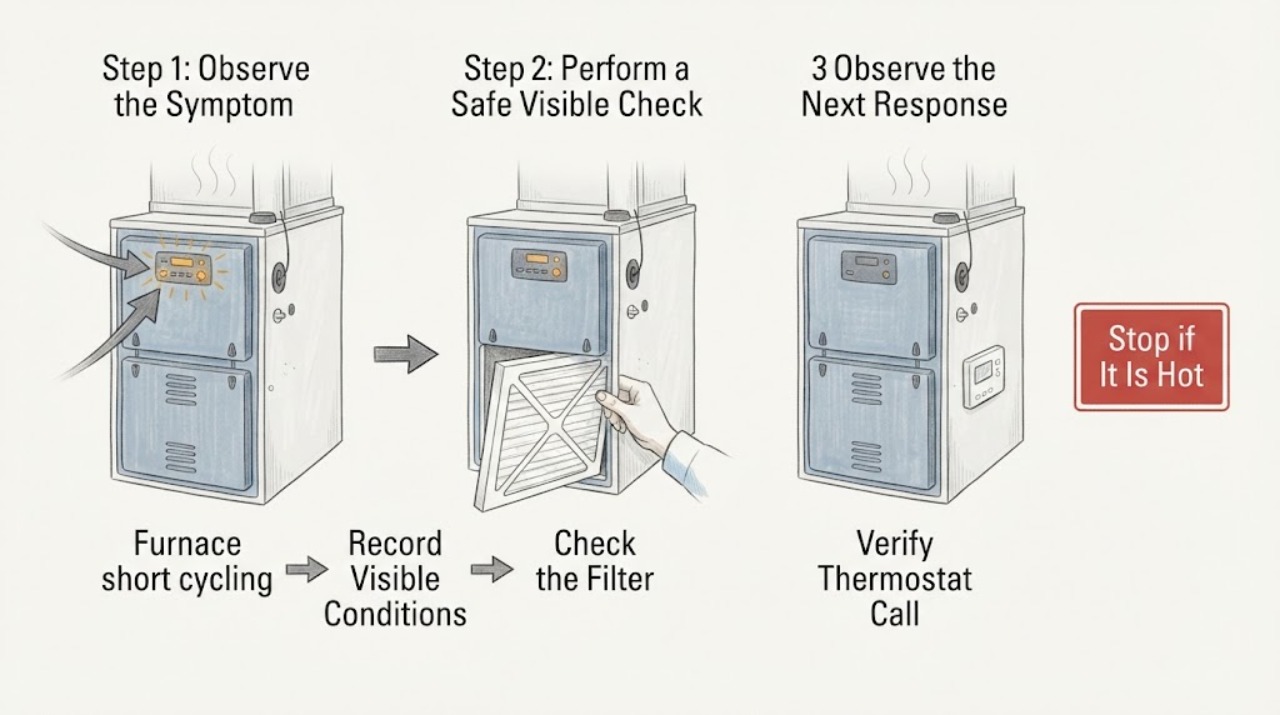
Rheem furnace short cycling: Check the filter first, then know when to stop
A Rheem furnace is short cycling when it stops before the thermostat is satisfied and then starts again. With the furnace left closed and no gas, smoke, soot, abnormal flame, loud ignition, or CO warning, record whether the thermostat is still calling for heat, then turn the thermostat off and inspect the external filter and return path.
-
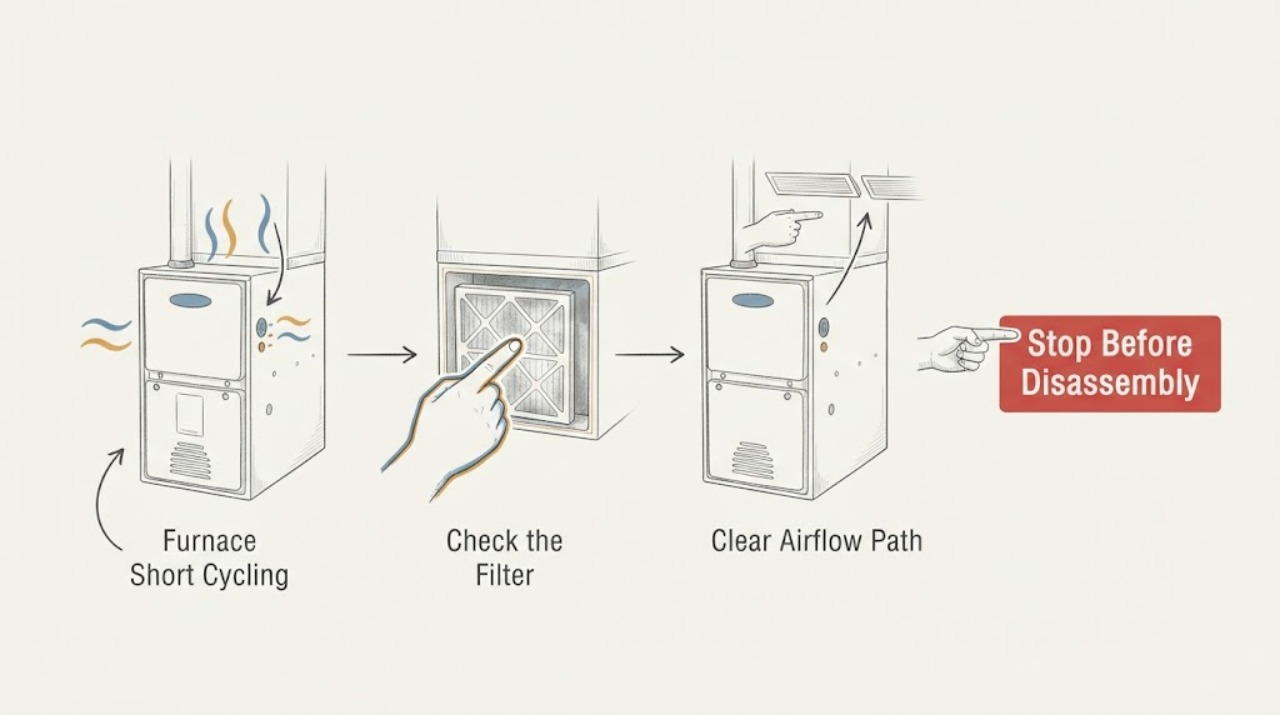
York Furnace Short Cycling: Filter Checks and What to Do Next
A York furnace that starts and stops before the thermostat is satisfied may be short cycling. A blocked, wrong-size, reversed, or poorly seated return filter can reduce airflow enough to make the heat section run too hot and open a protective limit, but the filter is only one possible cause.