
Kitchenaid appliance guidance
Kitchenaid Microwave Repair Guides
Troubleshooting and repair guidance for published Kitchenaid Microwave problems, symptoms, and maintenance questions.
Published Kitchenaid Microwave guides
Choose the guide whose symptom or condition most closely matches what you are seeing.
-
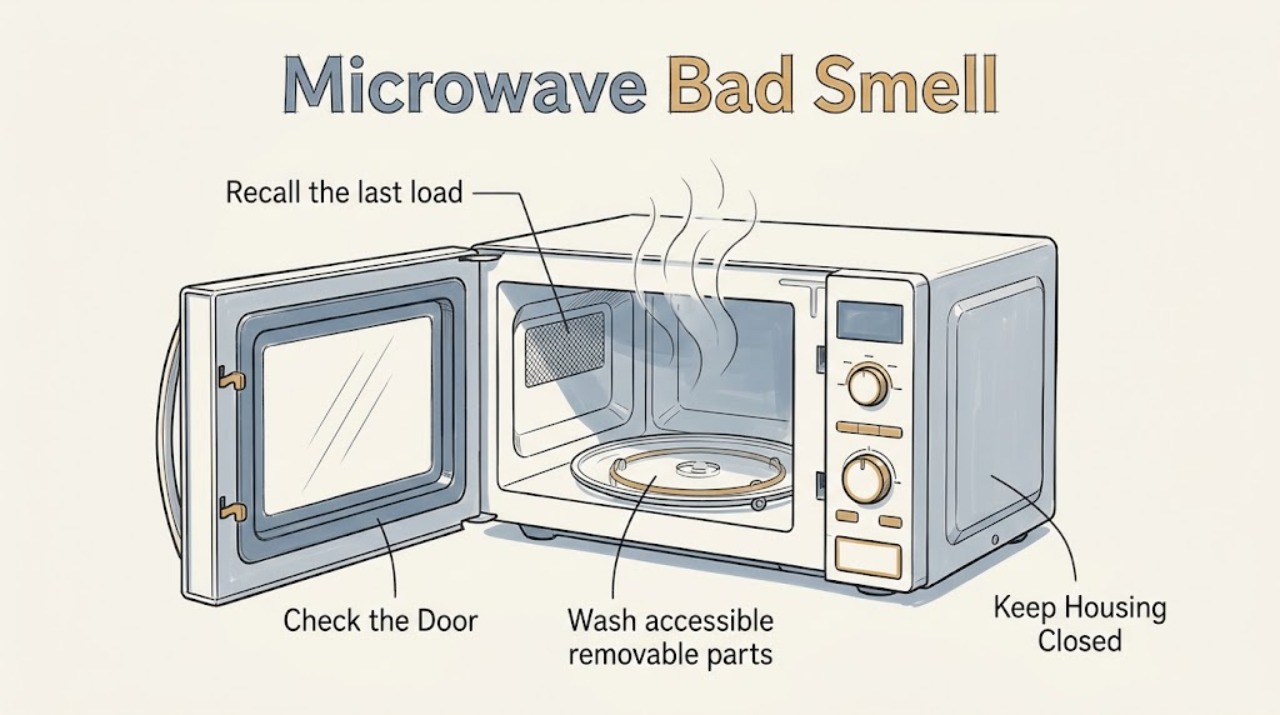
KitchenAid Microwave Bad Smell: Find the Cavity Source
A KitchenAid microwave odor usually starts with food soil or a spill held in the cavity, turntable, or other accessible surface. Let the oven cool, identify whether the smell follows a particular food or appears with smoke/arcing, then clean with mild soap and water before using KitchenAid's one-cup water-and-lemon or vinegar method. A chemical, electrical, burning-plastic, or recurring scorched smell is a reason to stop using the microwave and request service.
-
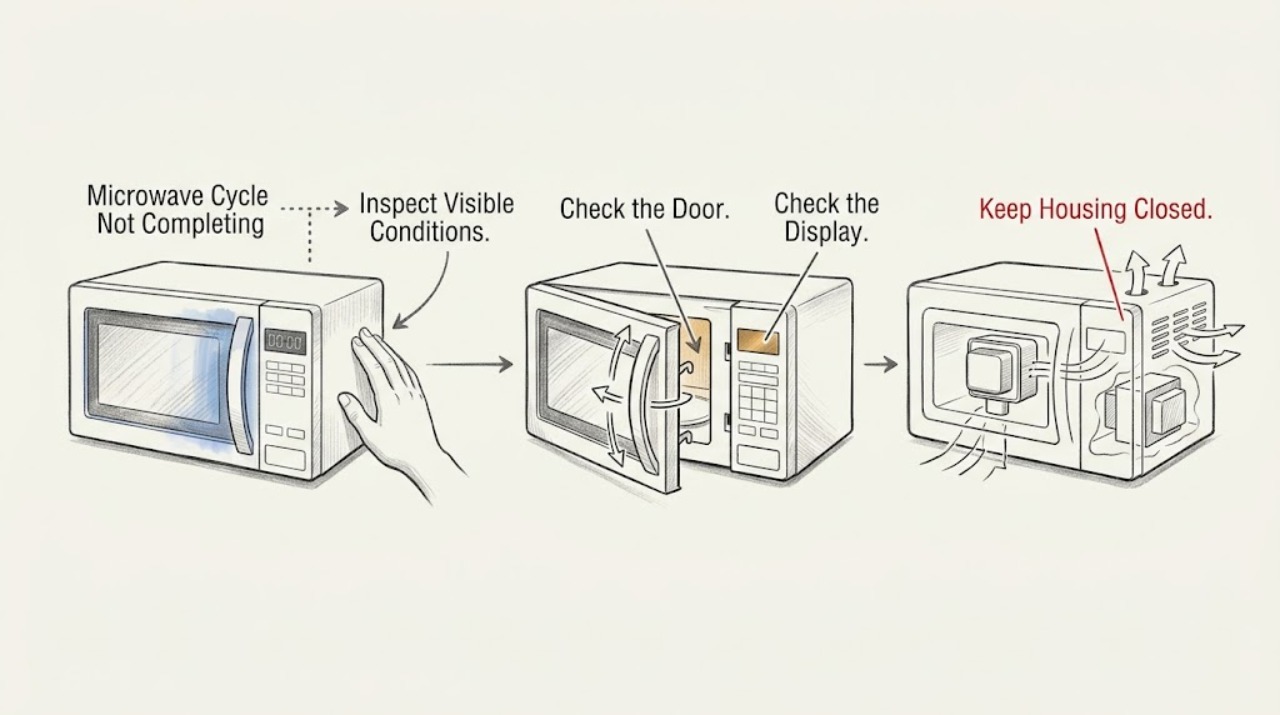
KitchenAid Microwave Cycle Not Completing: Identify the Stop Point
First decide whether the KitchenAid microwave truly stops early or has reached END and is only running its post-cooking fan. If the display countdown stops when the door opens, press Start to resume a non-sensor cycle; if the display shows a timer rather than a cooking cycle, cancel the timer because it does not control cooking. A repeat stop with blocked vents, a returning code, no heat, smoke, or a breaker trip needs qualified service.
-
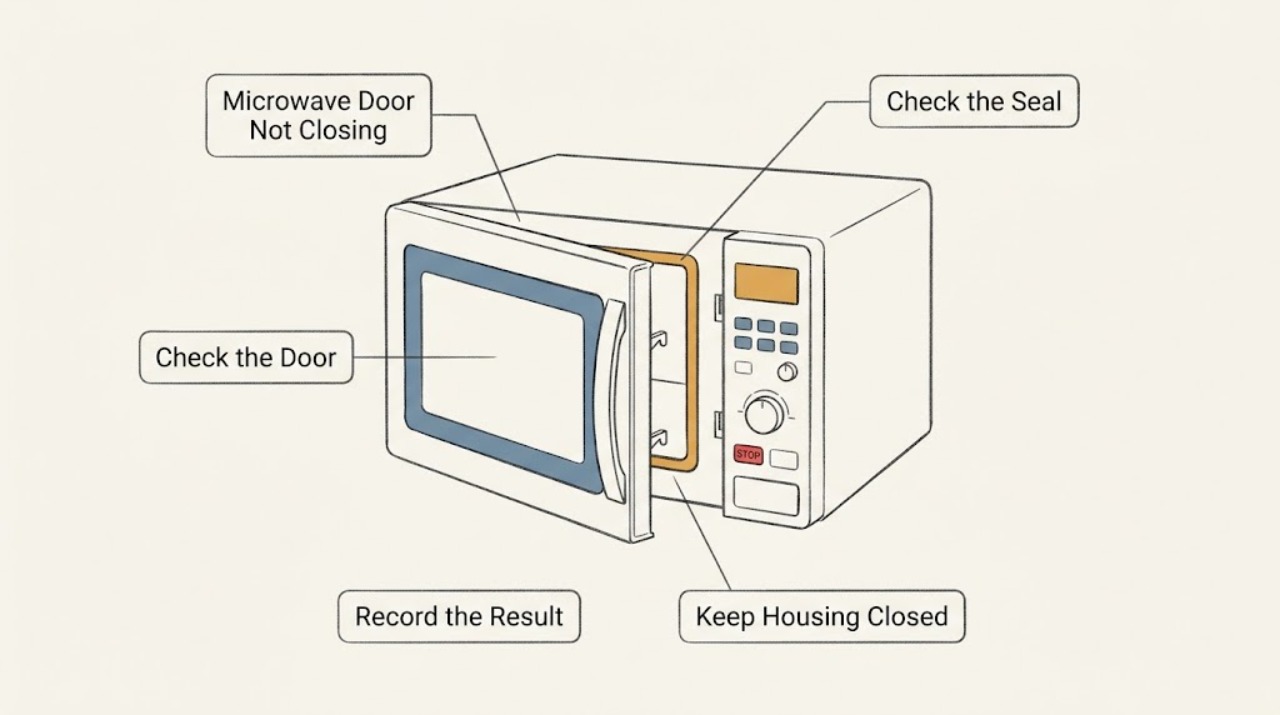
KitchenAid Microwave Door Not Closing
Remove anything obstructing the opening, check that removable accessories are seated, and inspect the visible latch and seal for debris or damage. Never operate a microwave that will not close and latch firmly; a bent door or damaged latch needs qualified service.
-
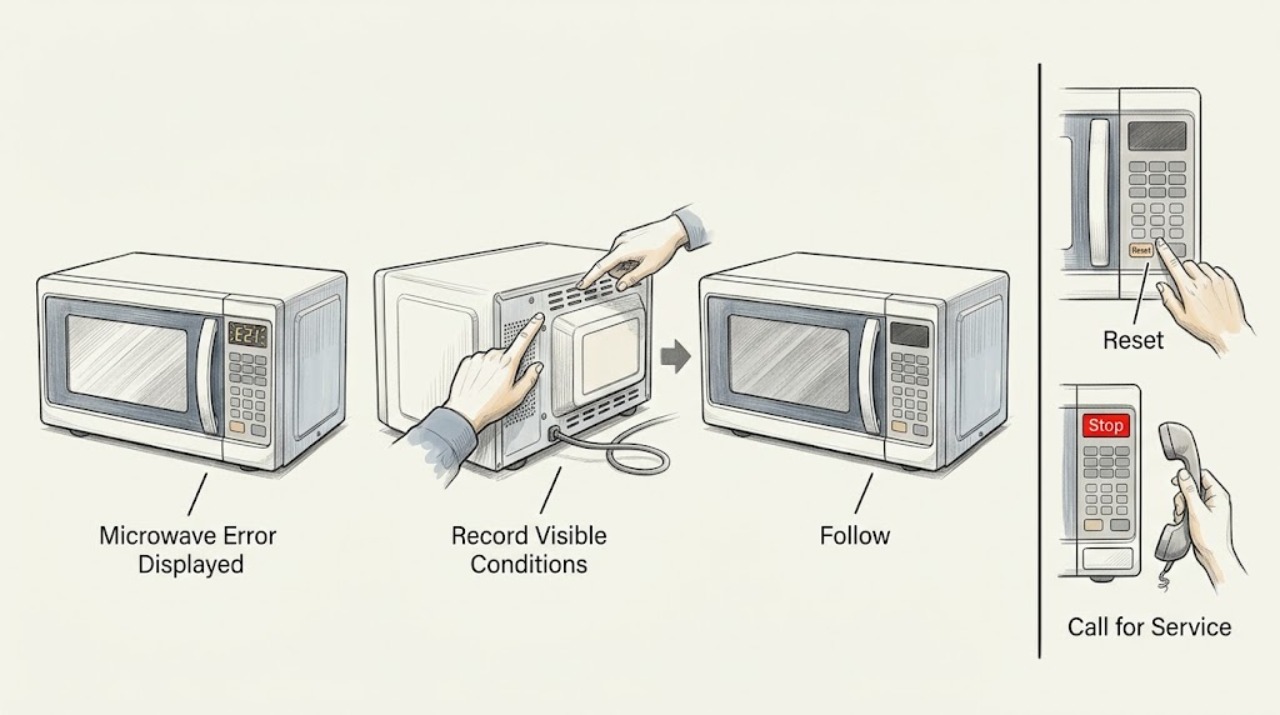
KitchenAid Microwave Error Displayed: Identify the Message Safely
Record the exact message and model first. KitchenAid says a fault message may clear after following the display instruction or removing power for one minute. If it returns, stop using the microwave and request service.
-
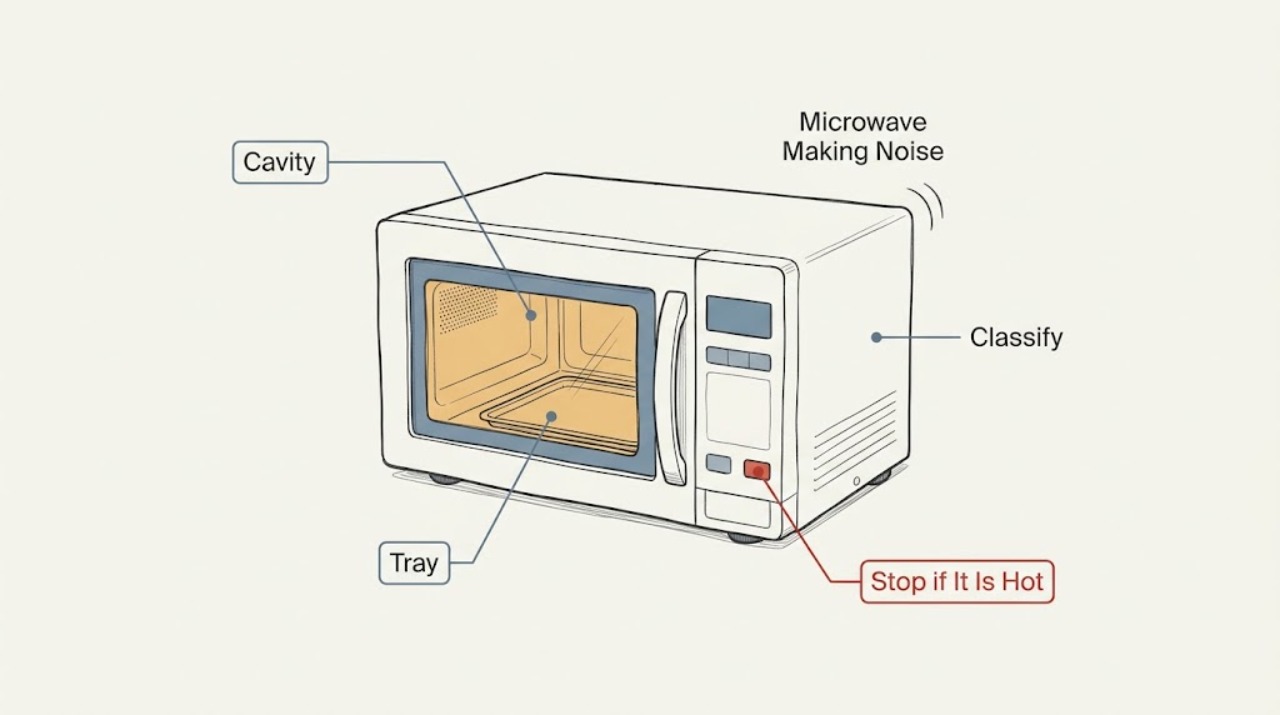
KitchenAid Microwave Making Noise: Separate Normal Sounds from a Fault
Identify the sound and when it occurs. KitchenAid says humming or buzzing during operation can be normal, while a thump or rumble can come from an incorrectly installed turntable or roller support. Stop for grinding, crackling, smoke, arcing, failed heating, or a damaged door and request service.
-
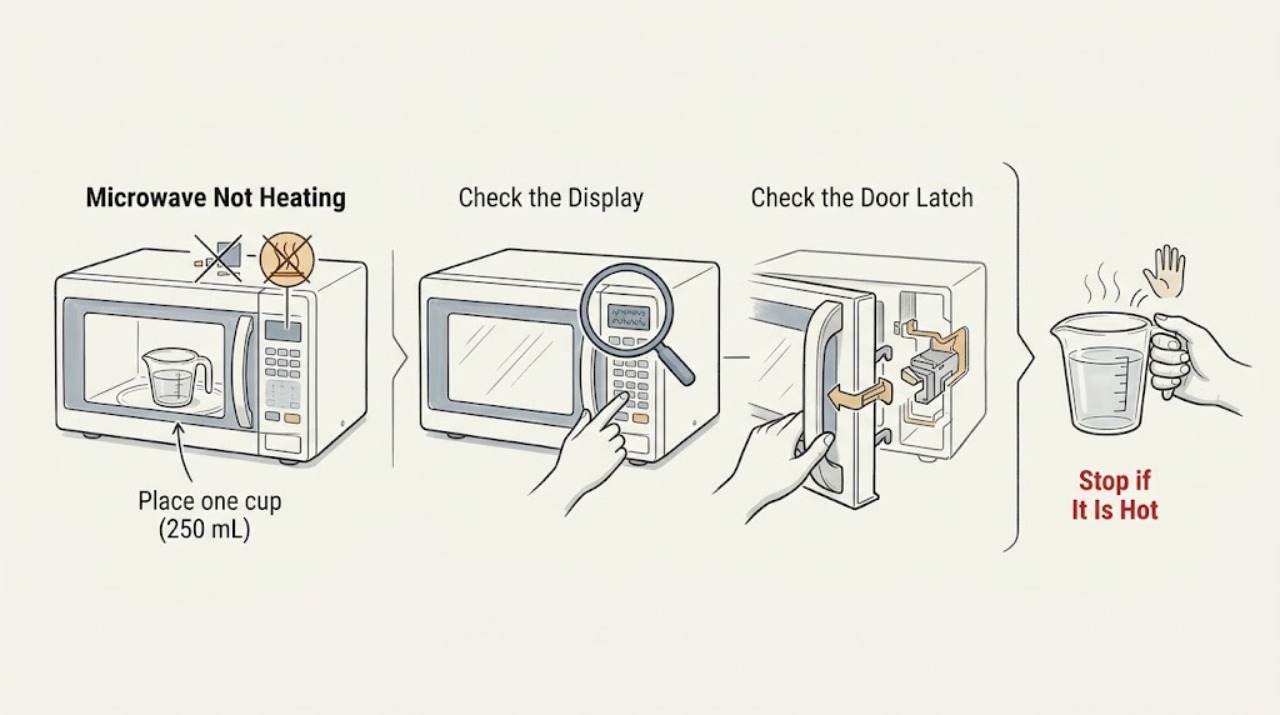
KitchenAid Microwave Not Heating
Run a one-minute, full-power test with one cup of water. If the water stays cold while the light, fan, or turntable operates, stop using the microwave and arrange qualified service; do not remove its cabinet.
-
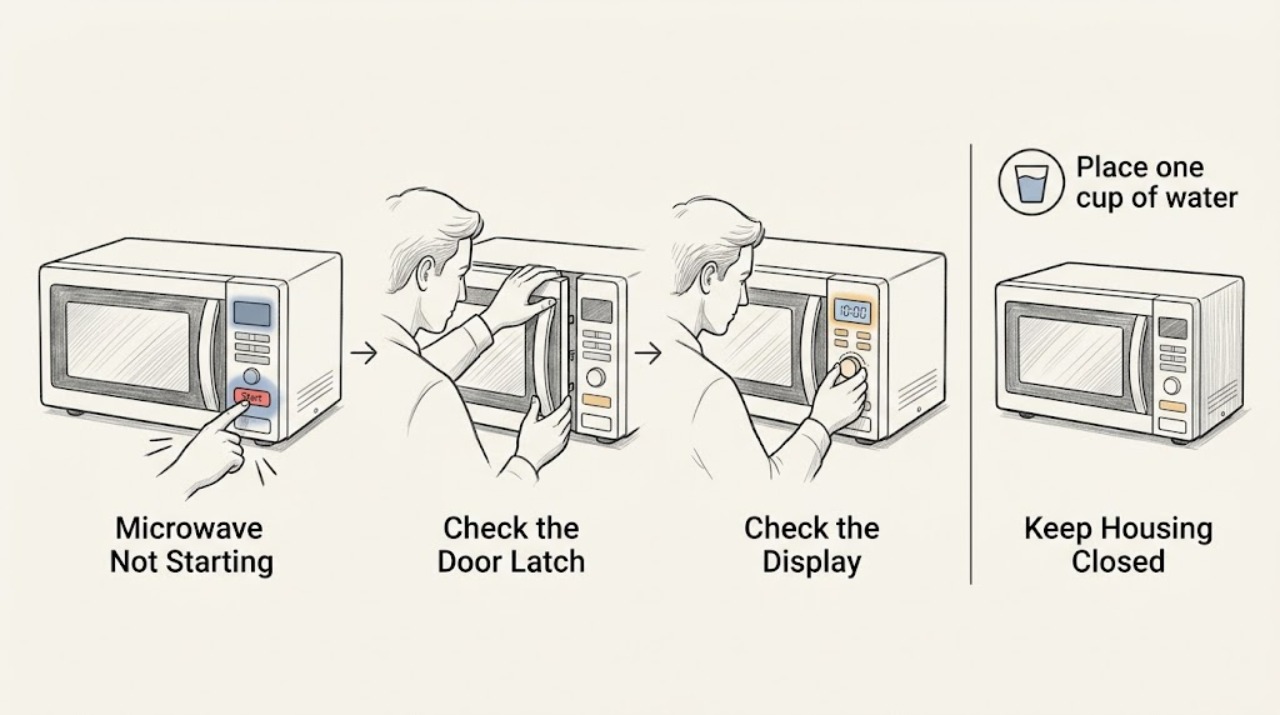
KitchenAid Microwave Not Starting
Firmly close the door, clear any obstruction, turn off Control Lock or Demo mode if enabled, and try a short timed cycle with a cup of water. If the timer runs without heat or the oven stays unresponsive after a power check, stop and request qualified service.
-
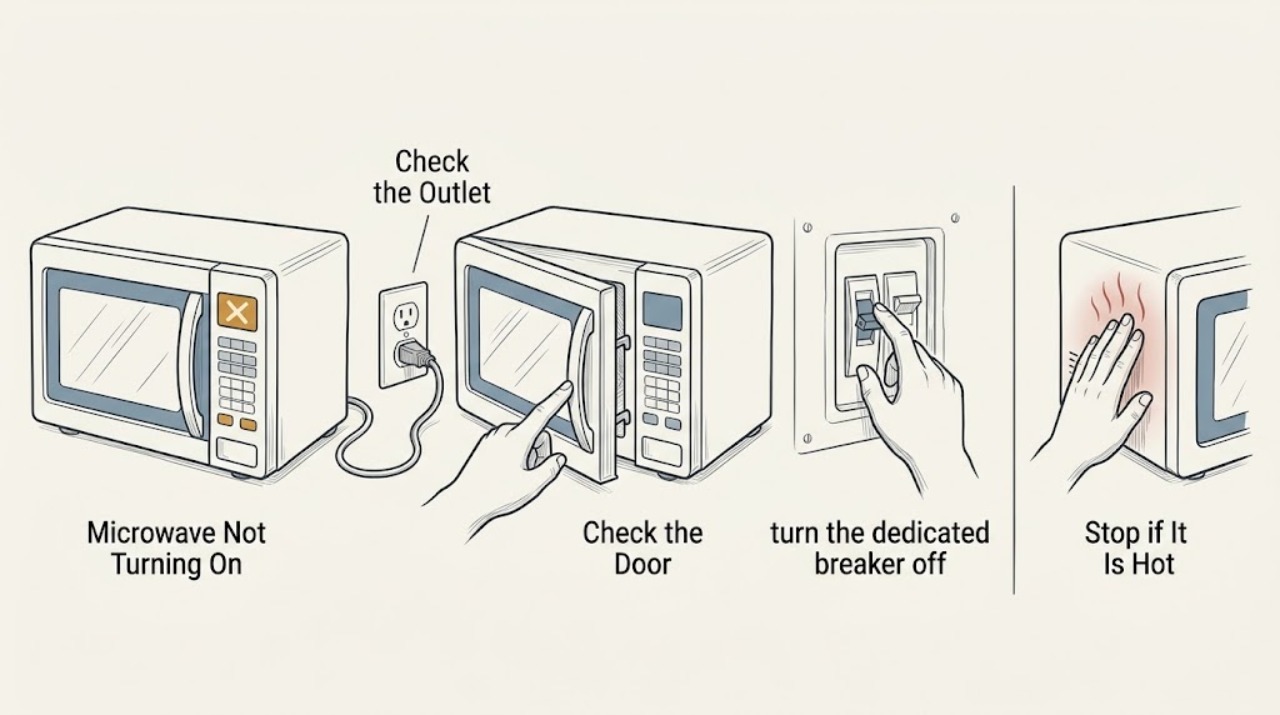
KitchenAid Microwave Not Turning On: Safe Checks
If a KitchenAid microwave is completely dark, verify the outlet and breaker, then check that the door closes and the controls are not locked. Reset power once only if the manual permits. Never open the microwave cabinet; high-voltage components require qualified service.
-
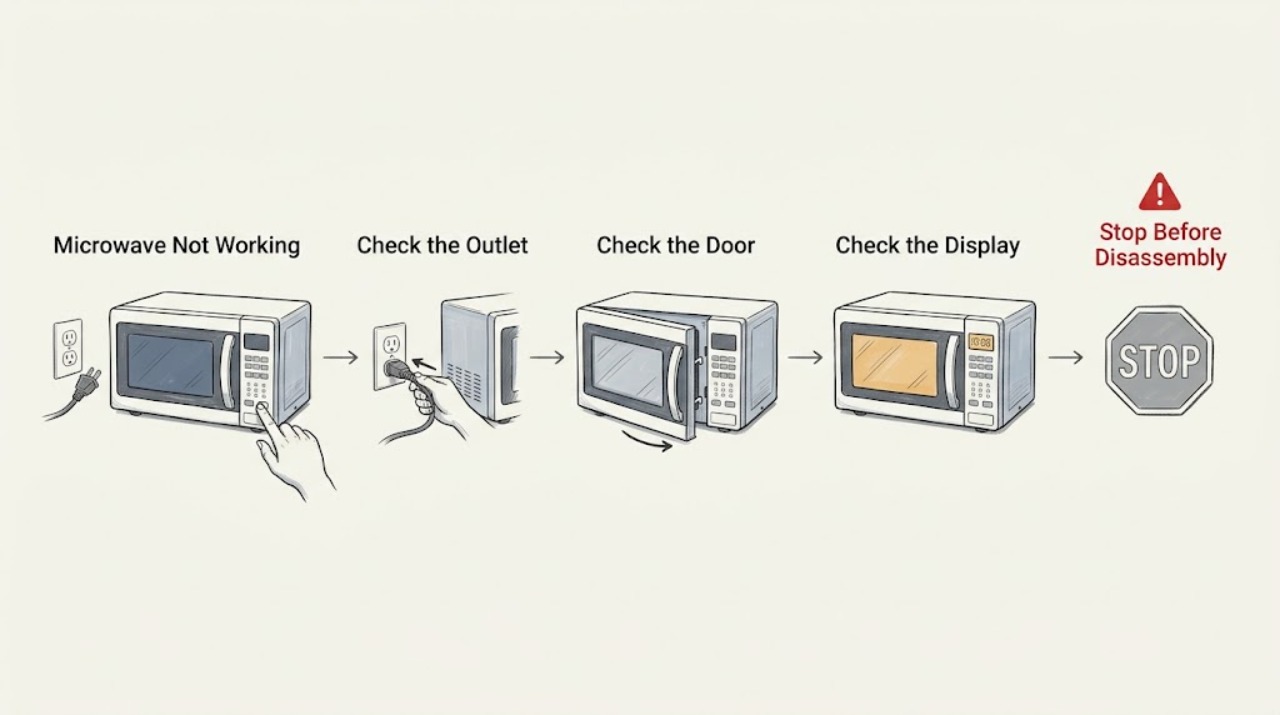
KitchenAid Microwave Not Working
Check household power, the door closure, the control lock, and the selected cooking function before assuming an internal failure. If the oven has power but does not heat a cup of water, stop using it and arrange service; do not remove the microwave cabinet.
-
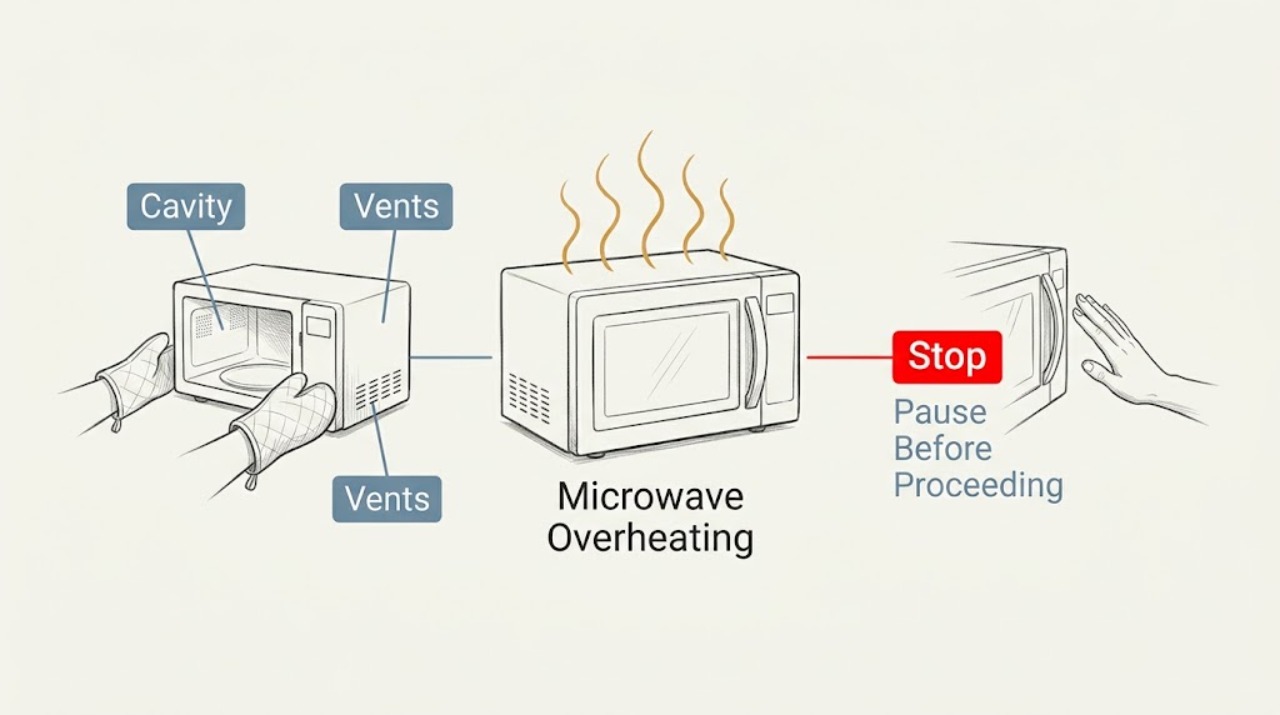
KitchenAid Microwave Overheating: Stop and Check Safely
Stop the cycle for unusual cabinet heat, smoke, odor, or arcing. When fully cool, check only the door, cavity, and external vents using the exact manual. Persistent overheating requires qualified service.
-
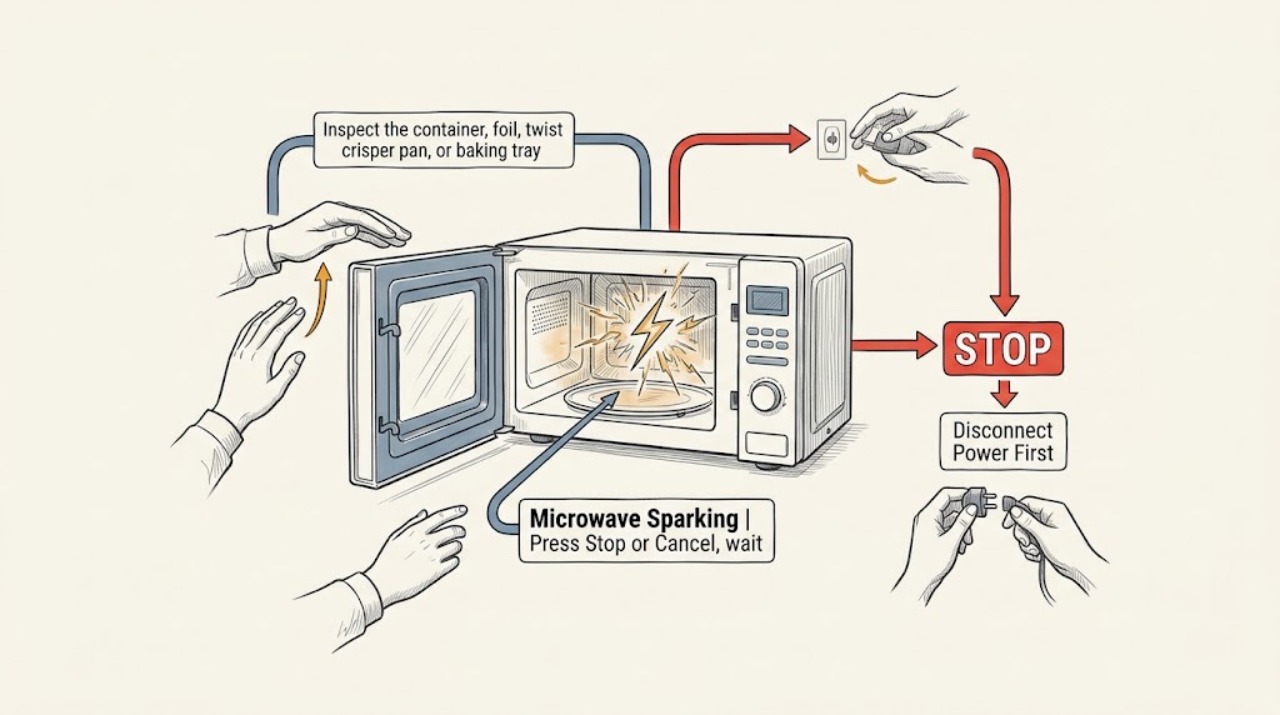
KitchenAid Microwave Sparking
Stop the cycle and remove the food or utensil that is arcing. Check for metal, foil, a rack or tray touching the cavity, and baked-on soil before a brief retest with a microwave-safe container. Persistent arcing, a scorched cavity, or damage near the door requires service.