
Plumbing guides
Water Heaters Repair Guides – Page 2
Water-heater guidance for temperature, pressure, leaks, controls, and recovery.
Published water heaters guides
Choose the guide that best matches the equipment and symptom you are seeing.
-
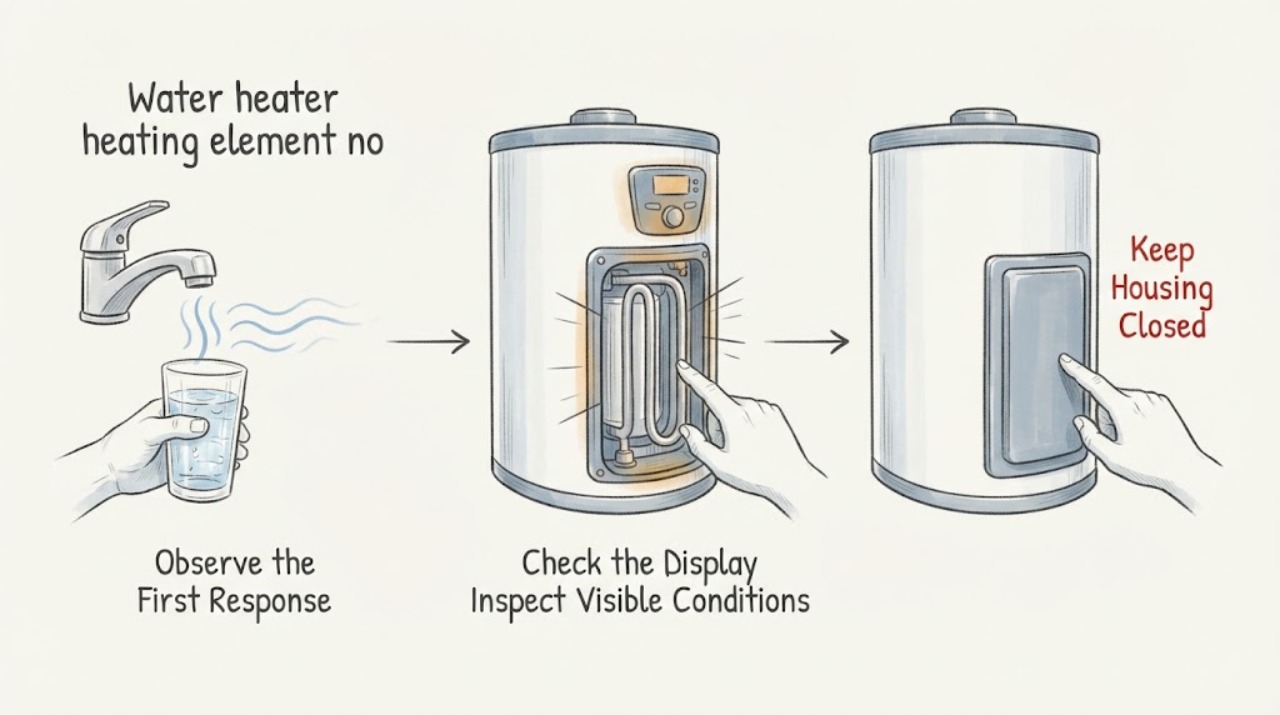
Water heater heating element no hot water: What to Check and What to Do Next
A failed heating element can leave an electric tank water heater with no hot water, but the same symptom can also come from no power, a tripped high-limit safety cutoff, a thermostat or wiring fault, a recently refilled tank that was energized while empty, reversed connections after installation, or a hot-water-side leak.
-
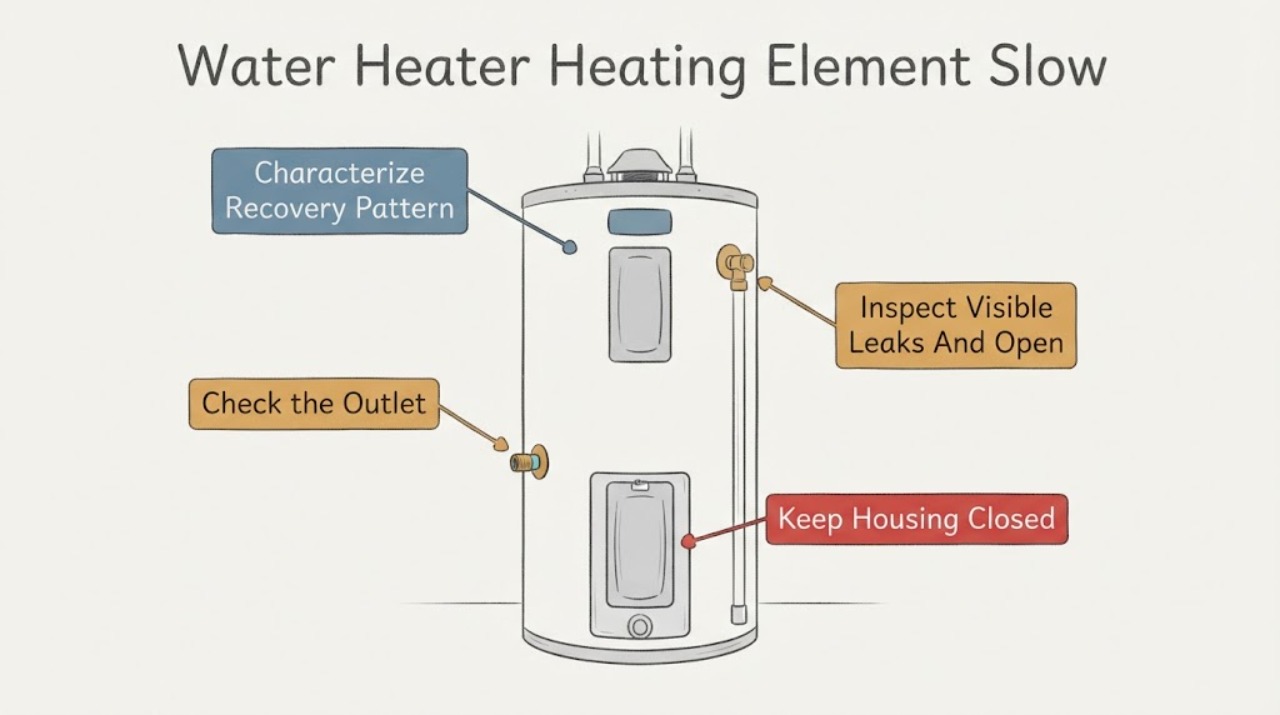
Water Heater Heating Element Slow to Recover: What to Check and What to Do Next
For a storage electric water heater, slow recovery can come from a failing lower heating element, a thermostat or power problem, hot-water demand that exceeds the tank's recovery capacity, a hot-water leak, or an installation or mixing-valve issue. First record whether the shortage follows one unusually heavy use or happens after ordinary use, compare hot water at more than one faucet, and inspect only for visible leaks or a tripped control from ordinary access.
-
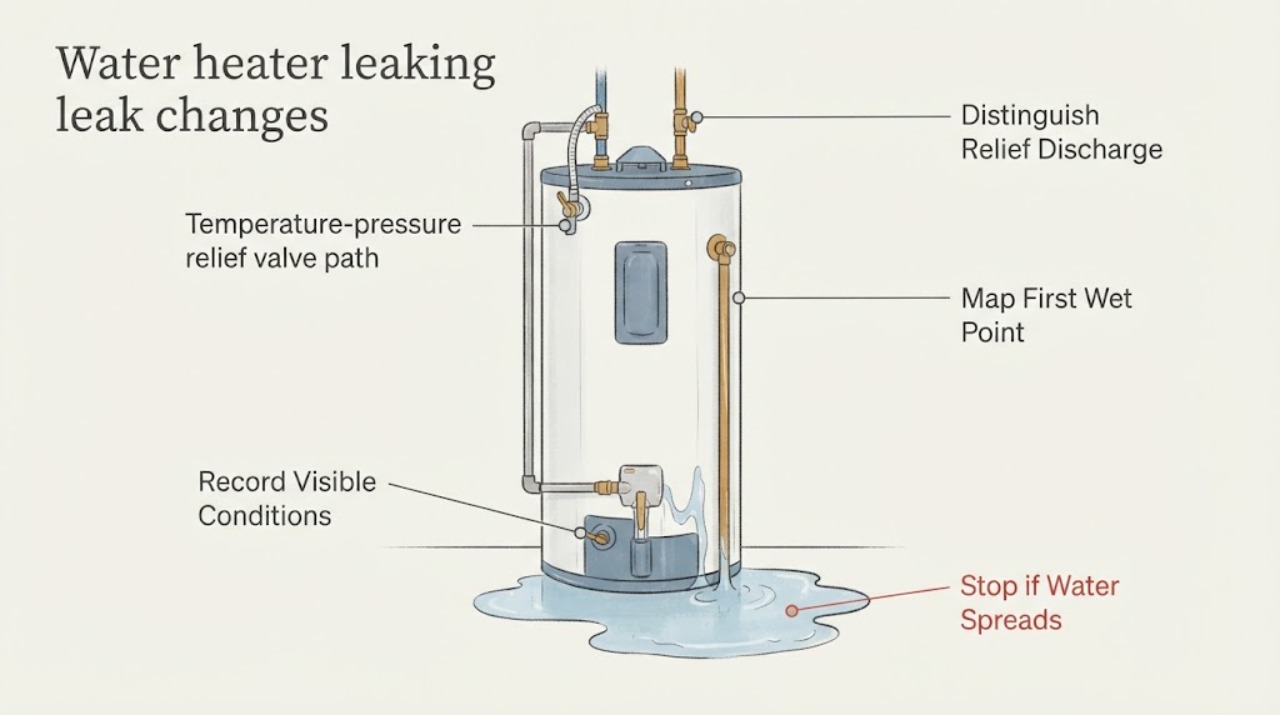
Water heater leaking leak changes with heating: What to Check and What to Do Next
A water-heater leak that appears or gets worse during a heating cycle often points to water expansion and pressure at the temperature-and-pressure (T&P) relief path, but the timing alone does not identify the failed part. From a safe distance, identify whether water exits the relief discharge pipe, a top connection, the drain valve, a side seam, or the tank base, and note whether it is cool, warm, intermittent, or a growing stream.
-
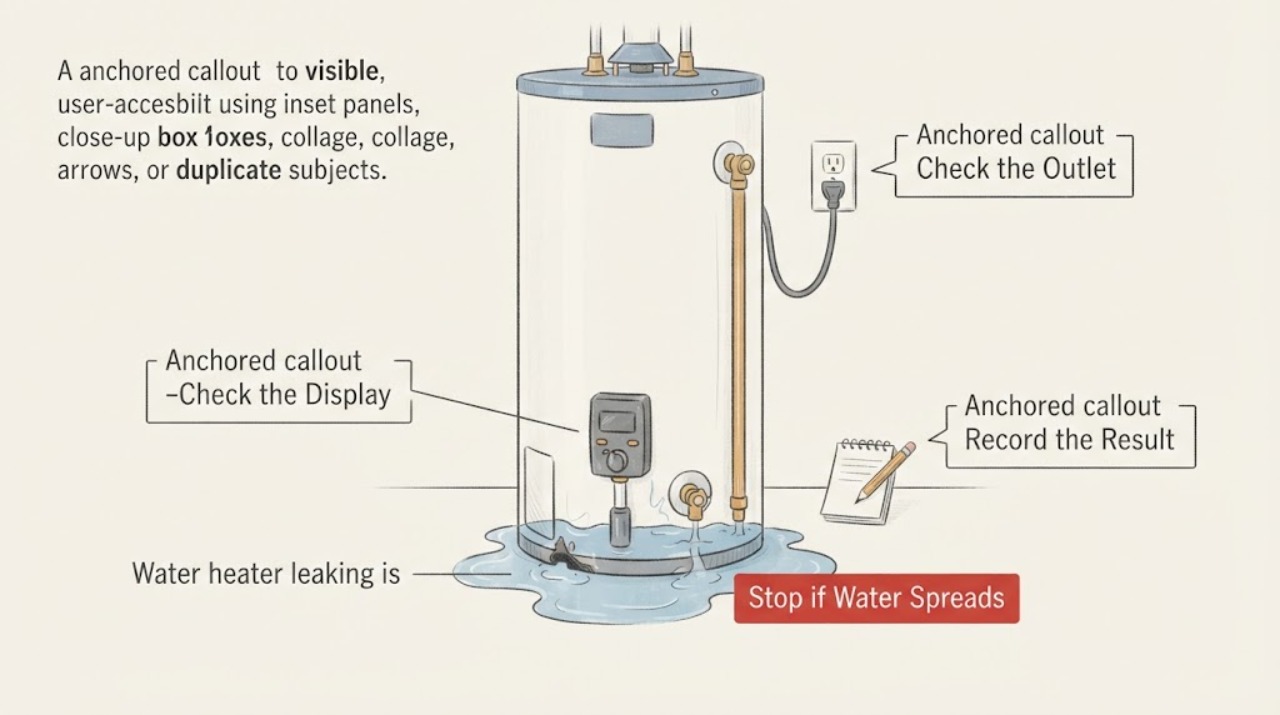
Water heater leaking is at tank base or valve: What to Check and What to Do Next
Water at a water heater's base can come from a loose connection, drain valve, temperature-and-pressure relief valve or discharge pipe, condensation, an electric-element gasket, or a tank leak that is tracking down behind the jacket. First keep people away from hot discharge, turn off the heater's energy source as the manual permits, and close the cold-water inlet if water is actively escaping.
-
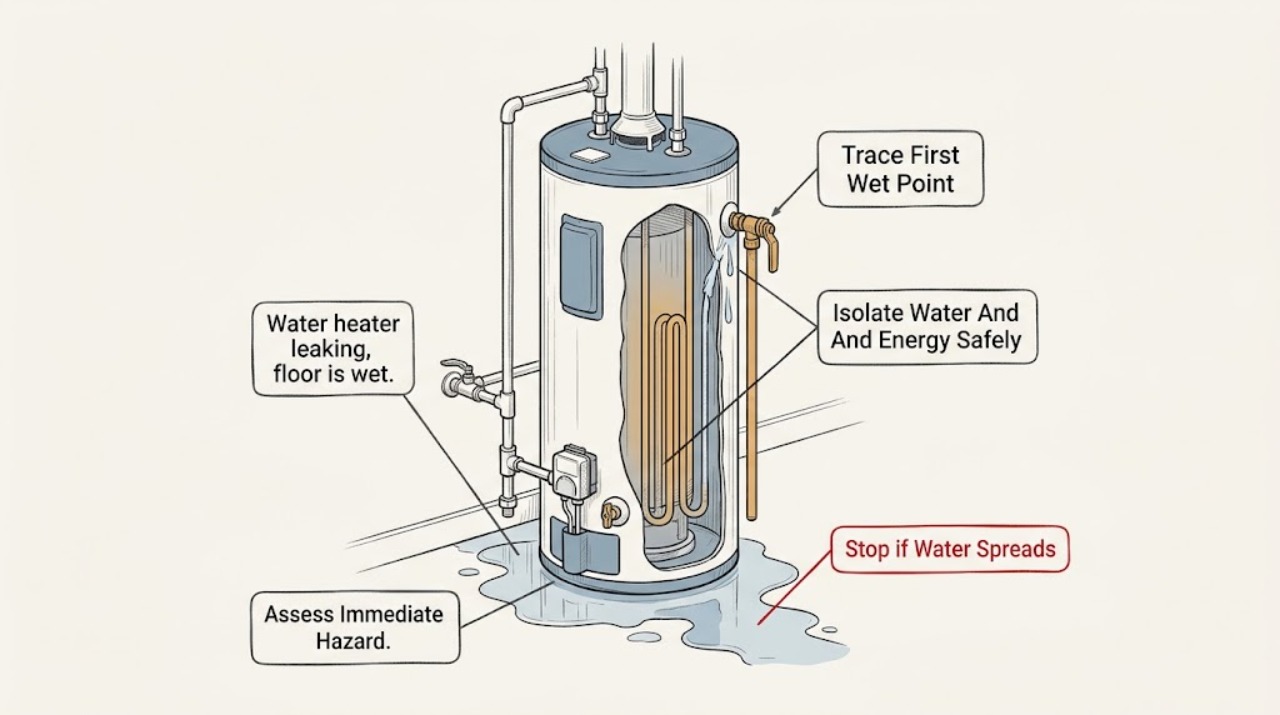
Water heater leaking, floor is wet: What to Check and What to Do Next
A wet floor below a water heater does not prove that the tank itself has failed. Water may come from condensation, the hot or cold connections, a drain valve, a temperature-and-pressure relief valve or its discharge pipe, an electric-element gasket, or the tank.
-
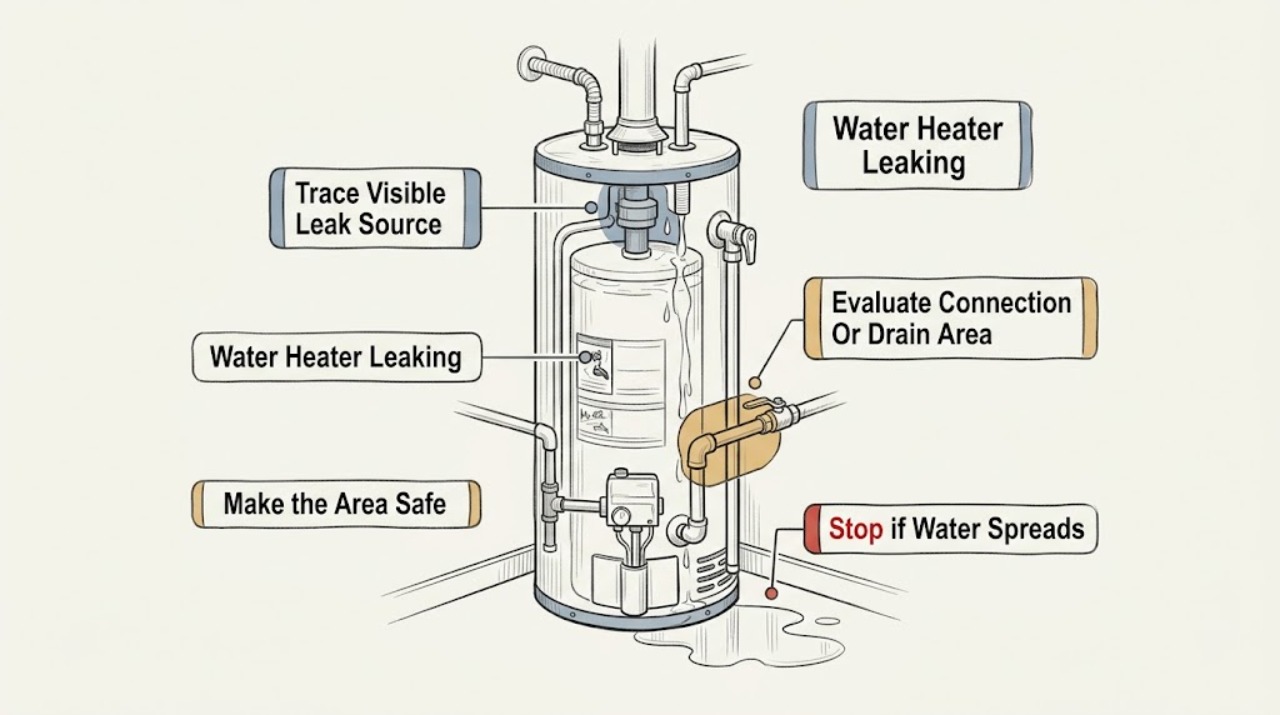
Water Heater Leaking: Identify the Source and Shut Down Safely
If a water heater is leaking, keep people away from hot water and electricity, then identify whether the water is coming from a visible connection, a relief discharge, a drain fitting, or the tank body. If it is safe and you can identify the correct external controls, isolate the heater's energy and close its water supply; never cap a relief outlet or restore power while water is still leaking.
-
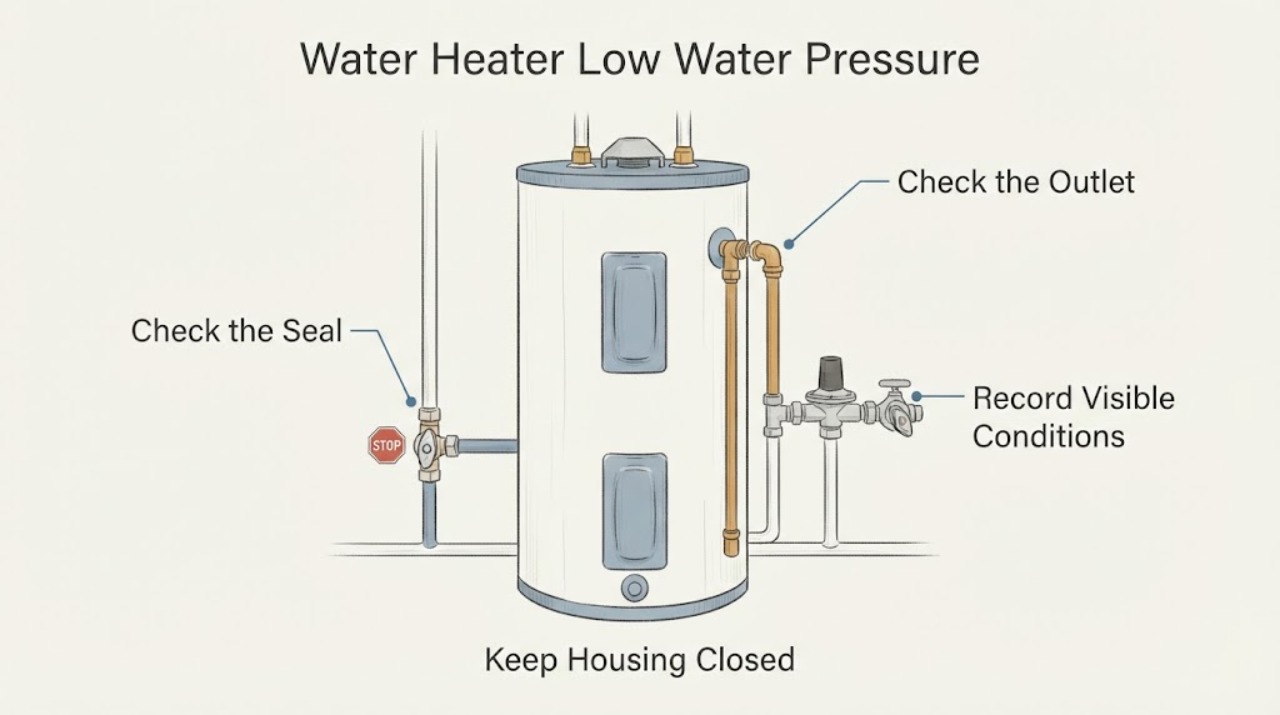
Water Heater Low Water Pressure: Trace Hot-Only Versus Whole-Home Flow
First compare one hot fixture with another hot fixture and with cold water. Low flow at only one faucet or shower points to a scaled aerator or showerhead; low flow at every hot outlet but normal cold flow points toward the heater's cold-water inlet path, a restriction, or a mixing/tempering component; low pressure on both hot and cold sides points upstream to a leak, pressure-regulating valve, well or pump, or a utility-side problem.
-
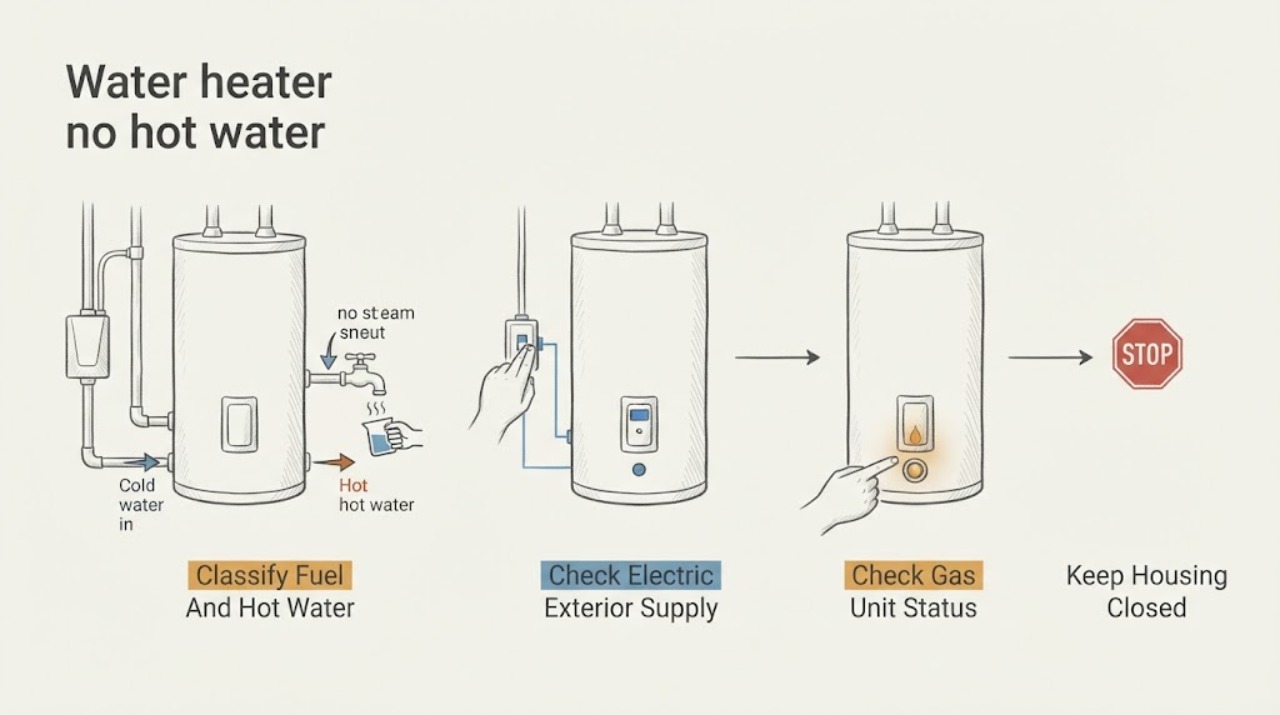
Water heater no hot water has power or gas: What to Check and What to Do Next
When a water heater has power or gas but produces no hot water, first separate a whole-heater problem from a delivery problem: compare the temperature and flow at more than one hot tap, and note whether the unit is electric, gas-fired, tankless, or a heat-pump model.
-
Water heater no hot water, taps run cold: What to Check and What to Do Next
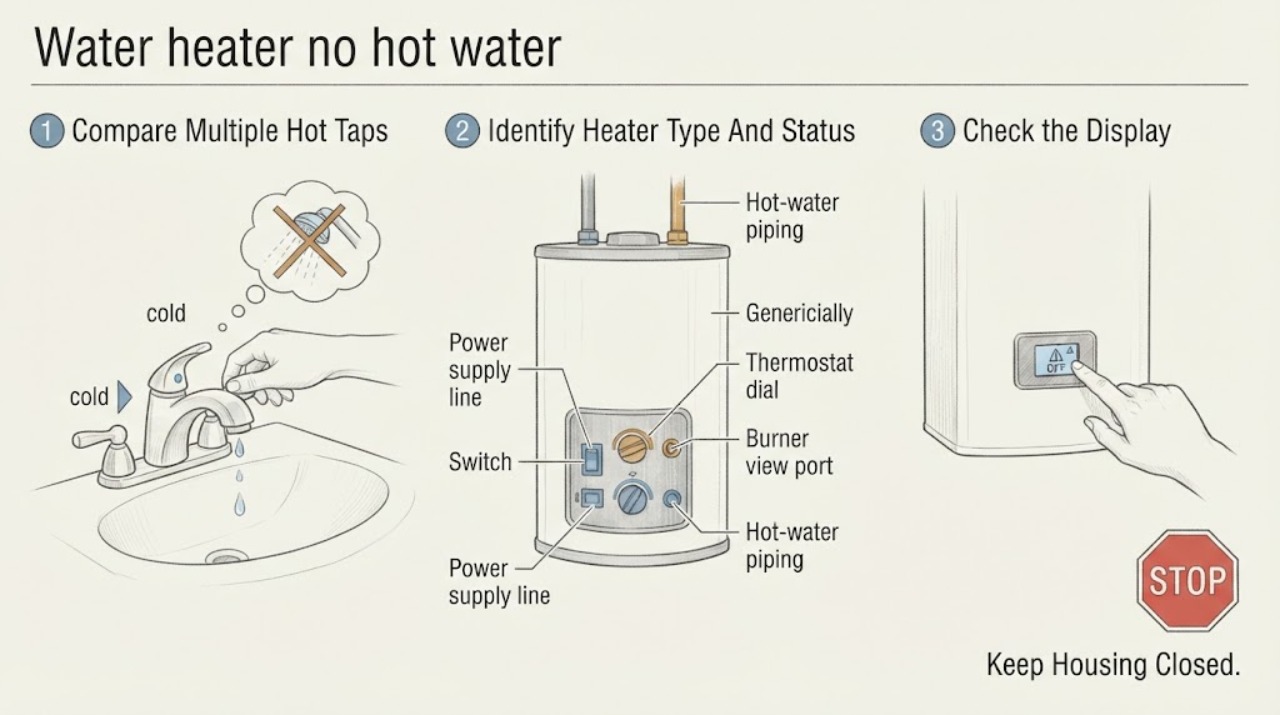
First determine whether every hot tap is cold or only one fixture, then identify whether the heater is gas, electric, tankless, or a heat-pump unit. Check temperature at more than one faucet, the heater's visible display or status indicator, an obviously labeled water-heater switch or breaker, and the fully open water shutoff without removing covers or changing gas, wiring, temperature, or safety controls.
-
Water Heater No Water: Safe Checks for Flow and Heating
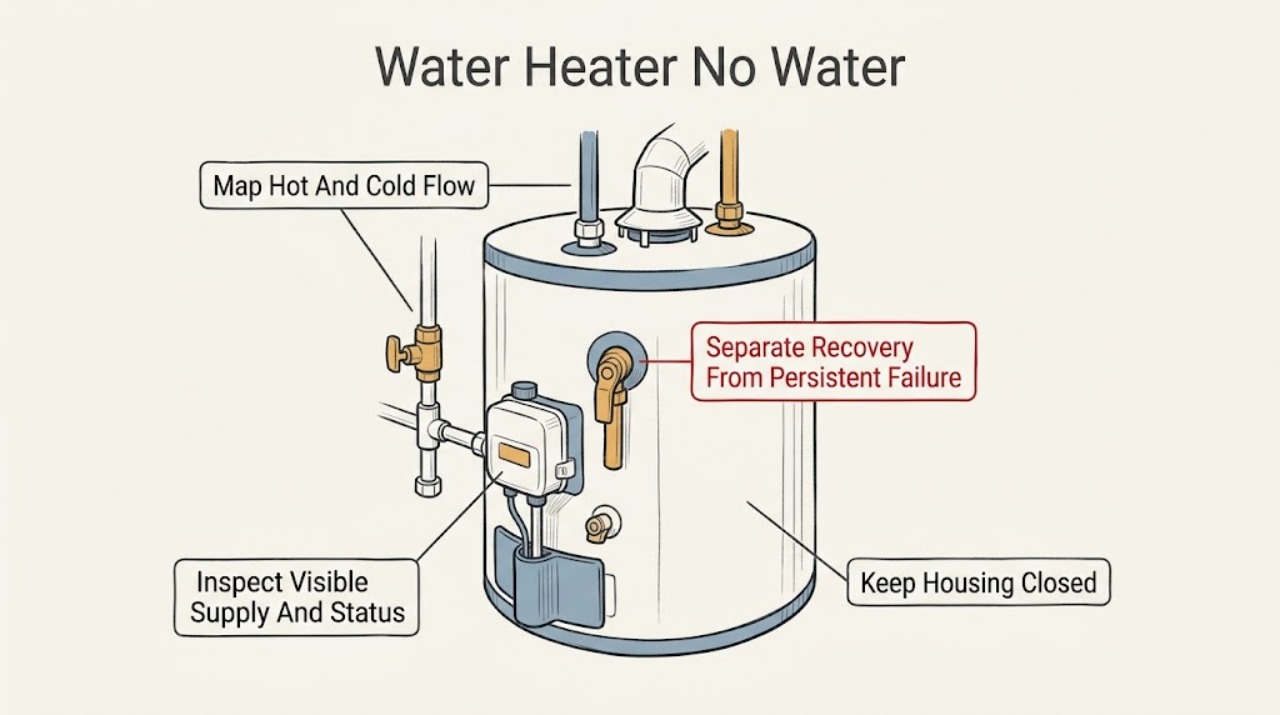
If a water heater seems to have no water, first distinguish no hot water from no water flow: compare hot and cold flow at more than one faucet. Normal cold flow with no hot water points toward the heater, a hot-side restriction, a mixing valve, or a plumbing leak; low flow from both hot and cold faucets points toward the home's supply or a wider plumbing issue.
-
Water heater relief valve dripping exits discharge pipe: What to Check and What to Do Next
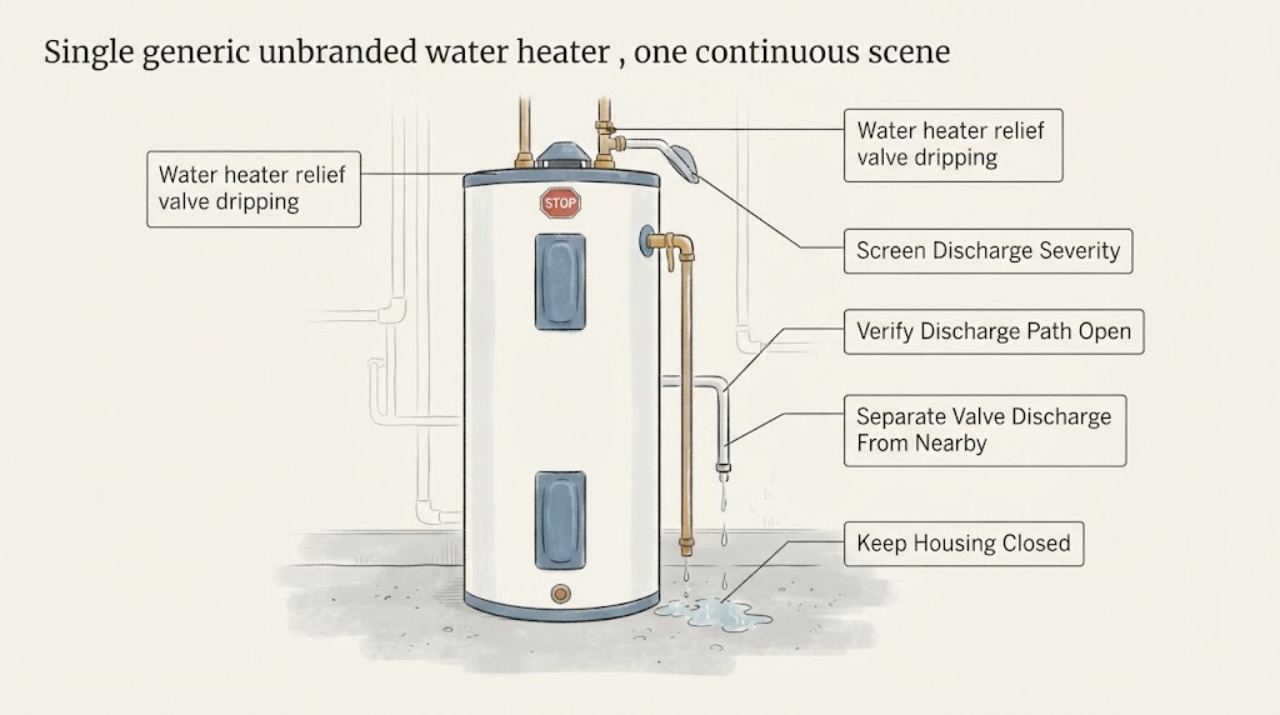
Water dripping from a water heater's temperature-and-pressure relief valve discharge pipe usually means the valve is responding to pressure or temperature, not that the pipe itself needs to be capped. Thermal expansion in a closed plumbing system, excessive supply pressure, a failed expansion tank, debris at the valve seat, or an overheating condition can be involved.
-
Water heater relief valve dripping while the tank is heating: What to Check and What to Do Next
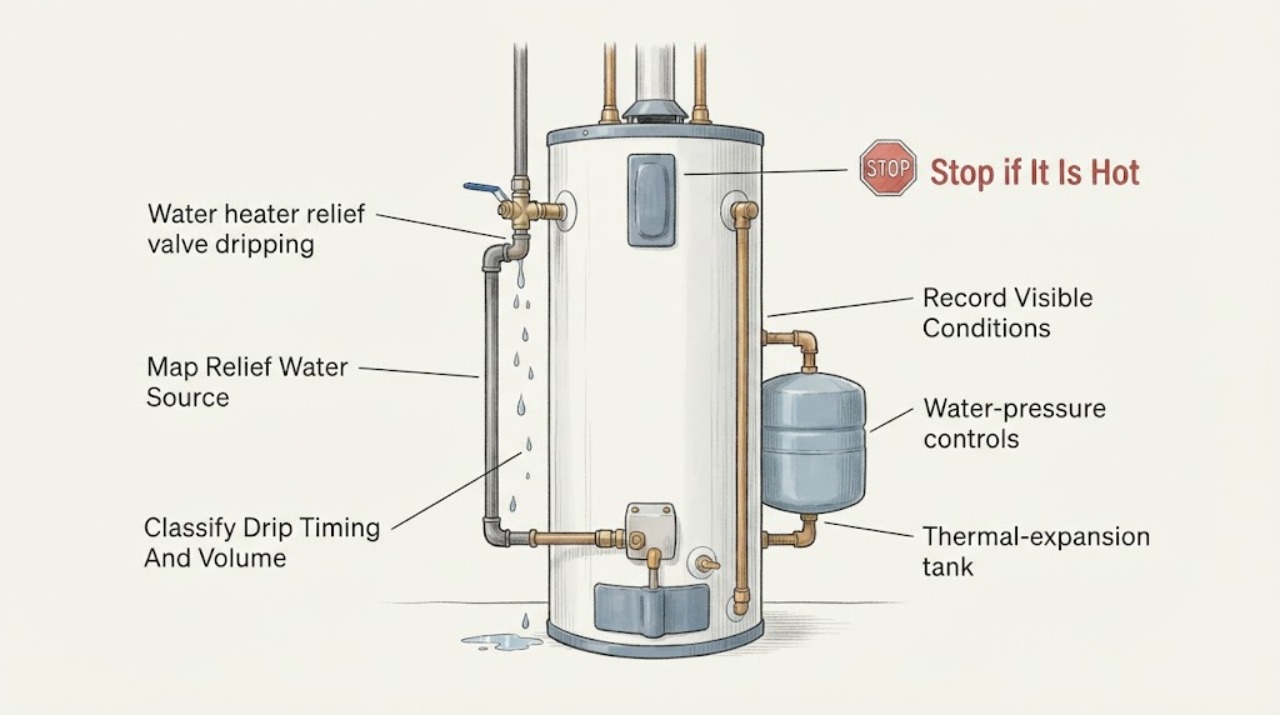
A temperature-and-pressure (T&P) relief valve that drips while a storage water heater recovers is commonly reacting to thermal expansion in a closed plumbing system, excessive supply pressure, debris at the valve seat, or a valve that no longer seals. A small drip still needs diagnosis; a large flow of very hot water, a rapid pressure rise, overheating, a leak from the tank, gas odor, smoke, or a carbon-monoxide warning is an urgent safety event.
-
Water Heater Relief Valve Dripping, Pressure May Be Elevated: What to Check and What to Do Next
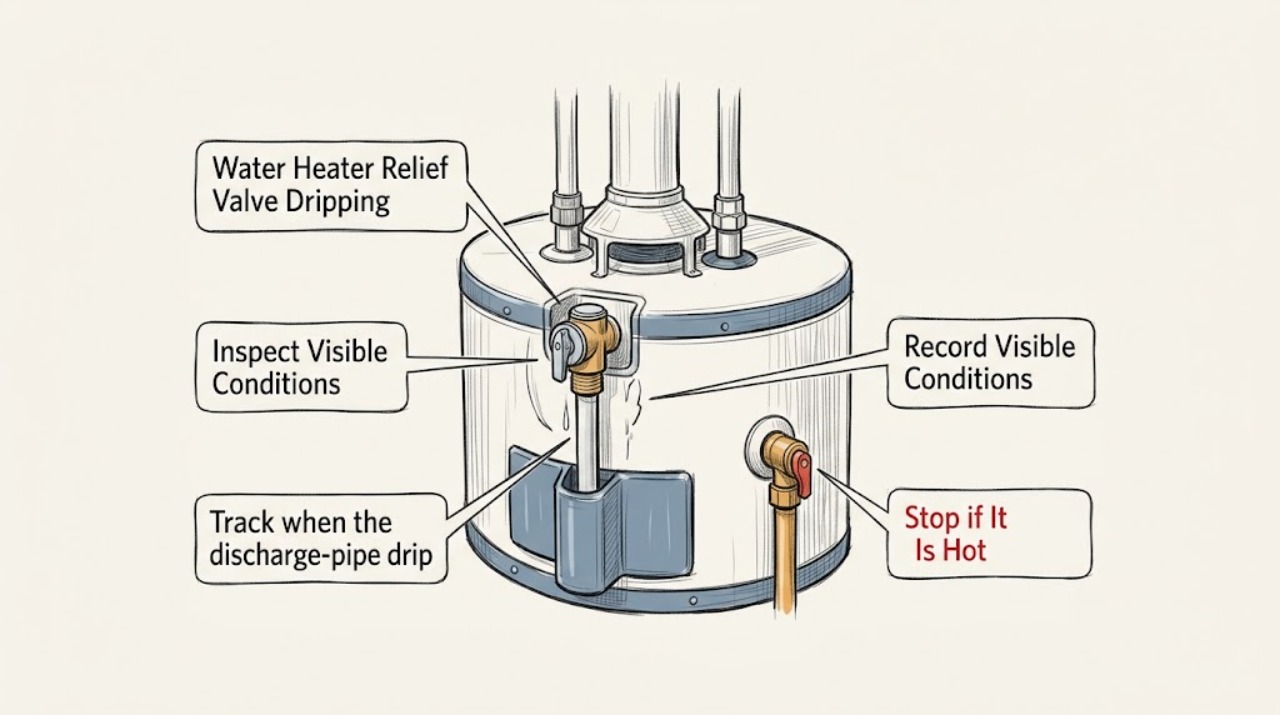
A water heater temperature-and-pressure relief valve that drips may be responding to thermal expansion or elevated supply pressure, especially when the dripping happens during a heating cycle after hot water use. Continuous dripping can also mean the valve is not seating, its connection is leaking, or the tank or controls have a separate fault.
-
Water heater relief valve dripping: What to Check and What to Do Next
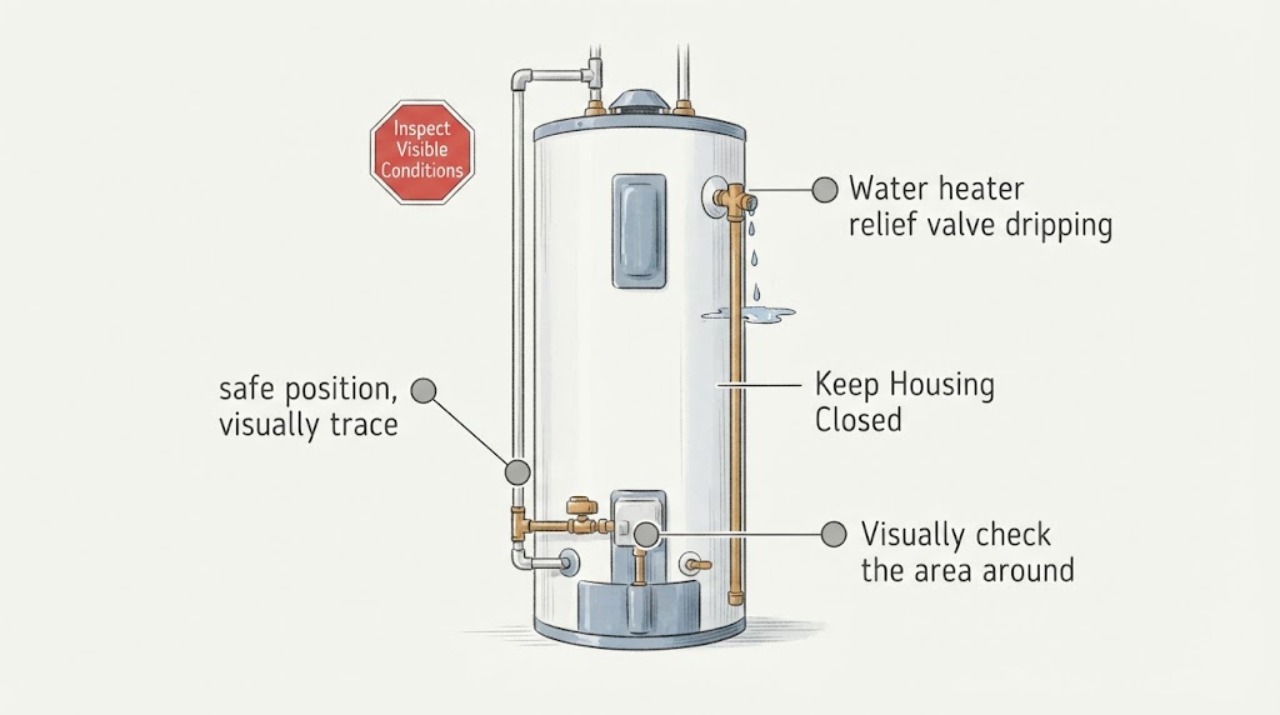
Do not cap, plug, clamp, block, or otherwise disable a dripping water-heater temperature-and-pressure relief valve or its discharge pipe. From a safe position, identify whether water is coming from the discharge opening, the valve connection, or another nearby fitting; note whether it is a small intermittent drip or a hot, continuous discharge; and keep people away from the hot-water path.
-
Water heater slow to recover demand has not changed: What to Check and What to Do Next
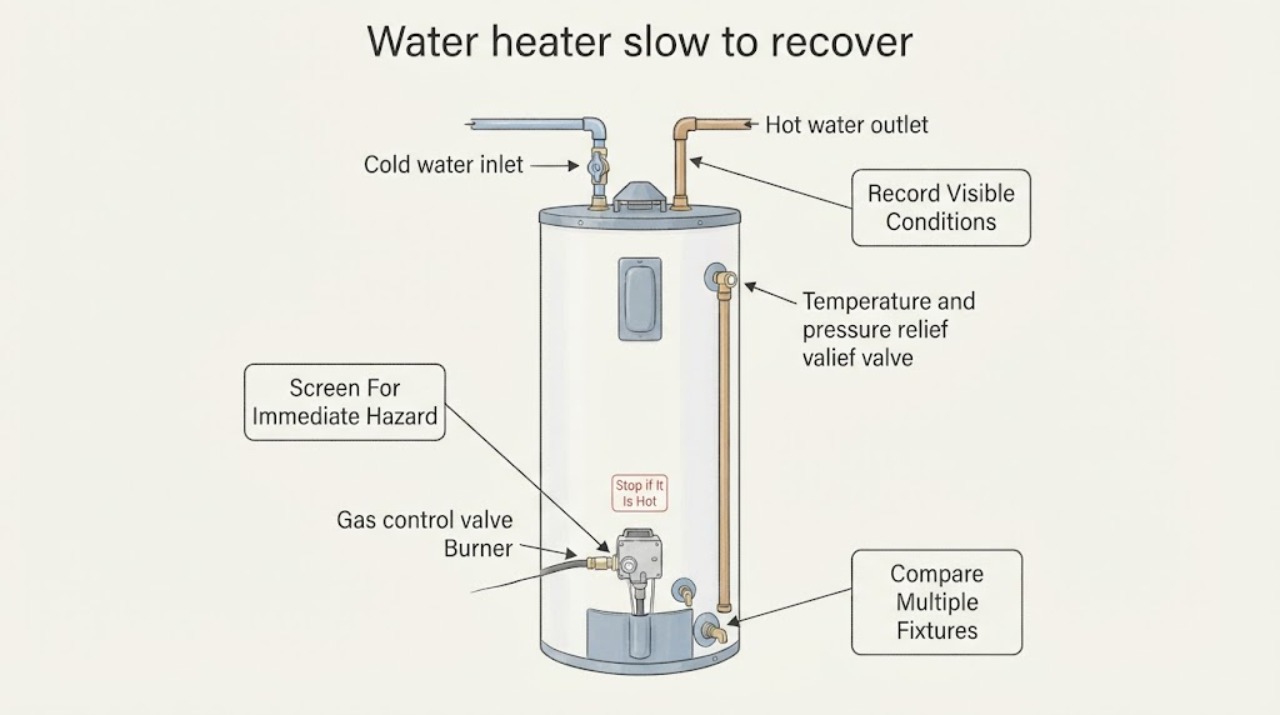
If hot water used to recover normally but now takes longer even though household demand has not changed, first determine whether the shortage is at every fixture or only one outlet, then identify the heater type and record what changed.
-
Water heater slow to recover eventually: What to Check and What to Do Next
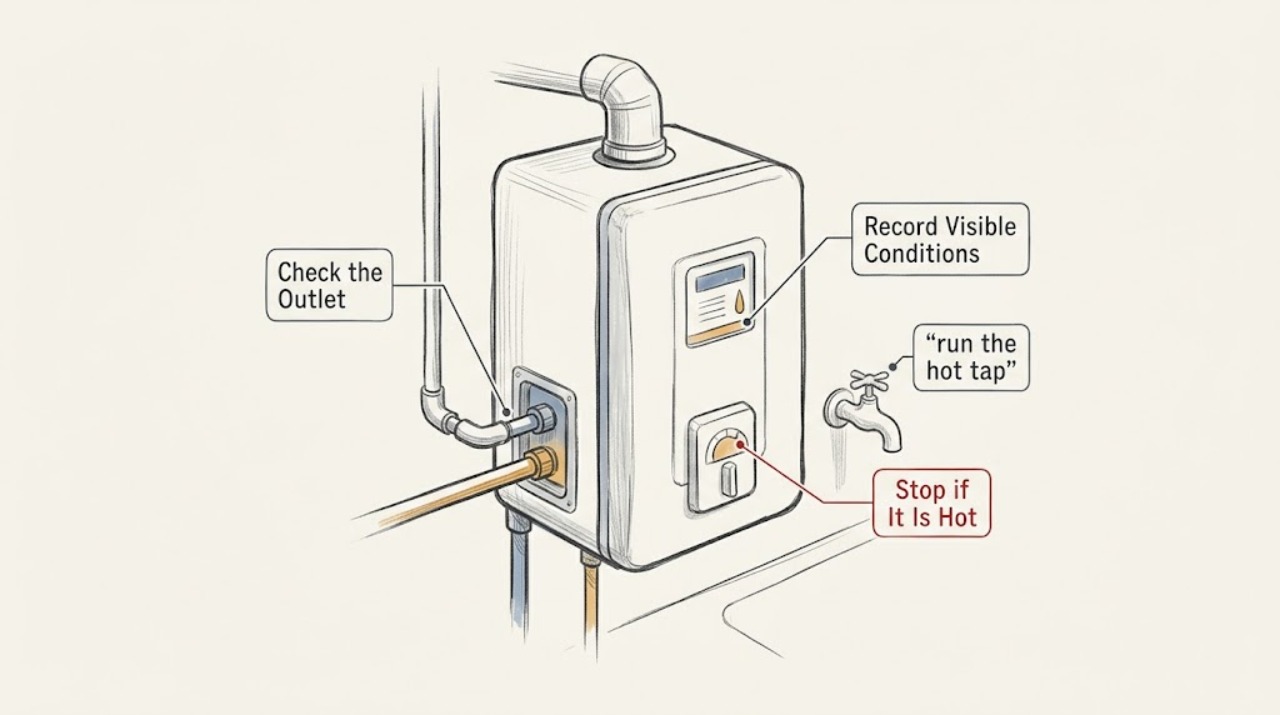
A water heater that eventually makes hot water may be working normally for a demand that exceeds its stored capacity, or it may be recovering slowly because of cold incoming water, a low setting or restricted operating mode, sediment, a leak or mixing-valve problem, a weak heating element or thermostat, or reduced gas, airflow, or electrical output. First determine whether the delay occurs only after heavy use, at every fixture, or even with little use.
-
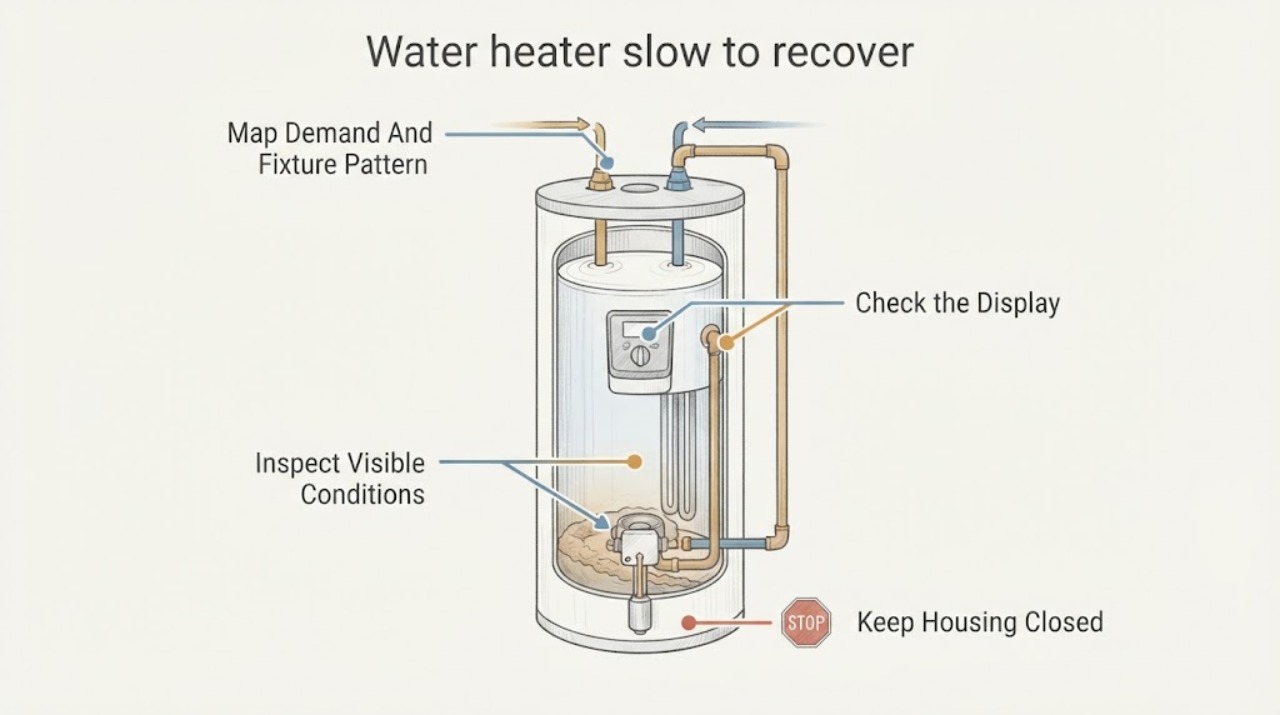
Water heater slow to recover hot runs out quickly: What to Check and What to Do Next
Hot water that runs out quickly and takes too long to return can be caused by unusually high demand, an undersized or incorrectly configured heater, sediment that insulates the heat source, a failed heating element or thermostat, a burner or gas-supply problem, a damaged dip tube, or a mixing valve or plumbing leak that makes usable hot water disappear.
-
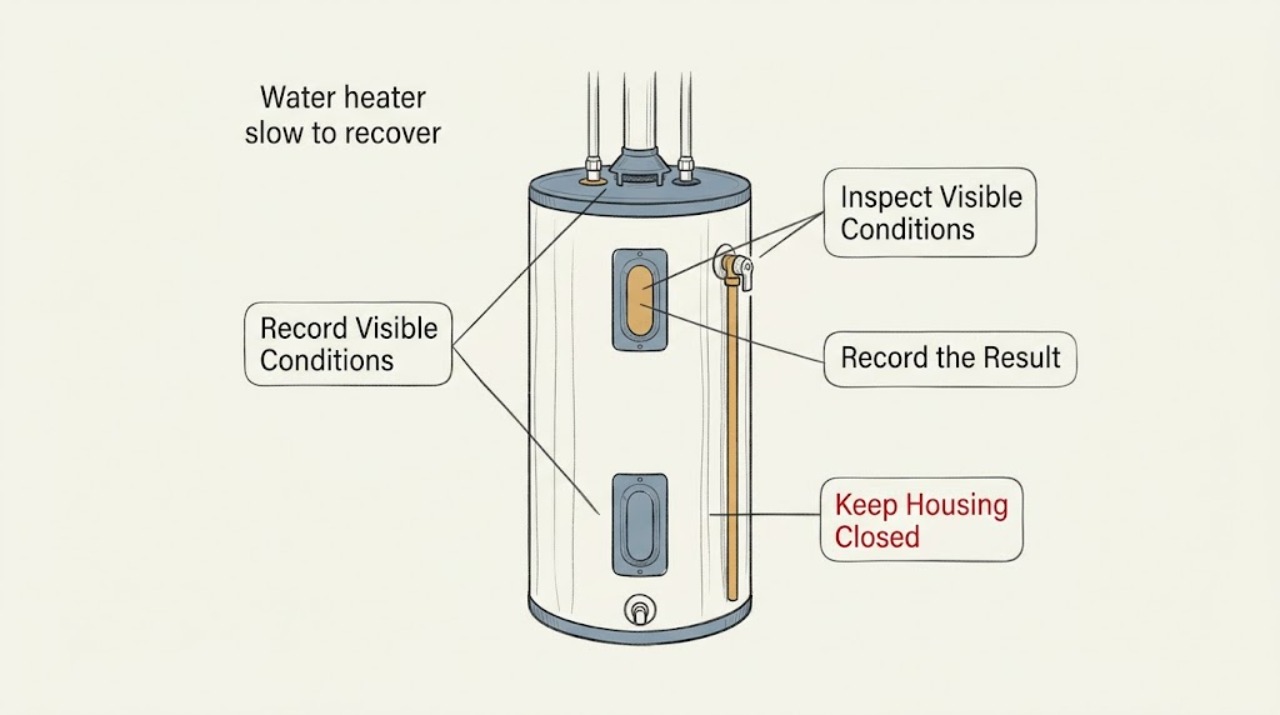
Water heater slow to recover: What to Check and What to Do Next
First separate a temporary high-demand shortage from a real slow-recovery fault. Note whether the problem affects the whole home, whether it began after a change in household use, and whether the water heater shows unusual noises, leaks, odors, fault indicators, or inconsistent temperature.
-
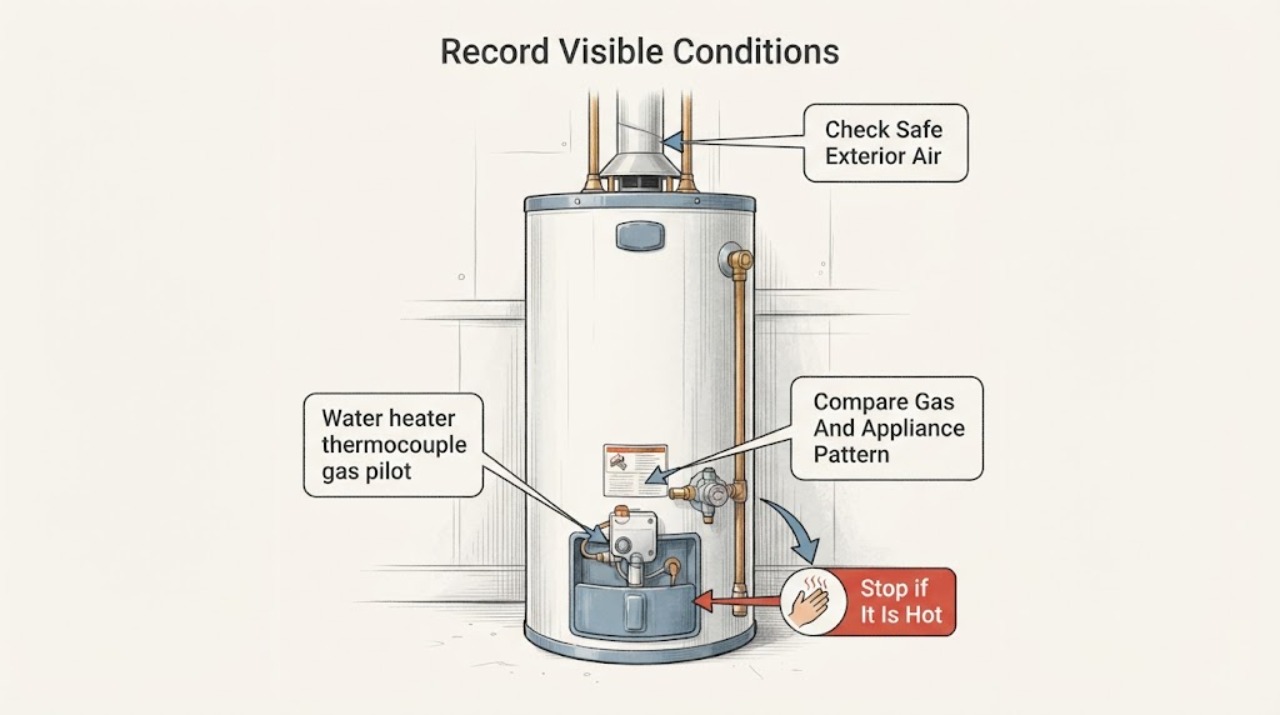
Water heater thermocouple gas pilot keeps going out: What to Check and What to Do Next
A gas water-heater pilot that lights and then goes out can involve the thermocouple or thermopile flame sensor, a weak or dirty pilot, a loose connection, gas supply or pressure, combustion-air restriction, a thermal safety switch, draft or venting, or the gas control itself. The thermocouple is a safety sensor that helps prevent gas flow when a pilot flame is not detected, so bypassing it or holding a control open is unsafe.
-
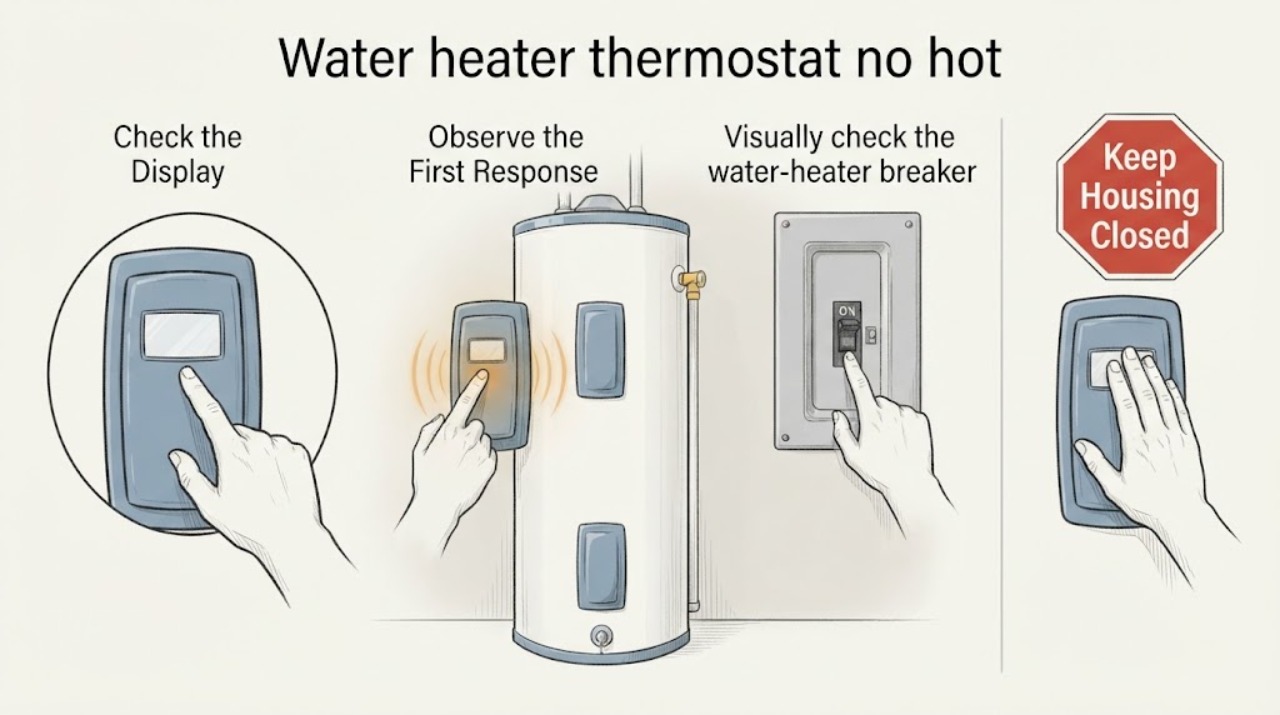
Water heater thermostat no hot water: What to Check and What to Do Next
A thermostat can cause an electric storage water heater to produce no hot water, but the same symptom can come from a tripped breaker, a high-limit safety cutoff, a failed heating element, a wiring fault, a recently refilled tank that was energized before it was full, or a hot-water-side leak.
-
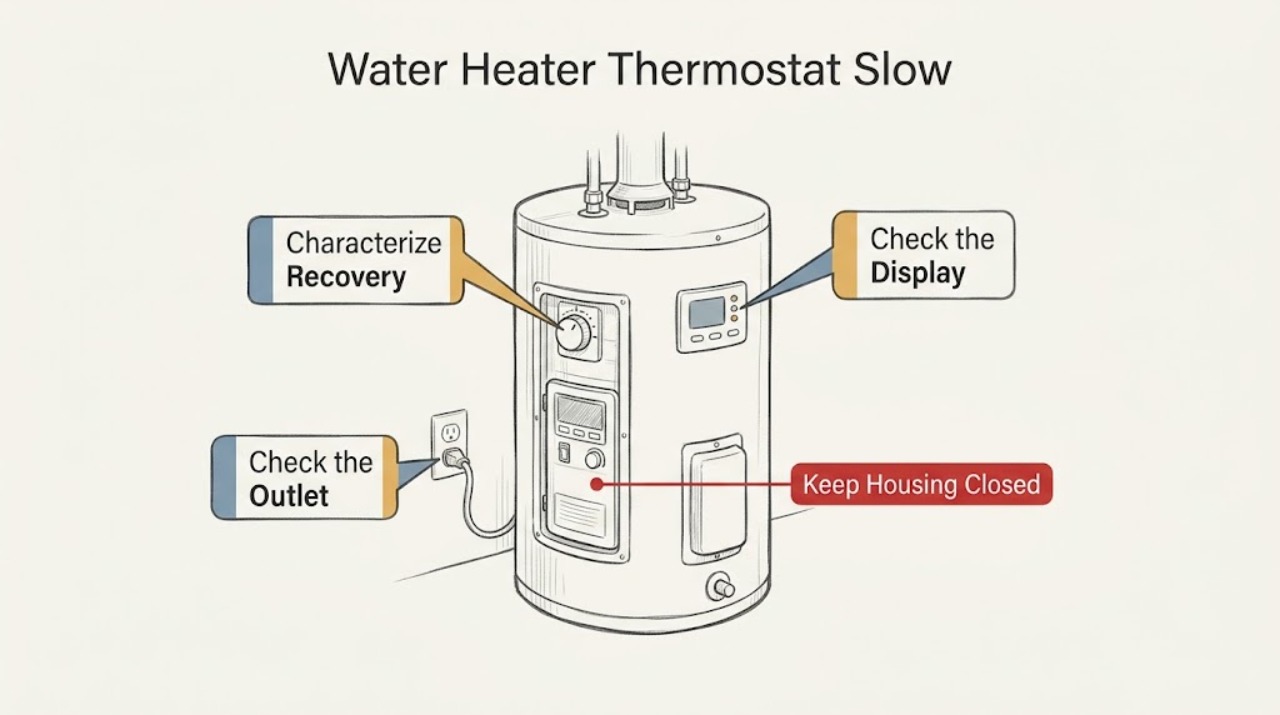
Water Heater Thermostat Slow to Recover: What to Check and What to Do Next
A thermostat can make a storage electric water heater recover slowly if it reads the tank incorrectly, is set lower than expected, or stops the elements prematurely, but the same symptom can come from a failed lower heating element, low power, heavy demand, sediment, a plumbing leak, or a mixing-valve problem.
-
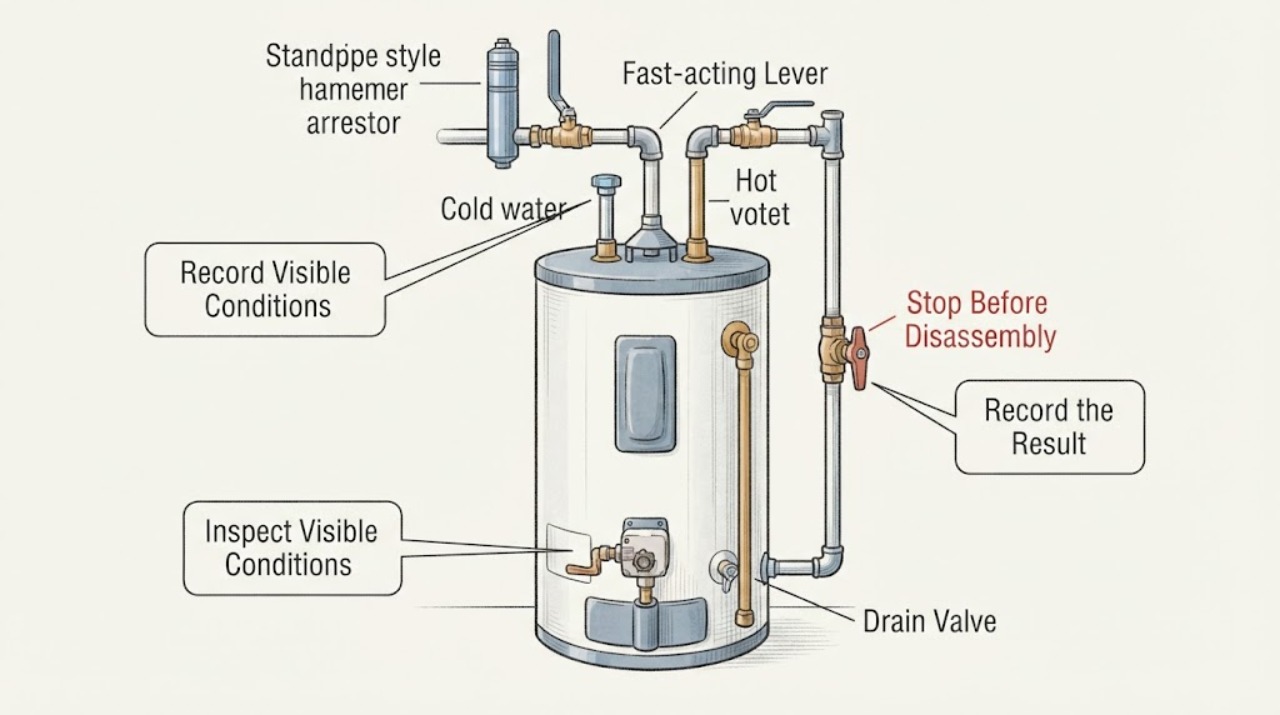
Water Heater Water Hammer: Find the Shock Source Safely
Water hammer is a pressure shock that happens when flowing water stops abruptly; the water heater may be where the bang is heard even when a fast-closing faucet, dishwasher, washing-machine valve, or other fixture is the source. Note exactly when the bang occurs, inspect the heater and nearby piping externally for leaks or movement, and stop if there is damage.