
AEG appliance guidance
AEG Dishwasher Repair Guides
Troubleshooting and repair guidance for published AEG Dishwasher problems, symptoms, and maintenance questions.
Published AEG Dishwasher guides
Choose the guide whose symptom or condition most closely matches what you are seeing.
-
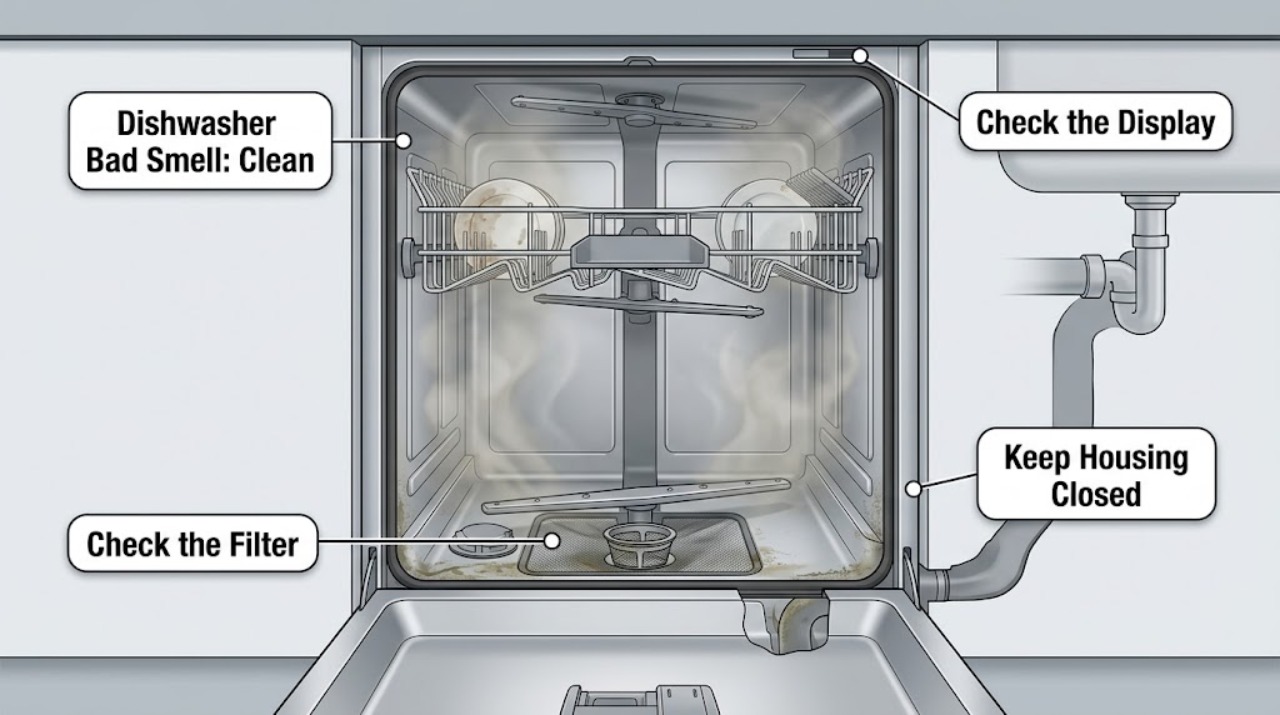
AEG Dishwasher Bad Smell: Clean the Cause Without Guessing
For an AEG dishwasher that smells bad, first separate a food/grease odor from a sewer-like, chemical, or burning odor. Switch the dishwasher off; disconnect the plug before cleaning filters or reaching into the tub, and do not work on a hot appliance.
-
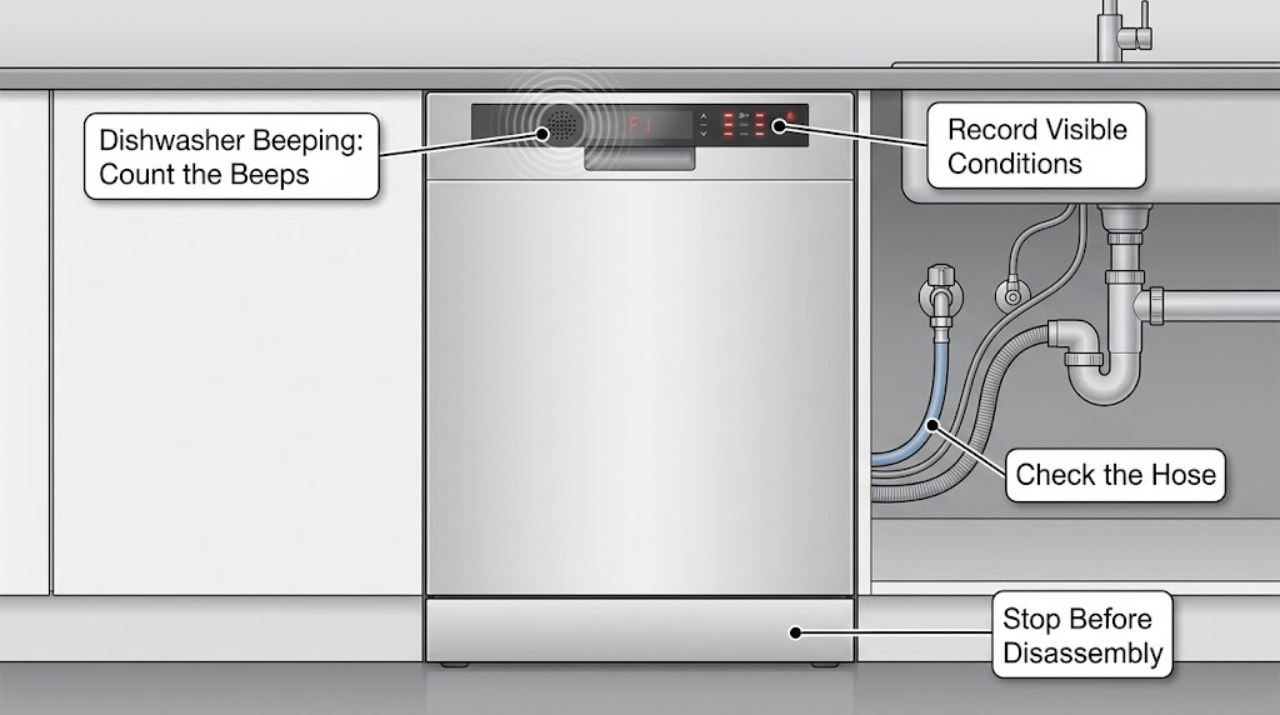
AEG Dishwasher Beeping: Count the Beeps and Check the Display
Do not treat every AEG dishwasher beep as the same fault. First record the exact number of beeps or flashes, the display code, when the sound occurs, and whether the dishwasher fills, drains, washes, or leaks.
-
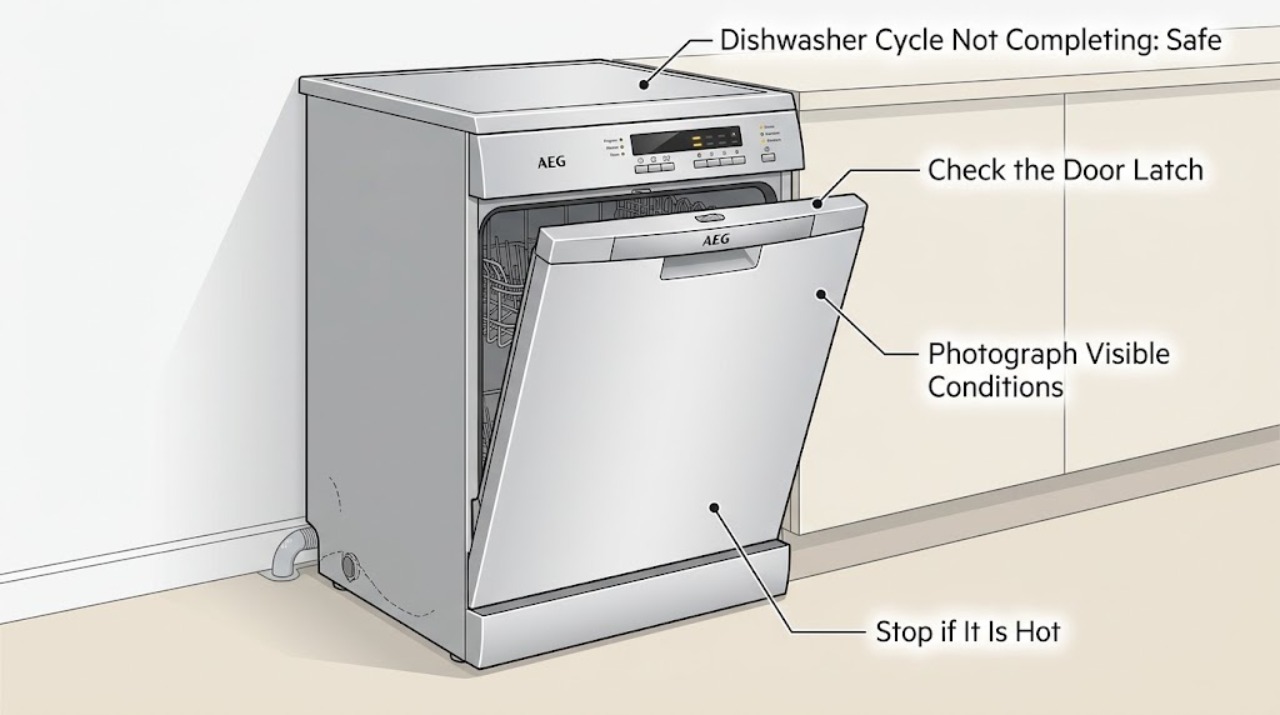
AEG Dishwasher Cycle Not Completing: Safe Checks by Symptom
Record exactly where the AEG dishwasher stops, whether water remains, and any display code, beep, or flashing light. First check that the door is fully closed and that Delay Start or a previous programme is not still active.
-
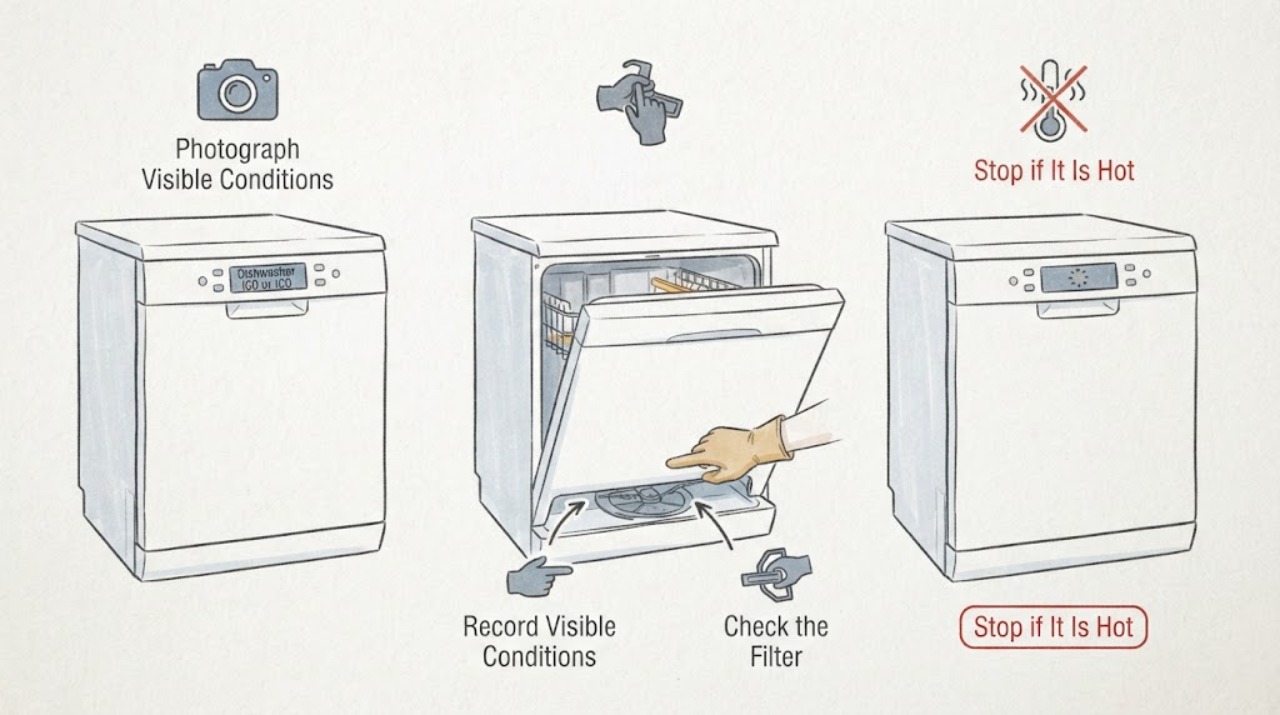
AEG dishwasher iC0 or IC0: what to check when it will not work
AEG's opened UK support article groups iC0, iCo, iC1, iC2, and iC3 as a technical malfunction family for both integrated and freestanding dishwashers. Because the model and region are missing here, do not borrow a code meaning or button sequence from an Electrolux or another AEG machine.
-
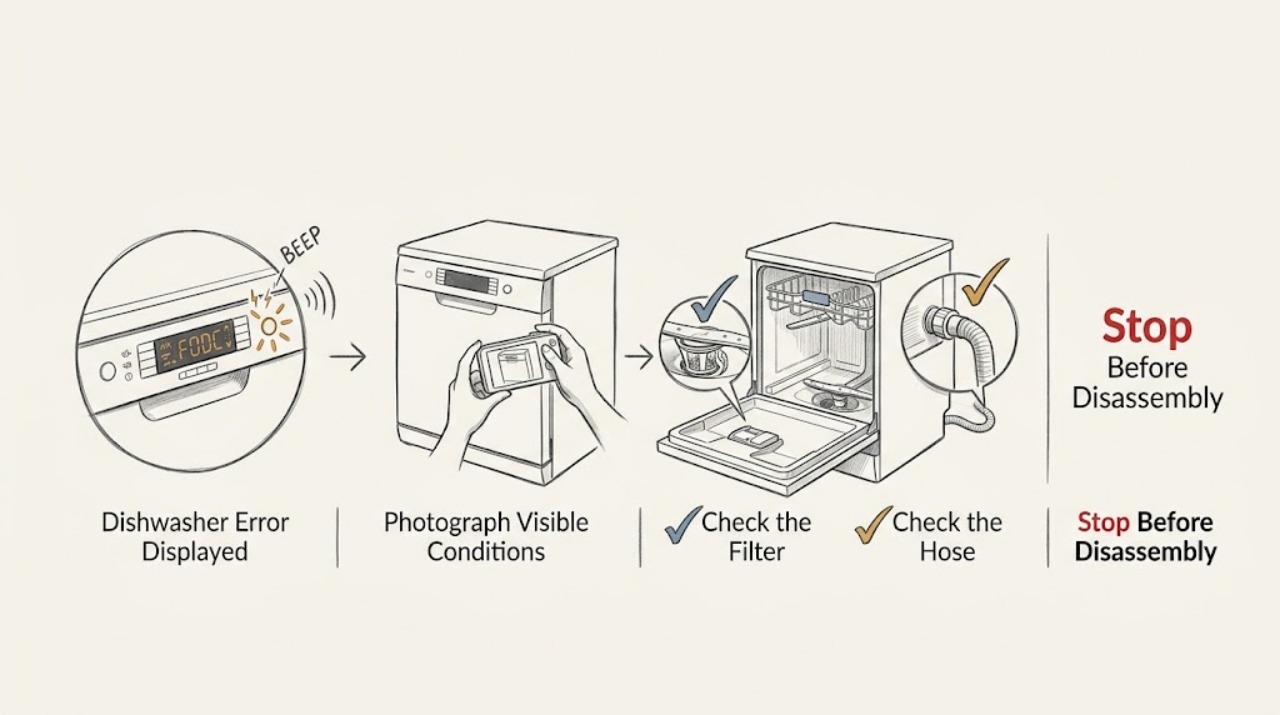
AEG Dishwasher Error Displayed: Identify the Code Before You Reset It
An AEG dishwasher error display is a symptom category, not one diagnosis. Record the complete code exactly as shown, or count the beeps or warning-light flashes, and note whether the dishwasher is filling, draining, washing, leaking, or heating.
-
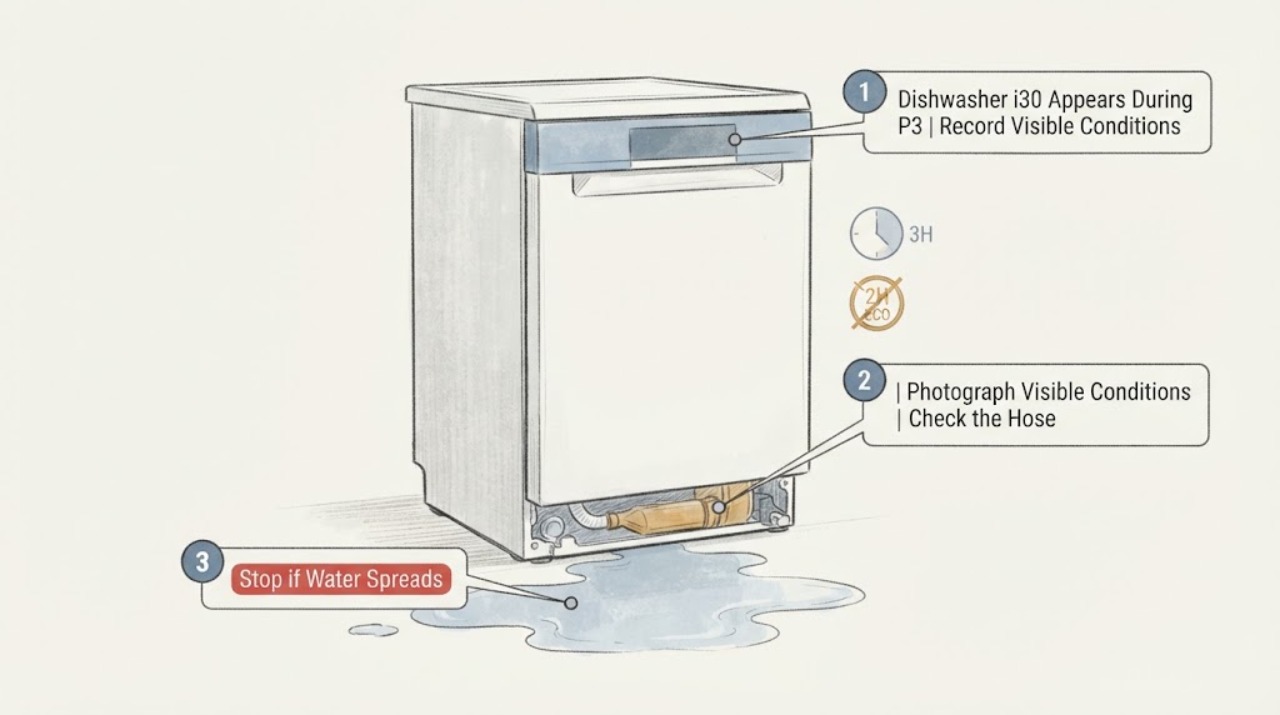
AEG Dishwasher i30 Appears During P3 but Not Eco
Treat AEG i30 as a leak or anti-flood warning even when it appears only during the P3 programme and not during Eco. Close the water tap, stop the dishwasher, and do not tilt, repeatedly reset, or run another cycle to reproduce the event.
-
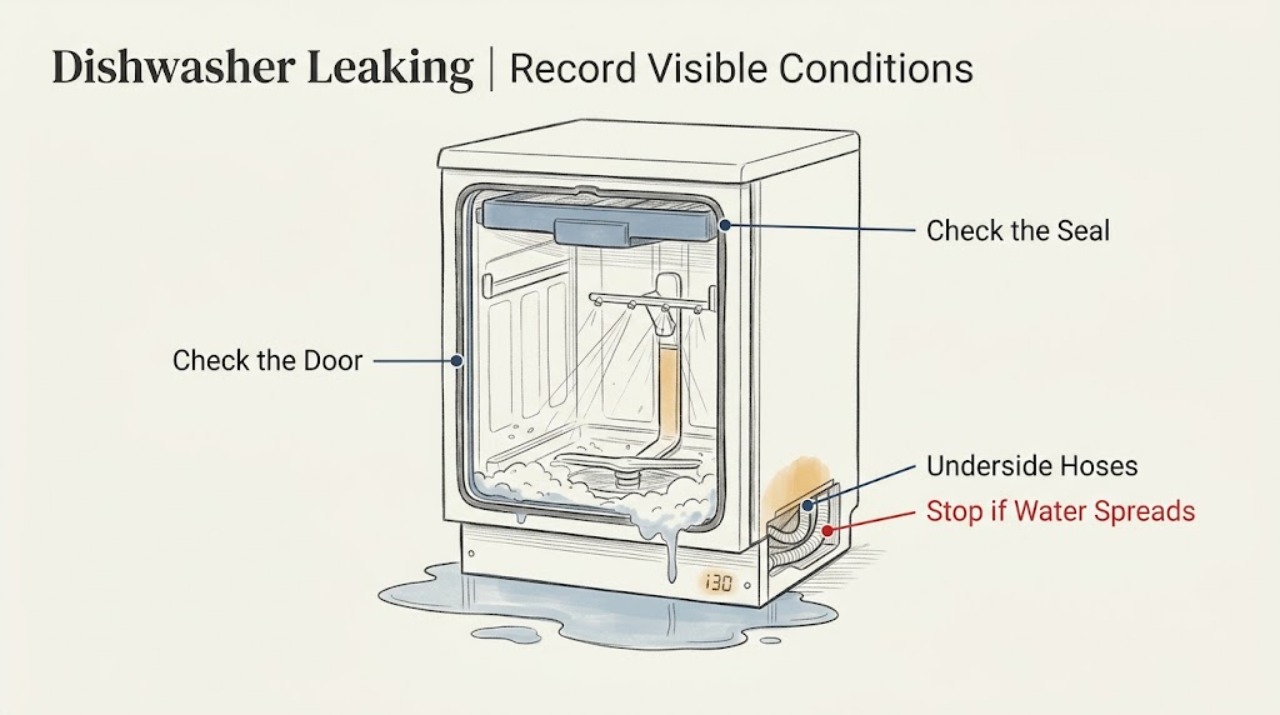
AEG Dishwasher Leaking: Trace the Water Before Running Another Cycle
Turn off the dishwasher and close the water tap as soon as you see a leak. Note whether the water comes from the door, a rear connection, underneath the appliance, or only appears as foam.
-
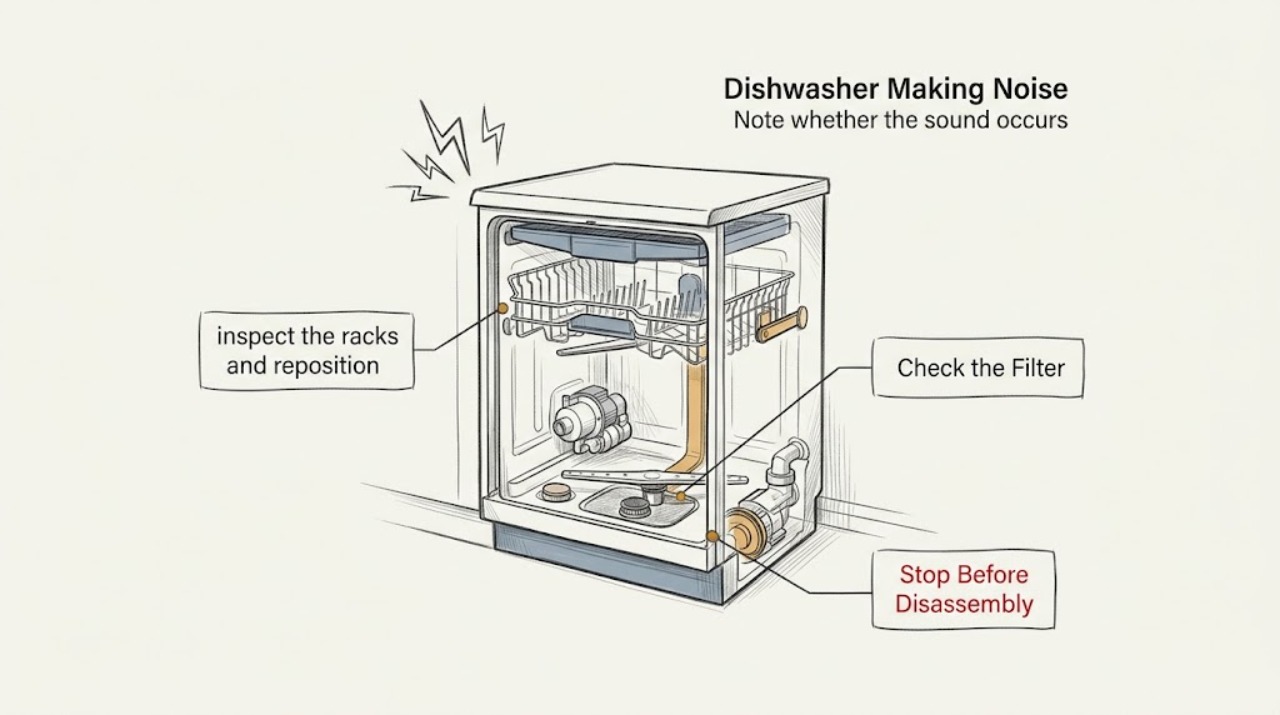
AEG Dishwasher Making Noise: Identify Normal Sounds and Safe Checks
An AEG dishwasher can make normal humming, filling, spraying, draining, or light clicking sounds, so first match the noise to the programme phase. A repeated click or knock that follows spray-arm rotation can come from a plate, tray, or utensil; rattling can come from loose dishes; and grinding, metal scraping, persistent knocking, sudden excessive vibration, or noise with poor washing or draining is abnormal.
-
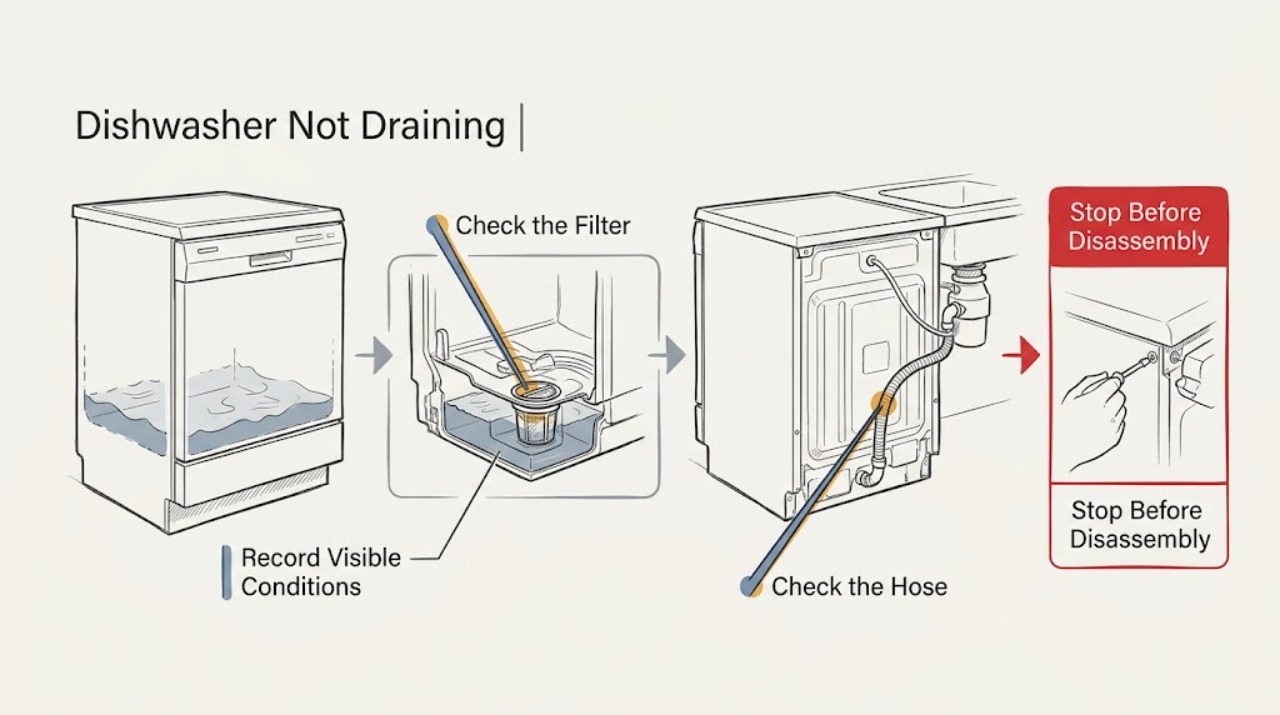
AEG Dishwasher Not Draining
If an AEG dishwasher leaves water in the tub, start with the removable filters and visible sump area, then check the sink connection and drain hose for a blockage, kink, twist, damage, or incorrect installation. A recently installed or moved dishwasher may still have the sink trap's blanking plug in place.
-
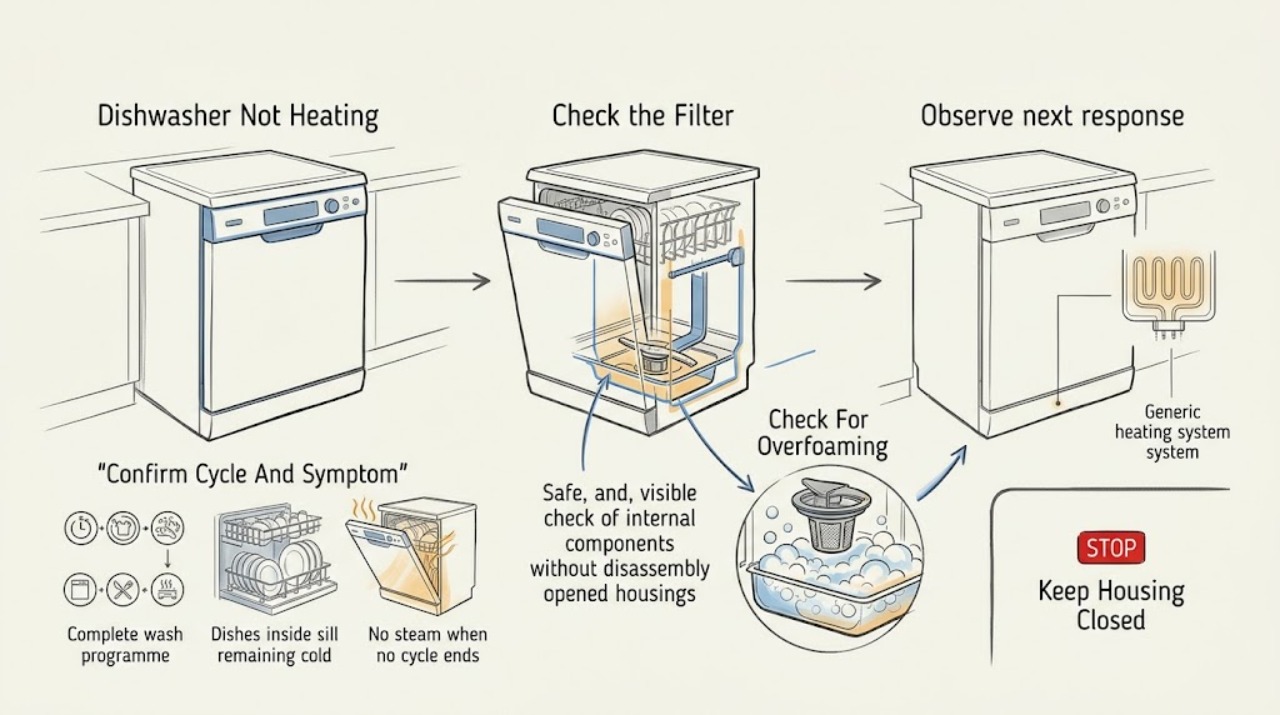
Aeg Dishwasher Not Heating: Check the Programme, Filters, and Foam First
If an Aeg dishwasher finishes with cold dishes or no steam, first confirm that the selected programme is suitable, then switch the appliance off and clean only the user-accessible filters and sump area. If there is water and foam in the tub, deal with the foam and do not continue normal cycles until it is gone.
-
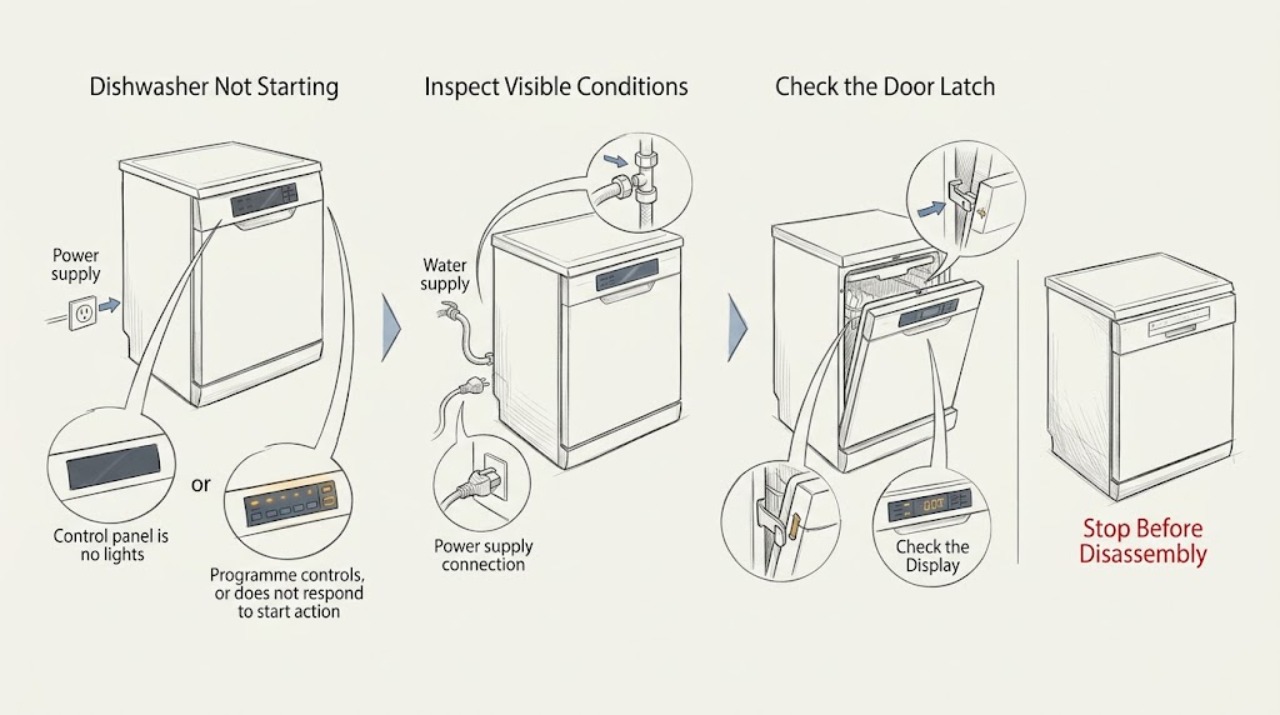
AEG Dishwasher Not Starting: Safe Checks Before Service
An AEG dishwasher that will not start is usually waiting for a start condition, holding a previous programme or Delay Start setting, or reporting a door, power, water, or installation issue. First determine whether the control panel is dark or lit, select a programme, and close the door until the latch clicks.
-
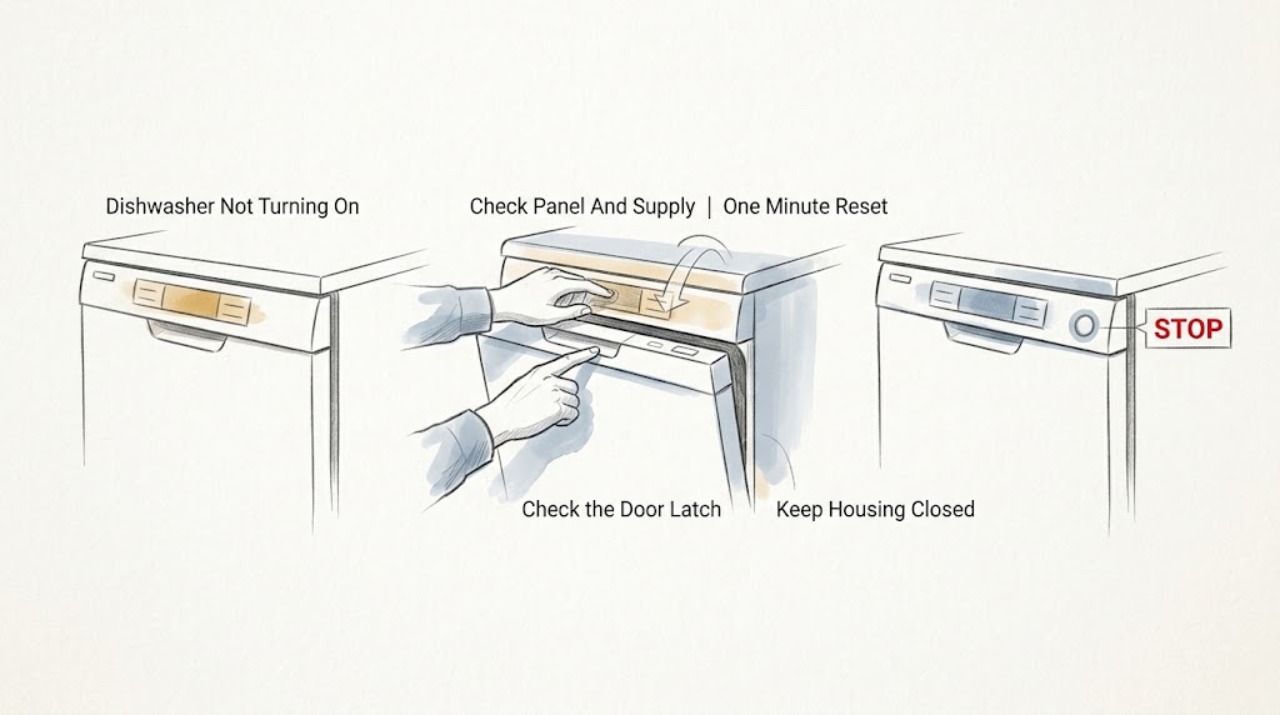
Aeg Dishwasher Not Turning On
First separate a dishwasher with no lights from one whose display works but will not begin a cycle. AEG says a completely dark control panel usually calls for an external supply check: confirm the plug and socket, check the breaker or RCD, and make one safe one-minute wall-switch or breaker reset.
-
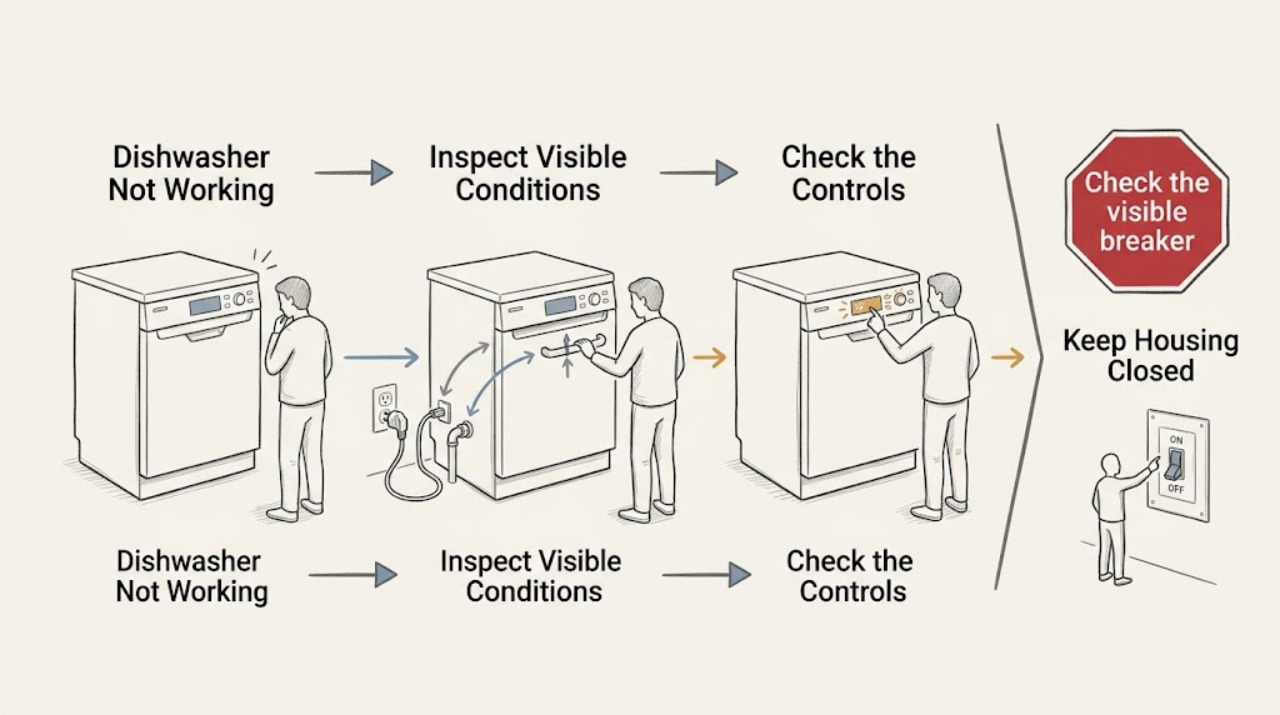
AEG Dishwasher Not Working: Separate Power, Start, and Cycle Faults
First decide whether your AEG dishwasher has no power or has power but will not start. With no display or response, verify the plug and wall switch, check the socket with a small known-working device if it is safe, and check whether a breaker or RCD has opened; if the socket is dead, use an electrician, and if the dishwasher remains dead with a live socket, request AEG service.
-
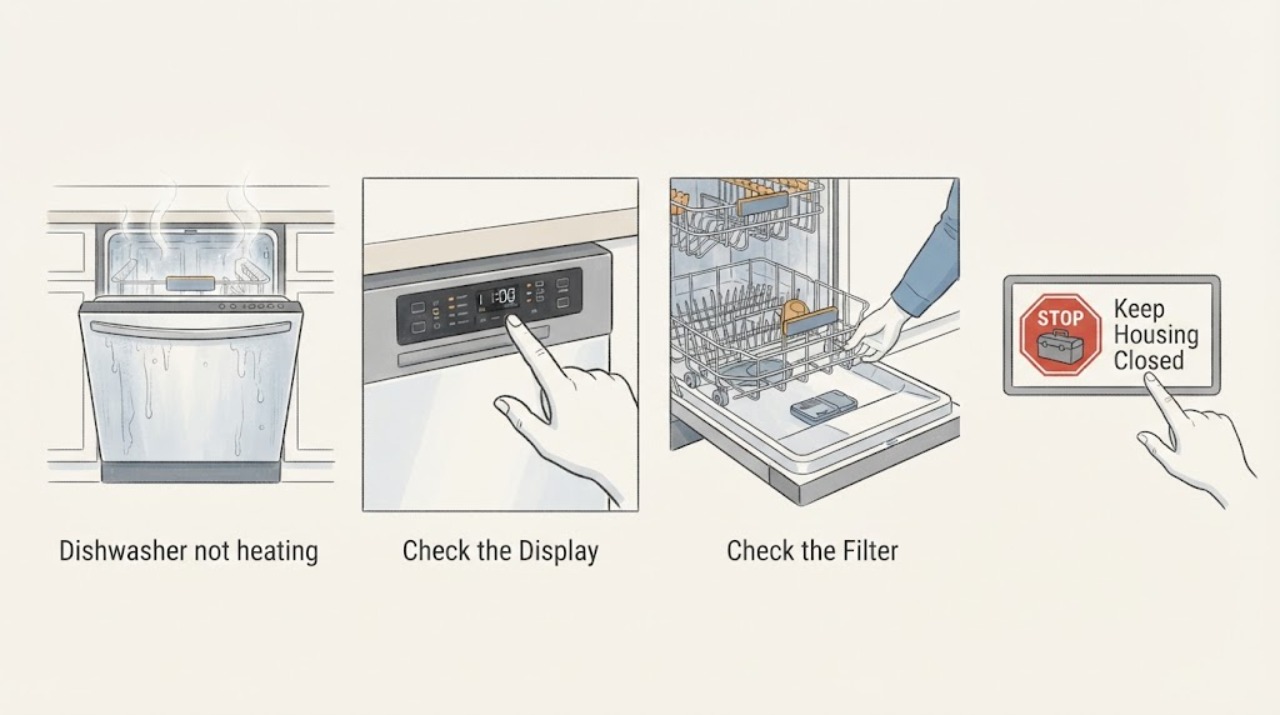
AEG Dishwasher Not Heating: i60 on F45010W0
On an AEG dishwasher, i60 is used for a heating-related problem, including not heating or not drying, but it does not identify a failed heater by itself. For the assigned F45010W0, first record the complete display and rating-plate PNC, then confirm that the incoming water supply is not above 60°C.
-
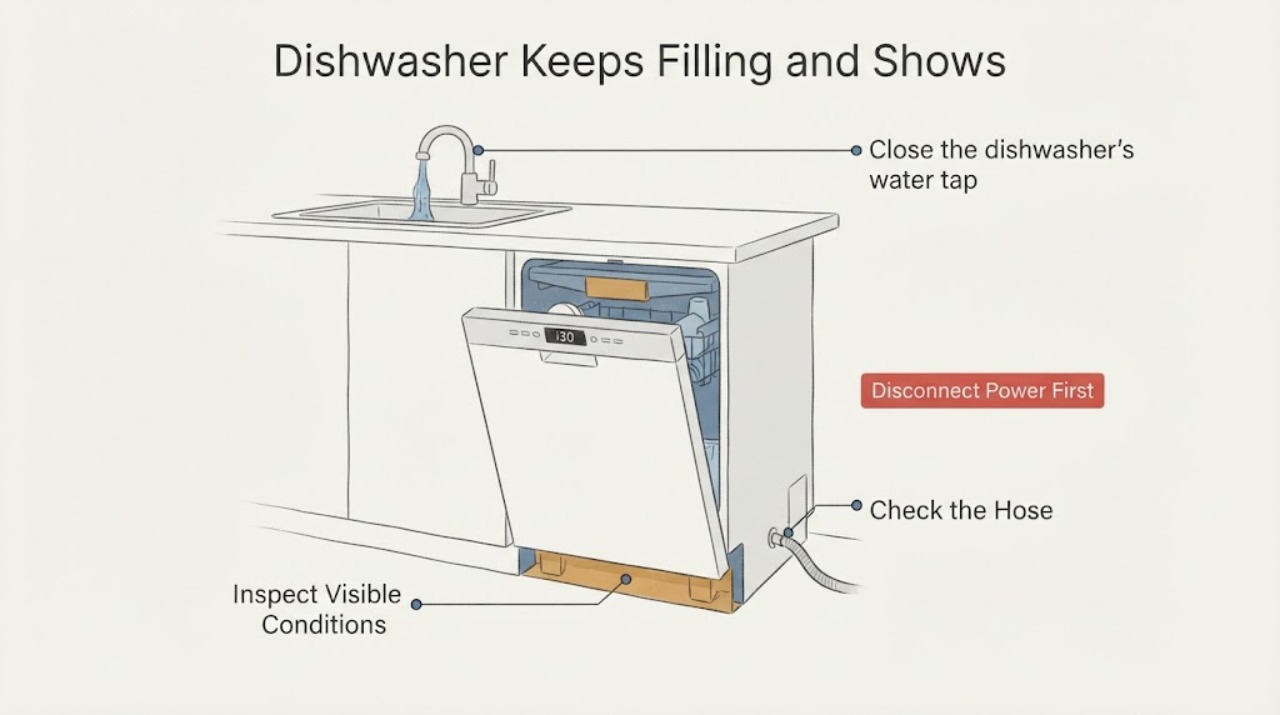
AEG F55522VI0 Dishwasher Keeps Filling and Shows i30
Treat an AEG F55522VI0 dishwasher that will not stop filling and shows i30 as a water and flooding hazard, not as proof that one valve or pump has failed. Close the dishwasher's water tap immediately and isolate electrical power only from a dry, safe position; do not keep running it, repeatedly reset it, tip it, open the cabinet, or test an internal part.
-
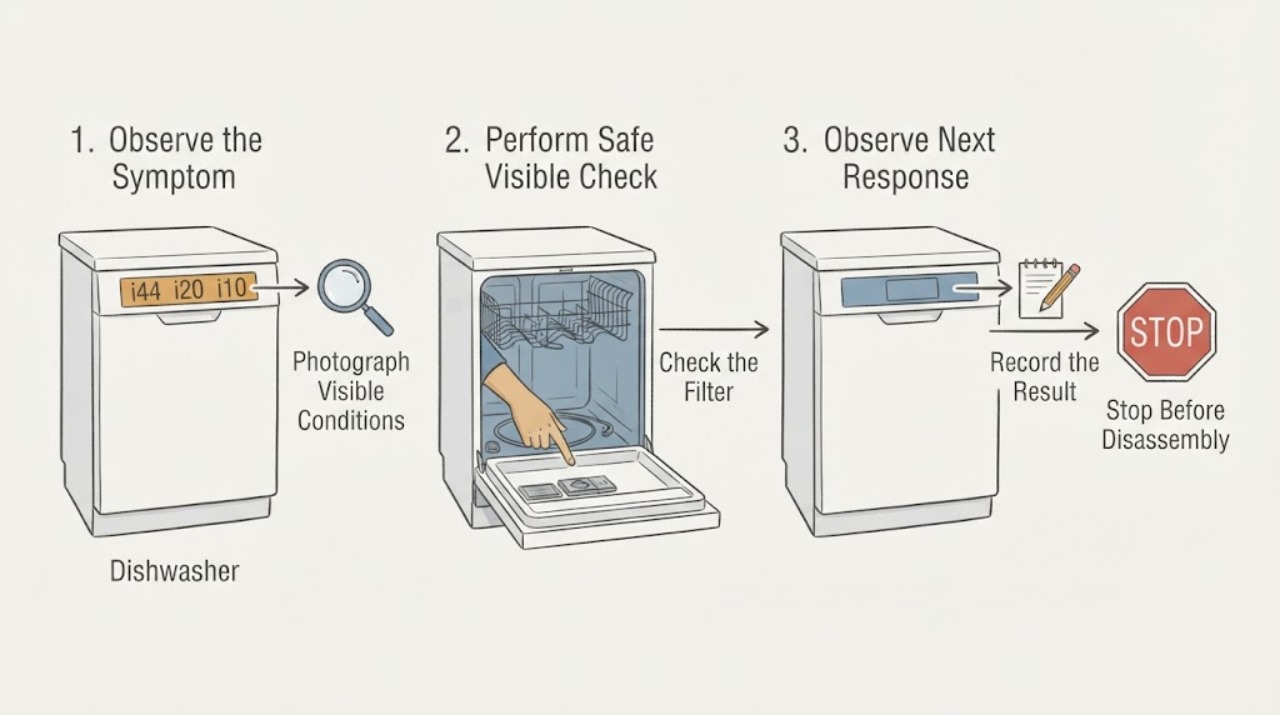
AEG FSE63806P dishwasher: i44, i20 and i10 errors
For the AEG FSE63806P, record the complete display and order before resetting: i44 is in AEG's i40-family pressure-sensor/water-level group, i20 is a drainage indication, and i10 is a water-inlet indication. The codes narrow the next safe check but do not prove three failed parts.