
Maytag appliance guidance
Maytag Oven Repair Guides
Troubleshooting and repair guidance for published Maytag Oven problems, symptoms, and maintenance questions.
Published Maytag Oven guides
Choose the guide whose symptom or condition most closely matches what you are seeing.
-
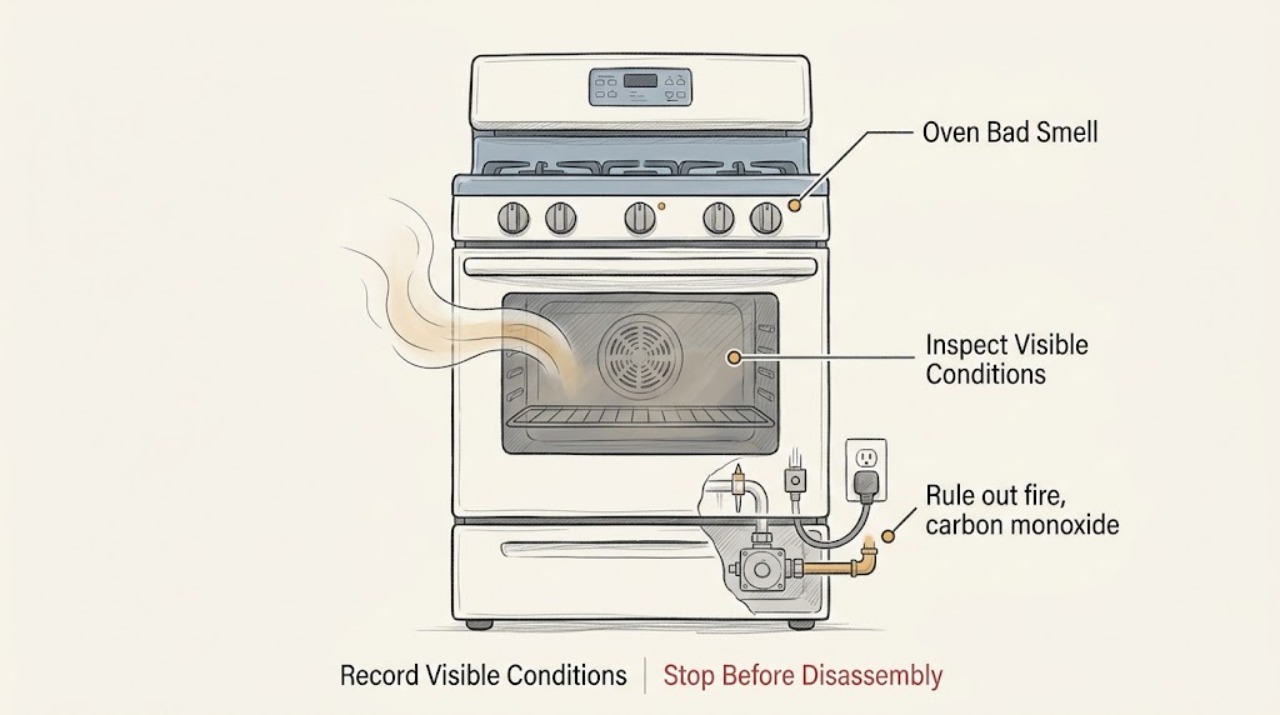
Maytag Oven Bad Smell: Safe Checks Before Service
Treat a Maytag oven smell as a safety triage problem before a cleaning problem. If the odor resembles raw gas or rotten eggs, or there is hissing, delayed ignition, an abnormal flame, carbon-monoxide symptoms, smoke, fire, sparking, a hot control, or a burning-electrical smell, stop using the oven and leave the area when appropriate; do not operate switches or try another ignition test, and contact the appropriate gas, fire, or qualified service help from a safe location.
-
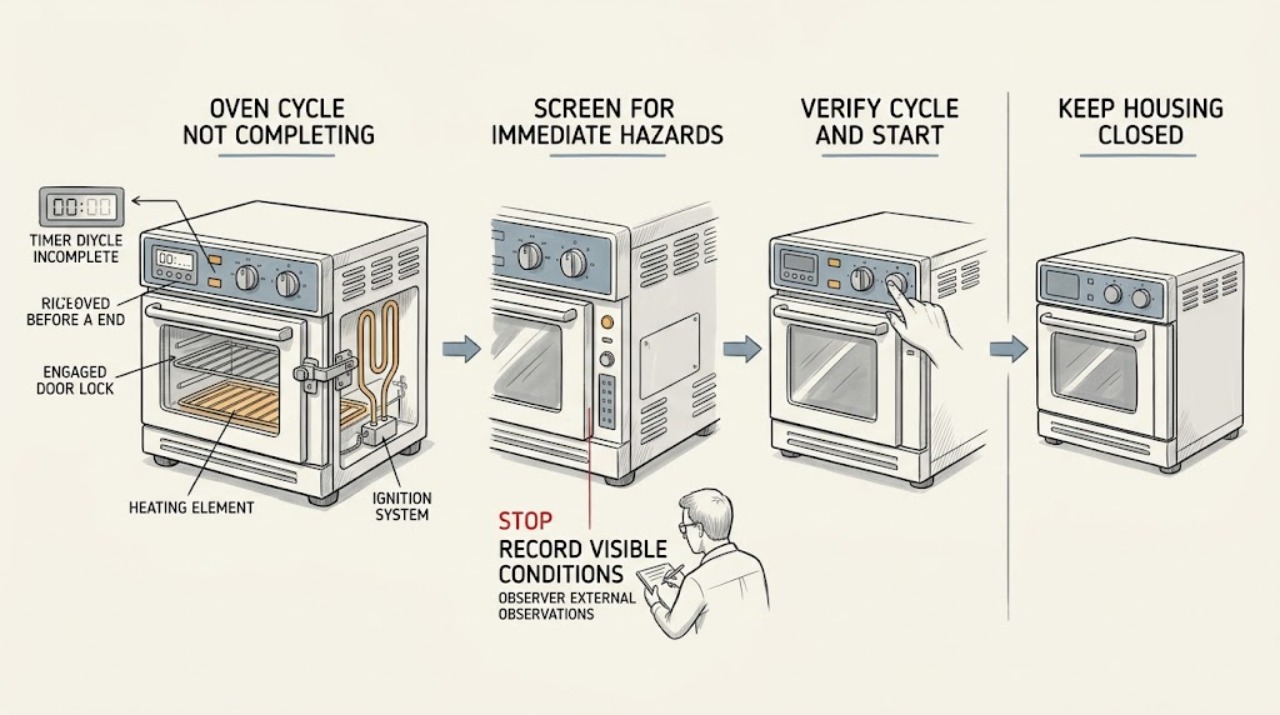
Maytag Oven Cycle Not Completing: Find Where It Stops
A Maytag oven that does not complete a cycle is easiest to diagnose by recording exactly when it stops: before starting, during preheat, after the timer, during Self-Clean, after a door-lock event, or after a code or power loss. First rule out a delayed start, wrong cycle, Control Lock or Demo Mode, an incompletely closed door, and a one-time power interruption.
-
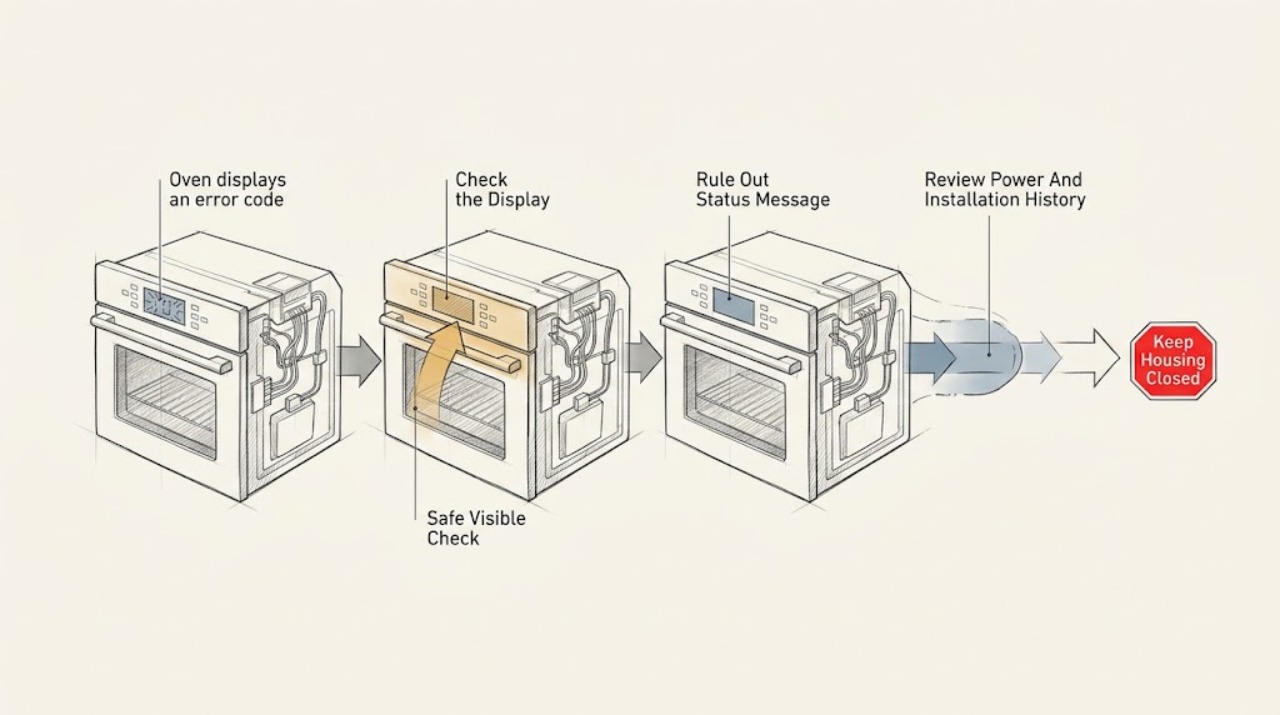
Maytag oven displays an error code: What to Check and What to Do Next
A Maytag oven error display is a symptom, not a universal diagnosis. First photograph the exact characters and note whether they appear as an F-and-number combination, E-and-number combination, PF, a letter, CAL, a lock message, or a blank/flashing clock; Maytag says code meanings and remedies vary by model and code.
-
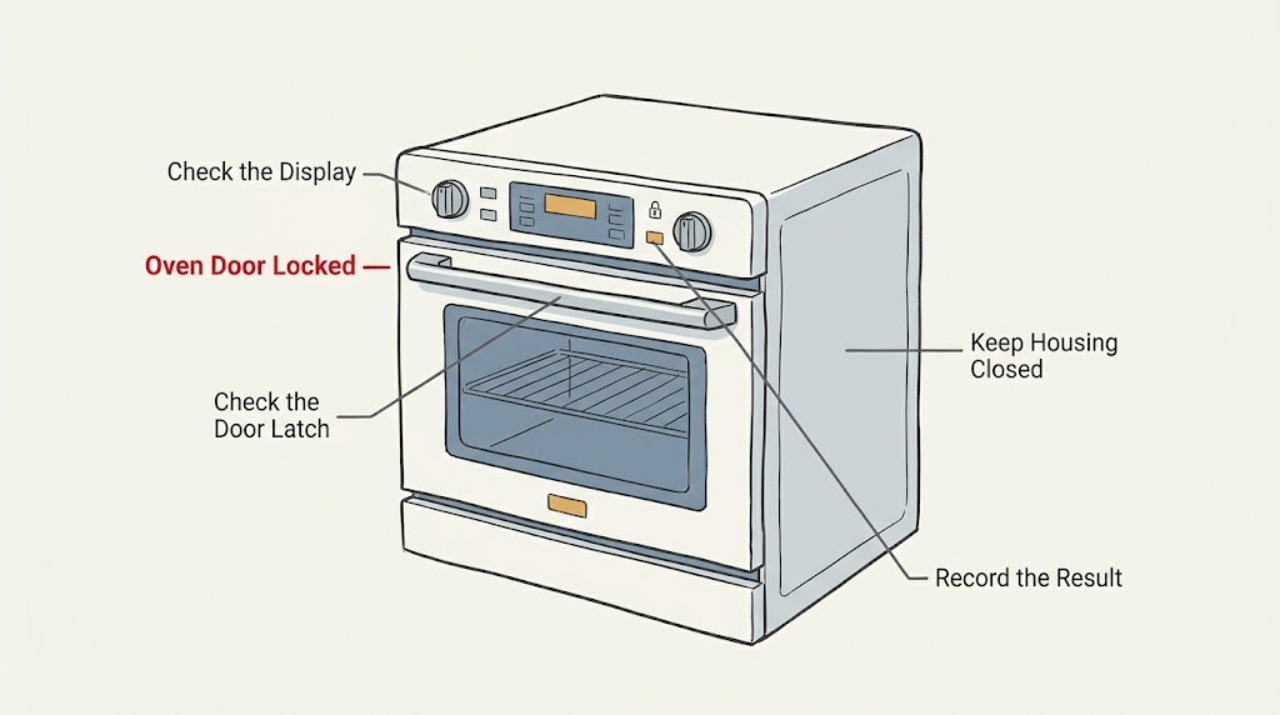
Maytag Oven Door Locked: Safe Cooling, Control Lock, and Reset Checks
A Maytag oven door can stay locked normally during Self-Clean and while the oven is still hot. Do not pull or pry the door.
-
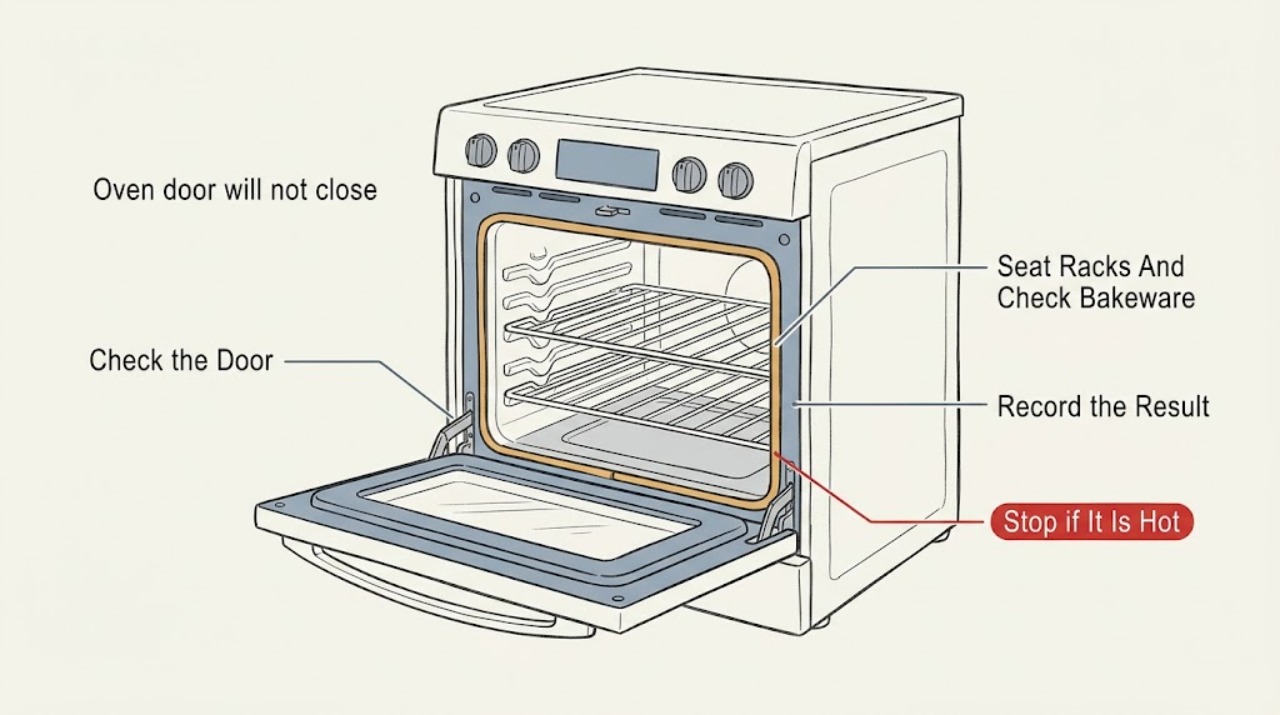
Maytag oven door will not close: What to Check and What to Do Next
A Maytag oven door that will not close is most often blocked by a rack, oversized bakeware, shipping material, food, or soil; a door that looks crooked or a latch arm that is bent or left in the lock position points to a hinge or latch problem. Turn the oven off and let it cool before inspecting.
-
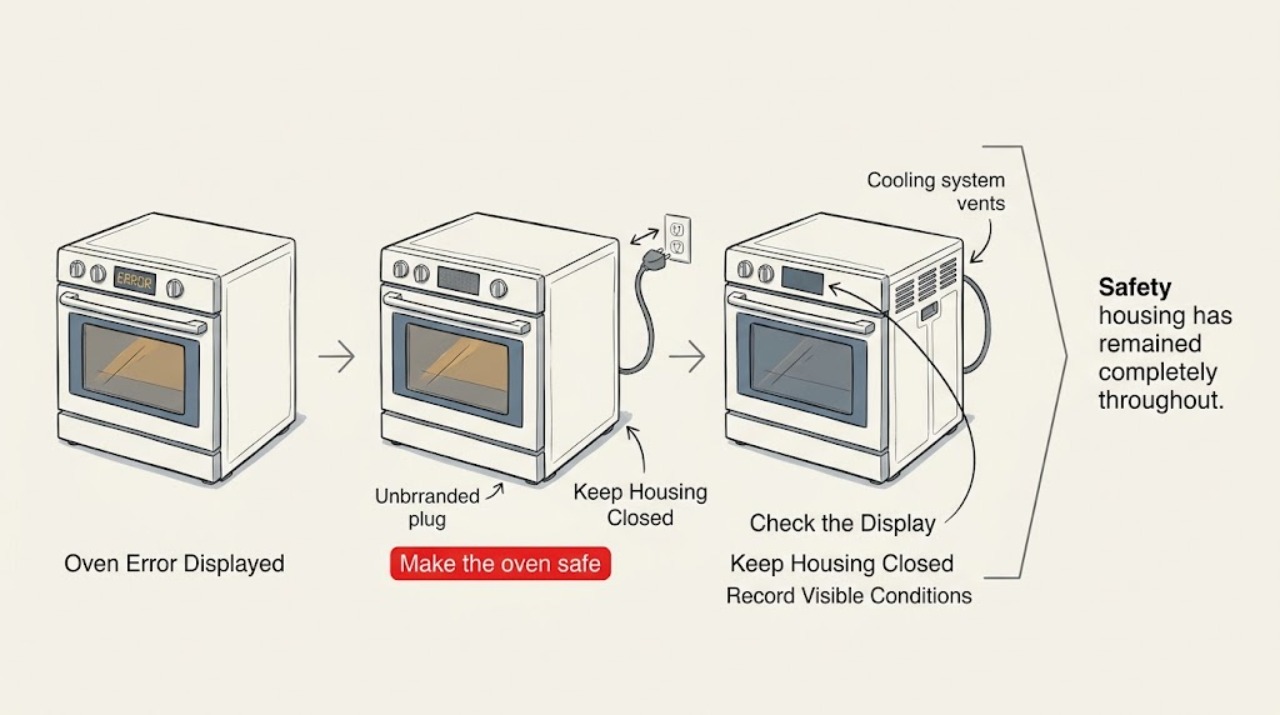
Maytag Oven Error Displayed: Identify the Code Before Resetting
When a Maytag oven displays an error, photograph the complete code exactly as shown, record the model, whether the oven is electric, gas, or dual-fuel, and note whether it appeared at power-up, while heating, during cleaning, or after a power event. Do not interpret an F# E# code from a different model or assume that a blank clock, LOC/Lock, CAL, SAB, or PF display is the same as a component failure.
-
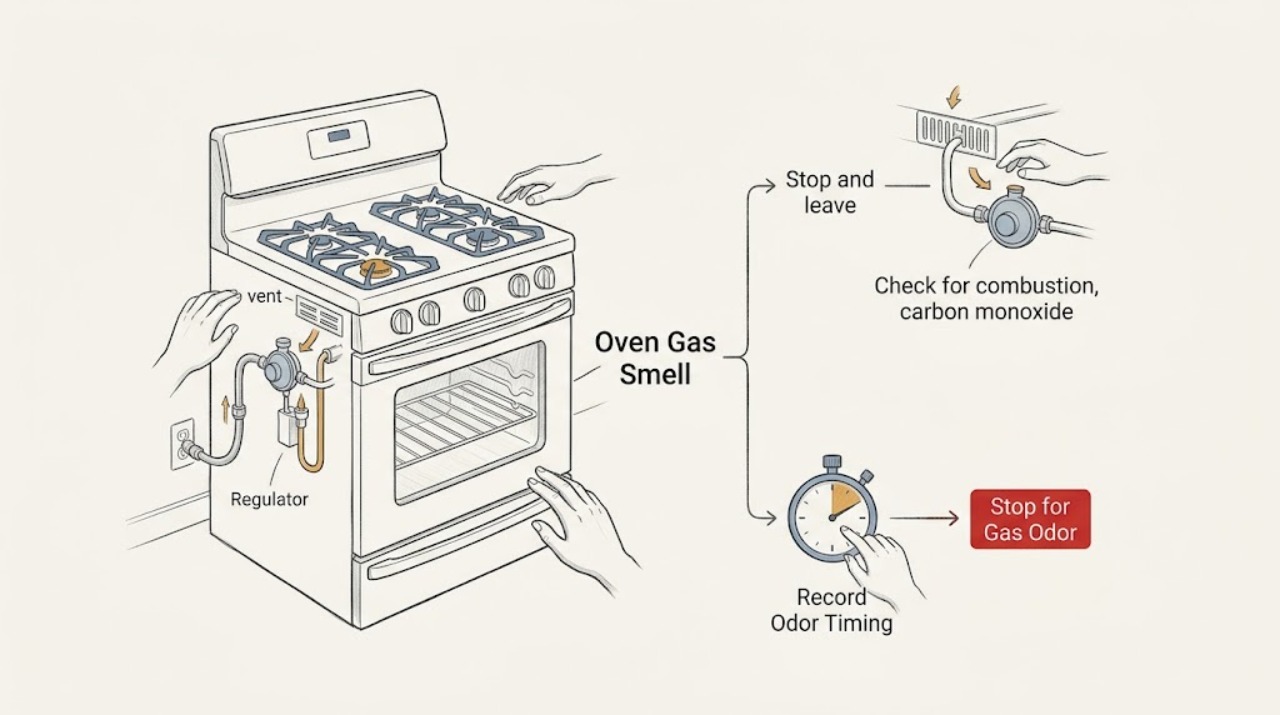
Maytag Oven Gas Smell: What to Do Safely
Treat a Maytag oven gas smell as a possible gas emergency until a qualified gas professional clears it. Do not light the oven or any other appliance, operate electrical switches, use a phone inside, or try to locate the leak.
-
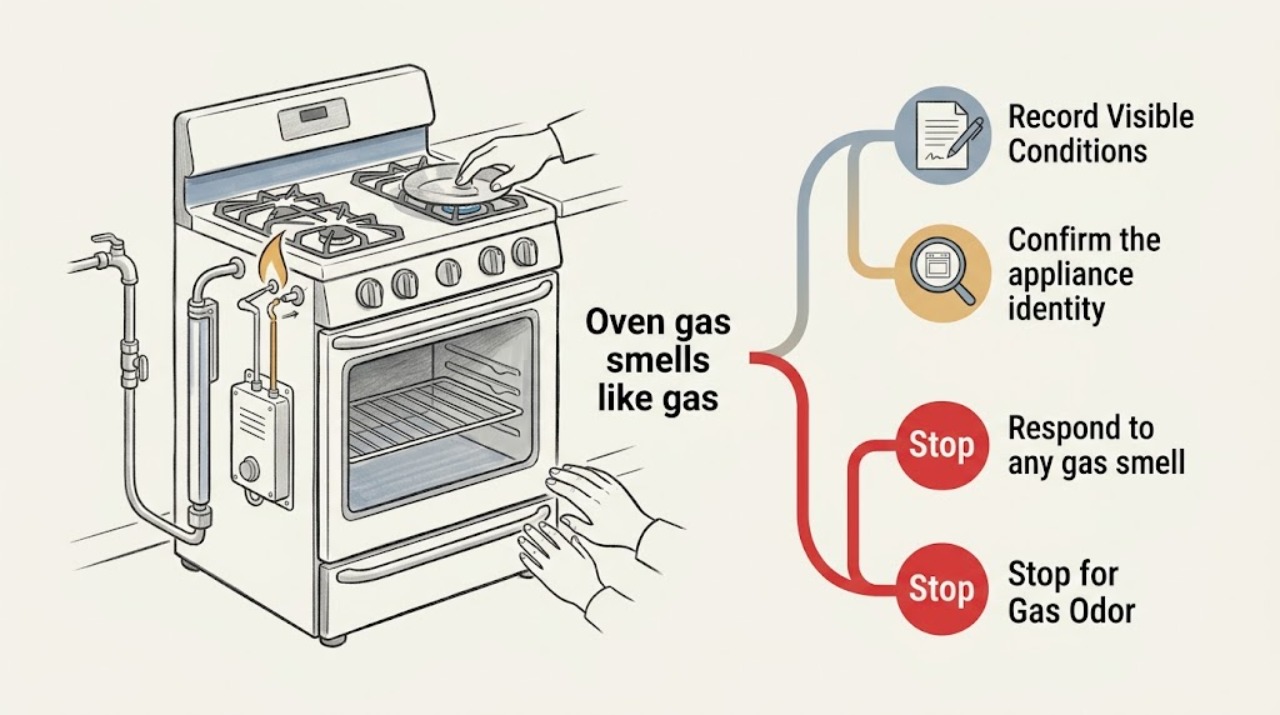
Maytag oven gas smells like gas: What to Check and What to Do Next
Treat a Maytag oven that smells like gas as a possible gas leak until the gas supplier or fire department says the area is safe. Do not light the oven or another appliance, touch an electrical switch, or use a phone inside the building.
-
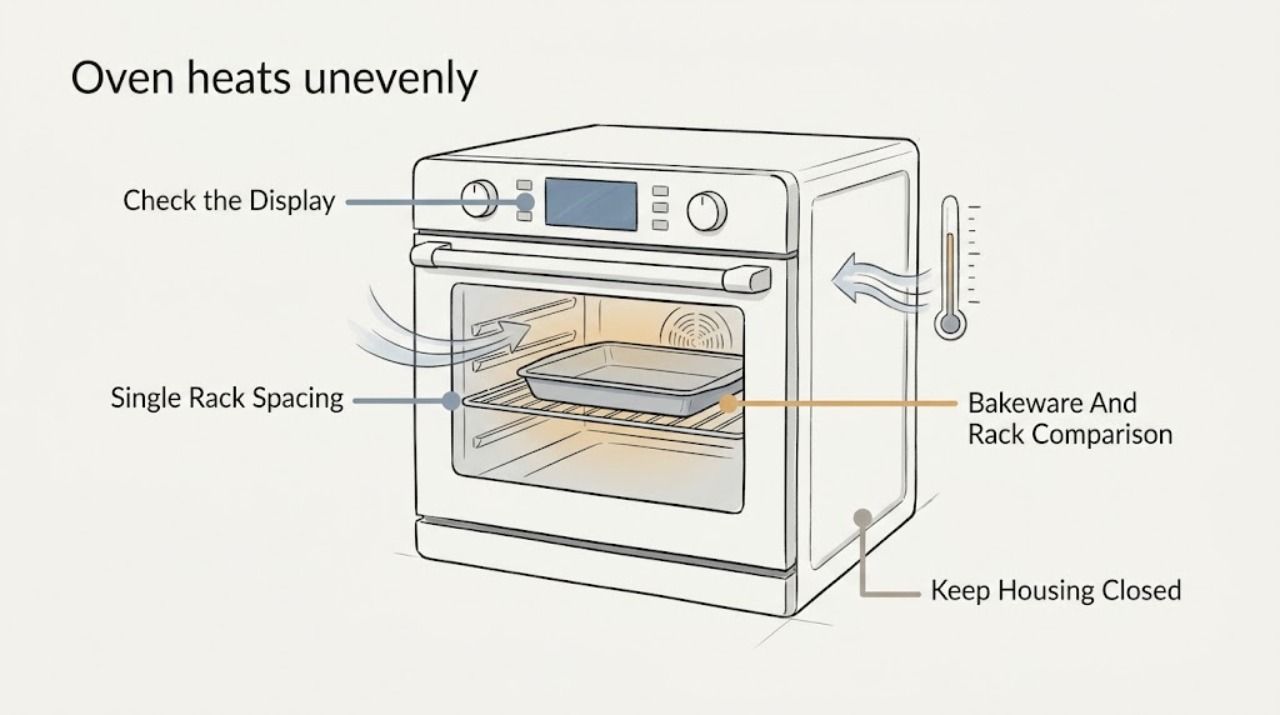
Maytag oven heats unevenly: What to Check and What to Do Next
First separate a pan or rack-layout issue from an oven fault: use the rack position in the exact Maytag owner's manual, fully preheat with the door closed, and bake one tray with food spaced in a single layer. Maytag notes that pan material, rack position, clearance, leveling, and incomplete preheat can all change browning.
-
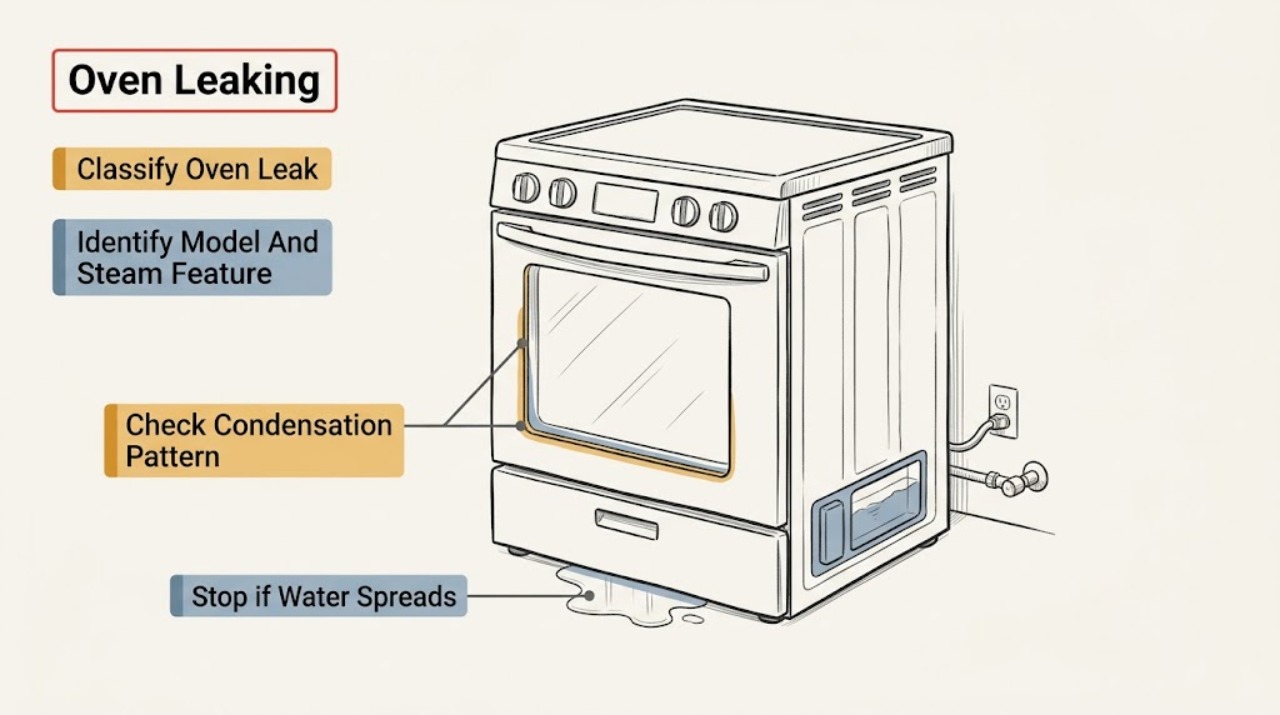
Maytag Oven Leaking: Separate Condensation, Steam Water, and a Real Leak
A Maytag oven that appears to be leaking may be showing condensation from moist food or gas combustion, water left by a steam feature, or a true spill from the cavity, door, reservoir, hose, or a nearby plumbing connection. Do not treat a gas odor as a liquid leak: stop using the appliance, avoid flames and electrical switches, leave, and contact the gas utility or emergency service from a safe location.
-
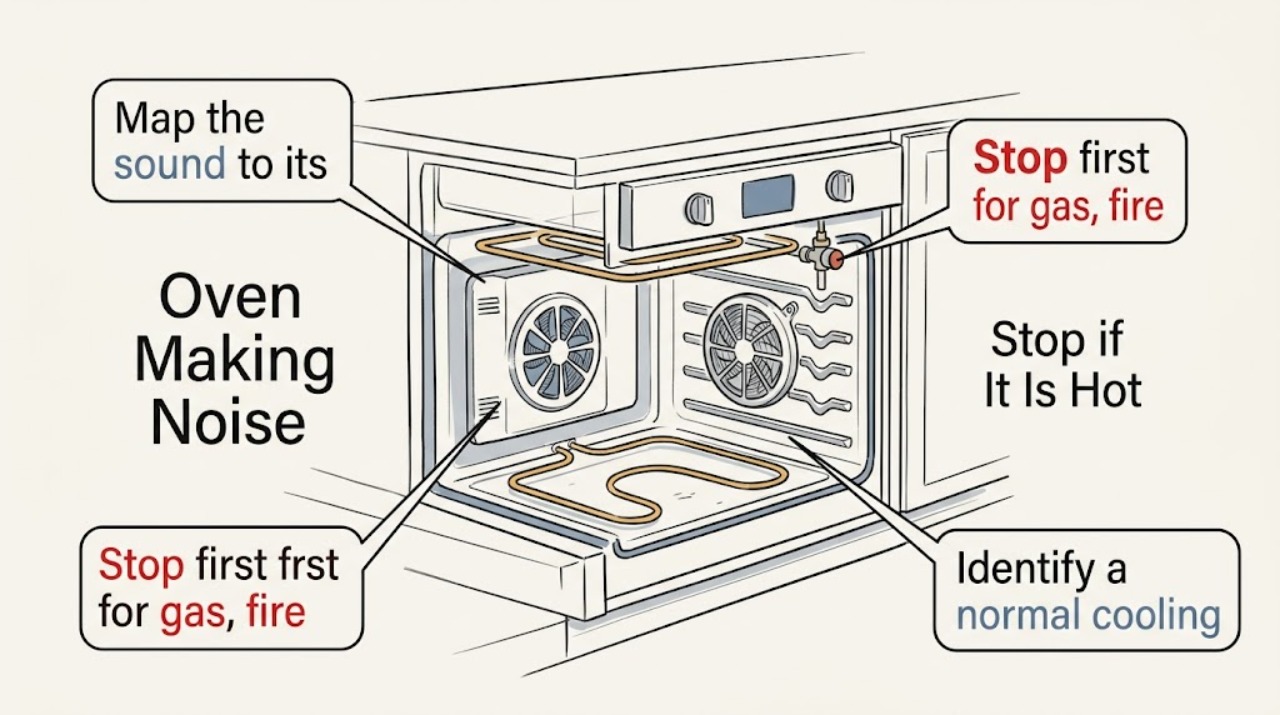
Maytag Oven Making Noise: Normal Sounds and Safe Checks
Many Maytag oven sounds are part of normal operation: a cooling fan can hum during and after a cycle, a convection fan can cycle during preheat or other functions, heating metal can pop or crack as it expands and cools, and a gas valve or igniter can make an occasional pop or brief clicking while ignition is established.
-
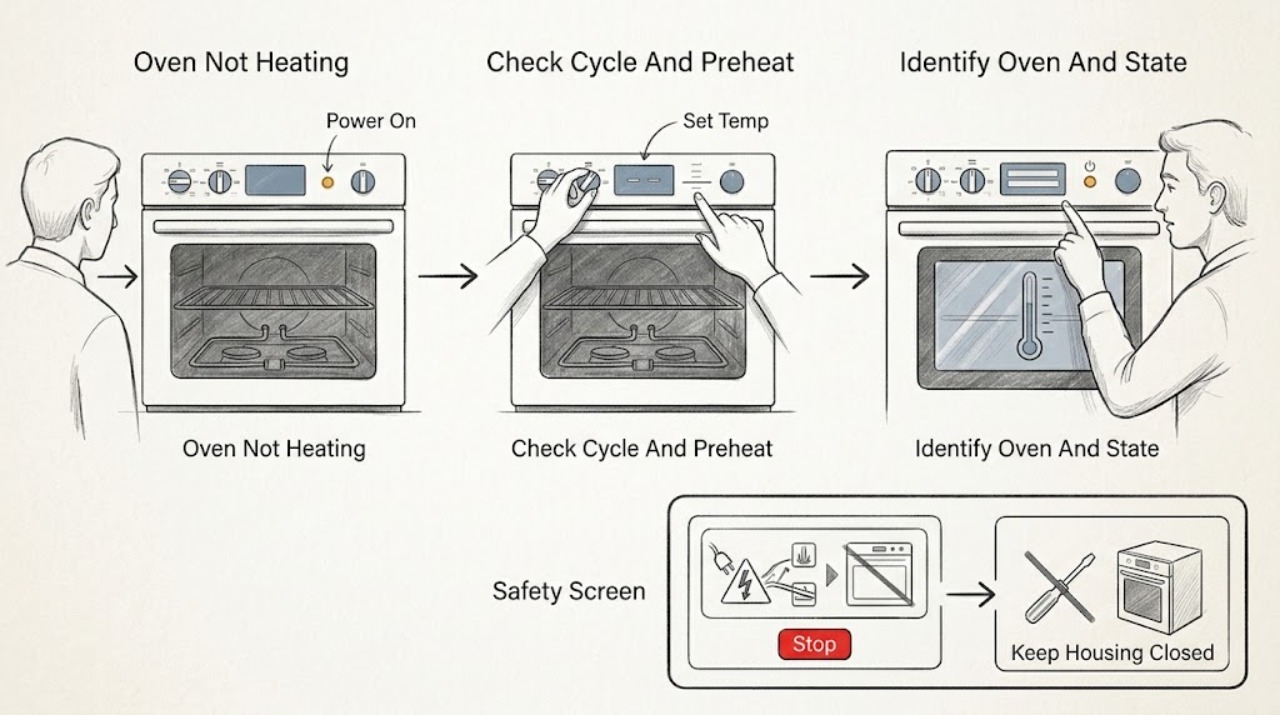
Maytag Oven Not Heating: Check the Setting, Power, and Heat System Safely
First decide whether the Maytag oven is completely dead, preheating slowly, or powering on without producing heat. Read the model label and confirm whether it is electric, gas, or a wall oven, then select Bake with a temperature and allow the documented preheat period without repeatedly opening the door.
-
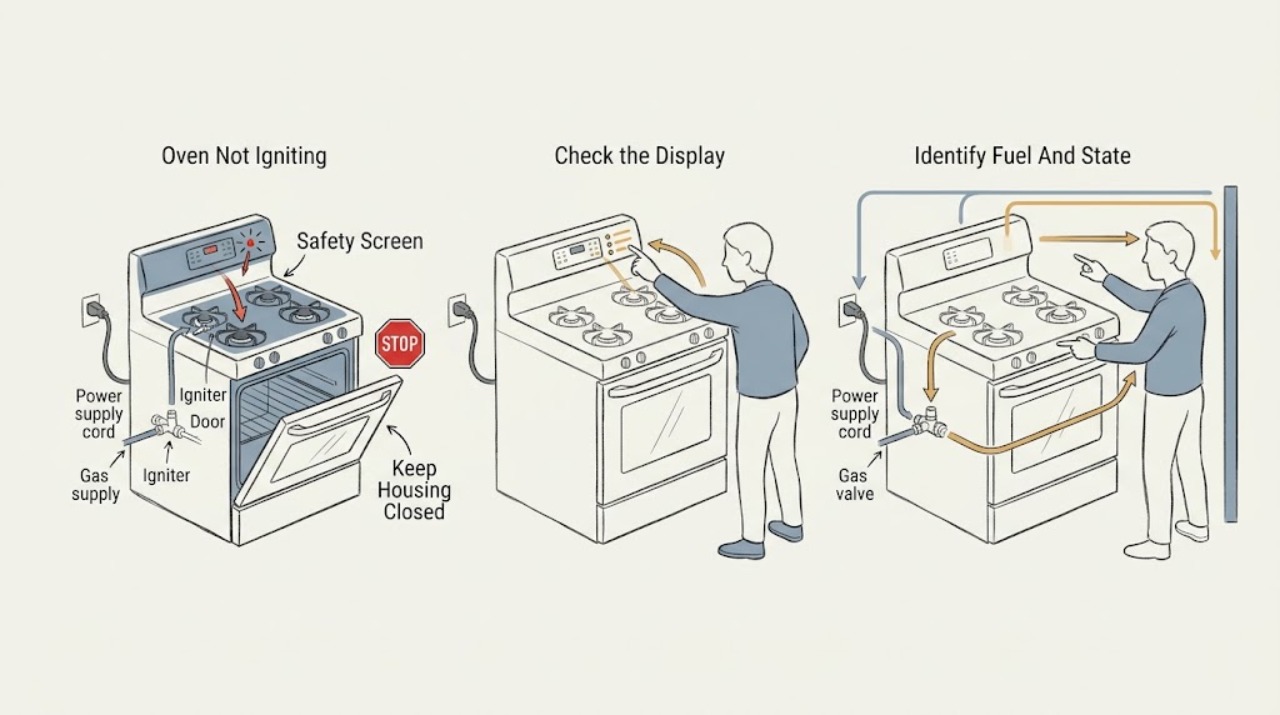
Maytag Oven Not Igniting: Separate Gas Ignition from an Electric No-Heat Fault
The phrase Maytag oven not igniting normally applies to a gas or dual-fuel oven; an electric oven has no gas ignition sequence and should be diagnosed as a no-heat problem instead. First record the exact model, fuel type, display, selected cycle, and whether the surface burners work.
-
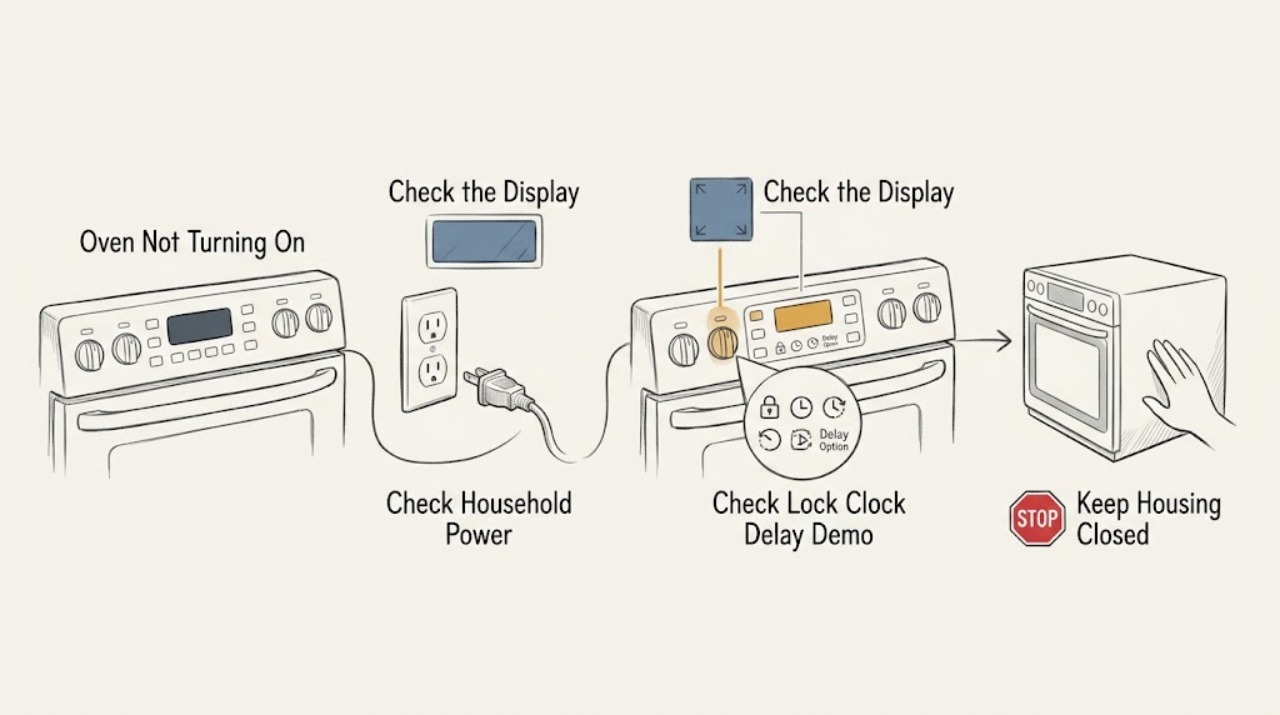
Maytag Oven Not Turning On: Separate Power, Controls, and Gas Safely
First separate a completely dead oven from one with a display that will not start a cycle. With no smoke, gas odor, sparks, hot wiring, or other hazard, check the household breaker or fuse and the exact model's control lock, clock, delayed-start, and demo-mode state.
-
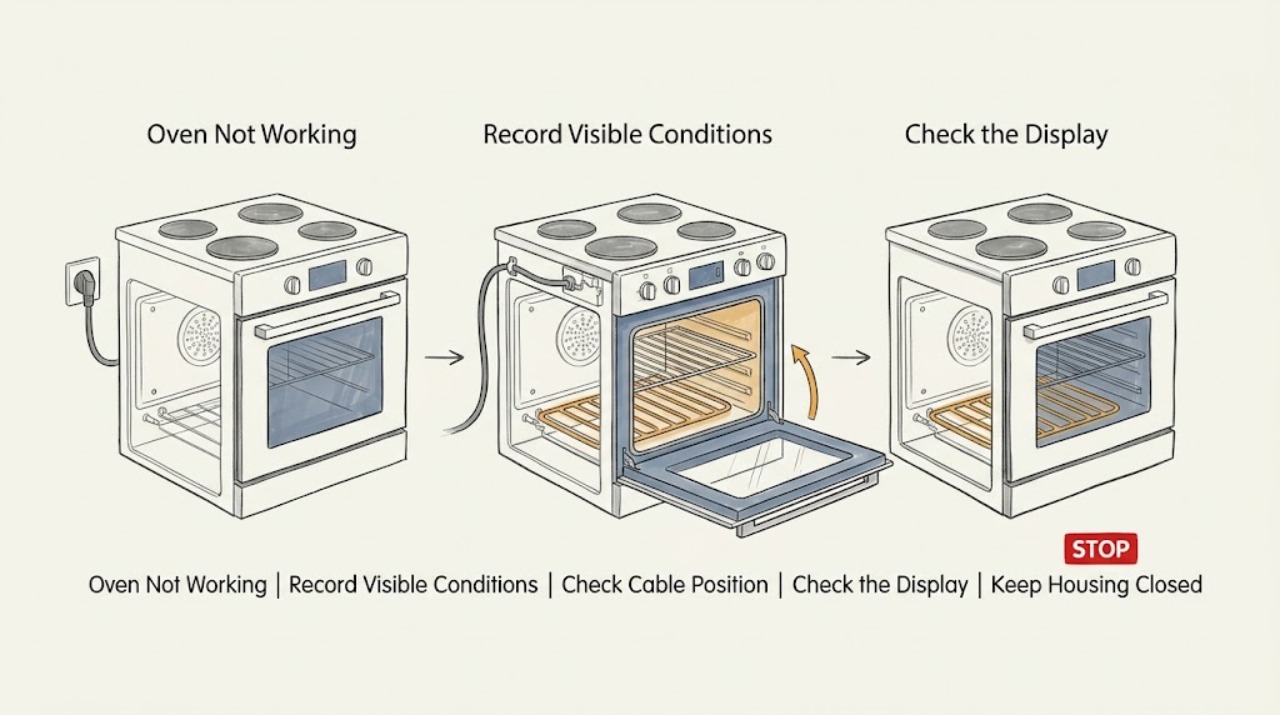
Maytag Oven Not Working: Power, Controls, Heat, and Gas Checks
First decide which symptom you have: no display or no response, a display that will not start a cycle, no heat, a gas oven that will not ignite, or a fault code. If there is a gas odor, smoke, burning smell, arcing, uncontrolled heat, a hot damaged door, or repeated breaker tripping, stop immediately; do not light anything, operate electrical switches, or keep testing.
-
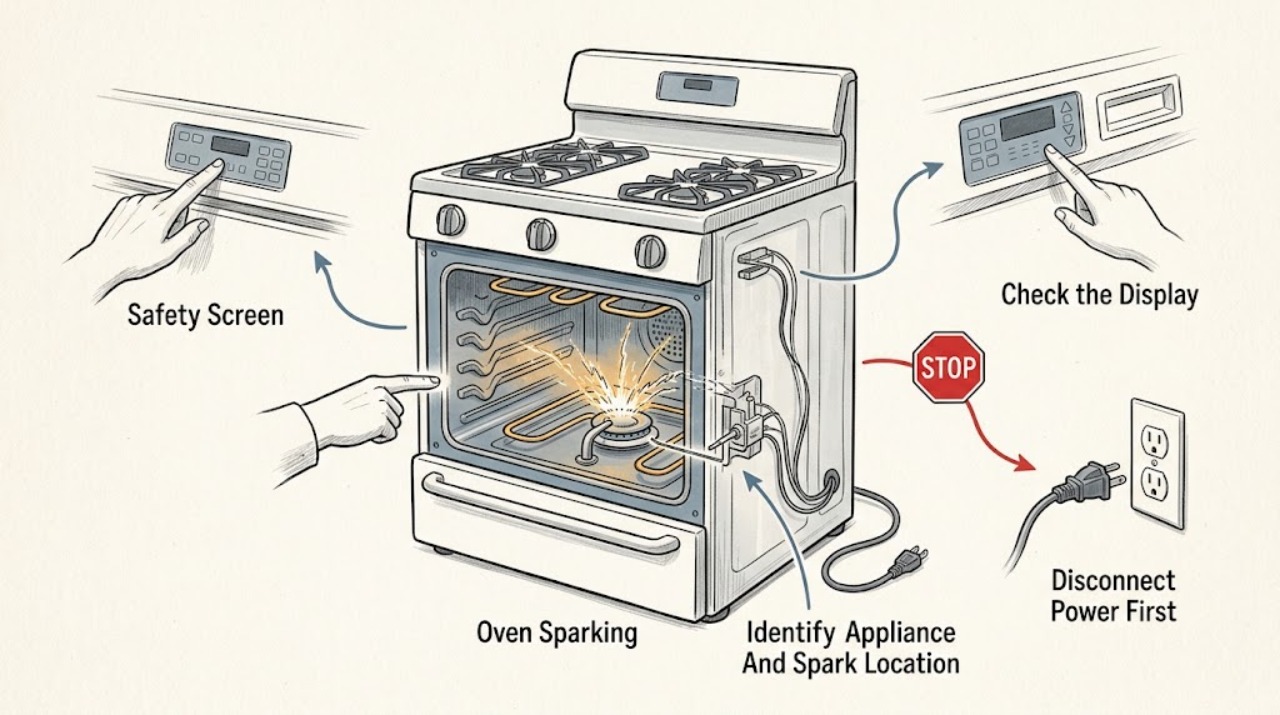
Maytag Oven Sparking: Tell Normal Ignition Clicks from Dangerous Arcing
A Maytag gas oven may make short igniter clicks while it detects a flame, but a visible spark in the wrong place, continuous clicking without ignition, a delayed bang, abnormal flame, or any electrical flash is not a normal test result. First identify whether the appliance is gas, dual-fuel, electric, or a microwave combination, and record exactly where and when the spark appears.