
Brand-independent appliance guidance
General Dryer Repair Guides – Page 2
Brand-independent troubleshooting and repair guidance for common dryer problems and maintenance questions.
General dryer guides
Use these guides when the problem is not limited to a specific manufacturer.
-
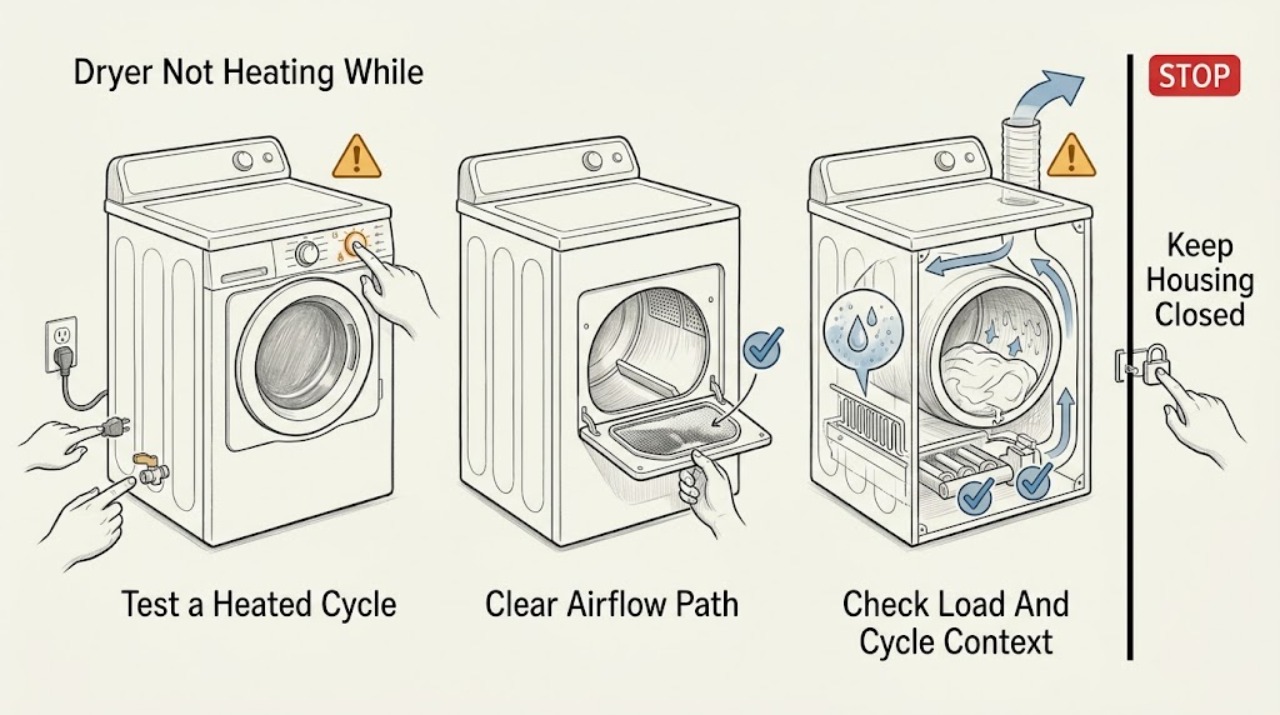
Dryer Not Heating While the Cycle Runs: What to Check and What to Do Next
A dryer can tumble and finish a cycle while producing no heat because the drum motor and heating system are separate. First verify that a heated timed cycle is selected and that the air coming from the exhaust is actually cold, not merely slow to dry.
-
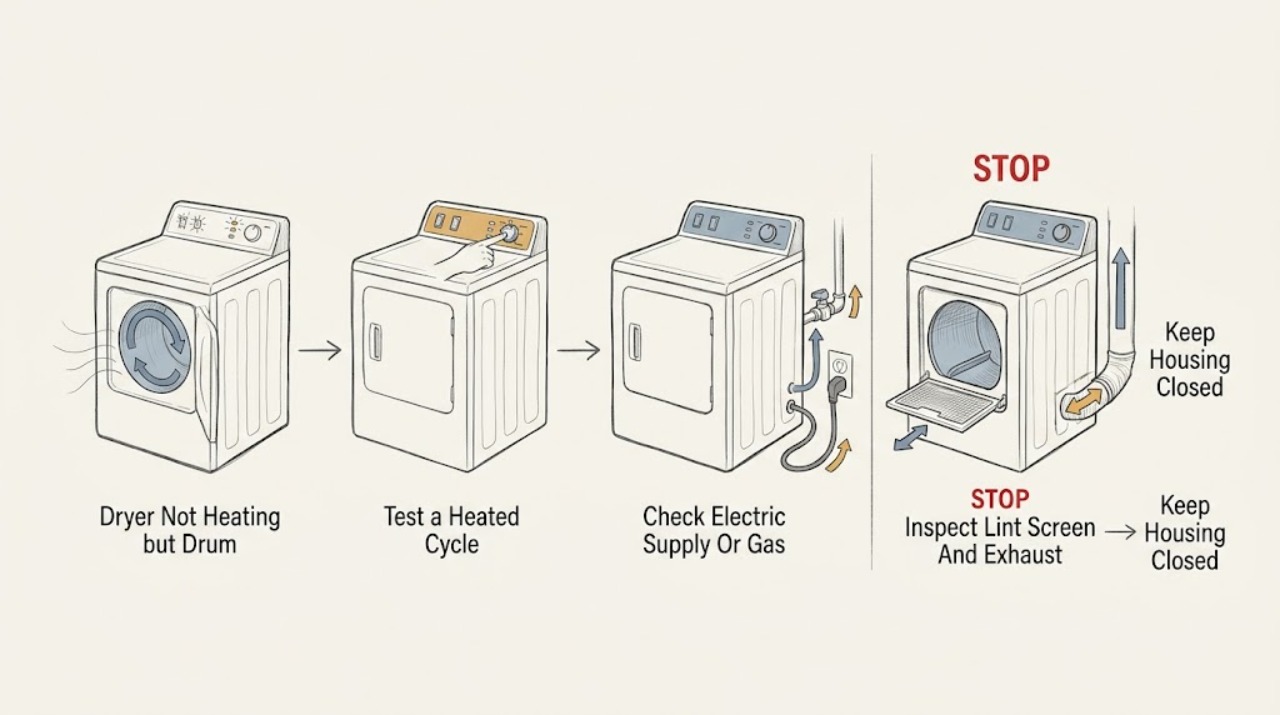
Dryer Not Heating but Drum Tumbles: What to Check and What to Do Next
When a dryer tumbles but does not heat, first confirm that a heated cycle is selected and that the symptom is not an Air Only or Fluff setting. Electric dryers can tumble when one side of the household supply is unavailable, so check for a tripped breaker only from the panel and stop if it trips again.
-
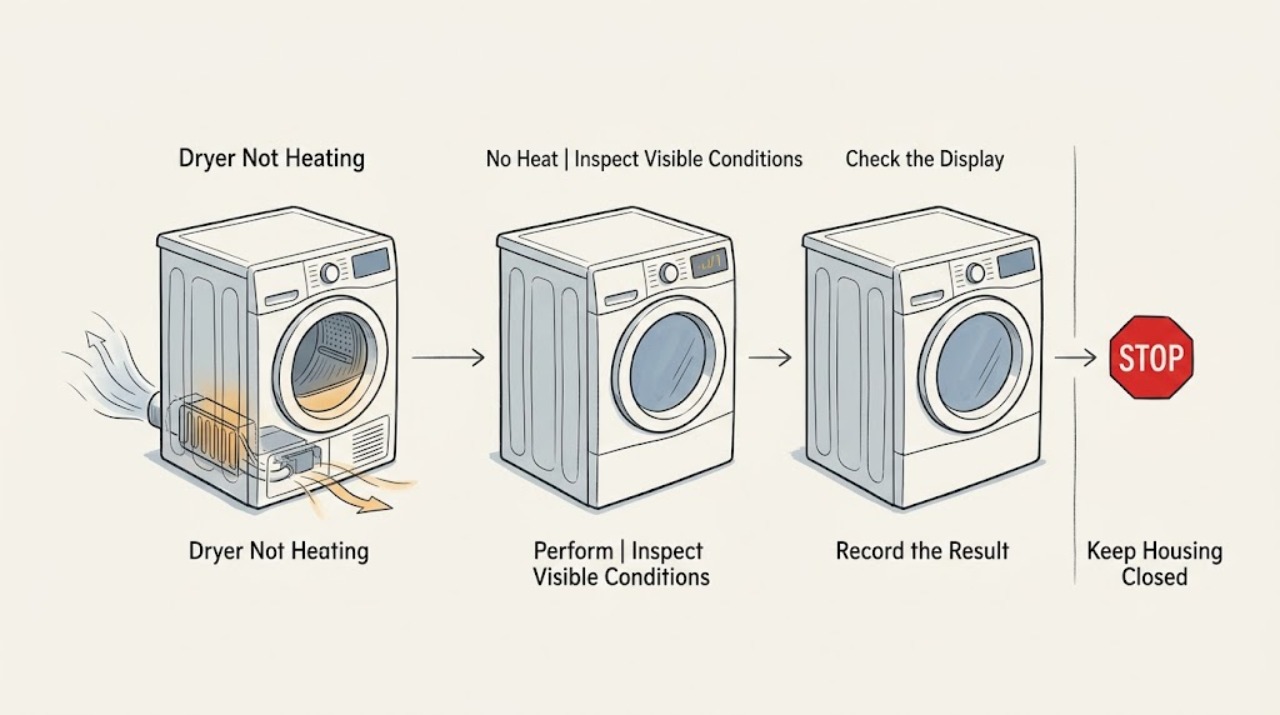
Dryer Not Heating, No Heat at Exhaust: What to Check and What to Do Next
First confirm that the dryer is on a heated cycle rather than Air Only, Fluff, cool-down, or another no-heat setting, then run a brief empty test and observe the airflow at the outside exhaust without touching hot parts. If the drum runs but the exhaust stays cold, check the correct power or gas supply, lint screen, vent hose, and outside hood.
-
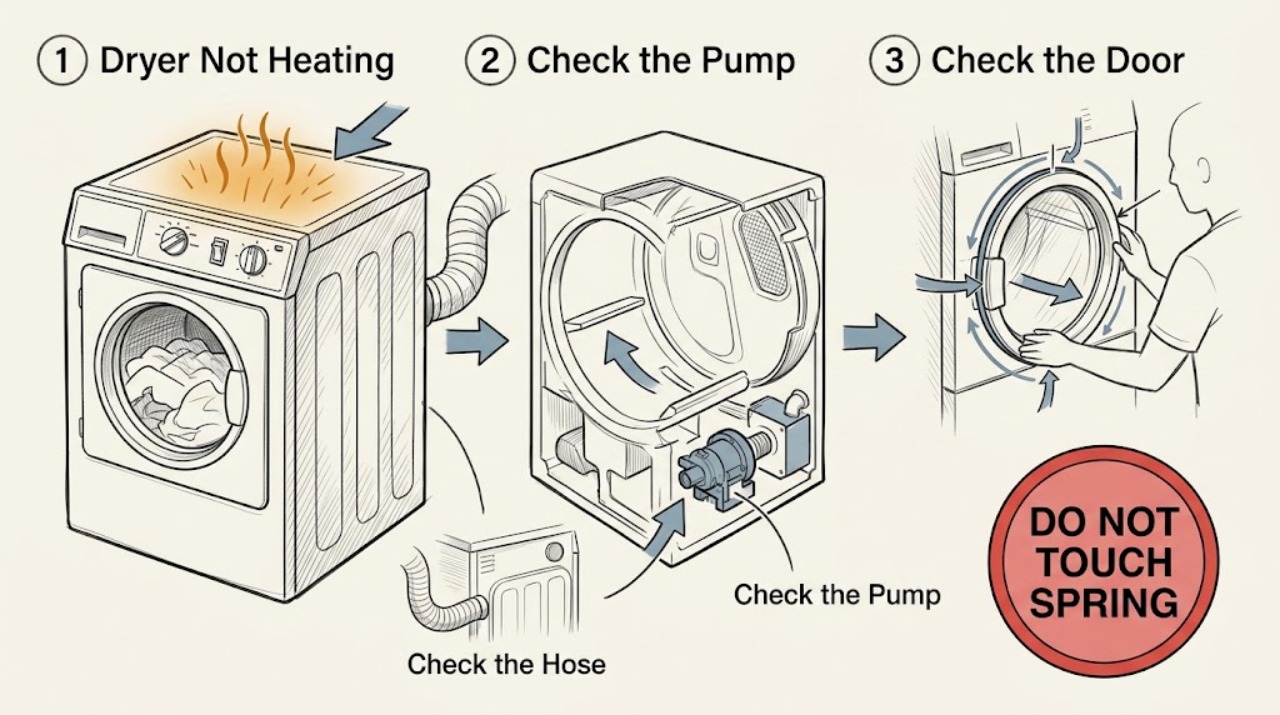
Dryer Not Heating: Check the Cycle, Airflow, Power, and Fuel Safely
If a dryer is not heating, first confirm whether it is actually running a heated cycle or an Air, Air Fluff, No Heat, or cool-down cycle. Then check the load, lint screen, visible exhaust, and accessible power connection with the dryer off and cool.
-
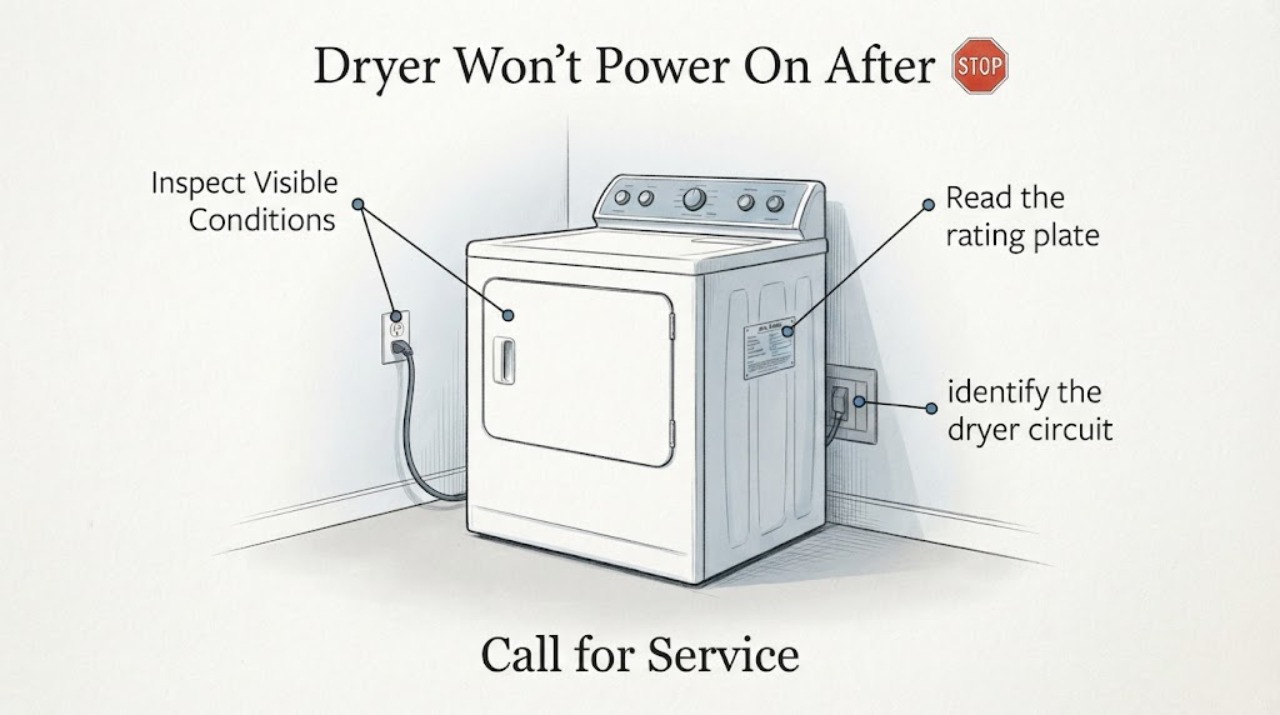
Dryer Won’t Power On After Moving to a New House
After a move, separate a dryer that has no lights or response from one that has power but will not start. Keep it unplugged if the plug, cord, receptacle, or installation looks damaged or incorrectly wired; reset the new home's dryer breaker fully once, and use the exact model manual to confirm whether it is an electric or gas dryer and what supply it requires.
-
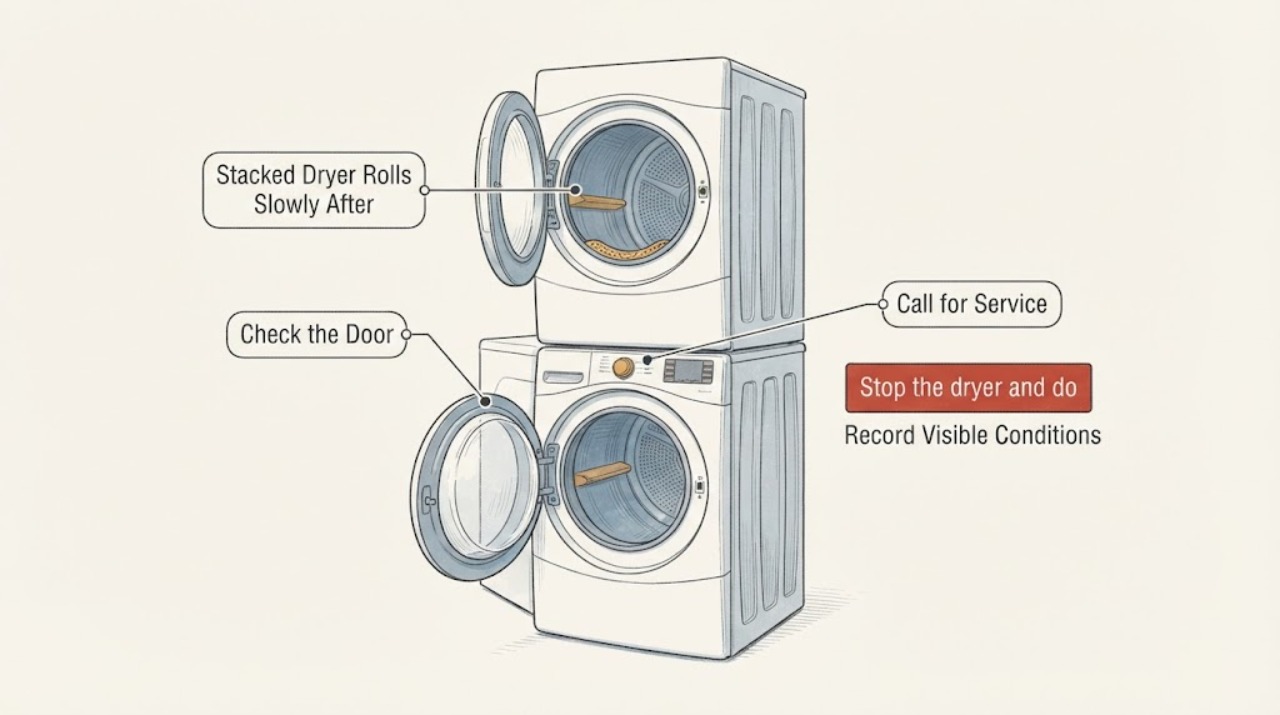
Stacked Dryer Rolls Slowly After Repair: Stop Use and Have the Repair Rechecked
If a stacked dryer rolled normally before a repair but now rolls slowly, stops, scrapes, or moves differently after being taken apart and reassembled, stop using it and have the same repairer return to inspect the work. Do not unstack the unit, reopen the cabinet, hand-force the drum, order a motor or roller, or run repeated test loads.
-
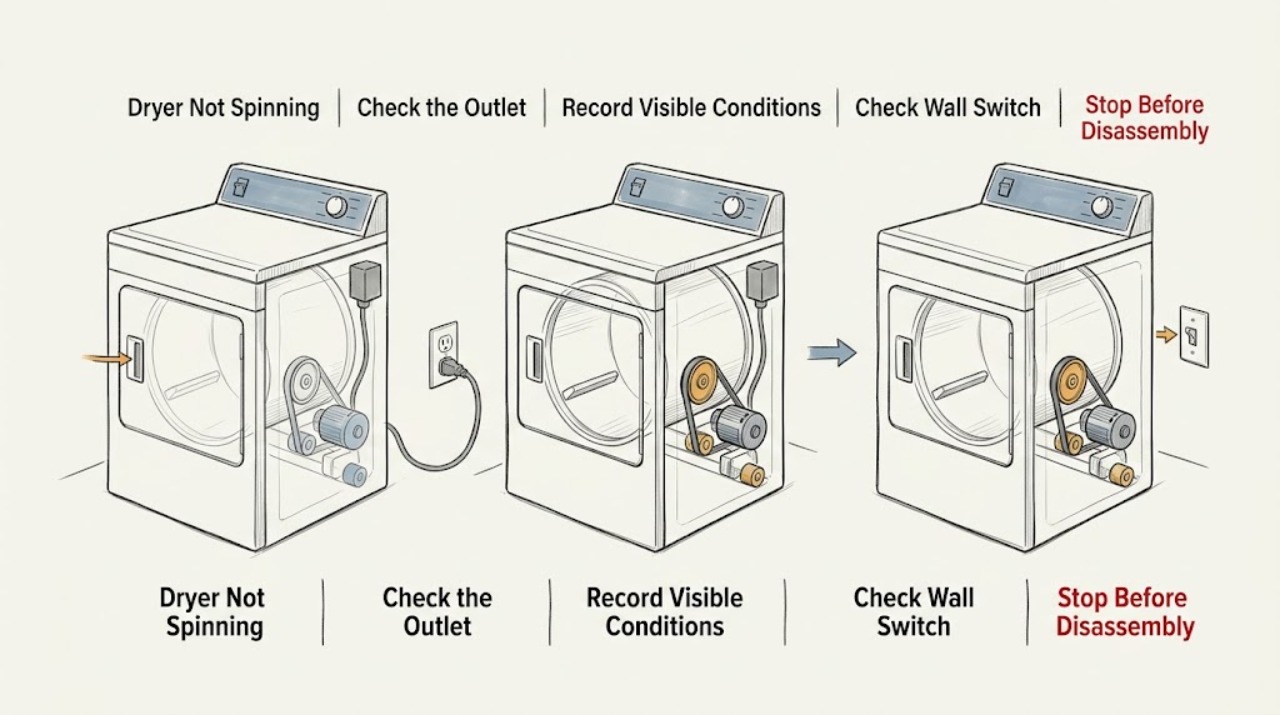
Dryer Not Spinning: Separate a Start Problem from a Drum Problem
First decide whether the dryer never starts or whether it starts and you can hear a motor or blower while the drum remains still. With the dryer empty, cool, and disconnected from power, check only the outside door, load, and accessible controls; a drum that turns unusually freely can point to a loose or broken belt, while a drum that is hard to turn can point to a drive or support problem.
-
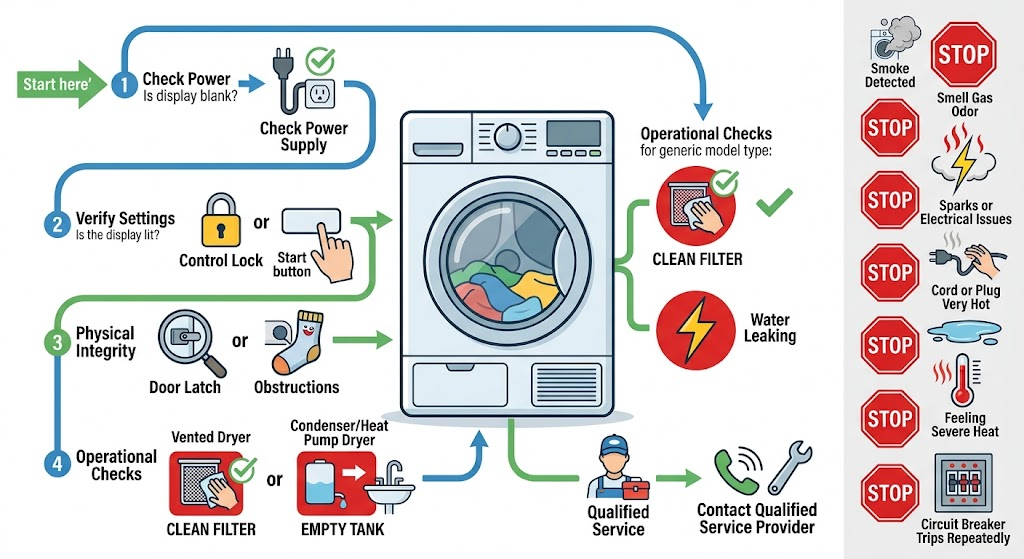
Dryer Not Starting: Separate Power, Controls, Door, and Safety Faults
First decide whether the dryer has no power at all or has a display and lights but will not start. If there is no smoke, burning smell, gas odor, sparking, water, or abnormal heat, check the plug, dedicated breaker or fuse, dry control panel, Control Lock, cycle selector, Start or Hold-to-Start input, and fully latched door.
-
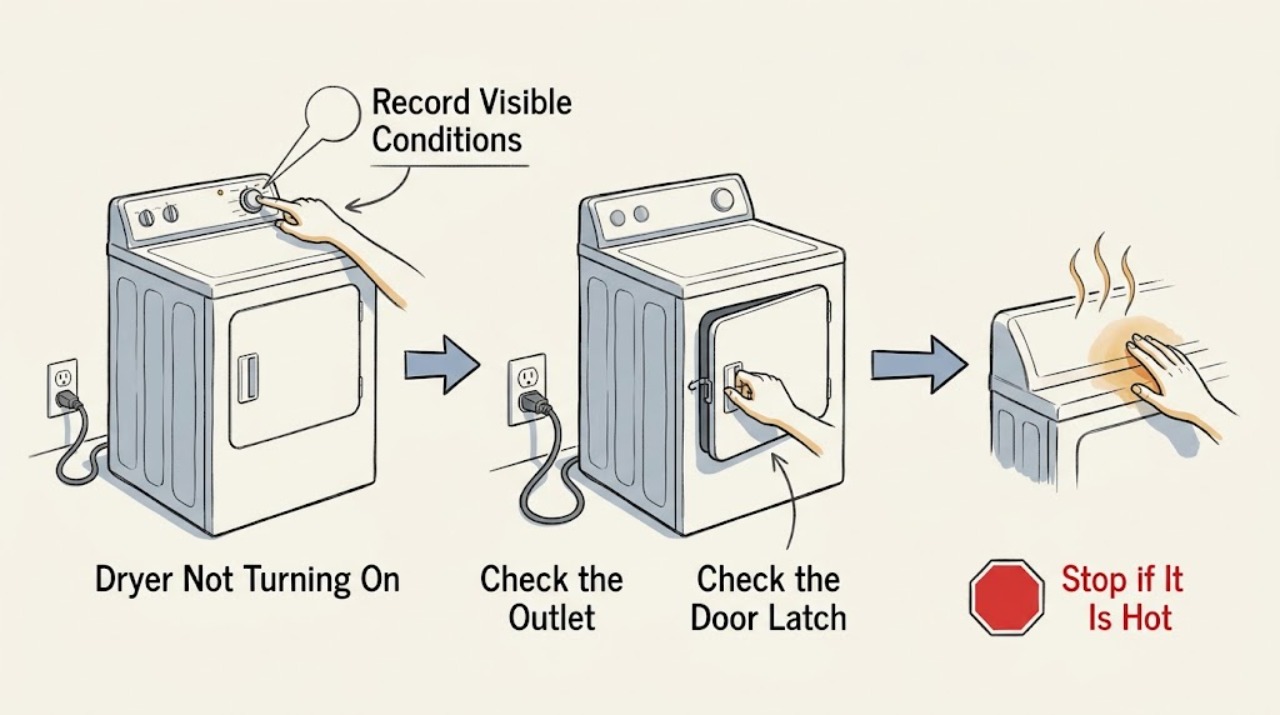
Dryer Not Turning On: Separate No Power from a No-Start Control Problem
When a dryer is not turning on, first separate a completely blank appliance from a dryer whose display or drum light works but will not start. For no power, inspect only the accessible plug, cord, outlet, and breaker or fuse status; major appliances should use a direct wall connection.
-
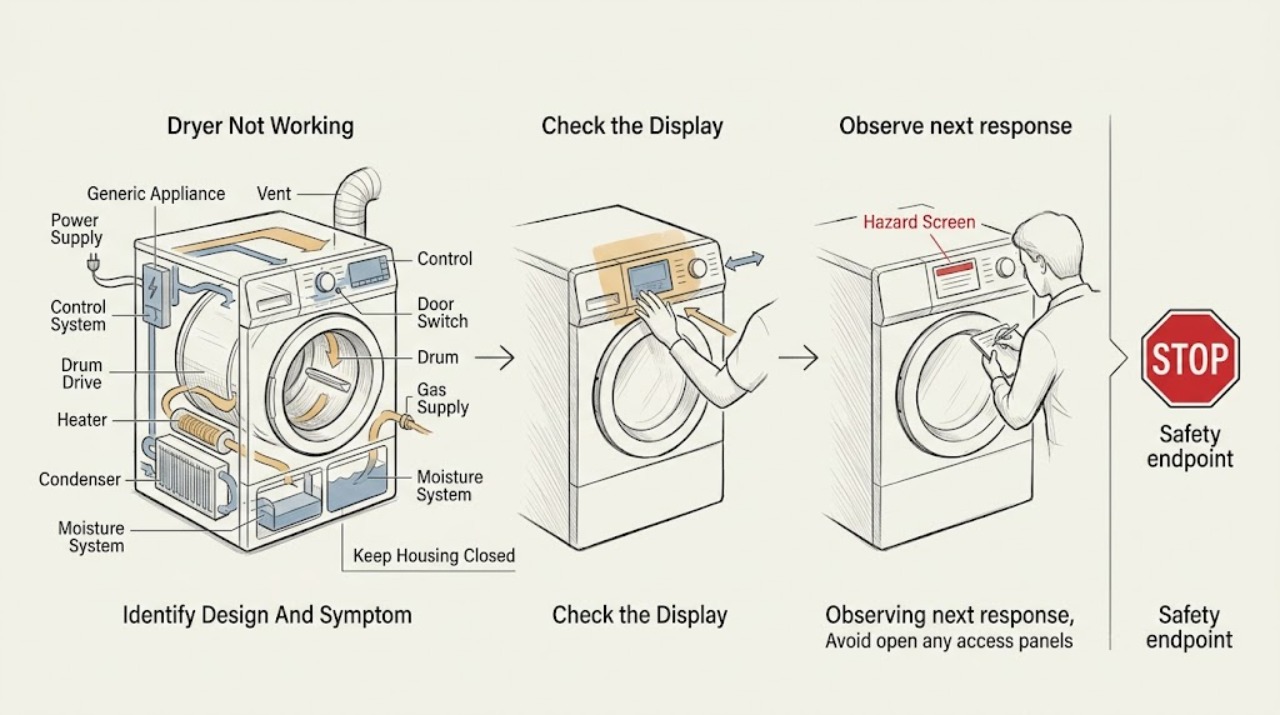
Dryer Not Working: Separate Power, Start, Heat, Airflow, and Cycle Faults
Dryer not working is a symptom, not one diagnosis. First record whether the display or drum light is dead, the dryer has power but will not start, the drum does not turn, it turns without heat, clothes stay damp, or a cycle stops or never finishes.
-
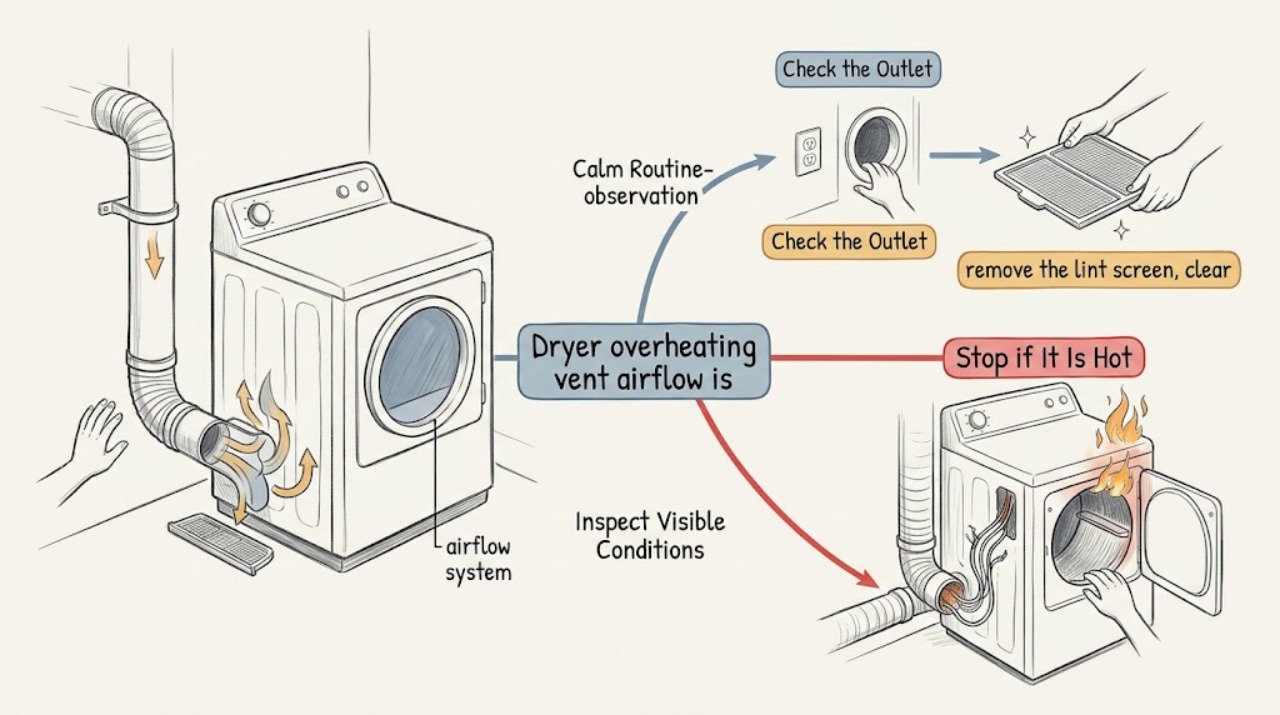
Dryer overheating vent airflow is restricted: What to Check and What to Do Next
Stop using a dryer that is overheating until its airflow is checked. Unplug it before inspecting the lint screen, the reachable vent hose, and the outside hood; look for a crushed or kinked duct, lint or debris, a stuck hood flap, weak exhaust flow, or a vent run with excessive length and bends.
-
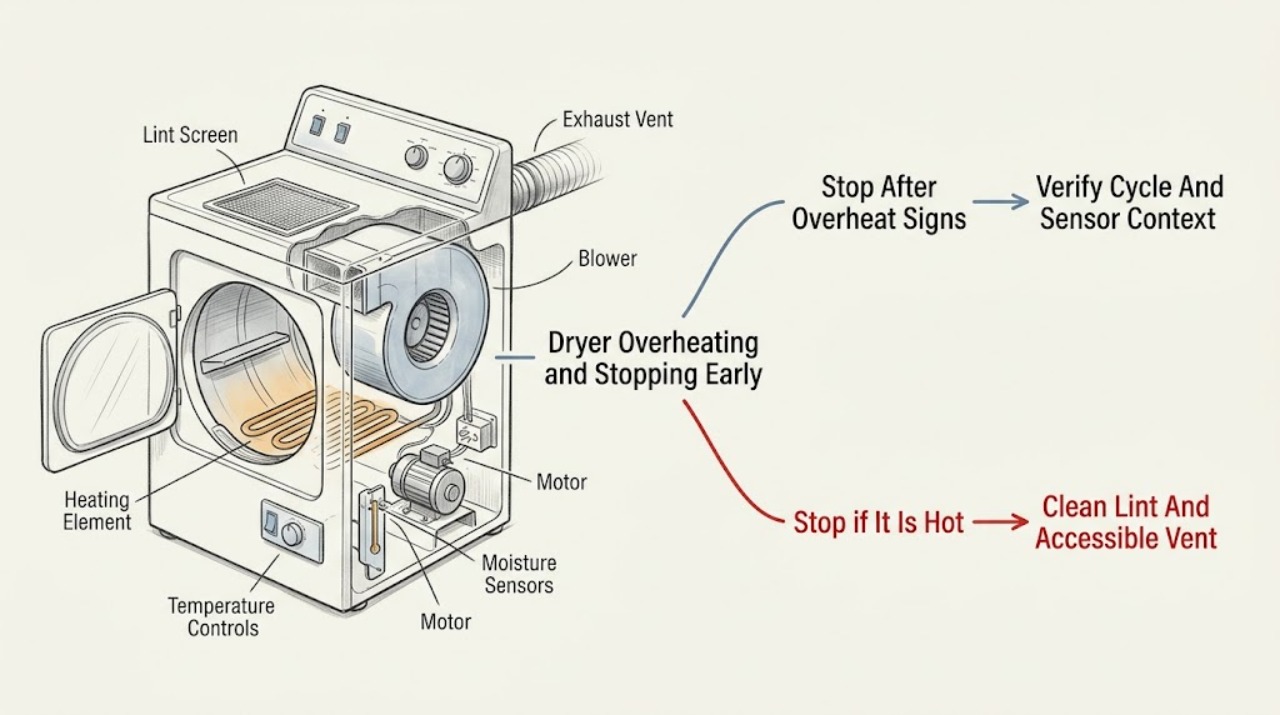
Dryer Overheating and Stopping Early: What to Check and What to Do Next
A dryer that becomes unusually hot and stops before the cycle ends may be protecting itself from restricted airflow, but an early stop can also be normal moisture-sensor behavior if the load is already dry. Stop the dryer if the cabinet or clothes are intensely hot, there is a burning smell, smoke, sparking, or a damaged cord.
-
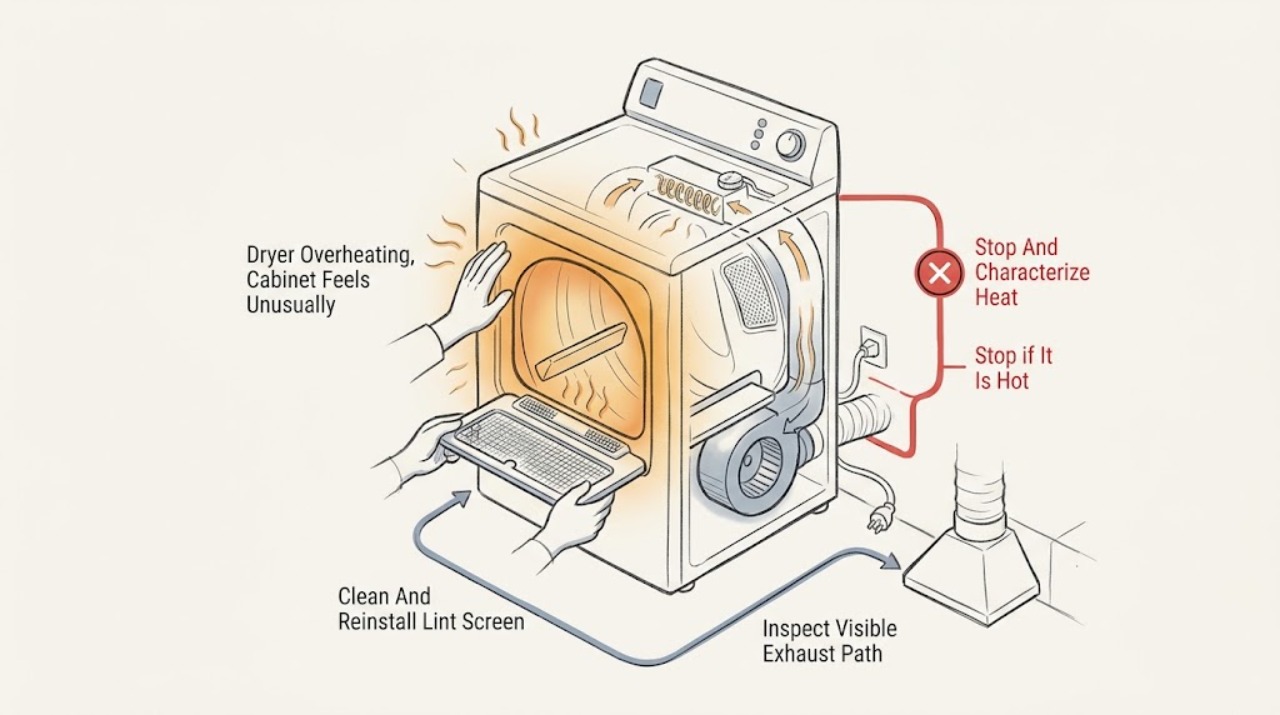
Dryer Overheating, Cabinet Feels Unusually Hot: What to Check and What to Do Next
A dryer should feel warm while operating, but an unusually hot cabinet, very hot clothes, steam, long dry times, weak outside airflow, a burning odor, or repeated shutdown is a warning to stop using it until the airflow and appliance are evaluated. Manufacturer guidance links heat staying inside the dryer to a clogged or kinked exhaust path, lint buildup, a blocked outside hood, or a failed blower; a loose, damaged, blocked, or missing lint screen can also cause overheating.
-
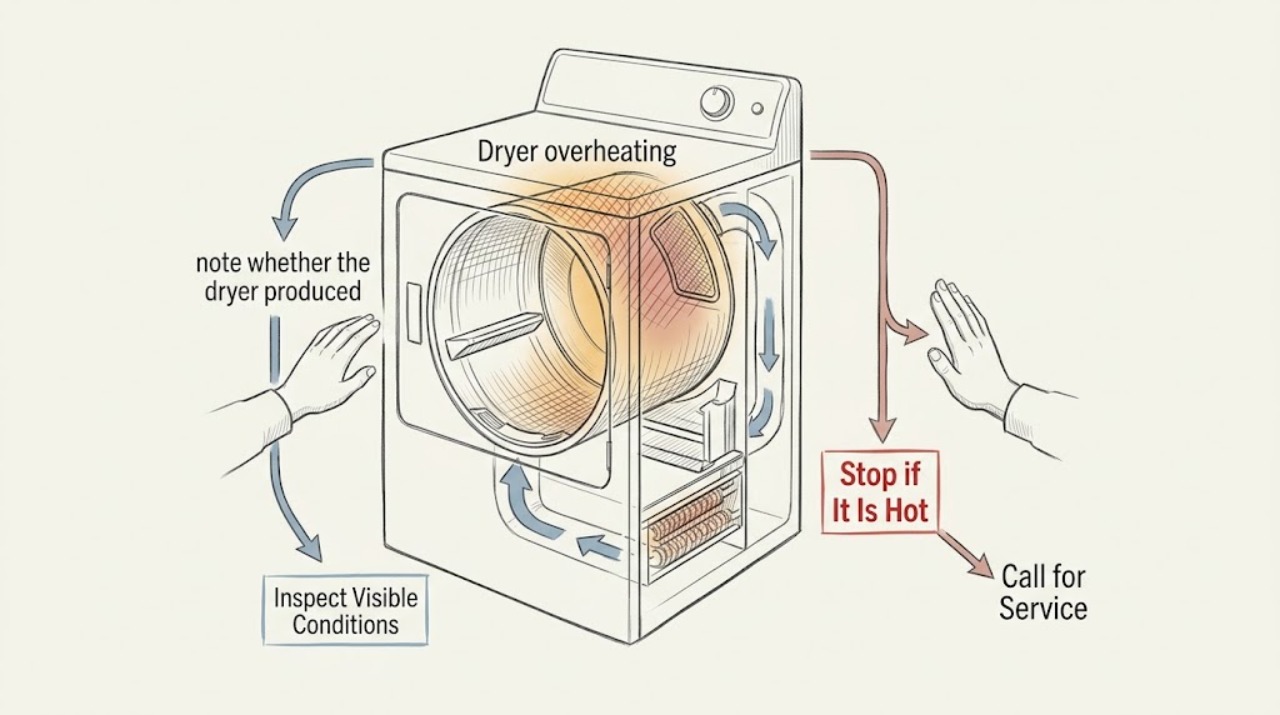
Dryer overheating: What to Check and What to Do Next
Stop using a dryer that is overheating, smells like burning, produces smoke, shows scorching, or shuts down abnormally. Do not run another test cycle or open the cabinet.
-
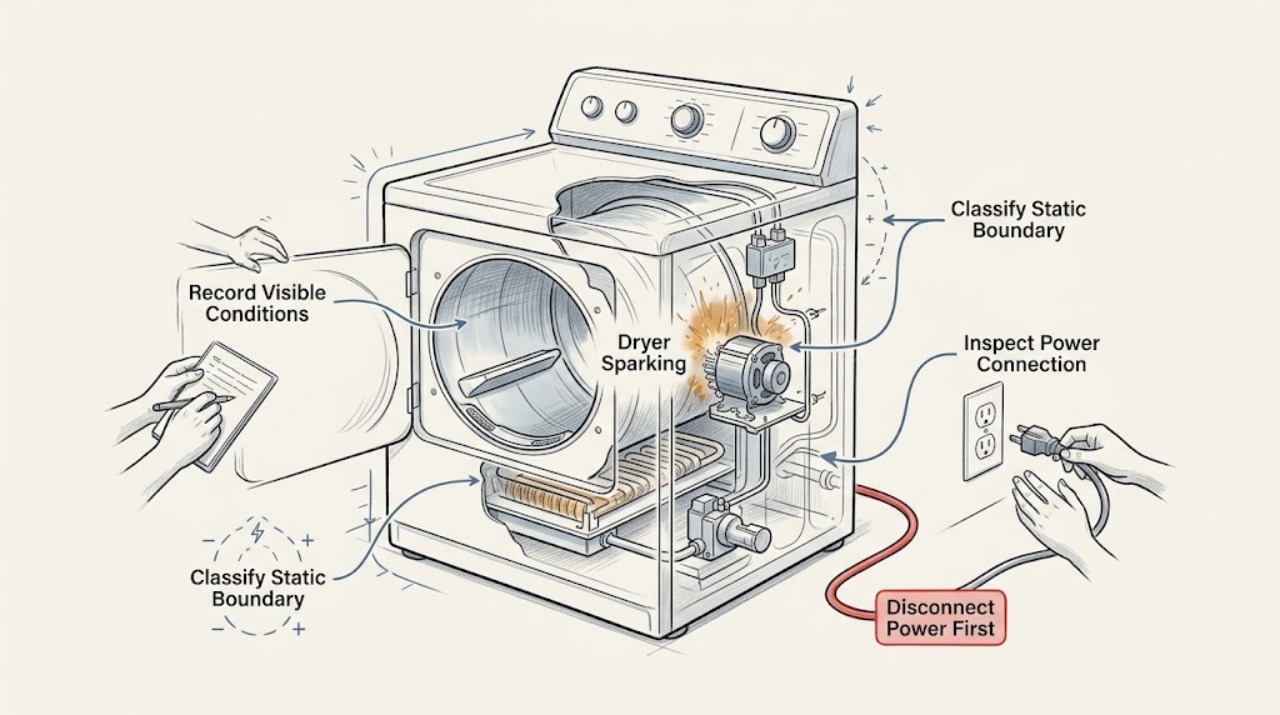
Dryer Sparking: Stop Use and Identify the Safe Next Step
A visible spark or arc from a dryer, its plug, outlet, cord, controls, cabinet, drum, or internal area is abnormal: stop the cycle, keep people away, and do not run the dryer again to see whether it repeats. If the machine is still operating and it is safe to do so from a dry position, turn its control off; isolate power only without touching a hot, wet, scorched, loose, or actively arcing connection.
-
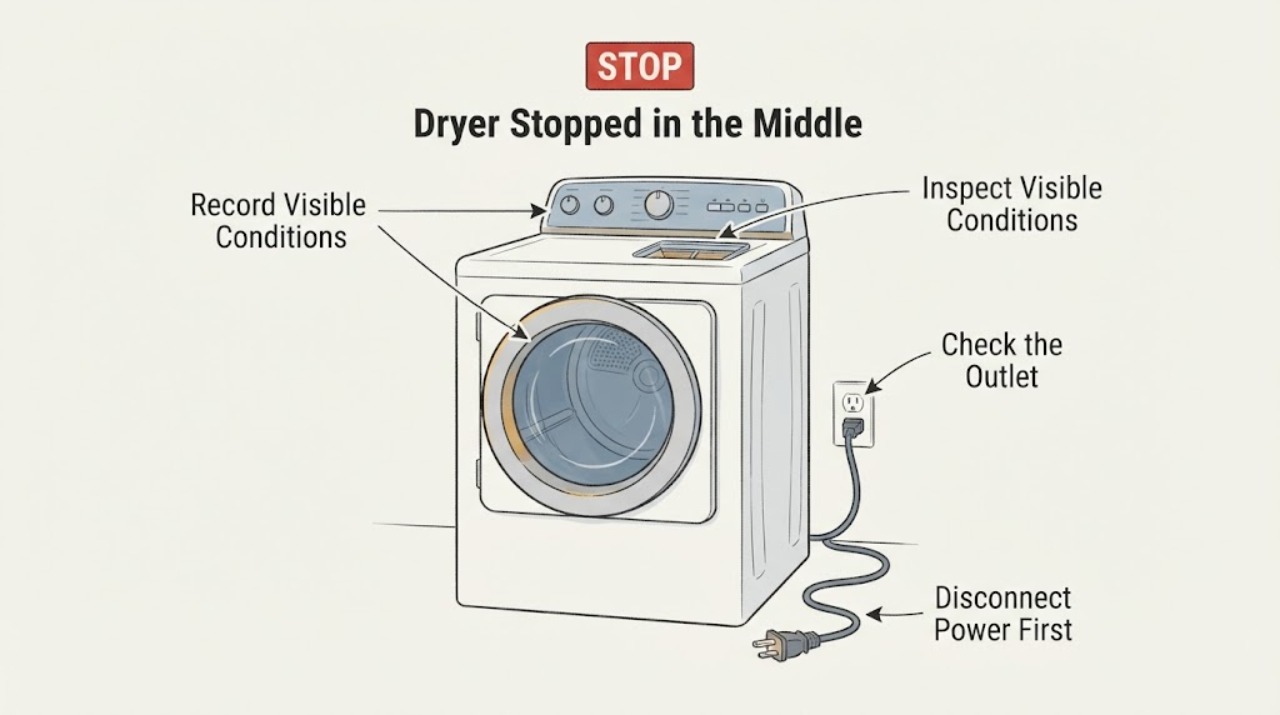
Dryer Stopped in the Middle of a Cycle: Safe Checks
First determine whether the dryer completed an automatic cycle early or stopped abruptly. A sensor cycle can end when the load reaches its selected dryness, while an air-only cycle is not supposed to add heat.
-
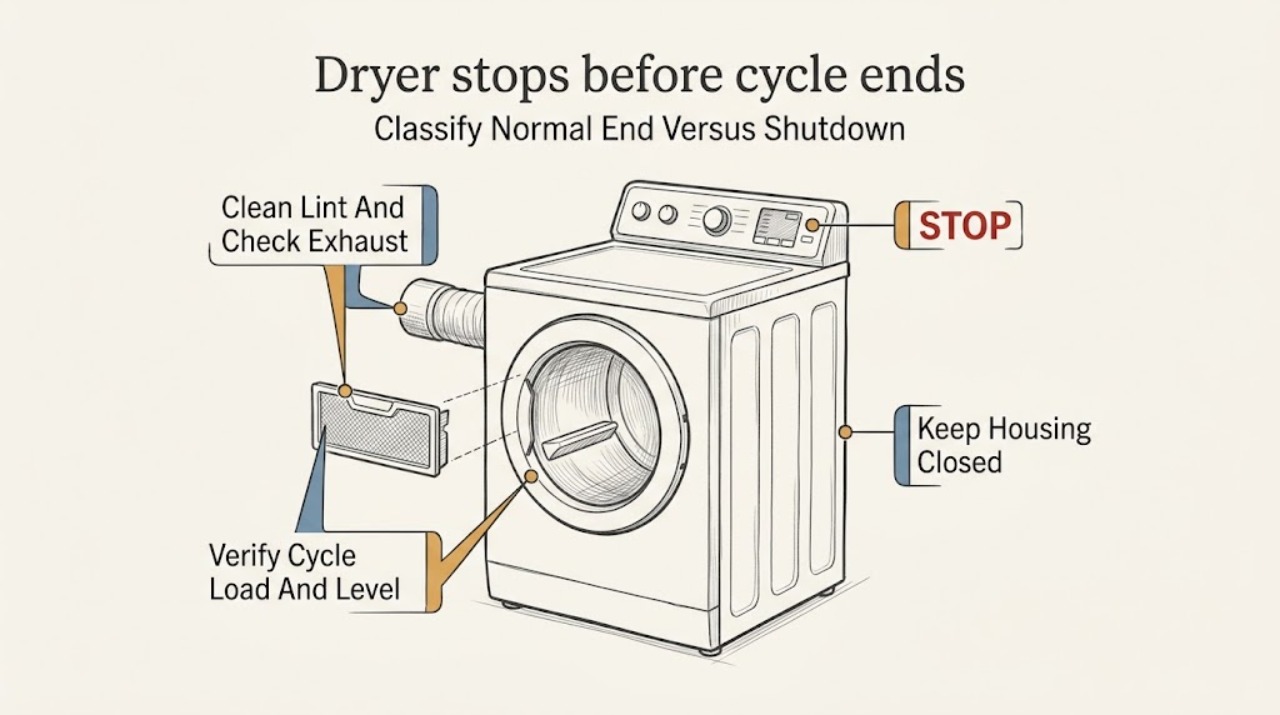
Dryer stops before cycle ends restart works after cooling: What to Check and What to Do Next
A dryer that stops before the cycle ends and works again only after cooling is not necessarily fixed: heat buildup can trigger a protective shutdown, and repeated restarting can worsen a restricted-vent, motor, drive, or control problem. First determine whether the cycle actually ended normally because a sensor cycle detected dry clothes, or whether the dryer became hot and lost power or stopped with damp clothes.
-
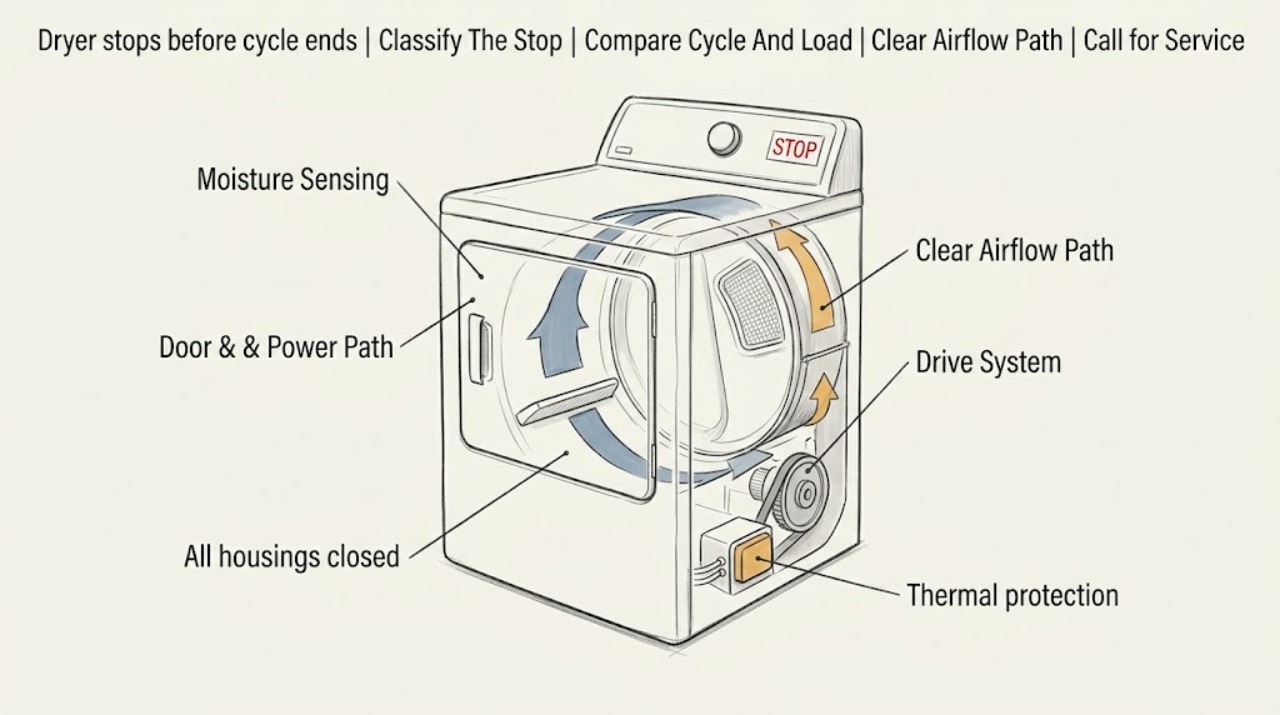
Dryer stops before cycle ends after warming: What to Check and What to Do Next
A dryer that warms and then stops before the selected cycle ends is not automatically a failed motor or thermal fuse. First separate a normal sensor-cycle decision from a true mid-cycle stop: note whether the display ends normally, whether the drum stops while controls remain active, whether clothes are damp, and whether the dryer runs again only after cooling.
-
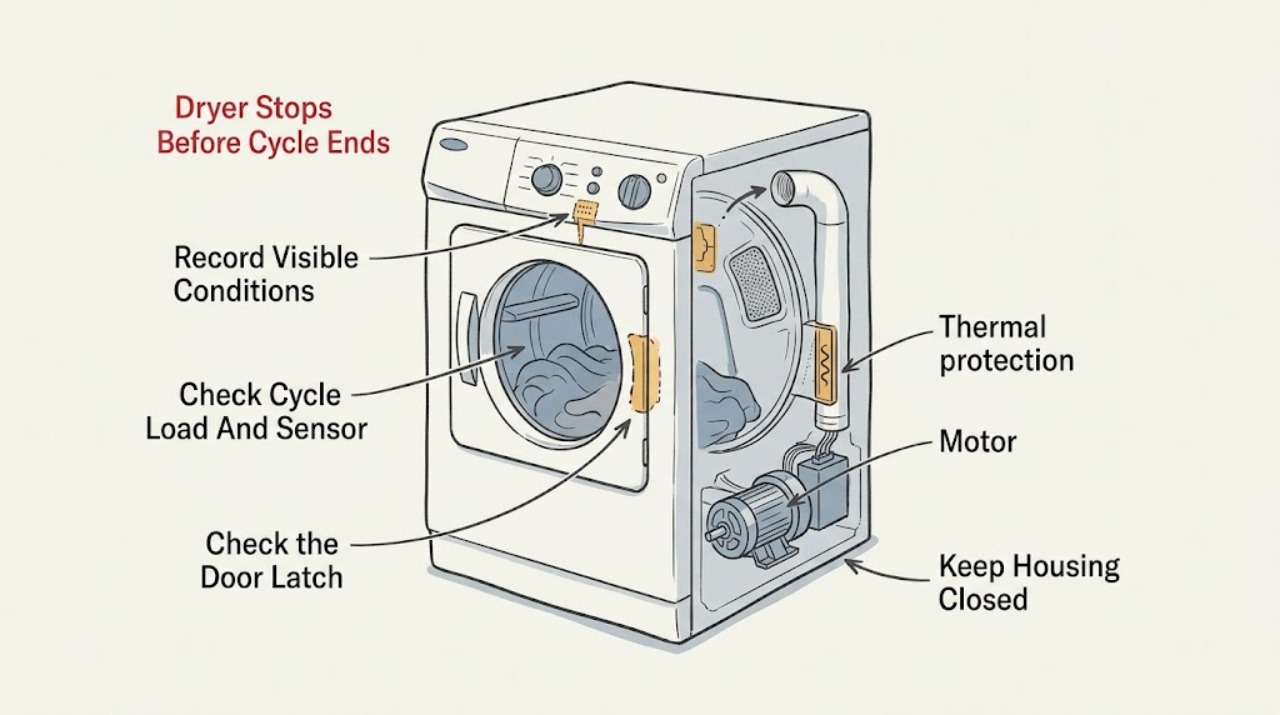
Dryer Stops Before Cycle Ends and Starts Normally: What to Check and What to Do Next
A dryer that starts normally and stops before the displayed cycle ends may be completing an automatic cycle early, losing contact with the load sensors, detecting an open door, overheating from restricted airflow, losing part of its power supply, or developing an internal motor, thermal, or control fault.
-
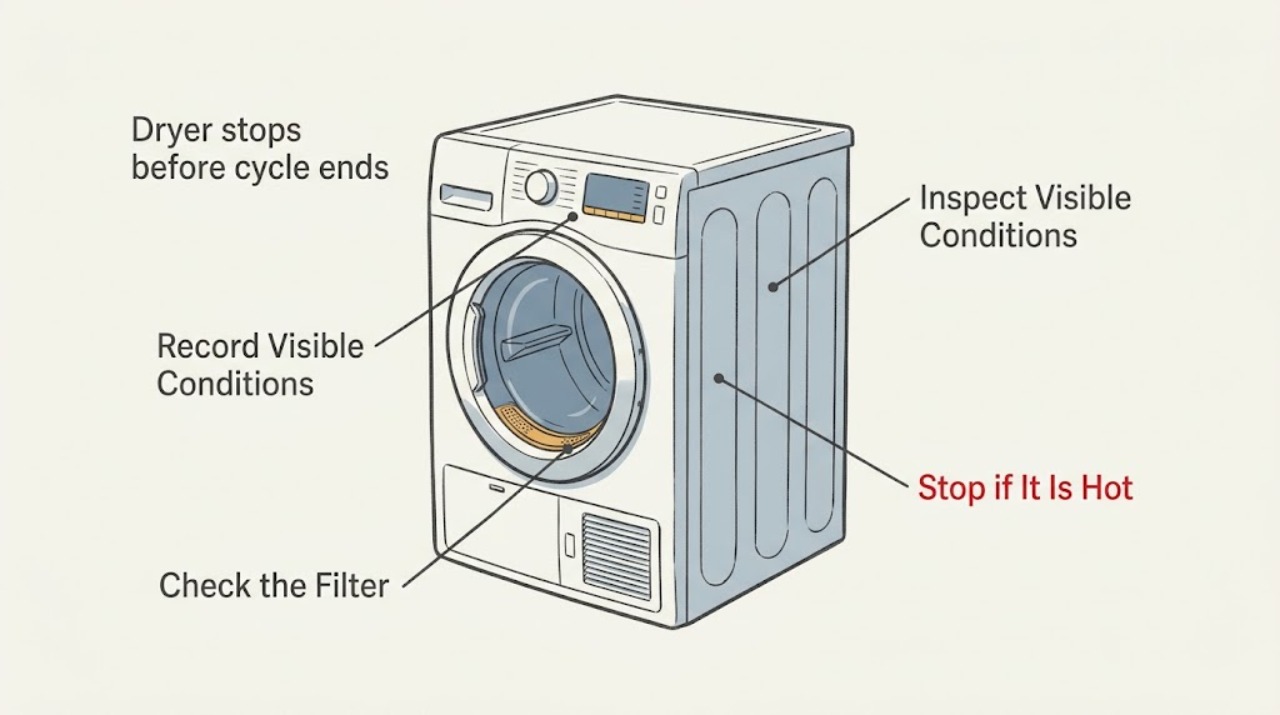
Dryer stops before cycle ends: What to Check and What to Do Next
A dryer that stops before the selected cycle ends may be responding normally to a sensor cycle, or it may be stopping because of a door, airflow, power, control, motor, or heat-safety fault. First note the selected cycle, load condition, display state, and exact timing.
-
Dryer takes too long to dry airflow is weak: What to Check and What to Do Next
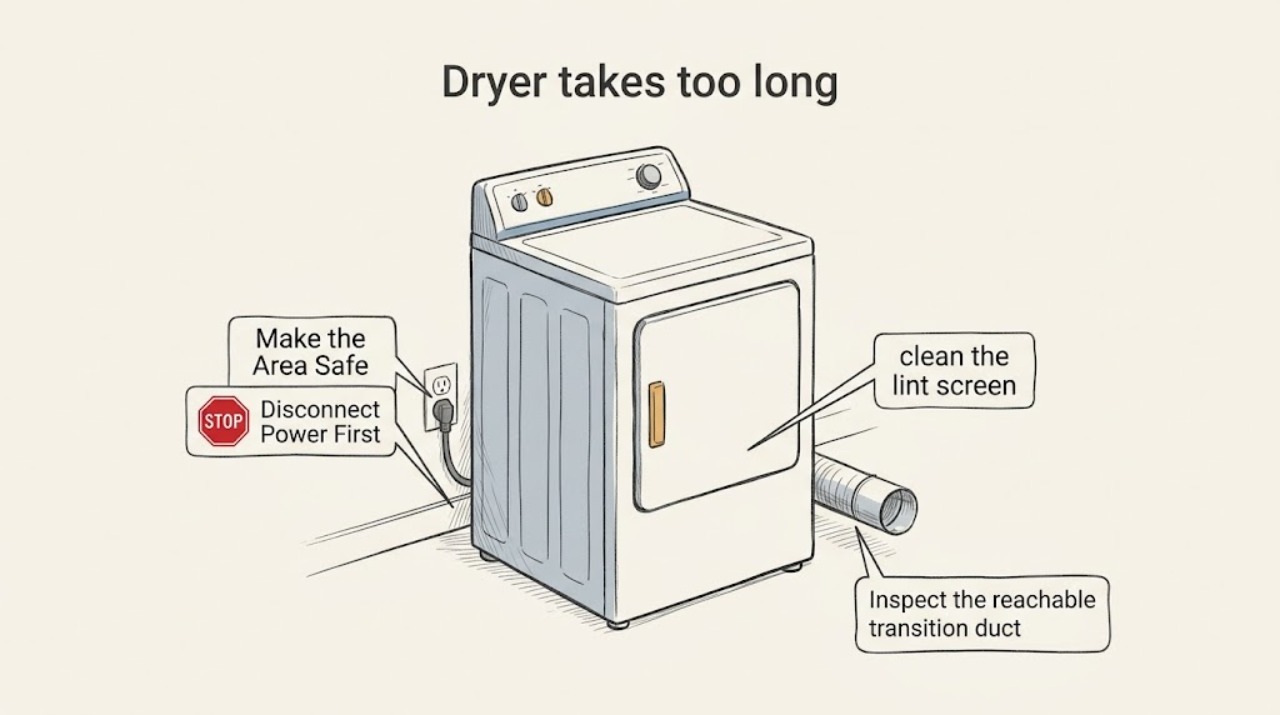
A dryer that takes too long to dry with weak airflow usually has a restriction between the lint screen, drum, duct, and outside hood. Stop and let it cool, then unplug it before checking the lint screen, the reachable hose for crushing or kinks, and the exterior hood for lint, debris, ice, landscaping, or a flap that does not open.
-
Dryer Takes Too Long to Dry and Clothes Remain Damp: What to Check and What to Do Next
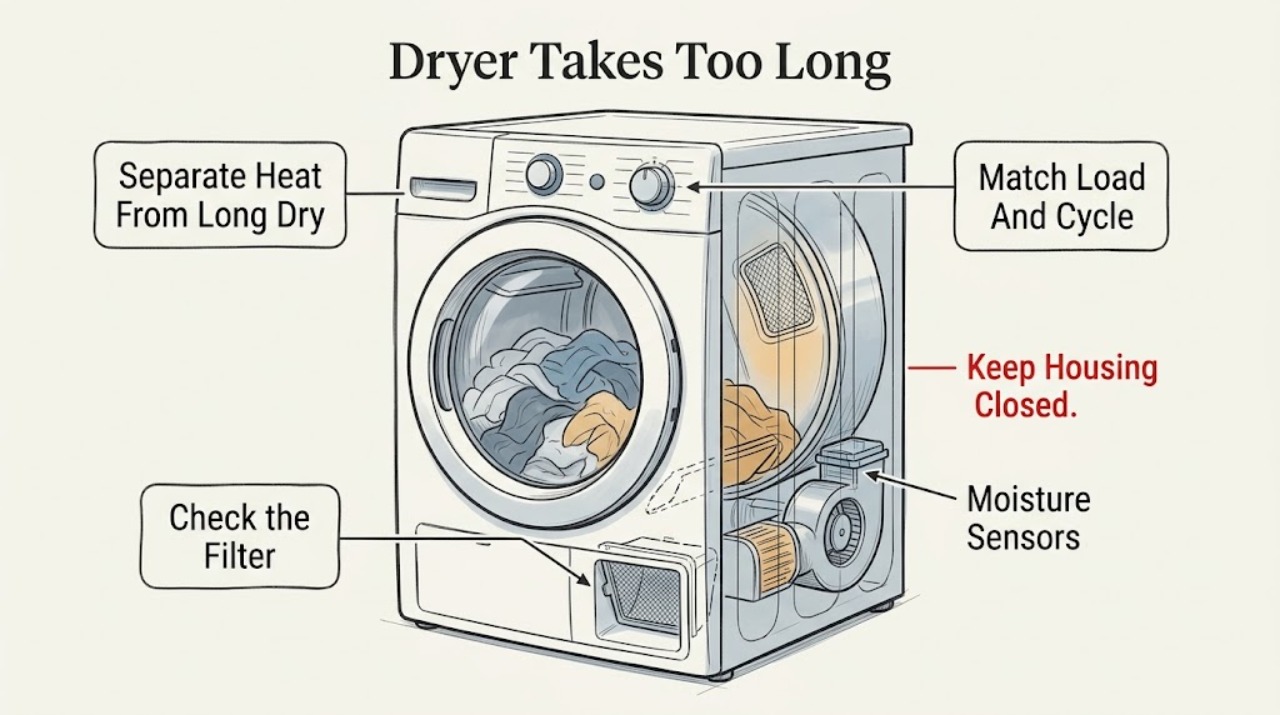
When a dryer runs but clothes remain damp, first determine whether the drum is producing heat. A heated dryer with weak airflow most often points to lint or a restricted exhaust path, while an air-only or energy-saving setting, oversized or very wet load, and a sensor cycle can also lengthen or end a cycle early.
-
Dryer Takes Too Long to Dry, Heat Is Present: What to Check and What to Do Next
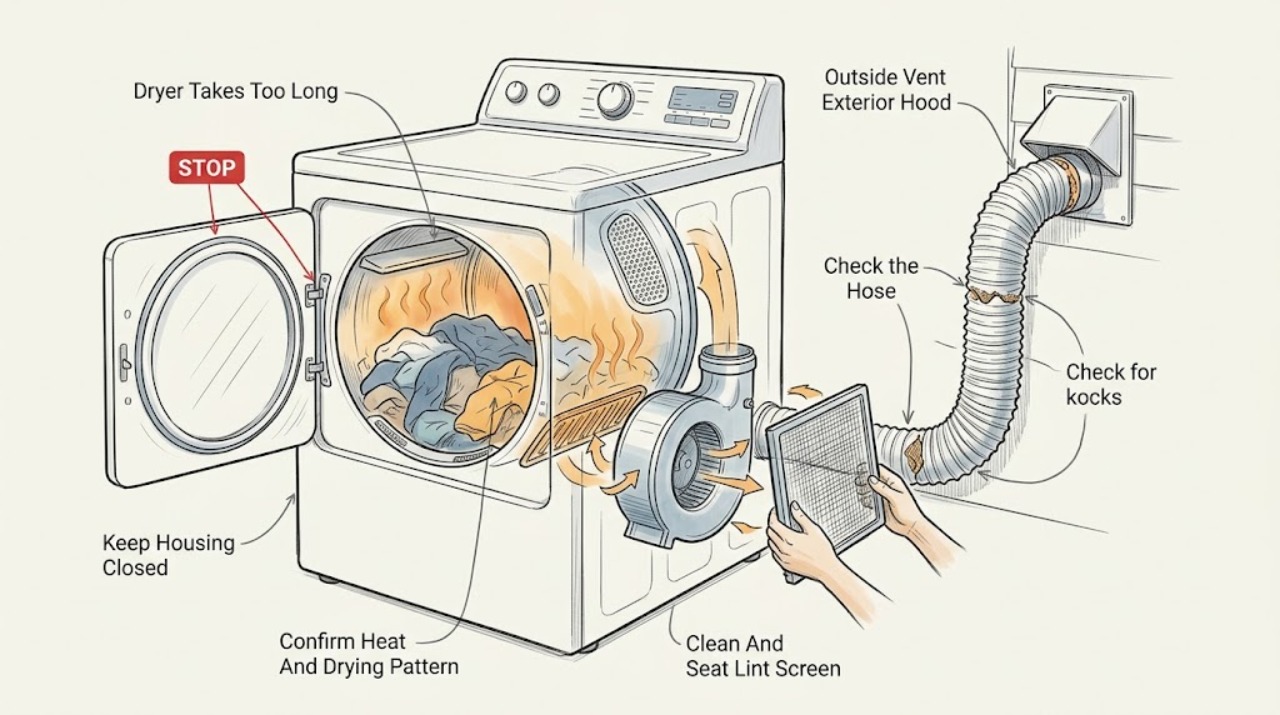
When a dryer produces heat but takes too long to dry, start with airflow rather than replacing a heater. Clean and correctly reinstall the lint screen, then inspect the visible exhaust hose for crushing or kinks and the outside hood for lint, debris, a nest, or a flap that cannot open.
-
Dryer takes too long to dry: What to Check and What to Do Next
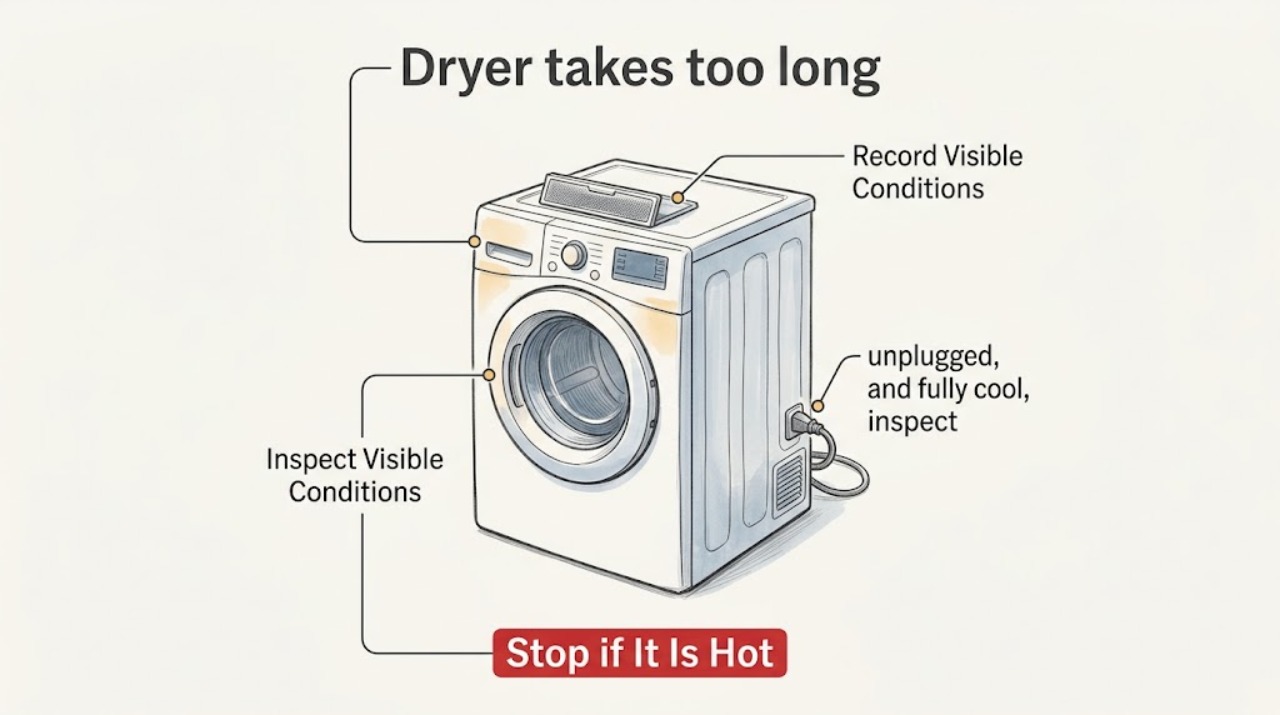
Long dryer times usually come from restricted airflow, a loaded or very wet load, a cycle or sensor expectation, or a heating, drive, or control problem. Start by recording the cycle, load, and whether clothes are warm or cool when they remain damp.
-
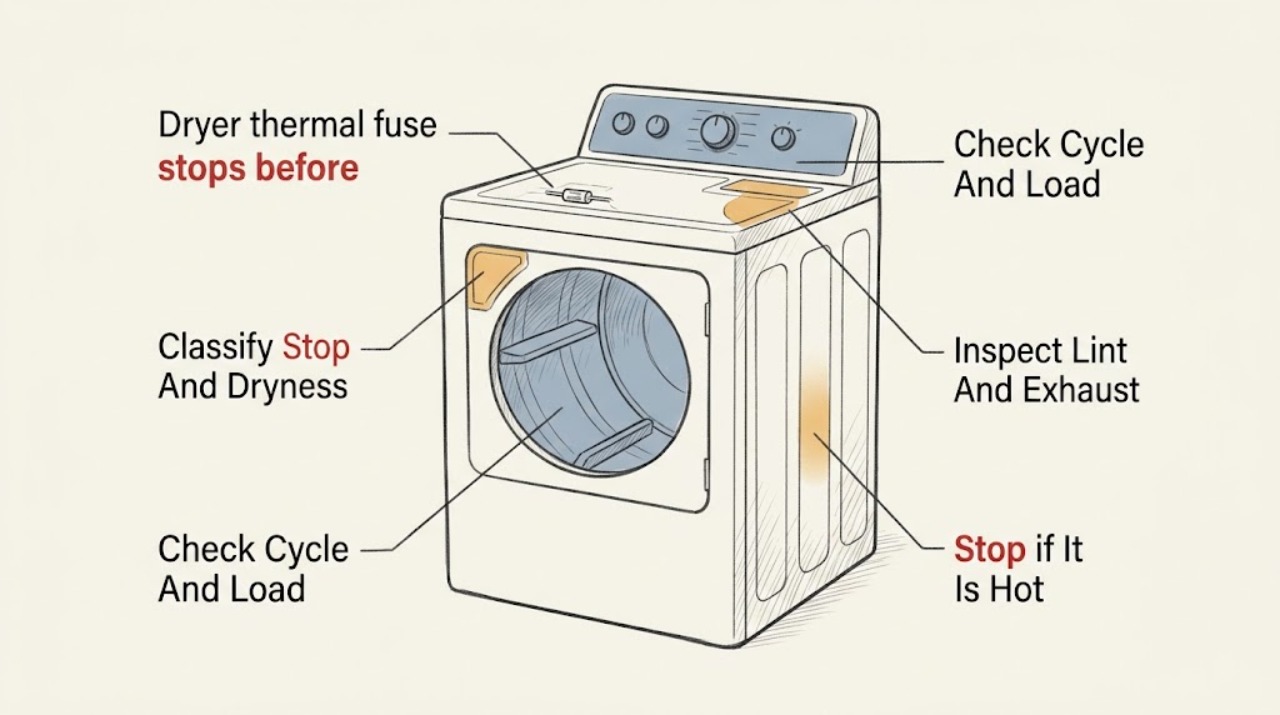
Dryer thermal fuse stops before cycle ends: What to Check and What to Do Next
A thermal fuse is a safety device that can open when a dryer overheats, but a dryer stopping before the selected end does not prove the fuse is the cause. First determine whether the cycle ended normally, the drum stopped while the controls stayed on, or the motor returns only after cooling.
-
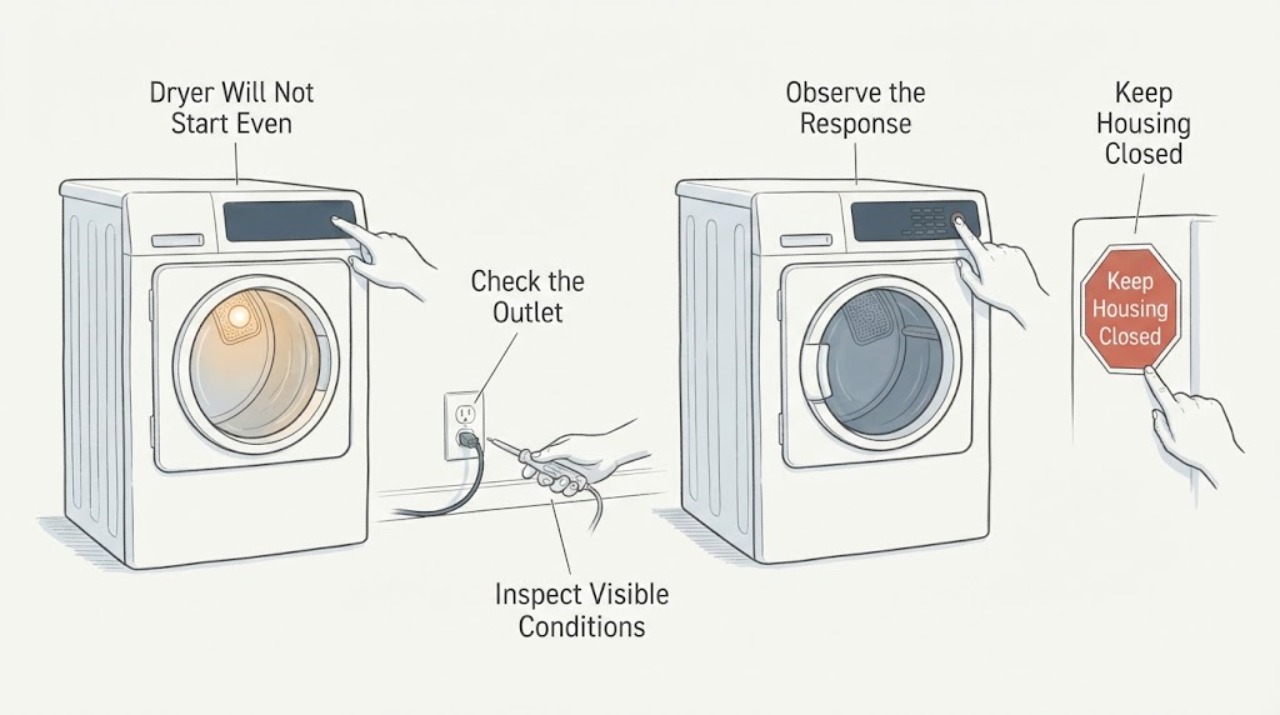
Dryer Will Not Start Even Though the Interior Light Works
An interior or drum light working does not prove that the control panel, door interlock, or start circuit is operating. With the dryer stopped, check only from the outside: look for a tripped breaker or visible cord/outlet damage with power isolated, check whether a model-specific Control Lock or Child Lock indicator is on, and make sure the door closes without clothing or debris blocking the latch.
-
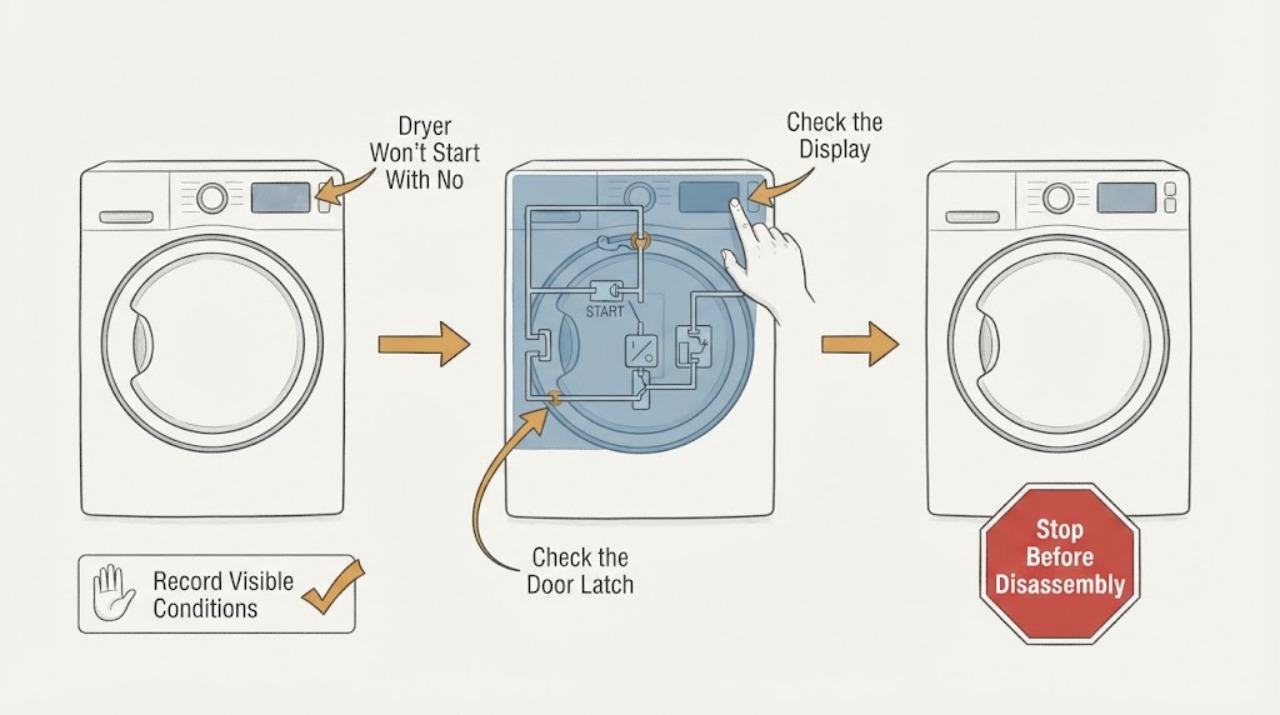
Dryer Won't Start With No Error: What to Check After Fuse and Door-Switch Replacement
If a dryer still will not start after a thermal fuse and door switch were reportedly replaced, do not replace the same parts again, bridge a safety switch, or test live wiring. First document whether the drum light or controls work, confirm the plug and household protection are normal without repeated resets, and check from outside that the door closes, the latch is not blocked, and the exact model's control-lock and start procedure are being used.
-
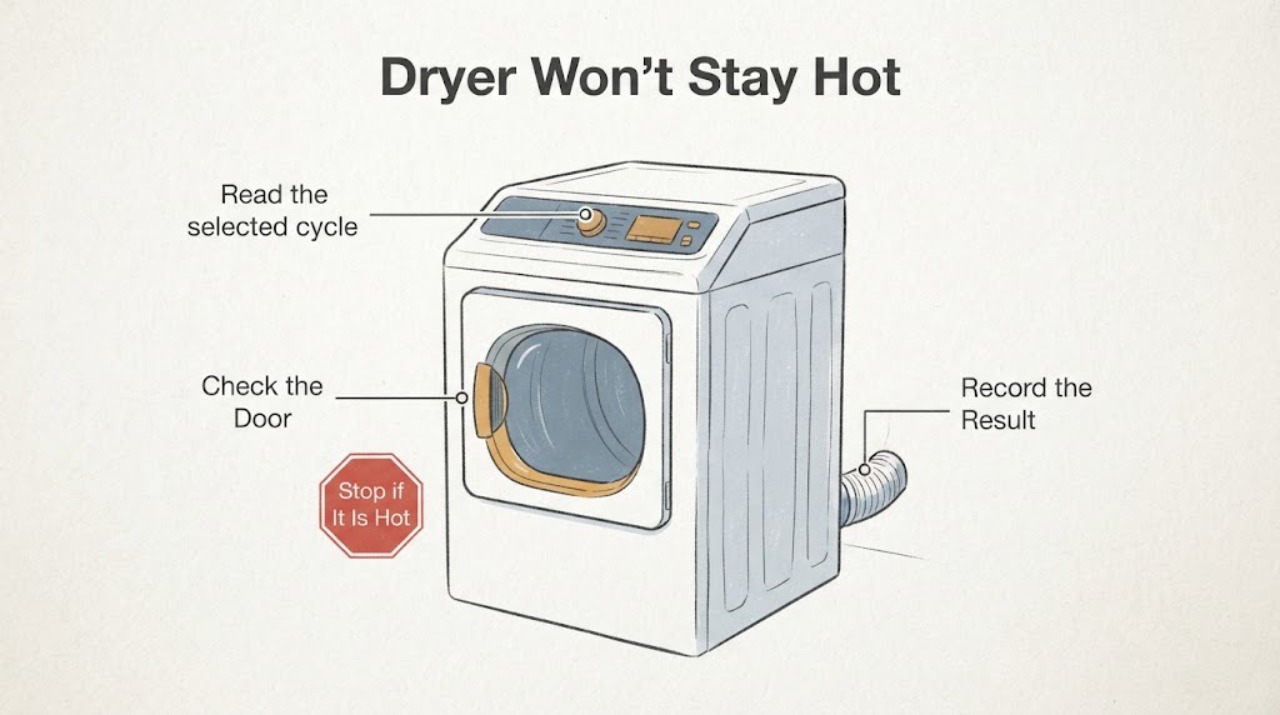
Dryer Won't Stay Hot: Separate Normal Heat Cycling From a No-Heat Fault
A dryer that warms, then pauses the heat, may be regulating temperature normally; GE explains that a safety thermostat can cycle the heat source off when temperature rises, and automatic cycles may turn heat off as clothes dry. First check whether Air Only or a low-heat setting was selected, then run the manufacturer's basic empty-drum test on a heated timed cycle for five minutes and observe whether the inside is warm.