
Repair service
Concrete Service Guides
Concrete repair, maintenance, and improvement guidance.
Published concrete service guides
Choose the guide that best matches the service and problem you are seeing.
-
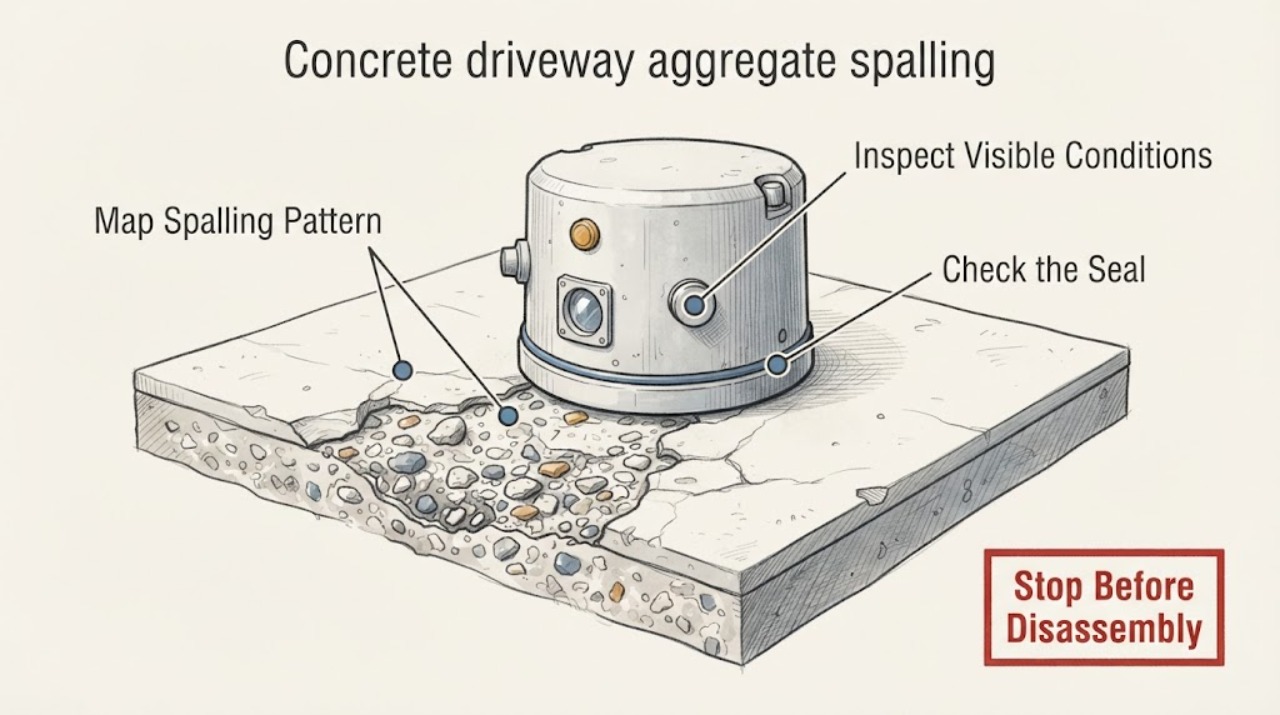
Concrete driveway aggregate spalling: What to Check and What to Do Next
Aggregate spalling on a concrete driveway is a surface distress pattern in which mortar breaks away and coarse stone becomes exposed or loose. From stable ground, map the affected areas, photograph the exposed aggregate and loose fragments, note the approximate surface depth without probing, and record water, drainage, freeze-thaw, deicer, joint, and trip hazards.
-
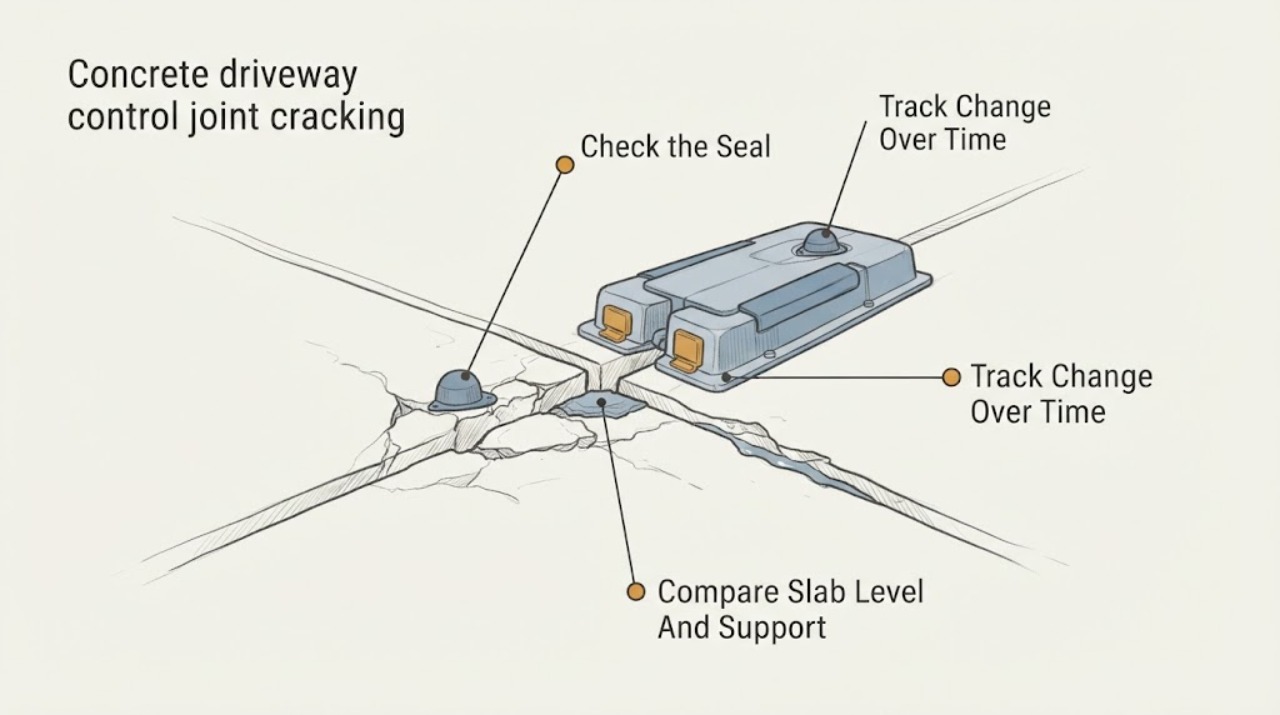
Concrete driveway control joint cracking: What to Check and What to Do Next
A crack that stays in a concrete driveway control joint can be the joint doing its intended job of guiding movement, so it is not automatically a structural failure. From safe ground, check whether the crack follows the joint, whether it is widening or branching, whether either slab is higher or lower, and whether water or traffic makes the area unsafe.
-
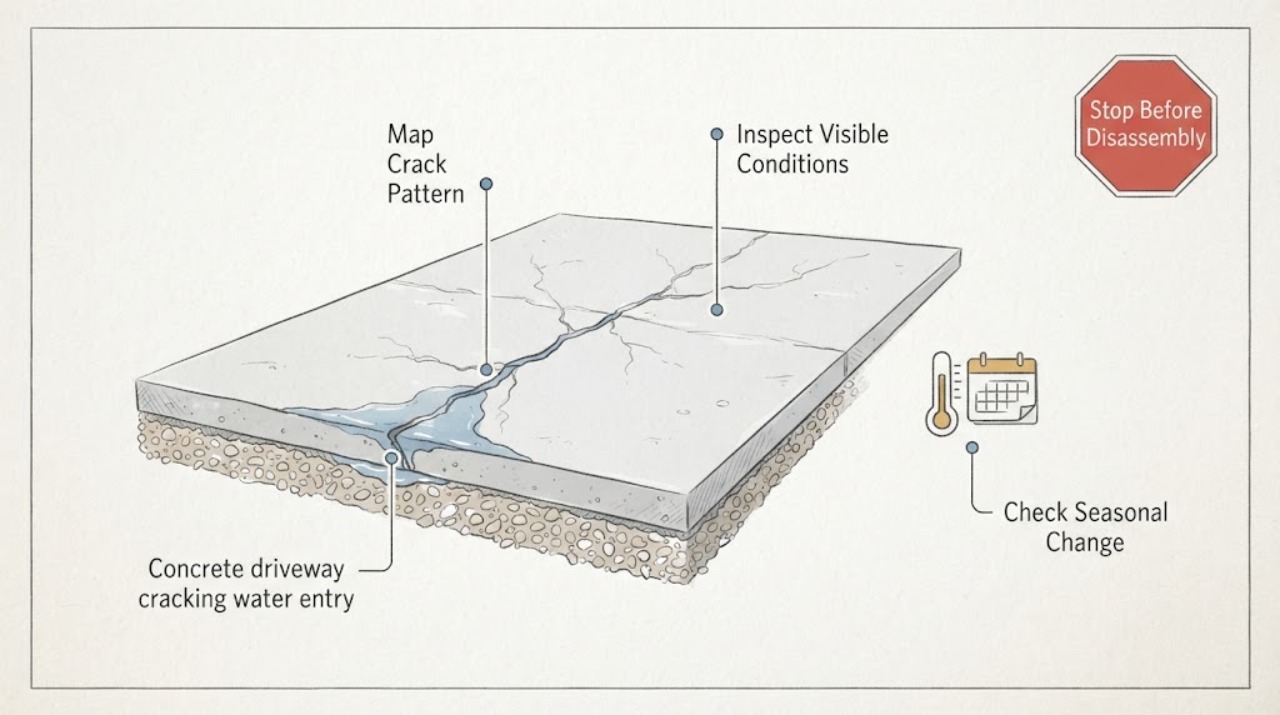
Concrete driveway cracking water entry: What to Check and What to Do Next
Concrete driveway cracks that admit water need a drainage and condition assessment before filler or sealer. From a safe walking position, map crack direction and width visually, note ponding and runoff, photograph edges and adjacent soil, and record seasonal change.
-
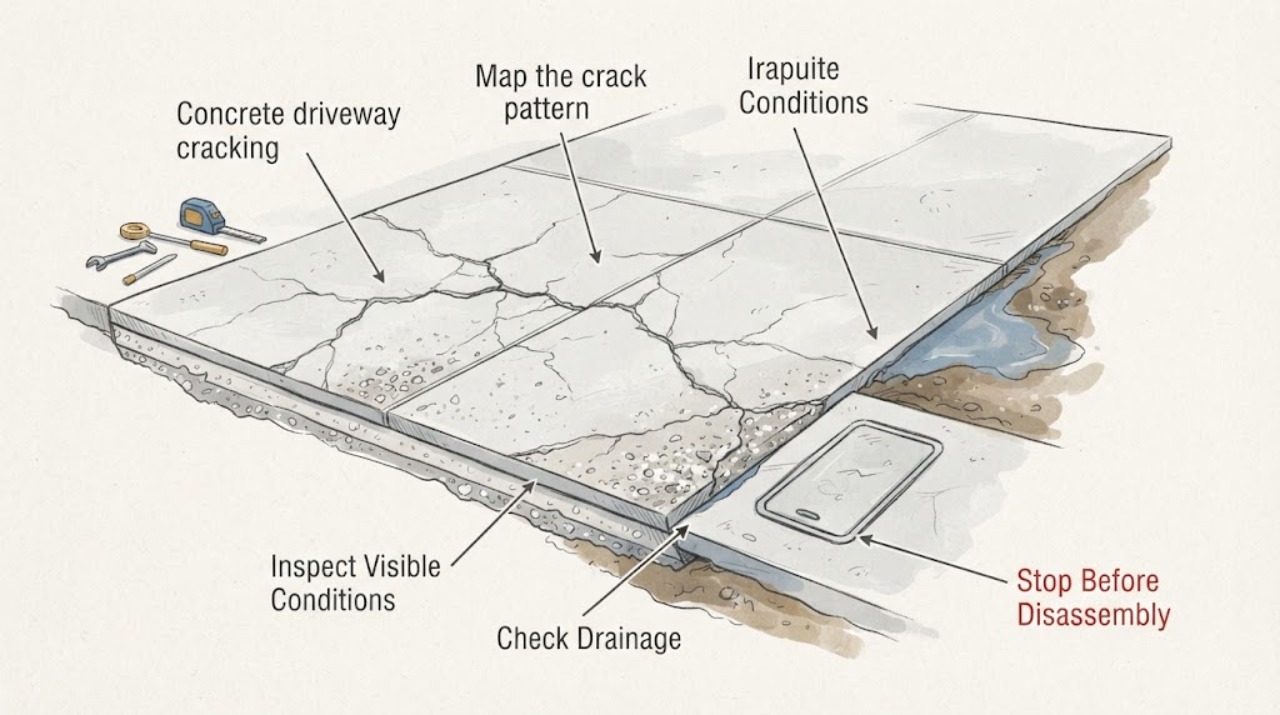
Concrete driveway cracking: What to Check and What to Do Next
A crack in a concrete driveway is not automatically a structural emergency, but its pattern and behavior matter. First record whether it follows a planned joint or crosses the slab, whether it is a tight surface line or is widening, and whether there is spalling, a height difference, ponding, edge settlement, or a void beneath the slab.
-
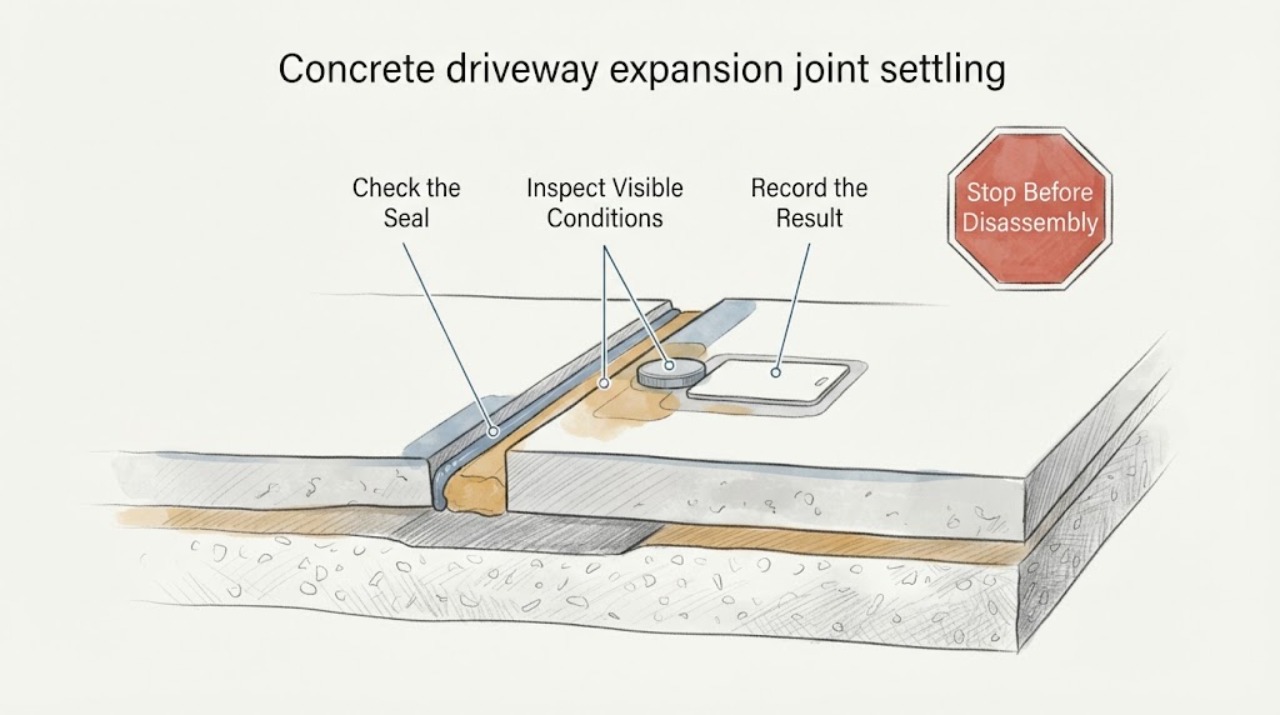
Concrete driveway expansion joint settling: What to Check and What to Do Next
A settled expansion joint should be evaluated as a slab, base, drainage, and joint-movement problem rather than patched from the surface. From the ground, observe whether the change follows the joint, whether adjacent slabs sit at different heights, whether water or soil moves through the joint, and whether the condition is expanding or creating a trip or vehicle hazard.
-
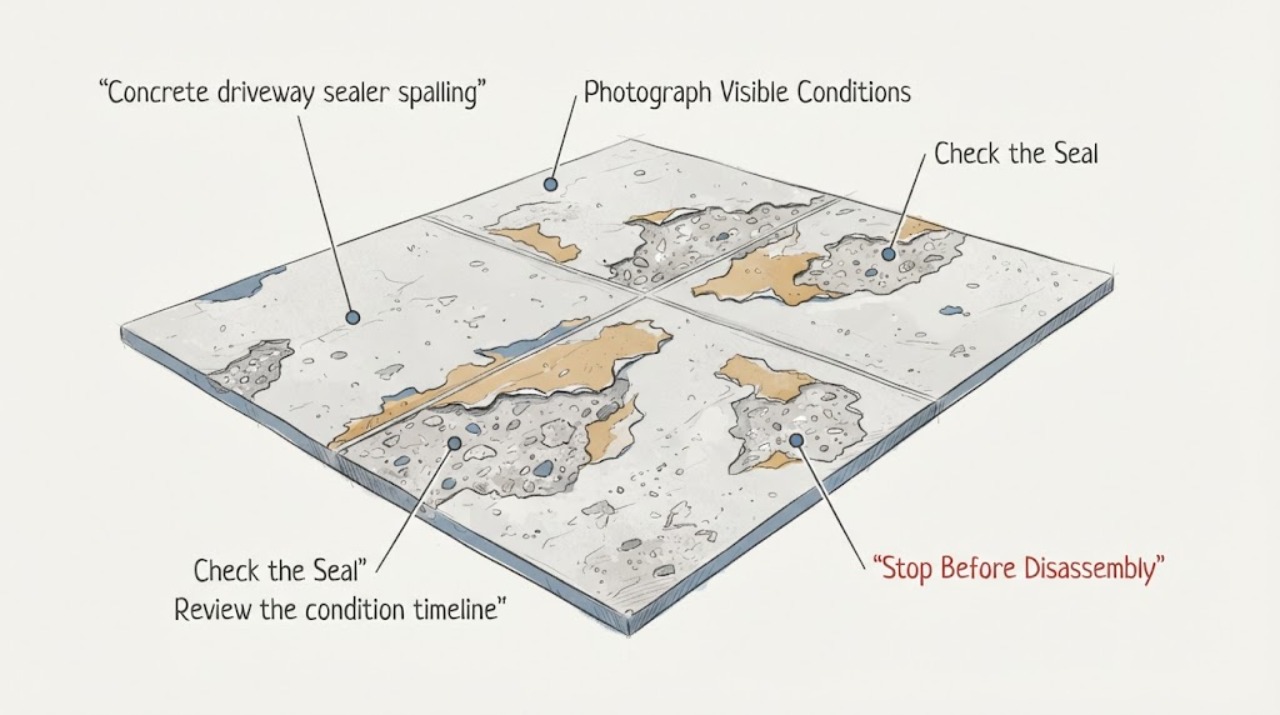
Concrete driveway sealer spalling: What to Check and What to Do Next
Do not cut, grind, demolish, or immediately coat a spalling driveway based only on its appearance. From a stable ground-level position, document whether the surface is flaking, pitted, peeling as a film, cracking, or losing aggregate; note whether damage is isolated or widespread and whether water, deicing material, drainage, or freeze-thaw weather may be involved.
-
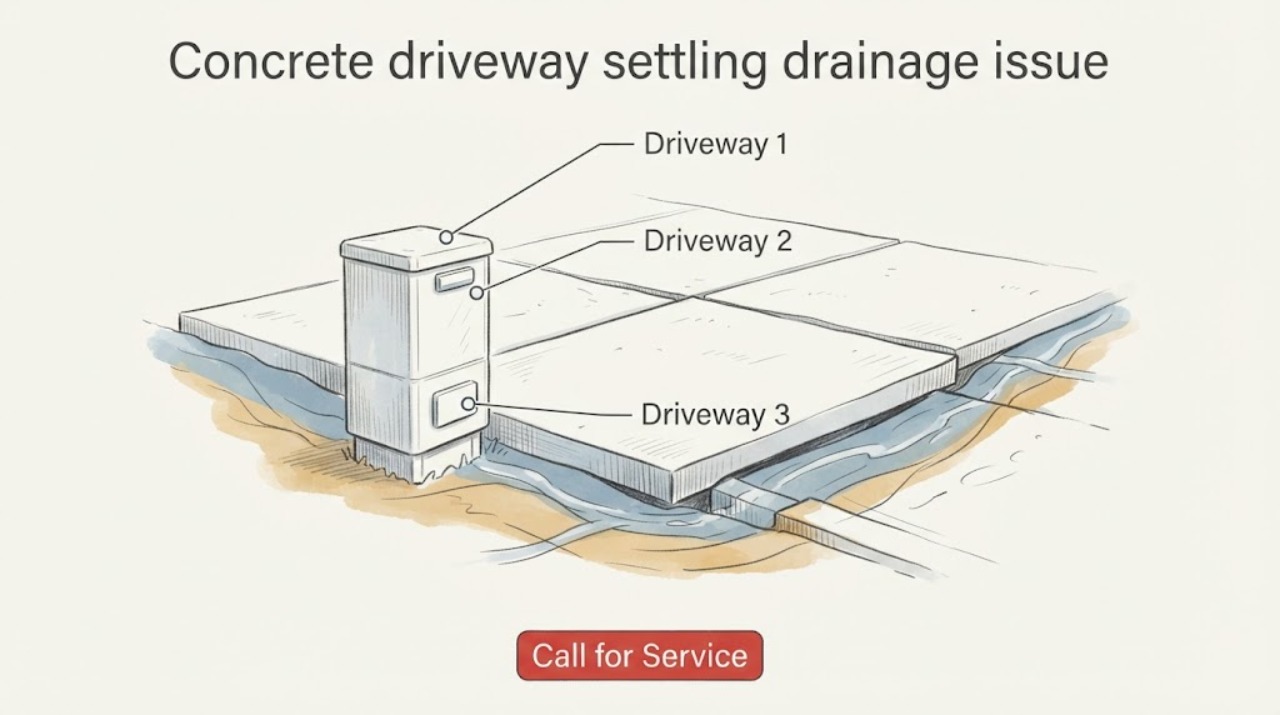
Concrete driveway settling drainage issue: What to Check and What to Do Next
A settling concrete driveway with a drainage issue needs the water path and slab support assessed together. From stable ground, observe low spots, ponding, edge erosion, cracks, joint separation, and where roof or surface water flows. Do not lift, cut, demolish, or inject the slab yourself. A concrete or drainage professional should identify the cause before recommending leveling, stabilization, replacement, or drainage work.
-
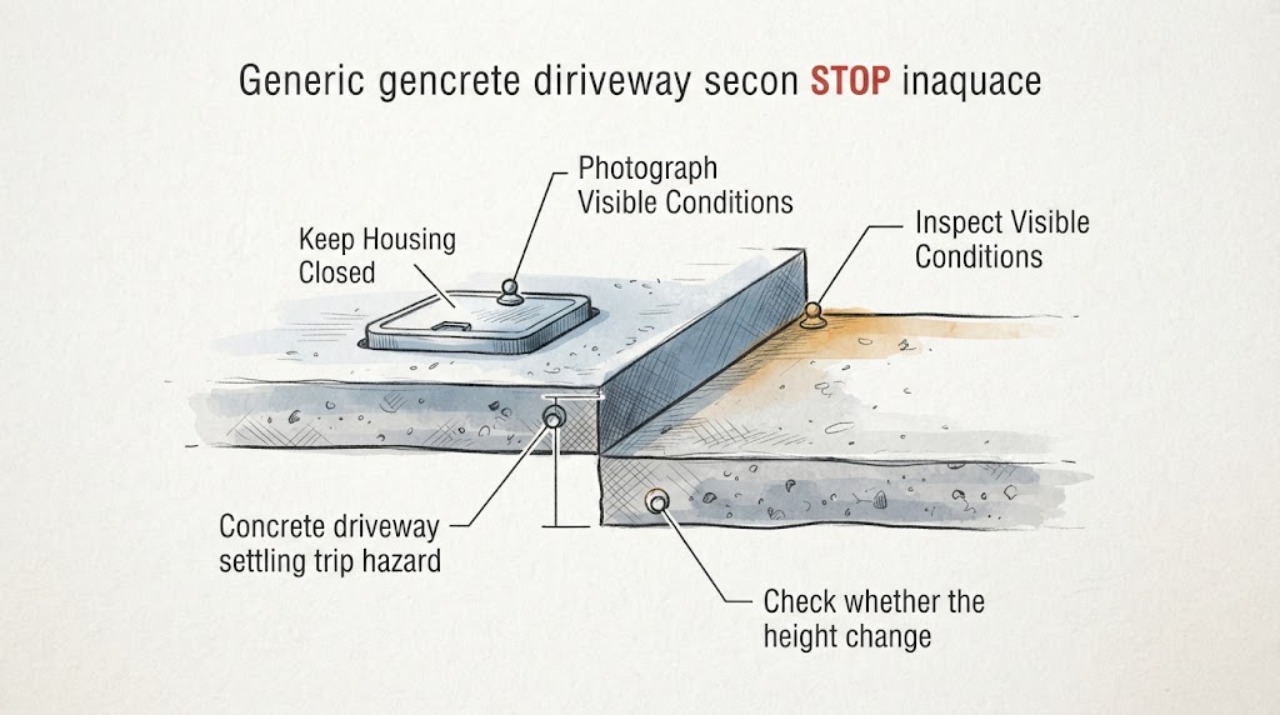
Concrete driveway settling trip hazard: What to Check and What to Do Next
A settled driveway panel is a pedestrian and vehicle-surface hazard, and the visible low edge does not reveal whether soil, drainage, erosion, tree roots, frost, or a failed slab caused it. Keep people and vehicles away from the uneven area, mark or route around it, and document the height change, water path, cracking, and movement from a safe standing position.
-
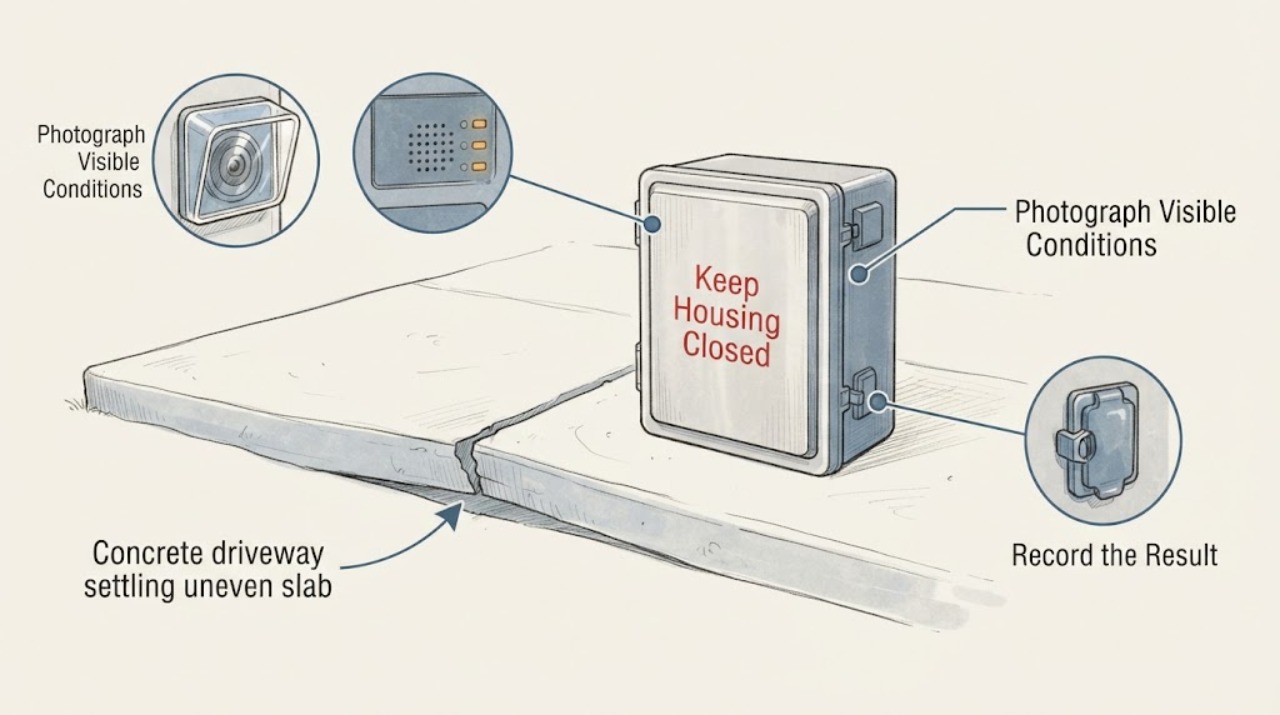
Concrete driveway settling uneven slab: What to Check and What to Do Next
An uneven driveway slab can result from subgrade compaction, drainage or erosion, frost, roots, adjacent work, or slab distress; the visible tilt does not identify the cause. Keep pedestrians and vehicles off the uneven area, document the panel edges, cracks, water path, and movement from safe ground, and do not lift, grind, cut, demolish, excavate, or pour over it yourself.
-
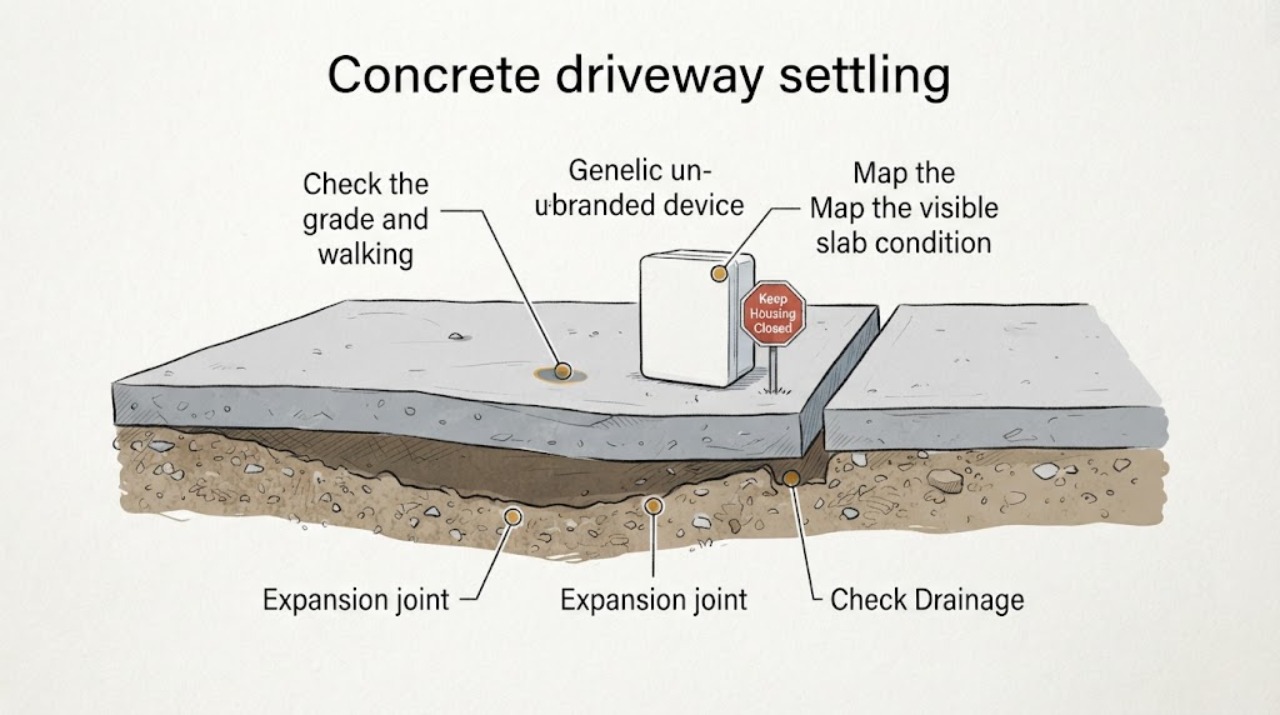
Concrete driveway settling: What to Check and What to Do Next
A driveway slab that has sunk, tilted, or developed a new trip edge is usually a drainage, erosion, support, or soil-movement problem rather than a surface defect to hide. From a safe position, document the slab's profile, cracks, ponding, edge washout, and changes after rain; keep people and vehicles off any unstable area; and arrange a qualified concrete or site-drainage assessment.
-
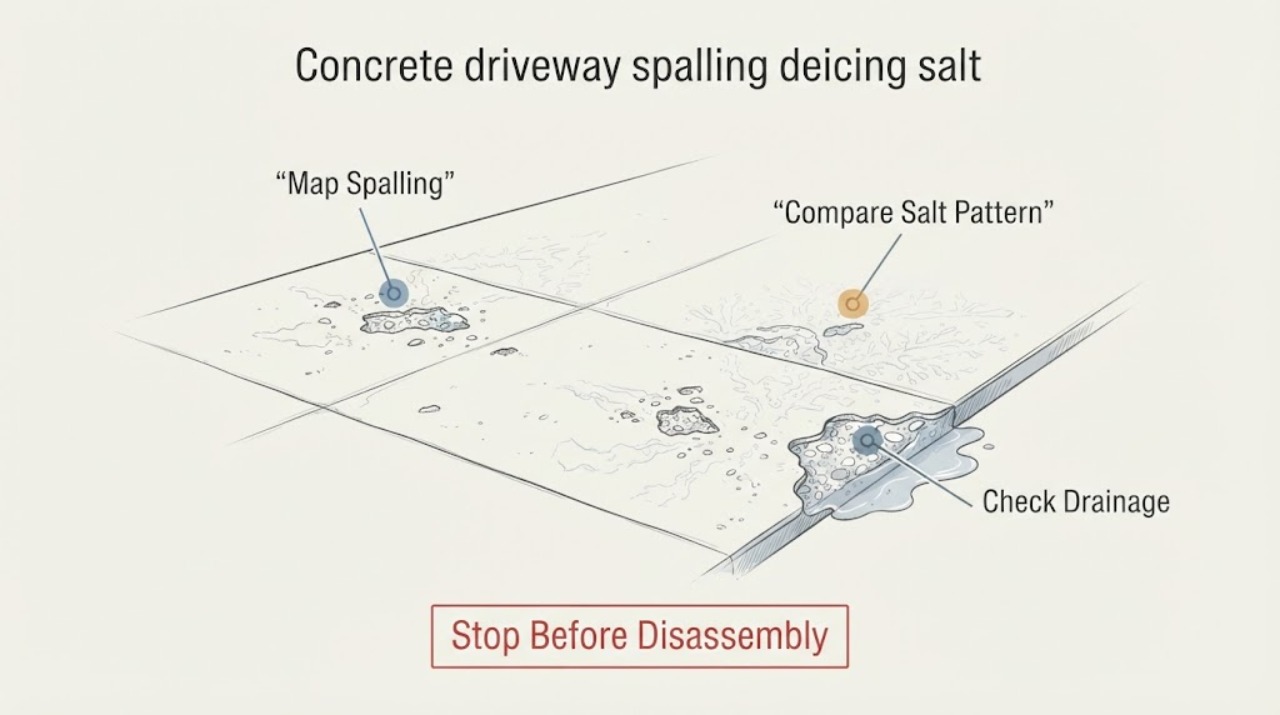
Concrete driveway spalling deicing salt: What to Check and What to Do Next
Pitted, flaking, or rough concrete after winter deicing is consistent with surface scaling or spalling, but the depth and cause must be assessed before choosing a repair. From a safe standing position, map the affected areas, compare them with untreated areas, and document drainage and salt exposure. Do not chisel, cut, grind, demolish, or mix repair chemicals; arrange concrete assessment when damage is deep, widespread, trip-forming, or still worsening.
-
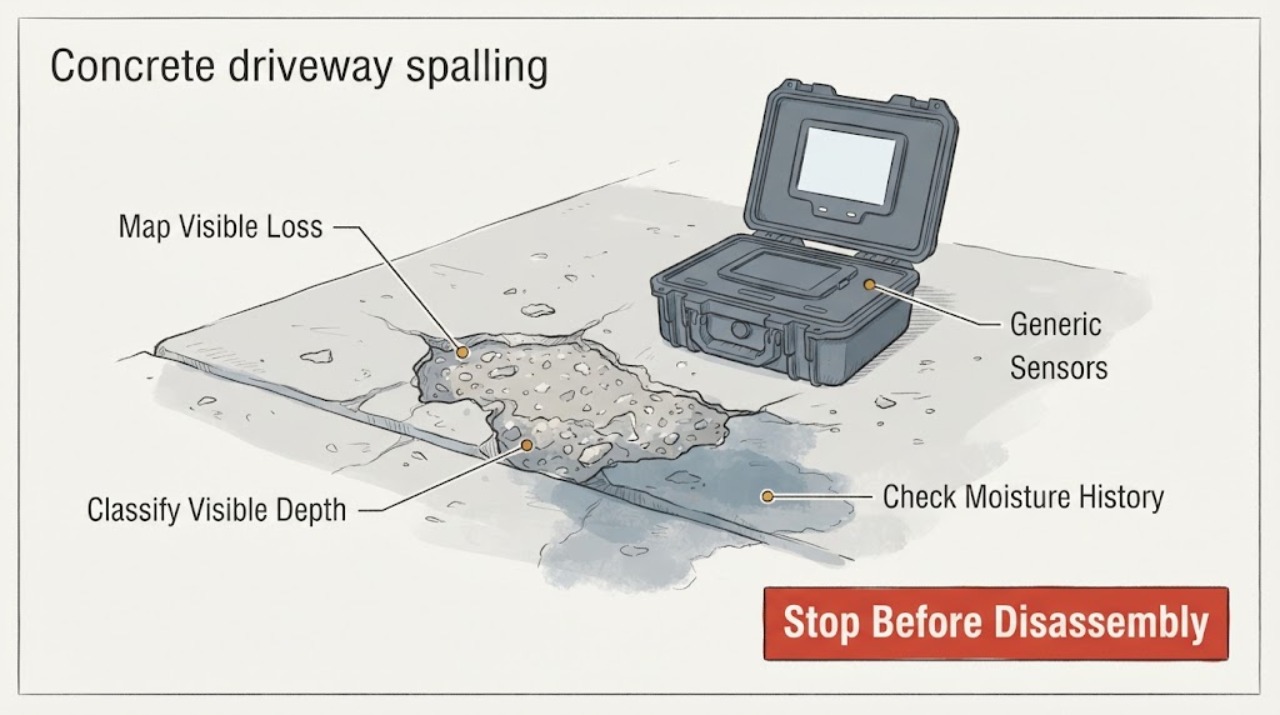
Concrete driveway spalling: What to Check and What to Do Next
Concrete driveway spalling is surface material flaking, peeling, or breaking away, but the visible pattern does not by itself prove whether the damage is cosmetic or deeper. From a safe standing position, document the affected area, note exposed aggregate, cracks, moisture, freeze/deicer history, drainage, and whether traffic crosses it.
-
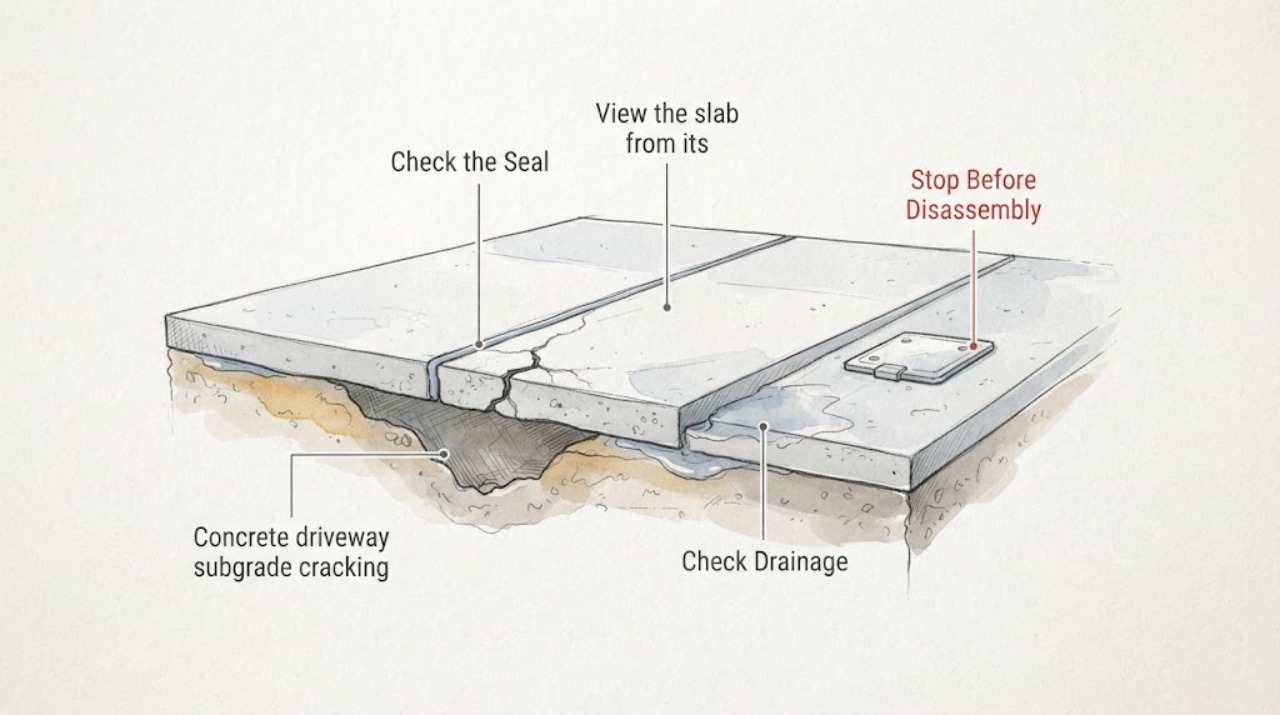
Concrete driveway subgrade cracking: What to Check and What to Do Next
Cracks in a concrete driveway do not prove that the subgrade failed, but cracking combined with settlement, a rocking or uneven slab, edge erosion, standing water, or a void-like appearance needs more than a surface filler. Inspect only from a safe position, record the crack pattern and drainage context, and keep vehicles and pedestrians away when the surface is unsafe.
-
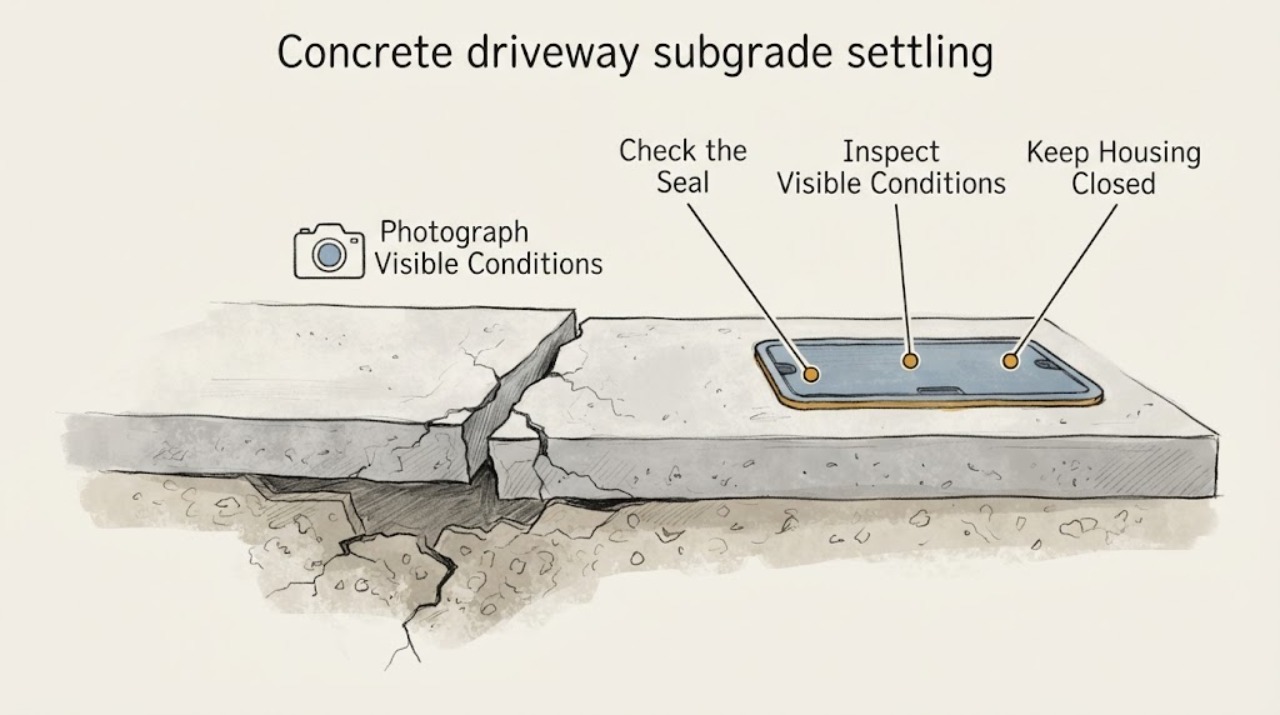
Concrete driveway subgrade settling: What to Check and What to Do Next
A settling concrete driveway can reflect loss of support below the slab, drainage or erosion, poorly compacted fill, a buried utility issue, soil movement, or a surface-only distress. Do not try to lift, break, cut, drill, or excavate the driveway to find the cause.
-
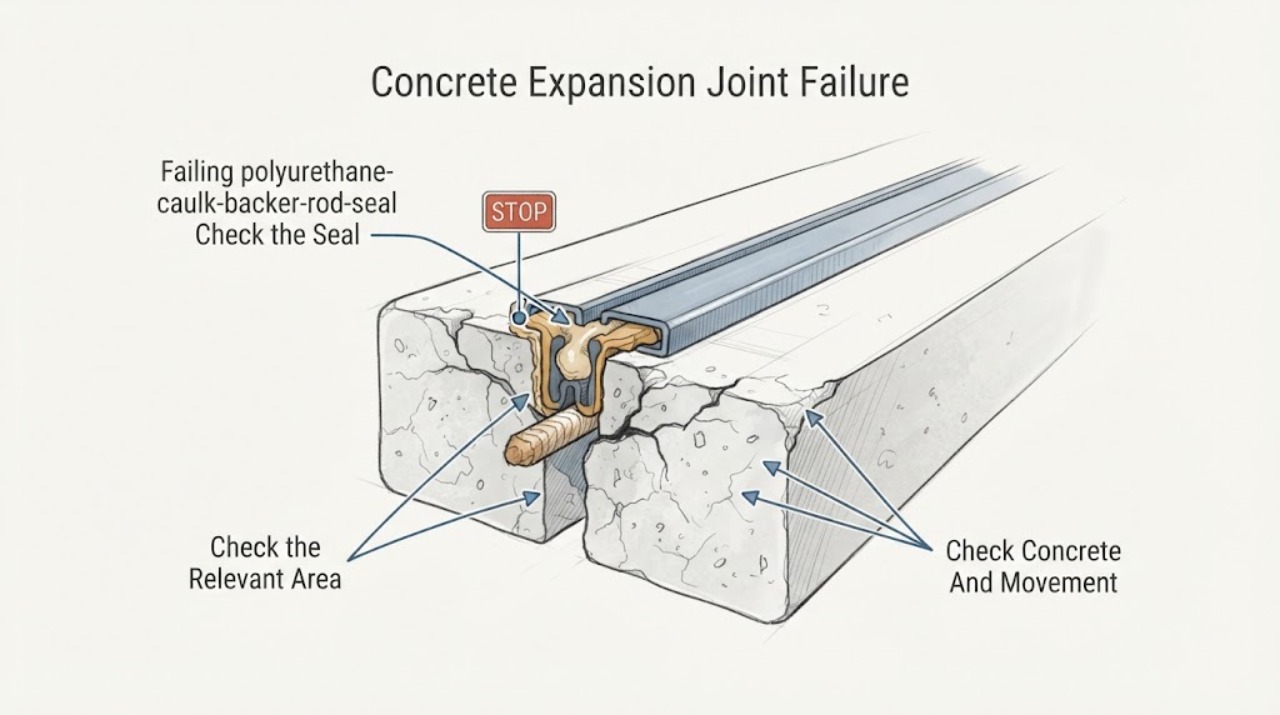
Concrete Expansion Joint Failure: Backer Rod and Polyurethane Sealant Maintenance
A deteriorated concrete expansion-joint seal is a maintenance decision, not automatically a caulking job. First document whether the sealant is missing, hardened, split, debonded, extruded, or filled with debris, and whether the concrete edges are sound and the joint is moving or admitting water.
-
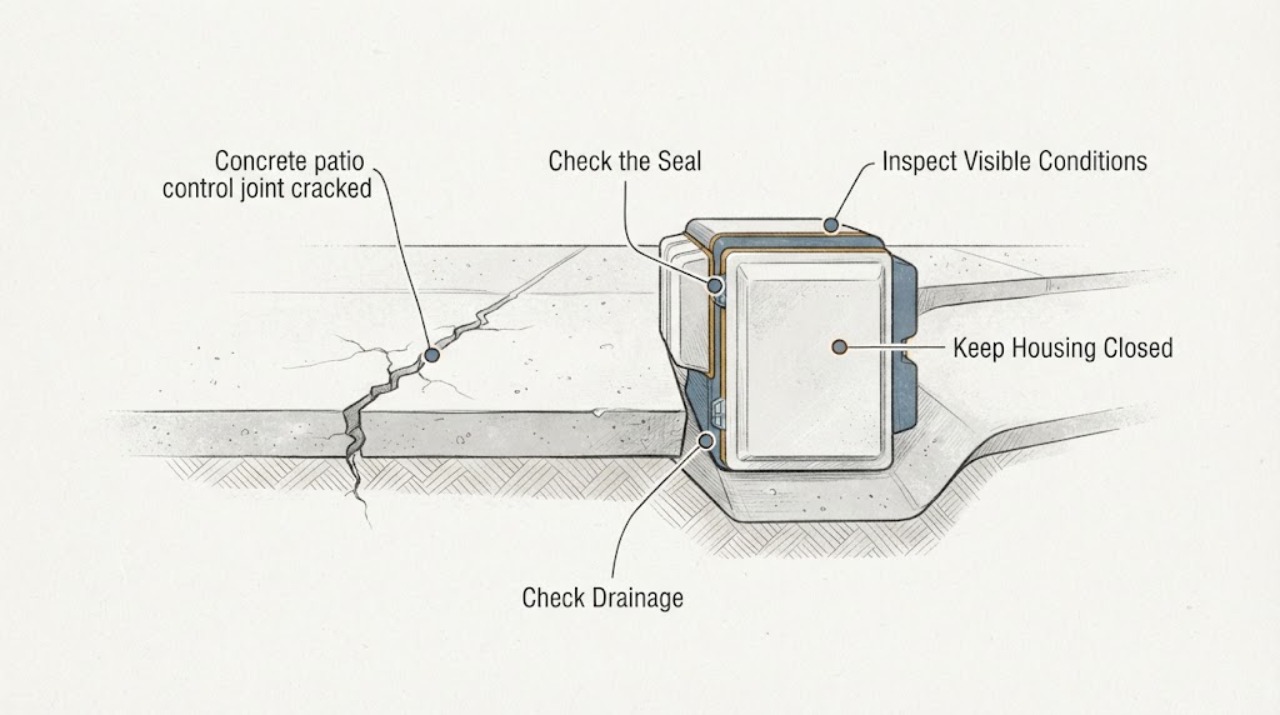
Concrete patio control joint cracked: What to Check and What to Do Next
A crack that follows an existing control joint is often the joint doing its intended job, but an open joint can still admit water or create a trip hazard. From a stable position, document whether the crack stays in the joint, whether either slab edge is higher, whether the opening is widening or spreading into the patio, and whether water collects or washes the adjacent ground.
-
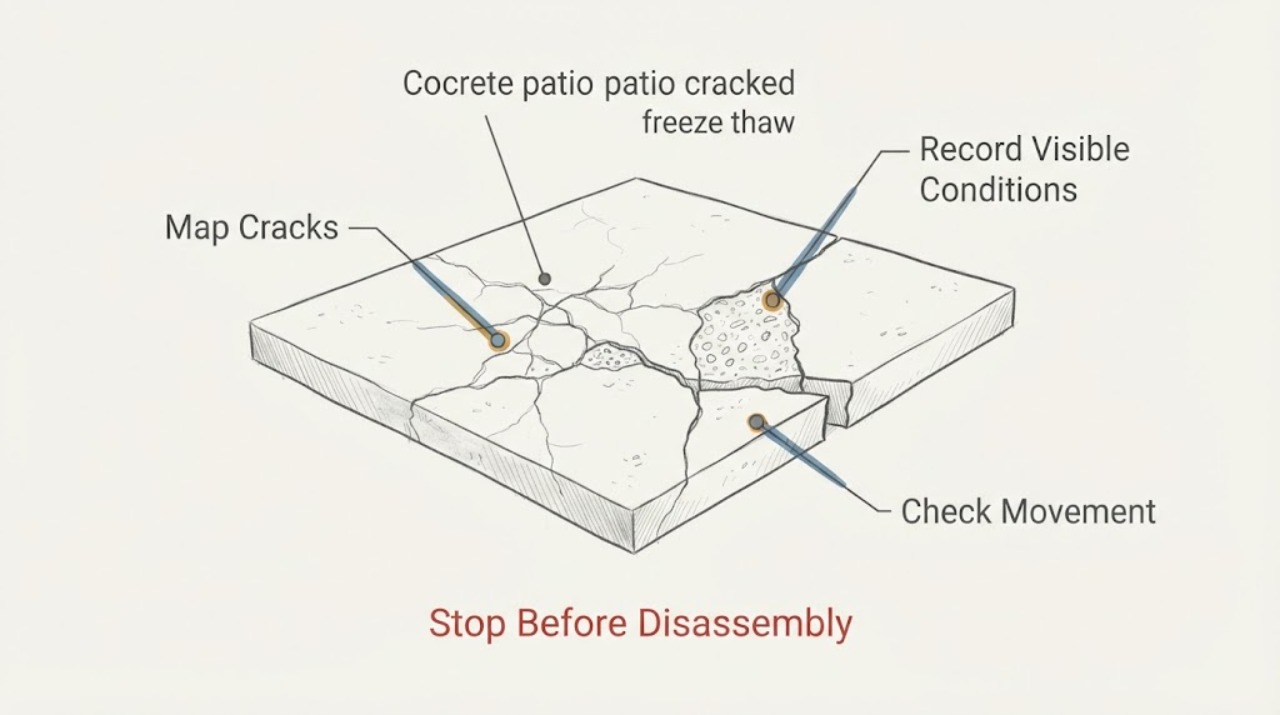
Concrete patio cracked freeze thaw: What to Check and What to Do Next
Freeze-thaw cracking is more likely when concrete stays saturated, but crack pattern, depth, movement, and other causes must be assessed before repair. From stable ground, map cracks, joints, ponding, edges, and trip hazards without chiseling, cutting, or grinding. Arrange concrete service for widening or moving cracks, spalling, exposed voids, unsafe edges, or recurring water exposure.
-
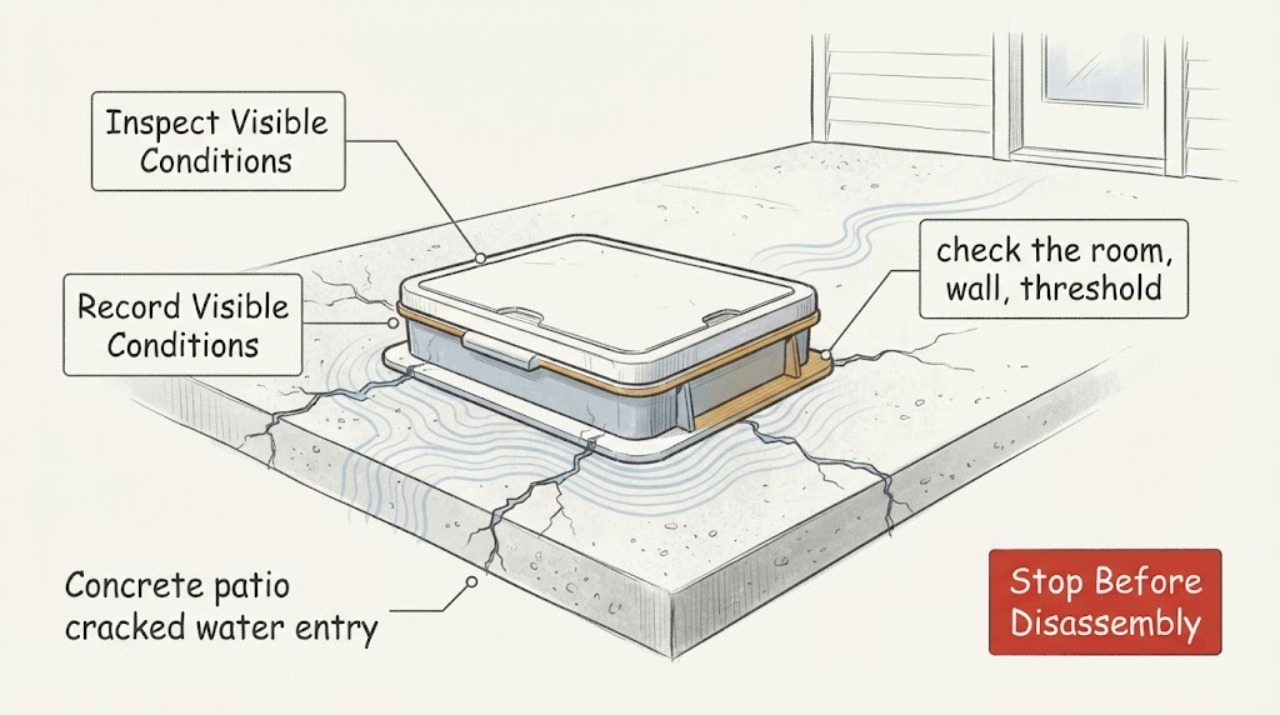
Concrete patio cracked water entry: What to Check and What to Do Next
When a cracked concrete patio is letting water in, start by observing the water path after normal rain or an existing watering event, not by creating a hose test. From a safe ground-level position, record whether water runs toward the foundation or door threshold, pools because of the patio slope, follows a crack, or leaves a damp mark inside or below.
-
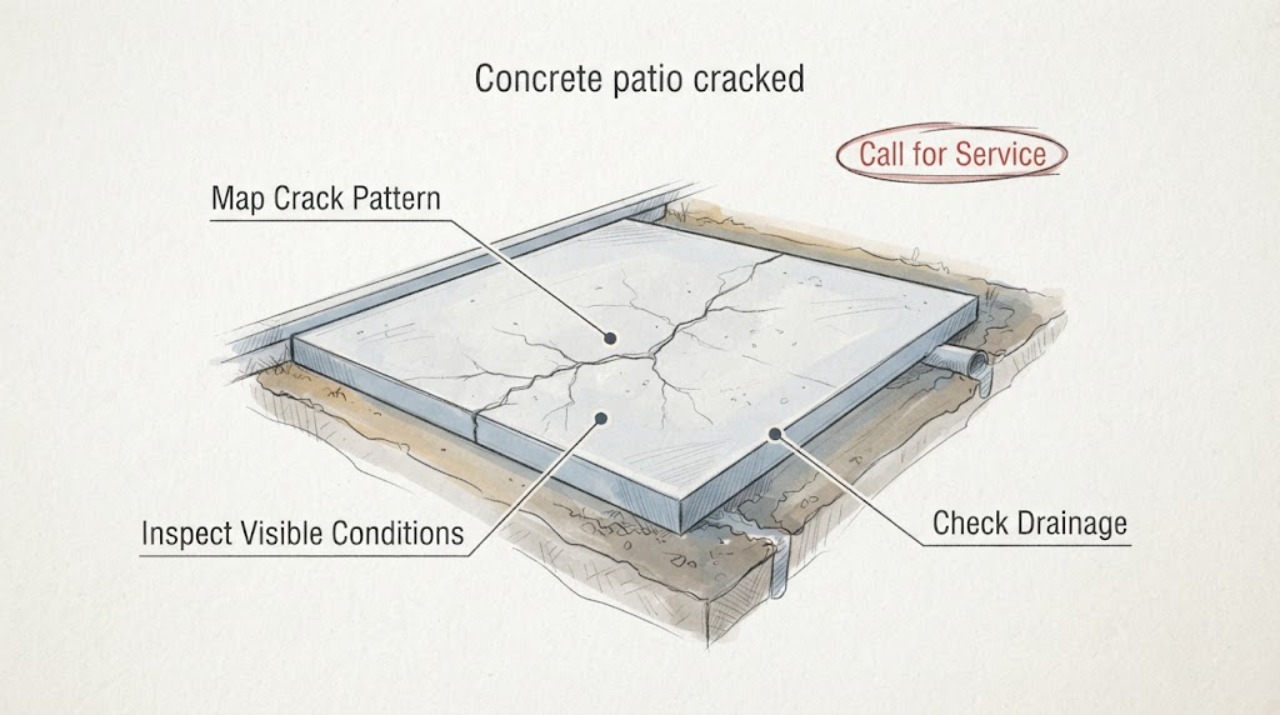
Concrete patio cracked: What to Check and What to Do Next
Do not start by filling or sealing a cracked patio. First photograph the whole slab and the crack close up, note whether the line follows a joint or crosses the slab, and observe whether either side is displaced, rocking, or creating a trip edge.
-
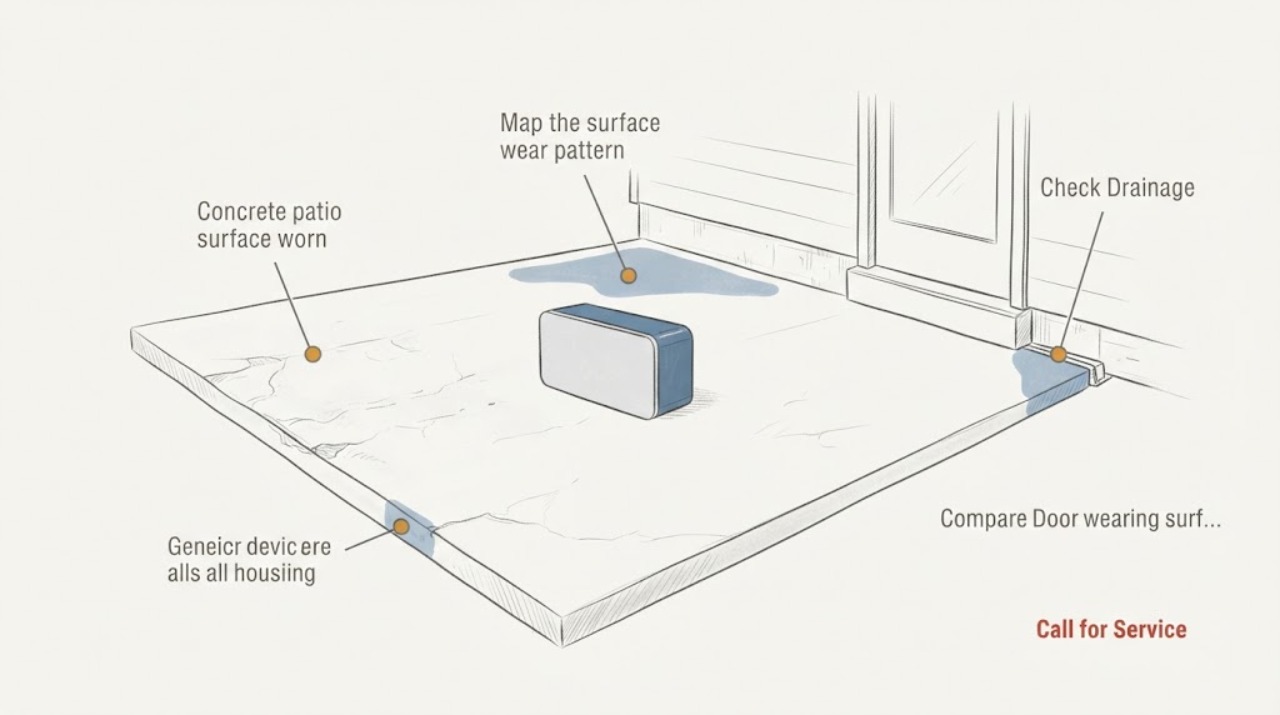
Concrete patio surface worn: What to Check and What to Do Next
A worn concrete patio may have a cosmetic finish change, surface scaling or spalling, localized pits, recurring moisture exposure, or cracks that need more than a coating. First map the type and spread of the wear, look for ponding and water paths, compare the condition at joints and edges, and record whether it is progressing.
-
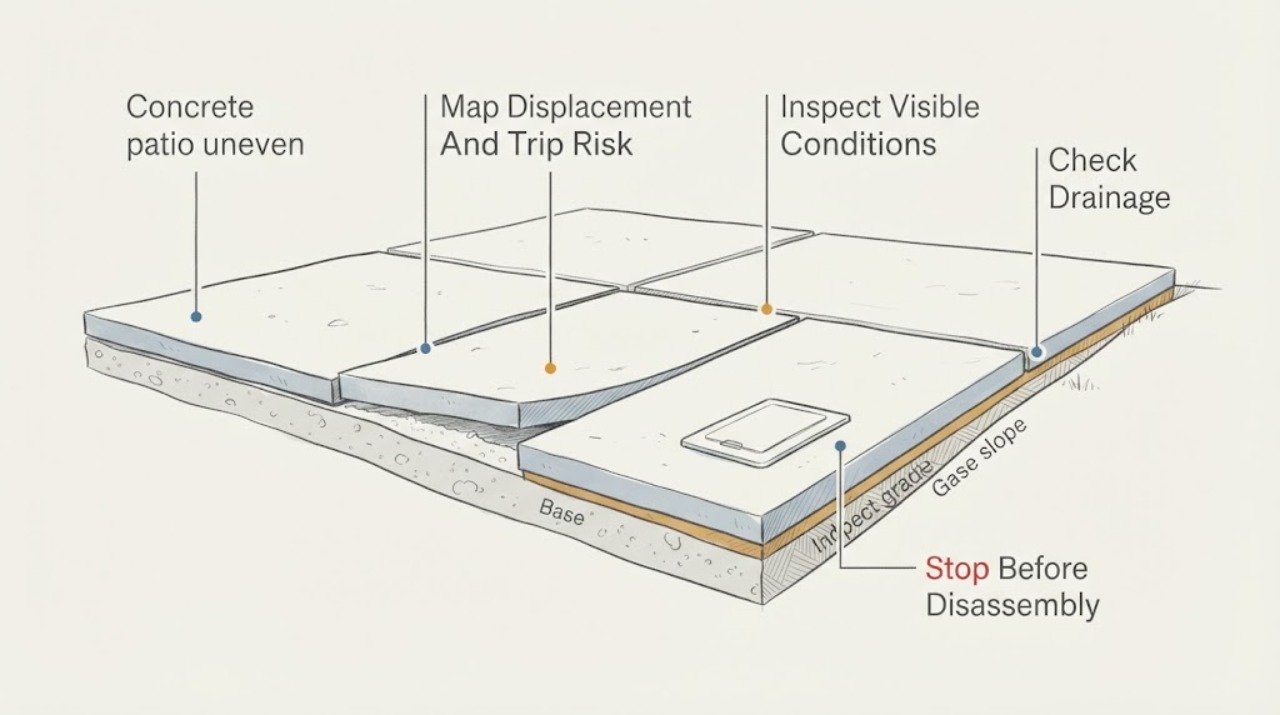
Concrete patio uneven: What to Check and What to Do Next
Treat an uneven concrete patio as a trip-and-drainage assessment, not a DIY lifting project. From a safe ground-level position, document where the slab changes elevation, whether the change creates a walking edge, how water moves after rain, and whether cracks or displacement are progressing.
-
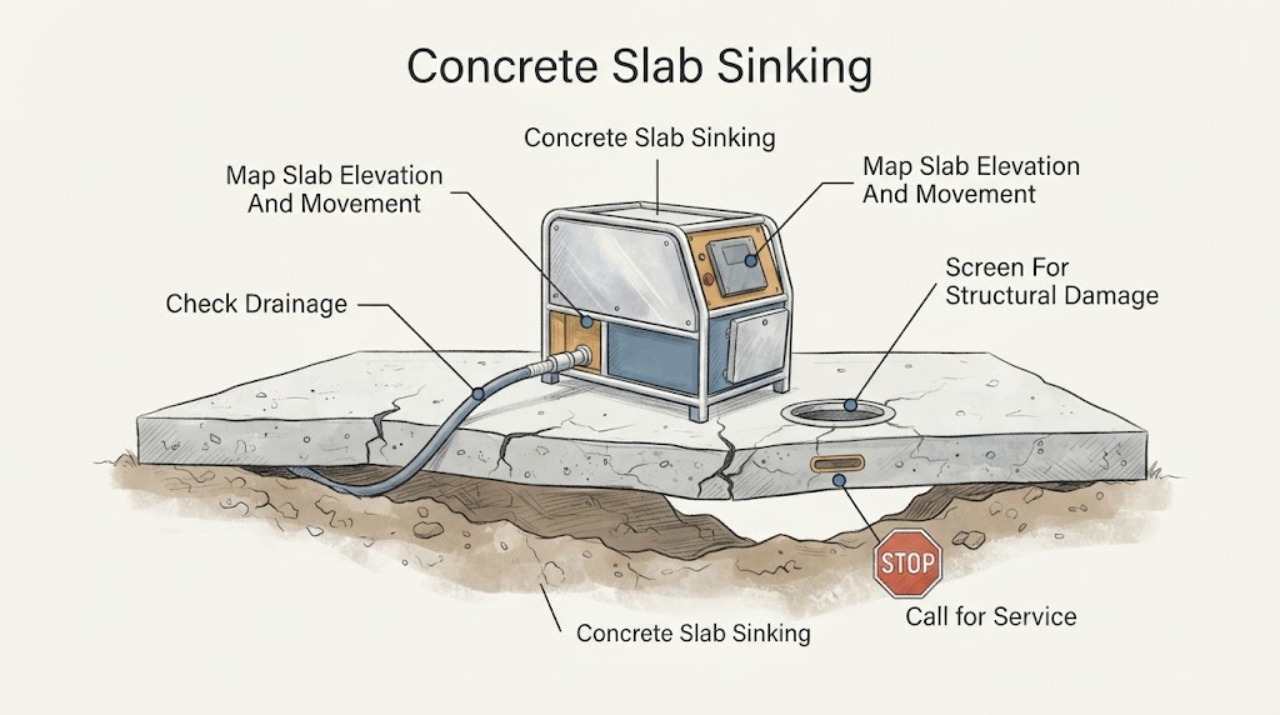
Concrete Slab Sinking: Uneven Heave, Voids, and Polyjacking Decisions
A sinking or uneven concrete slab can reflect lost support from erosion, drainage, a weak or shifting subgrade, or a slab that has cracked and is moving independently. Start by documenting the low and high areas, checking visible drainage and washout clues from a safe position, and noting whether cracks or movement are worsening.
-
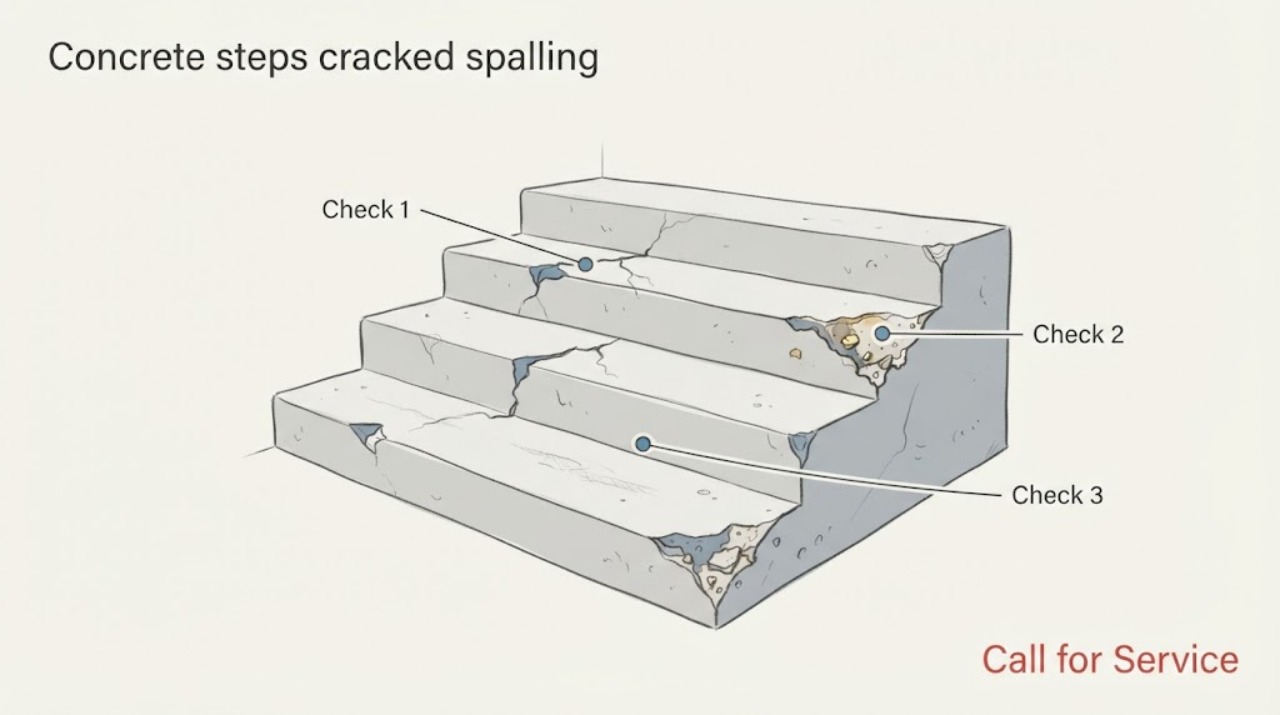
Concrete steps cracked spalling: What to Check and What to Do Next
Concrete step spalling is the loss of surface material, not just a cosmetic crack. From a safe standing position, document whether the loss is a thin surface flake or extends into the step, whether fragments are loose, whether rust-stained or exposed reinforcing steel is visible, and whether water or freeze-thaw exposure is involved.
-
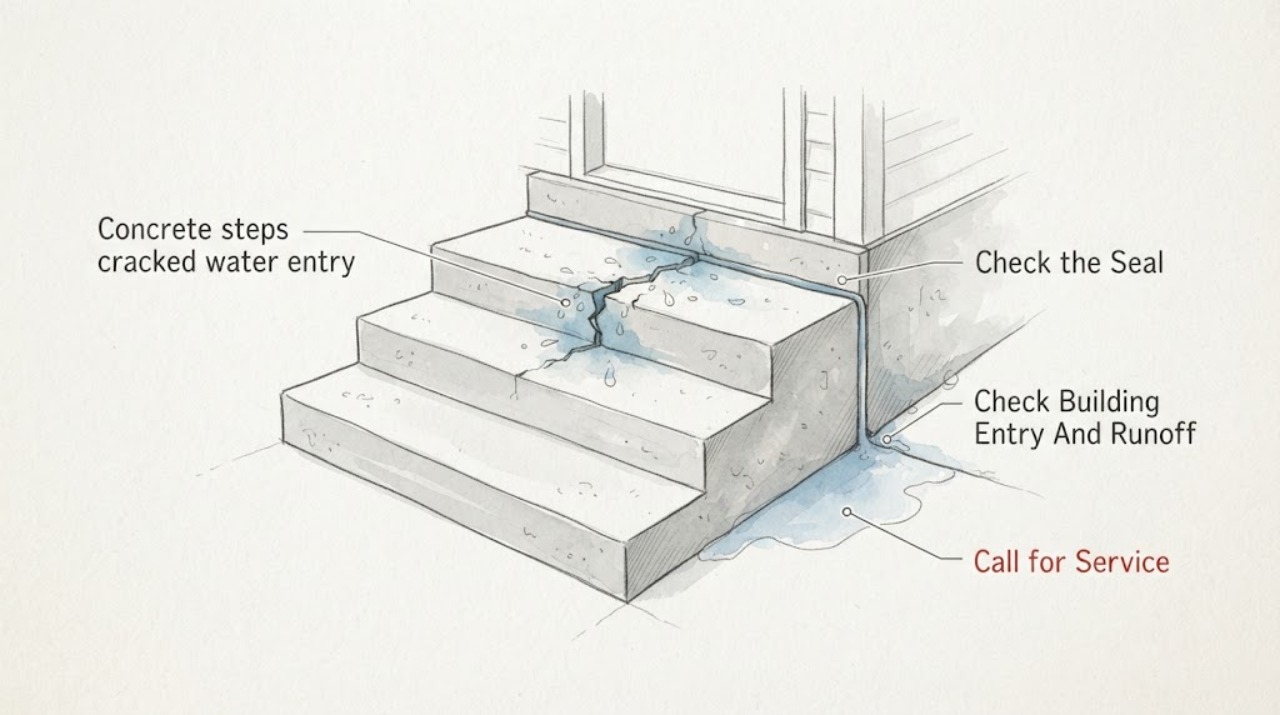
Concrete steps cracked water entry: What to Check and What to Do Next
When a cracked concrete step admits water, the timing and path of the water matter as much as the crack's appearance. From a stable, dry position, compare the crack before and after rain or snowmelt and record whether it is at a tread, riser, landing, joint, wall interface, or free edge.
-
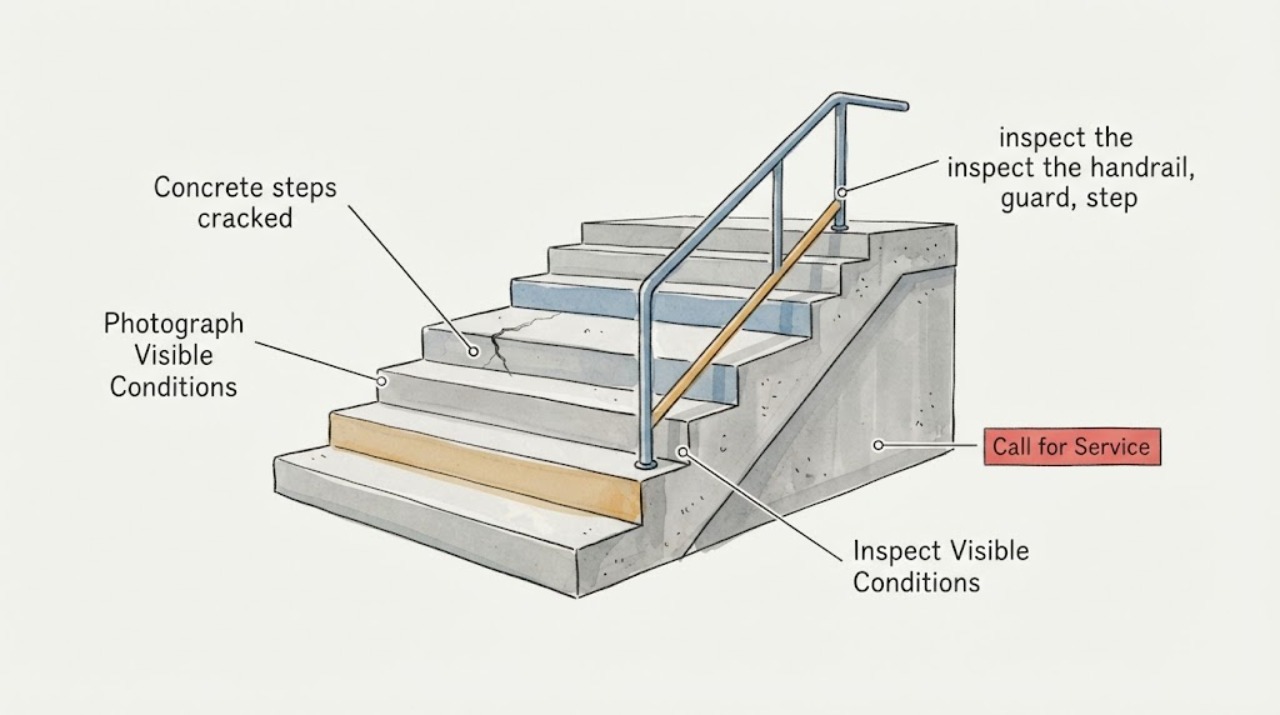
Concrete steps cracked: What to Check and What to Do Next
A crack in concrete steps is not automatically a cosmetic repair. A narrow surface crack may be stable, but widening, displacement, broken edges, loose pieces, water-related deterioration, or a change in the handrail or step geometry can make the steps unsafe.
-
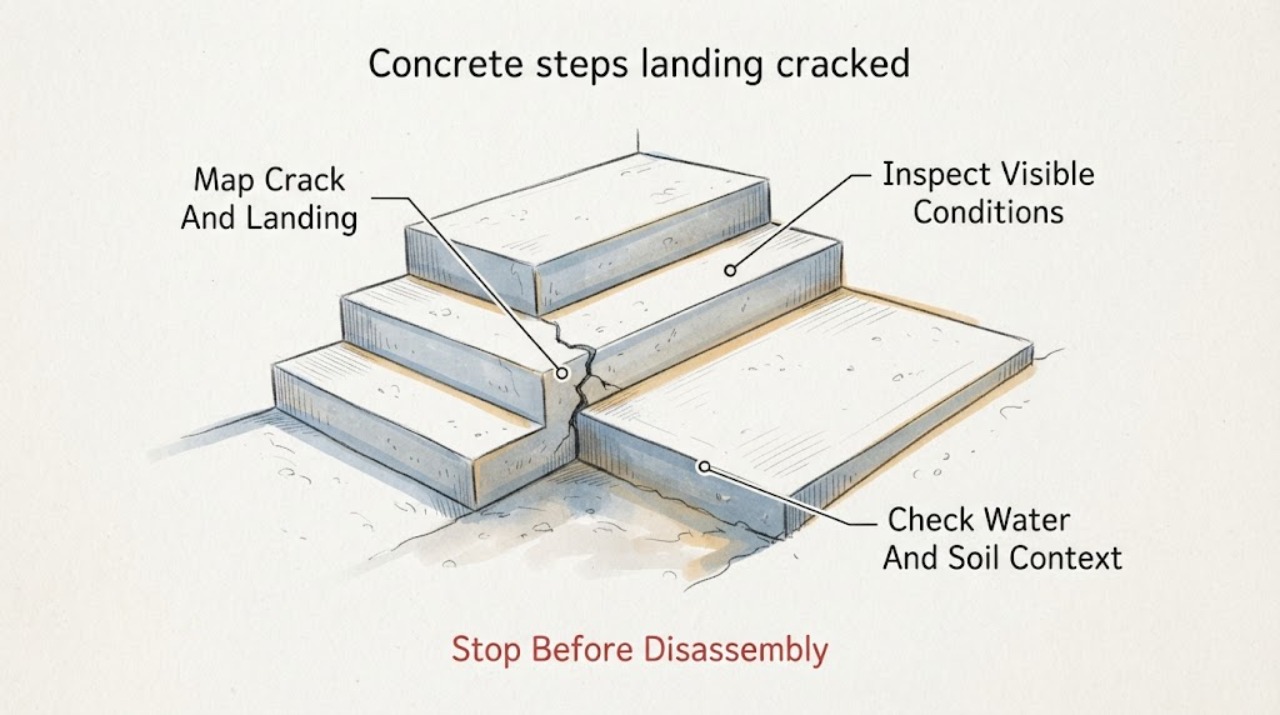
Concrete steps landing cracked: What to Check and What to Do Next
A crack across a concrete steps landing can be cosmetic shrinkage, but it can also reflect movement, water damage, settlement, or a failing connection to the stairs or house. Keep people off the area if the landing rocks, drops, has a raised edge, loose concrete, exposed reinforcement, or makes the stair path unsafe.
-
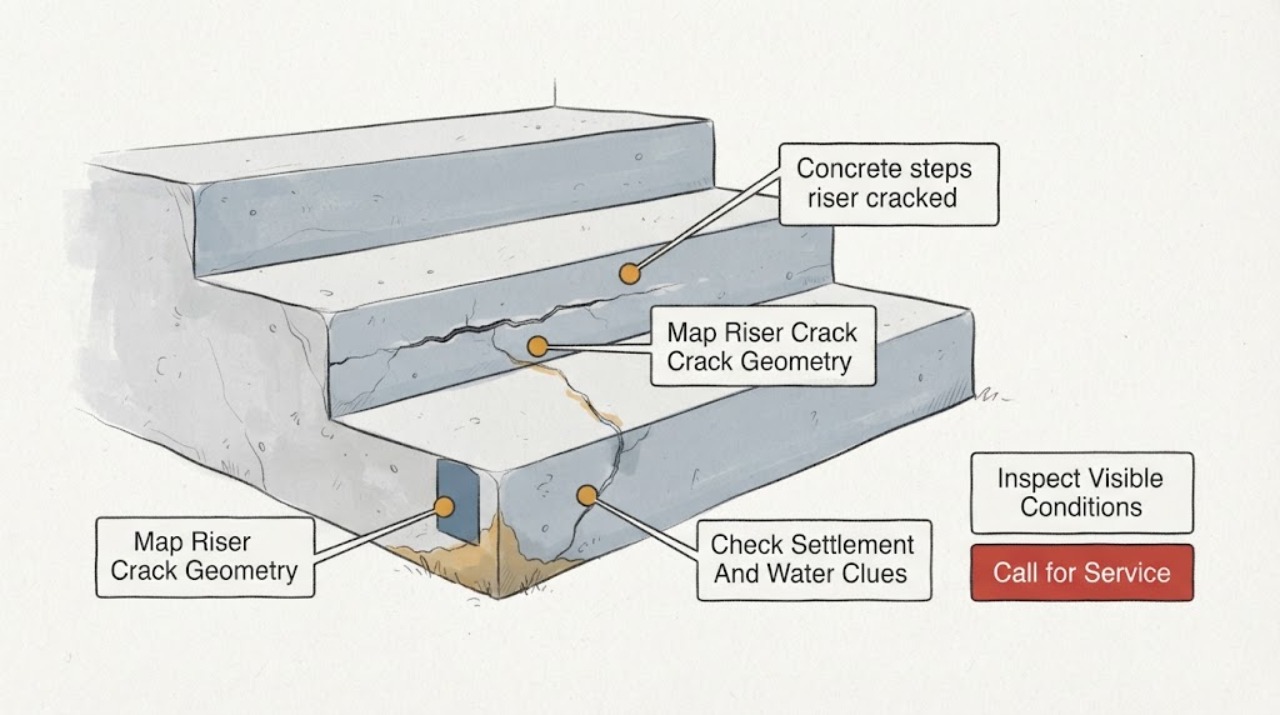
Concrete steps riser cracked: What to Check and What to Do Next
A crack in the vertical riser of concrete steps can be a surface defect, a trip hazard, or a sign that the step assembly is moving. From the ground or a safe landing, document the crack's direction, width, displacement, loose concrete, water or soil movement, and whether nearby joints or walls are also affected; do not load a questionable step or break, cut, drill, grind, lift, or dig around it.
-
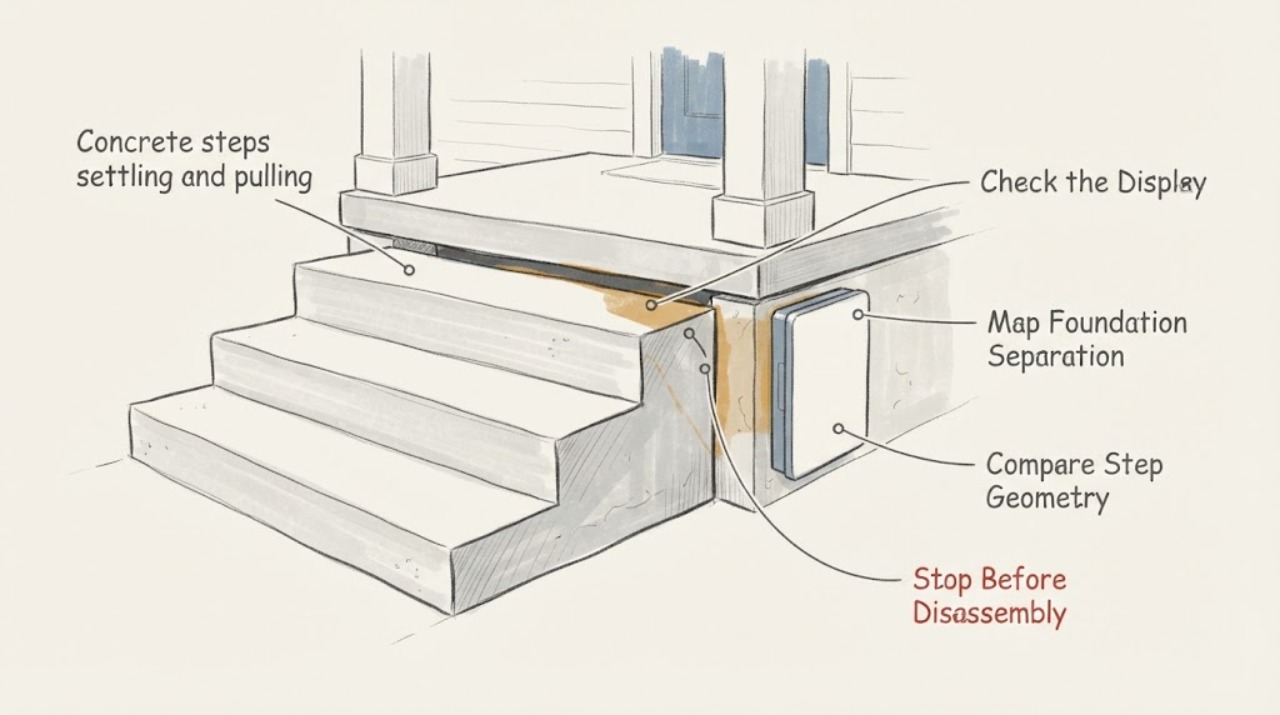
Concrete steps settling and pulling away from a porch foundation
Concrete steps pulling away from a porch or house foundation can reflect different rates of settlement, but the gap alone does not prove that the house foundation has failed. Keep the route controlled, document the gap, cracks, level changes, drainage, and any movement from stable ground, and have a qualified concrete or structural professional assess the support and connection before any lifting, anchoring, grouting, crack injection, or demolition is attempted.
-
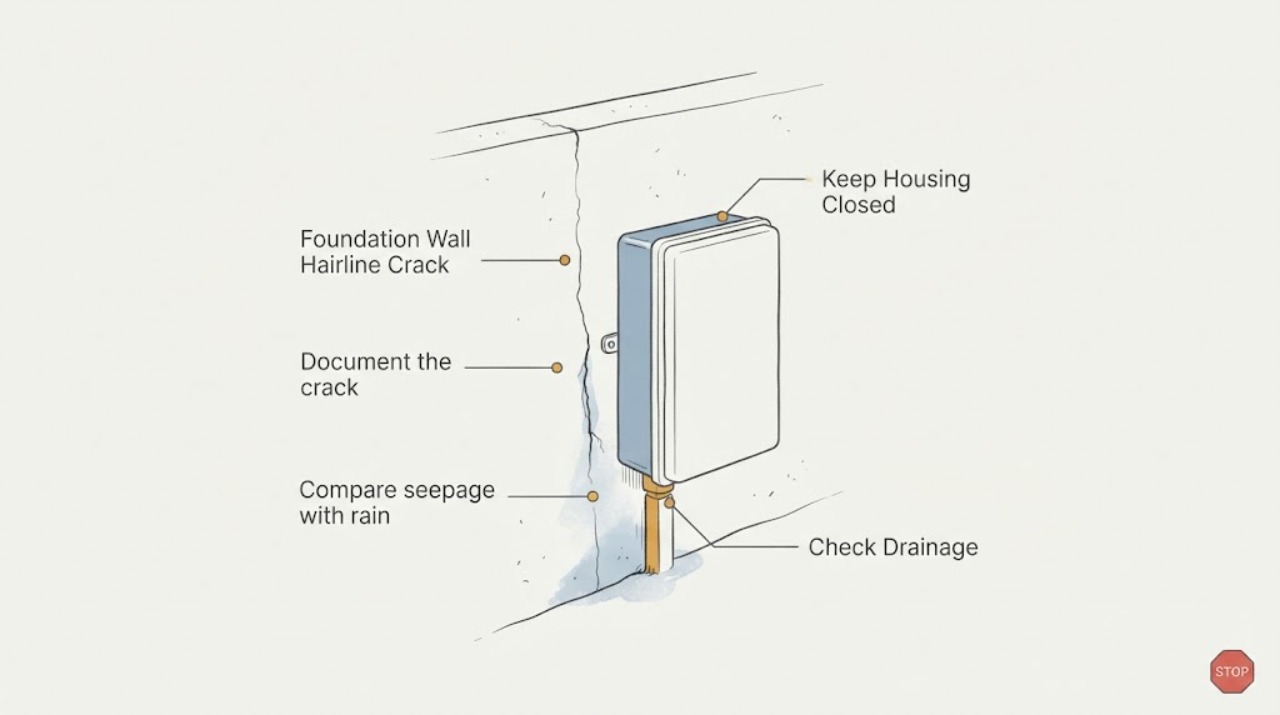
Foundation Wall Hairline Crack With Water Seepage: What to Check Next
A hairline crack that lets water seep through a foundation wall should be documented and traced before it is sealed. Photograph the crack and surrounding dampness, note whether seepage follows rain or continues in dry weather, and check visible grading, gutters, downspouts, and interior moisture from a safe position.
-
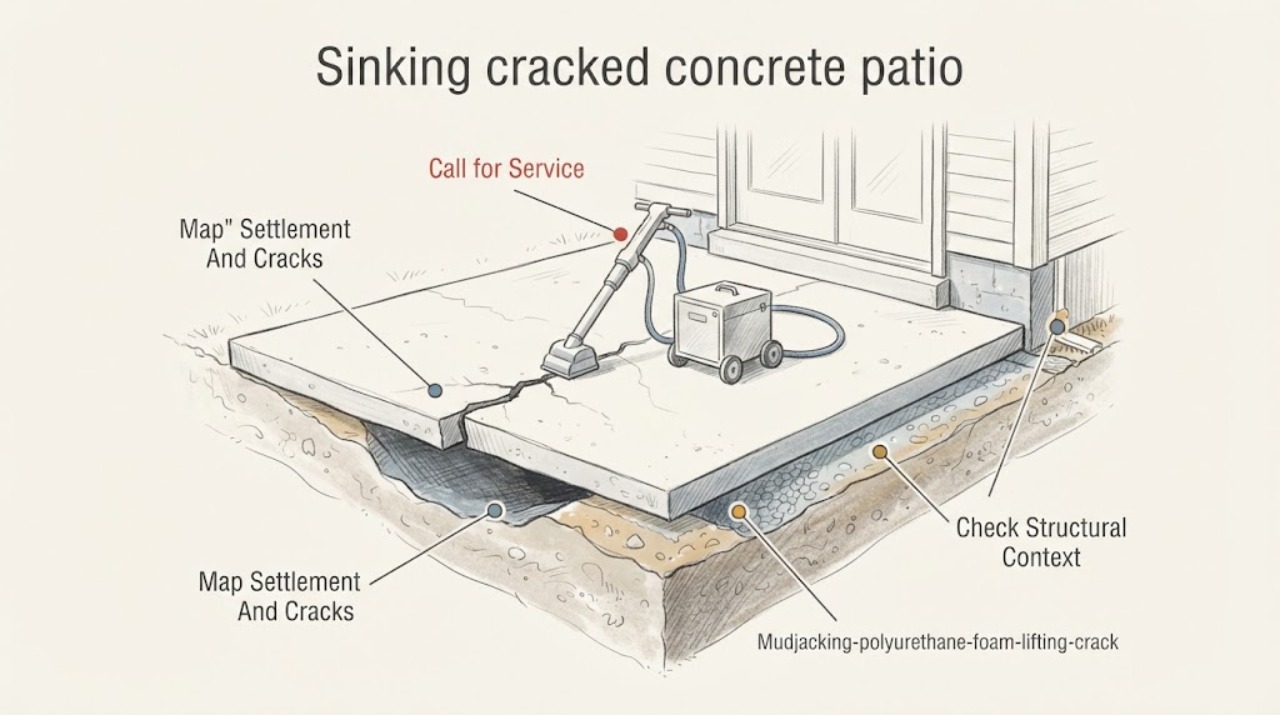
Sinking cracked concrete patio: Is polyurethane foam lifting a fit?
High-density polyurethane foam lifting, often called polyjacking, can be a professional option for a settled patio when the slab is still structurally sound, the settlement is localized, and the underlying void or loss of support can be addressed.