
HVAC guides
Mini Splits Repair Guides
Ductless mini-split guidance for cooling, heating, drainage, and indoor-unit issues.
Published mini splits guides
Choose the guide that best matches the equipment and symptom you are seeing.
-
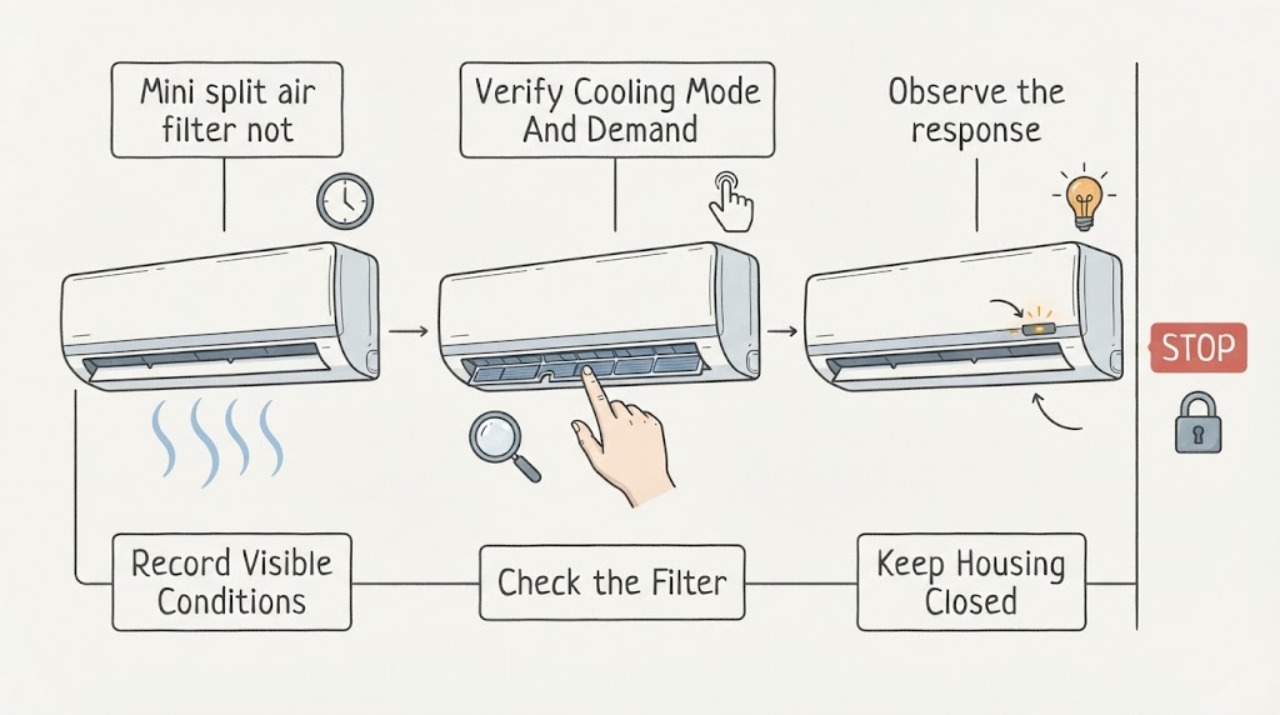
Carrier mini split air filter not cooling: What to Check and What to Do Next
A dirty or incorrectly seated Carrier mini split air filter can restrict airflow and make the system cool poorly, but the filter may not be the only cause. First confirm that the unit is actually calling for cooling rather than Fan, Dry, Heat, Quiet, or an unintended setting, then turn the system off before opening the indoor filter access.
-
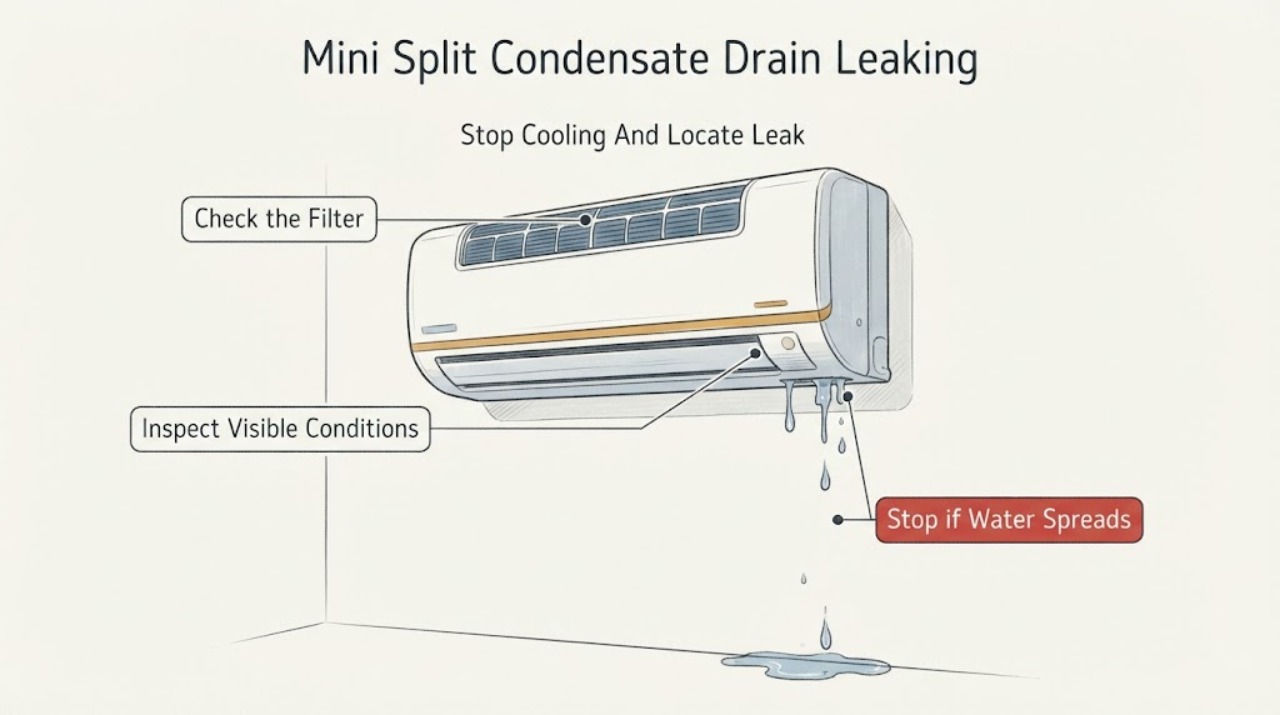
Carrier Mini Split Condensate Drain Leaking Water: What to Check and What to Do Next
Water from a Carrier mini split's indoor unit usually means condensate is not reaching its drain safely, but a clogged drain is not the only possibility. Turn cooling off, protect the wall and floor, and identify whether water is dripping from the indoor unit, the drain connection, the line along the wall, or a nearby pipe.
-
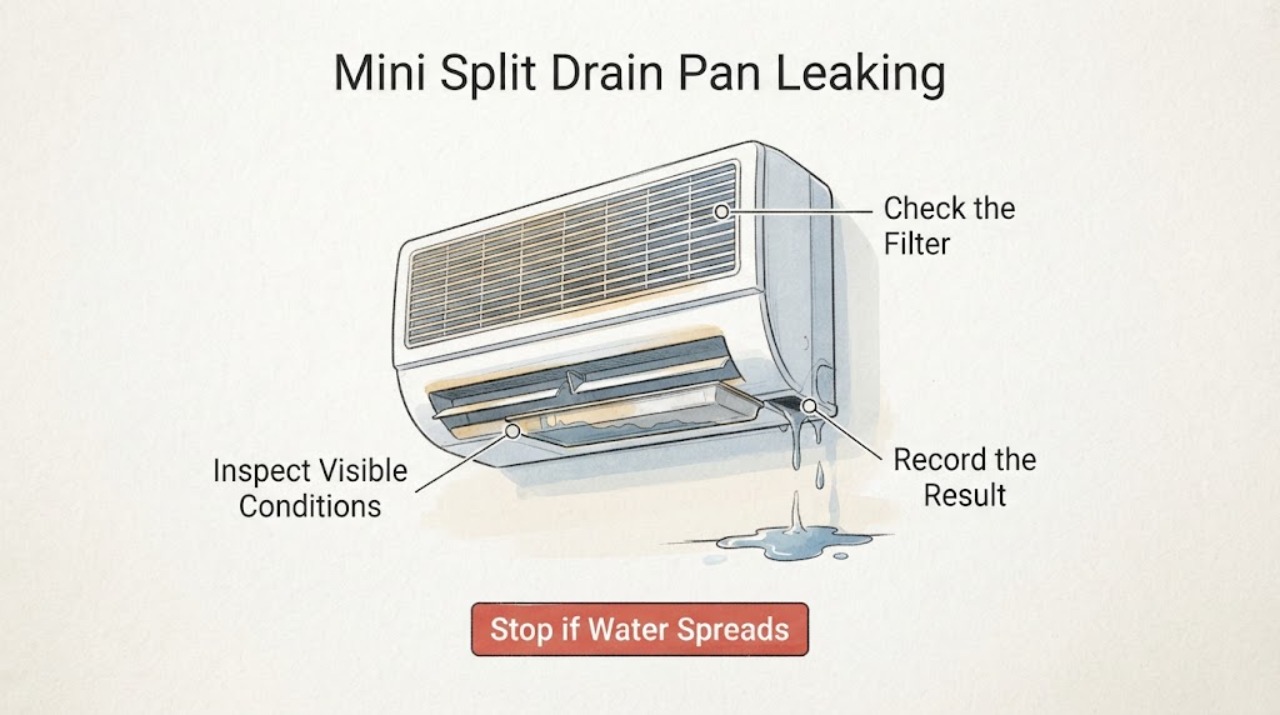
Carrier Mini Split Drain Pan Leaking Water: What to Check and What to Do Next
If a Carrier mini split appears to leak from its drain pan, first stop cooling from the normal controller, protect the wall and floor, and identify whether water is coming from the indoor unit, the drain-line connection, or a separate source. A clogged condensate line can back water up into the pan; a dirty filter can restrict airflow, freeze the indoor coil, and produce a surge of meltwater; and a cracked, corroded, tilted, or poorly supported pan can leak directly.
-
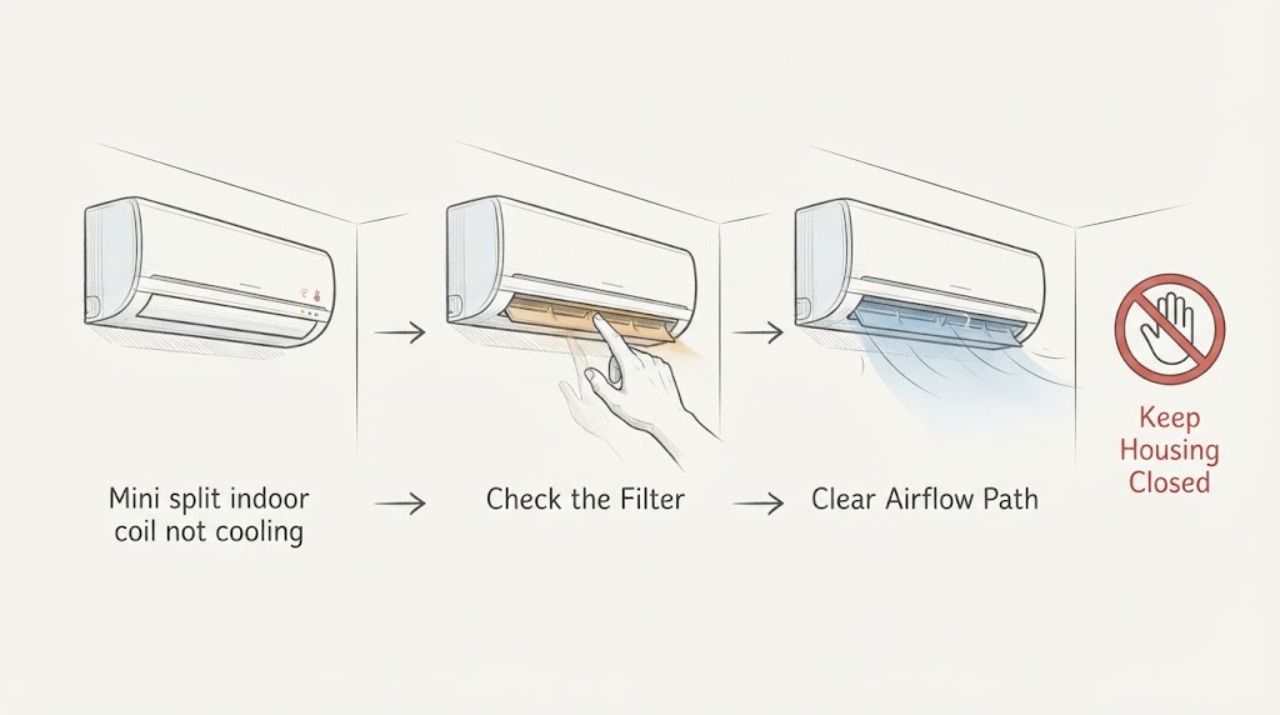
Carrier mini split indoor coil not cooling: What to Check and What to Do Next
If a Carrier mini split indoor coil is not cooling the room, first verify the remote is in Cool mode, the setpoint is appropriate, and the outdoor unit has power and is operating. Then turn the system off before opening the indoor front panel, clean the accessible air filter, and clear dust or furniture from indoor and outdoor airflow paths.
-
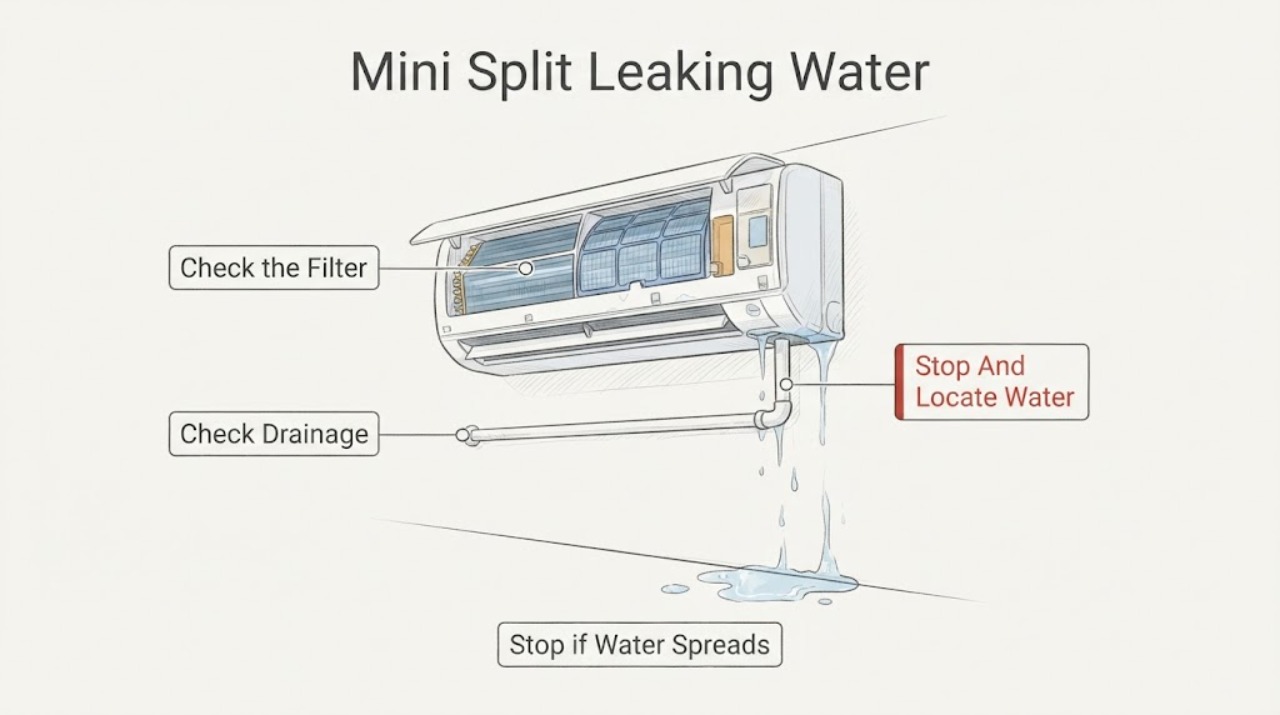
Carrier Mini Split Leaking Water: What to Check and What to Do Next
A Carrier mini split that leaks from the indoor wall or ceiling unit most often has a restricted condensate drain, a dirty filter that has reduced airflow and allowed the indoor coil to ice, or a damaged or incorrectly tilted drain pan. Turn the system off, contain the water, and identify whether it is coming from the indoor unit, the visible drain connection, or only the outdoor unit.
-
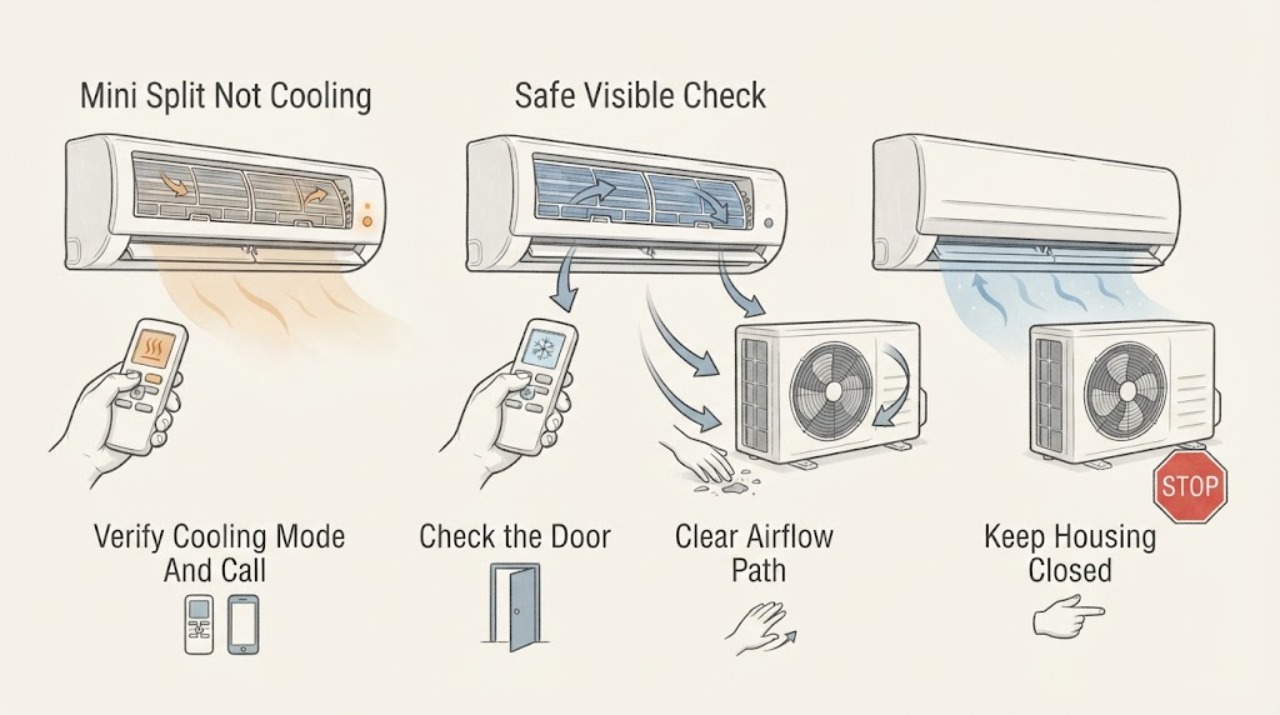
Carrier Mini Split Not Cooling: What to Check and What to Do Next
When a Carrier mini split is not cooling, first confirm that the remote is calling for Cool rather than Fan, Dry, Heat, or an unintended schedule, then check visible power and the user-serviceable air filter. From a safe position, verify that the indoor unit has normal airflow and that the outdoor unit starts; clear only loose debris outside and only with power off.
-
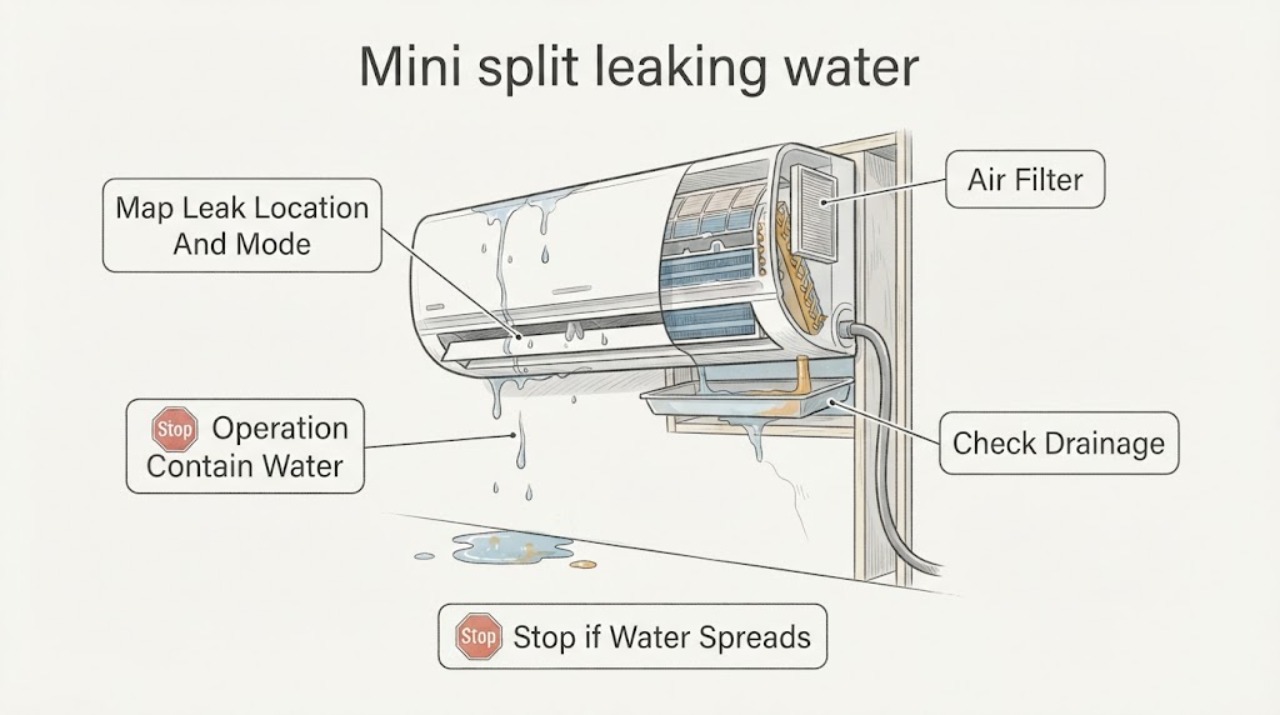
Daikin mini split leaking water: What to Check and What to Do Next
Water from a Daikin mini-split indoor unit is not something to ignore. Stop cooling or dry operation, collect the water, and keep it away from electrical equipment and finishes.
-
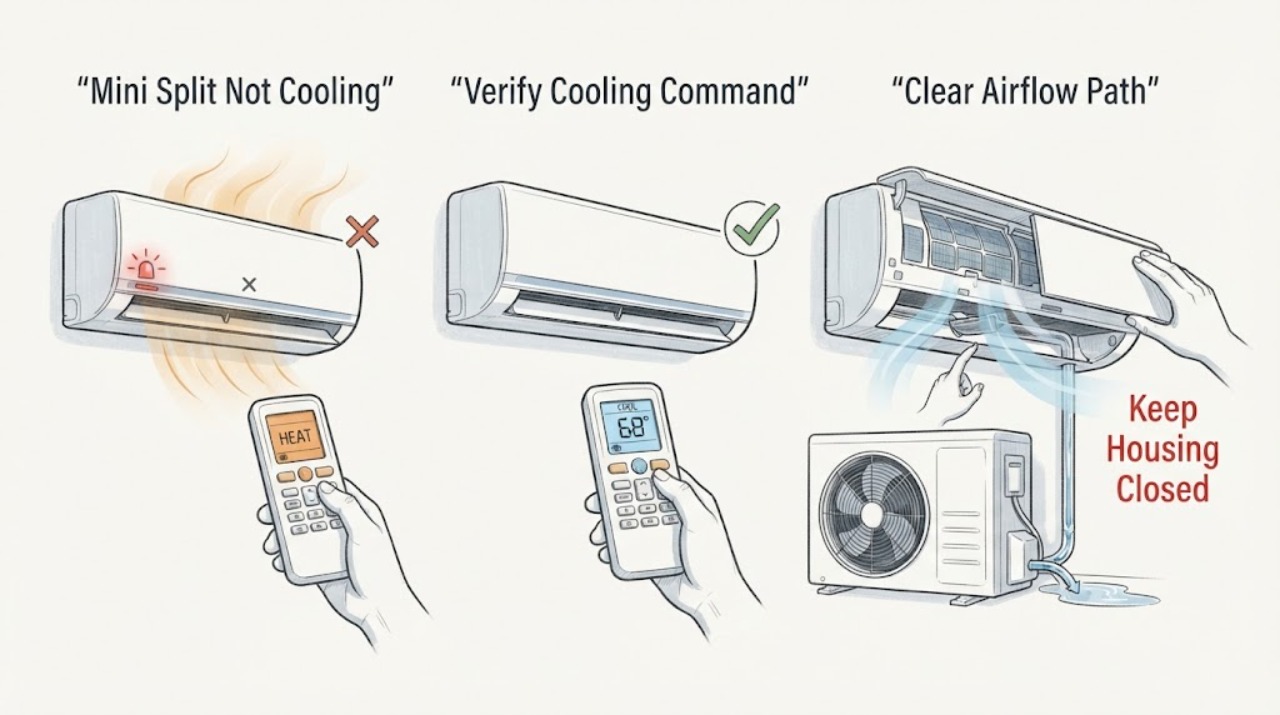
Daikin Mini Split Not Cooling: What to Check and What to Do Next
When a Daikin mini split runs but does not cool, first confirm that the remote is in cooling mode with a set temperature below the room temperature, then check the indoor filter and both indoor and outdoor air paths for visible blockage. Daikin's troubleshooting guidance lists incorrect mode or temperature, airflow direction or quantity, dirty filters, blocked indoor or outdoor inlets and outlets, open windows or doors, and ventilation as initial checks.
-
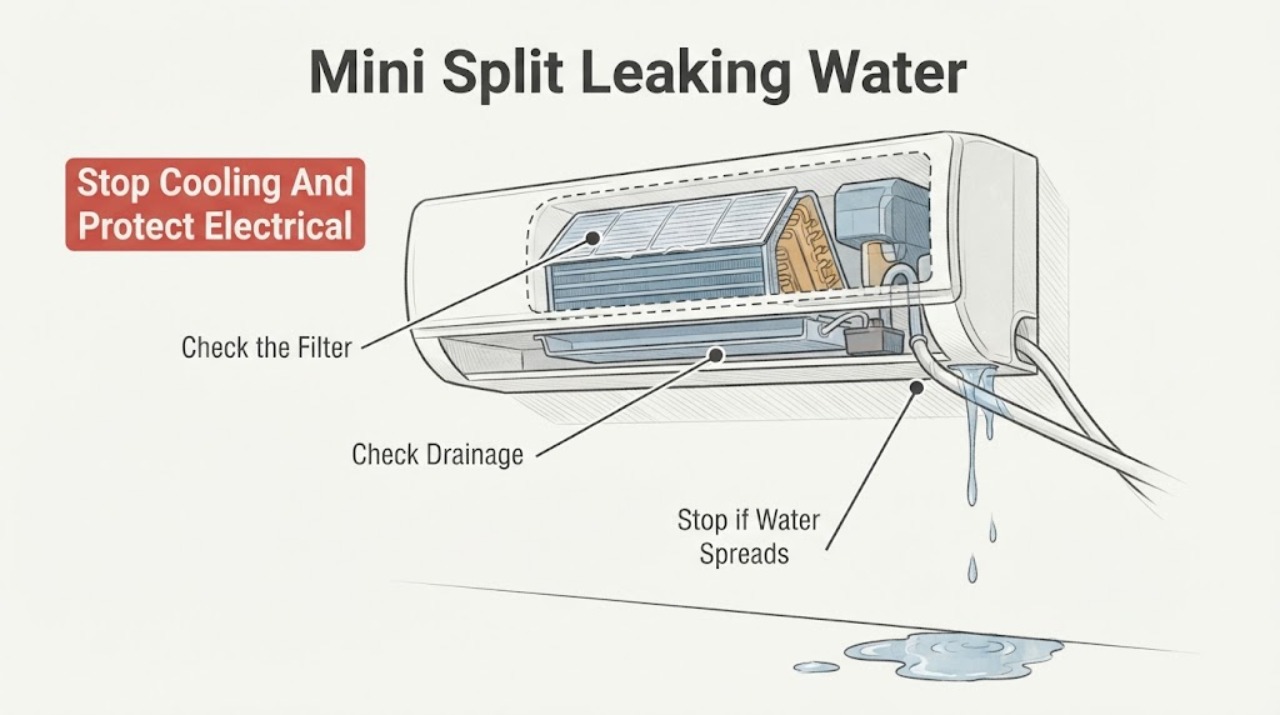
Fujitsu Mini Split Leaking Water: What to Check and What to Do Next
A Fujitsu mini split that is leaking water usually has condensate that is not leaving the indoor unit correctly, excess frost melting after restricted airflow, or an installation or component problem. Stop cooling from the remote, protect the wall and floor, and keep clear of water near electrical parts.
-
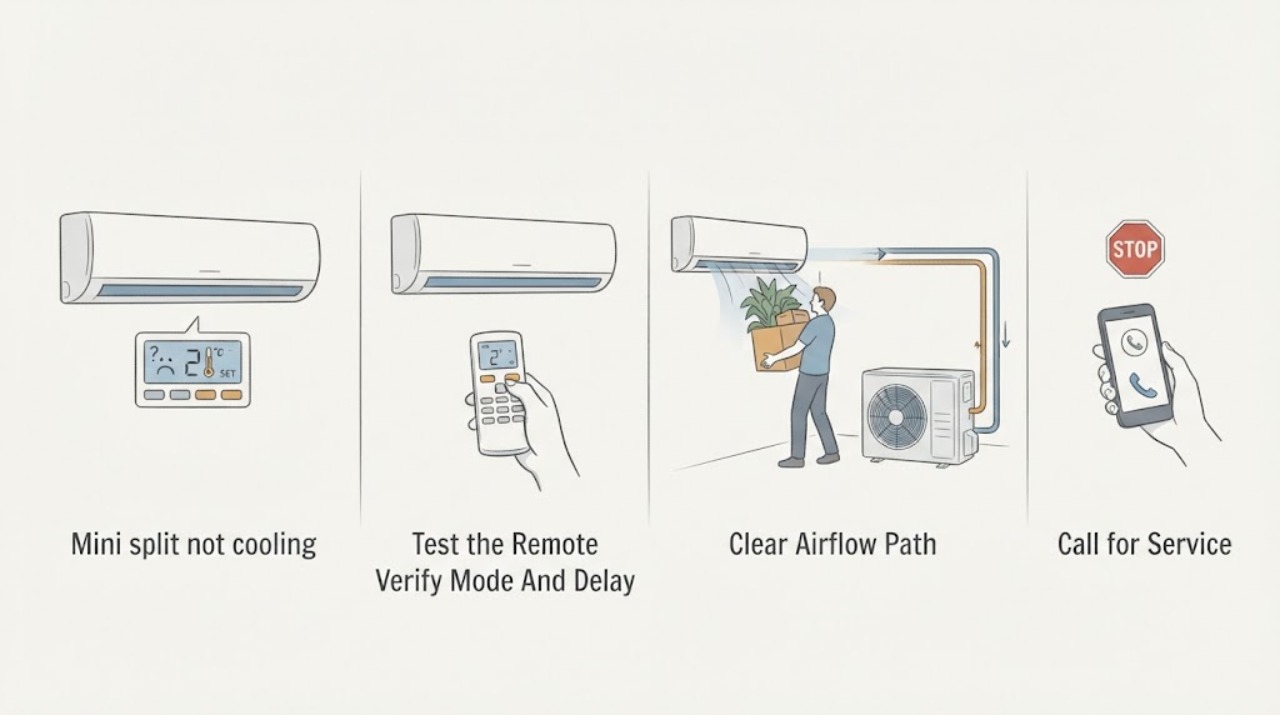
Fujitsu mini split not cooling: What to Check and What to Do Next
Set the Fujitsu mini split to Cooling, choose a reasonable temperature, and check that the remote batteries, timer, intake grille, outlet, filter, doors, and windows are not preventing cooling. A brief restart delay can be a normal compressor protection function, not a failed compressor.
-
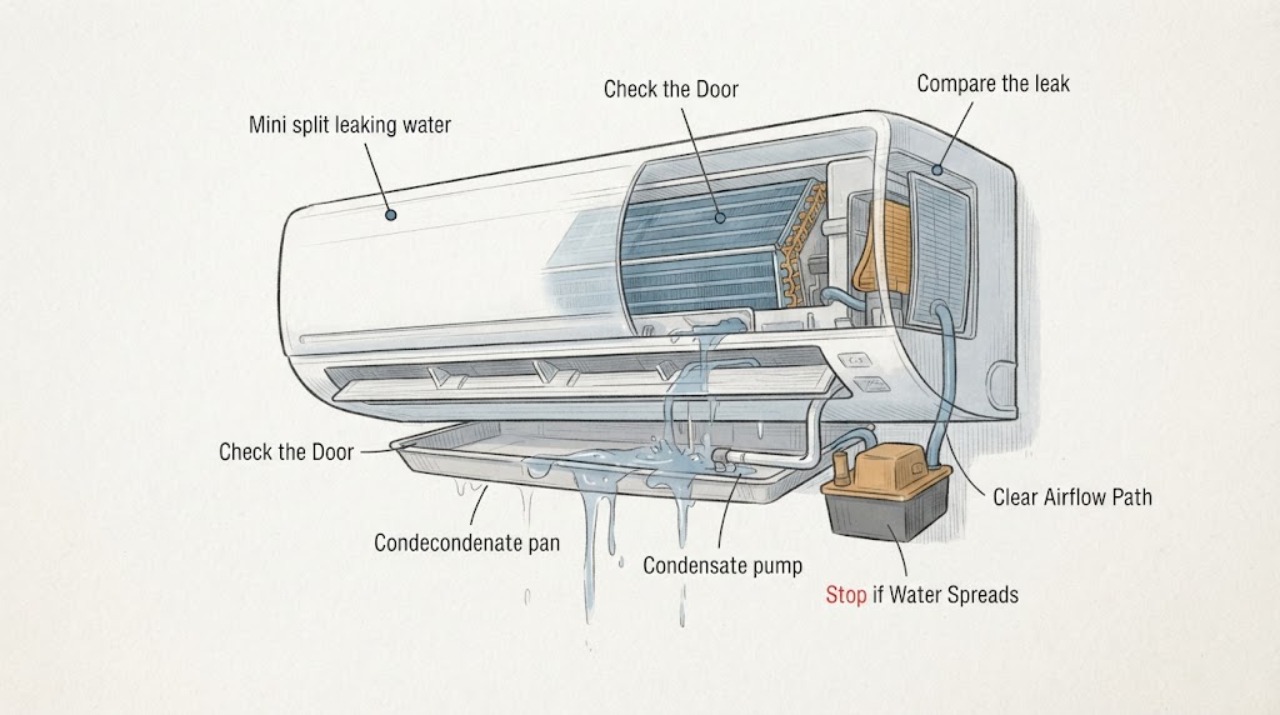
GREE mini split leaking water: What to Check and What to Do Next
Turn a leaking GREE mini split off and protect the wall, floor, and nearby electronics before diagnosing it. In cooling mode, indoor water should travel through the condensate pan and drain line to an approved outlet; water from the indoor head usually means restricted drainage, a dirty or iced coil, a filter or airflow problem, an unlevel installation, or a condensate-pump issue.
-
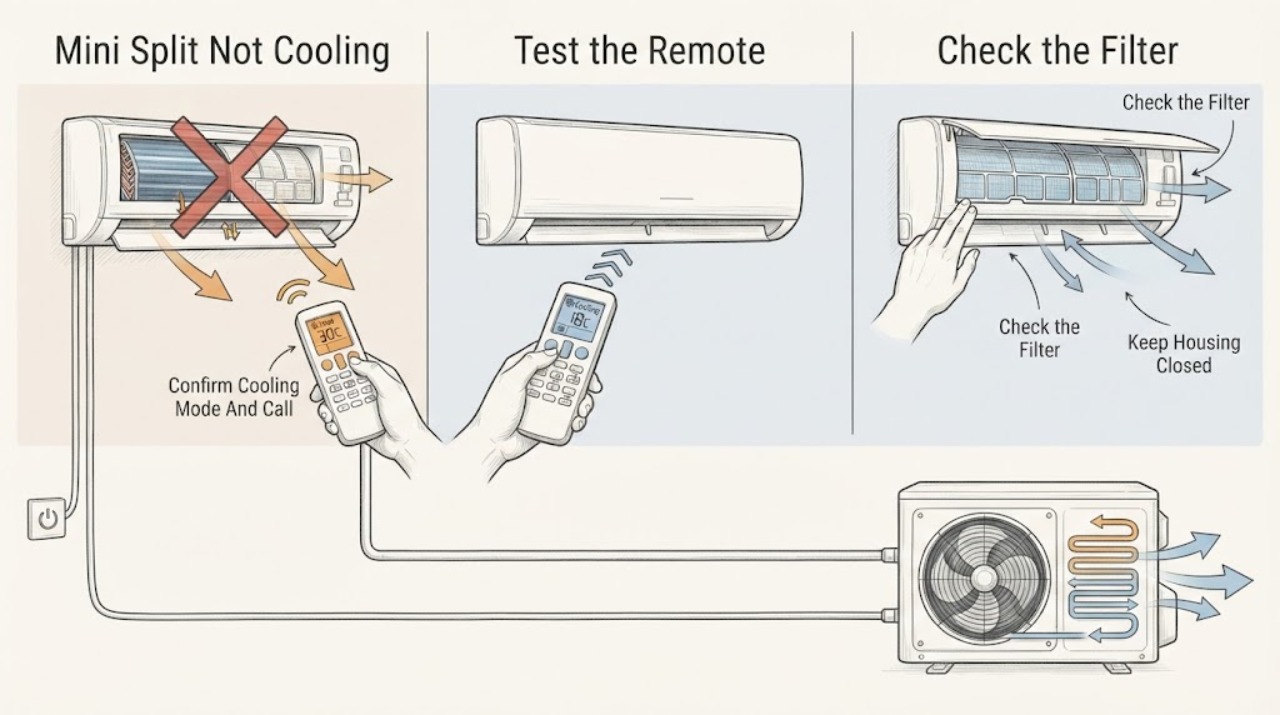
GREE Mini Split Not Cooling: What to Check and What to Do Next
When a GREE mini split is not cooling, first confirm that the indoor unit is calling for cooling rather than fan, dry, heat, or a multi-zone mode conflict, then check the set temperature, remote batteries or signal, indoor filter, and visible indoor and outdoor airflow.
-
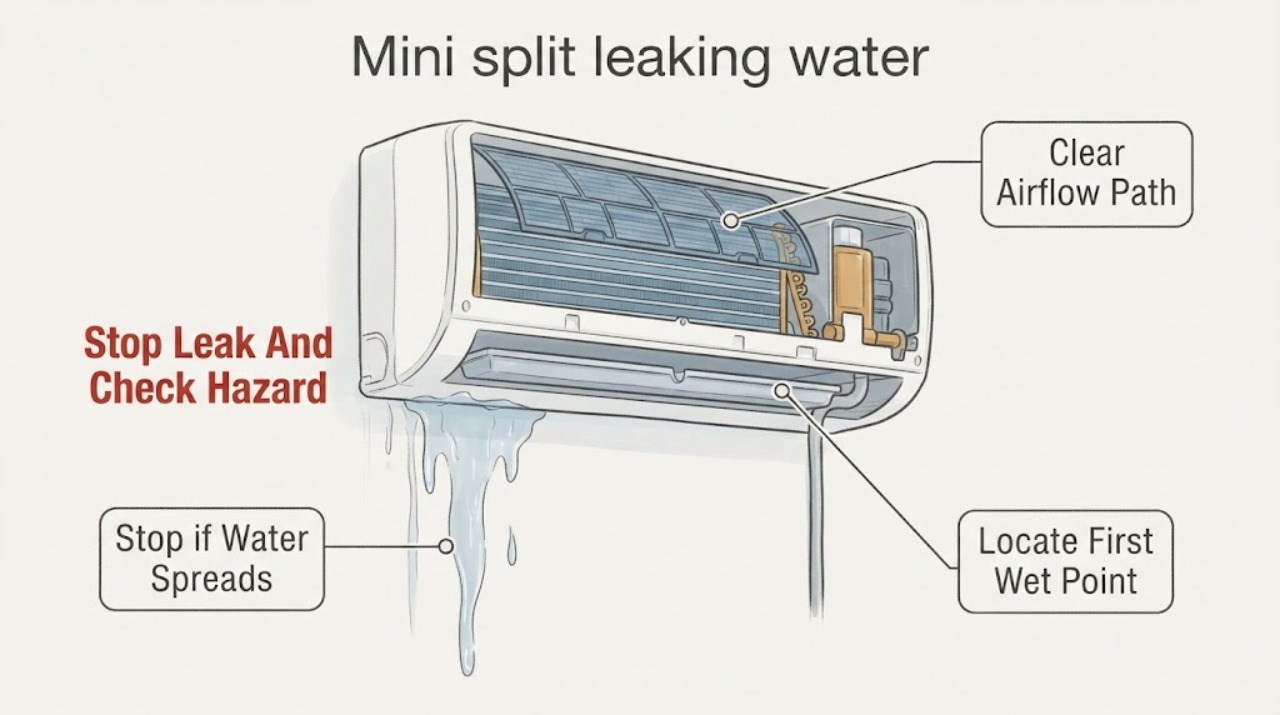
LG mini split leaking water: What to Check and What to Do Next
Turn the LG mini split off when water is entering the room, protect nearby furniture and electrical equipment, and do not touch wet wiring or open the indoor unit. Identify whether water is coming from the indoor head, the drain-hose route, insulated piping, or the outdoor unit.
-
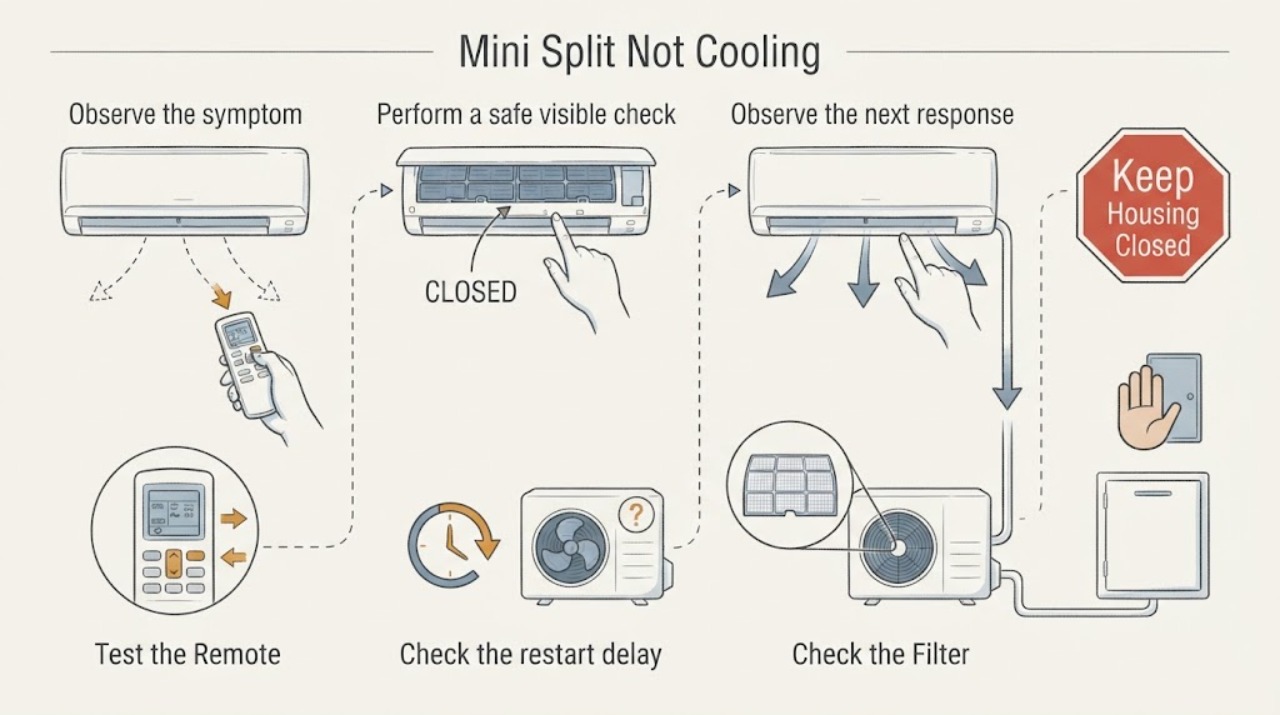
LG Mini Split Not Cooling: What to Check and What to Do Next
First confirm that the LG mini split is in normal Cooling mode, the target temperature is below the room temperature, and the remote command is being received. Then clean the indoor filter only as the exact model manual allows, clear loose obstructions around the outdoor unit without opening its panels, and check that the dedicated power supply has not tripped.
-
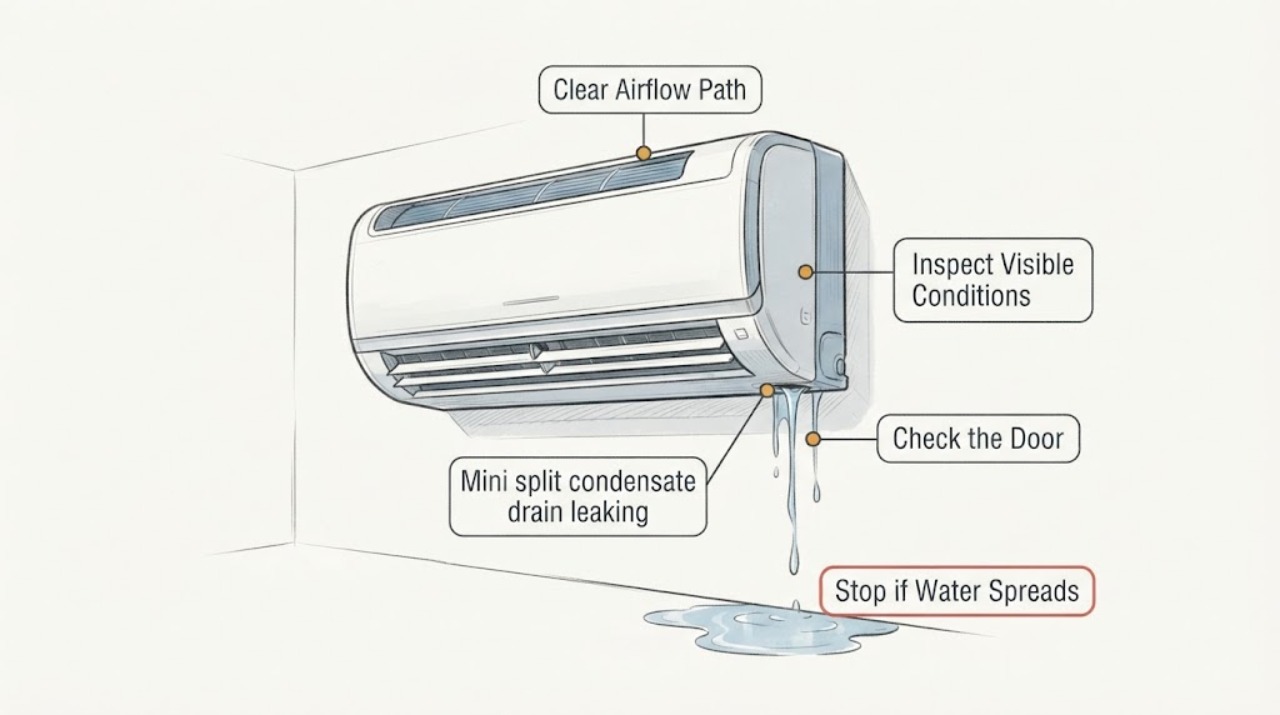
Mini split condensate drain leaking water: What to Check and What to Do Next
For a wall-mounted mini split leaking water, start by locating the first indoor wet point and checking whether the outside condensate outlet produces water during cooling. A blocked, kinked, sagging, or poorly sloped drain can back up into the indoor pan; a dirty filter or restricted airflow can freeze the coil and create a later melt overflow.
-
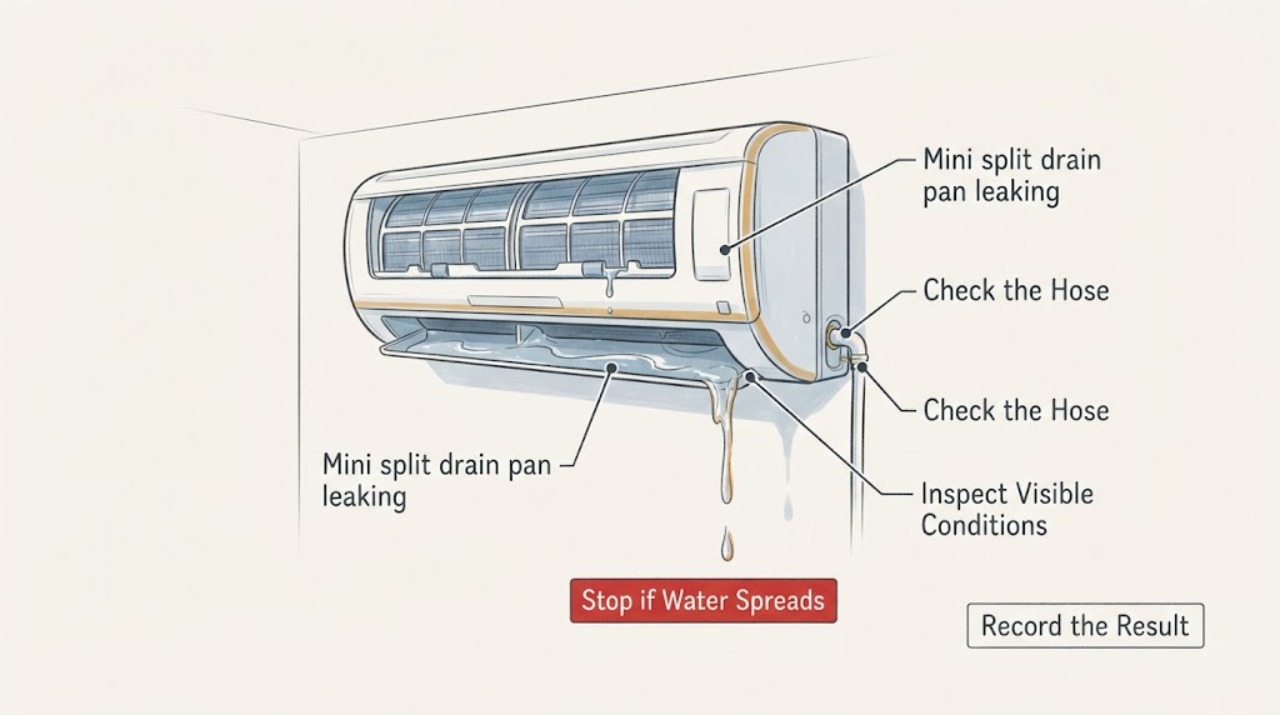
Mini split drain pan leaking water: What to Check and What to Do Next
For a mini-split drain pan leaking water, first locate the first wet point from the floor and stop operation if water can reach electrical parts. Check whether the pan visibly holds or overflows water, whether the condensate hose is kinked or blocked-looking, whether ice or weak airflow is creating meltwater, and whether a separate condensate pump alarms or fails to discharge.
-
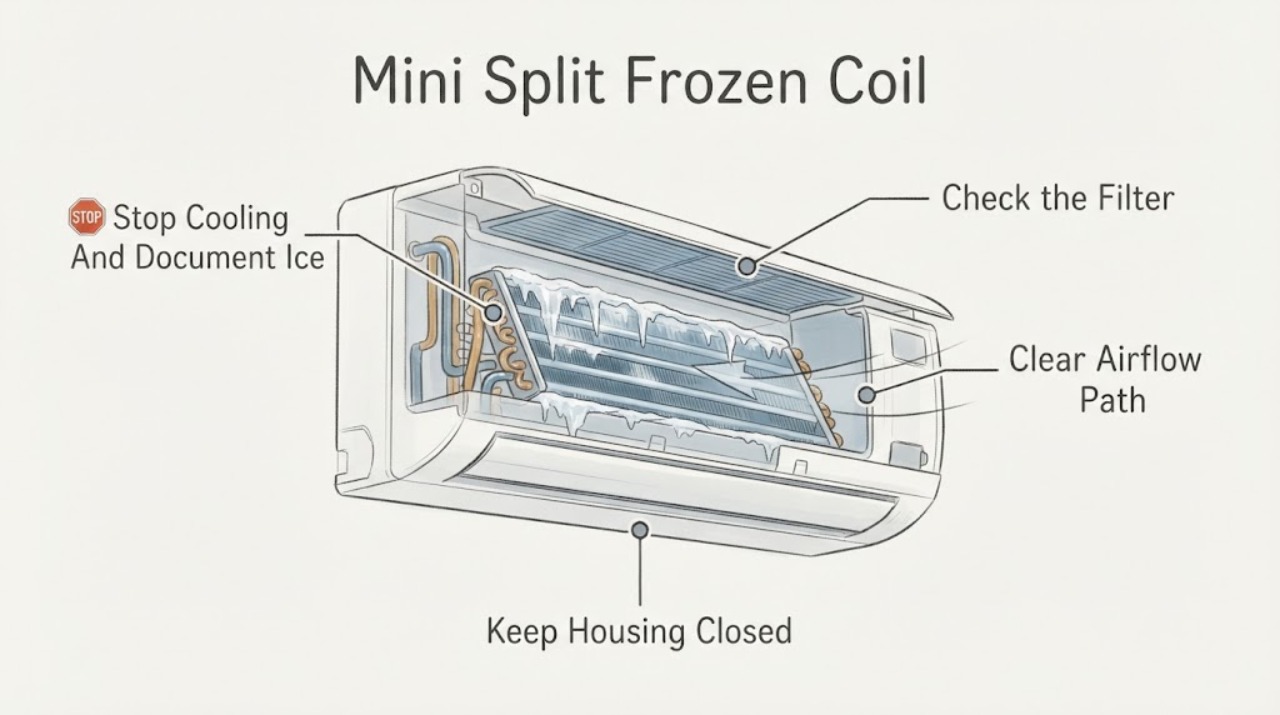
Mini Split Frozen Coil: Safe Checks Before HVAC Service
If a mini split has frost or ice on the indoor coil or refrigerant tubing, turn off cooling and let the ice melt without chipping it or continuing to run the system in cooling. Once it is fully thawed and there is no water or electrical hazard, check the accessible filter, visible airflow obstructions, and operating mode according to the unit manual.
-
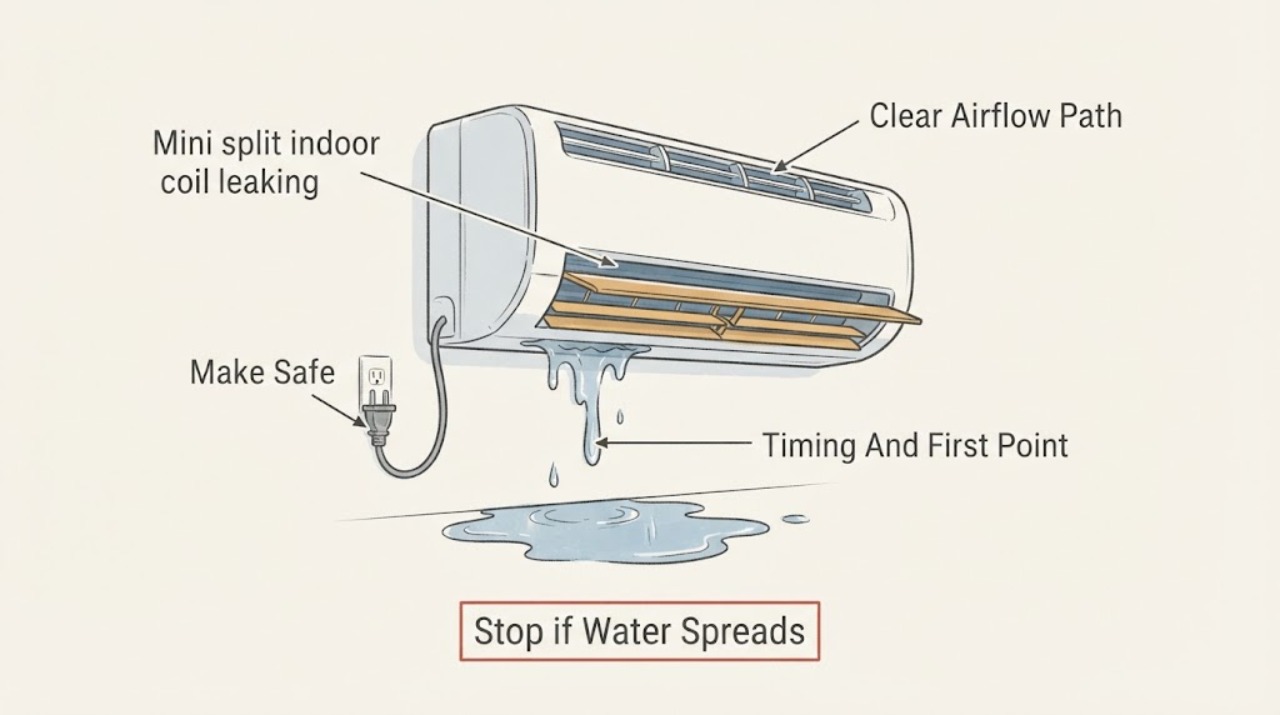
Mini split indoor coil leaking water: What to Check and What to Do Next
For a mini-split indoor coil that appears to leak water, first turn the system off and observe from the floor. Find the first wet point and record whether it appears during cooling, after shutdown as ice melts, after a long run, in humid conditions, or continuously.
-
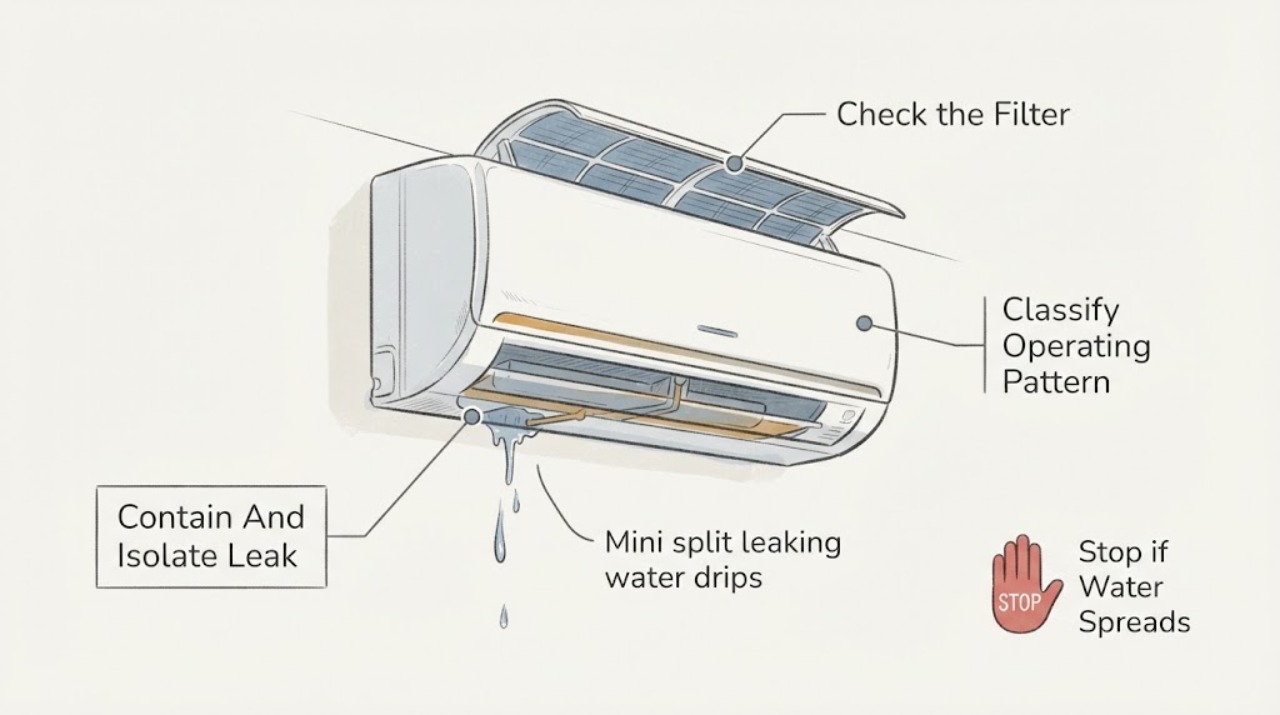
Mini split leaking water drips from indoor head: What to Check and What to Do Next
Water dripping from a mini-split indoor head usually means condensate is not leaving through the intended drain path, but a dirty filter that freezes the coil, a damaged drain pan, poor hose routing, an unlevel indoor head, a condensate pump problem, or low refrigerant can look similar. First protect the wall and floor, and turn the system off if water is reaching electrical parts.
-
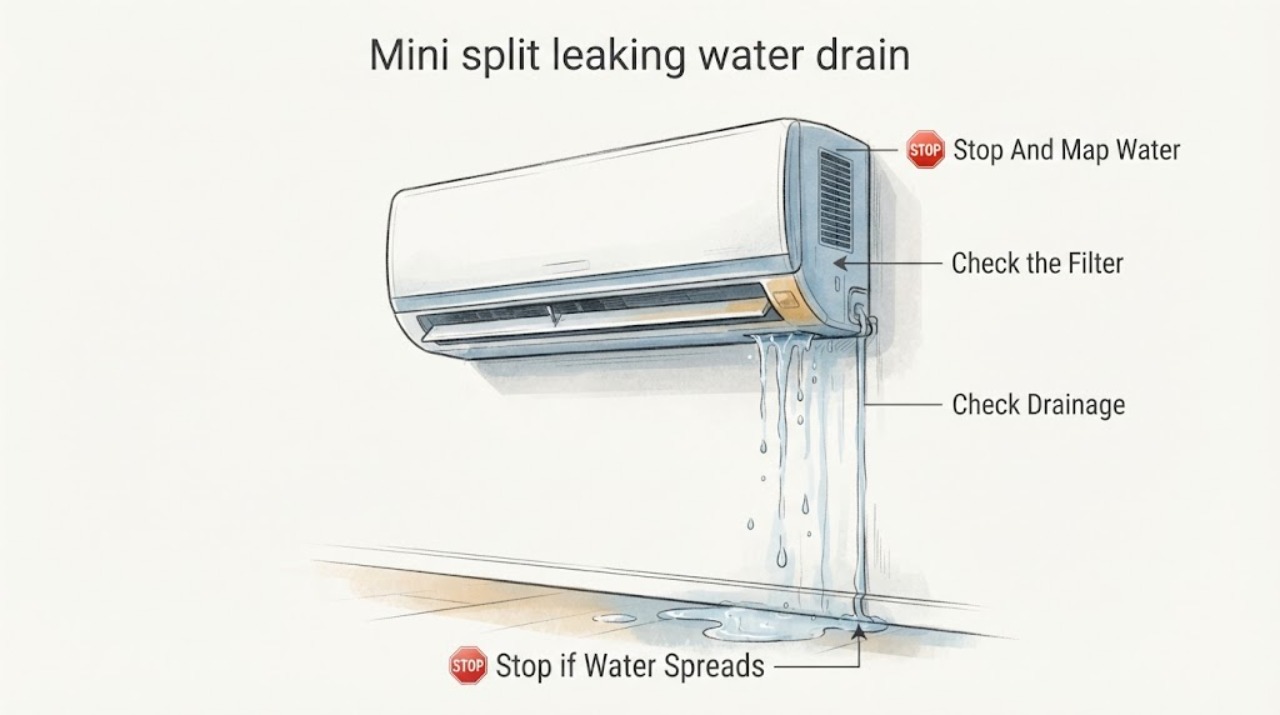
Mini split leaking water drain may be blocked: What to Check and What to Do Next
Water from a mini-split indoor unit is often condensate that should collect in the drain pan and leave through a condensate drain. A blocked or poorly routed drain can make water back up and spill from the indoor unit, but a dirty filter that causes coil ice, a damaged or tilted drain pan, incorrect installation, or a refrigerant problem can look similar.
-
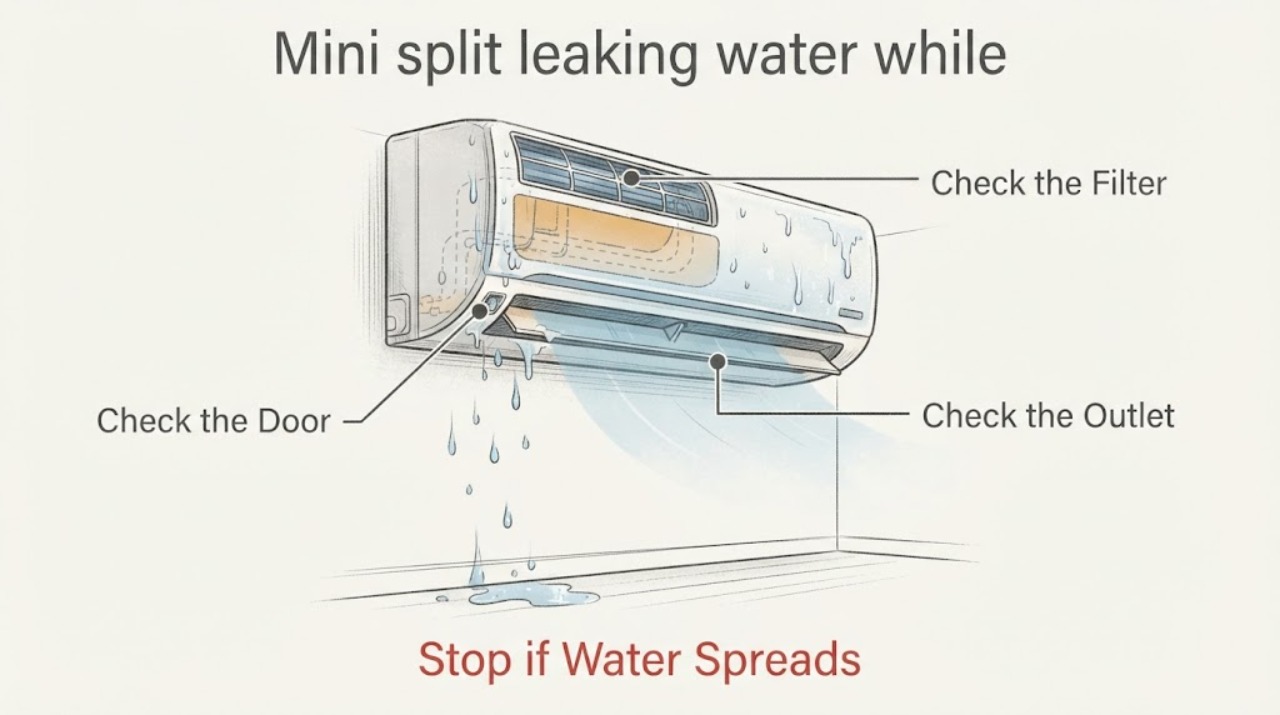
Mini split leaking water while cooling is running: What to Check and What to Do Next
When a mini split leaks from the indoor unit during cooling, the water is usually condensate that is not leaving through the drain path. Stop cooling if water is reaching the wall, floor, or electrical area, collect the drip, and check the outside drain outlet for a visible obstruction without opening the unit.
-
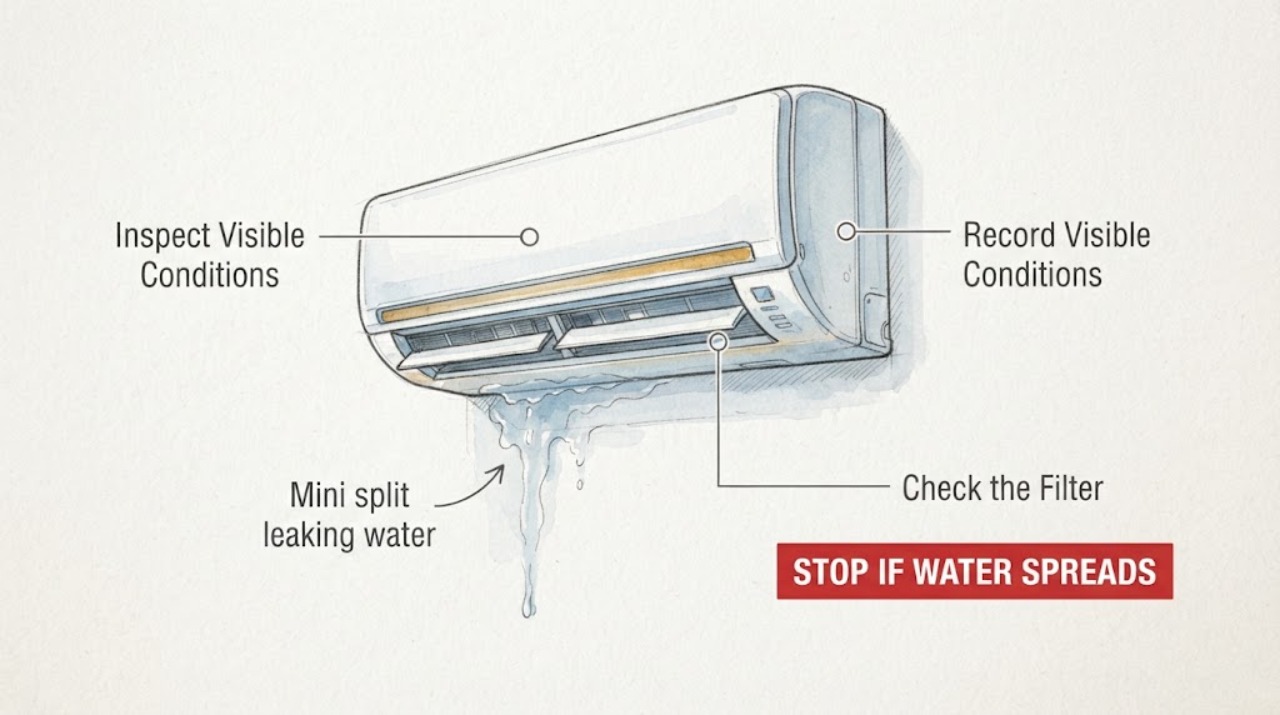
Mini split leaking water: What to Check and What to Do Next
Treat water from a mini-split indoor unit as a stop-and-assess condition, not as a reason to keep running repeated cooling cycles. From a safe position, note exactly where the water starts, whether it appears only during cooling or also while the system is off, whether the visible filter is heavily loaded, and whether the drain outlet is visibly flowing without touching it.
-
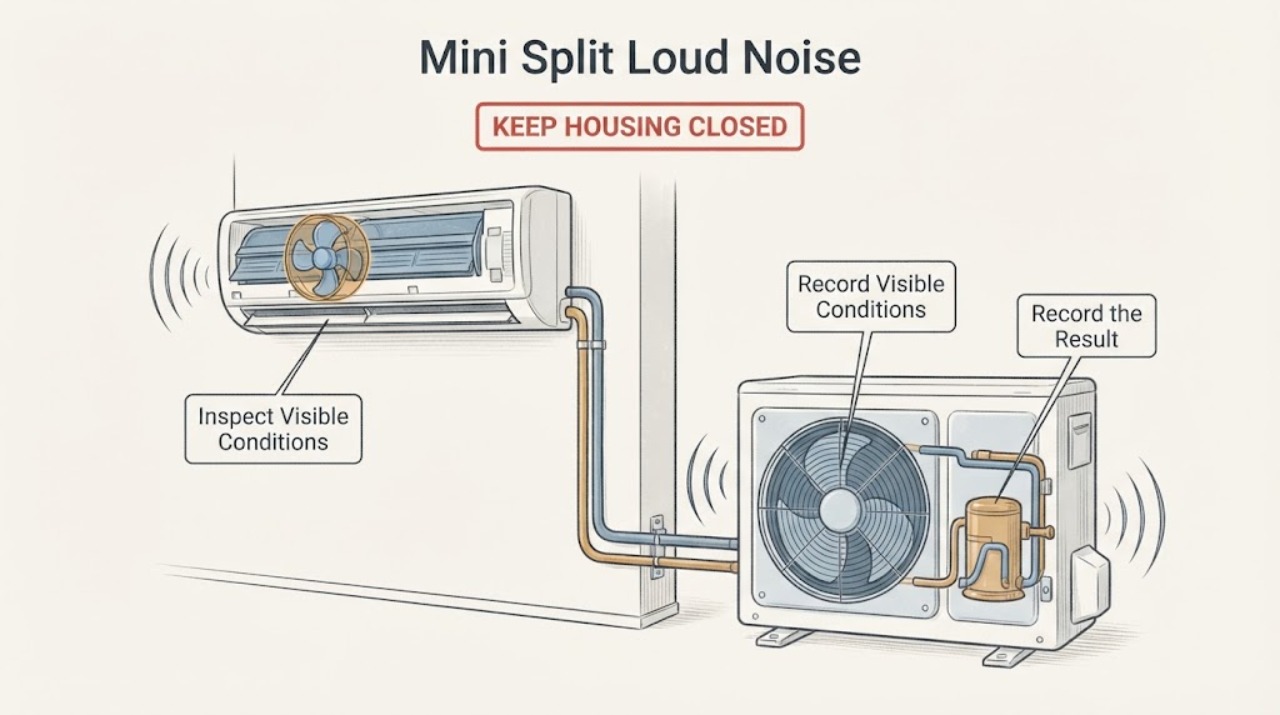
Mini Split Loud Noise: Identify Normal Sounds and Safe Stop Points
A mini split can make brief water-flow, louver, airflow or defrost sounds that are normal for its design, but a new or unusually loud banging, grinding, rattling, screeching, prolonged buzzing or hissing sound needs attention. First record whether the sound comes from the indoor head or outdoor unit and whether it occurs at startup, shutdown, defrost or continuous operation.
-
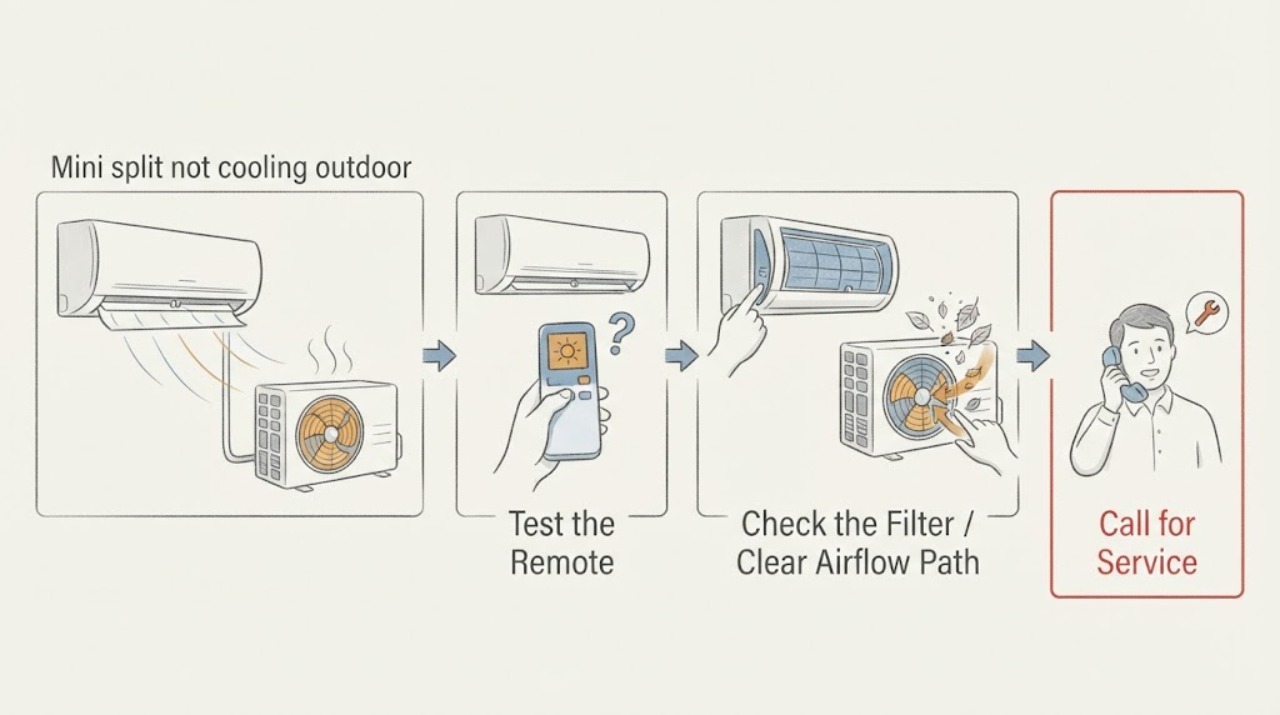
Mini split not cooling outdoor unit may run: What to Check and What to Do Next
An outdoor mini-split unit can run while the room stays warm if the indoor unit is in the wrong mode, airflow is restricted, the outdoor coil is blocked, the indoor coil is frozen, or the refrigeration circuit has a leak or another fault. Confirm the remote is in Cool with a setpoint below the room temperature, then check the indoor filter and visible air inlets and outlets.
-
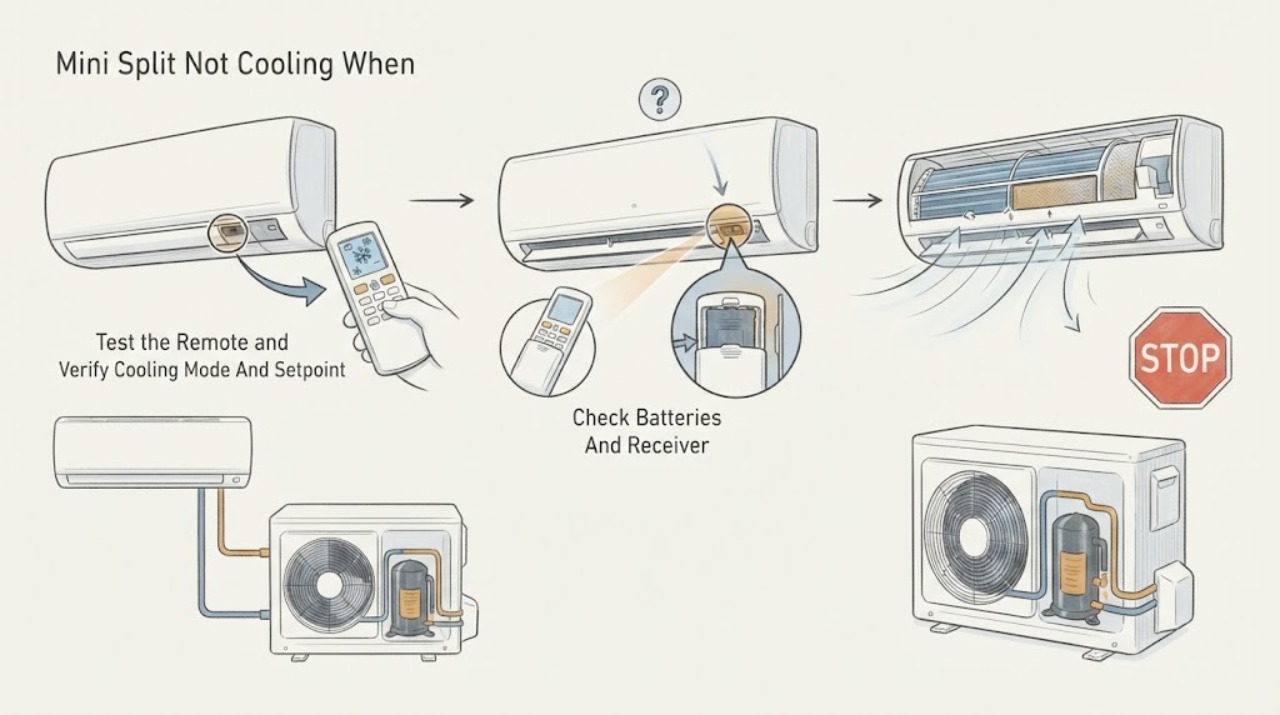
Mini Split Not Cooling When the Remote Calls for Cooling: What to Check and What to Do Next
If a mini split remote calls for cooling but the room does not cool, first separate a command problem from a cooling problem. Confirm that the remote display changes, the indoor unit acknowledges the command, the selected mode is Cool rather than Fan, Dry, Auto, or a timer-only function, and the setpoint is calling for cooling.
-
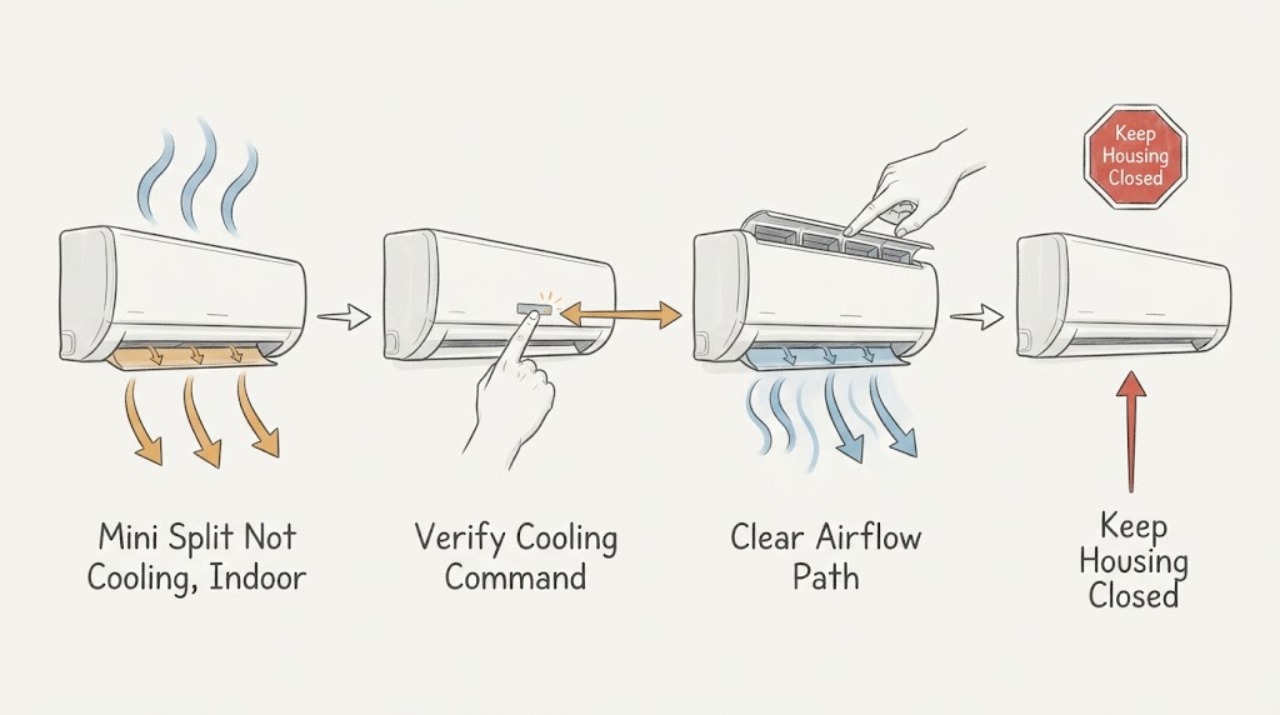
Mini Split Not Cooling, Indoor Air Is Warm: What to Check and What to Do Next
When a mini-split is running but the indoor air is warm, first verify that the remote or wall controller is in Cool mode and set below the room temperature, then check that the indoor filters are clean and the outdoor unit has clear airflow. Confirm the outdoor unit actually runs when cooling is requested and note any ice, water, hissing, unusual odor, or error display.
-
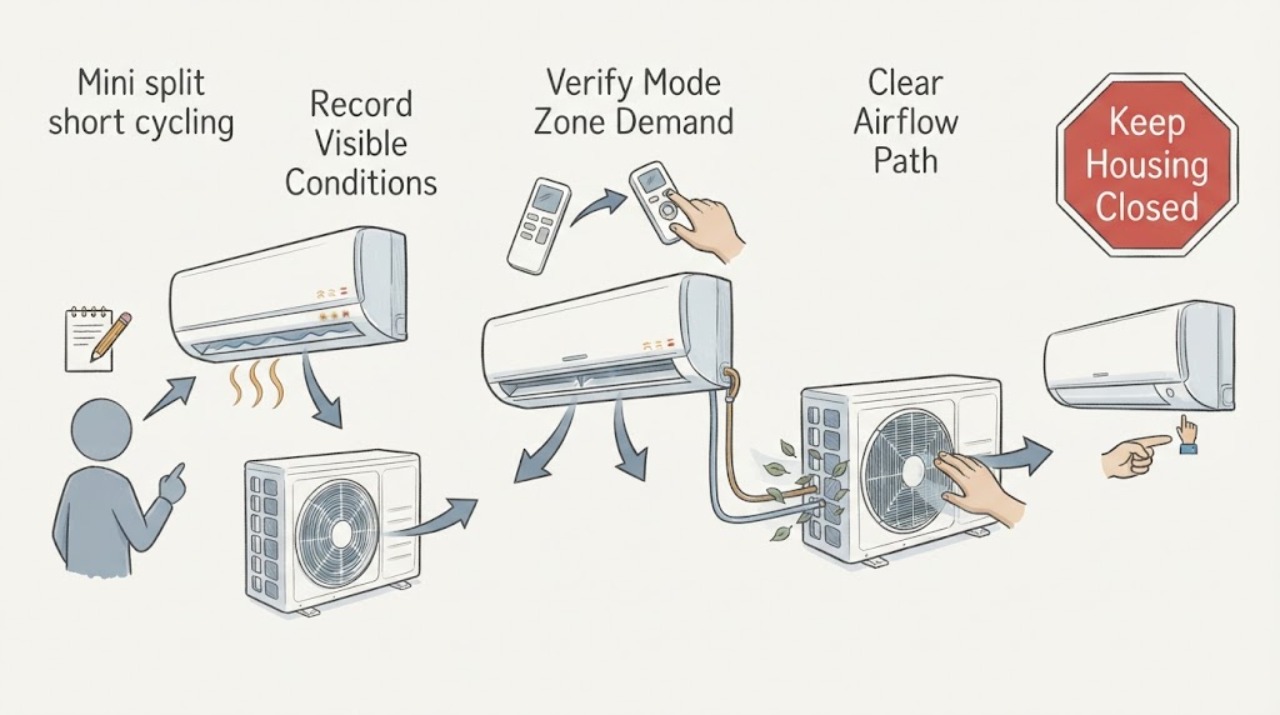
Mini split short cycling: Check airflow, controls, and compressor protection
A mini split is short cycling when it starts and stops repeatedly before completing a normal heating or cooling demand, rather than simply modulating its inverter speed or pausing during a documented defrost or setpoint hold. First record the mode, indoor airflow, outdoor-unit behavior, and any code; verify that the remote or zone is not immediately satisfied; then inspect the indoor filter and outdoor unit for accessible airflow obstructions with power off.
-
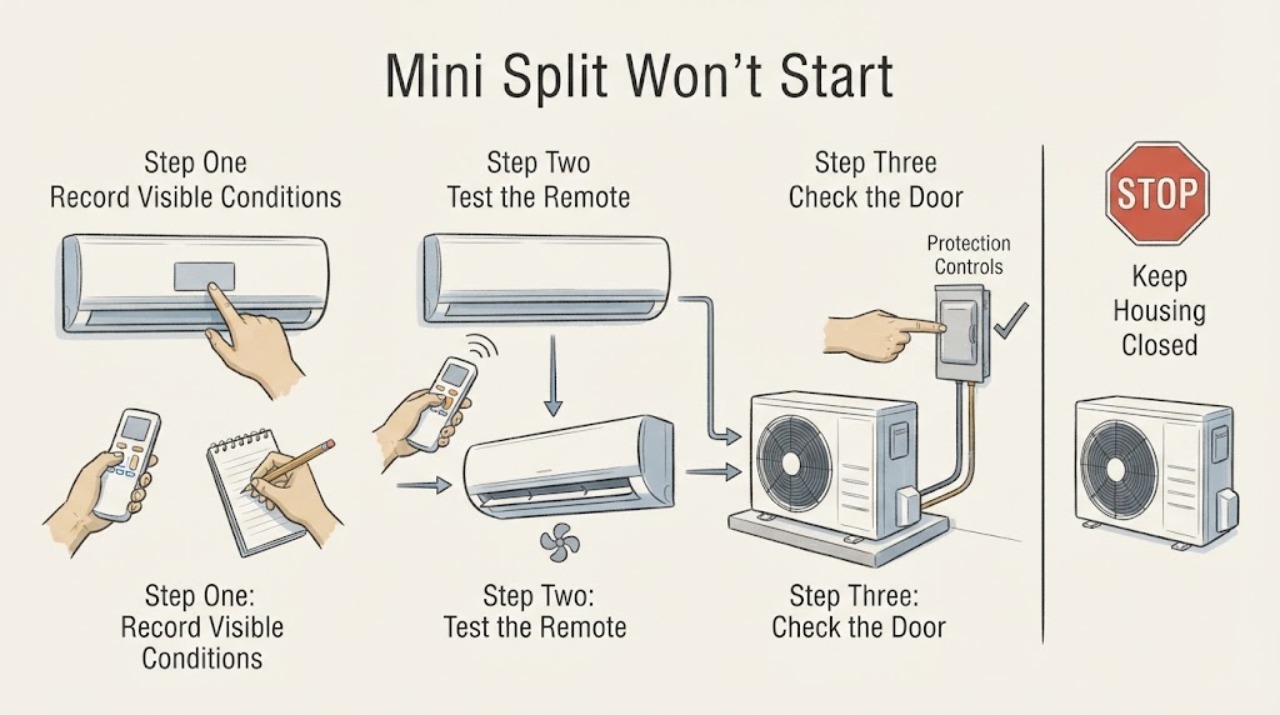
Mini Split Won't Start: Safe Checks Before HVAC Service
If a mini split will not start, first determine whether the indoor unit has no lamp, has a flashing lamp, responds to the remote but does not run, or runs the indoor fan while the outdoor unit or compressor stays off. Check the remote batteries, operating mode and timer, then inspect the breaker or outdoor disconnect only from the normal user position.
-
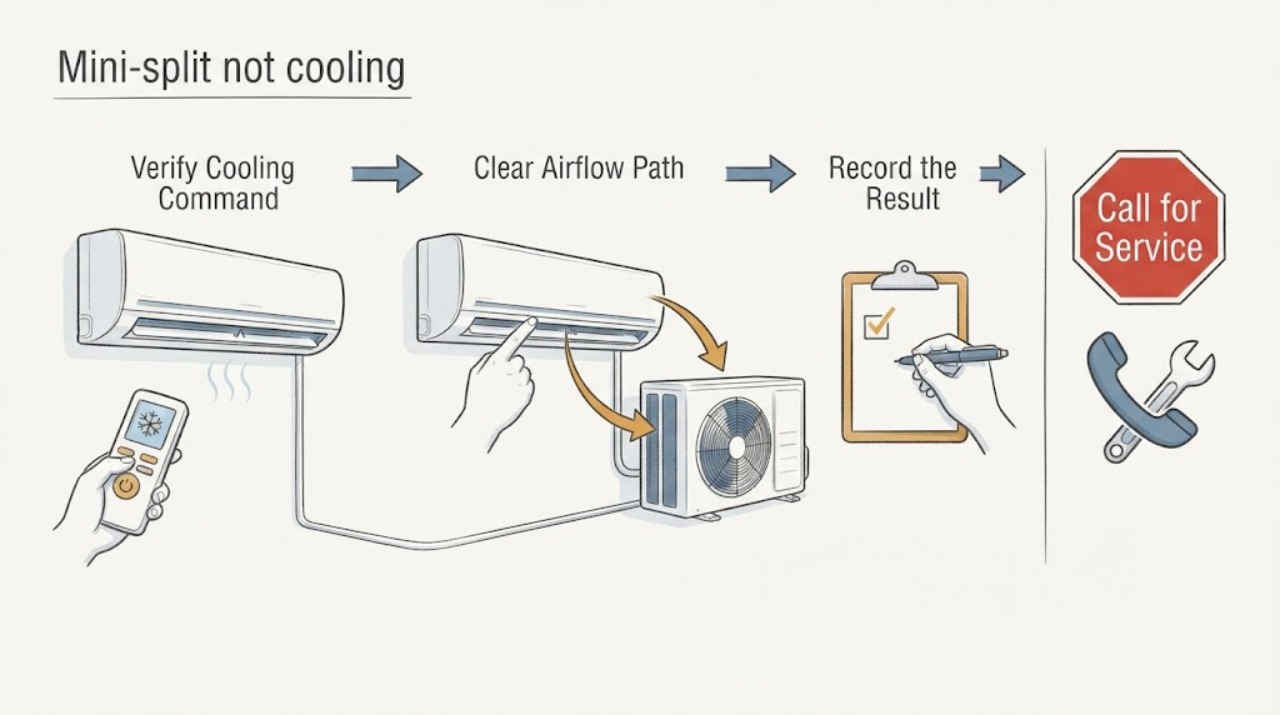
Mini-split not cooling: check mode, airflow, and outdoor operation before service
A mini-split that is not cooling may be in the wrong mode, set too high, restricted by a dirty filter or blocked airflow, affected by a condensate problem, or experiencing an electrical, refrigerant, coil, fan, or control fault. Confirm Cool mode and the remote setting, then check the accessible indoor filter and the clear space around the indoor and outdoor units without opening panels.
-
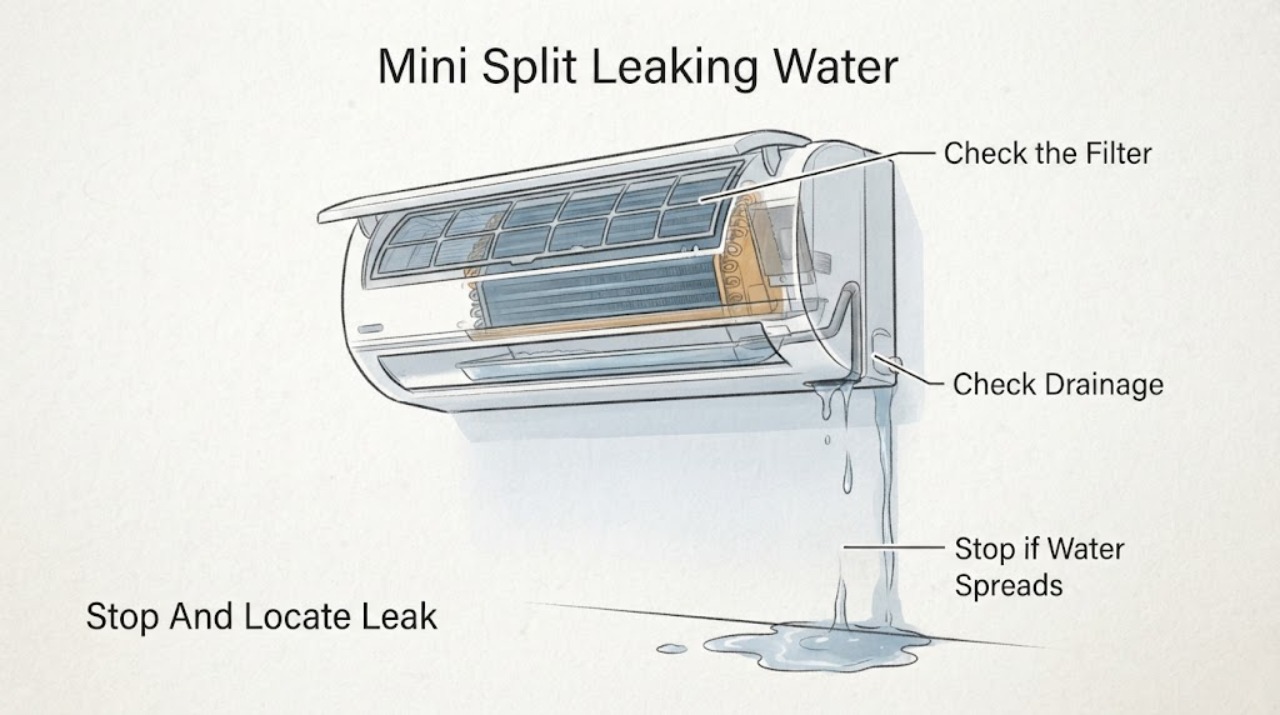
Mitsubishi Mini Split Leaking Water: What to Check and What to Do Next
A Mitsubishi mini split leaking from the indoor unit most often has a restricted condensate drain, a dirty filter or coil that is reducing airflow, a leaking drain connection or pan, or an installation slope problem. Turn the system off, contain the water, and identify whether the water is from the indoor head, the visible drain outlet, or only the outdoor unit.
-
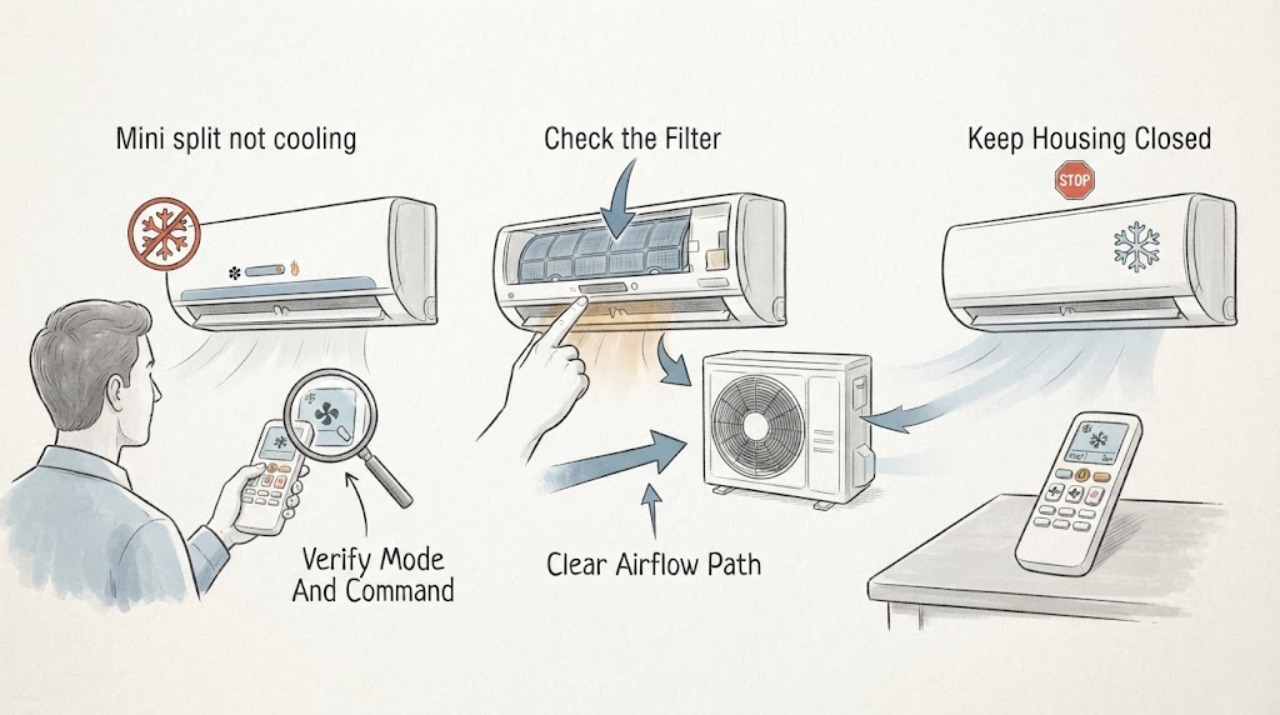
Mitsubishi mini split not cooling: What to Check and What to Do Next
Start with the controls and airflow, not the refrigerant circuit. Confirm that the Mitsubishi mini split is powered, set to Cool rather than Fan or another mode, and given a lower target temperature than the room.