
Repair problem
Leaking Troubleshooting Guides – Page 8
Published FixGraph guidance for diagnosing and responding to leaking.
Matching published guides
Choose a guide that matches the service, equipment, and conditions you are seeing.
-
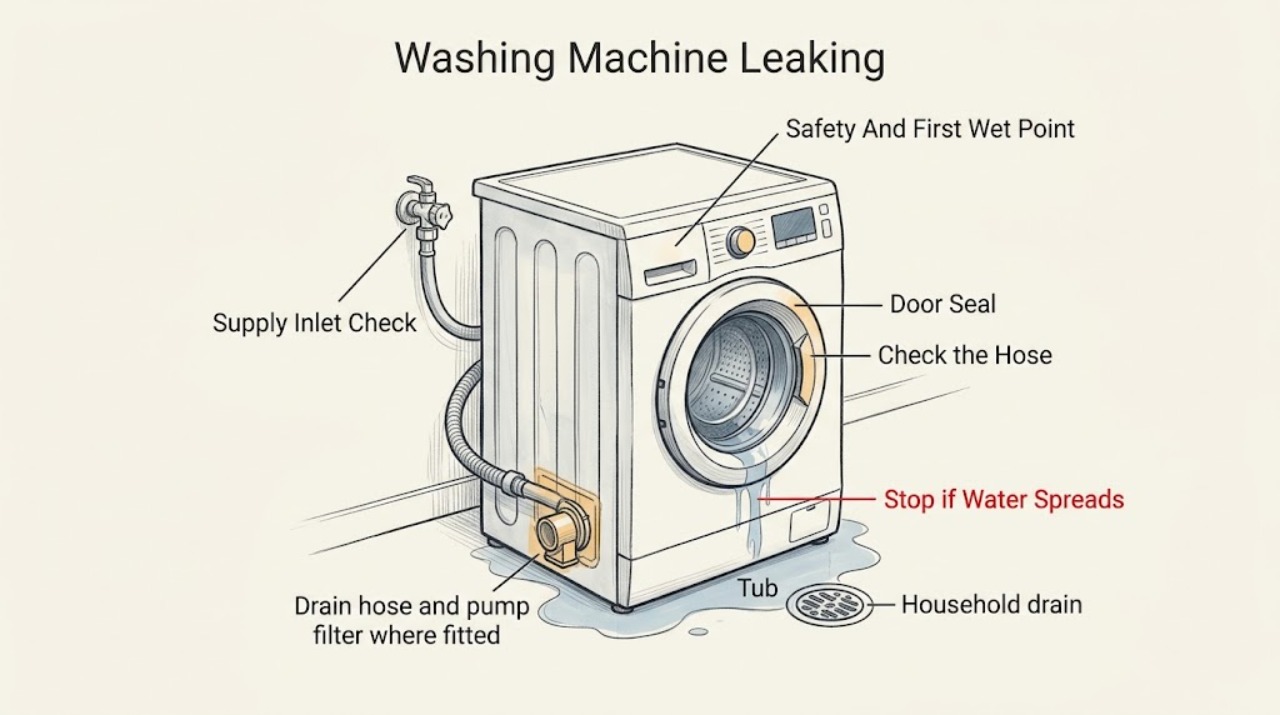
Whirlpool Washing Machine Leaking
Stop the cycle and find the first wet point before moving or opening the Whirlpool washer. Check the supply-hose connections, drain hose and household drain, dispenser, front-load door seal, and the load, suds, and level.
-
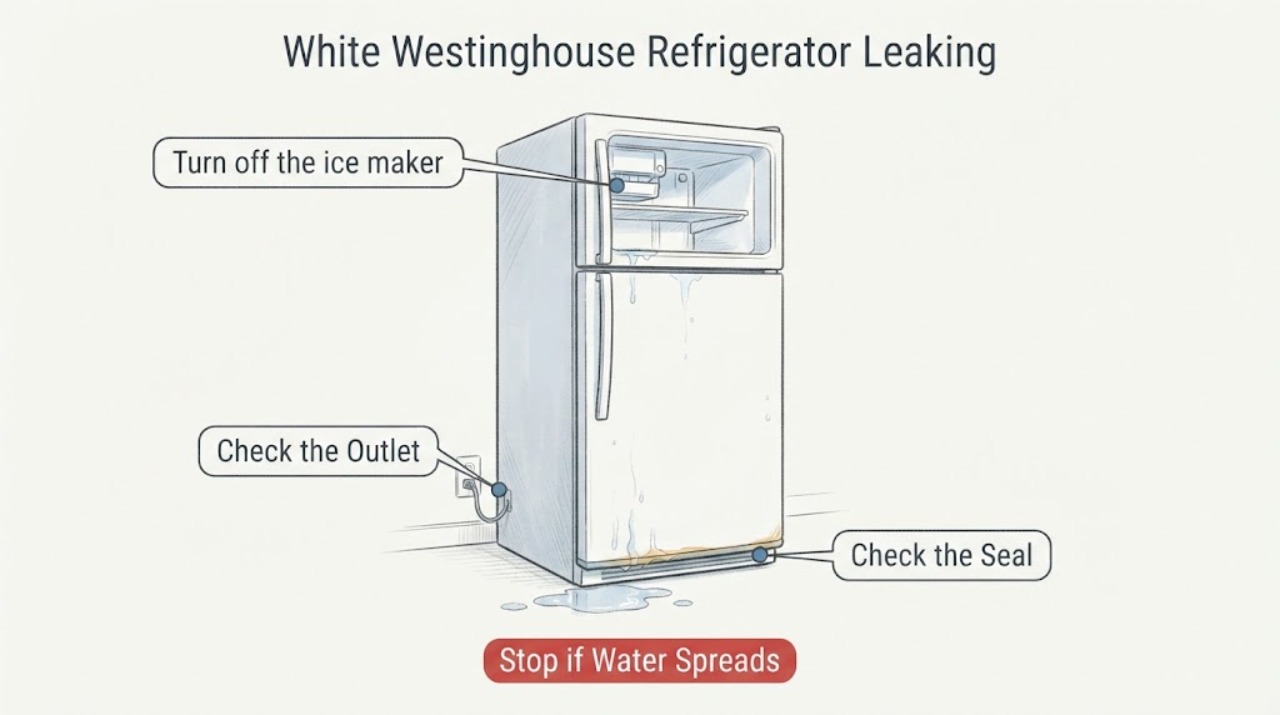
White Westinghouse Refrigerator Leaking: Trace the Drain, Door, and Water Path
For a White Westinghouse refrigerator leak, protect the floor and close the water supply if fitted, then trace the highest wet point. Official White-Westinghouse-compatible guidance identifies a clogged or frozen defrost drain, damaged door gasket, water tank, inlet valve, filter head, and filter housing as possible sources. Do not open sealed panels or glue a leaking tank. A recurring leak, cracked tubing, or water near electrical parts requires service.
-
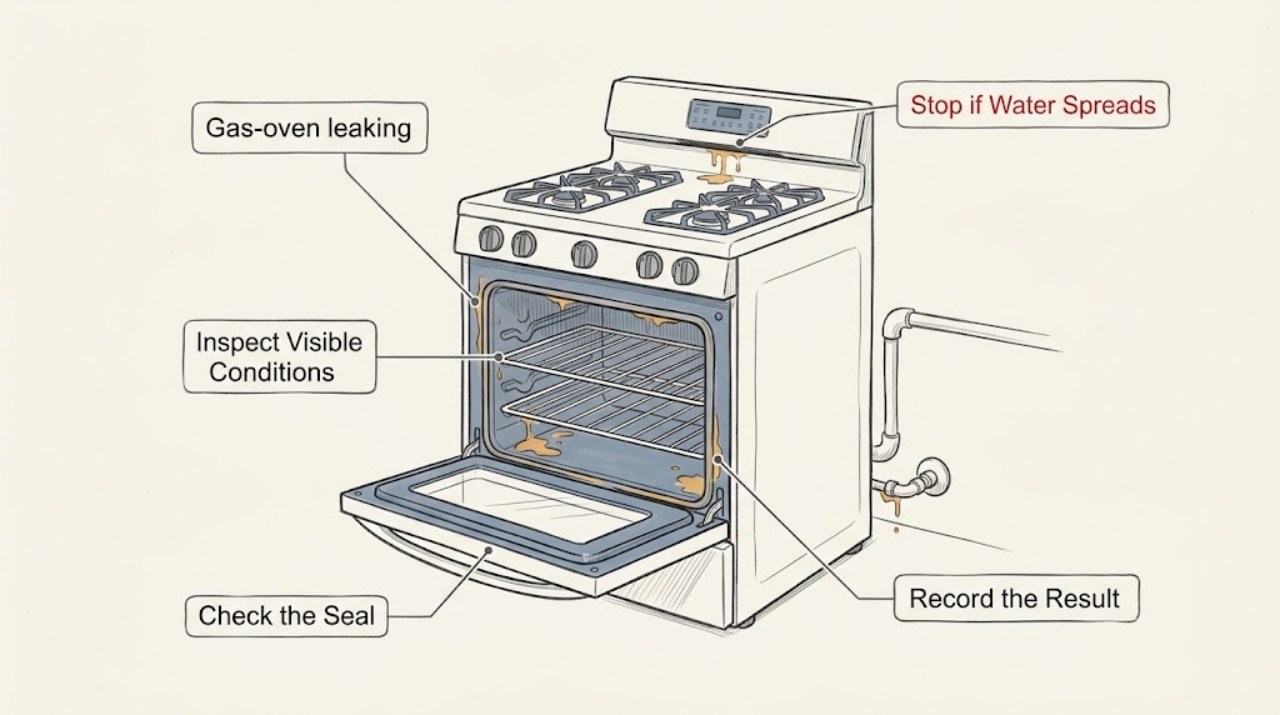
Why a Frigidaire Gas Oven Is Leaking and What to Check
First identify what is leaking from a Frigidaire gas oven. Clear water or condensation near the vent or door can be related to cooking moisture, while grease or food liquid usually comes from a spill, a dripping load, or residue on the oven bottom.
-
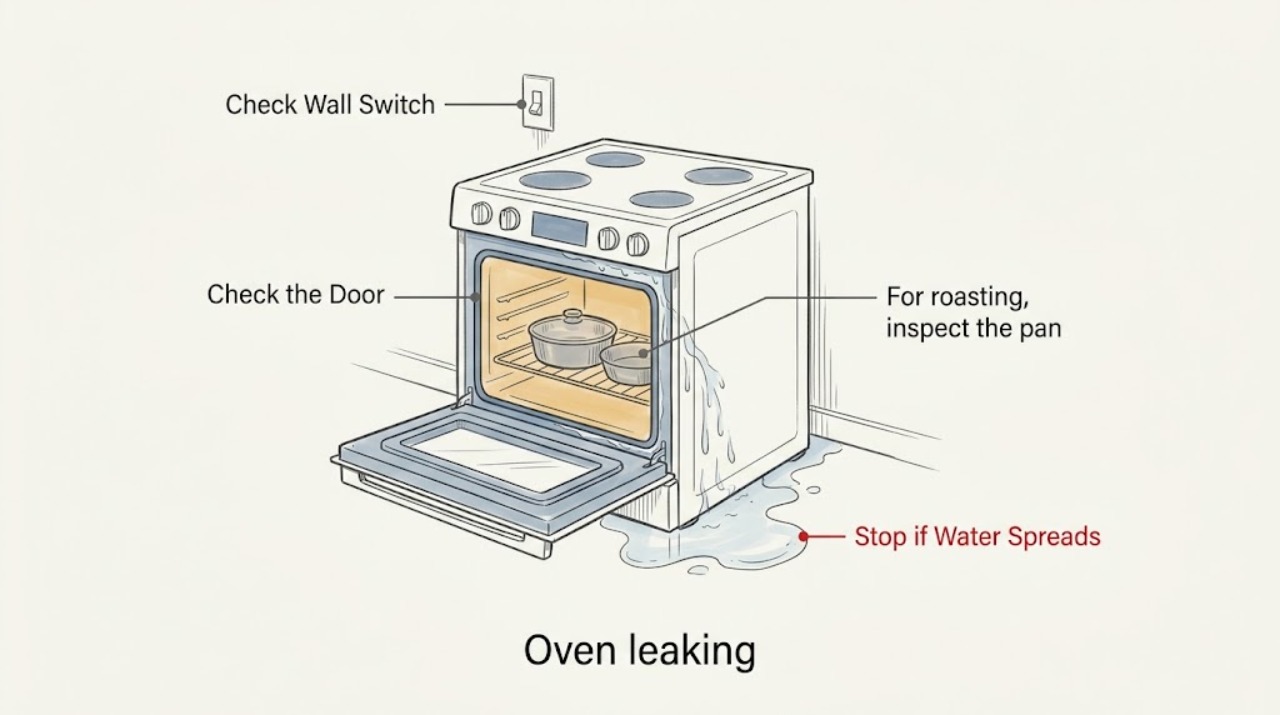
Why an Electrolux Oven Is Leaking Water
An Electrolux oven can appear to leak when roasting food that produces a lot of steam, when too much water is used in a roasting pan, or when a steam-clean cycle leaves normal moisture near the vent or door. First stop the oven if water is pooling, let hot surfaces cool, and identify whether moisture appears only during a moisture-heavy programme or also when the oven is idle.
-
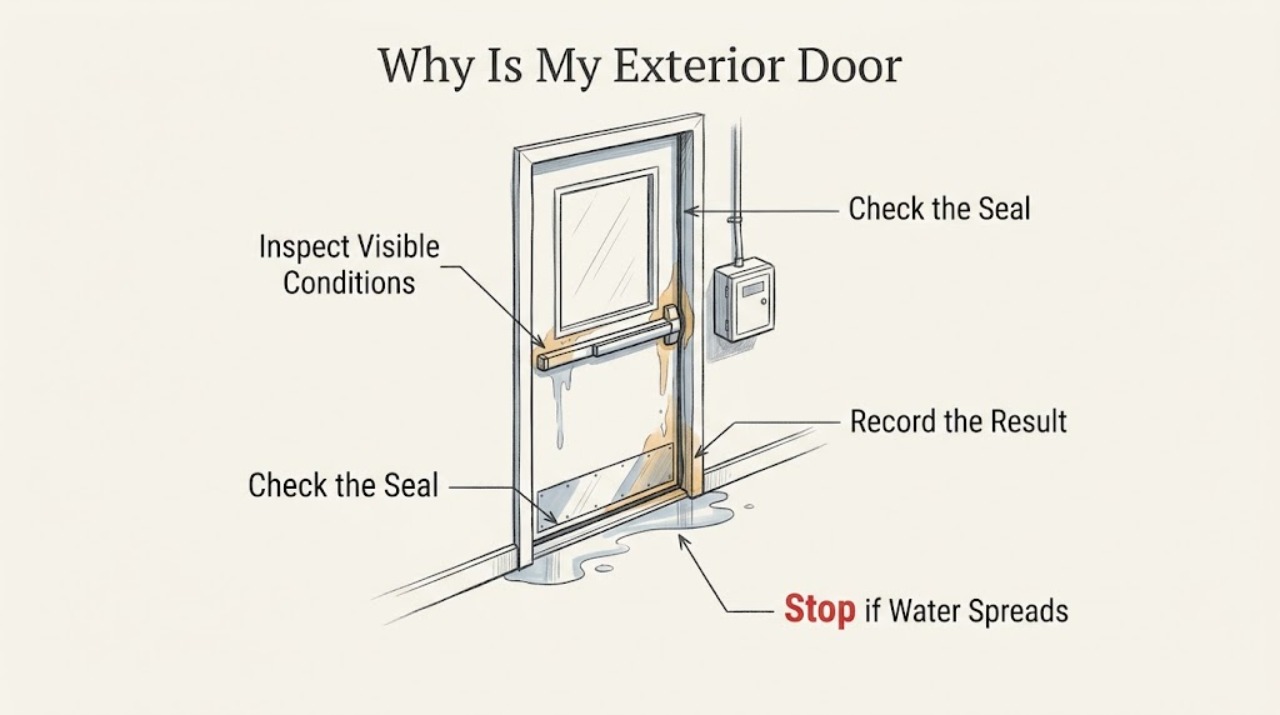
Why Is My Exterior Door Leaking? Check the Threshold, Weatherstrip, and Sill Flashing
First locate where water crosses the door: under the threshold, around the jambs or head, or from the wall above the opening. A worn sweep or weatherstrip can leave a gap, but water that enters around the frame or appears inside the wall points to the sill pan, lapped flashing, rough-opening seal, or surrounding drainage plane.
-
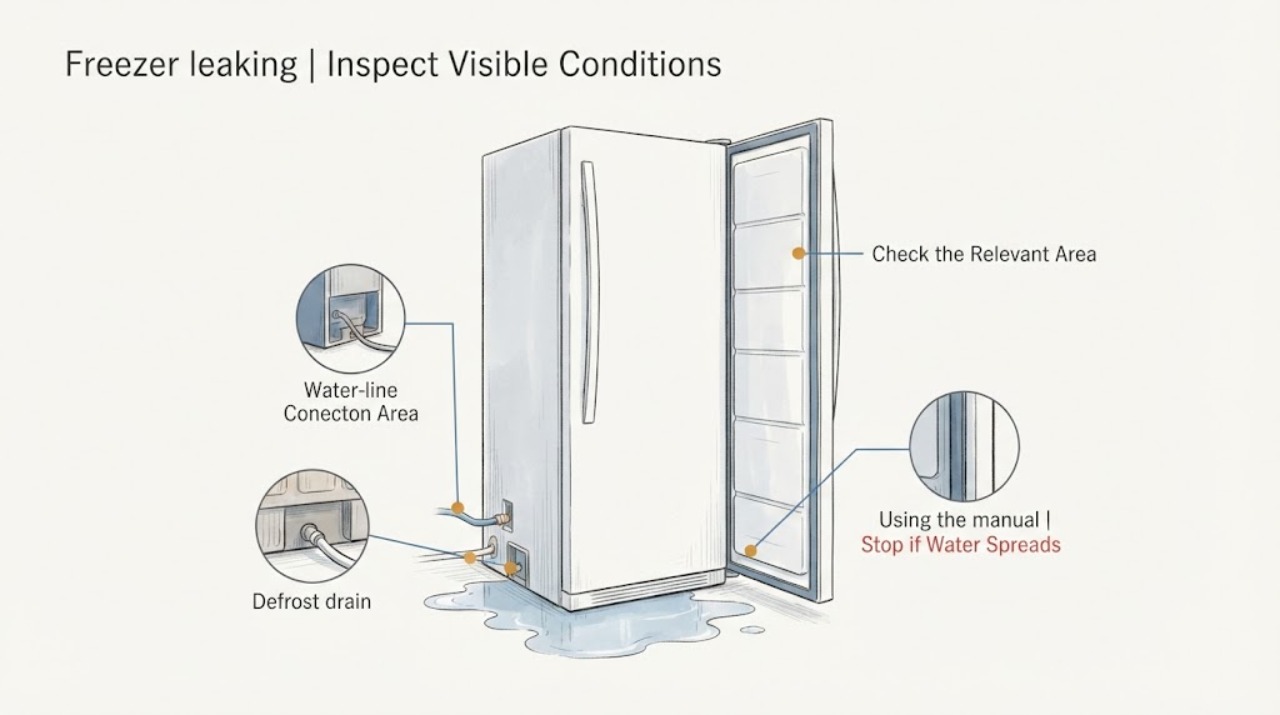
Why Is My Kenmore Freezer Leaking Water?
Protect the floor and frozen food, then identify where the water first appears: inside the freezer, at the door/front edge, underneath the cabinet, or near an ice-maker water connection. A sheet of ice or water on the freezer floor commonly points to a defrost drain that is blocked or frozen; frost at the front can follow a door that is not sealing; water underneath can come from the drain pan or a water line.
-
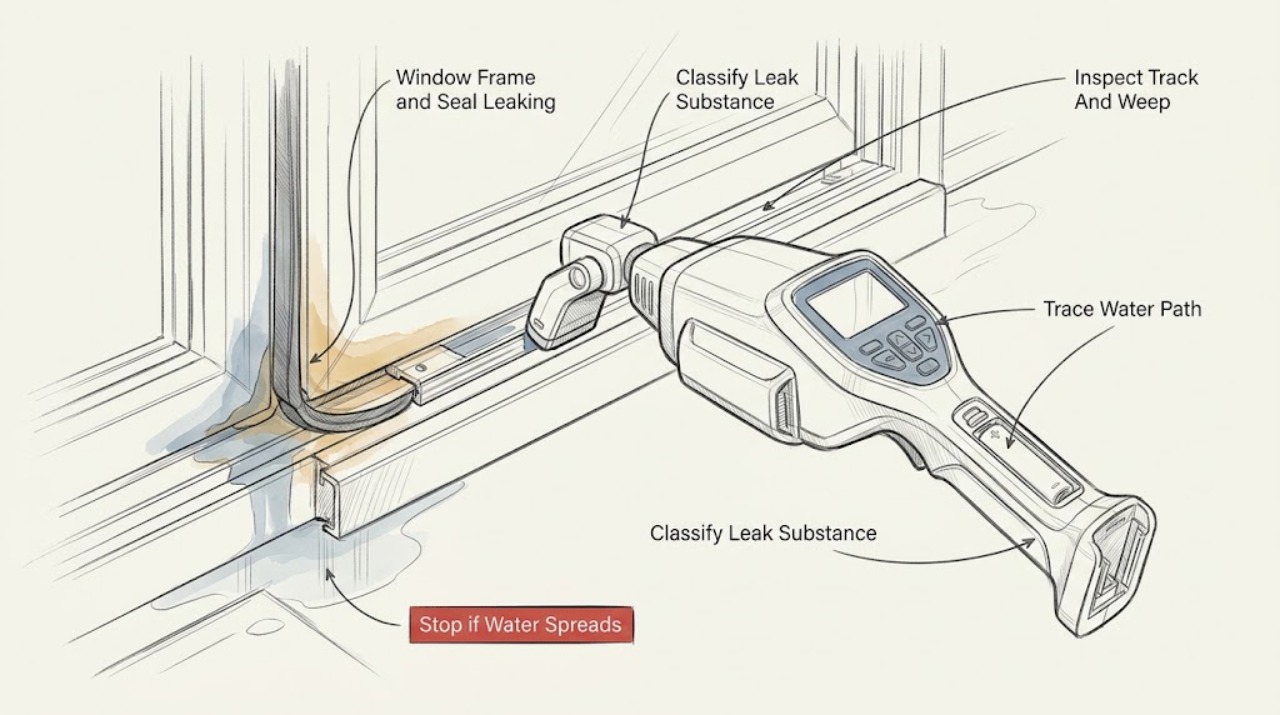
Window Frame and Seal Leaking: What to Check
Identify whether the leak is air, rainwater, or condensation before applying a seal. During or just after rain, inspect the sill, track, corners, sash edges, frame-to-trim joint, and wall below the window from a safe interior position.
-
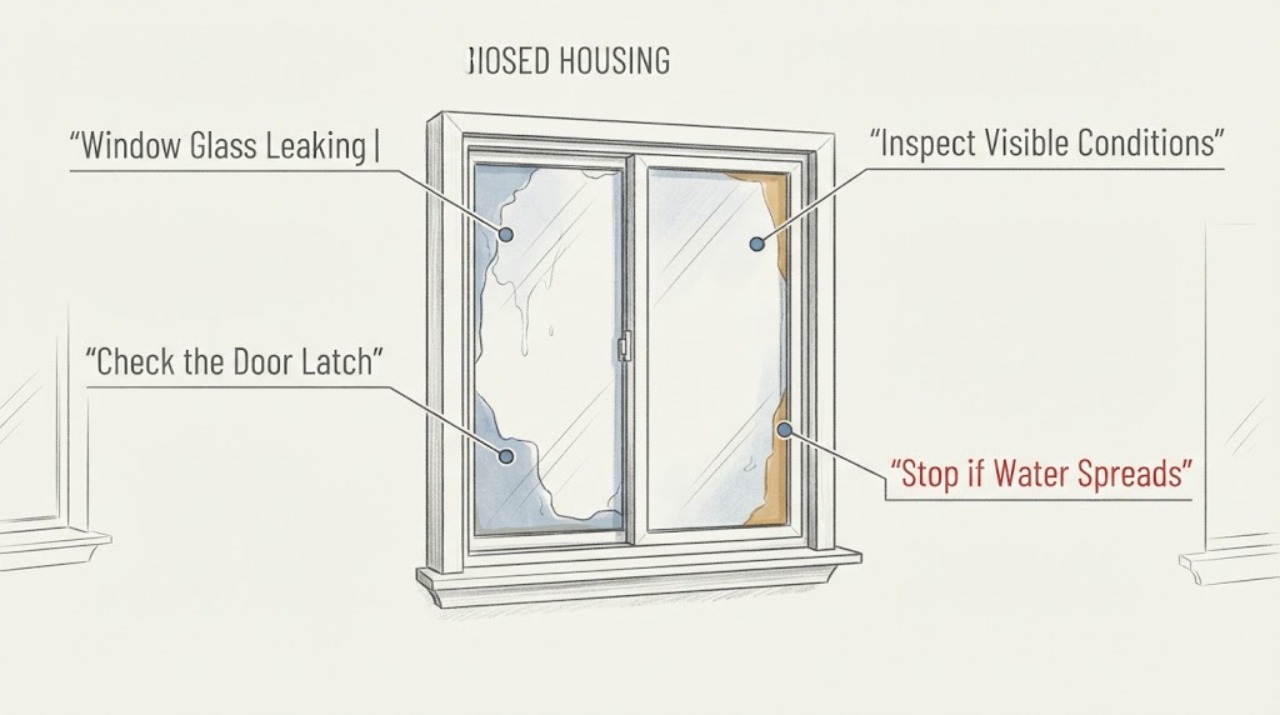
Window Glass Leaking: Check the Seal and Frame
First determine whether the water is on the room-side glass as condensation, at the glass edge or sash seal, or entering around the frame, sill, trim, or wall. Wipe the area dry, note the weather and the first place that becomes wet, and check that the window closes and locks without blocking exterior drainage openings.
-
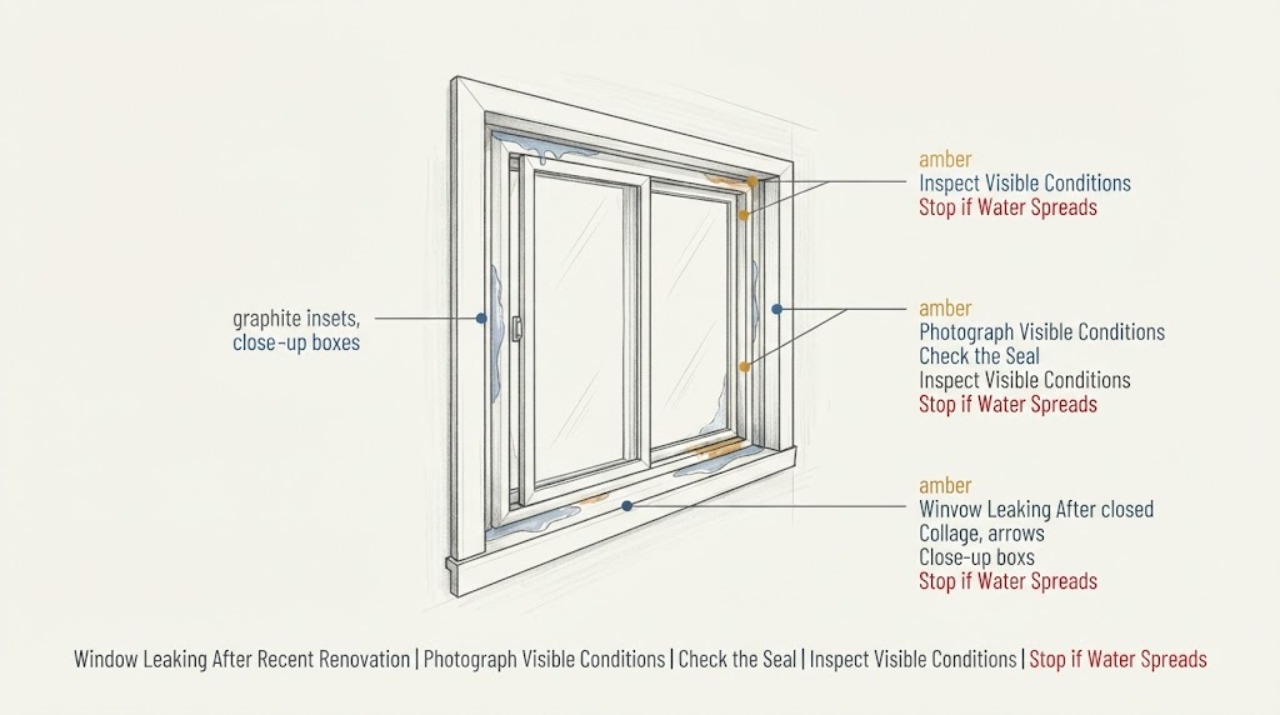
Window Leaking After Recent Renovation: Trace Water Through the Frame and Track
A window that started leaking after renovation needs a water-path diagnosis, not a blanket bead of caulk. First separate rain entry from interior condensation, then inspect the visible frame and track, including the sill and weep openings, without blocking or drilling them.
-
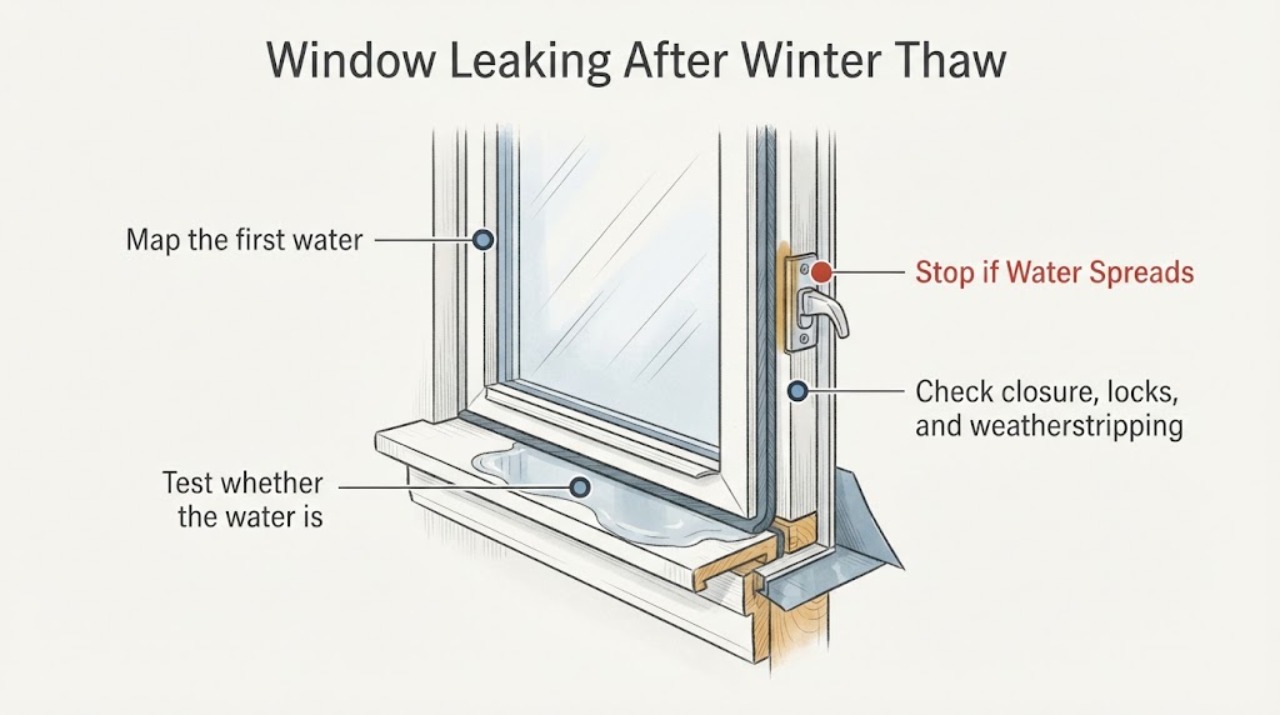
Window Leaking After Winter Thaw: Trace Meltwater vs. Condensation
Water noticed at a window after a winter thaw is not automatically a failed window. First separate room-side condensation or meltwater held in frost and drainage openings from water entering at the glazing, frame, sill, flashing, or the wall and roof around the opening.
-
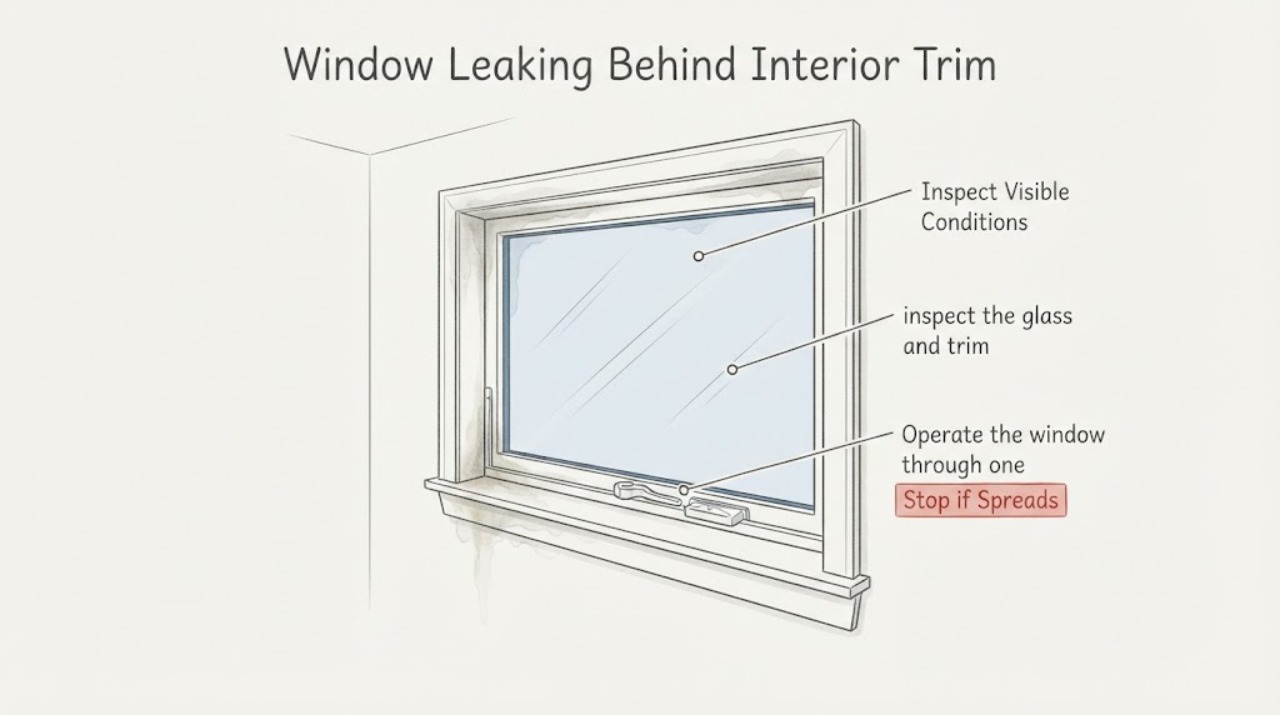
Window Leaking Behind Interior Trim: Safe Checks
Water showing inside the window trim means the visible trim may be downstream from the true entry point. Dry the trim and wall, identify whether water is coming from the sash, sill, head, or the wall cavity, and compare the pattern with rain and indoor humidity.
-
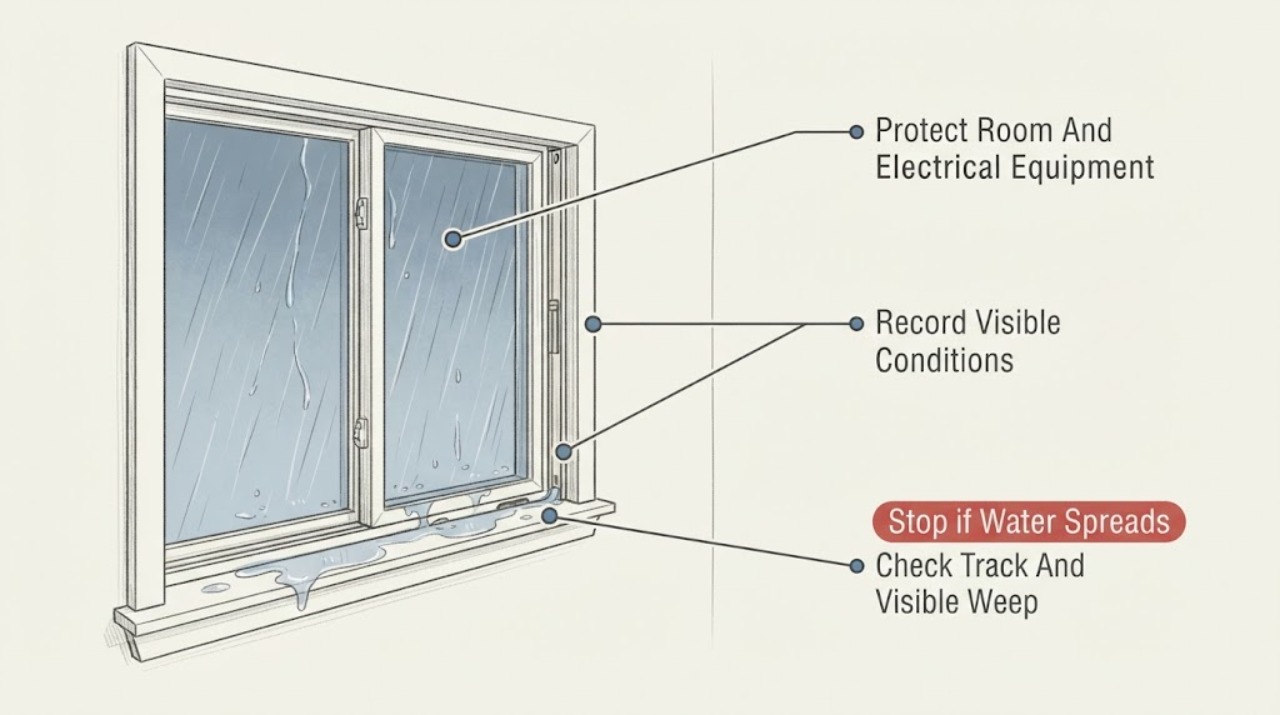
Window Leaking During Heavy Rain: Check the Track Before the Wall
During heavy rain, a small amount of water in a window track can be normal if the track drains through clear exterior weep openings. Water that stays in the track, crosses the inner sill, or appears at the wall needs a source check.
-
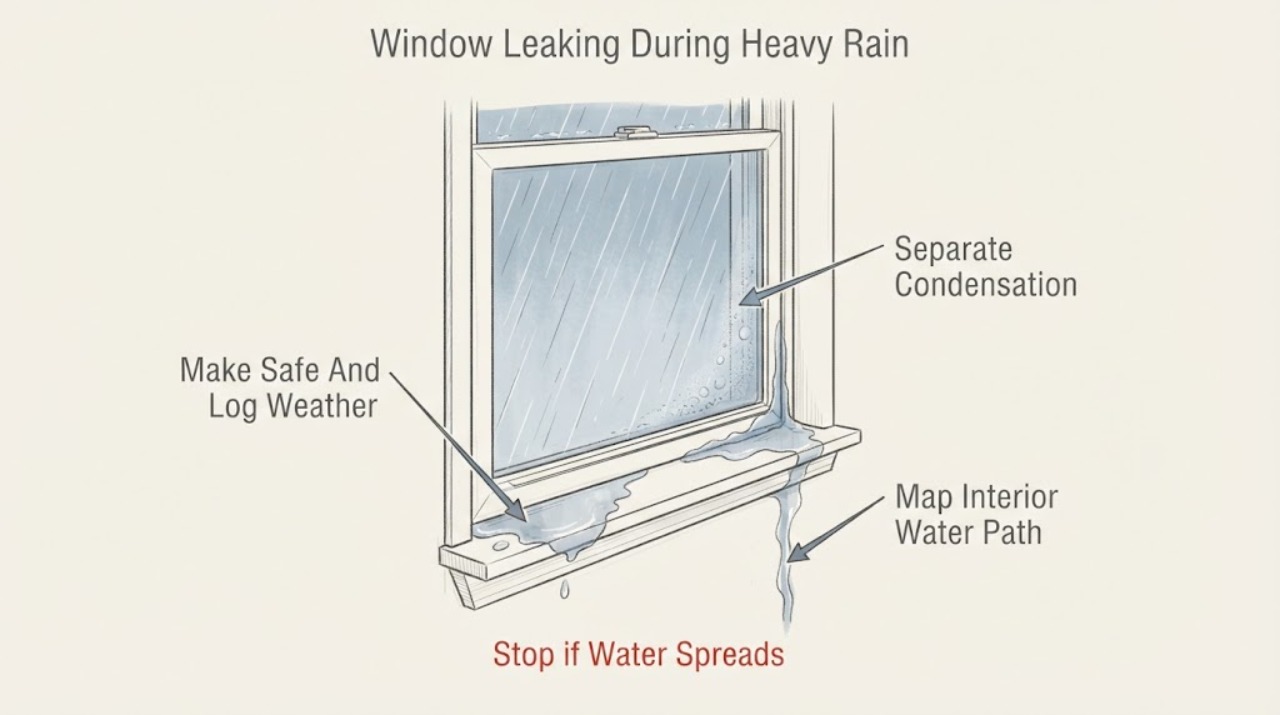
Window Leaking During Heavy Rain: Trace the Water Safely
A window that leaks only during heavy rain needs the water path identified before any sealant is applied. First distinguish rainwater from indoor condensation by noting whether water appears during or after wind-driven rain, where it first appears, and whether the glass is simply wet on the room side.
-
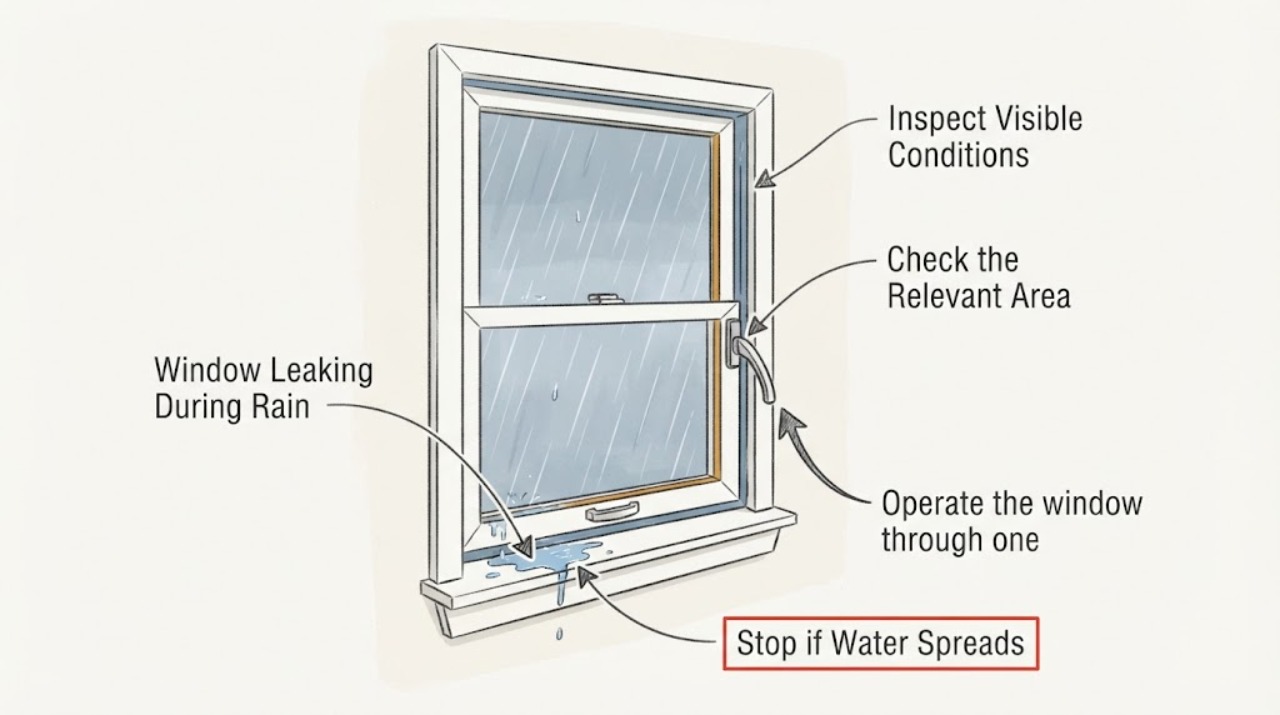
Window Leaking During Rain: What to Check
When a window leaks during rain, first dry the interior and watch where water appears first: on the glass surface, between panes, at the sash edge, in the sill or track, or behind trim. A track may collect and drain incidental water, but blocked weep openings, a poorly latched sash, failed weatherstripping, roof or gutter discharge, flashing, sealant, or a rough-opening defect can send water inside.
-
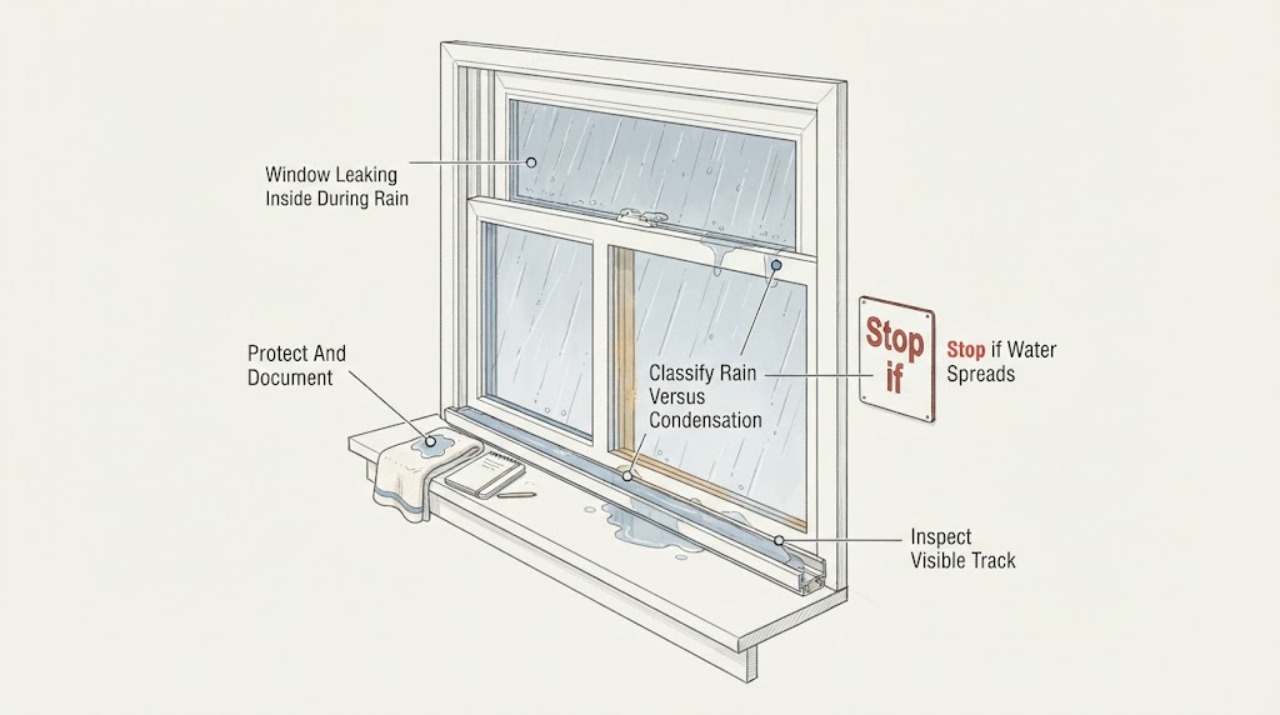
Window Leaking Inside During Rain: Trace the Track Before Sealing It
Water inside a window track during rain may be overflowing from a blocked or undersized drain path, passing the sash seal, entering at a frame joint, or arriving from flashing, siding, roof, or another wall opening above the window. First protect the room, photograph where water first appears, and inspect only the visible track, drain openings, sash seal, frame, sill, and nearby wall from a safe position.
-
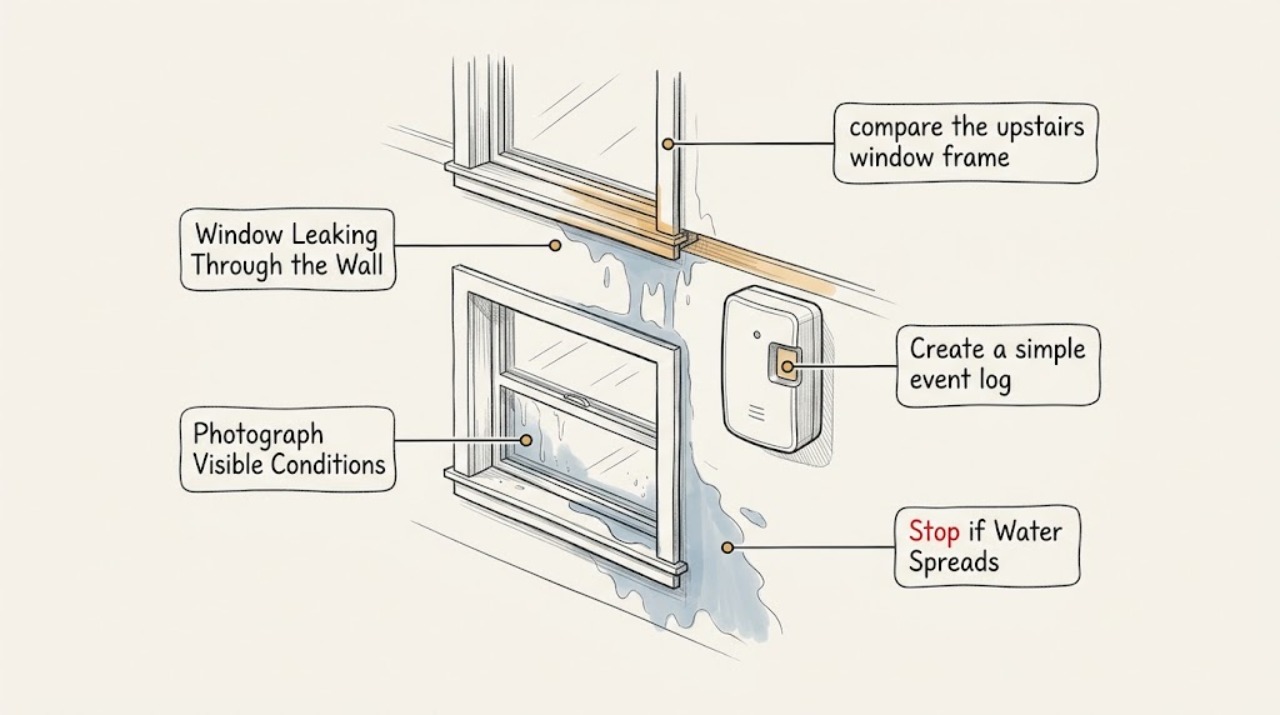
Window Leaking Through the Wall from an Upstairs Window: Safe Checks
Water appearing around a downstairs window after rain at an upstairs window may be traveling through the wall cavity, but the visible stain is not proof that the lower frame is the entry point. First protect people and electrical equipment, record when and where the water appears, and compare the upstairs window, exterior wall, roof or flashing above, and nearby plumbing without climbing or opening the wall.
-
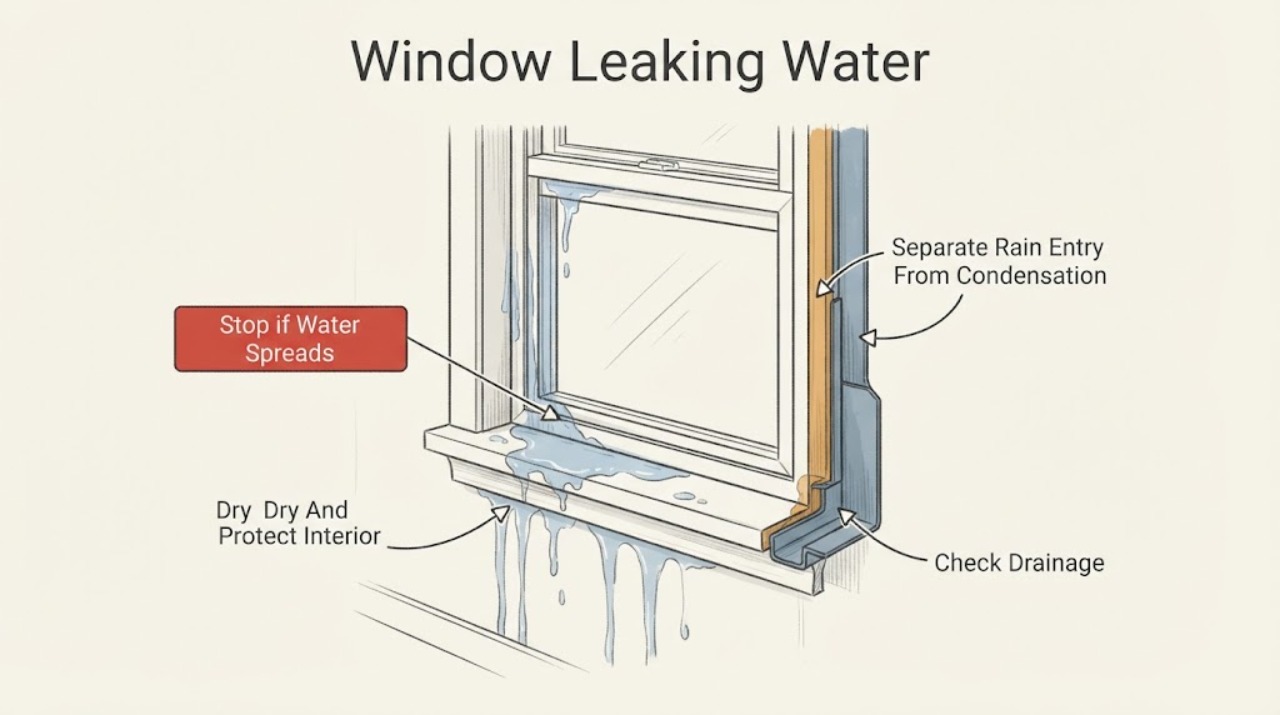
Window Leaking Water: Trace the Entry Point and Stop Further Damage
First decide whether water is entering from outdoors during rain or is condensation forming on the indoor glass. During or after rain, trace the highest wet point from inside and inspect the exterior only from a safe, reachable position for blocked drainage, failed seals, damaged flashing, siding or roof runoff.
-
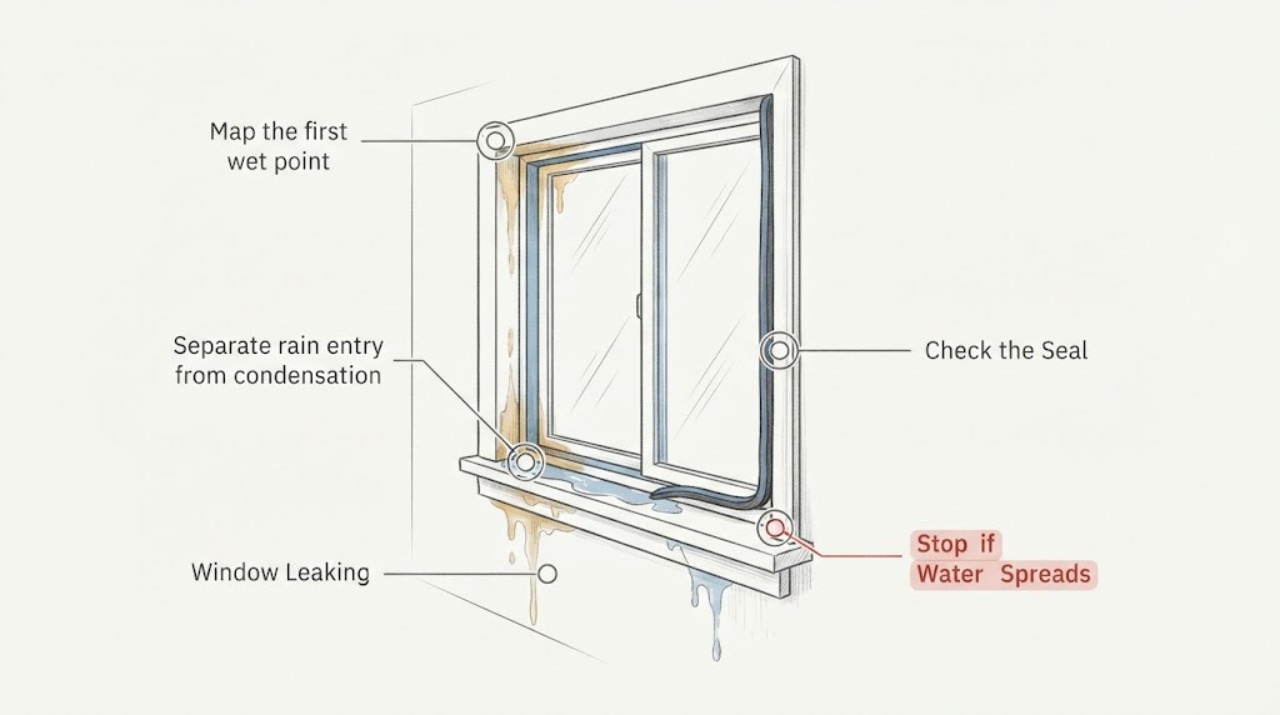
Window Leaking: Trace Water at the Frame Before Sealing Anything
A leaking window frame needs a source check, not an immediate bead of caulk. Dry the area and identify the first wet point: water in the frame or sill may be following the window's drainage path, while water at the room-side trim can indicate a blocked drain, displaced seal, failed perimeter seal, or an installation and wall-interface problem.
-
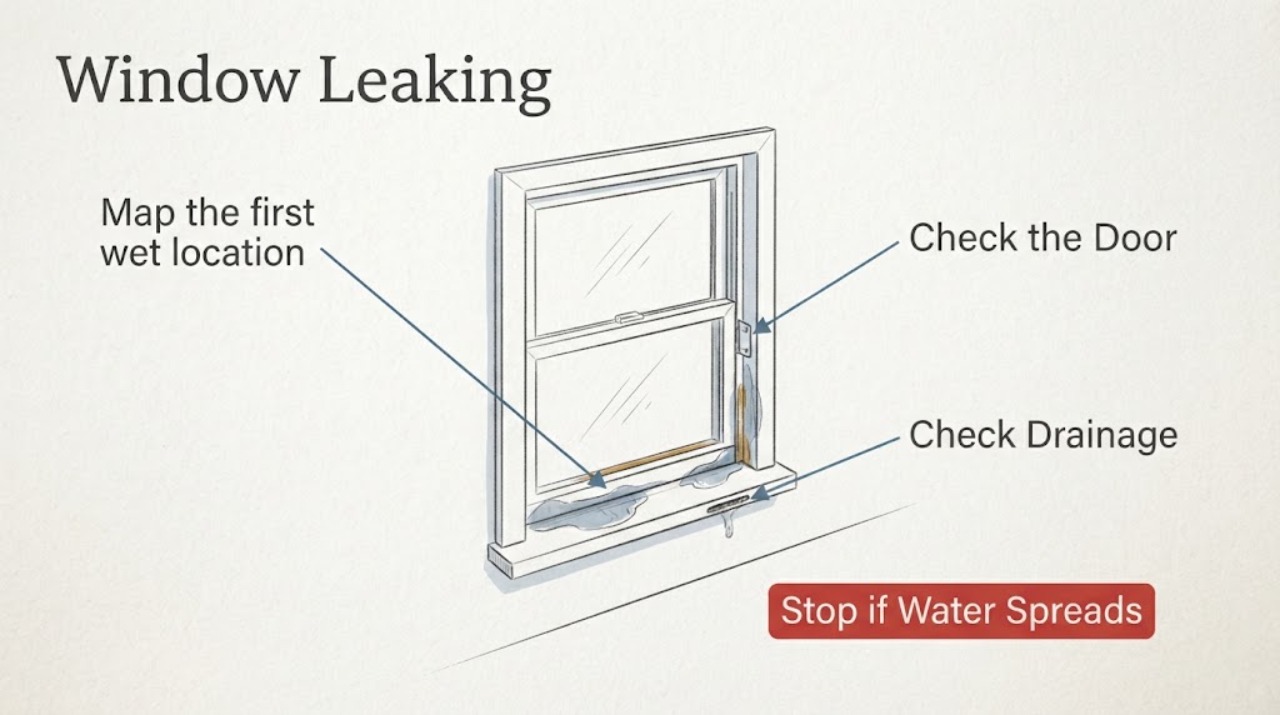
Window Leaking: Trace the Water Before Sealing Anything
A leaking window is not always a failed glass unit. First determine whether the moisture is condensation on the room-side glass, water trapped between panes, water in the sill or track, or water entering around the frame or wall opening after rain.
-
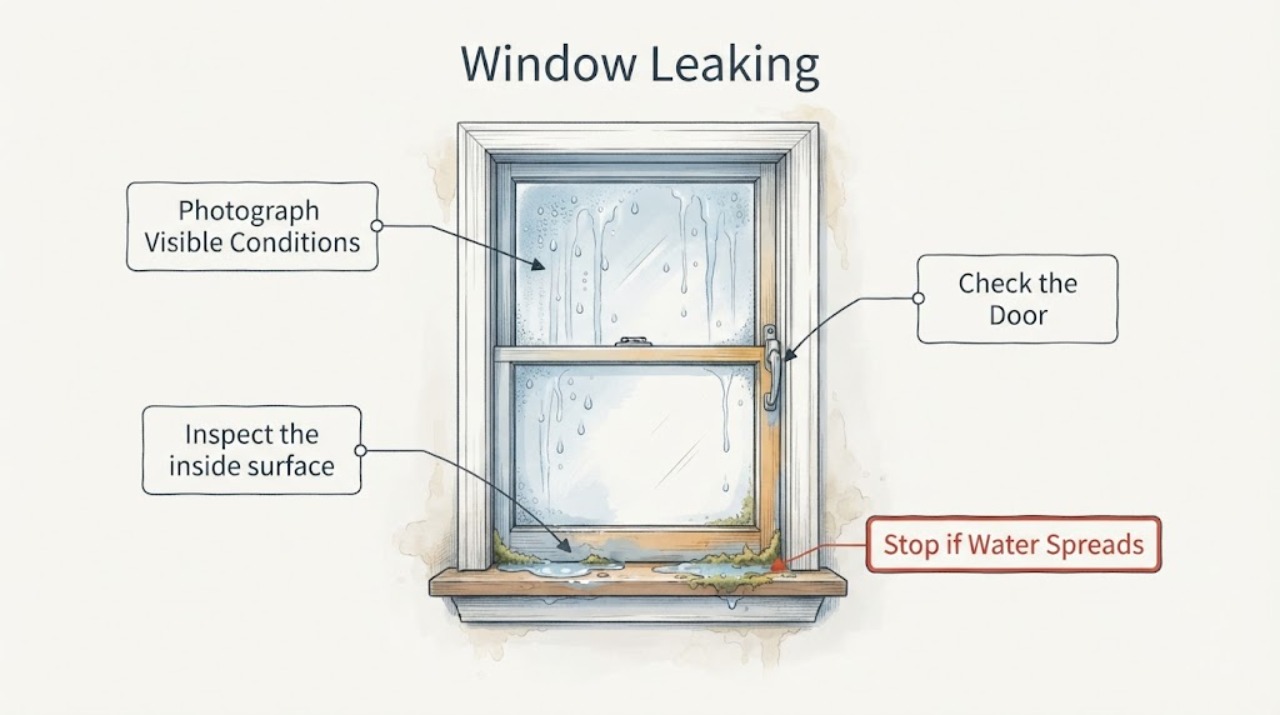
Window Leaking: What Inside Moss-Like Growth Usually Means
First determine whether the moisture is condensation on the room side of the glass or rainwater entering at the sash, sill, frame, or surrounding wall. If by inside moss you mean green, fuzzy, or dark growth on the sill or frame, treat it as a sign of persistent moisture rather than proof that the glass itself has failed.
-
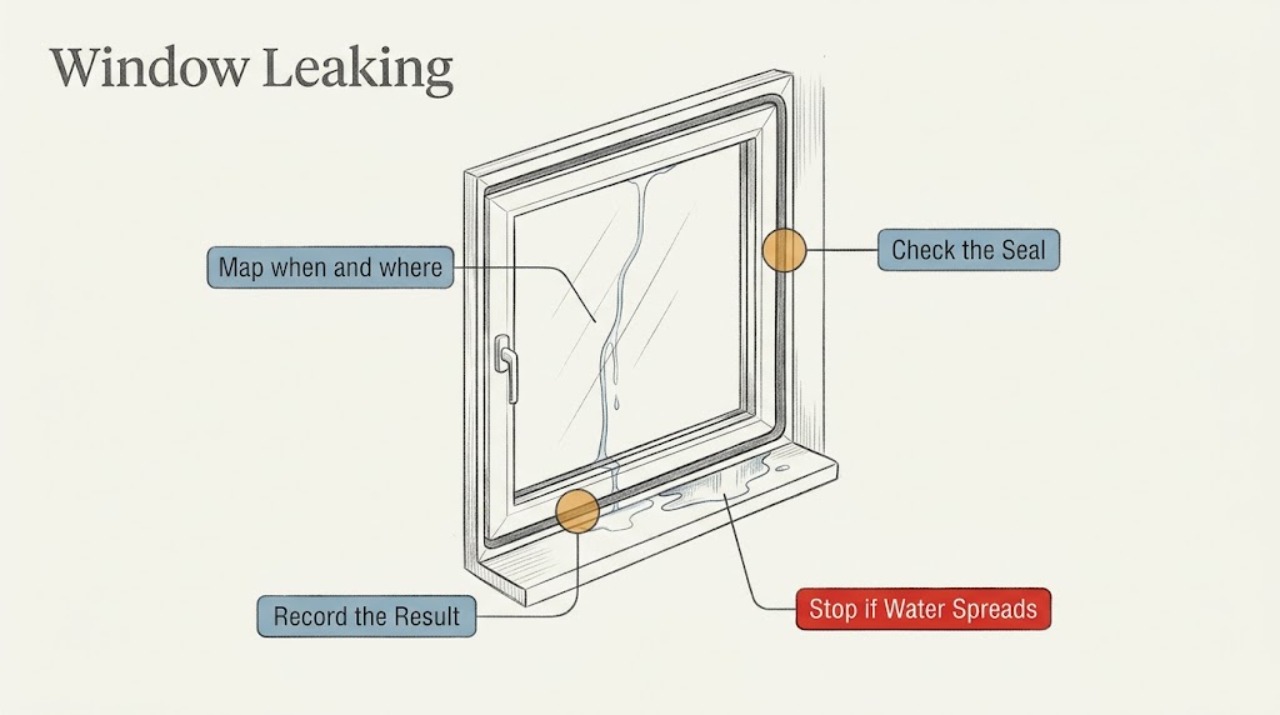
Window Leaking: Trace the Water, Check the Seal, and Protect the Opening
When a window is leaking, first determine whether the water is rain entering from the outside, water trapped in the sill or track, condensation on the room side, or a failed seal around the sash, glass, or frame. Close and lock the window, inspect the weatherstrip or gasket for a crack, tear, gap, compression damage, or displacement, and check the exterior sealant for an obvious open joint without covering the manufacturer's drainage path.
-
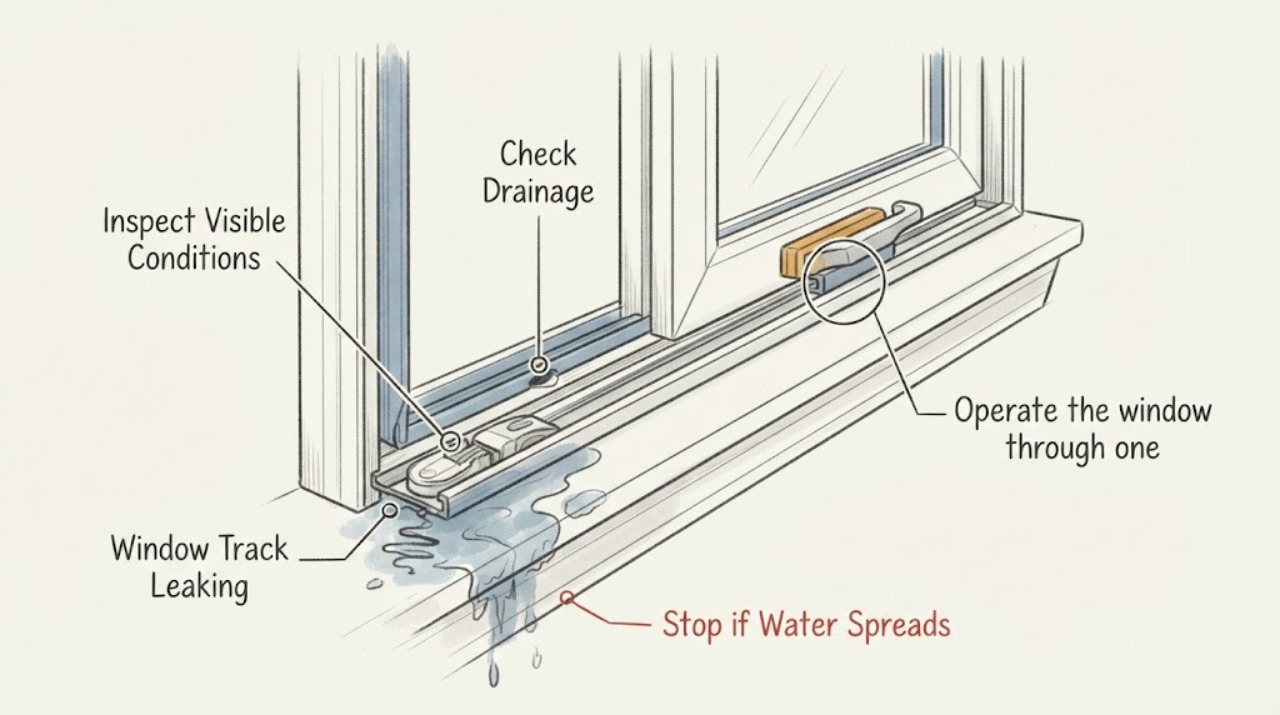
Window Track Leaking: Check Weep Holes and Drainage
If water appears in a window track, do not assume the track itself is the source. Wipe the sill and track dry, observe during ordinary rain, and determine whether water is entering through the sash seal, collecting as intended and failing to drain through the weep openings, or arriving from the frame, trim, flashing, or wall above.
-
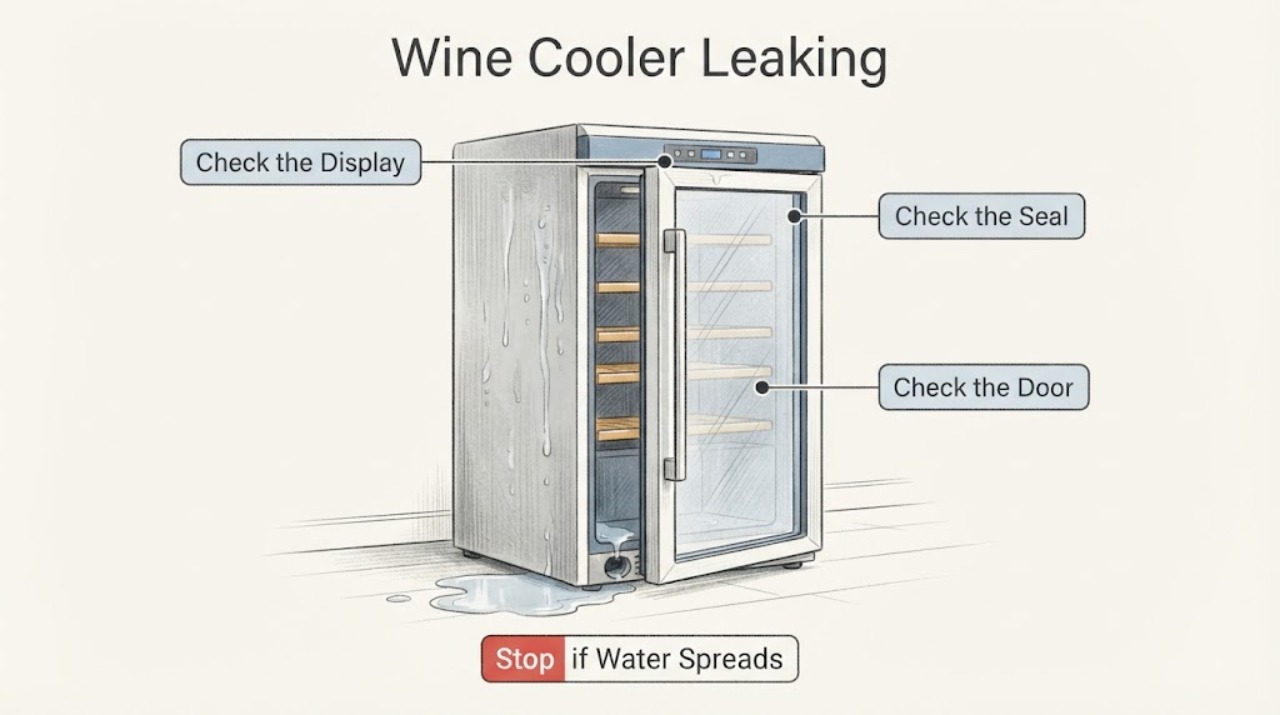
Wine Cooler Leaking: Check Moisture, Door, and Drain Areas
A wine cooler can appear to leak when humid room air condenses inside or outside the cabinet, especially after frequent door openings. Wipe moisture, limit door openings, confirm the door closes and seals, and keep the base grille clear.
-
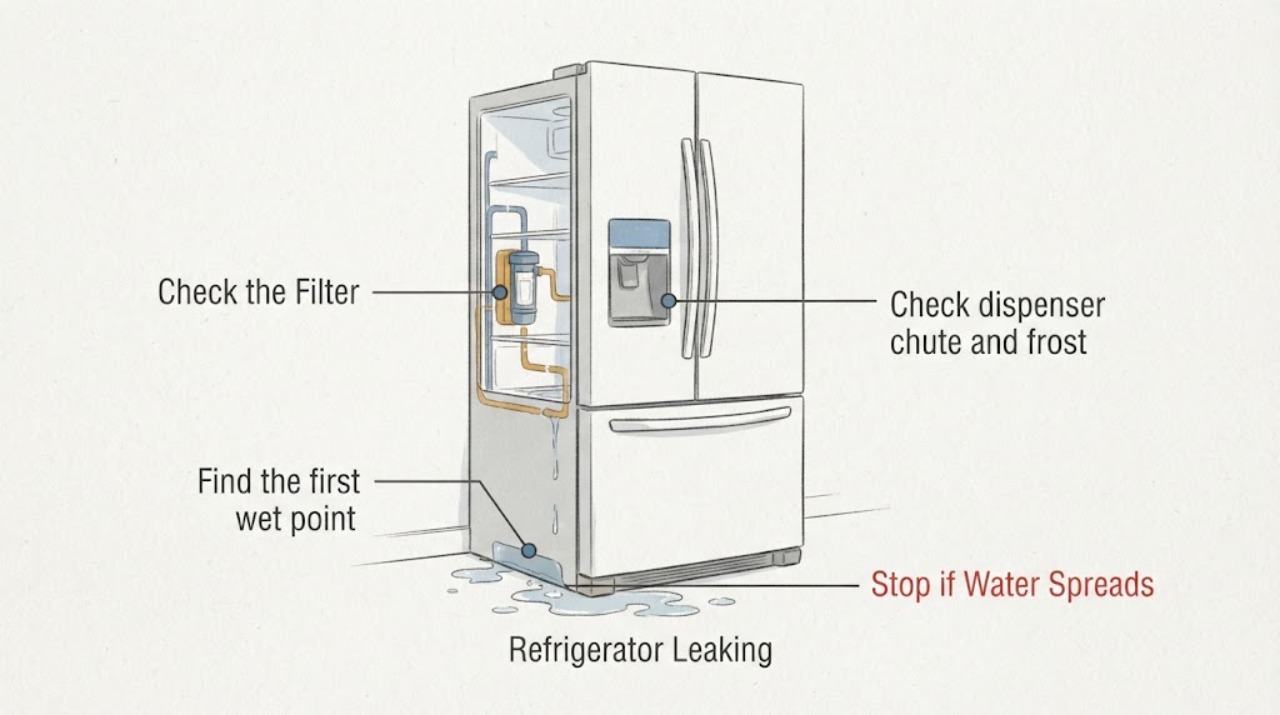
WINIA Refrigerator Leaking
Trace a WINIA refrigerator leak to its first wet point: rear connections, filter, door/dispenser or beneath the cabinet. Check only dry accessible items. Water near electrical parts or a recurring leak needs WINIA service.
-
Yogurt Maker Leaking
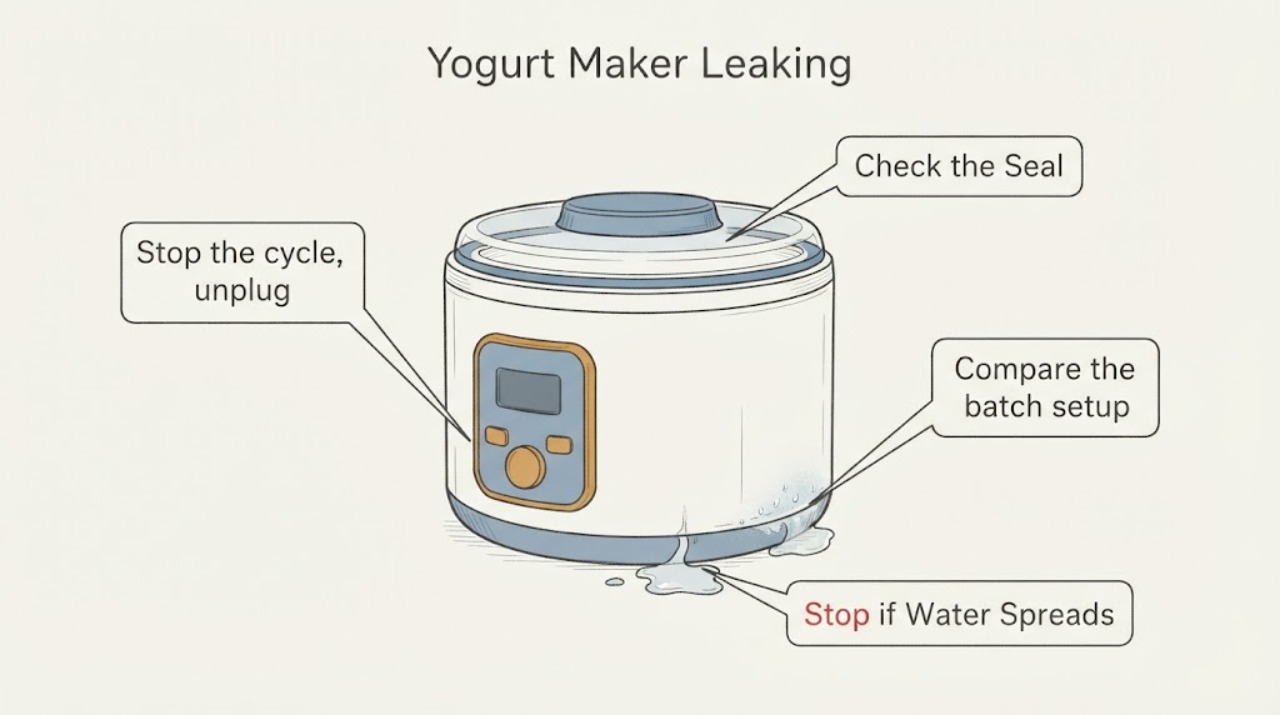
A yogurt maker leak usually comes from a cup filled too high, a lid or cup seal that is not seated or is cracked, condensation/spilled mixture around the removable cups, or liquid reaching the base. Stop the cycle, unplug and cool it, inspect the cups and lids, use the manual’s fill level and incubation setup, and keep liquid out of the electrical body. A cracked cup, damaged cord, or liquid inside the base needs manufacturer service.
-
Zanussi Dishwasher Leaking
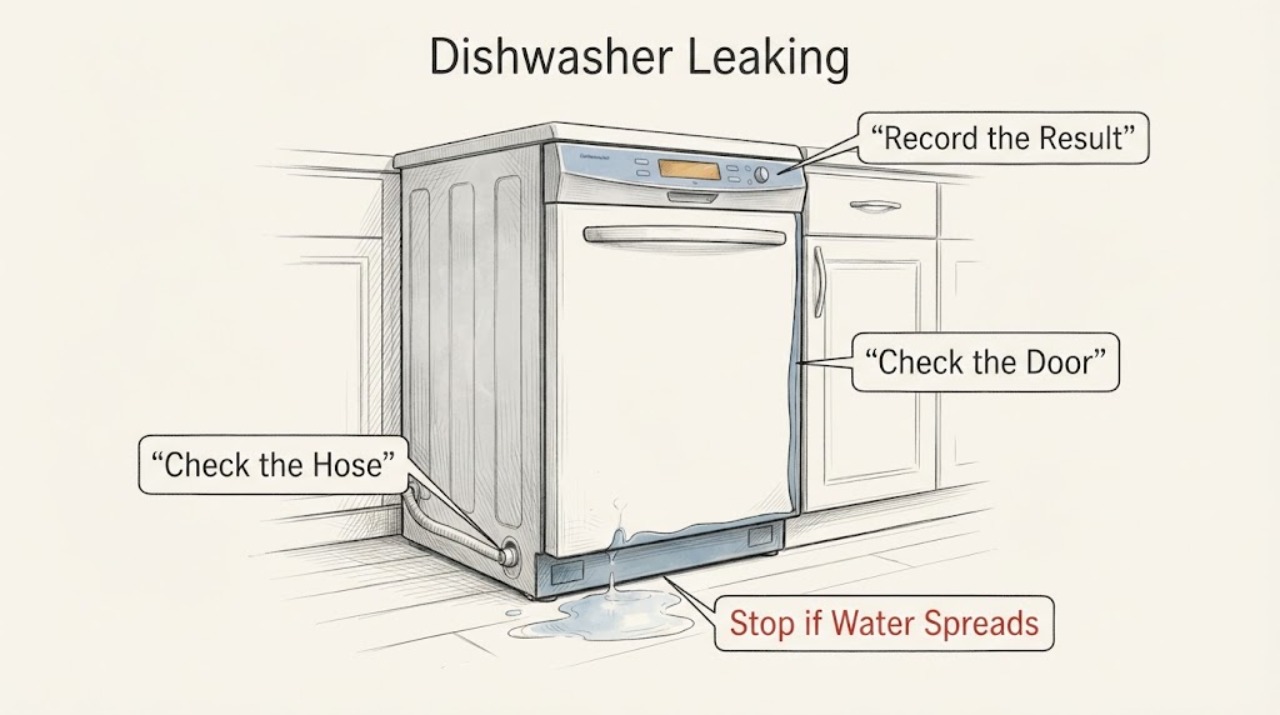
For a leaking Zanussi dishwasher, turn off the water tap, locate the leak, and check door closure, leveling, hoses, spray-arm loading, foam, and the gasket. A recurring leak code, water under the cabinet, split hose, or damaged seal needs authorized service.
-
Zanussi Washing Machine Leaking: Find the First Wet Point Safely
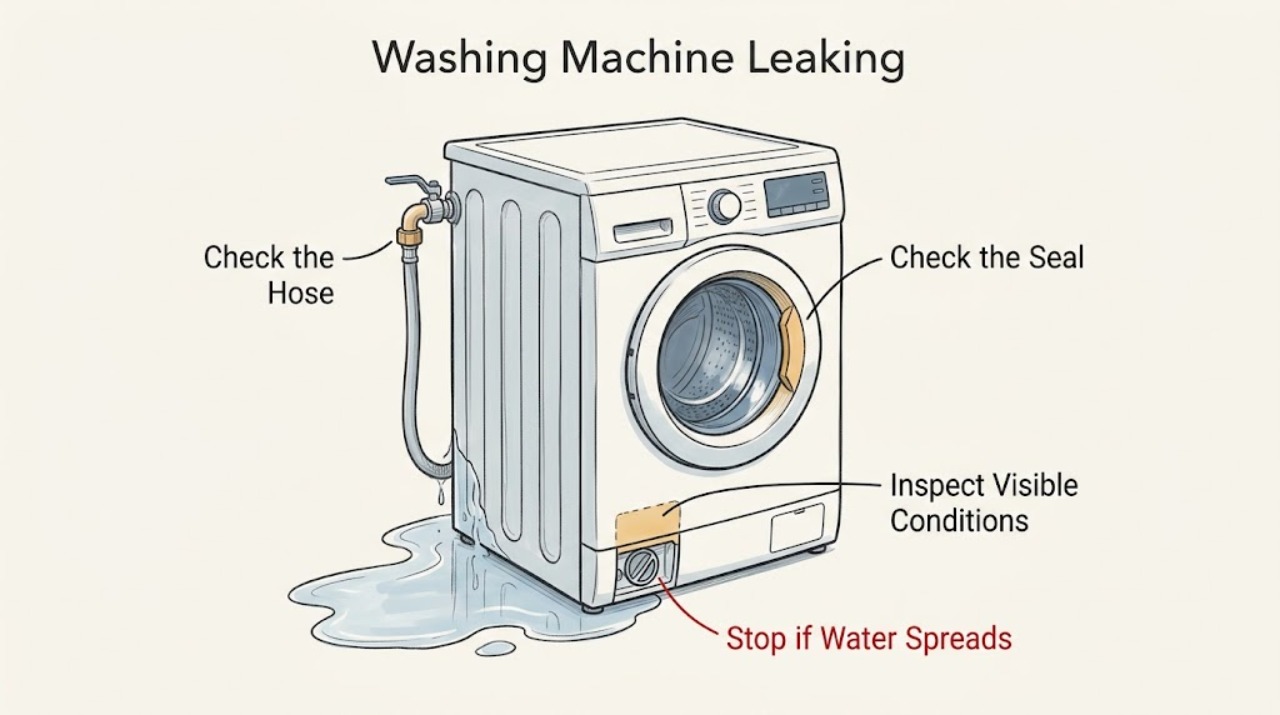
Stop the Zanussi washer and find the first wet point before guessing at a part. Water from the rear usually sends you to the inlet hose, tap, or connection; water from the front can involve the door seal, trapped laundry, detergent drawer, excess foam, or an overloaded drum; water from underneath can involve the drain filter, drain hose, pump, or an internal fault.