
Kitchenaid appliance guidance
Kitchenaid Oven Repair Guides
Troubleshooting and repair guidance for published Kitchenaid Oven problems, symptoms, and maintenance questions.
Published Kitchenaid Oven guides
Choose the guide whose symptom or condition most closely matches what you are seeing.
-
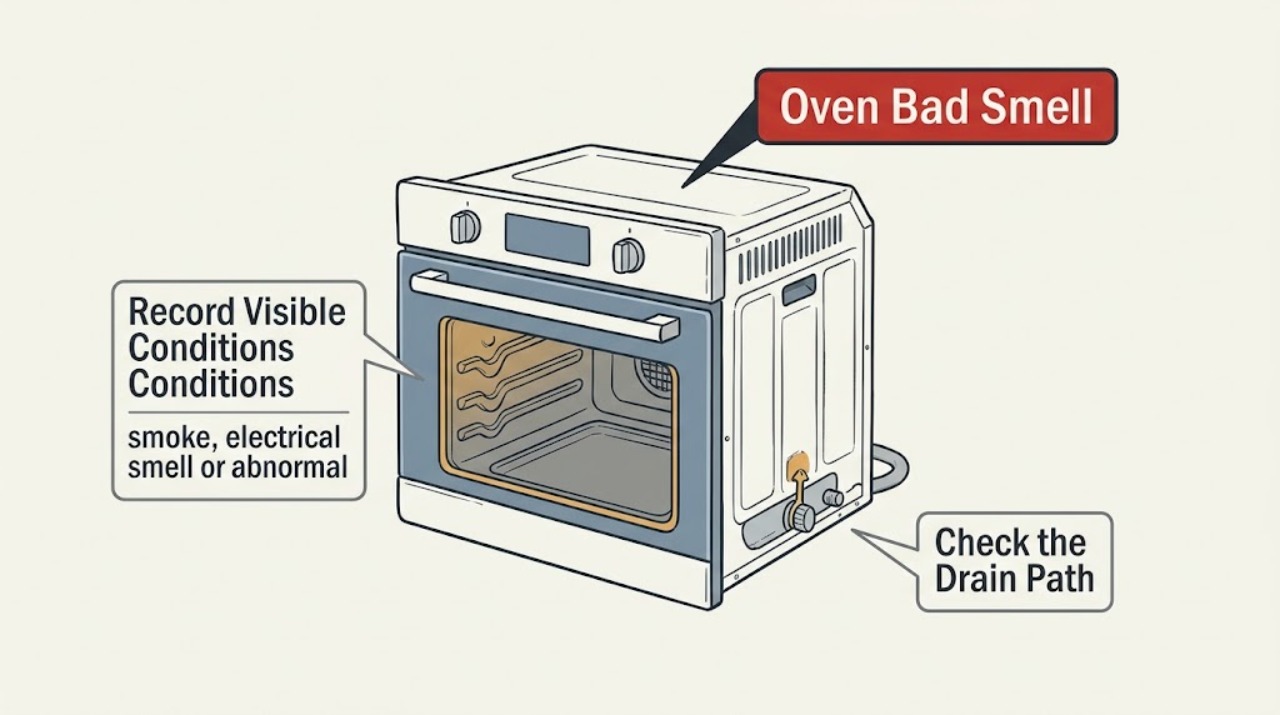
KitchenAid Oven Bad Smell: Identify Food, New-Oven, Gas and Electrical Odors Safely
First classify the smell before using the KitchenAid oven again: food or grease residue, a new-appliance or packaging odor, a gas-like odor, a burning or electrical odor, or smoke and fire. A mild smell during the first few uses can come from new parts, insulation, protective oil or shipping tape and should fade.
-
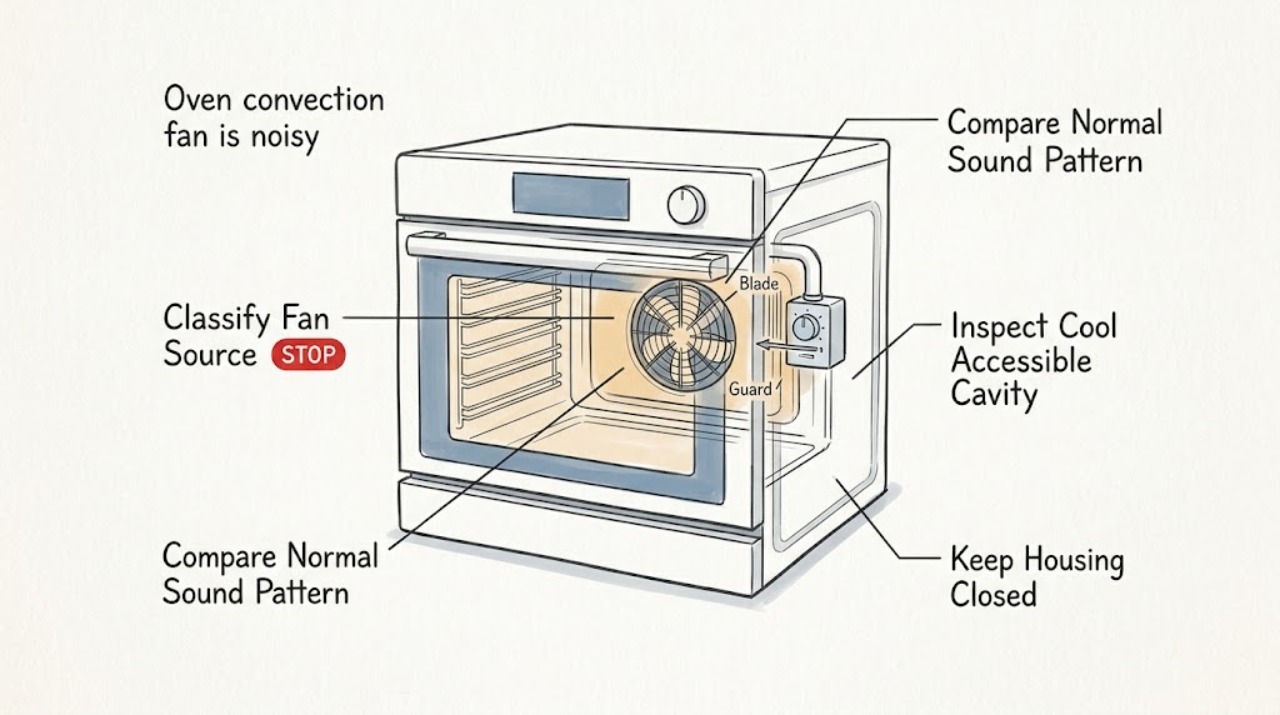
KitchenAid oven convection fan is noisy: What to Check and What to Do Next
Some KitchenAid oven fan sound is normal: the convection fan may run during preheat or a convection cycle, cycle on and off, and stop when the door opens; a separate cooling fan may run during or after cooking. A new loud rattle, scraping, rubbing or metal-on-metal sound, vibration, or a fan that runs with the door open is not normal.
-
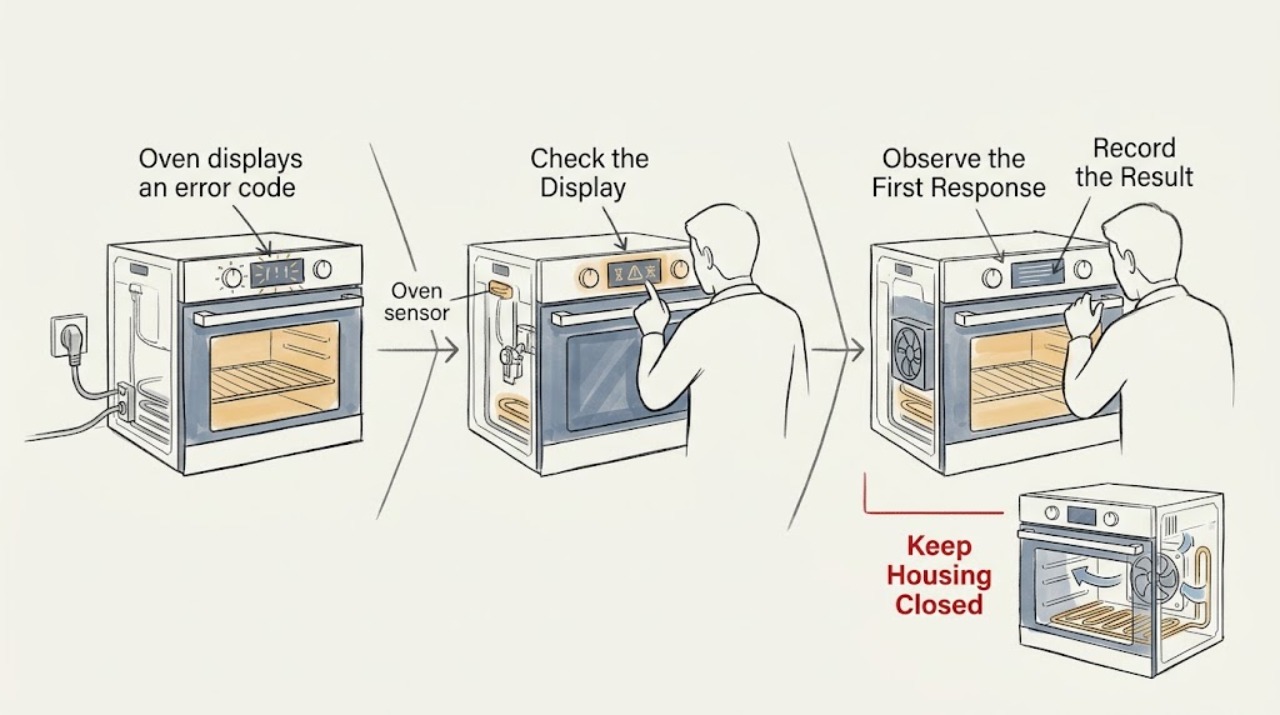
KitchenAid oven displays an error code: What to Check and What to Do Next
Do not diagnose a KitchenAid oven from an error-code number alone. Photograph or write every character exactly as shown, record the full model and the function running when it appeared, and use that model's manual or KitchenAid's matching error-code entry.
-
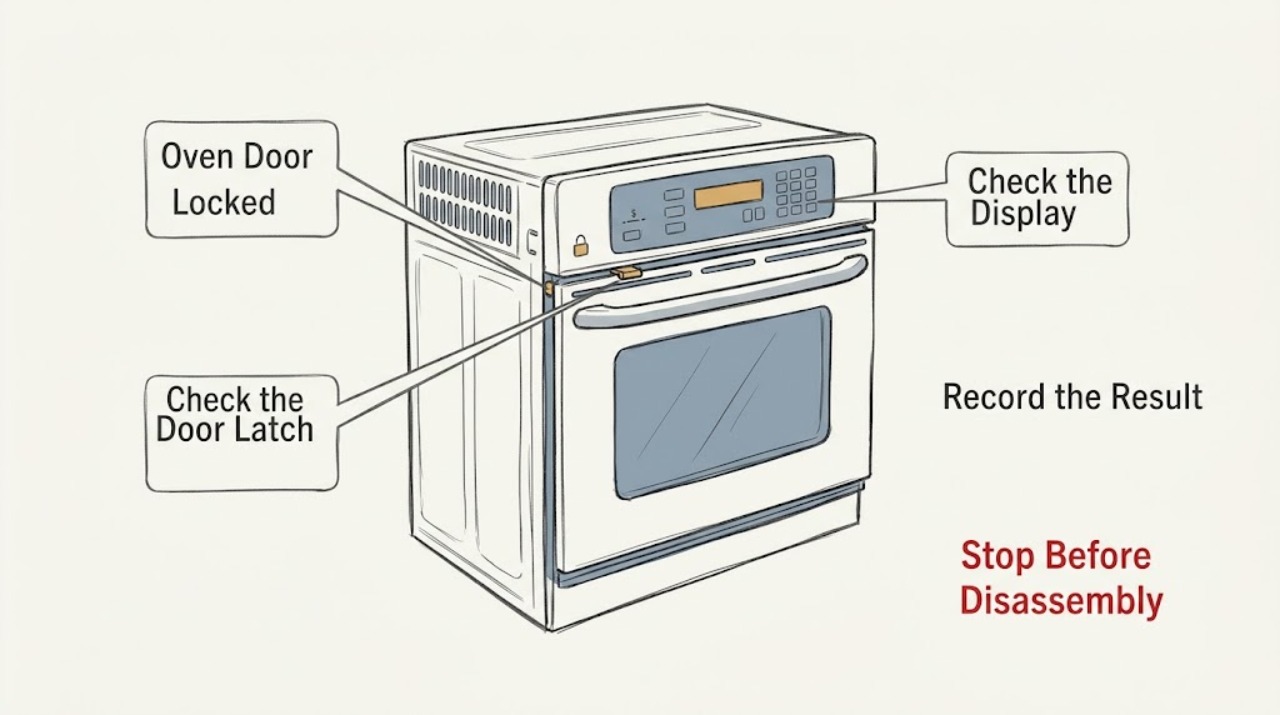
KitchenAid Oven Door Locked: Wait for Cooling, Check Lock State, and Reset Safely
Do not force a KitchenAid oven door. First determine whether Self-Clean is running or recently stopped, whether the oven is still hot, whether the display says Locked/LOC or shows another code, and whether a power interruption occurred.
-
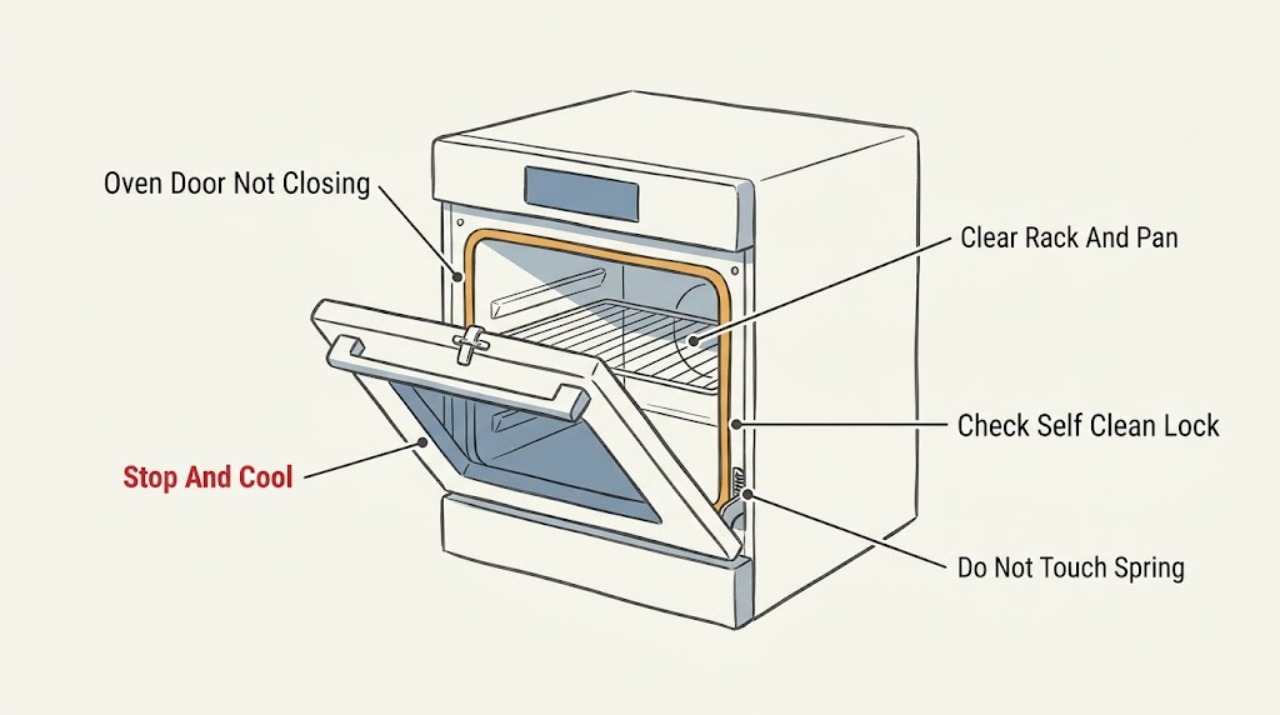
KitchenAid Oven Door Not Closing: Check Racks, Latch, and Hinges
Do not run a KitchenAid oven with a door that stays open, sits crooked, or needs force to latch. Let it cool, then remove only an accessible rack, pan, or food item that is blocking the opening and check that the racks are fully seated.
-
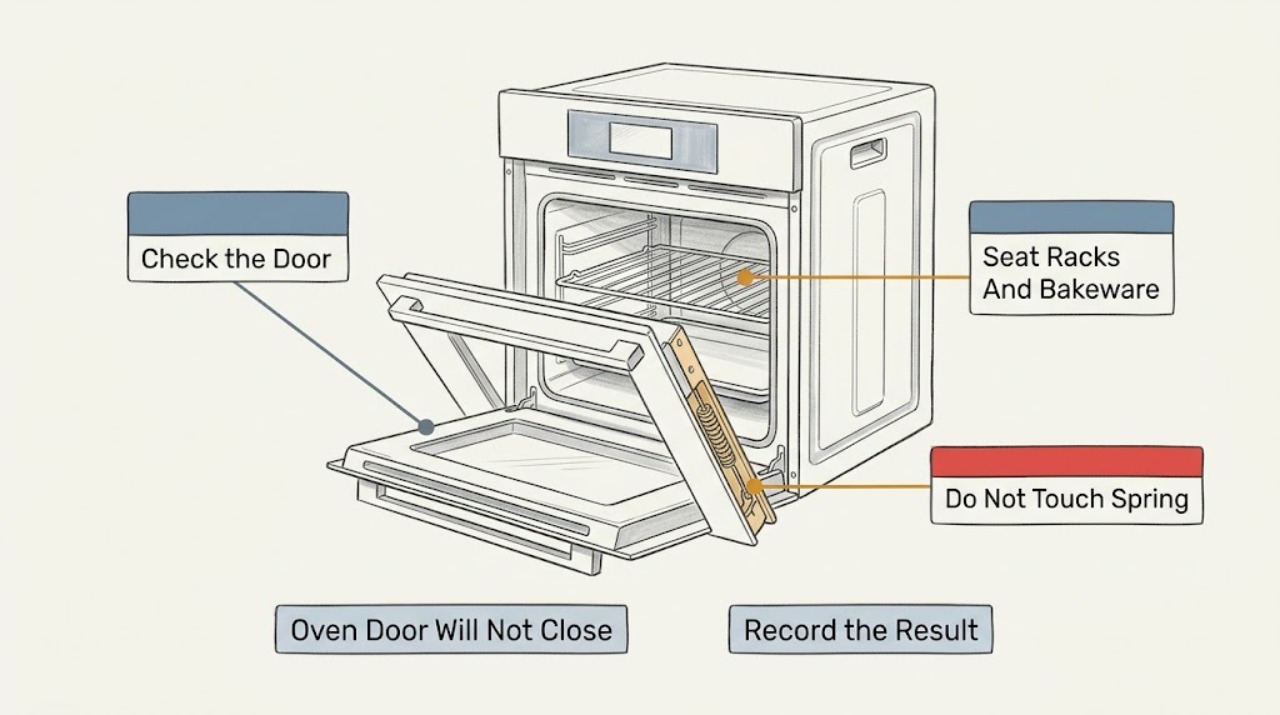
KitchenAid Oven Door Will Not Close: What to Check and What to Do Next
If a KitchenAid oven door will not close, first stop using the oven and let it cool if it was recently heated. Remove only an obviously oversized dish, loose packing material, or a rack that is not fully seated, then inspect the gasket and the latch area for food or soil buildup, a bent latch arm, or a hinge that is not seated.
-
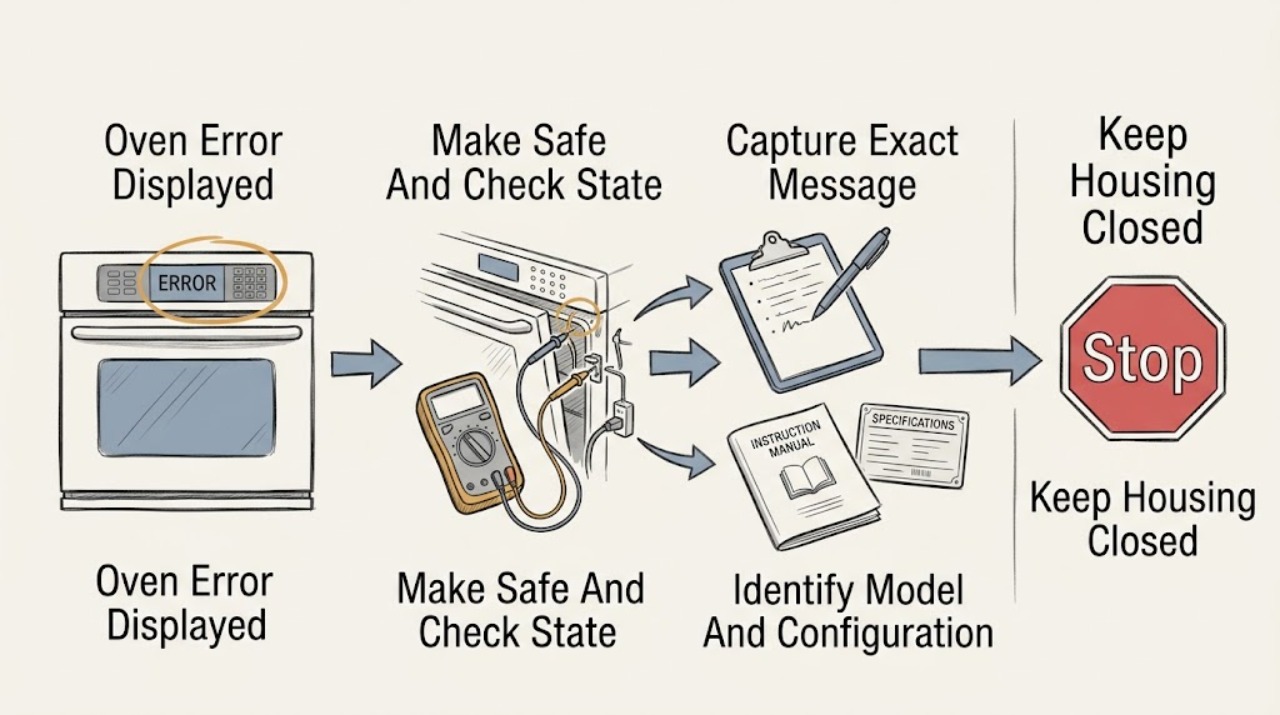
KitchenAid Oven Error Displayed
A KitchenAid oven message cannot be diagnosed safely from the word error alone: record the exact code or full wording, the model number, when it appeared, and whether the oven was hot, heating, locked, or completing a cycle.
-
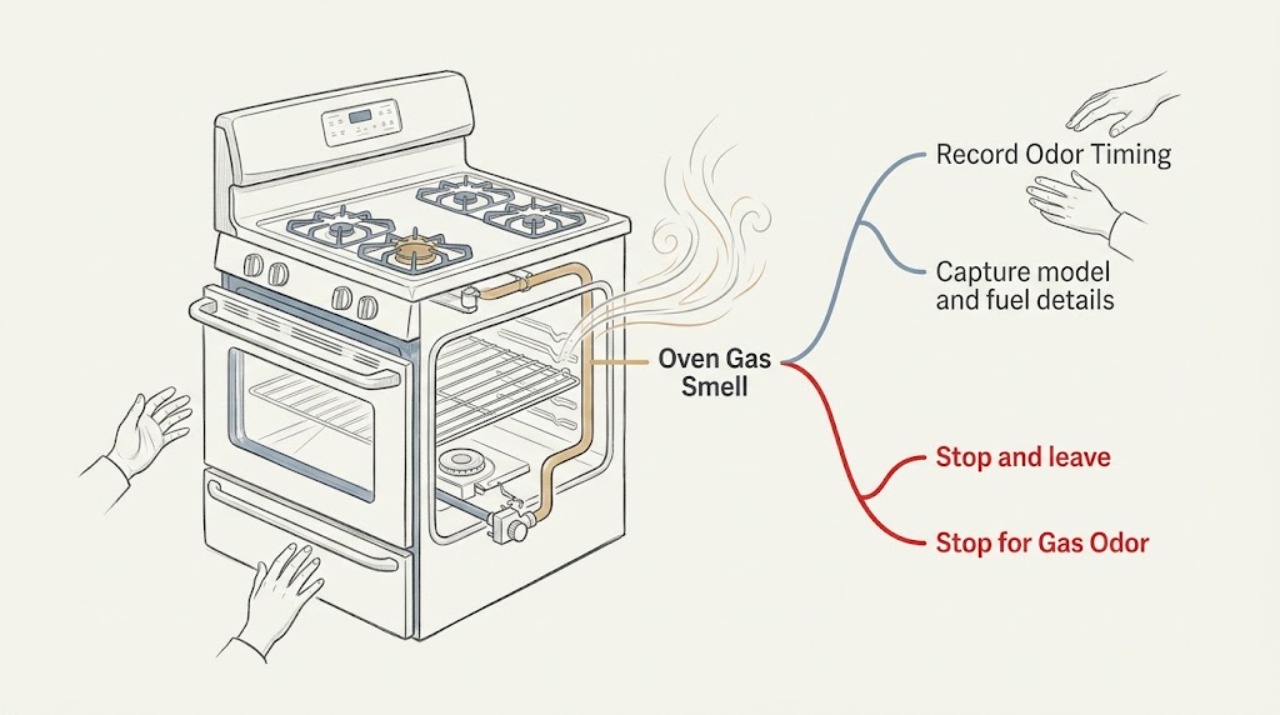
KitchenAid Oven Gas Smell: Stop Safely and Get It Checked
Treat a strong, persistent, unexplained, or off-state gas smell from a KitchenAid gas oven as an emergency, not as a setting to test. Do not light anything, operate electrical switches, use a phone in the building, or continue the oven cycle.
-
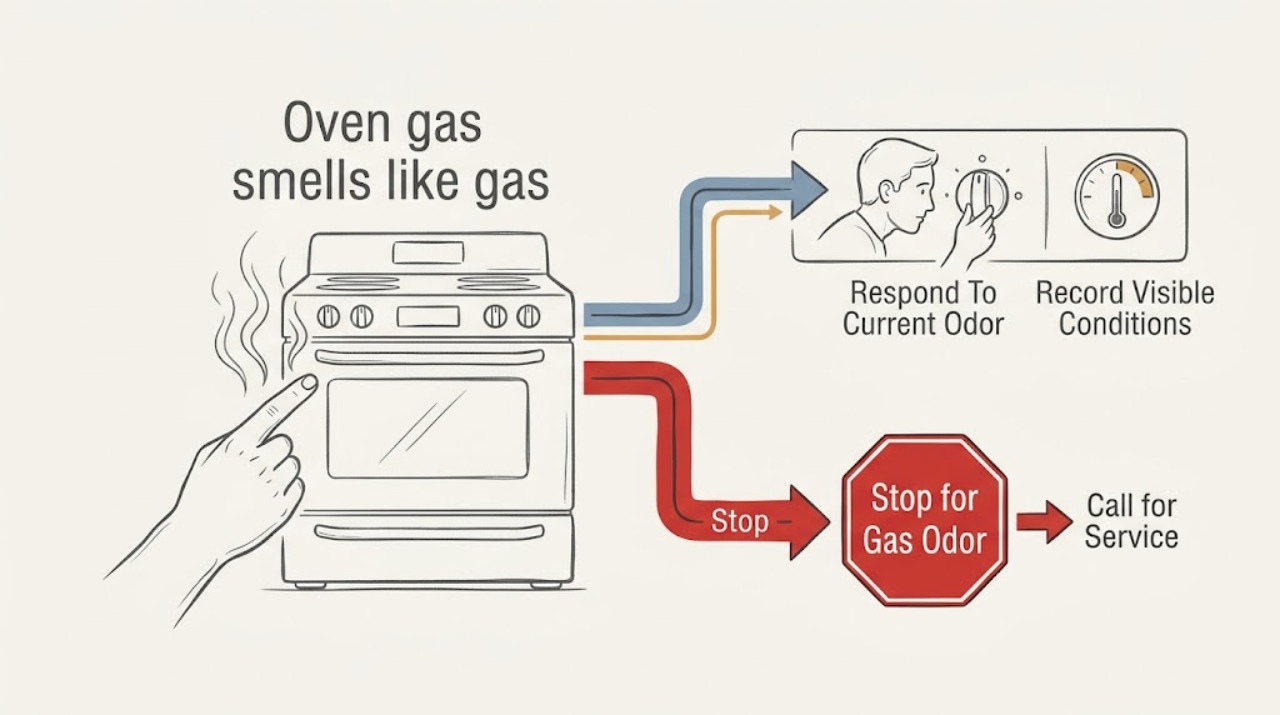
Kitchenaid oven gas smells like gas: What to Check and What to Do Next
Treat a gas smell from a KitchenAid oven or range as a possible fuel leak until a qualified professional rules it out. If you smell gas now, leave the home and suspected area immediately; do not relight the oven or a burner, operate a light switch or appliance, use a phone inside, move the range, or try to find the leak.
-
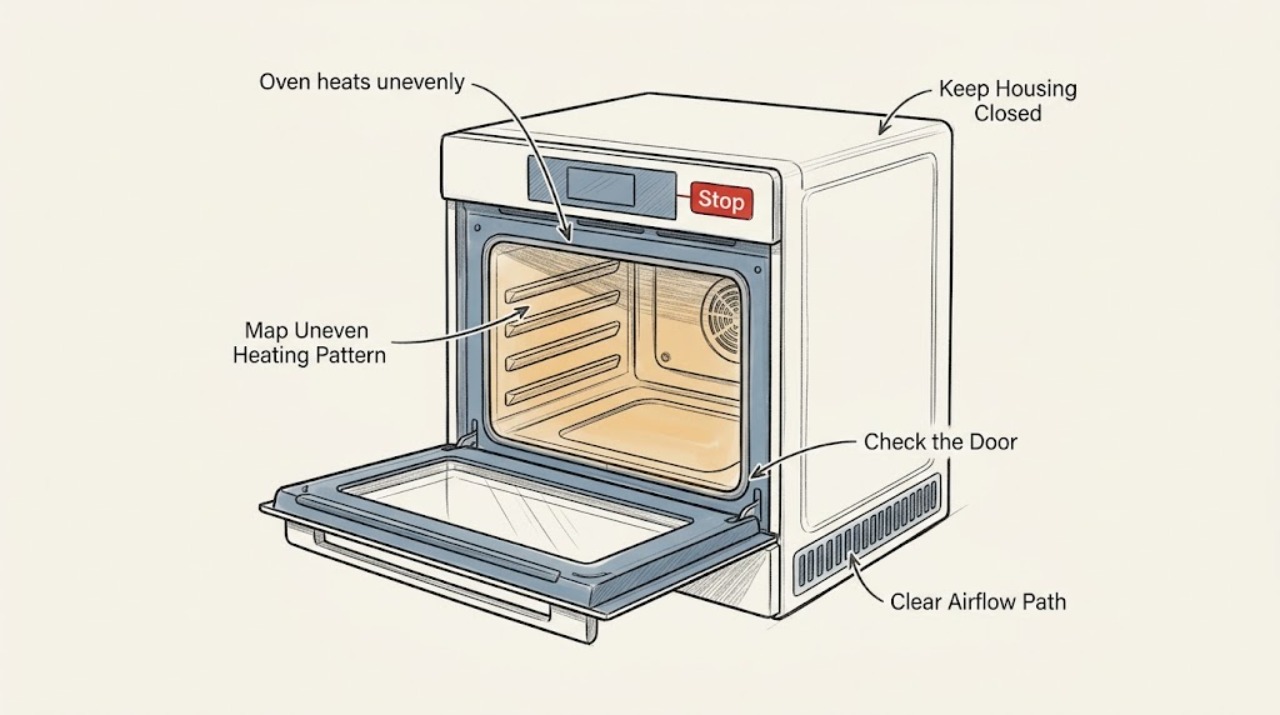
Kitchenaid oven heats unevenly: What to Check and What to Do Next
Uneven cooking in a KitchenAid oven can come from rack position, pan material or placement, overcrowding, incomplete preheating, opening the door, blocked airflow, calibration, a temperature sensor, or a damaged heating element. Start by describing the pattern—top versus bottom, front versus back, one side, or a general temperature offset—using one recipe and a fully preheated oven.
-
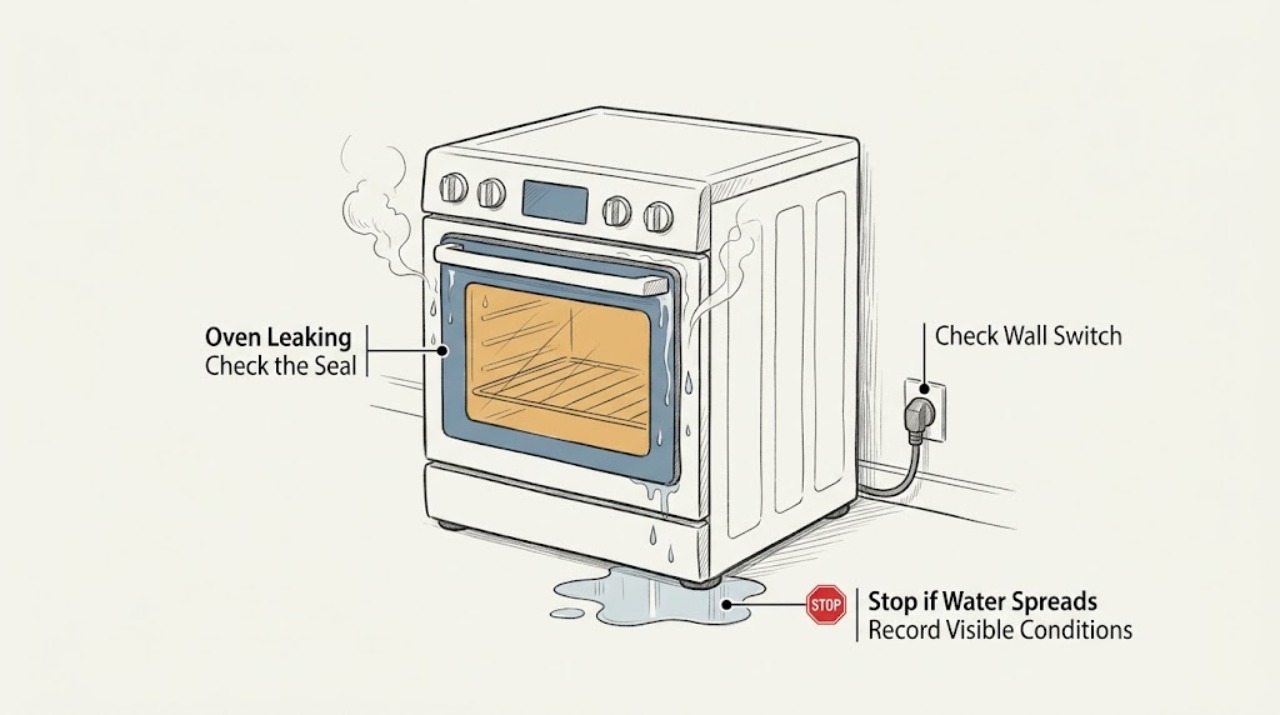
KitchenAid Oven Leaking: Separate Steam, Spills, and Real Leaks Safely
First decide whether the KitchenAid oven is producing steam or liquid water, and whether the liquid came from cooking, Steam Bake or Steam Clean, or an external connection. Moisture on the door glass and a small amount of condensation on the floor or cabinet can be normal with high-moisture food because steam condenses on cool surfaces and can leave through the vent.
-
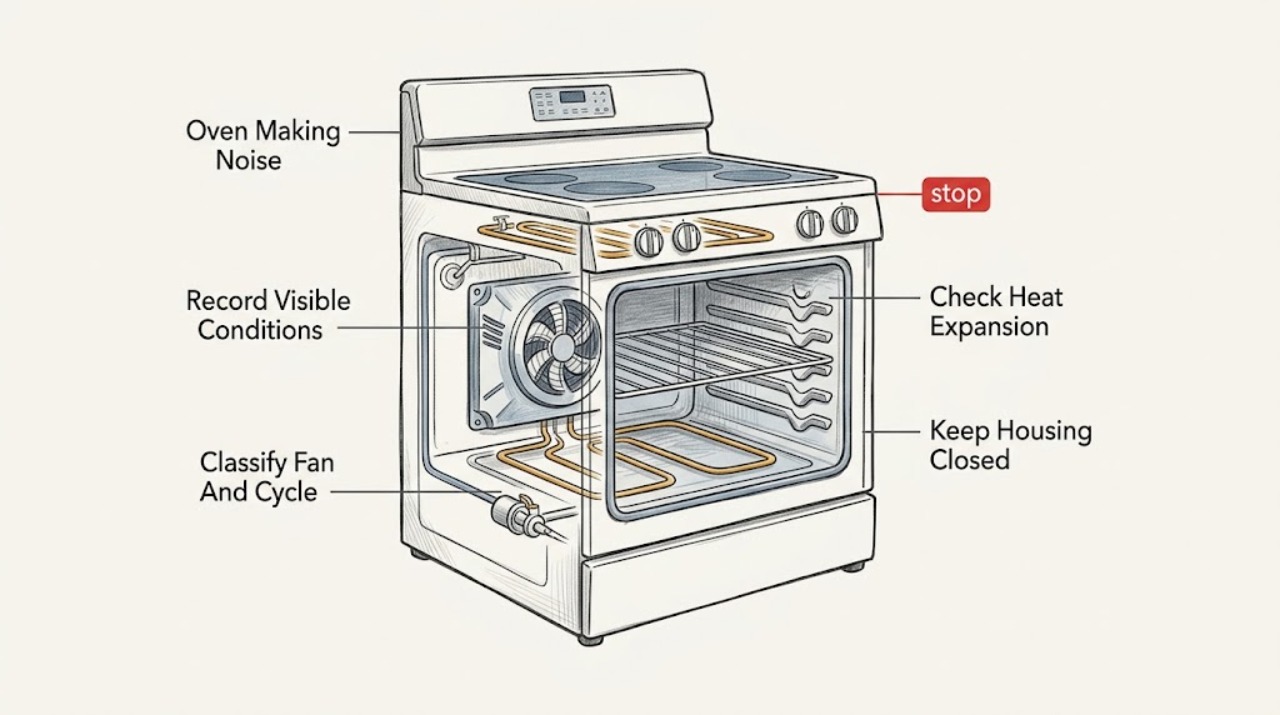
KitchenAid Oven Making Noise: Identify Normal Cycling Before Service
A KitchenAid oven can normally make a cooling-fan hum after or during cooking, short clicks while a gas burner ignites, and occasional pops or cracks as porcelain, steel, or an element expands and cools.
-
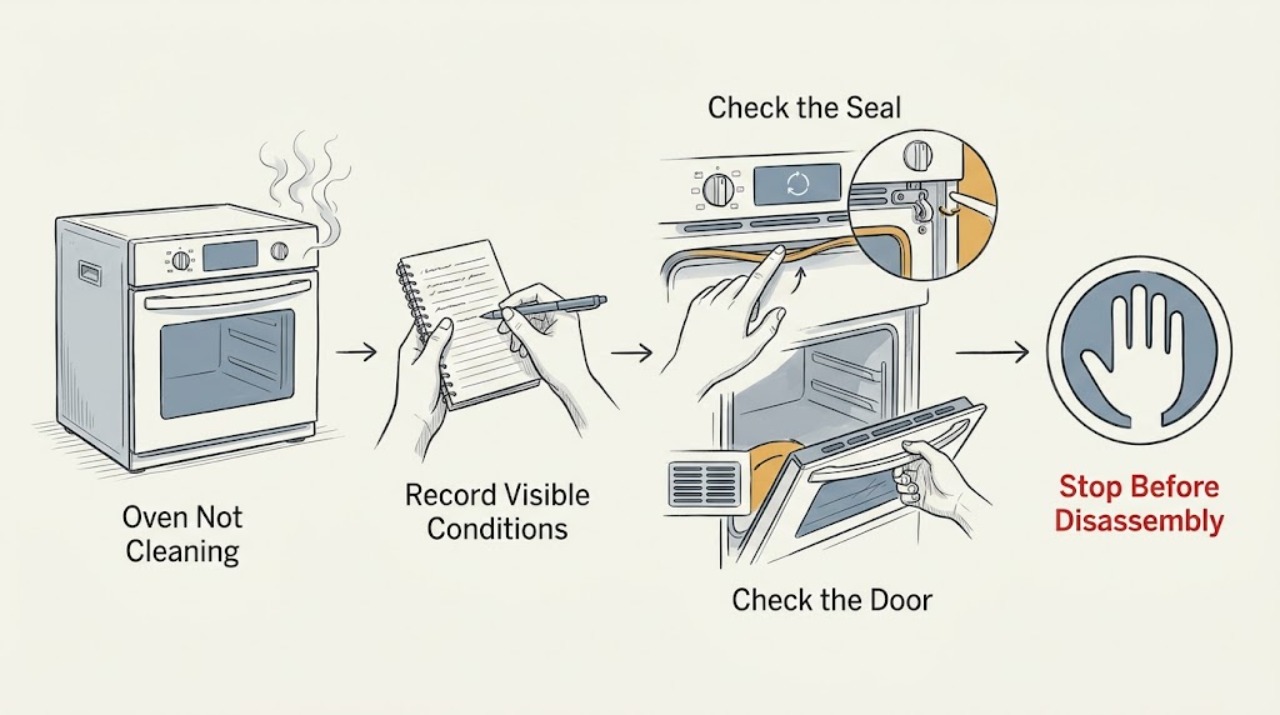
KitchenAid Oven Not Cleaning: Choose the Right Cycle and Prepare It Safely
A KitchenAid oven may appear not to clean because the model has Self-Clean, AquaLift, or Steam Clean and the wrong procedure was selected, the cavity is too hot, the door is not fully closed or locked, excess soil was left inside, or the cycle has finished but still needs a cool-down and wipe-down. Identify the cleaning feature from the control panel and Use and Care Guide, remove racks and loose soil, and follow that feature's water or no-additive rule.
-
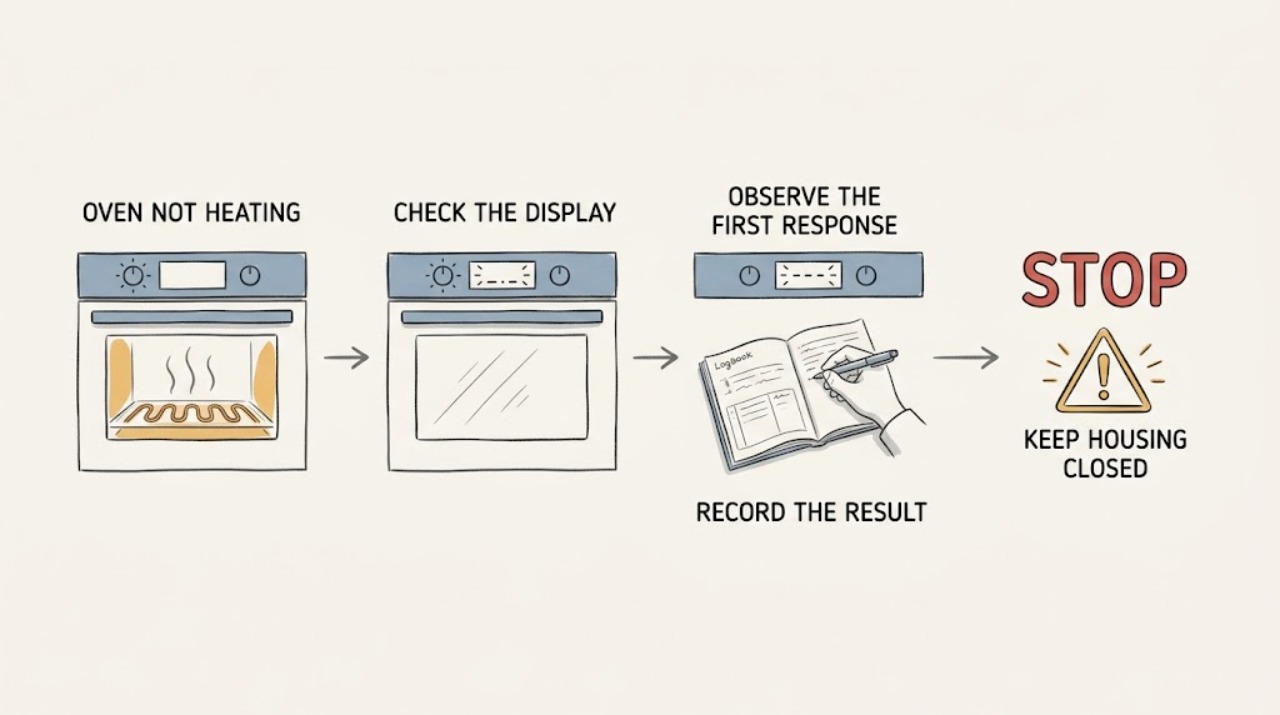
KitchenAid Oven Not Heating: Checks for Electric and Gas Models
First decide whether the KitchenAid oven is completely without power or has a live display that runs a cycle without producing heat. With no signs of smoke, gas, water, arcing, or repeated breaker trips, check the door, selected cooking mode, temperature, Control Lock or demo mode, and any Delayed Start setting.
-
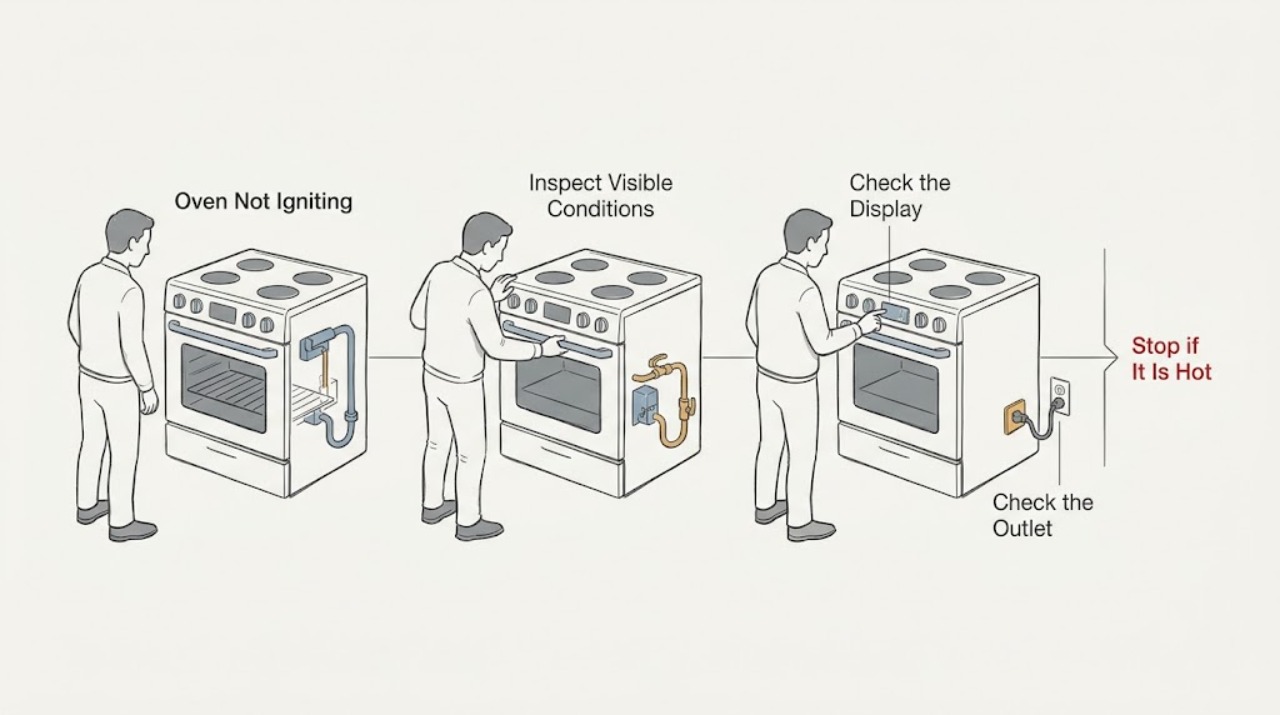
KitchenAid Oven Not Igniting: Check Fuel, Power, and Ignition Safely
First confirm that this is a KitchenAid gas or dual-fuel oven and identify whether the control is completely dead, the oven accepts Bake but never produces a flame, or ignition begins and then fails. With the oven cool and no gas odor, check the grounded outlet, the oven's control state, the closed door, and the accessible gas shutoff; use only the settings and model-specific instructions in the owner's manual.
-
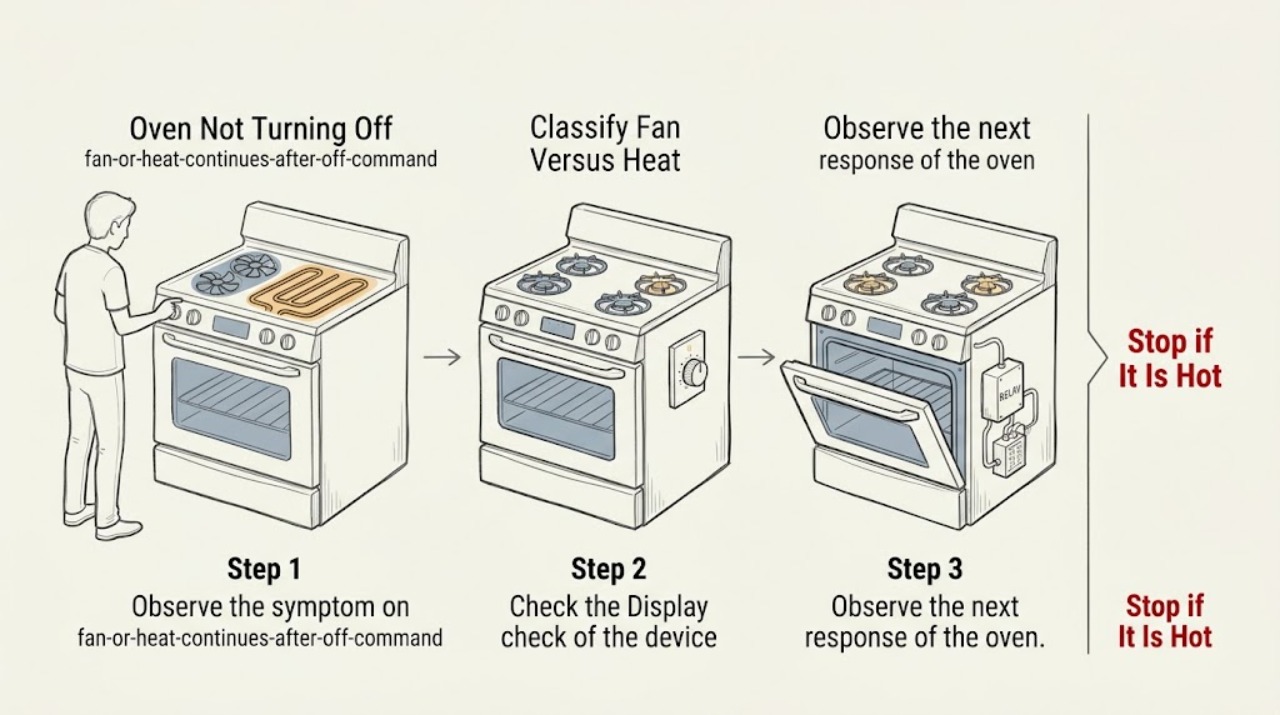
KitchenAid Oven Not Turning Off
First separate a fan that is still cooling from an oven that is still heating. KitchenAid says the automatic cooling fan can continue after a cooking cycle to cool the cavity and electronic controls, so fan noise alone does not mean the heat is still on.
-
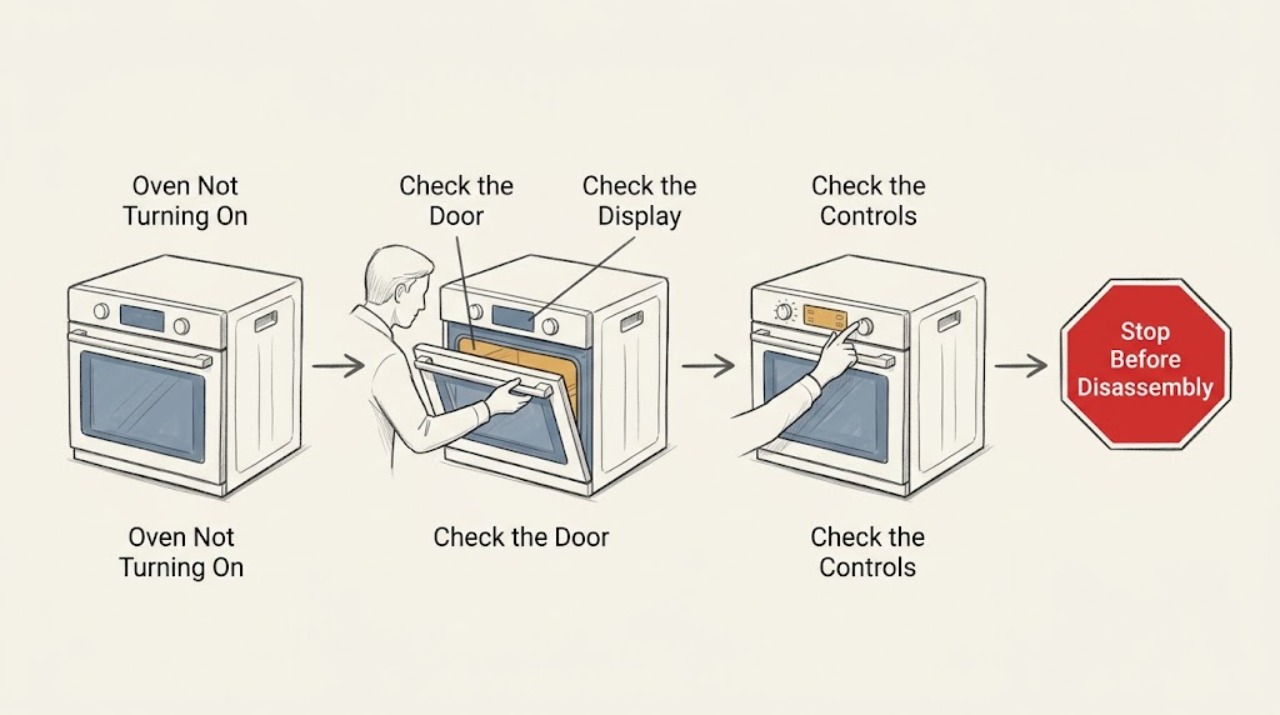
KitchenAid Oven Not Turning On: Check Power, Controls, and Fuel Safely
First separate a completely blank display from an oven that has power but will not start. If the display is blank, check only the accessible breaker or fuse and the exact model installation requirements; do not remove covers or work in the wiring.
-
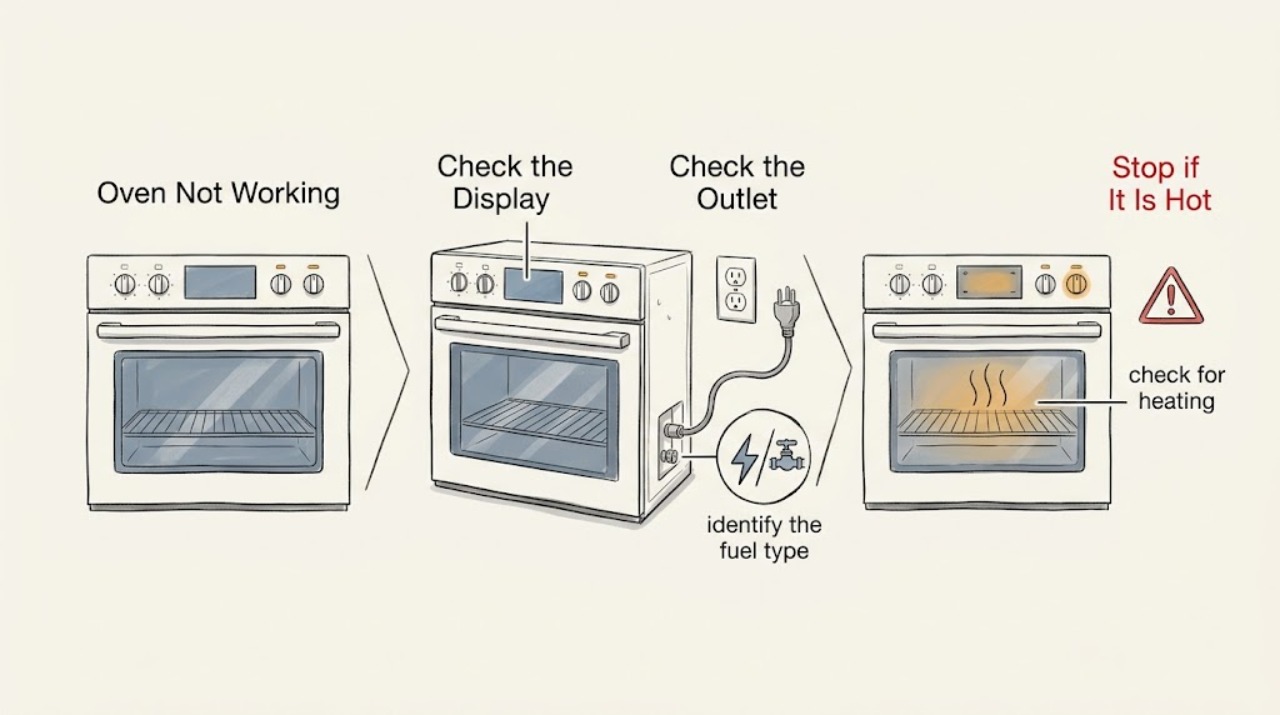
KitchenAid Oven Not Working: Find the Safe Power, Control, or Heating Fault
Start by separating a completely dead KitchenAid oven from one that has a live display but will not start, heat, or ignite. Confirm the exact model and whether it is electric, gas, or dual fuel.
-
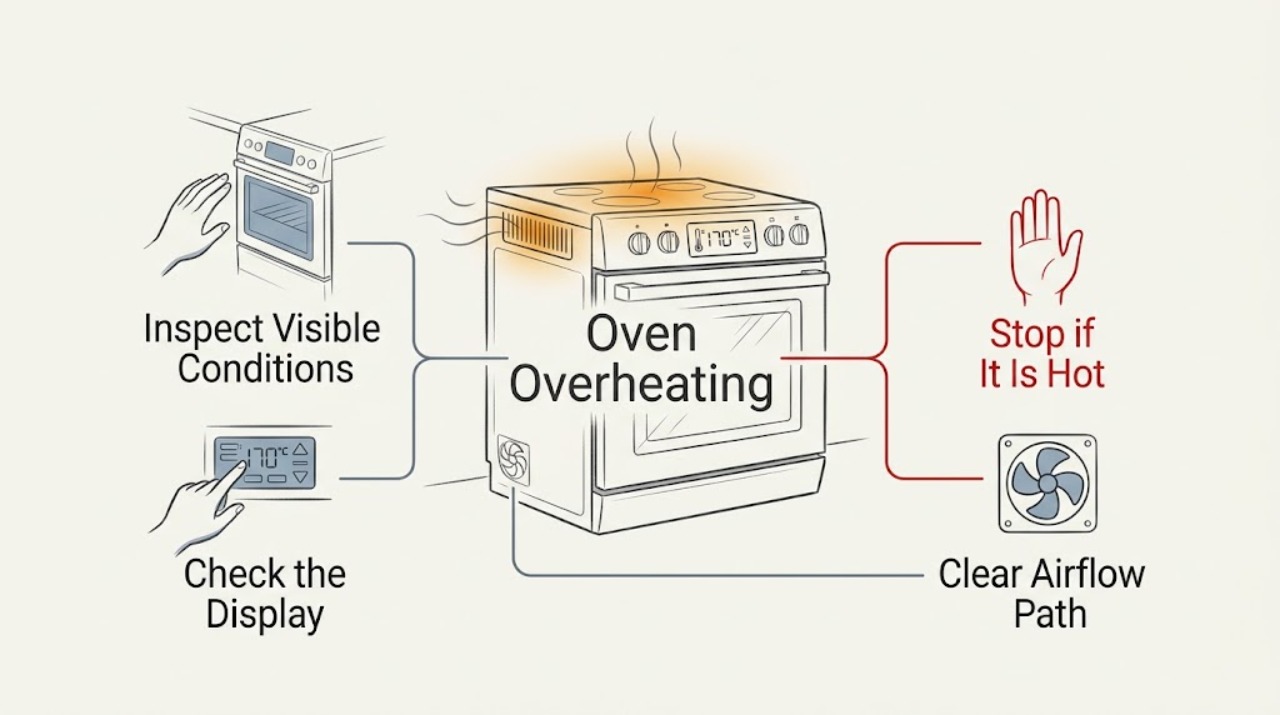
KitchenAid Oven Overheating: Separate Calibration Drift from Unsafe Heating
First decide whether the KitchenAid oven is cooking hotter than expected or is actually heating without control. Turn the controls off and stop using it for smoke, an electrical or gas smell, arcing, a surface that becomes dangerously hot, or heating that continues after cancellation.
-
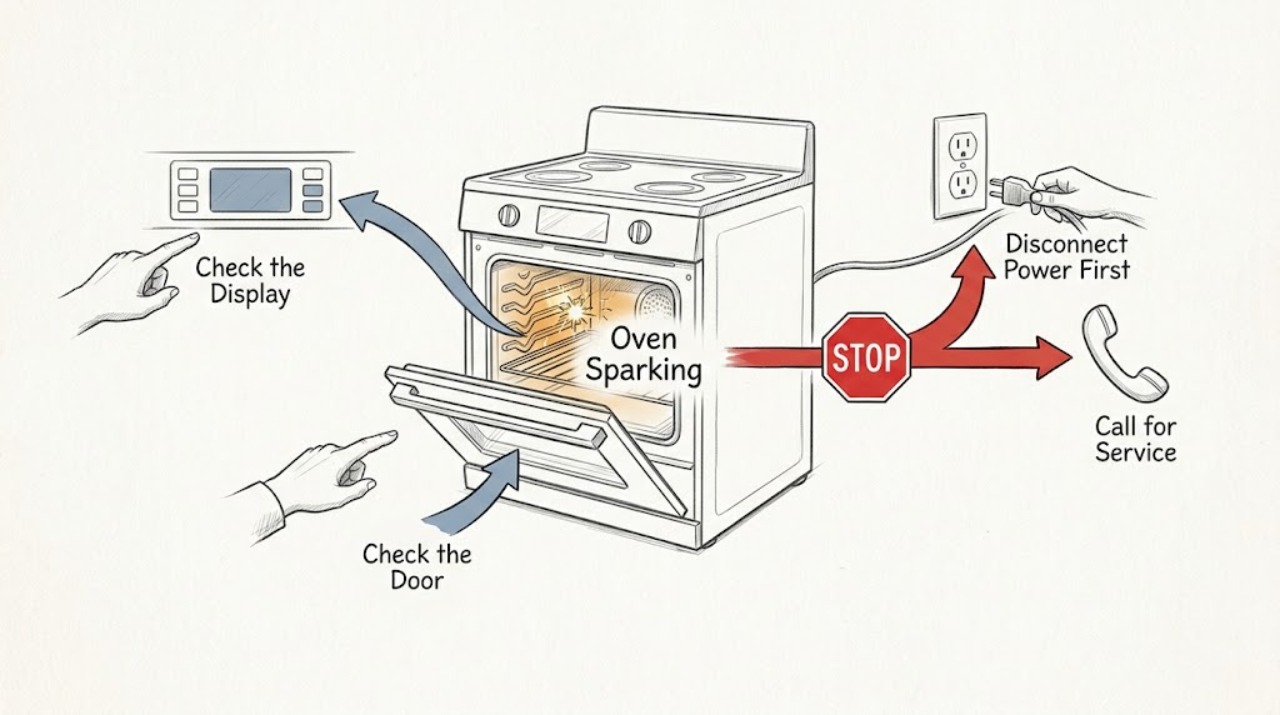
KitchenAid Oven Sparking: Separate Normal Ignition Clicks from Dangerous Arcing
First identify whether the spark is the brief, repeated igniter click that a KitchenAid gas oven can make while establishing a flame, a surface-burner ignition symptom, or a visible electrical arc inside or around the oven. A normal gas-oven click should stop after flame detection; it is not the same as a flash, arc, popping sound, burning odor, or spark that continues with the controls off.