
Kenmore appliance guidance
Kenmore Washer Repair Guides
Troubleshooting and repair guidance for published Kenmore Washer problems, symptoms, and maintenance questions.
Published Kenmore Washer guides
Choose the guide whose symptom or condition most closely matches what you are seeing.
-
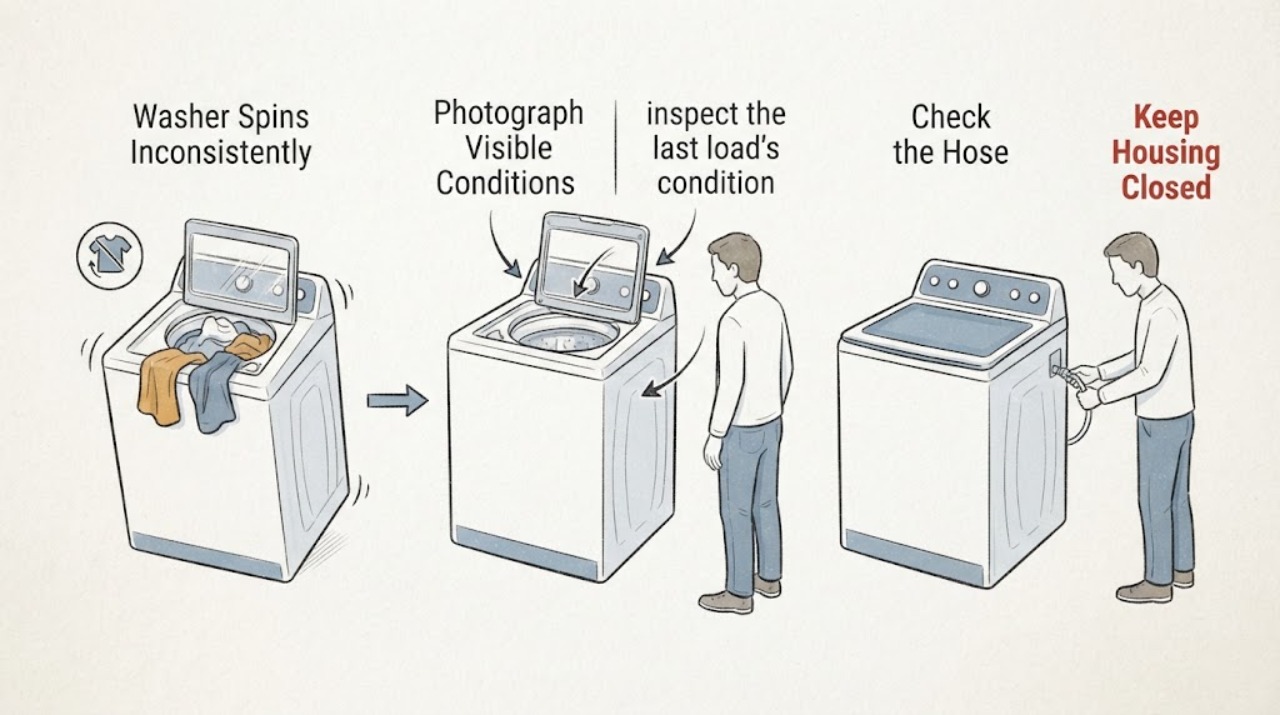
Kenmore 110.21492310 Washer Spins Inconsistently: How to Read F0E2, F7E1, and F7E7
Treat F0E2, F7E1, and F7E7 as a sequence to document, not as three automatic replacement-part diagnoses. Whirlpool's opened top-load guidance identifies F0E2 with excess suds that can reduce spin and leave a load wet; its current top-load pages label F7E1 as a motor or rotor sensor condition and F7E7 as a motor-sensor condition, with power cycling followed by service if a code returns.
-
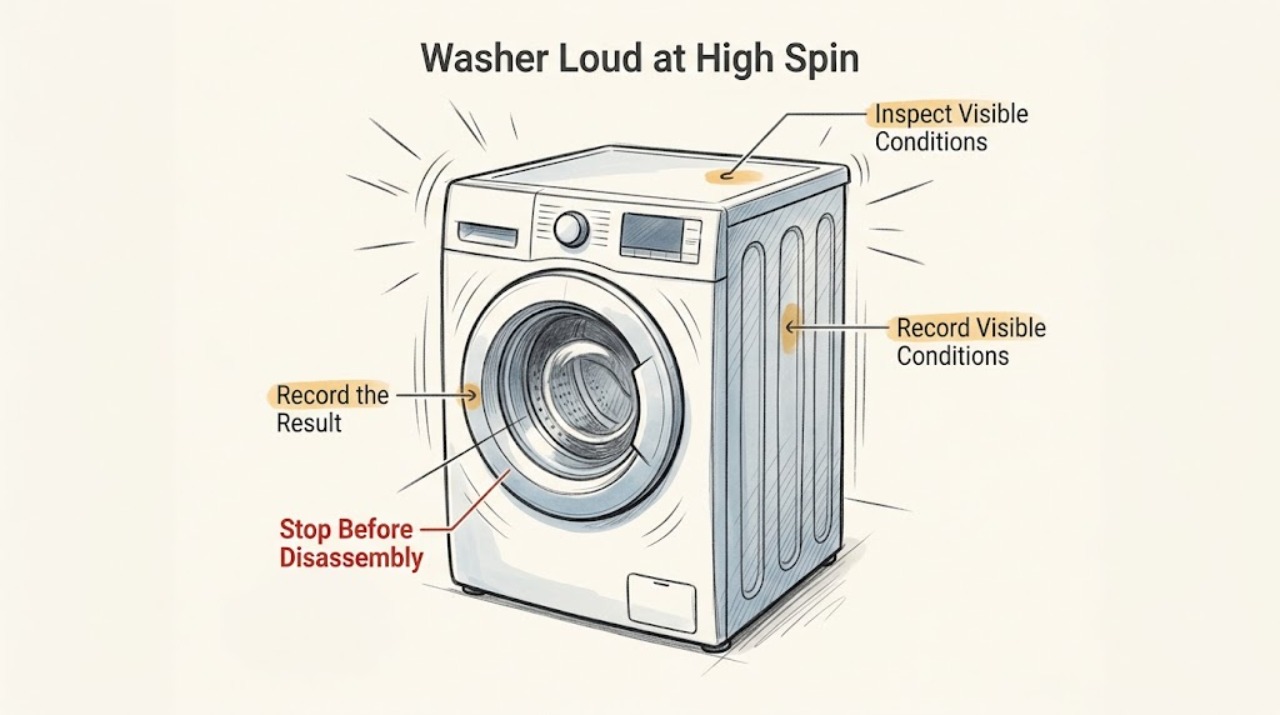
Kenmore 110.26112310 Washer Loud at High Spin: Separate Load, Level, and Contact Noise
Do not diagnose a Kenmore 110.26112310 washer from the volume alone. Confirm the full model on the nameplate and use the matching Kenmore manual, then note whether the sound appears only at high spin, follows a particular load, or remains with a safe empty-drum comparison.
-
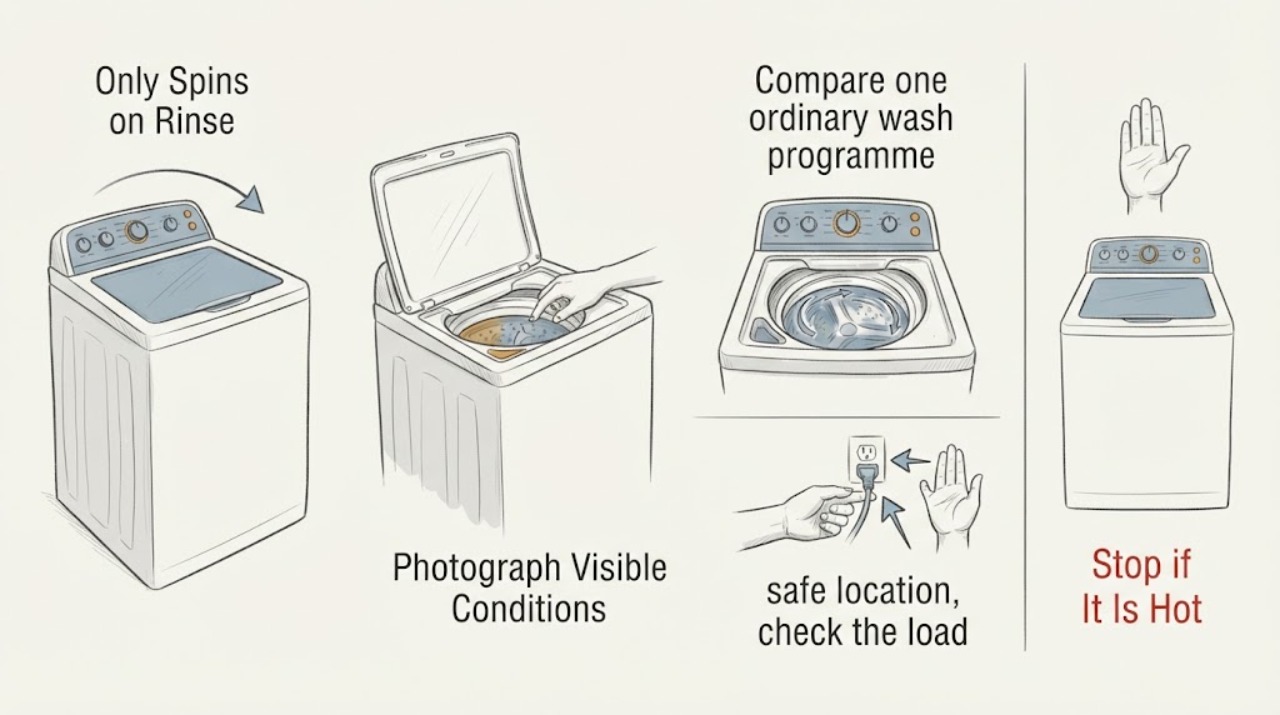
Kenmore 110.26132410 Only Spins on Rinse and Spin: Check the Current Fault
Treat F7E3, F7E0, F7E8, and F0E2 as four recorded diagnostic-history entries, not four confirmed current causes. In the exact 110.26132410 case, the washer drained and completed Rinse and Spin, while ordinary wash programmes failed to spin; the poster also reported that the individual service spin tests worked.
-
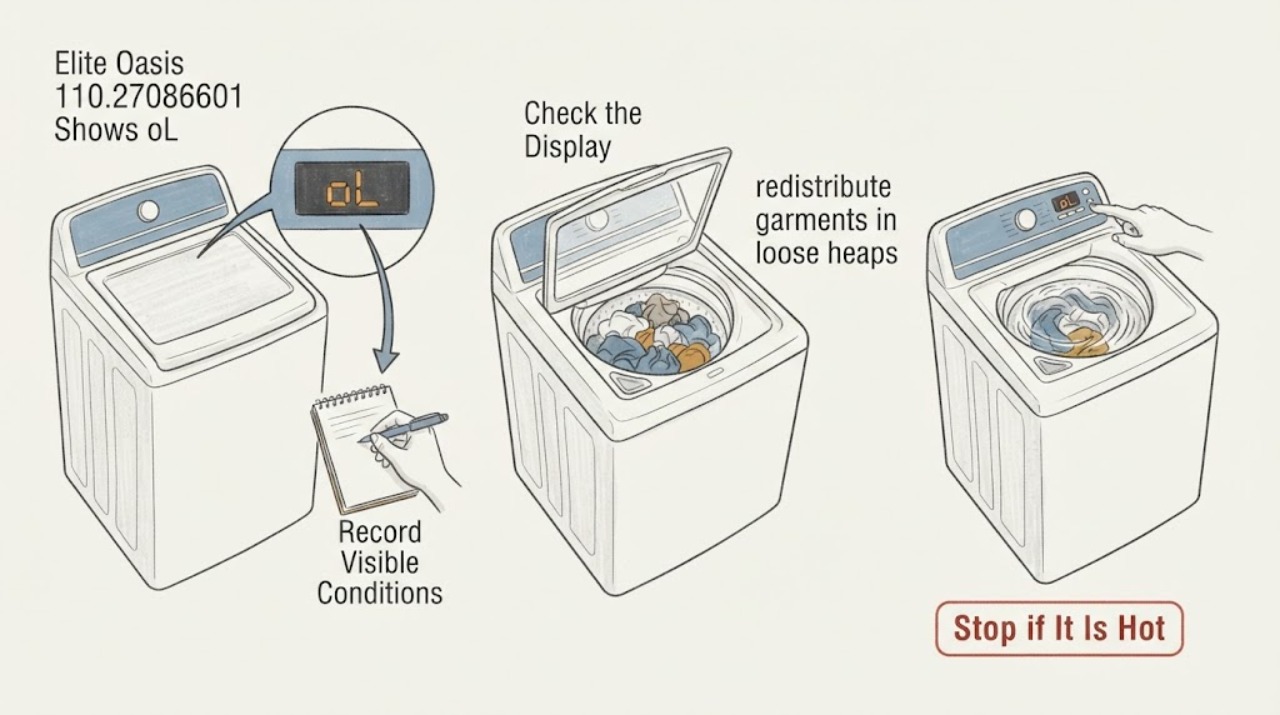
Kenmore Elite Oasis 110.27086601 Shows oL and Will Not Spin Properly
On the Kenmore Elite Oasis washer identified as 110.27086601, oL means Over Load in the opened Whirlpool top-load guidance used for this Oasis platform—not the same as uL, which means an unbalanced load. The washer may drain and refuse or reduce spin when the load is too large or packed poorly.
-
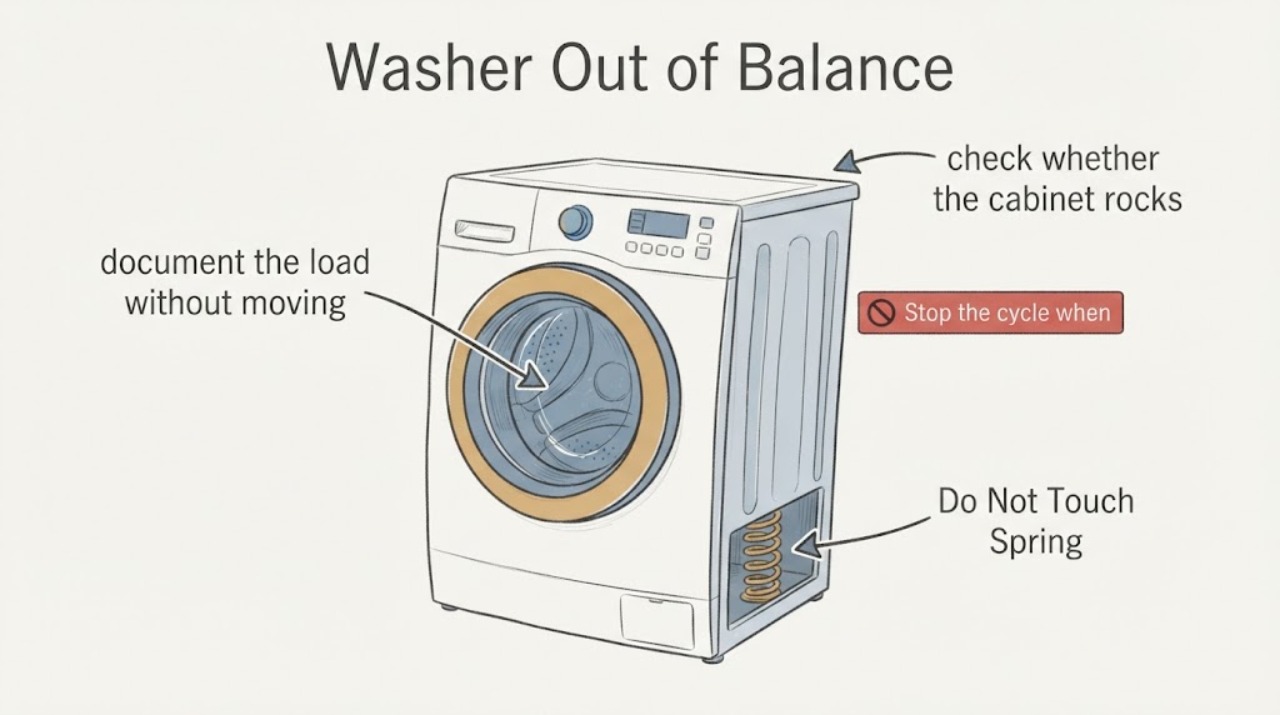
Kenmore 110.29422801 Washer Out of Balance With the Load on One Side
Stop the Kenmore 110.29422801 when the basket is walking, striking the cabinet, or making a severe out-of-balance noise; keep hands away until all motion has stopped and do not hold the machine down or run another high-speed test. First record whether the load was genuinely gathered on one side, whether the cabinet rocks on its floor, whether shipping material was removed, and whether the washer has ever moved or banged with no laundry.
-
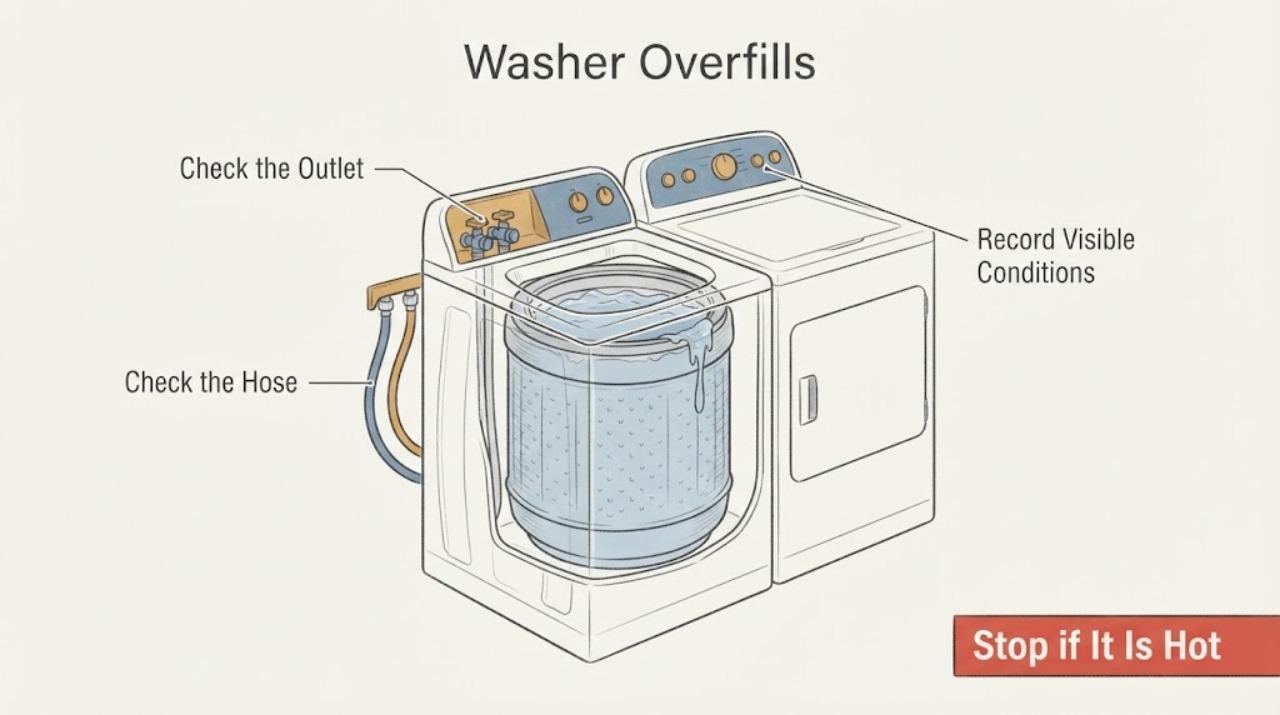
Kenmore 110.29422801 Washer Overfills: Shut Off Water Before Checking the Cause
If a Kenmore 110.29422801 washer is filling above its normal level or water keeps entering after the cycle is stopped, close both household water supply valves immediately, contain the water and keep the washer out of unattended use. First distinguish a true high water level from a hose, tub or floor leak, then note whether the water enters only during the fill portion or continues with the controls off.
-
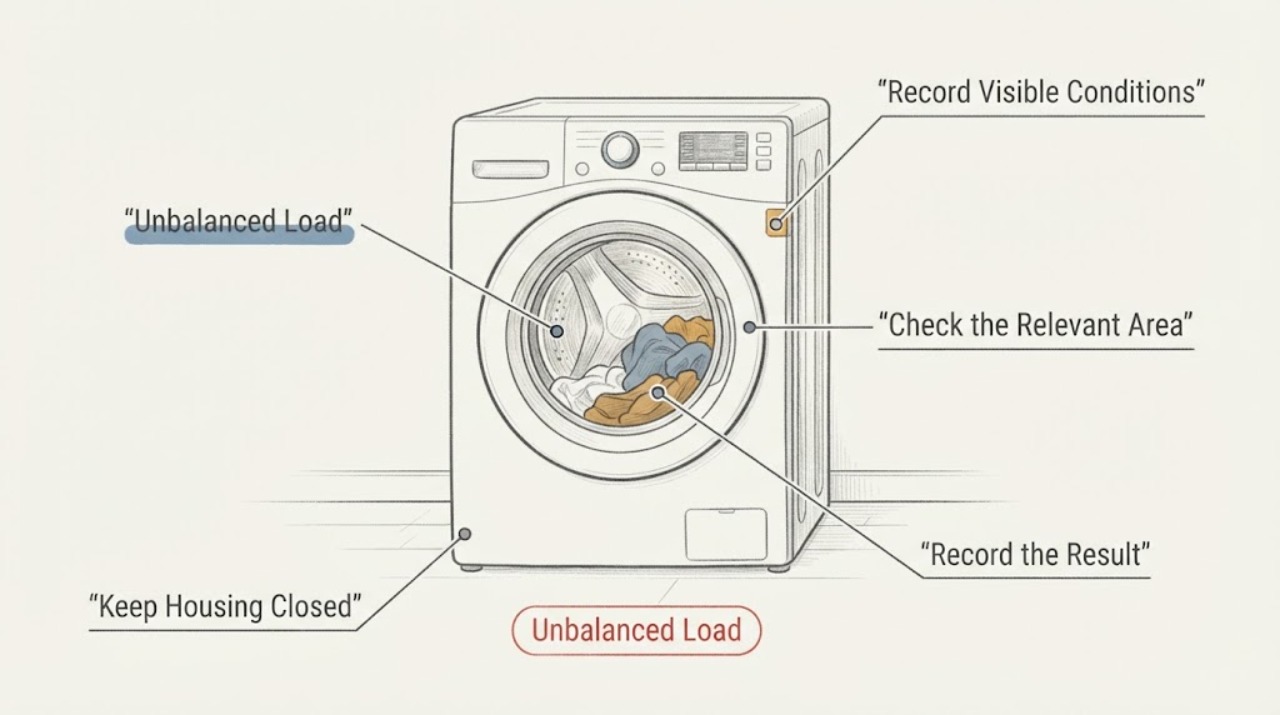
Kenmore 110.4470290 Unbalanced Load: Decide Whether It Is the Load, Installation, or a Repair Question
For the assigned Kenmore 110.4470290, treat an unbalanced-load complaint as a symptom to separate into load, installation, and persistent-machine branches before buying a part or deciding to replace a roughly 33-year-old washer. Stop the spin and wait until the basket is fully still.
-
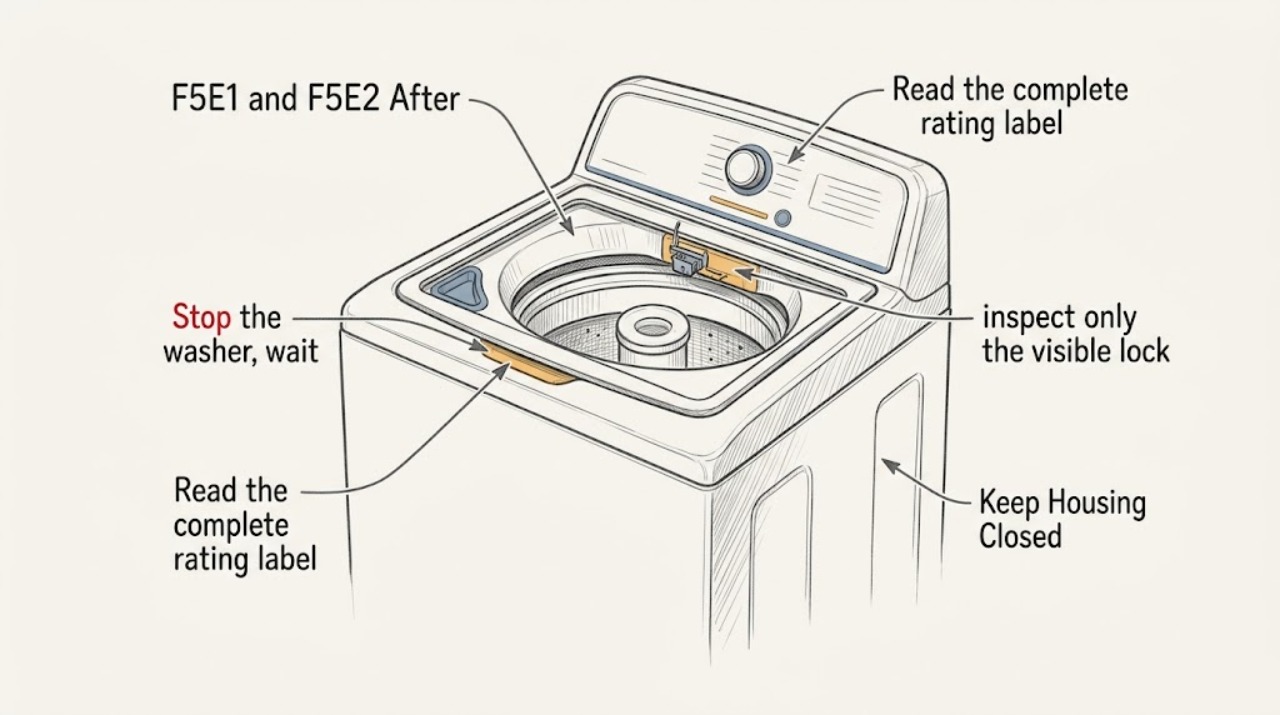
Kenmore 110.5142510 F5E1 and F5E2 After a Lid-Lock Replacement
On a Kenmore 110.5142510, F5E1 and F5E2 together after replacing the lid lock mean the control is not receiving a trustworthy lid-switch/lock sequence; they do not prove that the aftermarket assembly alone is defective. Whirlpool's top-load guidance describes F5E1 as a door/lid-switch condition and F5E2 as a lid-lock engagement problem, with visible obstruction checks and a five-minute power disconnect as owner-level steps.
-
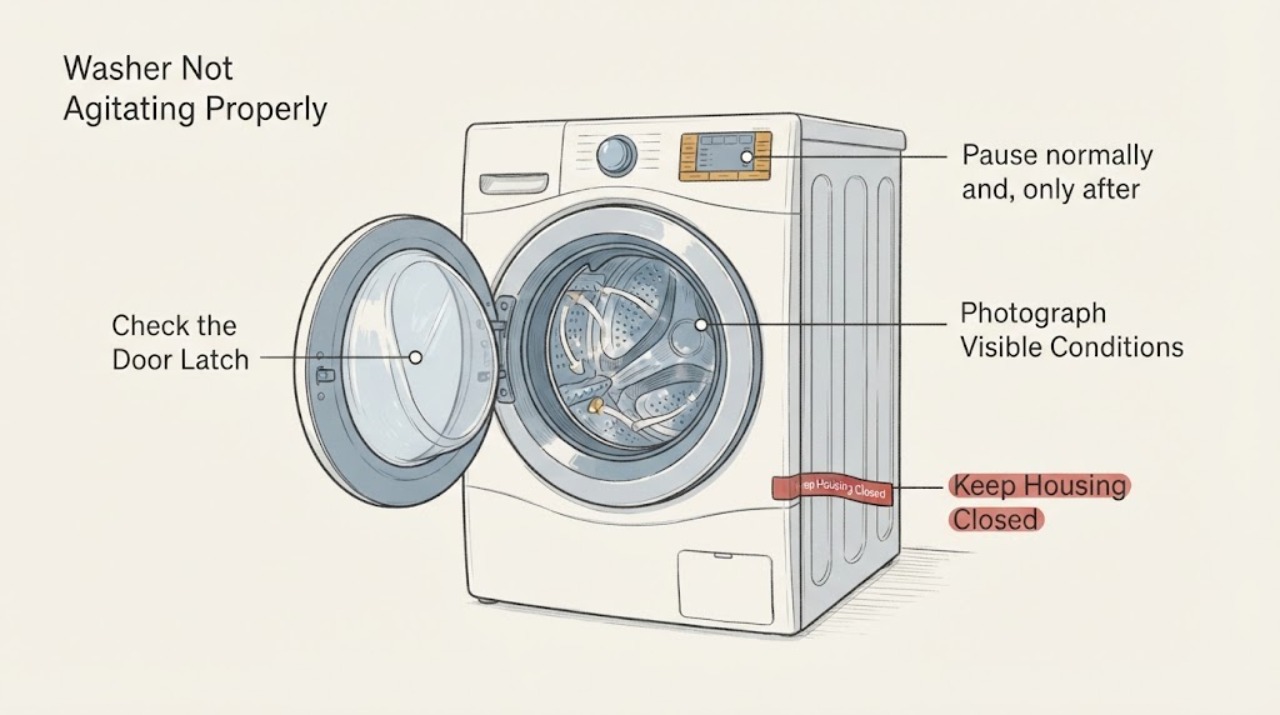
Kenmore 110.16962502 Washer Not Agitating Properly: Separate Load, Cycle, and Service Faults
For Kenmore 110.16962502, first determine whether the washer is not agitating at all, pauses normally, moves only weakly with a heavy or tangled load, or also fails to drain or spin. Kenmore directs owners to use the complete model number to retrieve the matching manual; do not borrow a cycle sequence or transmission-part diagnosis from another Kenmore 110 platform.
-
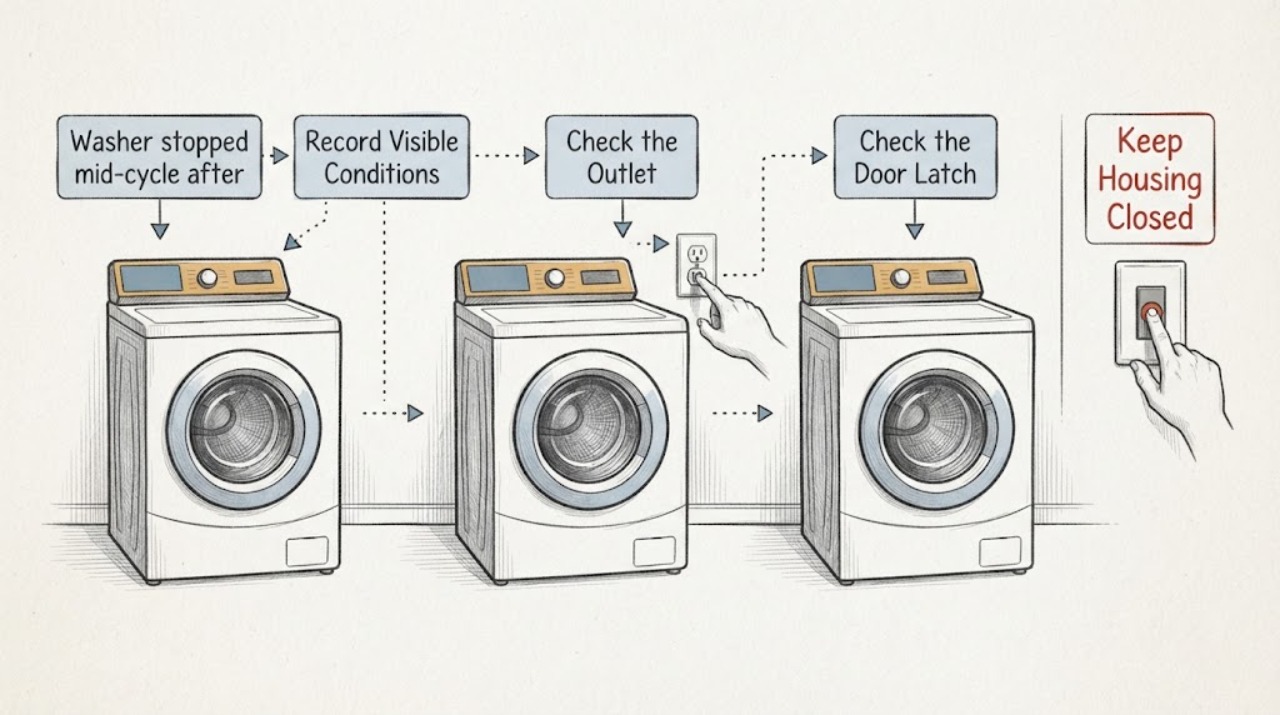
Kenmore 11025842400 washer stopped mid-cycle after a lid-switch bypass
Stop using the Kenmore 11025842400 while its lid-switch safety circuit is bypassed or its original condition is unknown. Leave it disconnected in a dry, safe area and do not try to restore operation by bridging, testing, or repeatedly resetting the circuit.
-
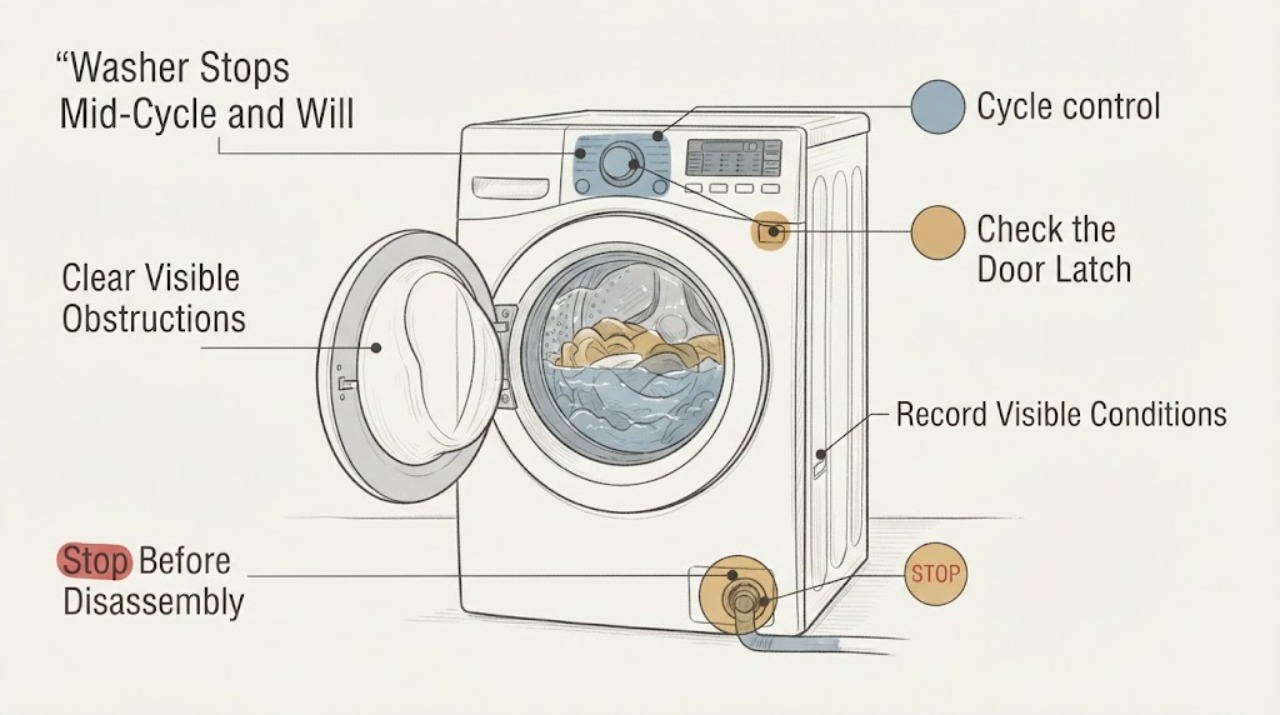
Kenmore 25102 Washer Stops Mid-Cycle and Will Not Lock or Continue
The opened report identifies a 2014-era Kenmore HE top-loader as model 25102, later giving the fuller label 110.25102311: it completed wash, left wet clothes, flashed Sensing, and would not engage the lid lock to continue. That symptom does not prove a failed lid-lock component or inlet valve.
-
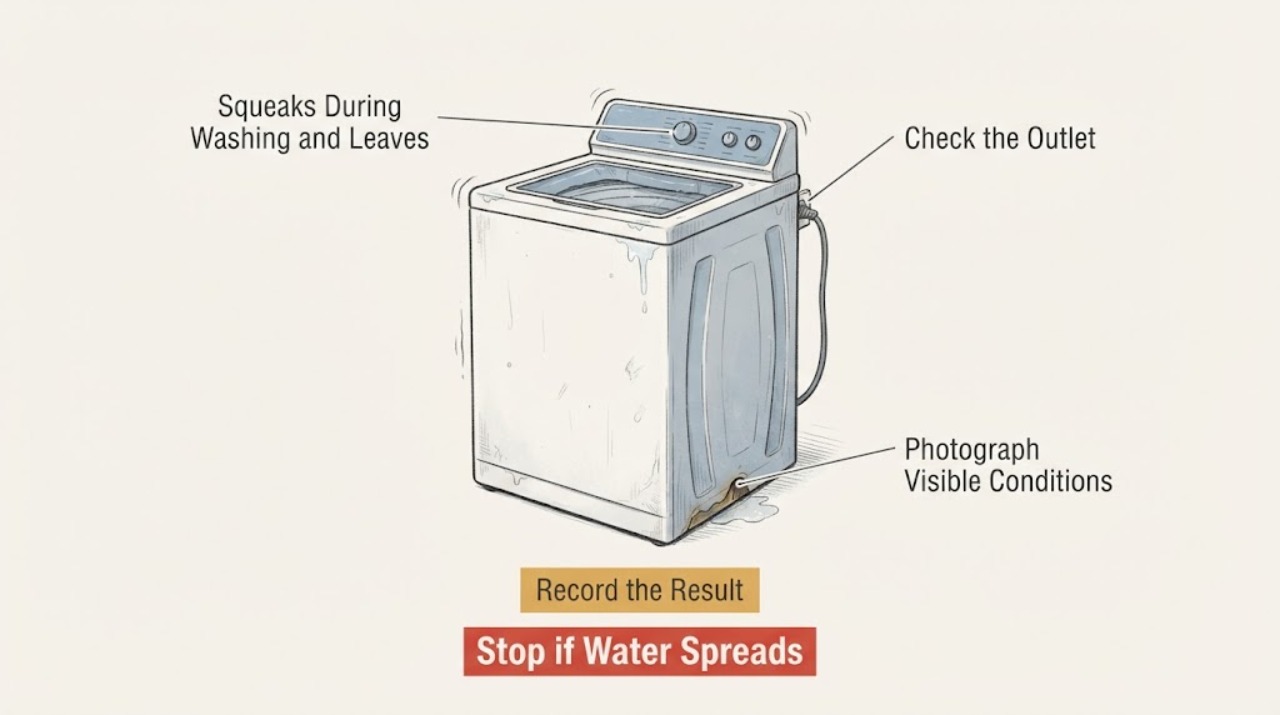
Kenmore 27132 Squeaks During Washing and Leaves Oil-Like Spray: Stop and Localize the Source
Treat a Kenmore 27132 that squeaks only while washing and leaves an oil-like or greasy spray beneath the cabinet as a stop-use mechanical or fluid-contamination case, not as an ordinary load-balance noise. Kenmore's product page identifies model 26-27132 as a top-load washer with a Triple Action Impeller, but the short model number in the request is not enough to select an internal part or procedure.
-
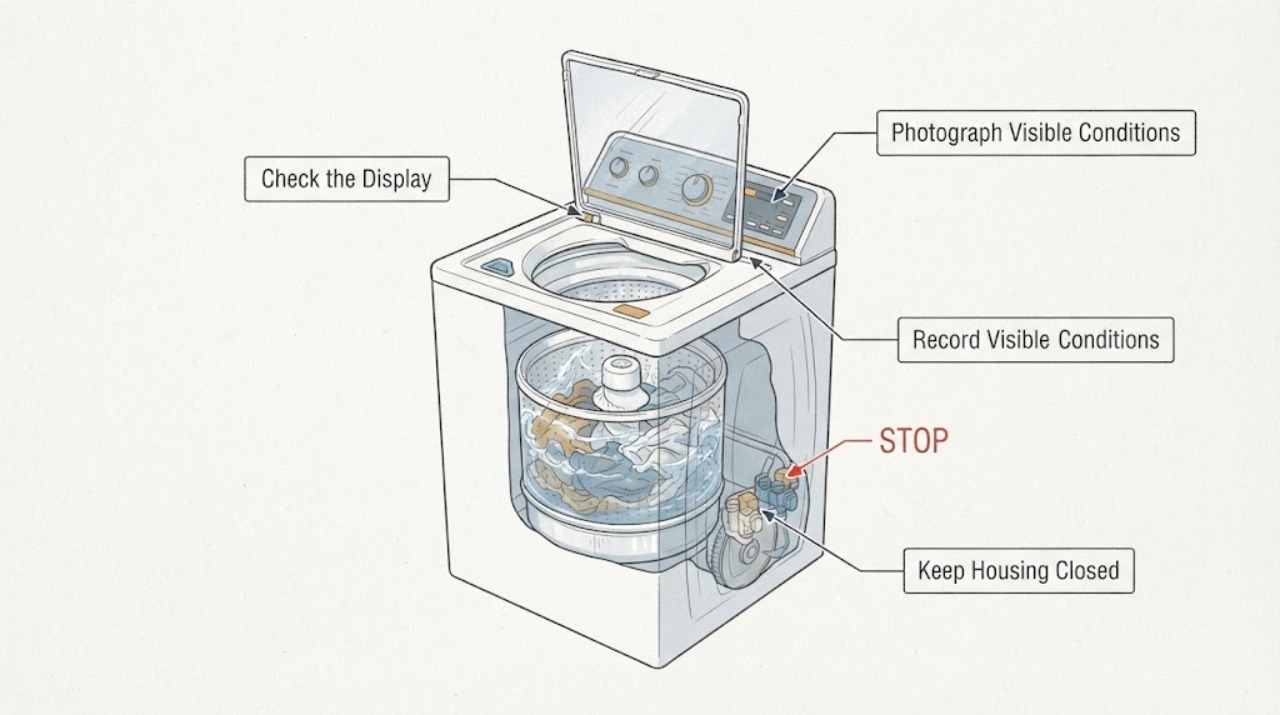
Old Kenmore 70 Series Washer: Stop Immediately if It Fills or Spins With the Lid Open
Do not use this old Kenmore washer again while it fills, agitates, or spins with the lid open, or while water will not stop entering. Close the household water valves and switch the machine off from a dry, safe location; do not bypass a lid switch, reach into the basket, or run another cycle to diagnose why it will not agitate.
-
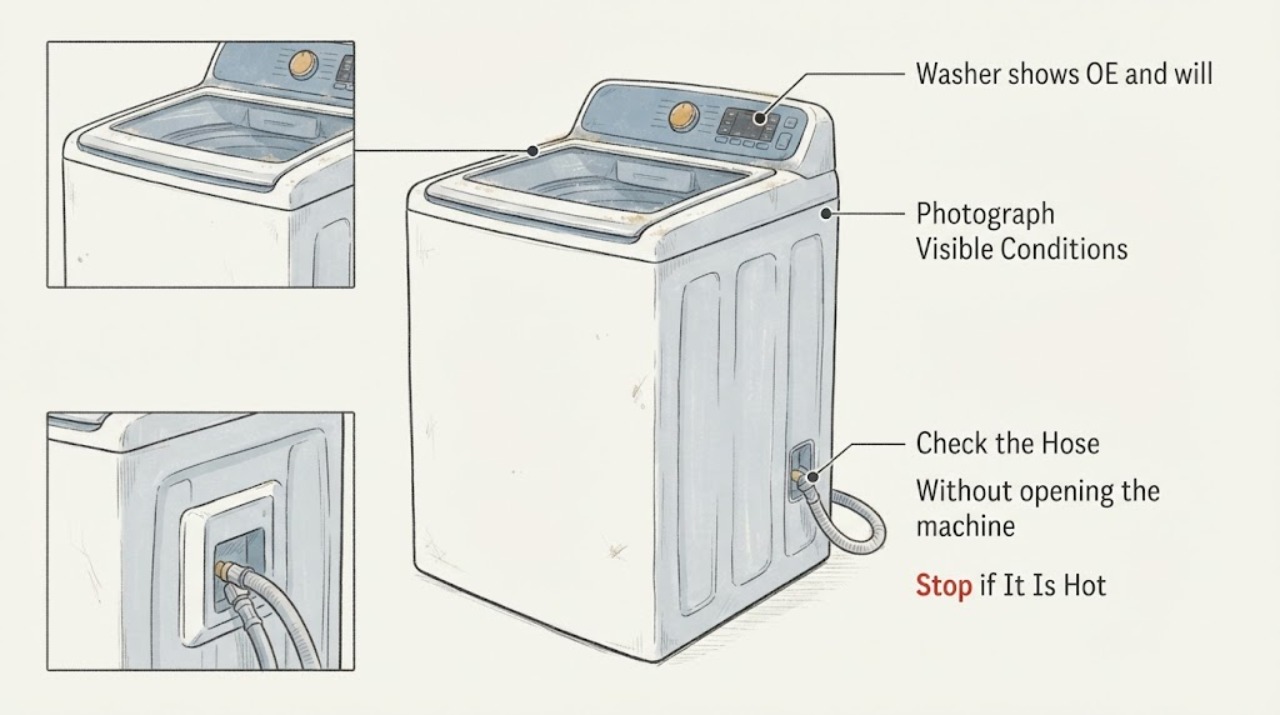
Kenmore 796.2927200 washer shows OE and will not agitate after storage
Do not assume that a Kenmore 796.2927200 that has been stored for ten years needs a drive part just because it will not agitate. First record the complete rating-plate identity, the exact display (OE or another two-character code), whether water remains in the tub, and whether the machine ever reaches a wash motion.
-
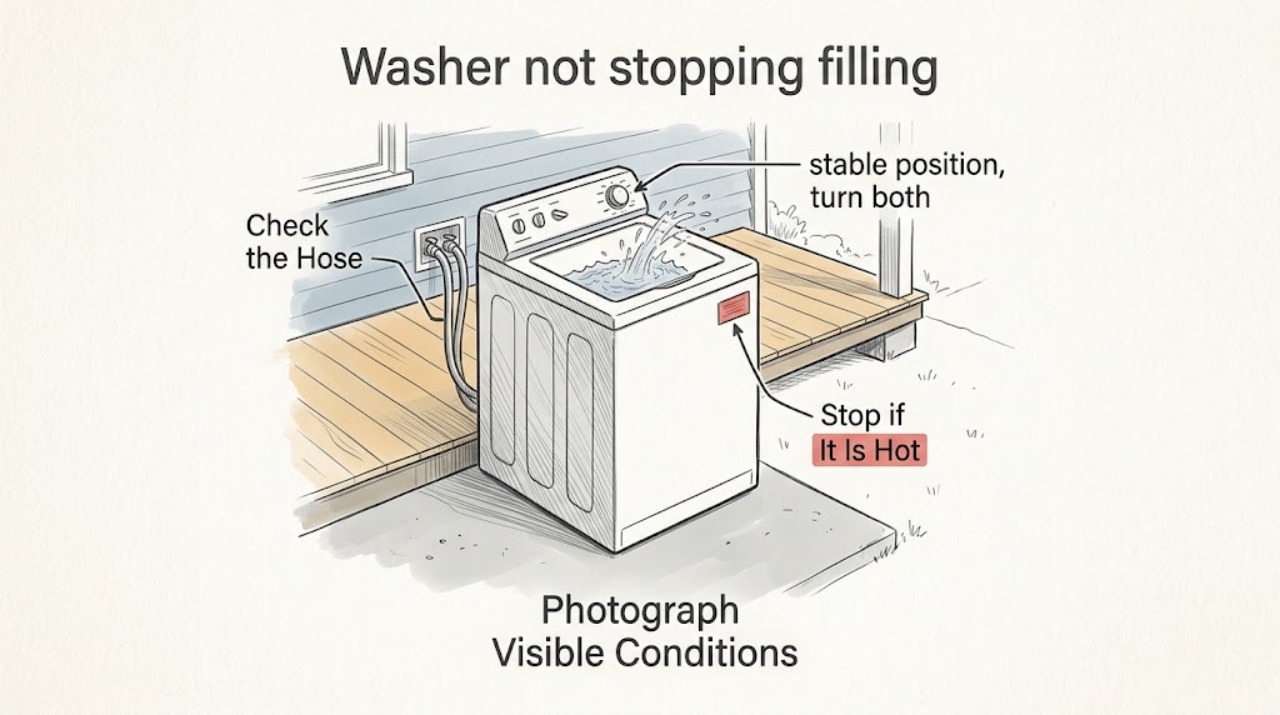
Kenmore 80 Series Washer Fills While Off: Shut Off Water Before Any Diagnosis
If a Kenmore 80 Series washer is taking in water while it is switched off, stop the water first: close both hot and cold supply valves, then disconnect power only from a dry, safe location. Do not keep the valves open to see whether the tub overfills, and do not disconnect a pressurized hose or open the cabinet.
-
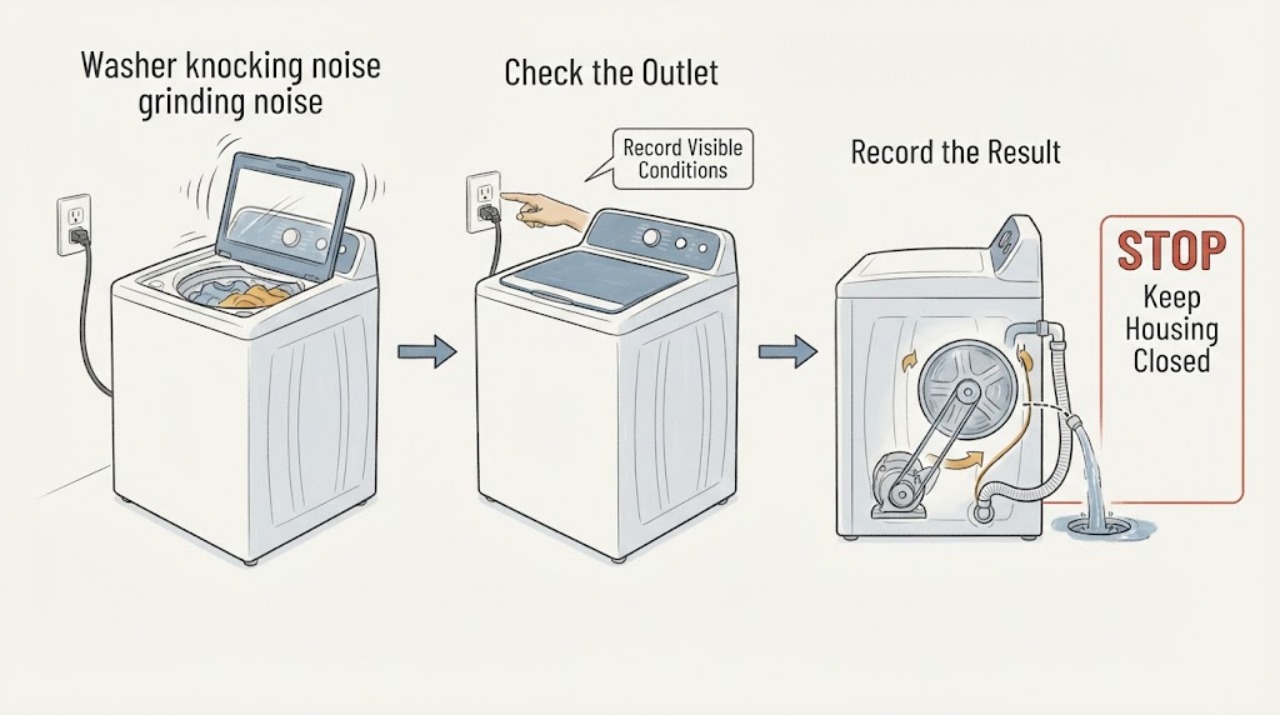
Kenmore 90 Series Washer Knocks, Then Grinds and Will Not Spin Properly
Stop the Kenmore washer and do not run another load just to hear the noise again. A single knock during spin can come from a load or installation condition, but a progression from knocking to grinding together with an abnormal or failed spin raises the service priority.
-
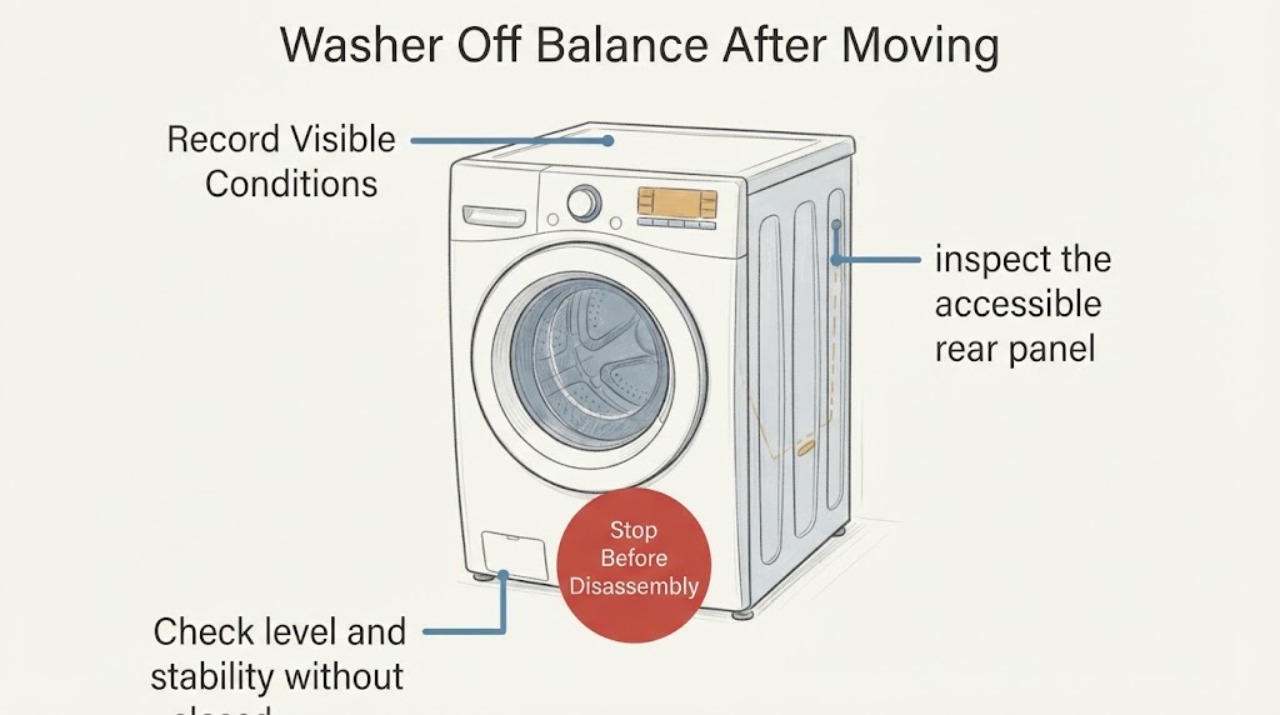
Kenmore HE3T Washer Off Balance After Moving: Check Transport Setup First
Treat a Kenmore HE3T that becomes off balance after moving as an installation and transport problem until the setup is verified—not as proof that a shock, spring, basket, or other part needs replacement. HE3T is a series, so find the complete model number before using a manual or service procedure.
-
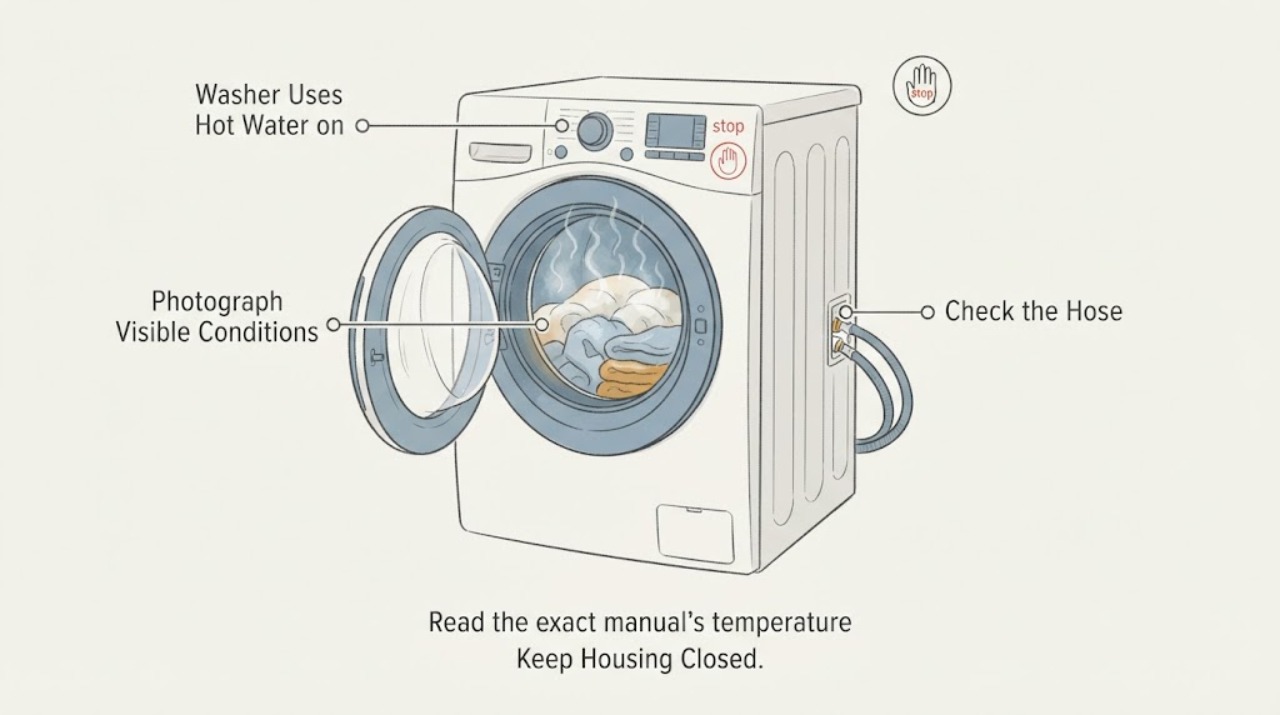
Kenmore Heavy Duty 70 Series Washer Uses Hot Water on Cold
“Heavy Duty 70 Series” is a series name, not a complete Kenmore model number, so do not assume that a Cold selection has the same logic as a newer temperature-sensing washer. First read the full model from the rating label and its matching manual, then check from a dry, stopped washer that the hose marked HOT goes to the hot faucet and the hose marked COLD goes to the cold faucet.
-
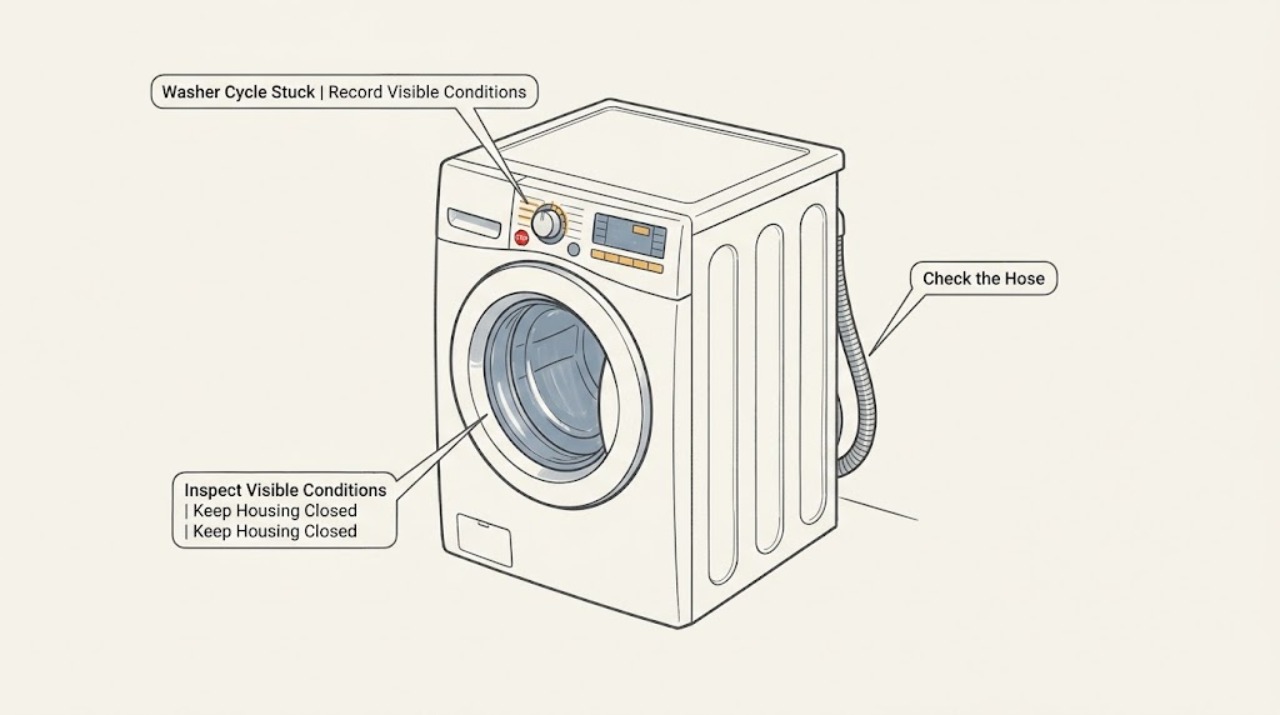
Kenmore Washer Cycle Stuck: What to Check and What to Do Next
A Kenmore washer that appears stuck may be waiting for water, unable to drain, pausing for balance, waiting for a door or lid lock, or experiencing a cycle-control or component fault. First record the exact model, the displayed stage, and any code or flashing light; do not apply a code meaning from another Kenmore model.
-
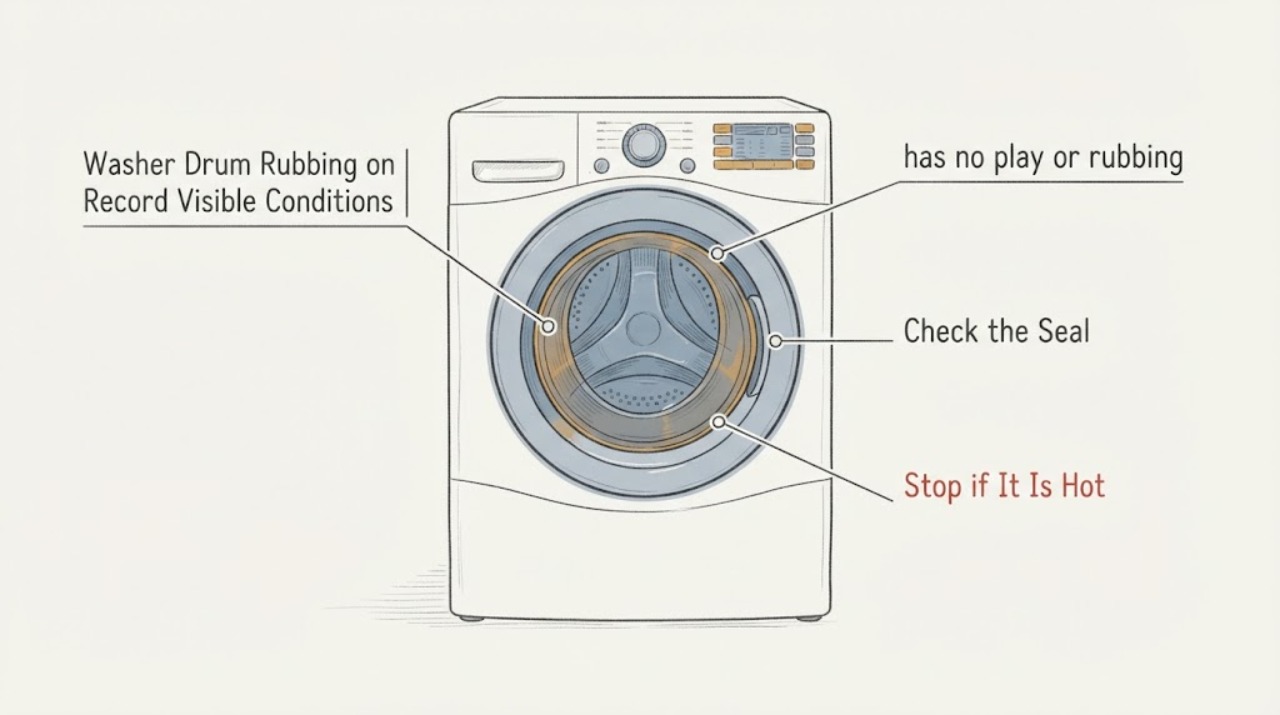
Kenmore Washer Drum Rubbing on the Tub: Safe Checks and When to Stop
If a Kenmore washer drum is rubbing on the tub, stop the cycle and keep hands away until all movement has stopped. Unplug the washer from a dry, safe position, remove the load, and check whether the basket is visibly off-center, a loose object is caught at the opening, or the noise is only a normal swish that fades during spin.
-
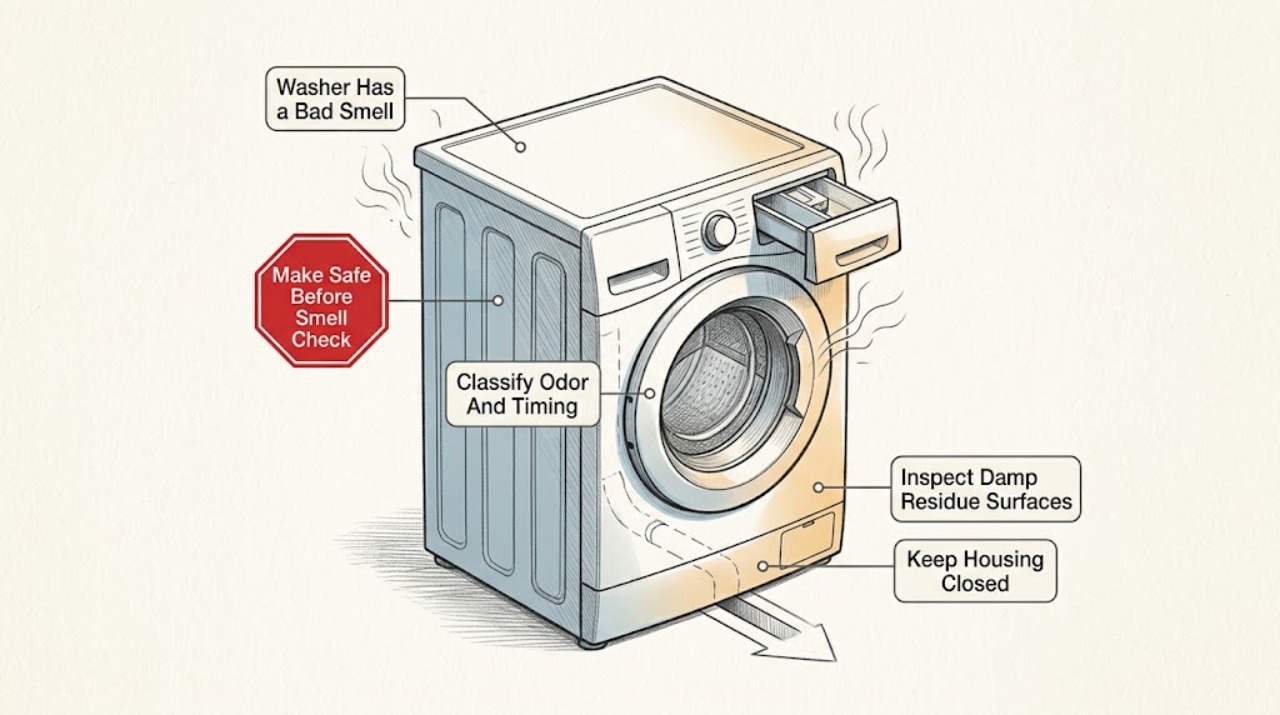
Kenmore Washer Has a Bad Smell: What to Check and What to Do Next
Classify the smell before cleaning a Kenmore washer. A musty or sour odor that is strongest at the door gasket, dispenser, lid rim, or drum often points to retained moisture, detergent residue, or biological growth; a sewage-like odor near the drain points more toward the drain hose, standpipe, trap, or backflow; a burning, melting-plastic, ozone, or electrical odor is a stop-use condition.
-
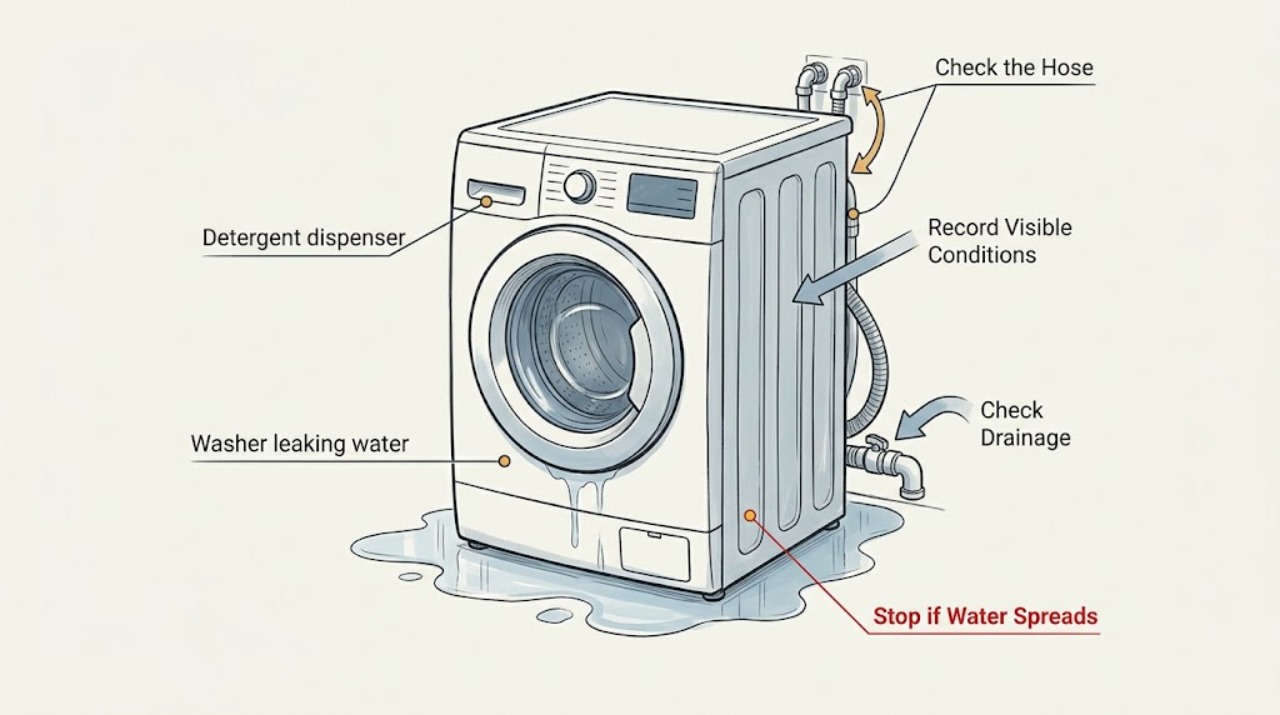
Kenmore washer leaking water: What to Check and What to Do Next
Stop the Kenmore washer and identify where and when water appears before running another cycle. Water at the rear during fill points first to an inlet-hose connection or supply issue; water at the front of a front-load model points to the door seal, trapped clothing, dispenser, excess suds, or overloading; water during pump-out points to the drain hose, household drain, or an internal pump path; water underneath can require service for a tub, hose, pump, or seal.
-
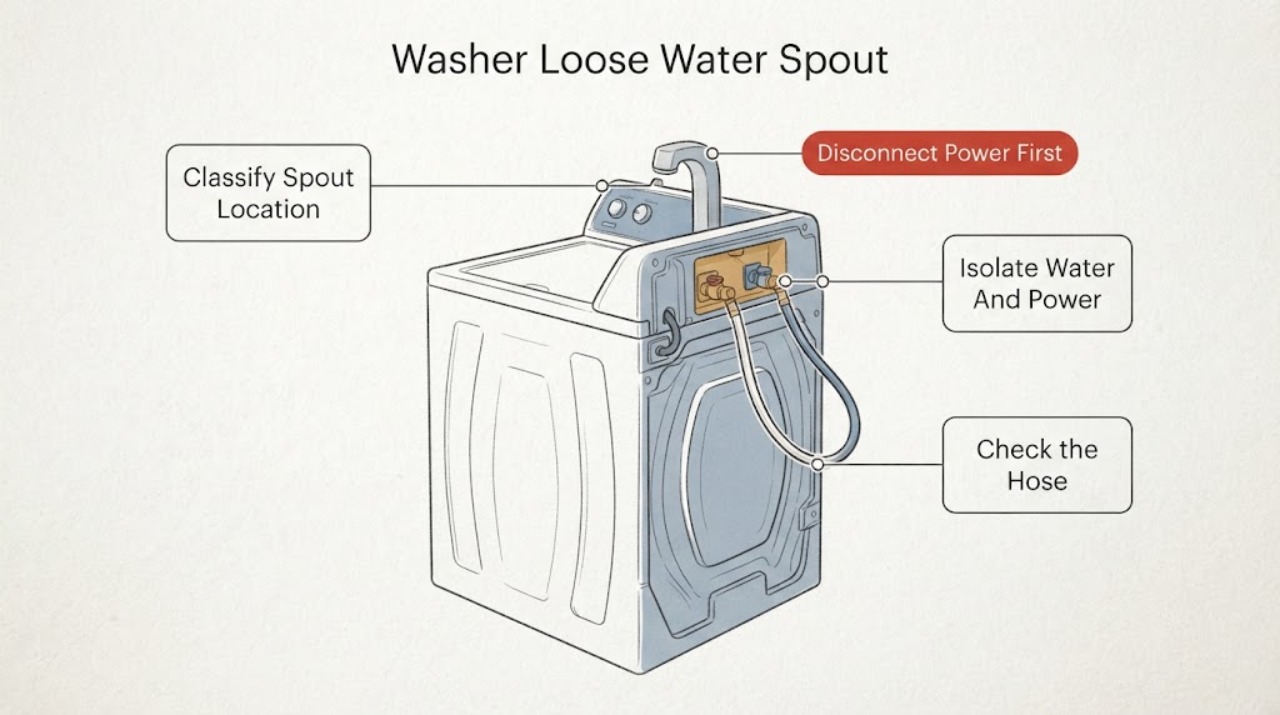
Kenmore Washer Loose Water Spout | Safe Identification and Repair Boundary
First determine which part is loose. A loose internal plastic piece that guides incoming water into the tub is different from a loose hot/cold fill hose at the wall faucet or washer inlet.
-
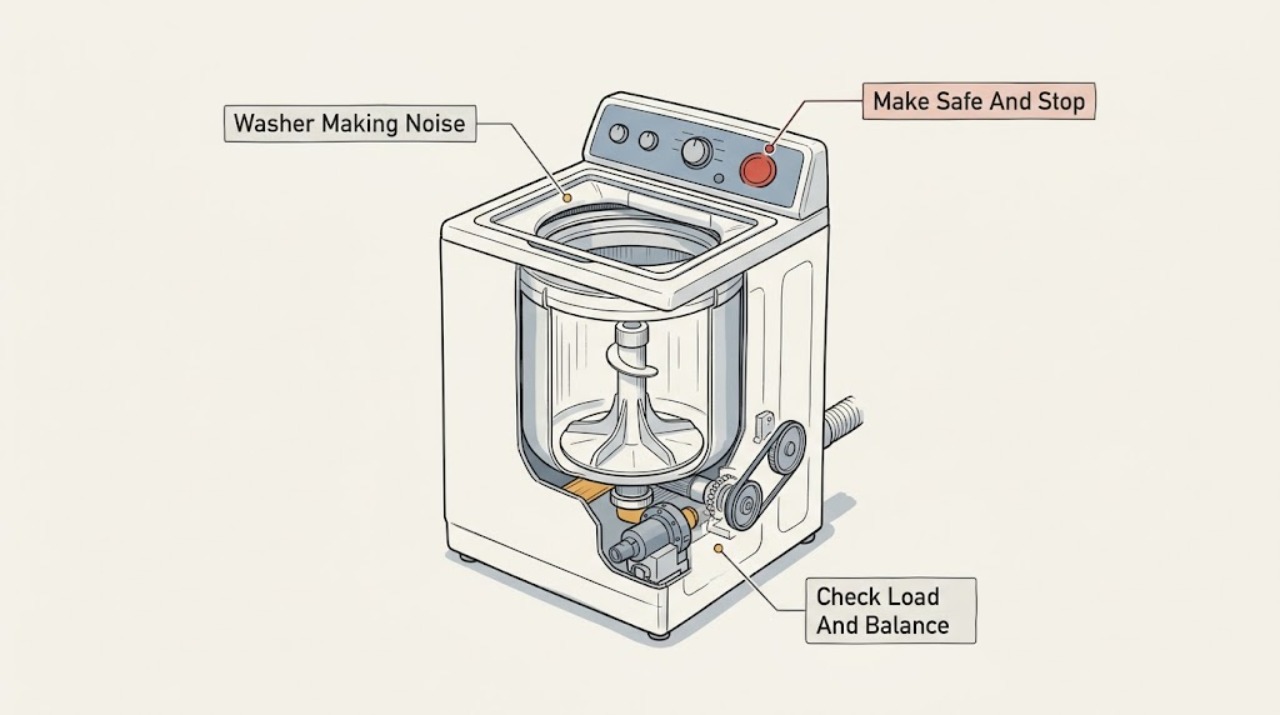
Kenmore Washer Making Noise: Identify the Sound and Choose the Safe Next Step
First note the Kenmore washer's sound, when it starts, and whether it changes with the load. A brief click, water sound, pump hum, or change as the cycle shifts can be normal on some models; a new bang or walking during spin often points to an unbalanced load, leveling or installation issue, or an object moving in the basket.
-
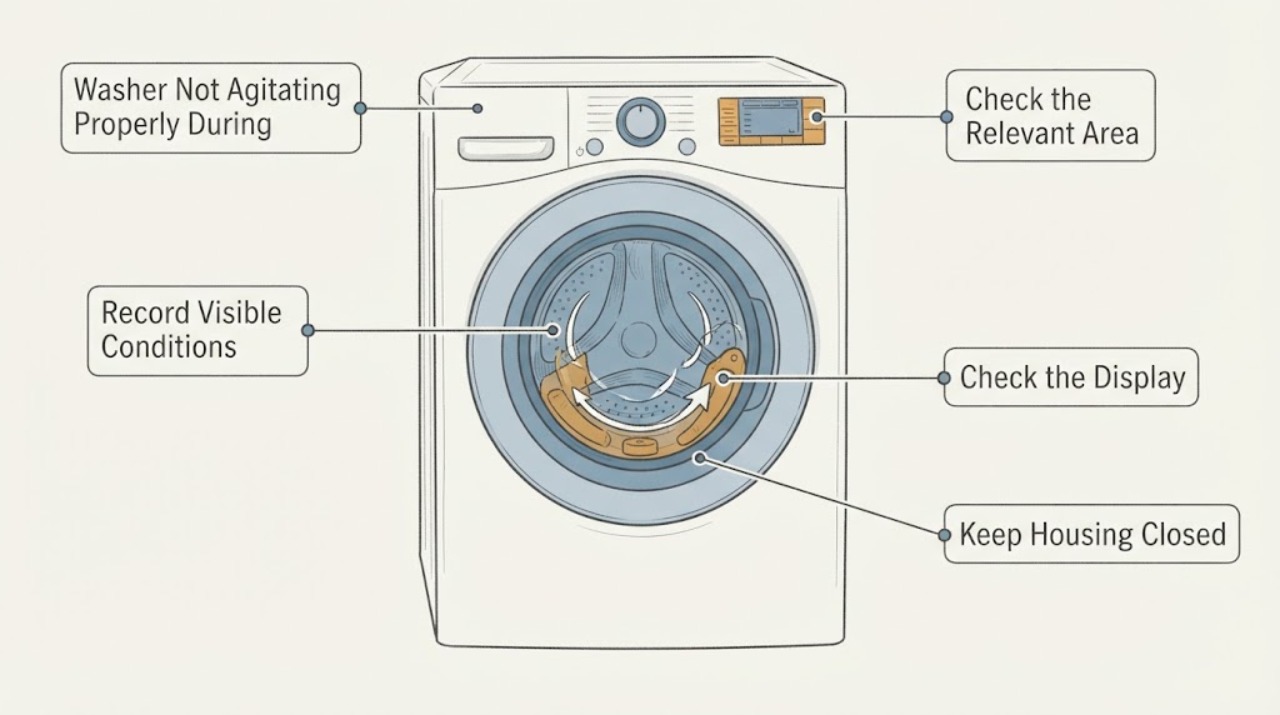
Kenmore Washer Not Agitating Properly During Spin
A Kenmore washer normally agitates during the wash portion and spins the basket during the spin portion, so “not agitating during spin” needs to be separated into two observations before a part is blamed. Identify the full model, washer design and cycle phase, then note whether the machine fills, moves the load during wash, drains and spins.
-
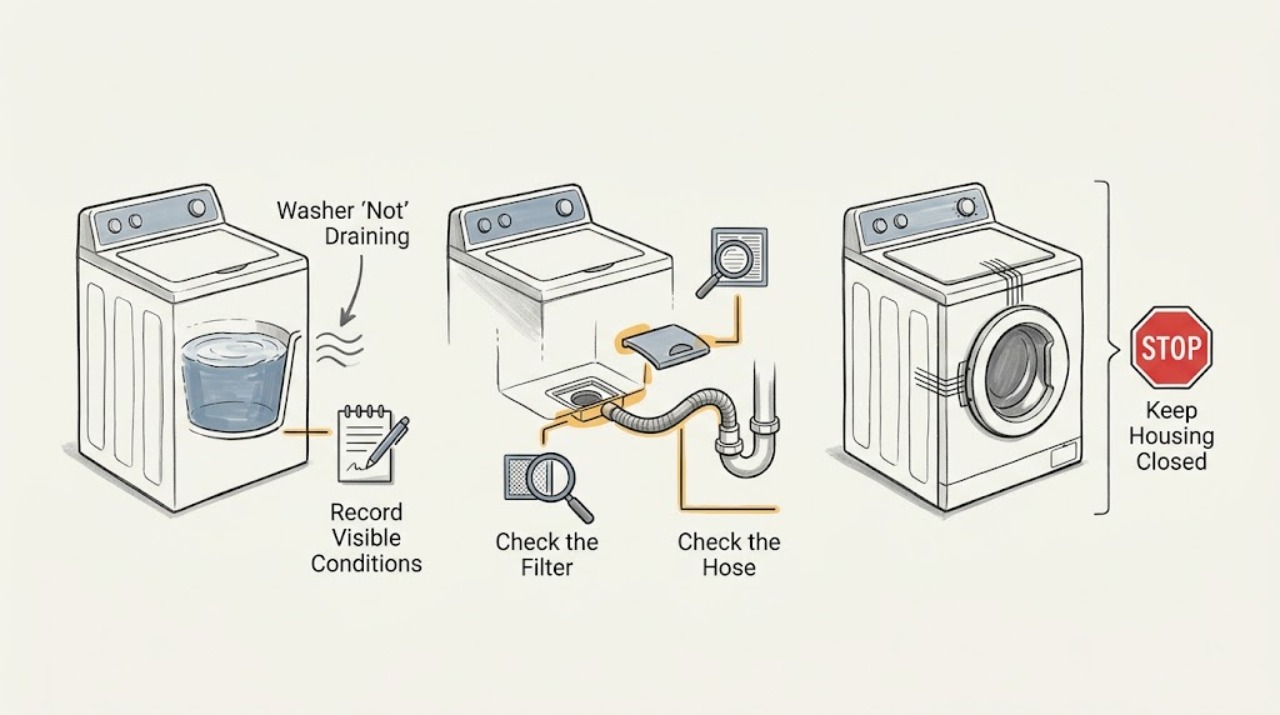
Kenmore Washer Not Draining: What to Check and What to Do Next
If a Kenmore washer leaves water in the tub, first record whether it stopped before draining, drains slowly, or drains but will not spin. Then stop the cycle and keep clear of water near electrical parts.
-
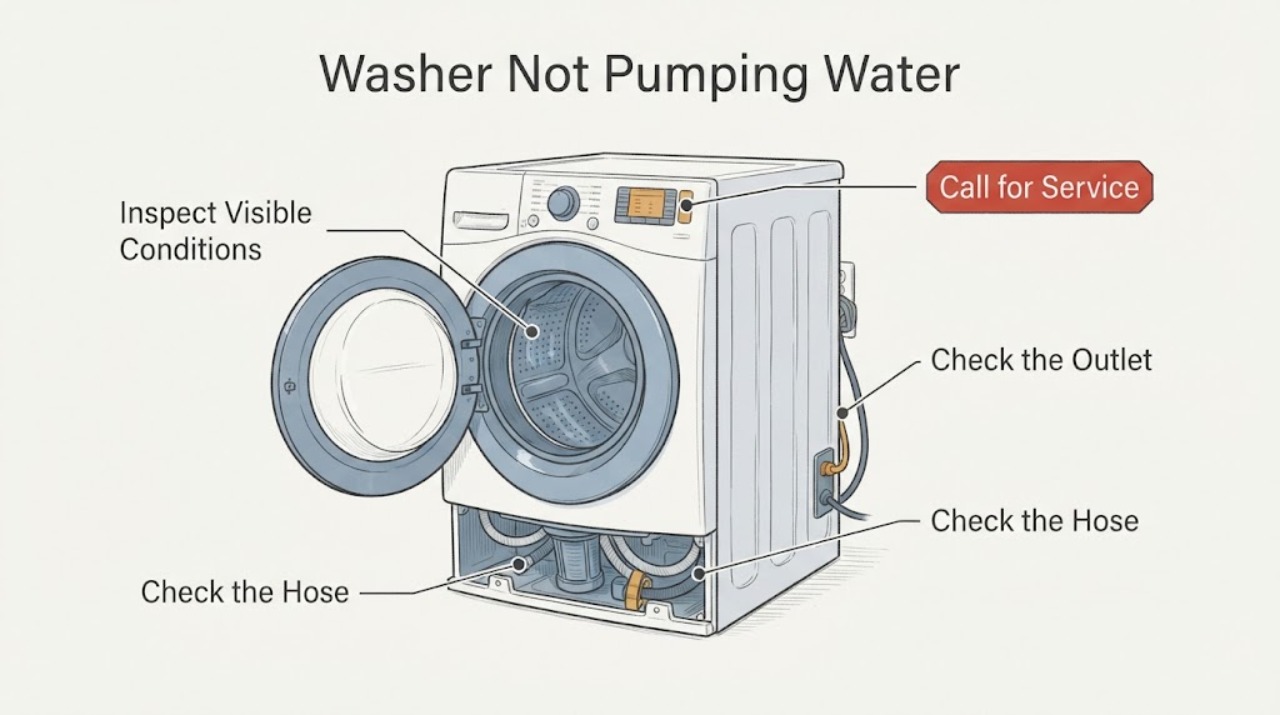
Kenmore Washer Not Pumping Water: Separate a Drain Problem from a Fill Problem
First identify whether the washer is failing to pump water out or is failing to fill with water. A tub that remains full after a drain or spin stage is a drain-path symptom; a tub that never receives water is a fill-path symptom and should not be diagnosed as a drain-pump failure.
-
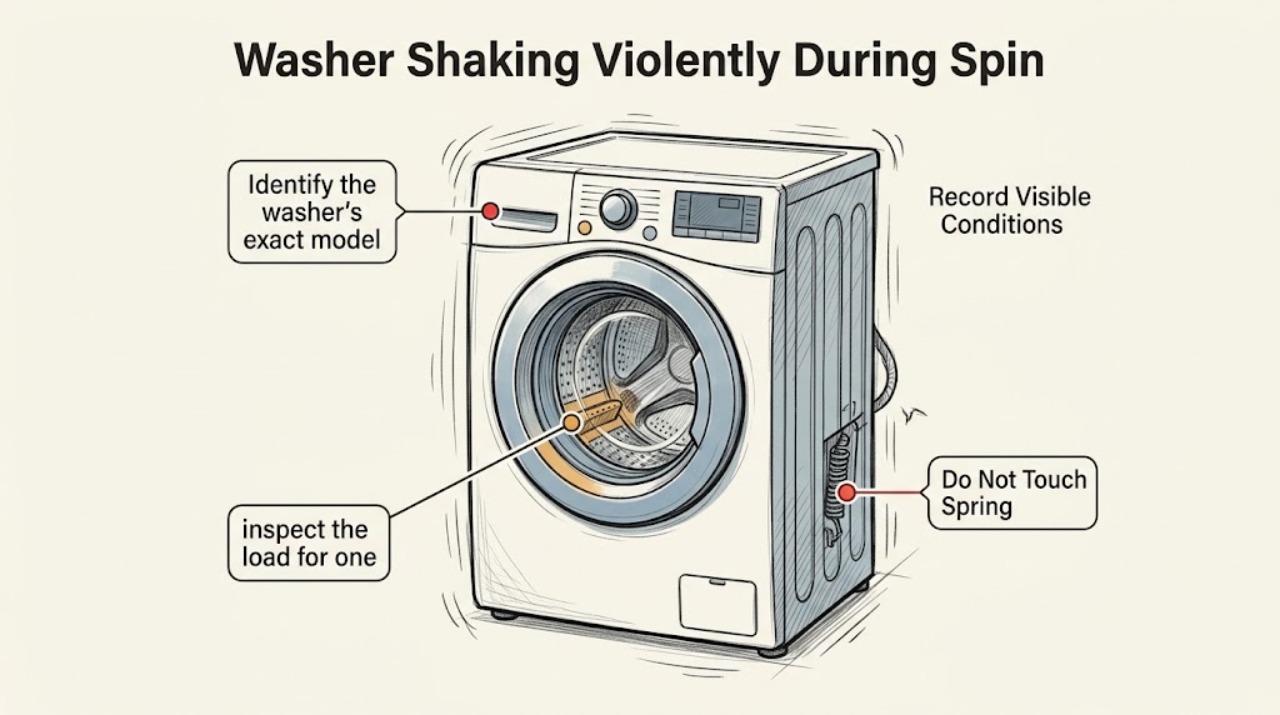
Kenmore Washer Shaking Violently During Spin: Balance, Level, Then Stop
A Kenmore washer that shakes violently during spin should be stopped safely and checked for a bunched or oversized load, an uneven floor, or feet that are not making firm contact. Kenmore's own laundry guidance says an unbalanced washer can make a lot of noise and recommends using a level and adjusting the feet; it also recommends a balanced load that lets clothes move freely rather than overloading or underloading.
-
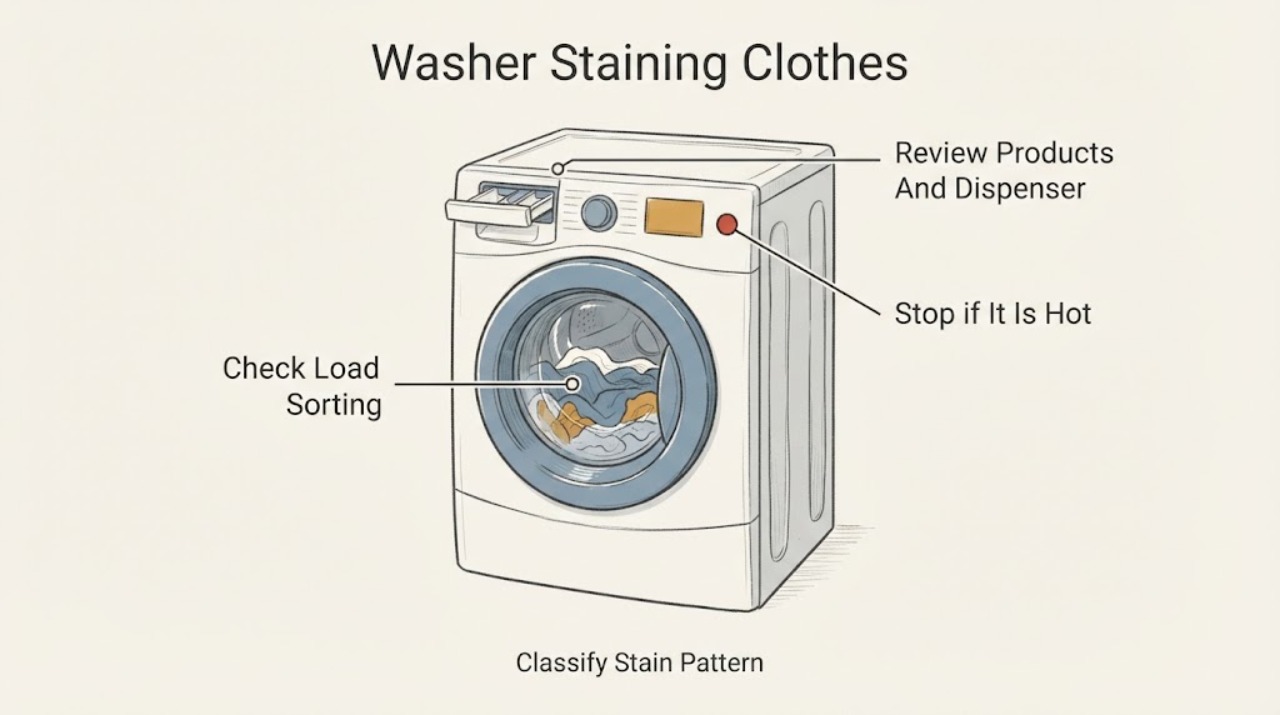
Kenmore Washer Staining Clothes: Separate Dye Transfer, Residue and Source Marks
Do not order a washer part from the stain alone. First photograph the mark and check whether it matches dye from another item, appears as a film or residue across several garments, or repeats at the same location.
-
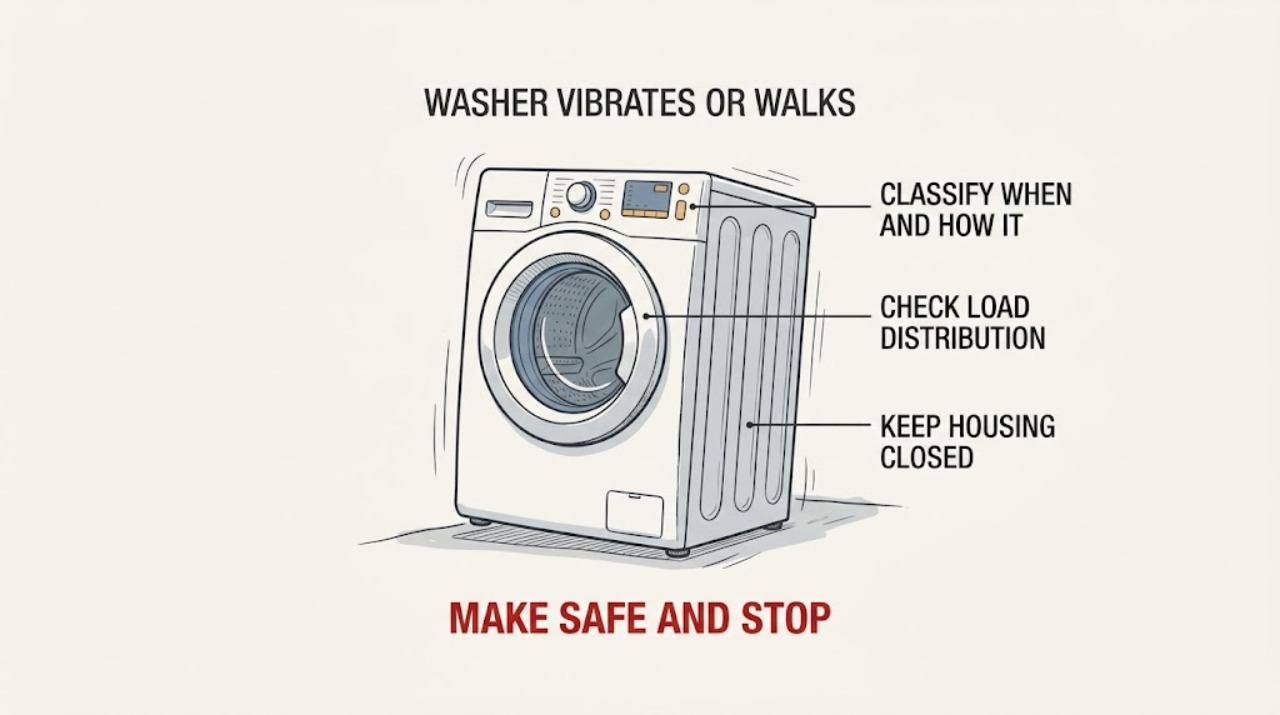
Kenmore Washer Vibrates or Walks: Check the Load and Installation Safely
A Kenmore washer that vibrates or walks usually needs its symptom separated into a load problem, an installation or floor problem, or a washer-side fault. A single heavy or bulky item, clothes gathered to one side, an unstable floor, an extended or unlocked leveling foot, a hose or cabinet contacting the wall, or transport hardware left in place can create movement.
-
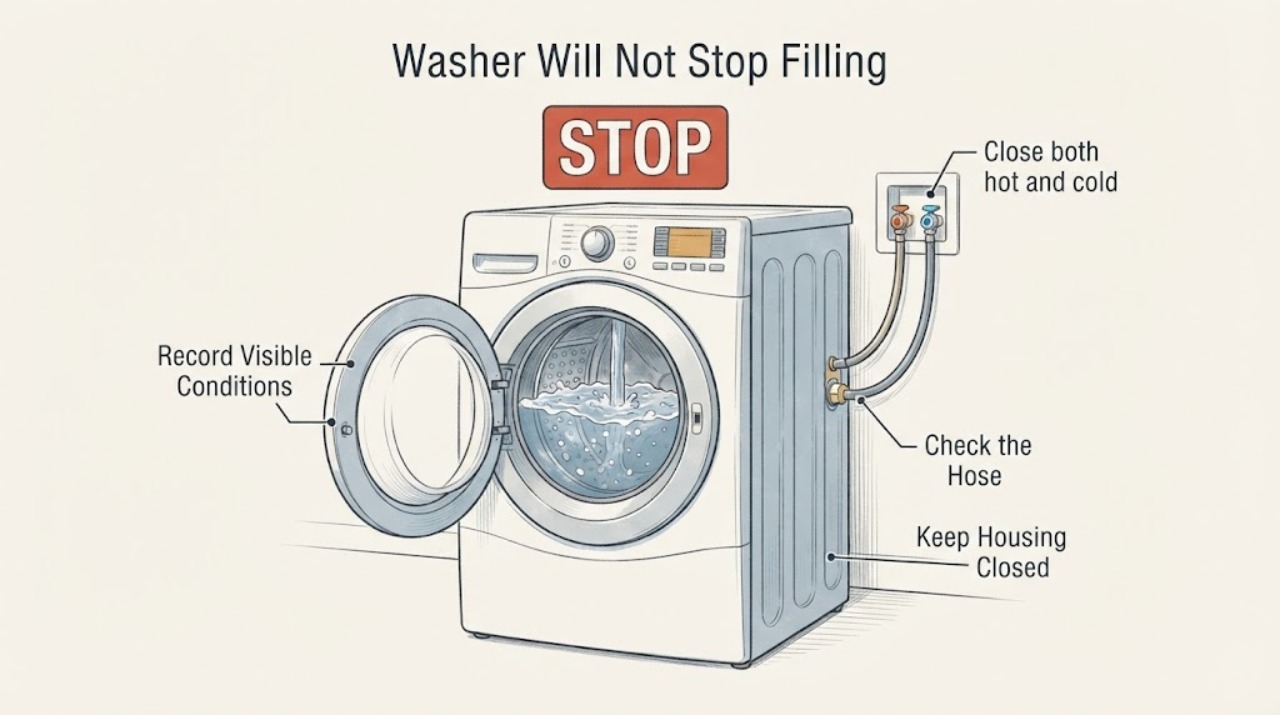
Kenmore Washer Will Not Stop Filling: Shut Off Water Before Service
If a Kenmore washer keeps taking in water or is leaking, close the hot and cold wall supply valves first and stop the washer; if power can be disconnected safely from a dry, undamaged point, isolate it as well. Do not keep running a fill cycle, repeatedly reset the controls, remove the cabinet, or blind-test and replace the inlet valve.
-
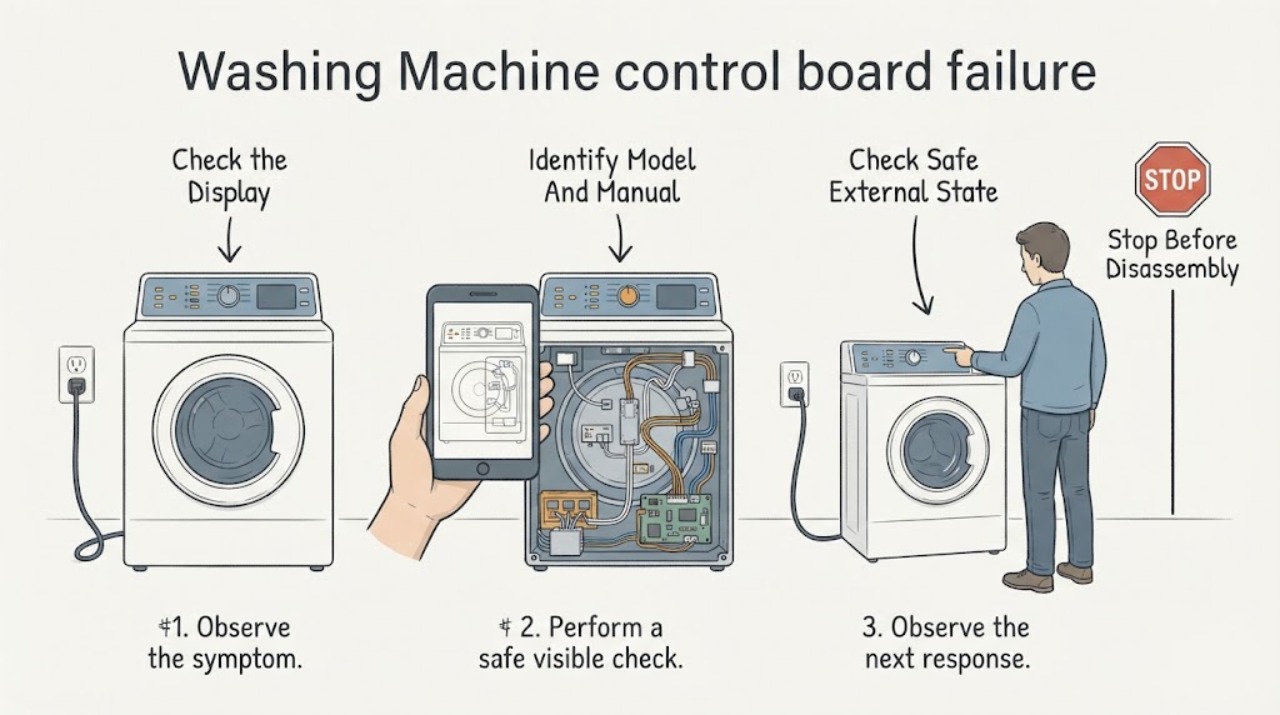
Kenmore Washing Machine control board failure | Fix Guide
A washer that appears to have a control-board failure should not be diagnosed from a dead display, ignored buttons or a stopped cycle alone. First identify the exact Kenmore model and separate no power from a lit display that will not accept commands, a lid/door condition, a control-lock state, or a cycle-specific stop.
-
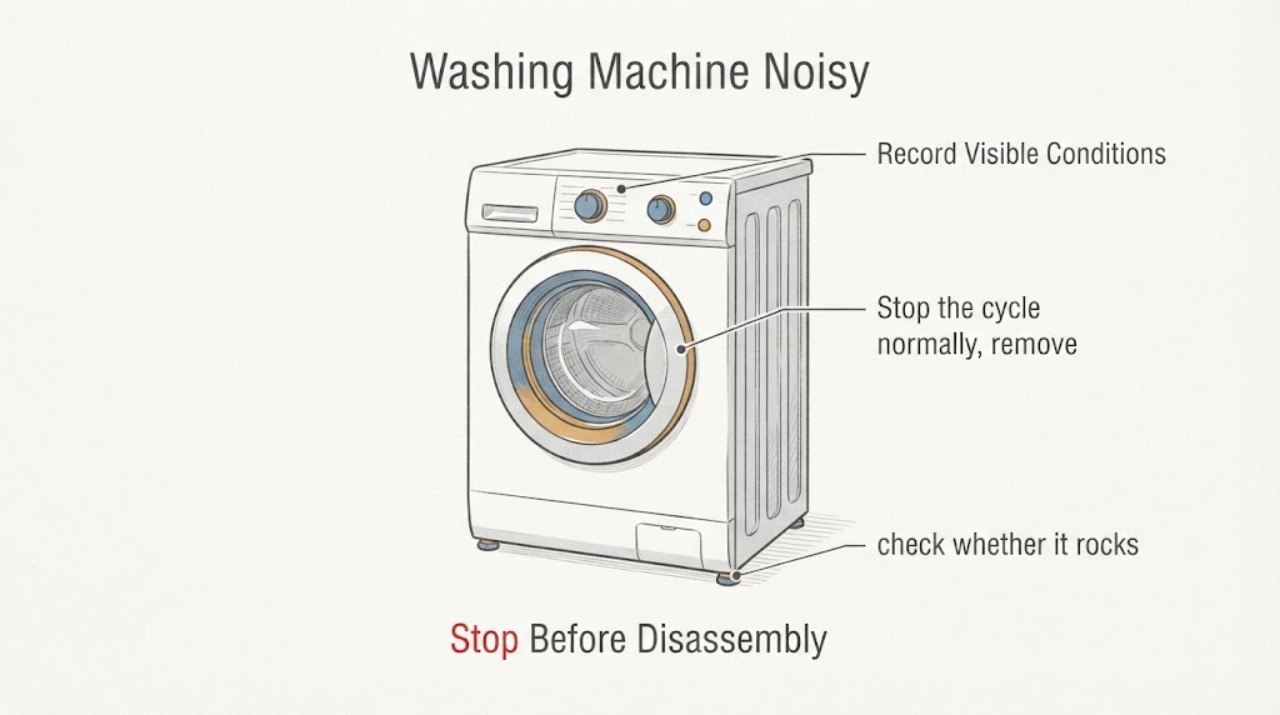
Kenmore Washing Machine Noisy: Safe Checks Before Service
A noisy Kenmore washer should first be described by when the sound occurs and what the washer does at the same time. With no model number, do not label a sound as a normal cycle sound or diagnose a bearing, motor, pump, belt, suspension part, or other internal component.
-
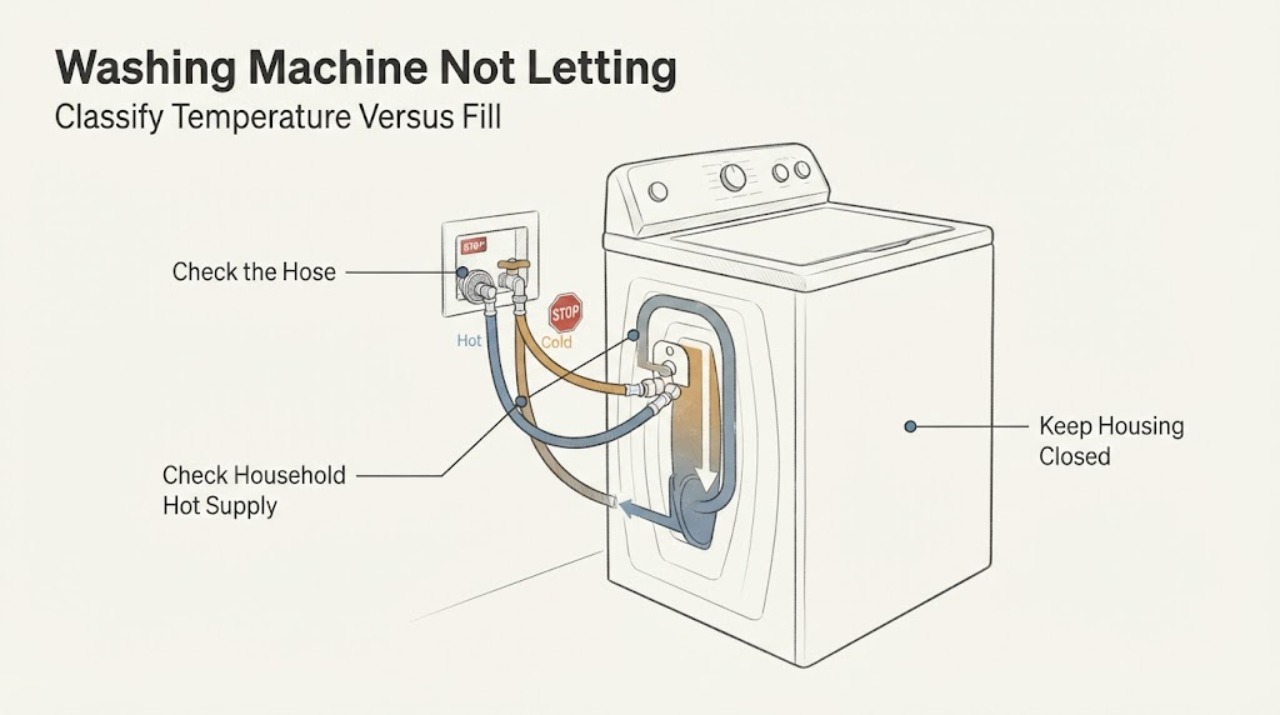
Kenmore Washing Machine Not Letting In Enough Hot Water | Fix Guide
First separate temperature from fill volume. If the tub fills at its normal rate and level but the selected hot or warm wash is cool, check the cycle's temperature selection, confirm which hose is connected to the household hot supply, and compare the nearby hot faucet with the washer's result while no other hot water is being used.
-
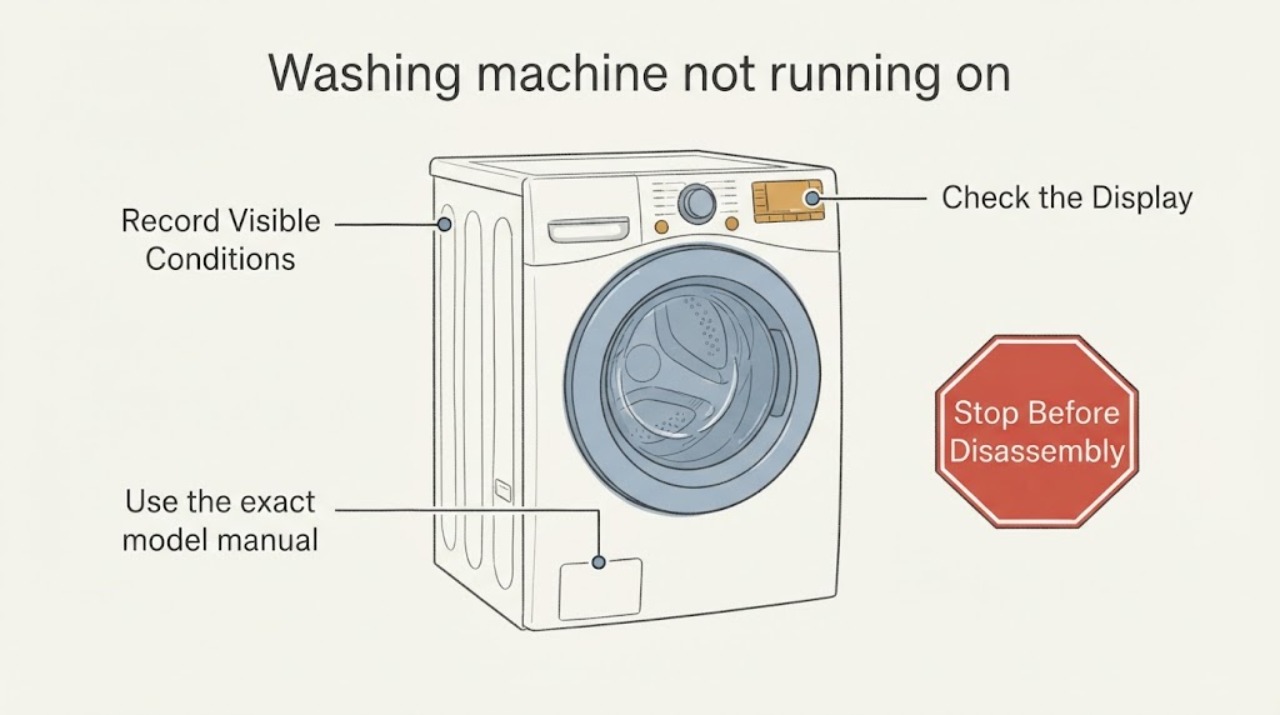
Kenmore washing machine not running on Normal cycles | Fix Guide
First determine whether only the Normal programme will not start or whether every programme is affected. Kenmore sells different front-load and top-load washer families, and the opened product page for one model shows Normal alongside model-specific options and controls; a generic button sequence cannot be transferred across the brand.
-
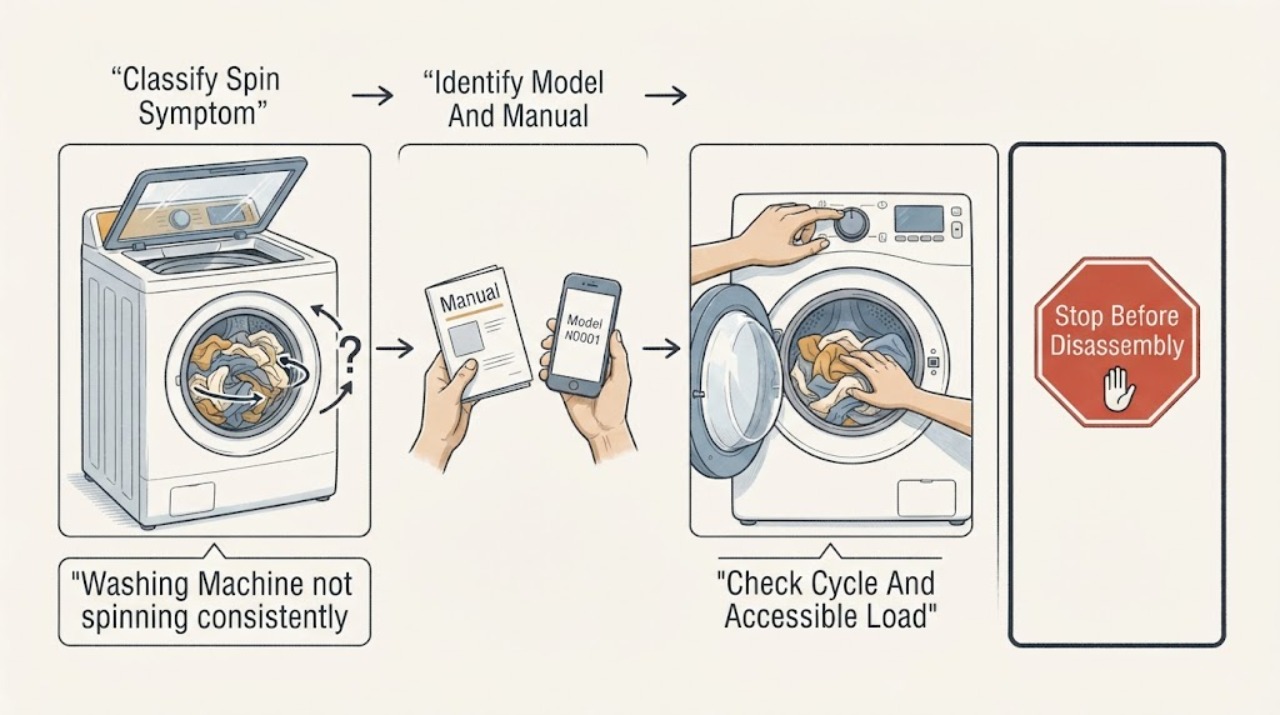
Kenmore Washing Machine not spinning consistently | Fix Guide
Do not start by replacing a motor, belt or control. First record what “inconsistent” means: the washer never reaches spin, skips spin only on a particular cycle or load, stops with water still present, or spins after a restart.
-
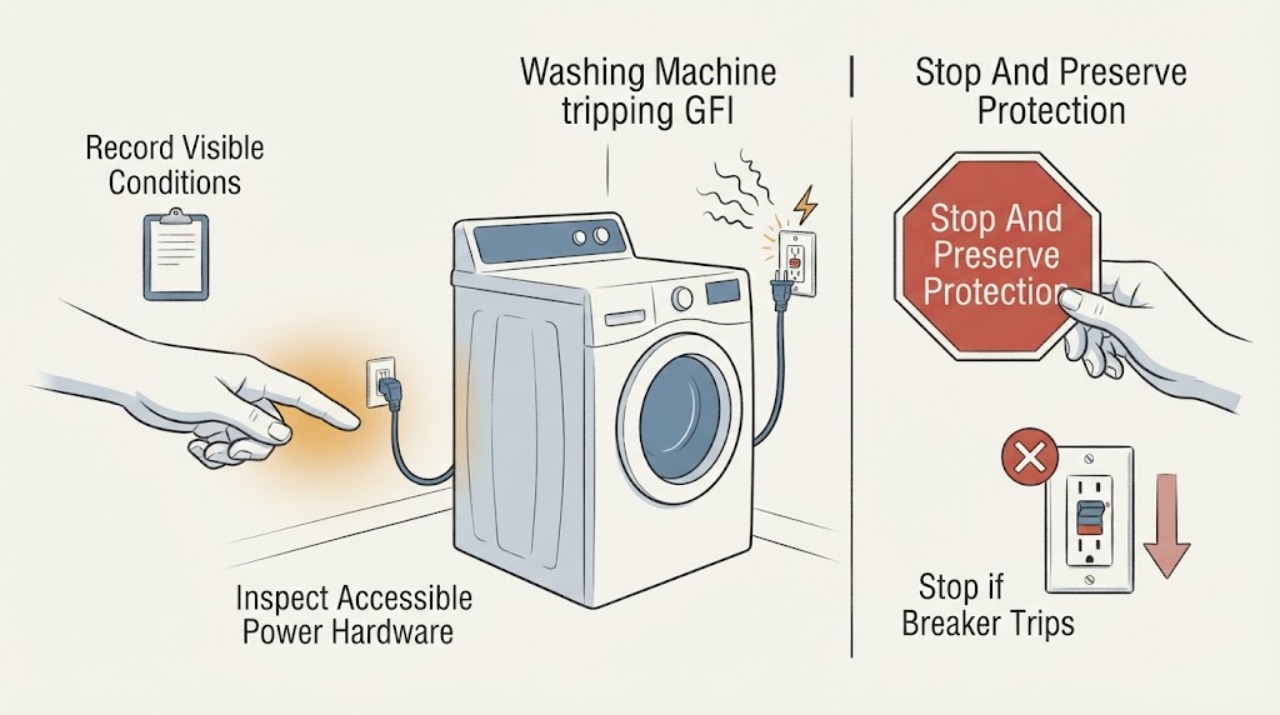
Kenmore Washing Machine tripping GFI | Fix Guide
Treat a repeating GFI/GFCI trip as an electrical stop condition. The U.S.
-
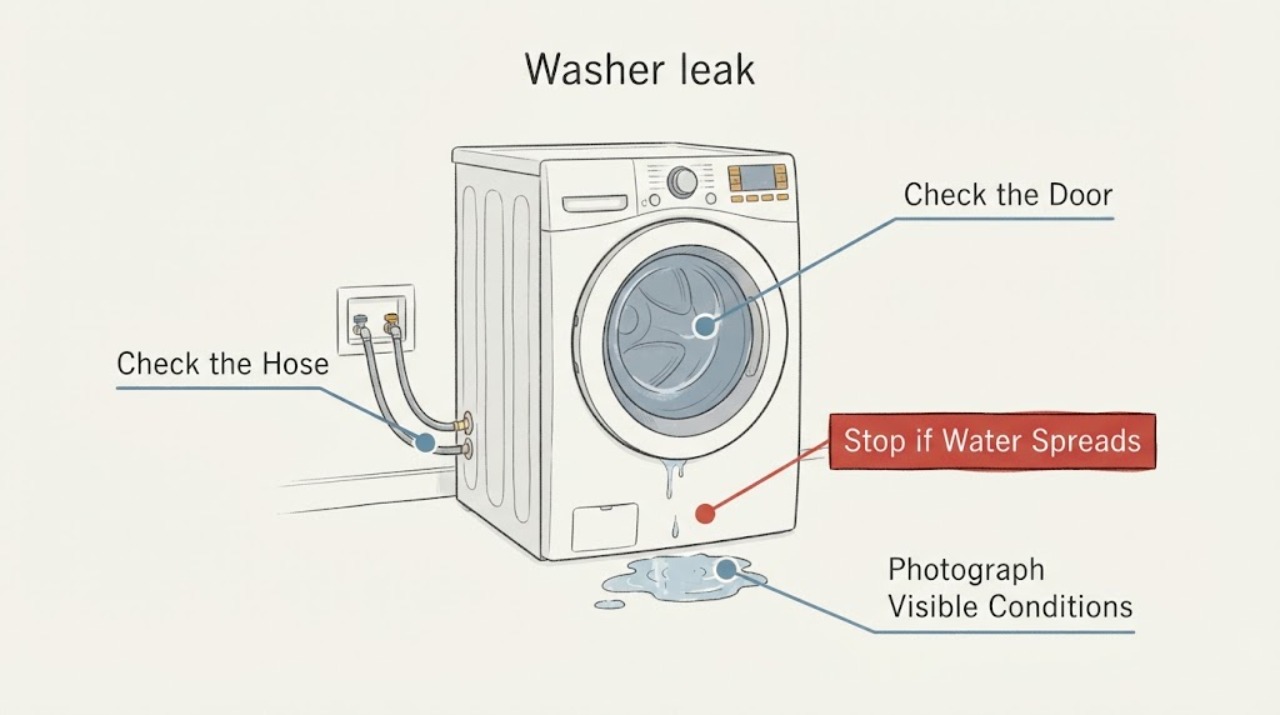
Should You Replace the Drum in a 30-Year-Old Kenmore Washer?
Do not approve a drum replacement from a floor leak alone. First record the complete Kenmore model number, stop the washer, close the water supplies, and identify whether water starts at an inlet hose, drain path, door or lid, dispenser, pump-out, or underneath the cabinet.