
Samsung appliance guidance
Samsung Dishwasher Repair Guides
Troubleshooting and repair guidance for published Samsung Dishwasher problems, symptoms, and maintenance questions.
Published Samsung Dishwasher guides
Choose the guide whose symptom or condition most closely matches what you are seeing.
-
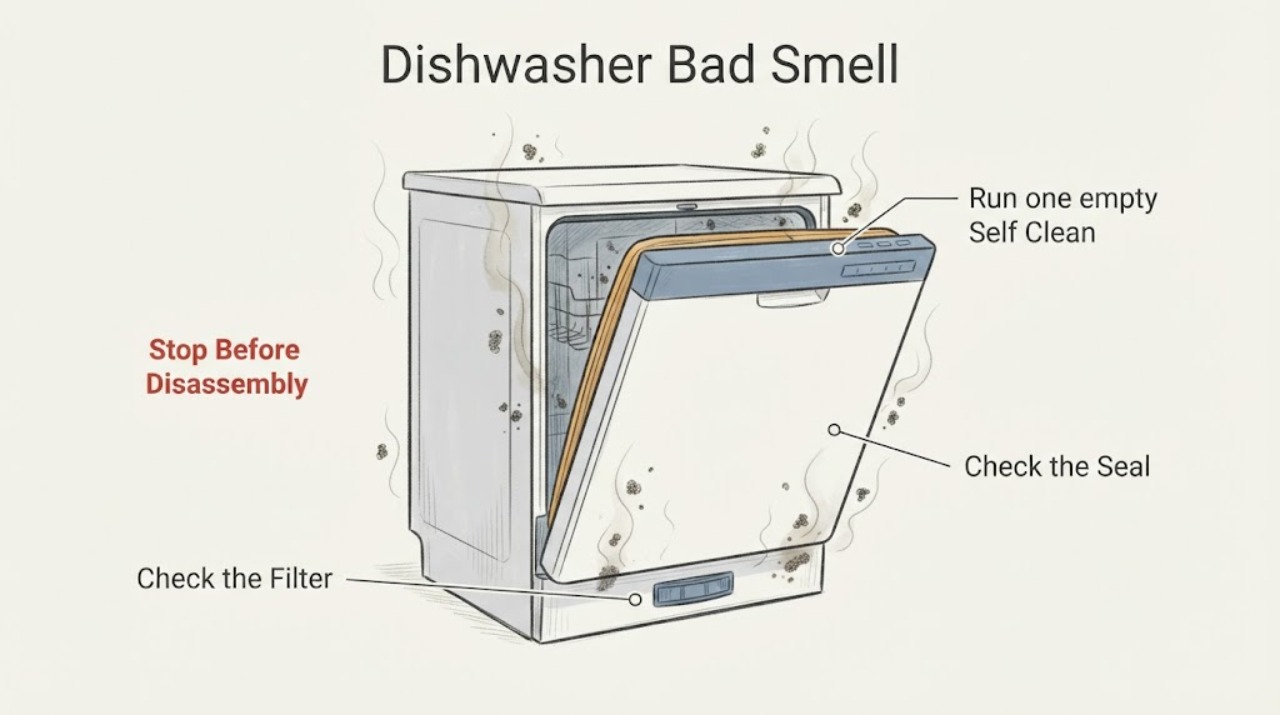
Samsung Dishwasher Bad Smell
Start with the dishwasher's drain area, filter housing, spray nozzles, door seal, and connected sink drain. Samsung links odor to moisture and food residue and warns against bleach in stainless-steel interiors. Clean accessible parts with the model manual, run an appropriate empty cleaning cycle, and escalate if the odor is burning, sewage-like after plumbing checks, or persists.
-
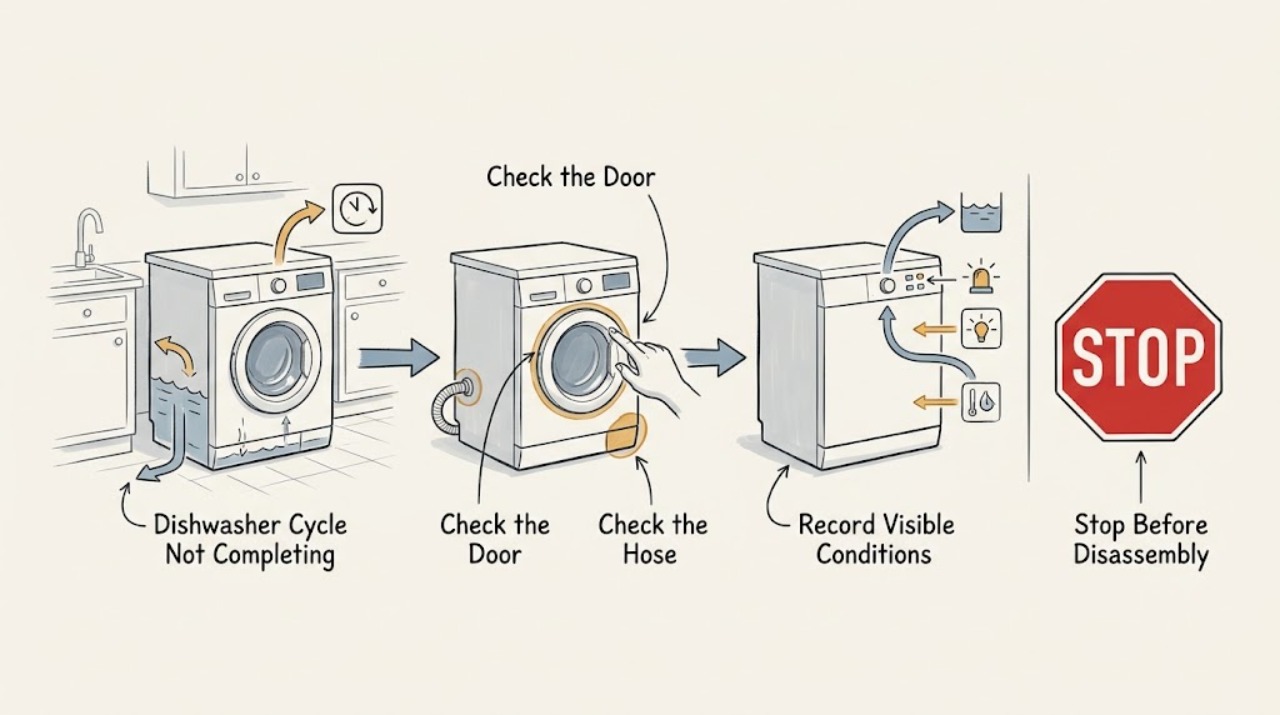
Samsung Dishwasher Cycle Not Completing
A Samsung dishwasher that stops before the end needs its displayed code or blinking lights checked first. Then distinguish a drain problem, water-supply problem, door interruption, or drying-phase issue. Check the sink/drain hose, door and loading, and detergent/filter condition; request service if the same stop repeats or a code returns.
-
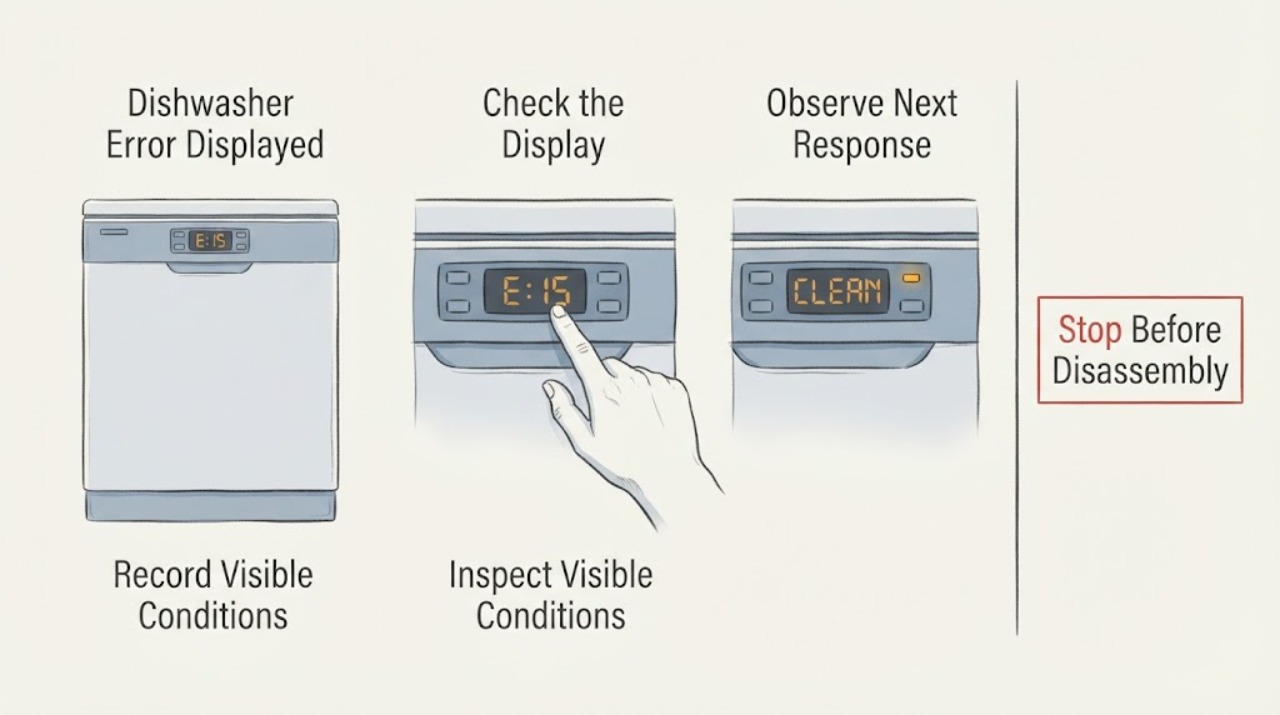
Samsung Dishwasher Error Displayed
Write down the exact Samsung dishwasher code or flashing-light pattern before resetting anything. Codes such as 3C, 4C/4E, 5C/5E, LC/LE, and button or communication codes point to different checks; a model without a digital display may use blinking lights. Follow the matching model guidance and request service when the code returns.
-
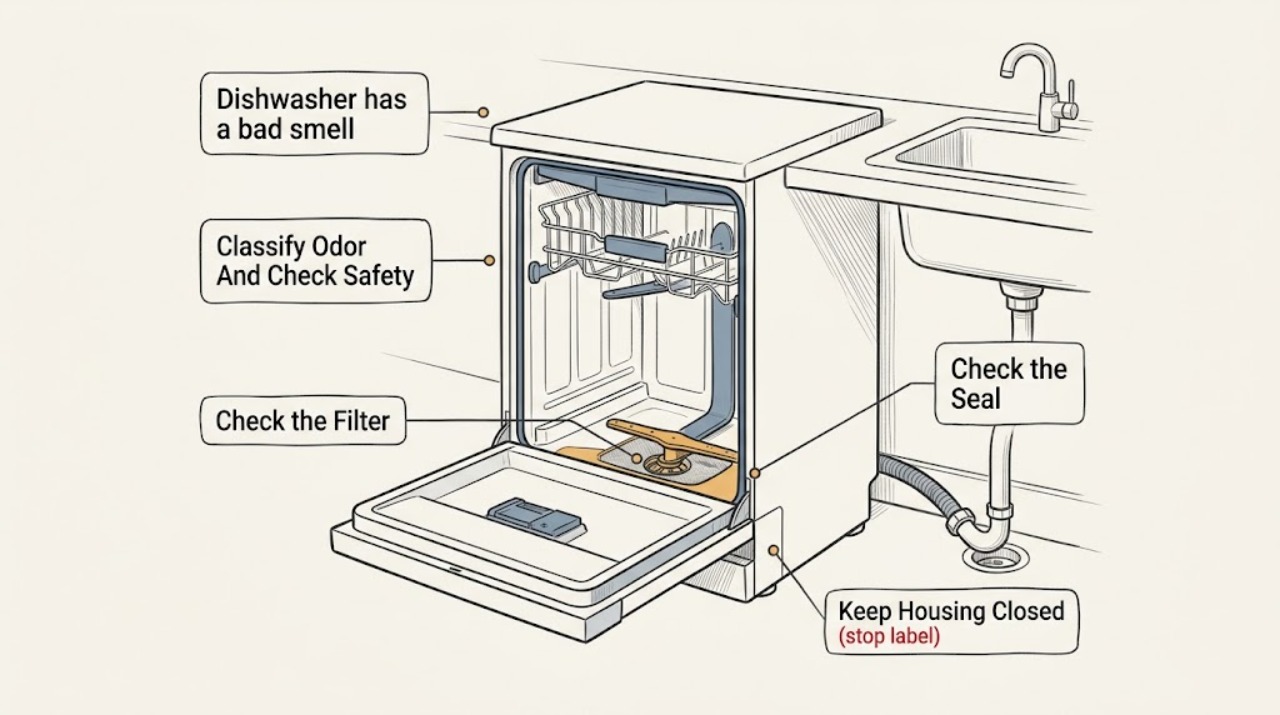
Samsung dishwasher has a bad smell: What to Check and What to Do Next
A Samsung dishwasher's musty or food smell usually comes from moisture and trapped food or grease in the filter, drain area, spray nozzles, door seal, racks, or inner door. Turn the dishwasher off, remove debris carefully, and clean only the model-accessible parts described in the manual.
-
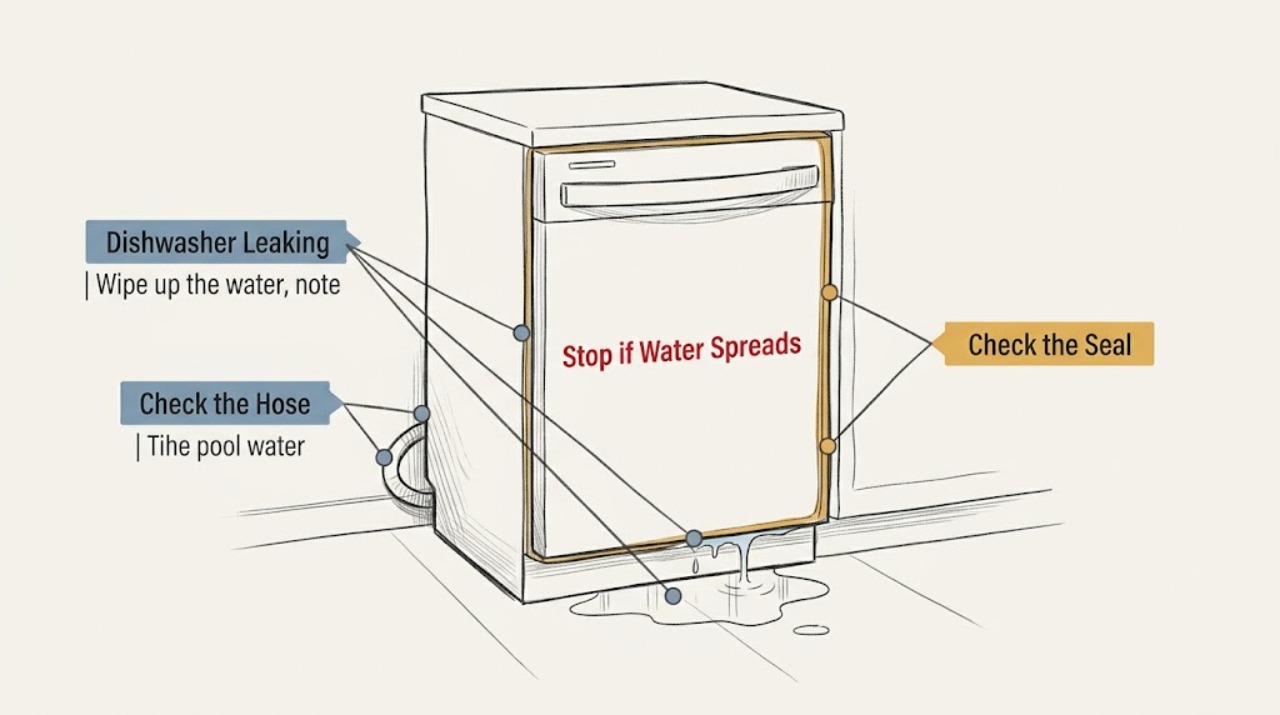
Samsung Dishwasher Leaking
Wipe up the water first and determine whether it returns during a controlled cycle. If it does, stop the dishwasher, inspect the supply and drain-hose connections, door seal, detergent type, level, and spray nozzles. Turn off water for a supply leak and arrange service for a damaged seal, persistent leak, or anything requiring cabinet access.
-
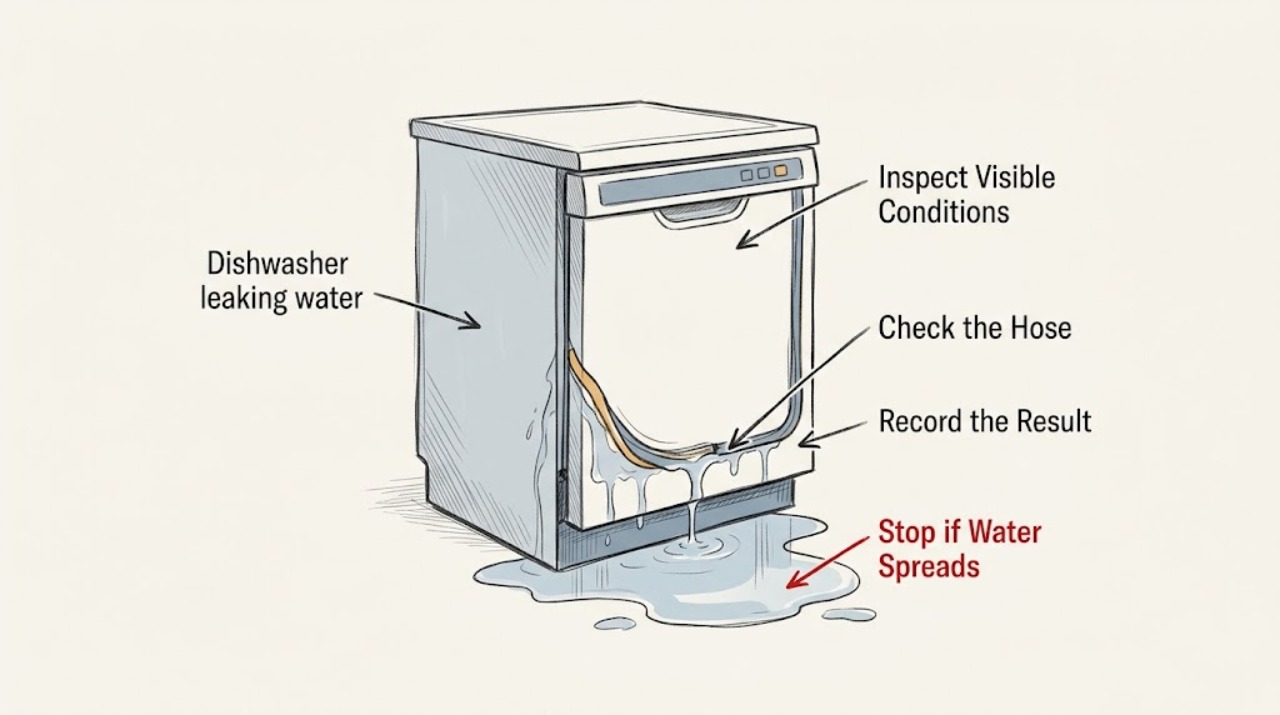
Samsung dishwasher leaking water: What to Check and What to Do Next
First determine whether the water is a spill or returns during operation. If water is actively leaking, a hose is damaged, or the dishwasher shows a leakage warning such as LE or LC, stop the cycle, turn off power at the breaker when safe, and close the water supply.
-
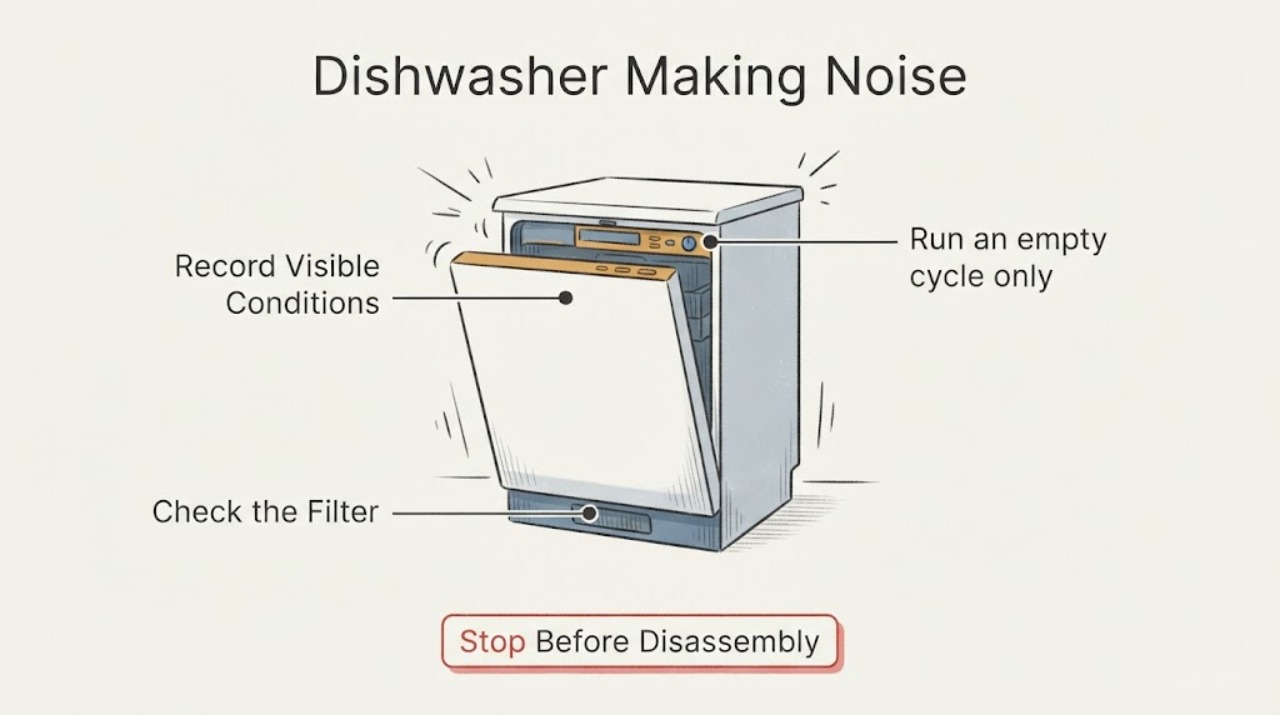
Samsung Dishwasher Making Noise
Some Samsung dishwasher humming, water, or initial-drain sounds are normal, but loud or unusual noise should be localized by sound type and cycle phase. Check for loose dishes or spray-arm contact, clean the accessible filter/pump opening, and record persistent noise. Request service if noise remains during an empty cycle or comes from an inaccessible pump, motor, or electrical area.
-
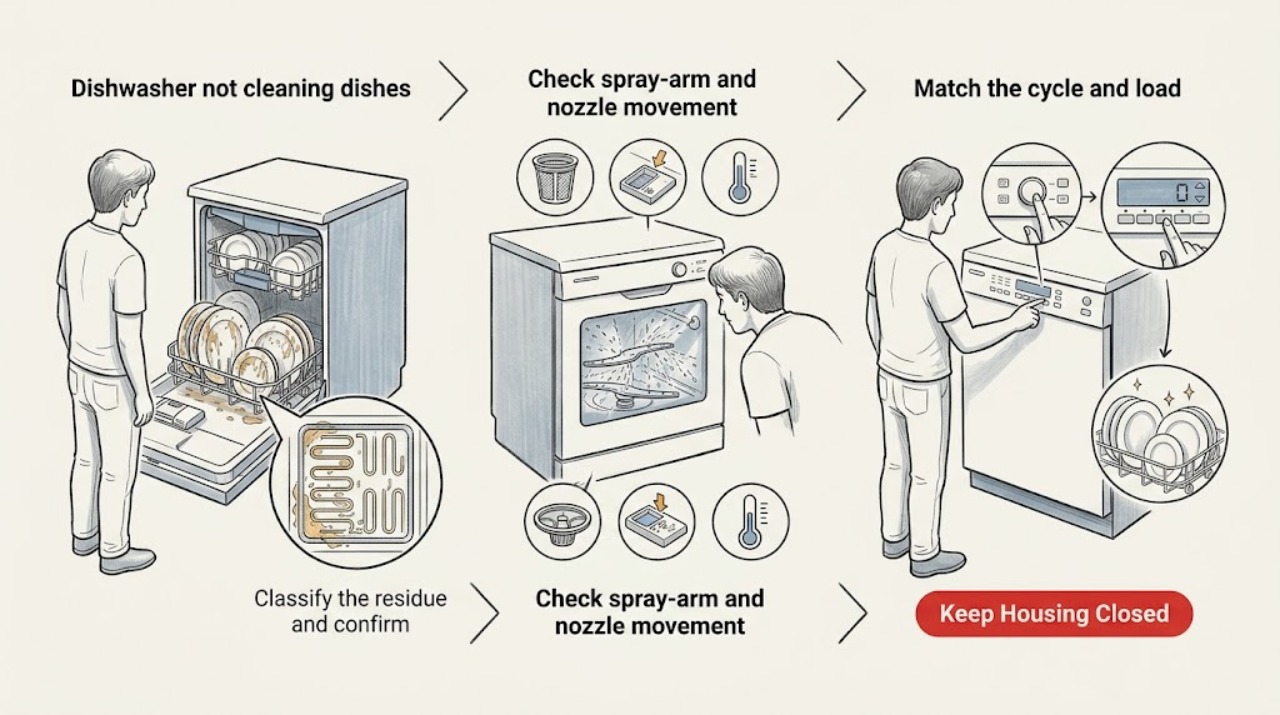
Samsung dishwasher not cleaning dishes: What to Check and What to Do Next
When a Samsung dishwasher finishes with food or film still on the dishes, first separate a cleaning problem from a stopped cycle or an error. Check the exact model's cycle selection, rack loading, spray-arm/nozzle movement, filter, detergent dispenser, rinse aid, and incoming water temperature.
-
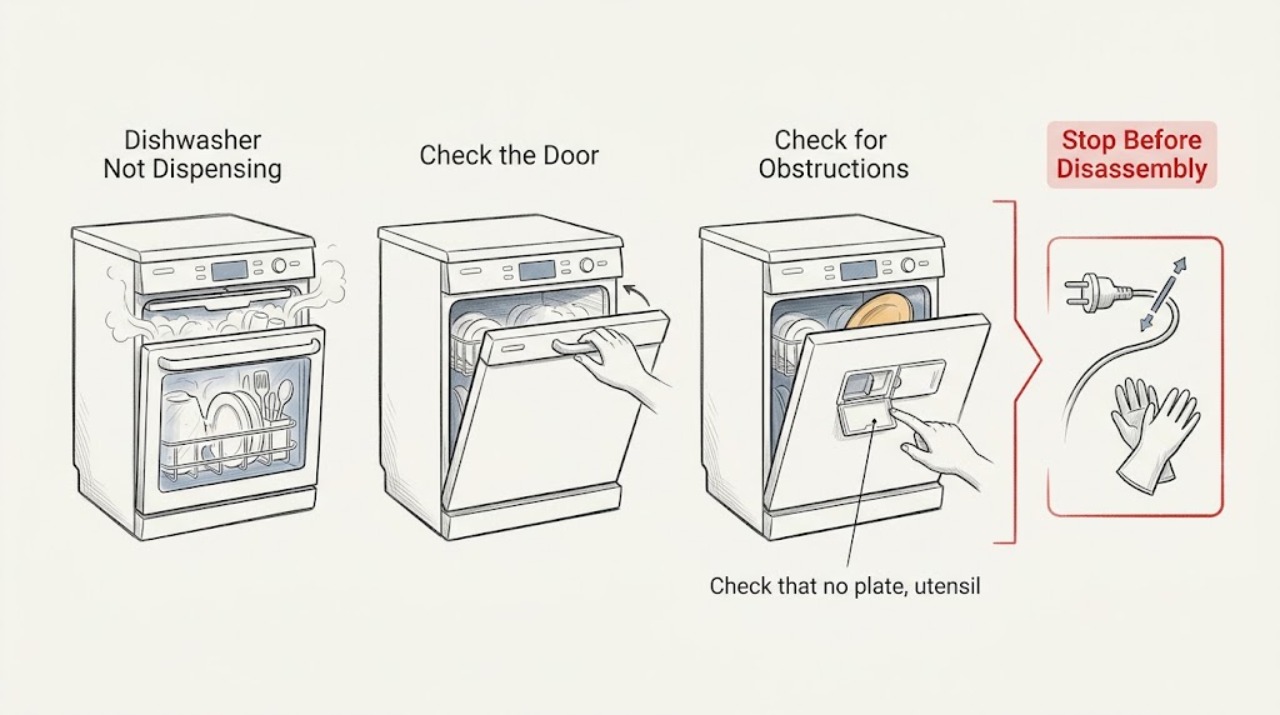
Samsung Dishwasher Not Dispensing
If detergent remains in a Samsung dishwasher, first check the dispenser fill level and residue, then confirm the tablet or door is not blocked by dishes. Verify the incoming water is warm enough for the detergent instructions and run one empty test. If it still does not open or dissolve, request service rather than replacing a part based on the symptom alone.
-
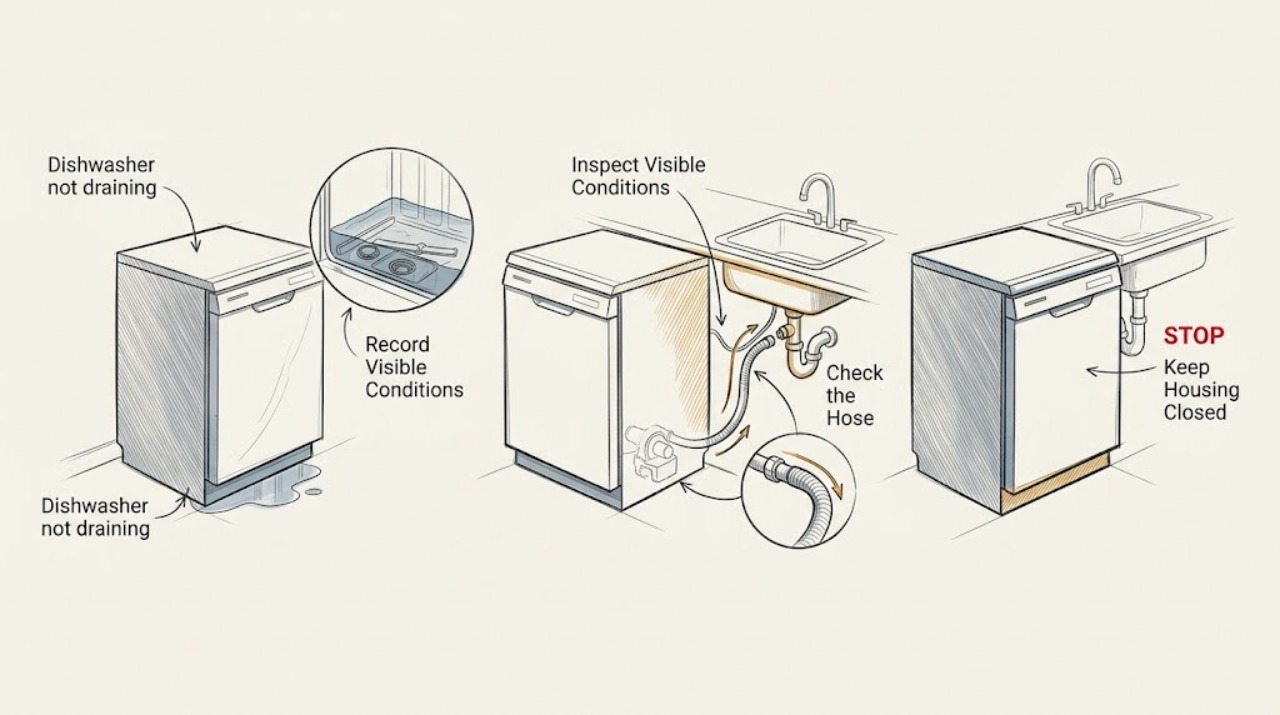
Samsung dishwasher not draining: What to Check and What to Do Next
A Samsung dishwasher that will not drain most often has a blocked sink or garbage-disposal connection, a kinked or poorly routed drain hose, food debris in the filter or drain area, or a pump problem. First note how much water remains, whether the sink drains, whether the hose was recently moved or installed, and whether 5C, 5E, OC, OE, or another code appears.
-
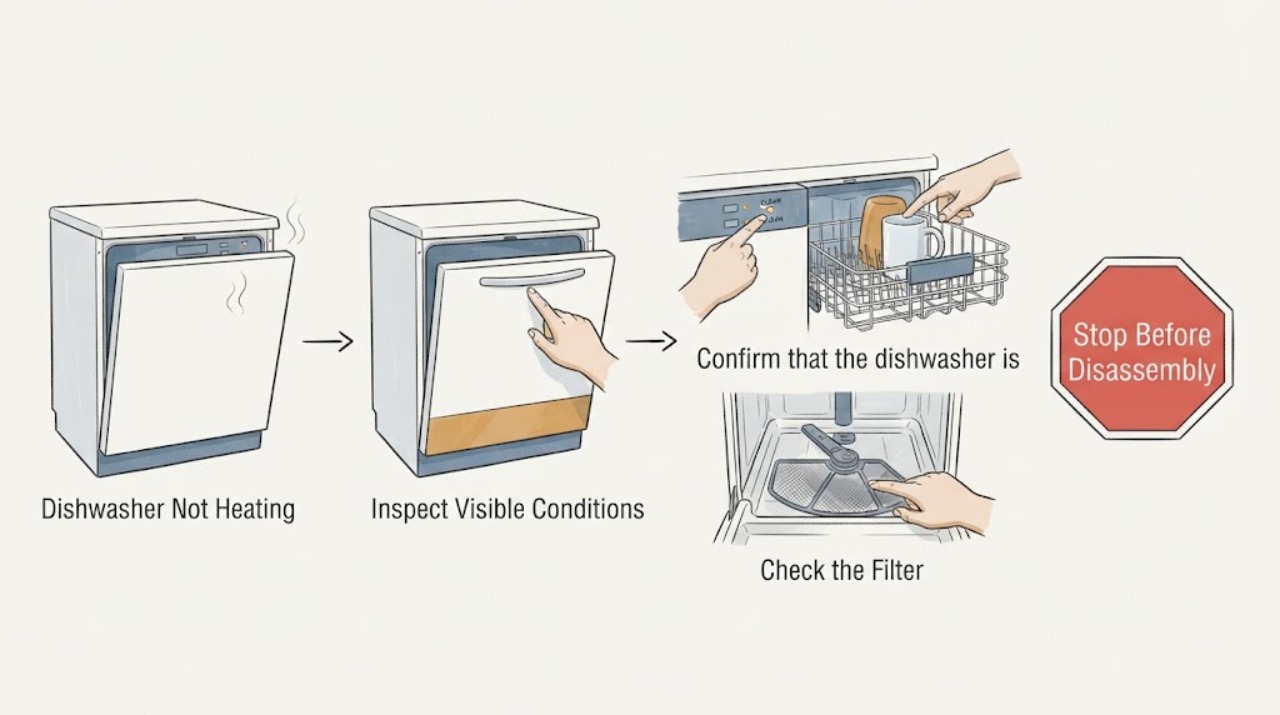
Samsung Dishwasher Not Heating
If a Samsung dishwasher finishes with cold water or damp dishes, first check whether the cycle is actually running and whether a heating-related code appears. A single cool cycle can follow a reset or interrupted program, but repeated cold cycles, a recurring HE-family code, or a cycle that stops mid-run points to a heating-system fault that needs service. Do not open panels or test live wiring.
-
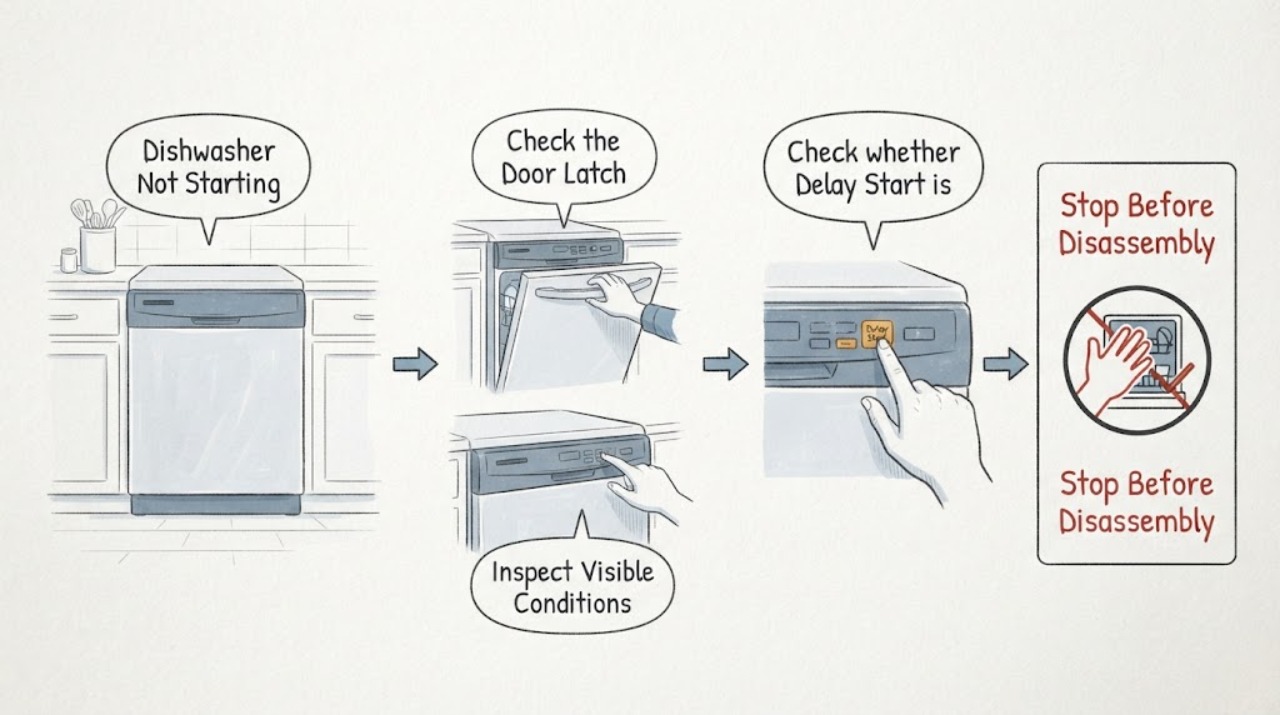
Samsung Dishwasher Not Starting
If a Samsung dishwasher will not start, check the door latch, Control/Child Lock, Delay Start, and whether the first short drain phase is being mistaken for a delay. Press Start briefly rather than holding it, because holding it can cancel the cycle. If the panel is completely dead, use the separate power and breaker checks; if the panel works but the cycle still will not begin, request service.
-
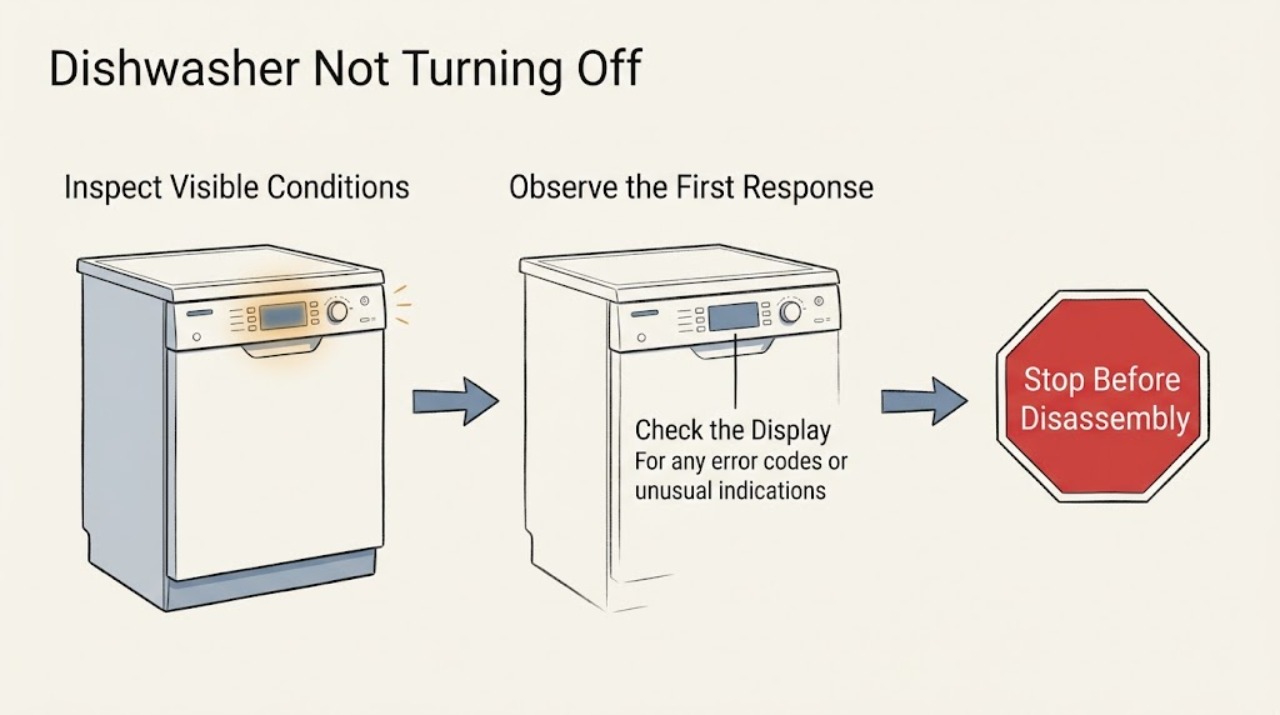
Samsung Dishwasher Not Turning Off
A Samsung dishwasher that keeps running or will not turn off is often reacting to a Sanitize-cycle display behavior or moisture detected by its leak sensor. Open the door after a Sanitize cycle, note any code or blinking lights, and inspect only for accessible water around the door and toe-kick. Continuous draining, a visible leak, or a returning leakage indication requires service; do not bypass the sensor.
-
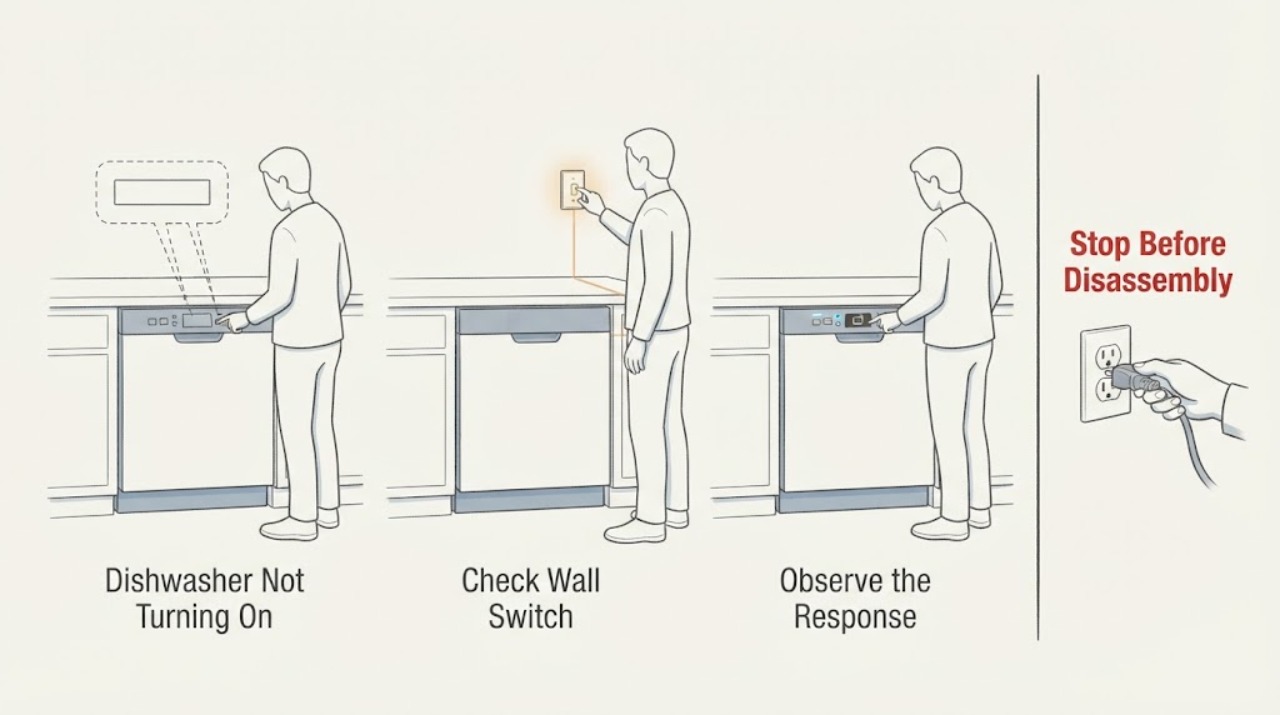
Samsung Dishwasher Not Turning On
If a Samsung dishwasher is completely dark, press a clean Power button with dry hands, check its breaker, and check for a nearby wall switch that supplies the appliance. A dishwasher that powers on but will not accept Start has a different door/control problem. If the breaker trips again or the unit remains dead, stop and use an electrician or qualified service technician.
-
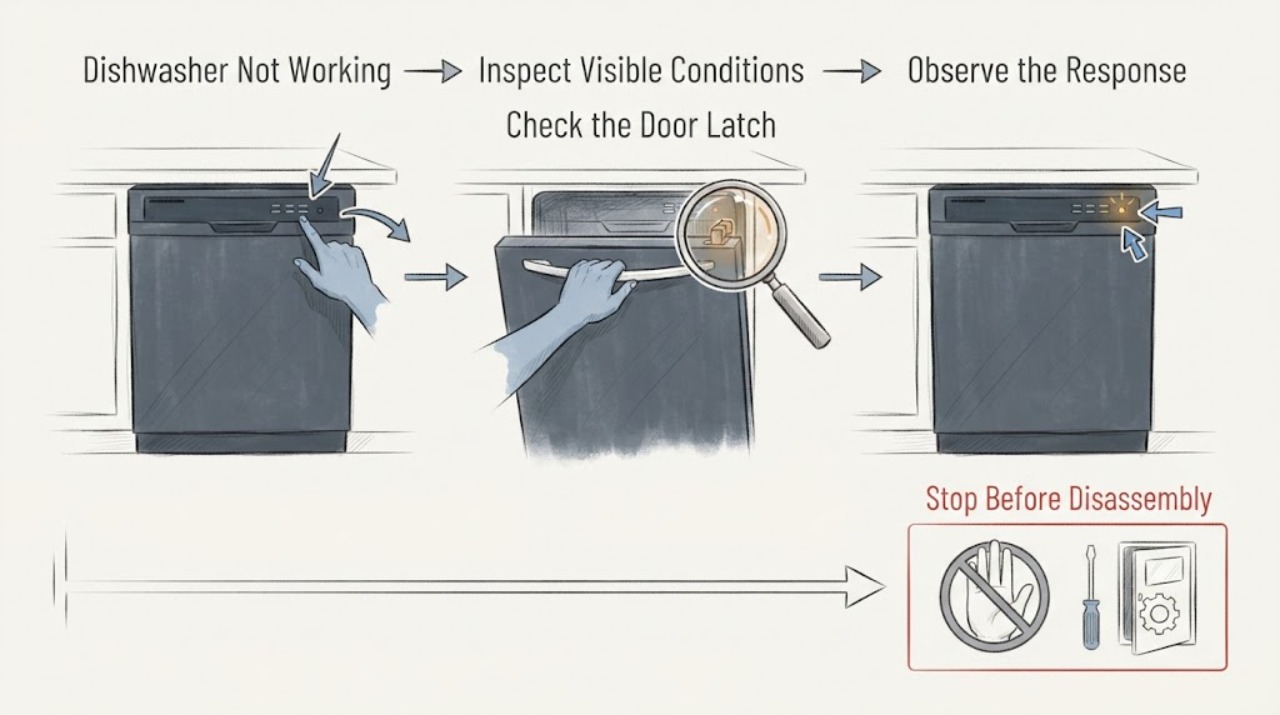
Samsung Dishwasher Not Working
“Not working” can mean a dark panel, a powered panel that will not start, a cycle that stops, or a wash that finishes poorly. Separate those behaviors first: test Power, observe the door and controls, note codes or blinking lights, and check whether it fills, washes, drains, and completes. Use only accessible checks; a recurring fault, leak, burning smell, or repeat breaker trip needs qualified service.
-
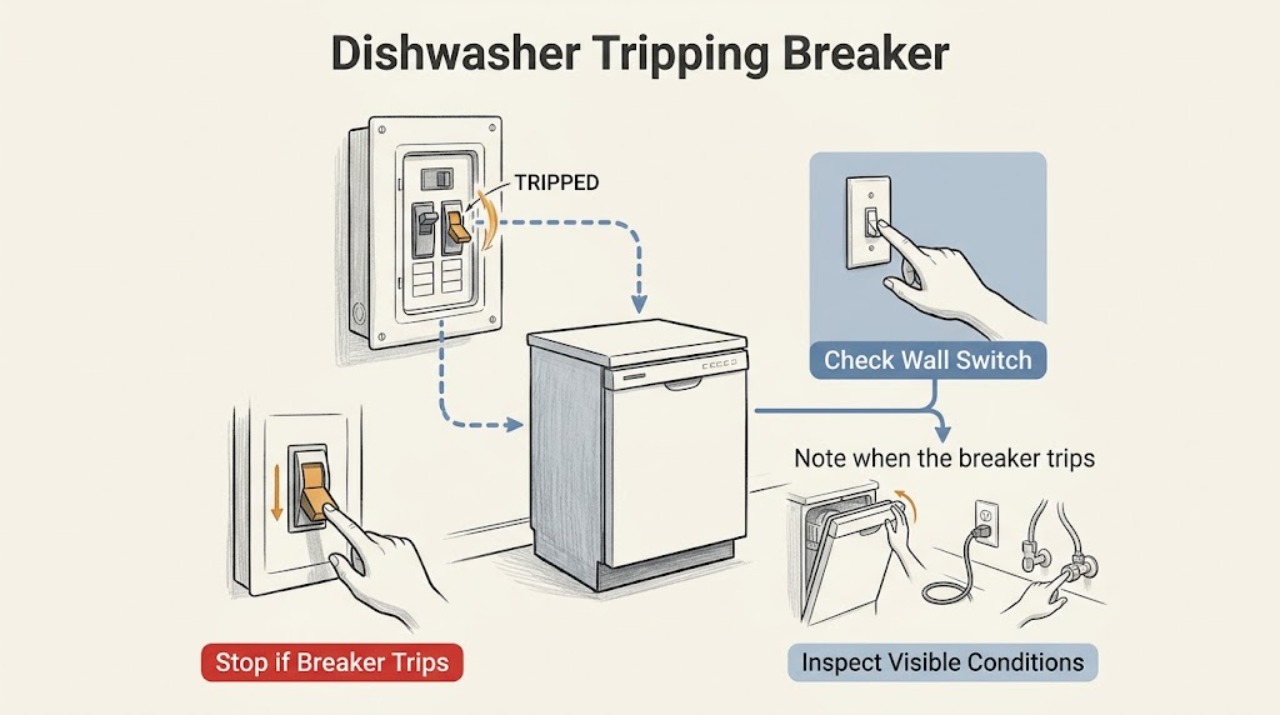
Samsung Dishwasher Tripping Breaker
If a Samsung dishwasher trips the breaker, switch the circuit fully off and back on only once if it is safe to do so. If it trips again, leave it off and have an electrician diagnose the circuit or a qualified appliance technician inspect the dishwasher. Do not use an extension cord, bypass the breaker, open energized panels, or keep resetting a circuit that will not hold.