
Repair problem
Bad Smell Troubleshooting Guides – Page 3
Published FixGraph guidance for diagnosing and responding to bad smell.
Matching published guides
Choose a guide that matches the service, equipment, and conditions you are seeing.
-
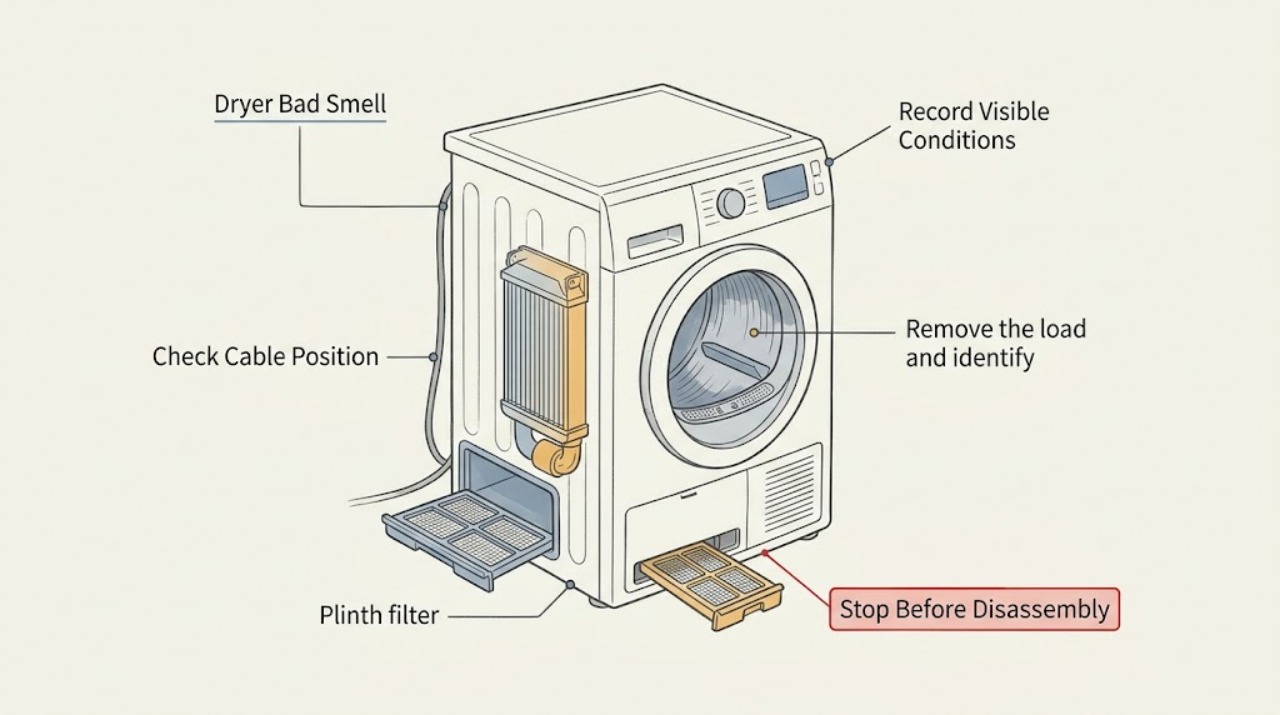
Miele Dryer Bad Smell: Find the Source Safely
First separate a normal new-appliance rubber odor or a smell coming from the laundry from a burning, electrical, gas, or overheated-appliance odor. Stop immediately for smoke, flame, sparks, melting, a strong burning or electrical smell, unusual heat, a damaged cord, or a dryer that will not shut off.
-
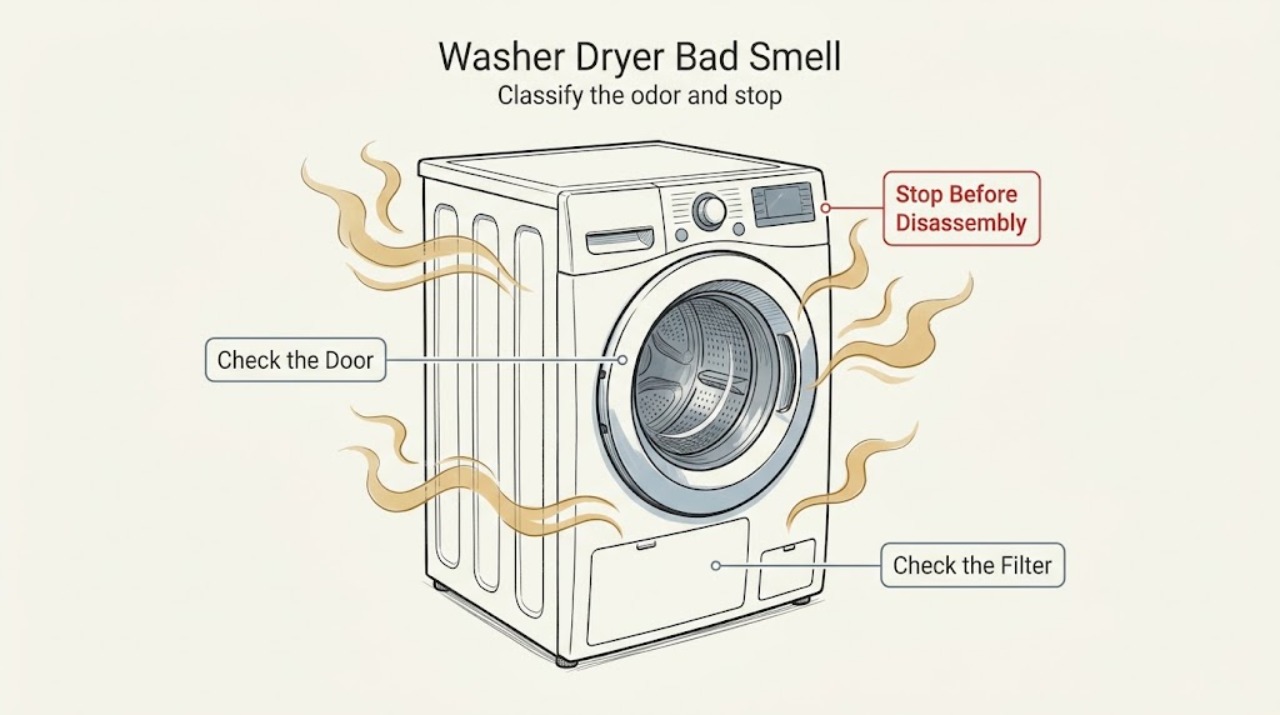
Miele Washer Dryer Bad Smell: Clean the Drum, Drawer, Filters, and Drying Path
A musty or sour smell from a Miele washer-dryer usually calls for a cleaning and drying routine, not a fragrance that masks the source. Remove wet laundry promptly, leave the door and detergent drawer slightly open after use, check the accessible door seal and drawer for residue, and use the model's Clean Machine or other approved cleaning programme with an empty drum.
-
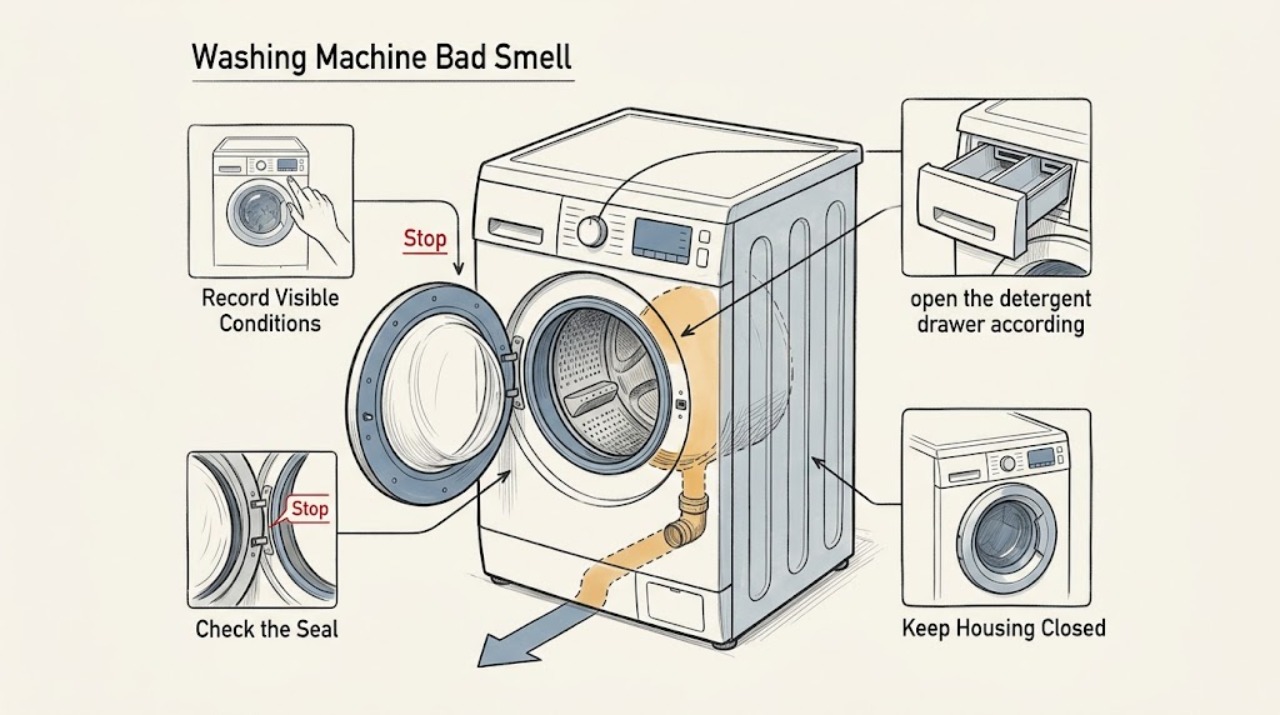
Miele Washing Machine Bad Smell: Clean the Drum, Drawer, and Drain Path
A musty or sour smell from a Miele washing machine commonly comes from wet laundry left in the drum, detergent or fabric-softener residue, dirt or mildew, hard water, or infrequent hot washes. Remove laundry promptly, clean only the accessible drawer, siphon, door seal, drum, and filter areas with the method allowed by the exact Miele manual, and leave the door and drawer slightly open to dry.
-
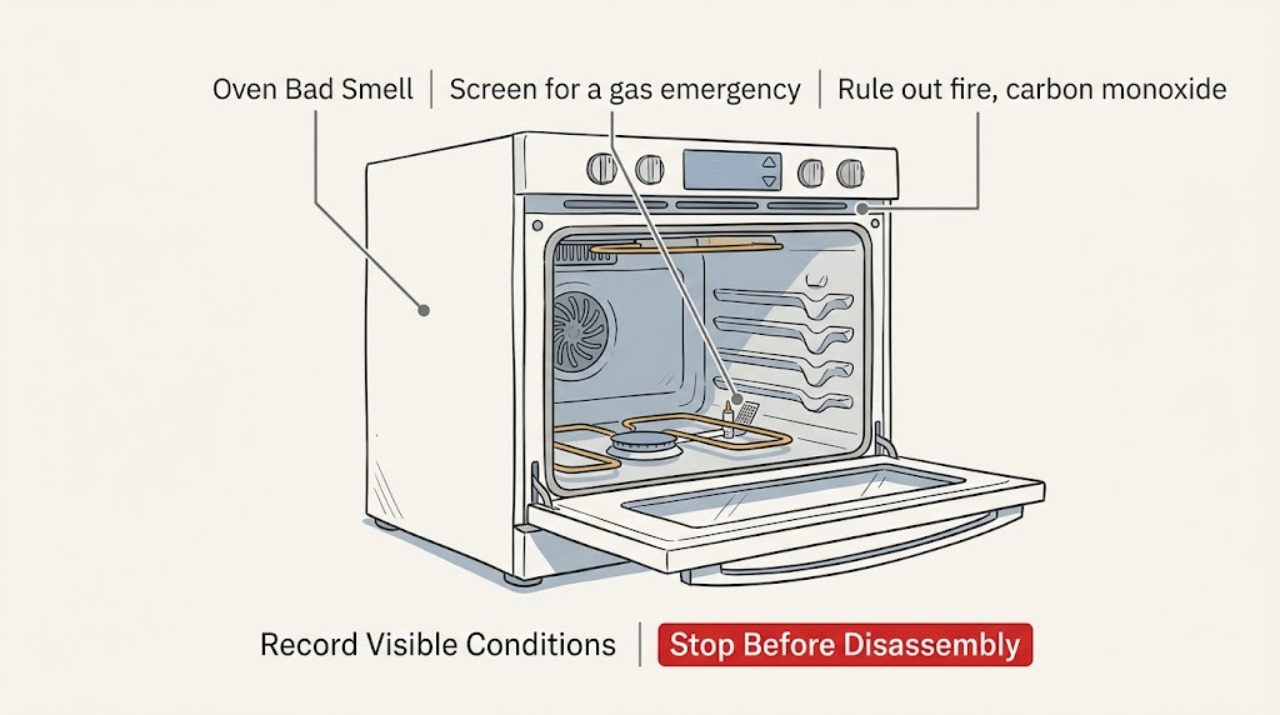
Monogram Oven Bad Smell: Safe Checks Before Service
Treat a bad smell from a Monogram oven as a safety-triage issue before a cleaning issue.
-
Neff Dishwasher Bad Smell: Clean the Filter and Run the Right Care Cycle
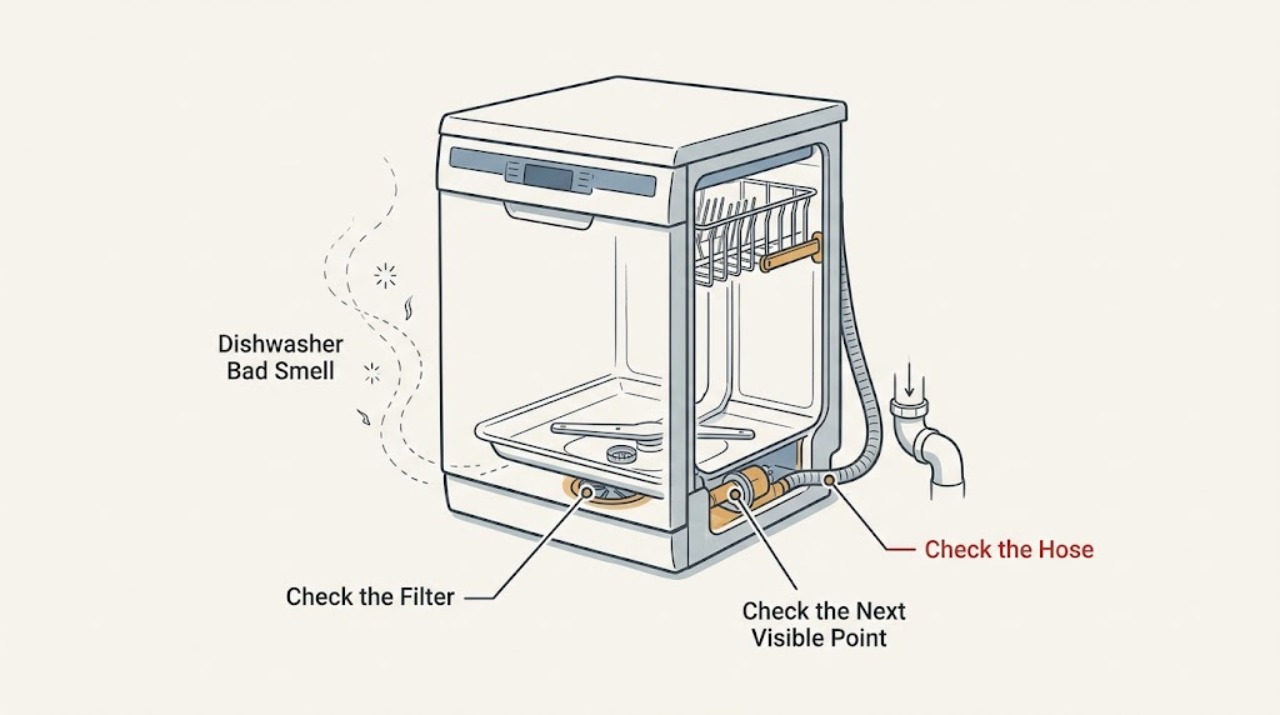
A bad smell in a Neff dishwasher commonly comes from food residue in the filter or incomplete drainage. Empty the appliance, switch it off before removing the filter, rinse the filter as the manual shows, and run a higher-temperature maintenance cycle using only a product approved for the model. If the odor remains or dirty water returns, arrange Neff service.
-
Oven Bad Smell: Identify Gas, Electrical, Food, and New-Oven Odors
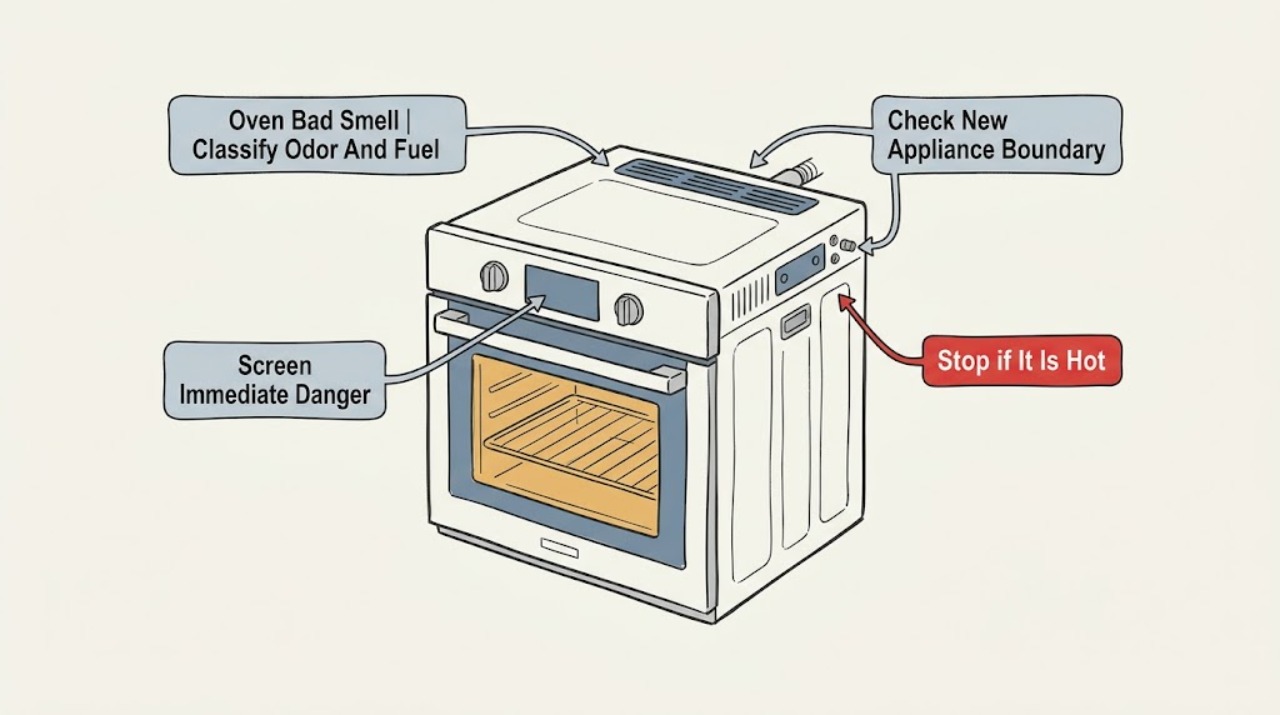
Do not treat every oven smell as the same problem. First identify whether the oven is gas, electric, dual-fuel, or unknown, and whether the smell is gas-like, electrical or burnt plastic, food or grease, cleaning chemical, or a mild new-appliance odor.
-
Panasonic Microwave Bad Smell
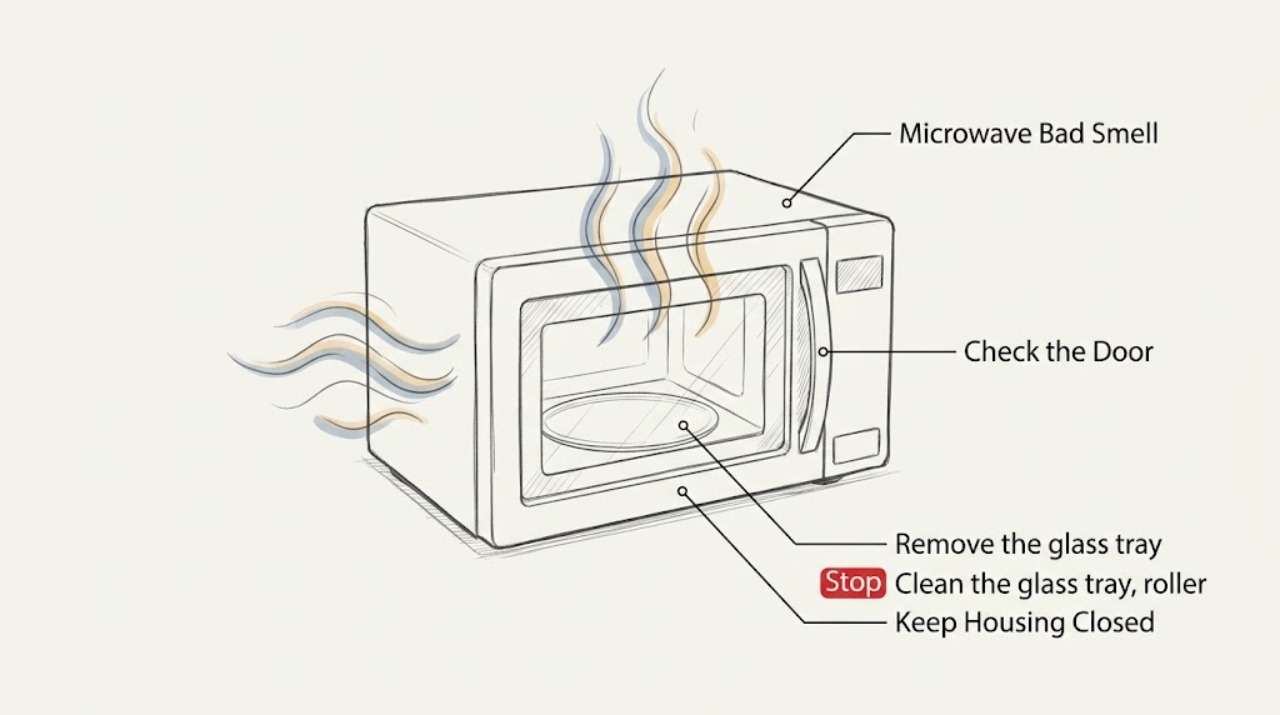
A Panasonic microwave bad smell is usually retained food residue or a spill that overheated. Unplug the oven before cleaning, remove loose debris, steam the cavity with a microwave-safe water solution, and wipe and dry it. Stop using the oven for smoke, arcing, a damaged cavity or waveguide cover, or an odor that returns with operation.
-
Portable Air Conditioner Bad Smell
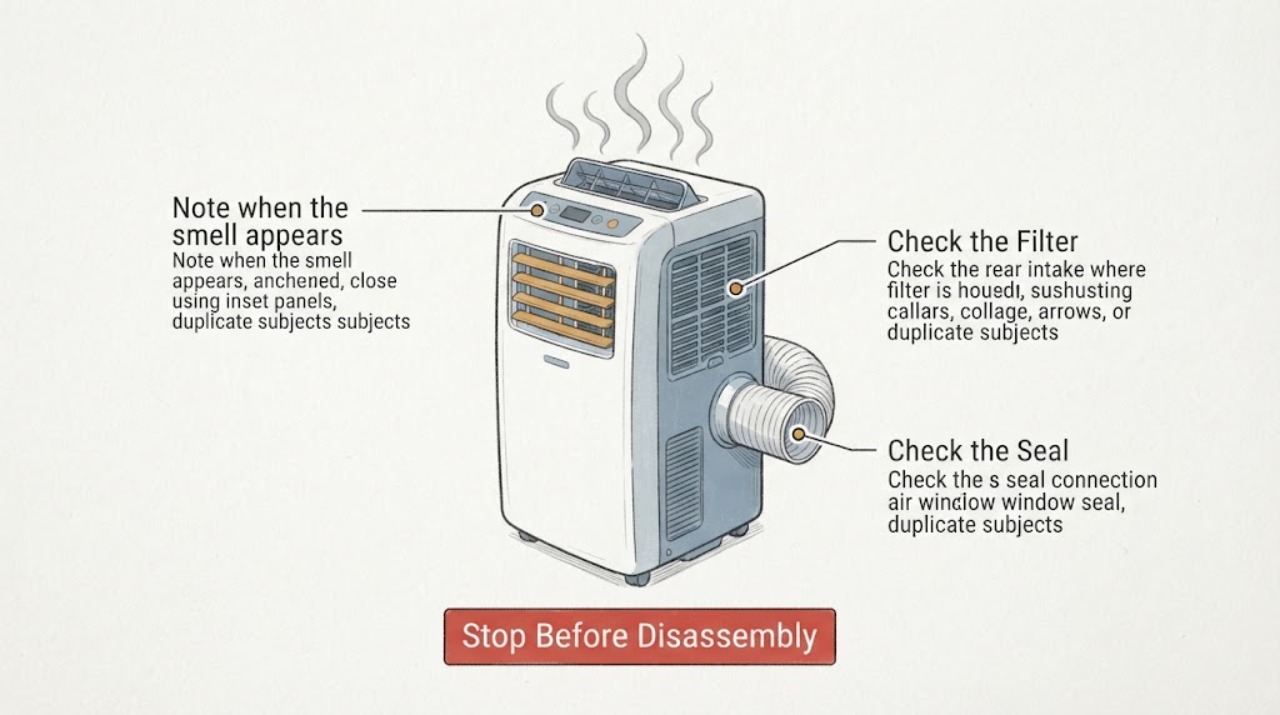
A portable air conditioner with a bad smell usually needs moisture and filter management before it needs a part. Ventilate, run a cooling and drying cycle as the model allows, then clean and completely dry the washable filter. Do not spray cleaner or air freshener into the unit. A burning or chemical odor that persists, visible mold deep inside, or a water leak needs service.
-
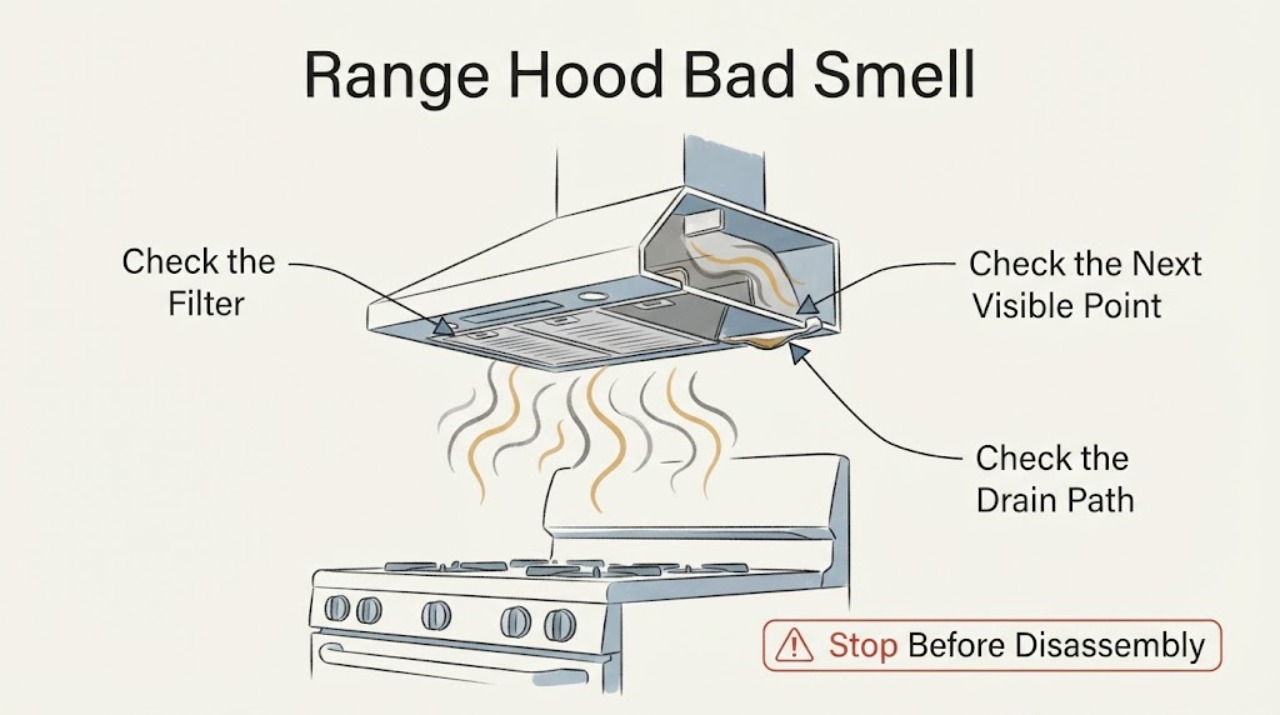
Range Hood Bad Smell
Turn the range hood off and let it cool, then identify whether the odor is trapped grease/food, a saturated charcoal filter, duct backdraft, or an electrical/burning smell. Clean the removable grease filter with warm water and detergent as the manufacturer directs; a recirculating hood needs a replaceable charcoal filter, not a washable one. Stop immediately for smoke, melting, sparks, or a burning electrical odor and arrange service.
-
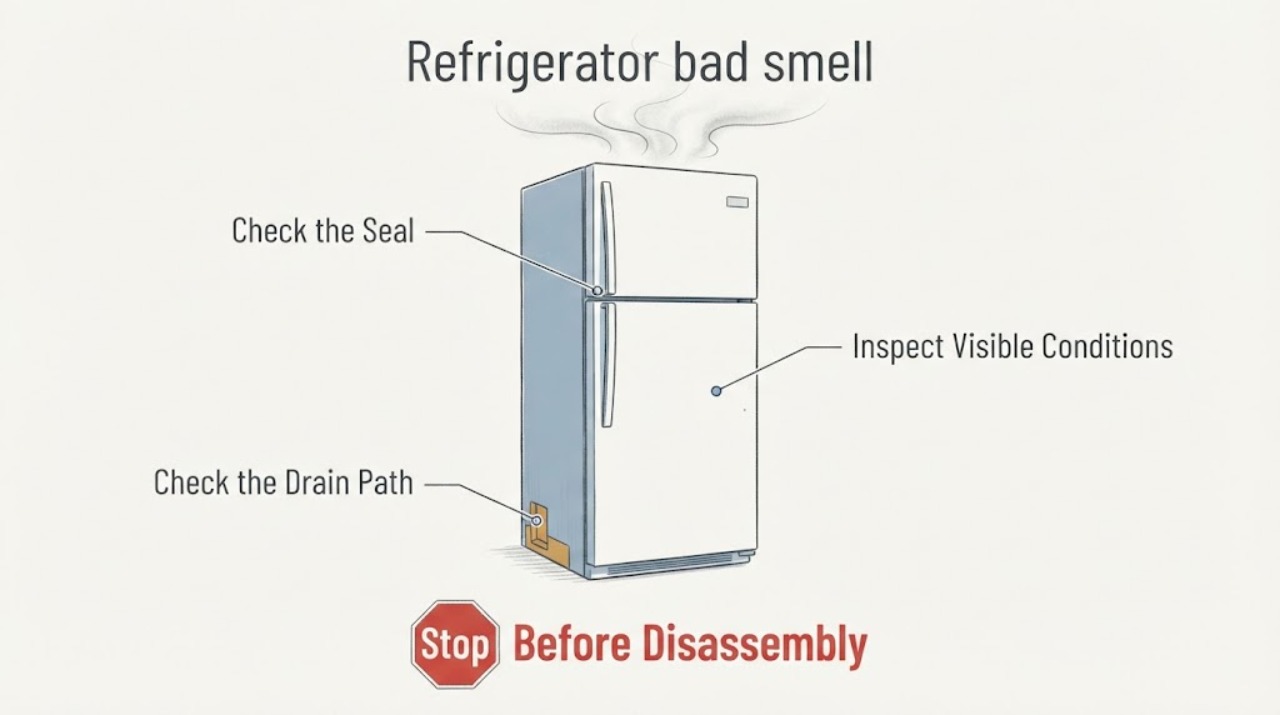
Refrigerator bad smell
A bad smell from a refrigerator usually comes from uncovered food, spills, the drip area, or damp residue rather than a mechanical part. Remove spoiled food, clean shelves and interior surfaces with the model-approved method, check the door seal and standing water, and use an odor absorber if appropriate. A burning/electrical odor, smoke, or a smell from wiring needs immediate stop-use and service.
-
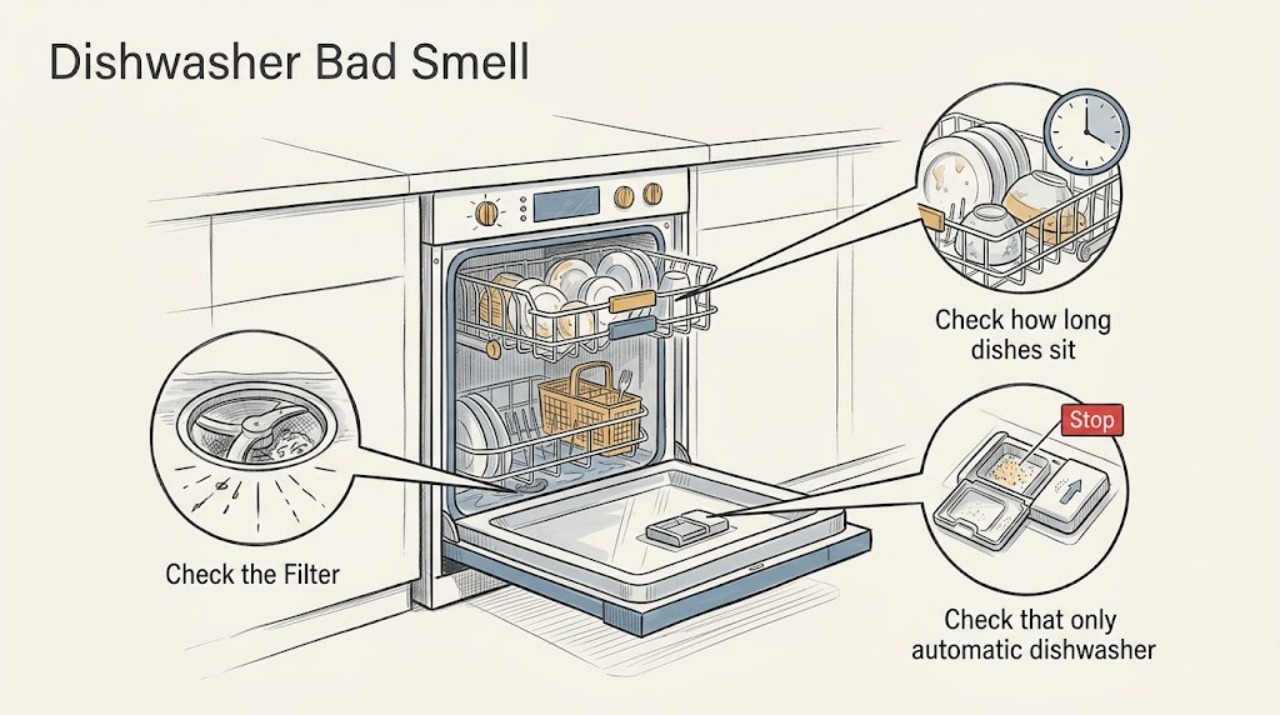
Roper Dishwasher Bad Smell: Start With Standing Water, Detergent, and Wash Frequency
For a bad smell in a Roper dishwasher, first check whether water remains after a completed cycle, whether food debris is accessible in the filter/sump area, and whether dishes sit for several days between washes. The Roper use-and-care guide recommends rinse cycles when loads are delayed, fresh automatic-dishwasher detergent, and model instructions for cleaning. Do not mix cleaners or remove panels to chase an odor.
-
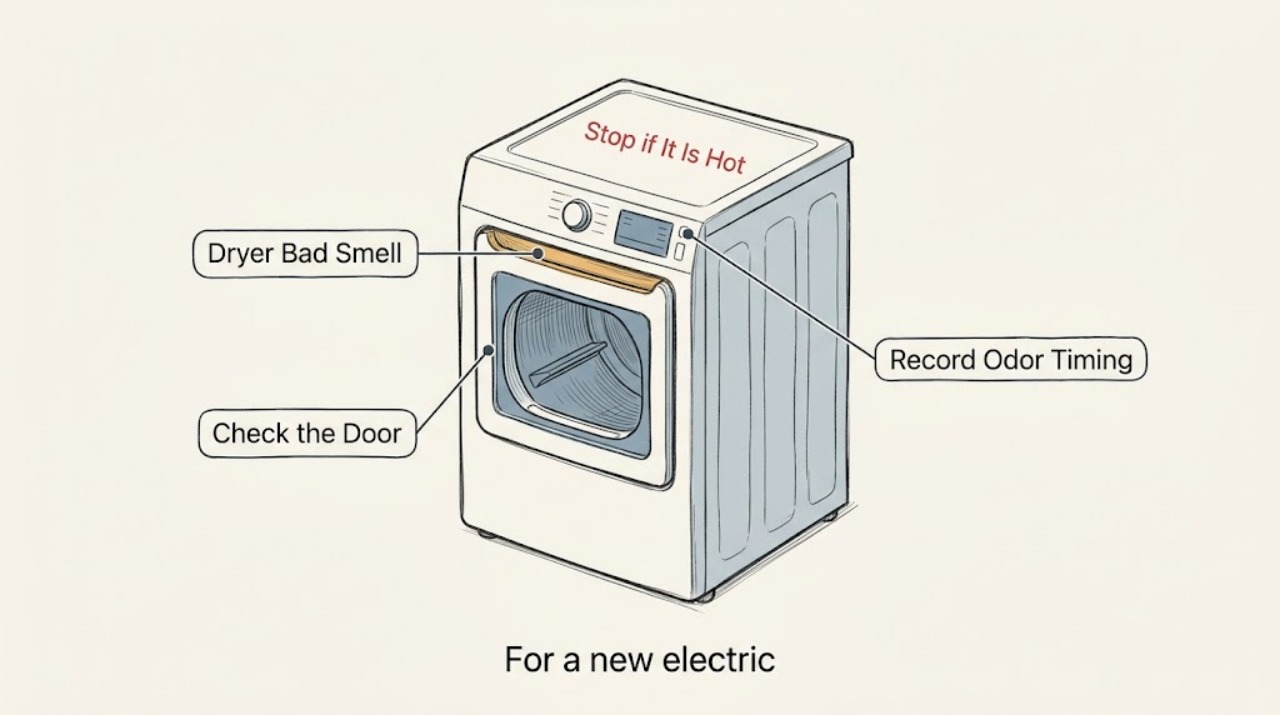
Roper Dryer Bad Smell: Separate New-Unit Odor, Mustiness, and Burn Risk
First identify the smell before running the Roper dryer again. A mild oily or new-heating-element odor can occur during the first cycle, while paint, stain, varnish, detergent residue, damp laundry, or a dirty lint path can transfer or create other odors.
-
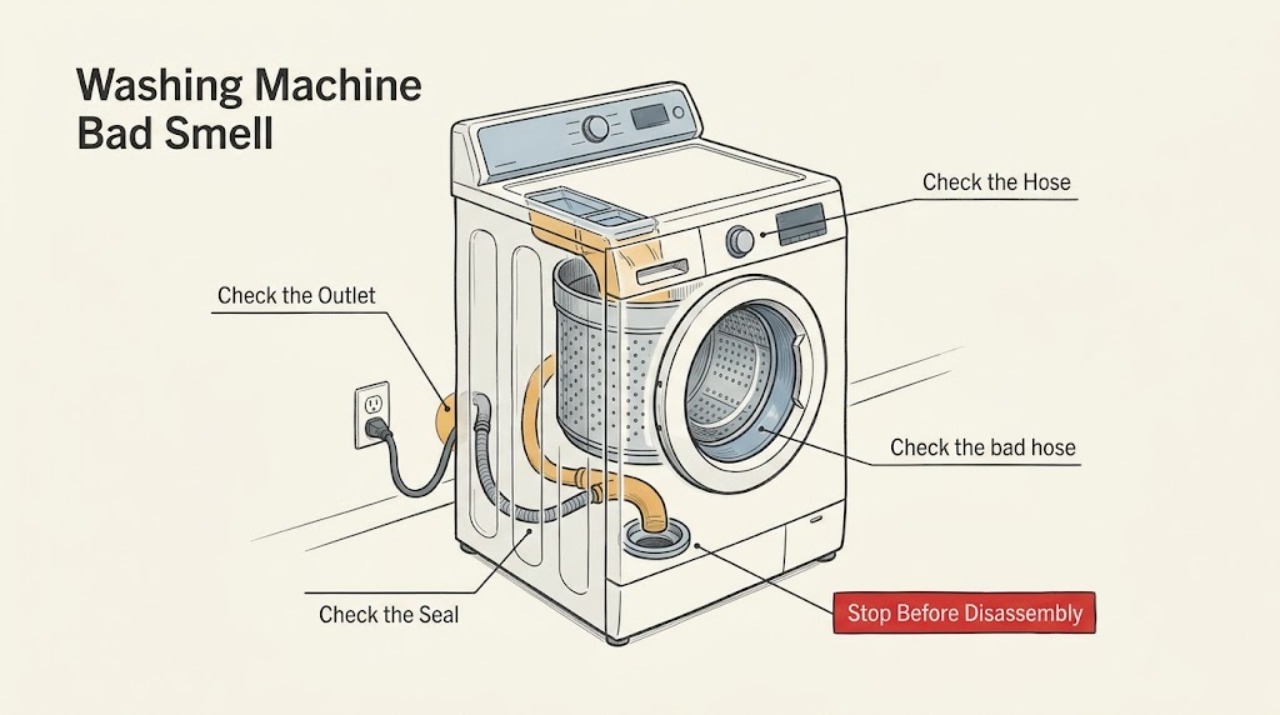
Roper Washing Machine Bad Smell: Separate Mildew, Drain Odor, and Electrical Warning Signs
First classify the odor before cleaning: a musty or sour smell usually follows retained moisture, detergent residue, or wet laundry; a sewage-like smell points to the drain path or house plumbing; a hot-plastic, burning, or electrical smell is a stop condition. Record the Roper model and whether the odor comes from the basket, lid or door, detergent area, drain, floor, plug, or outlet, and when it appears.
-
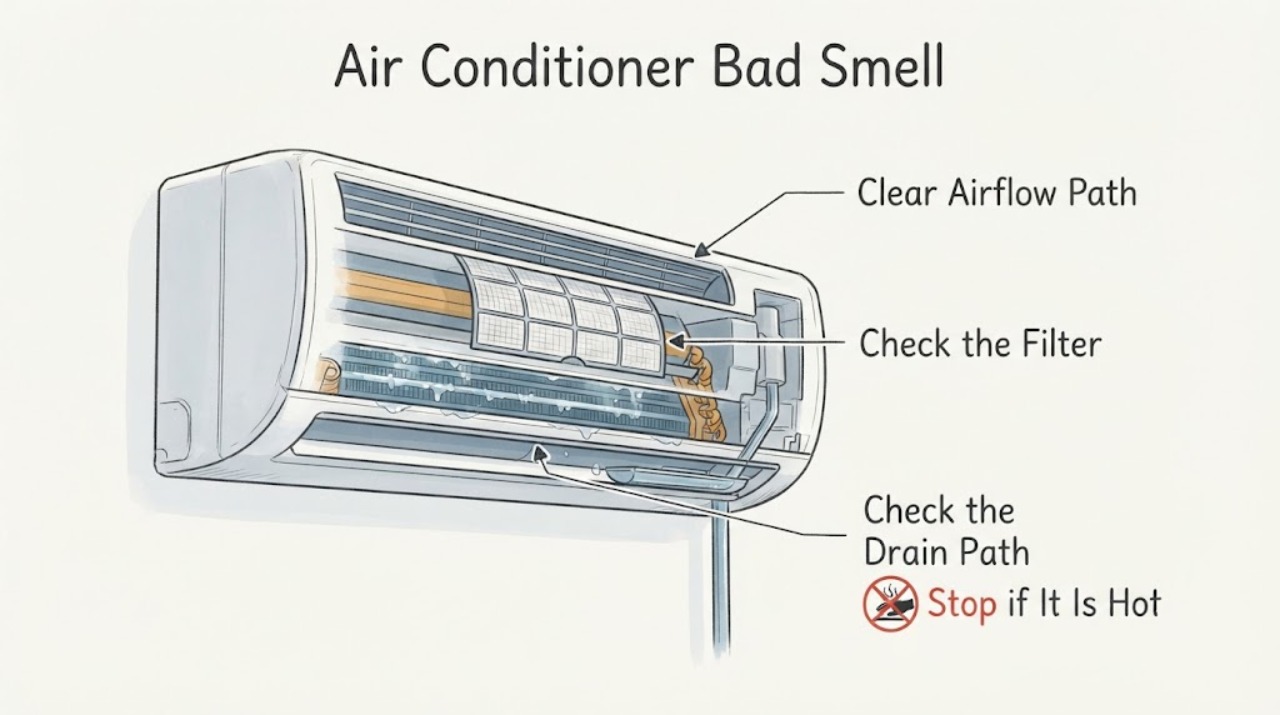
Samsung Air Conditioner Bad Smell: Dry the Filter and Indoor Unit Before Service
Turn off the Samsung air conditioner and identify whether the odor is musty, dusty, chemical, or burning. For a routine musty smell, clean the removable filter as the model manual allows and dry it completely in a ventilated place, then run Auto Clean if your model provides it. A burning or chemical odor, smoke, water damage, or a smell that returns after cleaning is a stop-and-service condition.
-
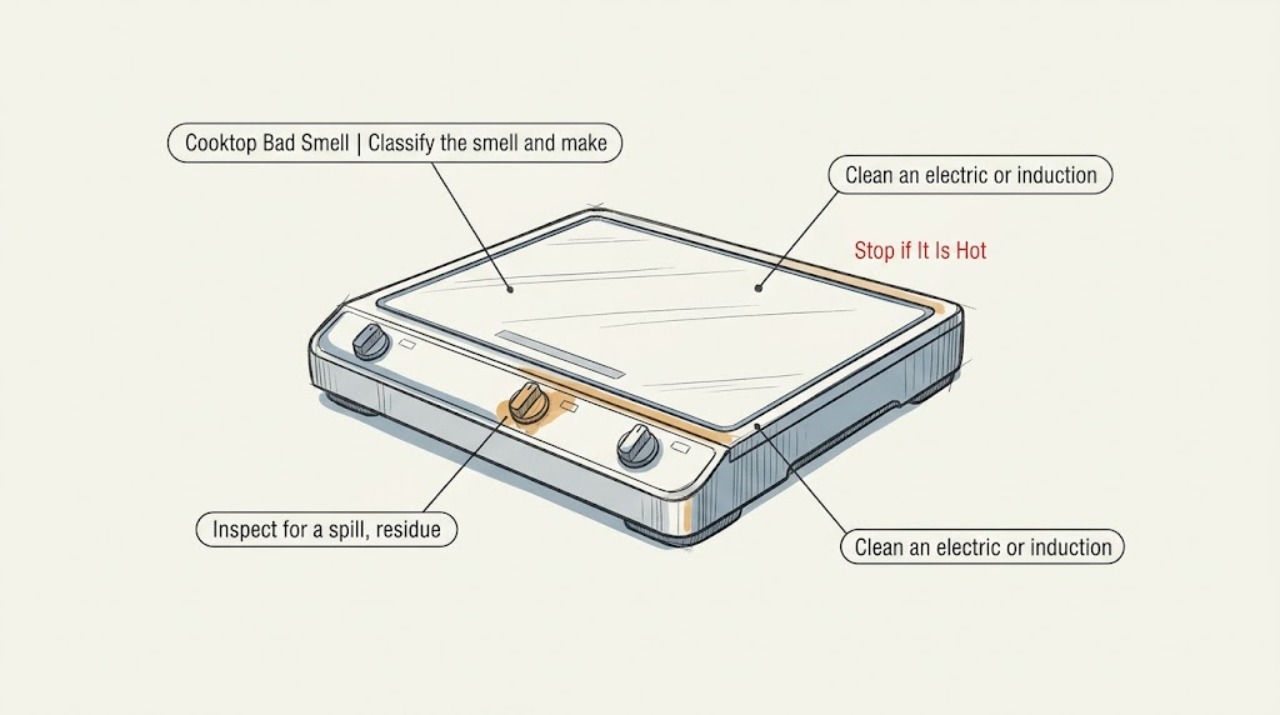
Samsung Cooktop Bad Smell: Safe Checks Before Using It Again
Treat a Samsung cooktop smell as a safety triage first, not a cleaning problem. A gas odor, smoke, arcing, or a persistent burning or electrical smell means turn the appliance off, do not operate switches or flames, leave the area as appropriate, and get qualified help from a safe location.
-
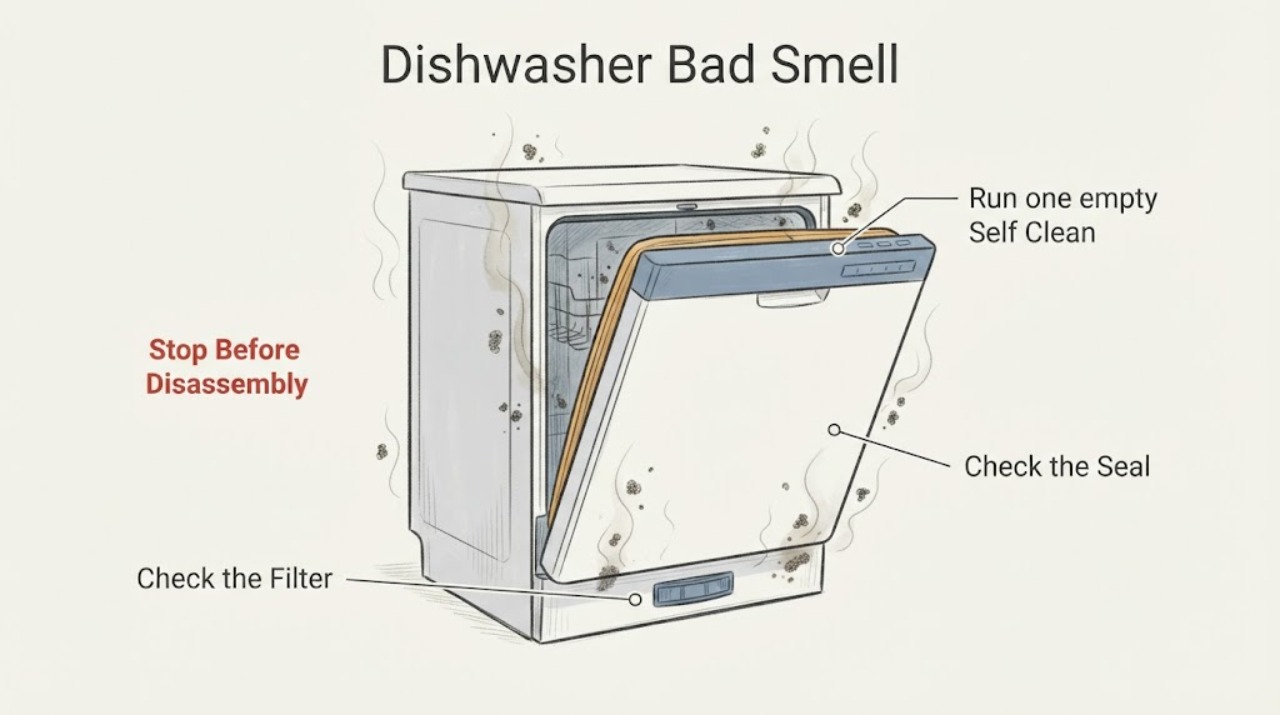
Samsung Dishwasher Bad Smell
Start with the dishwasher's drain area, filter housing, spray nozzles, door seal, and connected sink drain. Samsung links odor to moisture and food residue and warns against bleach in stainless-steel interiors. Clean accessible parts with the model manual, run an appropriate empty cleaning cycle, and escalate if the odor is burning, sewage-like after plumbing checks, or persists.
-
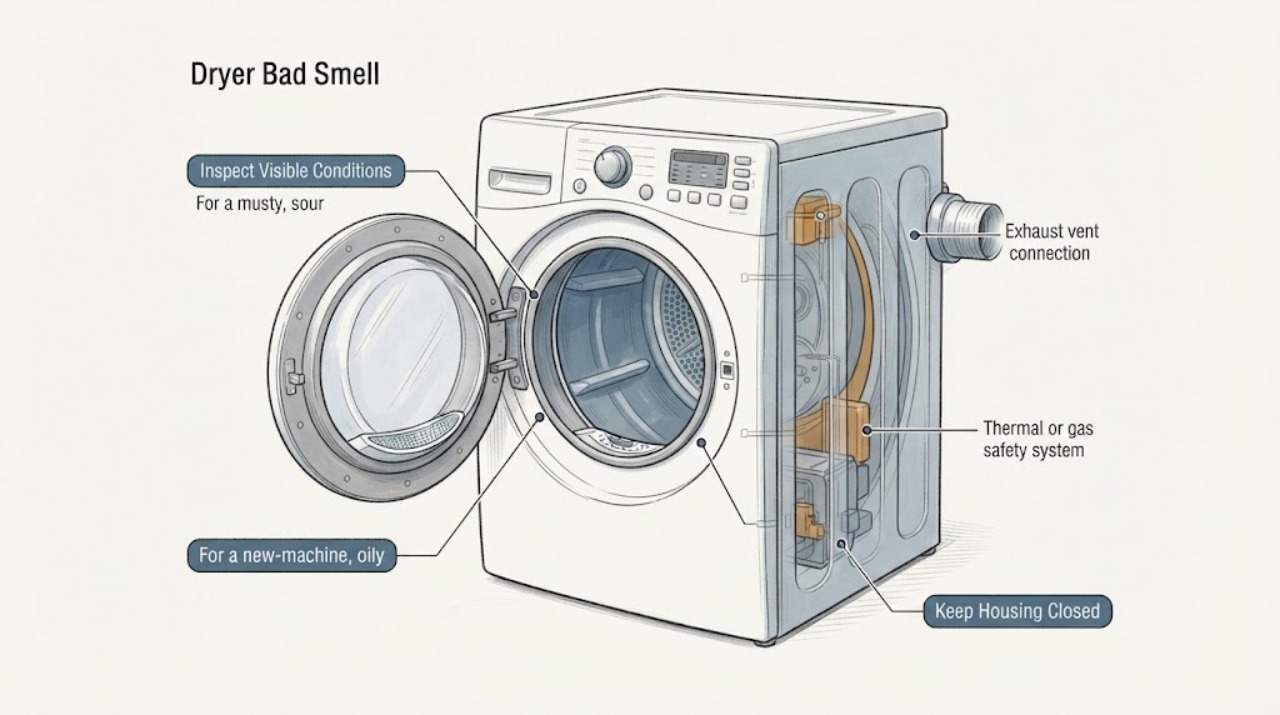
Samsung Dryer Bad Smell: Separate Moisture, Residue and Burning Odors Safely
A Samsung dryer odor should be sorted by what it smells like and what happens with heat. A musty, sour or mildew odor can come from damp clothes or the washer rather than the dryer.
-
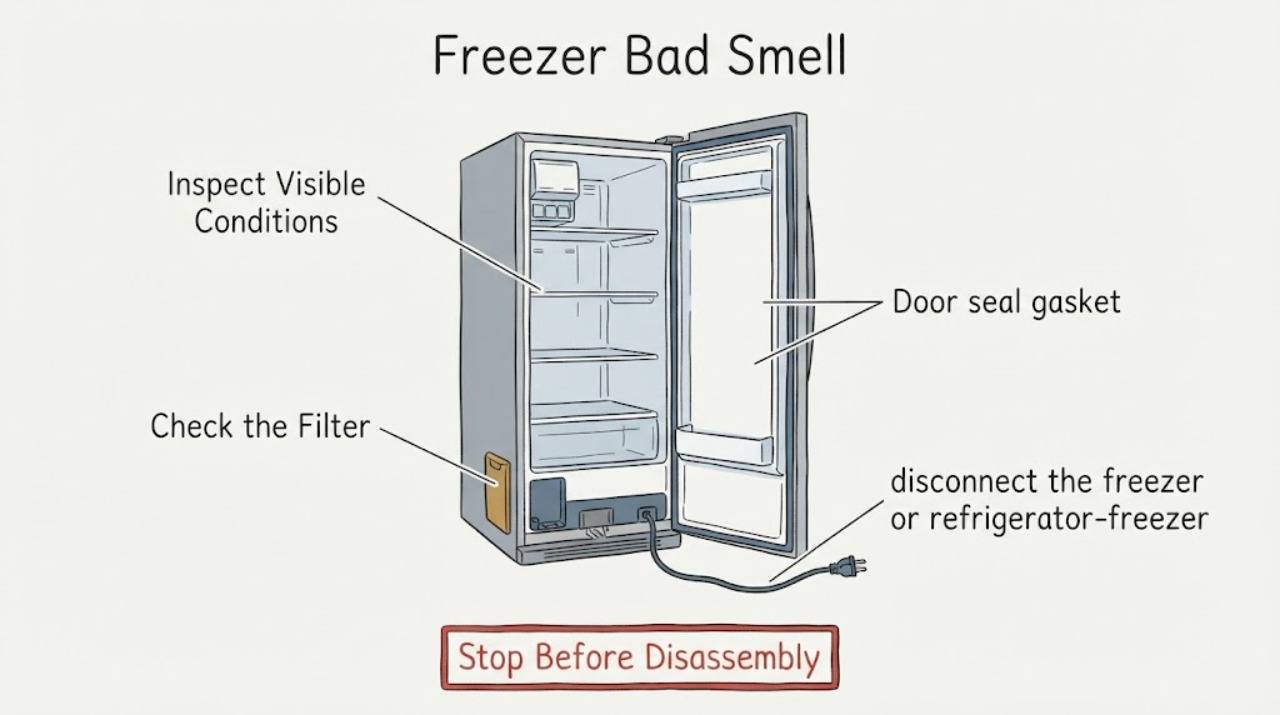
Samsung Freezer Bad Smell: Find the Source and Clean It Safely
A bad smell in a Samsung freezer usually starts with spoiled food, an uncovered strong-smelling item, a spill or residue, stale ice, or water that is not draining correctly. Empty the freezer, remove questionable food, inspect the ice and visible drain area, and wipe the interior with a soft cloth and mild refrigerator-safe detergent; dry everything before restocking.
-
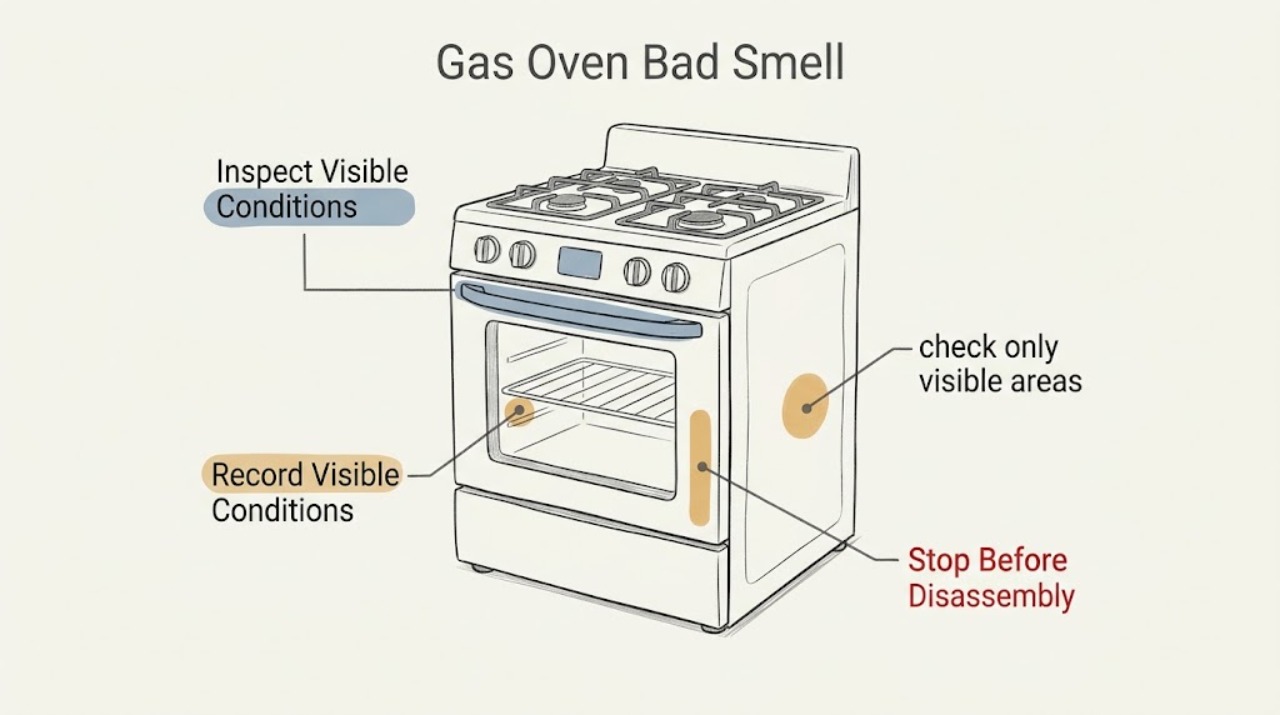
Samsung Gas Oven Bad Smell: Tell Gas, Burnt Residue, and First-Use Odor Apart
Treat a gas-like smell from a Samsung gas oven as a gas-safety question before treating it as an oven-cleaning issue. If the odor is strong, persistent, spreading, accompanied by a hissing sound, abnormal flame, smoke, headache, dizziness, or an alarm, do not operate the range, switches, or flames: leave the area and contact gas or emergency help from a safe location.
-
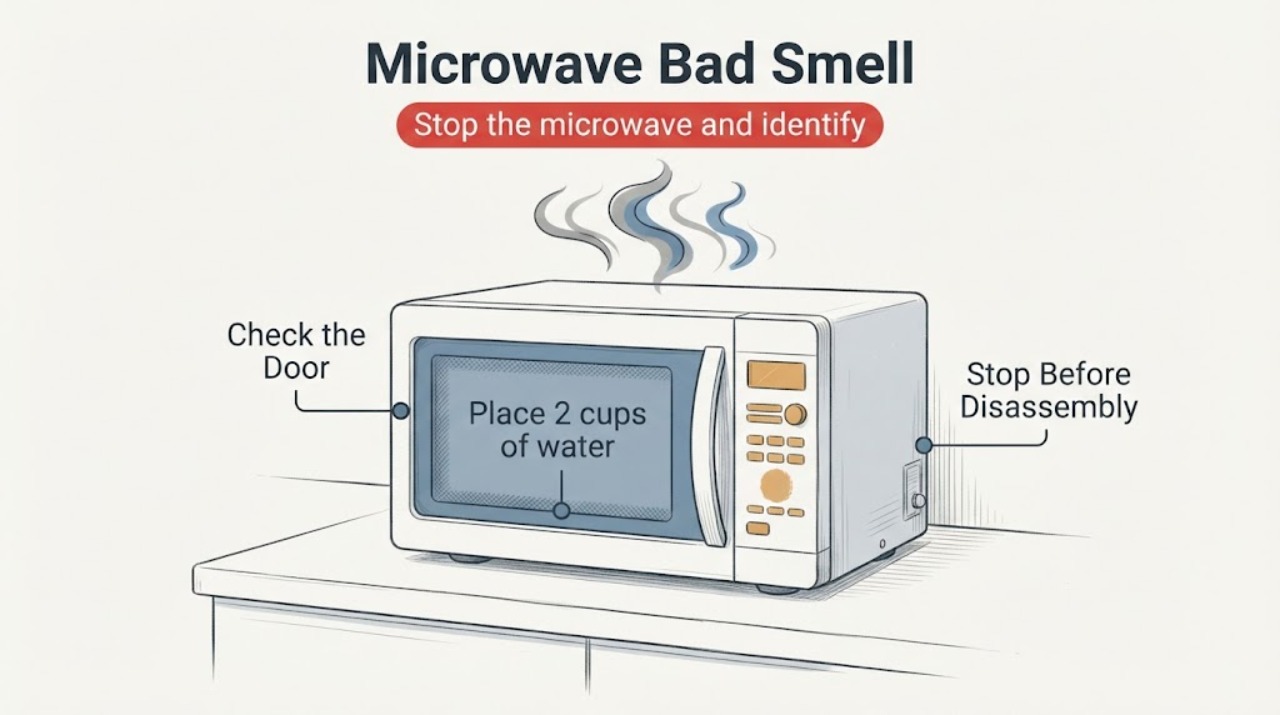
Samsung Microwave Bad Smell
A bad smell from a Samsung microwave usually starts with food residue, a dirty turntable or roller ring, or—on an over-the-range model—a saturated filter. Unplug the unit before cleaning the cavity and use Samsung's water-steam method with a microwave-safe bowl; stop immediately for smoke, sparking, a burning electrical odor, or a smell that remains after the cavity is clean and dry.
-
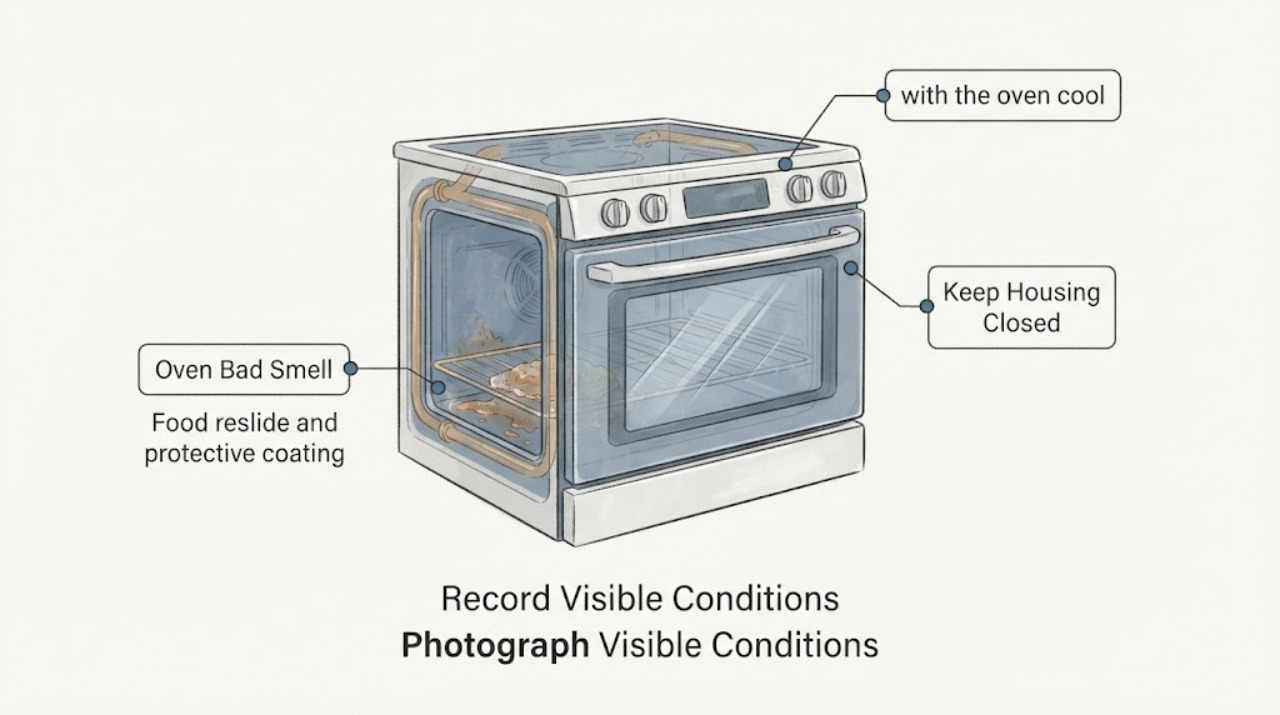
Samsung Oven Bad Smell: Separate Normal Odor from a Safety Fault
A Samsung oven smell is only potentially routine when it matches a known situation: a faint odor during first use, odor or smoke during a model-supported self-clean cycle, or smoke from food residue during normal cooking. Identify the oven model, fuel type and when the smell starts before choosing any remedy.
-
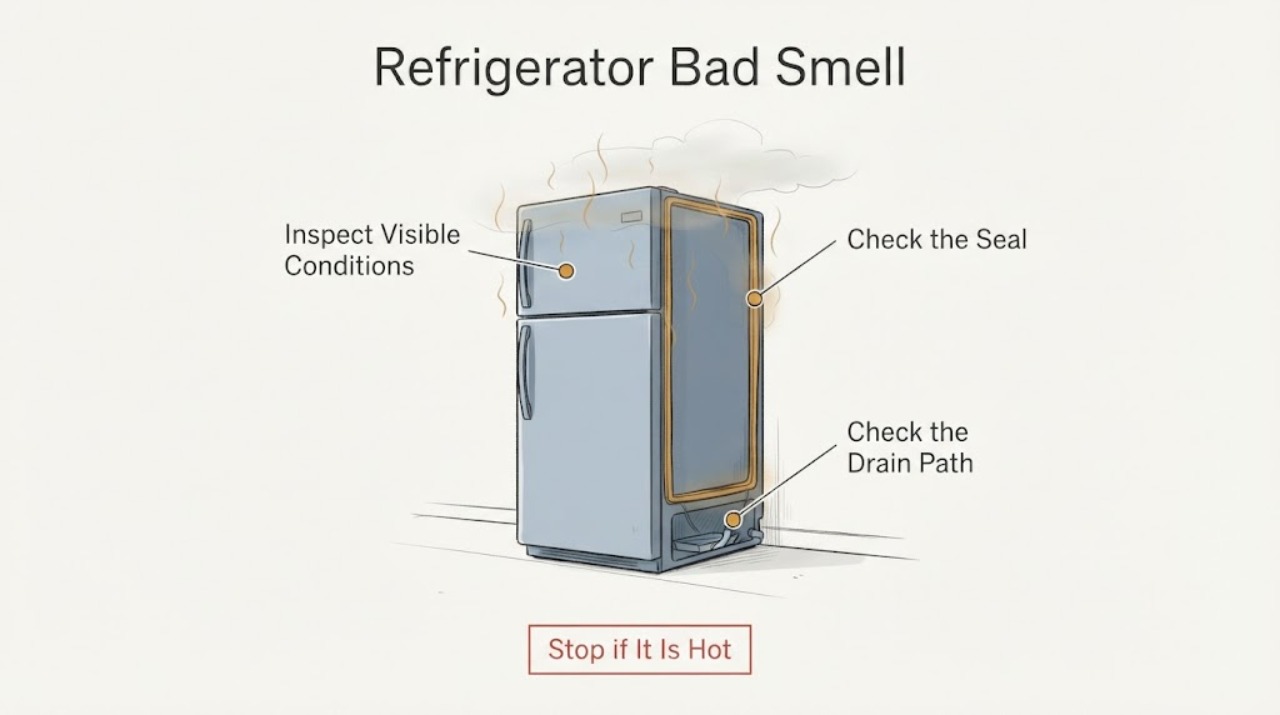
Samsung Refrigerator Bad Smell
A Samsung refrigerator bad smell should be traced to spoiled food, spills, the gasket, drain area, or an odor from a warming compartment. Remove spoiled food and clean accessible surfaces, verify doors close and cooling is normal, and arrange service for persistent odor with warming, standing water, electrical smell, or an inaccessible source.
-
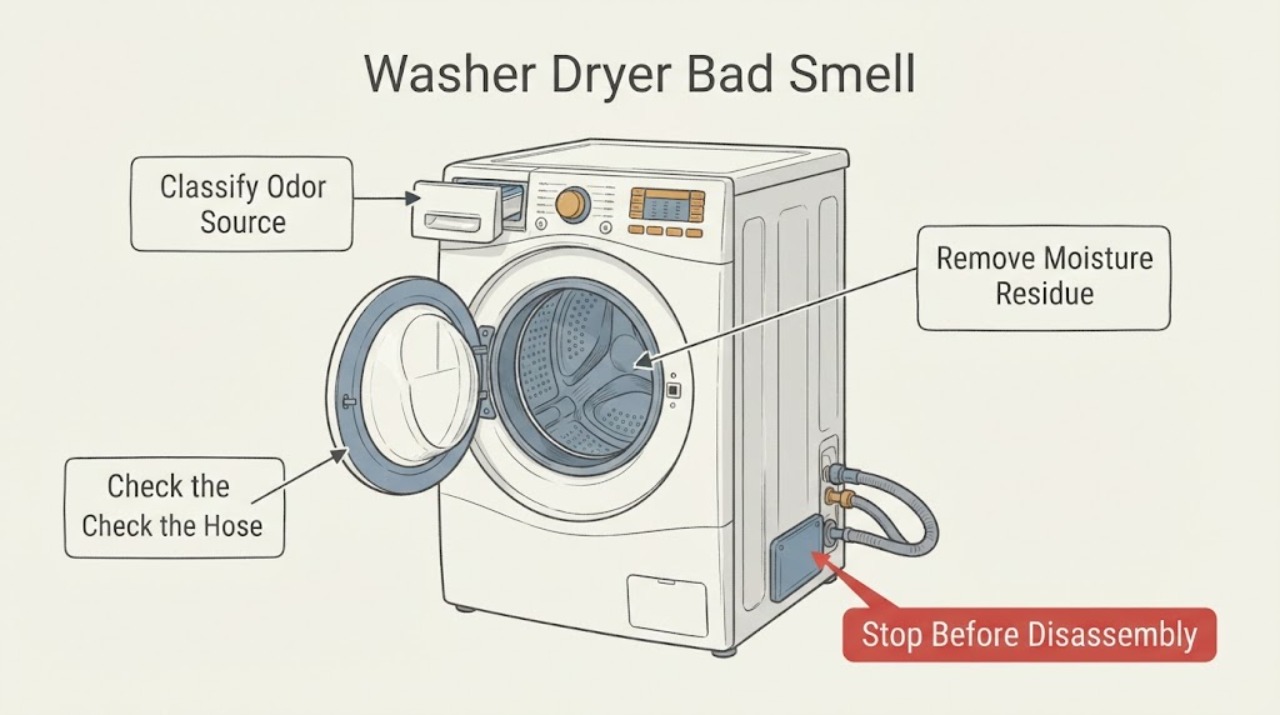
Samsung Washer Dryer Bad Smell
Identify the odor before cleaning. A musty, moldy, or sour smell usually points to trapped moisture, detergent residue, wet laundry, the door seal, drawer, or a dirty pump filter; a sulfur or sewage smell makes the drain-hose setup a priority.
-
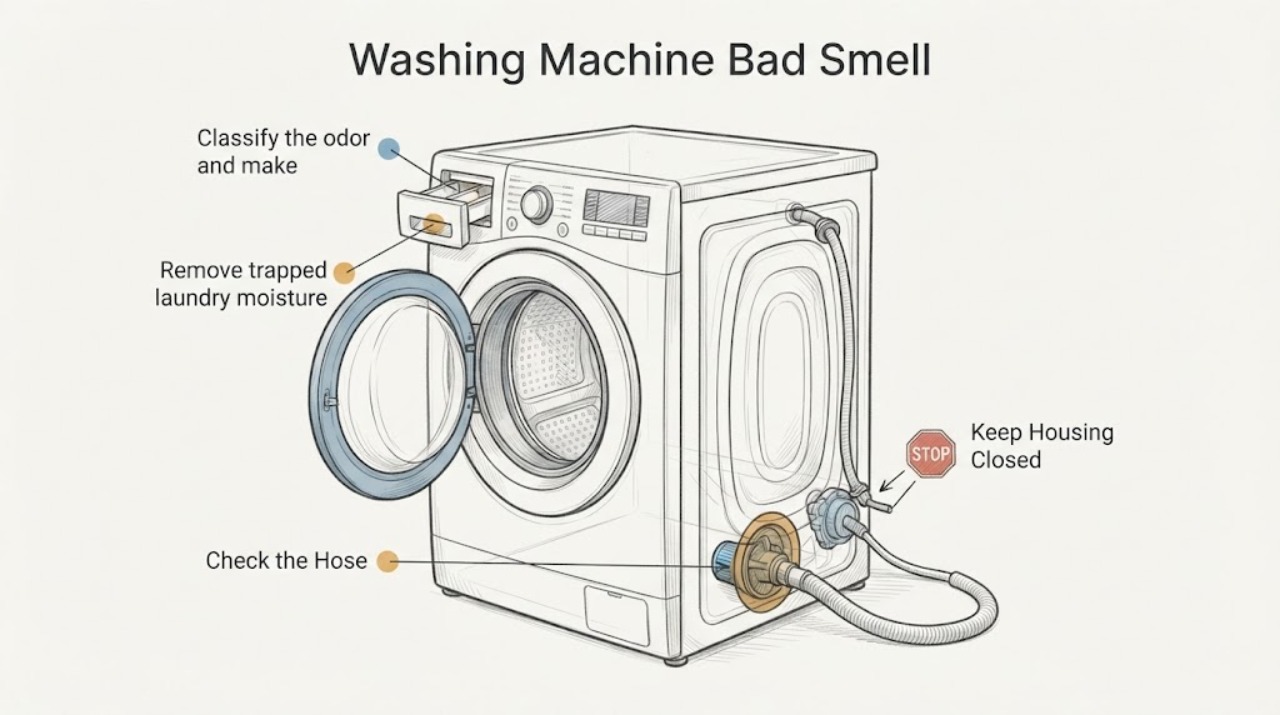
Samsung Washing Machine Bad Smell: Find the Odor Source Safely
First classify the odor from your Samsung washing machine: musty or moldy usually points to trapped moisture or detergent residue; sulfur or sewage odor can point to drain-hose installation or drain water siphoning back; and a burning or electrical odor is a stop-use condition rather than a cleaning task. Remove wet clothes promptly, dry the accessible tub, door seal, and dispenser, and leave the door or lid and drawer open when the exact manual allows.
-
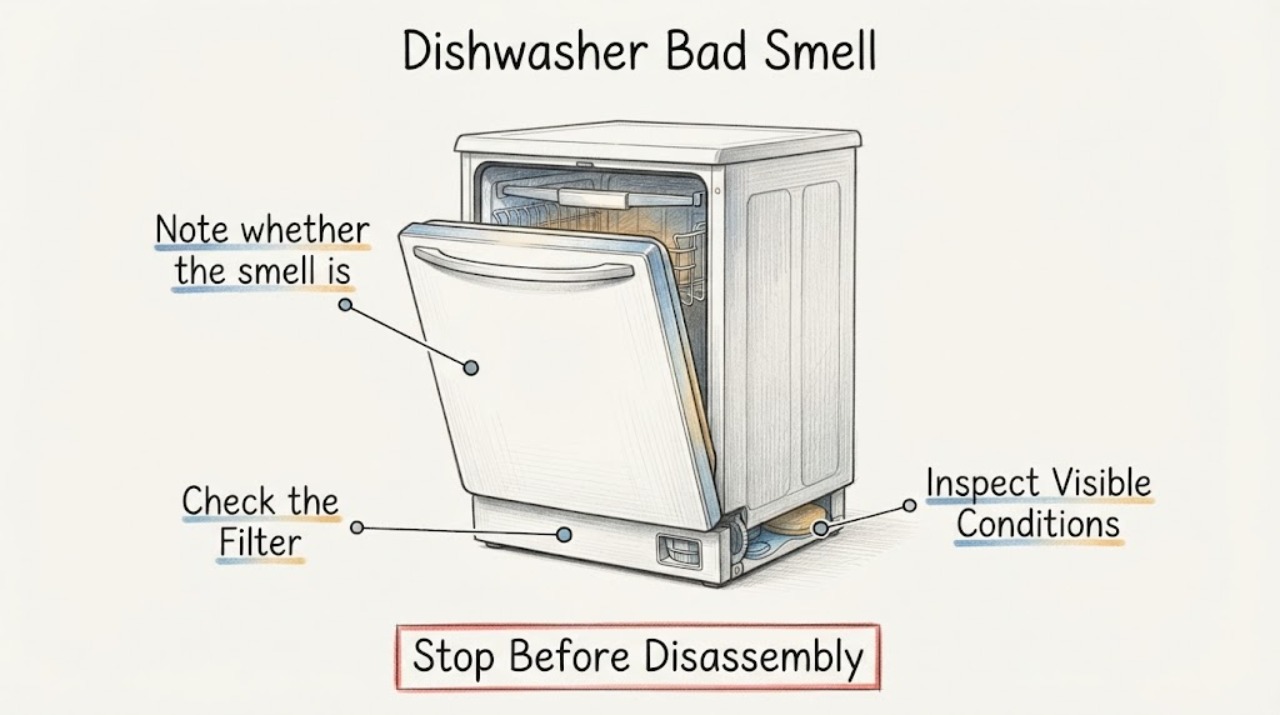
Sharp Dishwasher Bad Smell
A Sharp dishwasher with a bad smell should be checked for standing water, accessible filter debris, residue on the door seal, and a blocked drain path. Clean only user-accessible areas as the manual directs; a persistent odor with a leak or electrical symptom needs service.
-
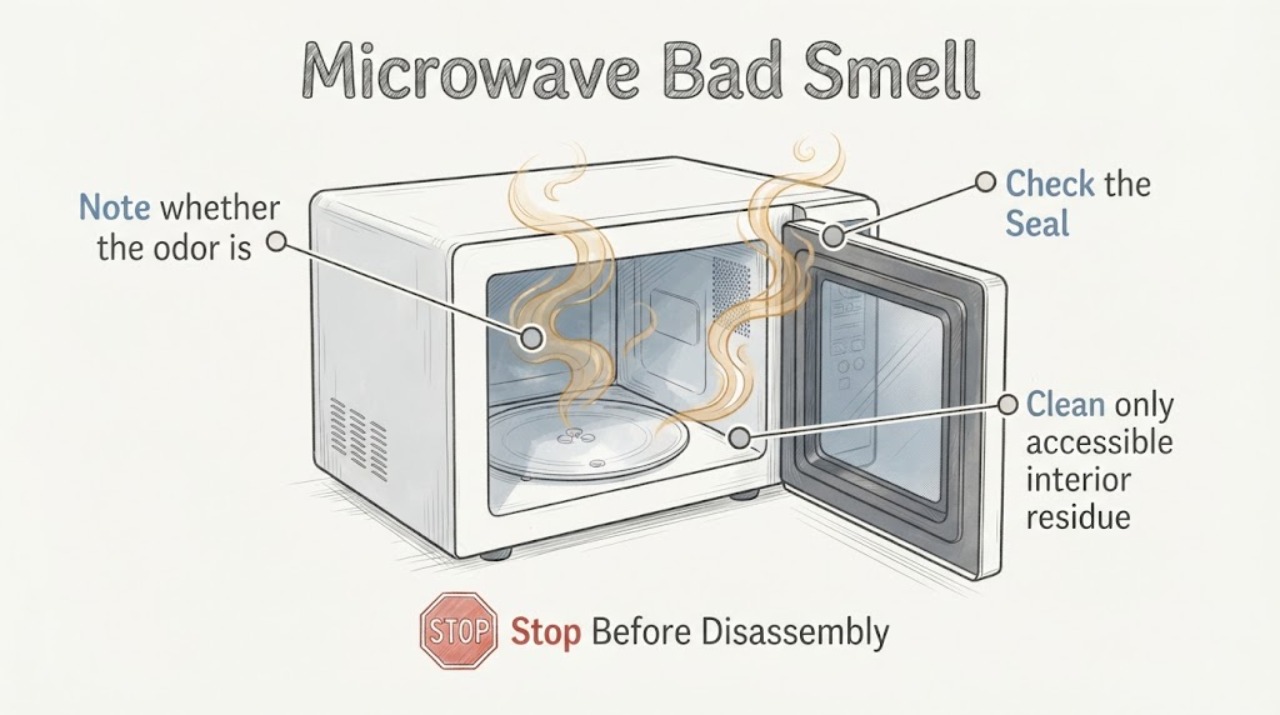
Sharp Microwave Bad Smell
Stop using a Sharp microwave with a bad smell until you identify whether it is food residue, overheated material, or an electrical/burning odor. Keep the door closed for any fire inside and isolate power only when safe.
-
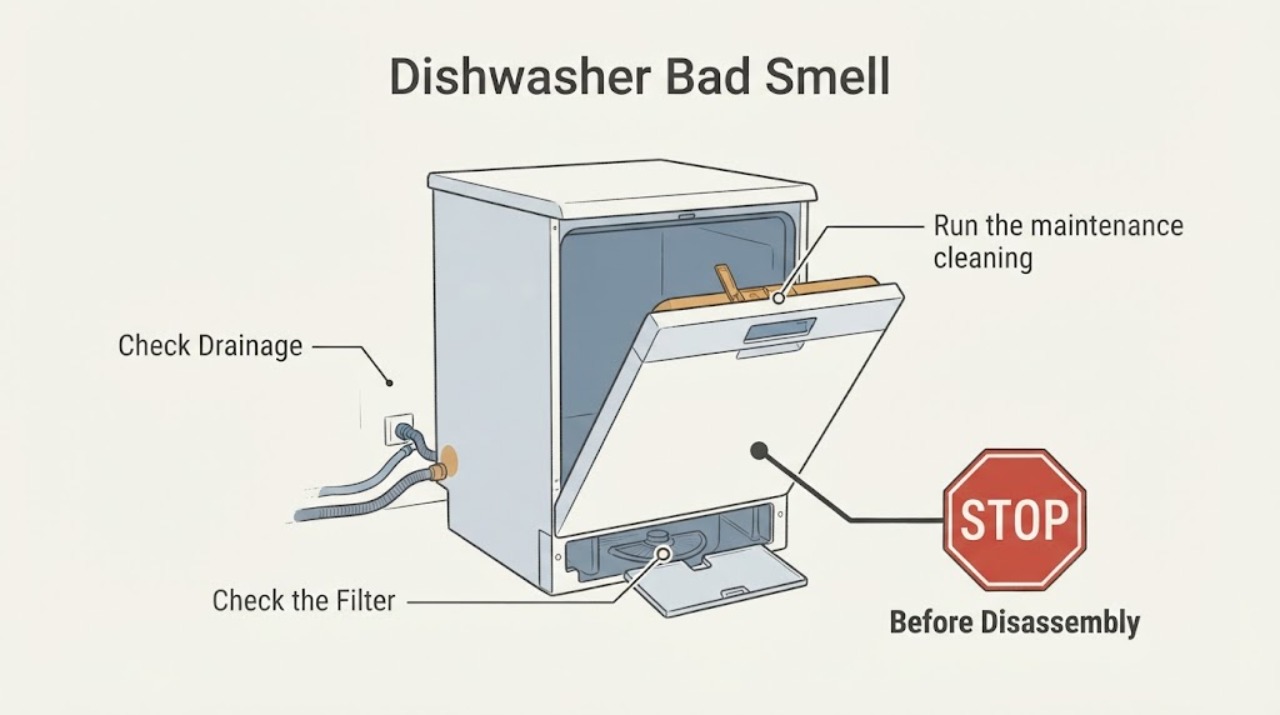
Siemens Dishwasher Bad Smell
For a Siemens dishwasher that is bad smell, begin with the symptom’s observable path: filter and pump for draining or odour, water supply for filling, detergent and spray arms for dispensing or wash results, and the model manual for display messages. Switch off and isolate water or power when the official guidance calls for it. If the issue persists, leaks, or the dishwasher will not heat, arrange Siemens service.
-
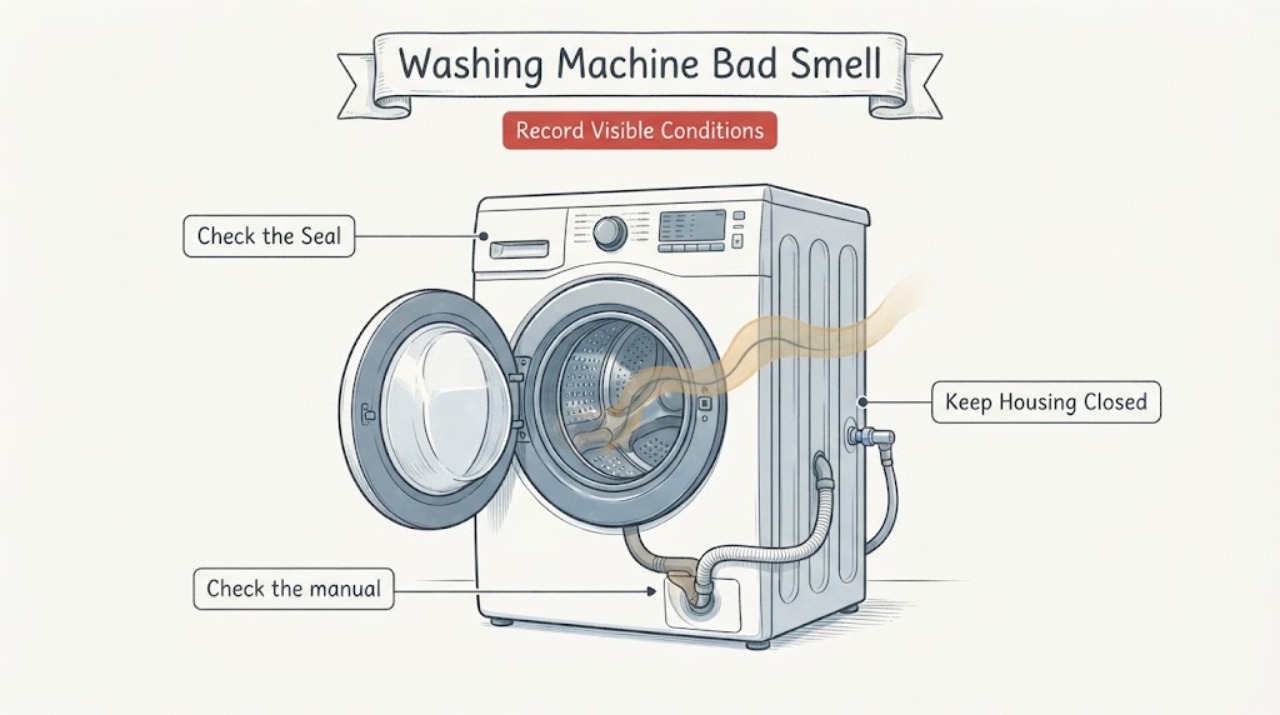
Siemens Washing Machine Bad Smell: Clean the Seal, Drawer, Drum, and Drain
A bad smell from a Siemens washing machine is usually traced to damp residue in the door seal, detergent drawer, drum, or drain path rather than a part that should be replaced immediately. First separate a musty or sewage-like smell from a burning or electrical smell.
-
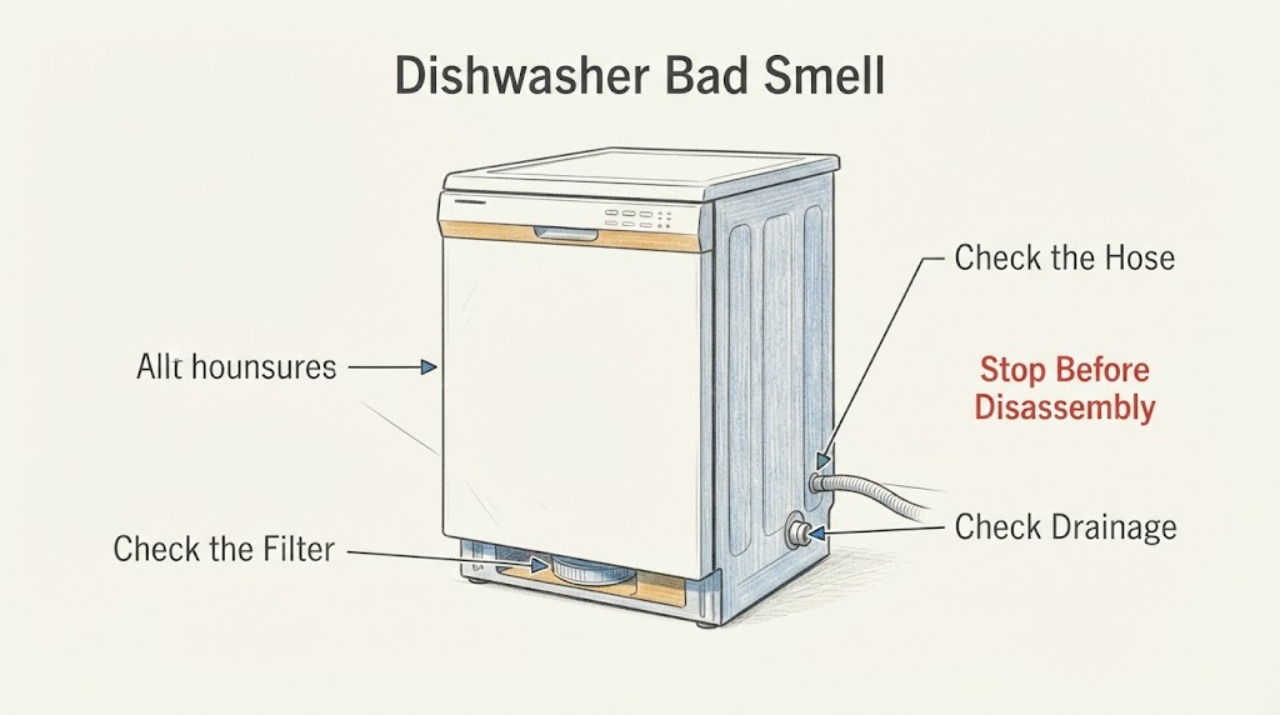
Smeg Dishwasher Bad Smell
A bad smell from a Smeg dishwasher is usually narrowed by retained food or standing water in the filter and sump area, a drain path issue, detergent residue, or a door left closed while damp. Clean accessible parts and stop if the smell is electrical or sewage-like.
-
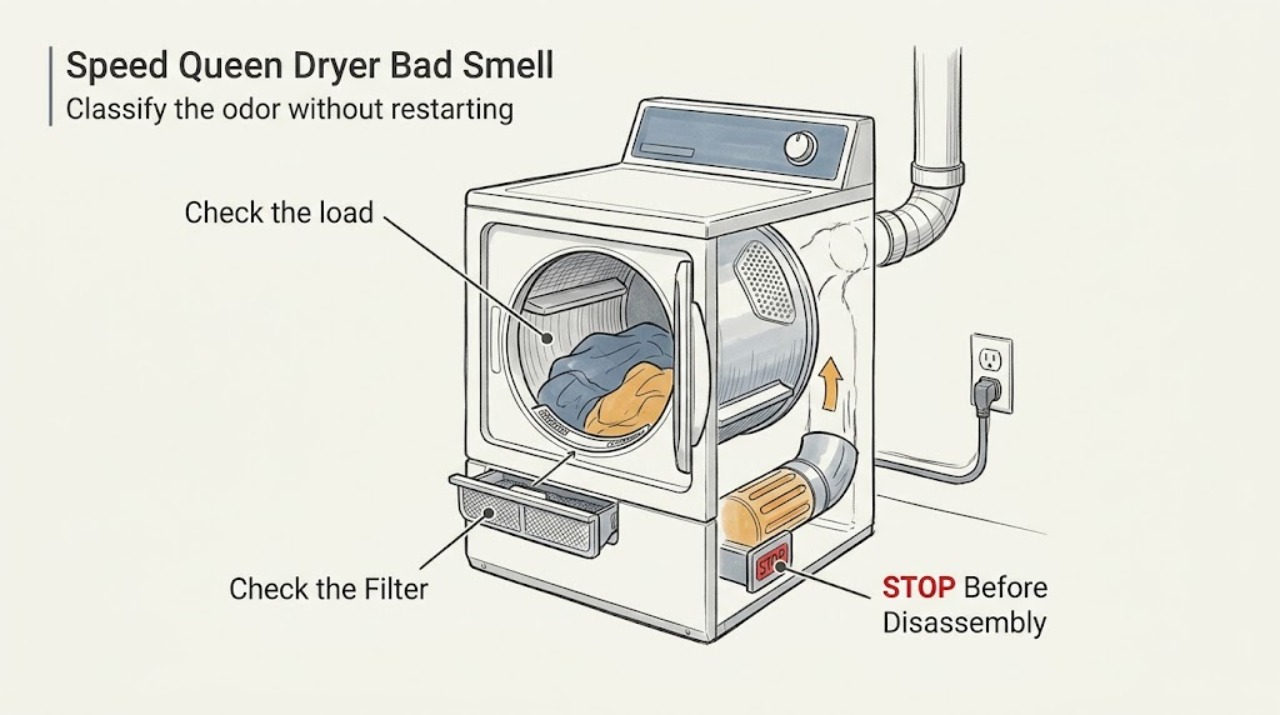
Speed Queen Dryer Bad Smell: Identify the Odor Before Restarting
A Speed Queen dryer odor may come from room air or a damp load, but a burning, melted-plastic, fuel, or electrical smell is a stop signal. Speed Queen guides say room odors can transfer to clothing, lint can restrict drying airflow, and the correct cycle and load matter; gas and electric models also have different heat and exhaust arrangements.
-
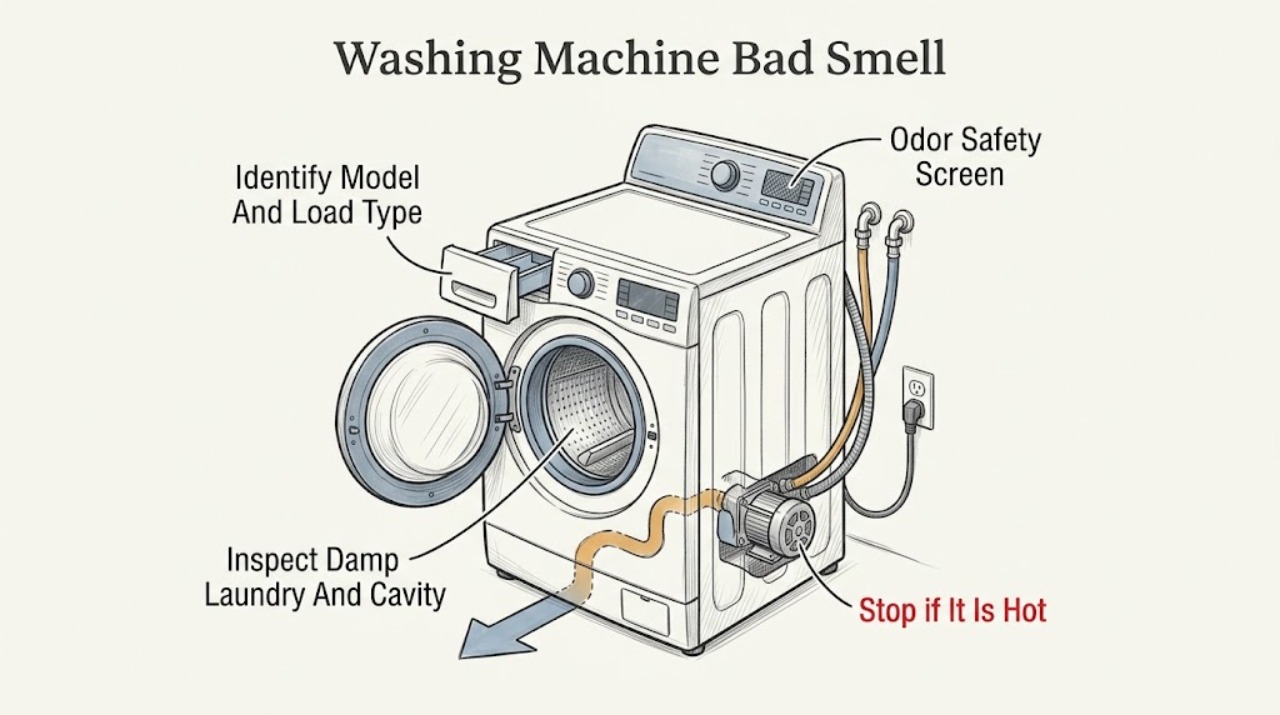
Speed Queen Washing Machine Bad Smell
First classify the odor instead of adding more cleaner. A musty or sour smell usually points to moisture, detergent or fabric-softener residue, lint, or a damp door gasket, dispenser, tub, or laundry load.
-
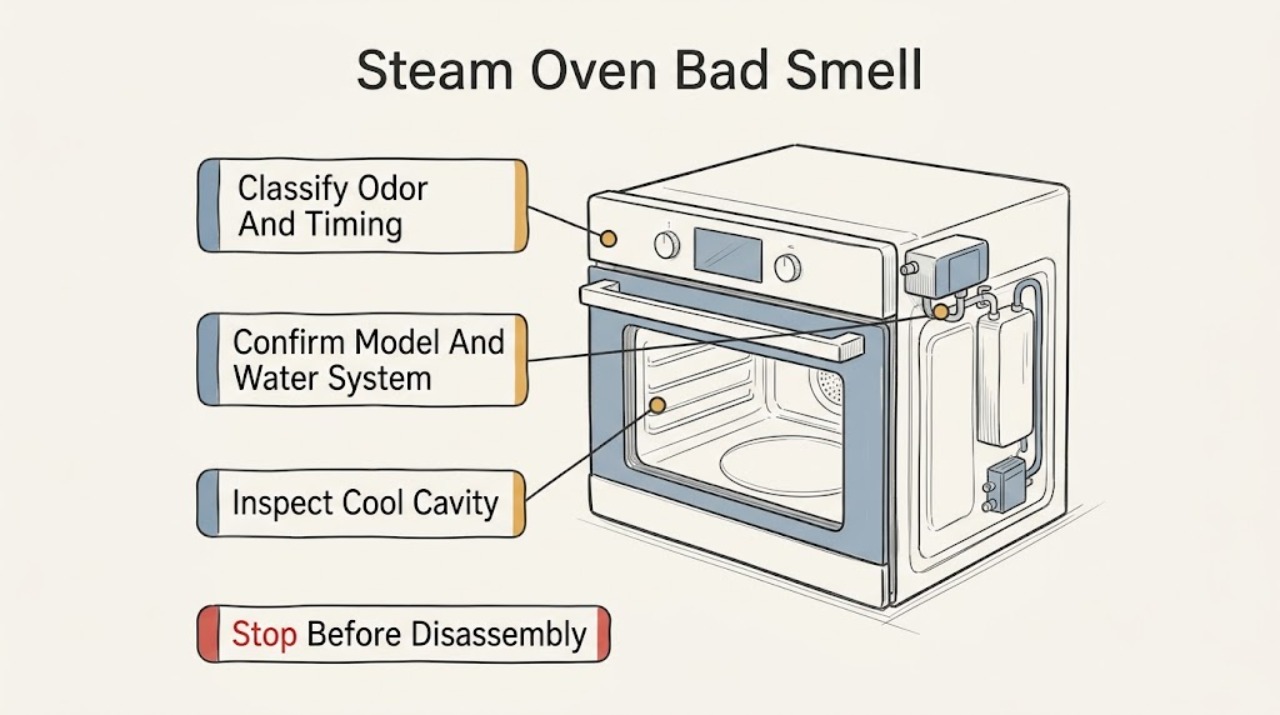
Steam Oven Bad Smell
A bad smell from a steam oven is often caused by food or grease residue, standing water or scale in the water path, cleaner residue, or a mild first-use odor from protective materials. Steam can make an otherwise small residue smell stronger.
-
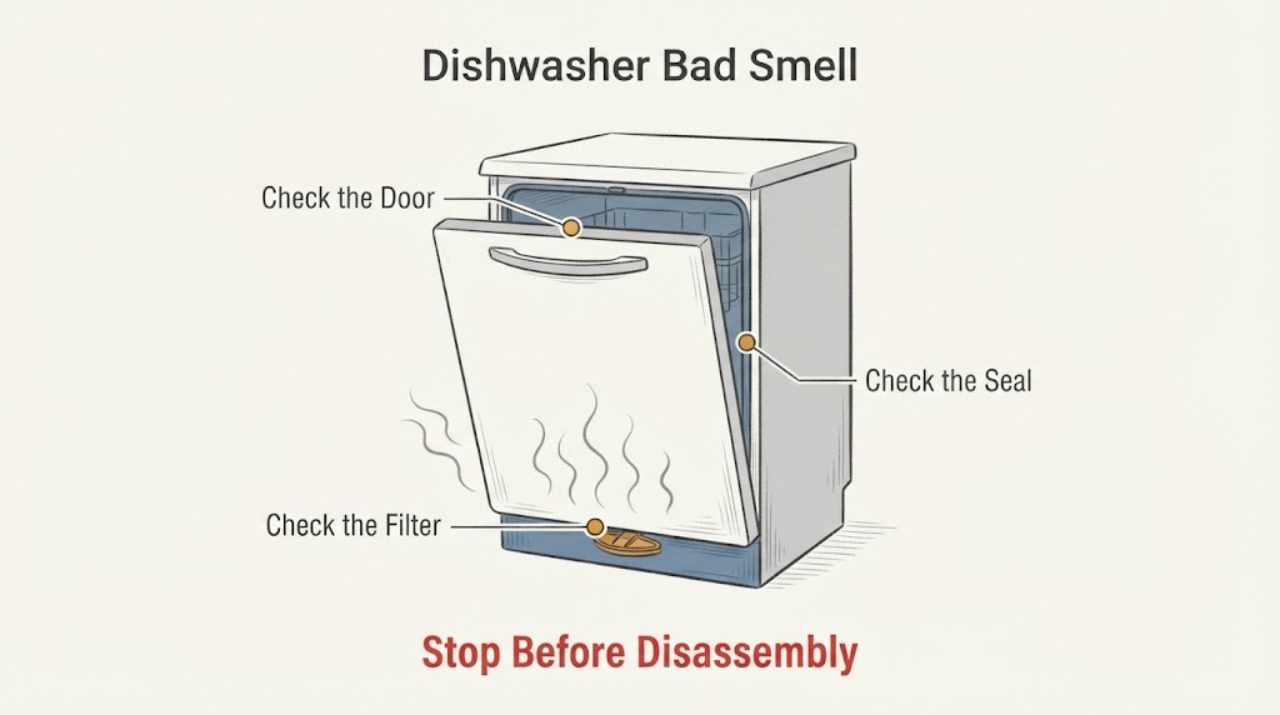
Thermador Dishwasher Bad Smell: Clean the Filter, Seal, and Drain Path
A bad smell from a Thermador dishwasher usually needs the food, filter, seal, and residual-water paths separated. With the dishwasher empty and power off as the manual requires, clean the filter and accessible bottom area, wipe food particles from the door seal, verify the last cycle fully drained, and use only dishwasher cleaner or the model-approved descaling procedure.
-
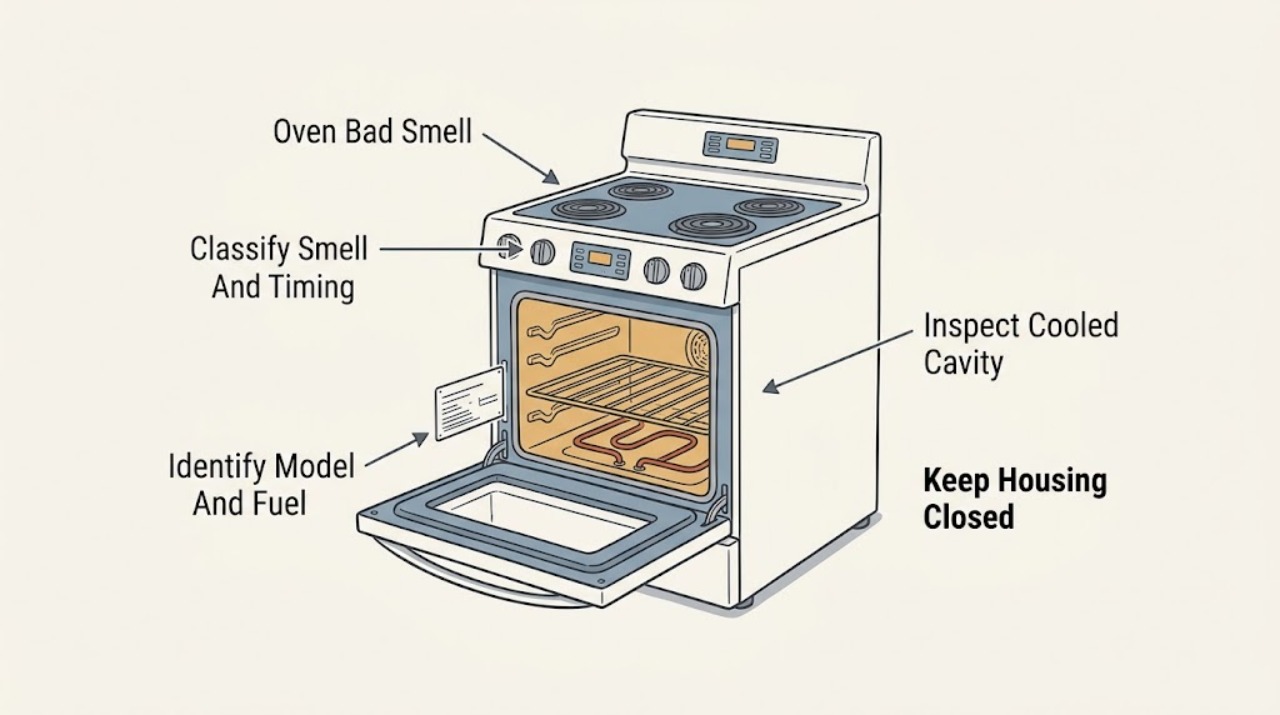
Thermador Oven Bad Smell: Separate Food Residue, Factory Oil, and Gas Odor
First classify the smell before cleaning or testing: food or grease residue, a first-use factory-oil smell, cleaner or plastic, an electrical burning smell, or gas. Thermador says smoke during initial use can come from factory oils and that warm air or steam from the vent can be normal, while food spills should be wiped after the oven cools.
-
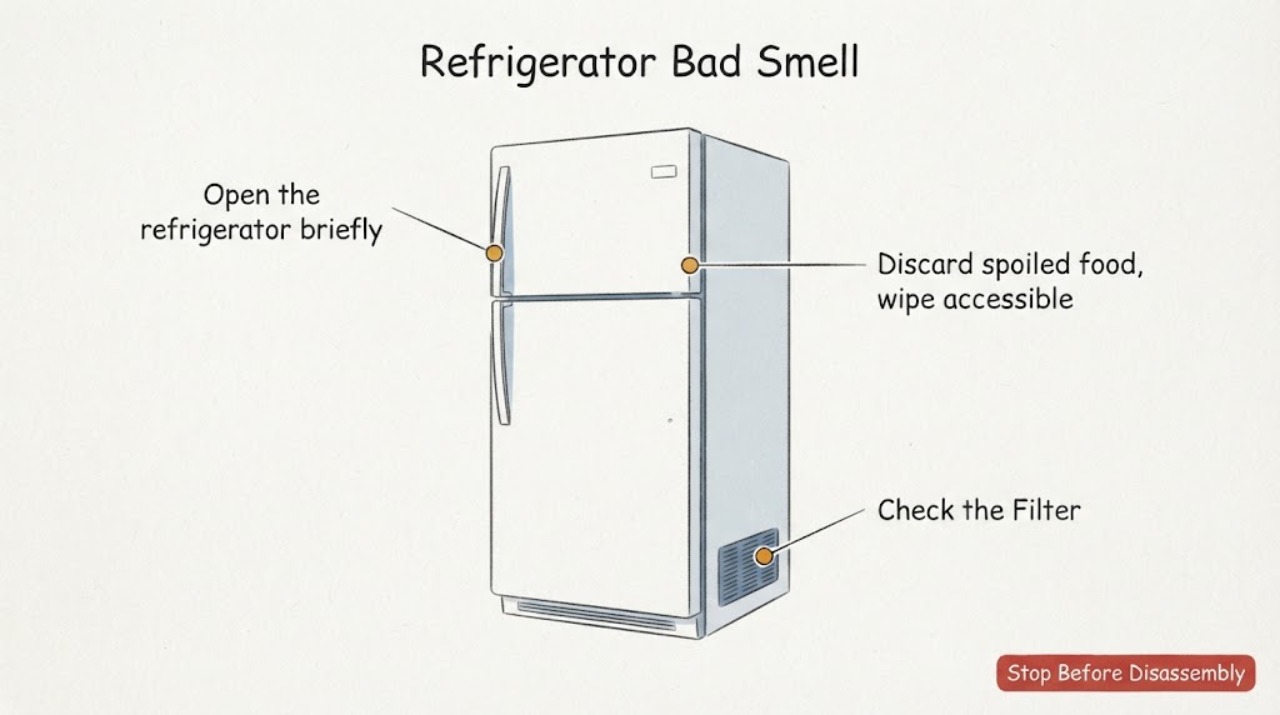
Thermador Refrigerator Bad Smell
For a Thermador refrigerator with a bad smell, remove spoiled food, clean and dry accessible interior surfaces, seal strong-smelling foods, and replace the carbon odor filter only as the model manual directs. If odor persists after cleaning or comes from a hot or electrical area, stop and arrange service.
-
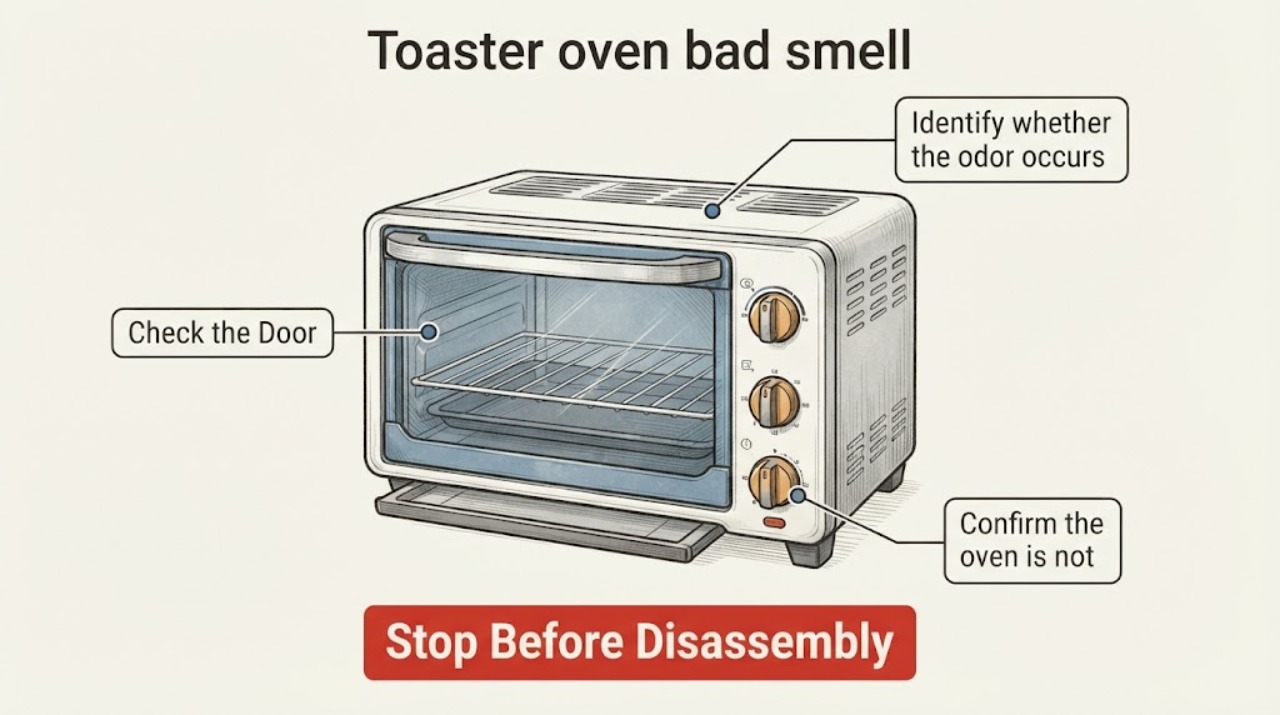
Toaster oven bad smell
A toaster oven can smell during its first heating cycle, but the odor should fade after the documented initial preheat. For an older or returning smell, unplug and cool it, remove crumbs/grease from accessible trays and surfaces, and check for food or plastic touching an element. Stop immediately for burning insulation, smoke that does not clear, sparks, or a damaged cord.
-
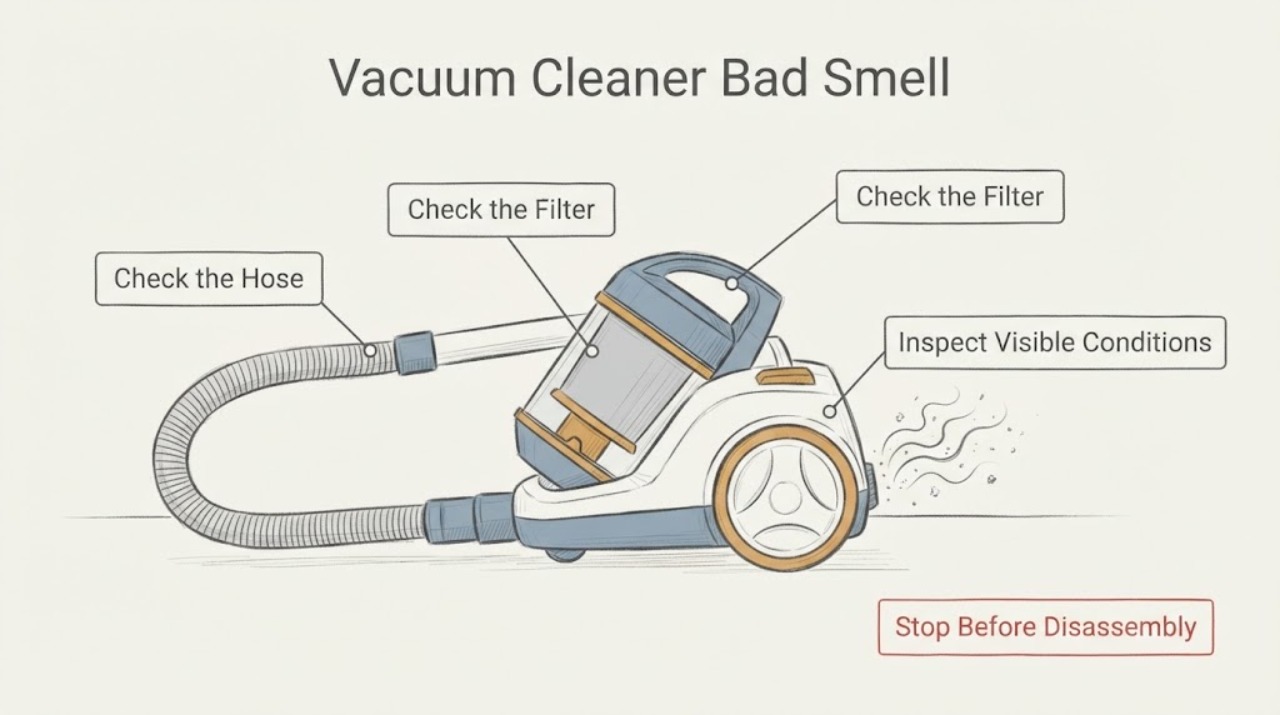
Vacuum Cleaner Bad Smell
Unplug the vacuum and classify the smell before any cleaning. Damp odor can come from moisture mixed with dust, while electrical burning, smoke, or unusual heat means stop using it; clear only ordinary-access blockages and refit a completely dry filter.
-
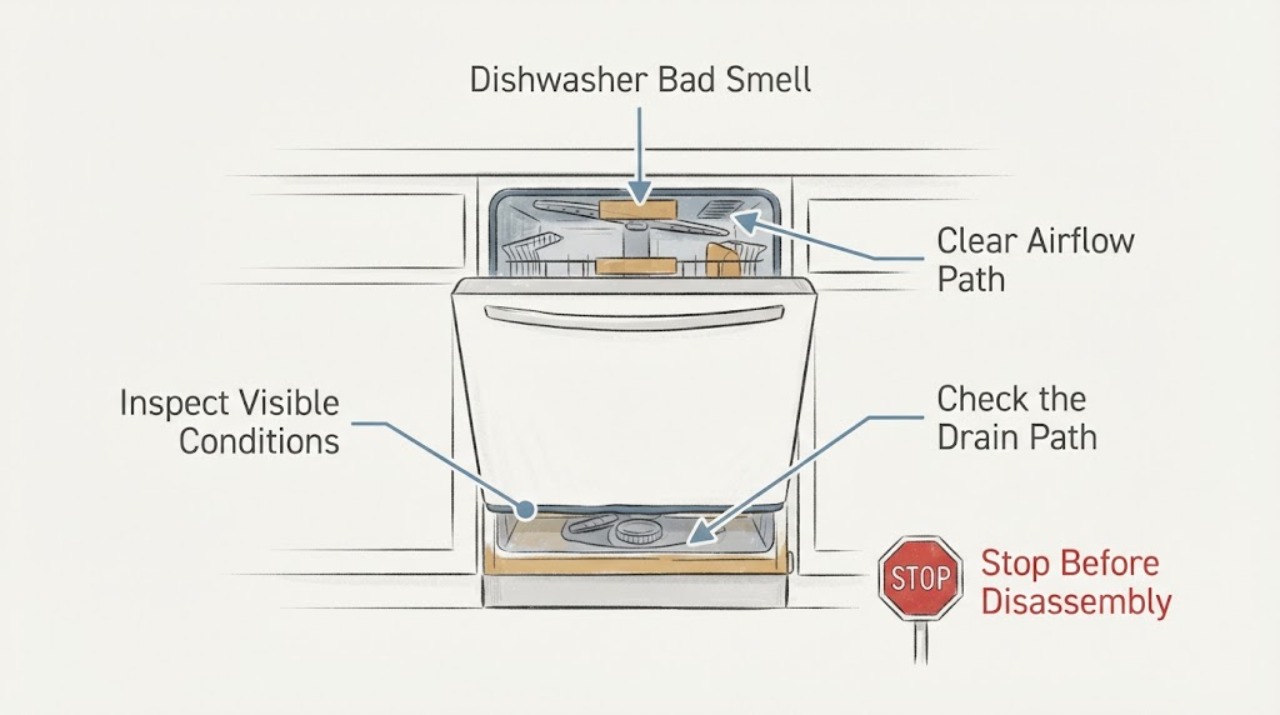
Viking Dishwasher Bad Smell
For a Viking dishwasher with bad smell, start with the external control, closure, setting and user-accessible path checks for this model. Note exactly when the symptom appears and what changes after one safe check. If the appliance shows smoke, sparking, a burning smell, abnormal heat, flooding near electrics, damaged wiring or repeated breaker operation, stop using it and arrange qualified service.
-
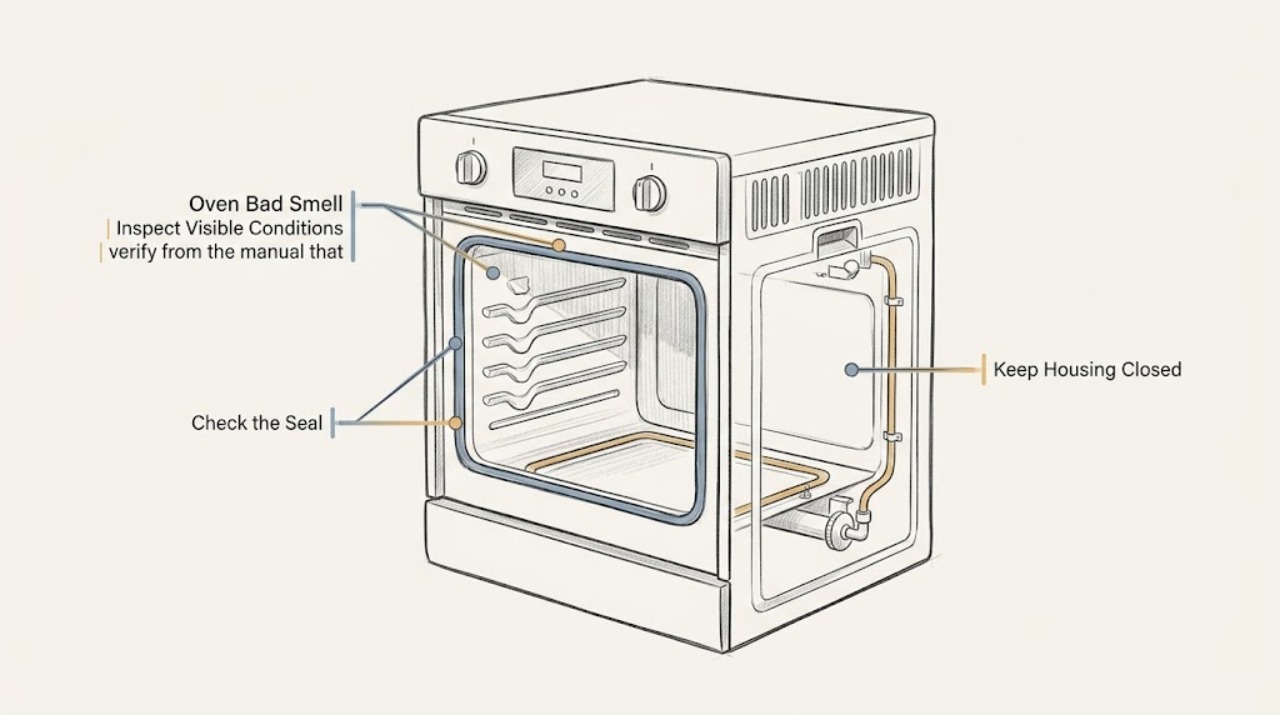
Viking Oven Bad Smell: Separate Burn-Off, Food Residue, Gas, and Electrical Odors
Do not treat every Viking oven odor as normal. First stop the oven and identify whether the smell is a short-lived new-appliance or first-use burn-off, food or grease residue, cleaner residue, a fuel-gas odor, or an electrical/plastic burning odor.
-
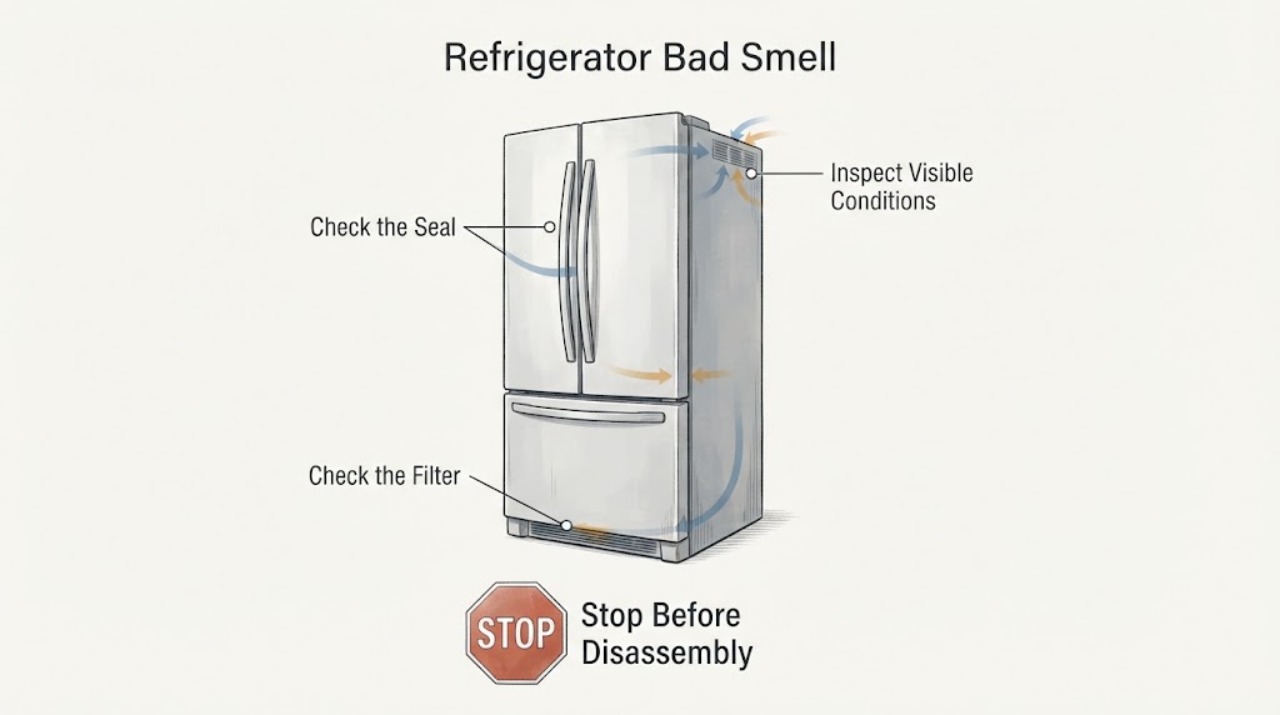
Viking Refrigerator Bad Smell: Safe Cleaning Checks
For a bad smell in a Viking refrigerator, first locate whether the odor is from spoiled food, a spill, the ice/water area, or the cabinet and drain area. Remove questionable food, clean accessible shelves, bins, gaskets, and the odor source according to the exact manual, and check that doors seal. If the odor is chemical, burning, electrical, or persists after cleaning, stop using the appliance and arrange Viking service.
-
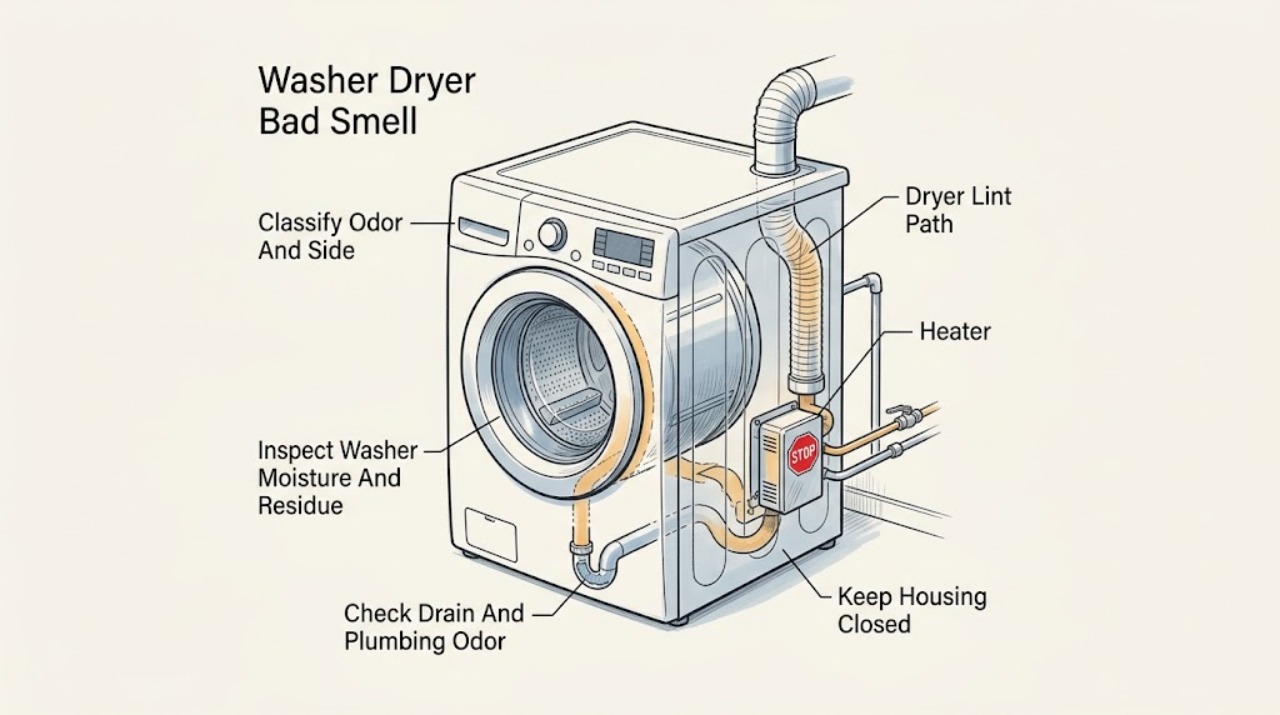
Washer Dryer Bad Smell: Separate Musty Odors from Fire and Gas Warnings
Identify which side of the combination appliance produces the odor and whether it appears during washing, draining, drying, or while the unit is idle. A musty or sour smell usually points to damp laundry, moisture in the washer seal or drum, detergent residue, a dispenser, drain, or plumbing path; a smell that begins with heat may be coming from the dryer, the load, or room air.
-
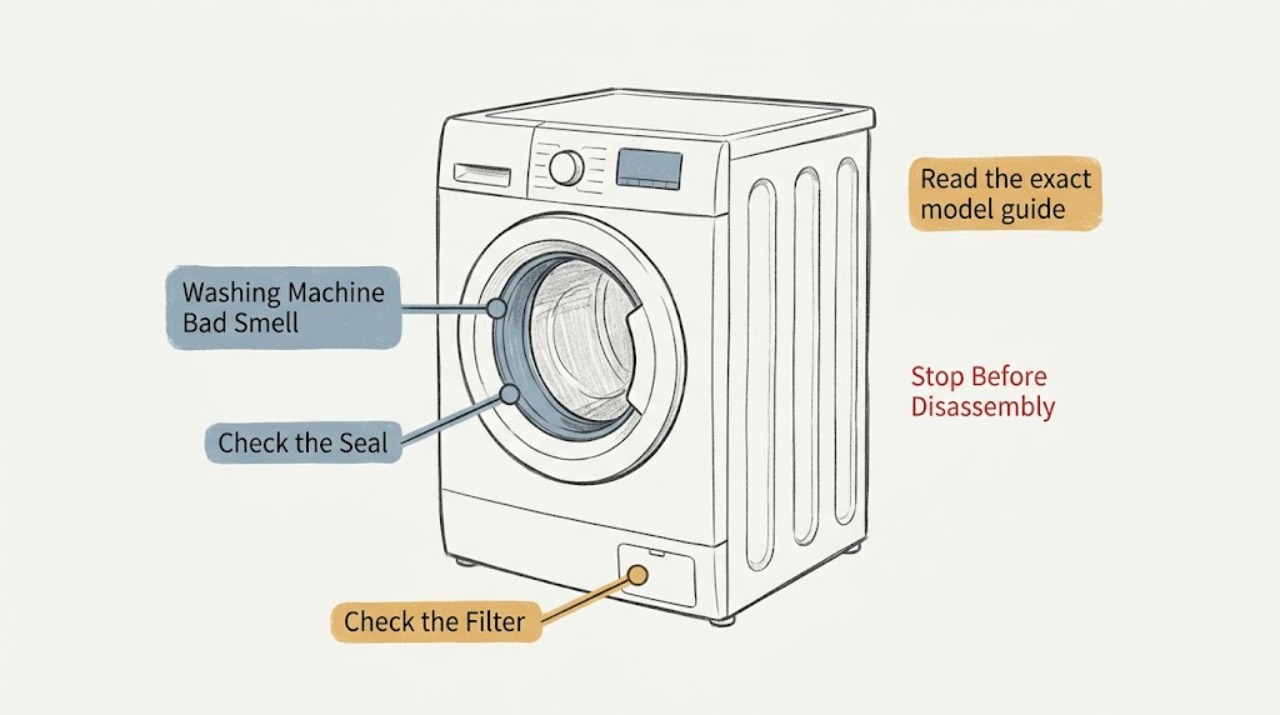
Washing Machine Bad Smell: Identify the Odor Safely
Identify the smell before cleaning. A musty or mildew odor commonly follows trapped moisture, wet laundry left inside, or detergent residue; a sewage-like odor points toward drain-hose, trap, or plumbing conditions.
-
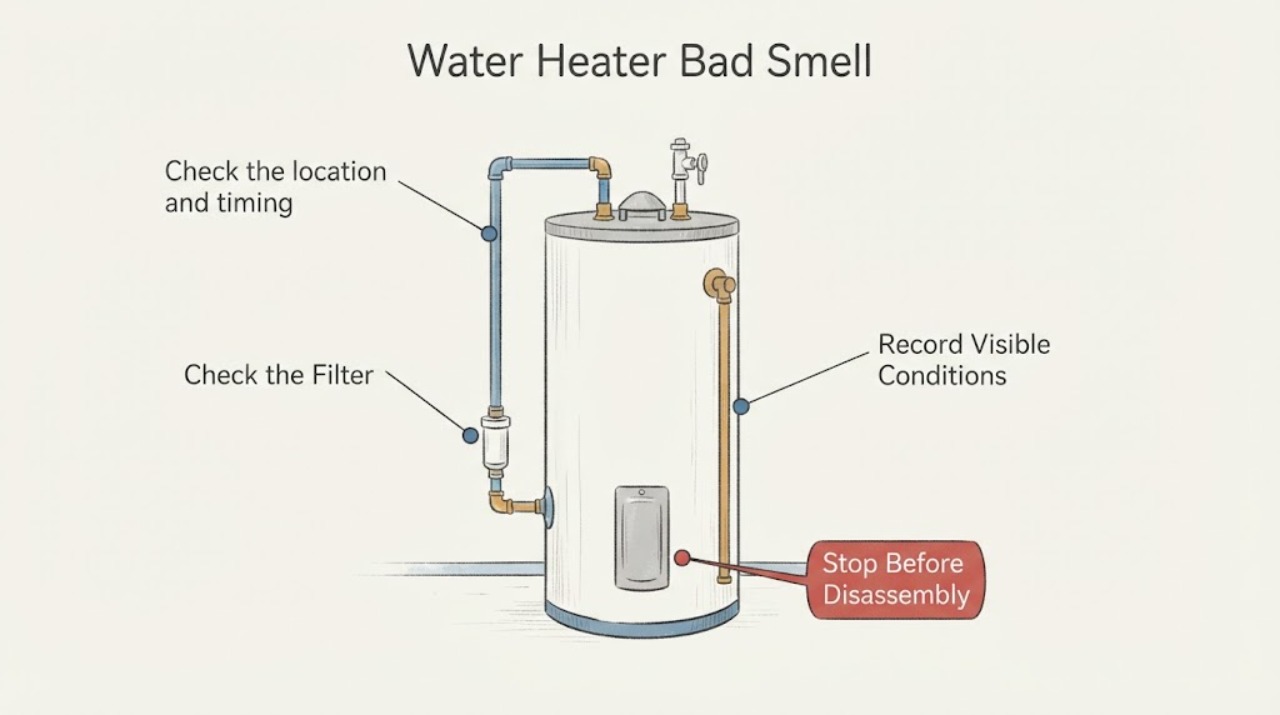
Water Heater Bad Smell: Separate Hot-Water Odor From a Gas Emergency
A bad smell associated with a water heater must first be classified by where it is noticed. A rotten-egg odor only in hot water can arise from water chemistry and the anode reaction, while a gas-like odor around the appliance is an emergency. Do not remove the anode or alter temperature settings without model-specific professional guidance.
-
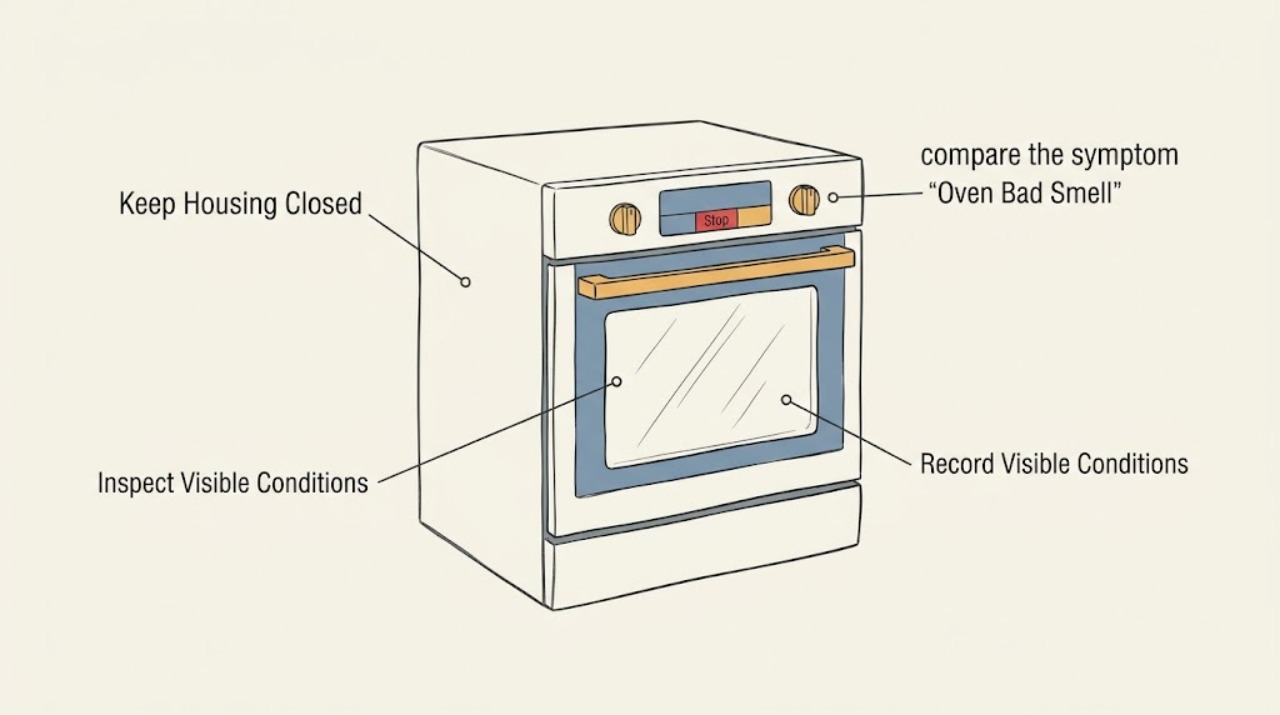
Westinghouse Oven Bad Smell: Separate Burn-Off, Food, Gas, and Electrical Odors
A Westinghouse oven smell is only potentially normal when it is a mild, short-lived first-use odor that follows the exact model's run-in instructions and decreases. A food or grease smell can come from a spill or residue, while a chemical smell may follow an unsuitable cleaner.
-
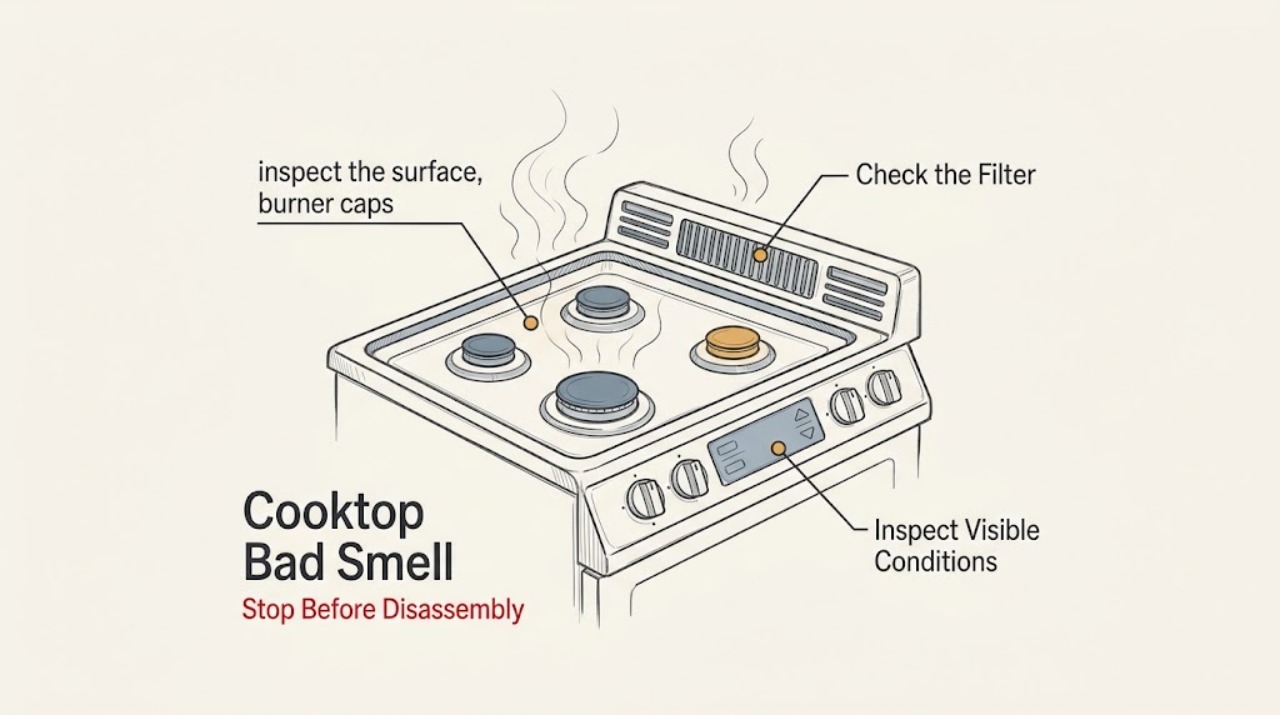
Whirlpool Cooktop Bad Smell: Identify It Safely
Treat the smell as a safety signal until its type and source are clear. A gas odor on a Whirlpool gas cooktop is different from food or grease smoke, cleaner residue, or a temporary first-use odor on a new electric or induction unit.
-
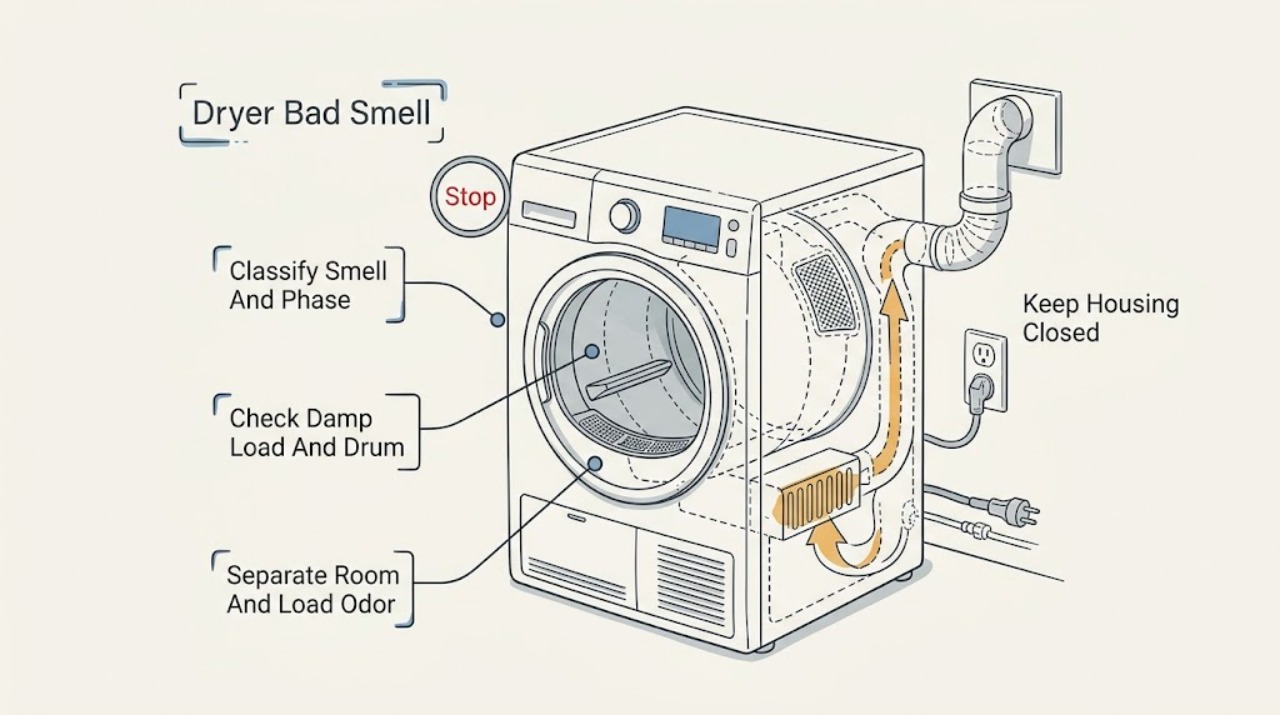
Whirlpool Dryer Bad Smell: Find the Source Before Running Another Cycle
Classify the smell before restarting the Whirlpool dryer. A new gas or electric dryer can have a temporary oily or semi-burning odor under Whirlpool's first-use guidance, while paint, stain, or varnish in the laundry area can be pulled into the load by the dryer.
-
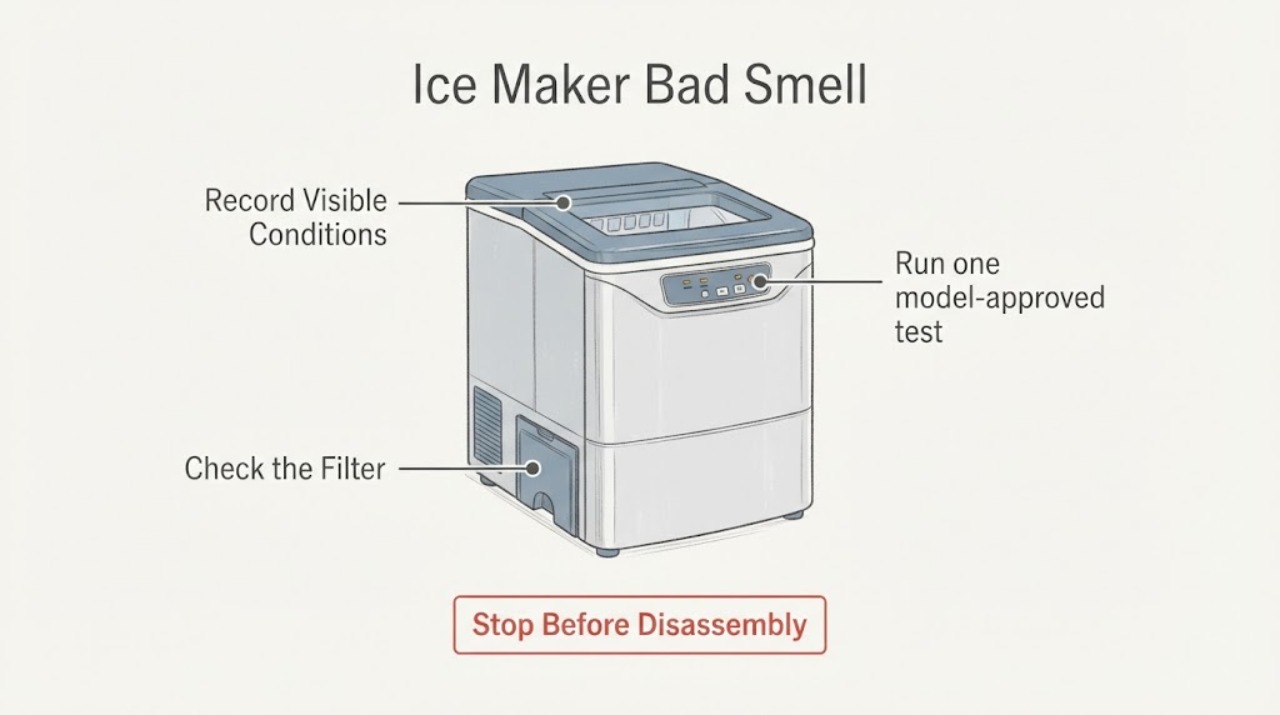
Whirlpool Ice Maker Bad Smell
A Whirlpool appliance with a bad smell should be stopped and checked for residue, standing water, a blocked filter, or overheated electrical parts. Burning or electrical odor requires immediate service.
-
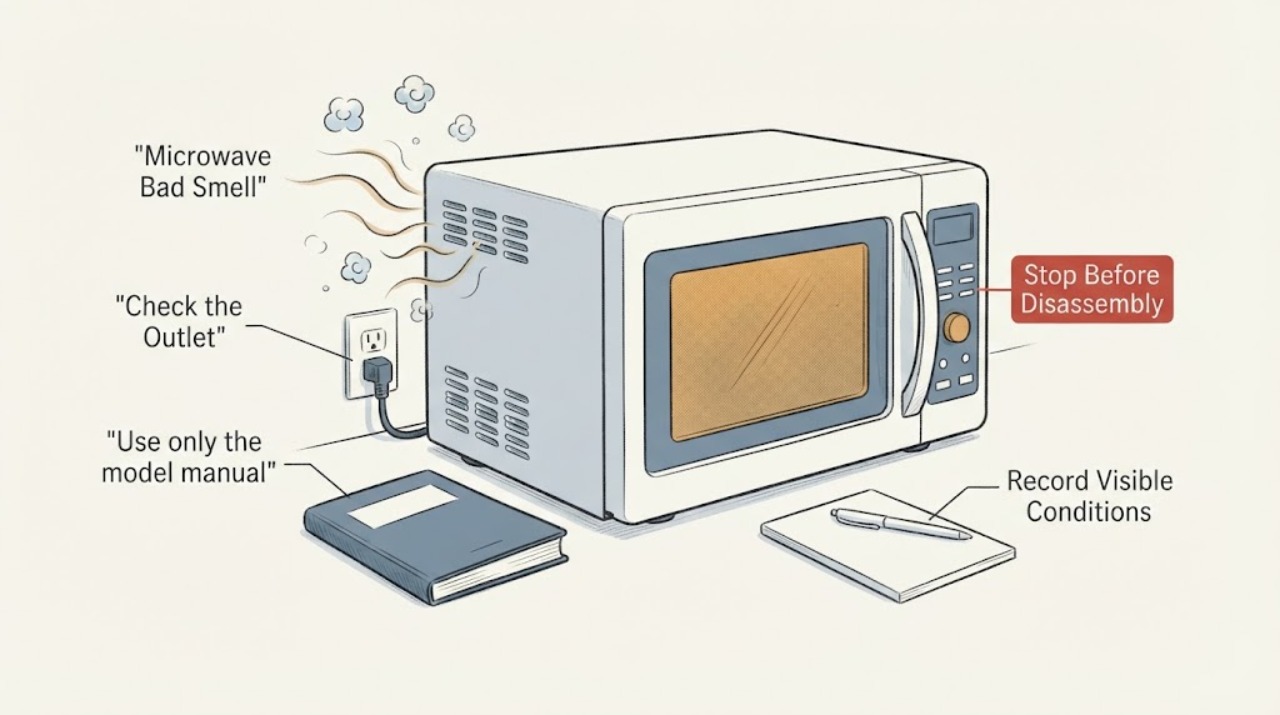
Whirlpool Microwave Bad Smell
A Whirlpool appliance with a bad smell should be stopped and checked for residue, standing water, a blocked filter, or overheated electrical parts. Burning or electrical odor requires immediate service.