
Repair problem
Bad Smell Troubleshooting Guides – Page 2
Published FixGraph guidance for diagnosing and responding to bad smell.
Matching published guides
Choose a guide that matches the service, equipment, and conditions you are seeing.
-
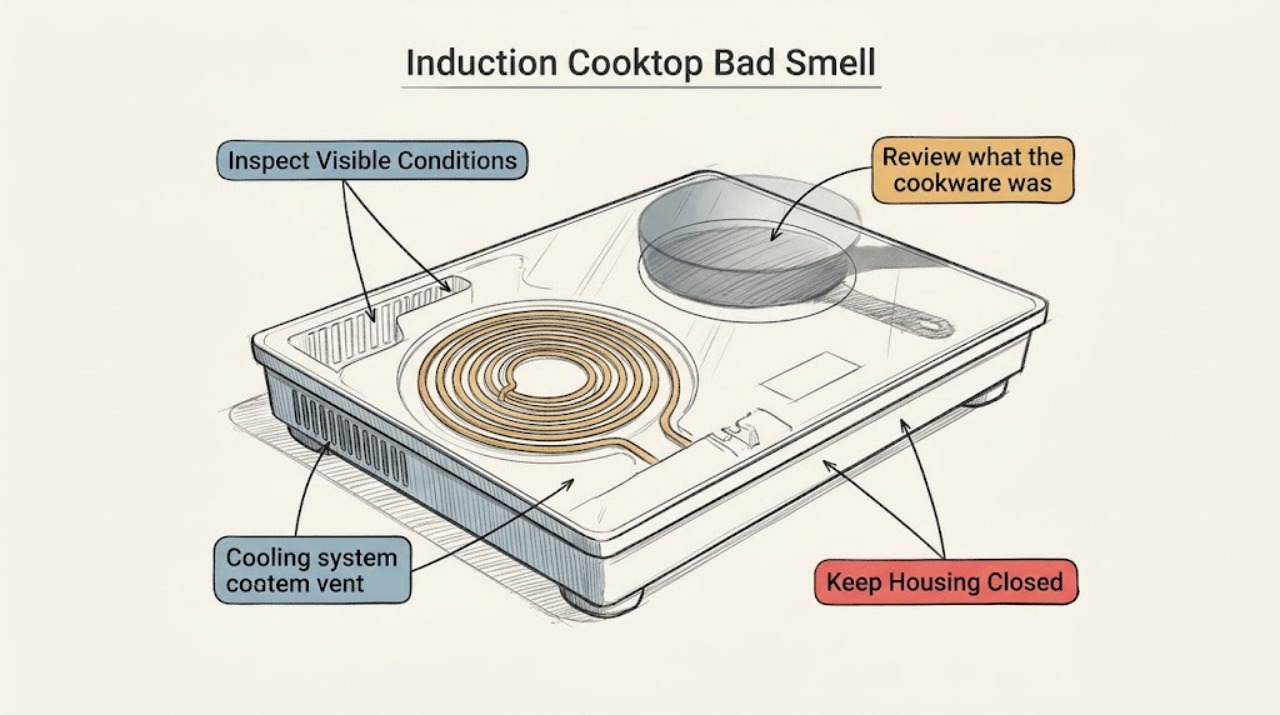
GE Induction Cooktop Bad Smell: Safe Checks for New, Food, or Electrical Odors
Treat the smell by its character and timing. GE says a slight odor can be normal when a new cooktop is used for the first time because new parts and insulating materials are heating, but a lingering odor is not typical.
-
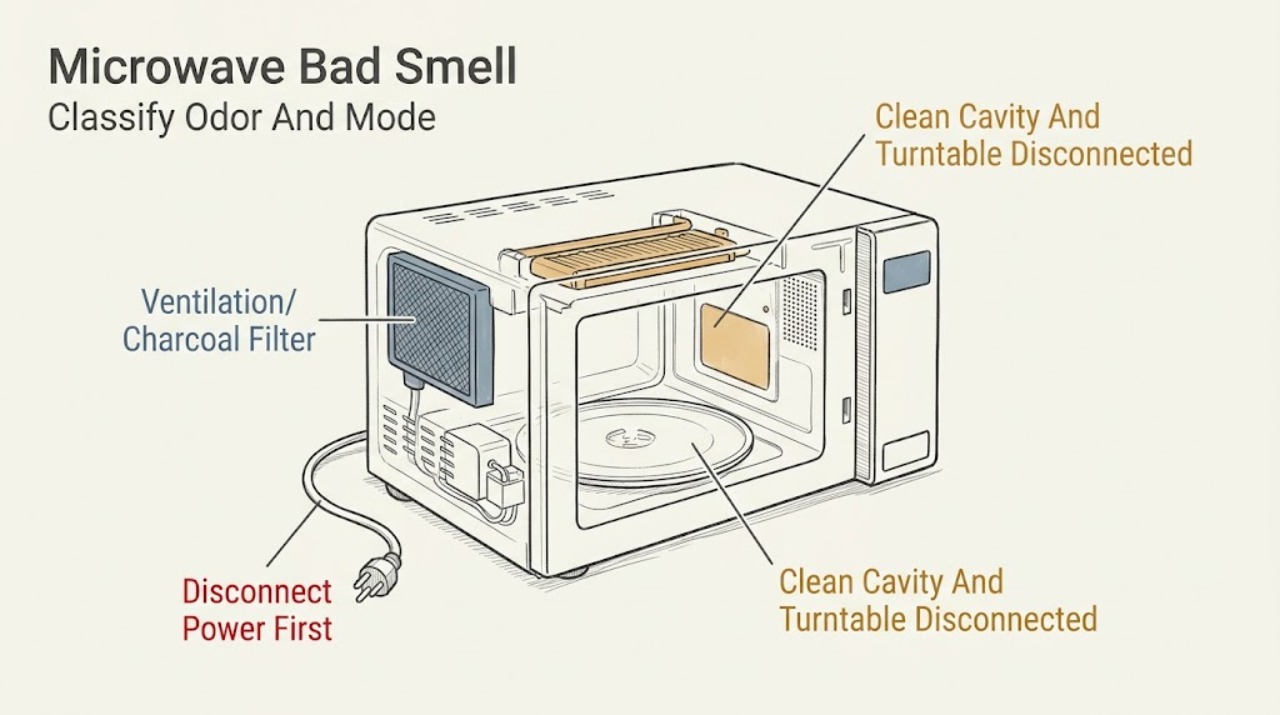
GE Microwave Bad Smell: Separate Food Odor from an Electrical Hazard
Stop and classify the smell before cleaning or using the microwave again. If it smells like food, grease, fish, or burned popcorn and there is no sparking, smoke, or electrical odor, unplug before cleaning the cavity and turntable with the exact manual's mild, non-abrasive method; GE says baked-on odors can take several days to fade.
-
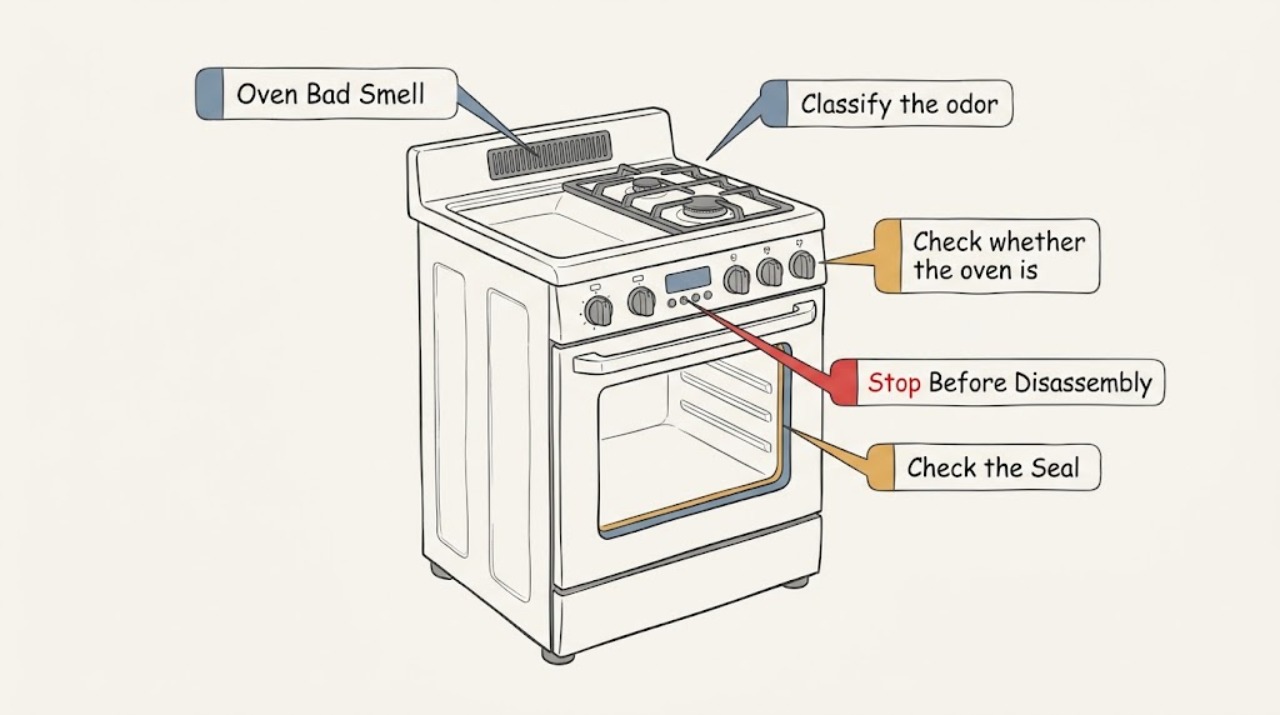
GE Oven Bad Smell: Identify the Odor and Know When to Stop
A slight odor during the first few uses of a new GE oven, or a brief combustion odor when a gas oven first starts, can be normal. A persistent burning, melting-plastic, chemical, electrical, or rotten-egg odor is not a normal reason to keep cooking.
-
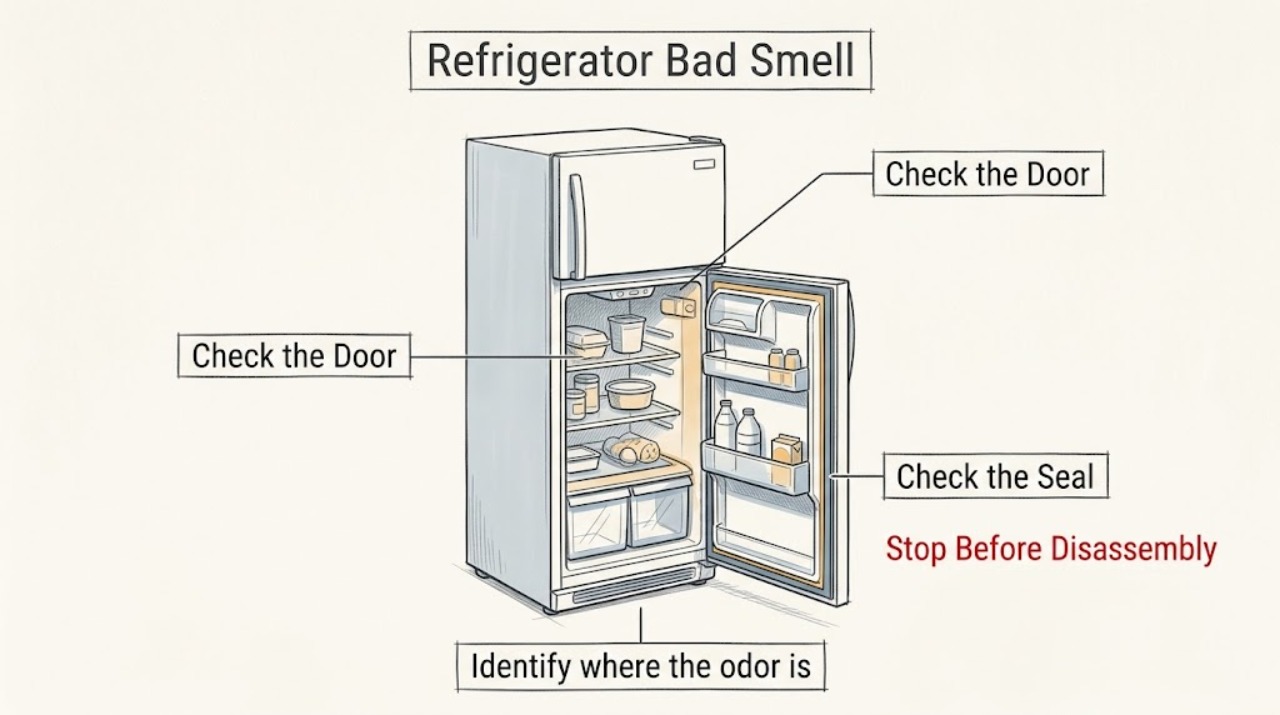
GE Profile Refrigerator Bad Smell
A bad smell in a GE Profile refrigerator is usually from uncovered or spoiled food, a spill hidden under a shelf or drawer, a dirty gasket, or an area that needs cleaning—not a mechanical part. Remove the source, clean the interior and gasket with the manufacturer-approved baking-soda solution, and avoid bleach, ammonia, petroleum products, and strongly scented cleaners.
-
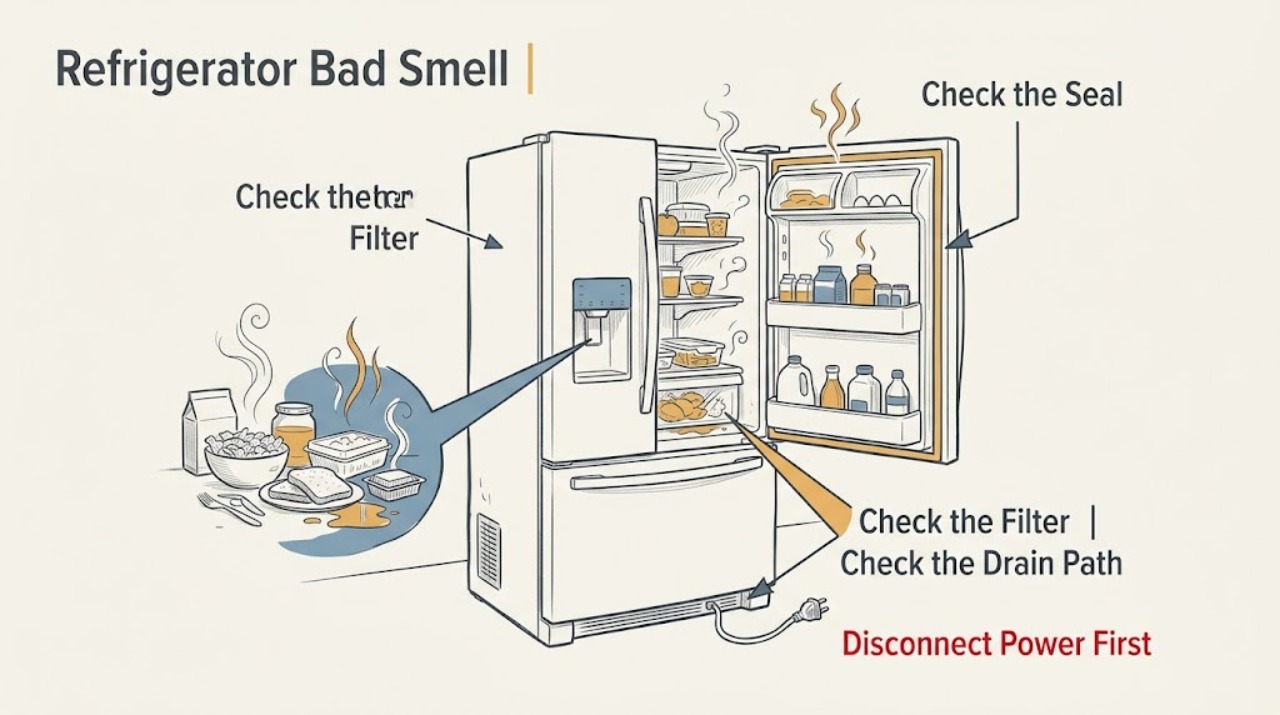
GE Refrigerator Bad Smell: Find the Food, Gasket, Ice, or Drain Source
Start by deciding whether the odor is coming from food or ice, the gasket and interior, a drain or moisture path, or the outside of the appliance. GE says refrigerators do not contain mechanical parts that normally create a food odor, and lists unwrapped or spoiled food, spills, old ice, water quality, and an old water filter as common odor or taste sources.
-
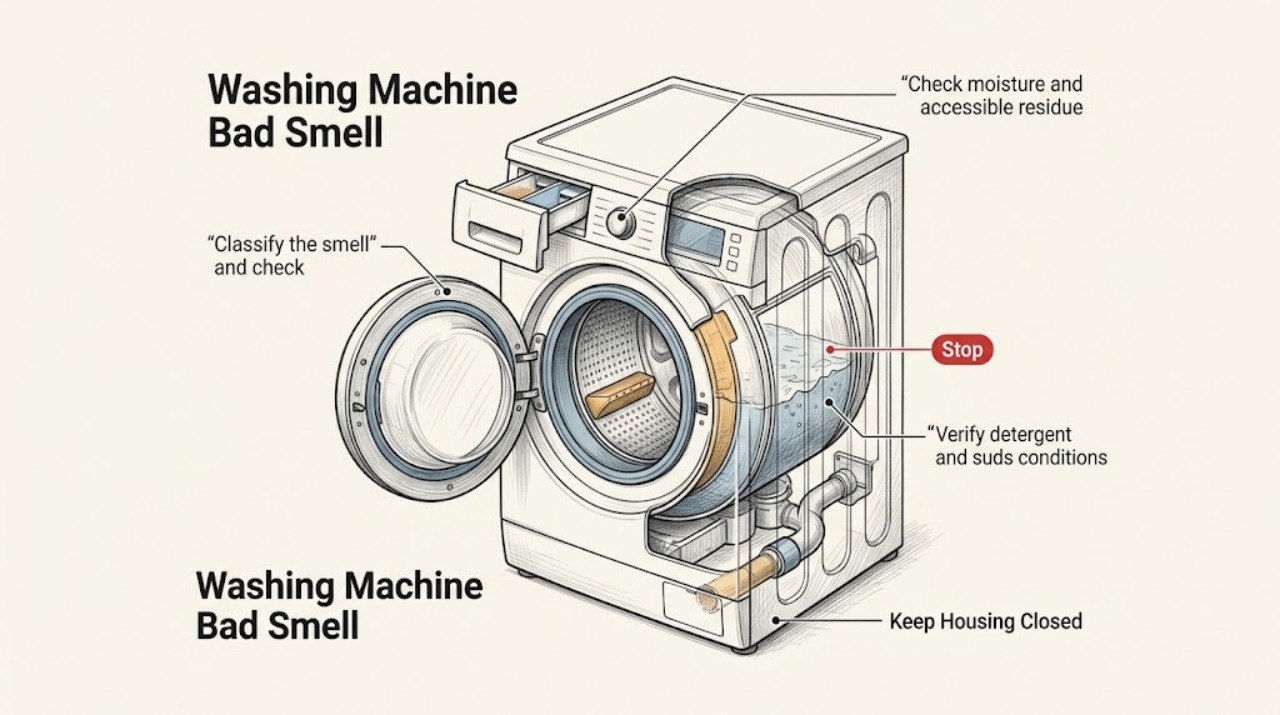
GE Washing Machine Bad Smell: Clean the Tub and Drain Path
A bad smell from a GE washing machine is commonly caused by retained moisture, detergent residue, or water that is not draining completely. First separate a musty or detergent odor from a hot electrical, burning-plastic, chemical, or sewage-like odor; the latter symptoms, smoke, sparking, a leak, or a repeated breaker trip are stop conditions.
-
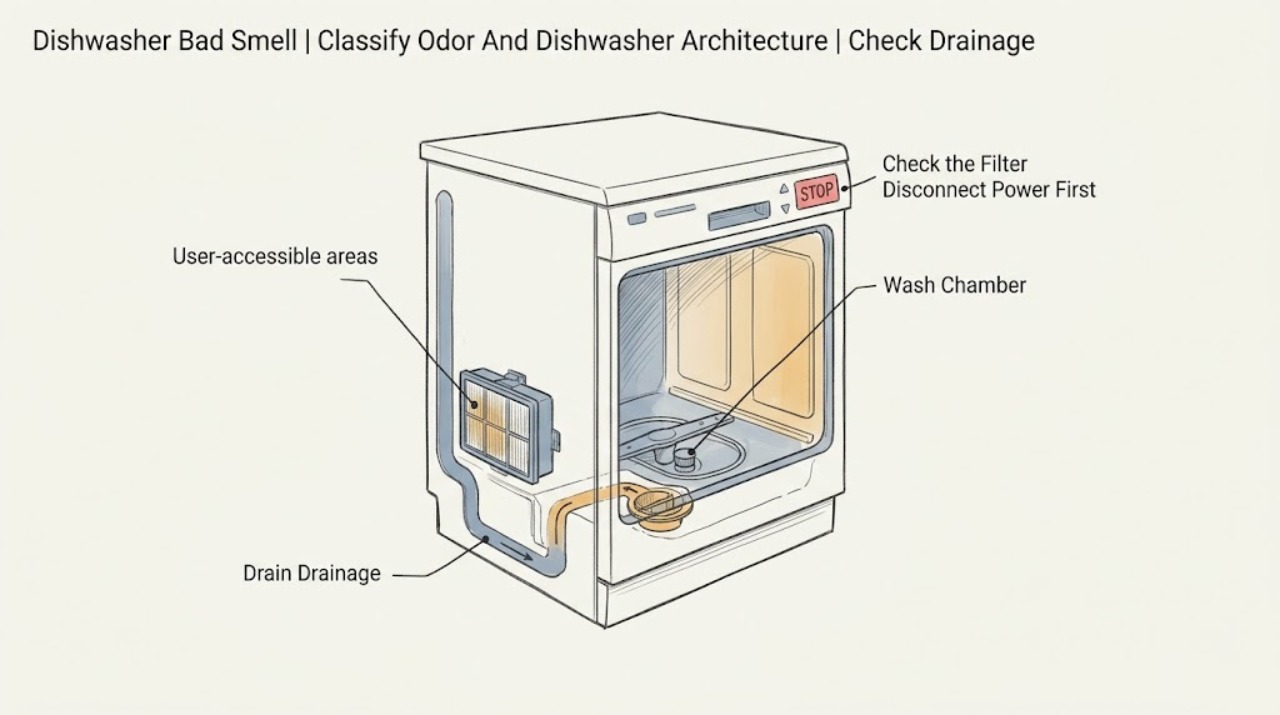
Haier Dishwasher Bad Smell: Clean the Filter, Drain Path, and Door Seal Safely
First identify whether the smell is stale or food-like, sewage-like, chemical, or burning, and whether water remains in the tub. Haier's dishwasher guidance points to door-seal, spray-arm, and filter cleaning, removing large food residue before washing, and leaving the door slightly open after a cycle when the dishwasher will sit unused.
-
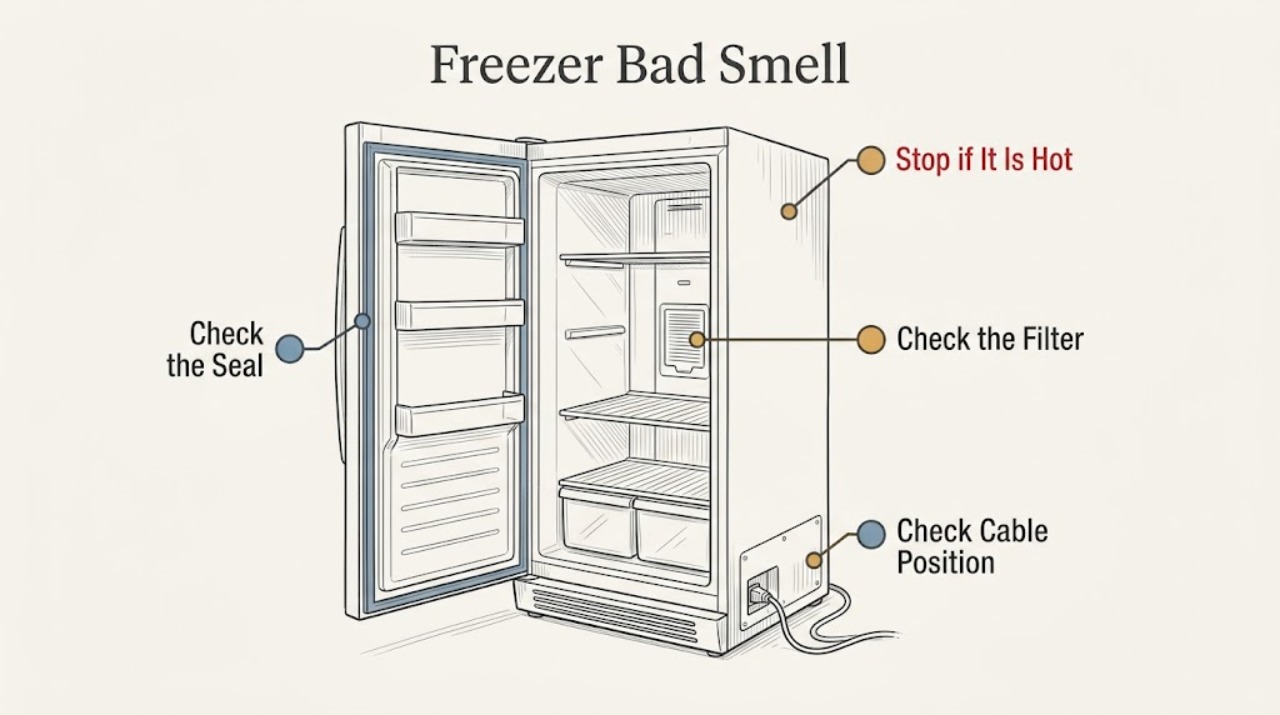
Haier Freezer Bad Smell
A Haier freezer smell is commonly from new plastic, improperly sealed food, or residue on the interior rather than a mechanical part. Unplug the freezer, remove and inspect the food, and clean the interior and gasket with Haier's mild baking-soda-and-warm-water method; rinse and dry it, and do not use bleach, ammonia, harsh solvents, abrasives, or strongly scented cleaners.
-
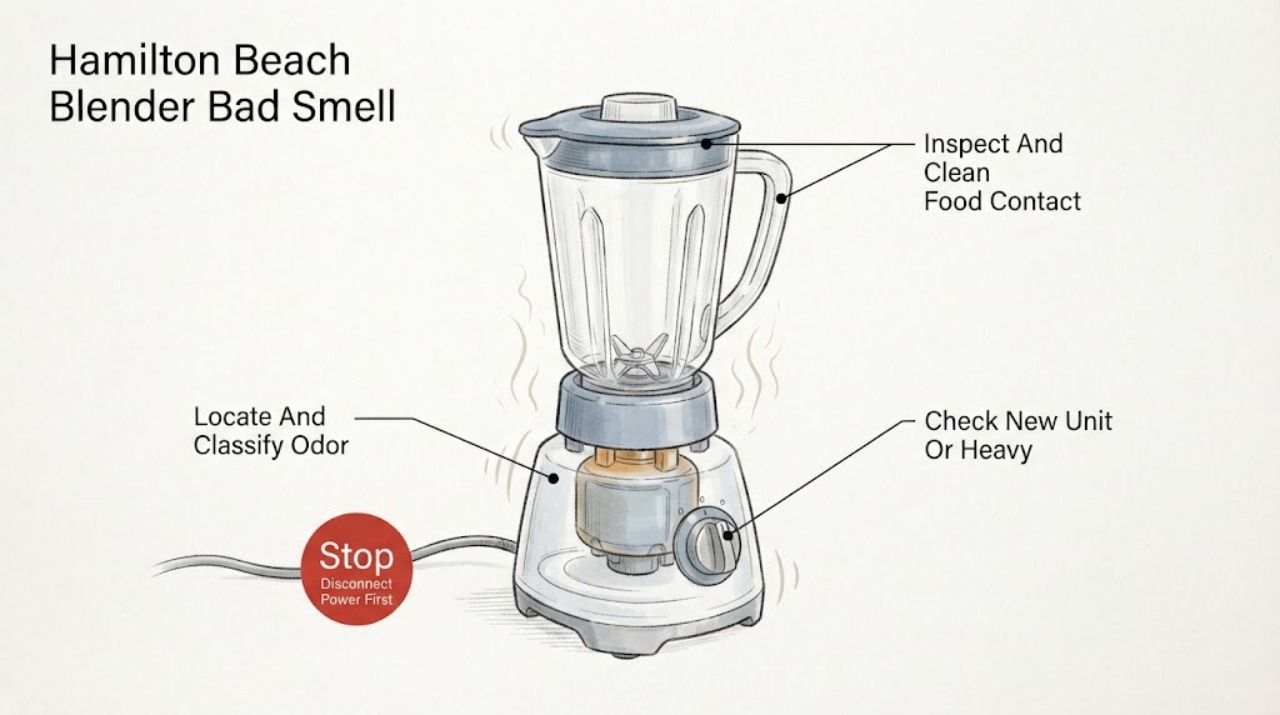
Hamilton Beach Blender Bad Smell
First identify where the smell comes from and when it appears. A food or sour odor usually stays in the jar, lid, gasket, collar, or cutting assembly after ingredients; clean and dry only the removable parts as the exact Use & Care guide permits, and store the jar without its lid if the smell is confined to the container.
-
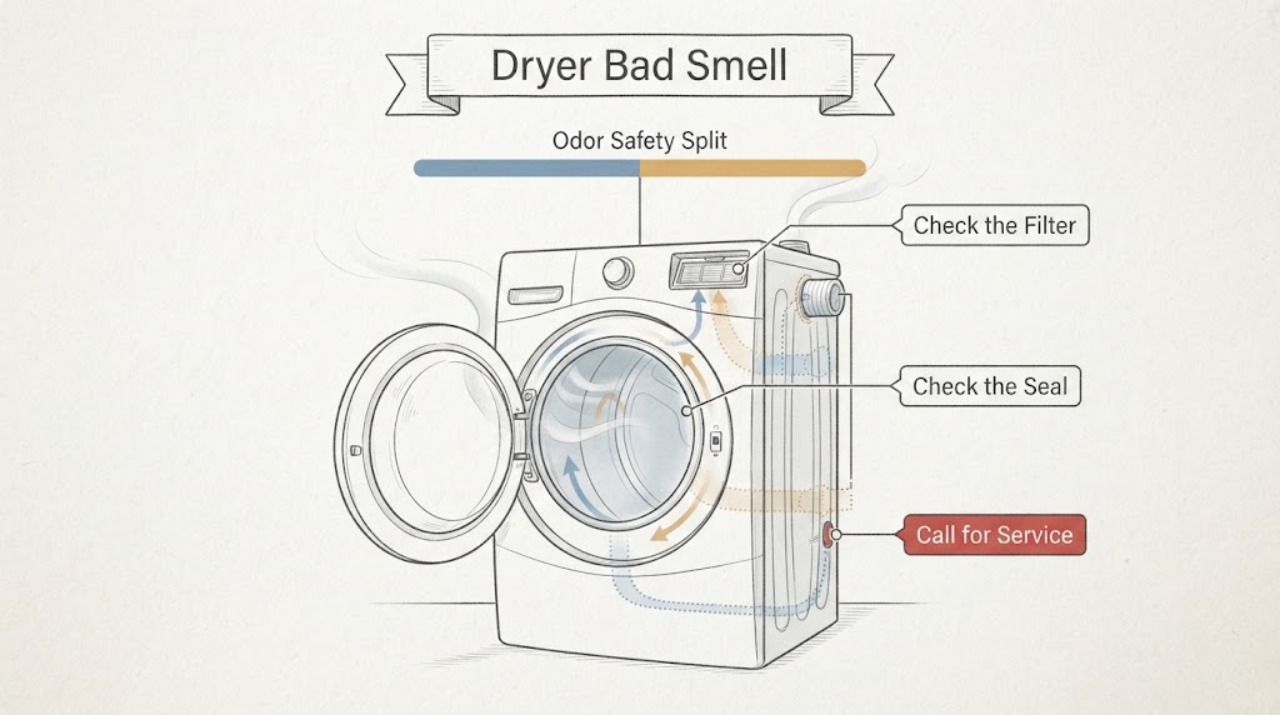
Hoover Dryer Bad Smell
If a Hoover dryer smells bad, stop it and let it cool before deciding whether the odor is damp or musty, chemical, or burning. Clean the lint filter, inspect the accessible condenser or exhaust path according to the exact model, and remove residue from the drum and door seal.
-
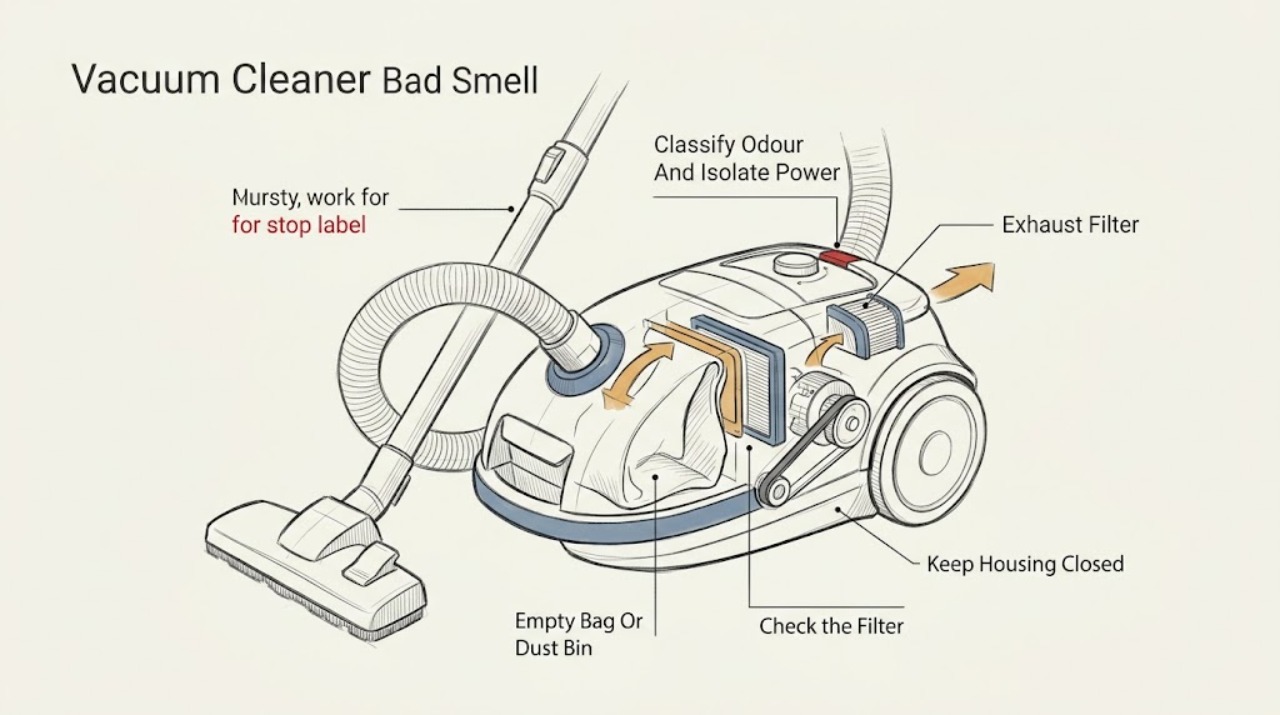
Hoover Vacuum Cleaner Bad Smell: Find the Source Before Cleaning or Replacing Parts
First identify the smell: a musty, pet, or food odour usually points to trapped debris in the bag or bin, filters, hose, or brush, while a hot-rubber or electrical burning smell is a stop-use symptom. Turn the Hoover off, unplug it or remove the battery where the model allows, and do not run it again to ‘test’ a burning smell.
-
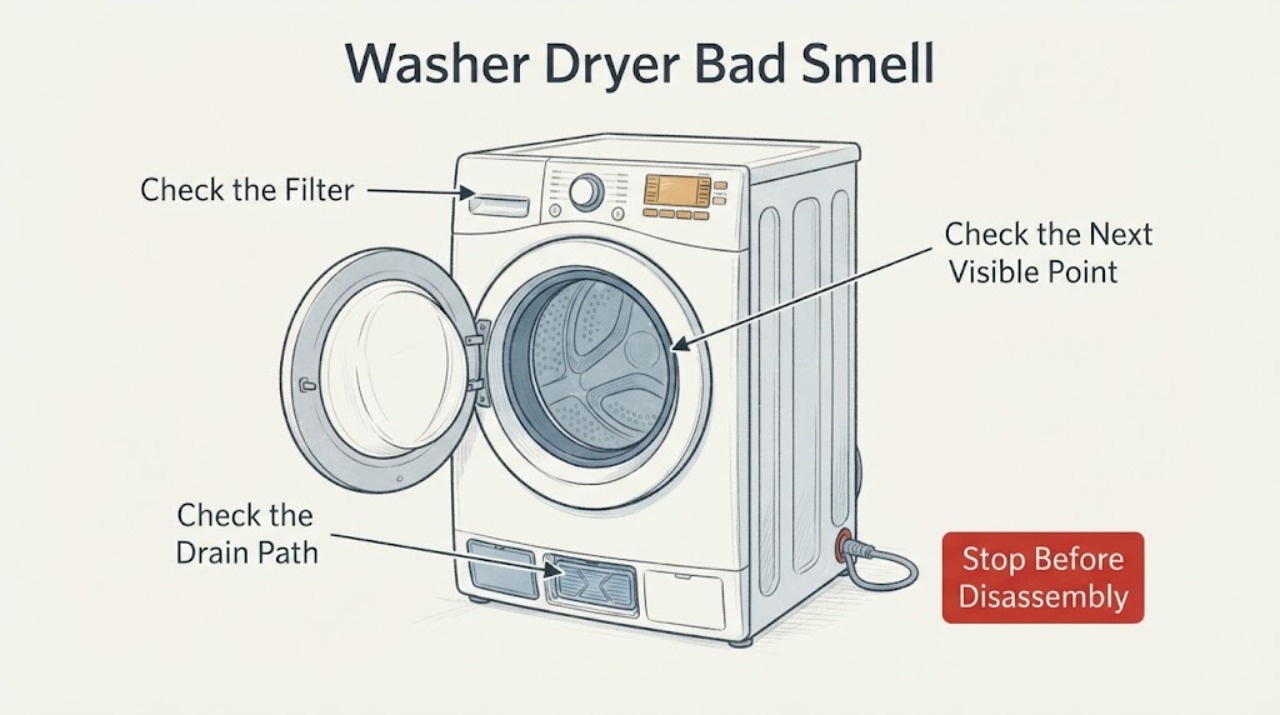
Hoover Washer Dryer Bad Smell: Find the Odour Source Safely
A bad smell from a Hoover washer dryer most often comes from moisture and residue in the drum, door seal, detergent drawer, filter, or drain path. First identify whether it is musty, sour, sewage-like, metallic, or burning, then disconnect the appliance before inspecting accessible areas.
-
Hotpoint Dishwasher Bad Smell: Check the Filter, Drain Path, and Maintenance Cycle
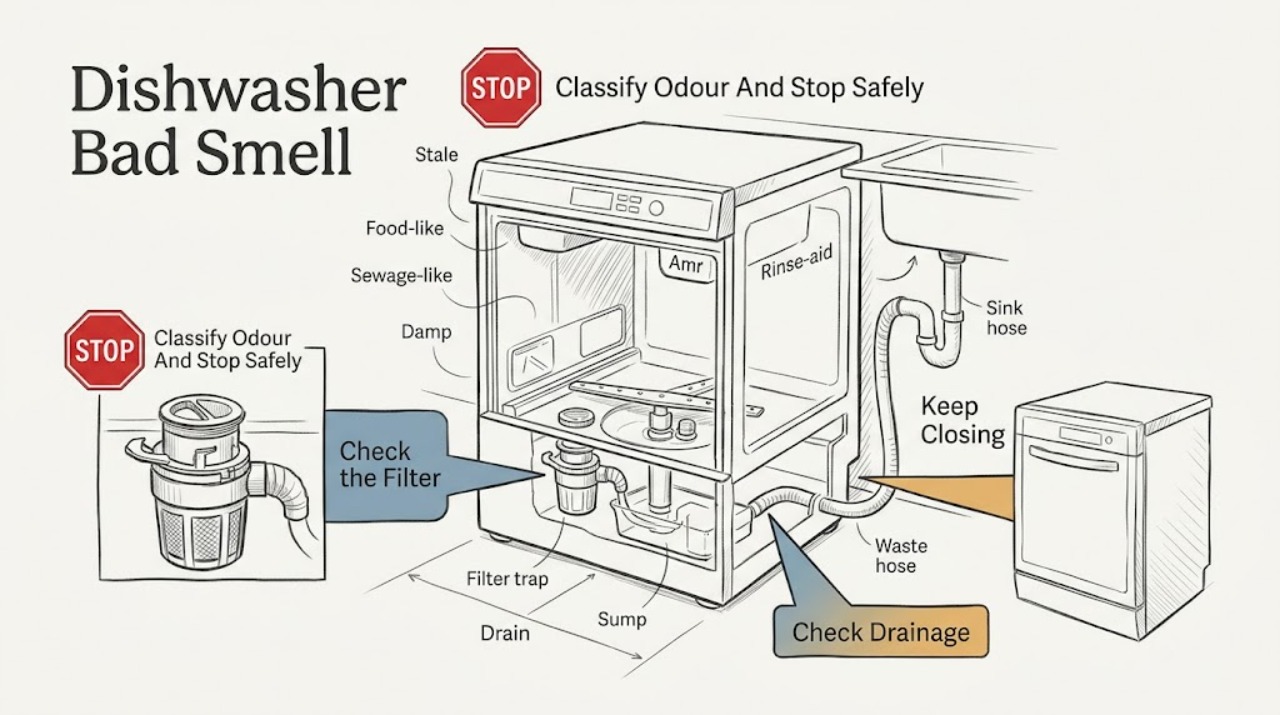
First identify whether the smell is ordinary food or stagnant-water odour, a new-appliance or detergent smell, or a burning/electrical smell. For a non-burning odour, stop the cycle, let hot steam dissipate, and use the exact Hotpoint manual to clean the accessible filter assembly and trap, remove visible food residue, and check for standing water.
-
Hotpoint Washer Dryer Bad Smell
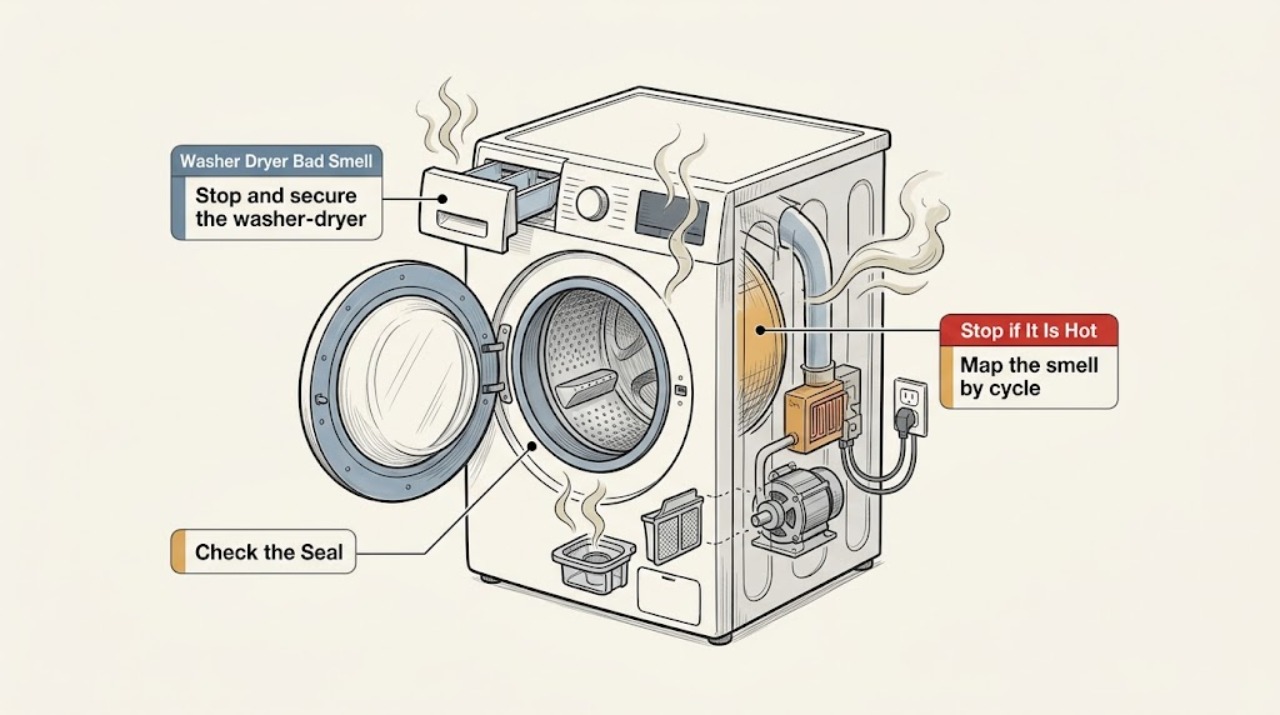
Stop the washer-dryer immediately for smoke, a sharp burning or electrical smell, a hot plug or cord, repeated breaker trips, visible scorching, a leak near electricity, or abnormal heat. If the smell is musty and the machine is otherwise stable, identify whether it comes from the door seal, detergent drawer, drum, drain area, or drying path.
-
Ice Maker Bad Smell
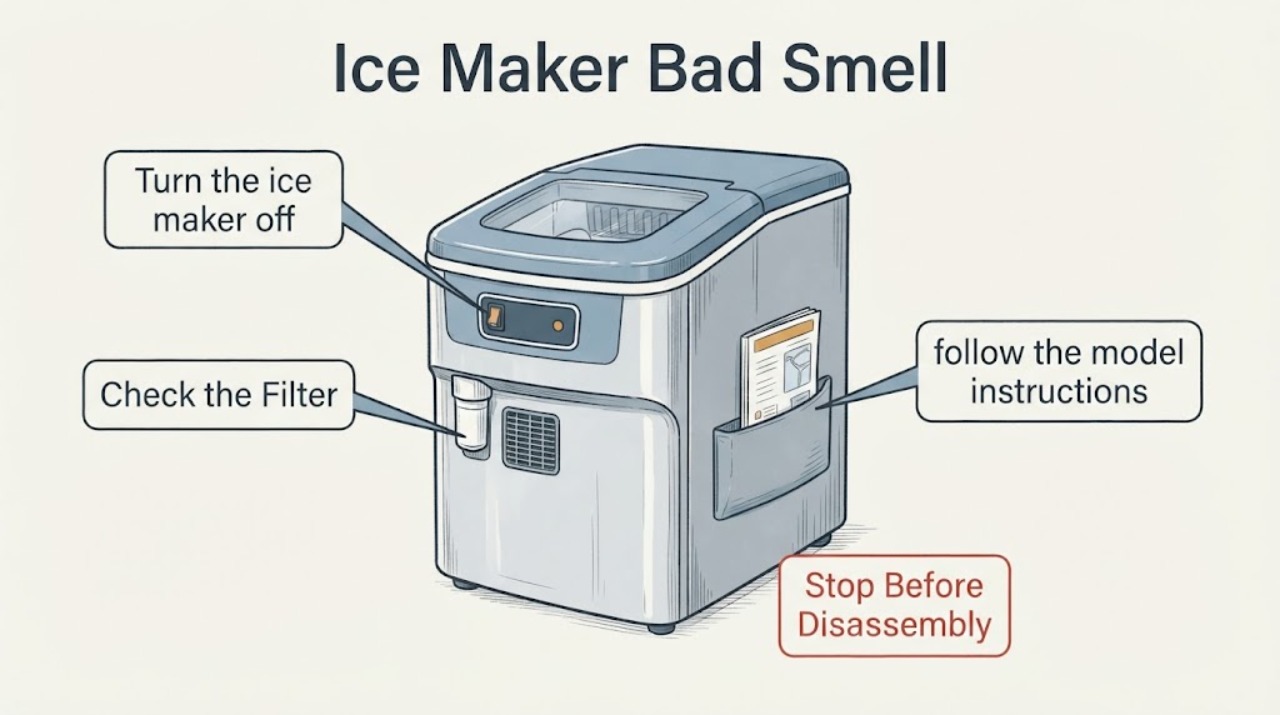
A bad smell in ice usually comes from odor transfer from uncovered food, stale ice, or an unflushed new water system. Cover strong-smelling food, discard the existing ice, clean the bin, and let the maker produce fresh ice. If the odor remains after fresh ice and a correctly installed filter, isolate whether it is in the water, bin, or refrigerator and arrange appliance service. Stop using ice for drinking if it has a chemical, fuel, sewage, or burning odor.
-
Indesit Washing Machine Bad Smell: Find the Source and Clean It Safely
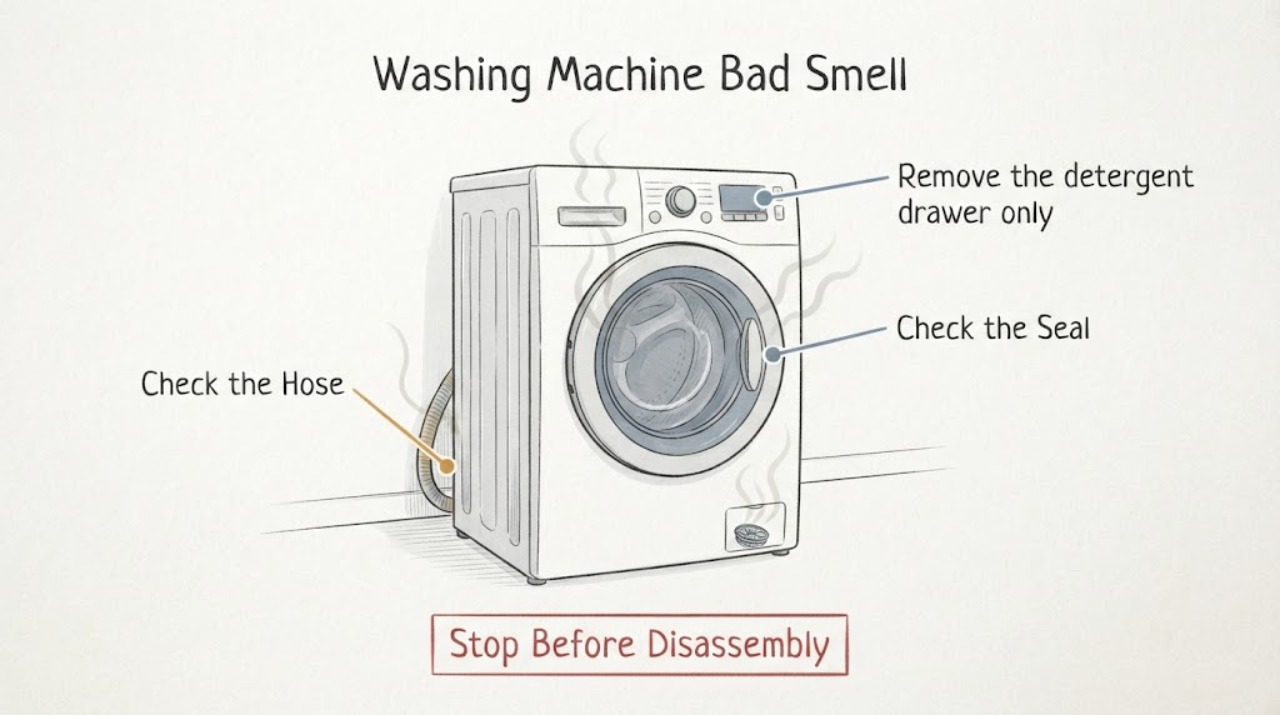
An Indesit washing machine that smells usually has moisture, detergent, or dirty water trapped in the door seal, detergent drawer, drum, drain hose, pump filter, or household waste connection. First classify the smell: a musty or sour smell supports a cleaning and drying path, while a sewage smell points toward the drain connection and a hot plastic, burning, or electrical smell is a stop condition.
-
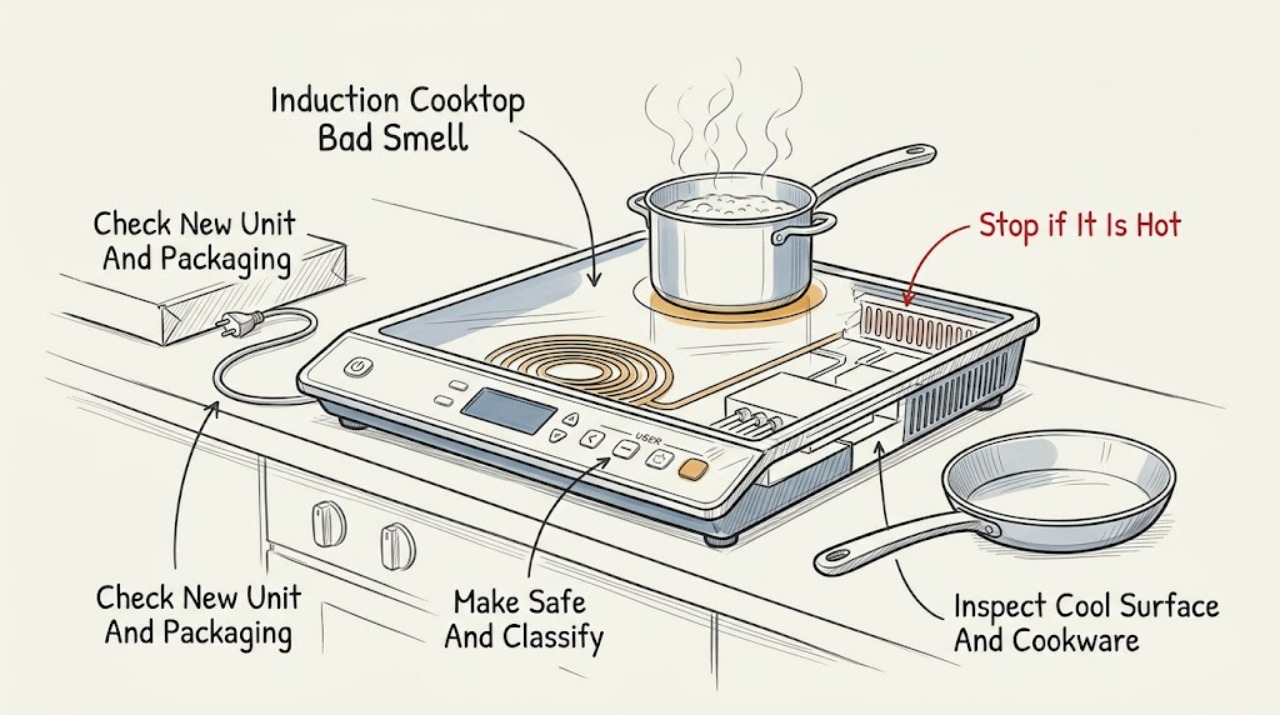
Induction Cooktop Bad Smell: Separate New-Unit Odor from an Electrical Fault
A slight odor during the first uses of a new induction cooktop can come from new parts or insulating materials and should fade quickly, but a lingering, worsening, electrical, plastic, or burning odor is not something to normalize. Turn the zone and cooktop off, let the surface cool, and identify whether the smell came from food or a spill, a pan or coating, packaging, or the appliance and its power connection.
-
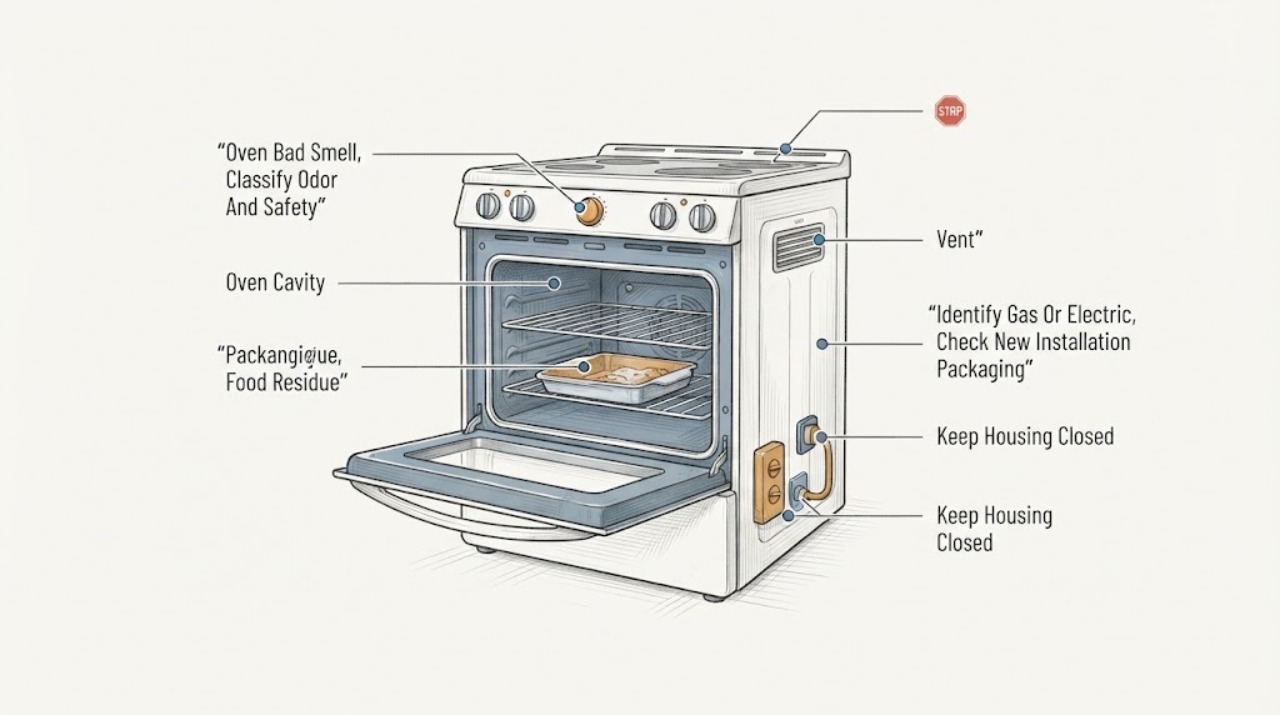
JennAir Oven Bad Smell: Separate New-Unit Odor, Food Spill, Gas, and Electrical Risk
Treat a JennAir oven smell as a classification problem before cleaning or running another cycle. First identify the exact model and whether it is gas or electric.
-
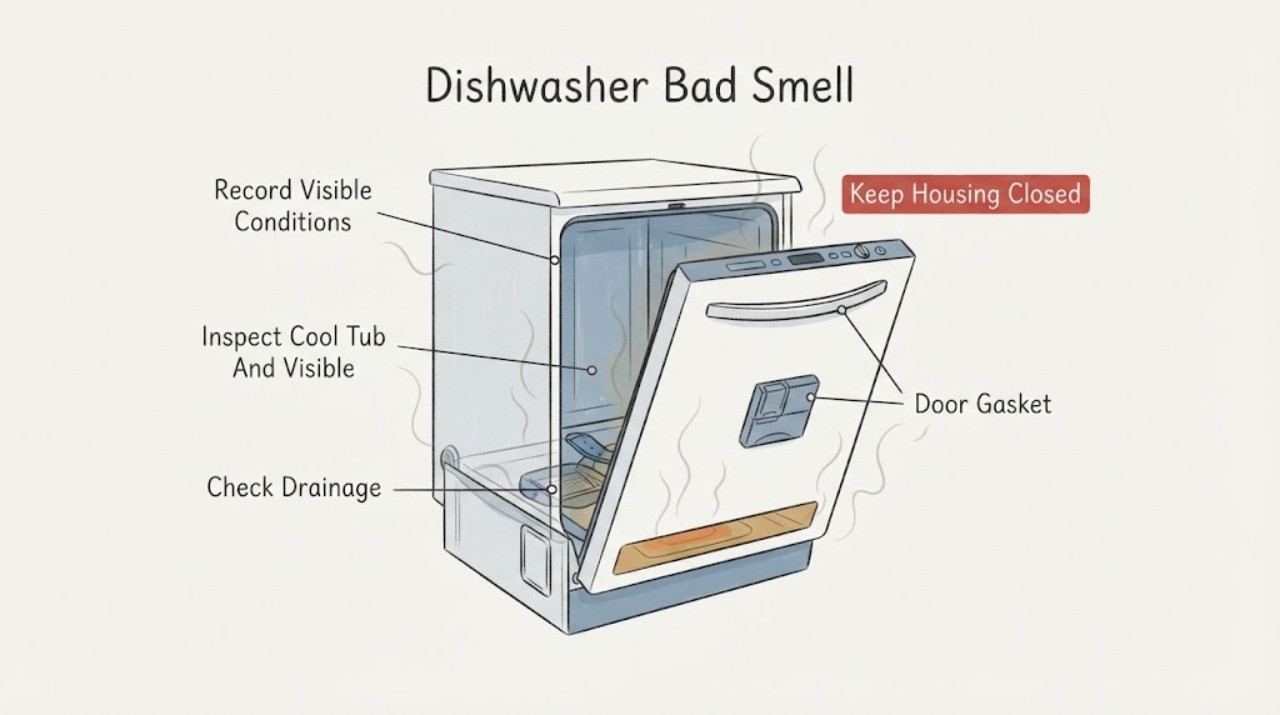
Kenmore Dishwasher Bad Smell: Separate Food Odor from Drain and Heat Problems
Classify the smell before trying a cleaner. A stale, sour, or food-like odor with visible soil usually follows a cool-down, model-approved cleaning, and drain observation.
-
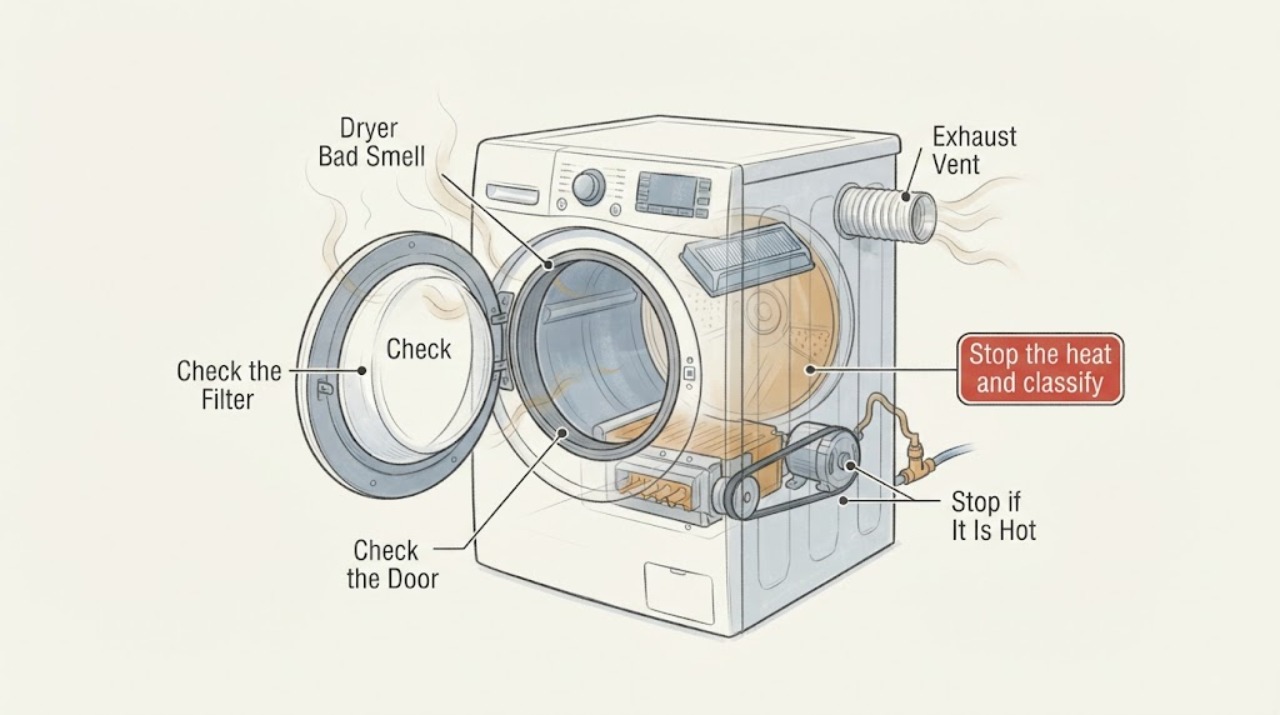
Kenmore Dryer Bad Smell: Separate Lint, New-Unit Odor, and a Fire Risk
Stop the Kenmore dryer and identify the odor before running another heated cycle. A new unit may have model-specific first-use instructions, but a burning-rubber, melting-plastic, electrical, or fuel-gas odor is not a normal maintenance signal.
-
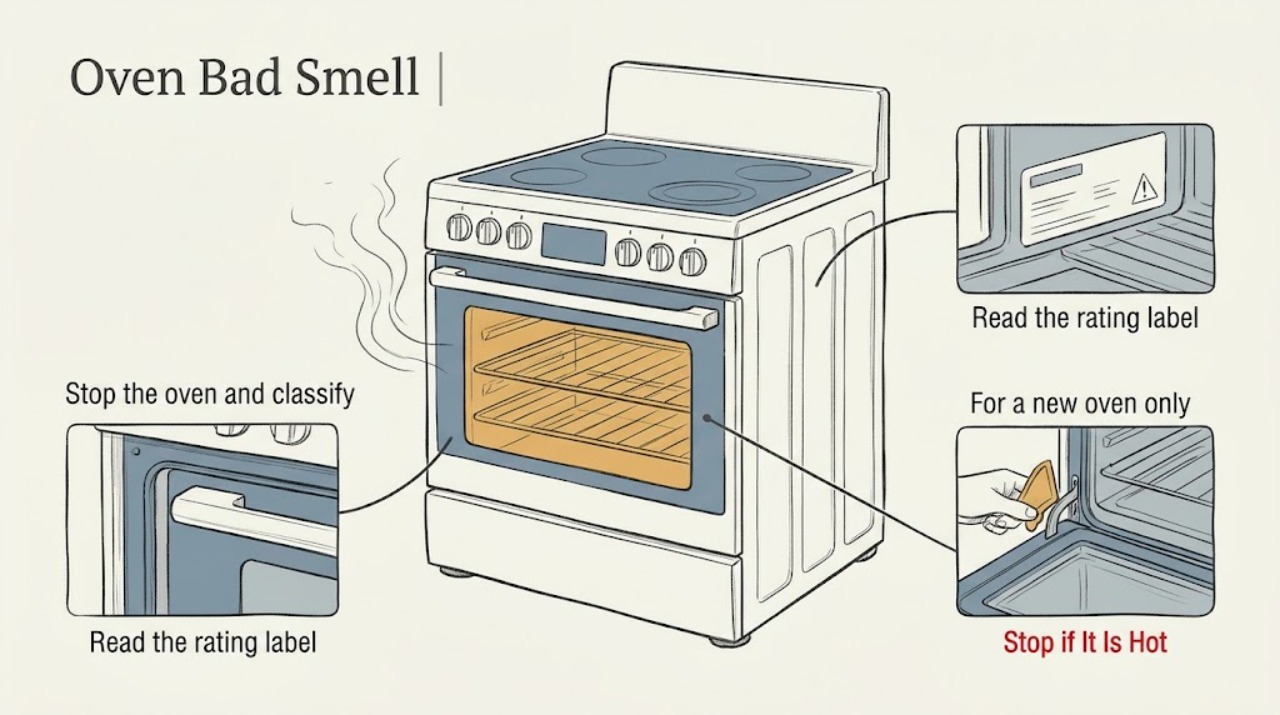
Kenmore Oven Bad Smell: Separate New-Oven Odor, Residue, and Gas Risk
First confirm whether the Kenmore oven is gas or electric and identify the smell. A small, temporary odor or light smoke can occur during the first few uses as new parts, insulation, protective oil, or shipping material heats, but a lingering odor is not typical.
-
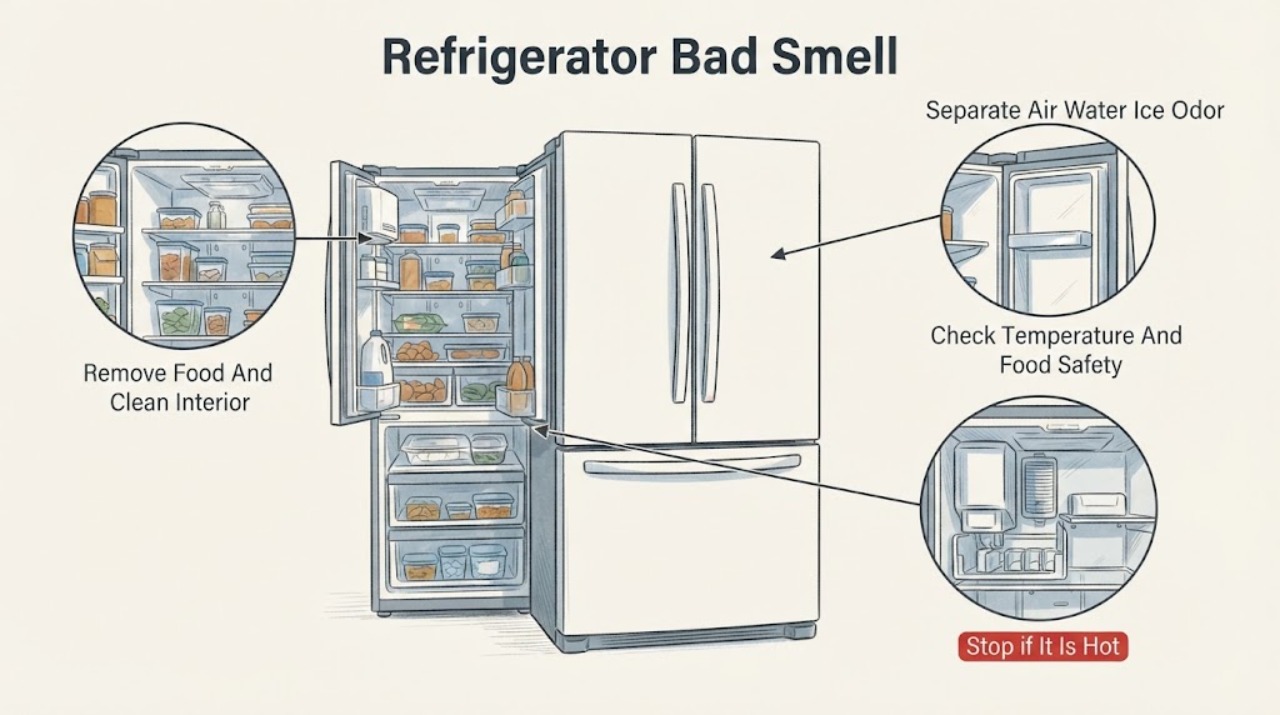
Kenmore Refrigerator Bad Smell: Find the Odor Source Before Replacing a Filter
First separate an odor from the refrigerator compartment from an odor limited to dispensed water or ice, and record the exact model. Remove visibly spoiled or suspicious food, wipe up spills, clean the interior and drawers, and keep food covered.
-
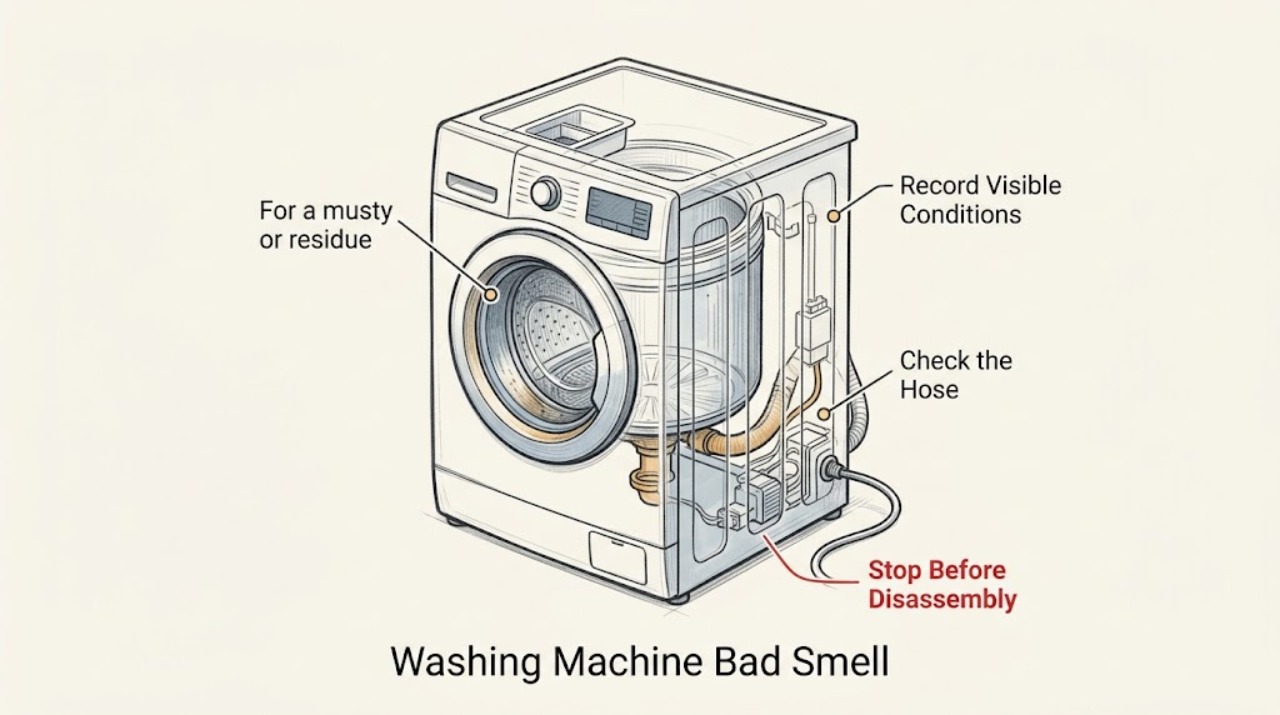
Kenmore Washing Machine Bad Smell: Separate Musty, Drain and Electrical Odors
First classify the odor before cleaning a Kenmore washing machine. A musty or earthy smell usually points toward retained moisture or residue, so inspect the door or lid, gasket, dispenser, tub opening, drain area and nearby hoses; Health Canada specifically recommends leaving a washing-machine door open between uses and checking that it drains without splashing.
-
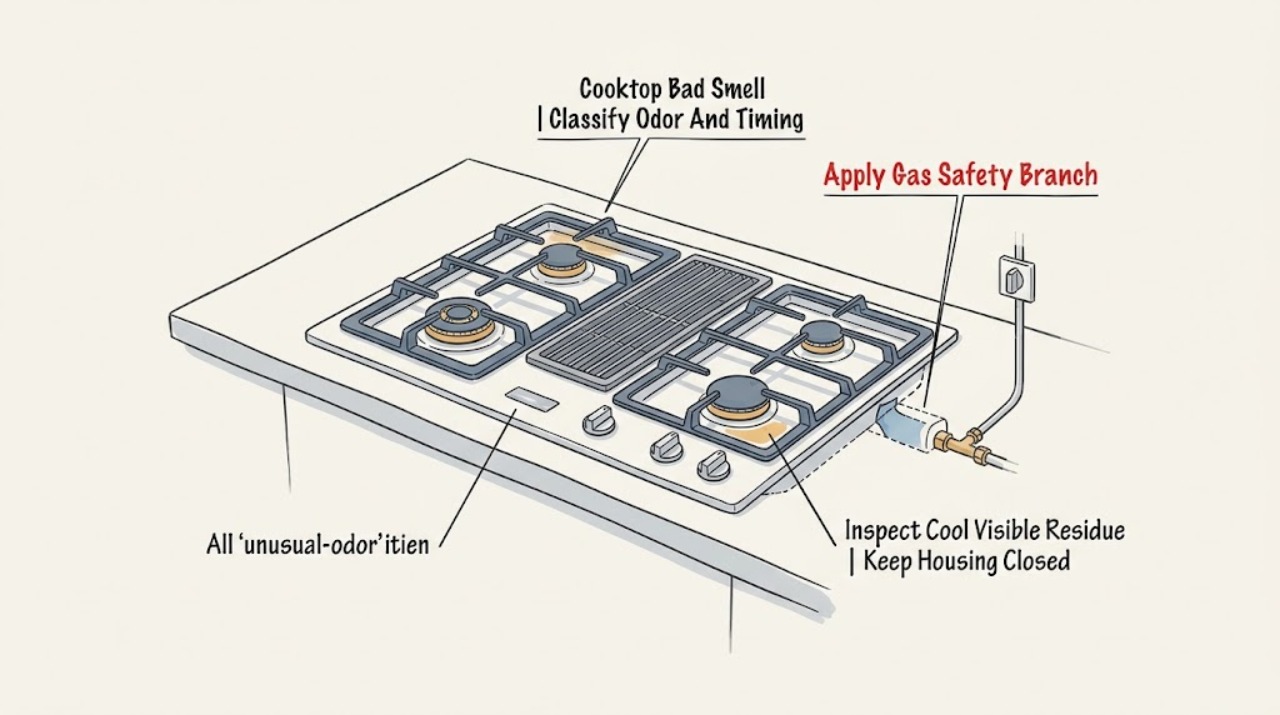
KitchenAid Cooktop Bad Smell: Tell Gas, Burnt Spill, Grease, and Electrical Odors Apart
A bad smell from a KitchenAid cooktop is safe to investigate only after you identify the odor and rule out gas or electrical danger. Turn the controls off and note whether the smell occurs only while cooking, remains when the cooktop is off, follows a spill or cleaning, comes from the downdraft filter, or resembles unburned gas or hot insulation.
-
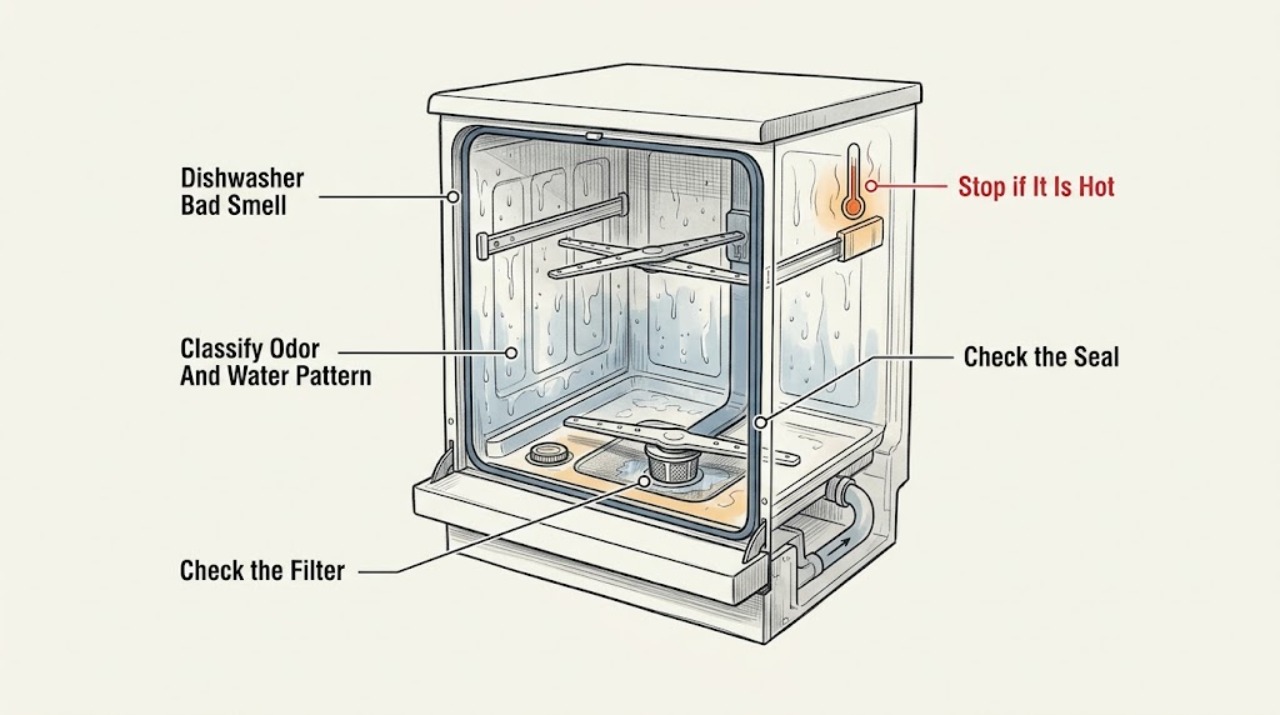
KitchenAid Dishwasher Bad Smell: Find Food, Drainage, and Moisture Sources
Start by classifying the odor and checking whether water remains after a completed cycle. Rotten-food or fishy smells usually point to food soils in the filter, spray arms, tub, door edges, or drain area; a sewage-like or wet-dog smell makes standing water, a clogged drain path, a kinked or sagging hose, or drain backflow more concerning.
-
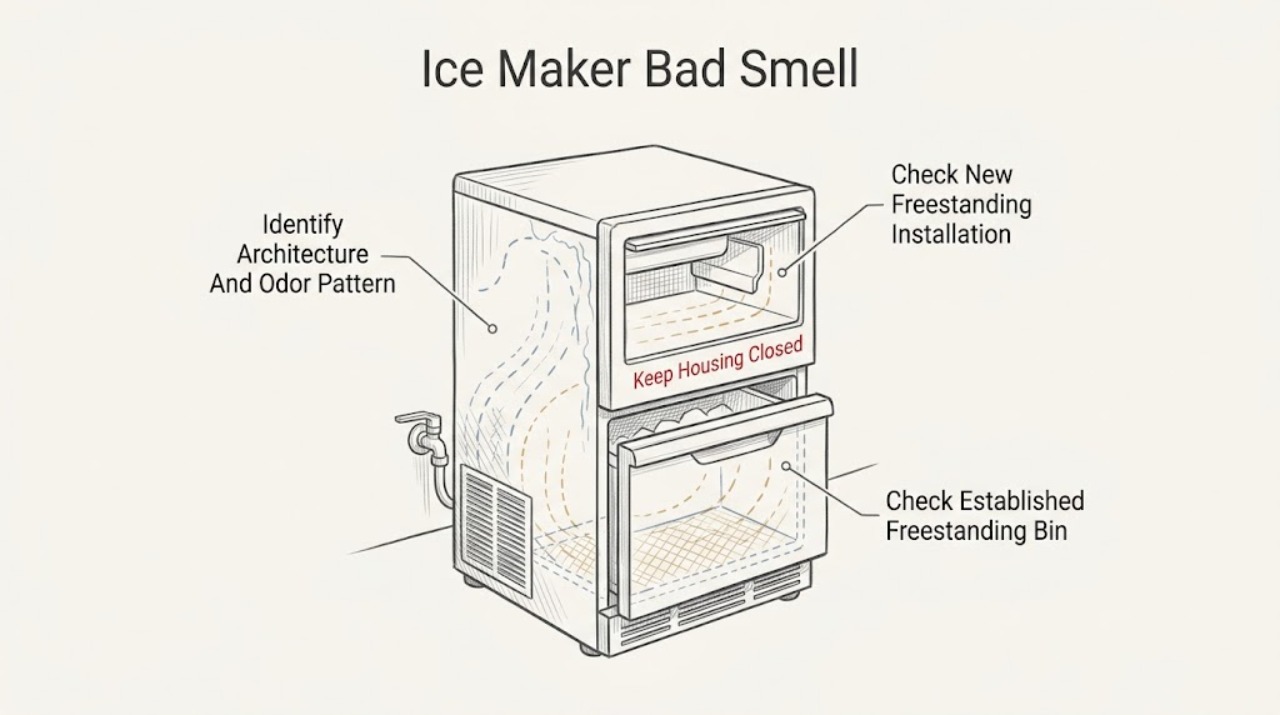
KitchenAid Ice Maker Bad Smell: Identify the Architecture Before Cleaning
First identify whether your KitchenAid unit is a freestanding ice maker or an ice maker built into a refrigerator, and record the model number. For a newly installed freestanding unit, KitchenAid points to an unwashed storage bin, remaining packaging, the water-supply line, and mineral scale as possible odor sources.
-
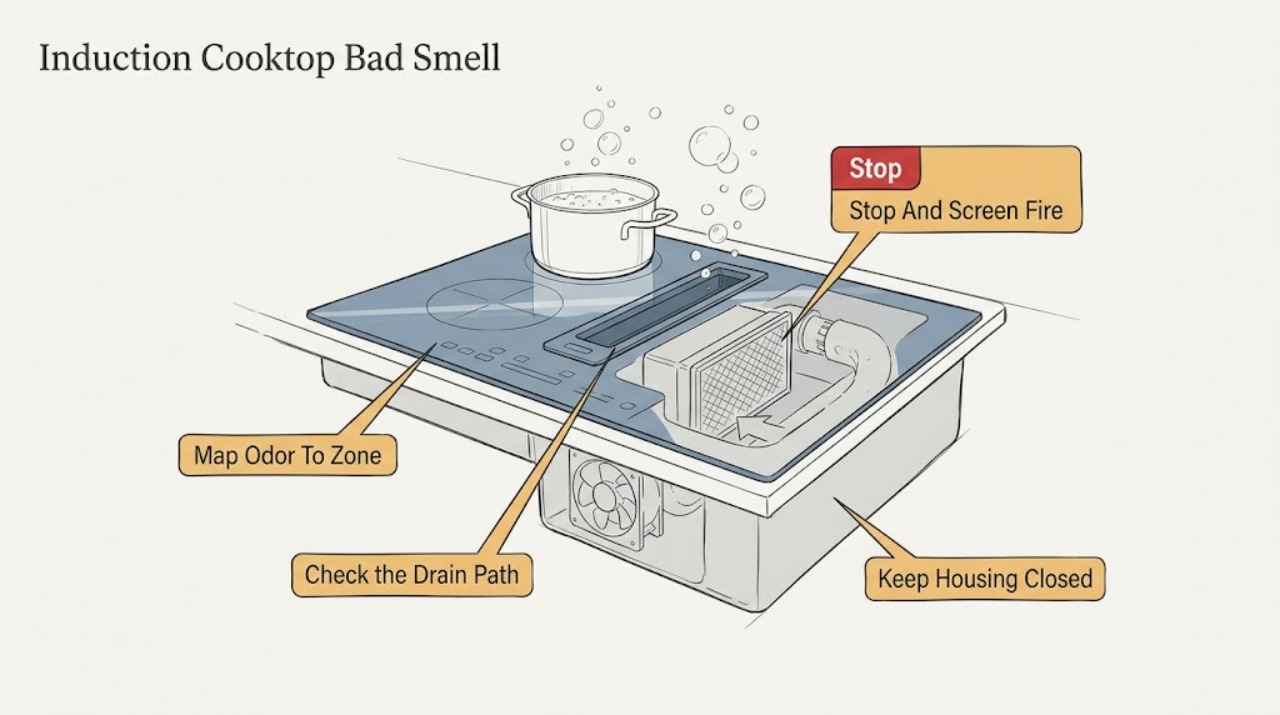
Kitchenaid Induction Cooktop Bad Smell
A smell from a KitchenAid induction cooktop can come from spilled food or grease on a hot glass surface, a new-installation finish, cookware, a contaminated grease or charcoal filter, poor downdraft airflow, or overheating electrical components.
-
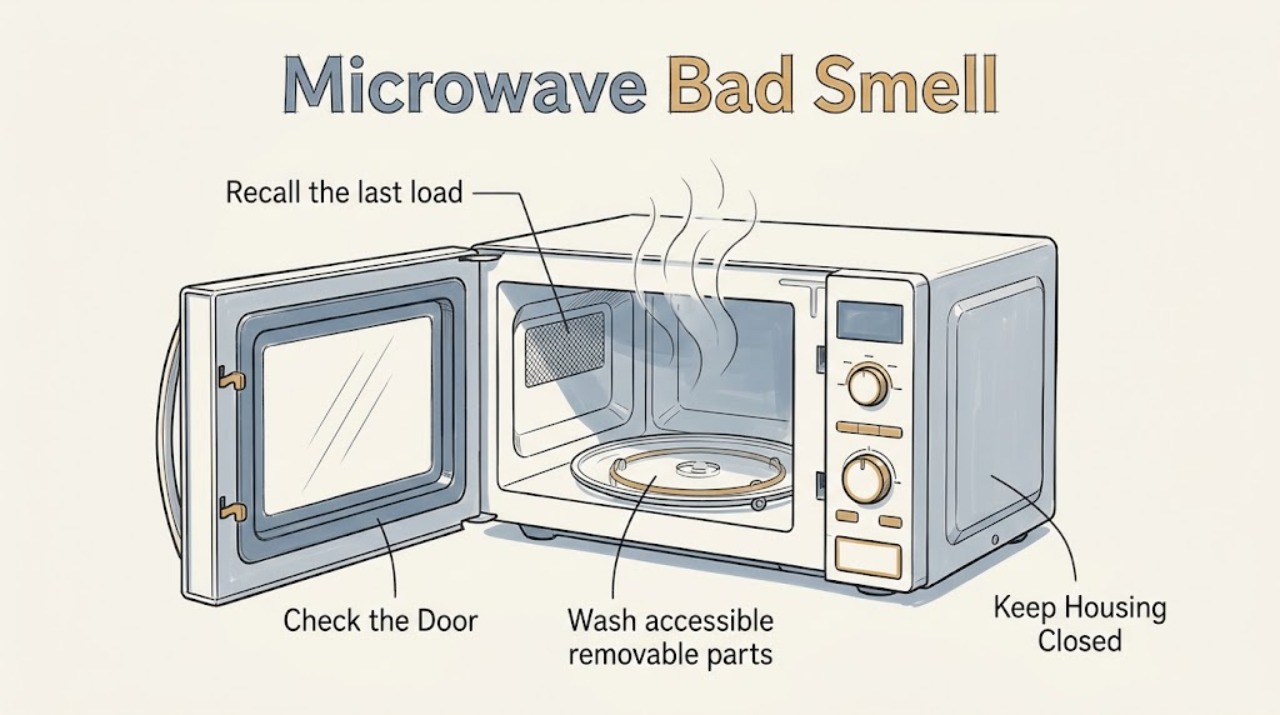
KitchenAid Microwave Bad Smell: Find the Cavity Source
A KitchenAid microwave odor usually starts with food soil or a spill held in the cavity, turntable, or other accessible surface. Let the oven cool, identify whether the smell follows a particular food or appears with smoke/arcing, then clean with mild soap and water before using KitchenAid's one-cup water-and-lemon or vinegar method. A chemical, electrical, burning-plastic, or recurring scorched smell is a reason to stop using the microwave and request service.
-
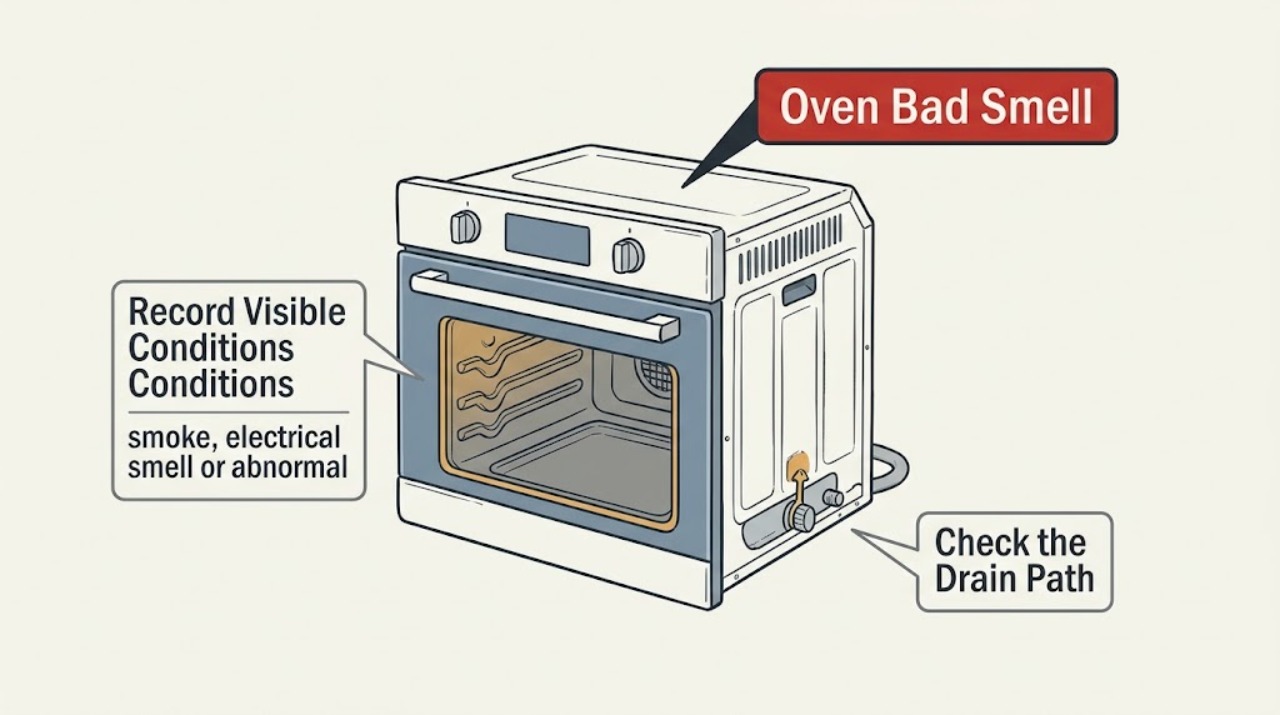
KitchenAid Oven Bad Smell: Identify Food, New-Oven, Gas and Electrical Odors Safely
First classify the smell before using the KitchenAid oven again: food or grease residue, a new-appliance or packaging odor, a gas-like odor, a burning or electrical odor, or smoke and fire. A mild smell during the first few uses can come from new parts, insulation, protective oil or shipping tape and should fade.
-
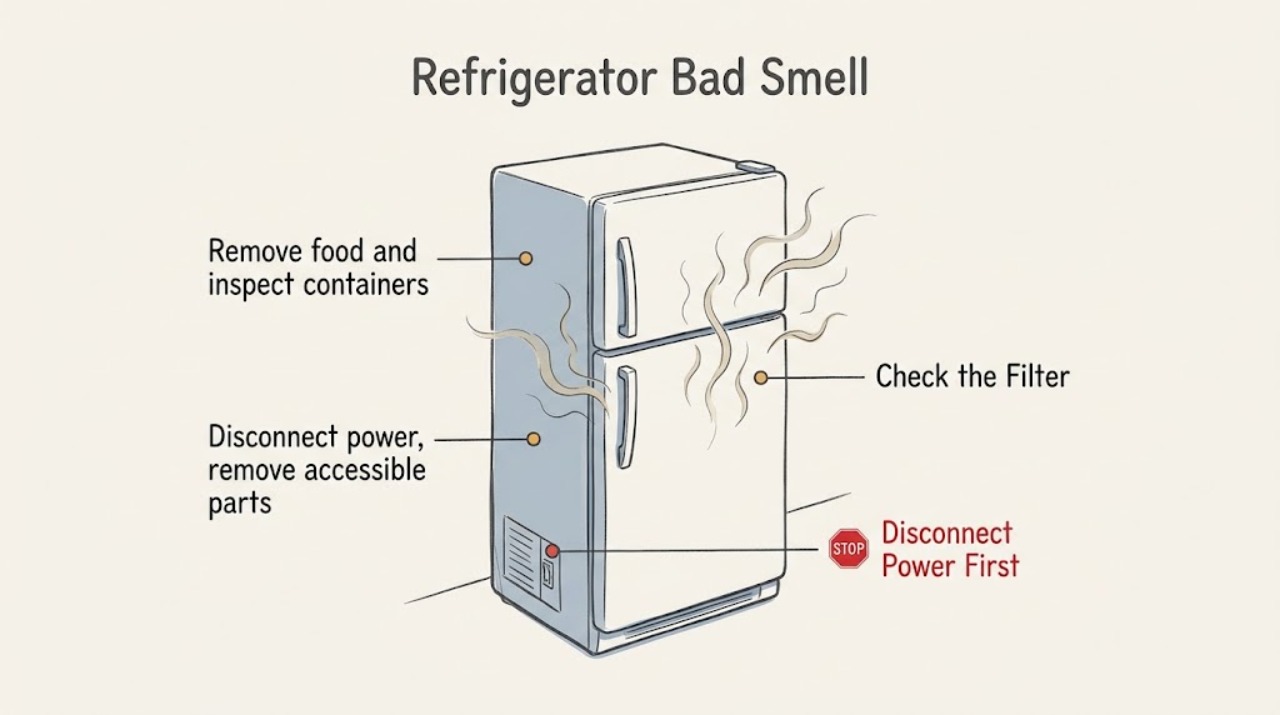
KitchenAid Refrigerator Bad Smell
Remove spoiled or spilled food, disconnect power, and clean both refrigerator and freezer sections because air circulates between them. Wash removable parts and interior surfaces with mild detergent and warm water, dry them, and inspect underneath. Persistent or unusual odors need service.
-
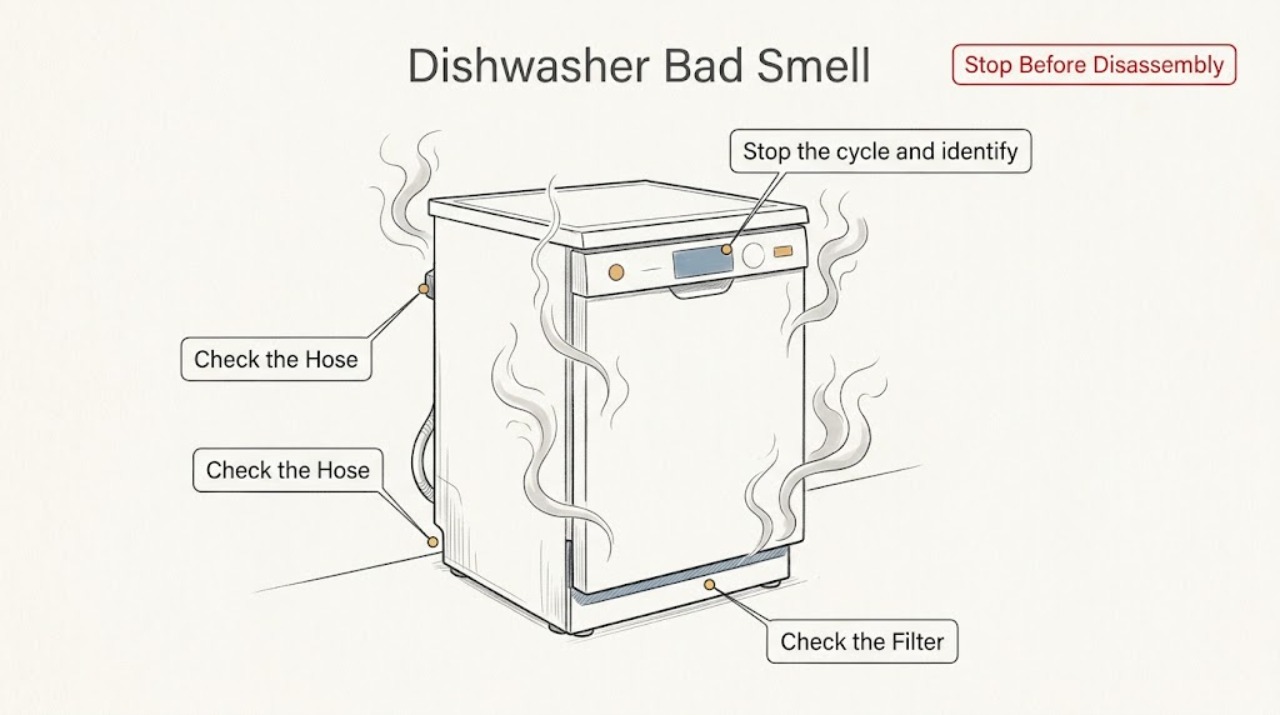
LG Dishwasher Bad Smell
First distinguish a temporary new-product or plastic smell from a persistent food, sewage, or burning odor. Clean the filter, check that the tub drains and the drain hose is installed correctly, and ventilate the area. Stop using the dishwasher for a persistent burning or electrical smell.
-
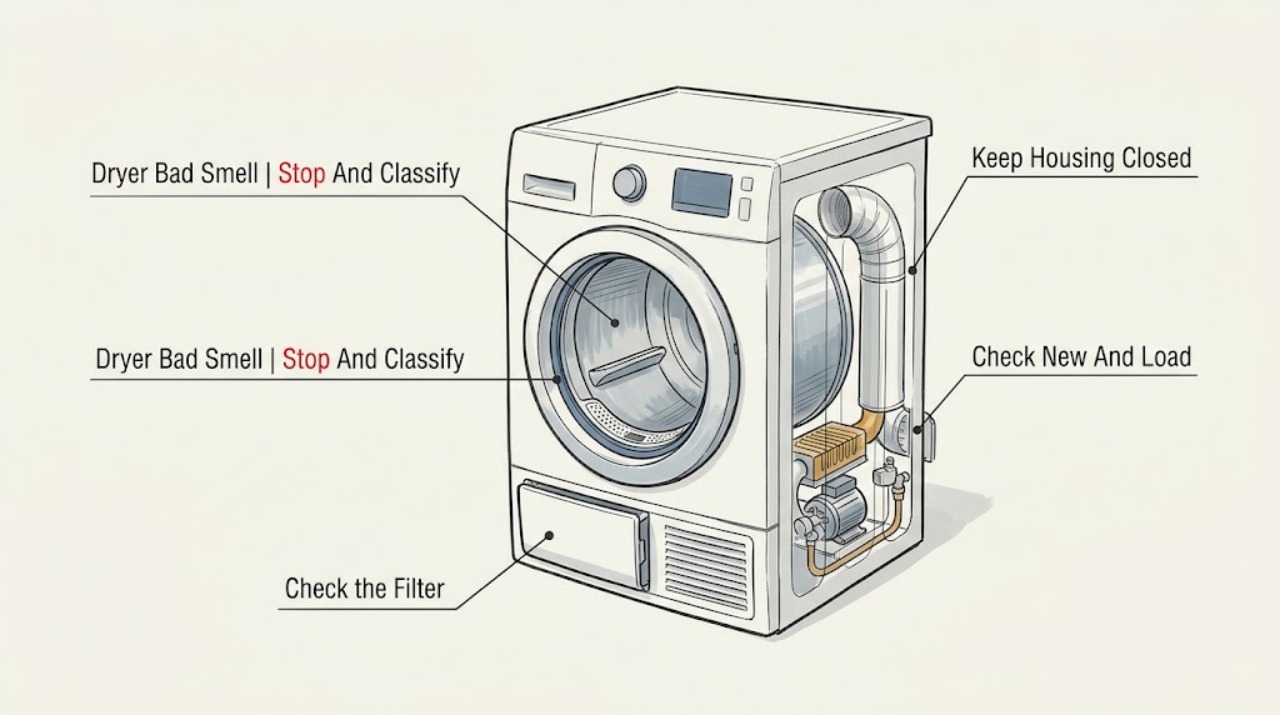
LG Dryer Bad Smell
Classify the smell before running the LG dryer again. A mild odor from a genuinely new dryer or the first few heat cycles can fade as new materials warm, but that explanation does not cover smoke, a strong or worsening burning smell, a hot cabinet or outlet, sparks, poor airflow, or a gas odor.
-
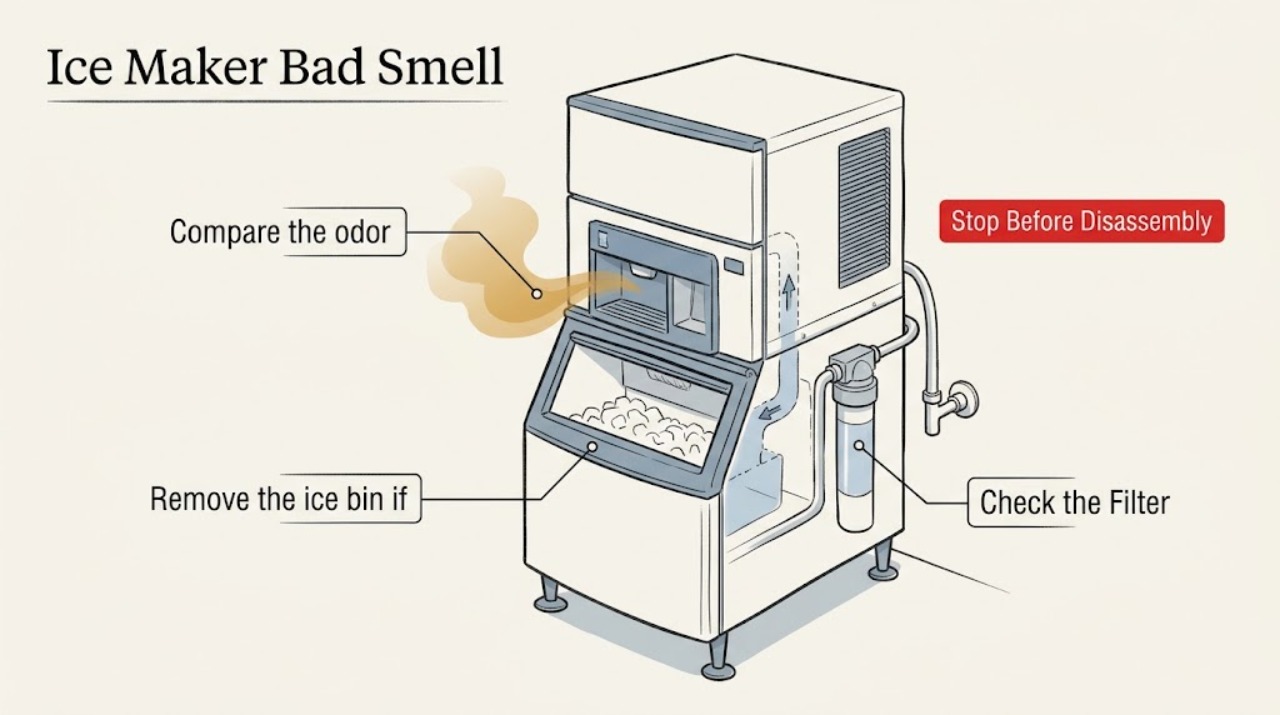
LG Ice Maker Bad Smell: Find the Source
A bad smell from LG ice is often held in old ice, the ice bin, the dispenser passage, or the water path rather than the sealed cooling system. Discard questionable ice, clean and dry removable parts as the manual directs, and replace the water filter only when the model calls for it. Do not use ice or water with a persistent chemical, sewage, or mold-like odor.
-
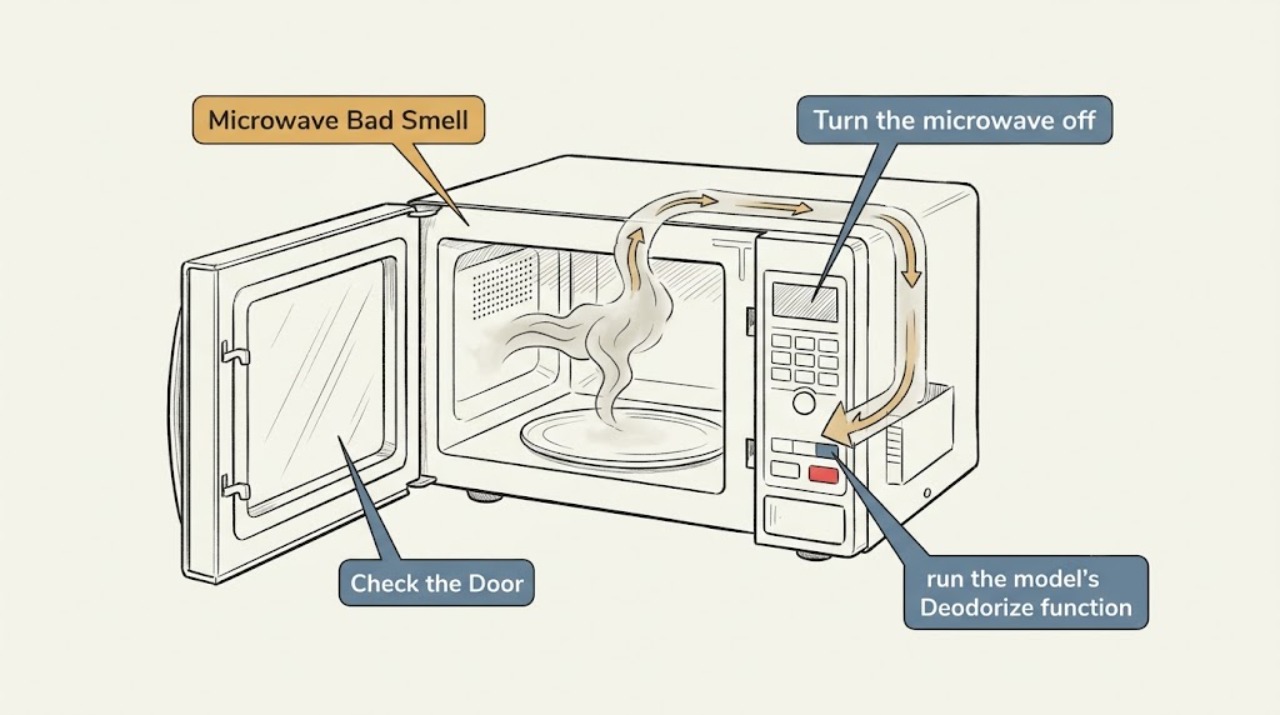
LG Microwave Bad Smell: Find the Odor Source Safely
Identify whether the odor is food residue, a first-use manufacturing smell, or a continuing burnt smell. Empty the cavity, clean accessible residue with the LG method, and use Deodorize only if your model provides it. Stop immediately for smoke, arcing, or a strong electrical/burning odor.
-
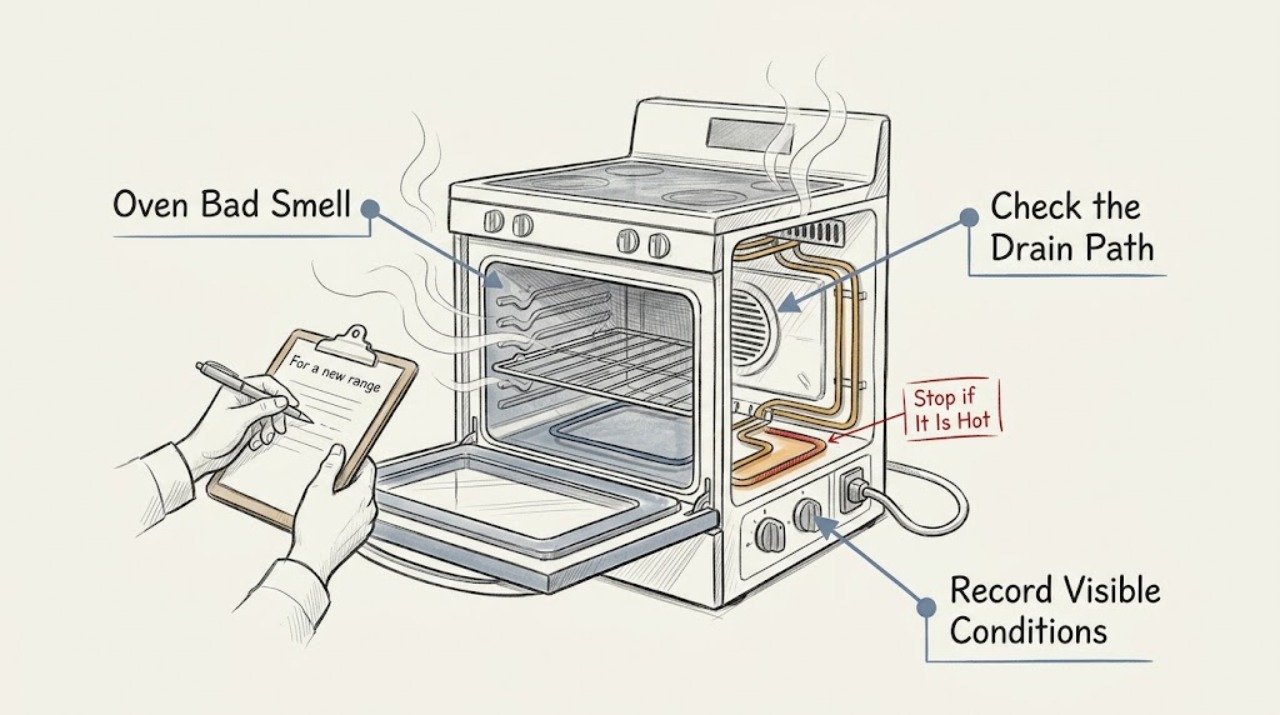
LG Oven Bad Smell: Separate Food, New-Range, Gas, and Electrical Odors
Stop and let the oven cool before identifying the odor. A food or grease smell usually follows a visible spill or residue and can be addressed with the exact model's safe cleaning method.
-
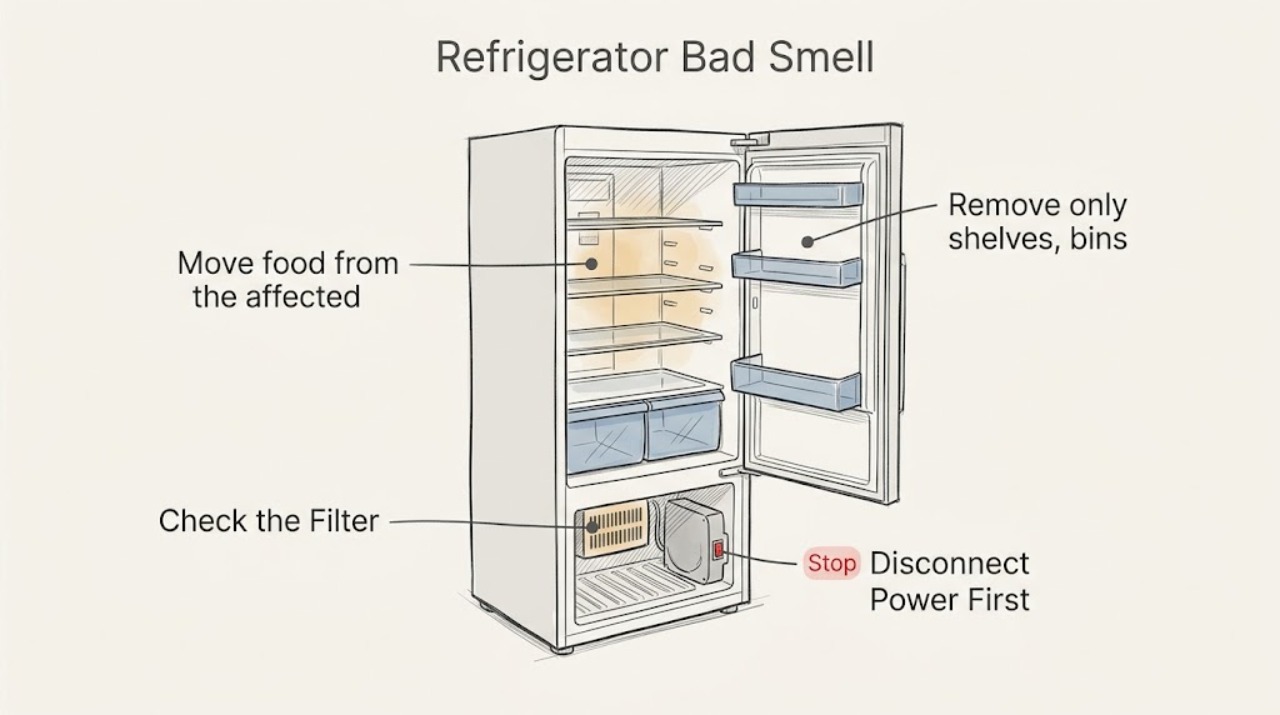
LG Refrigerator Bad Smell: Trace Food, Filter, and Back-Compartment Odors
Empty the affected LG refrigerator section and note whether the odor is from food or spills inside, the reusable deodorizer, or the back mechanical compartment. Clean removable parts and accessible interior surfaces with a soft cloth and mild detergent, and follow the model's deodorizer instructions. Disconnect power before external cleaning; do not remove the back cover, and request service for an electrical, burning, gas-like, or persistent rear odor.
-
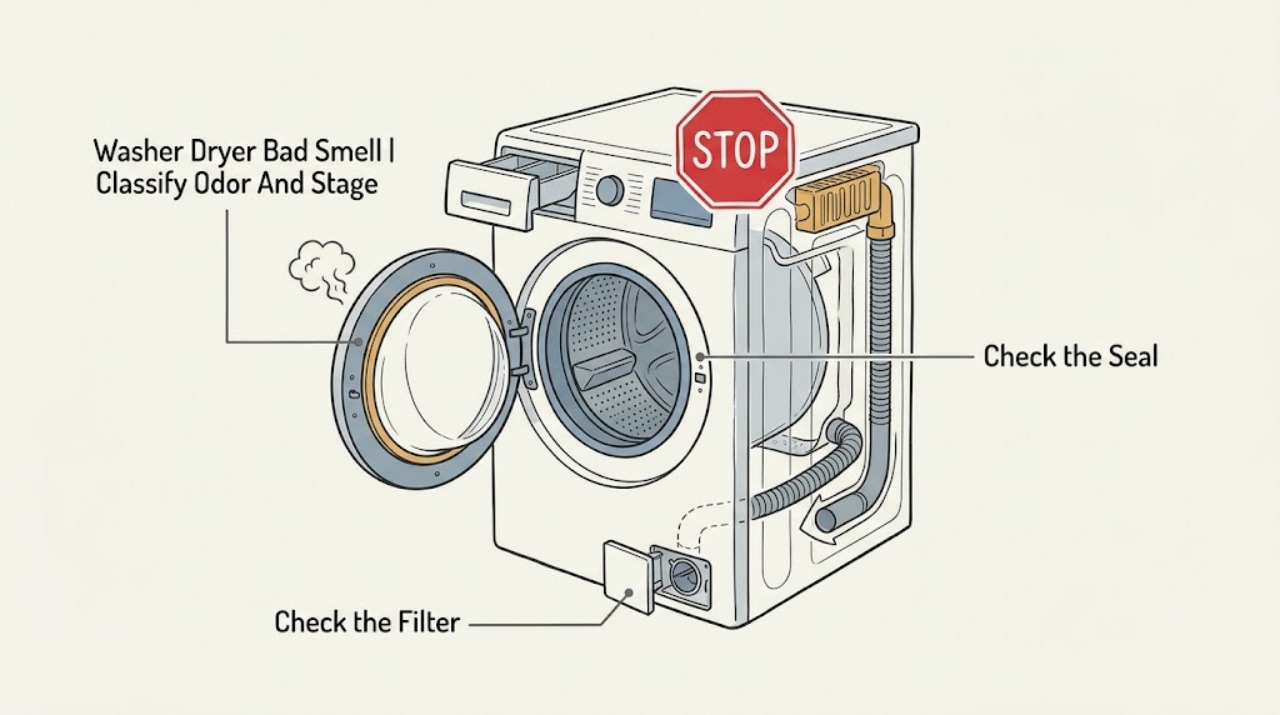
LG Washer Dryer Bad Smell
A bad smell from an LG washer-dryer is usually separated by odor and timing: musty odor after wet laundry sits points toward moisture, gasket or tub residue, while an odor during drying can come from the hot gasket, lint or dust near the heater, or sewer gas if the drain hose remains connected during drying. Stop immediately for smoke, sharp electrical or melting-plastic odor, a gas smell, sparking, unusual heat, or a tripped circuit.
-
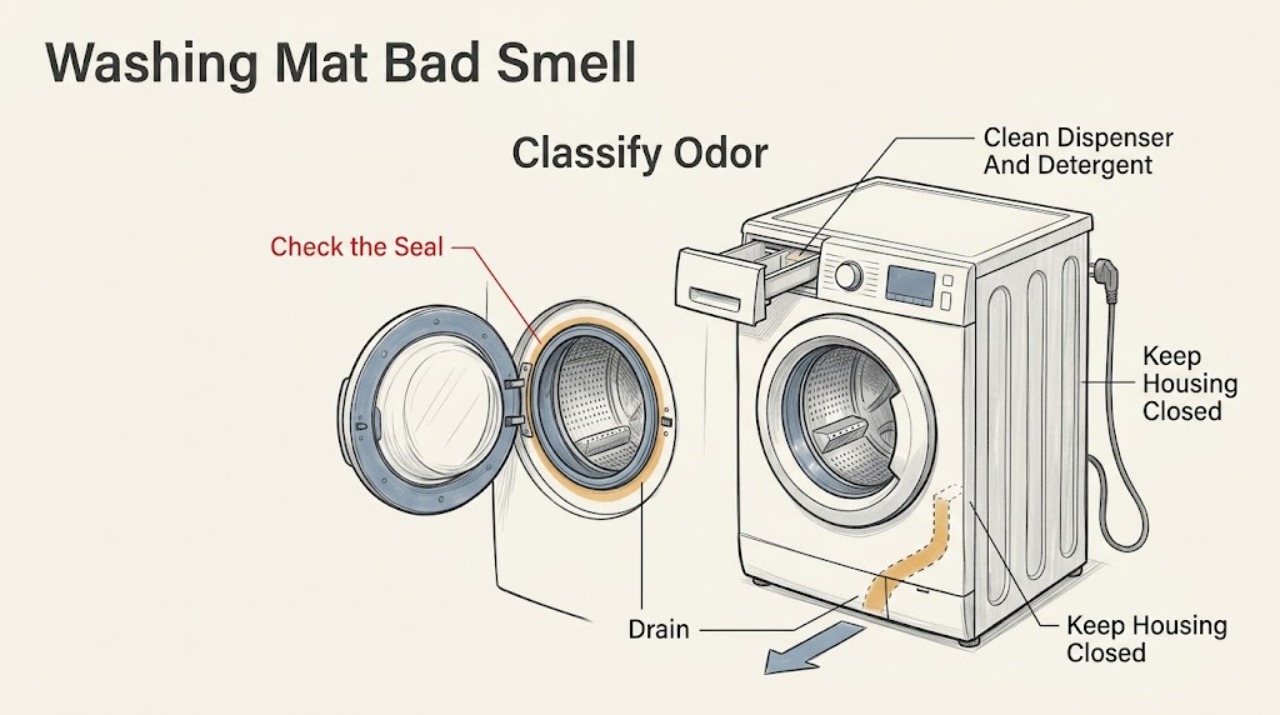
LG Washing Machine Bad Smell: Separate Musty, Drain, and Burning Odors
First classify the odor and when it appears. A musty or mold-like smell usually points to moisture, residue, closed ventilation, the door gasket, dispenser, or a drain path that retains water; remove laundry promptly, dry accessible areas, clean the dispenser, and use the LG Tub Clean guidance only when that cycle and cleaner suit the exact model.
-
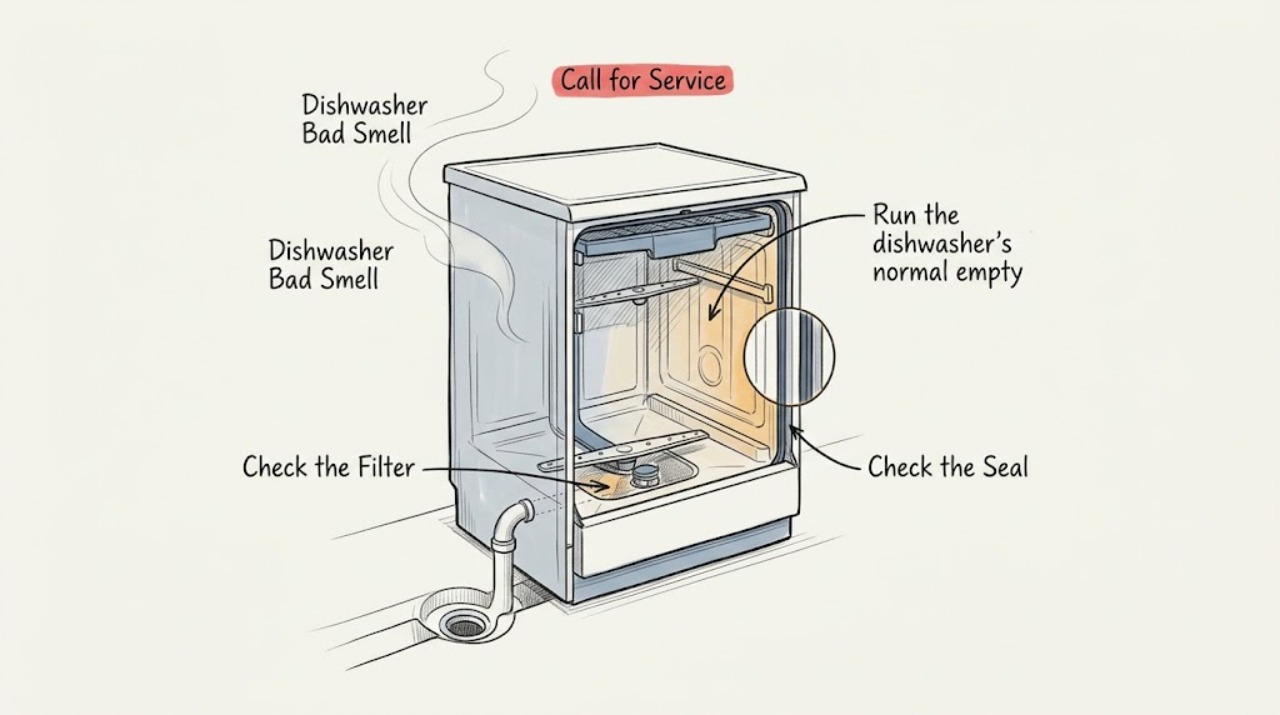
Magic Chef Dishwasher Bad Smell
A bad smell usually needs a source check rather than a fragrance product: inspect the accessible filter and tub for trapped soil, confirm that water is leaving after a cycle, and clean only the parts named by your model manual. Stop using the dishwasher if the odor is burning, chemical, or accompanied by a leak or electrical symptom.
-
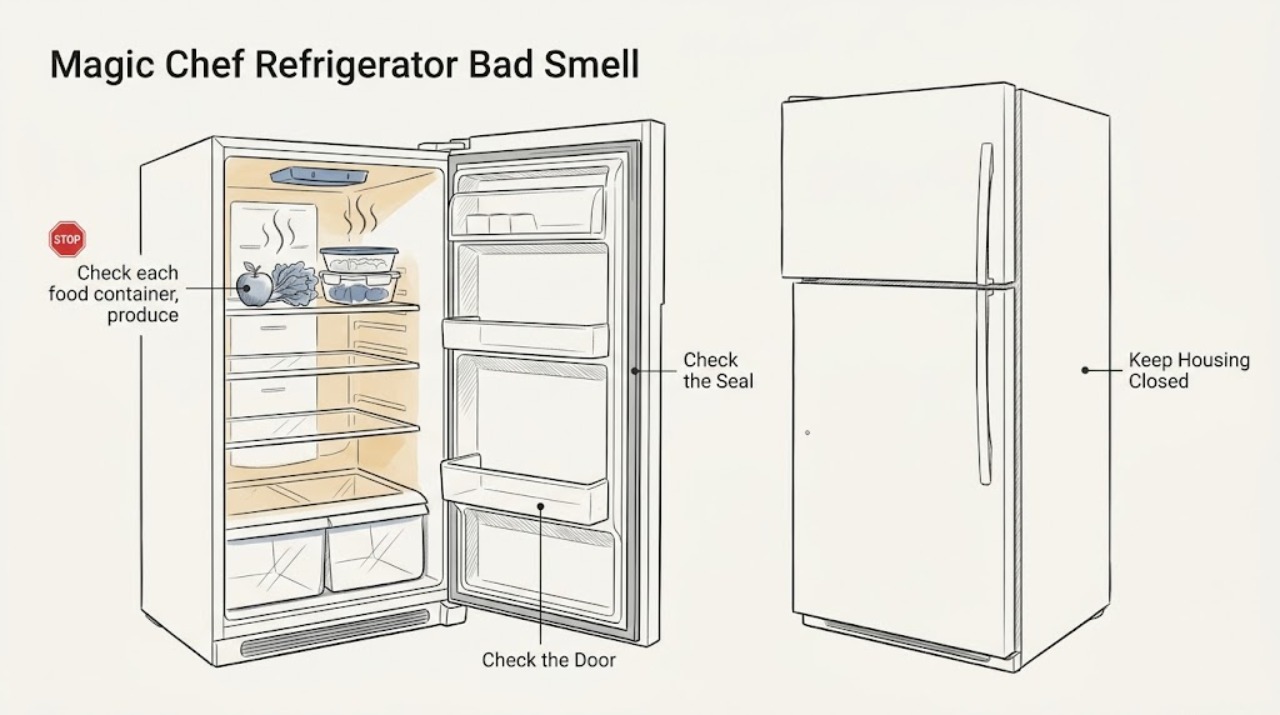
Magic Chef Refrigerator Bad Smell: Trace the Source Before Cleaning
Start by deciding whether the Magic Chef refrigerator smell comes from spoiled food, a spill trapped around a shelf or gasket, or a recurring odor with a temperature problem. Discard questionable food, clean removable surfaces and the interior using a safe food-appliance method, and verify the refrigerator is at or below 40°F. A persistent smell with leaking, warm food, smoke, or an electrical odor needs service.
-
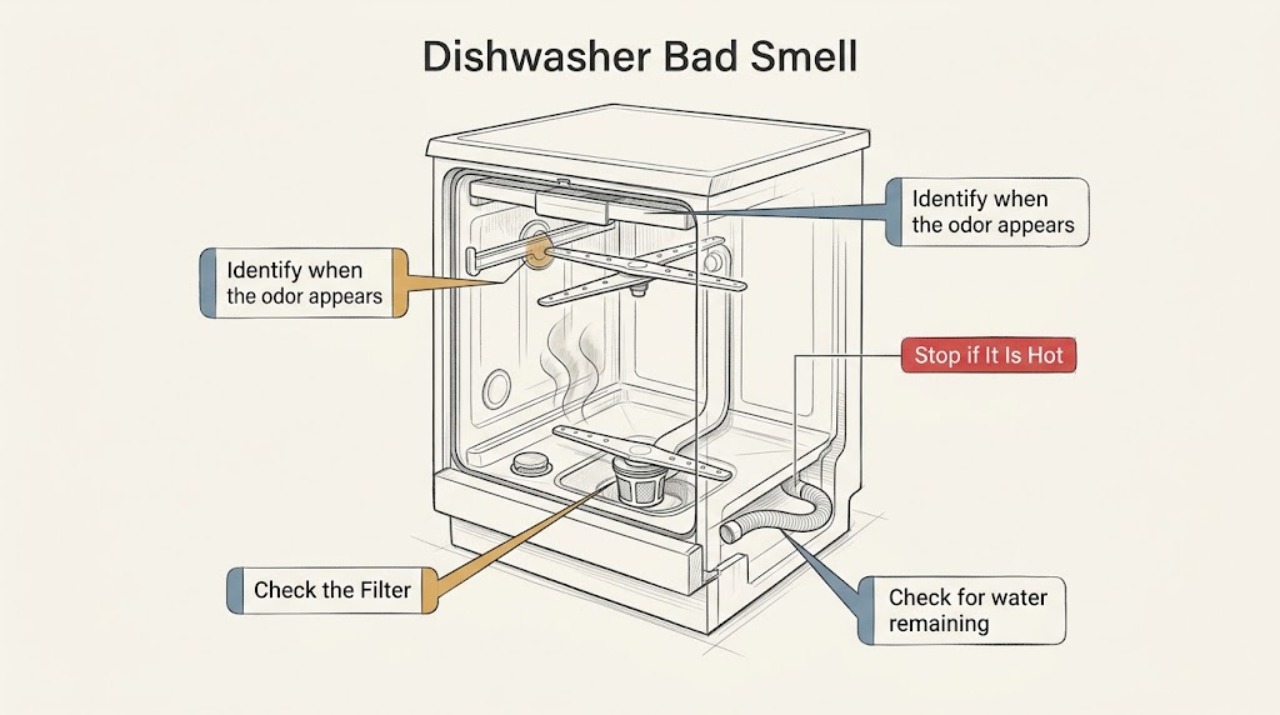
Maytag Dishwasher Bad Smell
Start by separating food or stagnant-water odor from a new-plastic, petroleum, or varnish smell. Clean the filter, spray arms, door seals, interior, and accessible drain path, and use only the cleaner or rinse method allowed by the model instructions. A persistent burnt, electrical, or chemical odor is a stop-use symptom that needs service.
-
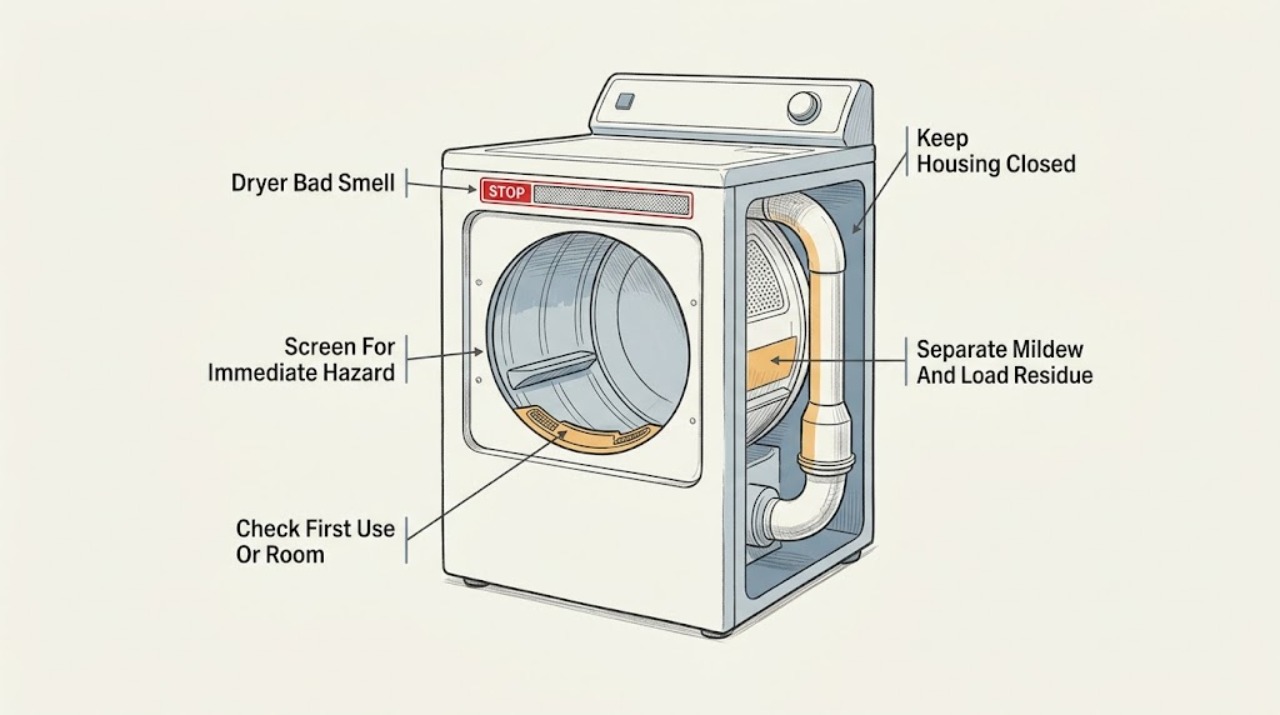
Maytag Dryer Bad Smell: Identify the Odor Before Running It Again
Stop a Maytag dryer and identify the smell before starting another cycle. A light oily or semi-burning odor during first use can be normal, but only follow Maytag's first-use guidance when there is no smoke, flame, gas odor, scorching, intense heat, or electrical damage.
-
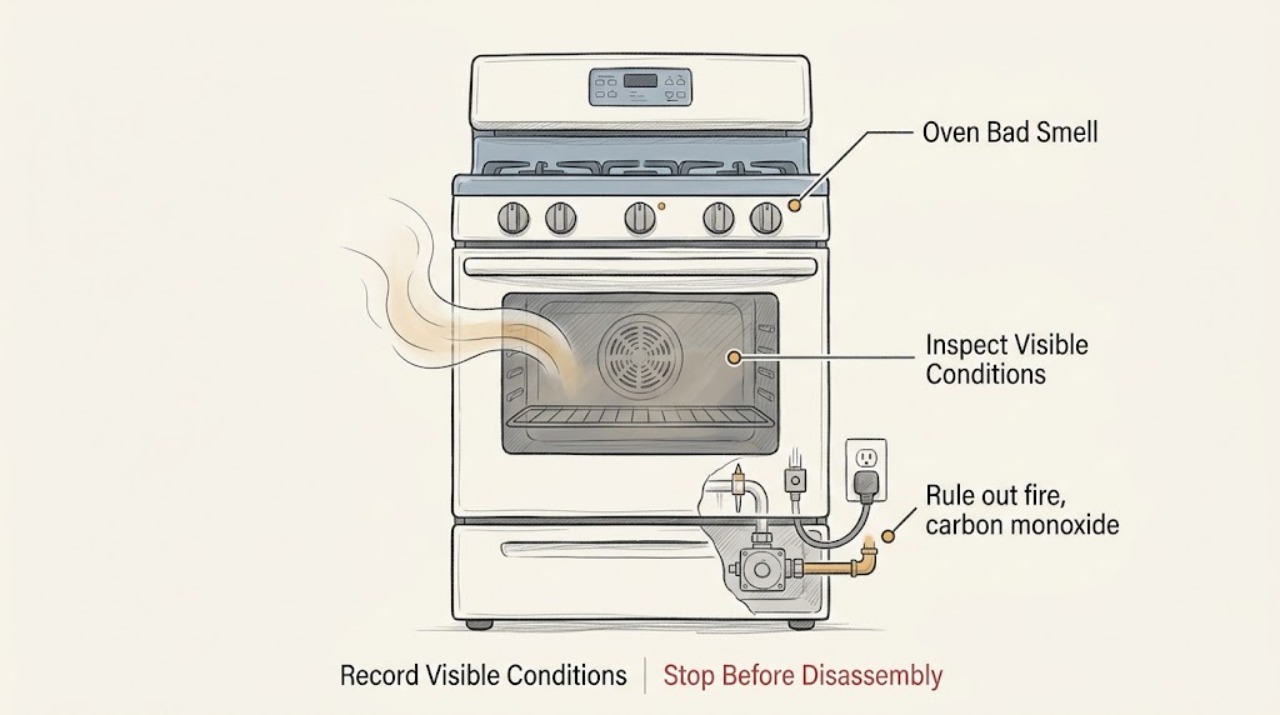
Maytag Oven Bad Smell: Safe Checks Before Service
Treat a Maytag oven smell as a safety triage problem before a cleaning problem. If the odor resembles raw gas or rotten eggs, or there is hissing, delayed ignition, an abnormal flame, carbon-monoxide symptoms, smoke, fire, sparking, a hot control, or a burning-electrical smell, stop using the oven and leave the area when appropriate; do not operate switches or try another ignition test, and contact the appropriate gas, fire, or qualified service help from a safe location.
-
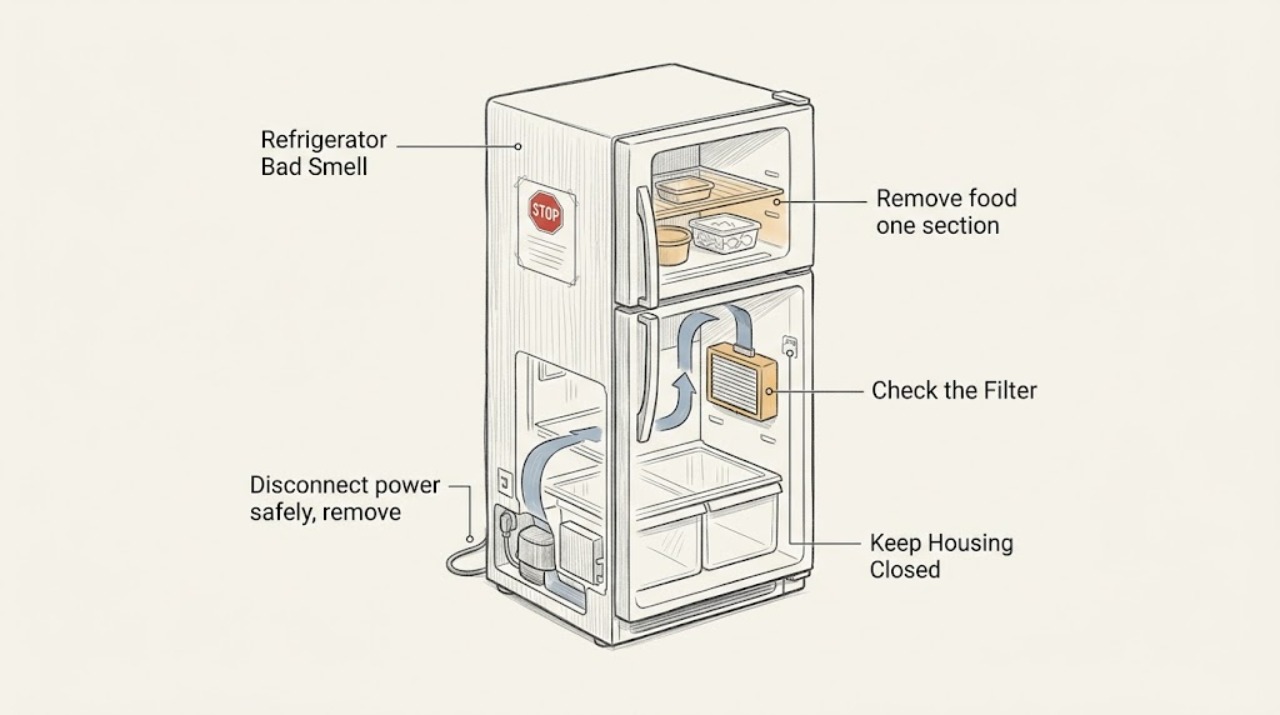
Maytag Refrigerator Bad Smell: Trace the Odor Before Replacing a Filter
A bad smell in a Maytag refrigerator usually starts with spoiled food, a spill, an uncovered strong-smelling item, or odor transferred between the refrigerator and freezer. Empty both sections, find the source, wash removable parts and interior surfaces with mild detergent and warm water, then check whether your model has an air filter. If the smell returns after a complete cleaning or resembles burning, chemicals, or a refrigerant problem, stop and arrange service.
-
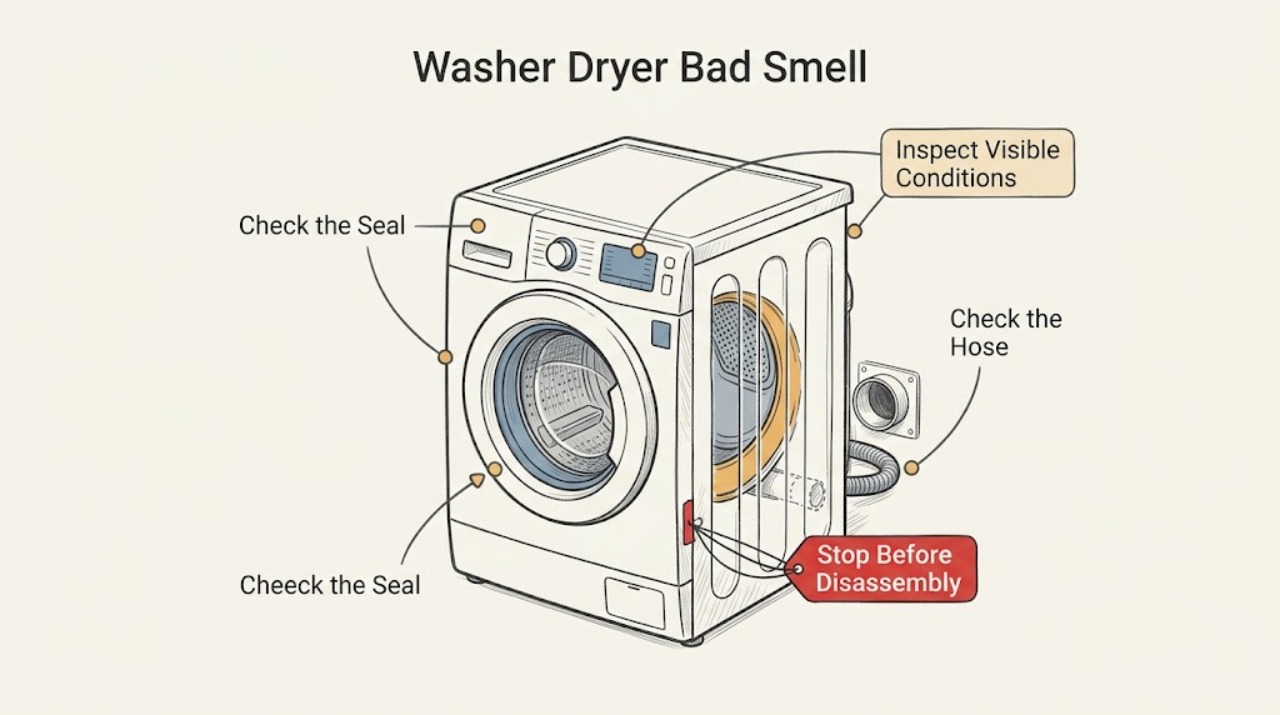
Maytag Washer Dryer Bad Smell
If a Maytag washer dryer has a bad smell, first identify whether it comes from the washer tub, a front door seal or dispenser, the dryer drum, the laundry room, or the load itself. Damp clothes left in the washer, detergent residue, and moisture in the seal commonly point to the washer side; lint, drum residue, a recently painted room, or a new dryer's first-use odor point to the dryer side.
-
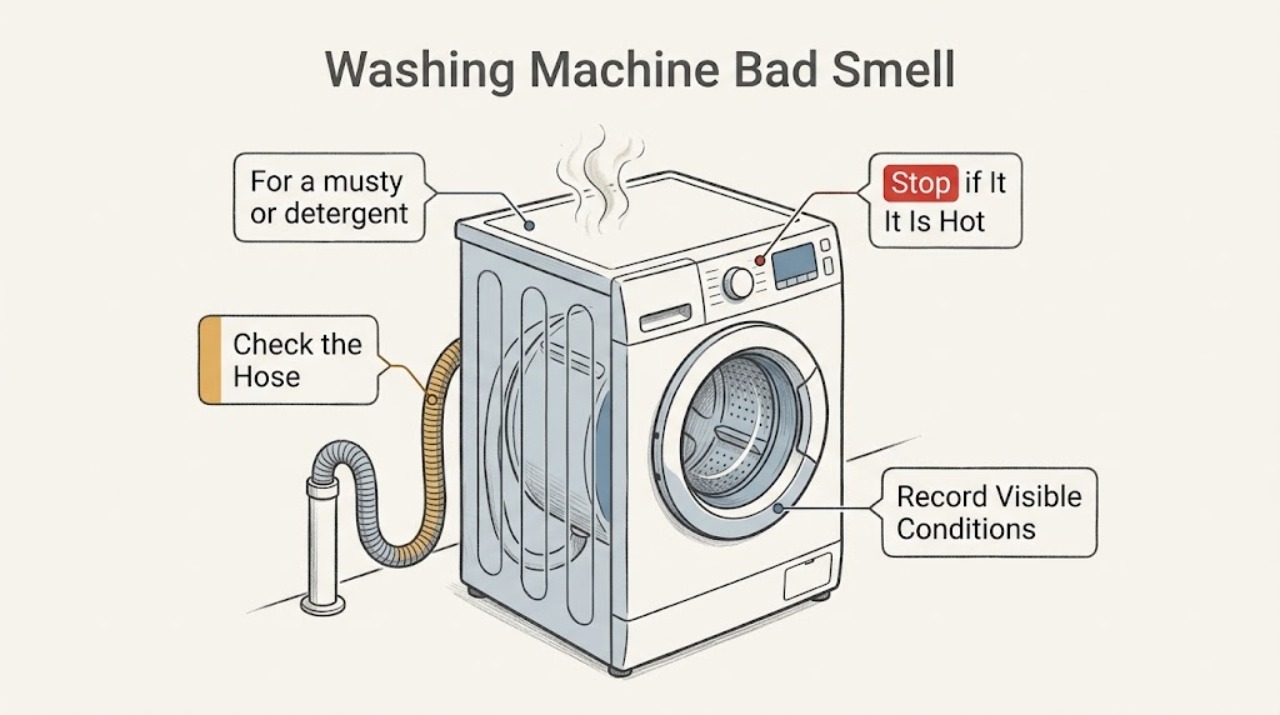
Maytag Washing Machine Bad Smell: Find the Odor Source and Clean It Safely
A Maytag washer that smells musty most often has moisture, detergent or soil residue, wet laundry left in the tub, or buildup in the dispenser, door seal, agitator, tub, pump, or drain path. First identify whether the odor is mildew-like, sewage-like, or burning/electrical, then follow the matching safe check.
-
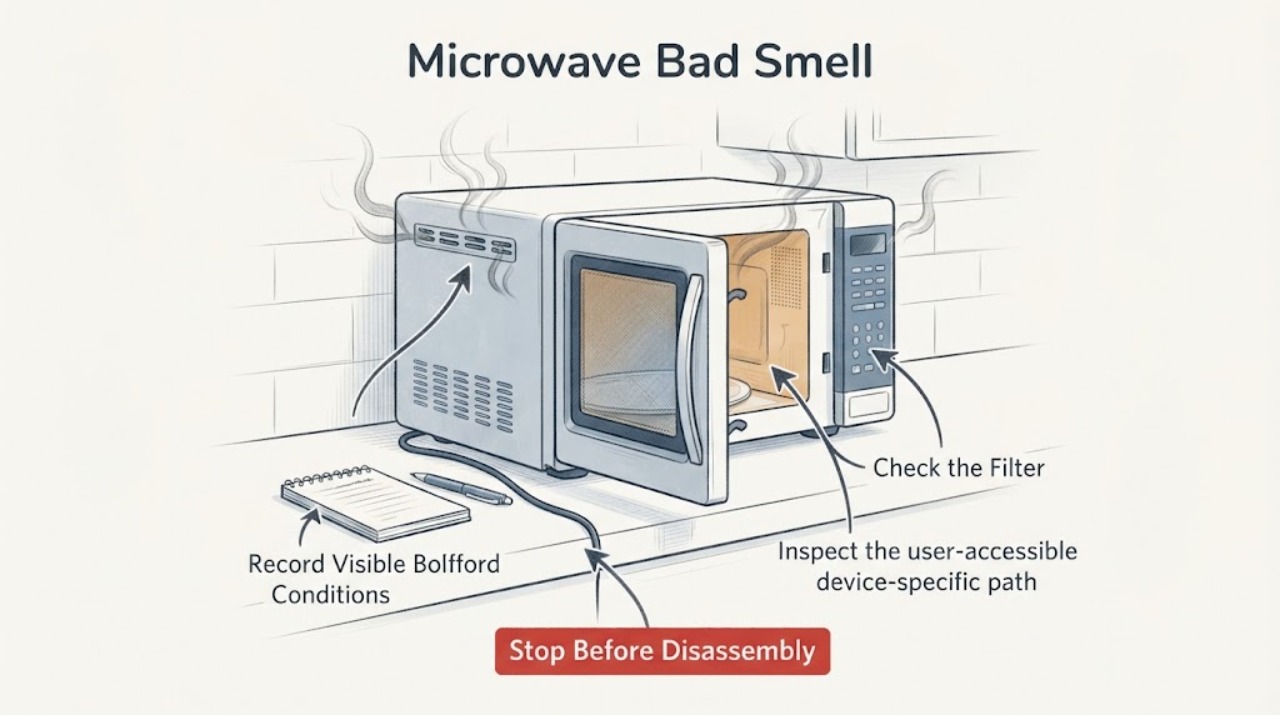
Microwave Bad Smell
For a microwave bad smell, stop for smoke, arcing, melted plastic, or a burning electrical odor. Otherwise unplug and cool it, remove food debris, clean the cavity with mild soap and water, and use the manufacturer-approved steam-clean method. Persistent odor or damaged waveguide cover needs service.
-
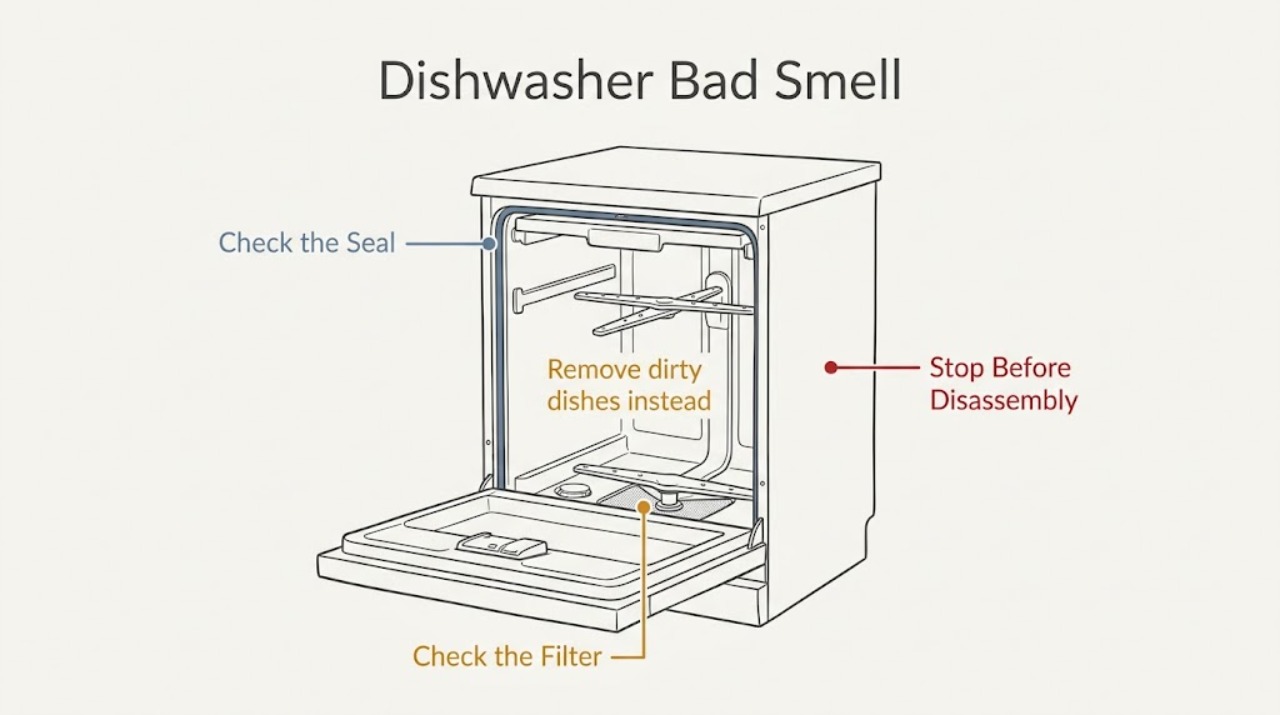
Miele Dishwasher Bad Smell: Clean the Filter, Seals, and Spray Arms
A bad smell in a Miele dishwasher usually calls for a cleaning-and-use check before a parts diagnosis. Do not leave dirty dishes inside for long periods; clean food residue from the door seal and door edges, clean the wash-cabinet filters and spray arms, and regularly run a higher-temperature program.