
Repair problem
Making Noise Troubleshooting Guides – Page 6
Published FixGraph guidance for diagnosing and responding to making noise.
Matching published guides
Choose a guide that matches the service, equipment, and conditions you are seeing.
-
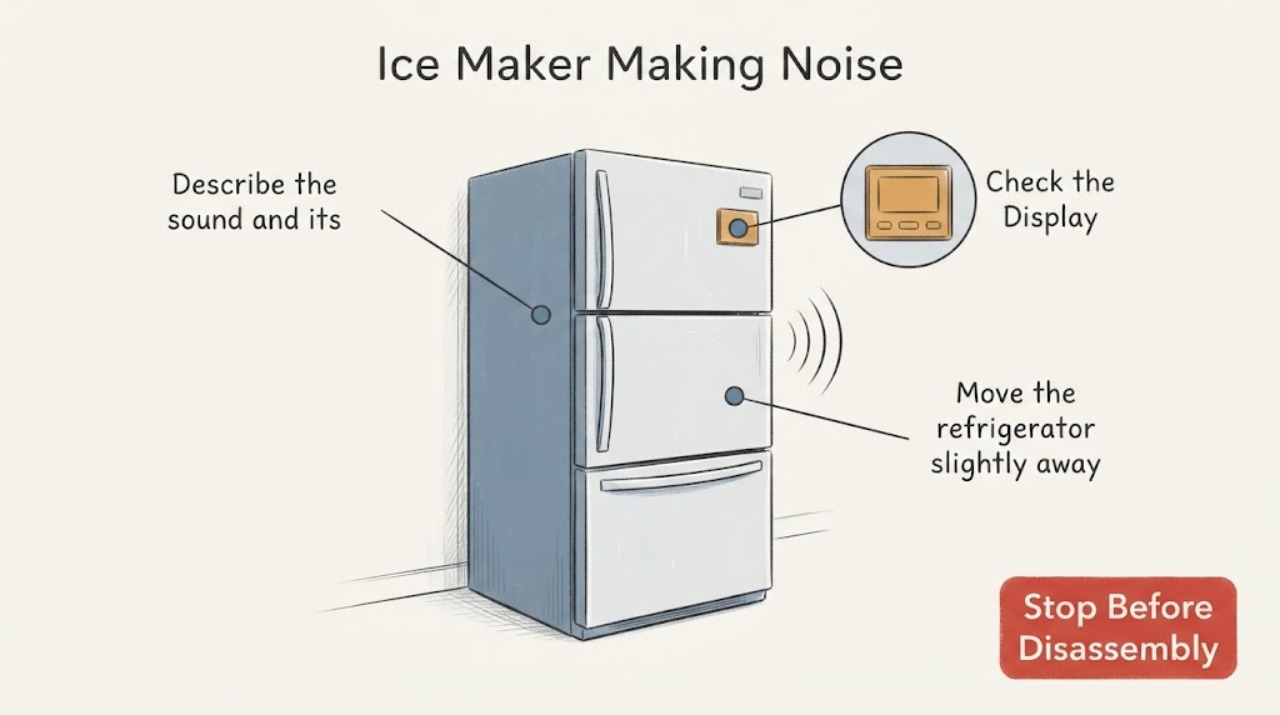
Samsung Ice Maker Making Noise
Some Samsung ice-maker sounds are normal: a buzz while the water valve fills, a bang as ice drops, and a grind while the dispenser moves ice. Identify when the sound occurs, whether it stops when dispensing stops or a door opens, and whether the refrigerator has a connected water line. A very loud, continuous, new, or fan-hitting-ice noise needs service; never use a hair dryer to clear ice.
-
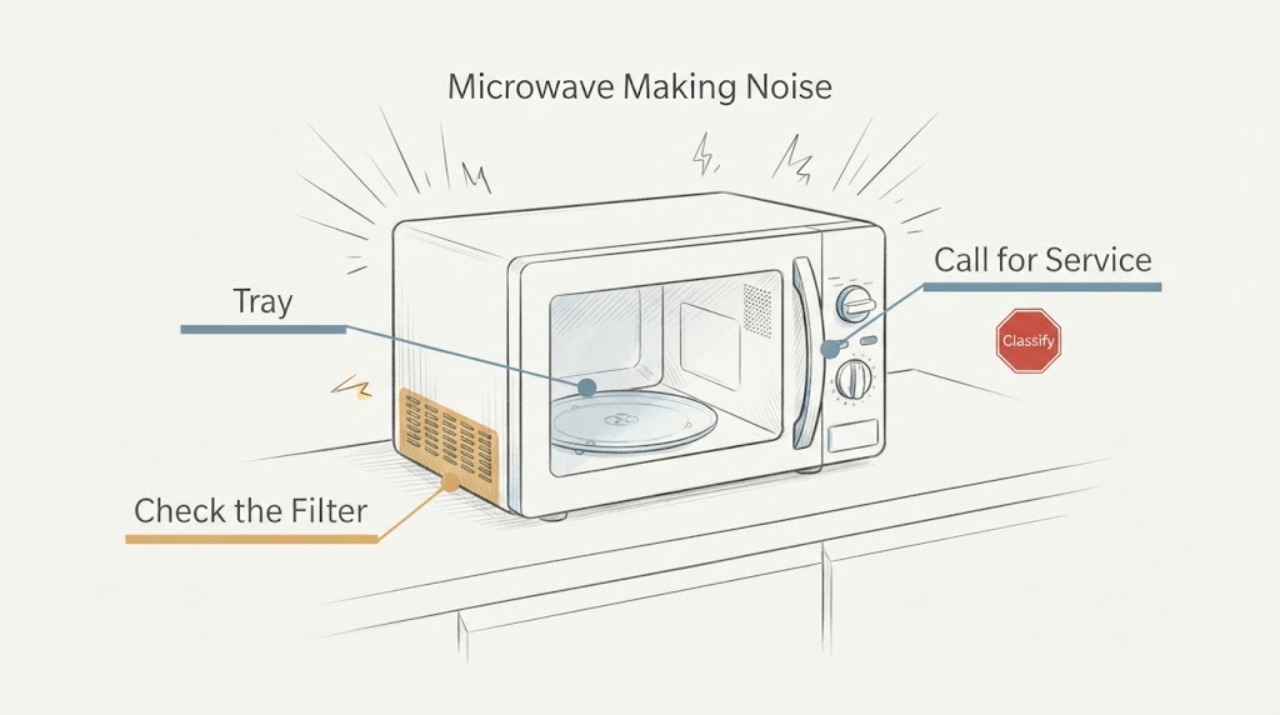
Samsung Microwave Making Noise: Tell Normal Sounds from a Service Fault
First identify whether the sound is a low hum, clicking, rattling, or popping, then clean and reseat only the accessible tray, roller ring, food residue, and over-the-range filters. A low hum can be normal, but a noise that is suddenly much louder, continues with a clean water test, or comes from a damaged or loose part needs service. Never run a Samsung microwave empty or open its cabinet.
-
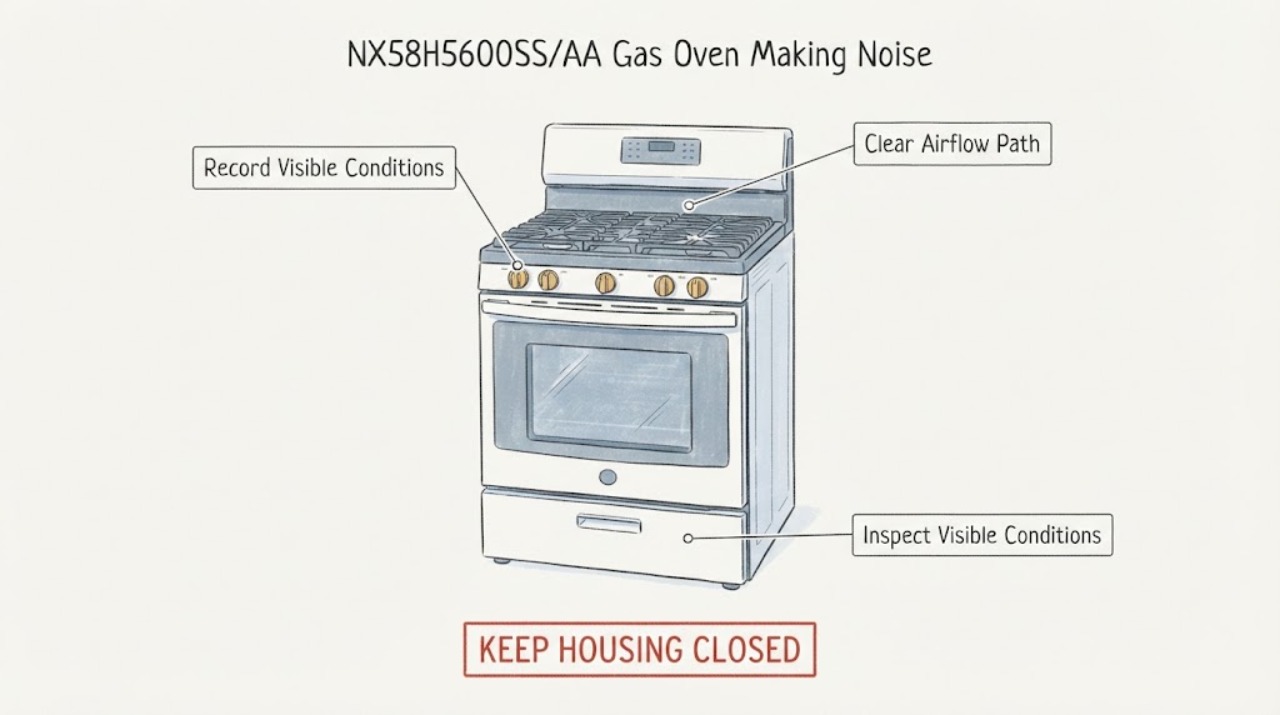
Samsung NX58H5600SS/AA Gas Oven Making Noise After a Cleaning Cycle
On the Samsung NX58H5600SS/AA gas range, a brief ping, pop, or thump while the oven is heating or cooling can be the sound of metal expanding and contracting. A quiet blowing or humming sound can be the cooling fan running while the hot range cools, and a soft hiss is only potentially normal while gas is intentionally flowing.
-
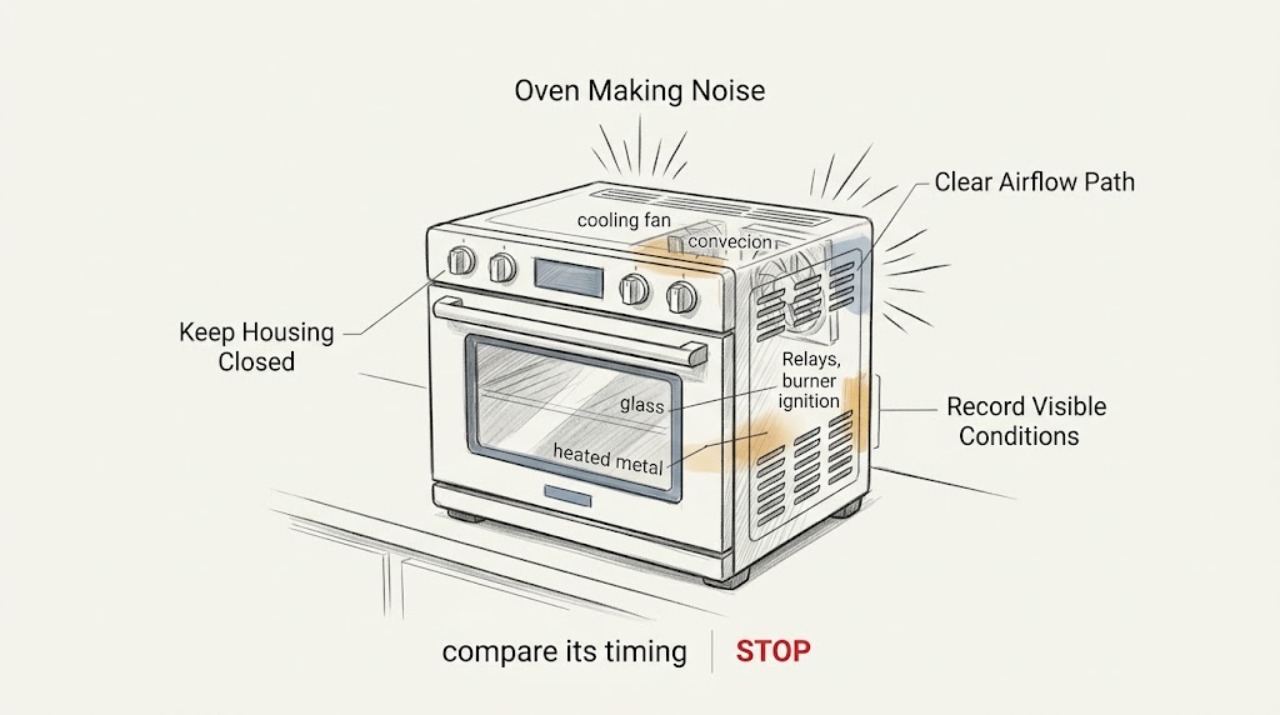
Samsung Oven Making Noise: Fan, Relay, and Gas-Ignition Sounds
First identify when the sound occurs, whether the oven is electric, gas, induction, or dual-fuel, and whether the sound is a quiet repeating hum or a new loud mechanical or gas-related noise.
-
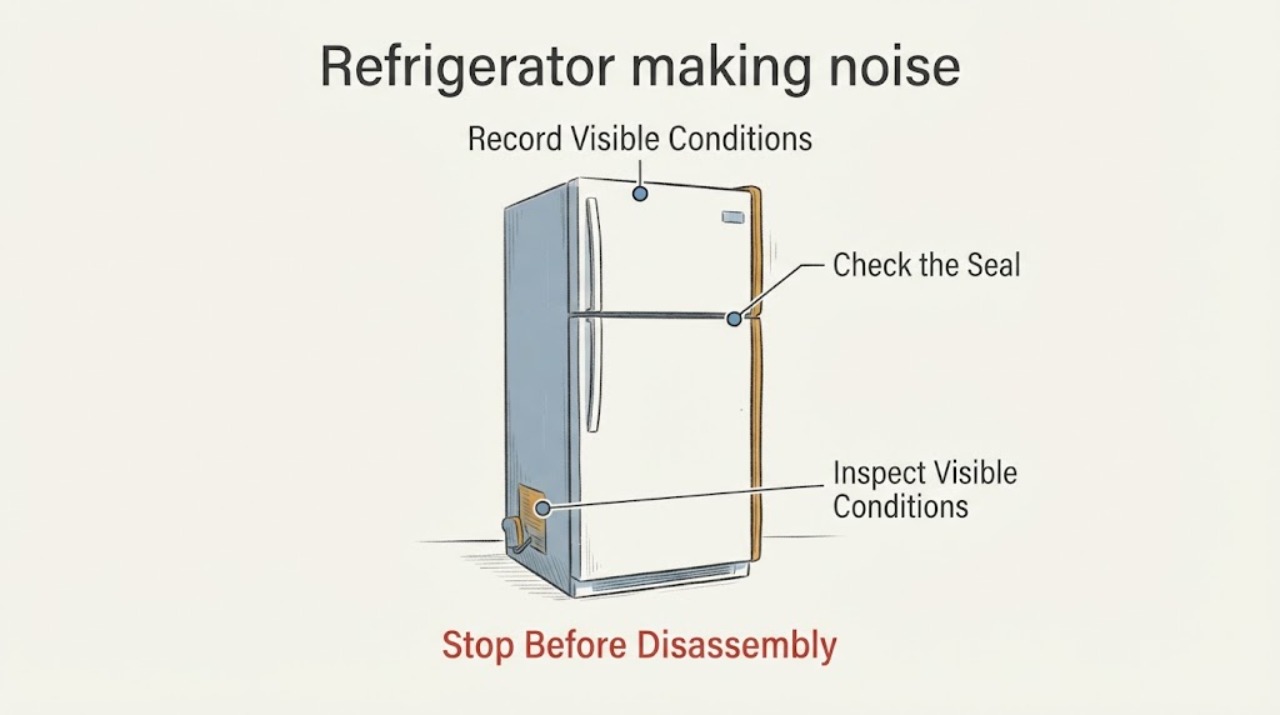
Samsung refrigerator making noise: identify the sound and know when to call service
First identify the sound, where it comes from, and whether it happens during cooling, ice making, dispensing, defrosting, or when a door moves. Quiet, brief cracking, bubbling, hissing, compressor humming, and ice-dropping sounds can be normal.
-
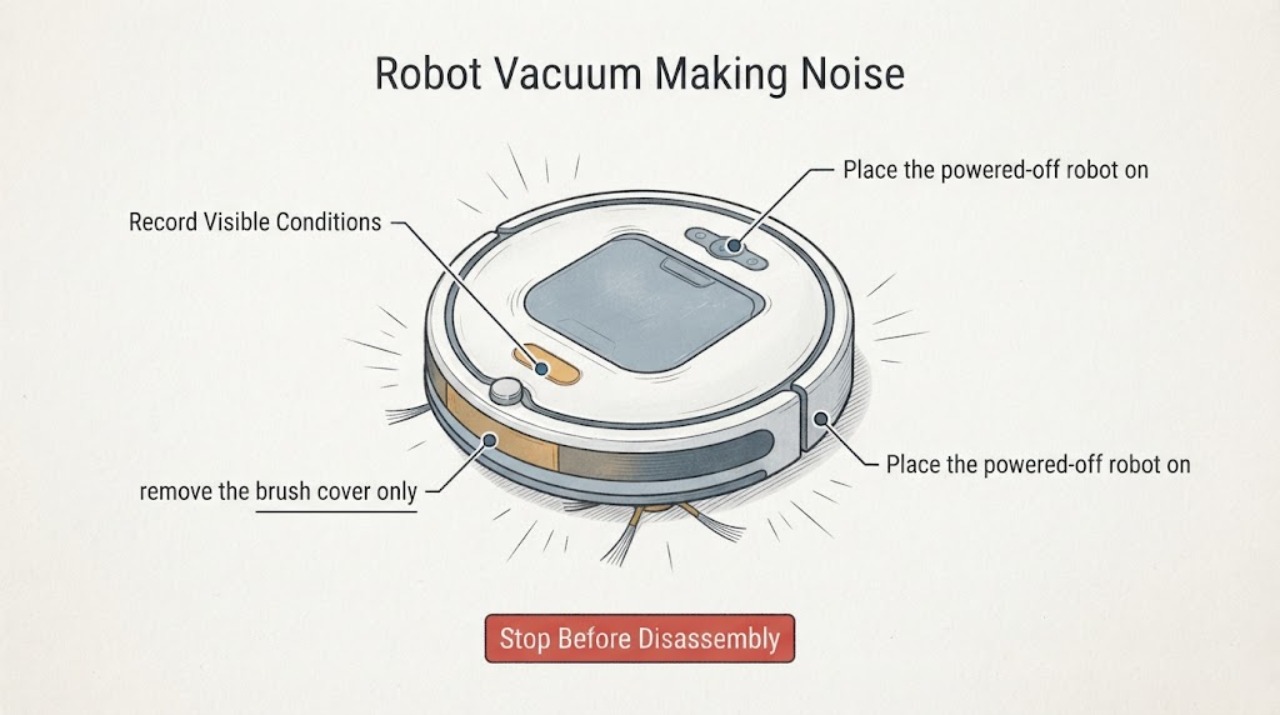
Samsung Robot Vacuum Making Noise: Check the Brush, Wheels, and Cover
A Samsung robot vacuum making noise should be stopped and checked with power off for hair or debris in the main brush, side brush, and wheels, a loose brush cover, a packed dustbin or filter, and a sensor or mop attachment that is rubbing. Reassemble only the parts your model's guide identifies and make one supervised test.
-
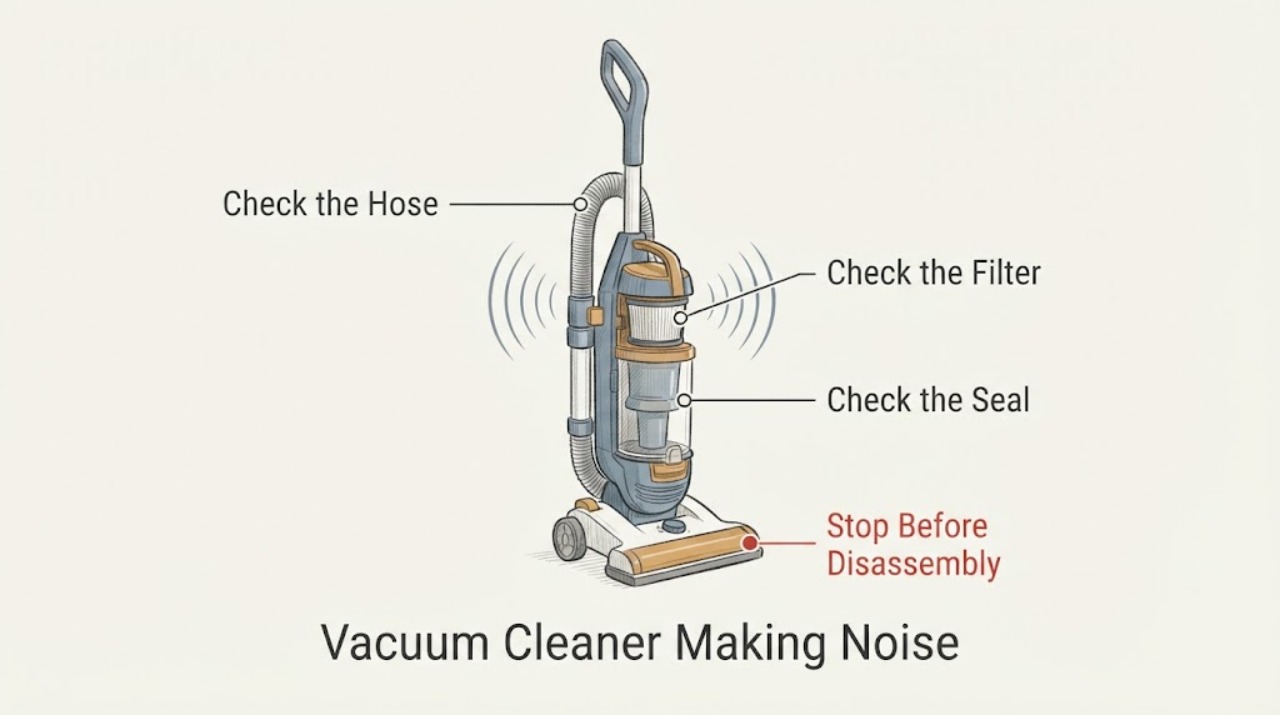
Samsung Vacuum Cleaner Making Noise: Check Airflow, Brush, and Wheels
A Samsung vacuum cleaner making noise should be turned off and unplugged before checking the filter, dustbin, hose or pipe, brush roll, and wheels for blockage or debris. A sudden noisy change with weaker suction favors an airflow restriction, while noise or vibration that remains after cleaning on a flat surface can indicate motor, bearing, balance, or internal wear.
-
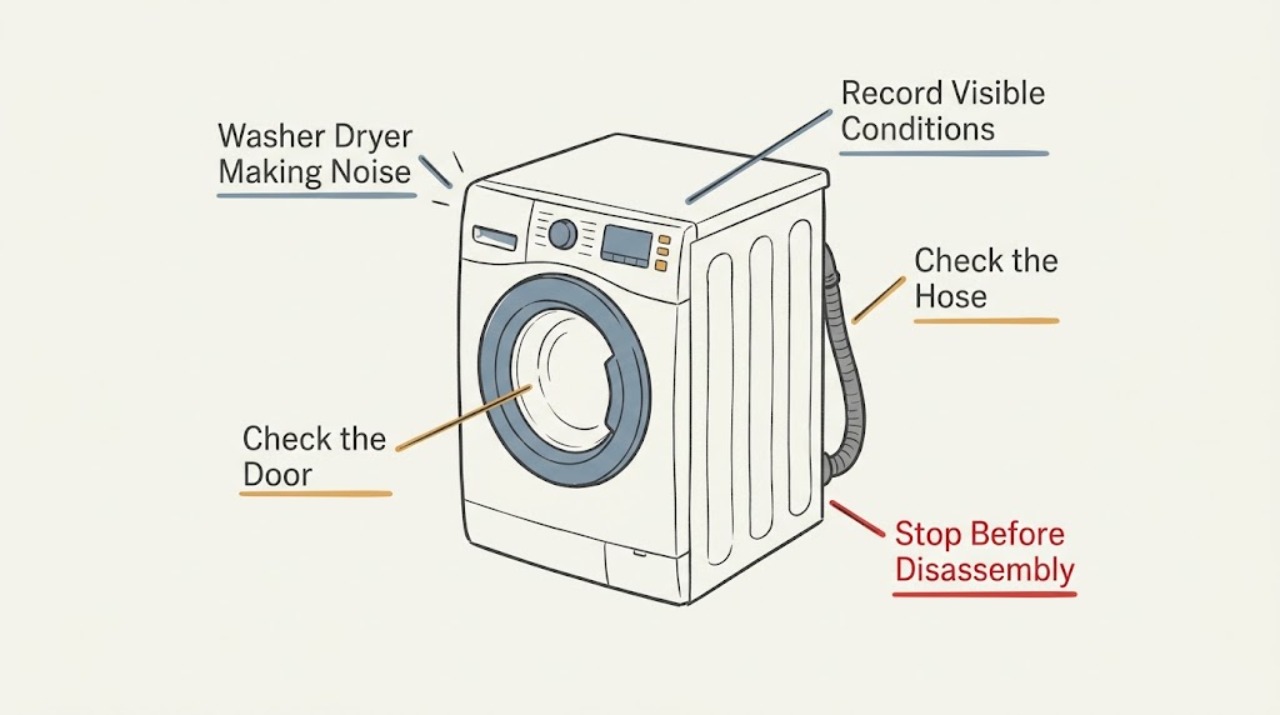
Samsung Washer Dryer Making Noise: Identify the Sound Safely
First identify whether the noise occurs during filling, washing, draining, spinning, or drying. A brief click, valve pop, quiet drain hum, or short motor-mode thump can be normal, while repeated rattling, movement, squealing, grinding, or a jet-like sound needs a different check.
-
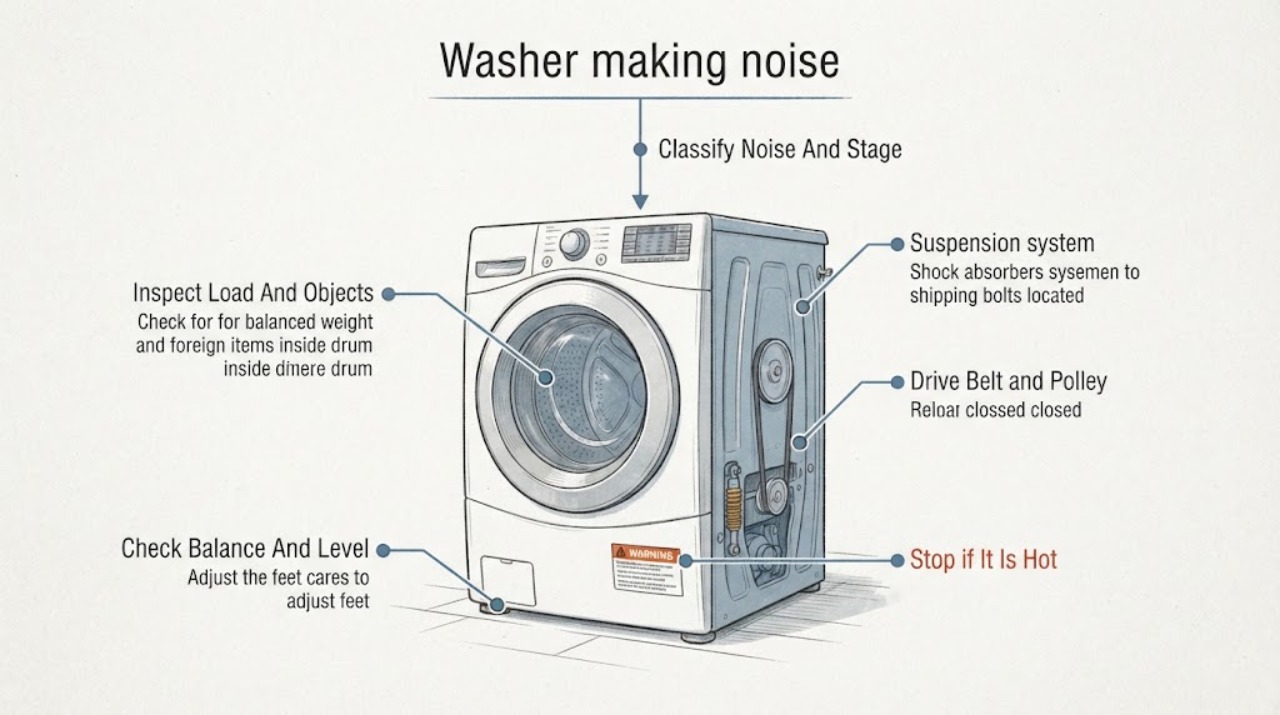
Samsung washer making noise: What to Check and What to Do Next
Classify the Samsung washer noise by sound, cycle stage, and whether it changes with the load. Some clicks, a brief click followed by a short thump, quiet drain humming, a pop as filling starts, and steady water sounds can be normal.
-
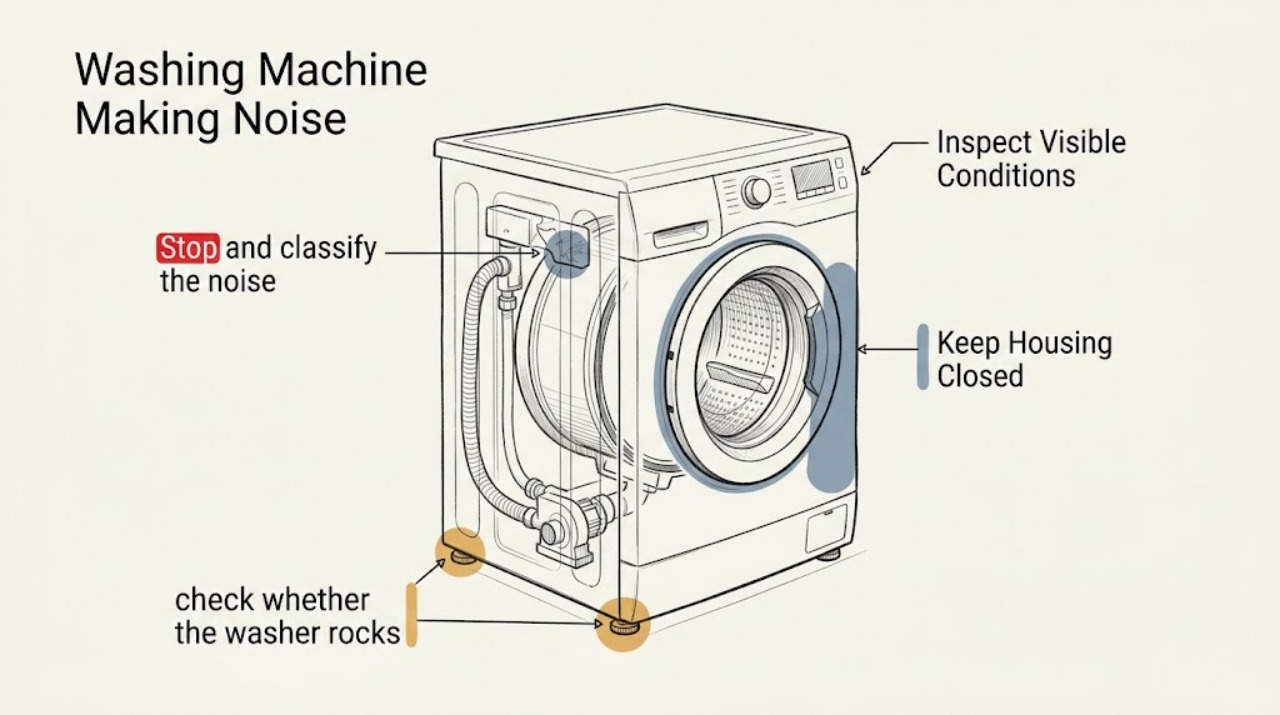
Samsung Washing Machine Making Noise: Identify the Sound by Stage
First match the Samsung washer noise to its cycle stage and pattern. A brief click followed by a short thump, a quiet drain hum, or a pop as the inlet valve opens can be normal on some models.
-
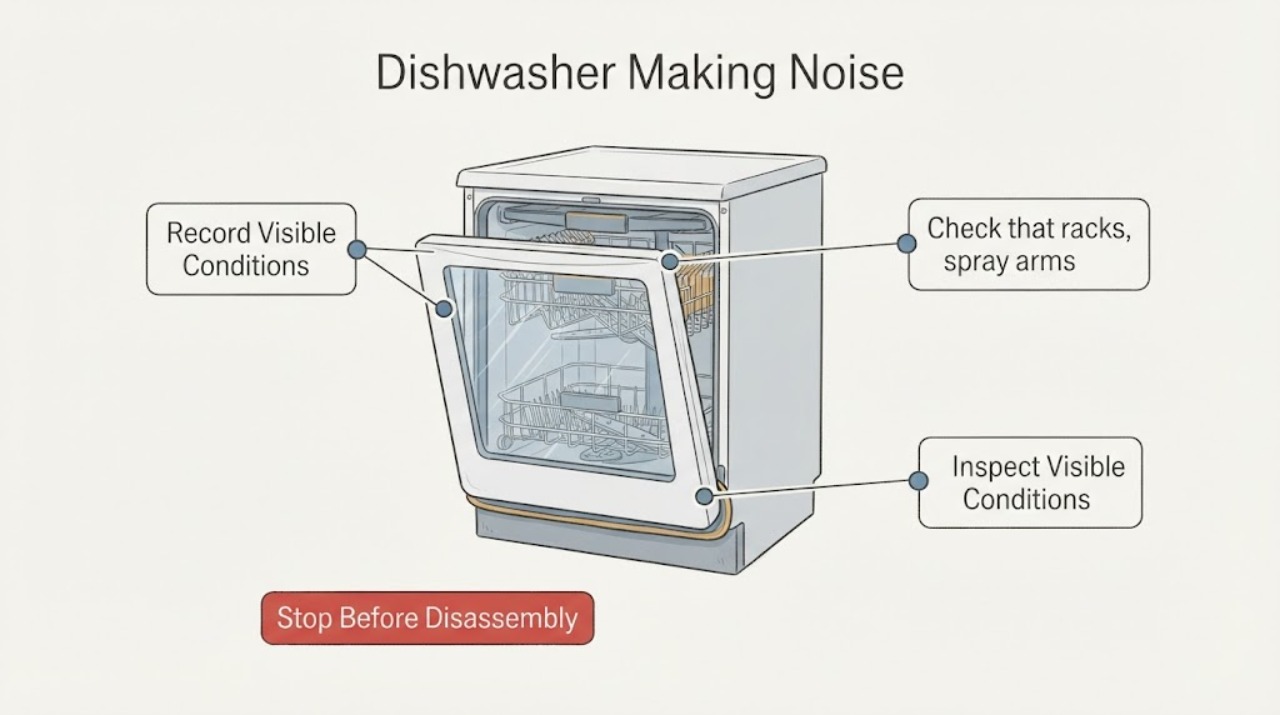
Sharp Dishwasher Making Noise
Sharp dishwasher noise should be classified by timing and sound: water movement and pump sounds can occur during a cycle, while grinding, scraping, or noise with no water movement needs service. Stop for burning odor or abnormal vibration.
-
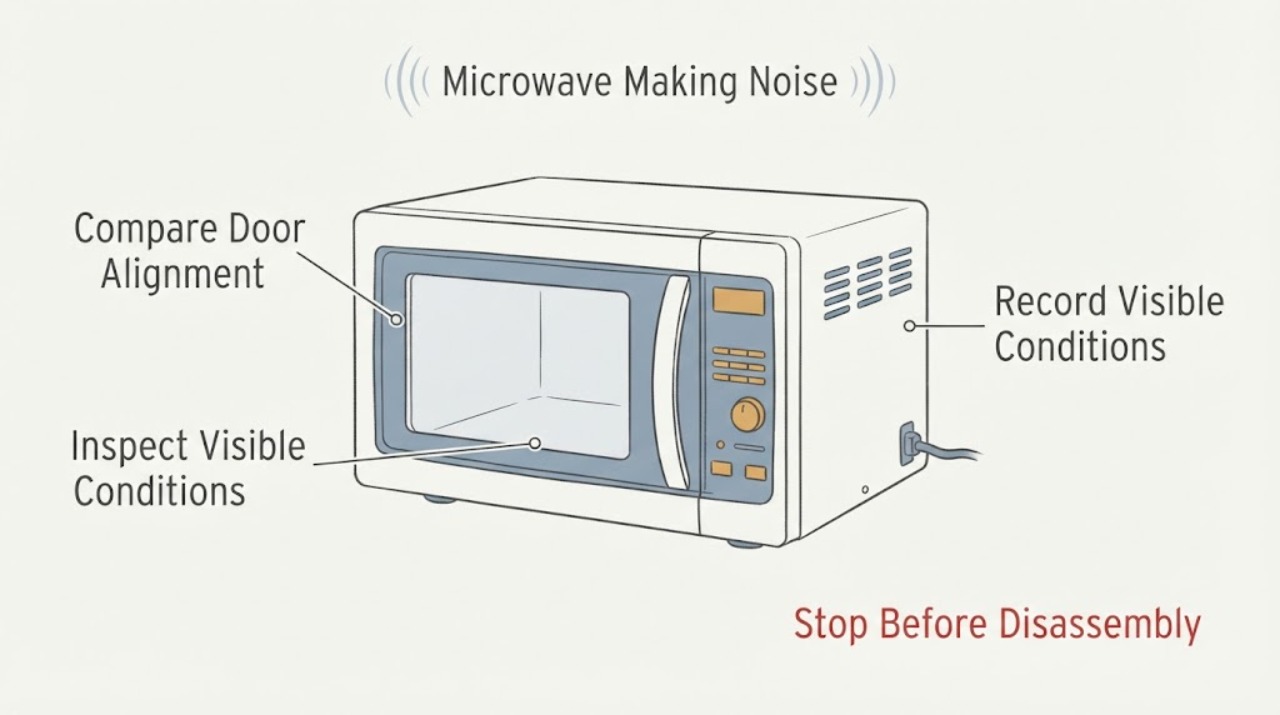
Sharp Microwave Making Noise
Sharp microwave noise should be separated into normal fan/turntable sounds and abnormal grinding, arcing, or vibration. Stop for sparks, smoke, damaged parts, or a noise that persists without a clear operating cause.
-
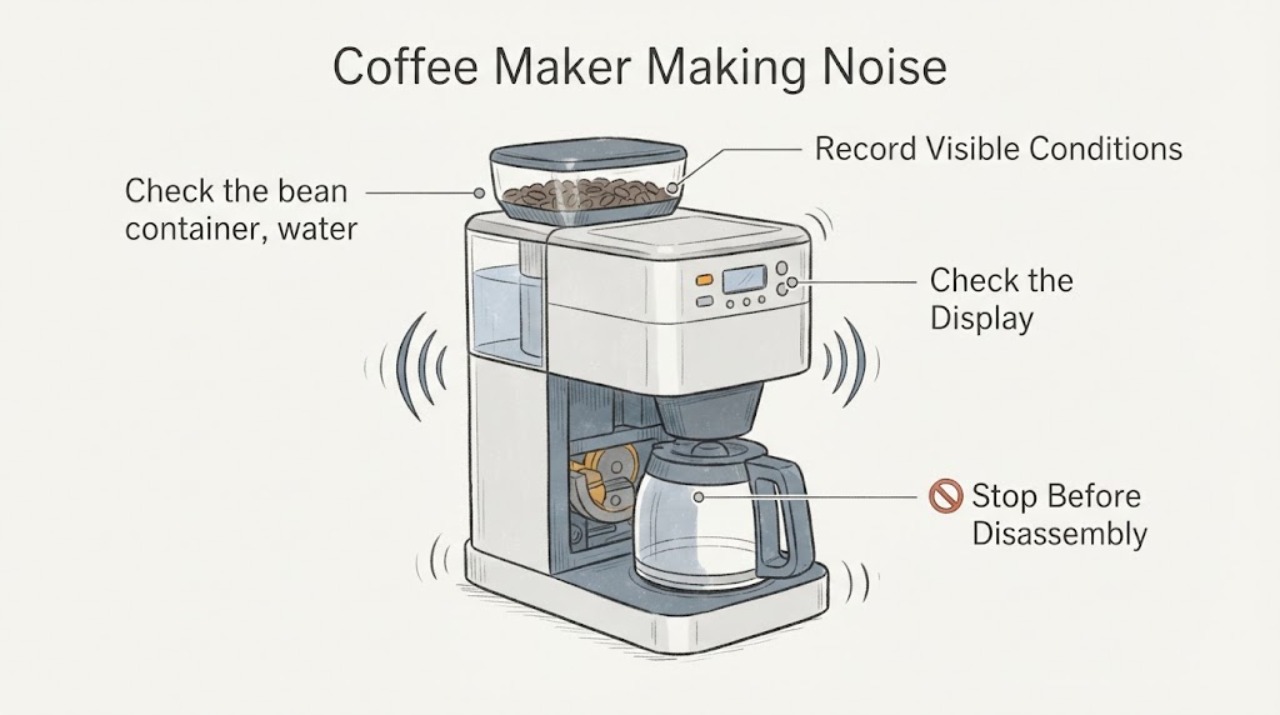
Siemens Coffee Maker Making Noise
For a Siemens coffee maker that is making noise, identify the exact model and display message first because Siemens troubleshooting steps differ across EQ families. Use only the model manual’s accessible cleaning, water, brewing-unit, or restart step. Do not force the mechanism or open the appliance; persistent faults, leaks, or repeated messages belong with Siemens service.
-
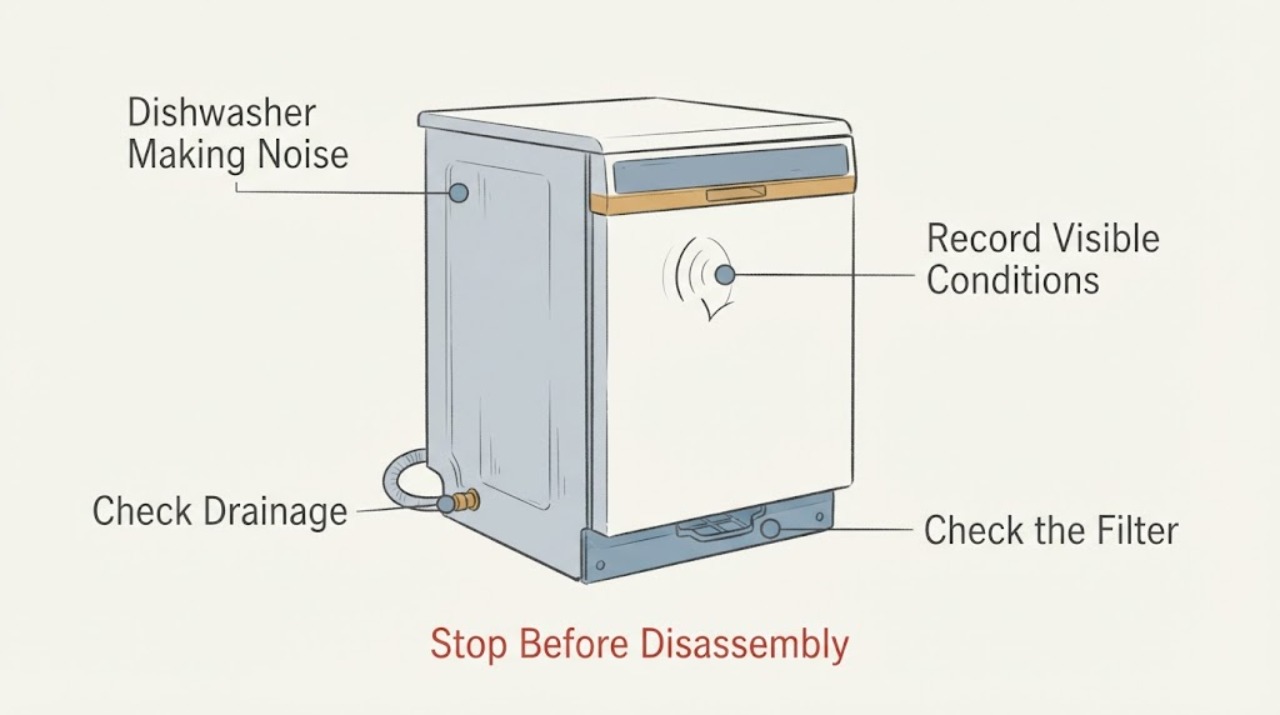
Siemens Dishwasher Making Noise
For a Siemens dishwasher that is making noise, begin with the symptom’s observable path: filter and pump for draining or odour, water supply for filling, detergent and spray arms for dispensing or wash results, and the model manual for display messages. Switch off and isolate water or power when the official guidance calls for it. If the issue persists, leaks, or the dishwasher will not heat, arrange Siemens service.
-
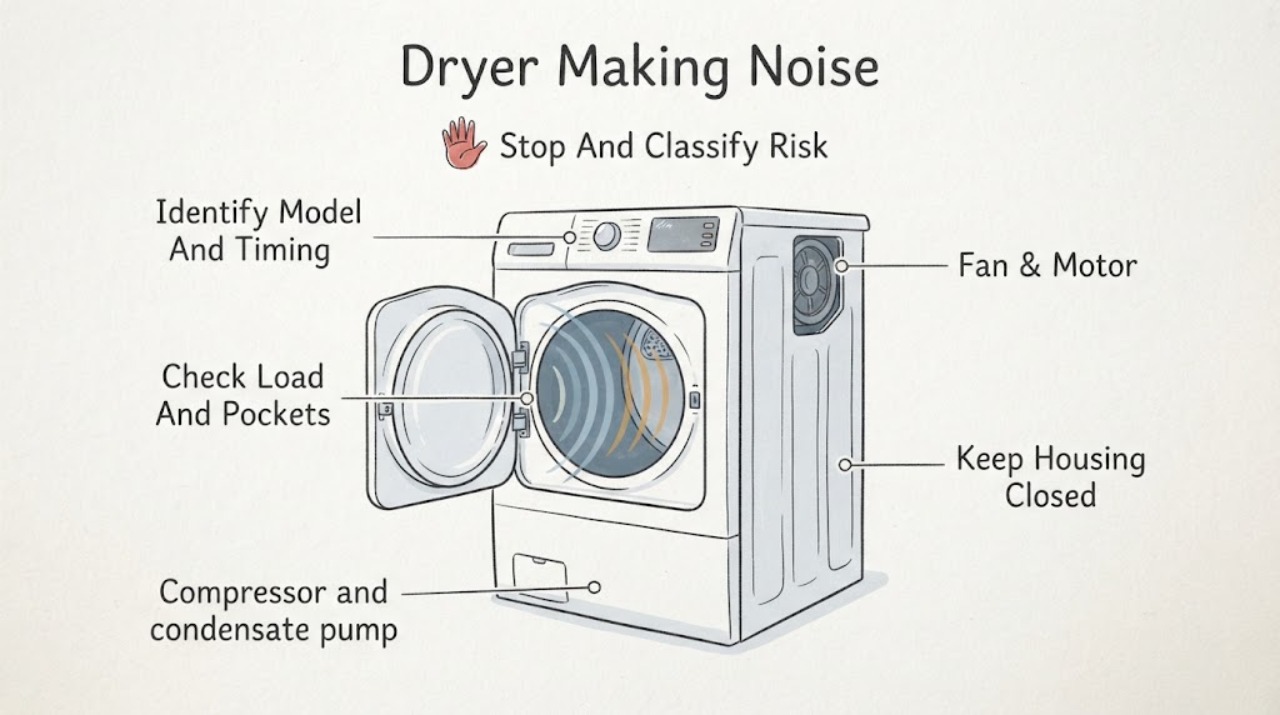
Siemens Dryer Making Noise: Normal Heat-Pump Sounds vs. Faults
Start by recording when the Siemens dryer makes noise and whether the drum contains laundry. On heat-pump or condenser models, a compressor hum, condensate-pump sound, compressor ventilation whir, or automatic-cleaning click can be normal; model design and programme change what you hear.
-
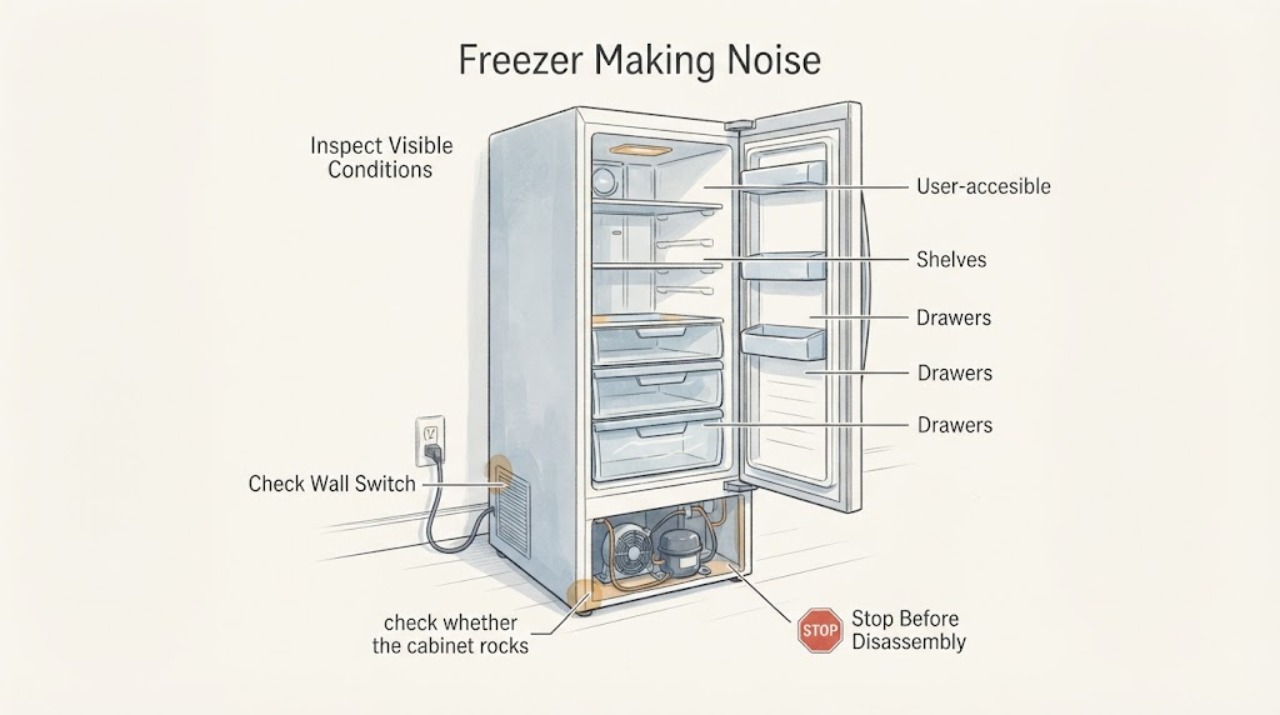
Siemens Freezer Making Noise: Separate Normal Sounds From Faults
A Siemens freezer may briefly hum, click, gurgle, or move air as the compressor, fan, valves, or refrigerant circuit operate. First note whether the sound is new, continuous, unusually loud, or paired with a warm compartment, alarm, frost, water, burning smell, smoke, sparks, a hot cabinet, or a tripped protective device.
-
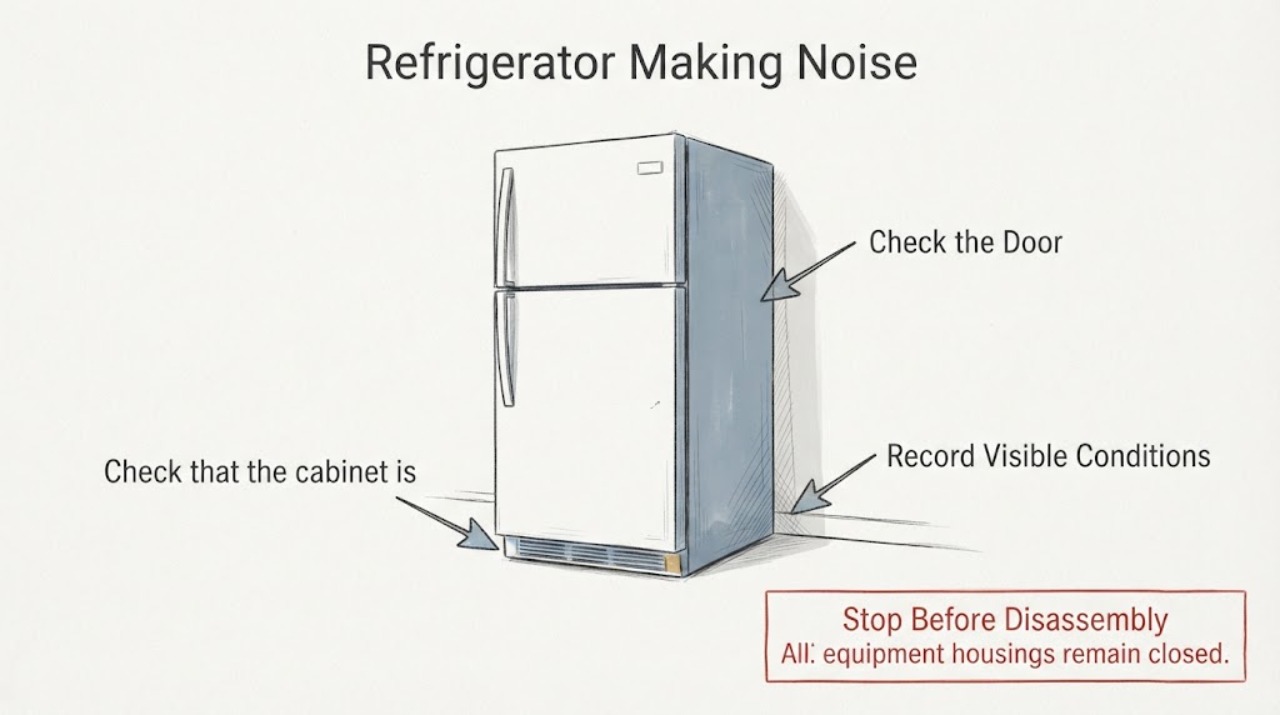
Siemens Refrigerator Making Noise
Some Siemens refrigerator sounds come from the compressor, fans, water system, or ice maker. A new harsh, scraping, burning, or rapidly worsening sound is a service symptom after safe external checks.
-
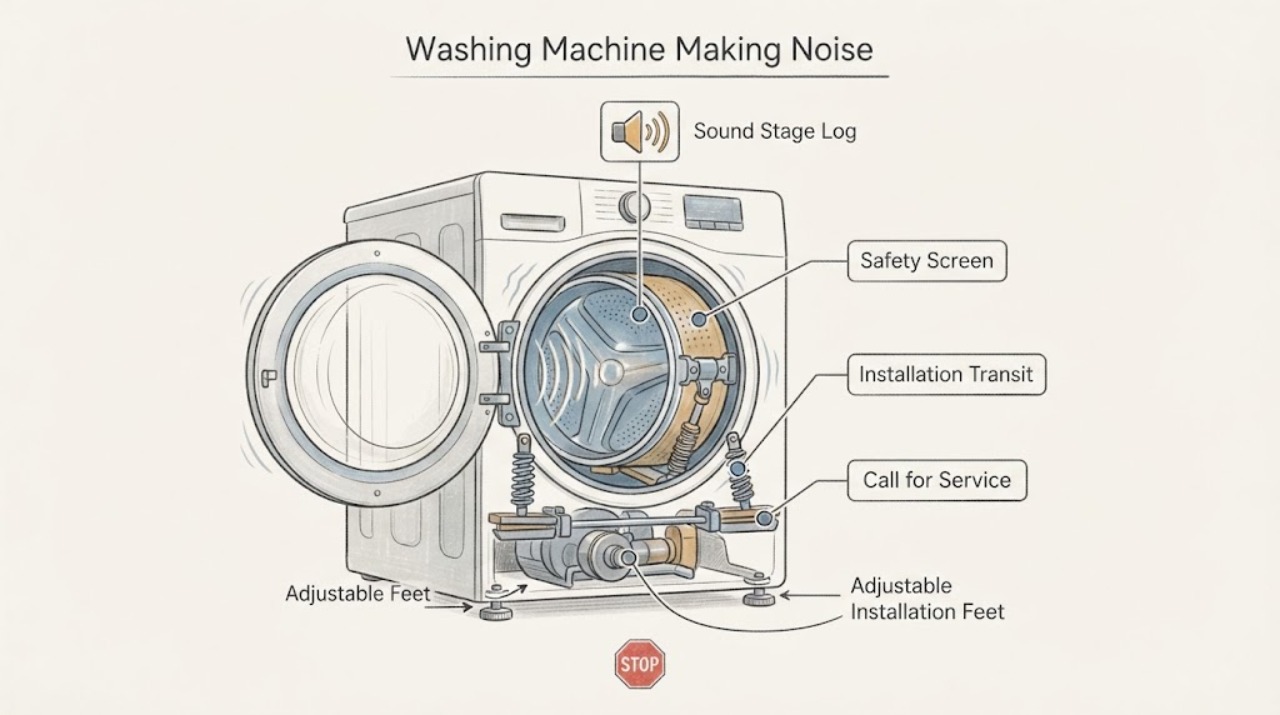
Siemens Washing Machine Making Noise: Use the Sound and Cycle Stage to Find the Next Check
A Siemens washing machine making noise is diagnosed most efficiently by recording the sound and the part of the cycle when it occurs. A clunk or repeated knock during spin points first to an uneven load, an unlevel or unsuitable floor, or—especially after moving or installation—transit restraints.
-
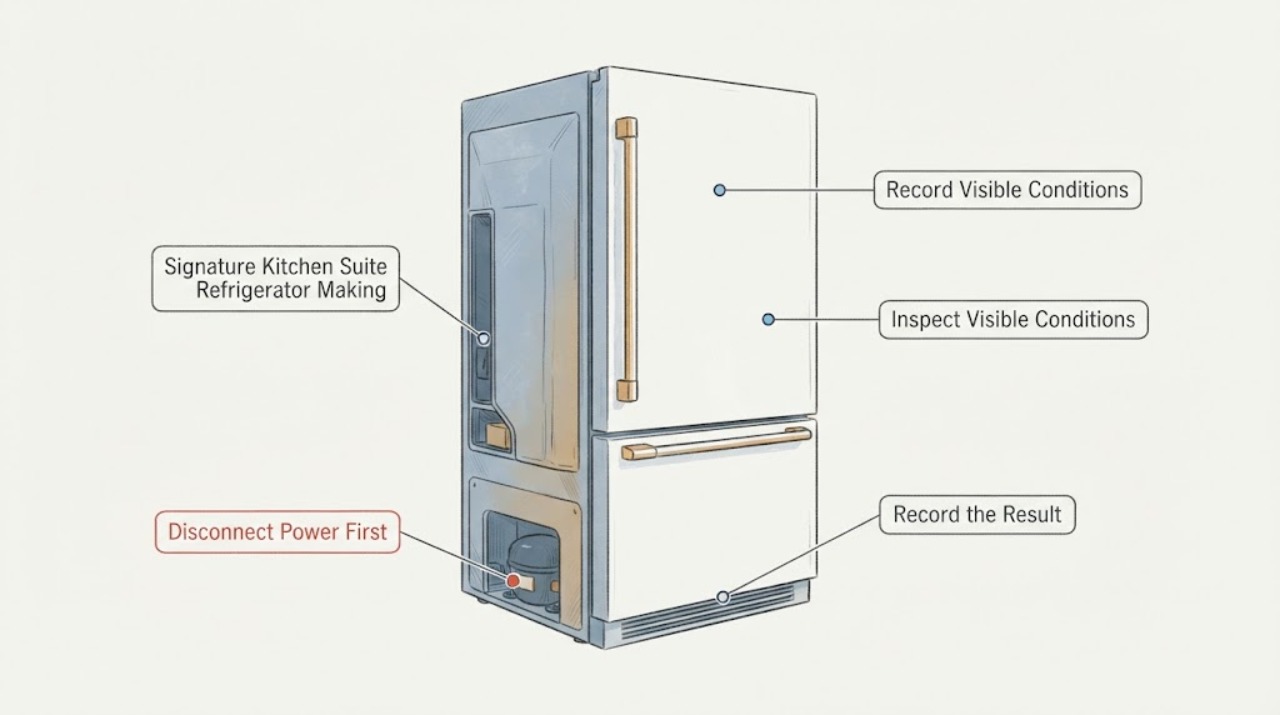
Signature Kitchen Suite Refrigerator Making Noise: Identify the Sound Safely
A Signature Kitchen Suite refrigerator can make normal clicking during defrost or control cycling, rattling from refrigerant, a water line, or nearby items, whooshing from the evaporator or condenser fan, gurgling as refrigerant flows, popping as interior materials change temperature, sizzling during defrost, or a pulsating or high-pitched compressor sound. First identify the sound, when it occurs, and whether the refrigerator is still cooling.
-
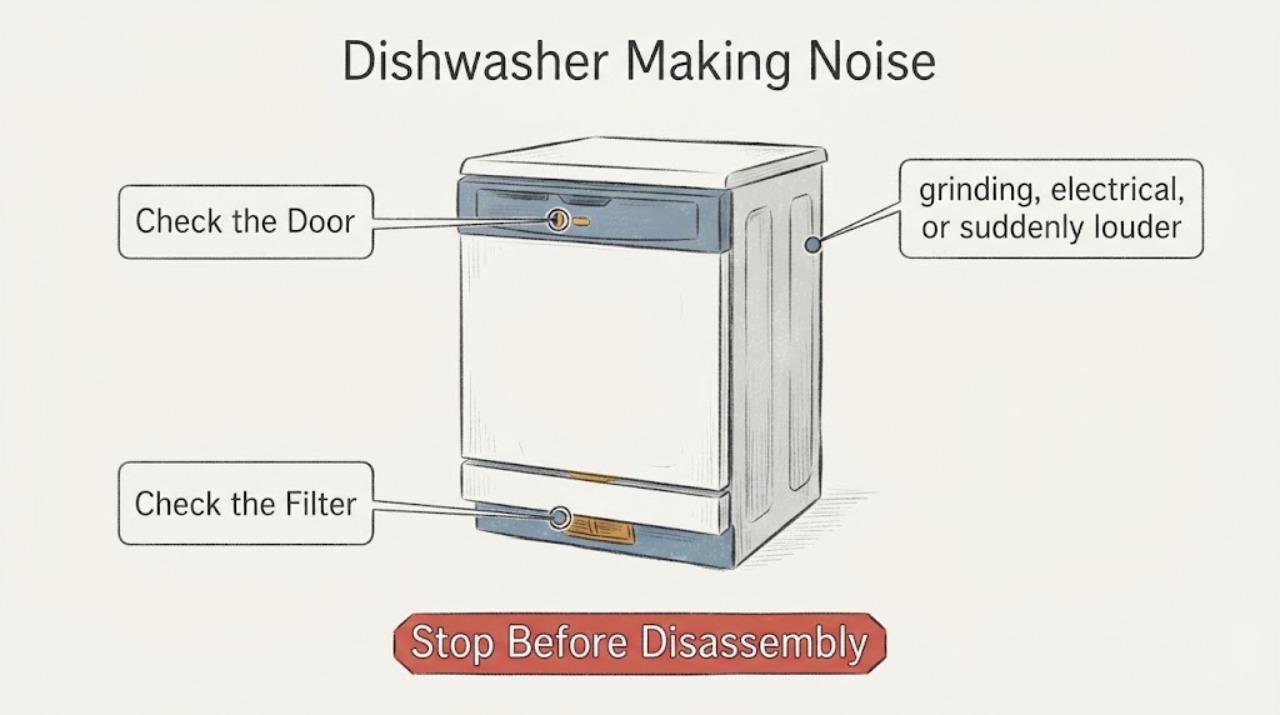
Smeg Dishwasher Making Noise
Smeg dishwasher noise can come from the pump, spray arms, circulation motor, dishes, or installation. A single click or water sound can be normal; scraping, grinding, or a sudden loud change calls for service.
-
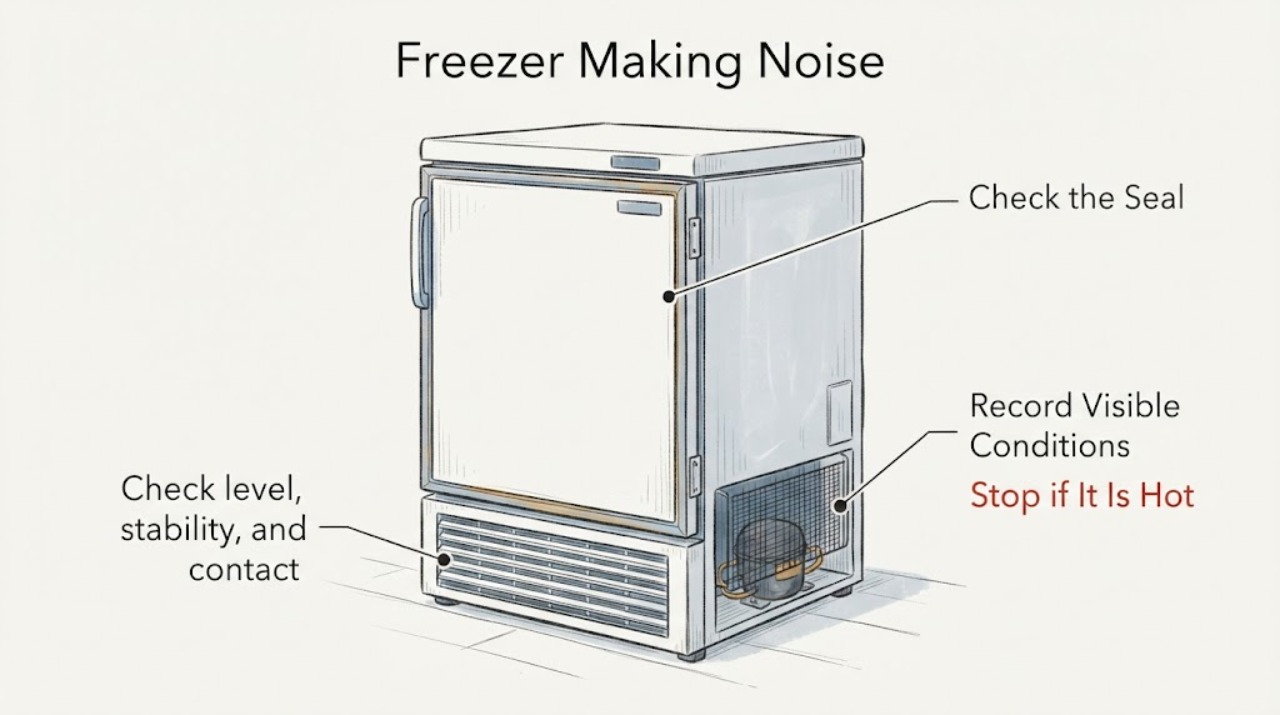
Smeg Freezer Making Noise
Some Smeg freezer sounds are part of normal operation: a compressor hum, refrigerant bubbling or flowing, brief cracking as materials or ice expand, water during defrost, or air movement in a No-Frost model. A new or harsh sound needs a different decision.
-
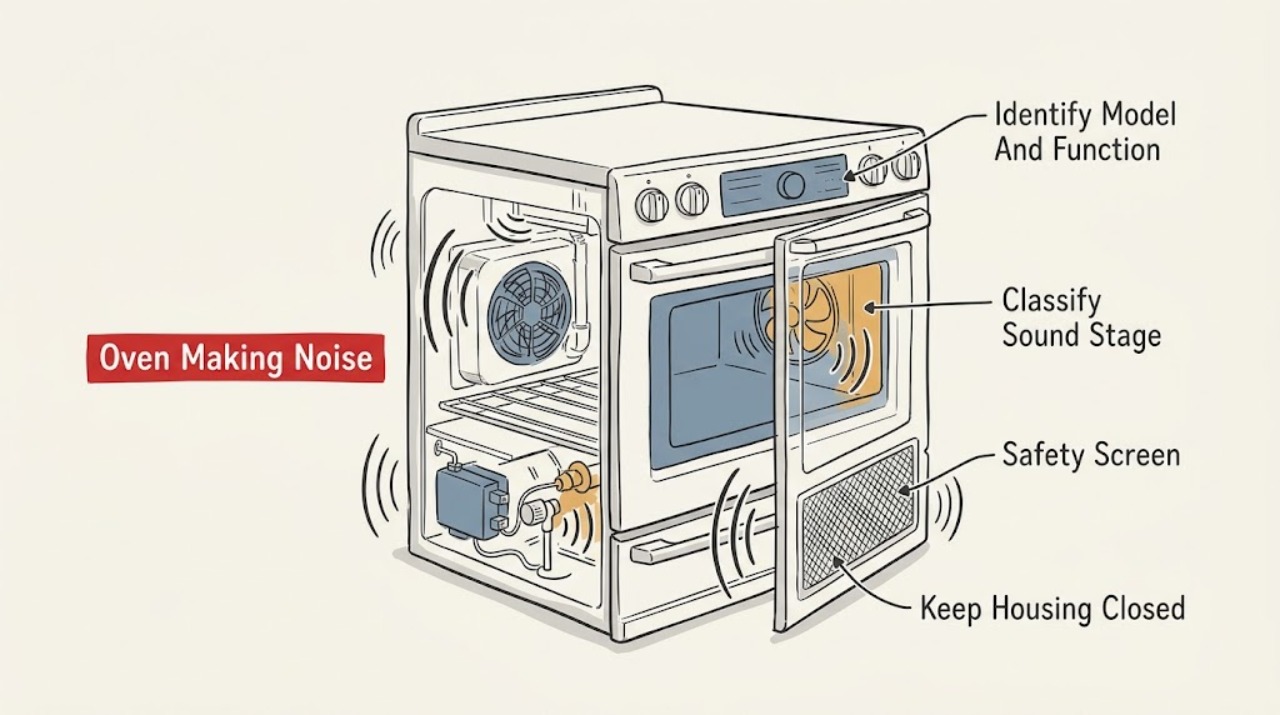
Smeg Oven Making Noise: Separate Normal Cooling Sounds from a Fault
First record the exact Smeg model, oven or range type, fuel type, function, and when the noise occurs. A cooling fan that continues after the oven is switched off can be normal on Smeg models, and a fan-assisted mode will naturally move air; the model manual decides whether a click, hum, or short thermal ping is expected.
-
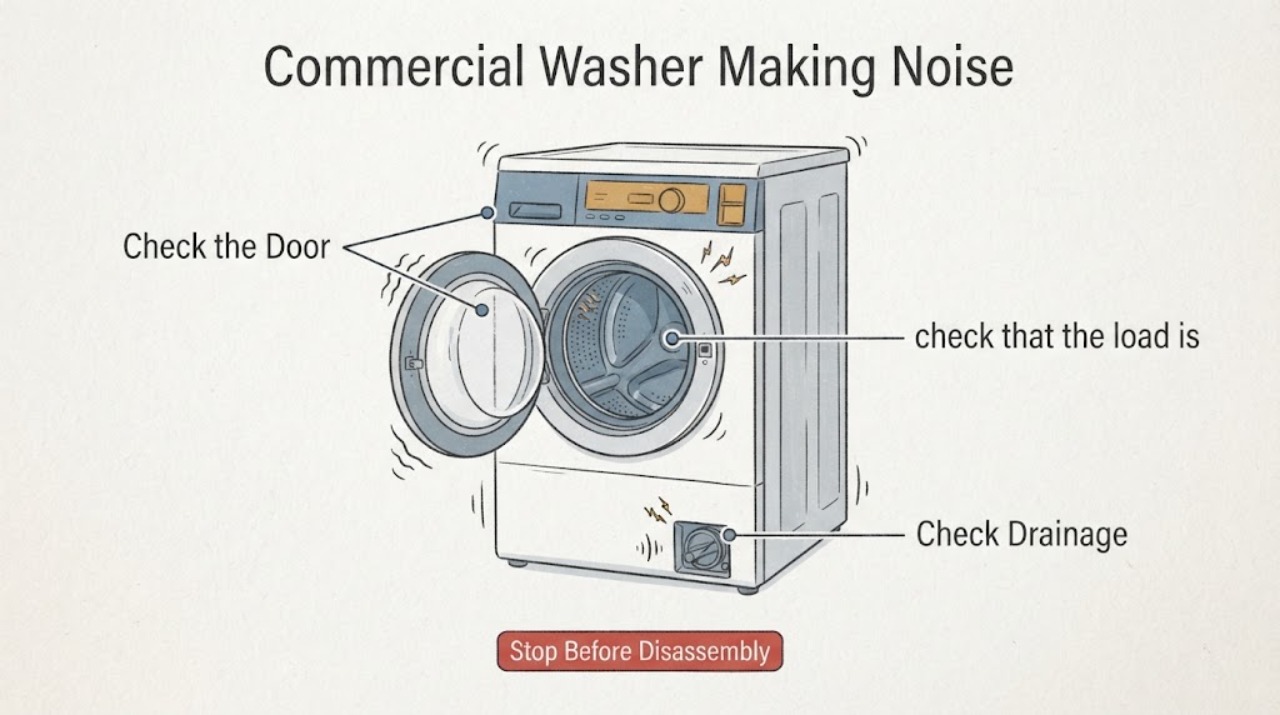
Speed Queen Commercial Washer Making Noise: Classify the Cycle Sound
A Speed Queen commercial washer can click during door locking or balance action, but a persistent or new noise should be classified by cycle phase and load. Listen for fill, drain, balance, or spin sounds, check that the washer is level, and note whether the load is unbalanced. Speed Queen’s guide links noisy operation and vibration to levelness, load balance, and normal operating sounds; grinding or a noise with leaks needs service.
-
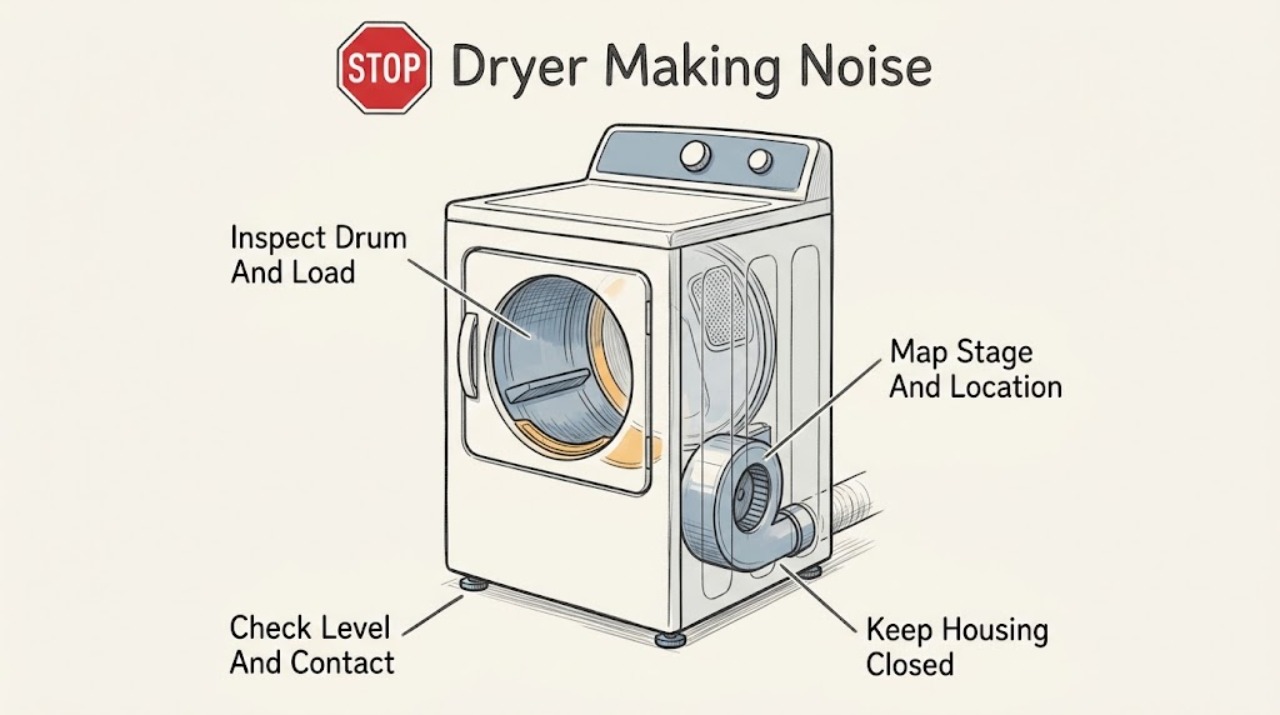
Speed Queen Dryer Making Noise: Trace the Sound by Stage and Location
A Speed Queen dryer sound is easier to diagnose by when it occurs and where it is loudest. A brief timer tick, a heat-source cycle, or a steady rush of air can be normal; a new squeal, rhythmic thump, metal scrape, heavy vibration, or noise that continues after the drum stops is not a reason to keep running the dryer.
-
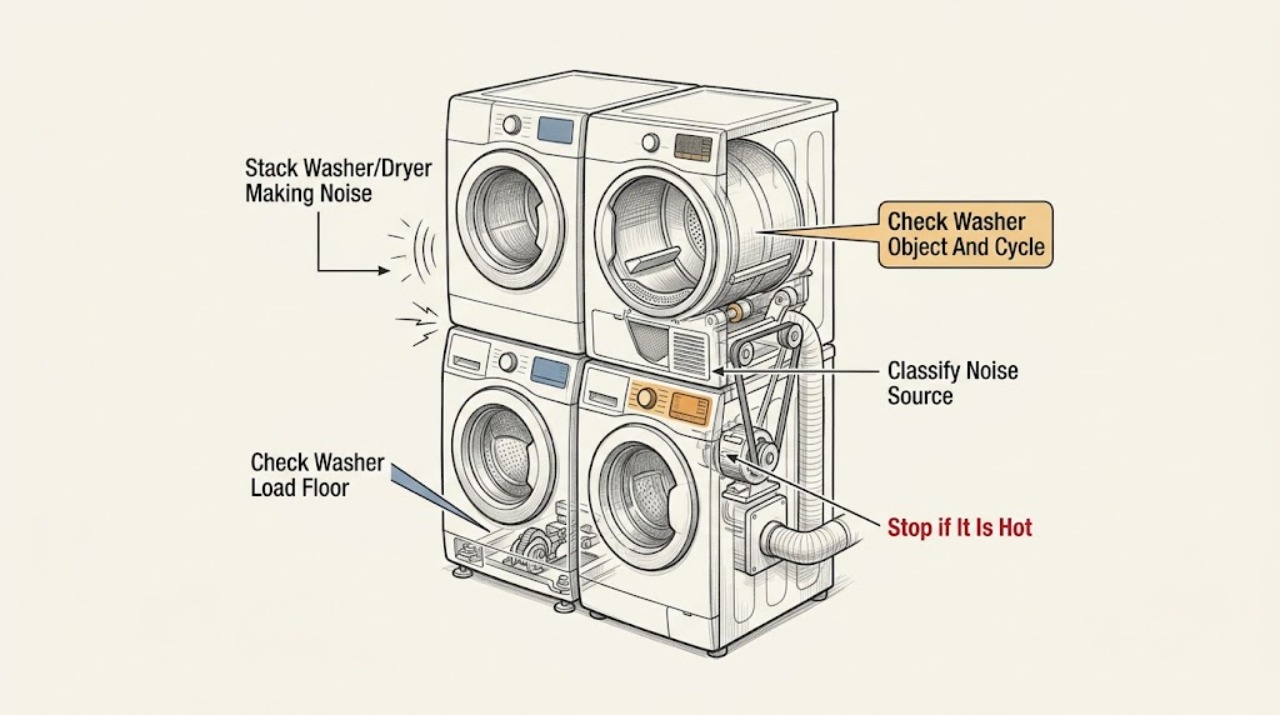
Speed Queen Stack Washer/Dryer Making Noise: Locate the Sound Safely
First determine whether the washer or dryer is making the noise and whether it is a click, hum, rattle, scrape, squeak, bang, or vibration. Some clicking, timer movement, heat cycling, and airflow humming can be normal, but a new or worsening sound needs the unit stopped for a safe external inspection.
-
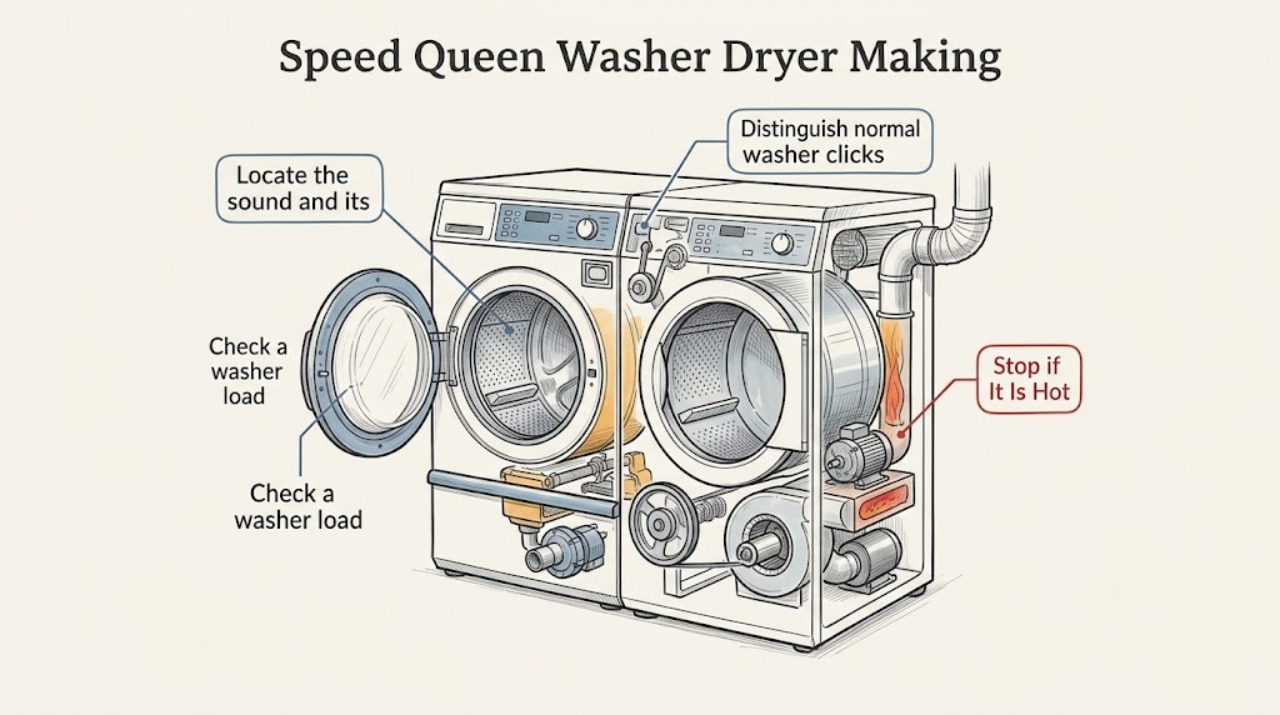
Speed Queen Washer Dryer Making Noise: Match the Sound to the Stage
First identify whether the washer or dryer is making the noise, what the sound resembles, and at which stage it starts. Speed Queen documents some normal washer clicks and balance sounds and some normal dryer heat-source or airflow sounds, but thumping, grinding, scraping, repeated banging, a sudden new noise, movement, burning odor, smoke, or abnormal heat is not a reason to keep running the appliance.
-
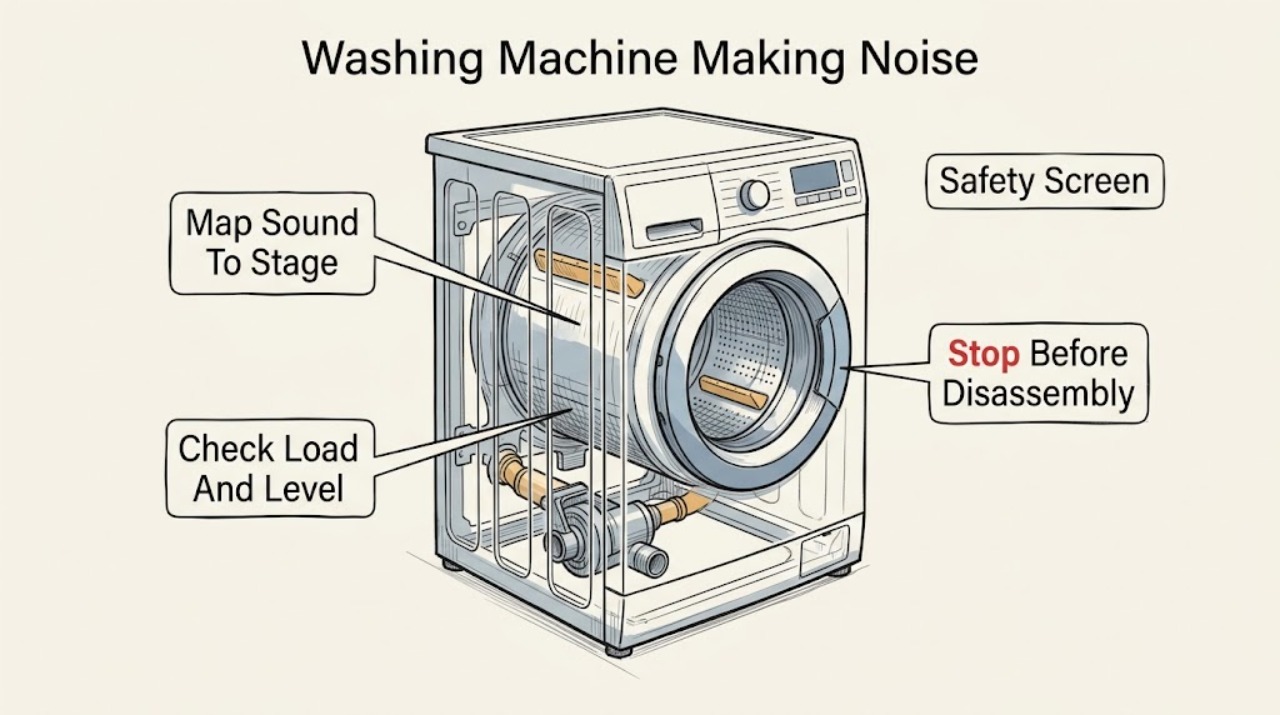
Speed Queen Washing Machine Making Noise
First identify when the Speed Queen washer makes the noise: filling, washing, draining, or spinning. Some clicks and pauses are normal cycle sounds, while a new grinding, scraping, repeated knocking, or loud hum is more useful when tied to a stage and location.
-
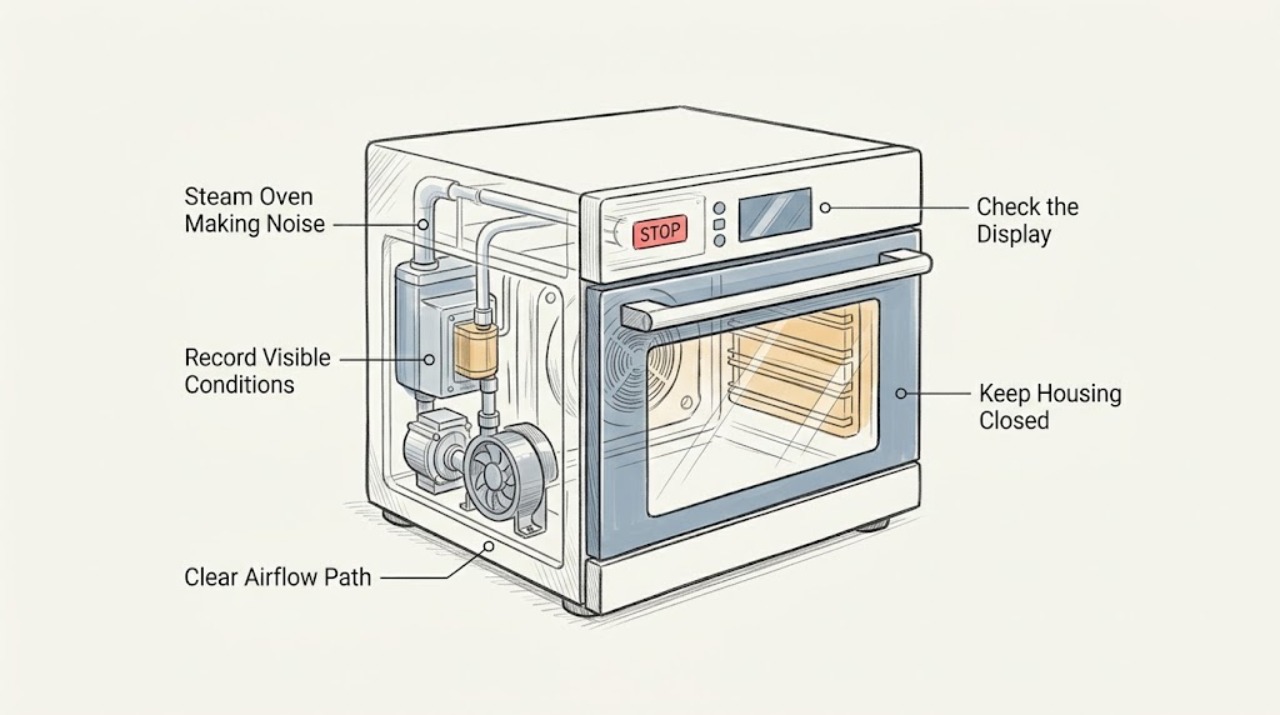
Steam Oven Making Noise: Which Sounds Are Normal and When to Stop
A brief hum from the water pump, a quiet fan that runs during or after a cycle, and occasional clicks as controls or hot metal change temperature can be normal on a steam oven when they match the operating stage in the model manual.
-
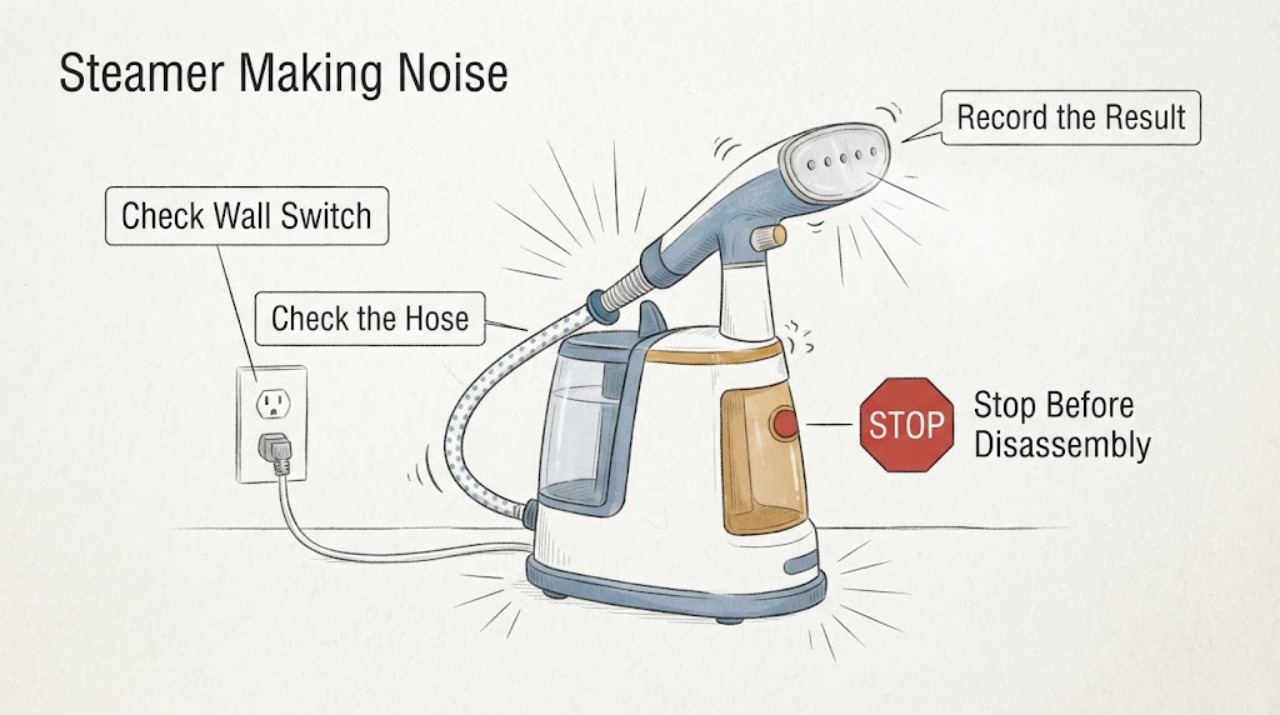
Steamer Making Noise
A steamer may make an intermittent pump or steam sound while residual heat and water clear during cooldown. Let it cool fully, then check tank seating and hose position; continuous harsh noise, leaks, smoke, or loss of steam needs service.
-
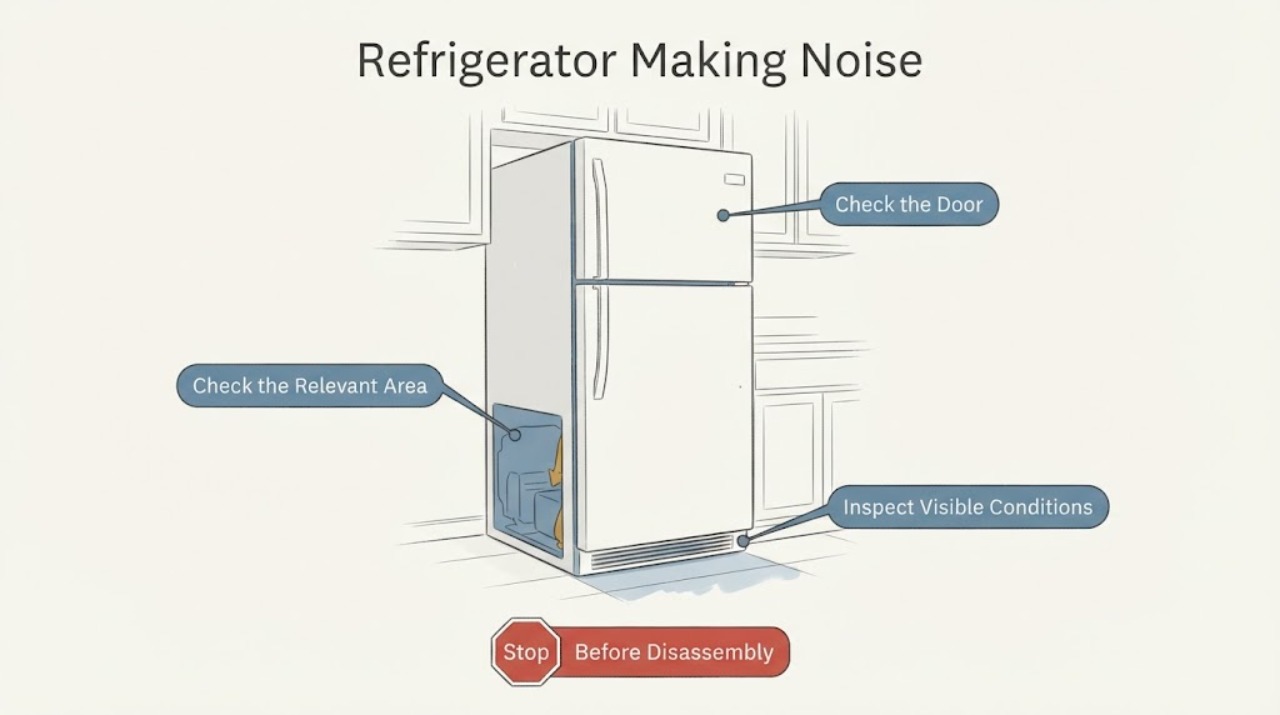
Sub-Zero Refrigerator Making Noise: Identify the Fan, Condenser, or Normal Sound
A Sub-Zero refrigerator can make normal operating sounds from its fans, compressor, refrigerant flow, or defrost cycle, so first identify the sound and whether it changes when each door or drawer is opened.
-
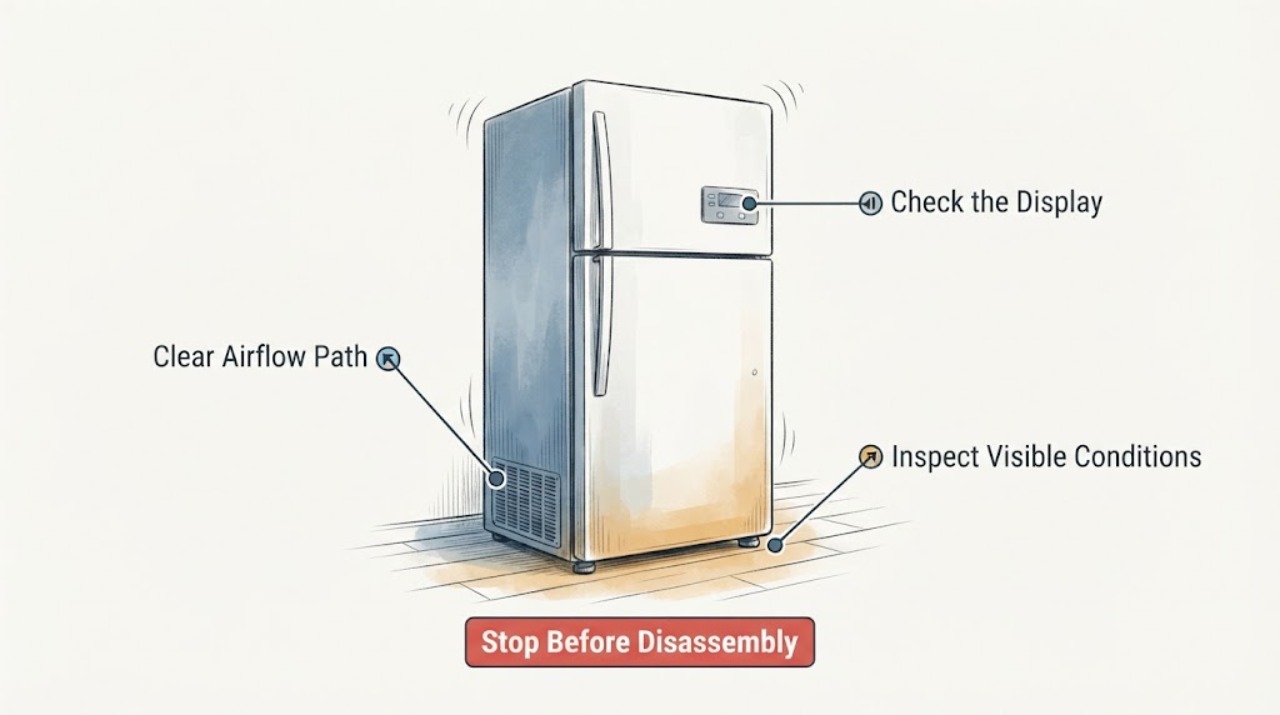
Summit Refrigerator Making Noise
For a Summit refrigerator with making noise, start with the external control, closure, setting and user-accessible path checks for this model. Note exactly when the symptom appears and what changes after one safe check. If the appliance shows smoke, sparking, a burning smell, abnormal heat, flooding near electrics, damaged wiring or repeated breaker operation, stop using it and arrange qualified service.
-
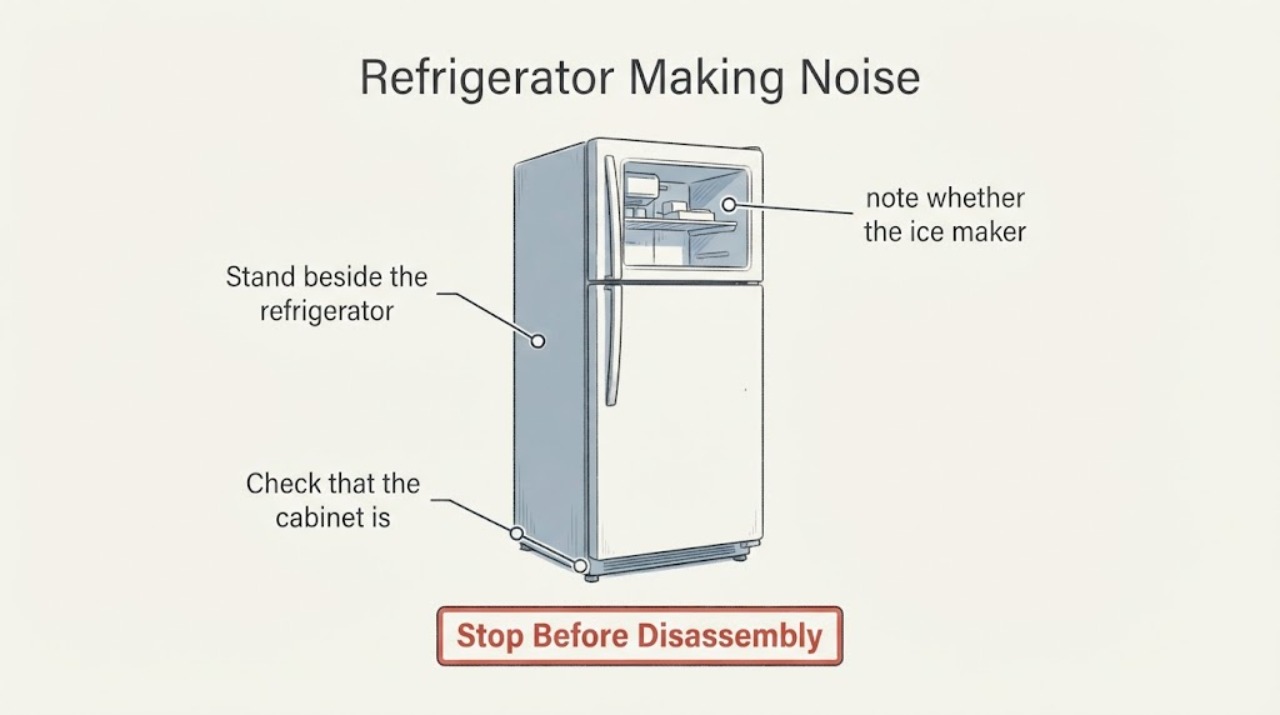
Tappan Refrigerator Making Noise: Identify the Sound Before Service
A noisy Tappan refrigerator should first be classified by sound and timing. Humming, fan airflow, refrigerant gurgling, defrost sizzling, and ice-maker or water-valve sounds can be normal operating events; a new scrape, harsh vibration, repeated clicking without cooling, or sound with leaking or electrical symptoms needs service. Check cabinet contact, leveling, door position, and the ice or water path from outside, then use Tappan support.
-
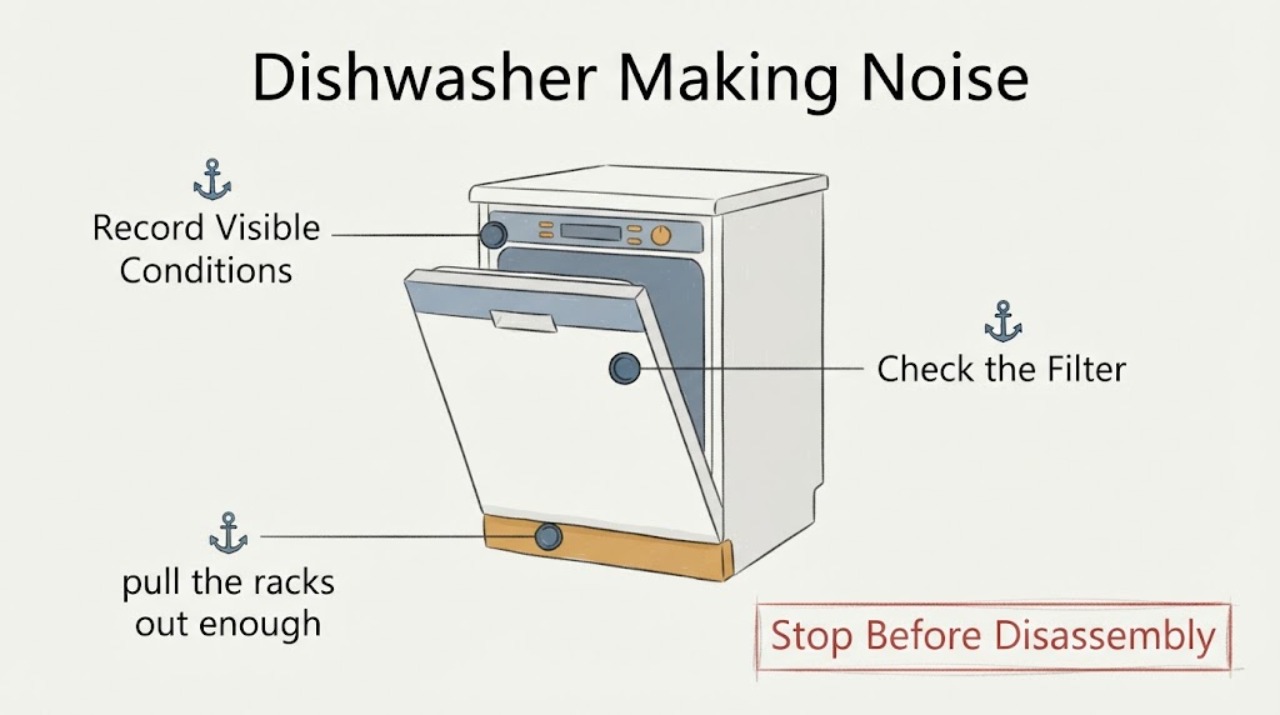
Thermador Dishwasher Making Noise: Check the Sound, Load, and Drain Path
A Thermador dishwasher can make normal water-circulation sounds during a wash. First note whether the sound is water, a beep at cycle completion, or repeated banging, then check the load, spray-arm clearance, filter, and drain path from outside.
-
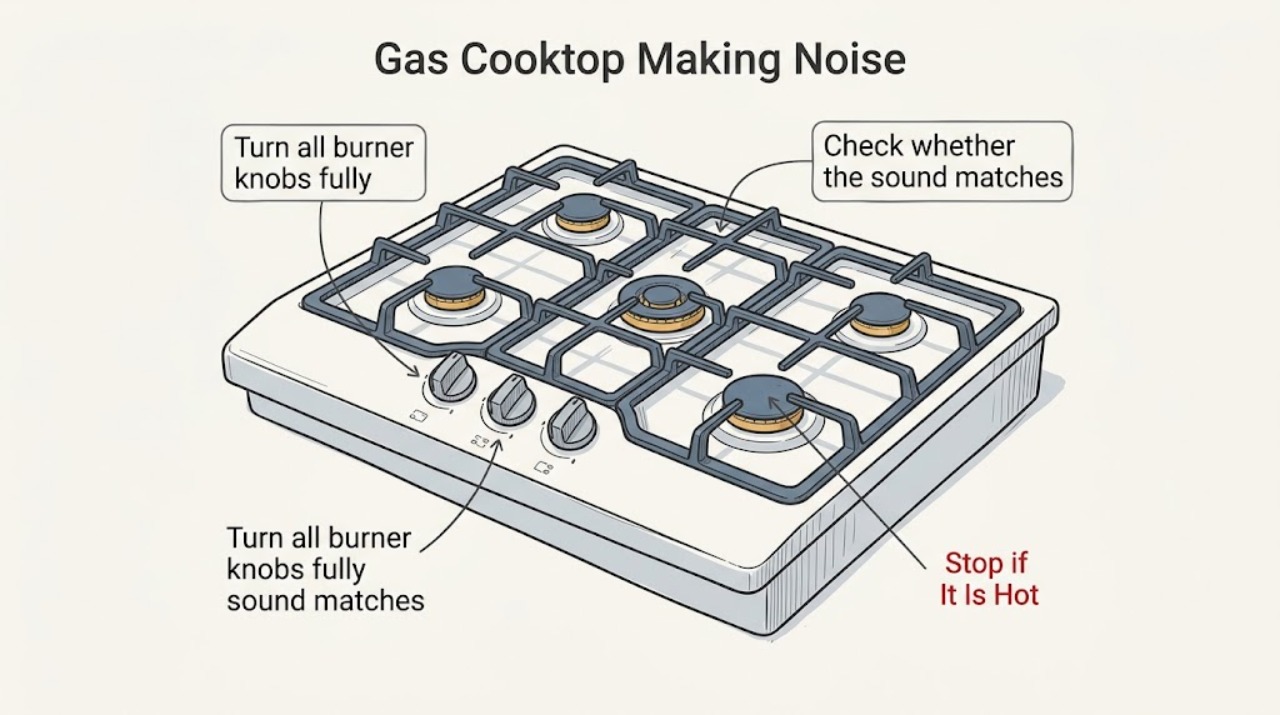
Thermador Gas Cooktop Making Noise: Separate Normal Clicking From a Fault
A brief click while a burner ignites can be normal, and a Thermador ExtraLow burner may click as its flame cycles on and off. Clicking that continues with the knob off, repeated sparking after the knob is released, a bang or delayed ignition, or a hiss should be treated as a fault.
-
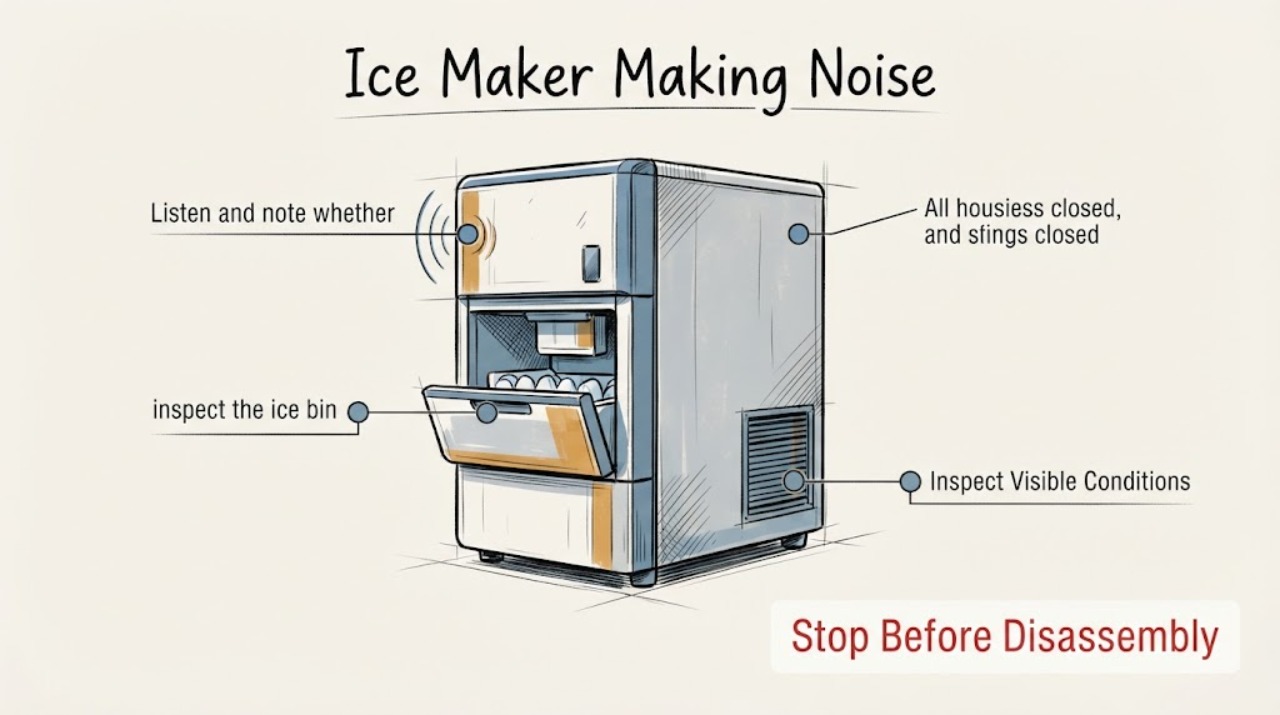
Thermador Ice Maker Making Noise
First identify when the Thermador ice-maker sound occurs: a brief sound during filling or harvesting is a different clue from a continuous grind, buzz, or vibration. Thermador’s official guidance covers ice jams, the level-sensing arm, water flow, temperature, filters, and correct bin seating; the exact sound source still depends on the model.
-
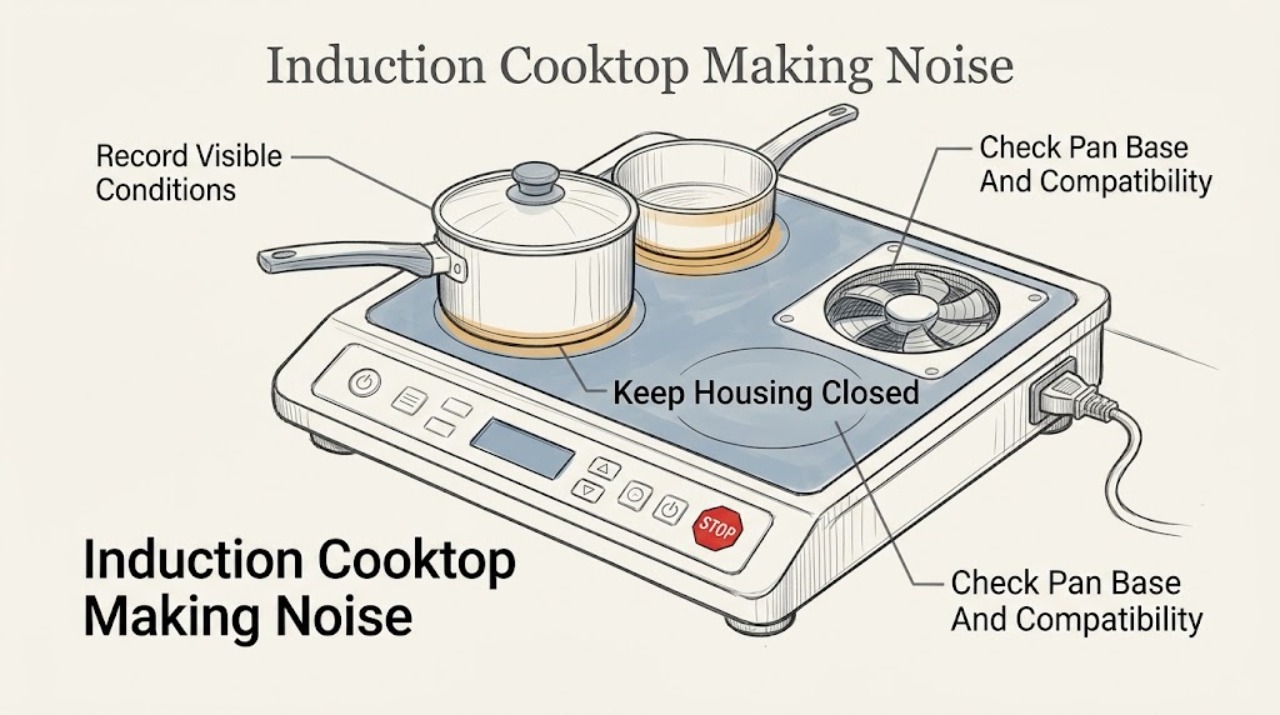
Thermador Induction Cooktop Making Noise: Separate Cookware Sounds from Faults
A Thermador induction cooktop can make a hum, buzz, or crackle from the cookware and cooking method, and its cooling fan can continue after shutoff while the electronics are hot. Thermador also says a whistle can occur with empty cookware on an active zone.
-
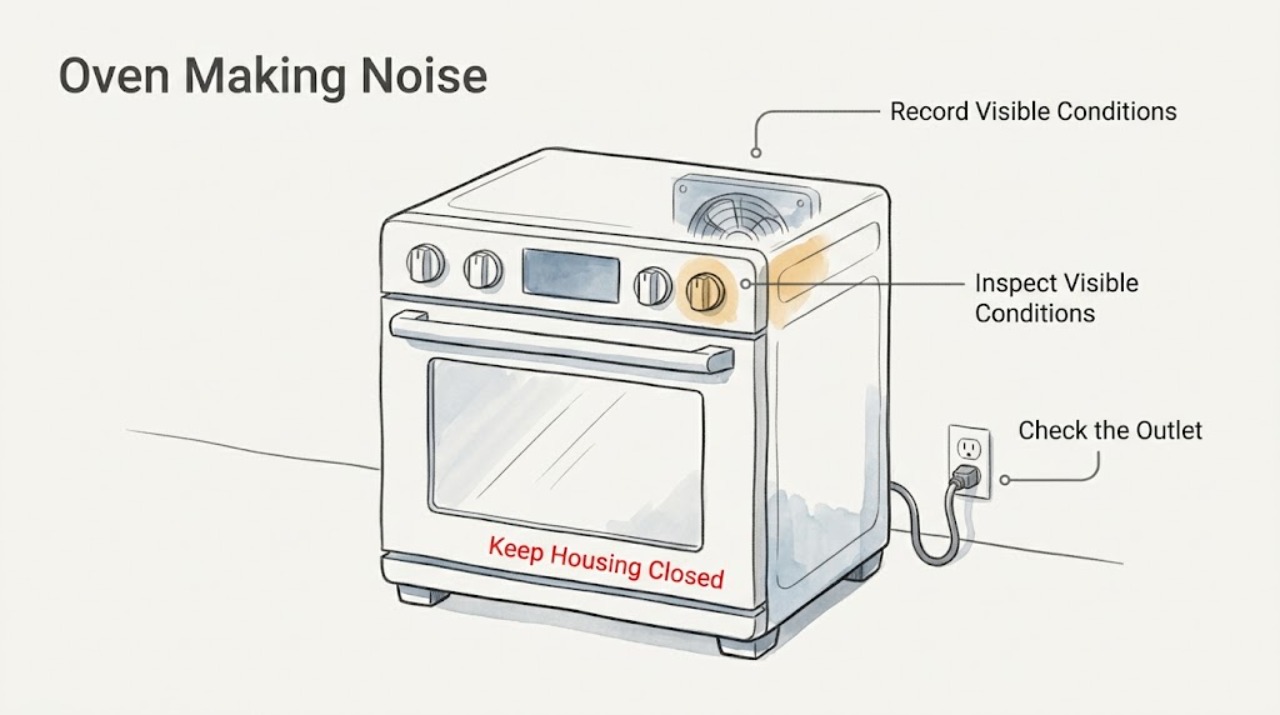
Thermador Oven Making Noise: Identify Normal Fan Sounds and Dangerous Noises
Identify when and where the sound occurs before deciding whether it is a fault. A Thermador oven may make normal fan or cooling sounds, and a broiler can cycle as it regulates temperature.
-
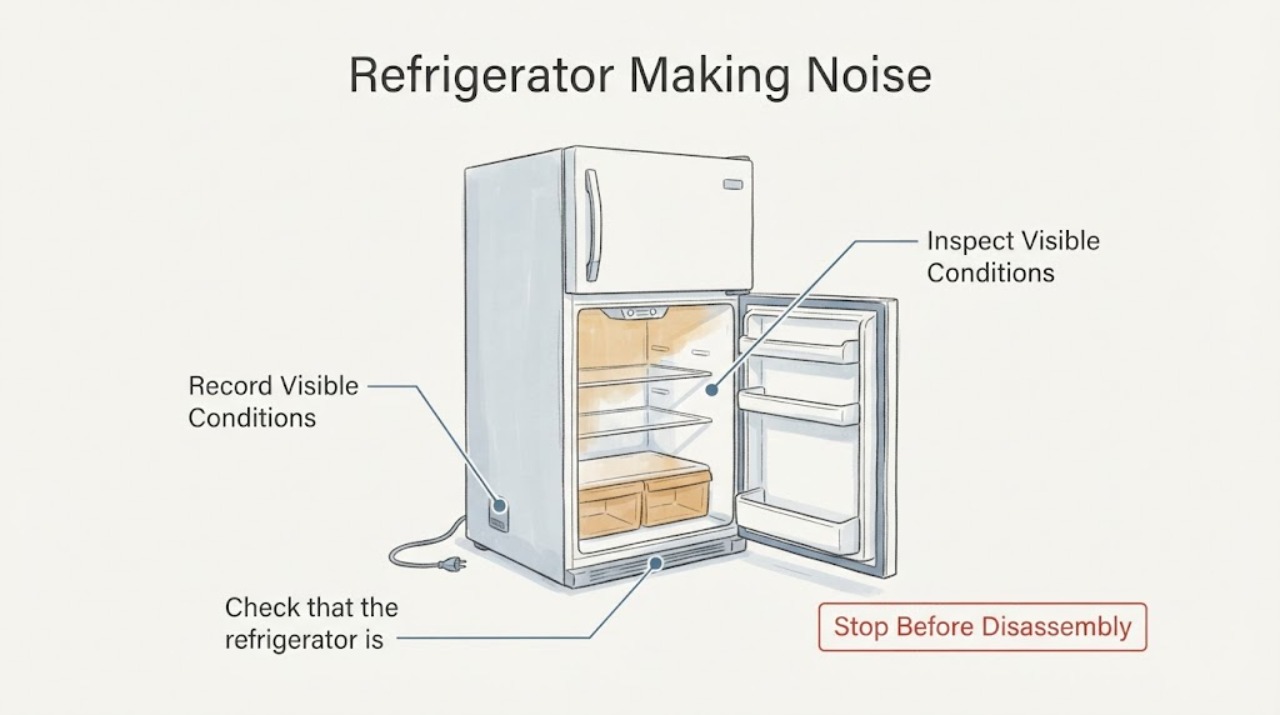
Thermador Refrigerator Making Noise
For a noisy Thermador refrigerator, record when the sound occurs and whether cooling, fans, ice, or water use coincide. Check only for stable placement and visible obstructions; do not access fans or sealed components. A new, harsh, or persistent noise needs service.
-
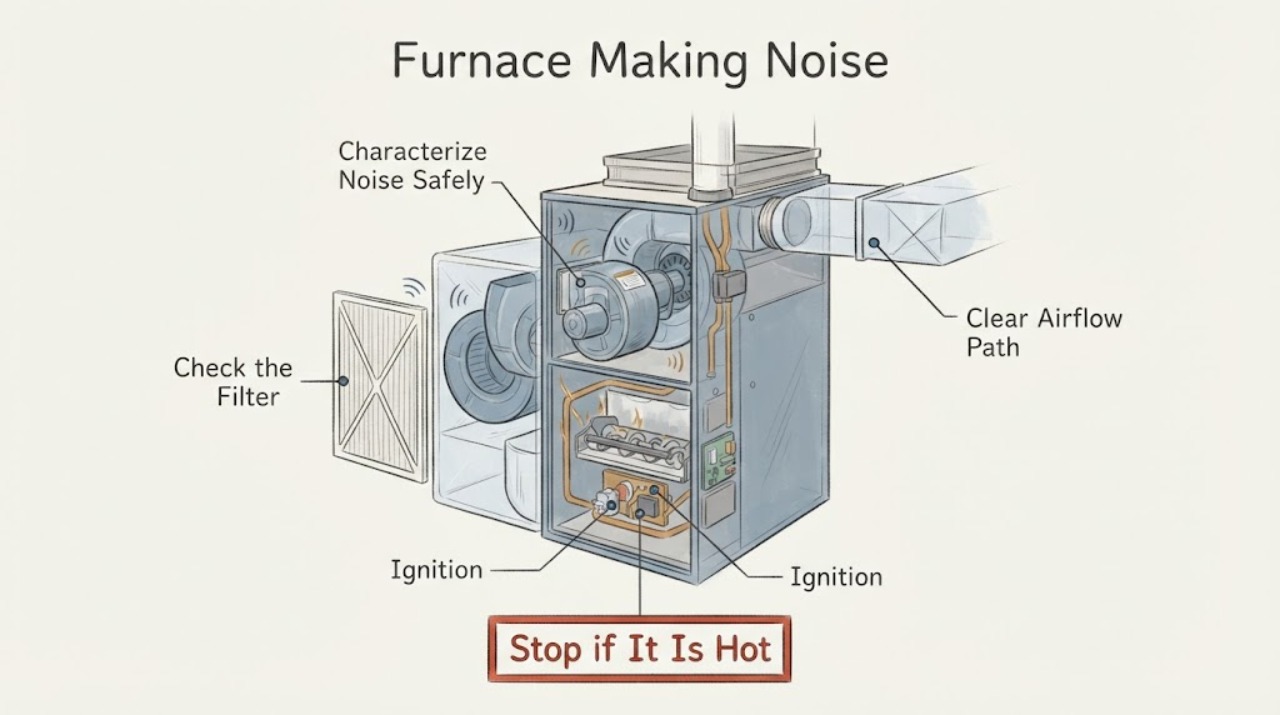
Trane Furnace Making Noise: What to Check and What to Do Next
First identify the sound, where it comes from, and whether it happens at startup, during heating, at shutdown, or continuously. Trane says a light click before ignition and slight duct pinging or popping as the metal expands can be normal, while a furnace should not make loud or newly unusual noise.
-
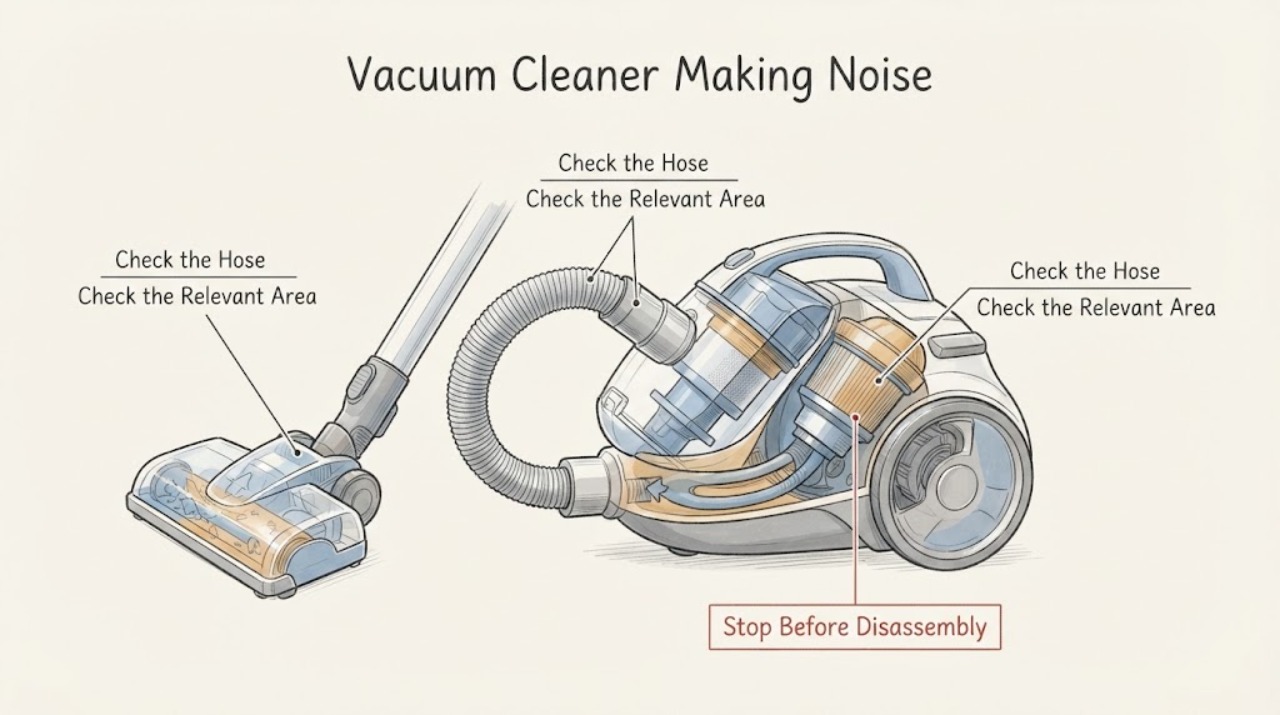
Vacuum Cleaner Making Noise: Find Blockages Before Service
A new rattling, whistling, or grinding sound from a vacuum often follows an airflow restriction, a blocked cleaner head, or a loose part. Switch it off and unplug it before removing hair or checking the head, hose, wand, bin, and filters. Compare suction with and without the floor tool, and stop if the motor pulses, the machine becomes hot, smells burnt, or the noise remains after the air path is clear. Do not run a partially dismantled vacuum.
-
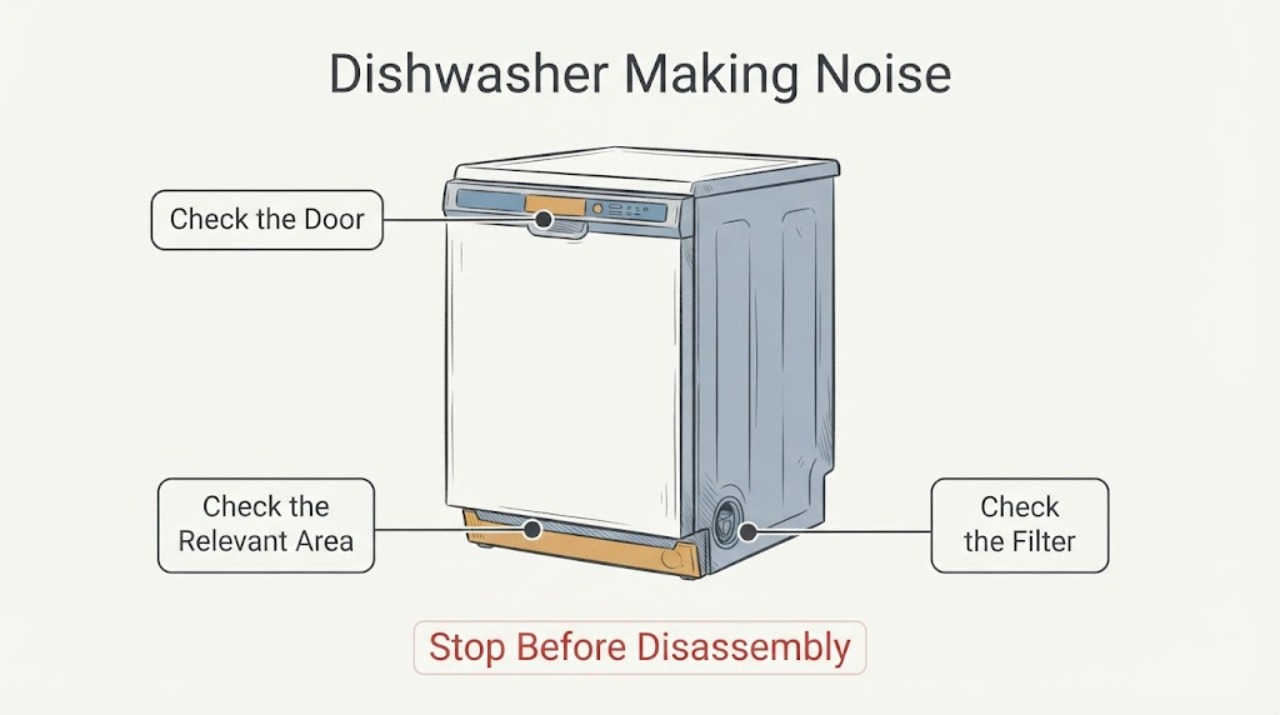
Viking Dishwasher Making Noise
A Viking dishwasher noise often comes from dishes, pot lids, light items, spray arms, or plumbing transmitting sound. Stop the cycle and, when safe, check that dishes do not touch one another or the tub, light items are secured, pot handles and lids do not strike the walls, the spray arms can rotate, and the sink drain plugs are in place.
-
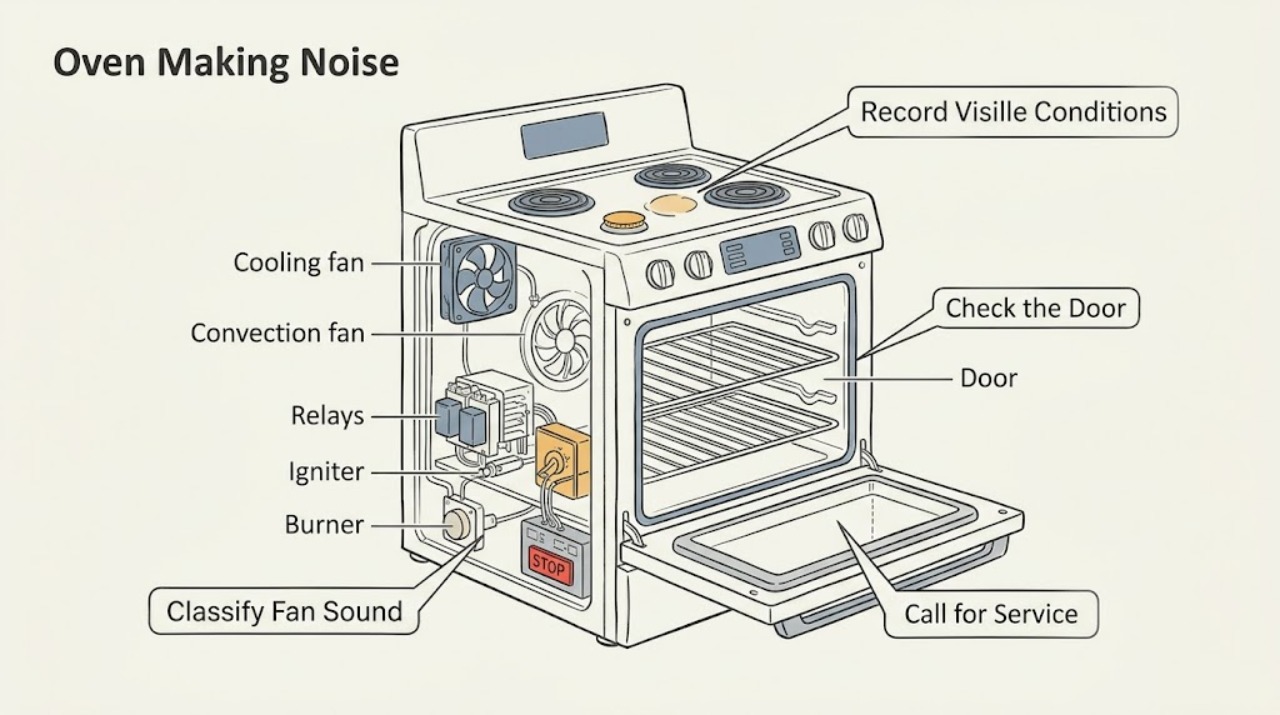
Viking Oven Making Noise: Tell Normal Fan Sounds From a Fault
A Viking oven can make normal fan, relay, gas-ignition, or metal-expansion sounds, but the stage and character matter. Record whether the noise starts during preheat, convection, broil, gas ignition, door movement, self-clean, or cool-down, and whether it stops when that stage ends.
-
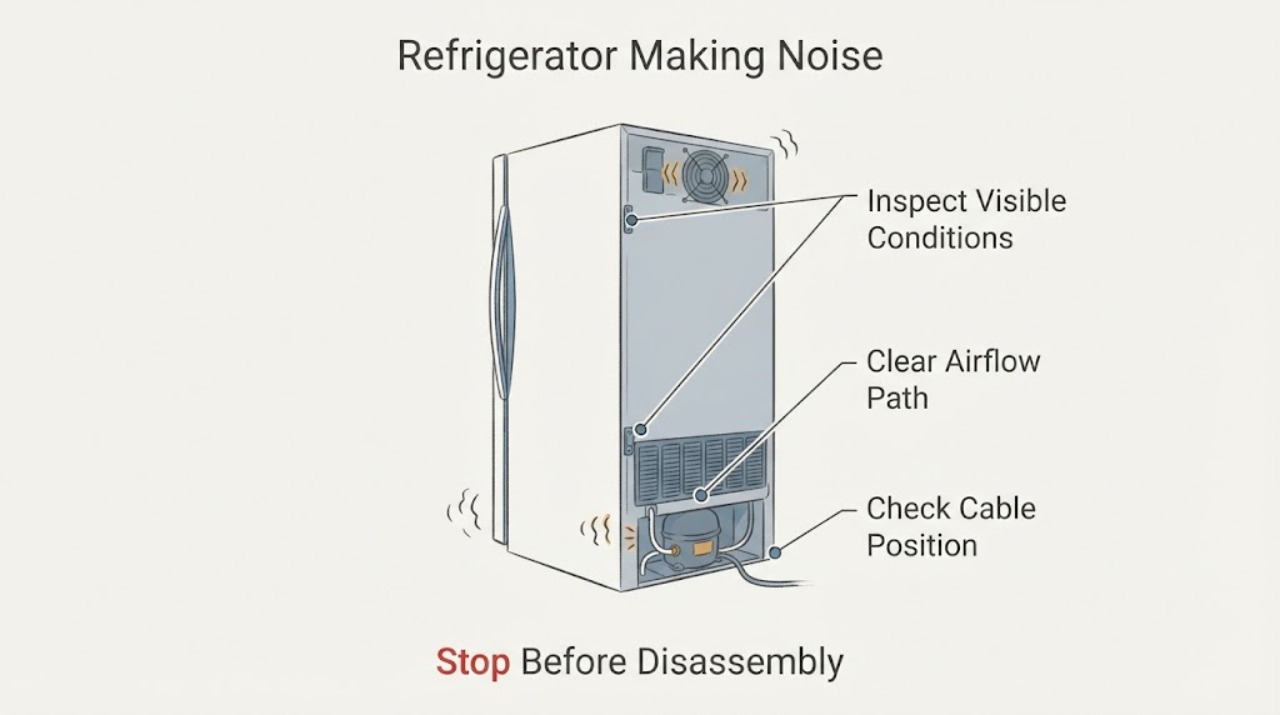
Viking Refrigerator Making Noise
Some Viking refrigerator sounds come from the compressor, fan, water valve, or ice maker. A new scraping, burning, or rapidly worsening sound is a service symptom.
-
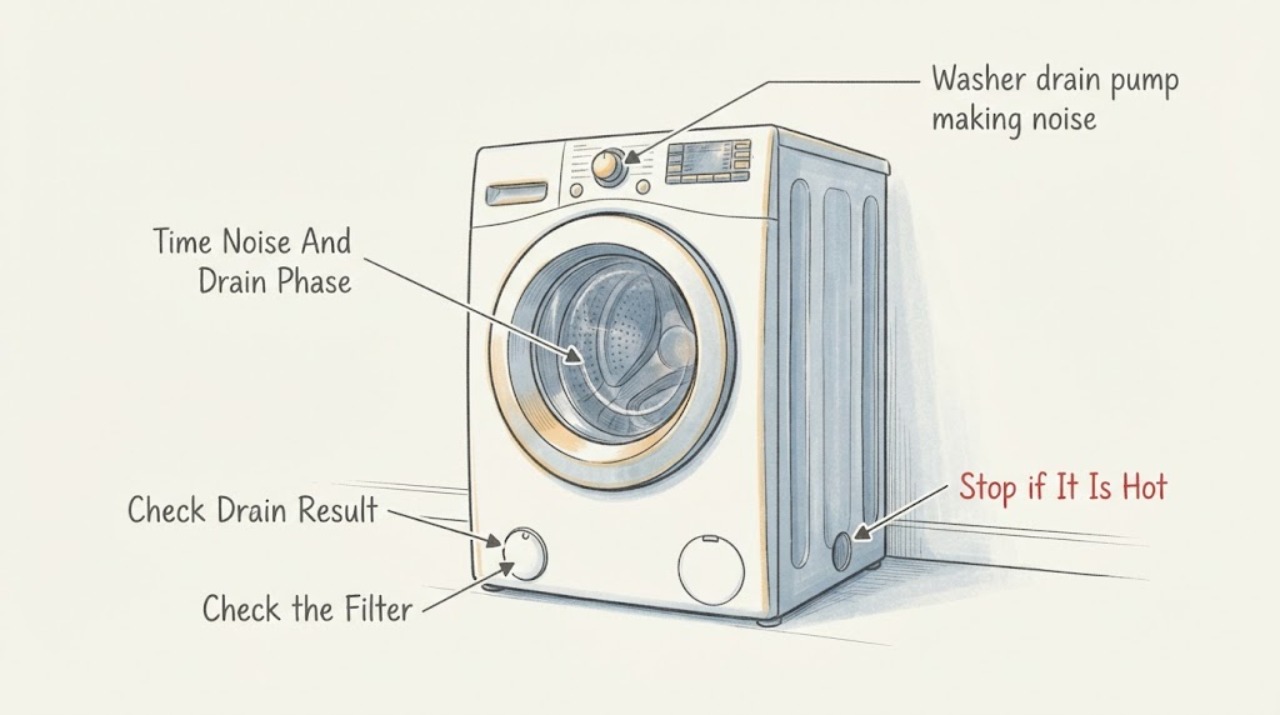
Washer drain pump making noise: What to Check and What to Do Next
A washer drain pump normally makes a hum, gurgle, or slurping sound while it removes water, especially near the end of draining. A new grinding, rattling, scraping, or unusually loud hum can indicate a coin or thread in the pump filter, a restricted drain path, a hose striking the cabinet, or a worn pump; the noise alone does not prove the pump motor has failed.
-
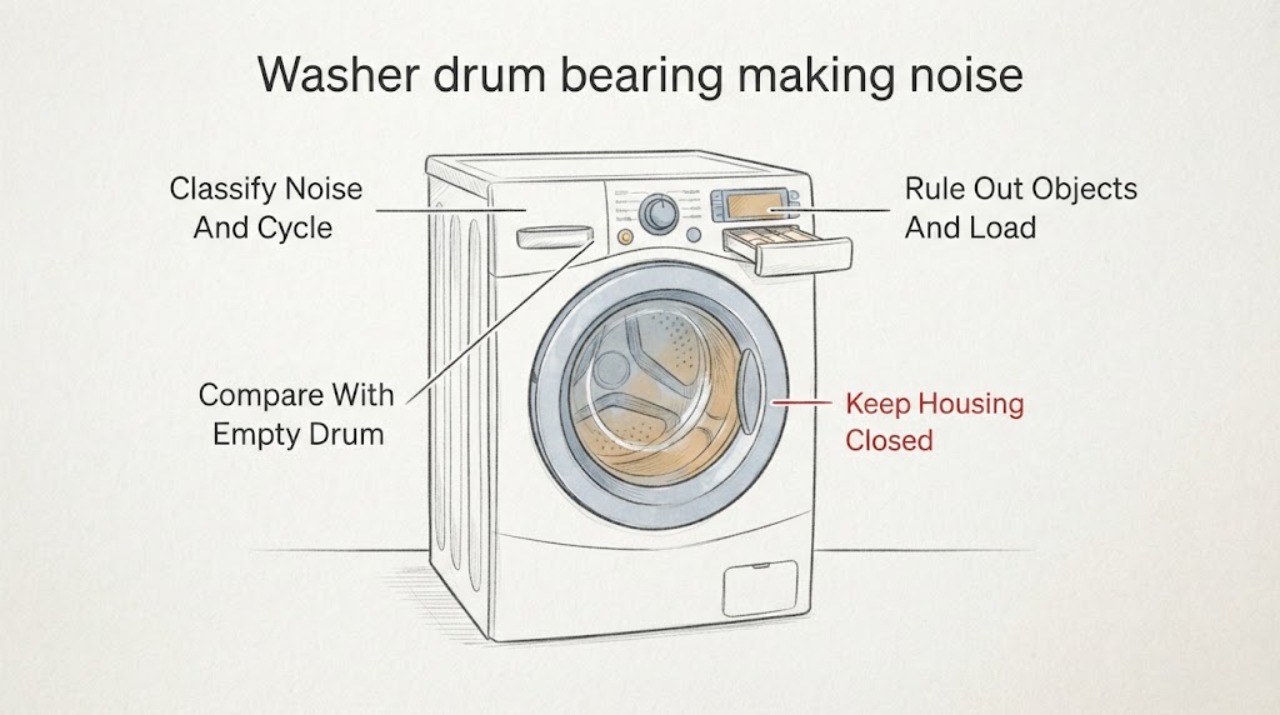
Washer drum bearing making noise: What to Check and What to Do Next
A washer that sounds as though its drum bearing is failing should not be diagnosed from noise alone. First note whether the sound occurs only with a particular load or during high-speed spin, then run the manufacturer's safe empty-drum check.
-
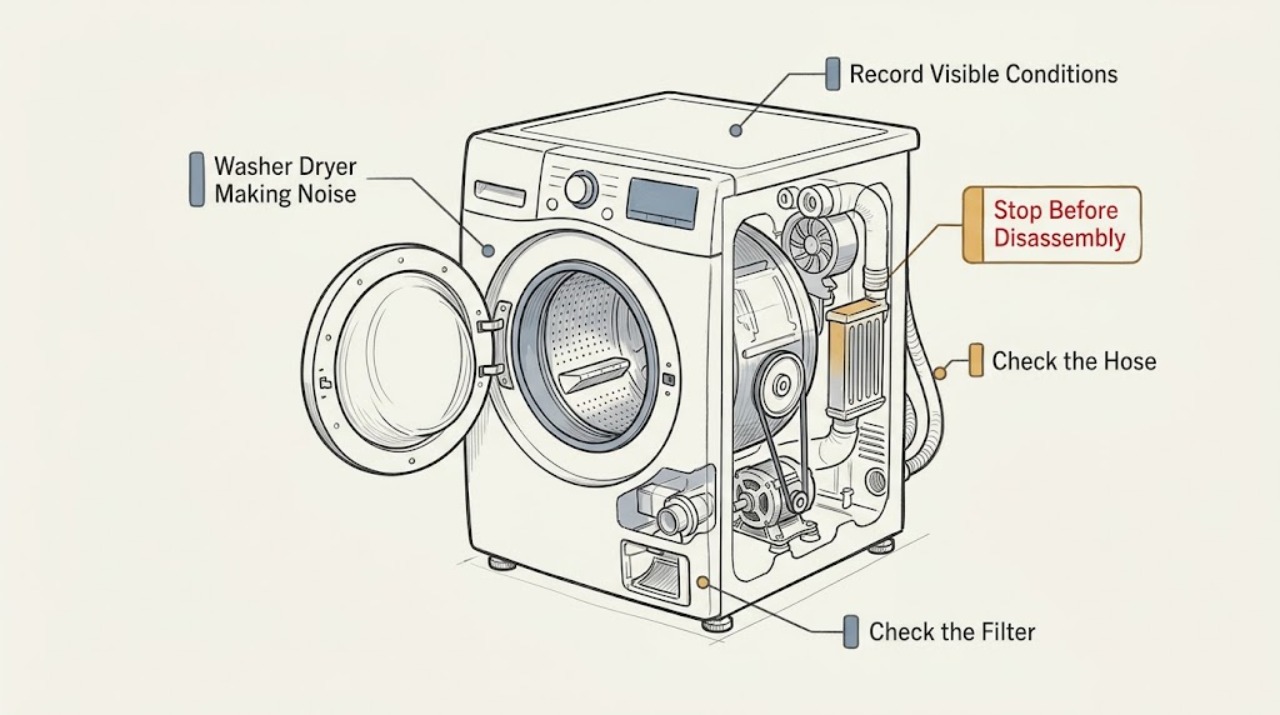
Washer Dryer Making Noise: Find Which Cycle Creates It
First note whether the sound occurs while filling, washing, draining, spinning, or drying. A brief click from clothing hardware, a low pump or compressor sound, or a short start-up thump can be normal on some models, but continuous metal scraping, violent banging, smoke, a burning smell, a hot cabinet, gas odor, sparks, a repeated breaker trip, or a water leak requires stopping the appliance.
-
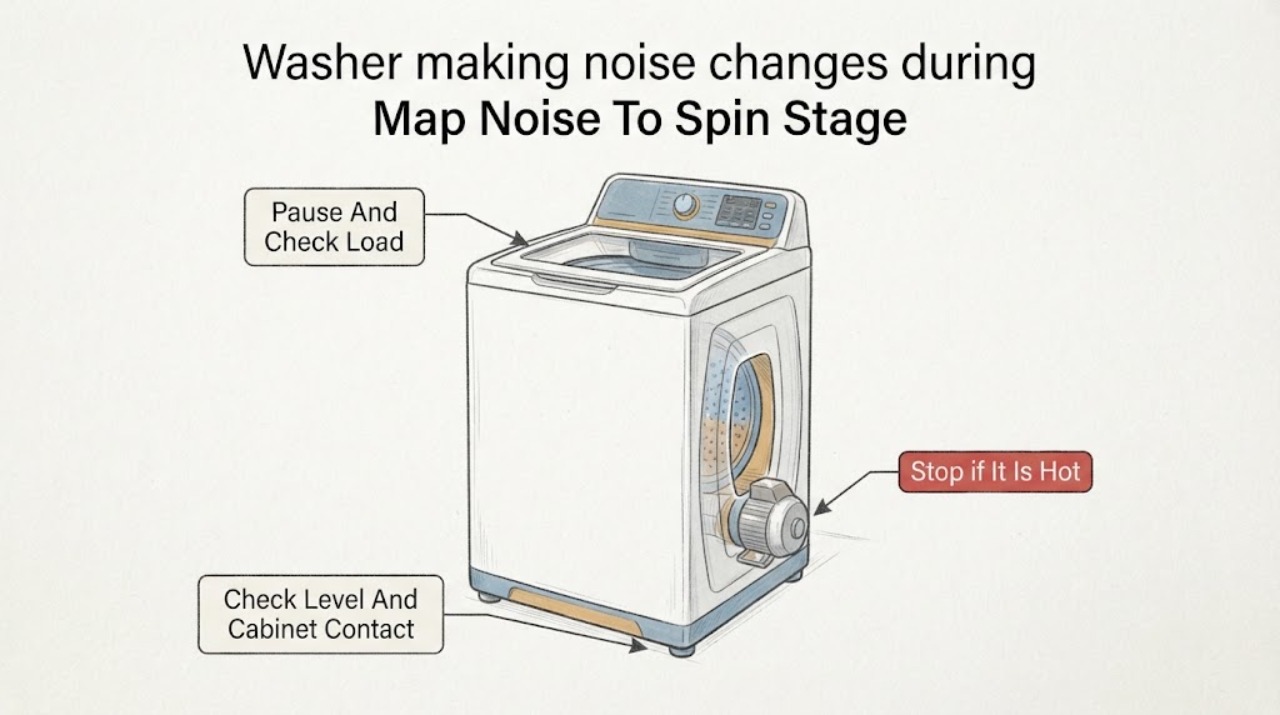
Washer making noise changes during spin: What to Check and What to Do Next
Noise that changes as a washer accelerates, pauses to rebalance, or reaches high spin is often related to load distribution, a washer that rocks, a hose or nearby object contacting the cabinet, or a normal motor or pump transition. Pause the washer using its normal control and note whether the noise follows a lopsided load, a particular speed, the drain step, or the drum even when empty.
-
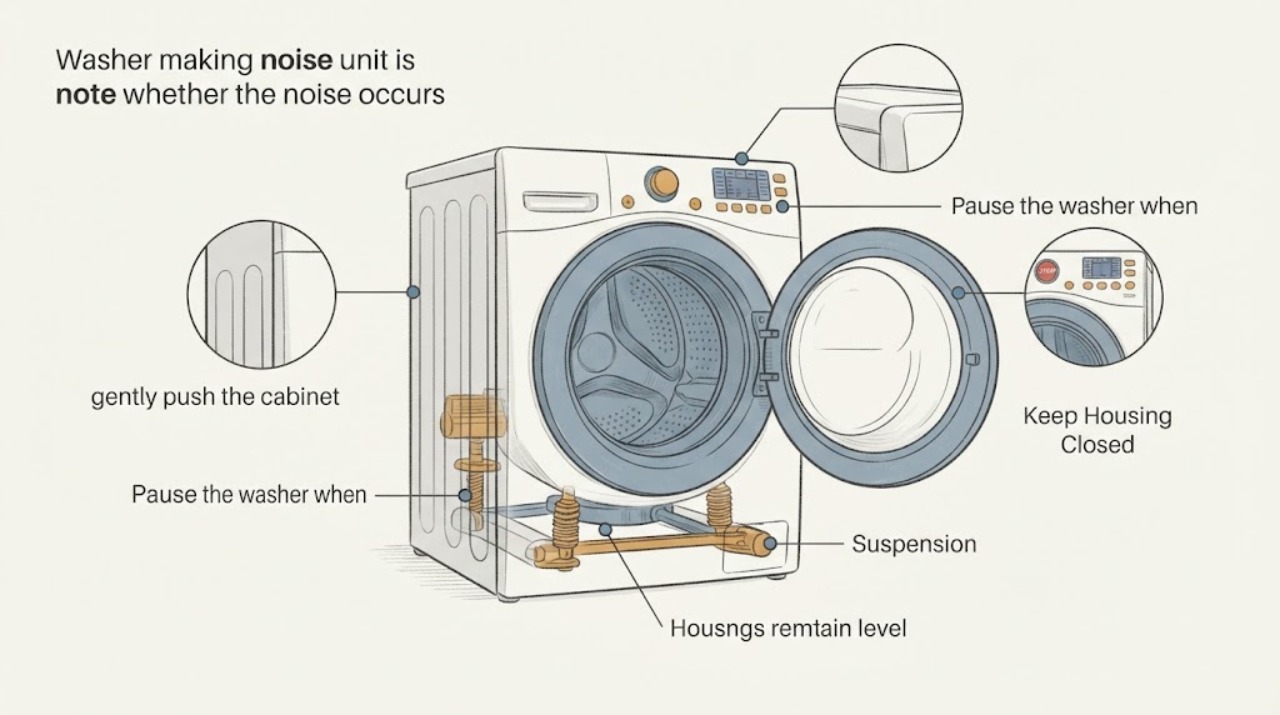
Washer making noise unit is level: What to Check and What to Do Next
A level washer can still make noise from an unbalanced load, a coin or wire in the drum or drain path, shipping bolts or packing left after installation, a hose or nearby object striking the cabinet, normal pump or motor sounds, a flexible floor, or an internal drive or suspension fault. First classify the sound and whether it occurs during fill, agitation, drain, or spin.