
Repair problem
Overheating Troubleshooting Guides – Page 3
Published FixGraph guidance for diagnosing and responding to overheating.
Matching published guides
Choose a guide that matches the service, equipment, and conditions you are seeing.
-
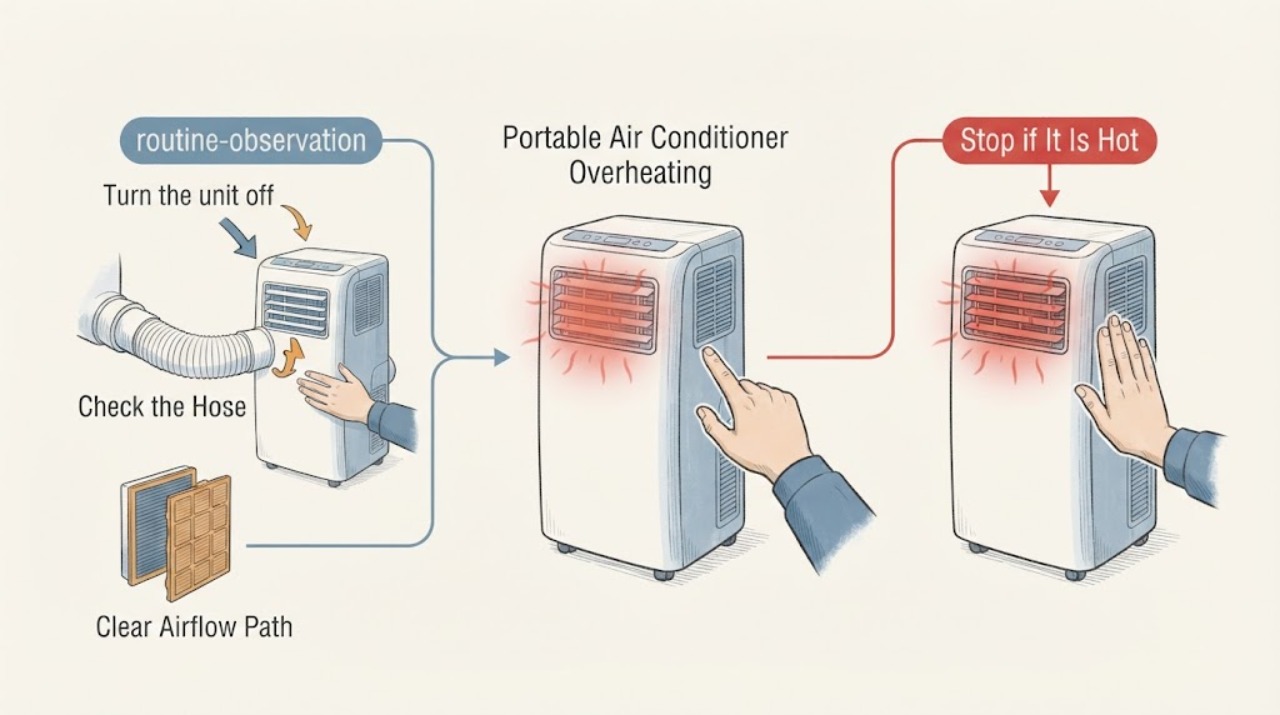
Portable Air Conditioner Overheating
A portable AC exhaust hose normally feels warm or hot, but cabinet overheating, shutdowns, or much hotter exhaust suggest restricted heat rejection, airflow, or water handling. Unplug before cleaning, clear the intake/discharge, clean the filter, and keep the supplied exhaust path unobstructed and outdoors. Persistent overheating needs service.
-
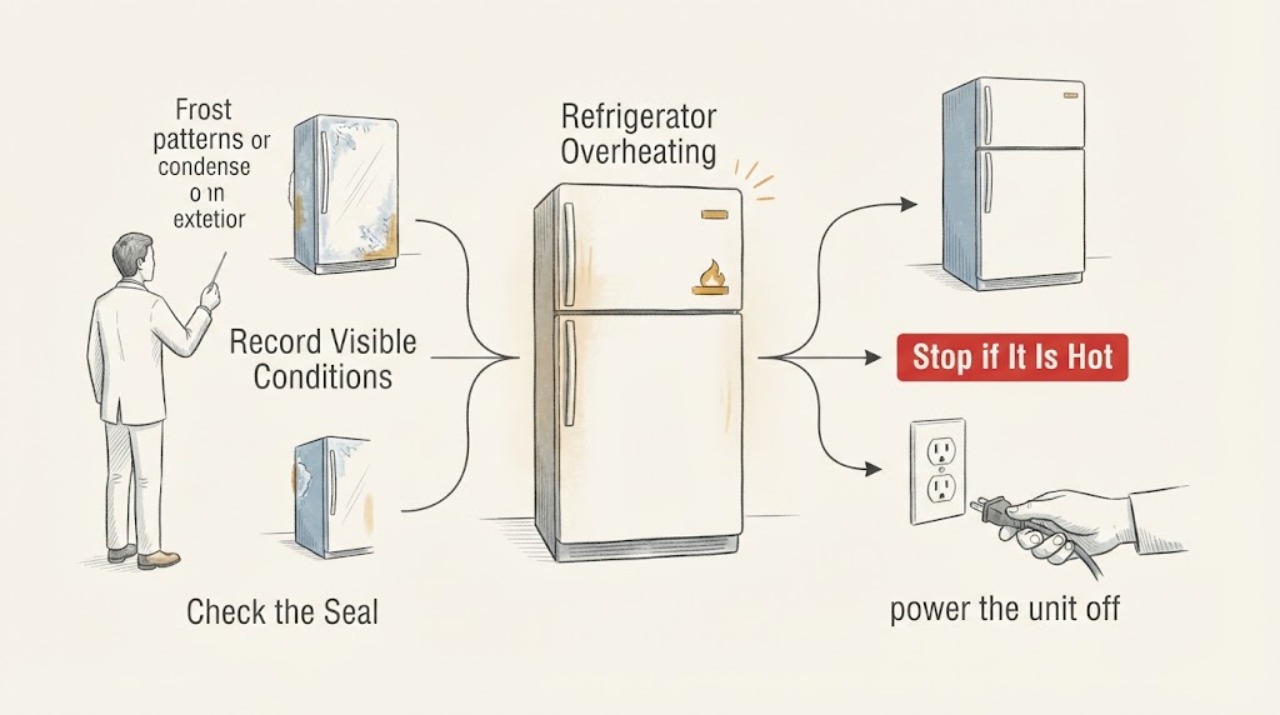
Refrigerator Overheating
First distinguish normal warmth at the mullion or frame from cabinet-wide heat with rising food temperature. Check door seals, vents, grille clearance, and permitted condenser cleaning; persistent heat with poor cooling requires refrigeration service.
-
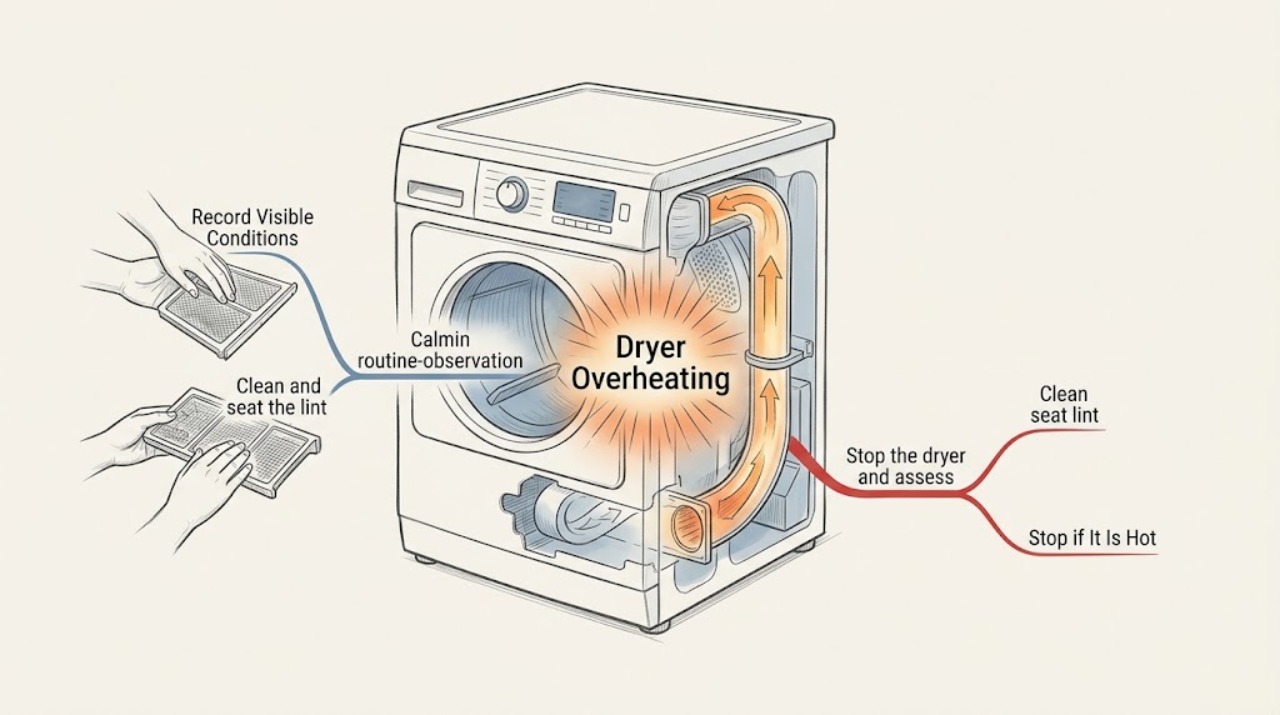
Roper Dryer Overheating: Stop Safely and Check the Airflow Path
Stop a Roper dryer that is unusually hot, smells burnt, scorches clothing, smokes, or keeps heating after the control is Off. Keep the door closed if there is smoke or a fire risk, disconnect power only when the area is dry and it is safe to do so, and do not run another load to test it.
-
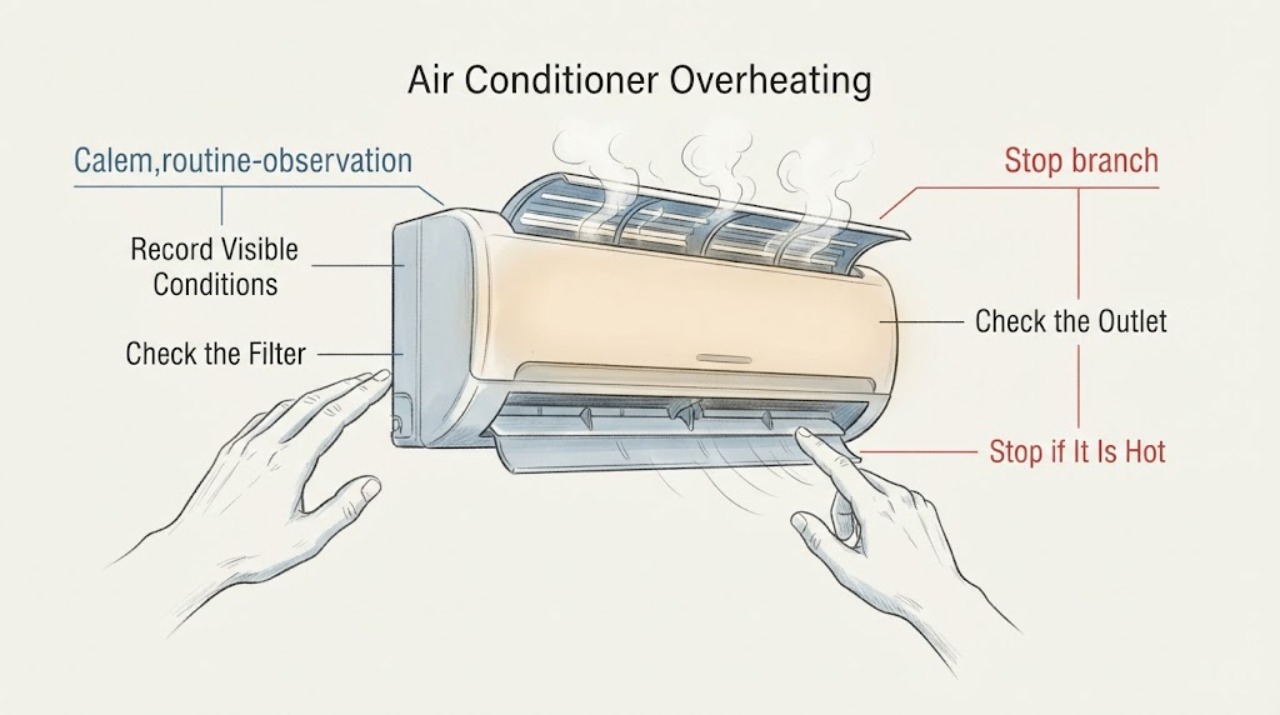
Samsung Air Conditioner Overheating: Check Airflow and Protection Indications
If a Samsung air conditioner feels unusually hot, stops, or shows a protection indication, first note which part is hot and whether the indoor indicator displays a code. With the unit off, check the accessible filter and clear only external airflow obstructions. If the C154 indication returns promptly after one restart, or there is smoke, a burning smell, a repeat breaker trip, or persistent abnormal heat, stop using the unit and request professional service.
-
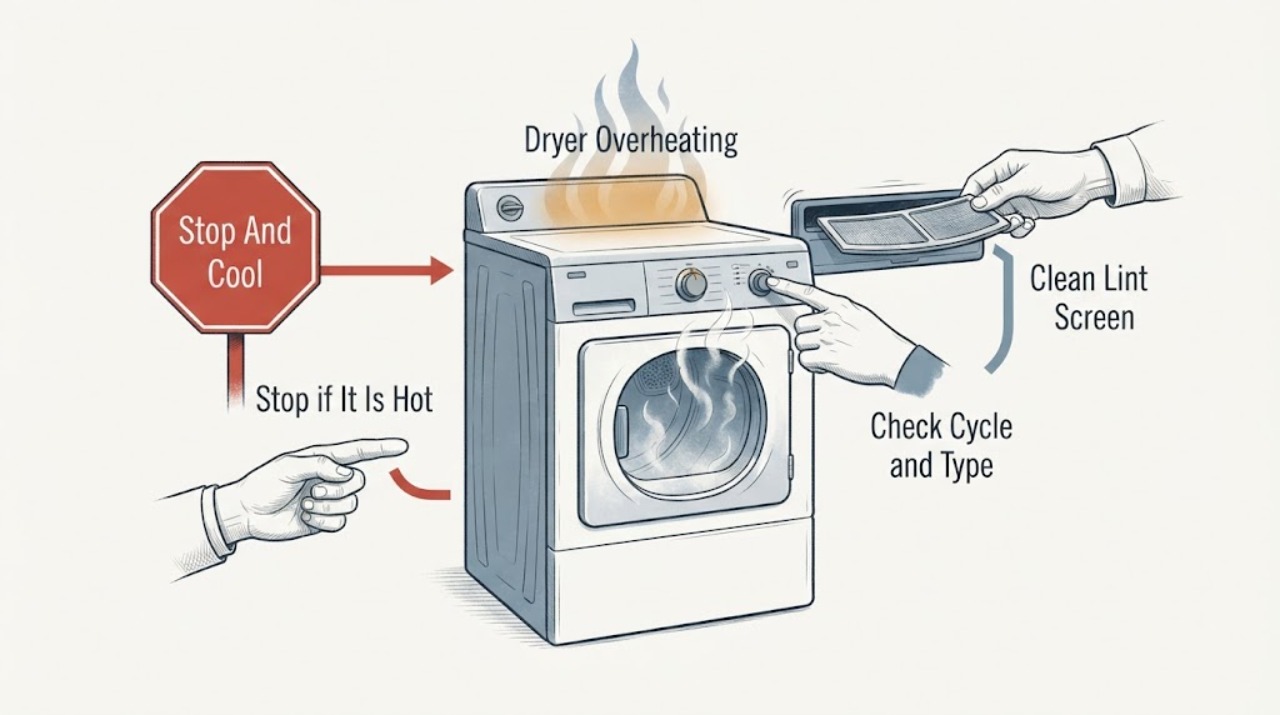
Samsung Dryer Overheating: Stop the Cycle and Check Airflow Safely
Stop a Samsung dryer immediately if the cabinet, laundry, plug, or outlet is unusually hot, or if there is a scorched smell, smoke, fabric damage, gas odor, arcing, or a breaker trip. Do not run another test cycle while it is hot or unsafe.
-
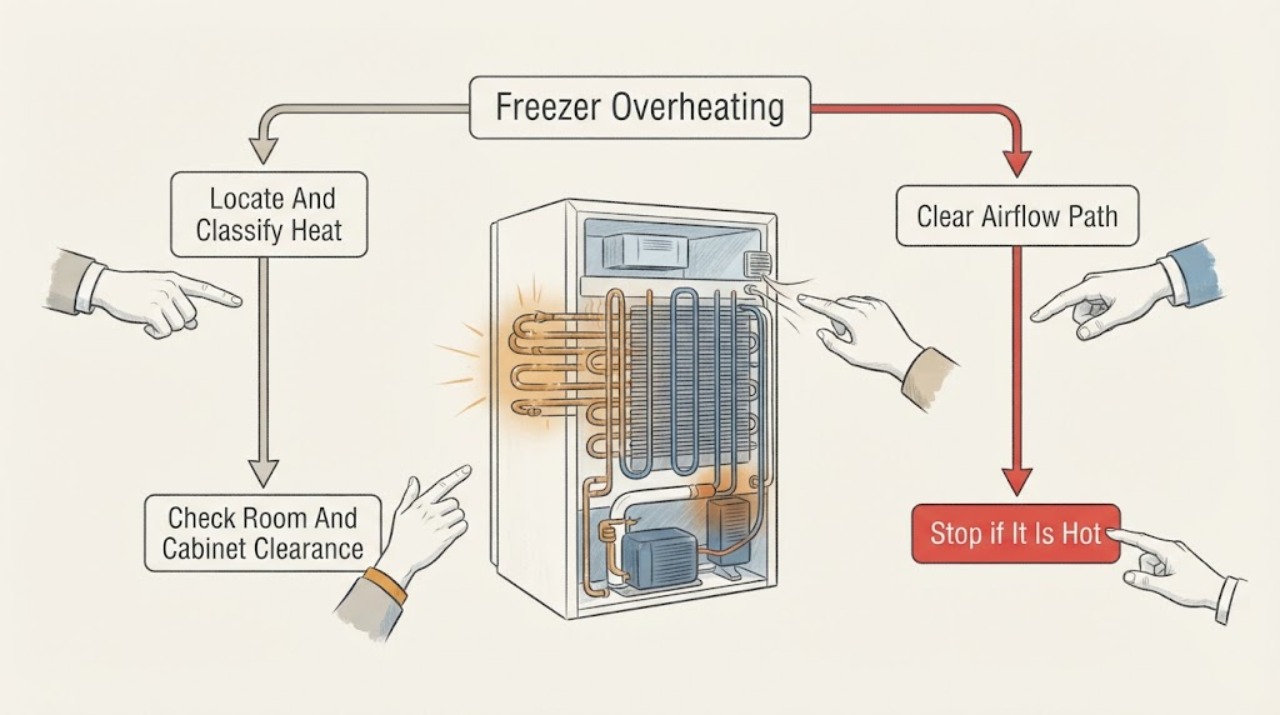
Samsung Freezer Overheating
A Samsung freezer can feel warm on its sides, front edge, or door gasket during normal compressor operation because heat-radiating pipes release refrigerant heat and help prevent condensation. That surface warmth is different from an interior freezer that is too warm, a compressor area that is abnormally hot, or food that is softening.
-
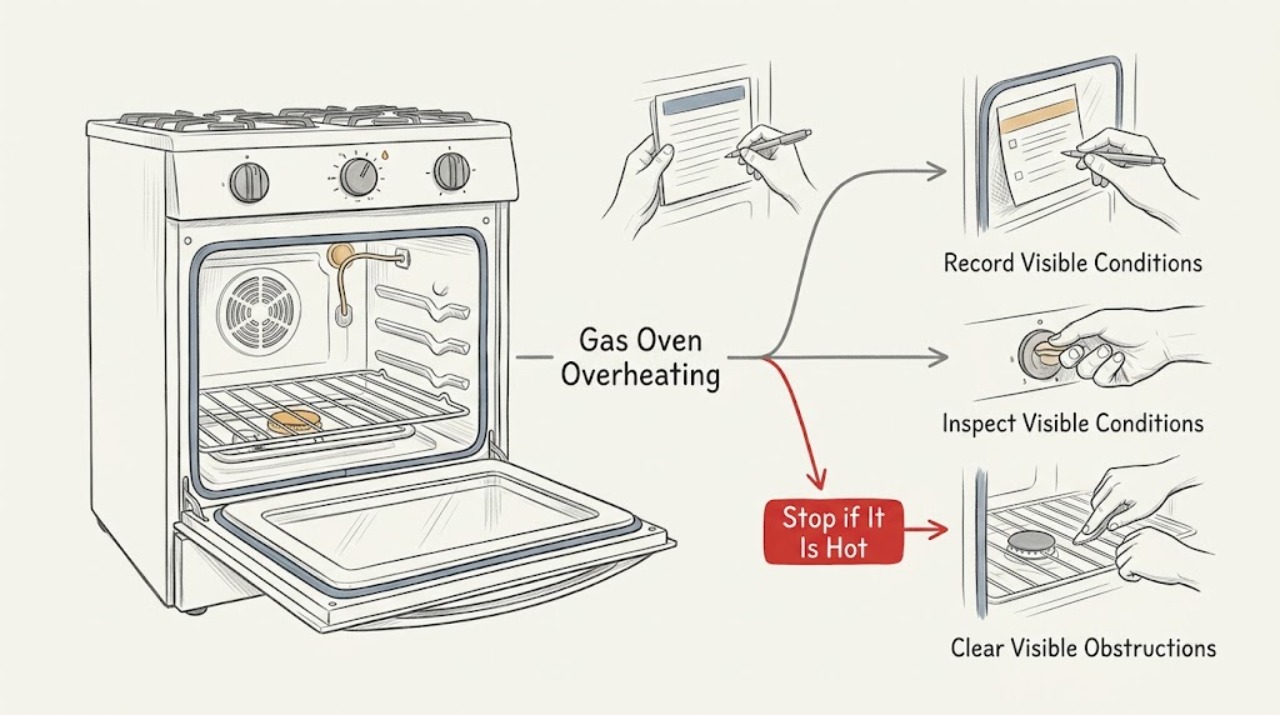
Samsung Gas Oven Overheating: Separate Normal Cycling from a Fault
A Samsung gas oven normally cycles the burner on and off around the selected temperature, so a brief flame change, warm exhaust, or a temperature reading that moves above and below the setting is not automatically overheating. Treat it as a fault when the oven continues heating after it should stop, food burns at normal settings, the display shows a temperature-related code, the door or nearby surfaces become abnormally hot, or the flame is abnormal.
-
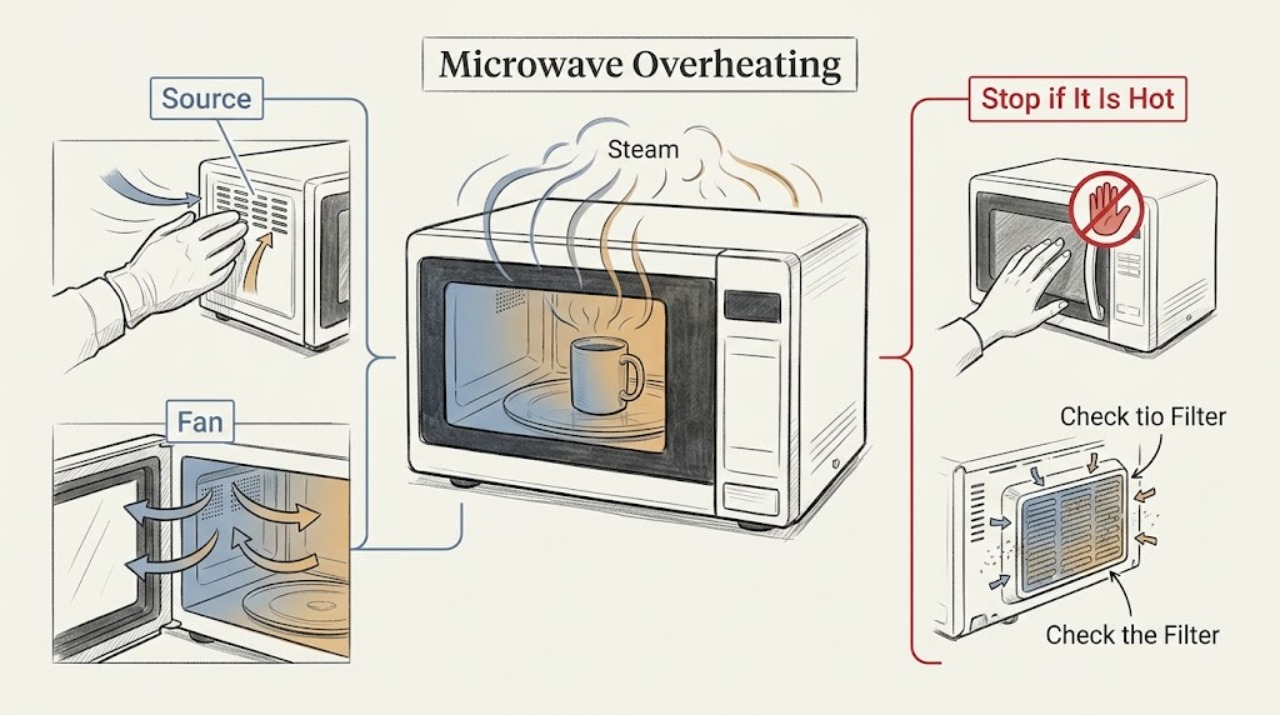
Samsung Microwave Overheating: Check Heat Source, Venting, and Safe Shutdown
For an over-the-range Samsung microwave, first determine whether the heat is from the cooktop below, a normal cooling fan, or the microwave cavity itself. Samsung says the vent fan can start automatically to protect the microwave from excess cooktop heat and may continue until the area cools.
-
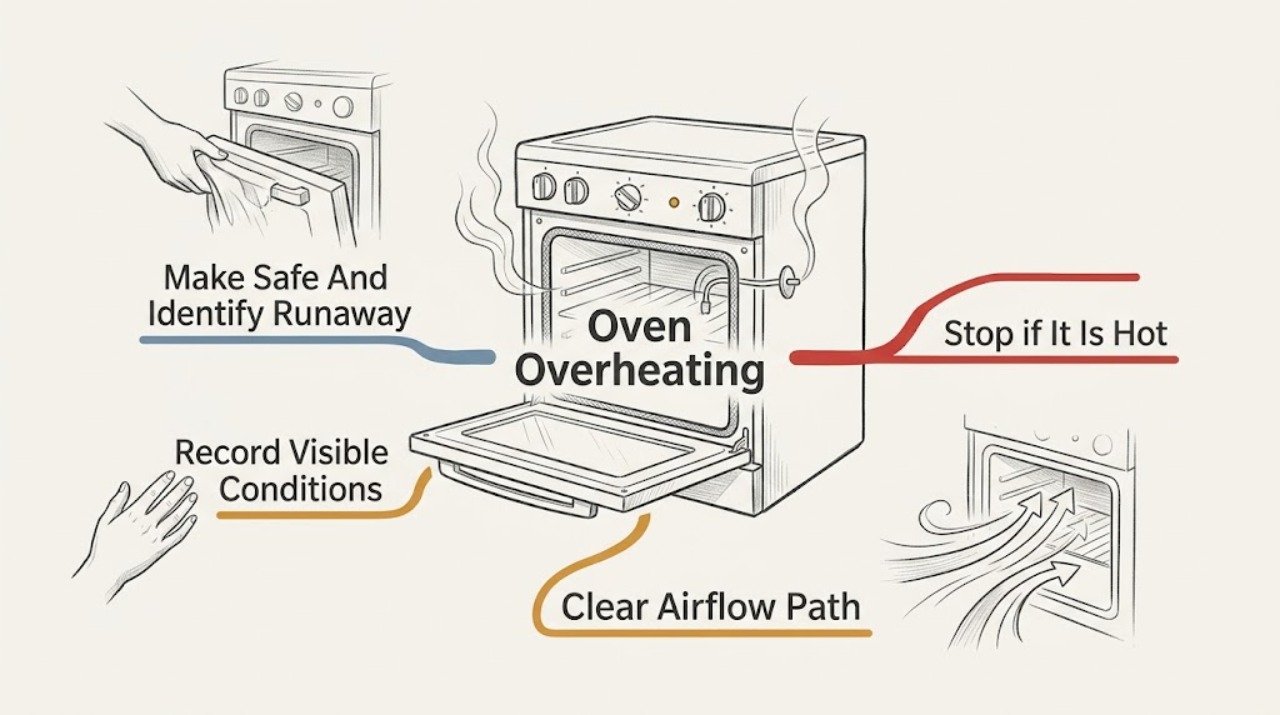
Samsung Oven Overheating: Separate Normal Heat Cycling From a Fault
A Samsung oven can feel very hot while operating normally: heating elements cycle above and below the set temperature, and a cooling fan may continue after cooking to protect the controls. Treat it as overheating when food burns at the same setting, the oven keeps heating after the selected function is cancelled, the temperature rises without cycling off, the door or controls become abnormally hot, or smoke, a burning odor, flame, arcing, or a CO alarm appears.
-
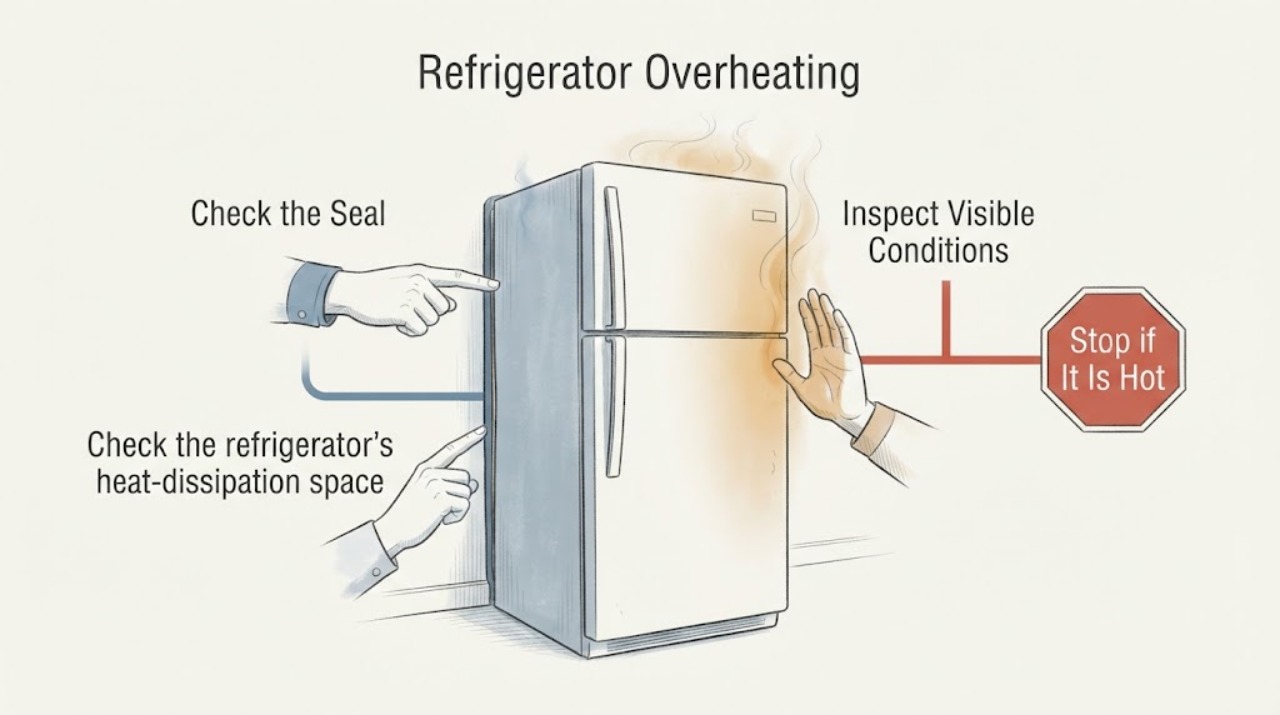
Samsung Refrigerator Overheating: Safe Checks for Hot Sides and Poor Cooling
Warm Samsung refrigerator side walls can be normal because the cooling system releases heat through the cabinet. Treat the refrigerator as overheating when the sides remain extremely hot together with poor cooling, food spoiling, continuous hard running, unusual noise, or an error message.
-
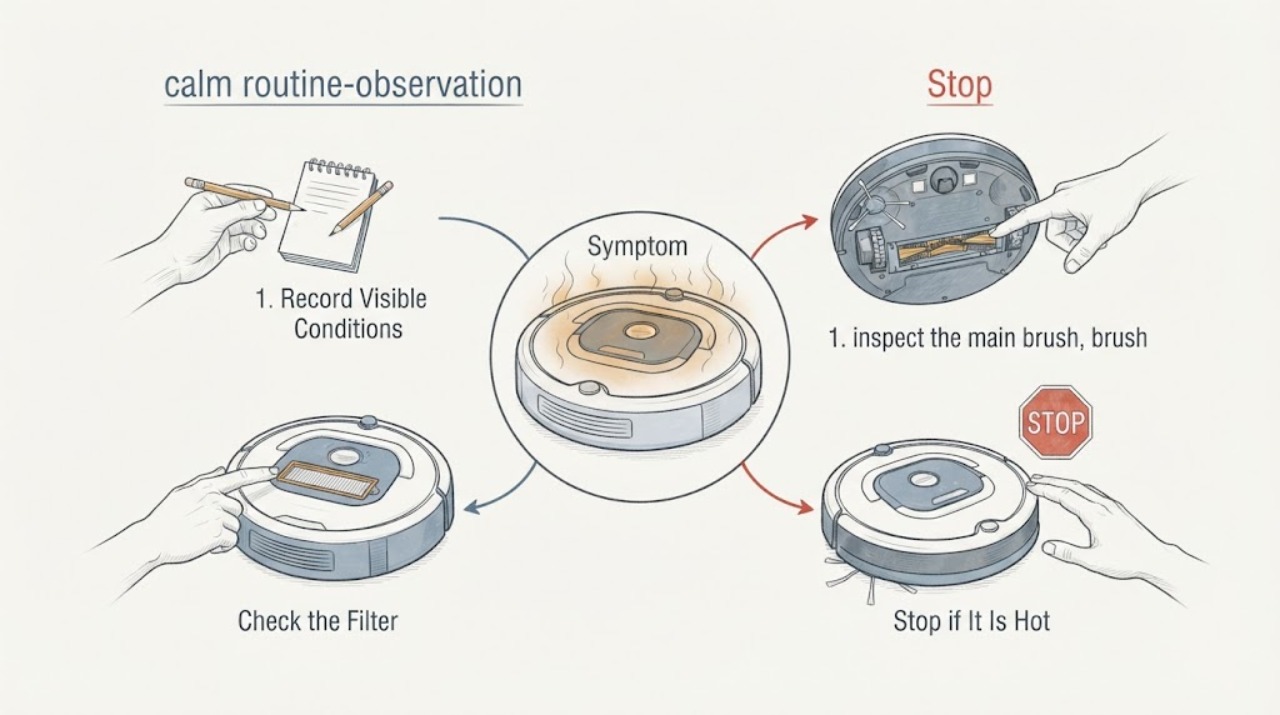
Samsung Robot Vacuum Overheating: Safe Checks Before Service
If a Samsung robot vacuum becomes unusually hot, stops during cleaning, or reports an overheating or motor problem, stop the cleaning task and let the robot cool naturally before inspecting it. Empty the dustbin, clean the fine-dust filter only as the exact model manual permits, remove hair and debris from the main brush, side brush, wheels, and accessible air paths, and check that the charging pins and station are clean and dry.
-
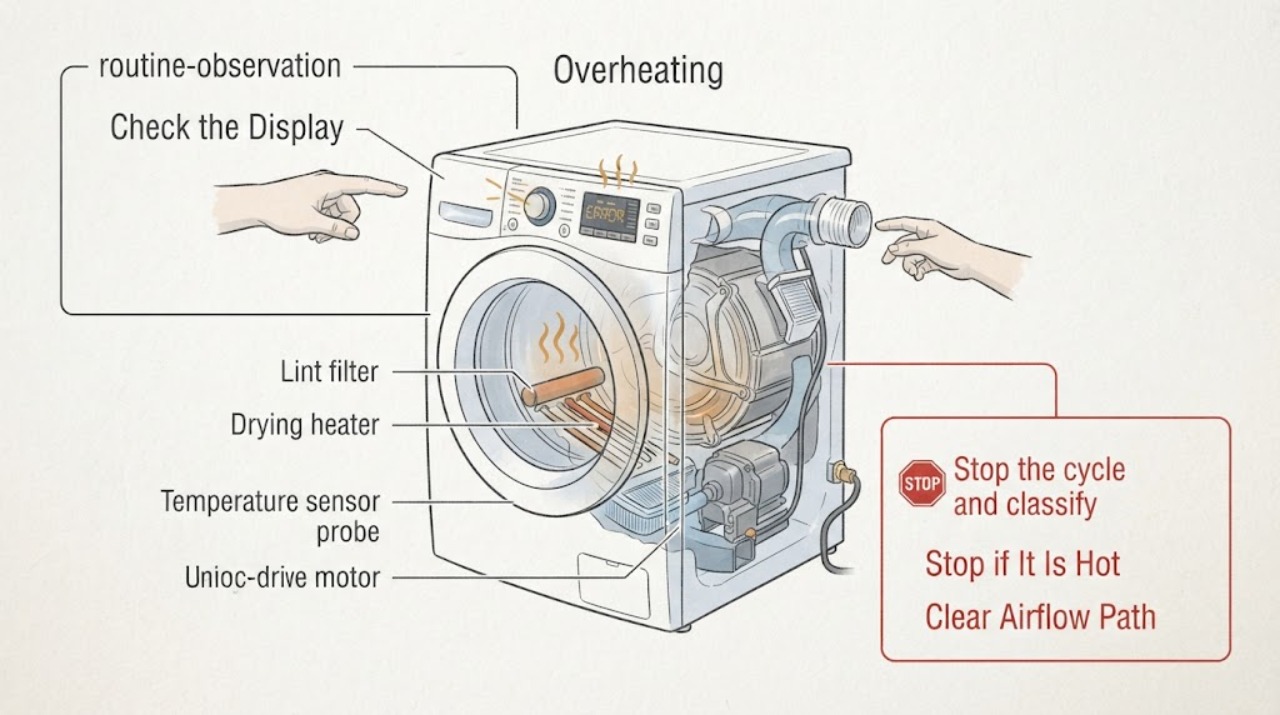
Samsung Washer Dryer Overheating: Stop Safely and Check Airflow
Treat a Samsung washer-dryer that feels excessively hot, shows a heating or temperature alert, smells of burning, or produces smoke as a safety issue first. Stop the cycle, keep clear of smoke or fire, and disconnect power only when it is safe; never continue a hot or smoking appliance to see whether it cools.
-
Samsung Wine Cooler Overheating: Safe Checks
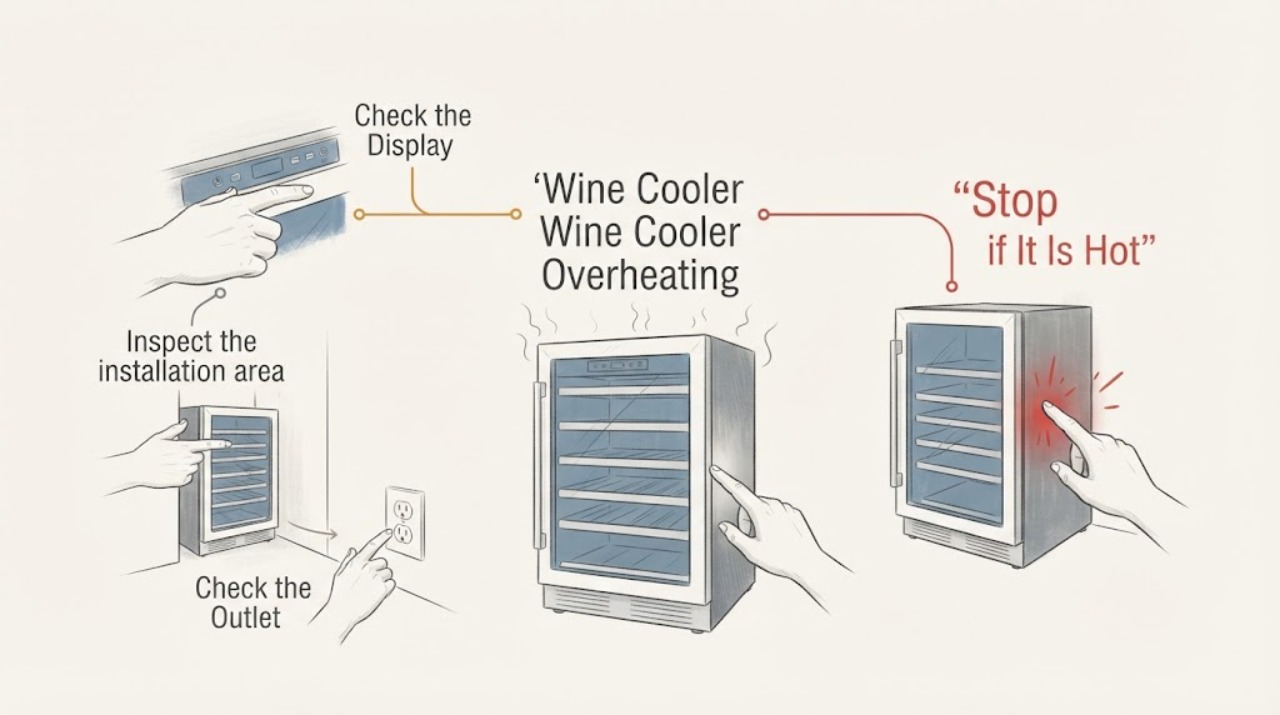
A Samsung wine cooler's side panels can feel warm because the refrigeration system releases heat through the cabinet, but extreme heat or wine that stays warm needs a different check. First separate warm exterior panels from a warm interior, then check the outlet and breaker, door seal, temperature setting, clearances, ventilation, and any cooling-off or demo mode shown by the display.
-
Sharp Microwave Overheating: Safe Checks Before Service
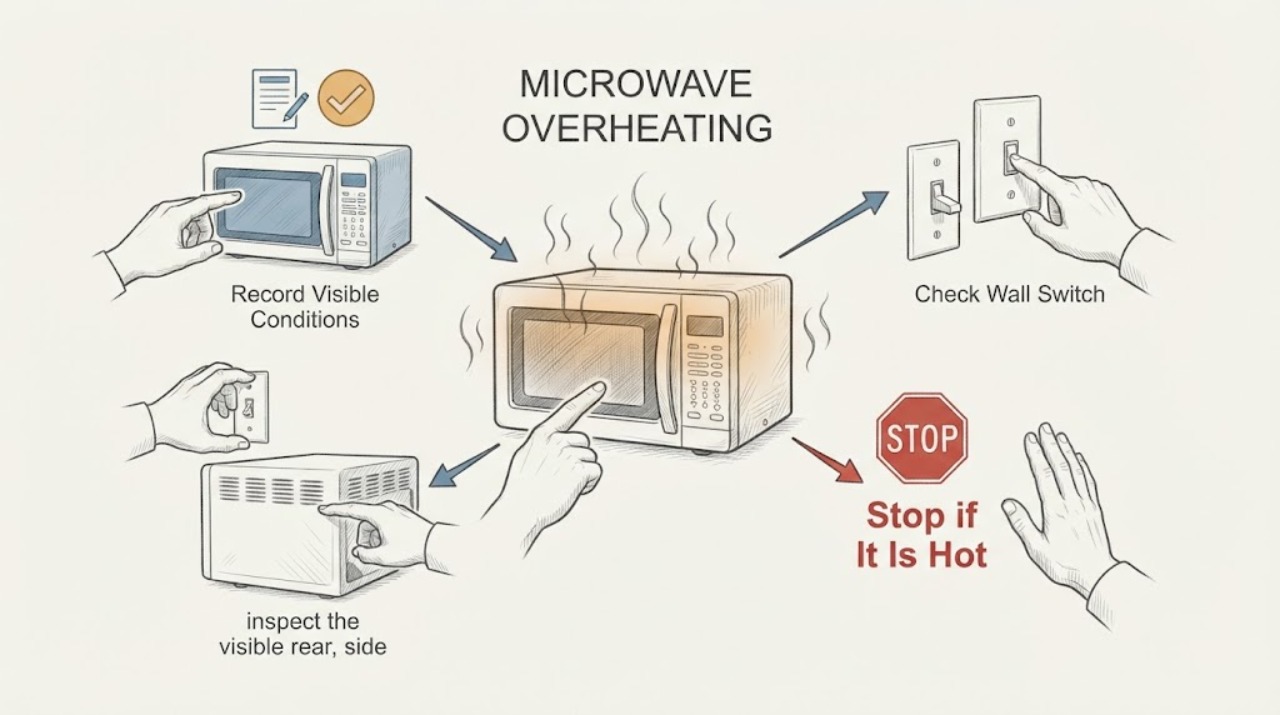
First separate normal heat from an unsafe overheating symptom. A Sharp convection or grill microwave can have a hot exterior and a cooling fan after a heating mode, while a microwave that smokes, sparks, smells burnt, overheats while idle, trips power, or becomes hotter than the model manual describes should be stopped.
-
Siemens Dryer Overheating: Separate Normal Heat from a Fault
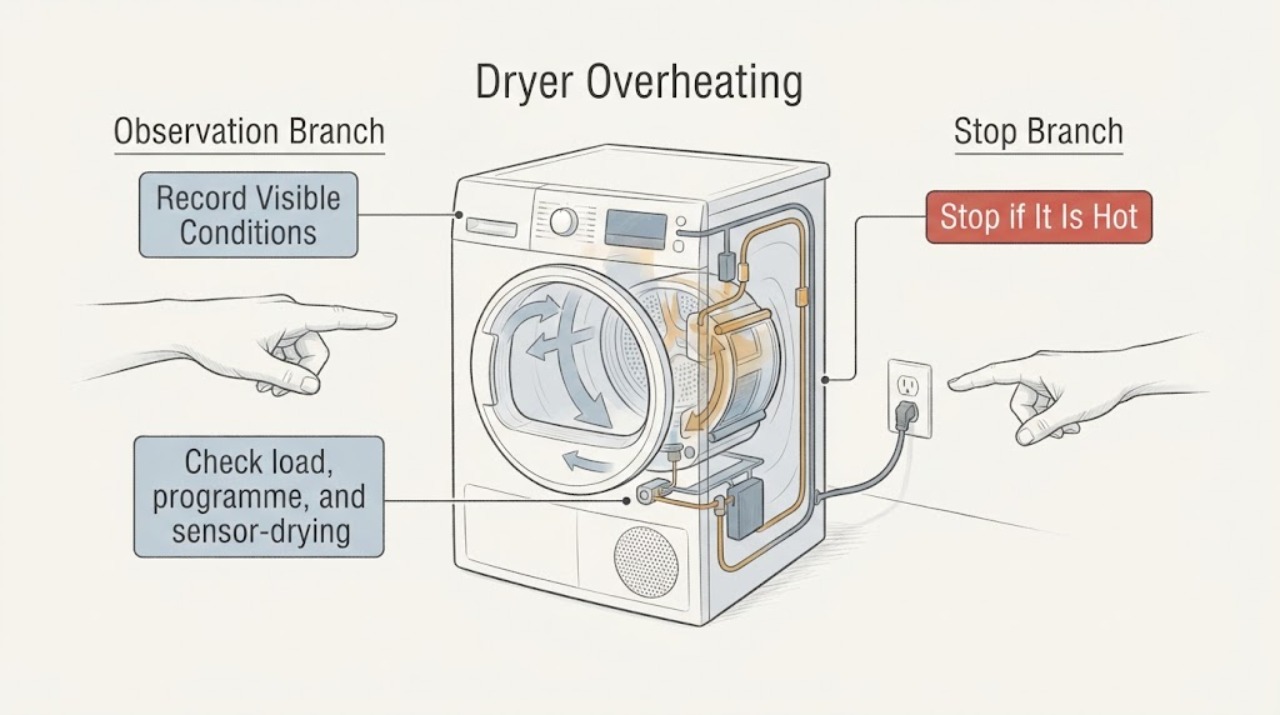
A Siemens dryer may feel warm during a normal programme, and a heat-pump or sensor programme can run for a long time while it manages moisture. That is different from clothes or the cabinet becoming abnormally hot, a cycle heating without control, a filter or airflow warning, scorching, smoke, or an electrical connection heating up.
-
Smeg Oven Overheating: Separate Normal Heat Cycling from Temperature Runaway
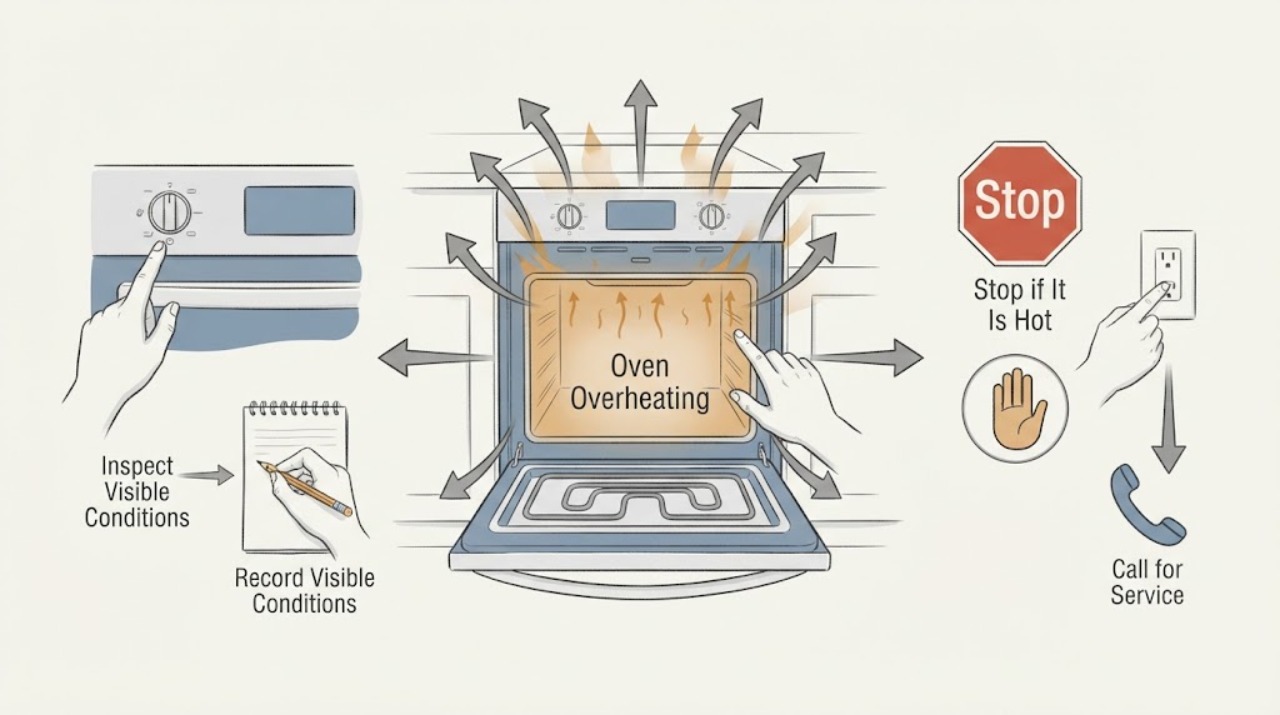
First distinguish normal heat: a hot door, warm vent air, and a cooling fan that runs during or after cooking can occur on Smeg ovens. Overheating is more concerning when the oven keeps heating after being turned off, the temperature rises far beyond the selected setting, food or nearby surfaces scorch, smoke appears, a gas flame is abnormal, or an electrical protection device trips.
-
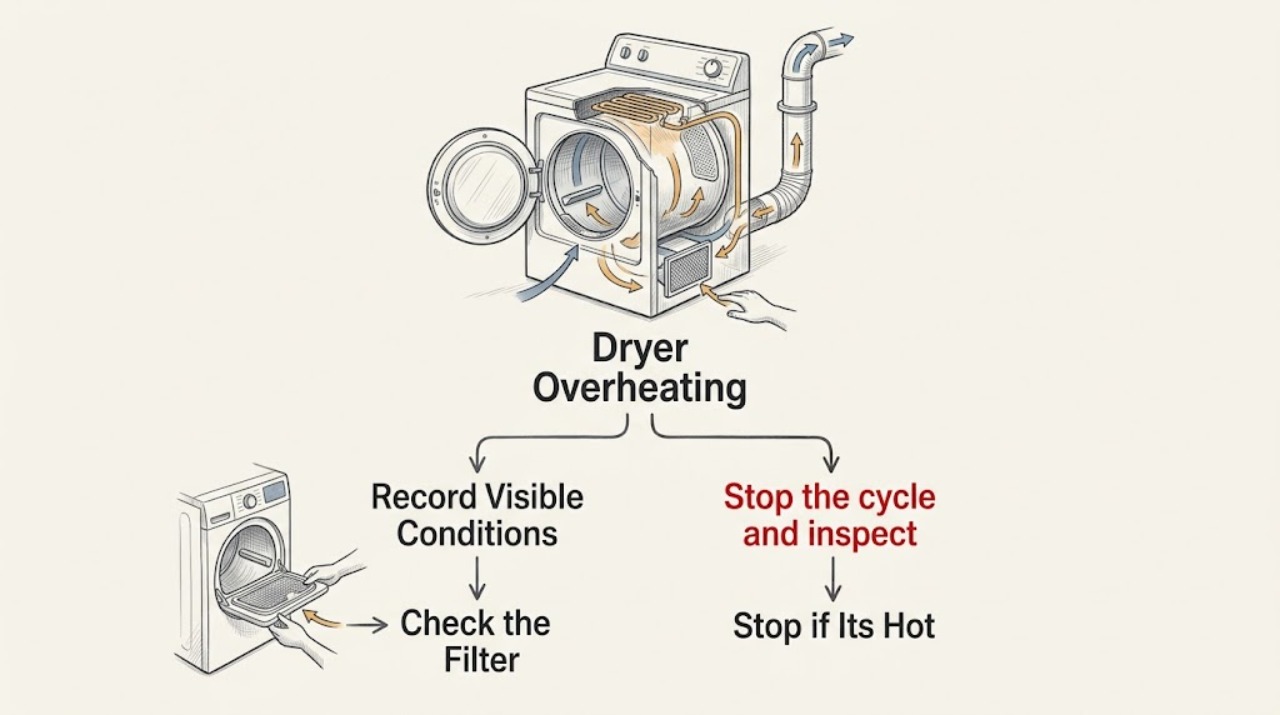
Speed Queen Dryer Overheating: Check Airflow, Load, and Heat Safely
Stop a Speed Queen dryer immediately if smoke, a burning or melting smell, scorched fabric, gas odor, an unusually hot cabinet, uncontrolled heat, sparks, or a repeated breaker trip appears. A warm cabinet or hot exhaust during a normal heated phase can be expected, but excessive heat is often associated with a blocked lint filter or exhaust path, a crushed hose, an obstructed exterior hood, an overloaded or unsuitable load, or an incorrect heat setting.
-
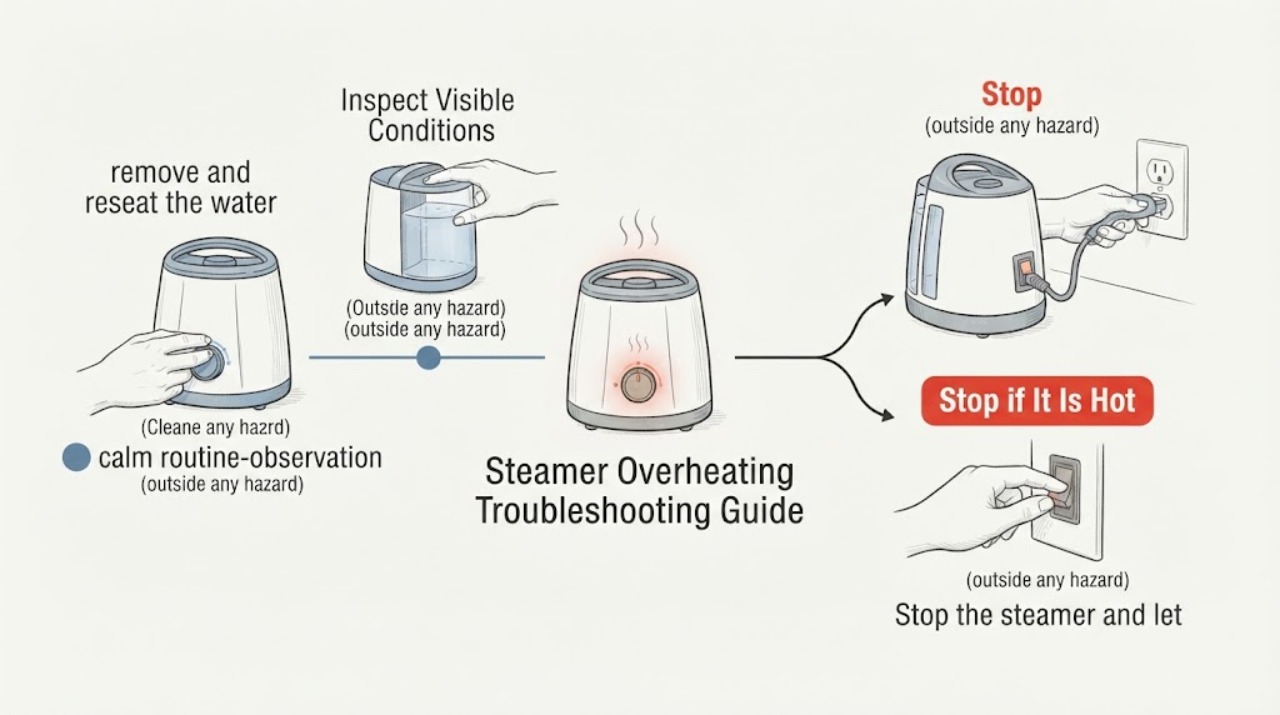
Steamer Overheating Troubleshooting Guide
For a steamer that overheats, stop using it and let it cool before checking the water tank, upright position, and accessible steam path. Philips also calls out warm-up and scale, with descaling done only after unplugging and cooling. If the tank is seated, the unit is upright and clear, and it still becomes abnormally hot or repeatedly shuts down, leave it unplugged and arrange qualified service.
-
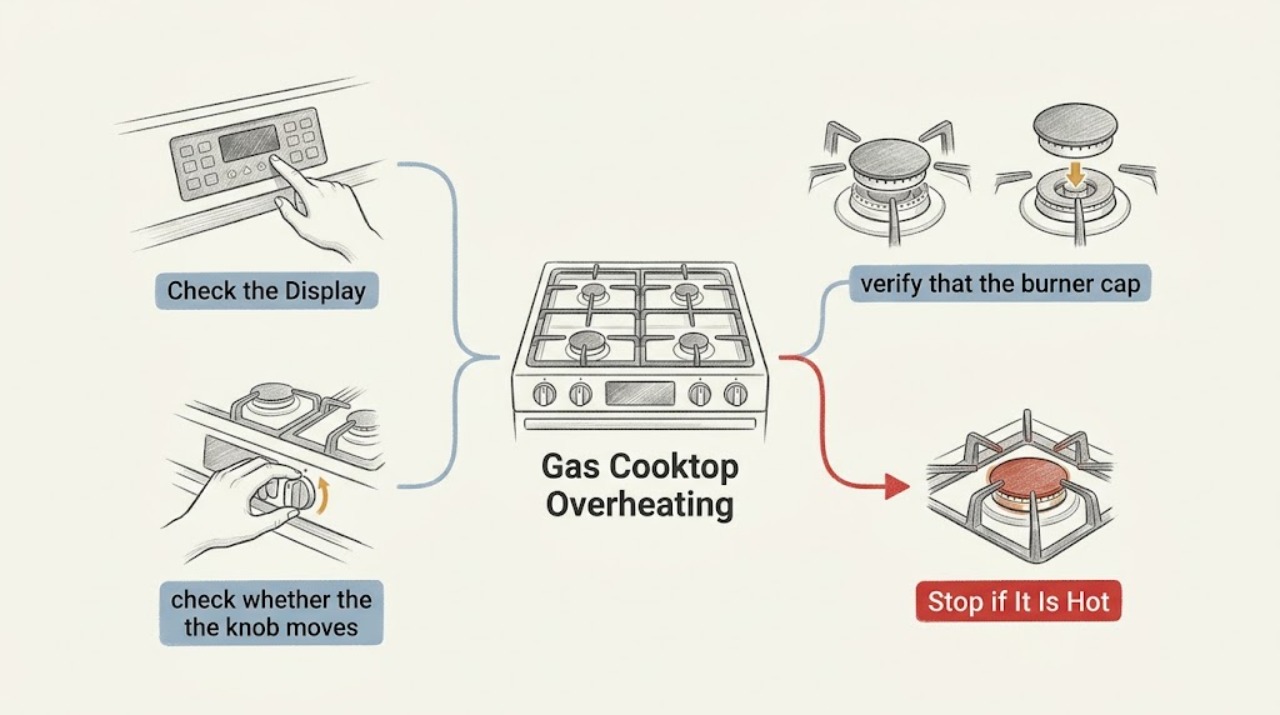
Thermador Gas Cooktop Overheating: Separate Normal Heat From a Flame or Control Fault
A hot pan, grate, or cooktop surface can remain hot after a normal high-heat setting, but a flame that stays too large when turned down, will not shut off, has an abnormal color or shape, or heats nearby controls or surfaces unexpectedly is not normal. Turn the affected control off immediately.
-
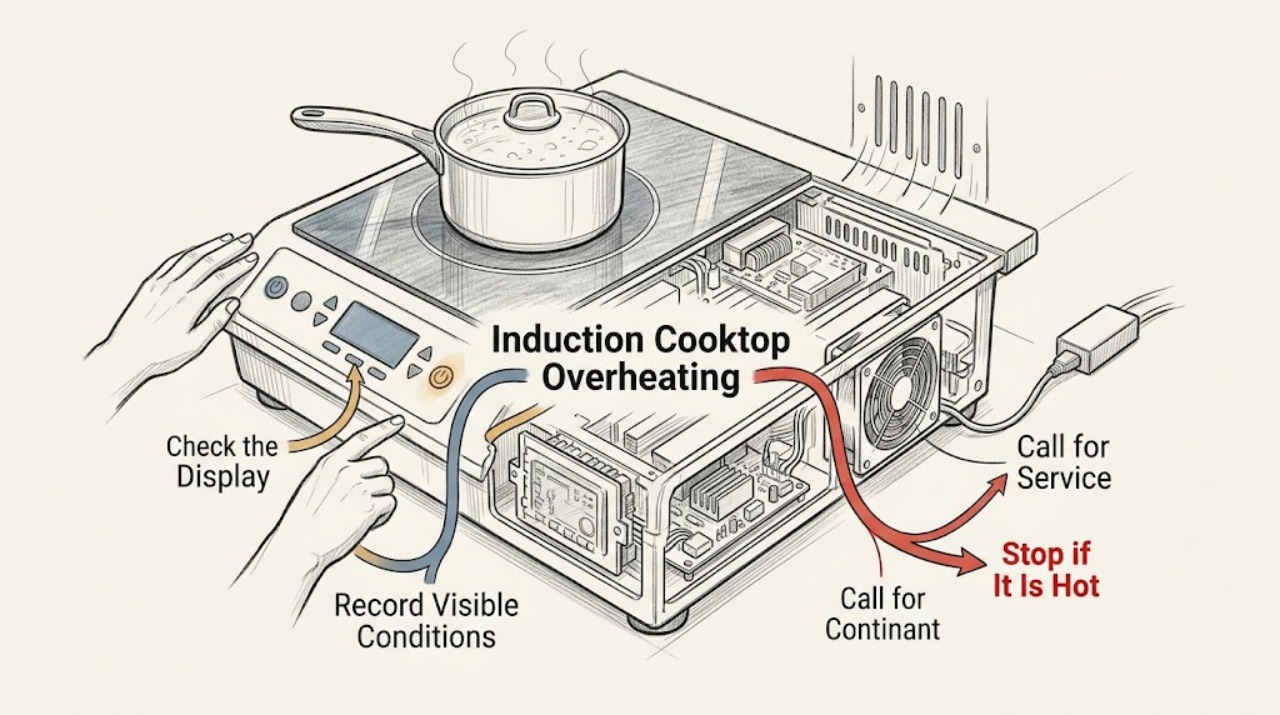
Thermador Induction Cooktop Overheating: Separate Cooling from a Fault
If a Thermador induction cooktop seems to overheat, turn the affected zone off, move hot cookware away from the control panel when it is safe to do so, and let the surface and electronics cool. A cooling fan that continues after cooking can be normal, and Thermador says PowerBoost can switch off automatically to protect internal components.
-
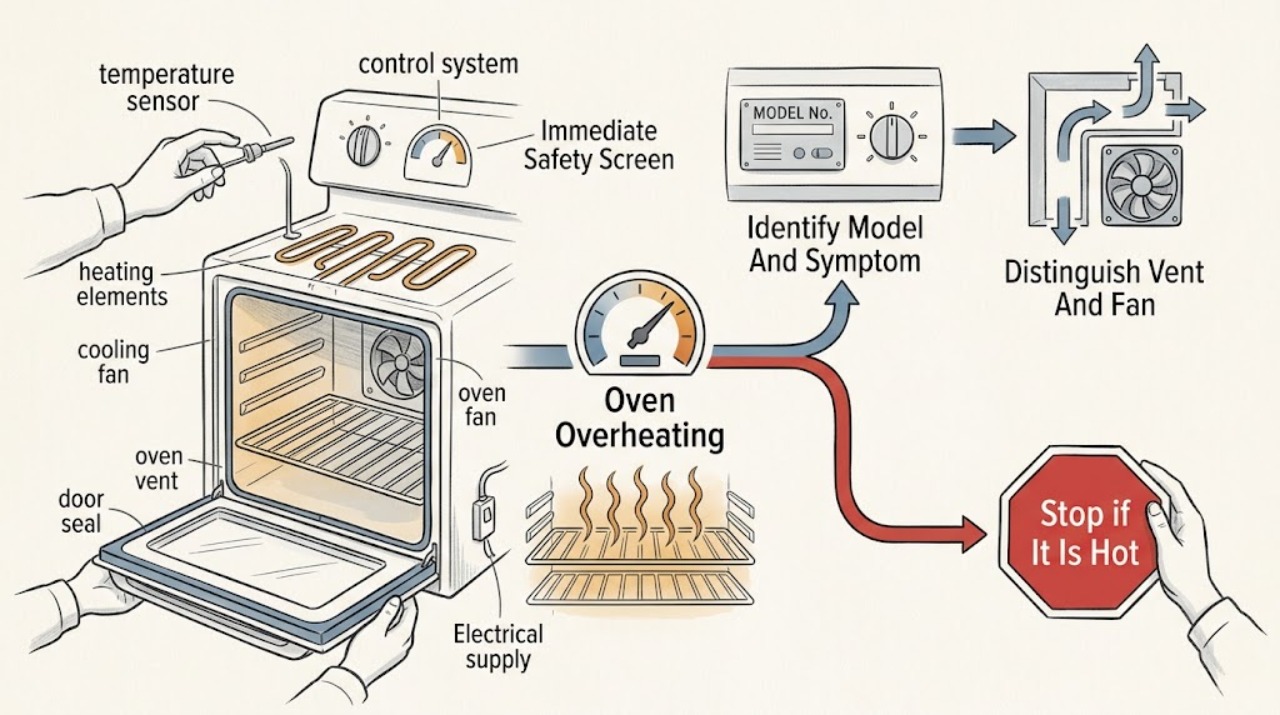
Thermador Oven Overheating
First decide whether you are seeing normal heat management or an unsafe overheat. Warm air or steam at the vent, a cooling fan that continues after cooking, and heating elements cycling on and off can be normal; Thermador says the oven vent must not be blocked, and an identified Thermador manual notes that its temperature gauge is only a reference.
-
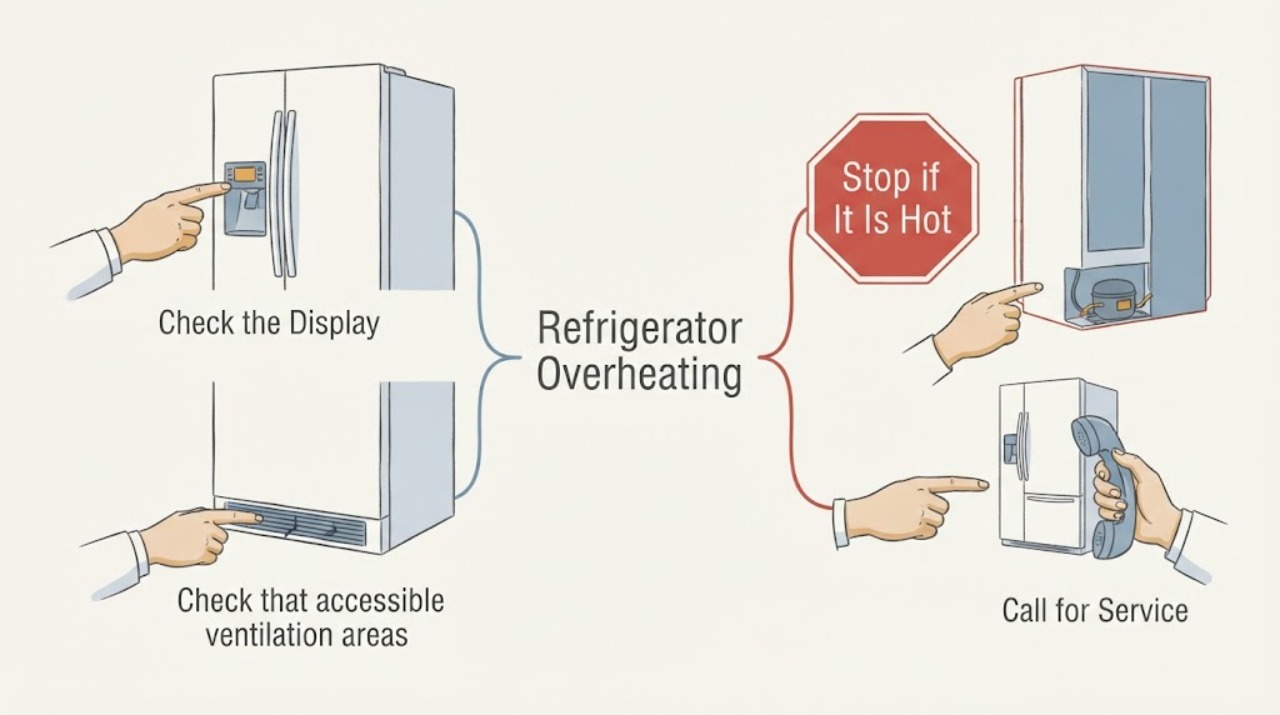
Thermador Refrigerator Overheating
For a Thermador refrigerator that is overheating, stop using it if the cabinet or wiring area is hot, note whether cooling has stopped or a warning is shown, and arrange qualified service. Do not block ventilation or remove covers.
-
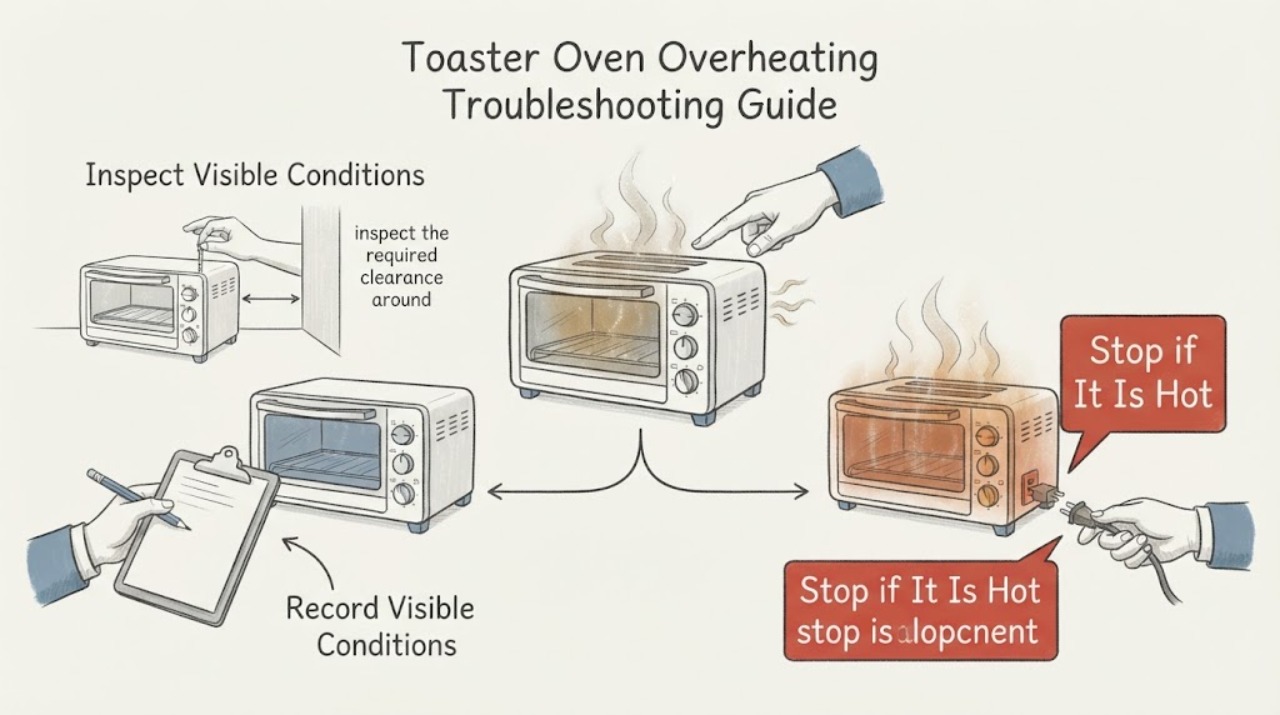
Toaster Oven Overheating Troubleshooting Guide
For a toaster oven that overheats, stop the cycle and let it cool before checking the exact fault display, surrounding clearance, and accessible power connection. Breville's manual provides a cool-down path for an over-temperature fault and sends recurring or non-resettable faults to service. If the heater behaves unexpectedly, a code returns, vents are blocked, or the plug is hot or damaged, keep the oven disconnected and arrange qualified service.
-
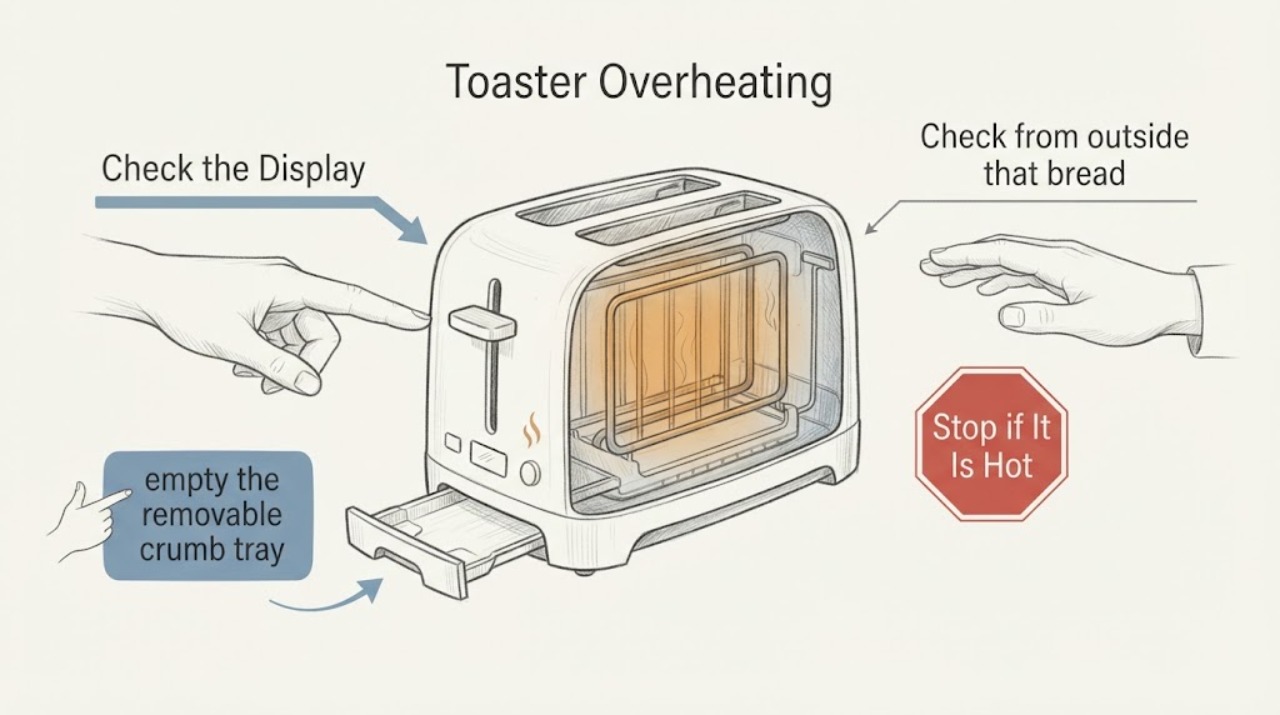
Toaster Overheating
Unplug a toaster that becomes unusually hot, smells burnt, smokes, or keeps heating after the control is released. After it is fully cool, inspect only the crumb tray, slot openings, cord, and surrounding clearance. Never insert metal, cover vents, or keep using it after a persistent heat or control fault; arrange service for a toaster that overheats again.
-
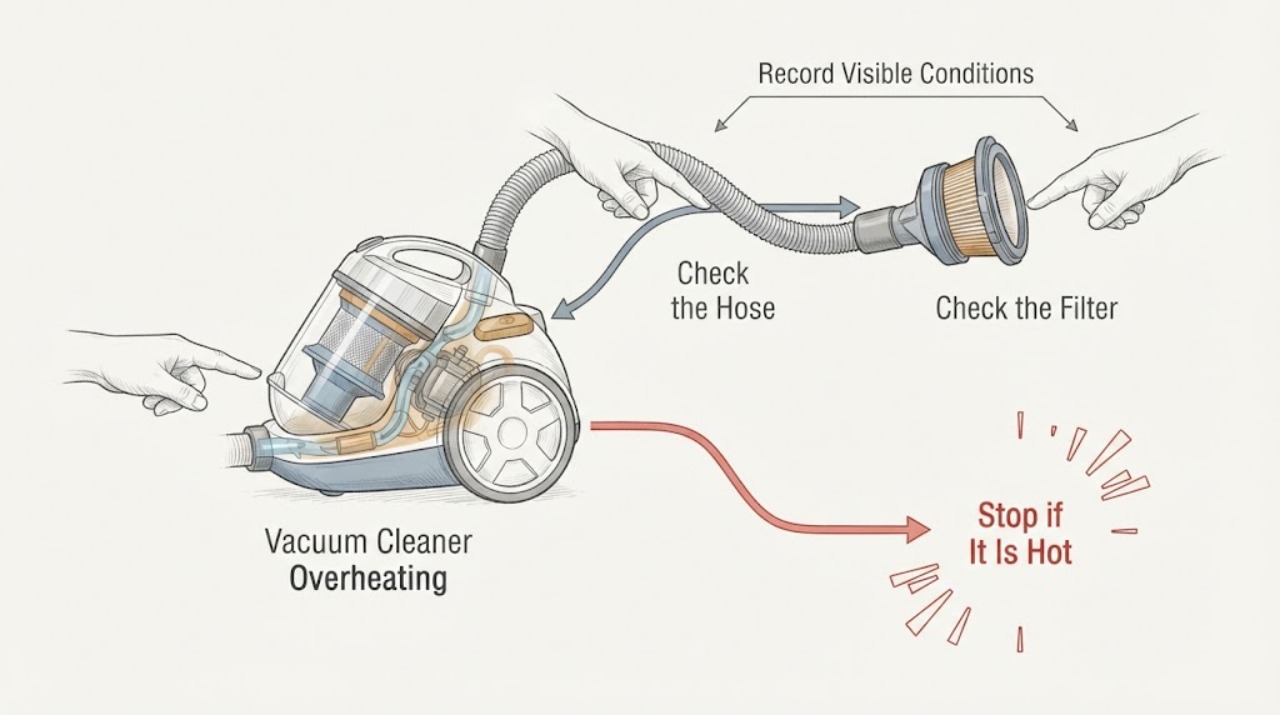
Vacuum Cleaner Overheating: Cool It and Check Airflow Safely
If a vacuum cleaner becomes hot, cuts out, or smells hot, switch it off and disconnect power. Let it cool before checking the bin, cleaner head, hose, wand, and owner-washable filters for blockage or a wet or poorly seated filter. A thermal cutout often protects a vacuum when airflow is restricted, but continued overheating after those checks can indicate an internal fault. Do not run it while partially dismantled or keep restarting it to force a cleaning session.
-
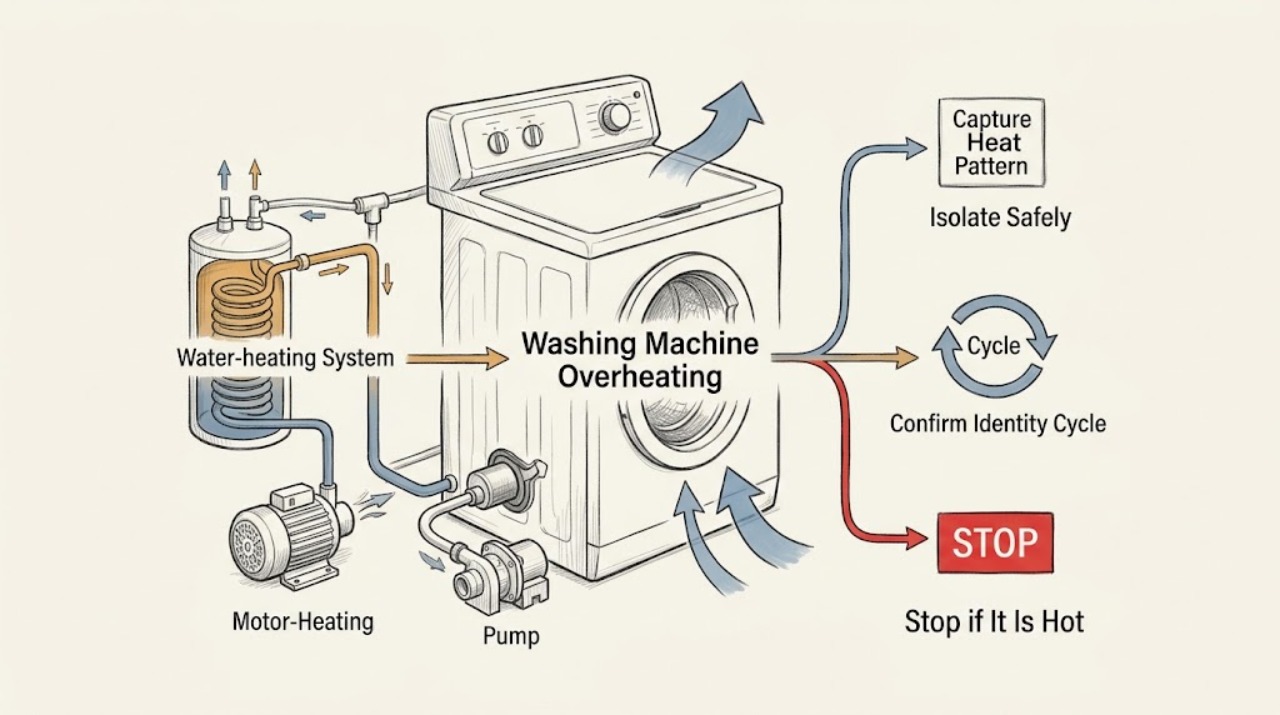
Washing Machine Overheating: What to Check Before Calling for Service
Treat a washing machine that is truly overheating as a safety issue until you know whether you are seeing normal warmth or steam from a high-temperature or washer-dryer cycle. Stop the cycle and keep clear if there is smoke, a sharp electrical or burning-rubber odor, sparking, a hot plug or outlet, a leaking machine near electricity, scalding water, or unusual heat from the cabinet.
-
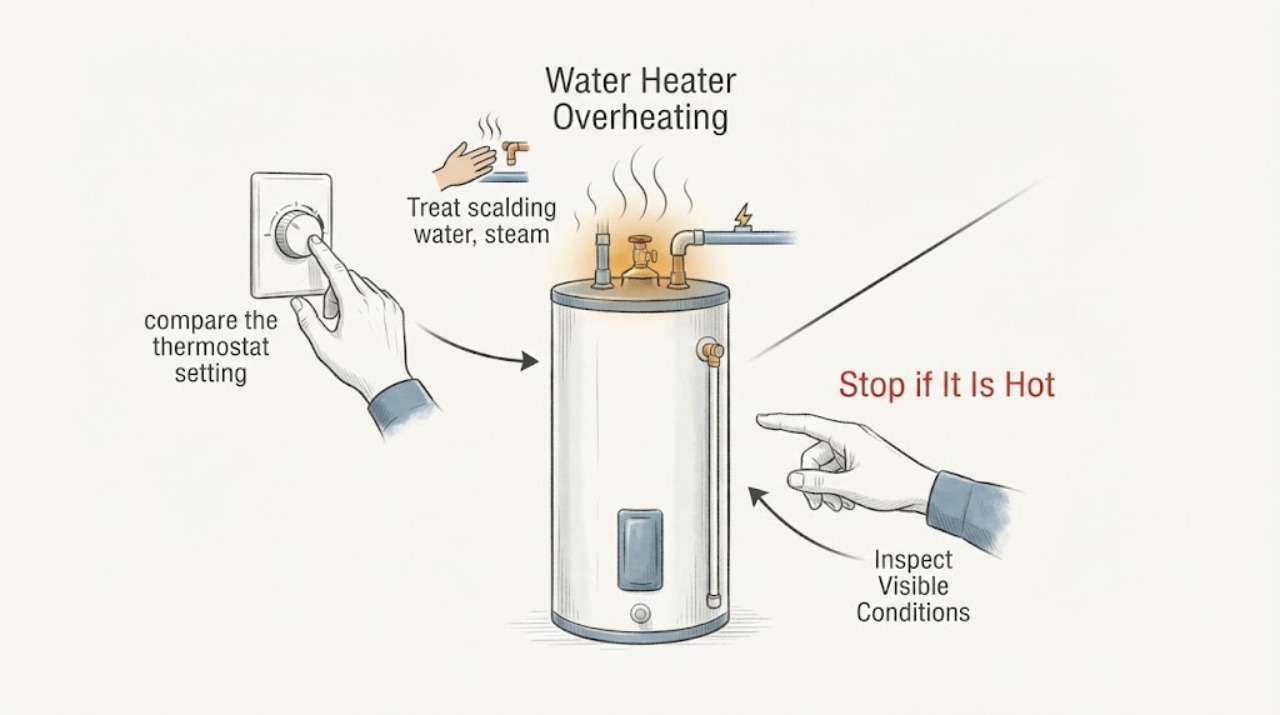
Water Heater Overheating
Treat dangerously hot water or a large temperature-and-pressure relief discharge as an emergency stop condition. Compare the thermostat with the manufacturer’s safe setting only from a safe position; normal settings with continued overheating, repeated high-limit trips, or relief discharge require qualified service.
-
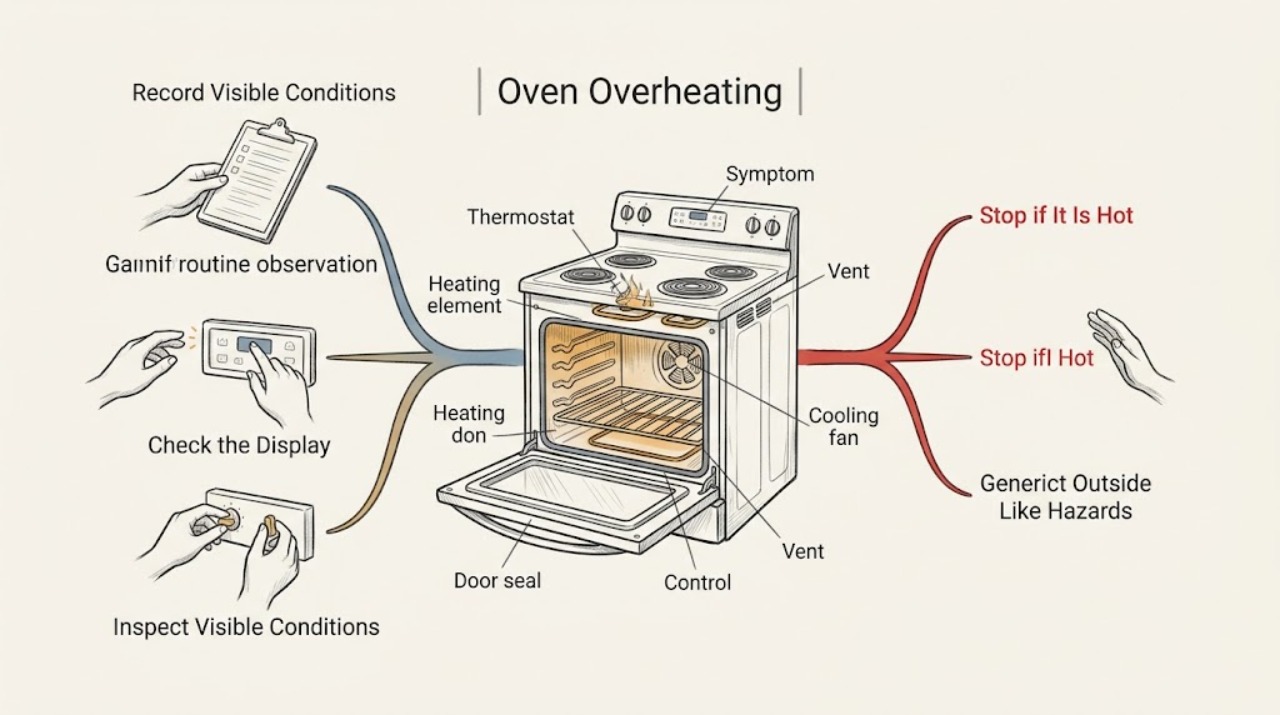
Westinghouse Oven Overheating: Separate Normal Heat from a Fault
A Westinghouse oven normally has hot surfaces, warm air at the door vent, and—on selected models—a cooling fan that continues after cooking until the oven cools. Overheating means the oven stays hot beyond the selected cycle, heats the cabinet or controls abnormally, or shows smoke, a burning odor, damaged food, an error, or a tripped circuit.
-
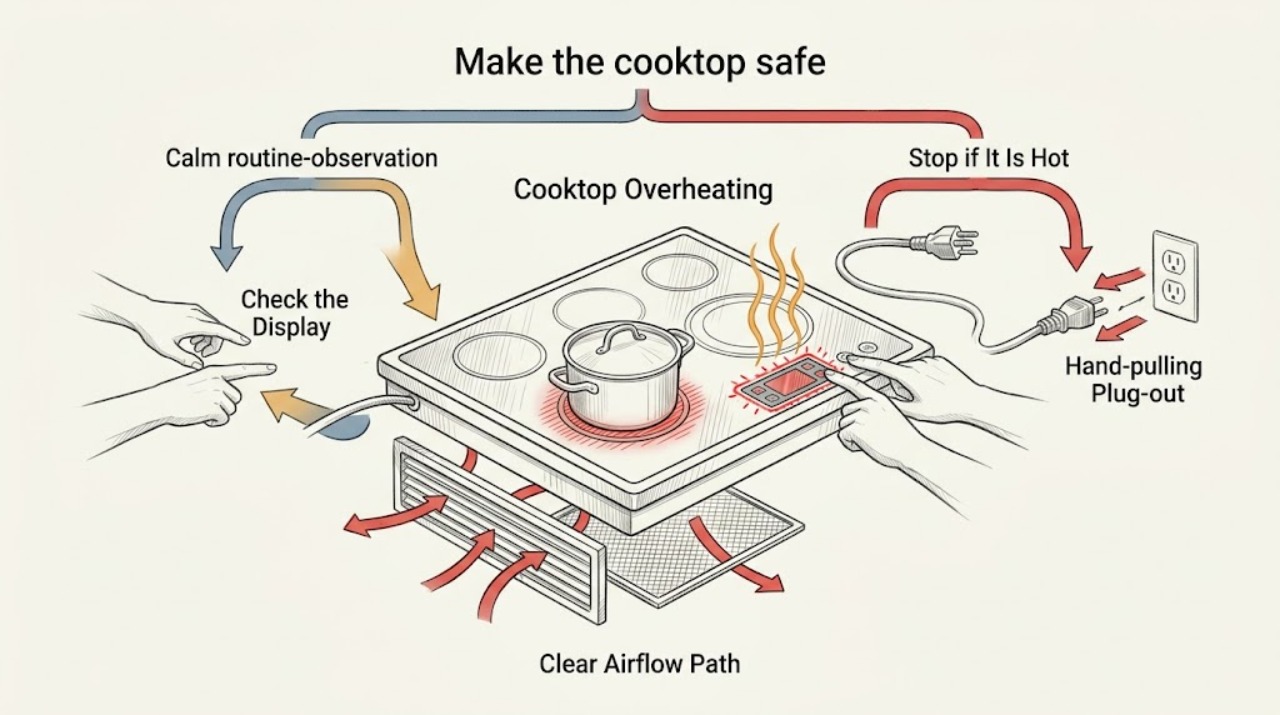
Whirlpool Cooktop Overheating: Safe Checks Before Service
First identify whether the Whirlpool cooktop is gas, radiant electric, or induction. A hot-surface H or HOT display after cooking can be normal residual heat, and induction power may reduce or a zone may switch off to protect the electronics.
-
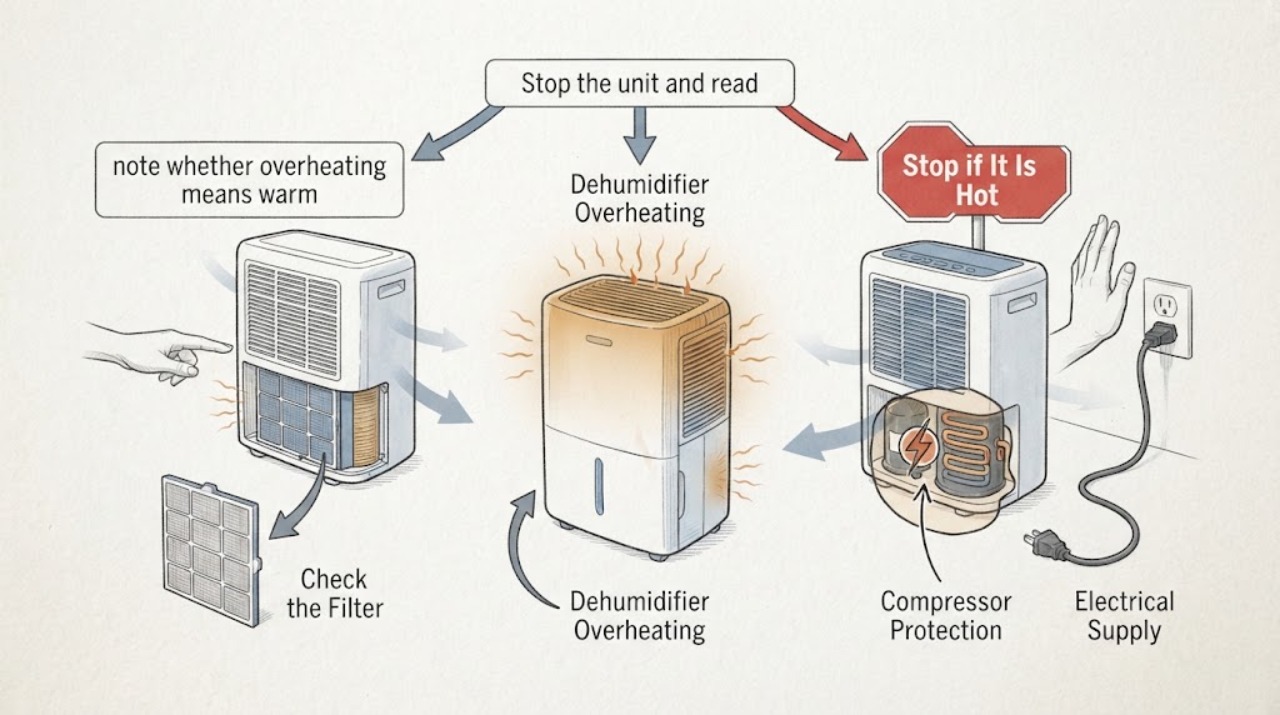
Whirlpool Dehumidifier Overheating: Safe Checks
Treat a Whirlpool dehumidifier that overheats as a safety issue. First check the serial against the official Whirlpool recall, then distinguish normal warm exhaust from a hot housing, hot plug, odor, or repeated thermal shutdown. With power off, restore clear airflow, a clean filter, a ventilated 5-35°C room, and a correctly seated tank. A recalled unit, electrical heat, smoke, or recurring shutdown must remain unplugged for qualified service.
-
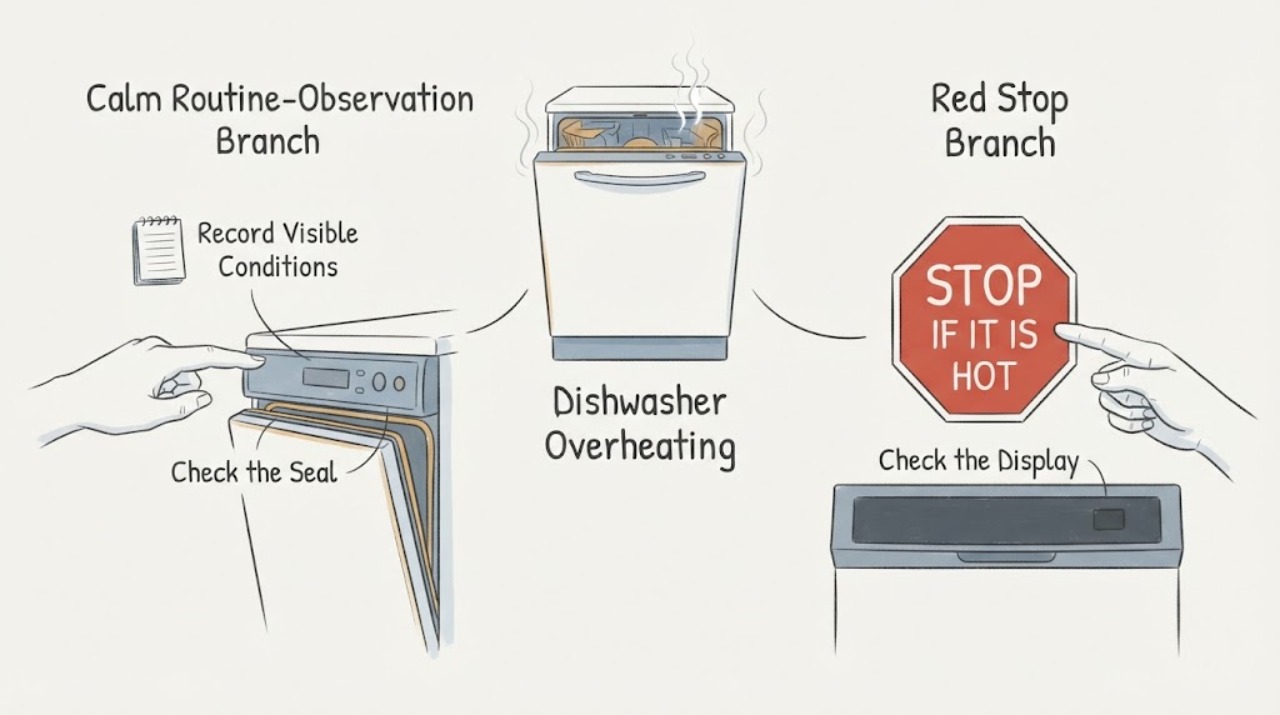
Whirlpool Dishwasher Overheating: Separate Normal Heat from an Unsafe Fault
Steam, a hot tub, or warm dishes can be normal on Whirlpool high-temperature, sanitize, and heated-dry options. First record the selected options and whether the heat is only during wash/dry. Cancel high-temp options, let the dishwasher cool, and inspect the door, vent, and display without touching the element. If plastic melts, the tub remains dangerously hot after power is off, a fault code appears, or a breaker trips, stop using the dishwasher and arrange service.
-
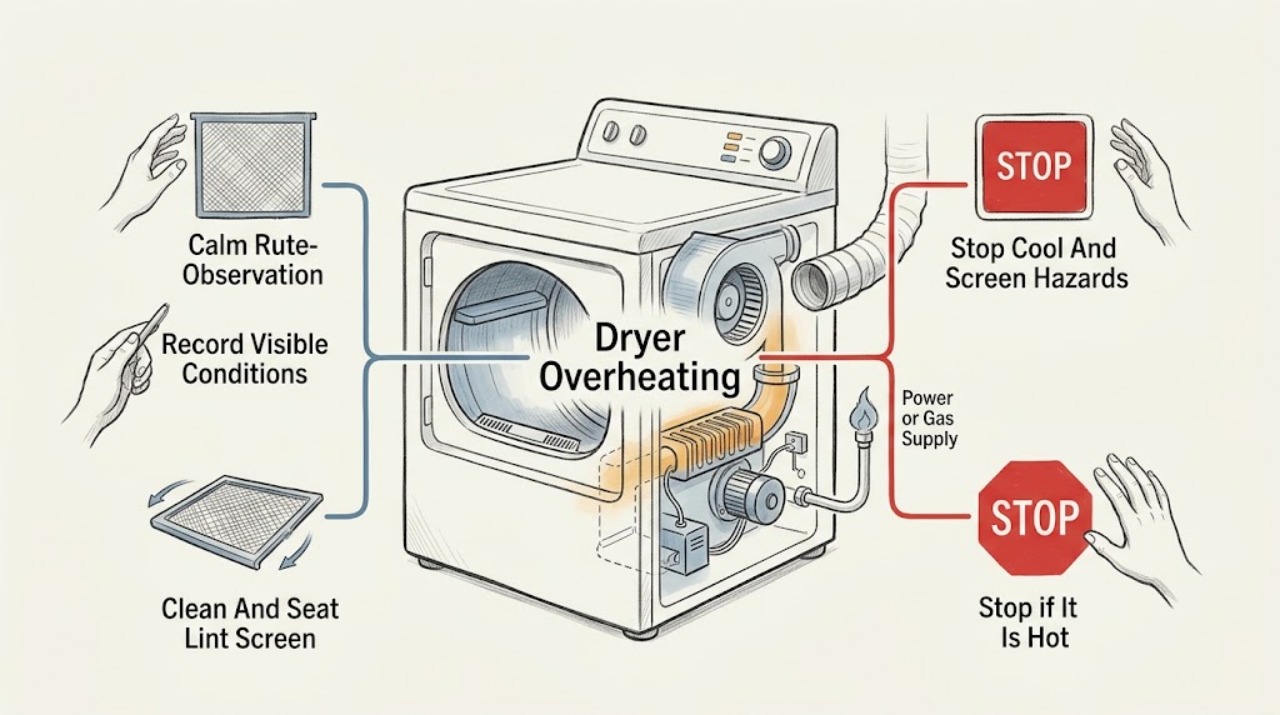
Whirlpool Dryer Overheating: Restore Airflow Before Replacing Parts
Stop the Whirlpool dryer and let it cool if the cabinet, clothes, plug, or exhaust feels abnormally hot. Treat smoke, a burning or melting smell, scorch marks, sparks or arcing, a hot or damaged cord or outlet, a gas smell, a tripped breaker, or a fire as an immediate stop condition; do not run another test.
-
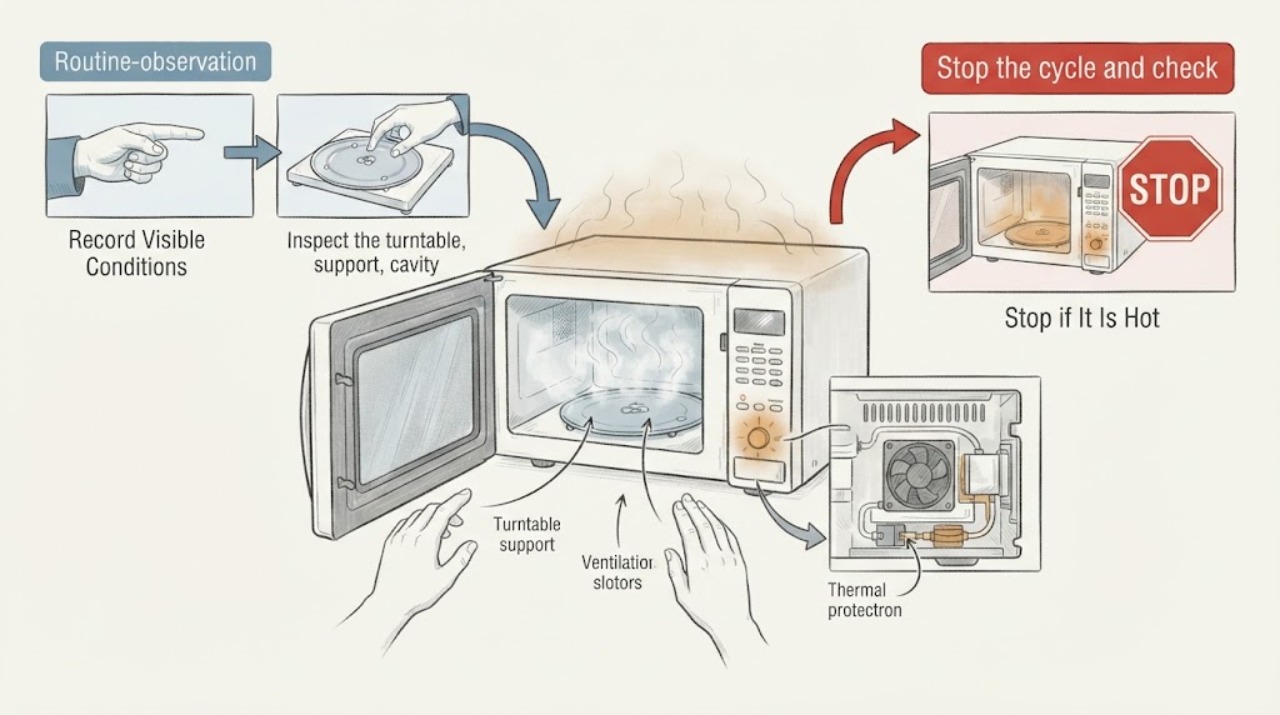
Whirlpool Microwave Overheating: Check Cook Time, Ventilation, and Safety Stops
If a Whirlpool microwave overheats food or the appliance becomes unusually hot, stop the cycle and check the programmed time, power level, container and load, turntable, and ventilation clearance. Whirlpool manuals describe power changes and normal fan behavior, but smoke, arcing, burning odor, a hot cabinet, or repeated thermal shutdown is a stop condition.
-
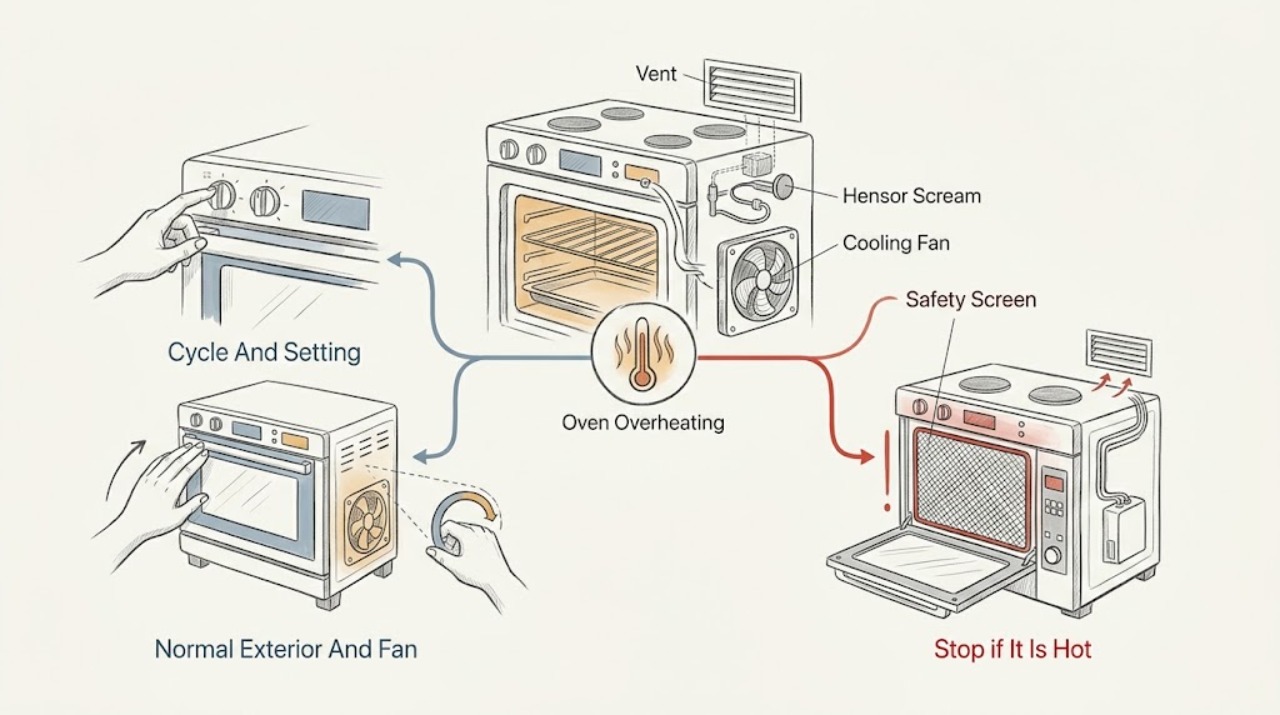
Whirlpool Oven Overheating: Separate Normal Heat from Temperature Runaway
A Whirlpool oven door, window, cooktop, and vent area can become hot during normal operation, and a cooling fan may continue after a cycle while the appliance reaches a safe temperature. Overheating is more concerning when food burns or smokes at a normal setting, the oven keeps heating after it should stop, the display or controls become abnormally hot, or the temperature is consistently higher than the selected setting.
-
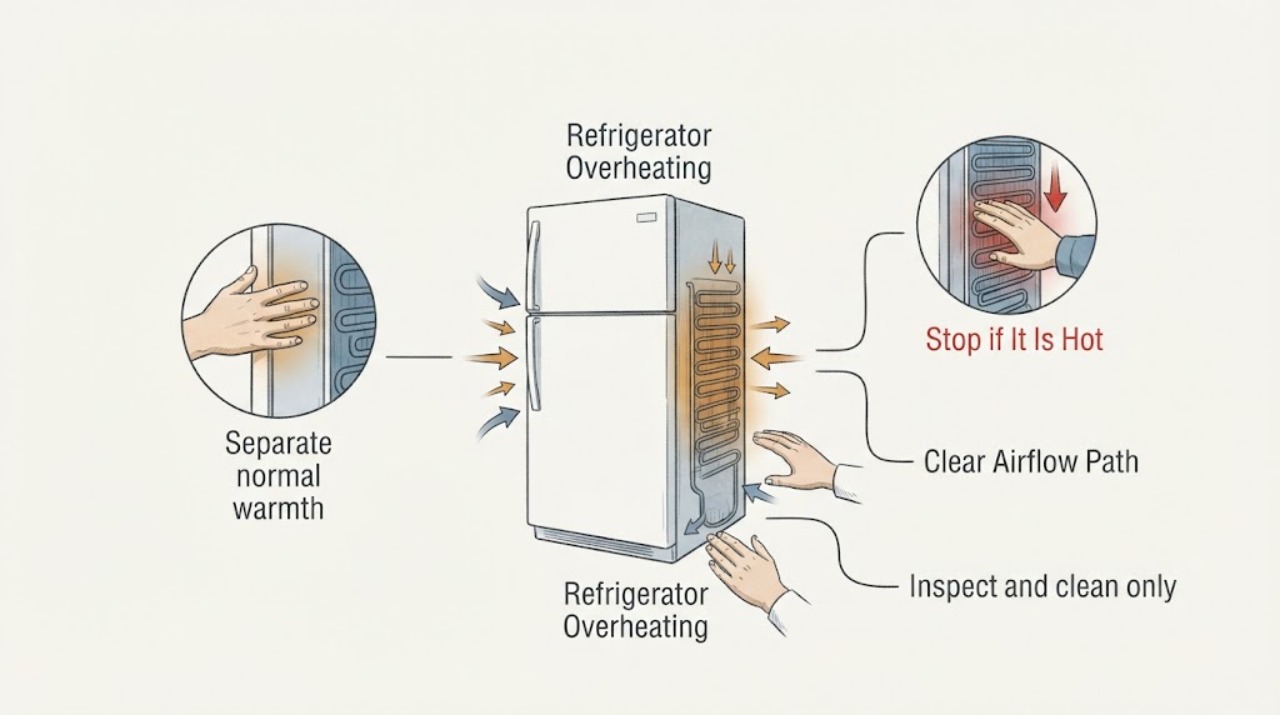
Whirlpool Refrigerator Overheating
A Whirlpool refrigerator cabinet can feel warm during normal heat transfer, especially at the mullion and after startup. If it stays unusually hot while cooling is weak, check airflow and condenser condition from the safe access points; persistent overheating with poor cooling needs service.
-
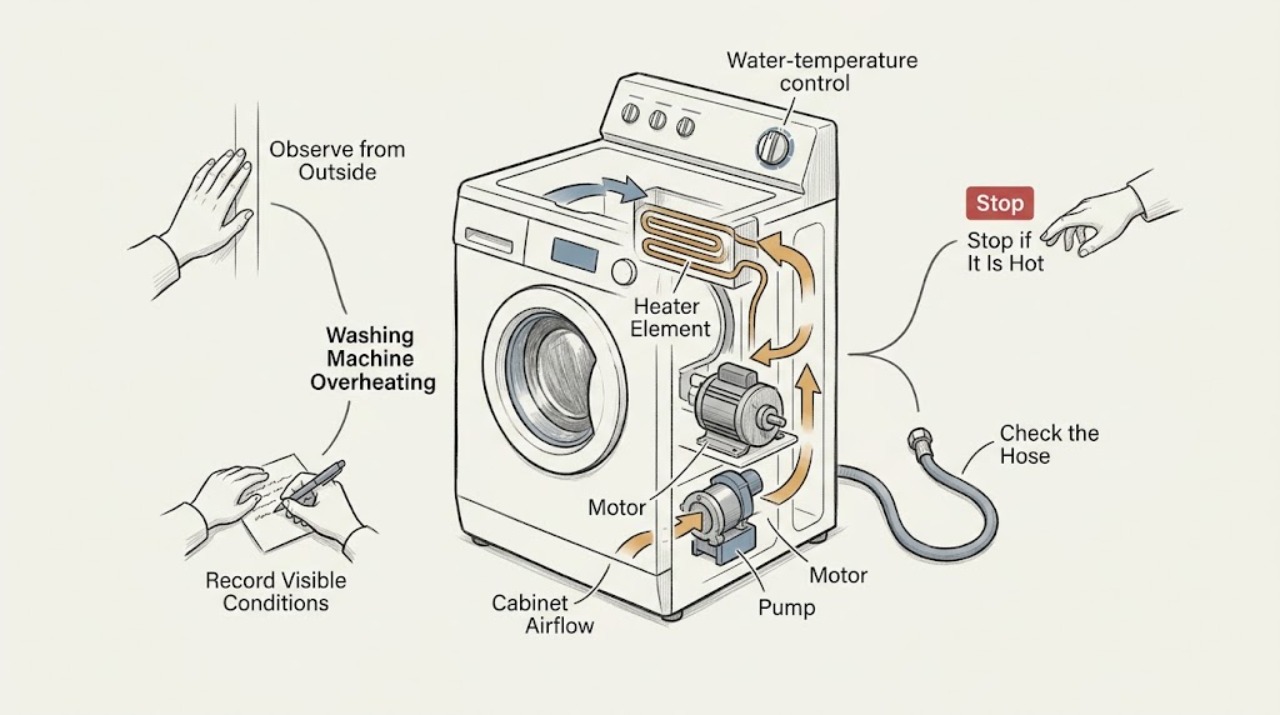
Whirlpool Washing Machine Overheating: Find the Heat Source Safely
First distinguish warm wash water or warm clothing from a hot cabinet, plug, cord, or burning odor. Whirlpool washers intentionally regulate incoming hot and cold water, and some models use a heater for Steam Clean or heated cycles.
-
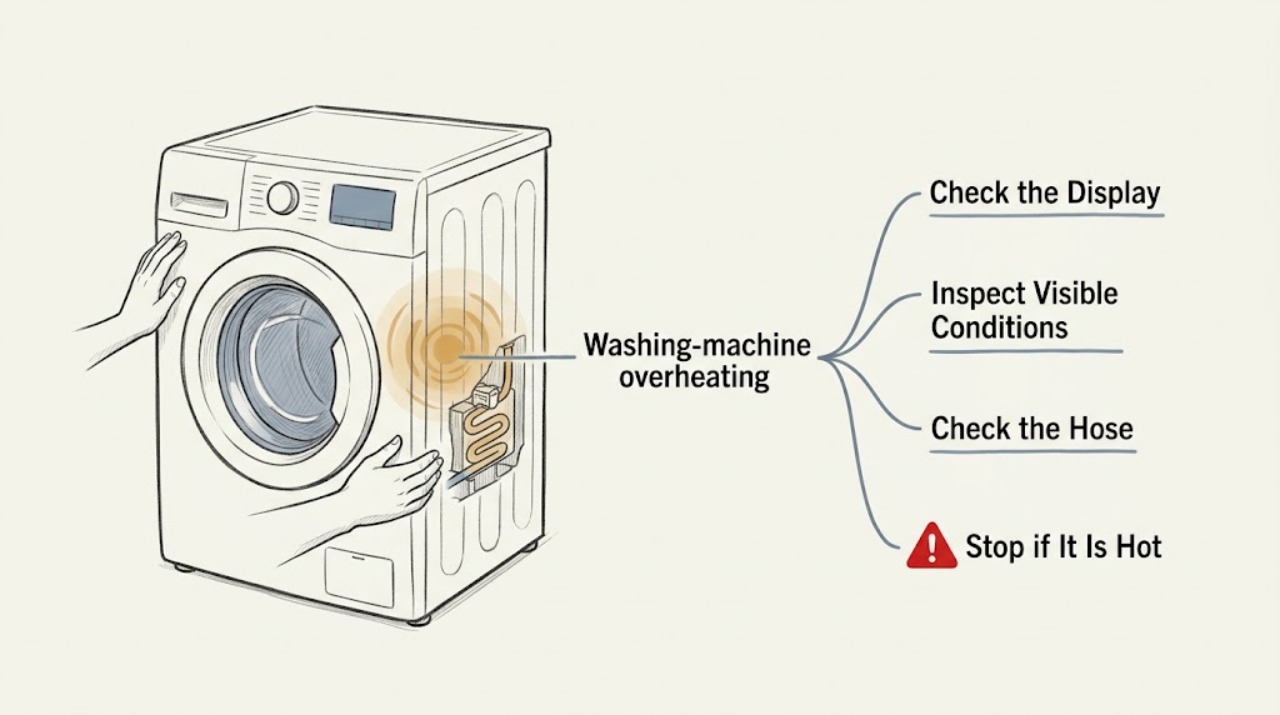
Why Is My Electrolux Washing Machine Overheating?
First establish whether the Electrolux washer is truly overheating or whether normal heating is being mistaken for a fault. Clothes and the final rinse can be cold even when the wash water was heated, and the closed door may feel warm during a hot wash.
-
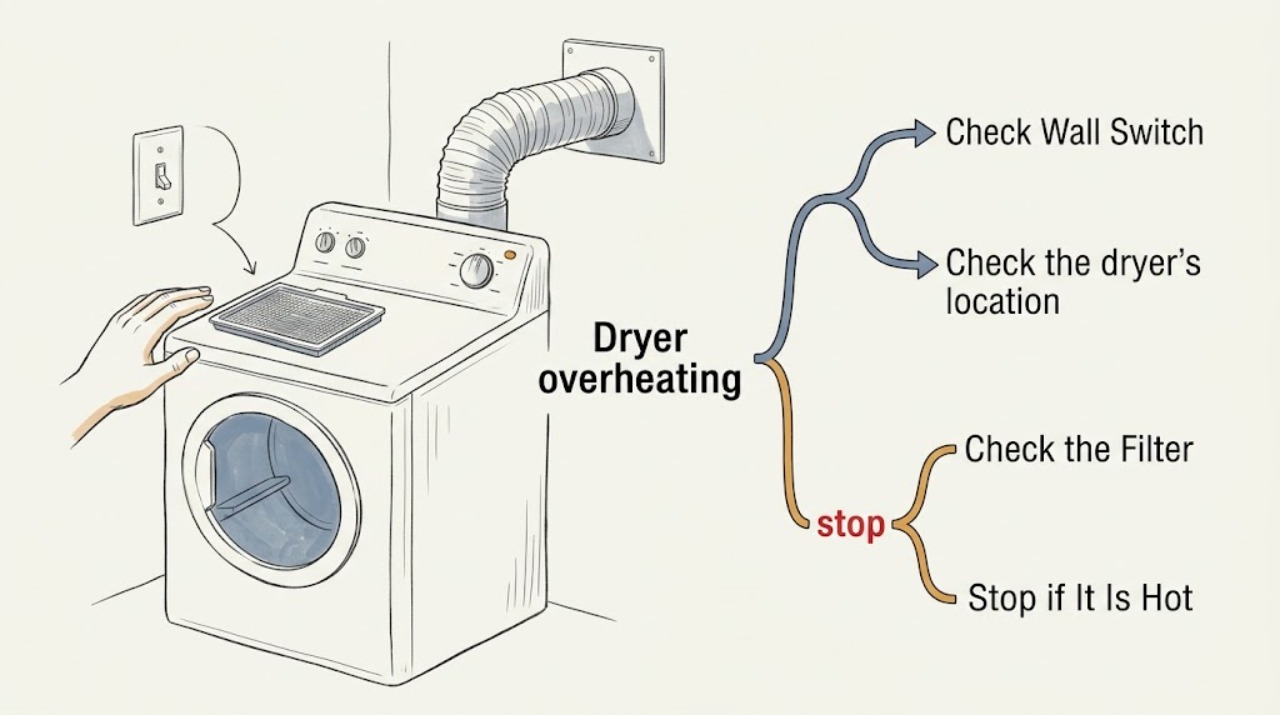
Why Is My GE Dryer Overheating?
Stop a GE dryer that is excessively hot, shutting off from heat, producing a burning smell, or making smoke. Let it cool, then clean the lint filter and visually check the exhaust duct and outside wall cap for lint, crushing, kinks, or blockage.
-
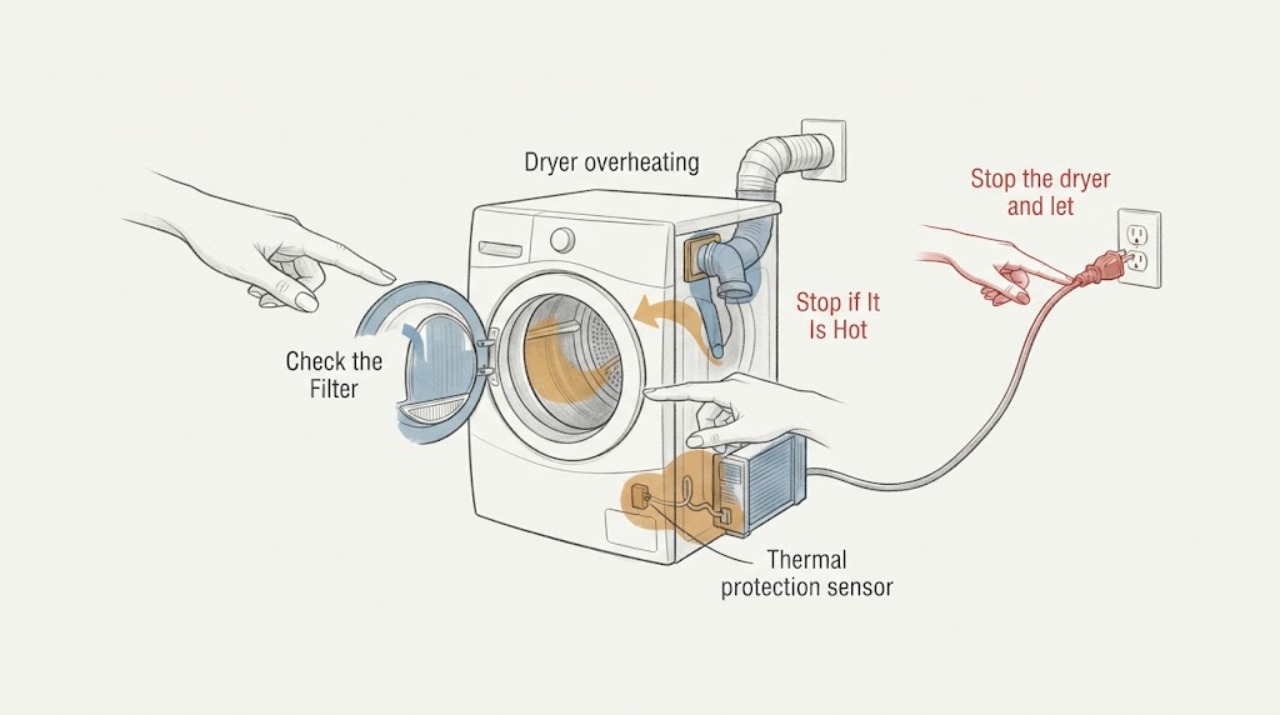
Why Is My Hoover Dryer Overheating?
Treat a Hoover dryer that feels excessively hot, gives off a burning smell, or shuts down from heat as a safety problem. Stop the cycle, let the drum cool without opening panels, and disconnect the mains before inspecting anything.
-
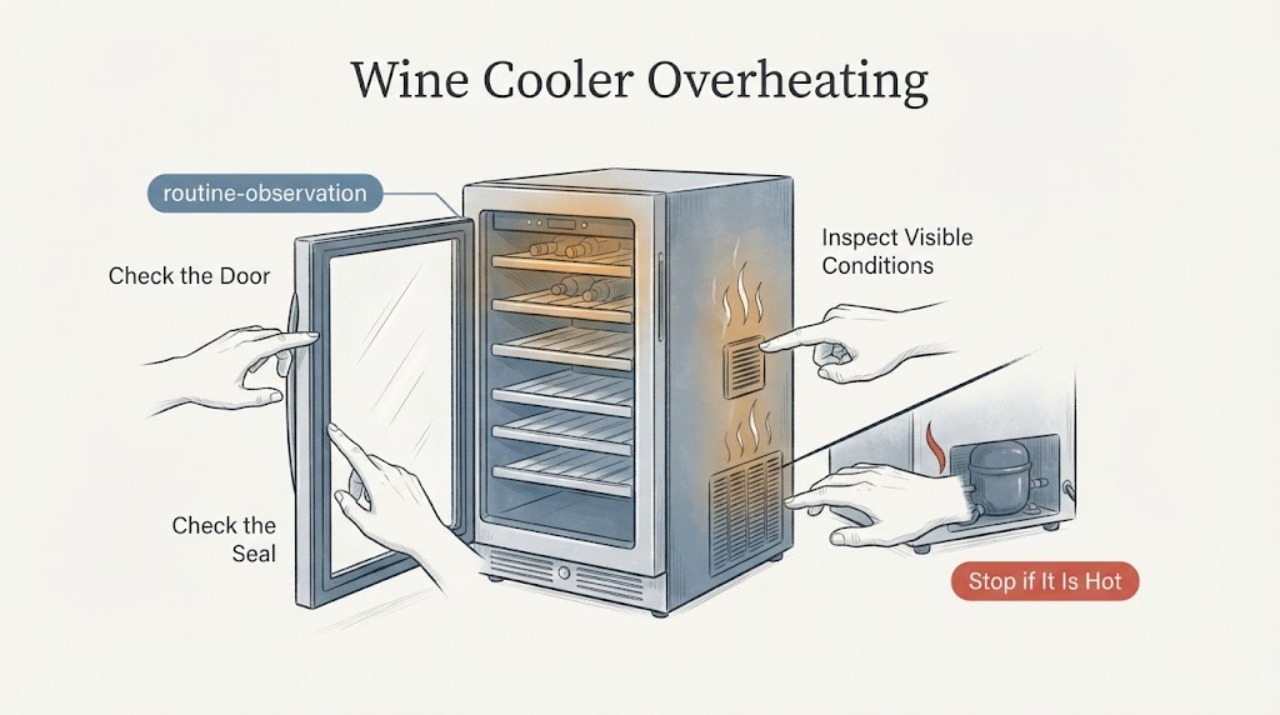
Wine Cooler Overheating: Check Ventilation, Door, and Temperature
A wine cooler that feels hot or runs continuously may be working harder because the room is warm, the door is opened often, warm bottles were added, the controls are set too cold, or the base grille and surrounding clearance are blocked. Check those external conditions and allow time for temperature to stabilize.
-
Wolf Gas Oven Overheating: Separate Normal Cycling from a Safety Fault
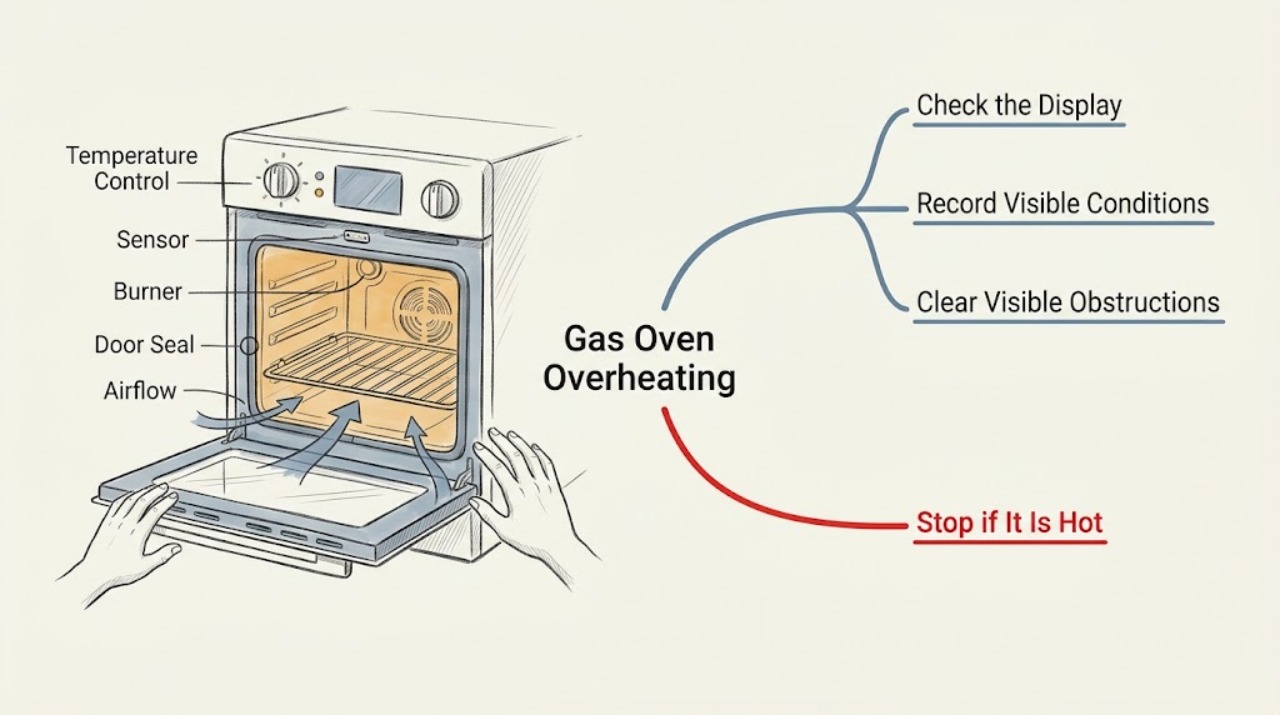
A Wolf gas oven can feel hotter than its setpoint while it cycles, and food can cook hot because of the selected mode, rack position, pan material, or temperature setting. That is different from continuous heating after the control is off, an abnormal flame, smoke, a carbon-monoxide alarm, a gas odor, a burning odor, or surfaces becoming dangerously hot.
-
Wolf Oven Overheating: Separate Normal Heat, Cooling, and Faults
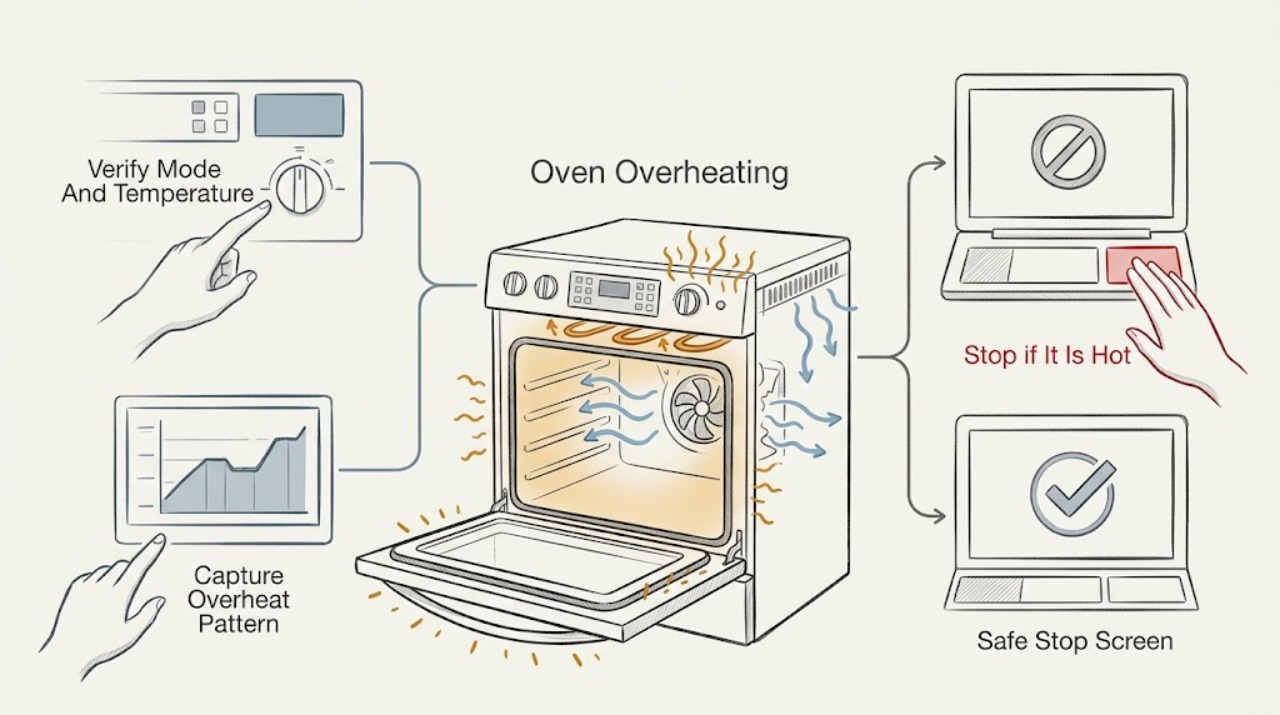
A Wolf oven may feel hot or continue to run its cooling fan after cooking as part of normal heat management, and the internal temperature naturally cycles above and below the setpoint. Treat it as overheating when heating does not stop, temperature control is lost, the cabinet or surrounding enclosure becomes abnormally hot, the fan fails or makes a new severe noise, or there is smoke, a burning smell, gas odor, arcing, or repeated electrical shutdown.