
Repair problem
Overheating Troubleshooting Guides – Page 2
Published FixGraph guidance for diagnosing and responding to overheating.
Matching published guides
Choose a guide that matches the service, equipment, and conditions you are seeing.
-
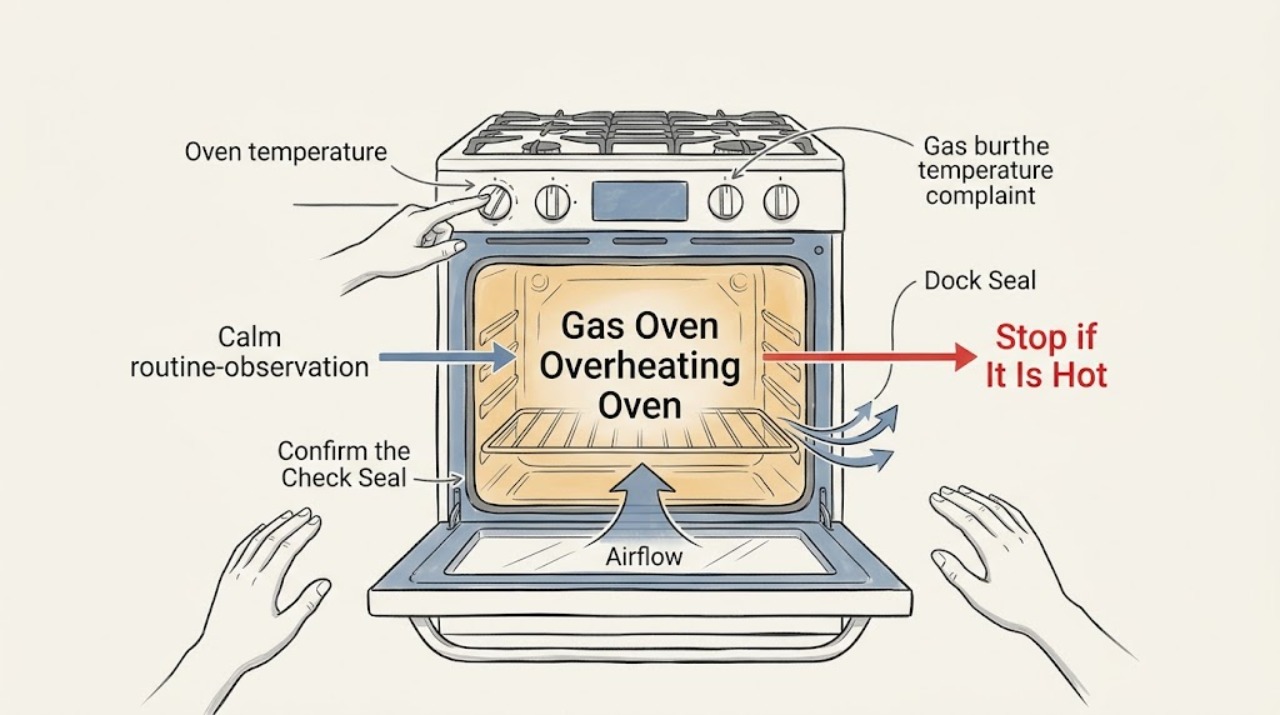
GE Gas Oven Overheating: Safe Checks Before Service
Stop using a GE gas oven immediately if you smell gas, see an unusually large or unstable flame, see smoke or fire, or the oven is heating with the control off. Leave a building with a suspected gas leak and call the gas supplier or emergency services from a safe location; do not operate switches or the appliance.
-
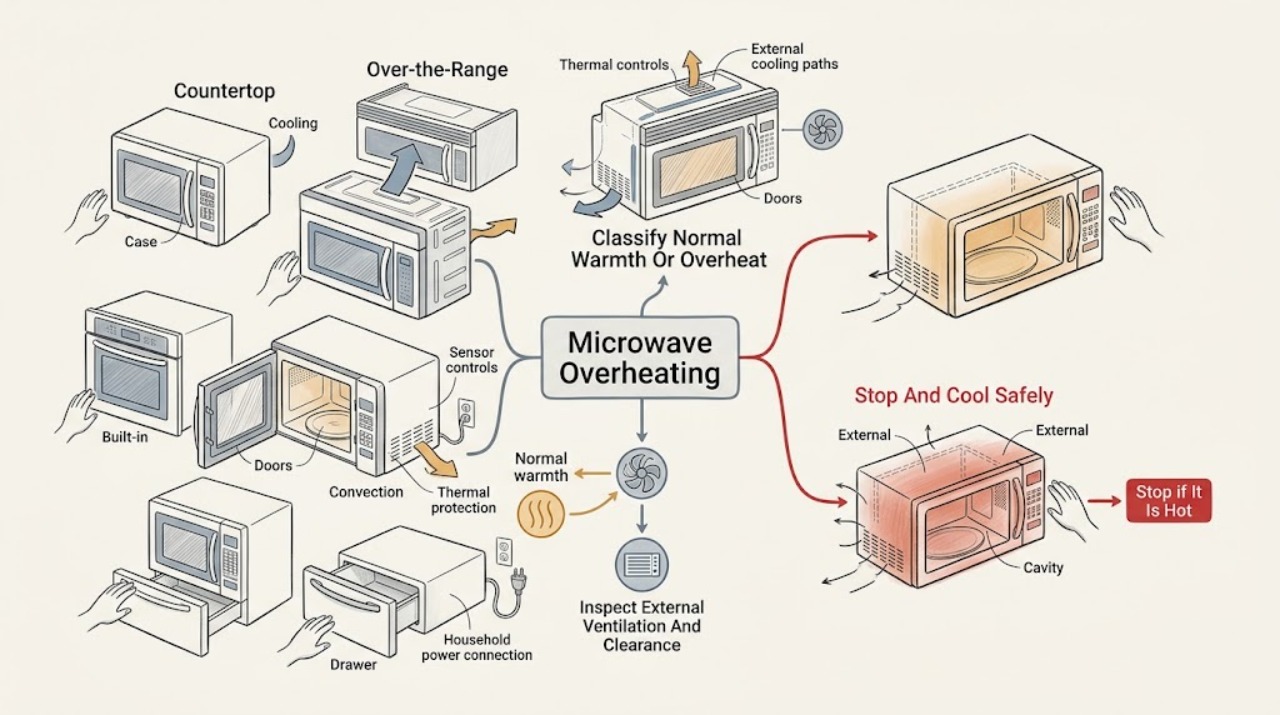
GE Microwave Overheating: Separate Normal Heat from a Fault
A warm cabinet, cavity floor, door steam, or a cooling fan after cooking can be normal on a GE microwave, especially after extended cooking, convection use, or heat from an over-the-range cooktop.
-
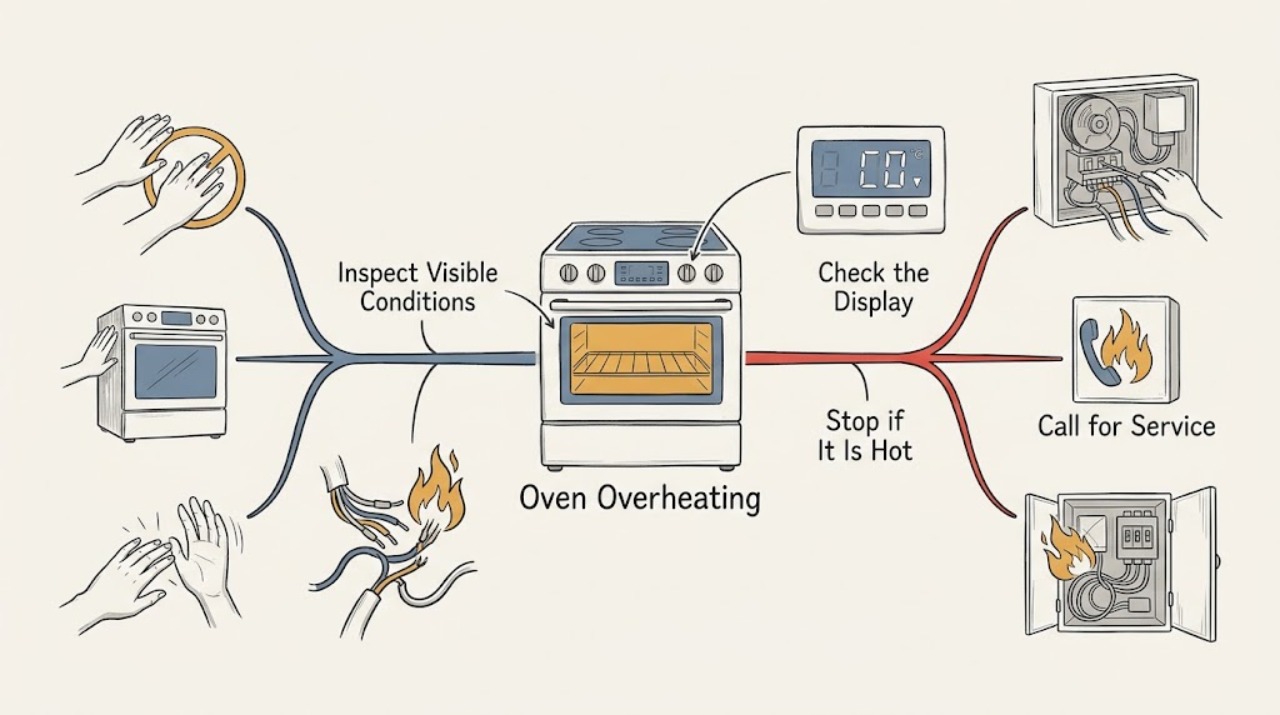
GE Oven Overheating: Separate Normal Cycling from a Dangerous Fault
If a GE oven is actually continuing to heat, shut it off and stop using it. If it ignores Cancel or Off, disconnect power only when this can be done safely; for a gas model, turn the oven control off and do not touch electrical switches if you smell gas.
-
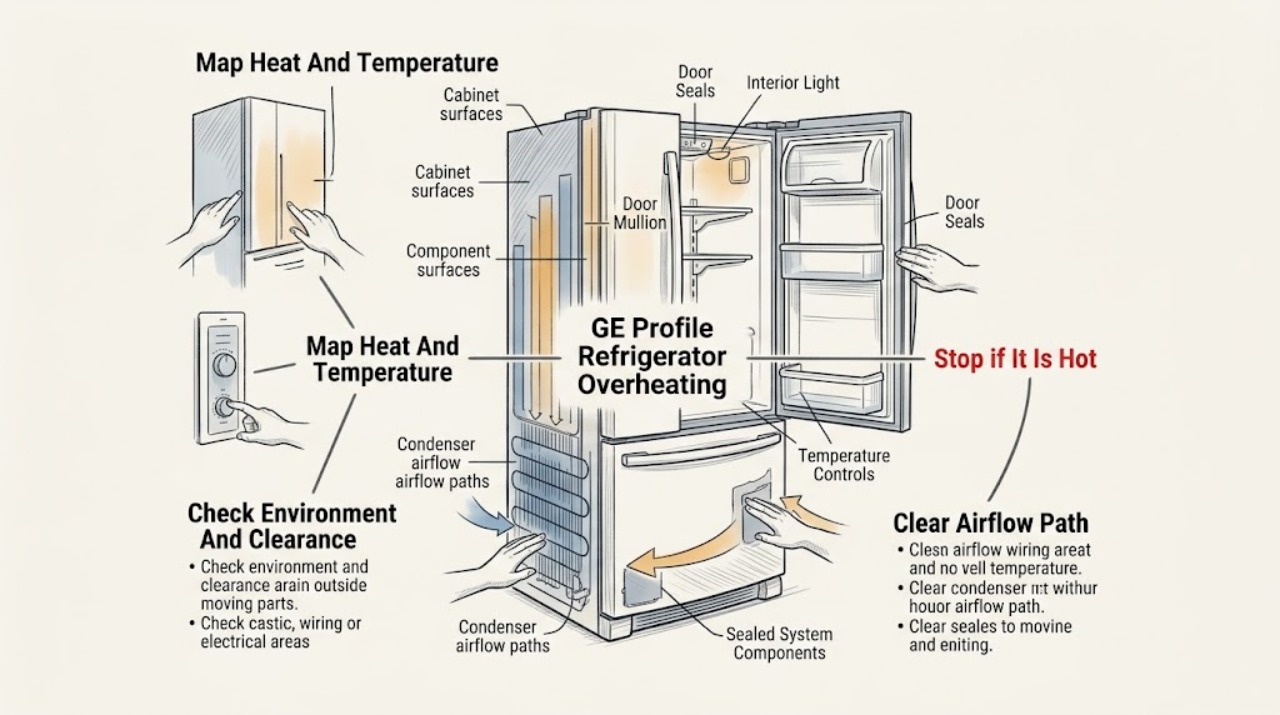
GE Profile Refrigerator Overheating: Separate Normal Cabinet Heat from a Real Fault
First identify what is hot and whether the food is staying at the model's set temperature. GE says warm or hot air from the bottom, sides, or rear can be normal on auto-defrost refrigerators, and the area between doors can feel hot because the system circulates warm liquid there to prevent condensation.
-
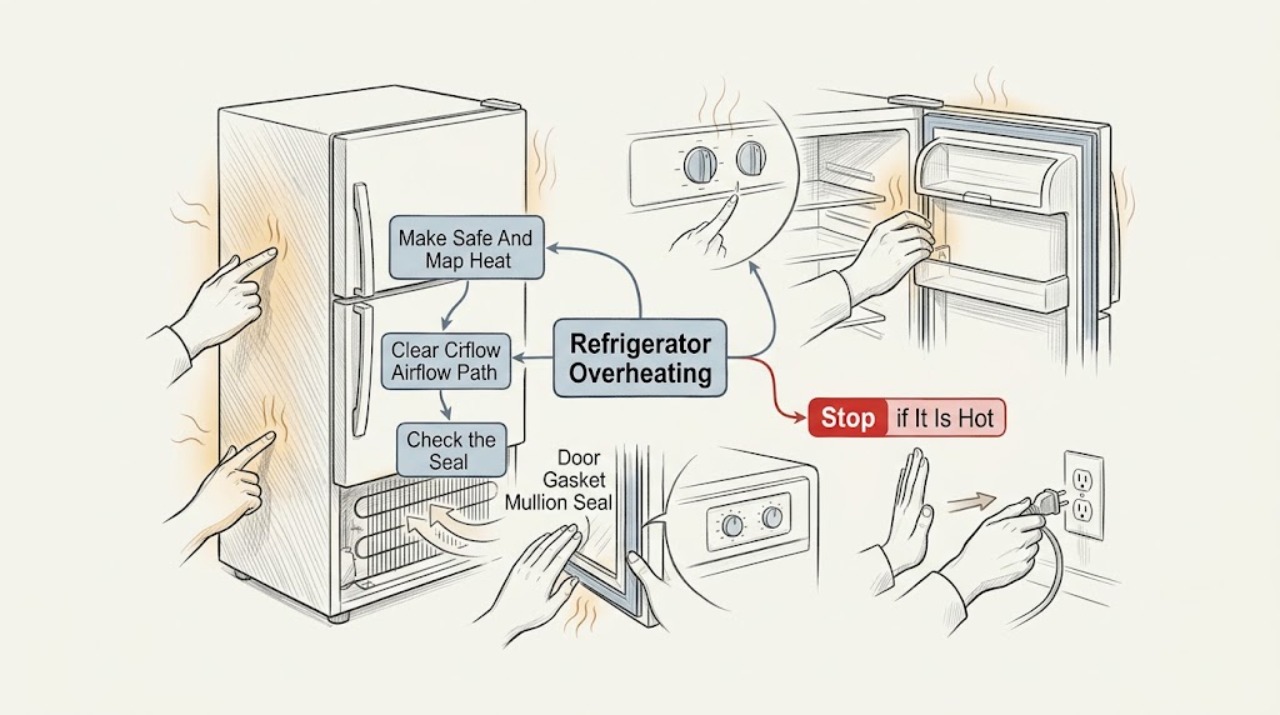
GE Refrigerator Overheating: Separate Normal Warmth from a Cooling or Electrical Problem
Warm or hot air at the bottom, sides, or rear of a GE refrigerator, and warmth at the front edge or between the doors, can be normal because the appliance rejects heat and may use a warm mullion to prevent condensation. GE also says compressors are designed to run much of the time and may approach continuous operation in hot or humid conditions.
-
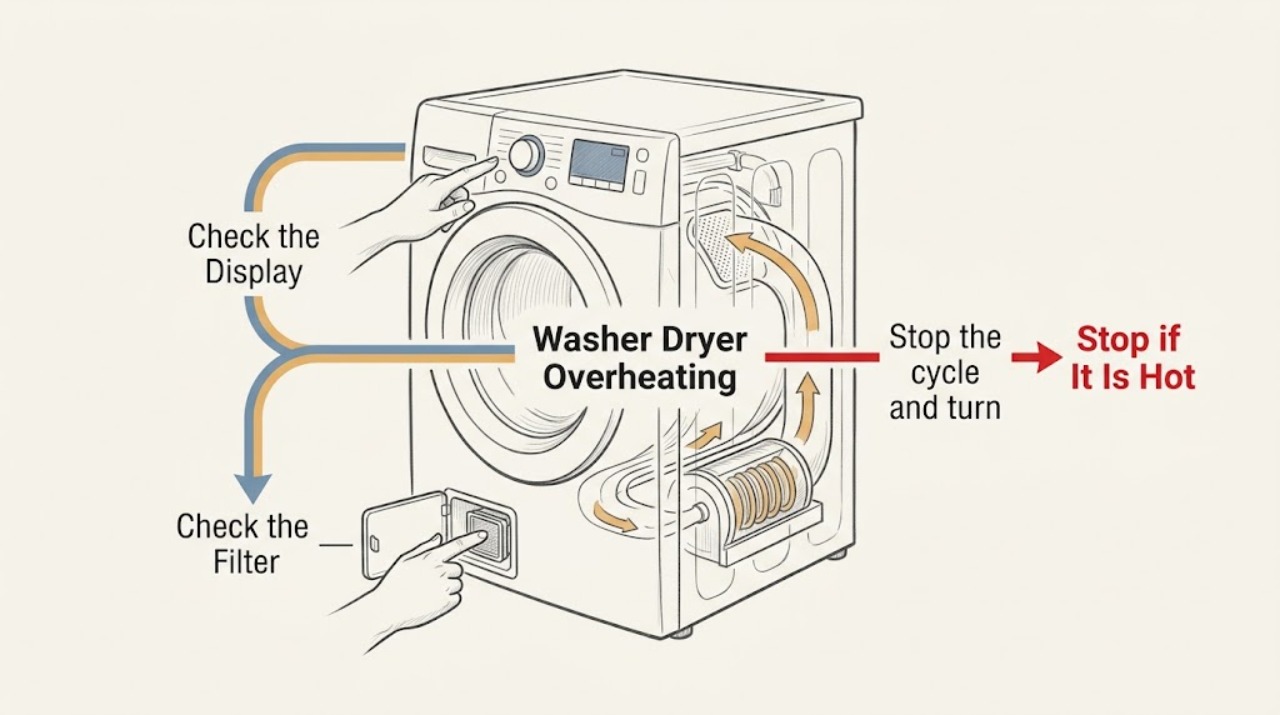
GE Washer Dryer Overheating
Stop the GE washer dryer immediately if there is smoke, a burning smell, scorching, sparking, a damaged cord, or a circuit trip. If the heat is on the dryer side, the first user-level cause to investigate is restricted airflow: clean the lint filter, inspect the metal exhaust duct for a kink or collapse, check the outside wall cap for an obstruction, and keep the dryer air intake clear.
-
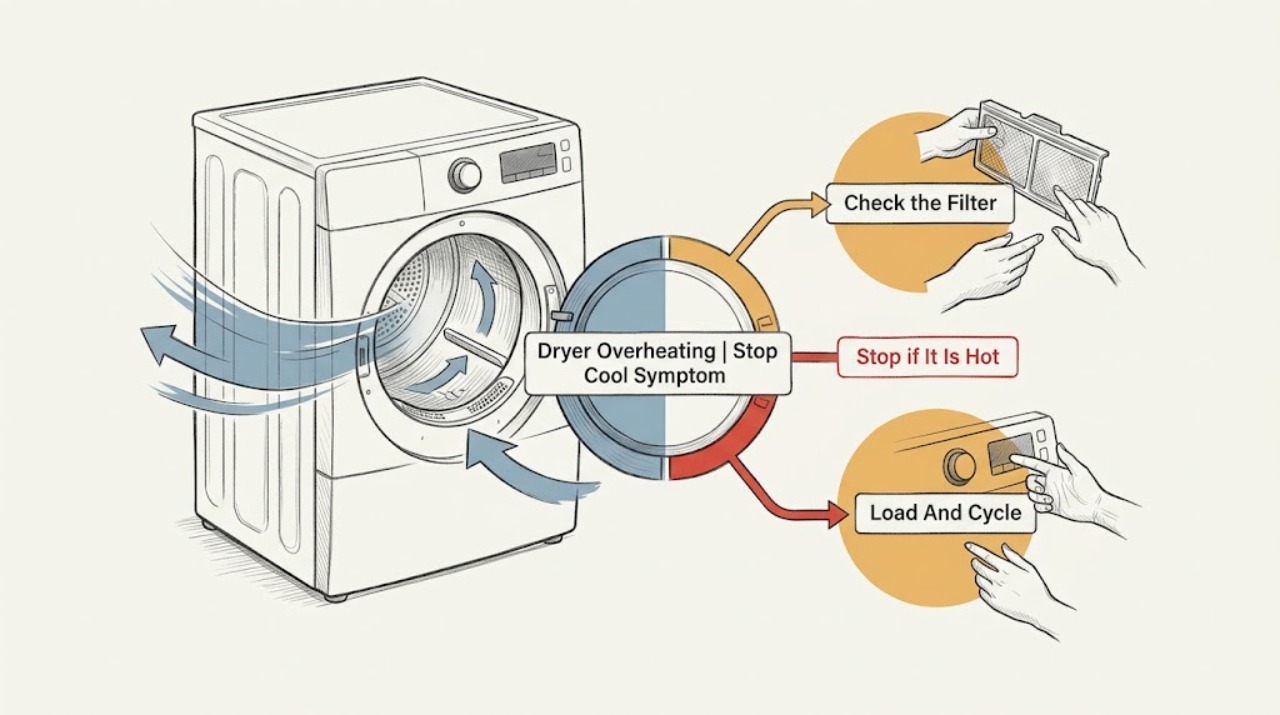
Haier Dryer Overheating
Stop using a Haier dryer that is unusually hot, smells scorched, smokes, or trips its protection. After it is off and cool, clean the lint filter, inspect the accessible exhaust outlet and duct for lint or blockage, reduce an overloaded load, and confirm the selected cycle is appropriate.
-
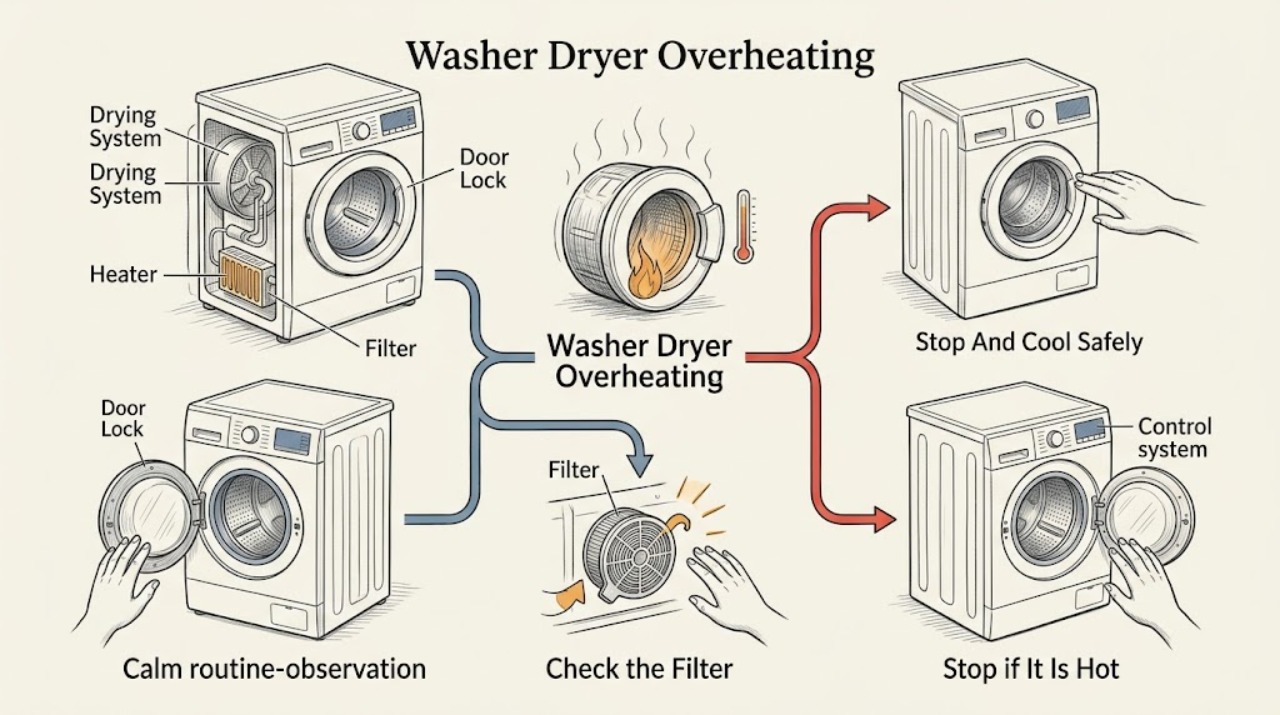
Haier Washer Dryer Overheating: Stop Safely, Check Load and Airflow, Then Escalate
If a Haier washer-dryer smells burnt, smokes, sparks, becomes unusually hot, or keeps heating after you stop it, stop the cycle and disconnect power only if you can do so without touching a hot or damaged cord; close the water supply if the model's service guidance calls for it. Do not open a hot locked door or pour water into the appliance.
-
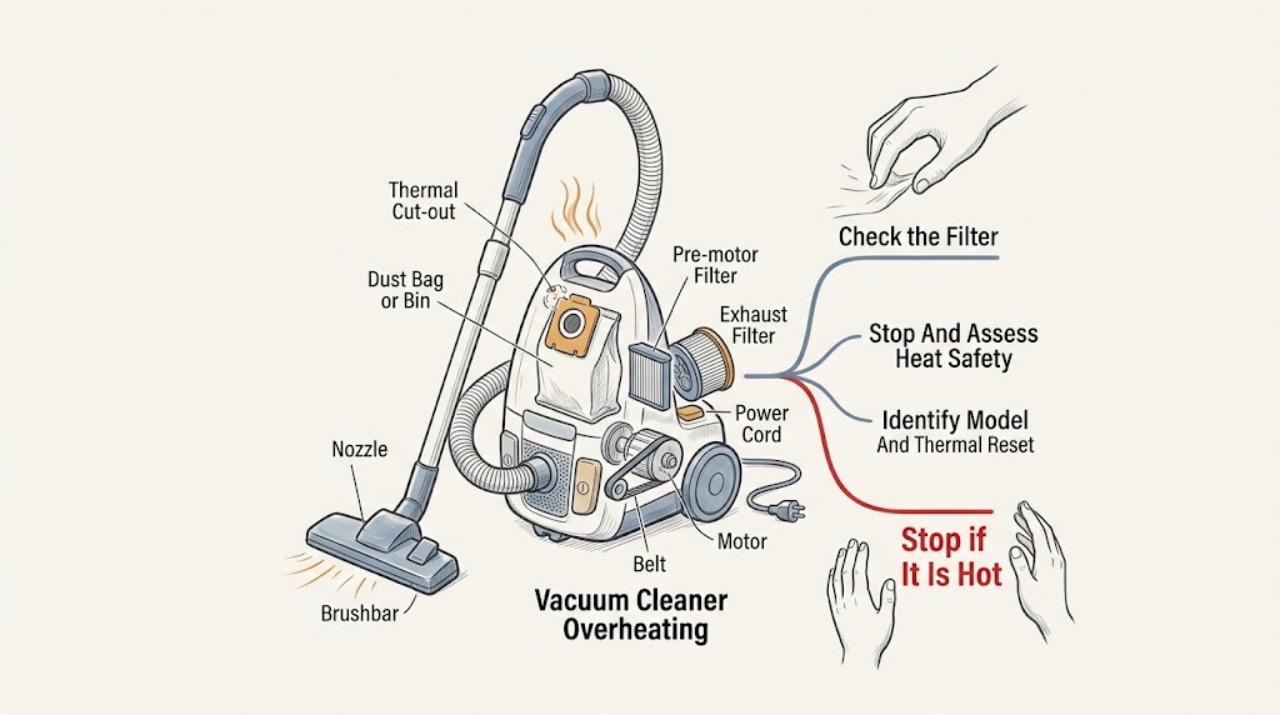
Hoover Vacuum Cleaner Overheating: Stop, Cool It, and Check Airflow Safely
Stop the cleaner, switch it off, unplug it or remove it from its charger, and let it cool before examining anything. Warm exhaust air alone can be normal because a vacuum uses airflow to cool its motor, but a cut-out, loss of suction, hot electrical smell, smoke, sparks, damaged cord, or repeated overheating is not a reason to keep running it.
-
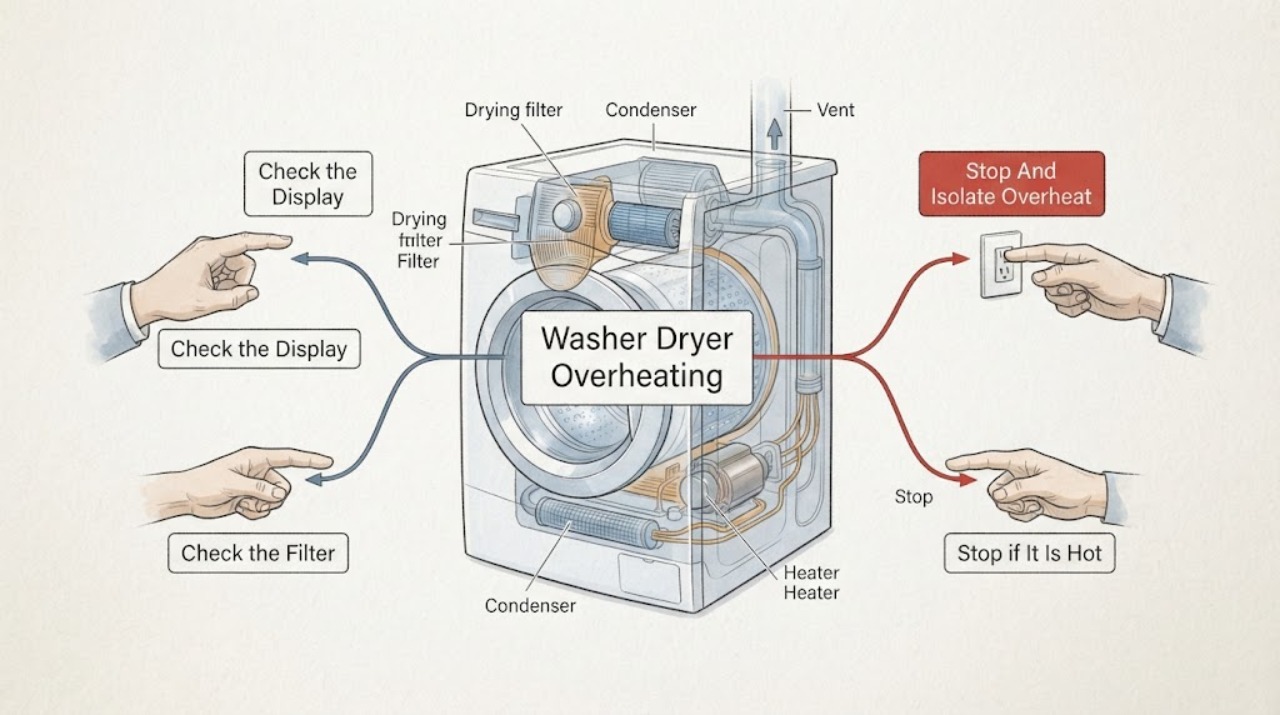
Hoover Washer Dryer Overheating: Stop Safely, Check Airflow, and Know When to Call
If a Hoover washer-dryer produces smoke, a burning or melting smell, sparks, a hot or damaged plug or outlet, uncontrolled heating, or a breaker trip, stop the cycle and disconnect power only from a safe position. Do not open a hot door, pour water into the appliance, or restart it to see whether the smell returns.
-
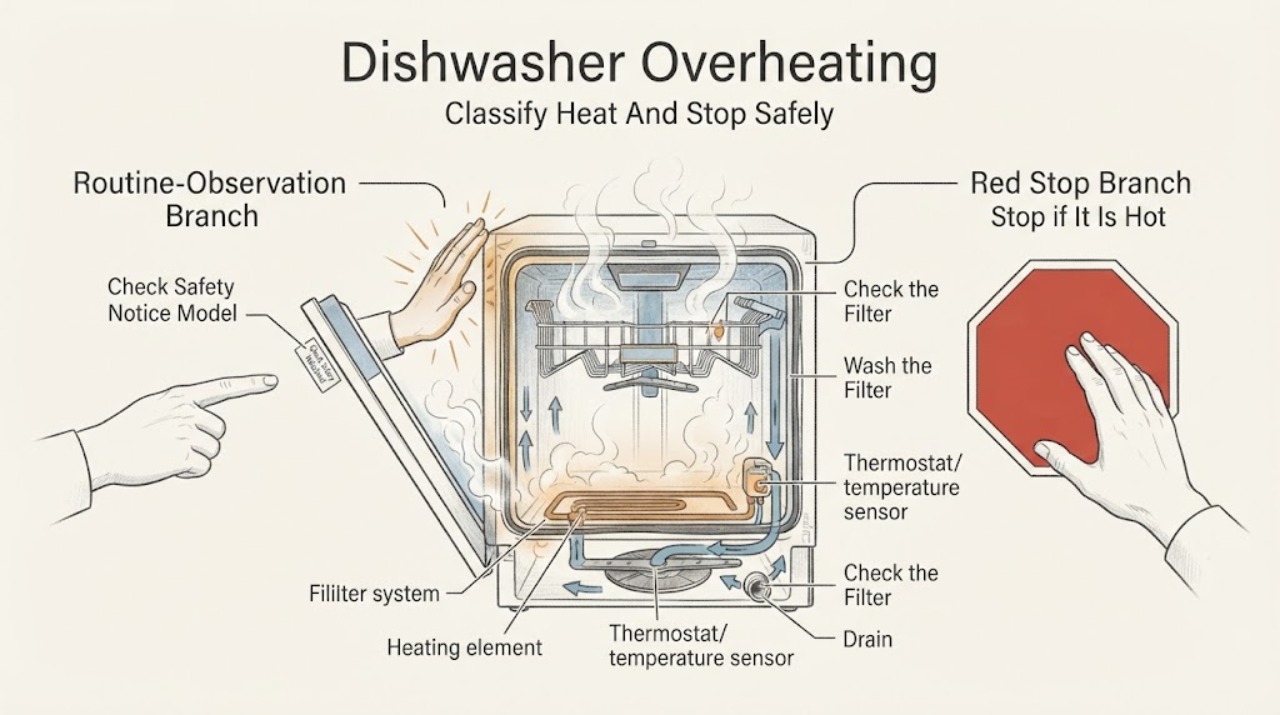
Hotpoint Dishwasher Overheating: Separate Normal Steam from a Stop-Use Fault
First distinguish normal hot water or steam during and shortly after a wash from an actual overheating symptom. Hotpoint's product guide warns that hot steam may escape when the door is opened, so wait before opening and do not judge temperature by touching the interior or heater.
-
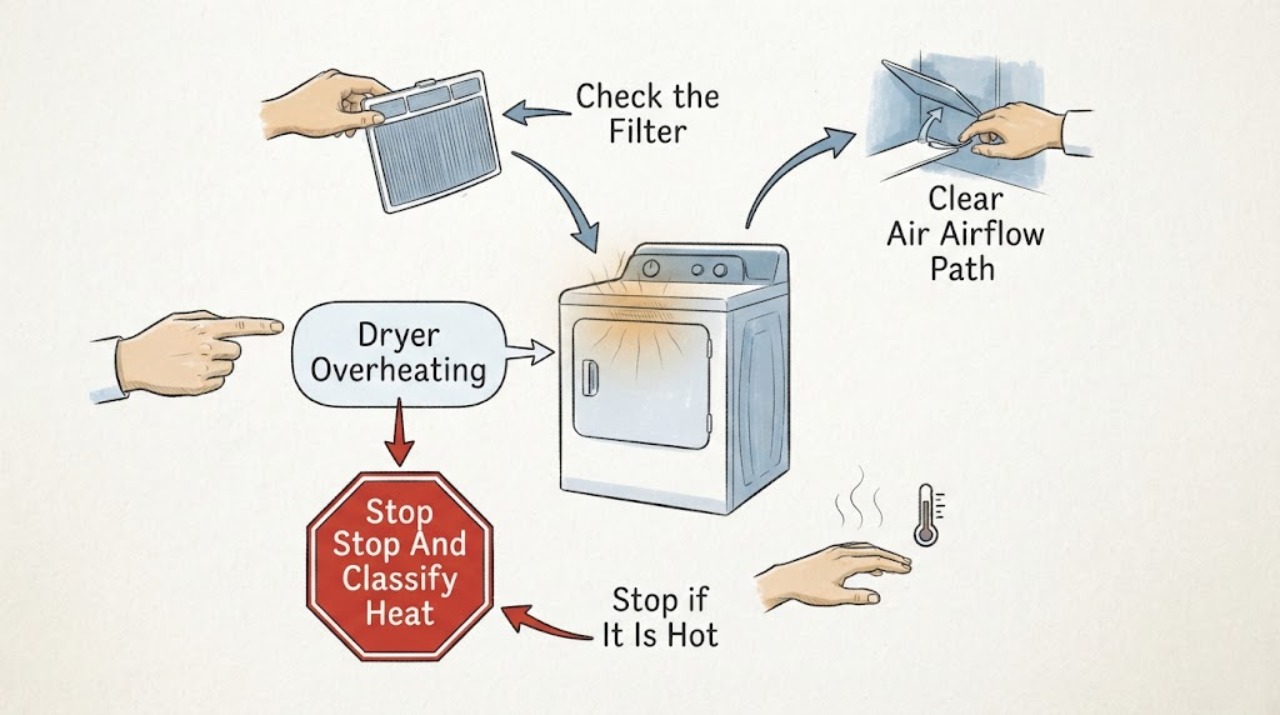
Hotpoint Dryer Overheating
A Hotpoint dryer that feels hotter than usual may have restricted airflow from a lint filter, condenser, evaporator filter, or vent hose, an overloaded drum, or an internal heating, thermostat, sensor, or motor fault. Stop the programme, unplug the dryer when safe, and let it cool before checking only the accessible filter, container, condenser or evaporator filter, and visible vent path for the model.
-
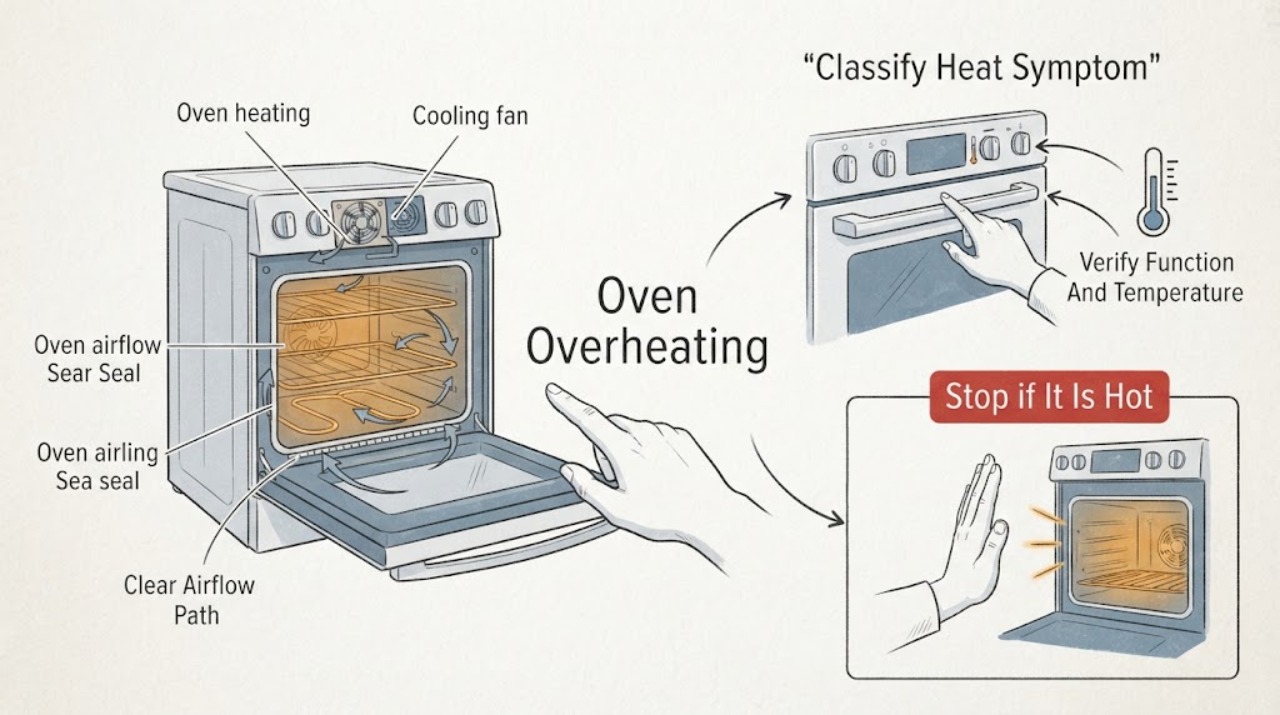
Hotpoint Oven Overheating
If a Hotpoint oven seems to overheat, first separate normal residual heat or a cooling fan from true uncontrolled heating. Confirm the selected function and temperature, compare the result with the recipe or model manual, and note whether food burns, the temperature overshoots, or the display fails to respond.
-
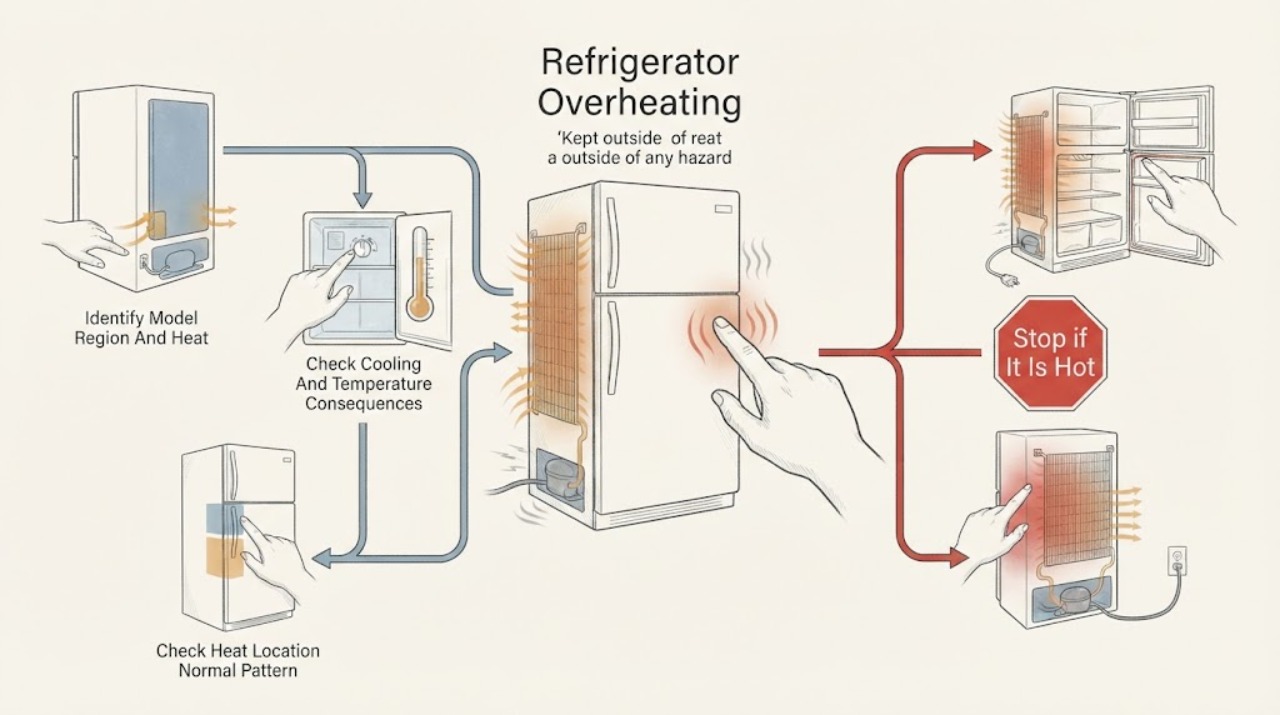
Hotpoint Refrigerator Overheating: Separate Normal Cabinet Heat from a Fault
A warm Hotpoint refrigerator cabinet is not automatically overheating. Official refrigerator guidance says warm or hot air from the bottom, sides, or rear can be normal on fan-cooled, auto-defrost designs, and warmth around or between doors can come from the heat-rejection system that prevents condensation.
-
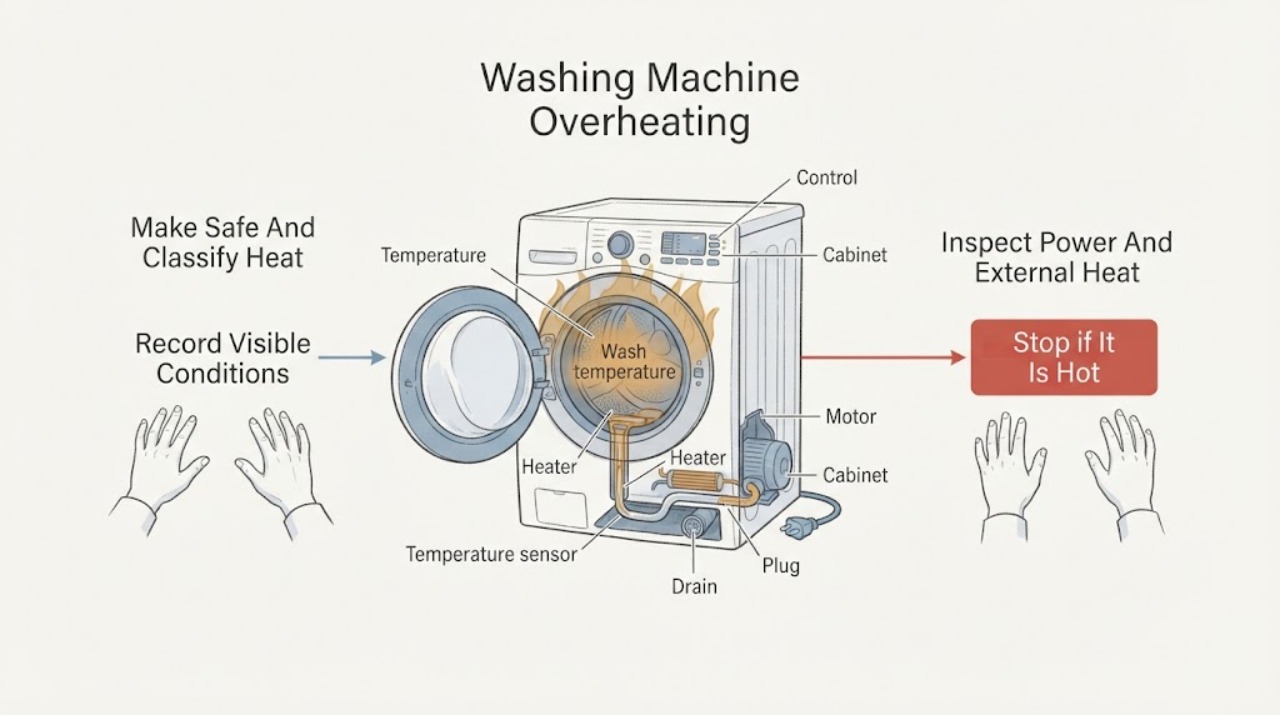
Hotpoint Washing Machine Overheating: Separate Normal Heat From a Dangerous Fault
First separate normal heat in the selected wash water from abnormal heat at the cabinet, plug, cord, socket, or control area. Stop the washer, keep clear of steam and hot water, and isolate power only from a dry safe position if there is smoke, a burning or melting smell, a spark, a repeated trip, visible melting, or water near electrical equipment.
-
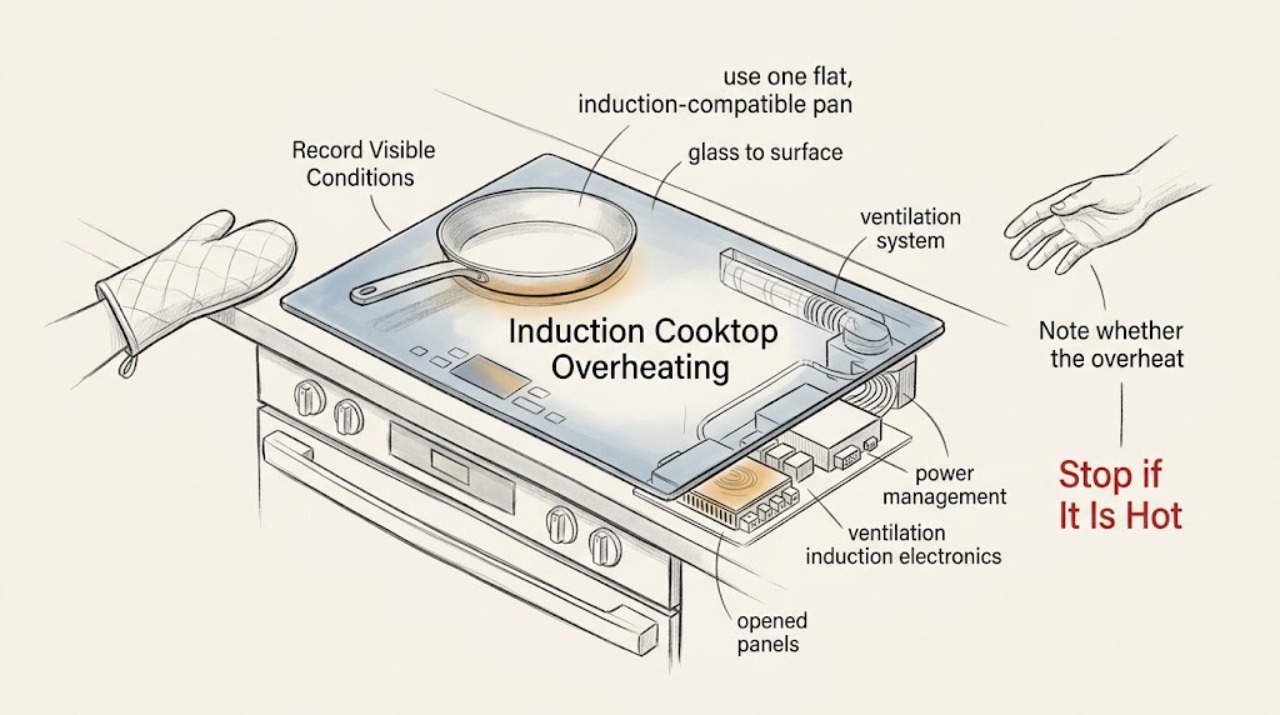
Induction Cooktop Overheating: Separate Residual Heat from a Fault
First separate ordinary heat from the pan or glass from an electronic overheat event. A hot surface after cooking can be residual heat, while a warning, automatic shutdown, reduced power, hot control area, repeated shutdown, smoke, or a burning odor needs attention.
-
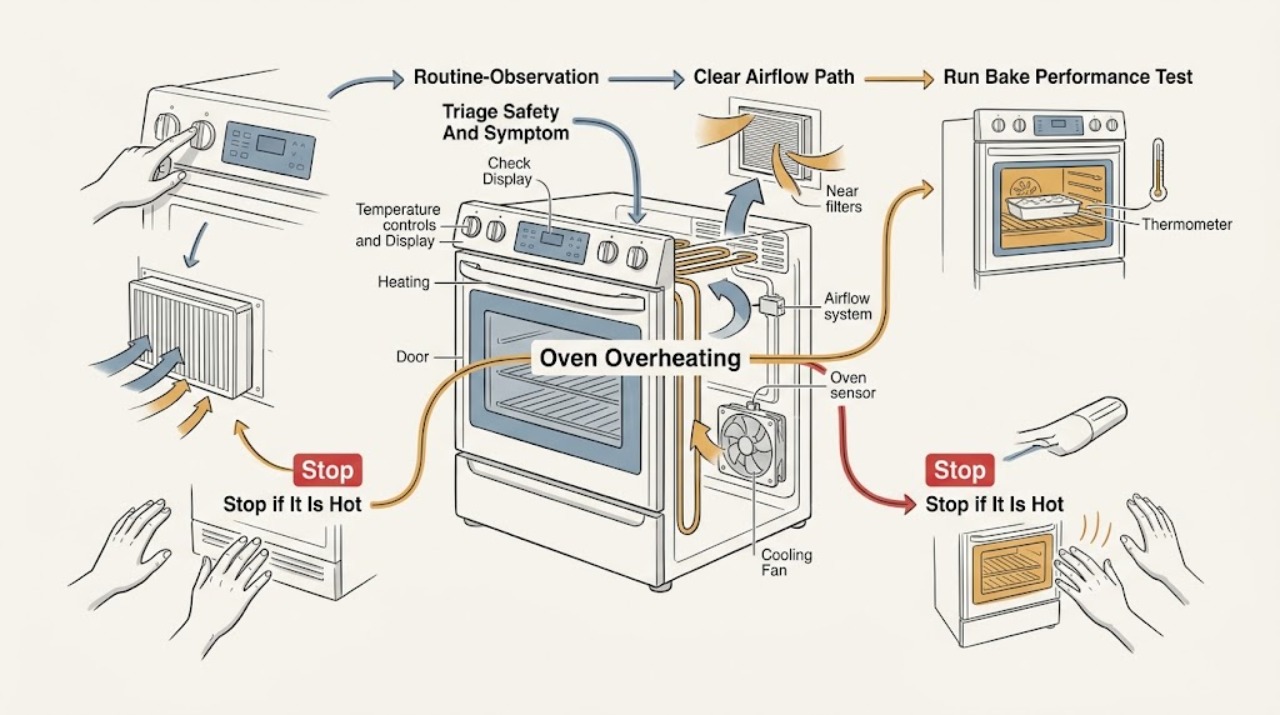
JennAir Oven Overheating: Check the Cycle, Calibration, and Cooling System
First separate normal heat and fan behavior from a true over-temperature fault. Confirm the exact JennAir model, the selected cycle, the target temperature, and whether the display is using Fahrenheit or Celsius.
-
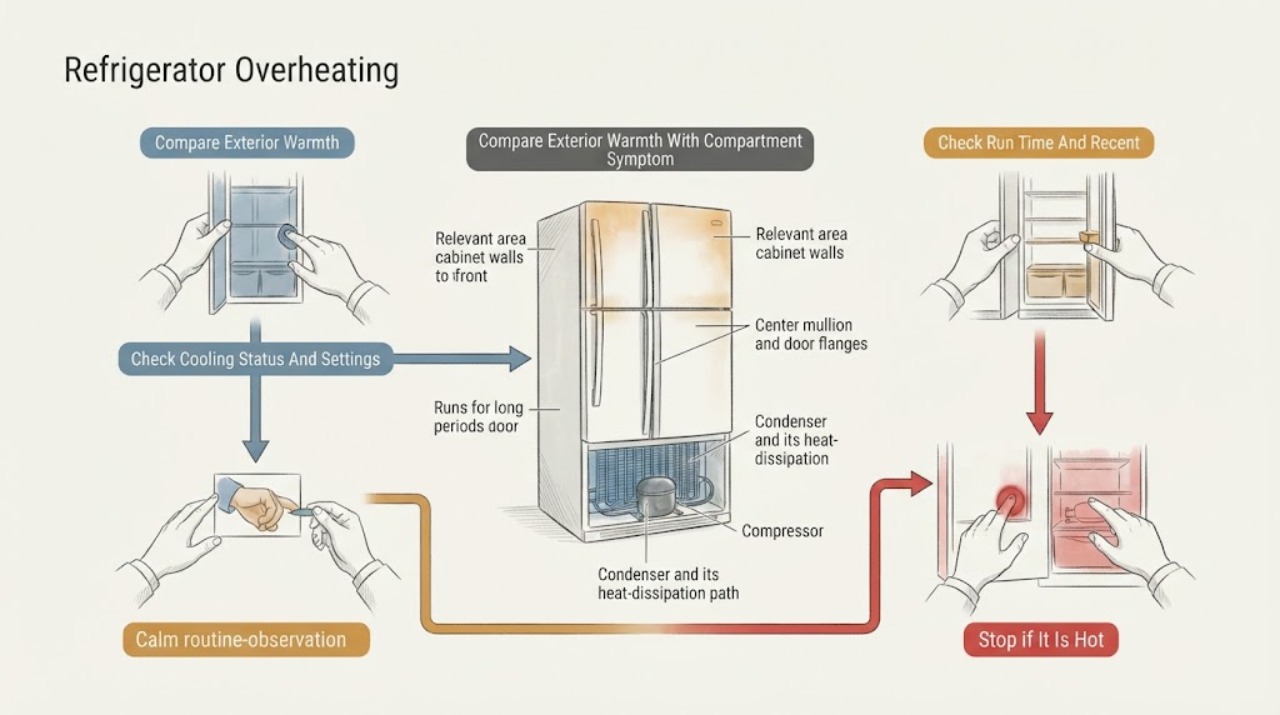
JennAir Refrigerator Overheating: Tell Normal Cabinet Warmth from a Fault
A warm JennAir cabinet, front frame, or center mullion is often part of normal heat rejection: the refrigerator moves heat from the compartments into the room, and a heat loop near gasket areas helps limit exterior moisture. Warmth can increase after installation, a large warm grocery load, frequent door openings, or in a hot room; a high-efficiency compressor may also run for extended periods.
-
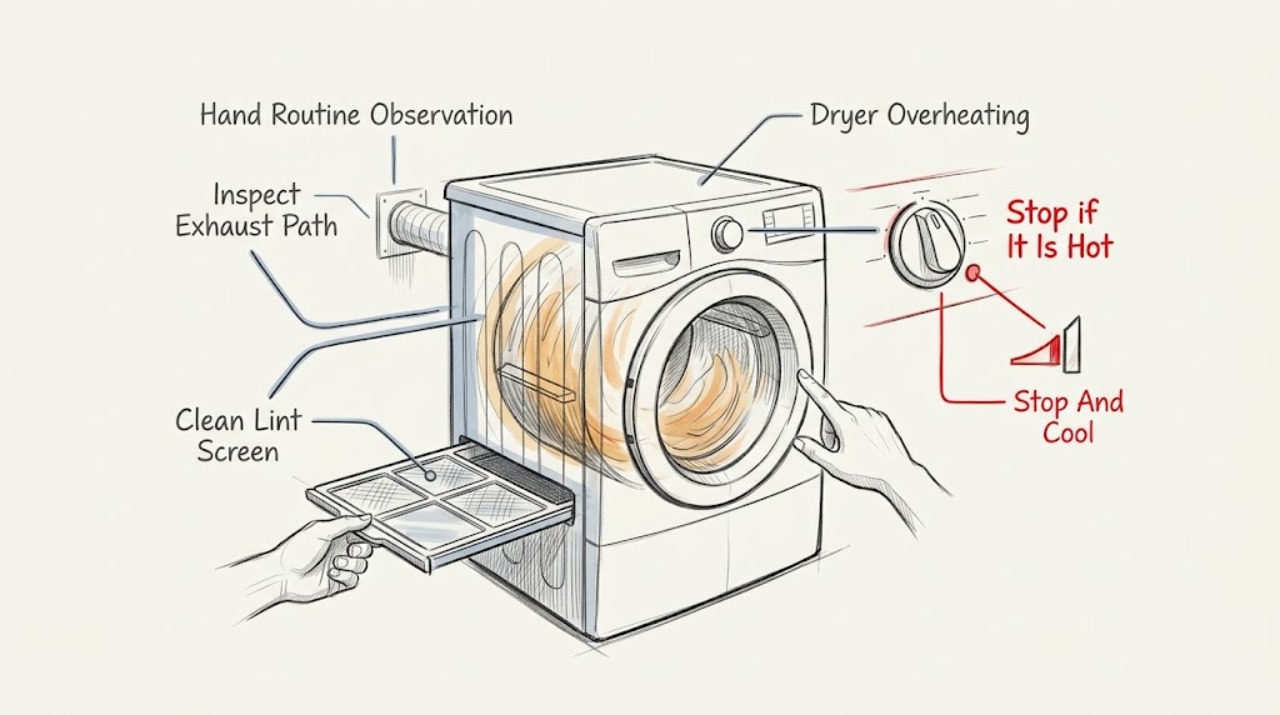
Kenmore Dryer Overheating: Stop the Cycle and Check Airflow Safely
Stop the Kenmore dryer immediately, turn it off, and do not run another test cycle while the cabinet, clothes, control area, or exhaust feels unusually hot or smells scorched. Once it is cool and safe to approach, check the lint screen, the accessible exhaust path, the outside vent flap, the area behind the dryer, and the exact Kenmore use-and-care manual.
-
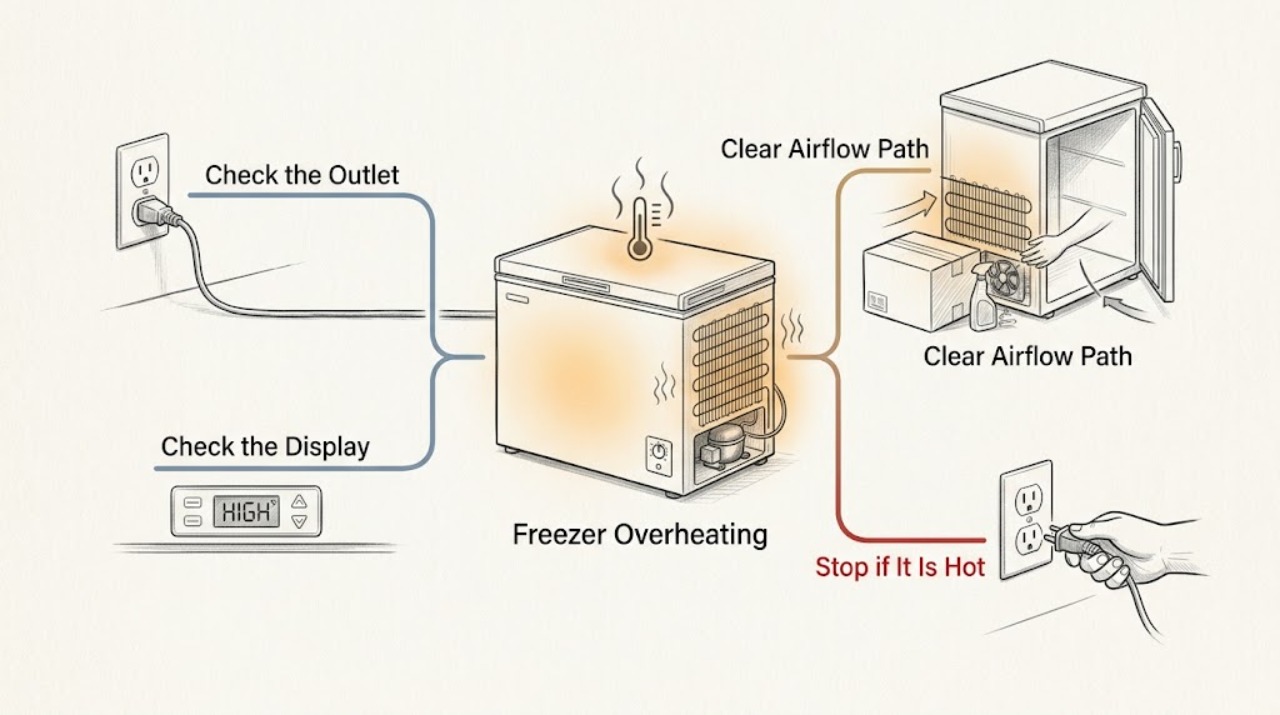
Kenmore Freezer Overheating: Separate Normal Cabinet Warmth from a Fault
A Kenmore freezer can feel warm on the outside because the refrigeration system releases heat, especially after startup, a large load, frequent door openings, or operation in a hot location.
-
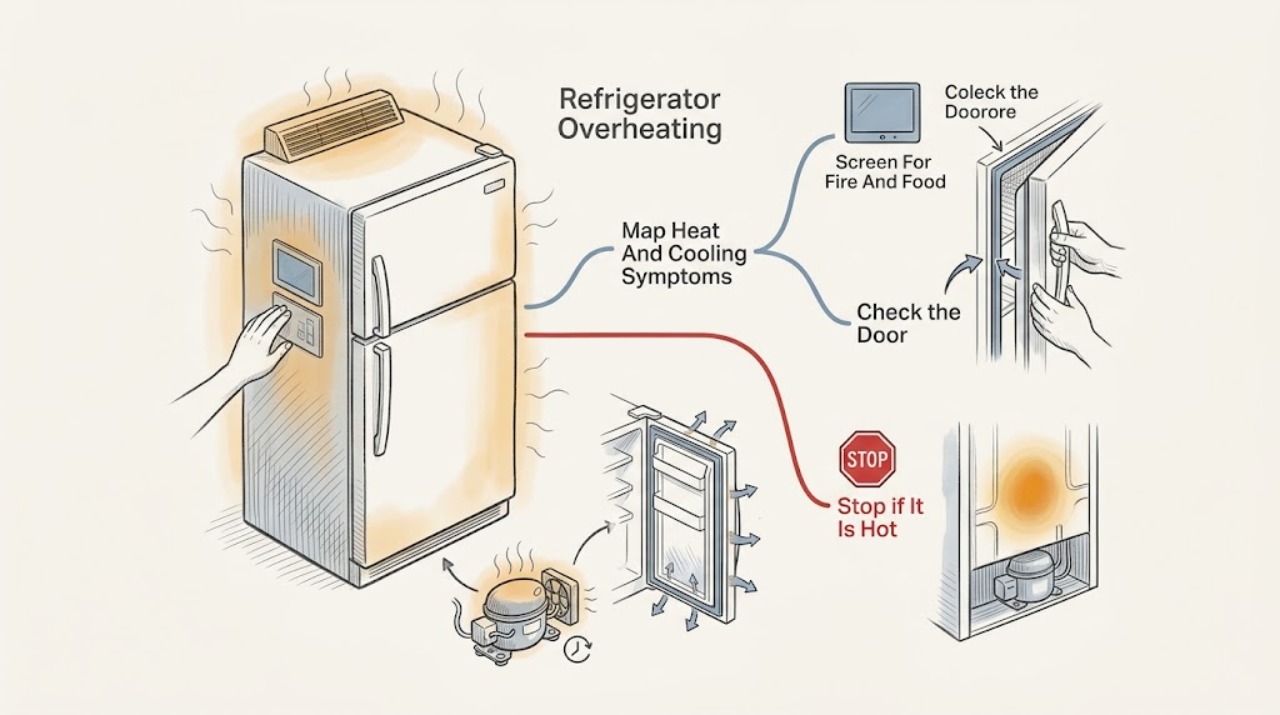
Kenmore Refrigerator Overheating: Separate Heat From a Service Fault
Do not judge a Kenmore refrigerator by exterior warmth alone. Record where the heat is felt—side, rear, top, plug, or cabinet—and whether the food compartment is actually warm, the compressor or fan runs continuously, condensation is increasing, or there is smoke, burning odor, arcing, or a hot cord.
-
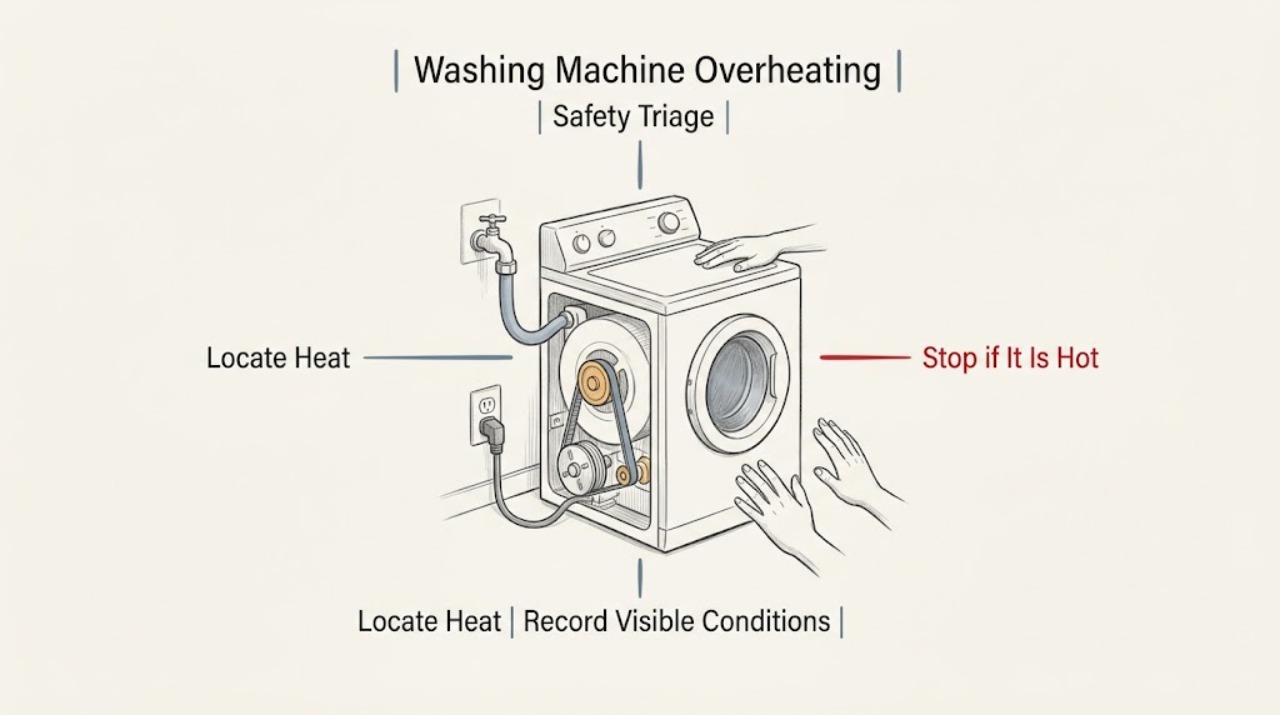
Kenmore Washing Machine Overheating: Separate Warm Water From a Real Safety Fault
A Kenmore washer can feel warm because a hot or warm cycle is bringing in heated household water, because a motor or pump has been working under load, or because the cabinet, cord, plug, or laundry is becoming abnormally hot. Do not diagnose this by touch alone.
-
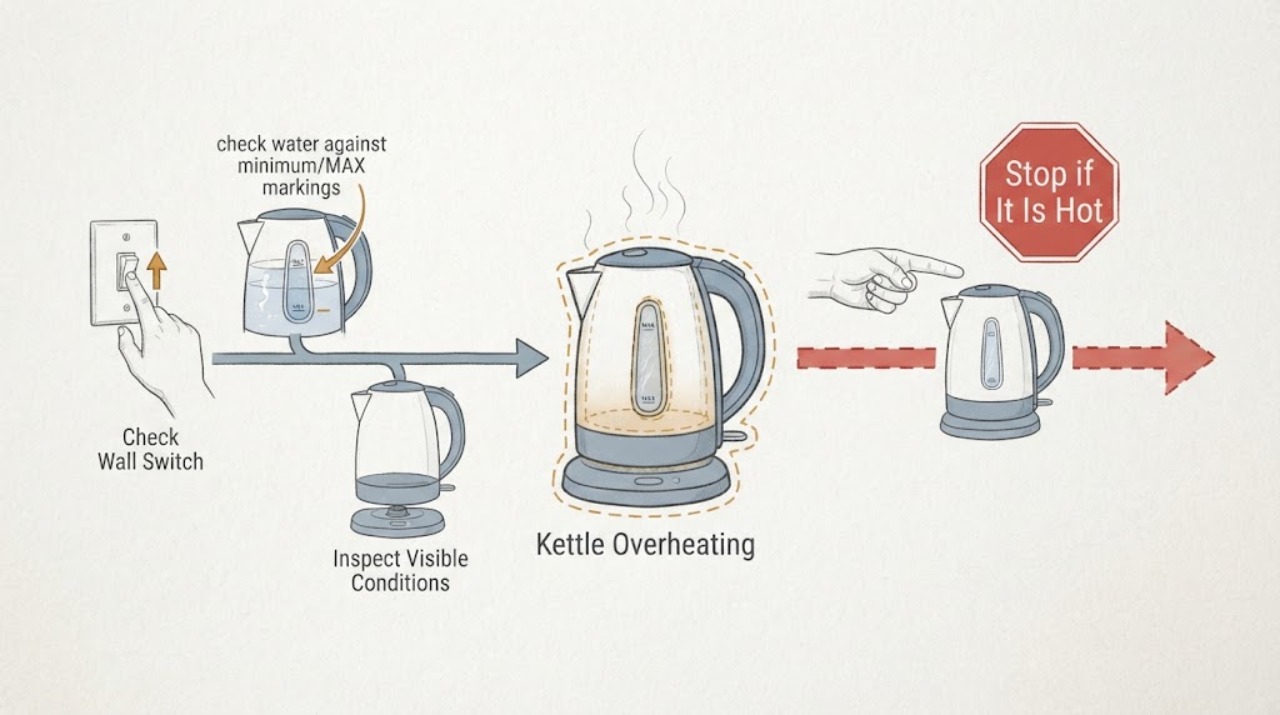
Kettle Overheating
A kettle normally gets hot while boiling, but overheating means it stays on after boiling, boils dry, smells burnt, or the base becomes abnormally hot. Switch it off and unplug it, let it cool, then check water level, lid, seating, and scale only as the manual allows. Hamilton Beach says the kettle should shut off at boiling; a repeat failure needs service.
-
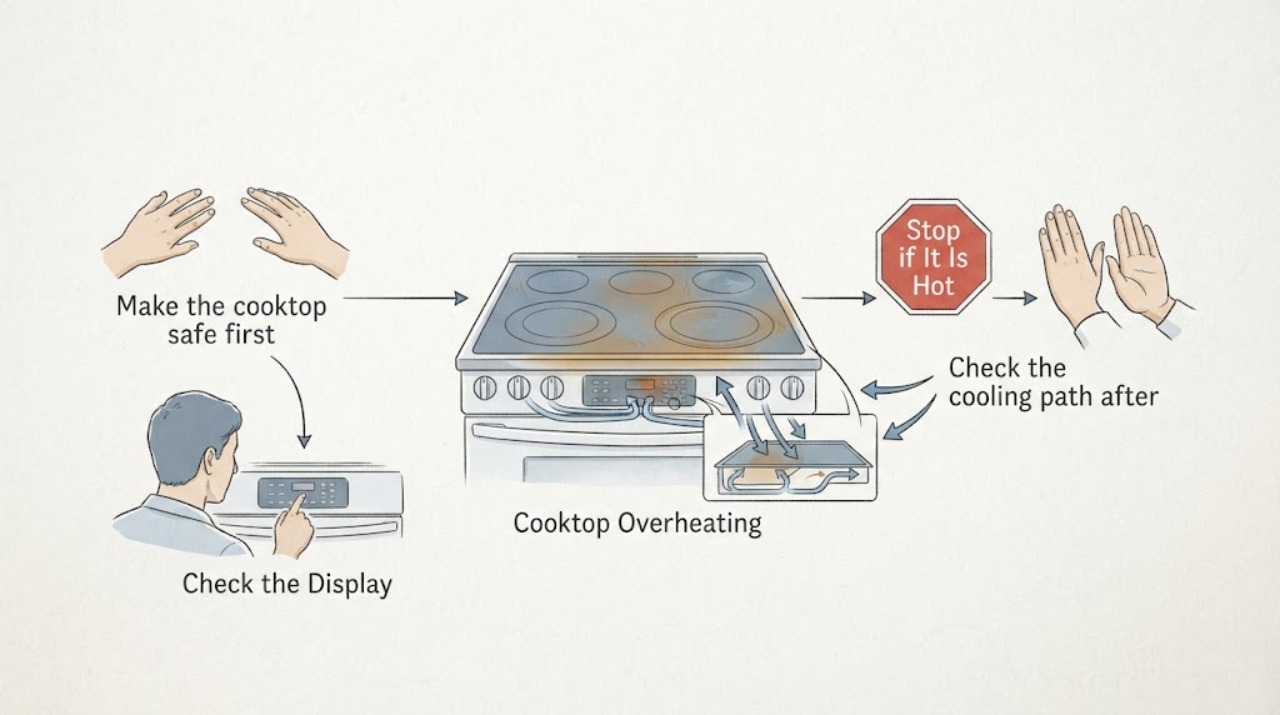
Kitchenaid Cooktop Overheating: Safe Checks Before Service
A KitchenAid cooktop can feel hot after cooking because a zone or a nearby hot pan is still transferring residual heat, and some models cycle their elements to control temperature. Turn every control off and keep hands and combustibles away while it cools.
-
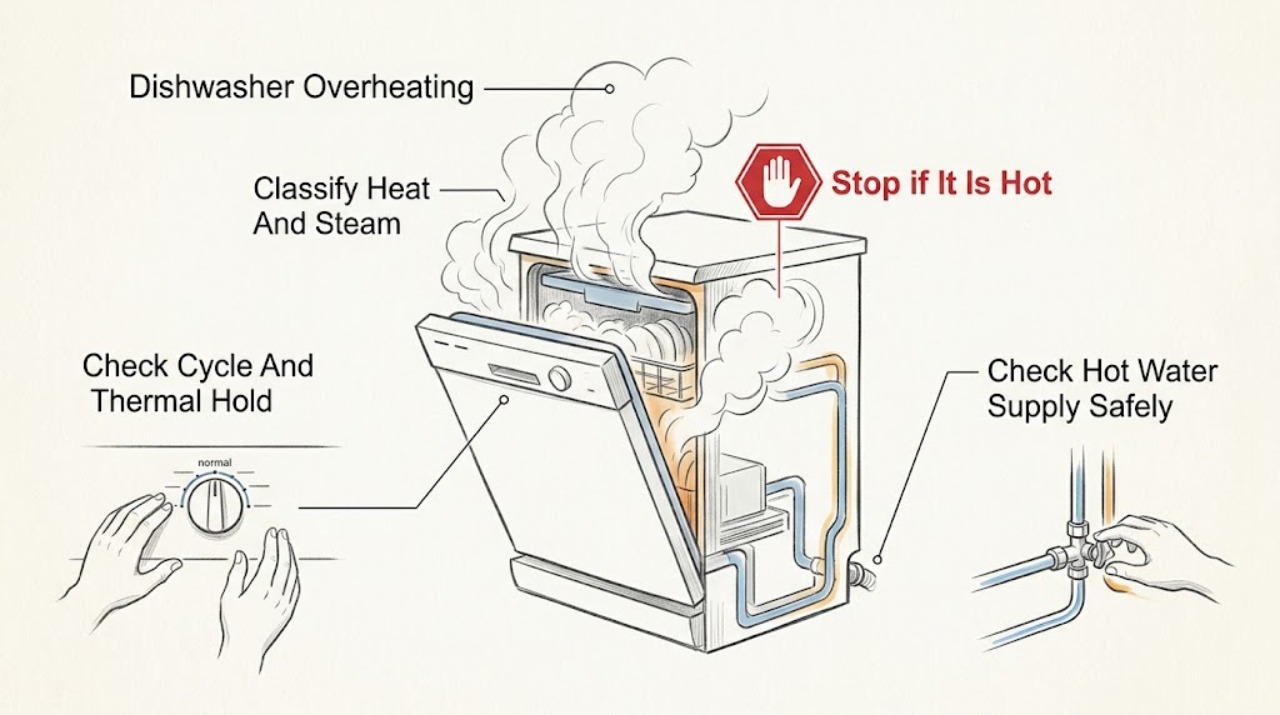
KitchenAid Dishwasher Overheating: Separate Normal Heat and Steam from a Fault
A warm tub and some steam during or after a high-temperature, sanitize, or heated-dry phase can be normal: KitchenAid says its dishwashers may pause to heat water, and the interior should feel warm and may contain steam. Do not treat about 120°F incoming water as an overheating limit; KitchenAid presents it as a water-temperature recommendation for cleaning performance.
-
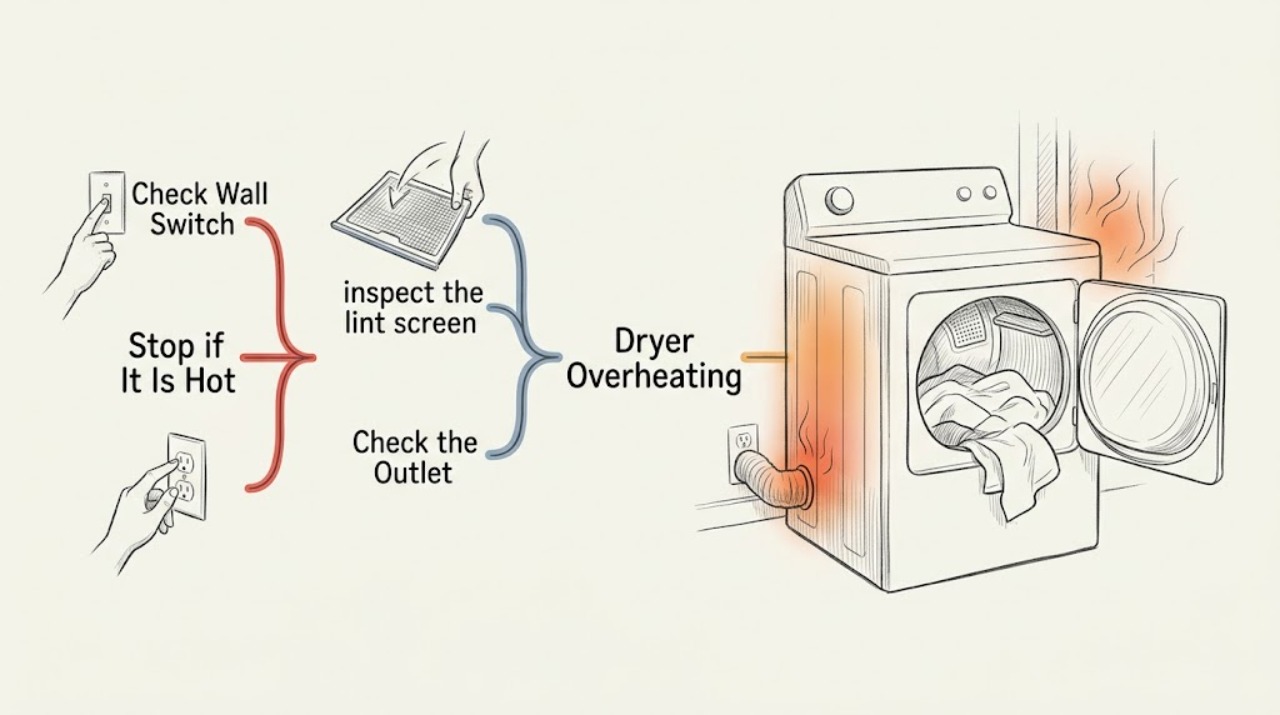
KitchenAid Dryer Overheating: Stop the Cycle and Check Airflow Safely
Stop the dryer now and do not continue test runs. Use the normal control to stop it and, only if the area is dry and there is no immediate electrical or fuel hazard, isolate its power at the accessible disconnect or breaker; keep clear of a hot drum and let it cool.
-
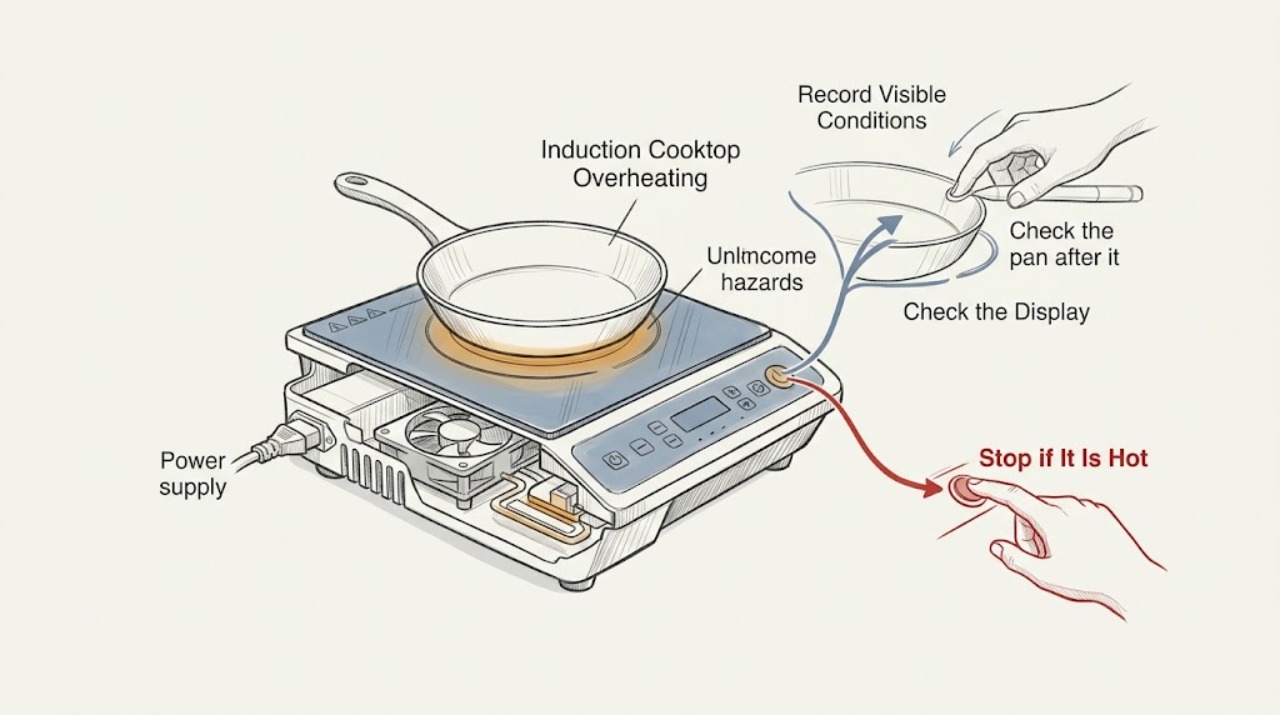
KitchenAid Induction Cooktop Overheating
An overheating KitchenAid induction cooktop may be responding to an empty pan, cookware that is too large or unsuitable, long high-power cooking, blocked cooling airflow, a hot surface, or an internal temperature fault. Turn the zone and cooktop off, remove or reposition the pan only when safe, and allow the glass and electronics to cool.
-
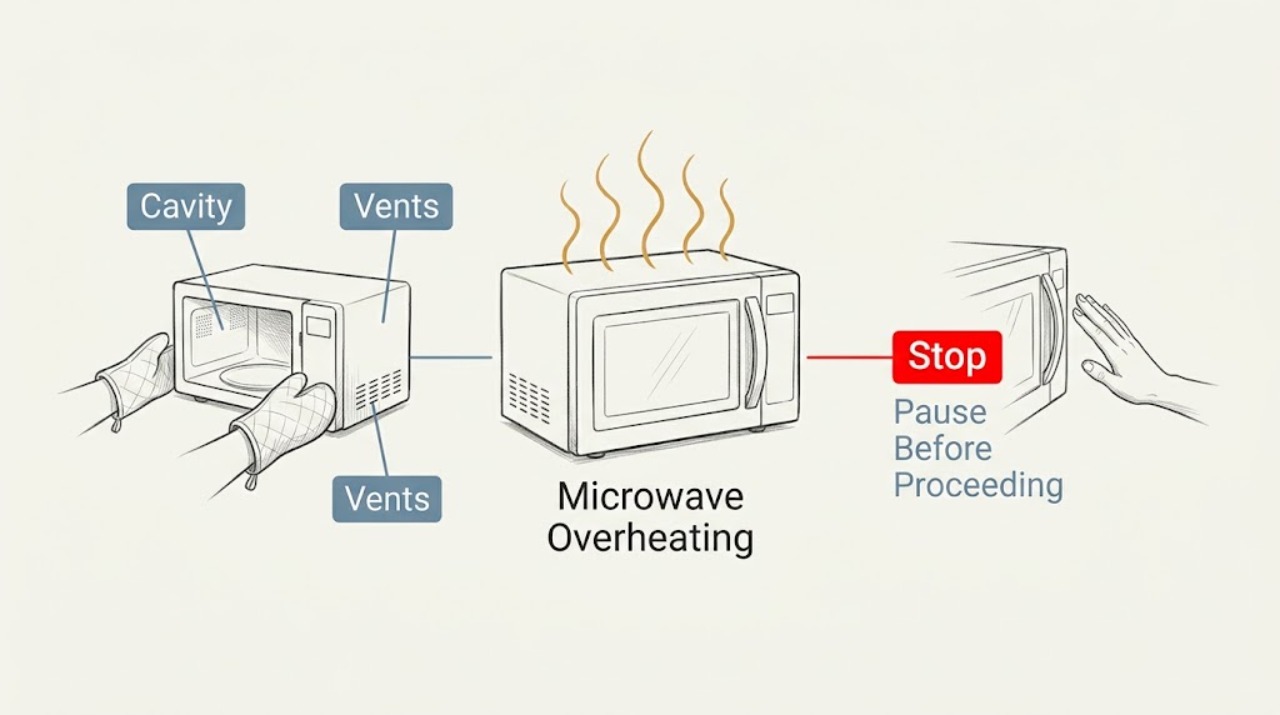
KitchenAid Microwave Overheating: Stop and Check Safely
Stop the cycle for unusual cabinet heat, smoke, odor, or arcing. When fully cool, check only the door, cavity, and external vents using the exact manual. Persistent overheating requires qualified service.
-
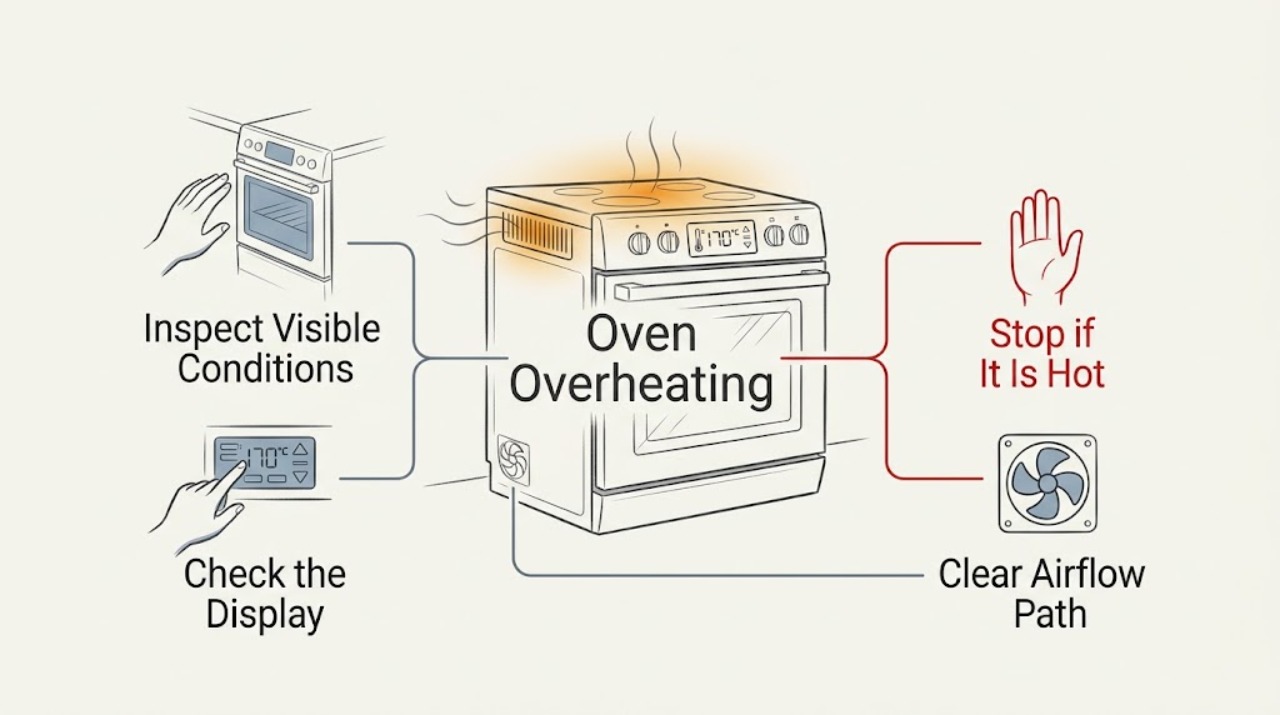
KitchenAid Oven Overheating: Separate Calibration Drift from Unsafe Heating
First decide whether the KitchenAid oven is cooking hotter than expected or is actually heating without control. Turn the controls off and stop using it for smoke, an electrical or gas smell, arcing, a surface that becomes dangerously hot, or heating that continues after cancellation.
-
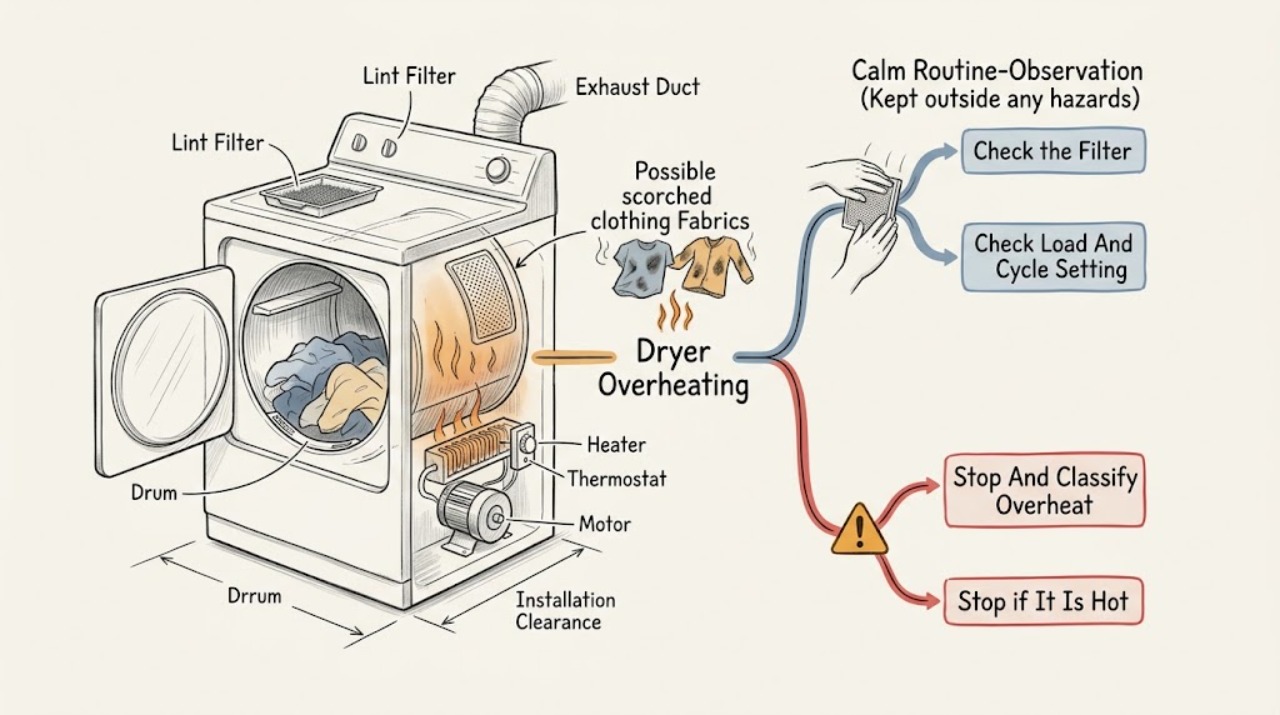
LG Dryer Overheating: Check Airflow, Load, and Lint Safely
Stop the dryer and let it cool if the cabinet is unusually hot, clothing is scorched or too hot, drying times change sharply, or a burning smell, smoke, sparks, or a breaker trip occurs. Once there is no hazard, clean the accessible lint filter, check the drum for foreign objects, review the load and fabric-care setting, and inspect the accessible exhaust outlet for weak airflow or a blockage.
-
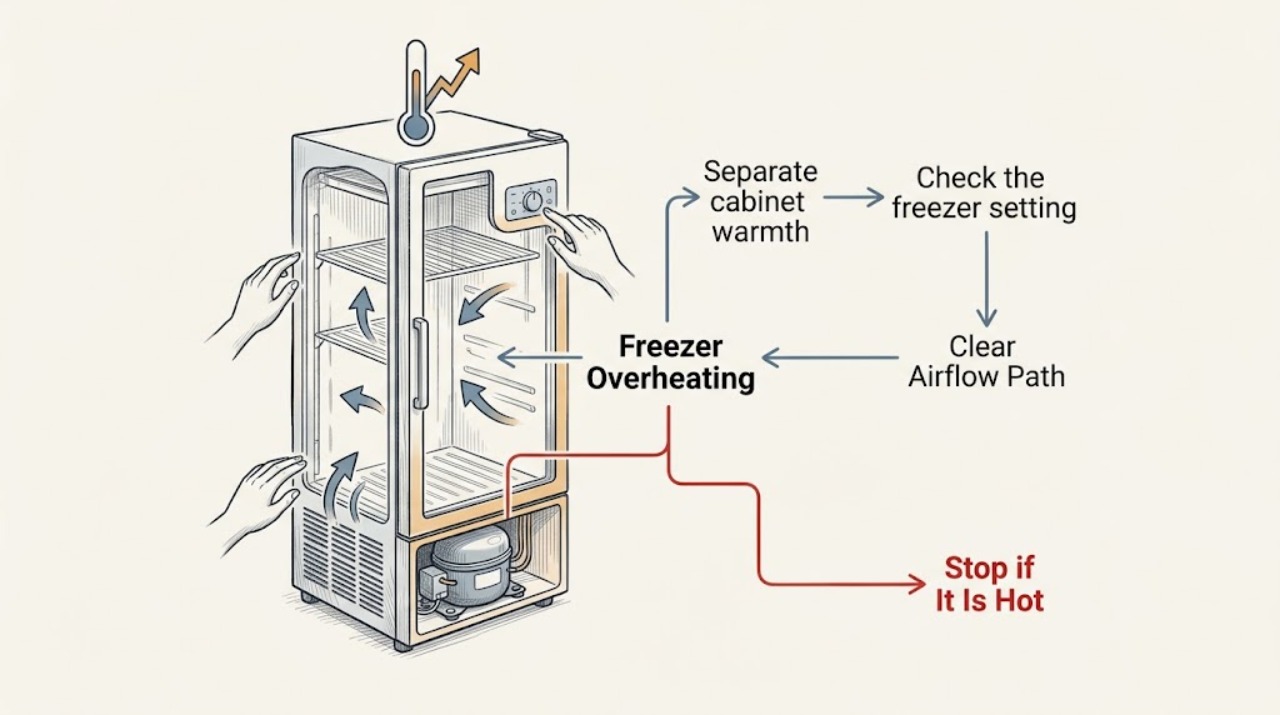
LG Freezer Overheating: Separate Normal Cabinet Warmth from a Fault
A warm LG freezer cabinet is not automatically overheating. LG explains that heat from the compressor and a built-in heat-dissipation system can make the sides, bottom, front perimeter, or area between doors feel warm during normal cooling, especially after installation, in hot weather, or after frequent door openings.
-
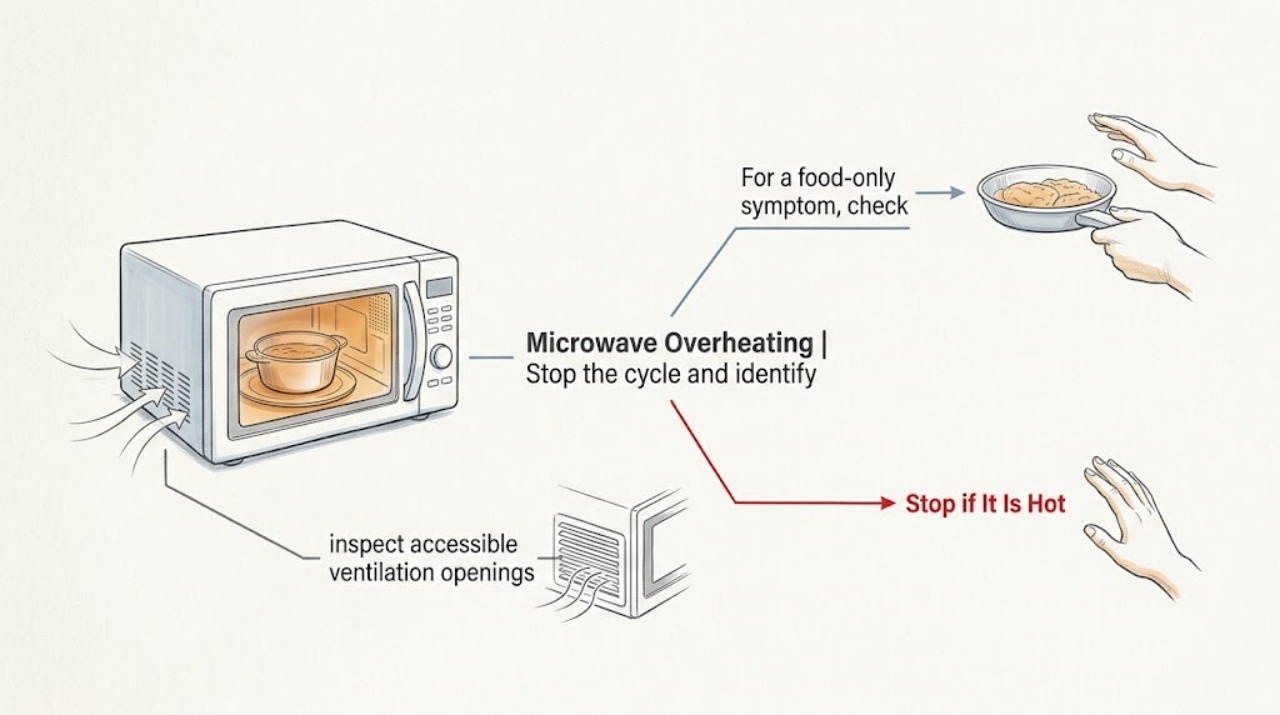
LG Microwave Overheating: Check Ventilation and Stop at the Right Point
First determine whether the food or the microwave cabinet is overheating. Stop the cycle for smoke, scorching, sparks, a hot plug, or a damaged door. For a food-only problem, check cooking time, power, load size, and ventilation openings; do not operate the microwave empty or remove its cover.
-
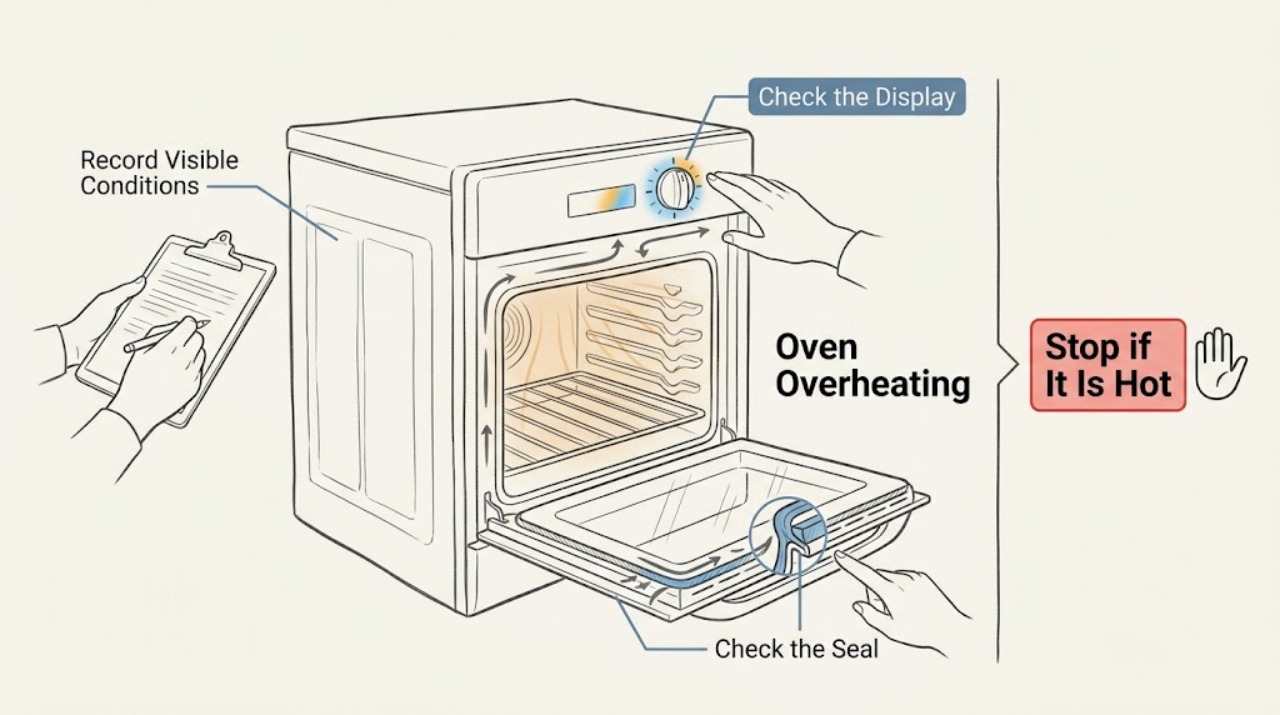
LG Oven Overheating: Separate Normal Cycling From a Temperature Fault
An LG oven that seems too hot should first be separated into normal preheating or element cycling, a setting or rack problem, a thermostat calibration issue, and true uncontrolled heating. Record the complete model, mode, setpoint, display or error, and whether the temperature is high only during preheat or remains high during cooking.
-
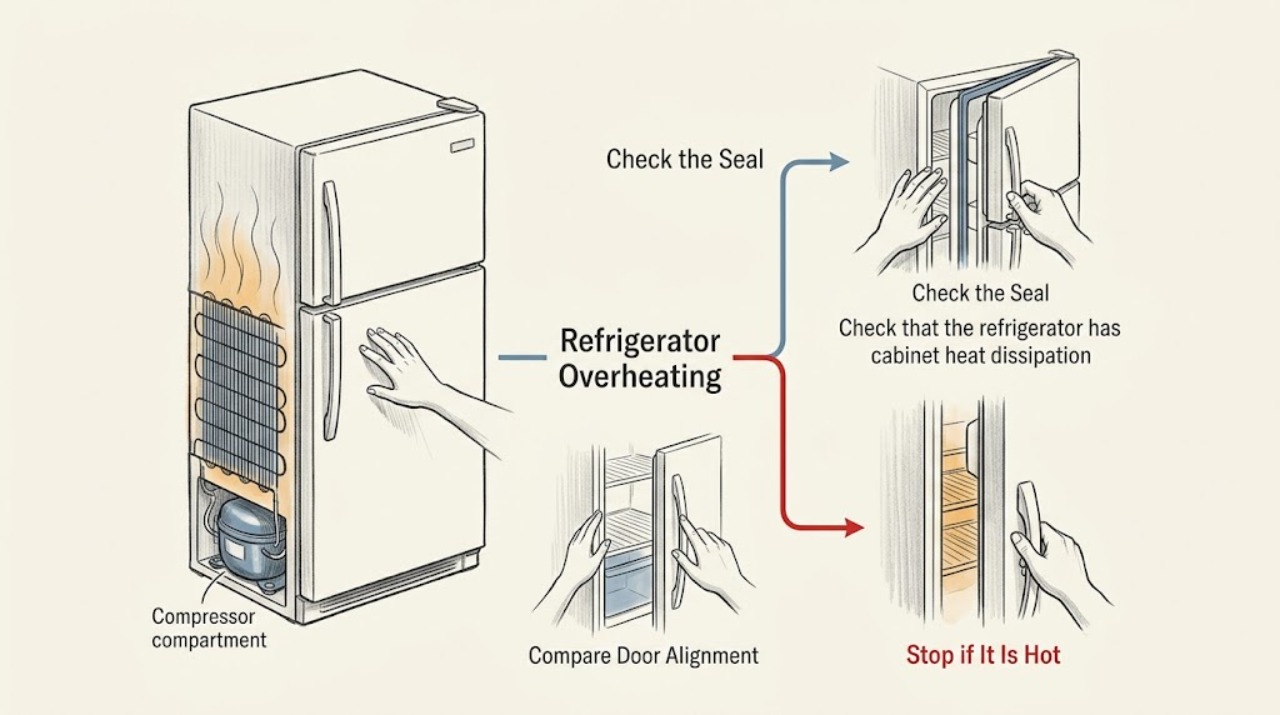
LG Refrigerator Overheating: Decide Whether Warm Cabinet Surfaces Are Normal
Warm sides, a warm front frame, or warm air under an LG refrigerator can be part of normal heat rejection. Check whether cooling is normal, whether the unit has ventilation clearance, and whether the heat is accompanied by an odor, damaged cord, or rising food temperature. Those accompanying symptoms—not warmth alone—determine the need for service.
-
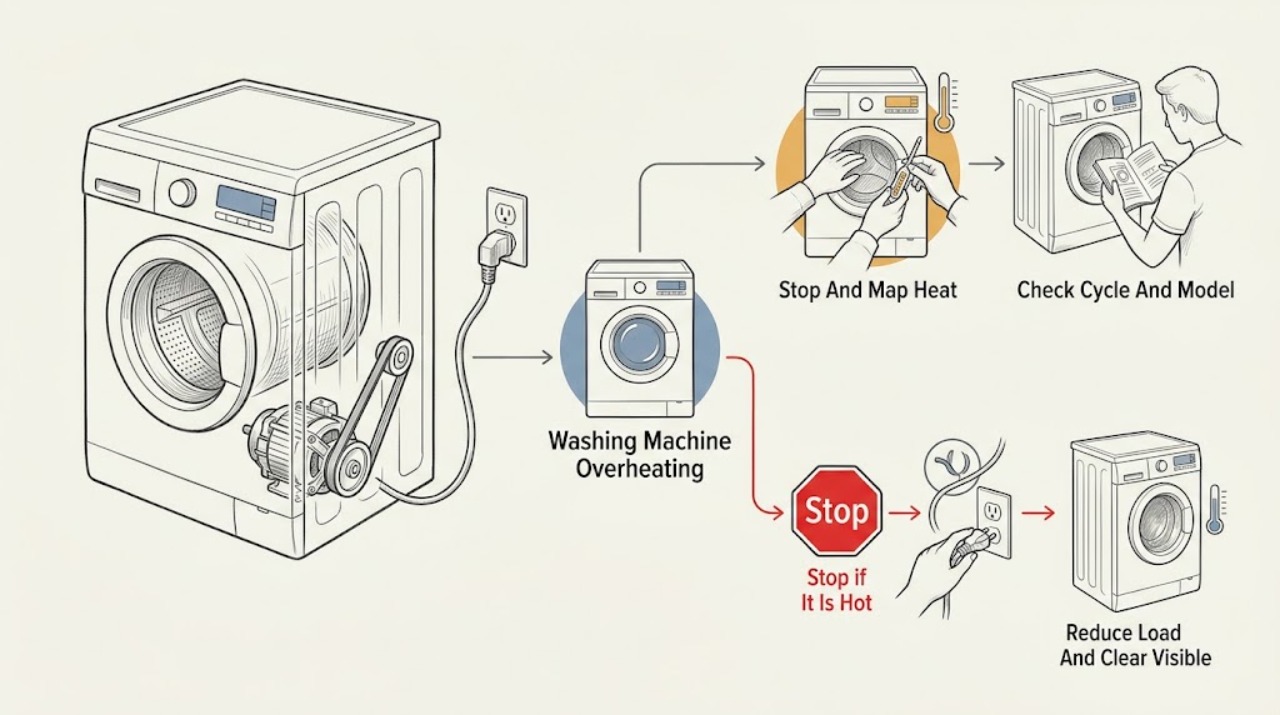
LG Washing Machine Overheating: Stop Safely and Find the Heat Source
Treat an LG washing machine that is unusually hot, smells of burning, smokes, sparks, trips a breaker, or feels unsafe as stopped until proven otherwise. Some LG models have motor protection that pauses the washer for a few minutes and then restarts, and a new front-load unit may have a mild motor-coil or insulation odor that fades after roughly 10 to 20 full cycles.
-
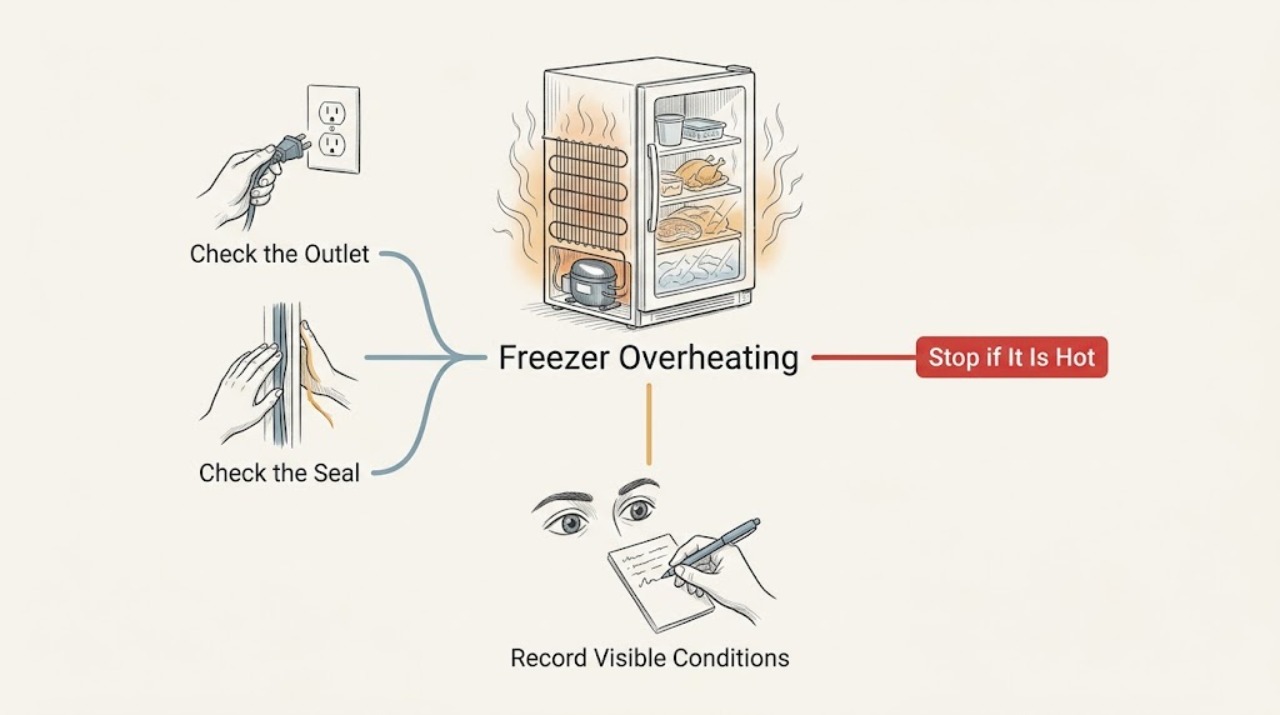
Magic Chef Freezer Overheating: Safe Checks for Heat, Cooling, and Food
Some warmth around a freezer cabinet can occur while the cooling system rejects heat, so first separate a warm exterior from a freezer that is actually losing temperature. Without moving or opening the Magic Chef freezer, check its temperature, door seal, visible frost, room conditions, and the clearance around it.
-
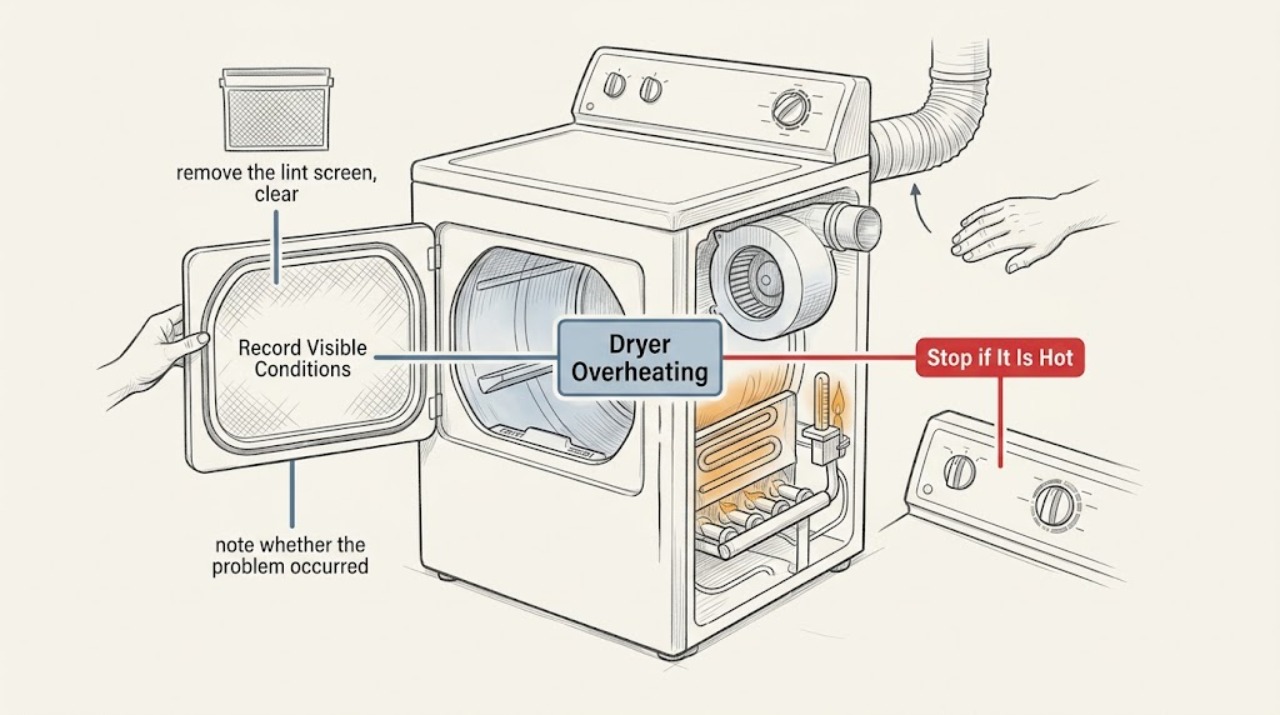
Maytag Dryer Overheating: Check Airflow, Lint, and Safe Heat Control
Stop the Maytag dryer immediately for a burning smell, smoke, sparks, scorching, clothing that is dangerously hot, an unusually hot cabinet, a gas odor, or a breaker that opens again. A dryer should be warm during use, but intense heat or heat that stays trapped is not normal.
-
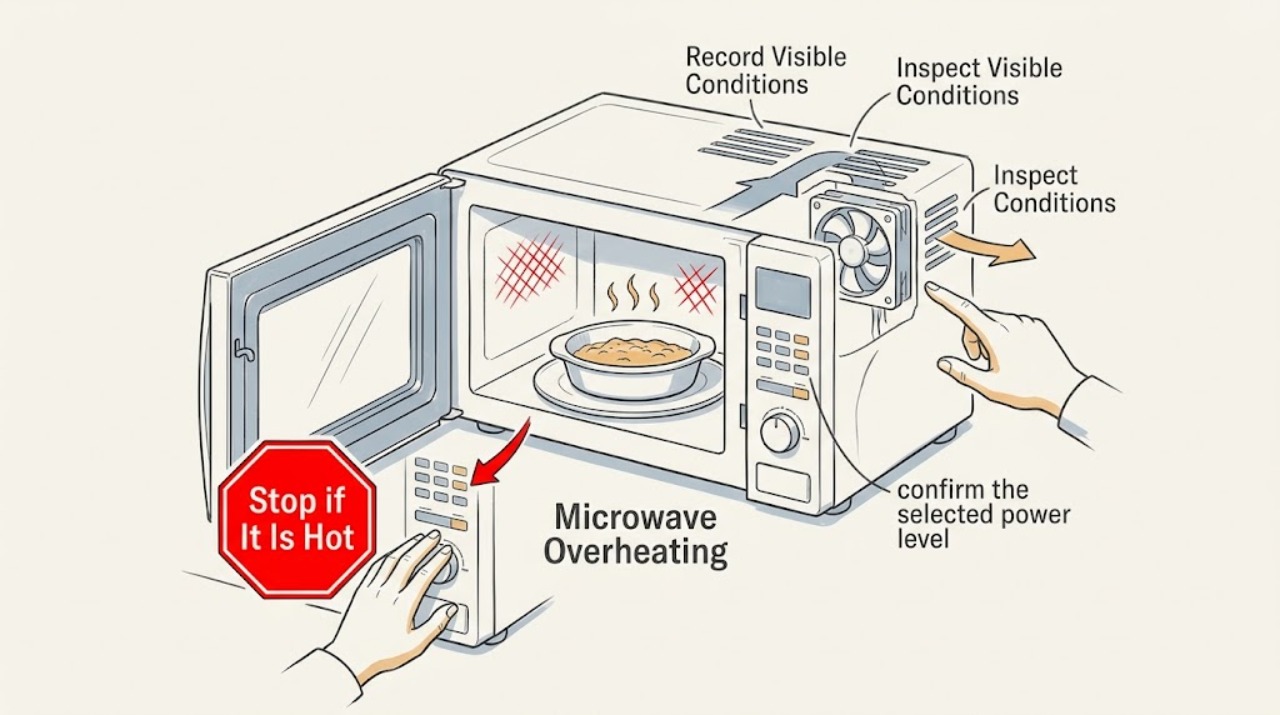
Maytag Microwave Overheating: Tell Normal Cooling From a Safety Stop
‘Overheating’ on a Maytag microwave can describe a cooling fan that runs after cooktop heat, a hot exterior or control area, food or liquid that overheats, or a true appliance fault. Stop if there is smoke, flame, burning odor, damaged cord or door, or blocked openings.
-
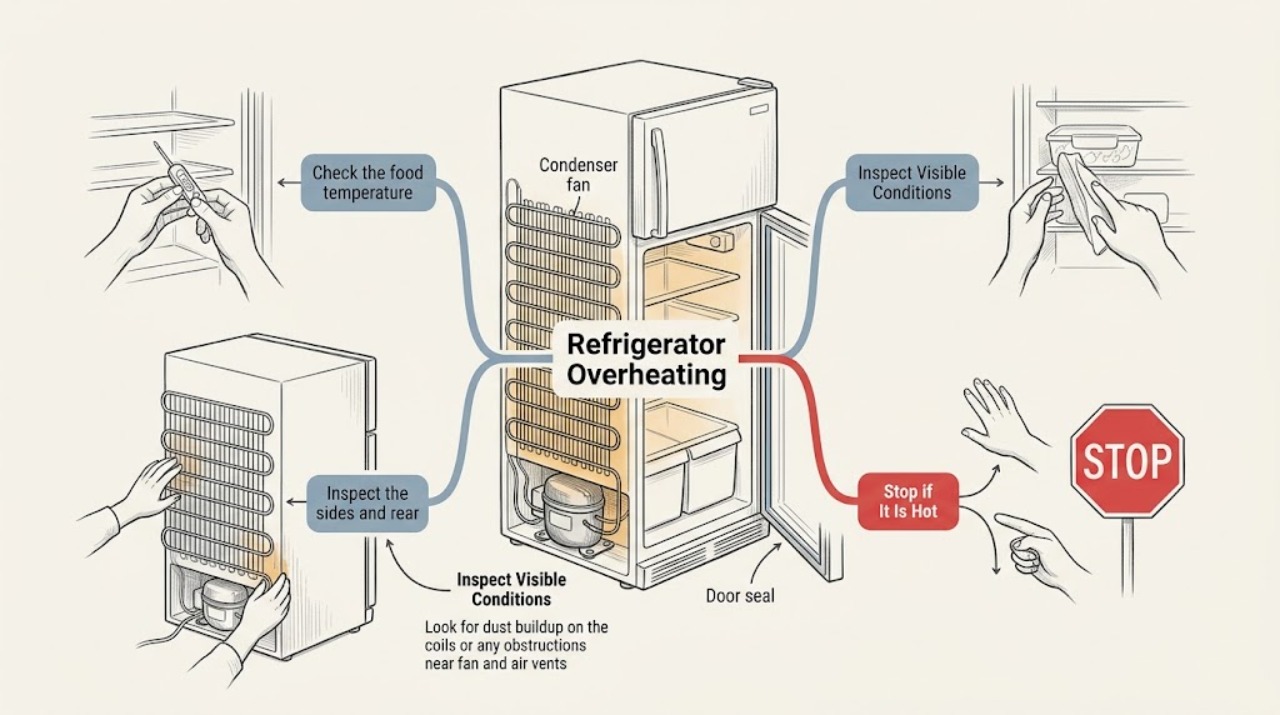
Maytag Refrigerator Overheating: Check the Cabinet, Airflow, and Cooling
Warm sides or the area around the door seal can be normal because a refrigerator releases heat as it cools. Treat it as a problem when the exterior remains unusually hot, cooling is poor, the compressor runs continuously, or the condenser fan is abnormal. Check visible clearance, dust, vents, and door sealing; do not open the rear cover or touch hot or energized components.
-
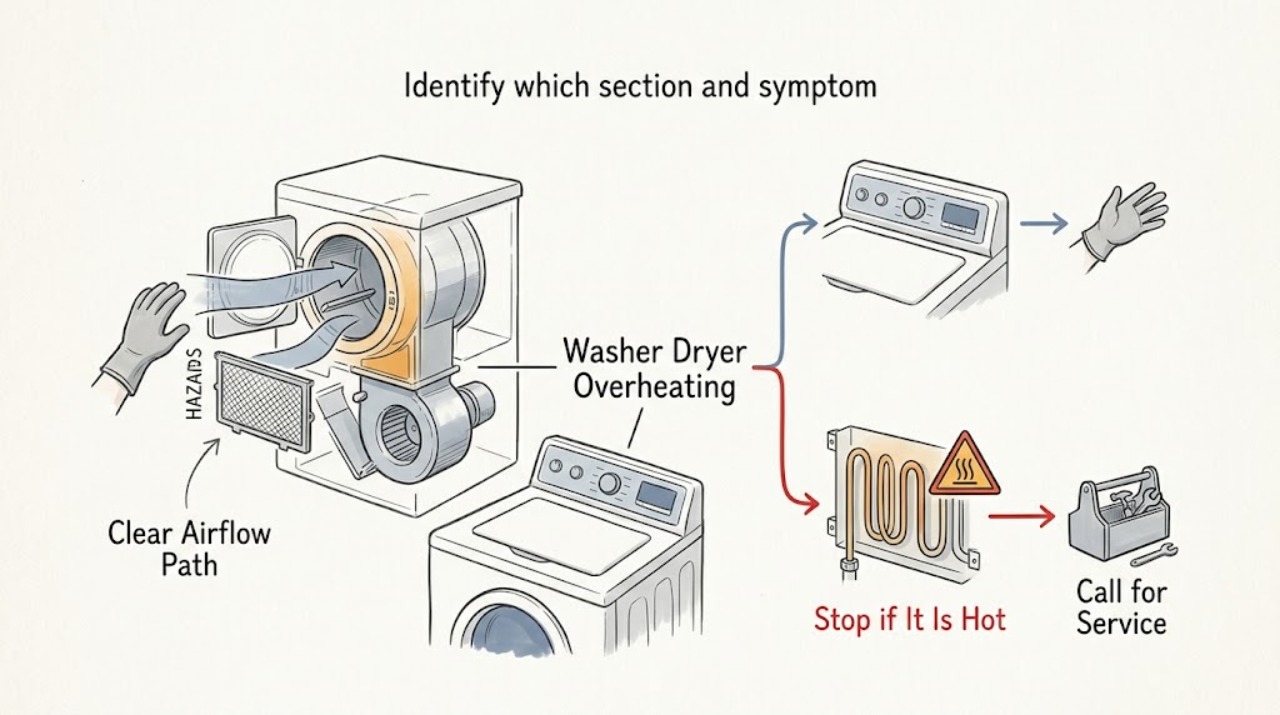
Maytag Washer Dryer Overheating
First identify whether the dryer section, washer section, or the shared cabinet is actually overheating. A dryer will feel warm during operation, but intense heat, clothes that are too hot, a burning smell, smoke, or heat that continues with poor airflow is not normal.
-
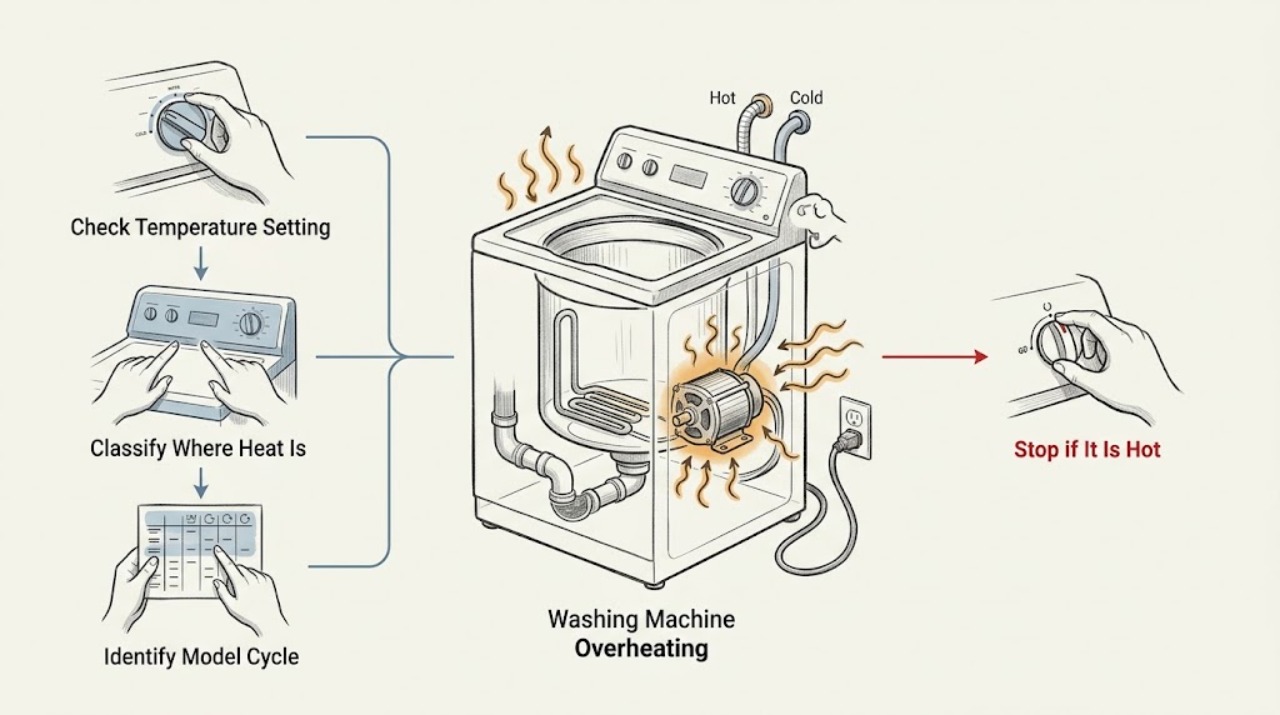
Maytag Washing Machine Overheating: Separate Hot Water From a Fault
A Maytag washer can feel warm during a Sanitize, Steam, or hot-water cycle without overheating. First distinguish warm water in the tub from an unusually hot cabinet, control panel, cord, or outlet.
-
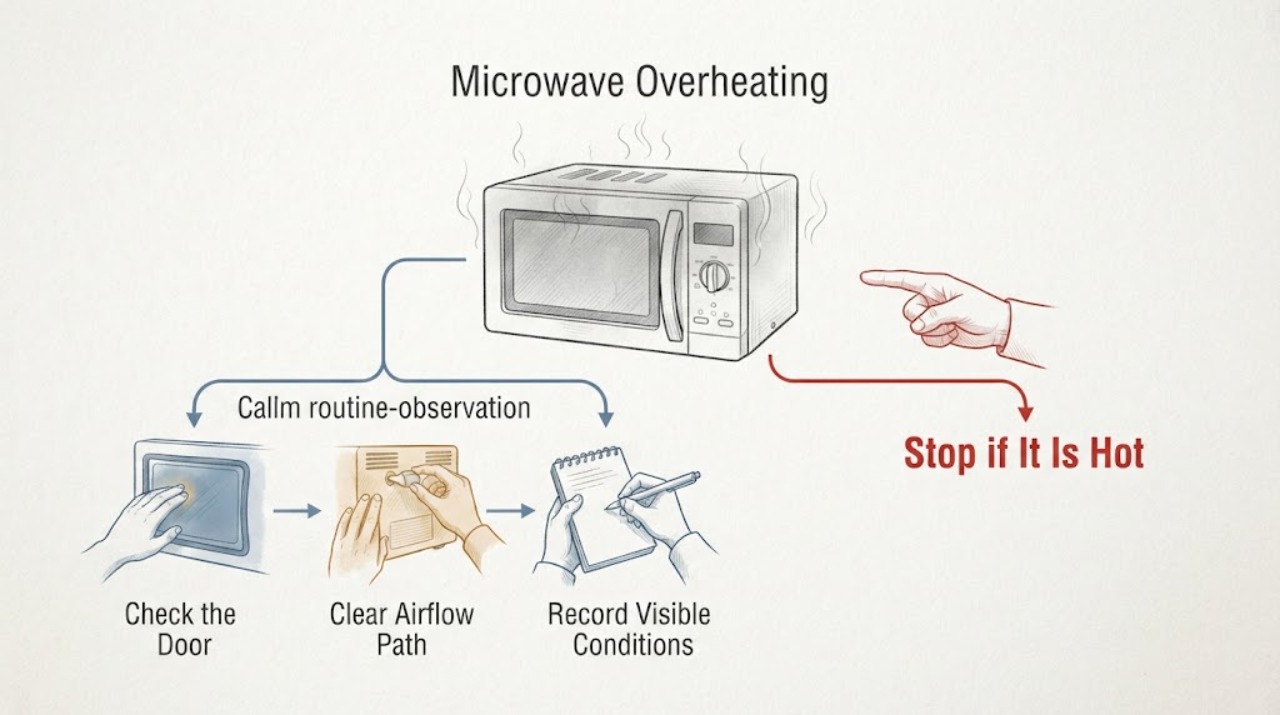
Microwave Overheating
Some warmth after cooking can be normal, especially after back-to-back cycles or in a hot room, but extreme heat, a burning smell, smoke, sparks, or a hot cord is a stop condition. Stop the microwave, disconnect power safely, and let it cool. Check only that accessible ventilation is clear and that the symptom is not caused by repeated heavy use; do not open the cabinet. Persistent or severe overheating needs qualified service.
-
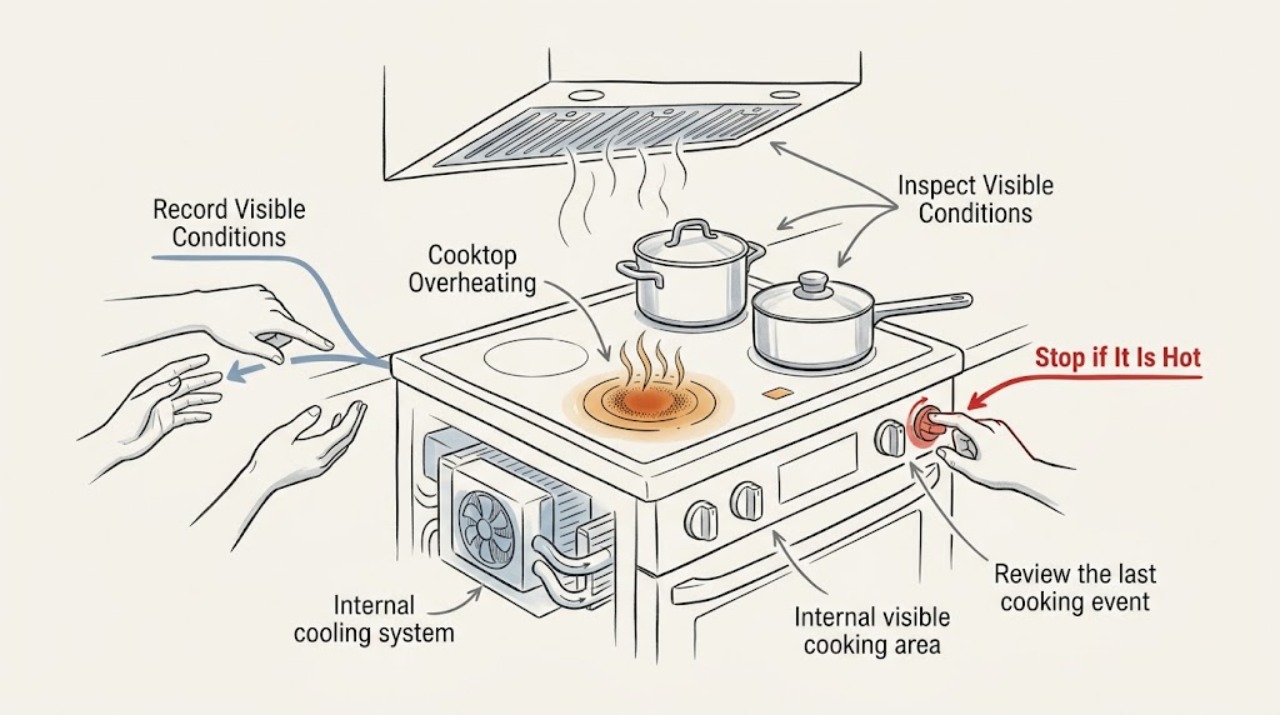
Miele Cooktop Overheating: Distinguish Normal Heat From Overheat Protection
A Miele cooktop frame can become hot during long cooking, high power, large cookware, or use of several zones without indicating a fault. A zone that reduces power or switches off, an E2 or FE44 message, or repeated shutdown after the surface has cooled is different: Miele identifies empty cookware, high-power fat or oil, blocked underside ventilation, unsuitable induction cookware, and a hot zone restarted after a power outage as possible overheat triggers.
-
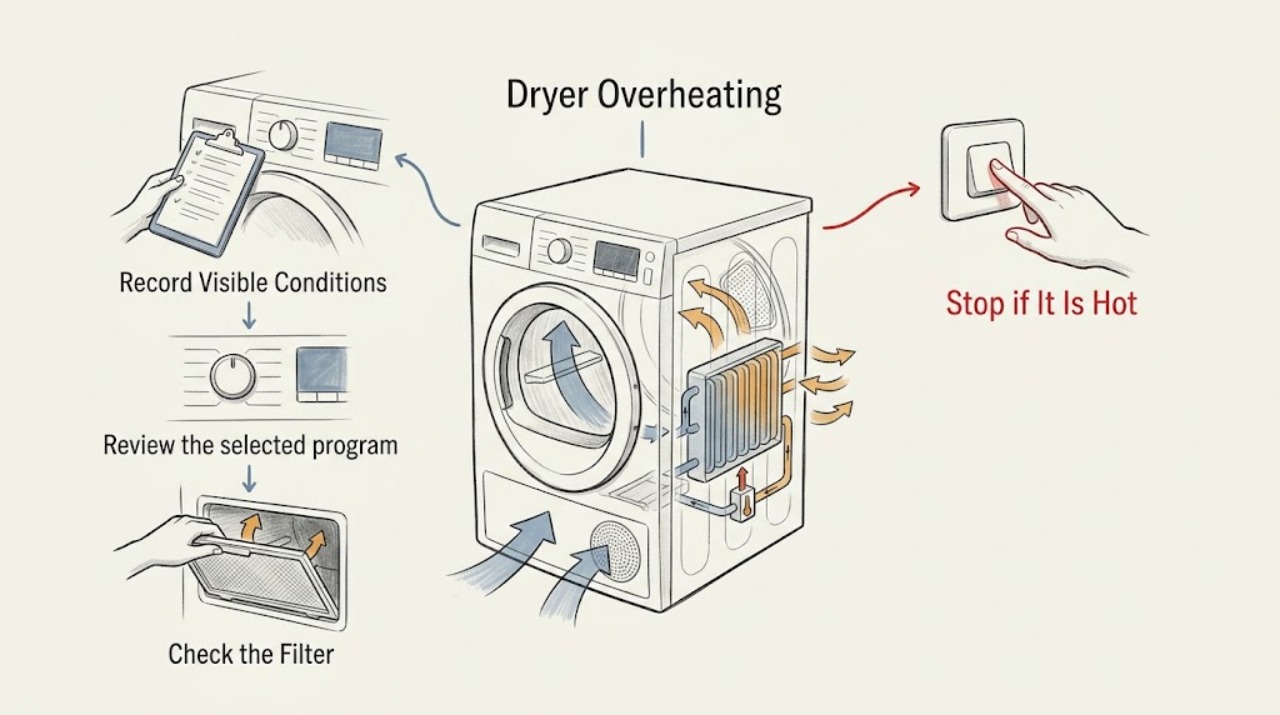
Miele Dryer Overheating: Check Airflow, Load and Condensate Safely
Stop the Miele dryer immediately if you smell burning, see smoke or sparks, find scorched fabric, feel abnormal heat at the outer cabinet, or a breaker trips. A rolling-bar display at the end of a cycle can simply be the normal cooling phase, but an appliance-overheated fault such as F158 is a technical fault that requires Miele service.
-
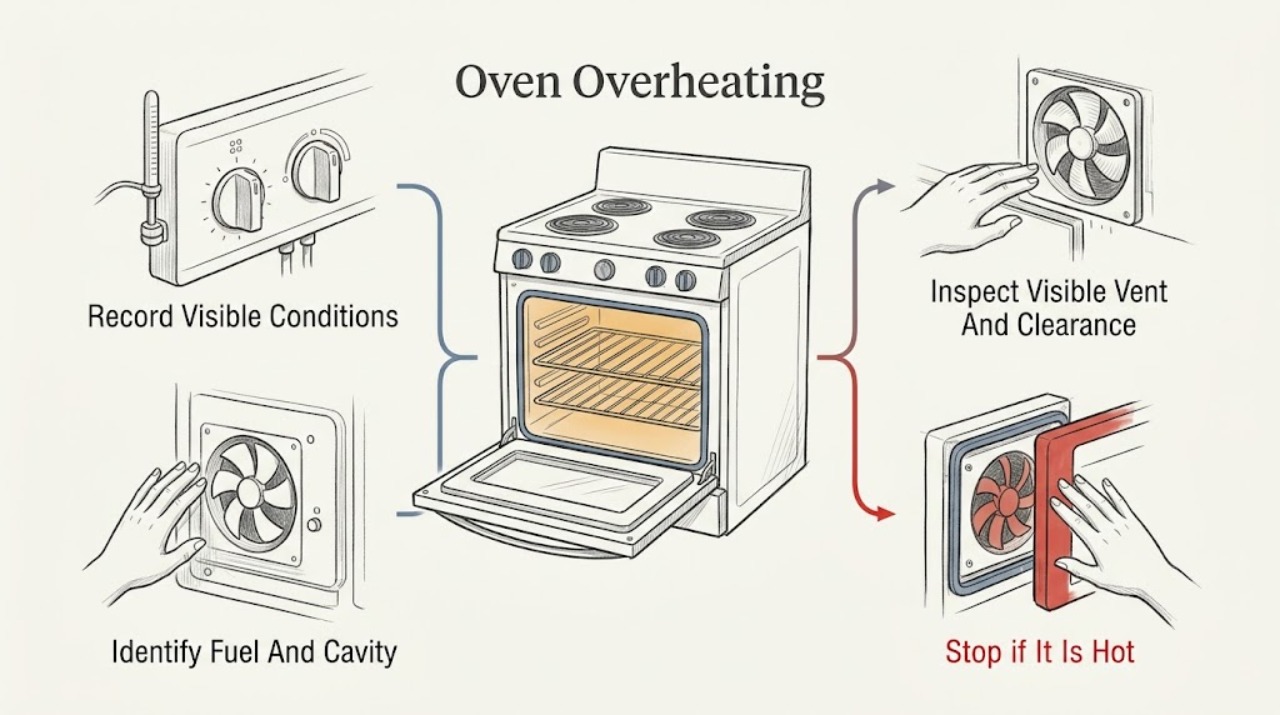
Monogram Oven Overheating: Separate Normal Heat from a Control Fault
A Monogram oven can feel very hot at the vent, door, or control area while operating normally, and its cooling fan may run during a cycle or after the oven is turned off. Treat it as overheating when food or the cavity is far hotter than the selected setting, heating continues after canceling, a fault such as F2 or F20 appears, the control area becomes abnormally hot, or smoke, burning odor, or damage occurs.
-
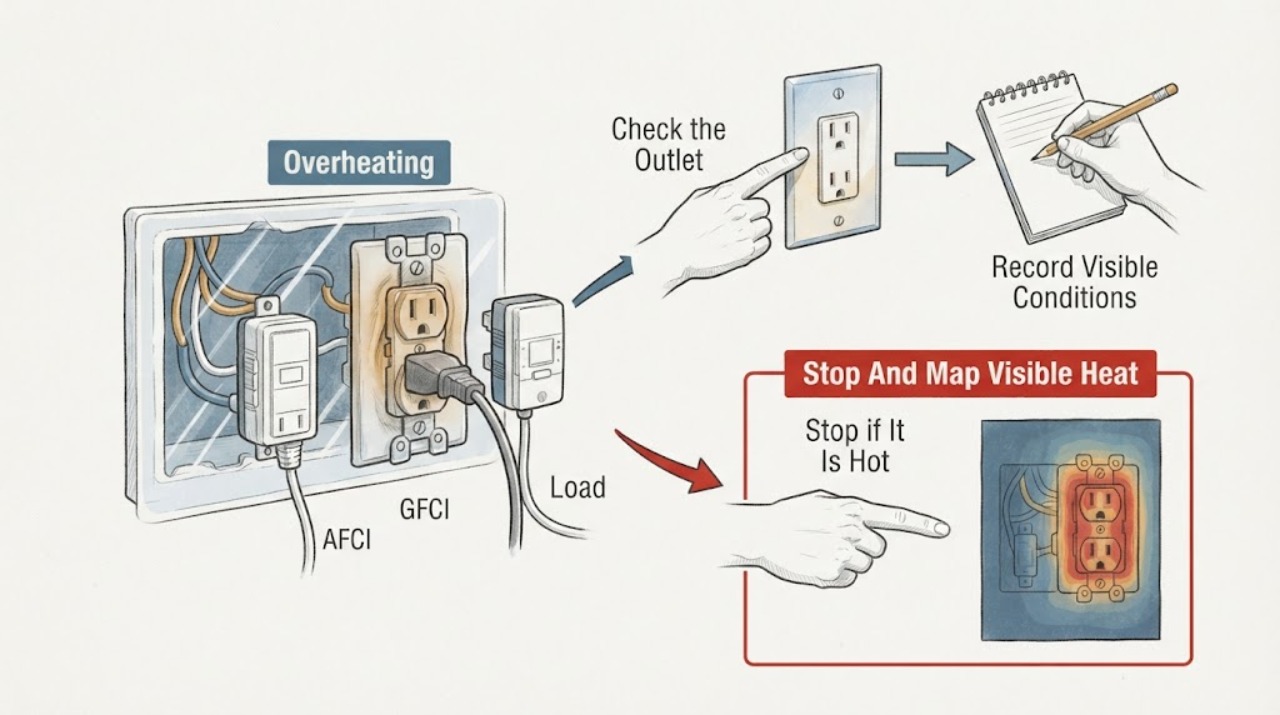
Outlet overheating: stop using it and identify the circuit hazard safely
An overheating outlet is a safety warning, not a normal appliance symptom. Stop using the receptacle immediately and keep people away if it is hot, discolored, cracked, sparking, smoking, or producing a burning or rubbery smell.
-
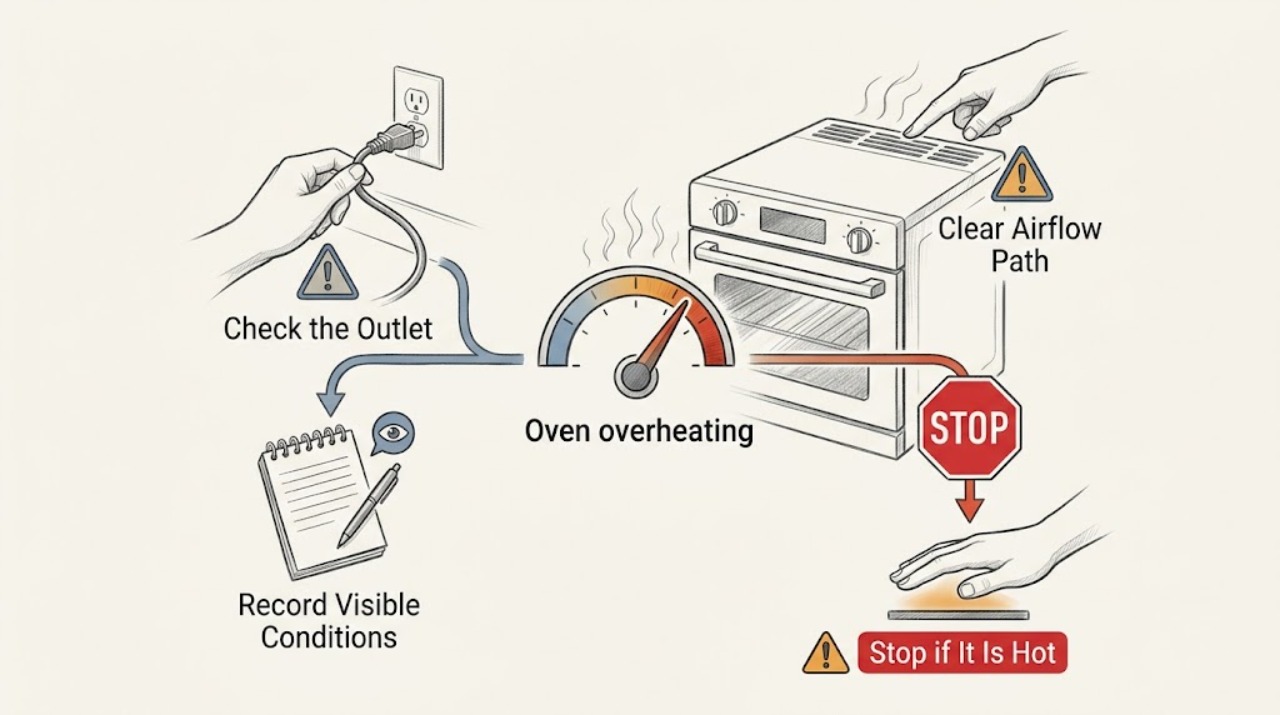
Oven overheating: separate normal cycling from a fault
First distinguish normal heat from uncontrolled overheating. Warm glass, an operating cooling fan, and elements cycling on and off can be normal for some models, while food burning at a normal setting, a temperature that keeps rising, an oven that continues heating after shutoff, smoke, an abnormal flame, gas odor, arcing, or a breaker trip is not.
-
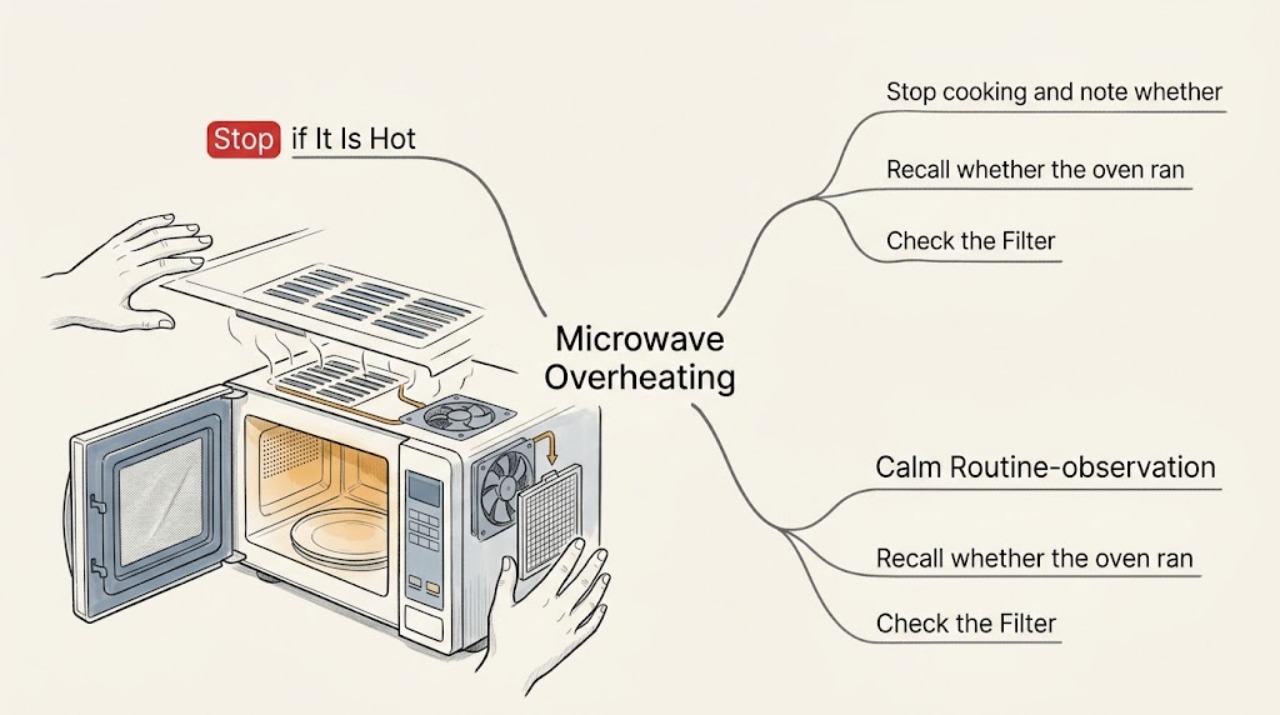
Panasonic Microwave Overheating: Check Food, Airflow, and Empty-Cavity Use
Stop the Panasonic microwave if the cabinet, food, or cavity becomes abnormally hot, smoke appears, or the fan does not run. After it is cool and safe, check whether it was operated empty, whether vents or filters are blocked, and whether cookware or food caused the symptom. Do not remove panels; recurring overheating requires authorized service.