
Samsung appliance guidance
Samsung Oven Repair Guides
Troubleshooting and repair guidance for published Samsung Oven problems, symptoms, and maintenance questions.
Published Samsung Oven guides
Choose the guide whose symptom or condition most closely matches what you are seeing.
-
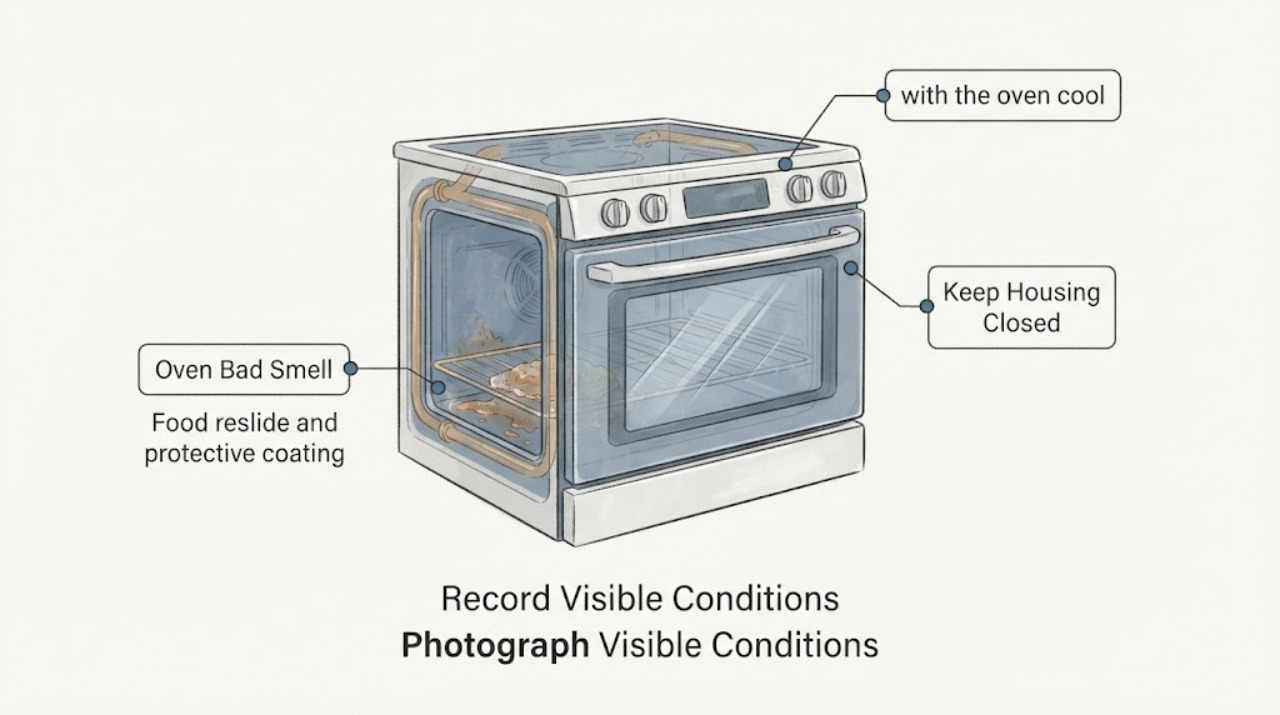
Samsung Oven Bad Smell: Separate Normal Odor from a Safety Fault
A Samsung oven smell is only potentially routine when it matches a known situation: a faint odor during first use, odor or smoke during a model-supported self-clean cycle, or smoke from food residue during normal cooking. Identify the oven model, fuel type and when the smell starts before choosing any remedy.
-
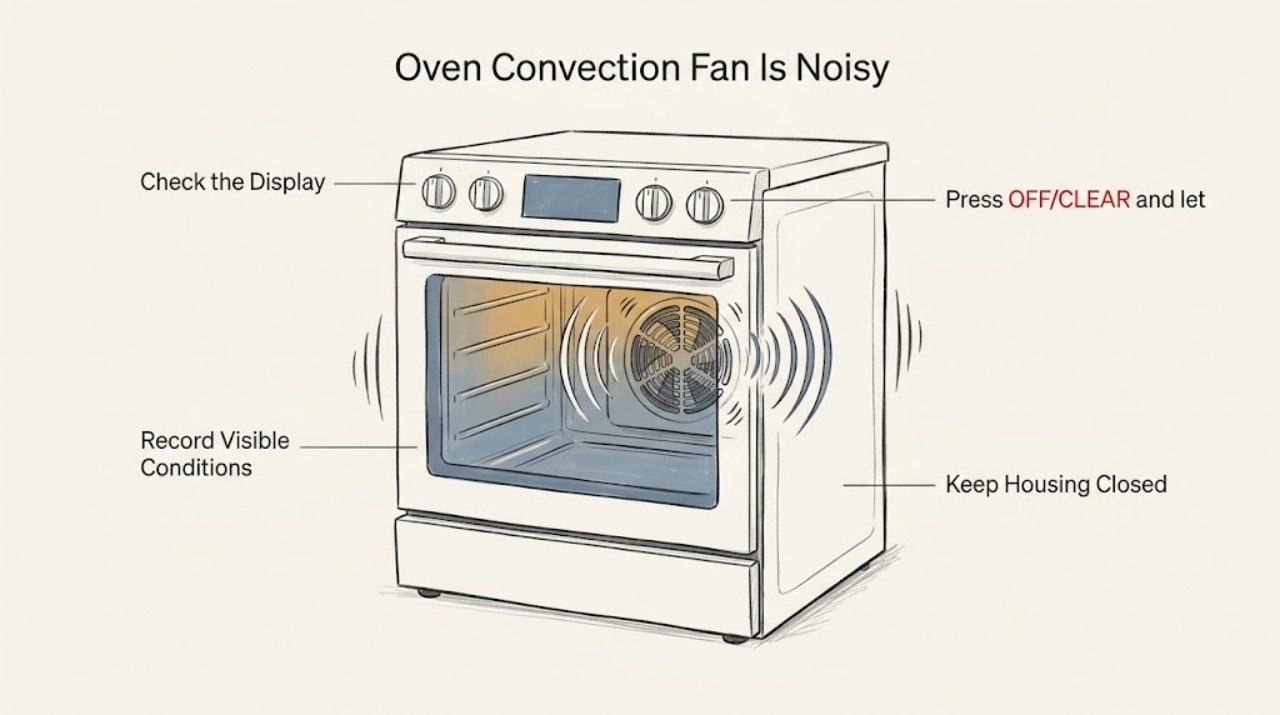
Samsung Oven Convection Fan Is Noisy: What to Check and What to Do Next
A Samsung convection fan normally makes a quiet, low hum and may turn on and off during convection cooking; the separate cooling fan can also continue after cooking while the oven cools. A new grinding, scraping, rattling, clicking, or distinctly louder sound is not something to diagnose by removing panels.
-
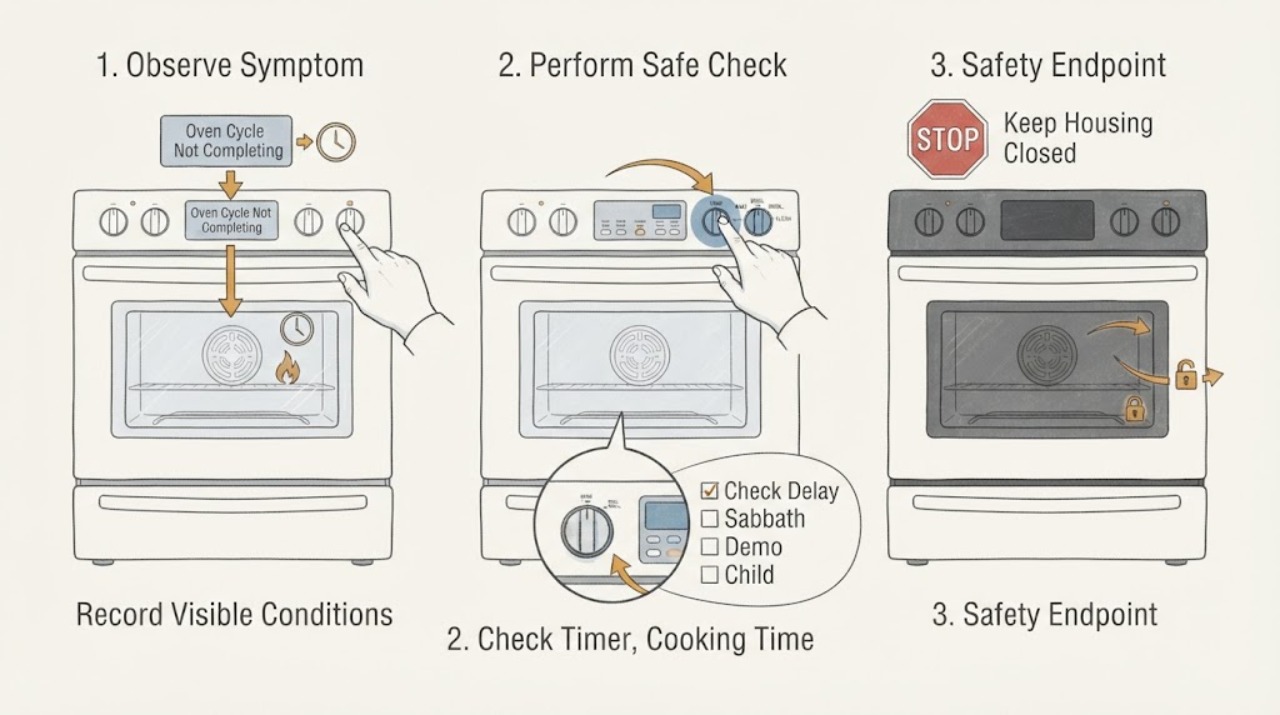
Samsung Oven Cycle Not Completing: Check Timers, Modes, and Safety Stops
If a Samsung oven cycle does not complete, first determine whether it stopped at the programmed end time, never started because Delay Start or a mode was selected, or stopped unexpectedly while heat was still needed. The kitchen timer only counts down and beeps; it does not start or stop cooking.
-
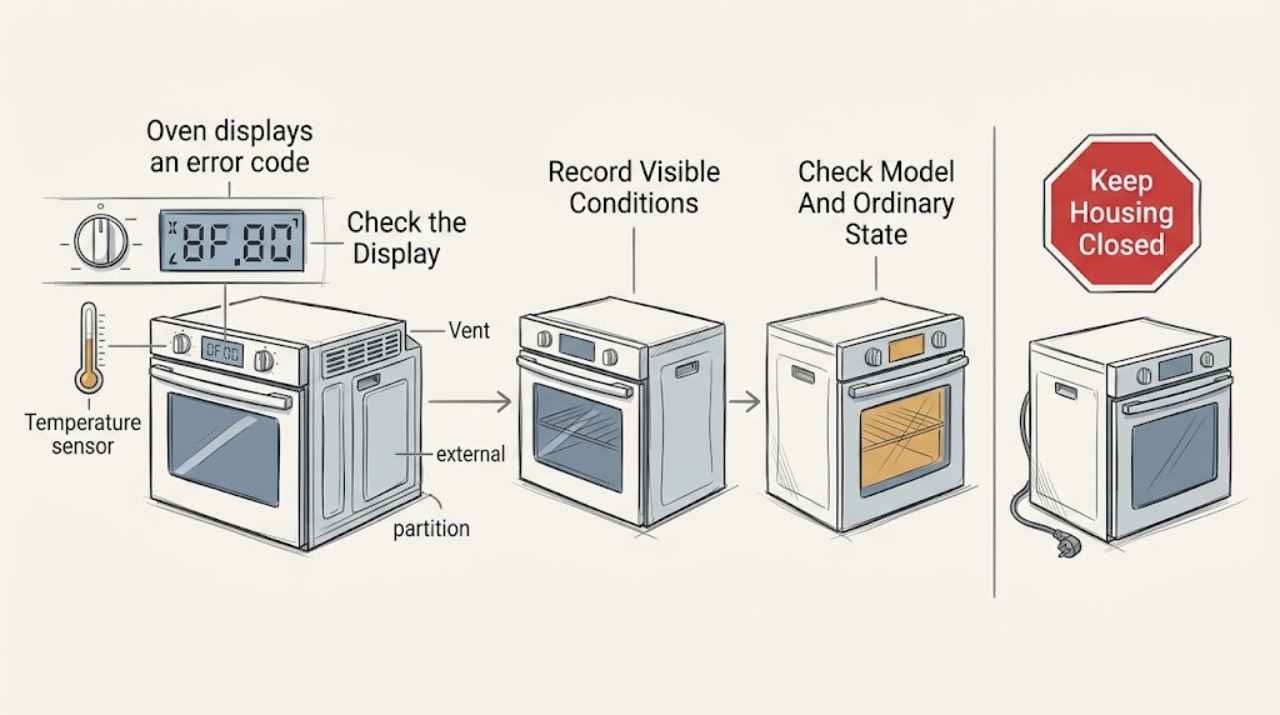
Samsung oven displays an error code: What to Check and What to Do Next
Record the complete Samsung oven message before trying to clear it. Samsung uses information codes for different conditions, including a door or divider position, Demo mode, blocked vent or high temperature, power connection, communication, or a model-specific fault.
-
Samsung Oven Door Locked: What to Check Before Calling for Service
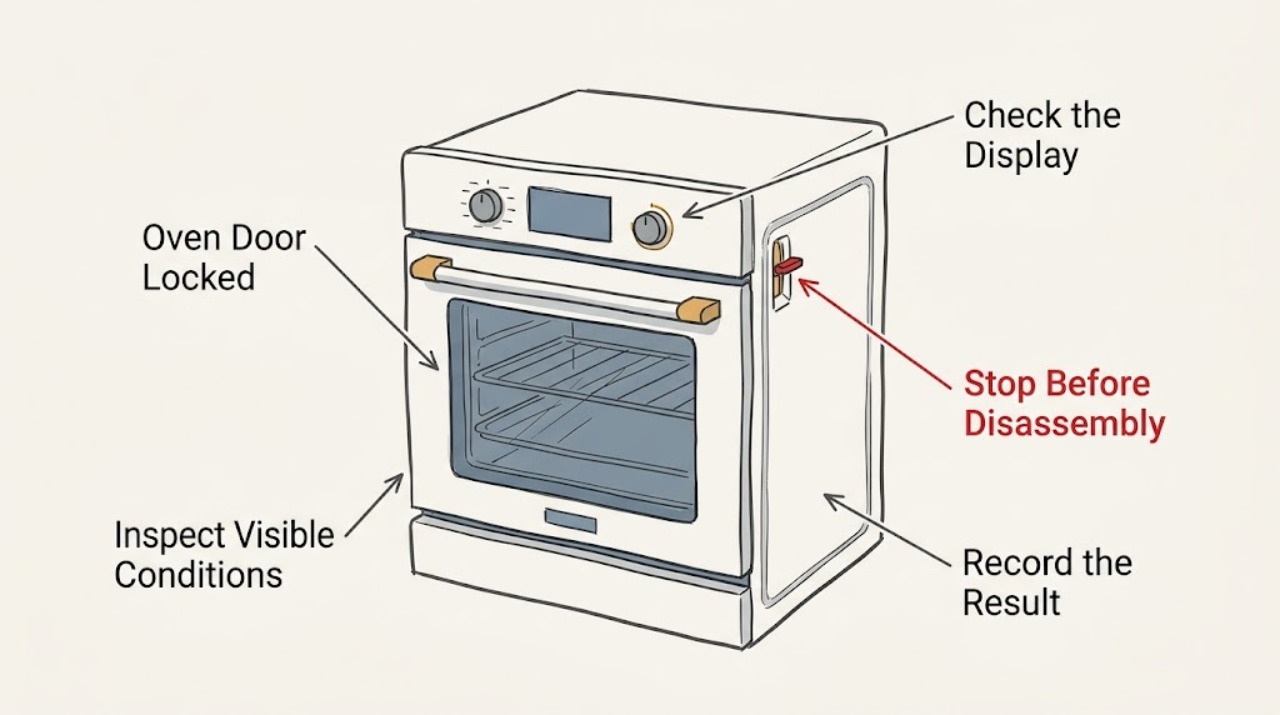
A Samsung oven door commonly remains locked because the oven is still hot after Self Clean, the cleaning cycle is still active, Control Lock or Oven Lock is enabled, power was interrupted during a lock condition, or the latch or door is physically out of position. Wait until the oven is fully cool and follow the exact model manual before trying a control reset.
-
Samsung Oven Door Not Closing: Check Racks, Hinges, and the Latch
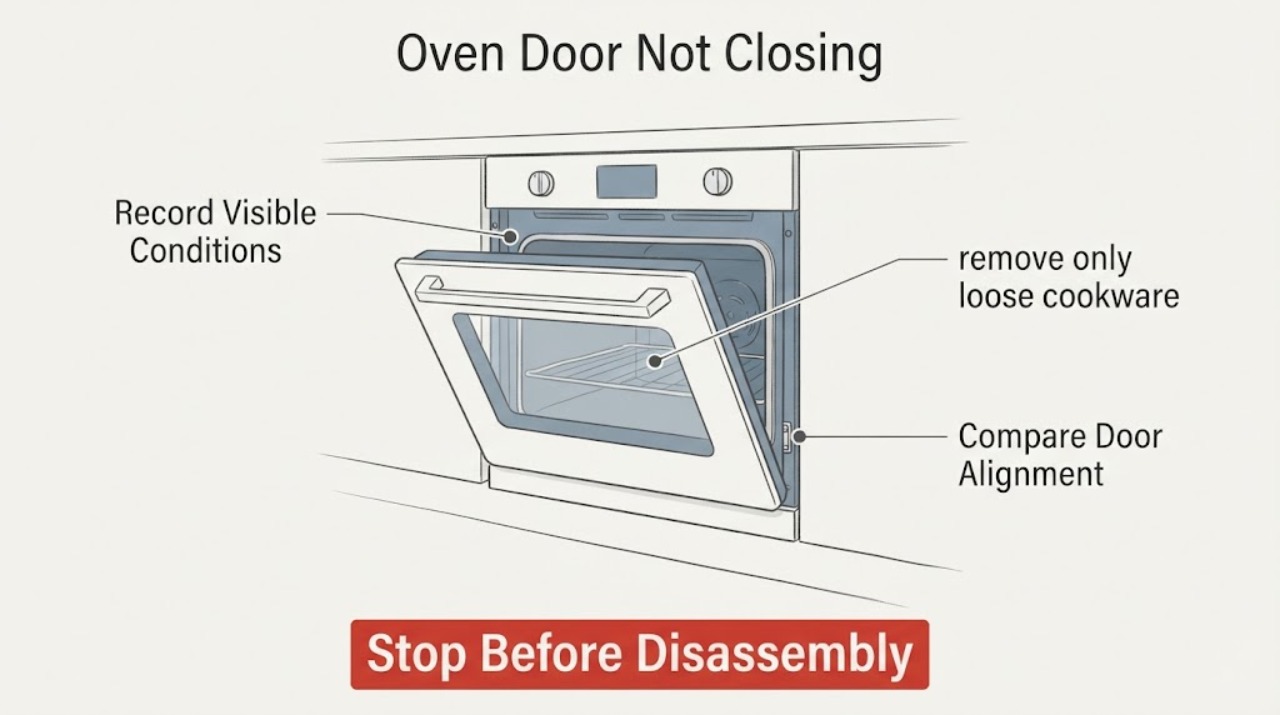
If a Samsung oven door will not close, first decide whether the oven is still hot or in a self-clean lock state. Keep hands away from hot surfaces, wait for a safe cool condition, and check that racks, a divider, tray, liner, or food is not blocking the door.
-
Samsung oven door will not close: What to Check and What to Do Next
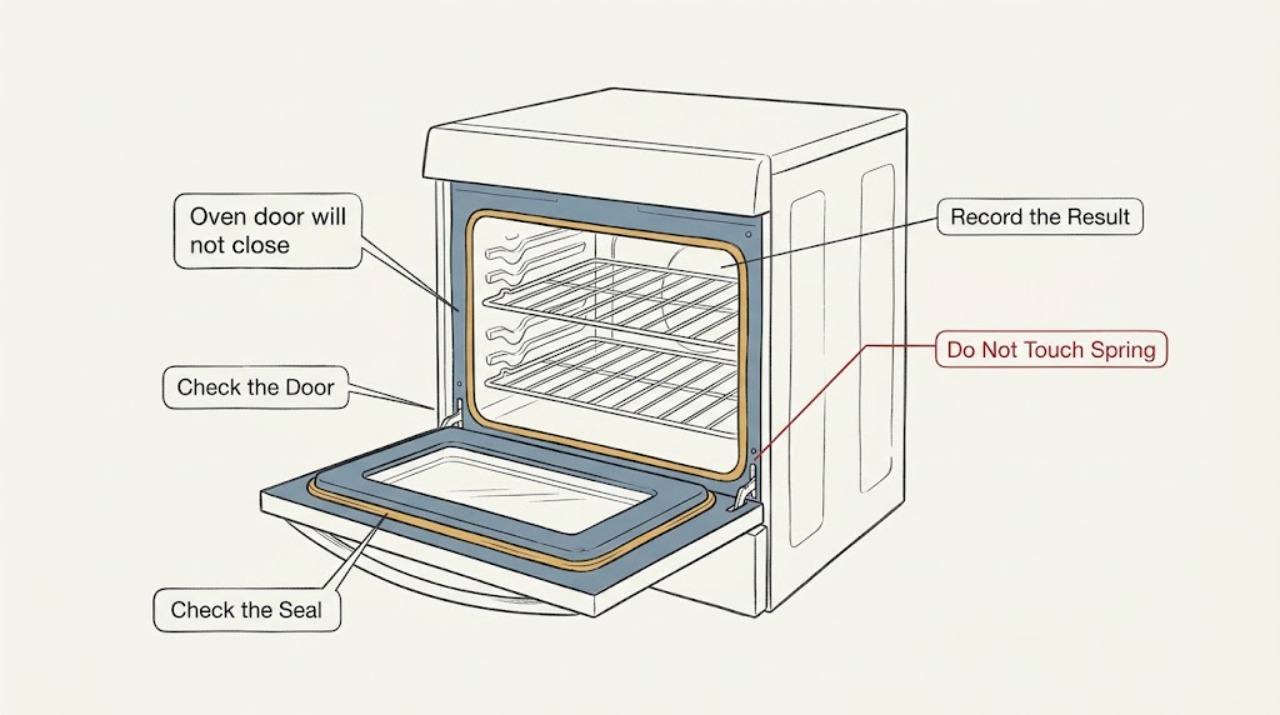
With the oven cool and off, remove anything that projects into the door path and push every rack or Smart Divider fully into its intended position. If the door was recently removed, use the exact Samsung manual to check that both hinges are seated and not extended or bent; do not force the door or hinge arms.
-
Samsung Oven Error Displayed: Record the Code, Match the Model, and Reset Once
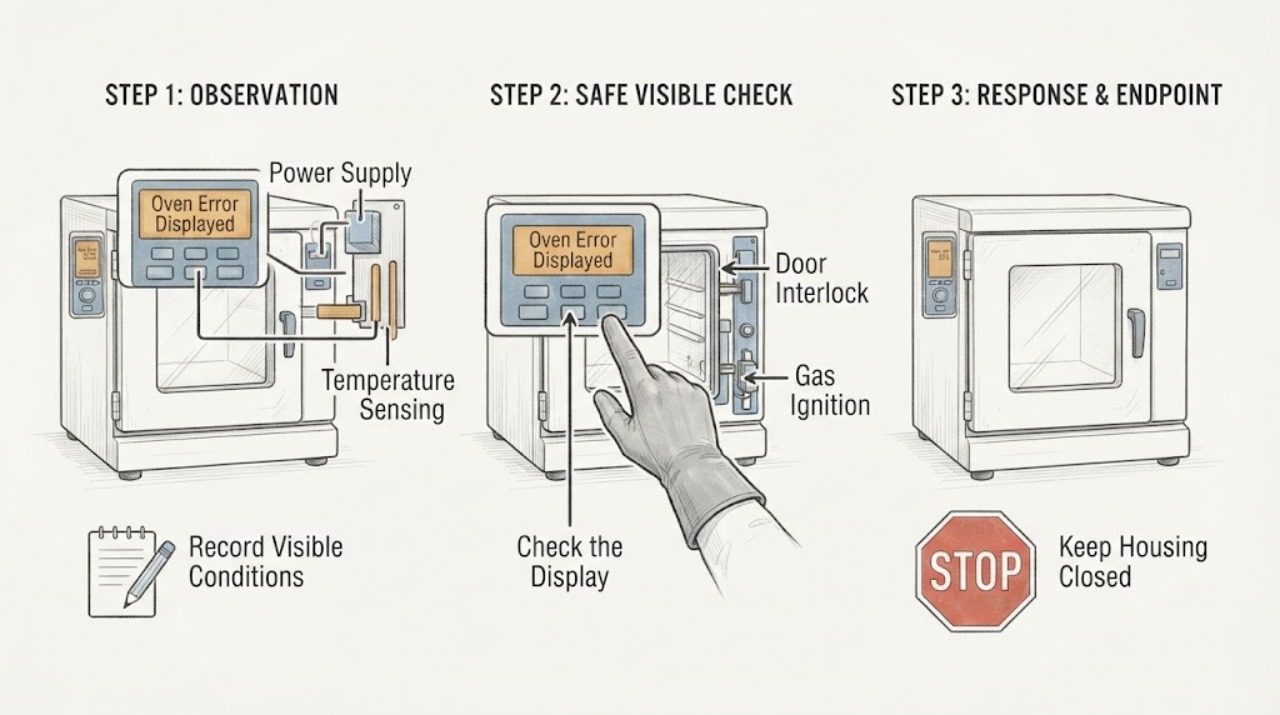
When a Samsung oven displays an error, record the exact characters, model number, fuel type, and what the oven was doing before you try anything.
-
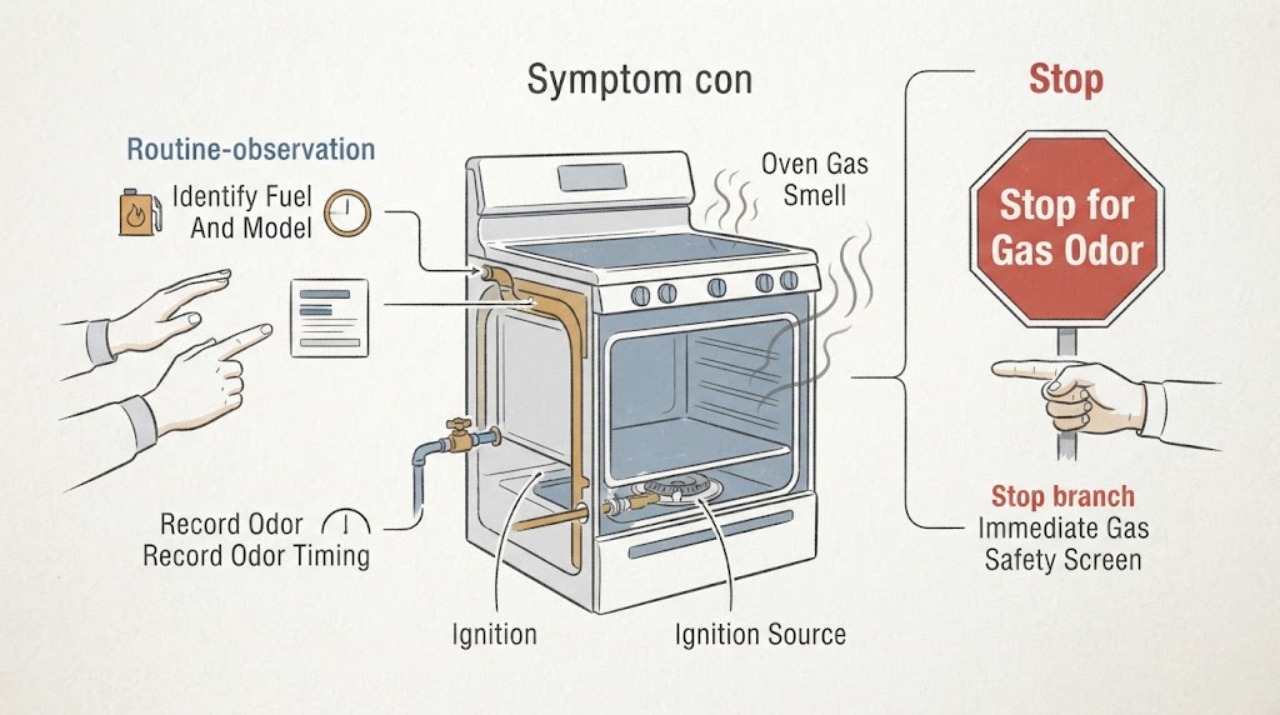
Samsung Oven Gas Smell
First confirm that the Samsung appliance is a gas oven or gas range and treat a real gas odor as a safety event, not a smell to diagnose by repeated ignition. If the odor is strong, persistent, accompanied by hissing, a delayed or burst flame, smoke, soot, abnormal flame, or a carbon-monoxide alarm, do not operate controls, switches, flames, or phones in the area: leave, and contact emergency or gas-safety help from a safe location.
-
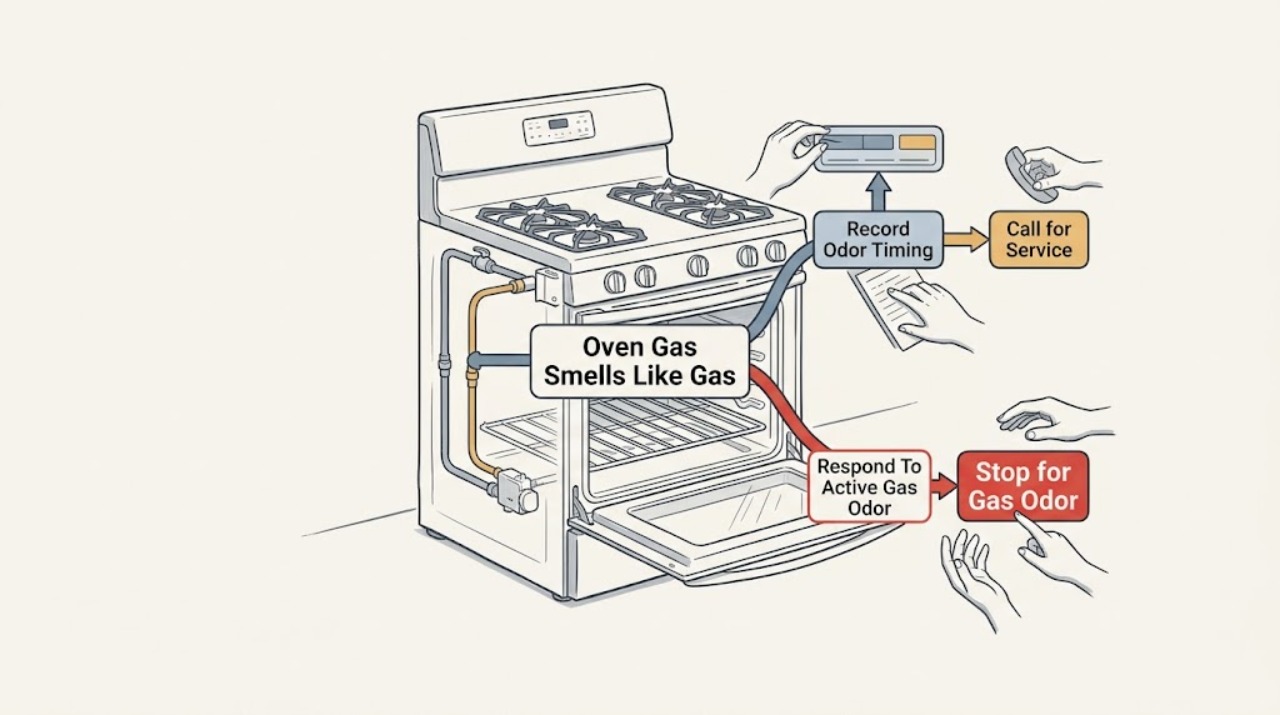
Samsung Oven Gas Smells Like Gas: What to Check and What to Do Next
Treat a gas smell from a Samsung gas oven as a possible gas leak until its timing and source are safely understood. If the smell is present now, is strong or persistent, occurs when the oven is off, or comes with a hissing sound, do not light anything, operate switches or appliances, use a phone inside, or try another ignition.
-
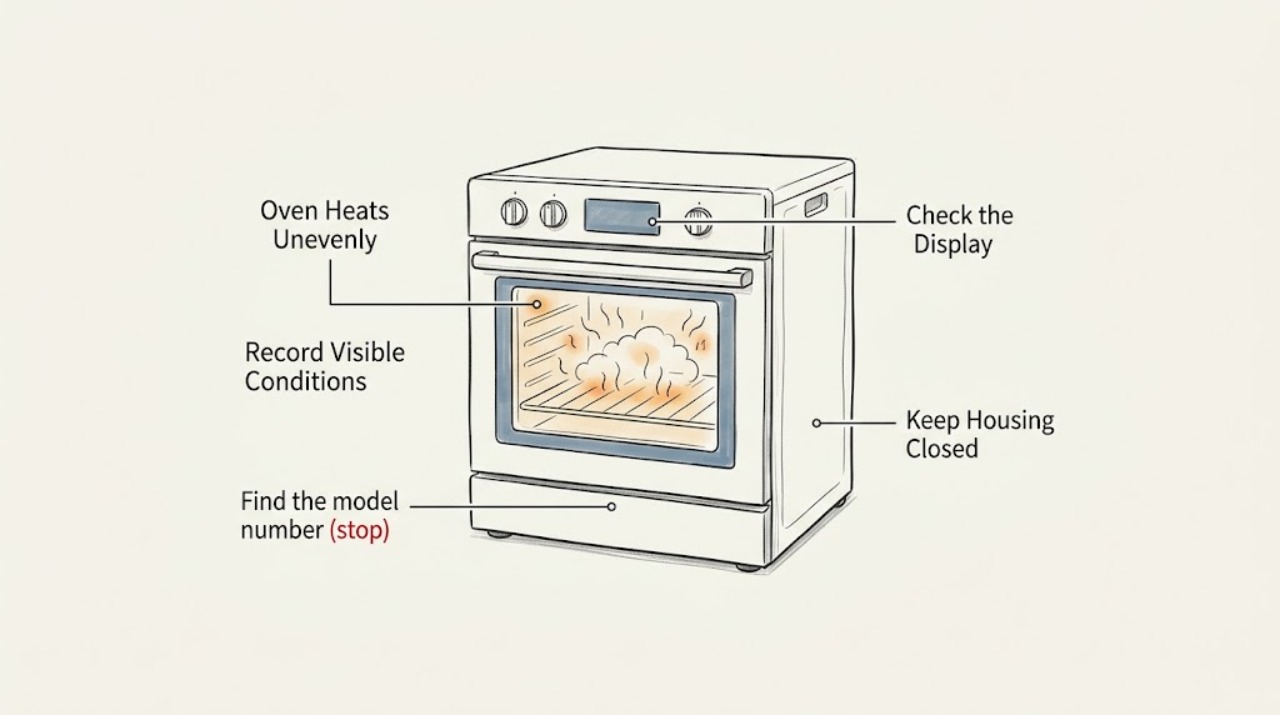
Samsung Oven Heats Unevenly: What to Check and What to Do Next
If a Samsung oven heats unevenly, first identify the pattern, then repeat a simple bake with the exact model's recommended mode, rack position, pan, full preheat, and closed door. Samsung says rack placement, airflow, settings, preheating, crowding, and calibration can affect uneven cooking, while its models differ in convection and heating features.
-
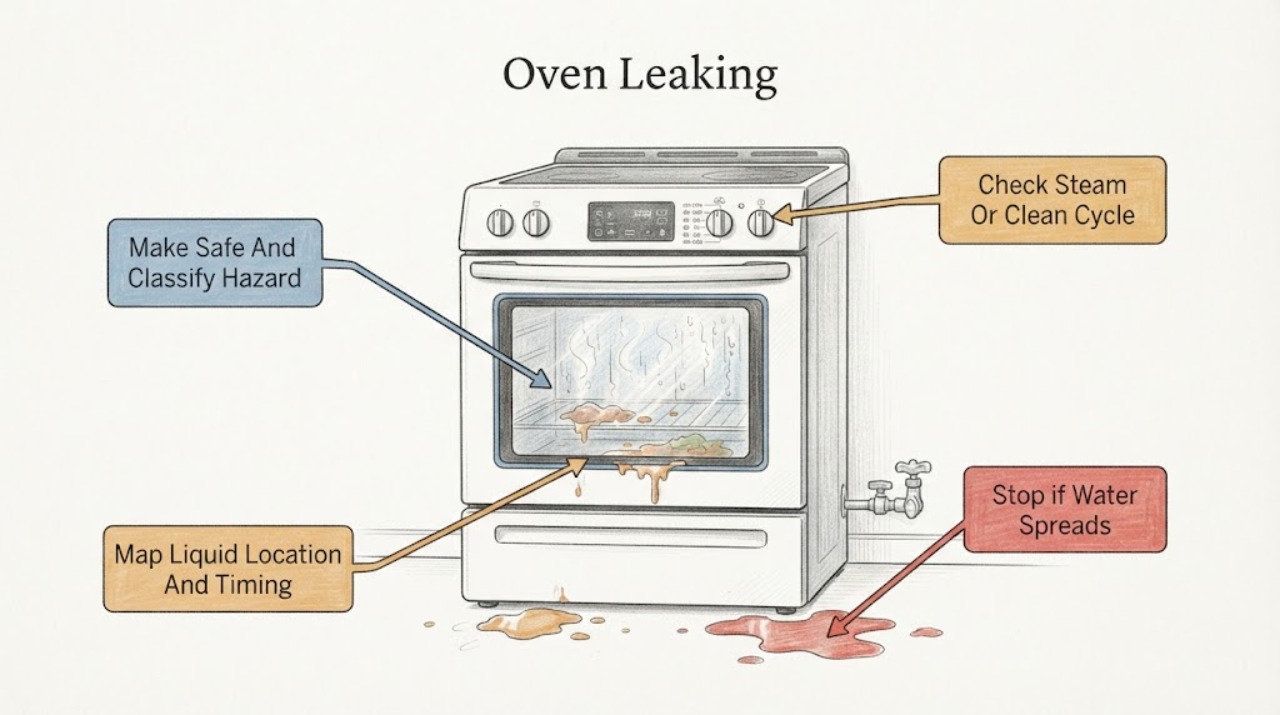
Samsung Oven Leaking
A Samsung oven that appears to be leaking may be releasing steam or condensation, retaining water after an applicable Steam Clean cycle, or allowing liquid food residue to run toward the door. Samsung says Steam Clean models can have a significant amount of hot water left in the cavity after the cycle, and that some wall-oven models use water for Steam Cook; let the oven cool before wiping it and follow the exact model manual.
-
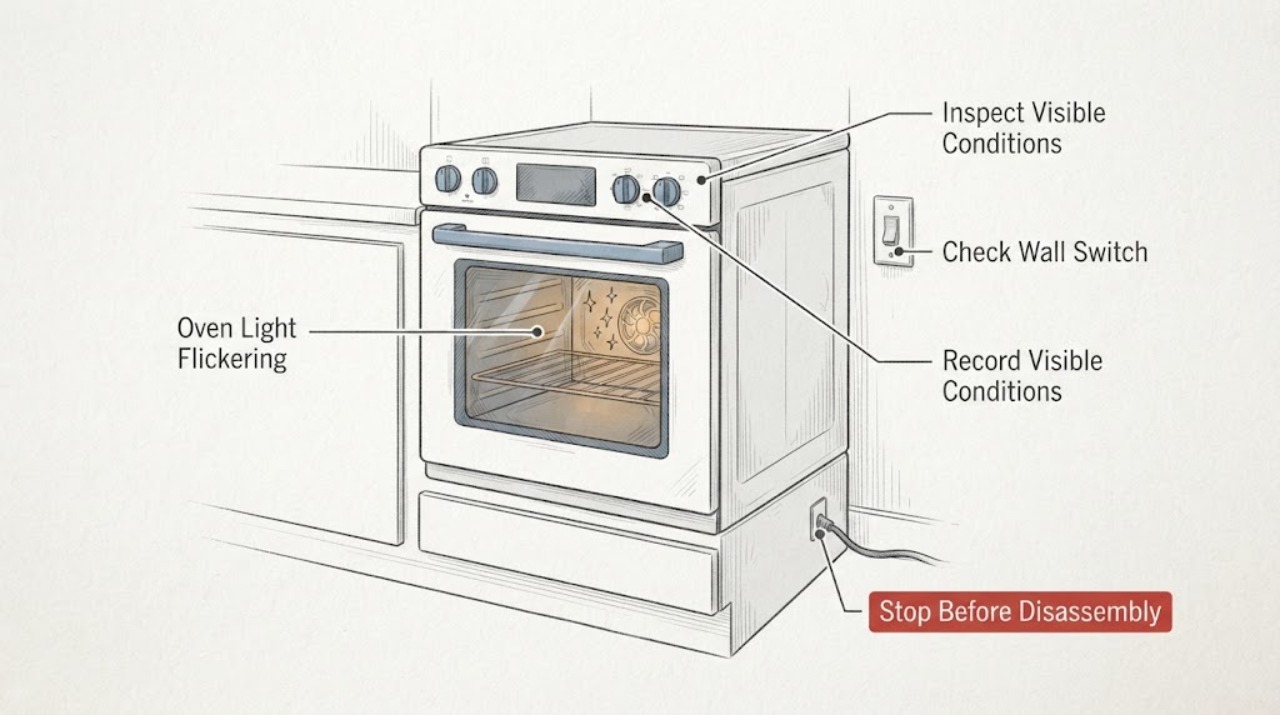
Samsung Oven Light Flickering: Check the Door, Bulb, and Power Safely
A Samsung oven light may change when the door switch, Lamp control, preheating, or a high-heat function changes state. Flickering that follows the door or a selected mode can be a control or switch clue; flickering at random, across the whole appliance, or together with a blinking display suggests a power, control, or connection problem.
-
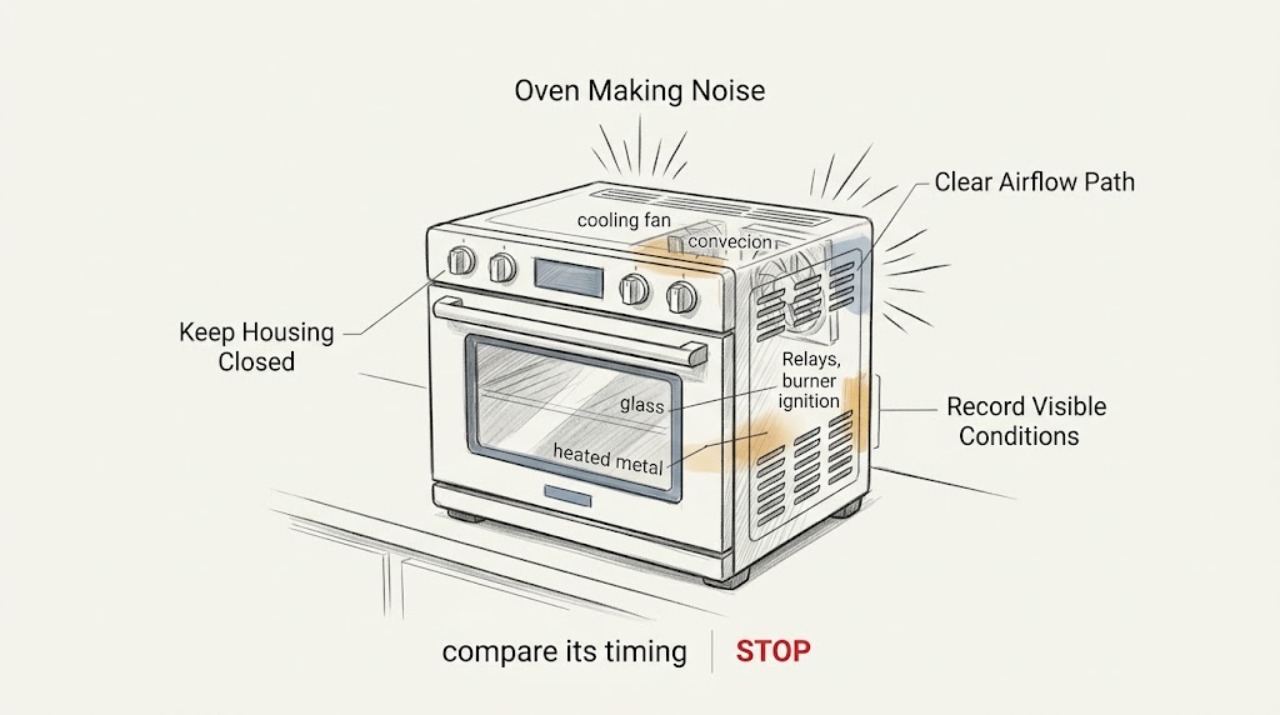
Samsung Oven Making Noise: Fan, Relay, and Gas-Ignition Sounds
First identify when the sound occurs, whether the oven is electric, gas, induction, or dual-fuel, and whether the sound is a quiet repeating hum or a new loud mechanical or gas-related noise.
-
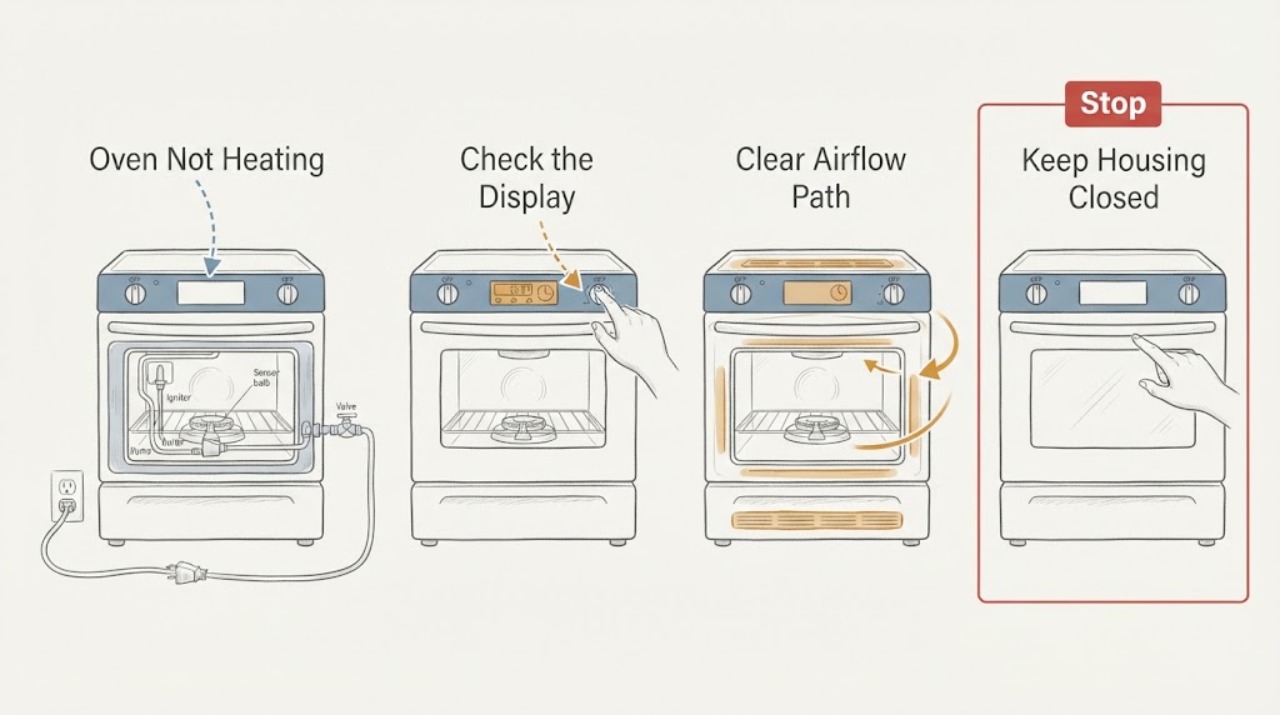
Samsung Oven Not Heating: Check Mode, Door, Power, and Fuel Safely
If a Samsung oven is not heating, first confirm that the correct mode and temperature were selected and Start was pressed, then check whether the display is in Demo mode, shows an error, or indicates a door or control state. Keep the door closed while preheating and do not use foil that blocks airflow.
-
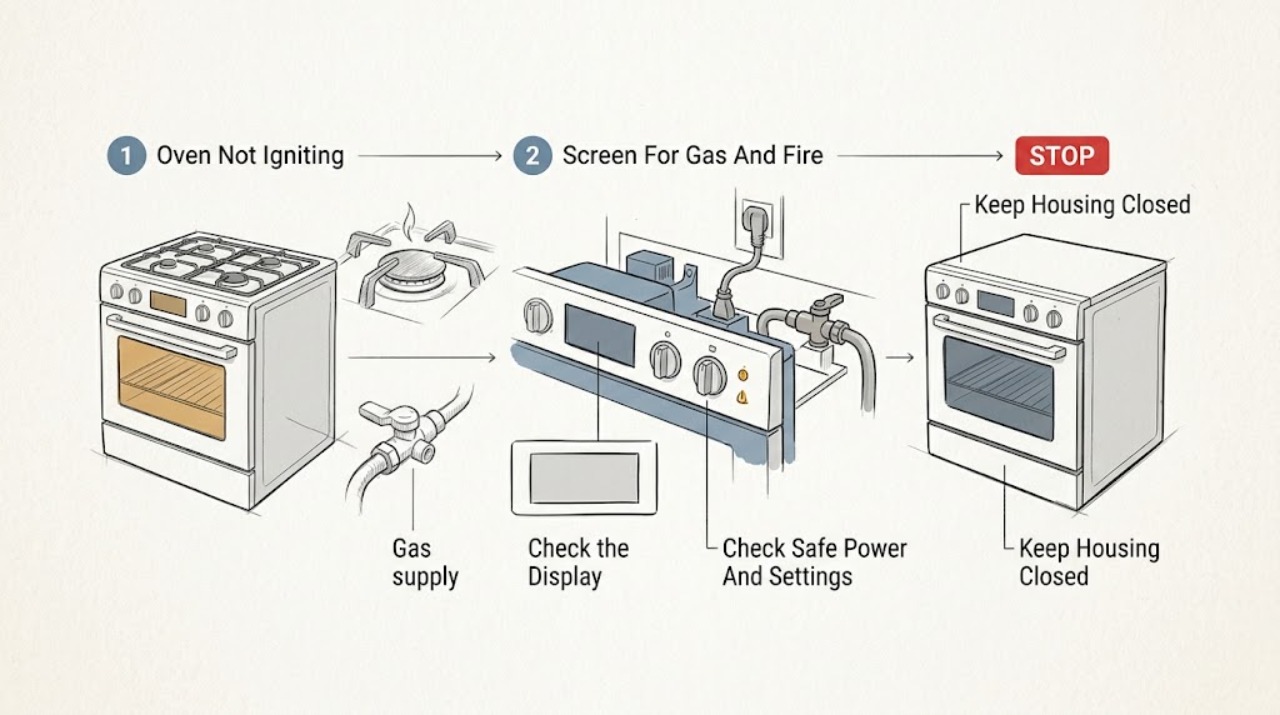
Samsung Oven Not Igniting: Check the Controls, Gas Supply, and Ignition Sequence
First determine whether this is a gas Samsung oven and whether the display, controls, and cooktop have power. A gas oven may fail to ignite because the control sequence, door state, gas supply, or igniter is not ready, while electric models do not use a gas burner ignition system.
-
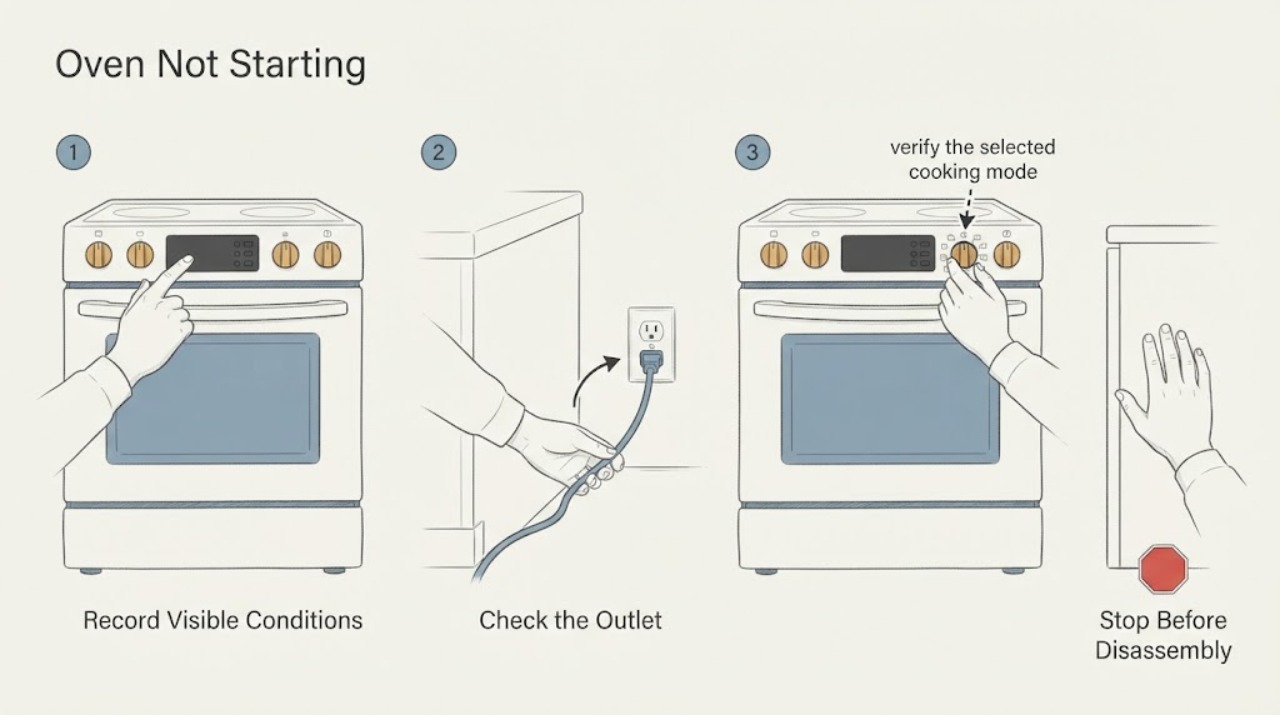
Samsung Oven Not Starting: Check Power, Settings, Door, and Gas Safely
A Samsung oven that will not start can have no power at all, or it can have a live display but be held by a control lock, Demo mode, delayed start, timer, door condition, or an error. First record the model, display, mode, and whether the cooktop also works.
-
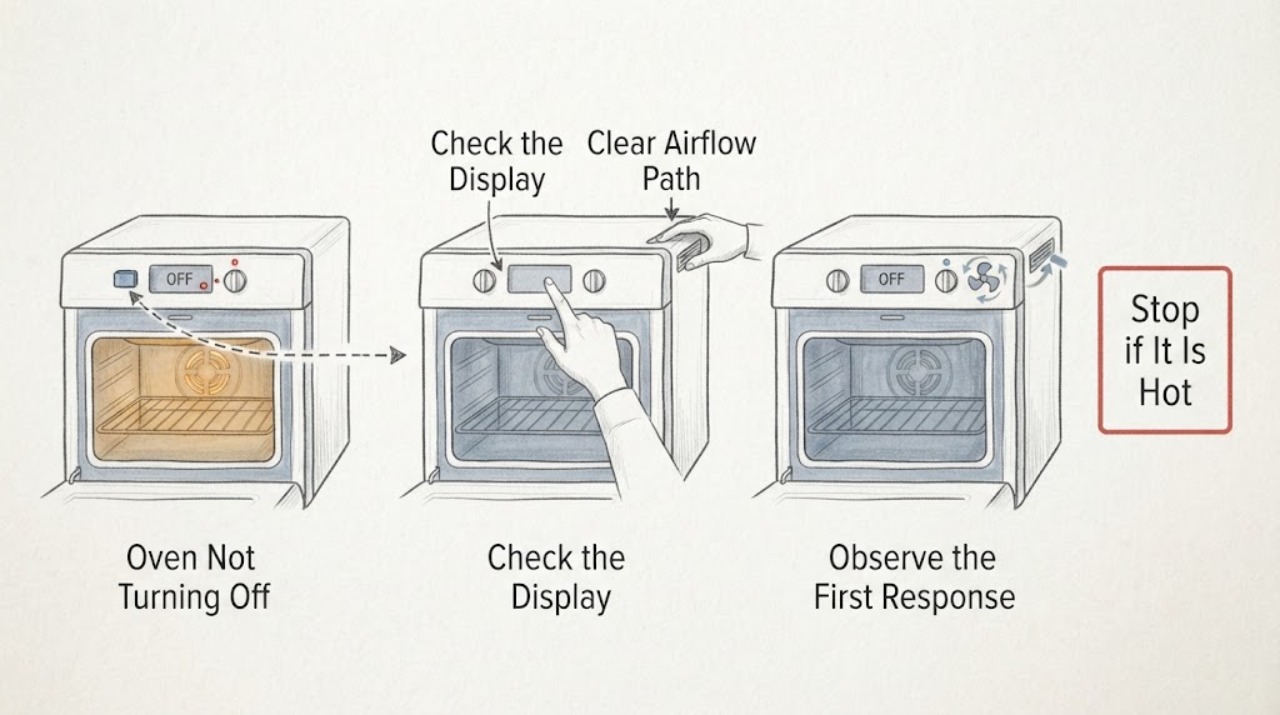
Samsung Oven Not Turning Off: Fan or Continuous Heat?
First separate a fan or lit display from continued heating. Samsung ovens can keep a cooling fan running after cooking while the electronics cool, and a convection fan can cycle during operation.
-
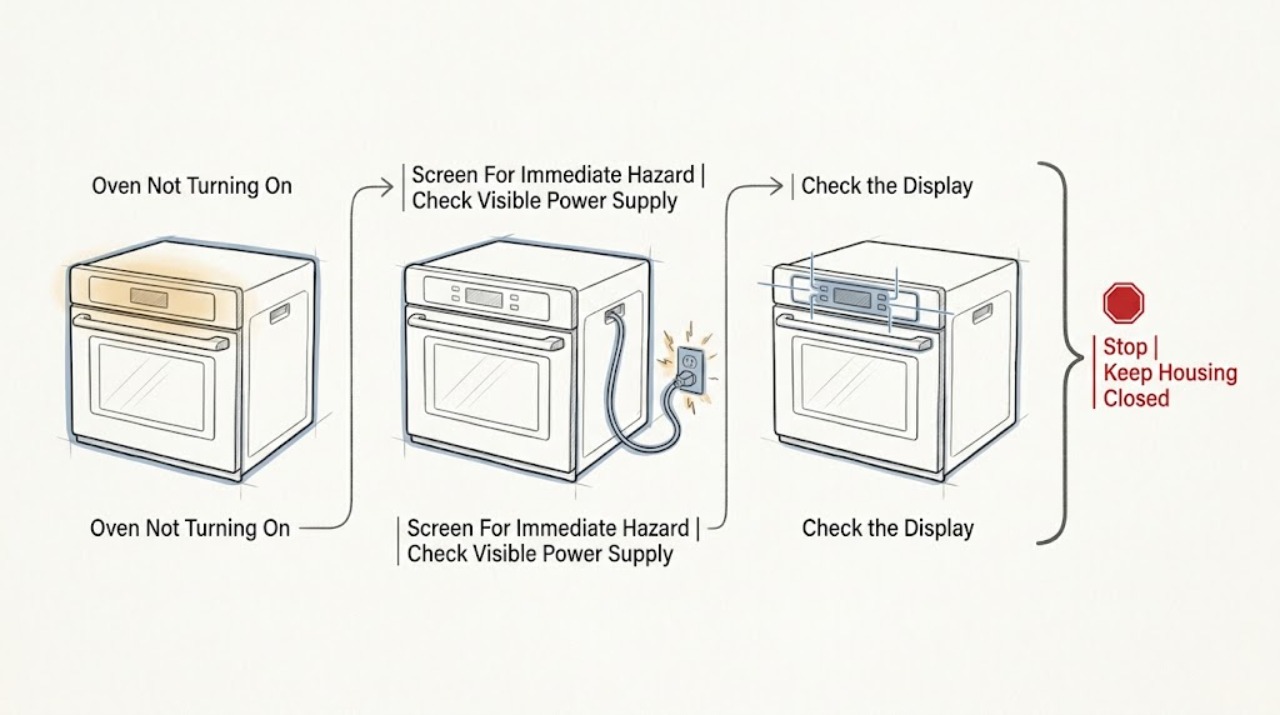
Samsung Oven Not Turning On
First separate a completely blank Samsung oven from an oven whose display works but will not start a cycle. If there is smoke, a burning smell, visible arcing, a hot or damaged cord or outlet, repeated breaker trips, water near electrical parts, or a gas odor, stop and do not keep testing it.
-
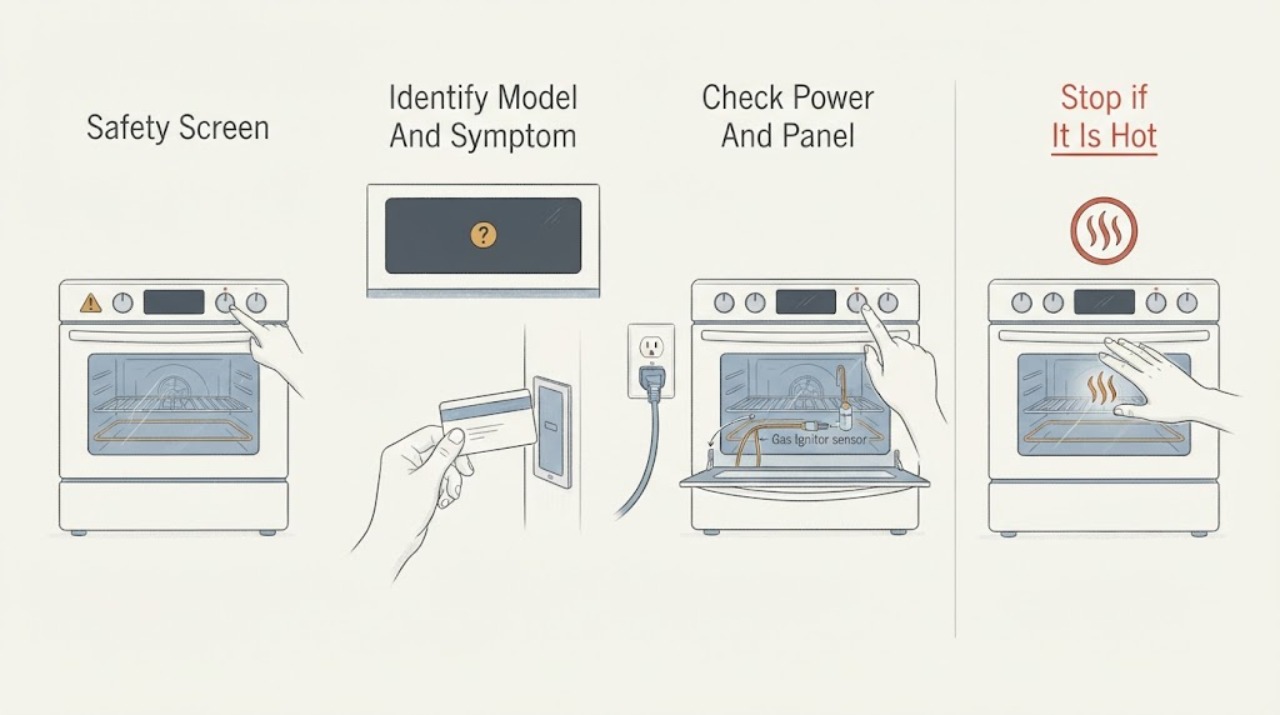
Samsung Oven Not Working
Break a Samsung oven that is ‘not working’ into the actual symptom: a blank panel, a panel that will not accept a start command, no heat, a gas oven that will not ignite, an error or lock, or a cycle that stops. From a dry, safe position, check the intended power connection and breaker once, confirm the door is fully closed, verify the mode and timer settings, and check the exact model manual for Demo or Child Lock.
-
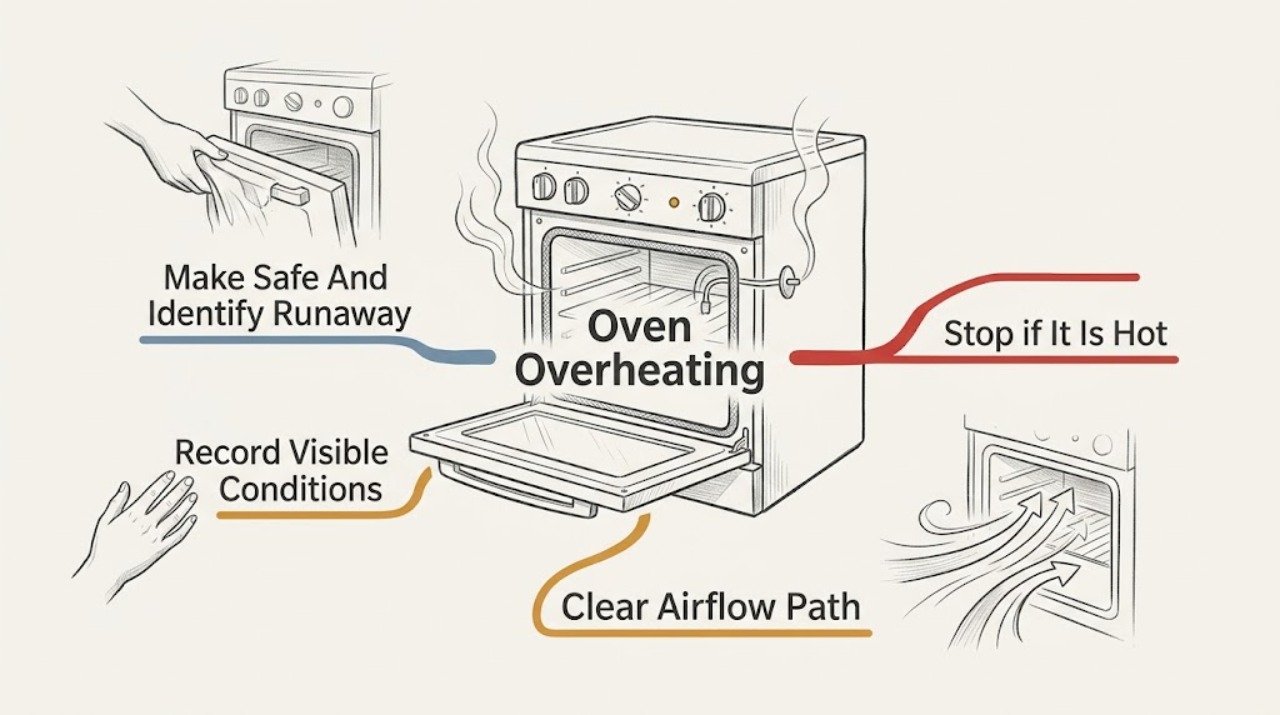
Samsung Oven Overheating: Separate Normal Heat Cycling From a Fault
A Samsung oven can feel very hot while operating normally: heating elements cycle above and below the set temperature, and a cooling fan may continue after cooking to protect the controls. Treat it as overheating when food burns at the same setting, the oven keeps heating after the selected function is cancelled, the temperature rises without cycling off, the door or controls become abnormally hot, or smoke, a burning odor, flame, arcing, or a CO alarm appears.
-
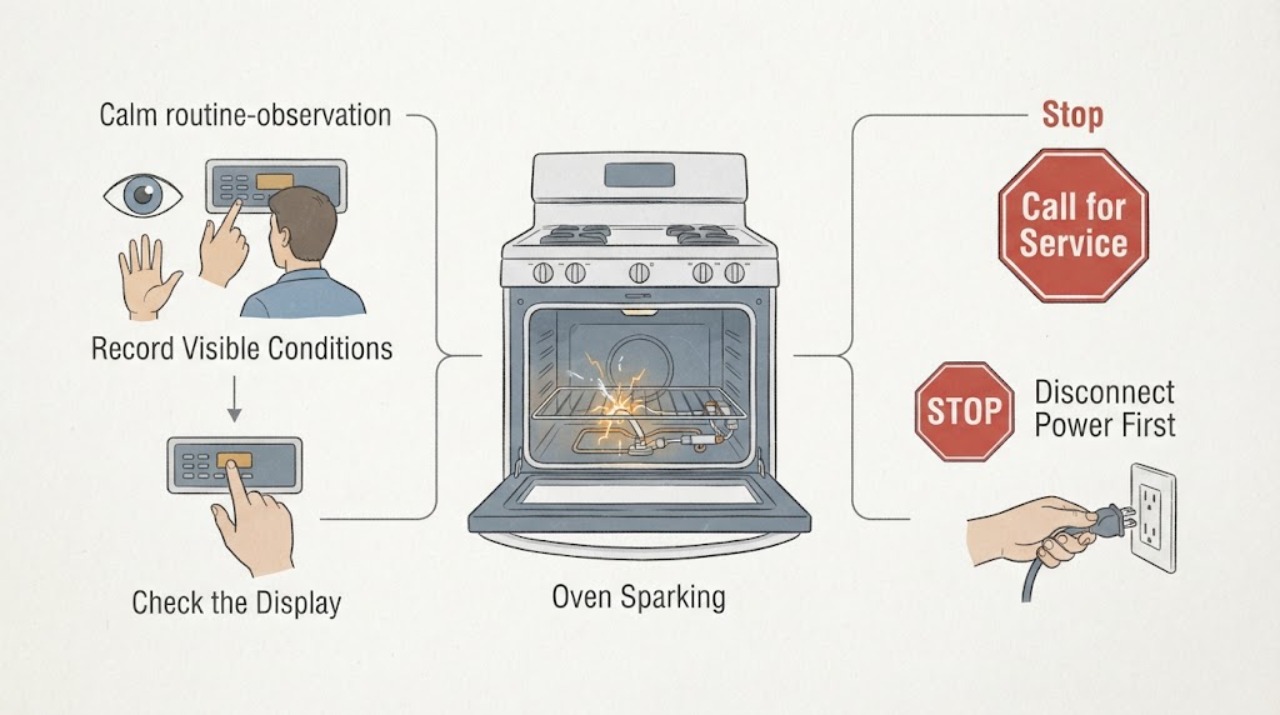
Samsung Oven Sparking: Separate Normal Gas Ignition from a Dangerous Arc
A Samsung gas range can make a brief, controlled clicking sound while an igniter lights a burner, but a visible spark in the oven cavity, at the outlet or cord, or around the control area is not a normal oven operating condition. Continuous clicking after all gas controls are off, smoke, a gas odor, delayed ignition, an abnormal flame, heat damage, or repeated breaker trips means stop using the range and arrange qualified service.
-
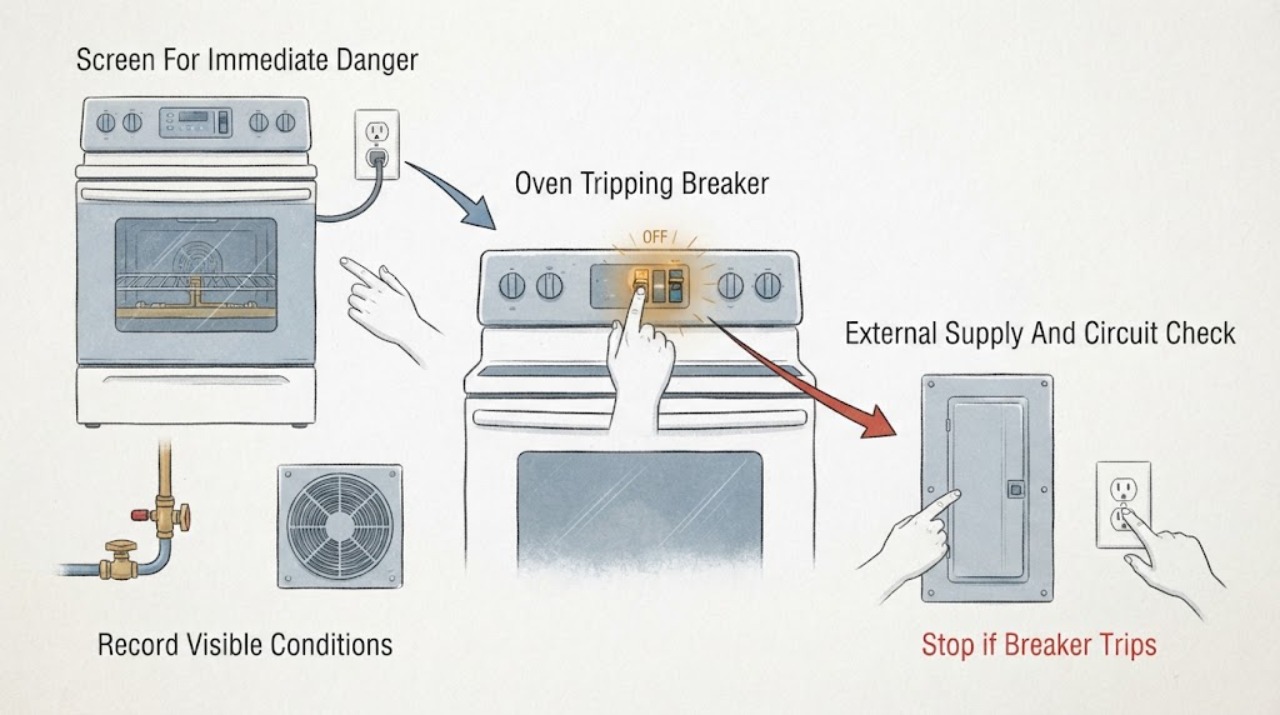
Samsung Oven Tripping Breaker
A Samsung oven that trips a breaker should not be repeatedly reset or run to reproduce the fault. First note whether the trip occurs as soon as power is restored, when Bake or Broil starts, during preheat, when a fan or cleaning cycle begins, or after the oven has heated.