
GE appliance guidance
GE Microwave Repair Guides
Troubleshooting and repair guidance for published GE Microwave problems, symptoms, and maintenance questions.
Published GE Microwave guides
Choose the guide whose symptom or condition most closely matches what you are seeing.
-
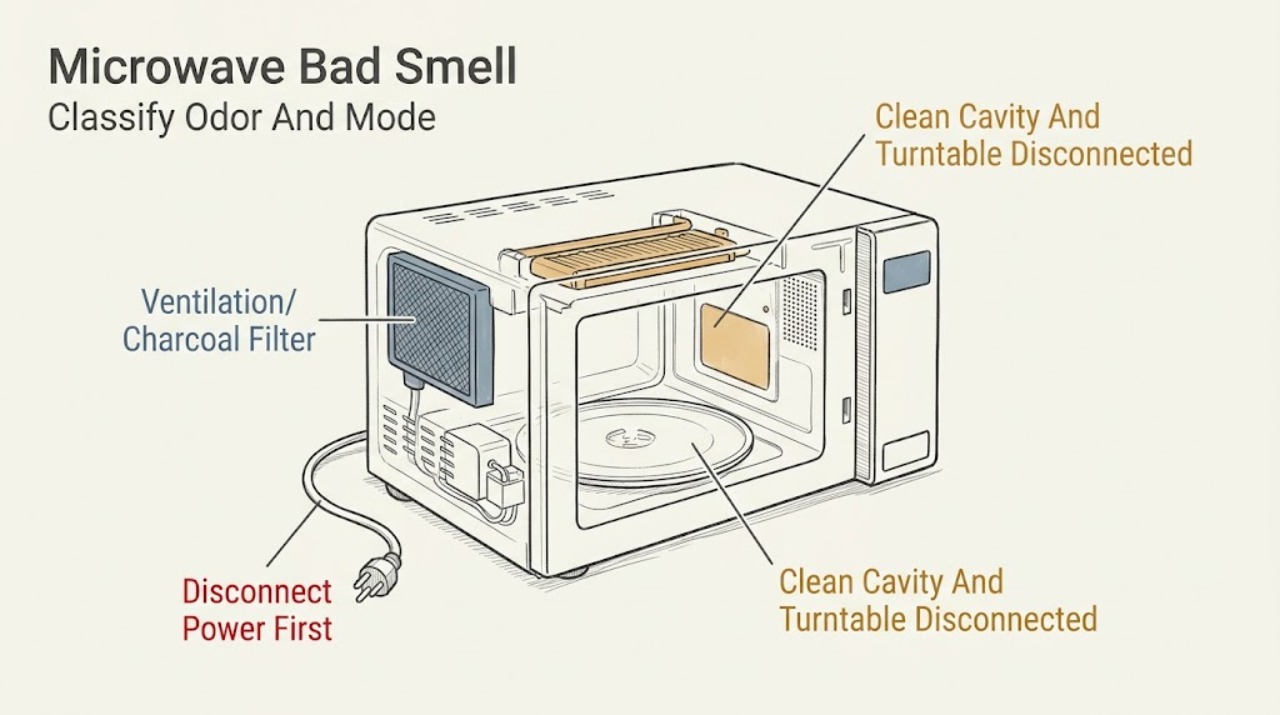
GE Microwave Bad Smell: Separate Food Odor from an Electrical Hazard
Stop and classify the smell before cleaning or using the microwave again. If it smells like food, grease, fish, or burned popcorn and there is no sparking, smoke, or electrical odor, unplug before cleaning the cavity and turntable with the exact manual's mild, non-abrasive method; GE says baked-on odors can take several days to fade.
-
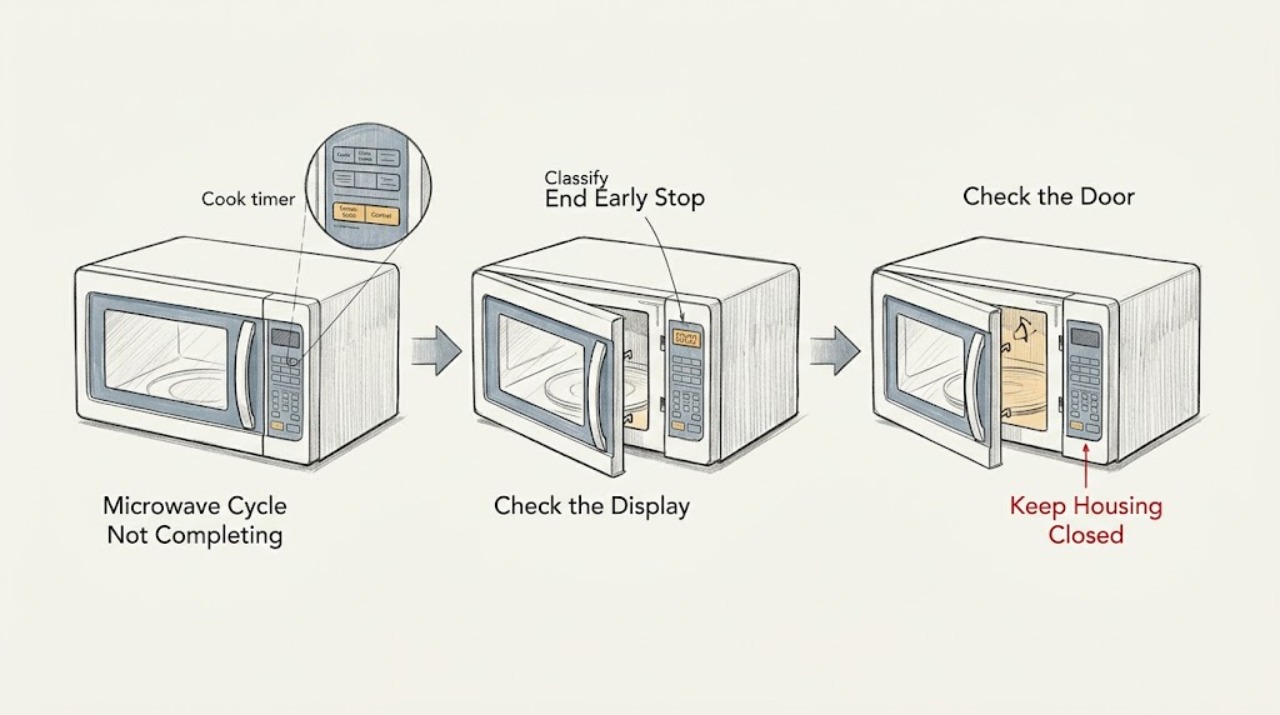
GE Microwave Cycle Not Completing: Find the Safe Branch
First determine whether the timer reaches End, stops early while the display stays on, or stops with the display or power gone. If the display and controls remain active, press Clear/Off or Reset once and use the exact Owner's Manual to check a paused door, control lock, sensor program, or model-specific mode; a door that is not fully closed cannot engage the safety interlocks.
-
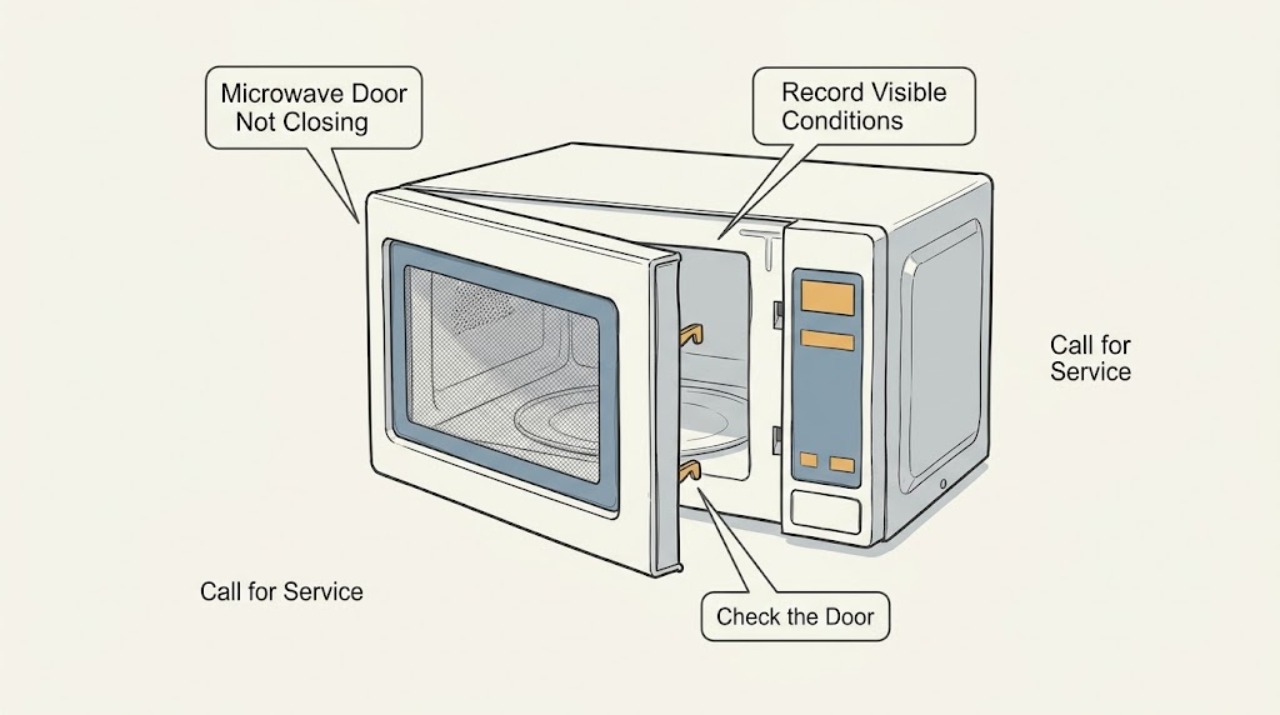
GE Microwave Door Not Closing: Check Obstructions, Latch Release, and Damage
Do not operate a GE microwave whose door will not close and latch securely. First remove only an obvious dish, rack, packaging, residue, or other object touching the door or front frame, and use the model's intended handle or centered Door Latch Release button; do not force the door.
-
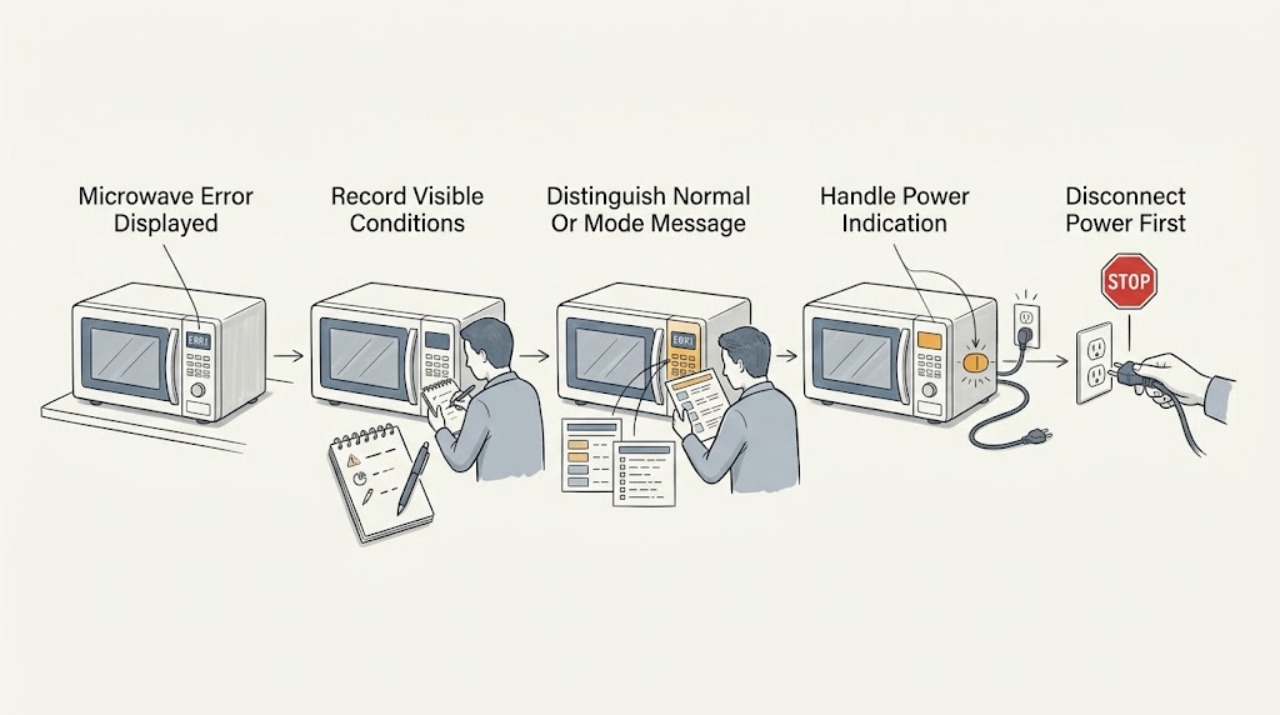
GE Microwave Error Displayed: Identify the Code Before You Reset It
Write down the exact characters, punctuation, and timing on the display, then identify the microwave model before interpreting the message. Do not assume that a code from another GE model or from a wall oven applies.
-
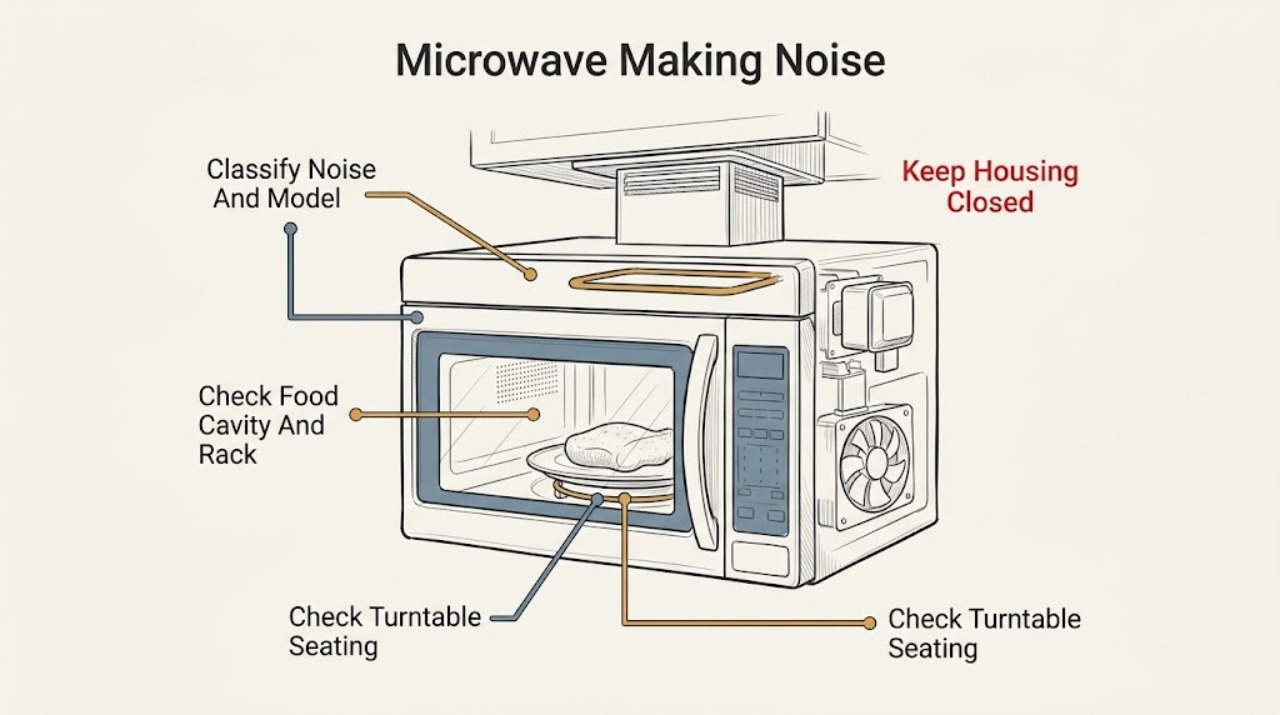
GE Microwave Making Noise: Normal Sounds and Safe Checks
A GE microwave may normally click or hum as the magnetron cycles at lower power, click when relays operate, run an internal cooling fan during cooking, or run an over-the-range vent fan automatically when the underside gets hot. A turntable may hesitate, jerk, drag, or change direction normally.
-
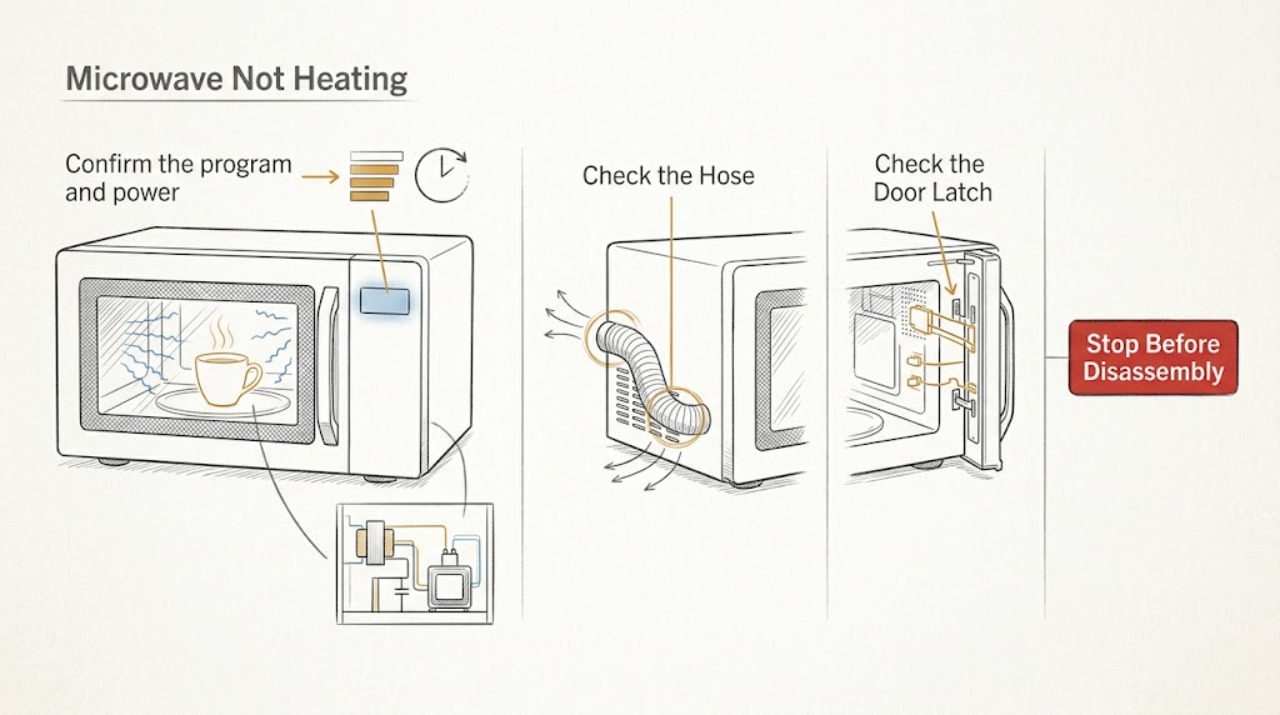
GE Microwave Not Heating
If a GE microwave runs but does not heat, first confirm that you used a cooking function rather than Timer, the door closes firmly, and the selected power level is appropriate. Test with a heat-safe glass bowl of water only if the oven is intact and the model instructions allow it; never put a thermometer inside the cavity and never run the microwave empty.
-
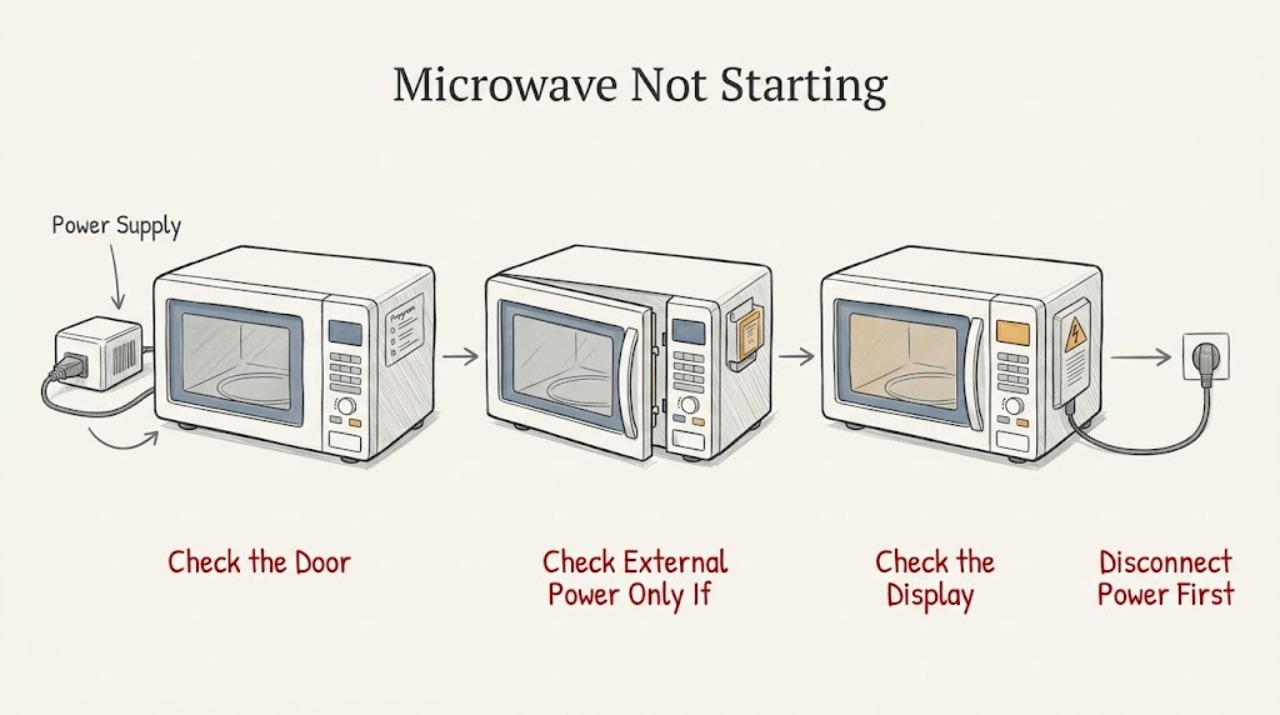
GE Microwave Not Starting: Separate Power, Controls, and Door Safety
First separate a dark appliance from a lit panel. If the display and cavity light are both off, check only the plug, receptacle, and breaker from a dry, safe position; stop for a hot or damaged cord/outlet, smoke, sparks, or repeated tripping.
-
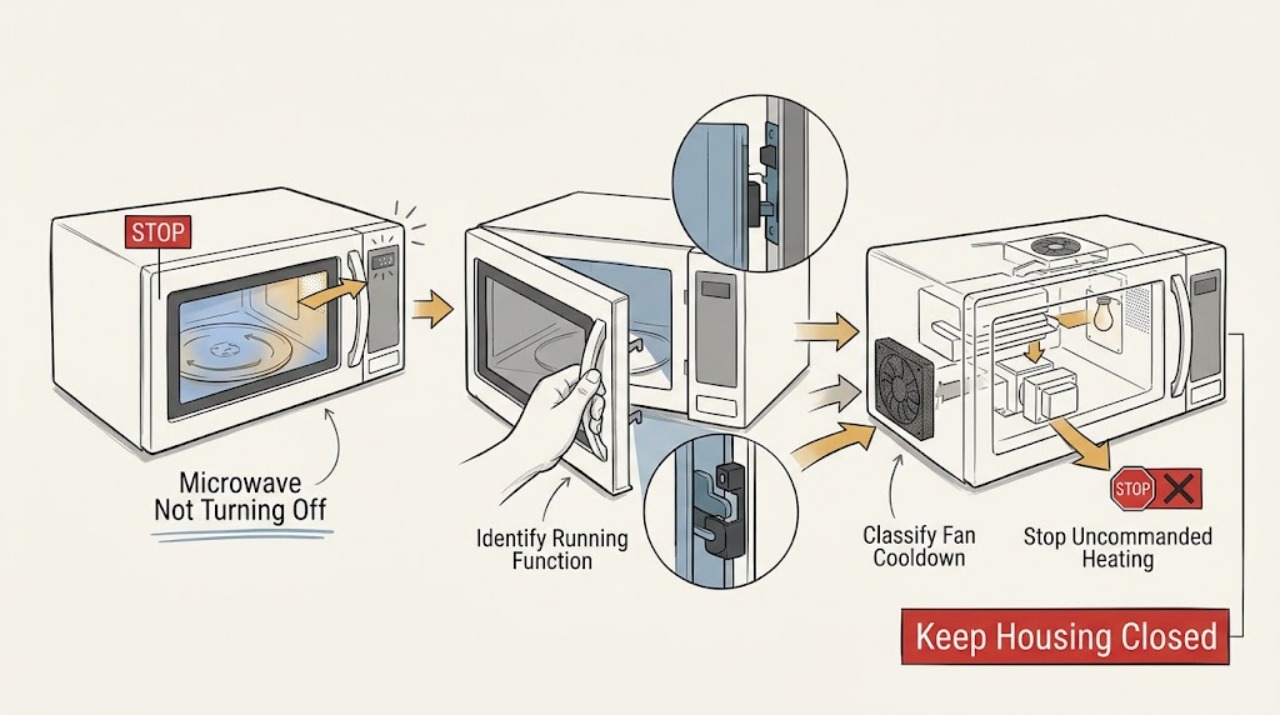
GE Microwave Not Turning Off: Tell Heating from Fan or Light Delay
First identify what is still running. If the cavity is heating, the turntable is rotating, or the microwave starts or continues a cooking cycle without an intentional command, treat it as unsafe: stop the cycle if the controls respond, disconnect power from a dry, safe position, and arrange qualified GE microwave service.
-
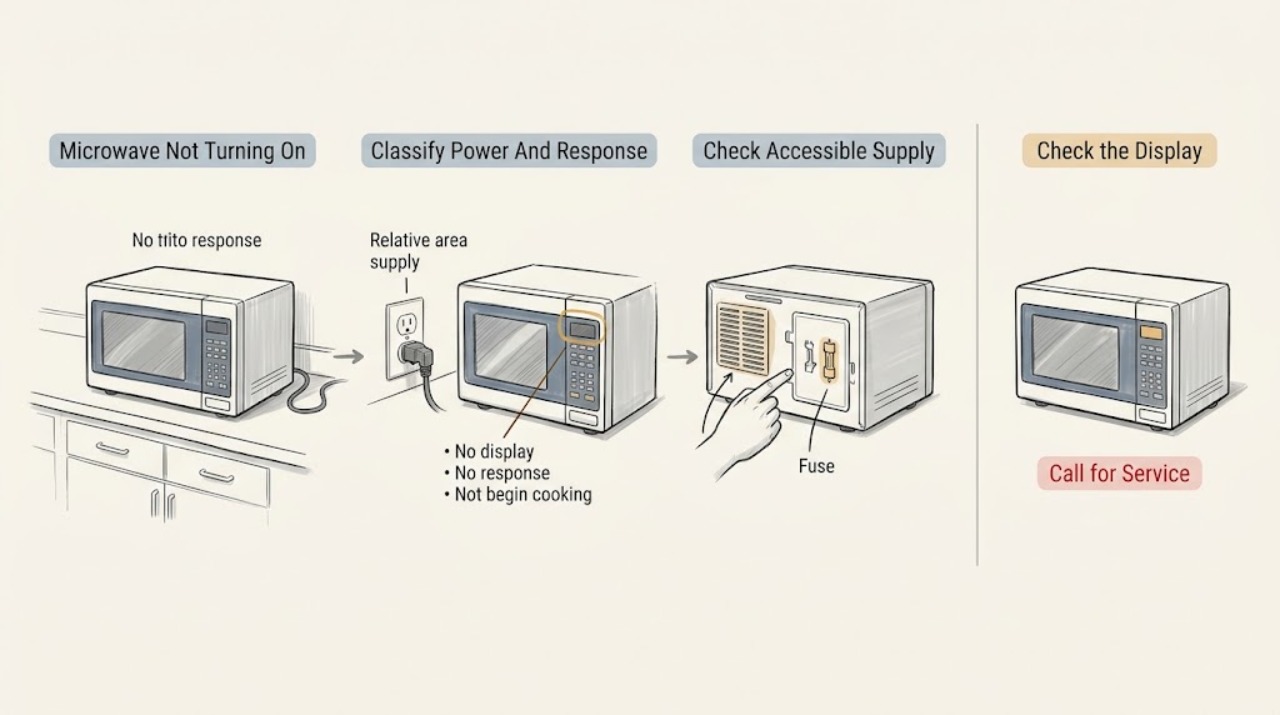
GE Microwave Not Turning On: Separate Power, Controls, Door, and Overheating
First decide whether the microwave is completely dark, has a display but ignores buttons, or responds but does not begin when Start is pressed. For a dark unit, check the dry, accessible breaker, fuse, outlet, or wall switch once; GE says a microwave that shut down can also have overheated if vents were blocked, so clear external airflow and allow about 30 minutes to cool.
-
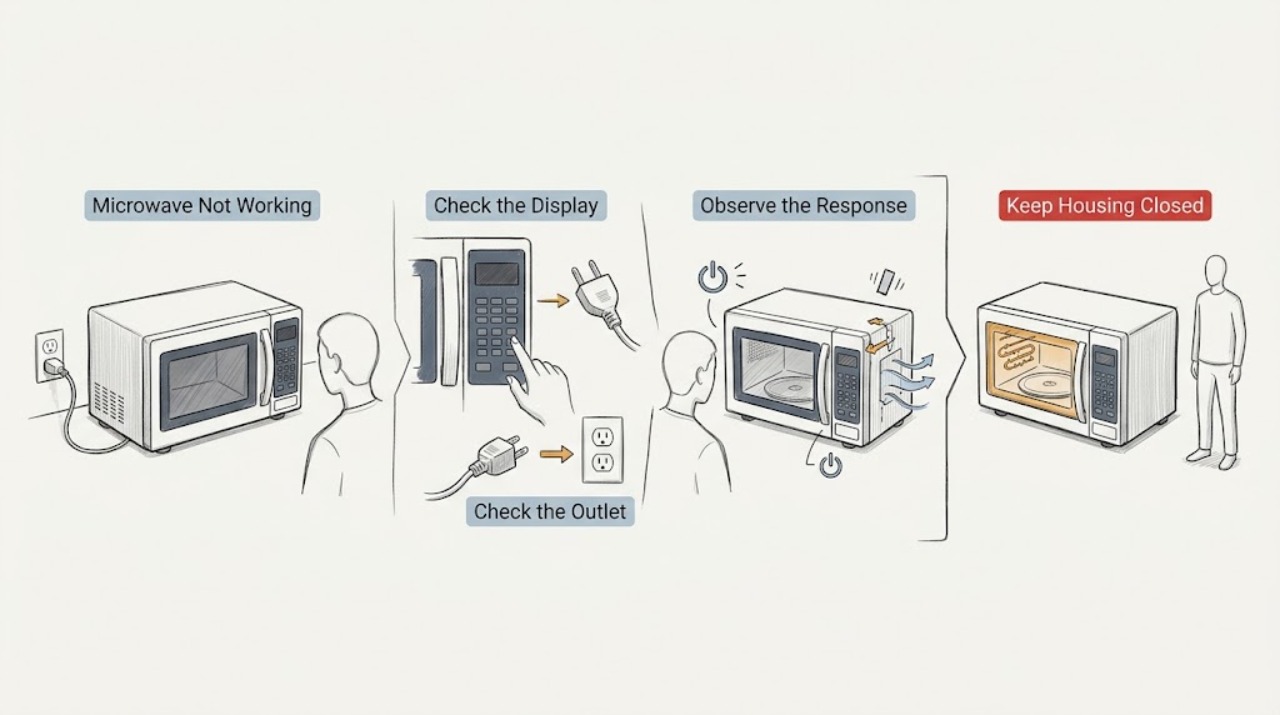
GE Microwave Not Working
When a GE microwave is not working, first separate a dead display from a lit display that will not start, a unit that shuts down, and a unit that runs without heating. Check the dedicated breaker or fuse and the outlet, then confirm the cord is fully inserted in a grounded three-prong outlet.
-
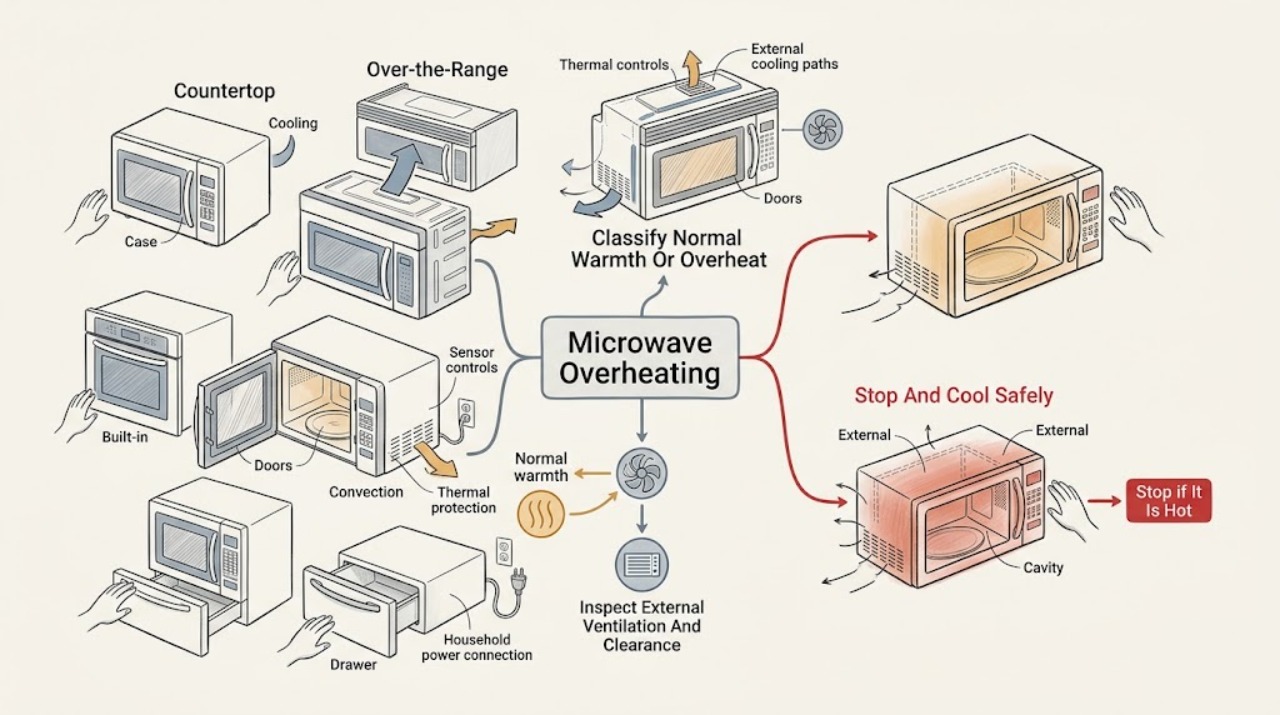
GE Microwave Overheating: Separate Normal Heat from a Fault
A warm cabinet, cavity floor, door steam, or a cooling fan after cooking can be normal on a GE microwave, especially after extended cooking, convection use, or heat from an over-the-range cooktop.
-
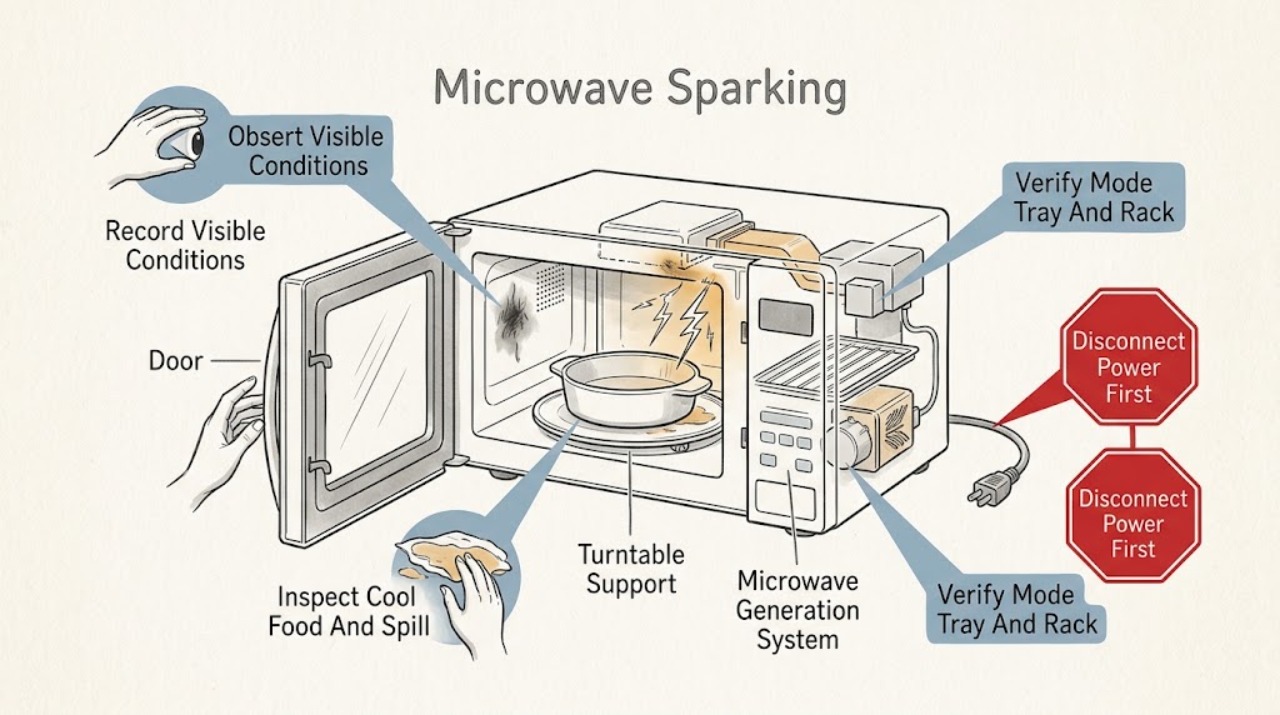
GE Microwave Sparking: Stop, Identify the Cause, and Check the Cavity
If a GE microwave sparks, stop the cycle immediately with Clear/Off or Cancel/Off if safe. Do not continue cooking to see whether it stops, and never run the microwave empty.
-
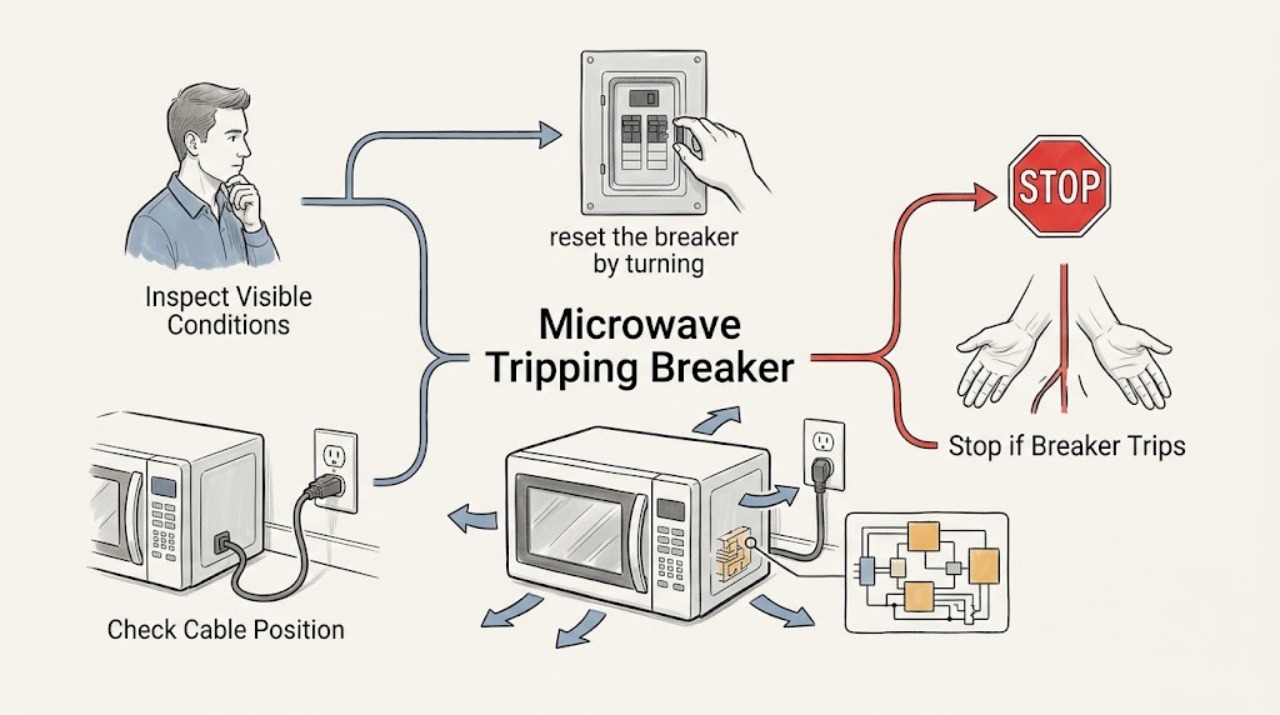
GE Microwave Tripping Breaker
If a GE microwave trips the breaker or blows a fuse, stop using it after the first repeat trip. Confirm from the model's installation instructions that it has the correct grounded, dedicated circuit; standard countertop and over-the-range GE microwaves generally require an individual 120V branch circuit, while a particular model may have different requirements.